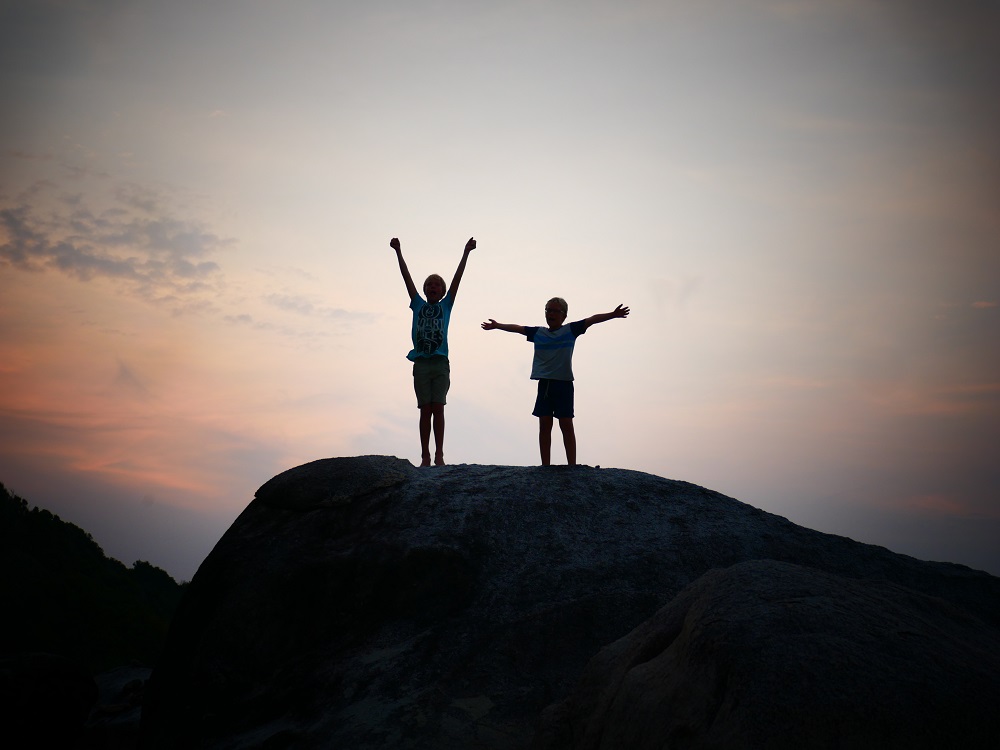
Other than accidents, ailments and ash clouds, it has been fantastic to return to the hectic chaos of Indonesia. Coming from Malaysia, the difference is noticeable – Indonesia is messier, busier, more crowded. And, maybe because Indonesia is less developed, the people seem friendlier. In fact, I am sure that Indonesians are the nicest people in the world.
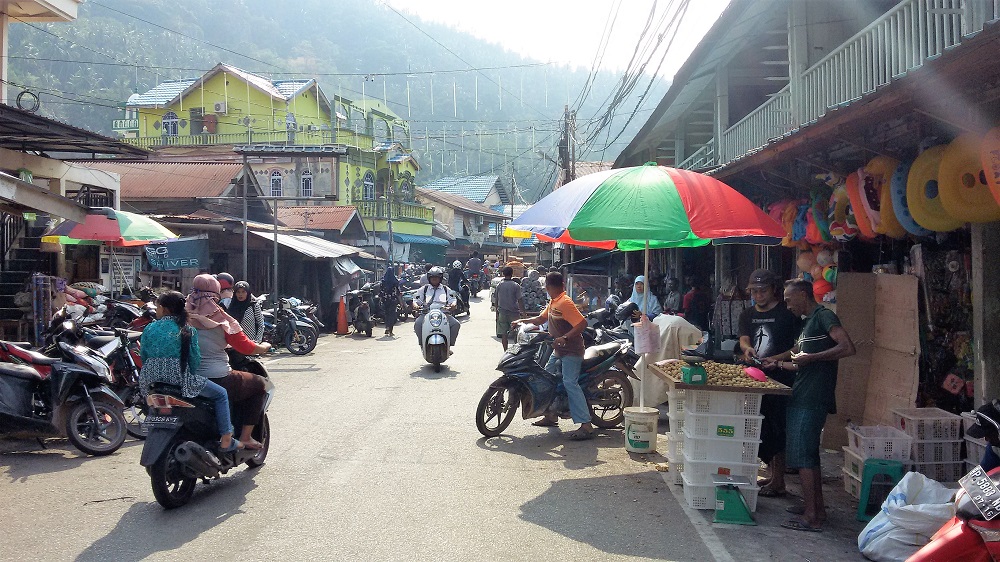
On our first day in the Anambas capital of Tarempa, we shopped for supplies in the shaded fresh market to replenish our bare cupboards with luscious fruits and vegetables and our freezer with tempeh and meat. After carrying all our heavy shopping back through the crowded streets, weaving in and out of the dense foot traffic of masked, veiled women and school-uniformed children, and narrowly avoiding the burning ends of cigarettes flicked from motorbikes by careless riders, we finally reached the dinghy dock. As I put down my heavy bags and lowered the bulky rucksack from my sweaty back, a breathless young woman approached.
“Hello. You speak Indonesia?” she asked, tugging at my sleeve.
“Sedikit,” I said (a little) and smiled.
“Telur Anda ada di pasar,” she says, gesticulating towards the hinter streets.
“Oh,” I said, hand to my mouth. “She says we’ve forgotten our eggs, in the market.” I turned to David. “She’s right – we left them at that stand where we bought the chickens.”
I thanked the young woman profusely and made my way back to the market to pick up the eggs, leaving David to load the dinghy. As I wove in and out between open sacks of flour, large stacks of cabbage and buckets brimming over with onions, sidestepping spitting men wearing prayer caps and small children fingering plastic packaging, the stall holders called out to me. “Telur, telur,” eggs, eggs.
I nodded and smiled and finally got through the chaos to the elderly lady in whose stall I left the eggs. She grinned and made a telephone gesture, pointing towards the open street leading to the docks whilst firing off a rapid stream of Indonesian, indicating how she had called someone to go and find me at the harbour so that I could get my eggs. And there they were, two large stacked cardboard trays, neatly tied up with string, resting on top of a small freezer.

This kind of stuff is typical of Indonesia, where people go out of their way to help you. Crazy, amazing Indonesia, I think, how we will miss you! We have to leave because our one-month visa has run out and it is time for us to head to Malaysia. Which is a bit sad.
Not that there is anything wrong with Malaysia, by all accounts it is a nice country. It’s just that whenever I ask other cruisers about the west coast of Peninsular Malaysia, where we are headed, they always say, “Well, Malaysia…,” scratching their heads, then looking up. “It’s a great place to do boat work!” before launching into detailed descriptions of chandleries, labour availability and re-upholstering options, and long-winded explanations of where to find chemical suppliers, hardware stores and sling lifts.

It’s normally a bad sign when boat work is the most alluring part of a region. But we need to shine up the Bob, and as the repair manager onboard, David quickly gets busy asking probing questions about boat parts and buffing products and I enquire about provisioning and mosquitoes, wrestling my attention away from the quiet anchorage we’re on and vowing never to forget the beauty of Indonesia.
We are going to Malaysia to get Bob the Cat ready for selling. We plan to be back in New Zealand in January, ready for the kids to start the new school year in February, and before that we have a bit of touching up to do, including antifouling, cleaning, and a few cosmetic jobs.
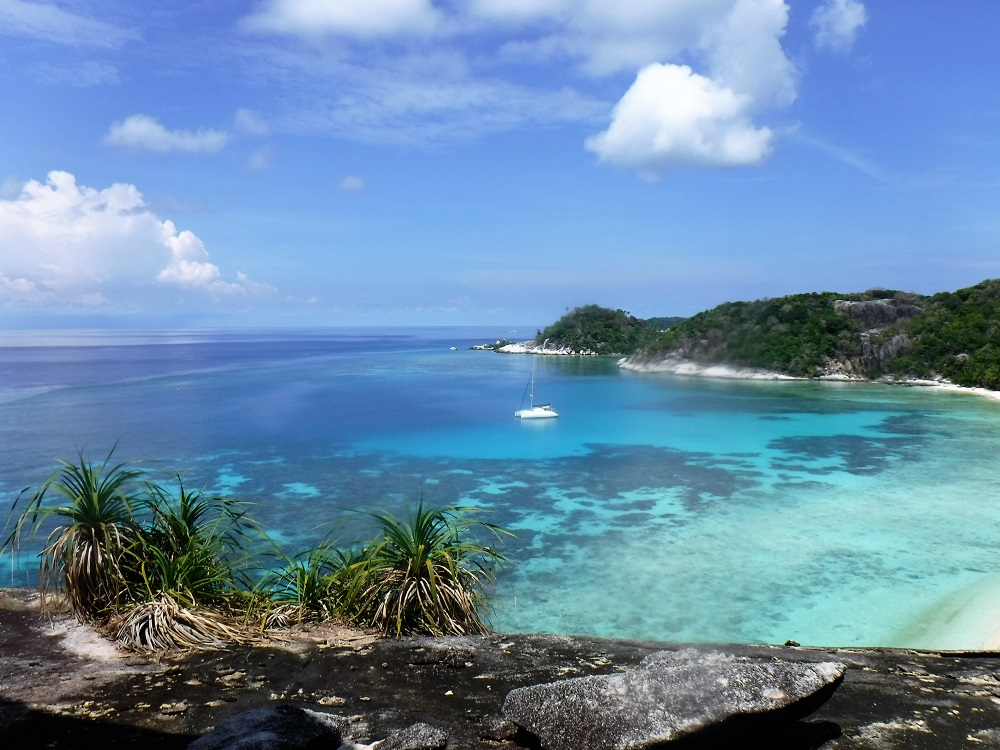

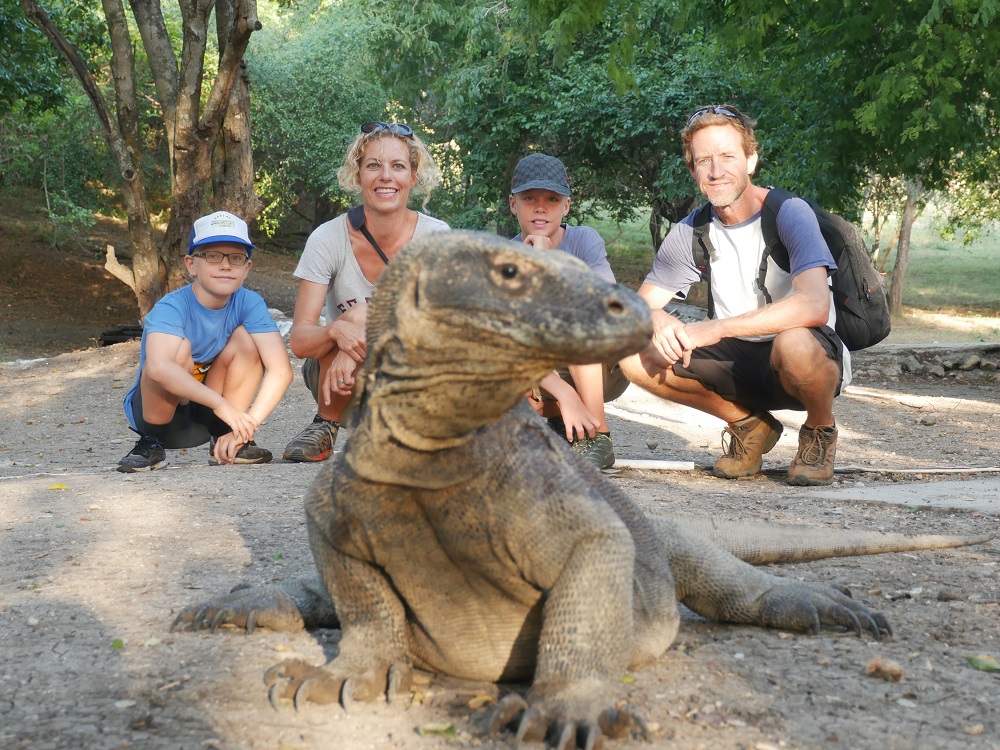
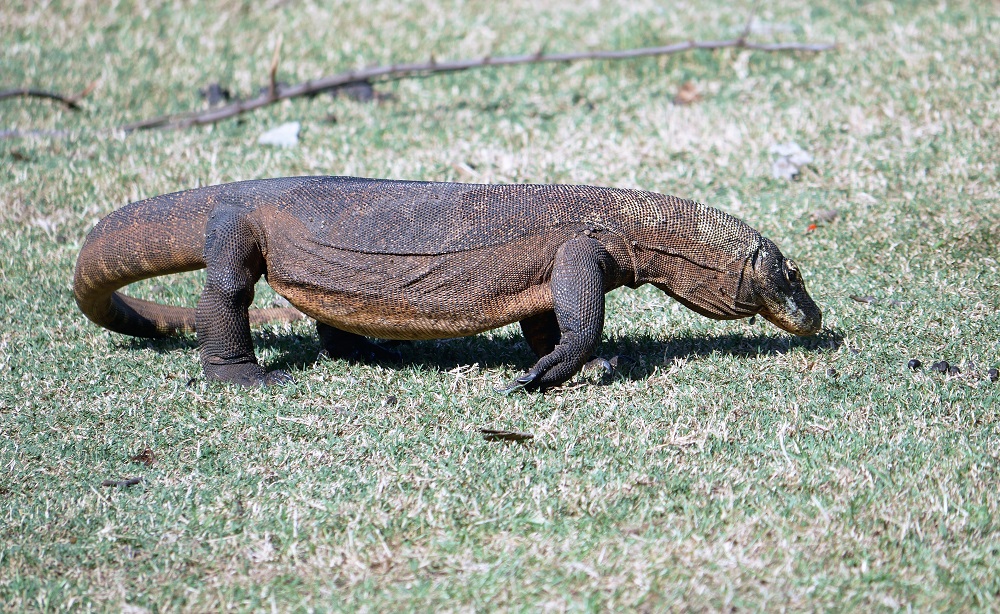
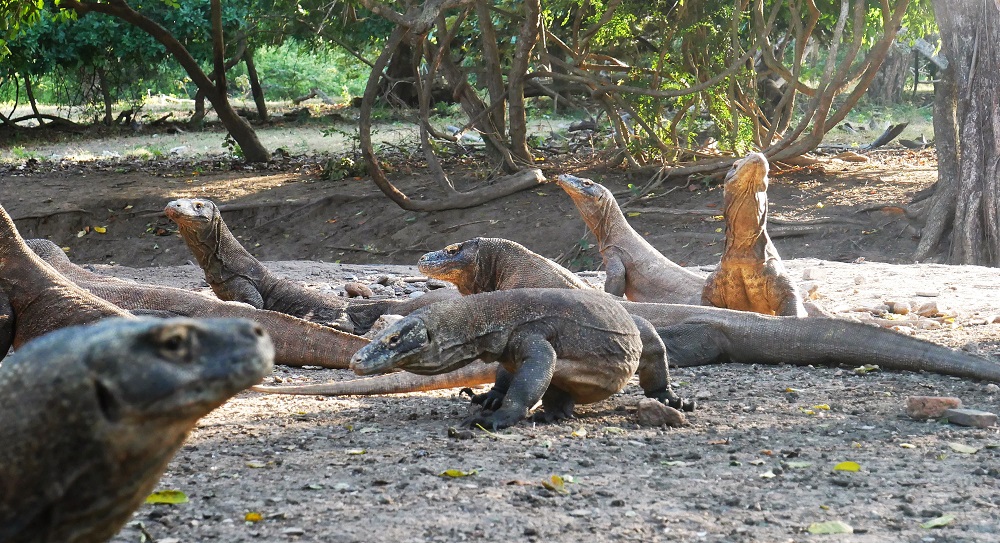
The Anambas has been a fitting final destination – Indonesia doesn’t get much better than here. Of the 225 islands in the island group, only 26 are inhabited, and the region is full of scenic deserted islands featuring white sand and wave-smoothed granite boulders piled up in aesthetically pleasing fashion along points and around corners. The centres of all but the smallest islands are green, coconut palms giving way to taller trees as you descend inland, your progress causing birds to squawk and circle and monitor lizards to slink away from their hot-rock sunbathing positions into deep, dark holes.
And the water, oh the water. Where the overland visibility suffered because of the forest fire smog, the marine waters were some of the clearest we’ve seen, with underwater visibility reaching 30-40 metres in places, pristine coral and plentiful fish life the backdrop to frolicking sharks, rays and turtles.


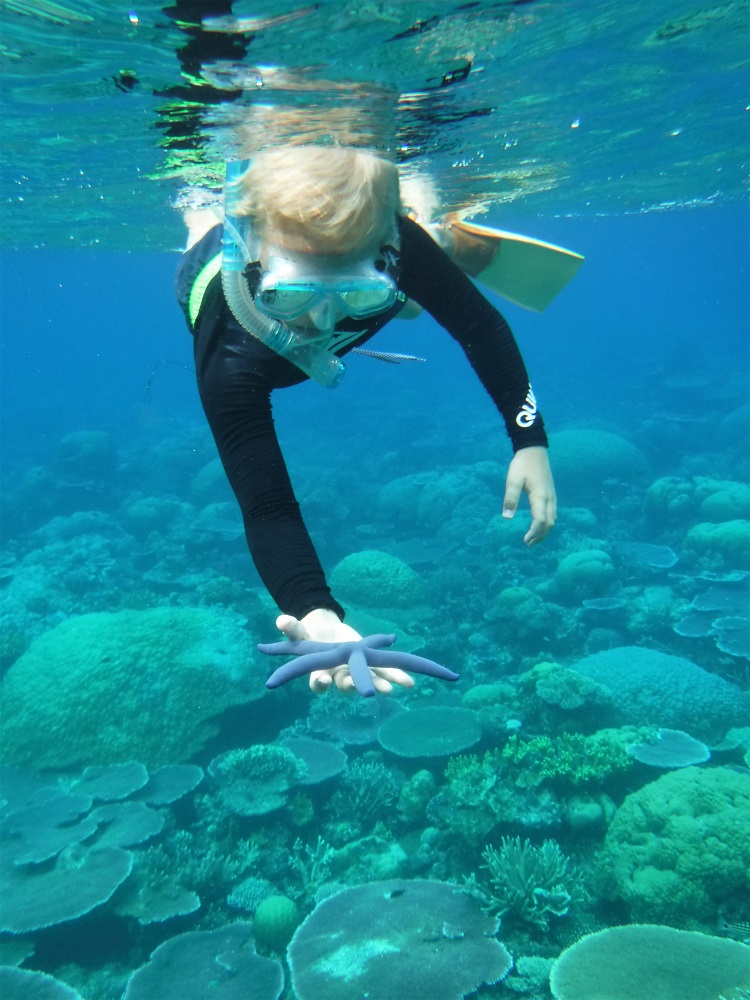


Perhaps the weirdest collection of marine life we encountered was at the Anambas Dive Resort, where the eccentric Chinese-Indonesian owner has established an open-air aquarium, a shallow one-hectare pool bordered by brick walls and open to the surrounding sea only through netted vents. In his enthusiasm for large marine life, the owner has been buying fish from the fishermen for years, and when we were there, the pool contained two 2-metre tawny nurse sharks, a 2.5 m shovelnose ray, giant groupers and stingrays, and packs of hungry-looking trevallies. It’s an expensive hobby, explained Hadi, the caretaker at the facility. One huge grouper cost them $400, but it died after three weeks, probably from overheating in the shallow water which could barely contain its girth. At one point, they had 70 blacktip reef sharks in the pool.


“They were just too aggressive,” laughed Hadi. “They ate everything else. All the other fish. Thousands of dollars’ worth of fish.” He looked at us. “So, we had to catch them all, with baited lines, and release them into the sea. Now, we only have one small blacktip. The nurse-sharks, do you know what they’re called in Indonesian?”
We shook our heads.
“Hiu bodoh,” he said, giggling. “It means stupid shark. It’s because they don’t have teeth. So, they are safe for us to keep, they don’t eat the other fish.” He threw his cigarette bud into water where it extinguished with a hiss and turned to show us the grouper and crayfish fattening ponds next to the open-air aquarium. These are another couple of hobbies: the owner is trying to figure out if he can make money from selling live seafood directly to Hong Kong. The dive shop is also just a hobby, set up less as a business and more for the guy to take his friends diving. Financing the whole operation is a refrigeration business run from next door, from where they sell refrigerated storage and ice to the region’s fishermen.

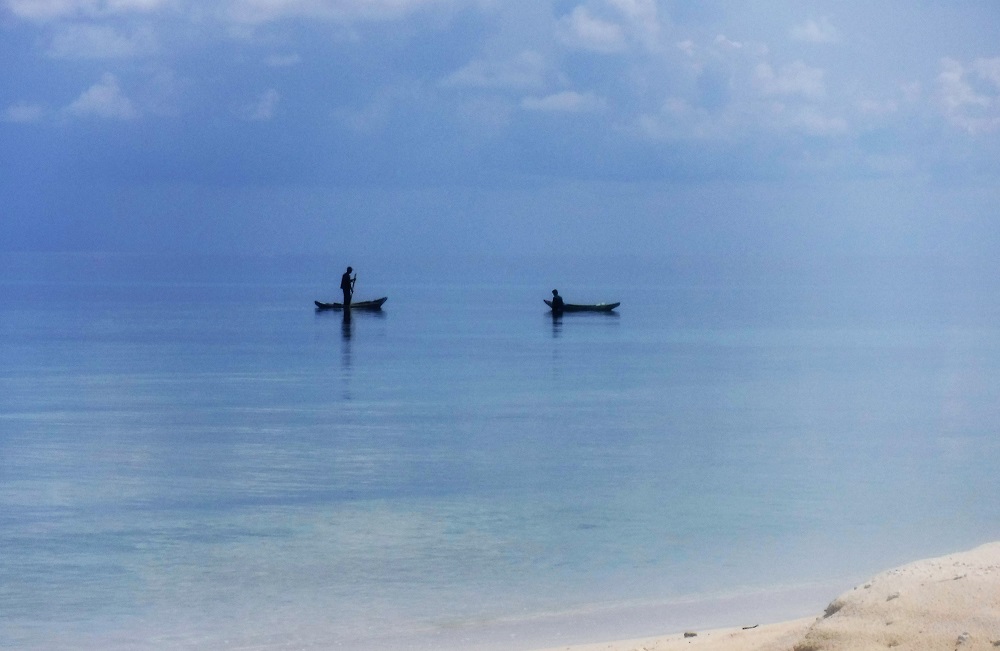
The main earners in the Anambas are fishing and tourism. No matter how remote our anchorage, and how deserted the island, we always saw fishing boats during our time there. And evidence of fishing too – one time we watched with curiosity a middle-aged man as he slowly worked his way around the edge of the bay where we were anchored during the course of a morning. He was in the water, wearing a mask, towing his little canoe along. After having spent about 4 hours in the water, he approached out boat on his way out of the bay, and we hailed him, asking what he was catching. He showed us a bucket of gelatinous globs and we frowned, trying to figure out what it was. Seeing glimpses of brilliant blue, I realised that they were clams – perhaps a hundred boring giant clams. Once we’d waved goodbye to him I jumped in the water and snorkelling the edge of the bay I saw evidence of his harvest: foot-long clam shells scattered everywhere, brilliantly white skeletons standing out against the backdrop of colourful coral on which they had been dropped. There were plenty of them, and I’m sure it’s legal, but still it was a sad sight.


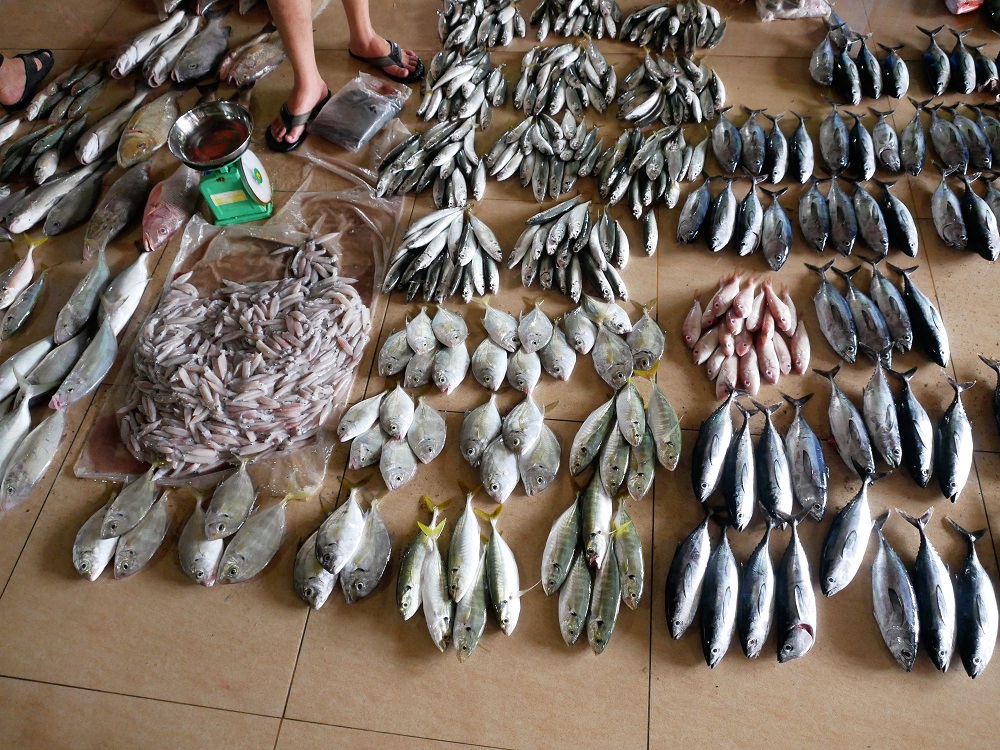
Tourists come from Singapore, Malaysia and further afield, and on our cruise through the islands we saw multiple boats filled with wrapped-up Asian tourists jumping off small boats onto deserted islands.
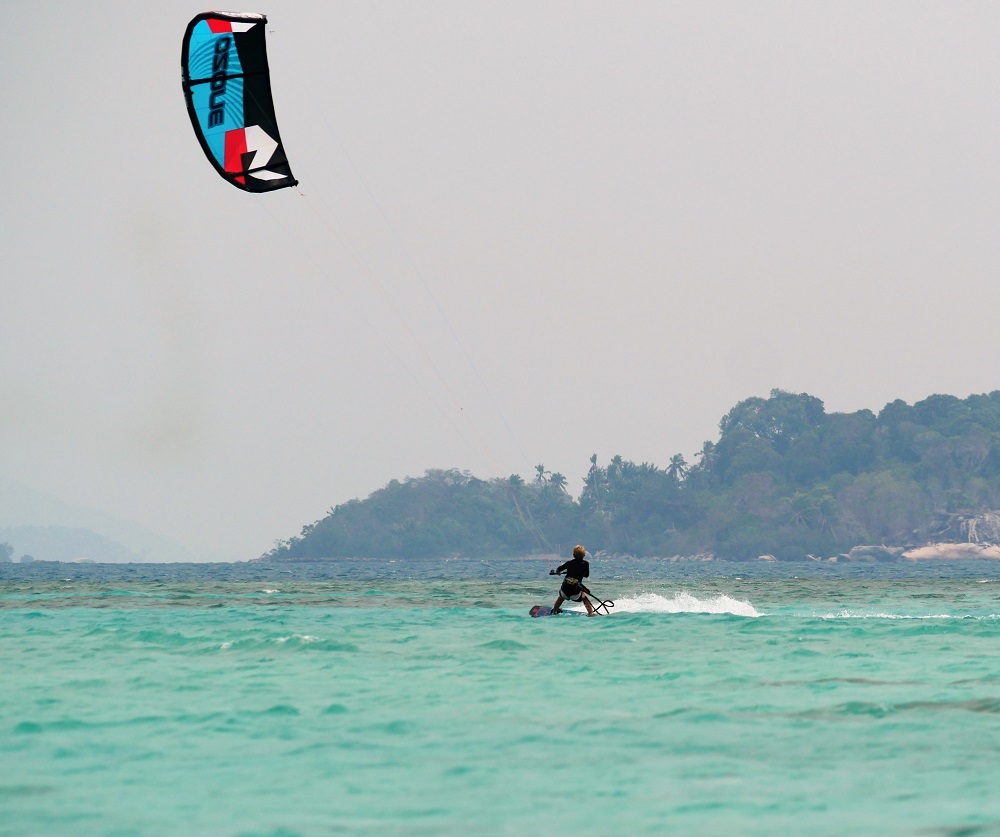
I know that the whole world is busy showcasing their lives on Facebook and Instagram, but it seems to me that in south-east Asia it is taken to the extreme. One time, we were kitesurfing from a small, deserted island, and a boat load of six tourists arrived, phone and go-Pro in hand, selfie-seekers in paradise. They jumped on shore, each individual an isolated movie-maker, cameras held high, twisting this way and that, seated, lounging and standing in front of the sea, the sand, and our boat in the background. They stayed on the island about half an hour, filming away, during which time not one group shot was taken, nor any conversation had. The purpose of filming done, they hopped back onto the boat in silence and the boat boy drove them off, presumably in search of the next camera-friendly location for instant holiday shot upload to Facebook.

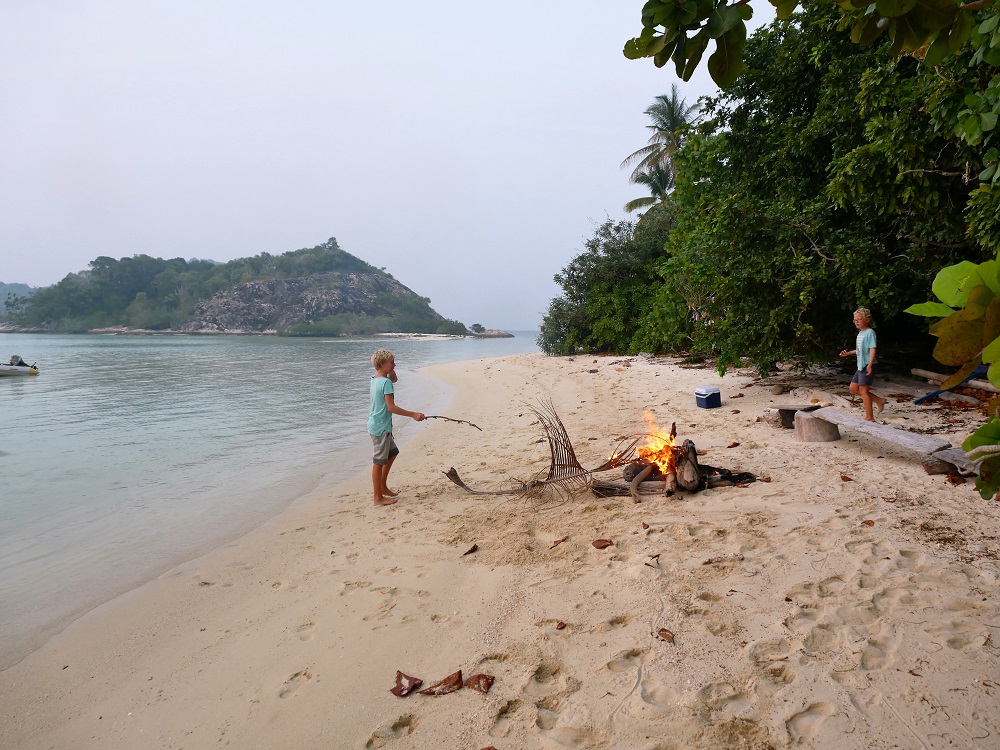
I don’t know where they are all staying – we only see one functioning resort. There is also a half-built eco-resort owned by a French-German couple with a couple of children who live in a tent on a small island near two semi-complete wooden structures which are meant for tourists. I’m not sure what the business plan for the place looks like, but their stated intention is to run a raw-food, survivor-style resort, catering for wealthy western clients keen to pay a fortune to rough it a week to return to nature. Committed raw-foodies themselves, the family survives on fresh fruit and vegetables, raw chicken and fish supplemented by small amounts of uncooked rice. They were very lean but otherwise healthy-looking and explained that for them the lifestyle is less about health and more about avoiding what they cited as ‘the unsustainability of cooking’. We wondered at the illogical turns of the human mind and sighed as we watched the fast supply boat come in laden with vegetables for them, thinking of the carbon burned as a result of them living remotely, as well as the environmental burden of international visitors, the carbon footprint of flights making tourism one of the least environmentally sustainable industries in the world. I guess it just proves that human beings are funny and logic has no real place in our lives.
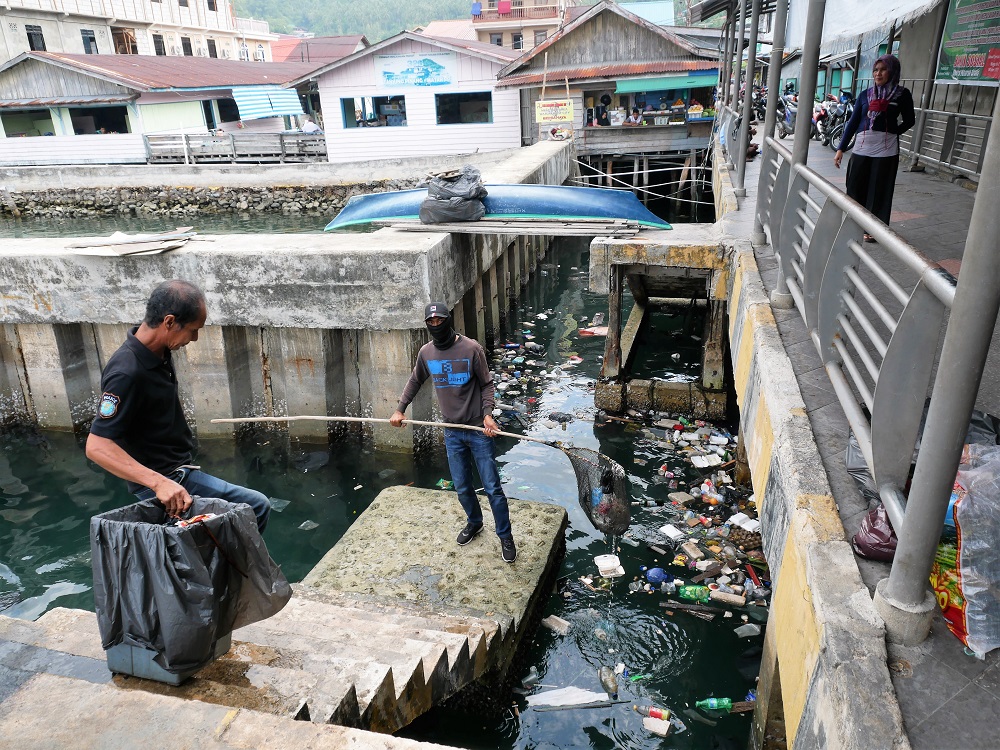
It is a holiday paradise, the Anambas, and we could stay here forever. For Indonesia, the waters are incredibly clean, and in the harbour of Tarempa a team of men were busy scooping up plastic from the harbour a couple of times a day. It is a refreshing sight, and so rare that we stopped to take photos: in our nine months here, this is one of the only times we have seen Indonesians remove waste from the marine environment rather than throw it in. Sadly, the education is limited to the capital and when we anchored in a more remote location, the local fishing boats would come into the bay to sleep at night, and as they chugged back out to sea in the morning they would leave behind a trail of floating plastic detritus. It is hard to understand how those closest to the reefs, the fishers who make their living and get most of their dietary protein from marine organisms, fail to understand that throwing plastic in the ocean is a bad idea.
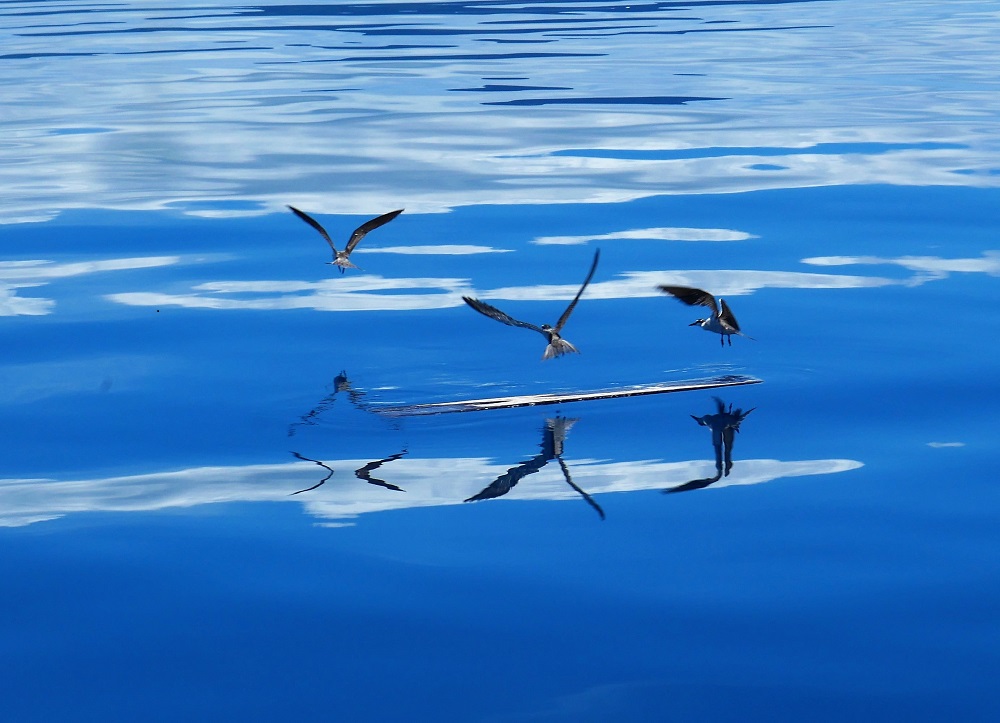
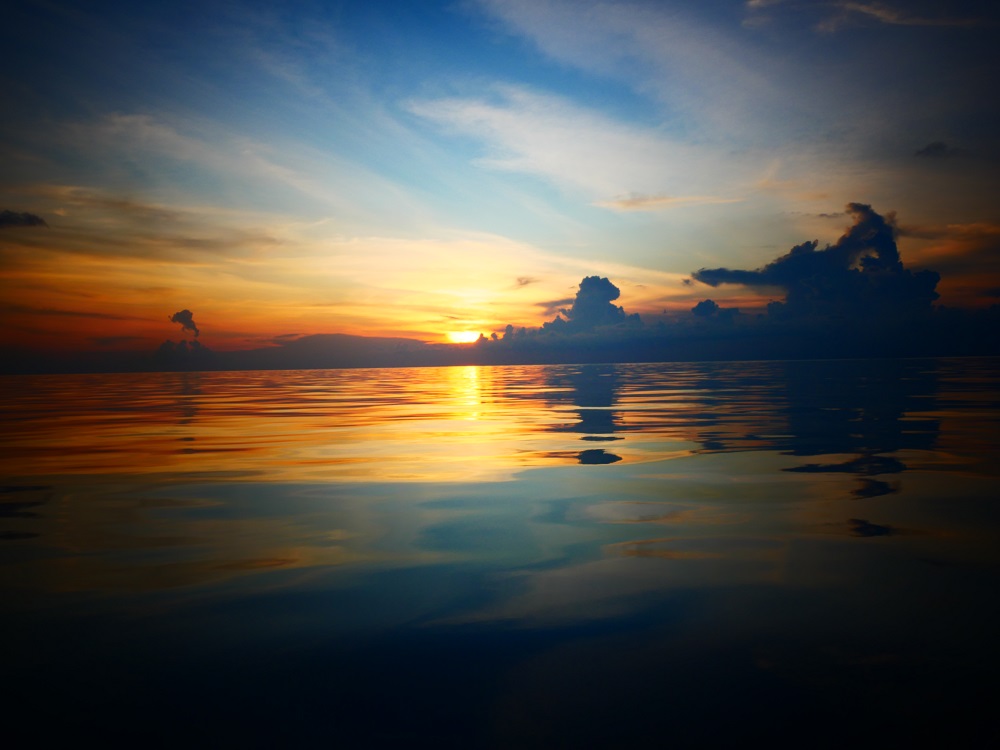
By the time we left the Anambas, the surface haze had lifted and the sun was beating down on a windless sea. After six days with no swimming, Matias’s leg wound had healed enough for us to allow him into the water, and he had enjoyed the last of the brilliant visibility and abundant marine life on a couple of snorkels. We had collected three good rainfalls and had enough water in our tank to make it to Malaysia where our watermaker parts were waiting. So, it being time to leave, we waved goodbye, the final impression of Indonesia stamped onto our retinas a glassy sea reflecting fluffy clouds in the setting sun.




 SV Bob The Cat