“Daddy,” said Lukie, “would you rather be eaten by a Komodo dragon or a saltwater crocodile?”
David looked out over the sunset colouring the quiet bay. “Hmm,” he said. “It’s a tough one. Maybe a saltwater crocodile?”
“No, I think a Komodo dragon is better,” interjected Matias. “At least you have a chance to run away from them. Saltwater crocodiles are faster.”
“But the Komodo dragon may just bite you and leave you to die from infection and poison.” Lukie collapsed on the cockpit seat with a groaning sound, arms flopping, legs beset with spasms. He lifted his head to look at the rest of us seated around the dinner table. “And then you have to lie there for two weeks until you finally die and then they come and eat you.” He dropped his head down to lie flat. “I think a saltie,” he said dreamily, looking up at the cockpit ceiling.

He abruptly sat back up and we continued eating, silently contemplating a slow death by dragon poison combined with searing thirst and terrible sunburn on the desolate trail of a bone-dry island. Lukie paused his chewing, fork in mid-air. “Would you rather be attacked by a Komodo dragon or a great white shark, then?” he asked, gesturing with the fork.
“Dragon,” said David and Matias in unison.
Lukie nodded. “Me too. Because with the shark you would drown even if you are just injured, whereas with the dragon you might be able to get help.”

We were anchored just outside Komodo National Park and had spent the day seeing the famous dragons on Rinca Island, one of the four islands on which they are found. The park extends out to sea, covering the islands of Komodo and Rinca as well as numerous smaller islets. It was established in 1980 to protect the dragons and preserve the amazing coral reefs of the many islands, and the area is one of the most visited in Indonesia, both by locals and tourists. In Rinca Island the bay where we anchored before going ashore to see the dragons was full of phinisis, the local tourist boats. Many of the boats were liveaboard dive charters who spend their days ferrying divers to and from world famous dive sites and throw in a land visit to see dragons for added excitement.
Komodo has fully embraced tourism, and the government is determined to profit. In typical Indonesian fashion, the fee system is comprehensive and incredibly complicated.
“So,” said David the night before we went to see the dragons. “There’s a boat fee that we’ll have to pay, that’s Rp 100,000. And then we must pay park entry, for foreigners that is Rp 100,000 per person per day. And a guide fee, of Rp 80,000.”
I nodded. “Sounds quite expensive.”
“Oh, but you haven’t heard half. There’s a holiday fee of Rp 225,000 per person, which applies on any national holiday and on all Sundays. Not sure if that is only for tourists or for locals too.” He sighed.
I nodded again. We were visiting the dragons on a Saturday, but because it was the week of the end of Ramadan it would be a public holiday, so we would have to pay the extra fee.
“And then, get this, there’s a hiking fee, of Rp 5000 per person. And a Rp 10,000 ‘wildlife observation fee’ per person…” He buried his head in his hands and groaned. “I mean, when do they charge that – how do they know whether you’re observing wildlife?”
“I heard that there’s a camera fee, too,” I said. “So maybe we just bring in the big camera and leave the phones on the boat, so we only pay once?”

“Mummy,” interrupted Lukie, sticking his head in from the cockpit. “Would you rather be stuck on the island with just your camera, or with just your phone?”
“Phone,” I responded, waving him away. “But we won’t be stuck, there’s plenty of people there….”

Seeing the dragons is, of course, worth the fees, and heaven knows it would be good if the locals could benefit from tourism and thus be encouraged to reduce development and destructive fishing within the park. Our guide on Rinca Island was from the island and explained what the park means for the locals. “When the government made the Park in 1980, they told the people living on the islands that they must never harm the dragons,” he said as we were walking along the sunny trail. “So even if you get bitten by one, you are not allowed to kill it.”
The dragons are carnivorous; their traditional prey were the small indigenous Timor deer living on the islands. People brought in pigs, buffaloes and larger deer, which quickly became prey for the hungry reptiles, who hide along animal trails and attack whatever comes along. Unfortunately, that includes the occasional passing human.
Do the locals benefit from the park? we asked and he responded that as most of the population are fishers and they fish on undisturbed, the park brings no changes to their lives. A few sell wood carvings to visitors and some are employed as rangers or guides but most of the park staff are from Java, and so overall it makes little difference to his village whether there’s a park or not.
Which leaves us wondering where all the money goes. Revenue from the park admissions are not fed back into park maintenance and there is therefore no incentive for the park to improve amenities. Not that they necessarily need to increase visitor numbers: in 2018, the park revenue was Rp 32 billion, a nice little earner for the government, and the locals grumble that the money goes towards paying for the governor’s big house on the hill.

The outlandish fees certainly shorten our stay there. A day tied up to a mooring to enjoy snorkelling, diving or surfing in the park will cost us Rp 1 million (about NZ$100), which means that, being on a budget, we have to carefully pick the days we enter the park. Anchoring in depths accessible to yachts is forbidden in most locations, but there are insufficient moorings and a lot of dive boats, which leaves us tying up to phinisis on crowded moorings while waiting for a free spot.

“Daddy, if the mooring fails, would you rather be tied up to a phinisi, or have one tied up to you?” asked Lukie one morning when a tourist boat politely asked to tie up to us on a mooring just outside the park.
“Tied up to another boat,” said David as he made the visiting boat’s rope off on the port stern cleat. “That way you can just untie if something goes wrong. Whereas if they’re tied to you, you have to get yourself off the mooring and get them off you.” He smiled and waved at the tourists who were being served lunch on the phinisi foredeck just metres from our stern.
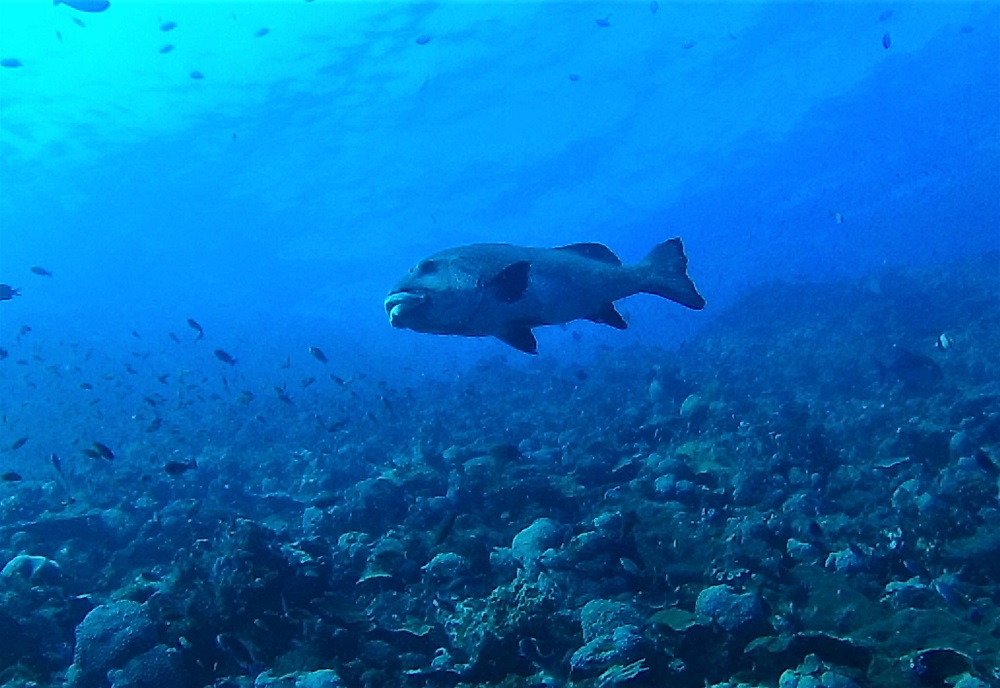
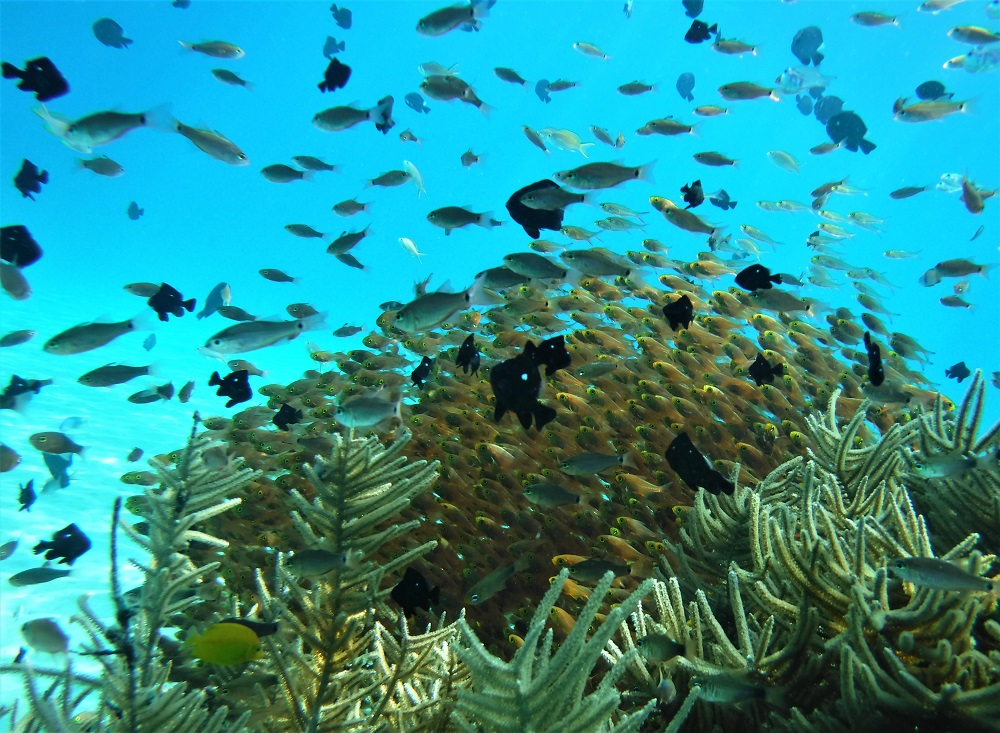
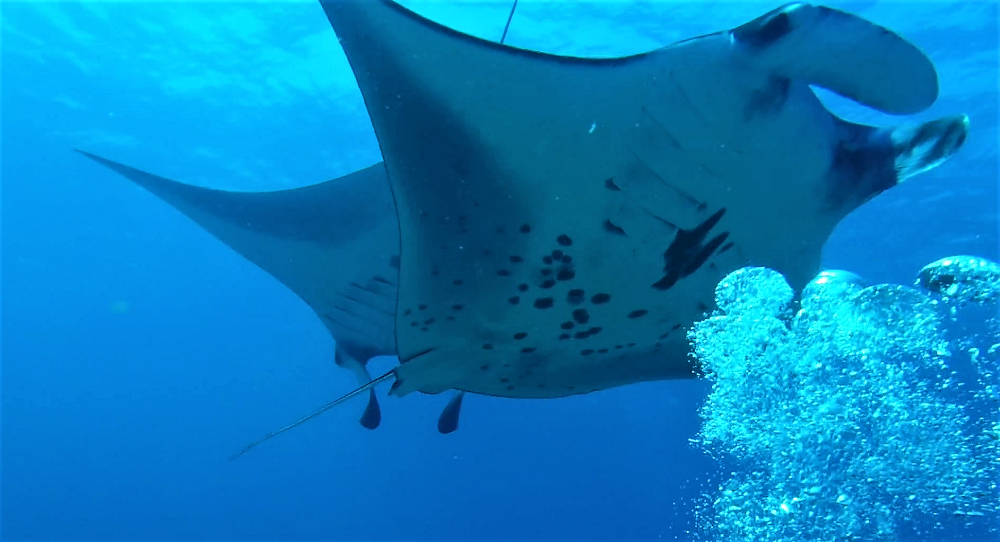
It’s easy to understand why the diving industry here is thriving. The Komodo National Park is in the middle of the Indonesian through-flow, which means insane currents swirling past steep underwater mounts, making for exhilarating diving on vertical walls graced by huge pelagics like Napoleon wrasse, groupers, and giant trevallies as well as sharks and turtles. Shallow straits create ideal conditions for drift diving over current-scarred bottoms hiding cryptic life cowering in the shadows of large manta rays waiting for their turn at popular cleaning stations. Sheltered bays offer amazing coral concealing large moray eels, pipefishes and colourfully fragile nudibranchs.

If the fee was similar to that of Raja Ampat, we would stay for weeks, cruising every inch of the park, diving all the famous sites, but as it is we limit our stay to one week, dipping in and out of the Park to maximise what we can see on our budget. Payment is to the rangers that patrol the park and when they failed to approach us at Gili Lawa Laut north of Komodo where we’ve been drift snorkelling with giant trevally in currents so strong that they created little whirlpools we decided instead to donate the money to WWF marine conservation efforts in Indonesia, figuring that they probably do a better job at using the money to improve the environment than the Indonesian government.

It turns out that we are just in time to see it all. The government plans to close parts of the park and in 2020 all access to Komodo Island will be terminated, ostensibly for ‘habitat restoration’ but rumour has it that it is an attempt to clamp down on the illegal theft of dragons to supply a lucrative overseas pet trade market. Diving will still be allowed, but access to the most popular dive sites will be limited to a certain number of boats daily, which is probably sensible in terms of limiting the harm done to this breath-taking and unique environment.


It is not just the underwater scenery that is amazing. The islands here are volcanic and dry, hills covered in yellow grasses with green vegetation and trees only gracing low-lying, shady valleys, a complete change from the jungle-clad humid isles further north. We are now far enough west to meet monkeys and snakes live on these islands too, and we are under strict instructions not to take Paco the Cat ashore, although I’m not sure he’s entirely safe on the boat with the giant sea eagles overhead forming menacing shadows with wings outstretched, their beady eyes lusting for small furry prey.

After an initial day of nervous uncertainty, Paco has relaxed into the rhythm of life on Bob the Cat. Being a monohull cat, he wedged himself tightly into a shelf for the first passage, expecting the boat to heel sharply over as soon as the sails came up, only to look astonished when his shelf remained level for the entire journey. Now a seasoned catamaran-cat, he knows he can lie pretty much anywhere when we’re underway and has taken over large parts of the saloon seats as he lounges about, fully outstretched, in the midday heat.
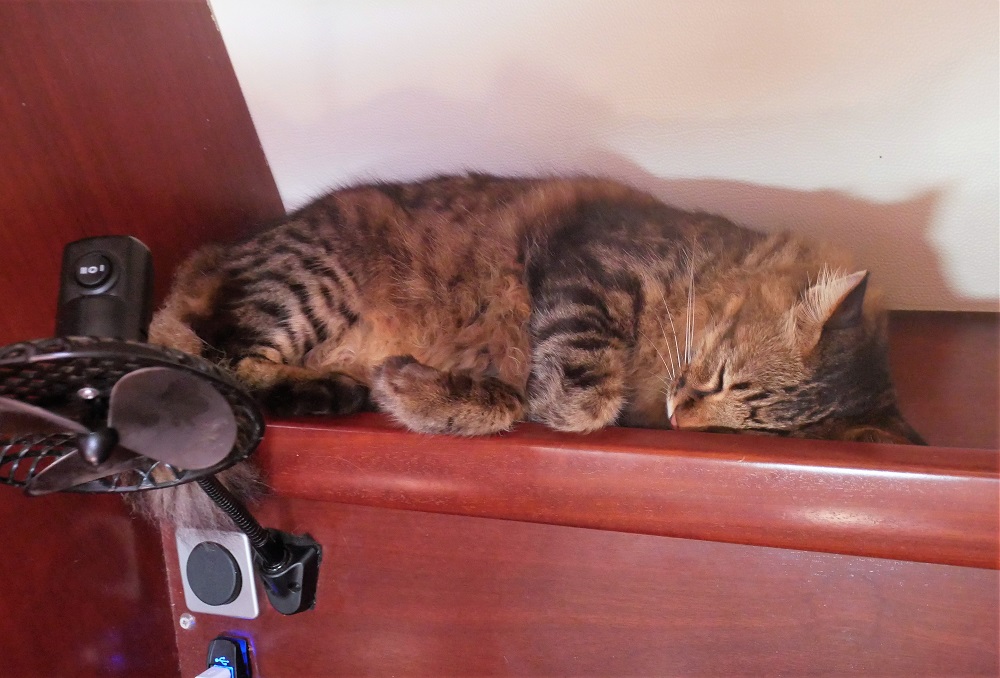
He is incredibly inactive and very tolerant, sleeping most of the day away and simply stretching out further with a deep purr as someone strokes him, only really waking up when he’s hungry, which sees him begging for fish by randomly attacking the ankles of anyone stepping into the kitchen. His preferred food is small mackerels, lightly steamed, and when we catch a tuna and offer him a steaming slab of fresh sushi he eyes us reproachfully and stretches his front paws up to the top of the fridge where his chilled mackerel are kept, meowing to indicate what he wants. We’re used to overweight, grumpy Bob at home who we thought was lazy, but Paco takes lethargy to a whole new level, and I do wonder whether boat life is stimulating enough for a cat.

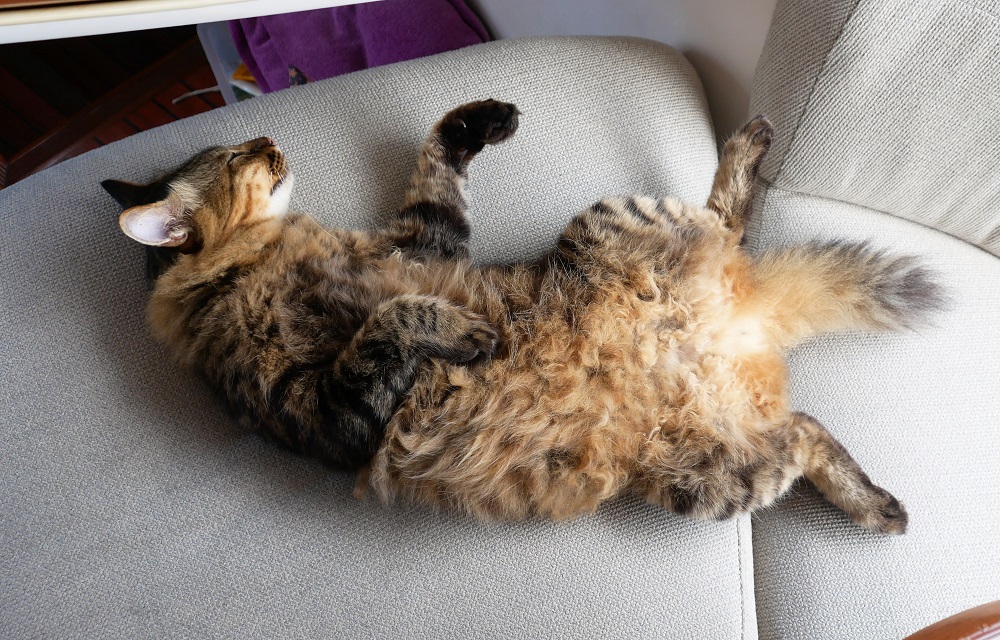
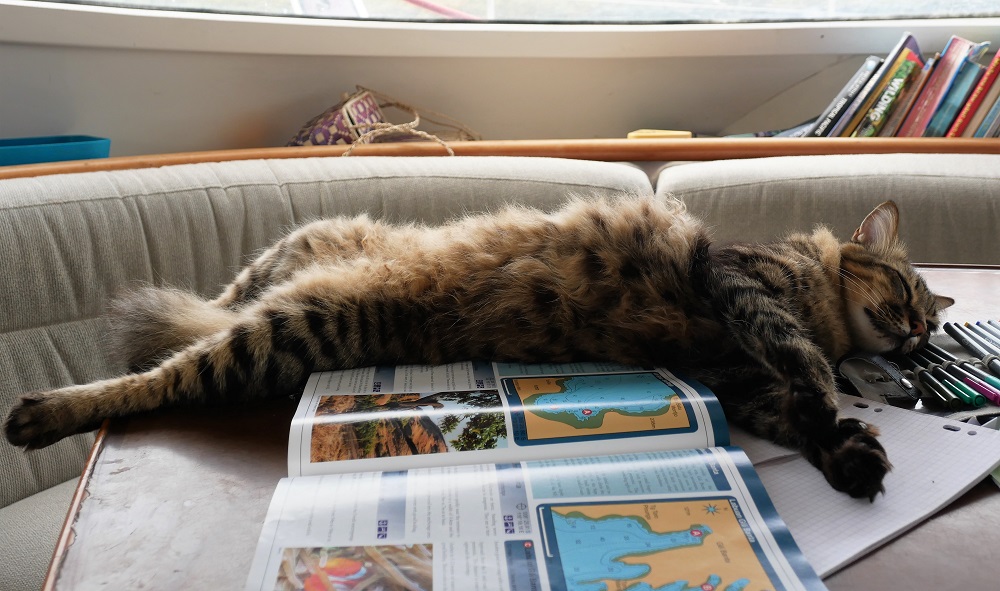
“Mummy,” said Lukie one afternoon as we were surveying Paco’s sleeping shape. “If you were Paco, would you rather stay in a Malaysian fish market where you could explore wherever you wanted, or come and live on Bob the Cat where there’s nowhere to go and nothing to chase, but there’s plenty to eat and you don’t get run over by a motorbike?”
A hard choice indeed – the cats we see on the streets here look terrible, all missing bits of their tails (presumably from being run over by the ever-present motorbikes), limping around with manky eyes and infected wounds dripping pus onto the pavement. There is no doubt that Paco’s life is easier, and he doesn’t seem unhappy, just strangely inert for a relatively young cat.
“Probably live on Bob the Cat,” I said. “But all the same, we better play a bit with him, keep him active.”

Our last stop in Komodo was Banta Island, an uninhabited volcanic island north-west of the Park where we relished a solitude not normally encountered in the busy Indonesian waters.


“Mummy,” said Lukie, as we were climbing the hill behind the anchorage on a stunning afternoon. “Would you rather surf a tsunami or dive a whirlpool?”
Hmm. “Dive a whirlpool,” I said remembering some wonderful times in Scotland involving diving deceptively placid whirlpools at slack tide. “What about you, Lukie?”
“Surf a tsunami I think,” he says.
“Alright,” I said. “Then I guess we better head to Lombok!” And there on top of the hill, we turned west towards the afternoon sun, squinting our eyes to look in the direction of our next adventure.

 SV Bob The Cat