
It was early morning. David and I were standing on the bow of Bob the Cat looking out over Amed Bay in northern Bali. It was a scenic shoreline, dominated to the west by the imposing volcano of Gunung Agung and to the east by the rugged hills of the north-eastern Bali interior. In front of the green mountains was a thin line of flat black sand shore backed by luscious palm trees. The morning was quiet, Hindu Bali being the first populated place in Indonesia where we had not been woken by the melodic singing from a mosque, and serene little temples carved from heavy volcanic rock were visible along the cliffs towards the western end of the bay.
Not that we were looking at the scenery. We were anxiously focused on the nearshore conditions.
“Do you think it’s going to be OK?” I asked nervously.
“It’s pretty rough, that’s for sure,” he replied. “We don’t want him to drown – that would be a tragedy.”
“Maybe we should move?” I suggested. “Go to a calmer place?”
“Yeah, we could do. But the next sheltered anchorage is 40 miles away, though. It’ll take us eight hours with these light winds.”
The day had come where we had to part with Paco the Cat and we were worried about how to get him ashore. There was a bit of a swell rolling into the bay and on the shore the waves were pounding brutally against the steep, back sand beaches. We’d gone ashore the day before to get some dive tanks filled and had both gotten completely soaked whilst trying to hold the dinghy in the crashing surf and loading and offloading the cylinders. Now we were worried about how to safely get the cat onshore.
“The last thing we want is another dinghy capsize,” said David. “We don’t want him to get wet, ideally.”
I looked at the shoreline. From afar the waves looked small, narrow white undulating lines snaking their way up and down the black beach, insignificant foam splashing over distant sand. But landing a dinghy in anything but the smallest waves quickly becomes quite an ordeal. We can always anchor the dinghy off the shore and swim in but trying to keep a caged cat comfortably dry would be problematic.
“We could bring a boogie board,” I suggested. “Put the cage on top and surf him in on the white water…”
David looked at me sceptically. “He’ll drown if the cage goes under,” he said. He righted himself and turned towards the stern where the dinghy was tied on. “Maybe it’s better around the corner. I’ll take the dinghy over and see if there is a better landing spot there. If not, I guess we’ll have to move.”

The transfer had been planned for two weeks. Antonella and Pierrot, Paco’s owners, live in Bali, and whilst Pierrot was still in Europe, Antonella was ready to get her cat back. Their boat was on a mooring in the south of Bali, and we had agreed to drop Paco off on our way north from Lombok, making the north coast of Bali the ideal meeting spot. That morning, Antonella was on her way by road, and we had made ready for his departure, packed his little bag containing cat passport, anti-flea shampoo and fluffy towel, prepared the kids mentally for saying goodbye to him. Everything was ready. Now we just needed to keep him safe for the shore landing and all would be well.

We’d just spent ten days in the Gili Isles in north-western Lombok. Part of the well-trodden Indonesian budget tourist path, Lombok’s Gili isles (Gili means small island in the local dialect) are a quieter version of the intense scene of neighbouring Bali.
It was a bit of a shock to the system to suddenly find ourselves in tourist-land. We first got a feel for the culture-clash that tourism brings to Indonesia on Lombok’s south coast where, on the kite beach, groups of local women would wander, clad in full hijabs, taking selfies against the wild ocean backdrop, whilst on the water a bikini-clad kitesurfing instructor was carving close to the water’s edge doing impressive tricks. She must have been getting crazy sunburnt in the searing sun, and also cold in the 20-knot breeze, but she continued undeterred, oblivious to the irony of parading a thong bikini a stone’s throw away from severely veiled local women. On the same beach we witnessed a skimpily clad honeymooning couple kissing in a suggestively close stance on the beach only to be met with loud cries of ‘no, no,’ from a group of local, hijab-wearing women and their accompanying menfolk who happened to be walking past.
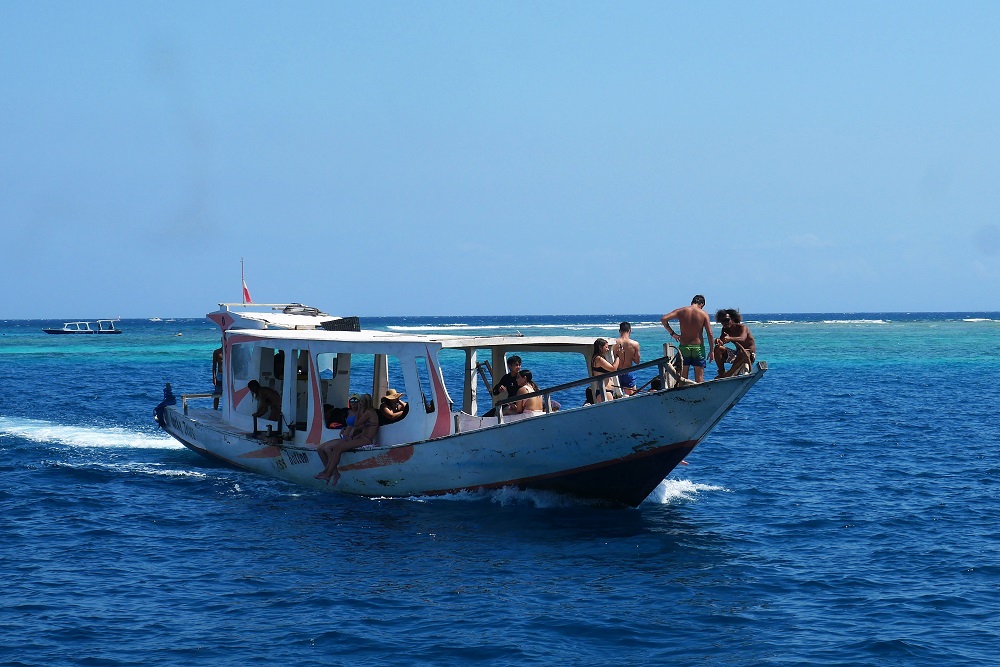

The Gilies take western tourism to an entirely new level. Here, ferries disgorge scores of bathing suit and board-short wearing 20-year-olds onto the floating jetty about 10 times a day, and the little island is full of young, tanned and largely naked Europeans, Asians and Australians. There’s a sign at the entrance to the town saying ‘please respect our culture,’ the local women wear veils covering their hair, and the local mosque blasts the prayers out loudly five times a day, but otherwise you could be in Ibiza, the tourists strutting about in their tight-fitting speedos, thong bikinis and high-heeled flip flops. We were anchored off Gili Air, a small round island fringed with white sand beaches leading into turquoise water sheltered behind a scenic barrier reef. The island is full of hotels and homestays, the premium water-front real estate lined with waterfront bars, hotels and restaurants offering bean bags and pastel painted loungers for punters to relax and enjoy the views. Every night the island kicks back during the three-hour long happy hour sessions where guests are served by busy waiters staggering under the weight of trays laden with pizzas and dew-dropped, crystal-rimmed margaritas, sidestepping the crowds to the beat of Ibiza Chill compilations.


It’s a world away from the Indonesia we’ve seen on our seven-month long stint travelling the country, and whilst at first a bit of a shock to the senses (the blatant bikinis, bars, blaring western music), Gili Air is quite a nice little holiday place, an incredibly easy place to spend a week, a holiday away from the challenges of our normal life on the boat in remote Indonesia.
Here, everything was easy. There was a well-maintained floating dinghy dock, so we didn’t have to land the tender amongst rubbish piles on a smelly beach or tie up to a dilapidated jetty featuring rusty nails sticking out perilously close to our inflatable. Here you could wear a singlet and shorts without offending anybody, be anonymous amongst hordes of red-faced tourists, and purchase anything that you might need. Everybody on the island spoke English and the shops were stuffed with items catering to western tastes, showcasing wares we hadn’t seen in almost a year like tahini, couscous, walnuts and sunblock. There were ten dive shops on the island and about 60 snorkel tour operators, scenic underwater landscape including a sculpture park, a lovely surf break on the southern reef just next to the anchorage, as well as white beaches, clean azure waters and the obligatory touristy shops selling clothes, souvenirs and massages. The island is so small you can walk around it in an hour, and is free of motor vehicles, offering bike rental and horse-drawn carts as the only means of transport other than walking.

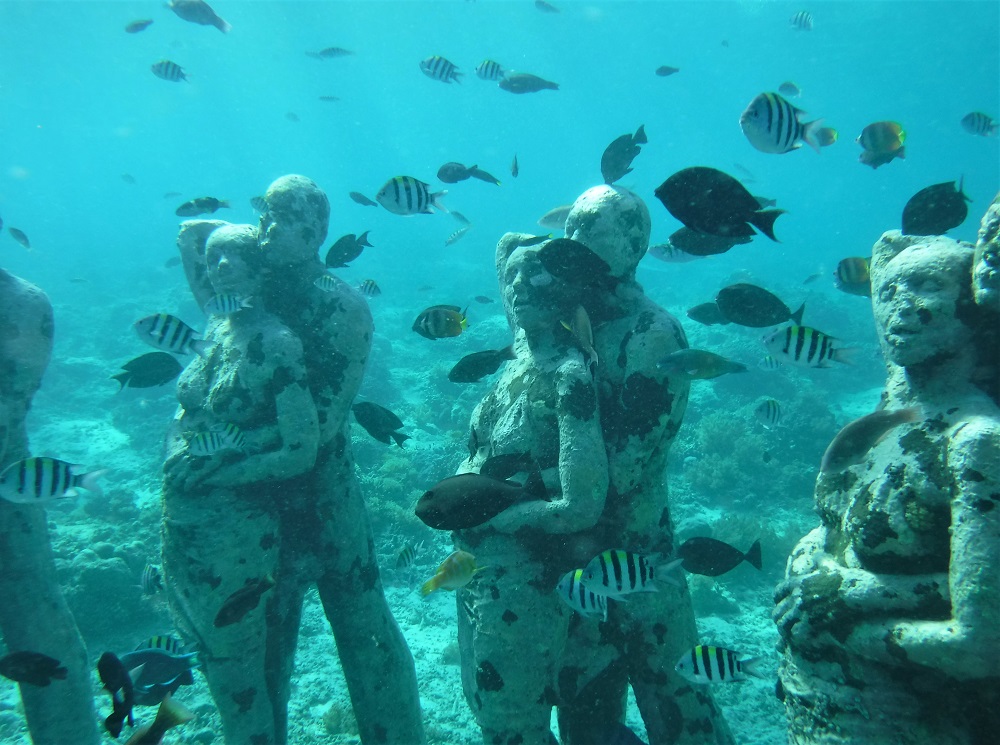
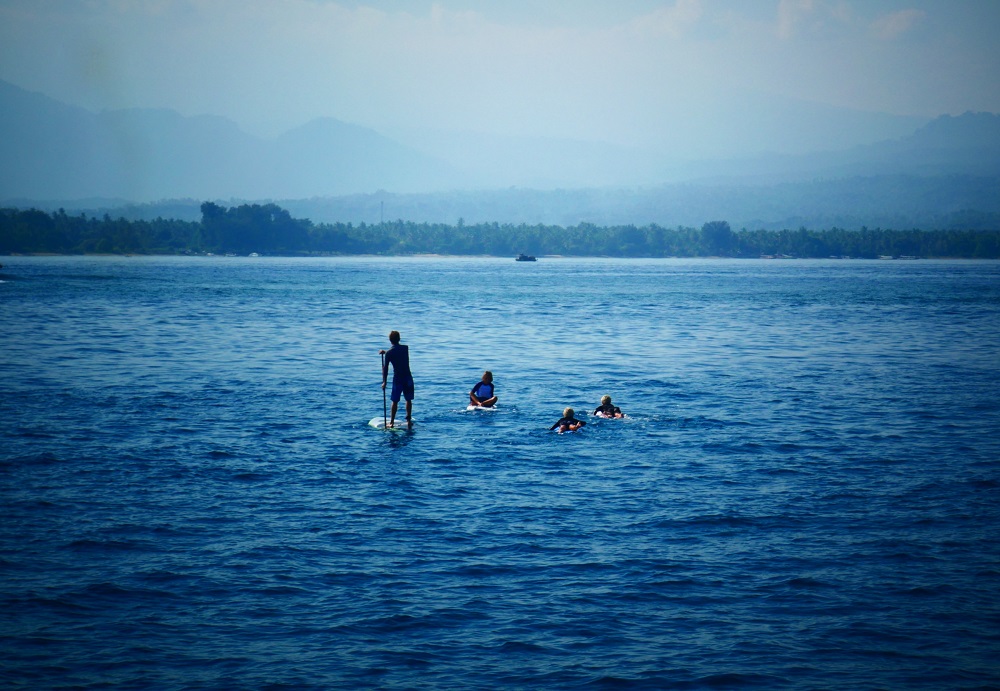

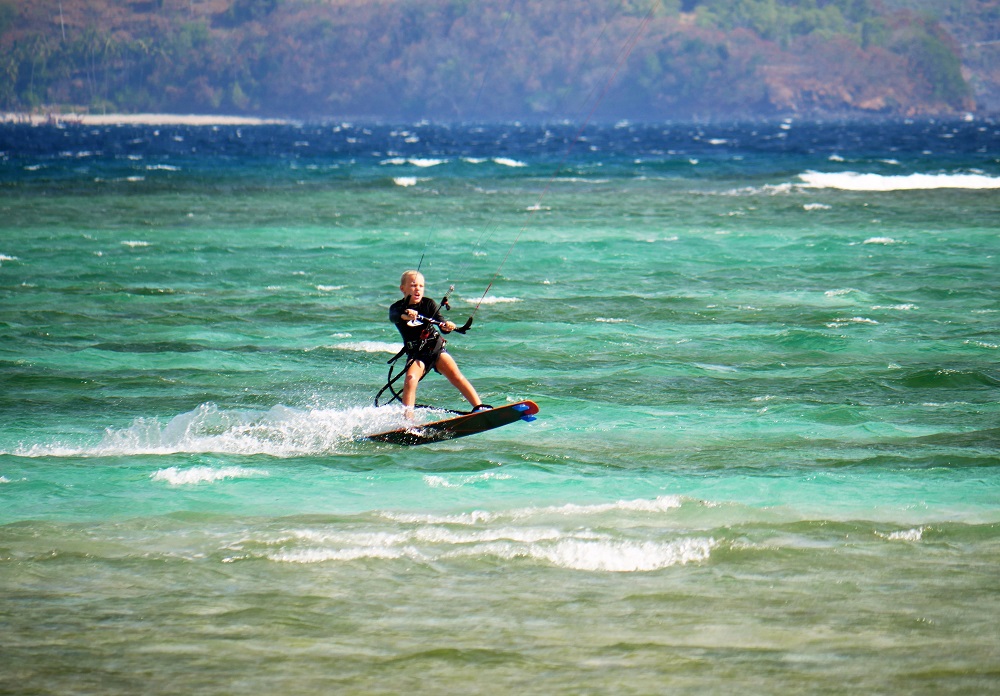
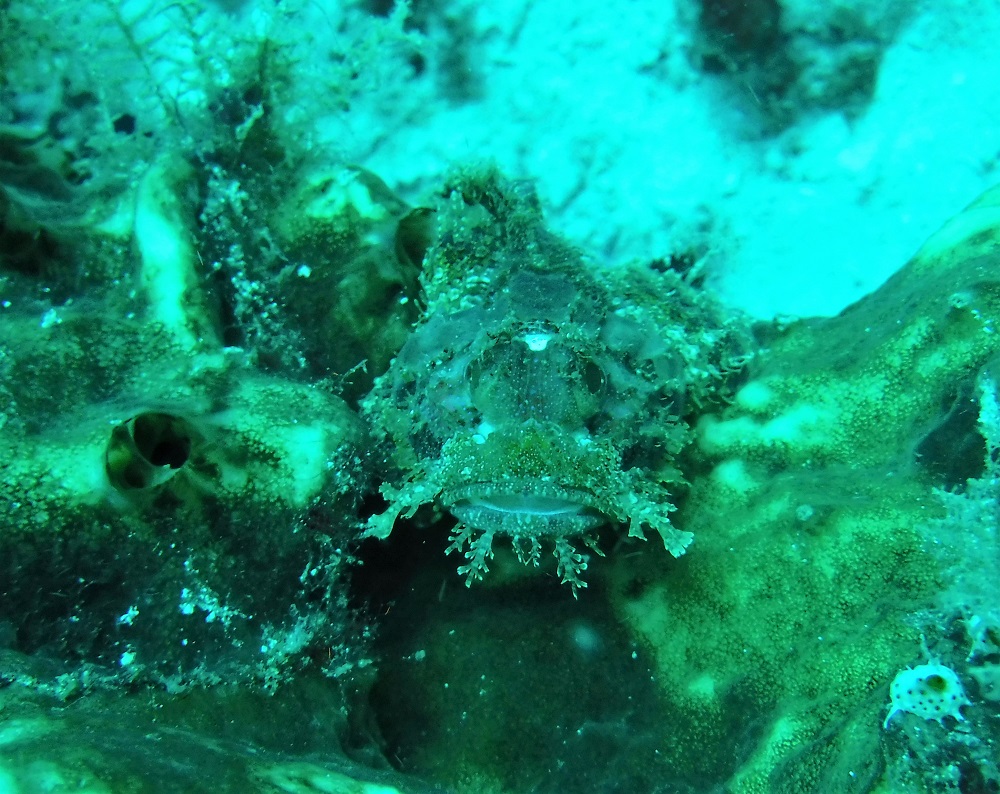
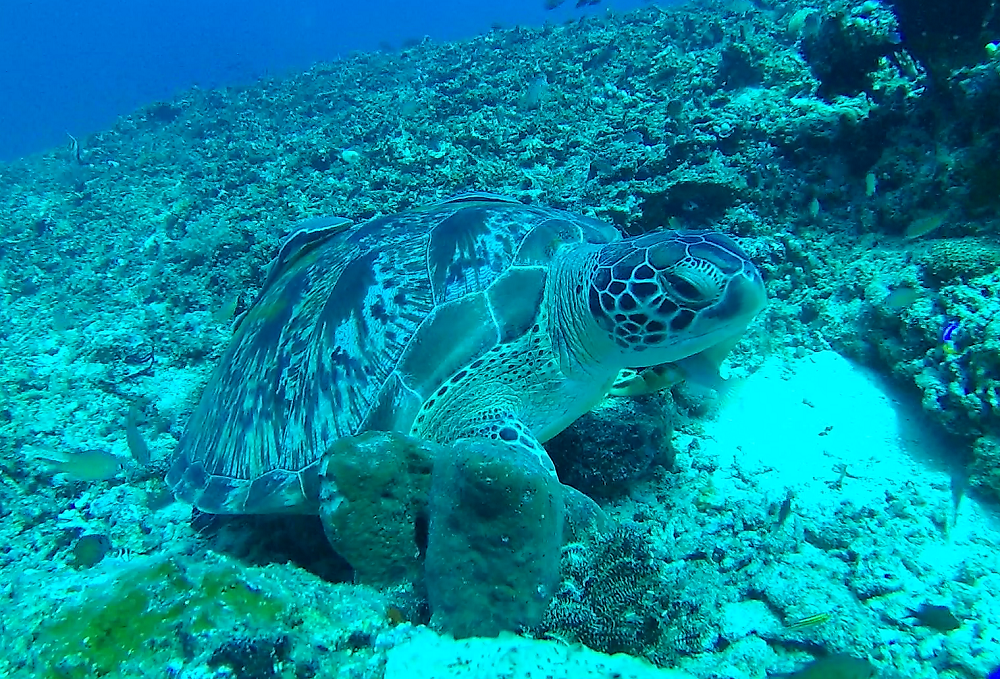
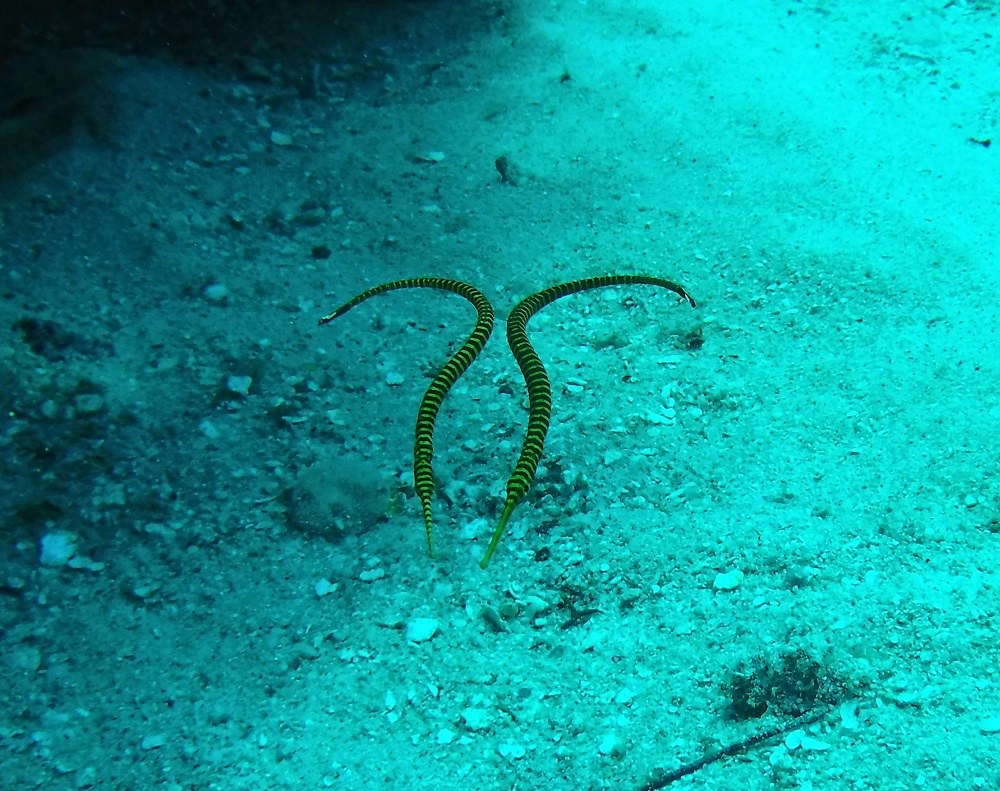
It was a perfect place to relax, and we enjoyed our stay there, catching up with friends, eating out and drinking cocktails on the beach overlooking the sunset, biking around the island, and snorkelling, diving, surfing and kitesurfing the surrounds. Matias took the opportunity to complete the PADI Junior Open Water course with a dive shop (my formal instructor registration lapsed long ago when I stopped paying the steep PADI fees, so I can’t give him the certification card) and enjoyed days on the dive boat by himself, coming back a proudly certified diver full of tales of swimming pool skills, shipwrecks and scorpion fish. Our diving there was amazing, full of scenic underwater landscapes and rare and cryptic lifeforms.




After nine days in the Gilies we were ready to leave, feeling like we had seen most of the sights and that we’d had our fill of the endless tourist crowds and the numerous ferries and tour boats speeding in the anchorage which left Bob heaving in their wakes, glasses and plates flying about. Antonella was eagerly awaiting the Paco delivery, and we left for Amed in Bali so that we could be ready and waiting when she came by road.
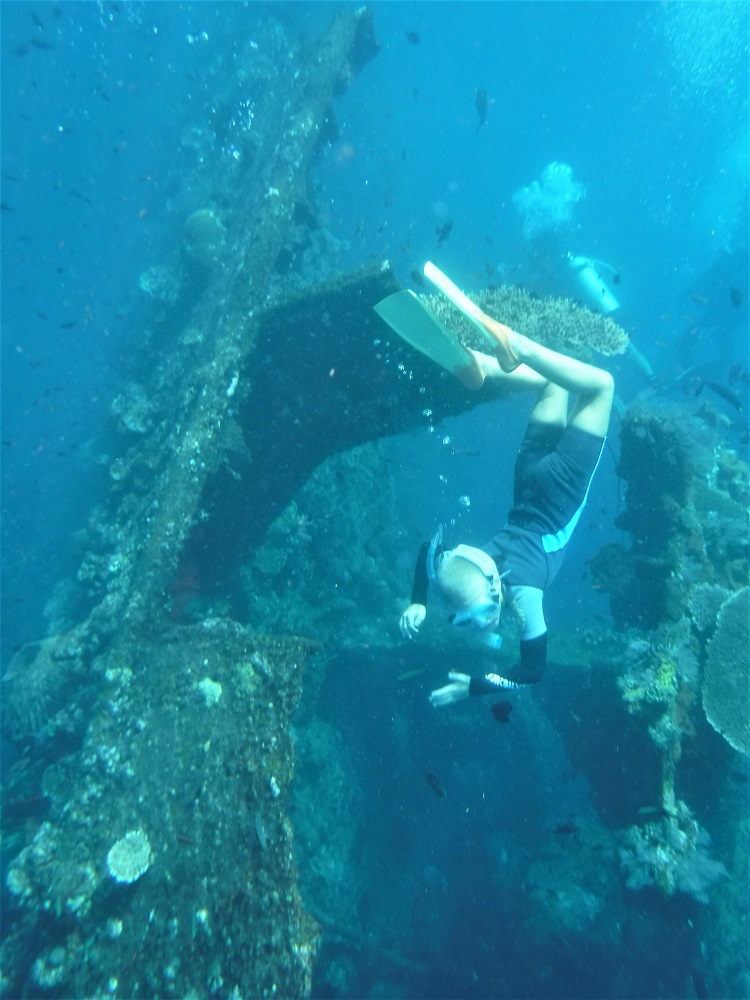
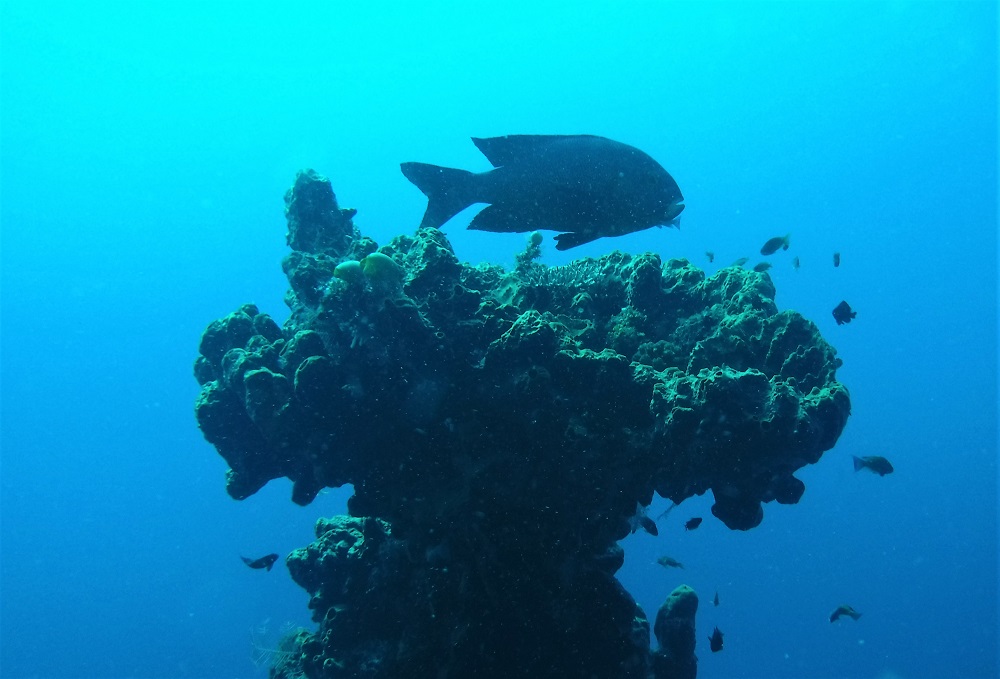
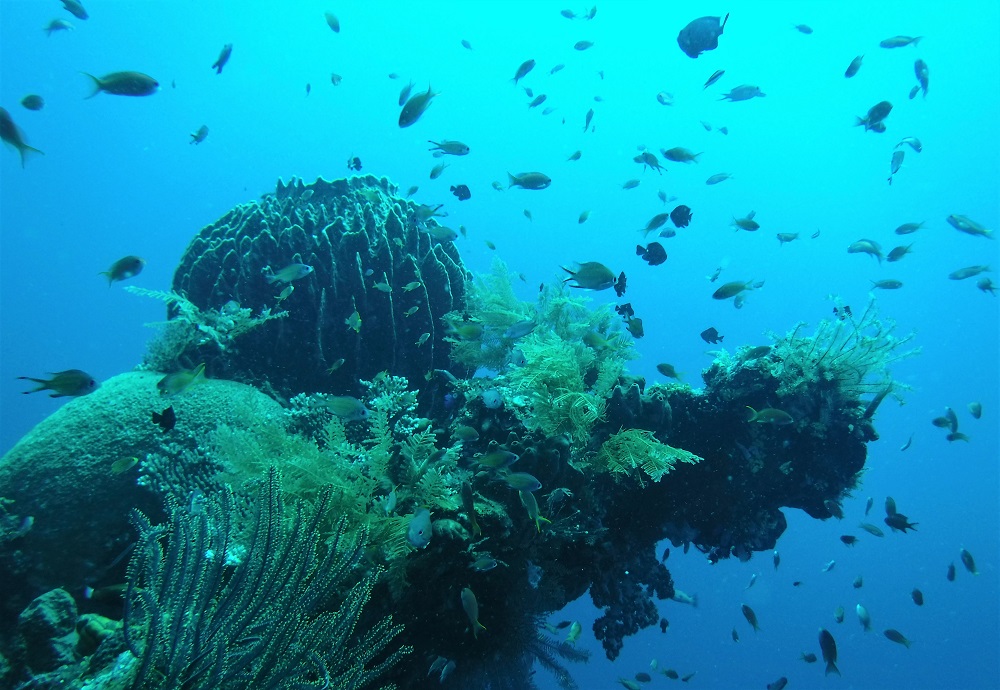
In Bali, before Antonella arrived, we had time to do a quick dive of the wreck of the USAT Liberty, a US army cargo ship which was torpedoed by a Japanese submarine in 1942 and beached in Tulamben Bay, near Amed – a wonderful coral-encrusted wreck lying in 5-30 m of water which was an exciting first dive as a qualified diver for Matias.

Now, a day later, it was time to get serious about getting Paco ashore. I walked to the back of the boat as David was coming back from his dinghy reconnaissance.
“How was it? Any calmer over there?” I asked.
He climbed on board the boat. “It’s a bit better at the other end of the bay.” He rubbed his chin and started laughing. “I’m making it sound like surfing Jaws, aren’t I? It won’t be that bad, I’m sure we can do it…” He stroked Paco who was approaching him, rubbing against his legs. “It’ll be OK, Paco, we won’t drown you!”

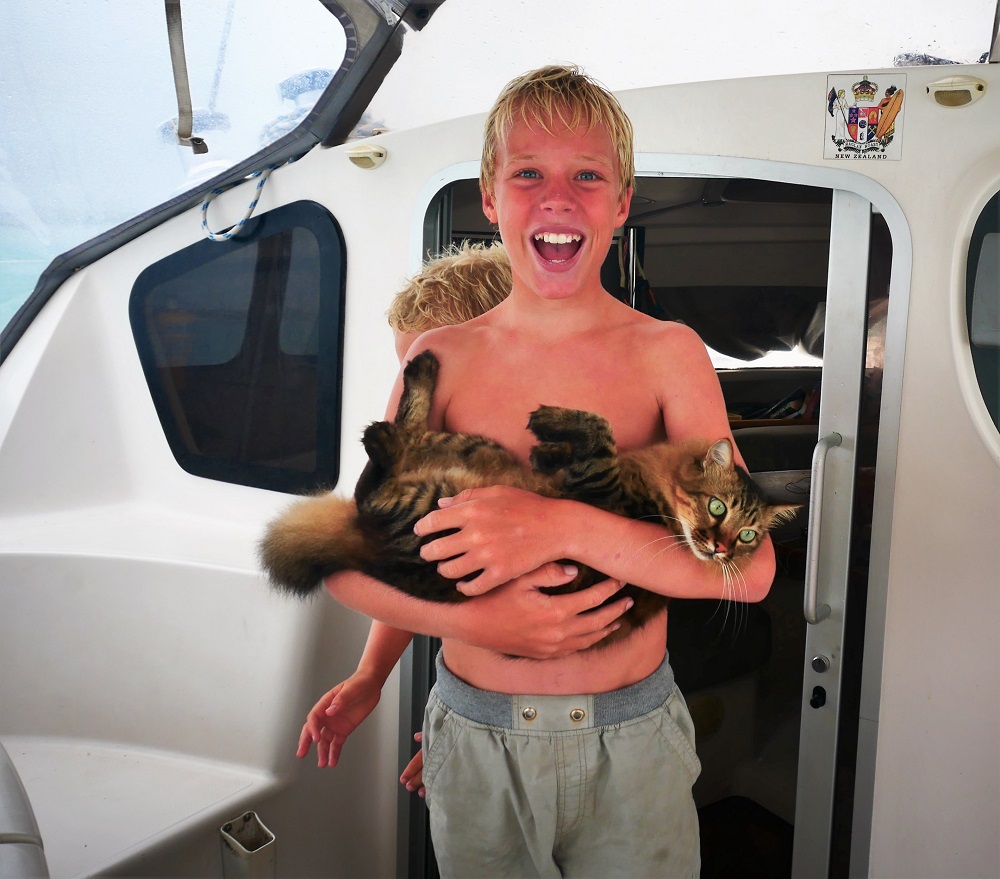
In the end the transfer went smooth, David holding the dinghy in place in the surf, Antonella lifting Paco packed away in his little plastic cage and holding him high as she ran up the shore. And just like that he was off Bob the Cat and out of our lives, leaving a huge Paco-shaped hole in our hearts, the despair giving rise to eloquent art such as this poem by Matias which he penned for homeschooling a day after Paco’s departure:
Paco Power
Look at Paco now,
Soft fur, green eyes, belly rubbed, whiskery,
Staring at you,
Squirrel tail, furry face, woolly belly, fluffball.

 SV Bob The Cat