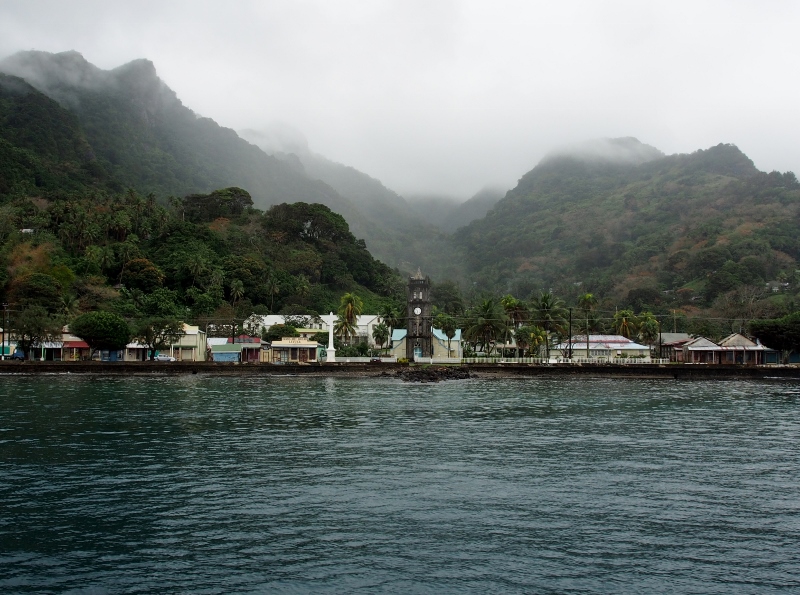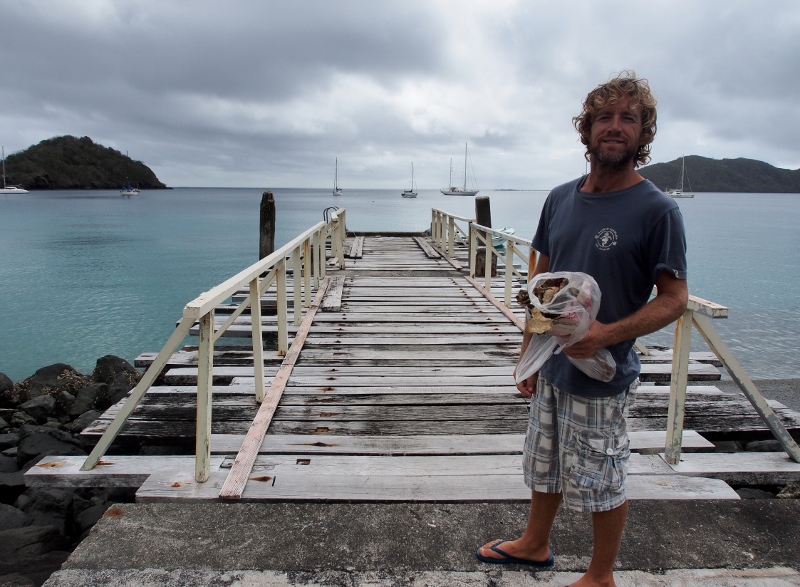
Vanuatu – a quick stop

Live volcano
On the edge of a live volcano

“Woah”, shouted Matias. “Look, it’s exploding”.

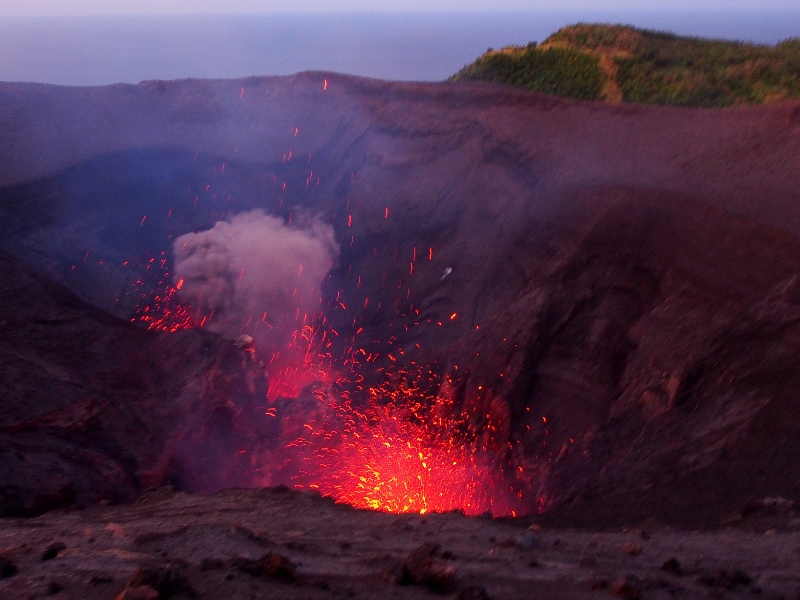
Grabbing my hand he pulled me away from the dark edge and stopped to watch from a safe distance, ready to run if necessary. The mountain roared and crackled, shooting up scores of glowing rocks from its molten interior, the luminous fragments thrown high up into the sky only to drop back down into the crater against the background of sparks fanning off in all directions. Billows of thick black smoke rose and fragments of ash and dust blew up and around, landing in our faces and covering our clothes. It tasted of sulphur and sand, a sour, gritty paste coating our nostrils and mouths.

Smoke rising
Smoke rising

We were perched on the rim of the caldera of Mount Yasur, cautiously peering into the famously active volcano that keeps the southern end of the Island of Tanna in Vanuatu warm. We had come here for a quick stop over on our way from Fiji to New Caledonia mainly to view the amazing volcano and to spend some money in the area which was devastated by Cyclone Pam in March this year.

Wow, it's a real volcano
Wow, it’s a real volcano, ocean in the background

Our first sight of the Mount Yasur volcano was on our approach into Vanuatu, where, on my early morning watch, I had seen the blaze lighting up the sky in the predawn light, a pinkish orange hue spreading from the top of the mountain to nearby clouds. Tired and miserably seasick, the light first had me confused – we were heading west, so the sunrise was supposed to be behind us – what was that red glow, then, dead ahead? A giant bush fire? Only once I could make out the shape of the terrain did I realise it was the volcano, spitting out flames as if to challenge the rising sun.

The beach at Port Resolution


Vanuatu is incredibly geologically active, sporting earthquakes, volcanoes, crustal uplift and subsidence in abundance within its 83 islands. When entering the anchorage at Port Resolution at the southern end of Tanna we saw steam rising from the sides of the bay, the seawater bubbling away at the margins of the rocks where a hot spring resided. Port Resolution was named by Captain Cook when he anchored in 1774, but the spot where he anchored has since been uplifted and now forms a shallow, treacherous reef.

Cook wasn’t the first European to visit; before him came Pedro Fernandes de Queirós who spotted the largest island in the group in 1606 and claimed it for Spain. Following him, the islands were rediscovered by Bougainville in 1786. However, it was Cook who charted the island group first and named the archipelago nation New Hebrides, a name that stuck until independence when it was renamed Vanuatu, from vanua (land / home) and tu (stand).

Vanuatu has been inhabited since the first Austronesians came to settle the volcanic island group from the Solomon Islands about 4000 years ago. Ni-Vanuatu (Vanuatu people) lived in relatively isolated small villages based around kinship, and warfare with neighbouring clans was common, occasionally with the aim of capturing a male or two for the coming week’s dinner. Religion was based on the worship of ancestors, and magic was eagerly practiced to ward off evil spirits. Into this society arrived increasing numbers of Europeans in the 1800s – at first Brits from Australia, later French people associated with the increased French interests in New Caledonia. With the Europeans came the usual disastrous mix of disease and weapons, which combined with blackbirding, the forced removal of adult males to work on plantations in Fiji and New Caledonia, acted to decimate the Ni-Vanuatu population. Overall, the native population plummeted from estimates of more than 1 million people prior to European contact to about 41,000 in 1938.

As colonial interests ramped up in the region, Vanuatu was claimed by both France and Great Britain. The two nations fought for many years over the control of the islands before they finally agreed on a British-French combined management of the archipelagoing in 1906. An independence movement arose in the 1970s, and after the brief Coconut War of 1980, the Republic of Vanuatu was founded.

It must have been quite a feat to unite such a diverse area. Vanuatu sports an impressive 113 distinct Austronesian languages, evolved because the mountainous terrain cuts off contact between adjacent villages. It is the most language dense area in the world, each language spoken by an average of only 2000 people. The offical languages are English and French (which nobody speak) as well as the pidgin language Bislama, which is phonetic English spoken with a French sentence structure and combined with Melanesian grammar. Bislama is hilarious, reminding us of the language spoken by the Gungans in Star Wars. Overfilled is ‘fulap tumas’; please is ‘plis’; thank you is ‘tangkyu’; very sorry is ‘sori tumas’, and a ladies bra is called a ‘basket blong titi’. Finally here are some people who can understand our boys when they are immersed in their Jar Jar Binks impersonations.

To the newcomer, Vanuatu is an incredible place. Steep rocky islands covered in lush vegetation topped with steaming volcanoes spitting out ash and fire. Third world villages with chicken, pigs and dogs rummaging in amongst houses made from Pandanus mats thrown over a wooden framework, cooking fires out the back. A water pump, donated by an Australian aid project, in the centre of the village, in constant use, swarmed by half naked, snotty nosed children with big tummies and flies in their eyes, clutching their aluminium pots. Solemn men fishing in the bay just off the village, in tiny, hand-made dug out outrigger canoes which they paddle with expert deftness. One came to ask us for fishing line (‘string’), and we happily gave him a wad of 60-pound line which would see him catch some big fish if only he could get his hands a bigger boat to allow him to go into the deeper, rougher water on the outside of the bay.

Local fisherman
Local fisherman


The poverty is palpable, with men and children wearing tattered, dirty t-shirts bearing strange slogans from foreign countries, donated by a charities to foreign aid projects. Although only slightly worse off than Fiji in terms of GDP, Vanuatu seems to us orders of magnitude poorer; perhaps it is the effect of the recent cyclone, or simply that our impressions of Fiji were biased by the wealthy resort islands with locals employed in the tourism industry. Or perhaps it is the houses – erected quickly and cheaply, ready to be blown away in a cyclone, the clusters of woven huts remind me of villages in Africa, only there the houses are sturdier. Villages are still very traditional, with sharply segregated roles and separate areas designated for men and women.

“This is where the men sit to drink kava”, said Miriam, the kindergarten teacher who was kindly showing us around the small village just behind Port Resolution. She pointed towards the village namakal, a little covered area where men drink kava.

“What about the women?” I asked. “Do they drink kava?”

“No, we’re not allowed. Western women can, but not Ni-Vanuatu”.
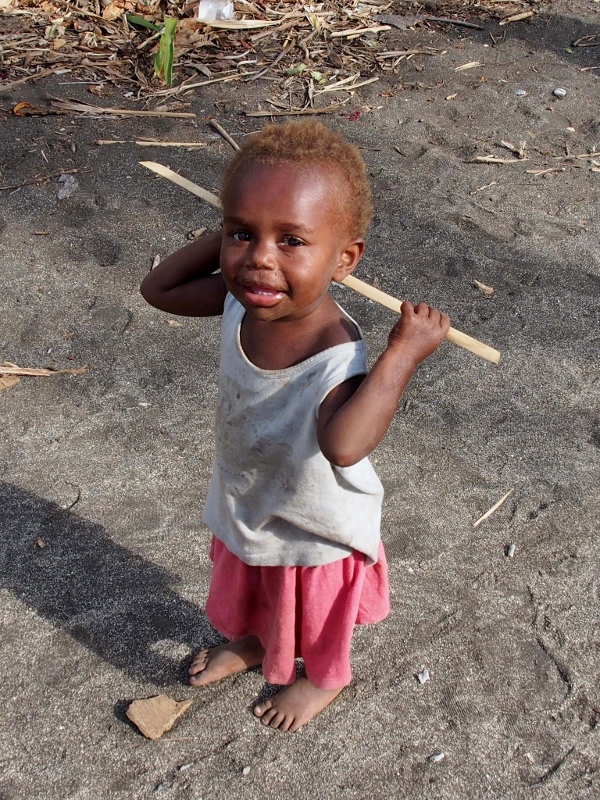
Miriam's niece, Shirley
Miriam’s niece, Shirley

We continued walking, the path weaving right in front of the namakal.

“Women can walk this way only during the day”, she said. “When the men gather to drink kava, one hour before sunset, we have to walk the other way” she gestured to a path going off to one side “so that we don’t see them. We’re not allowed to look at men drinking kava”.

“Why can’t women drink kava?”

“Because kava makes you lazy, and the women are too busy to be lazy – we have to look after the children, grow the vegetables, cook the food. We don’t have time to be lazy like the men do.”

Vanuatu women are not allowed to stand higher than a man either, or to walk over a fire, because it’s smoke may rise higher than a man. Within the village are areas set aside for women to use when they menstruate, and during their entire pregnancies they are confined to a hut.
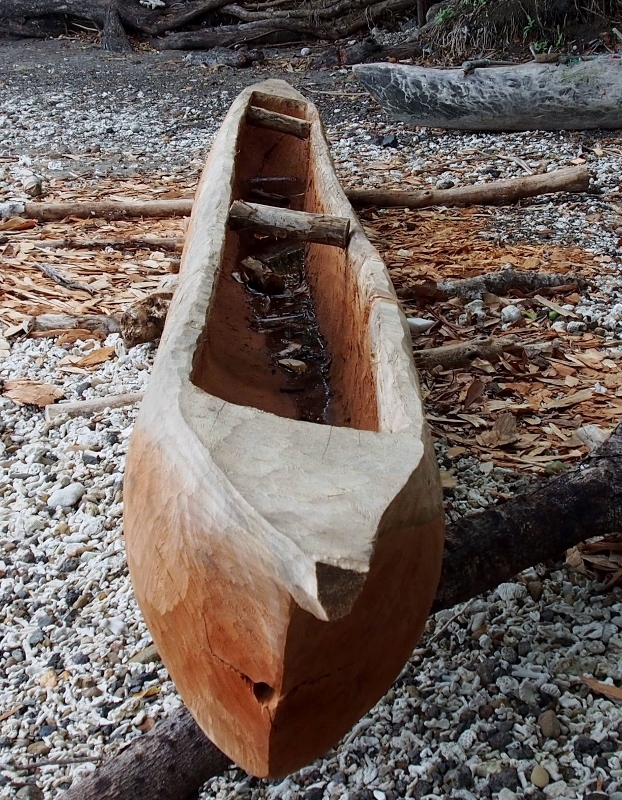
Nearly finished dug-out canoe on the beach

Miriam’s situation wasn’t easy.

“My husband left me, for a woman in Vila”, she said. “But my brothers and sisters helped me, and I stay with them”. She is one of nine, six brothers and two sisters, the brothers remaining with their mother in the village, the sisters married off and living on their husband’s compounds.

“Your English is good”, I commented. We had come to the village looking for her brother, Stanley, who arranged for volcano tours for visitors. Miriam had approached us as we stood there, looking lost, and had offered to help. A small, wiry woman of perhaps 35, clad in a loose, flowery dress, she had offered to show us the village whilst we waited for her brother. We gladly accepted – you need a local guide to enter a village, and we were keen to explore the settlement.

“I completed grade 7. After that there were no more money for school, my father said I had to start working. I’ve been teaching kindergarten at the school for more than ten years now”. She stopped on the path and turned to look up at me. “We never used to get paid, the government only pays teachers of Grade 1 up. But the community gathered some money, and now I get paid a bit”.

We asked about the cyclone.

“We all stood together, in that house.” She pointed towards a collapsed house, mats hanging off the wooden framework. “It was raining hard. It was very, very windy. A lot of damage to the village.”

Matias and Stanley jr. in front of the house where the family sheltered during Cyclone Pam
Matias and Stanley Jr. in front of the house where the family sheltered during Cyclone Pam

Cyclone Pam hit Vanuatu hard, in particular Tanna. A total of 15 or 16 people died in the cyclone, and thousands were injured. The storm formed in early March east of the Solomon Islands from where it tracked south, strengthening until it reached Category 5 Cyclone Status in mid-March, with winds peaking at 250 km/h as it directly hit Tanna Island and its more northerly neighbour, Erromango. The cyclone crippled Vanuatu’s infrastructure, compromising telecommunications and destroying hospitals, schools and water supplies. It was estimated at the time that 98% of the nation’s buildings were damaged by the storm.

In Miriam’s village in Port Resolution Bay the damage was still visible – uprooted trees, damaged huts, washed away roads. Miriam told us how they received help in the form of rice, as all their crops were destroyed.

Back on the boat we gathered all that we had that might be useful and donated it to the village – tins of food, books, pens, paper, clothing for children and adults.
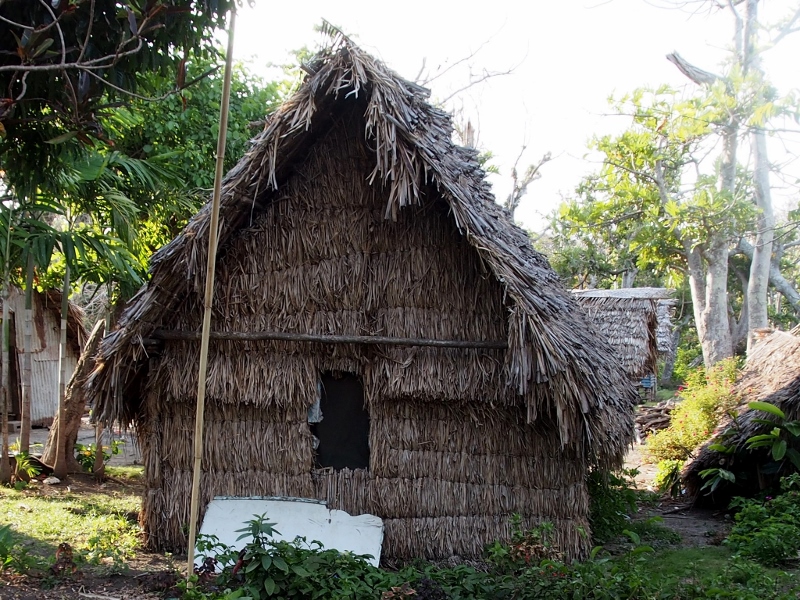
Reconstructed village hut
Village dwelling


Miriam’s village is modern, a brand new concrete school building erected after Cyclone Pam, a UNICEF tent on campus. Just around the corner is a village where locals live according to kastom – a set of traditional customs and taboos. Here men wear only nambas (penis wrappers) and women just grass skirts, living life much the same way their ancestors did a thousand years ago. In these kastom villages Christianity was spurned in favour of the infinitely more exotic John Frum religion, a Cargo Cult (a movement seeking to obtain material wealth through magic) centred on the belief in a mythical messianic figure named John Frum promising Melanesian deliverance. The phenomenon started in the 1940s when US forces landed on the islands, stirring the imagination of islanders with their seemingly unlimited material wealth, fresh supplies (cargo) being air dropped as if by magic every week or two. The cults arose when charismatic leaders had kava-induced visions commanding them to persuade followers that the worship of certain “Americans” (like the mythical John Frum) would lead to unlimited material wealth like that enjoyed by the American forces. All they had to do to obtain the goods was to mimic the day-to-day activities of the US soldiers, leading to a host of men in Tanna performing military drills with sticks for rifles, sitting in makeshift control towers wearing coconut headphones and waving landing signals on quickly cleared runways in the jungle in the belief that this would attract the cargo. Although less popular now than 50 years ago (some adherents impatiently dropped off when the promised wealth failed to materialise), John Frum today is both a religion and a political party with a member in Parliament.

Lukie on the beach just around the corner from a kastom village

Even more peculiar is the Prince Philip Movement on the other side of the island, where villagers of the Yaohnanen tribe worship Prince Philip, believing him to fulfill the ancient myth of the pale-skinned son of a mountain spirit who ventured overseas to look for a powerful woman to marry. When Prince Philip visited the island with the clearly important Queen Elizabeth in 1974, villagers rejoiced at the opportunity of seeing their deity firsthand.

It is easy to laugh at these practices, but I guess most religious beliefs are hard for outsiders to understand. Cargo Cults certainly served a purpose to reinforce social relationships that were under stress in a changing world, and even if the cargo never materialised, who can blame them for hoping? When asked how long they were going to wait for, a local man allegedly replied back in 2003 “We can wait for much longer. Christians have been waiting for thousands of years, we’ve only been waiting for 63”.

OLYMPUS DIGITAL CAMERA

Back on the volcano magic was certainly in the air as darkness fell, obscuring the sharp drop-off immediately in front of us and leaving us suspended in thick blackness, peering at the spectacular light show on offer. Thunder roared and crackled as luminous rocks the size of cars, nay buses, were spat out high when the mountain belched again, glowing sparks spraying the heavens. Oddly, the scene felt safer in the dark when we couldn’t see how just close we were to the abyss into the inferno. Had the mountain been almost anywhere else in the world solid bars would have kept tourists from plummeting into the depths, but this being Vanuatu there were no railings to cling onto and no lit path to follow on our way back down the mountain. So we stumbled down using our dim head torches, stubbing our toes against fresh lava deposits, Lukie falling over once or twice, until we finally reached the car park where Belbup, our driver, was waiting to take us back to Bob in Resolution Bay.

OLYMPUS DIGITAL CAMERA

Moce Fiji

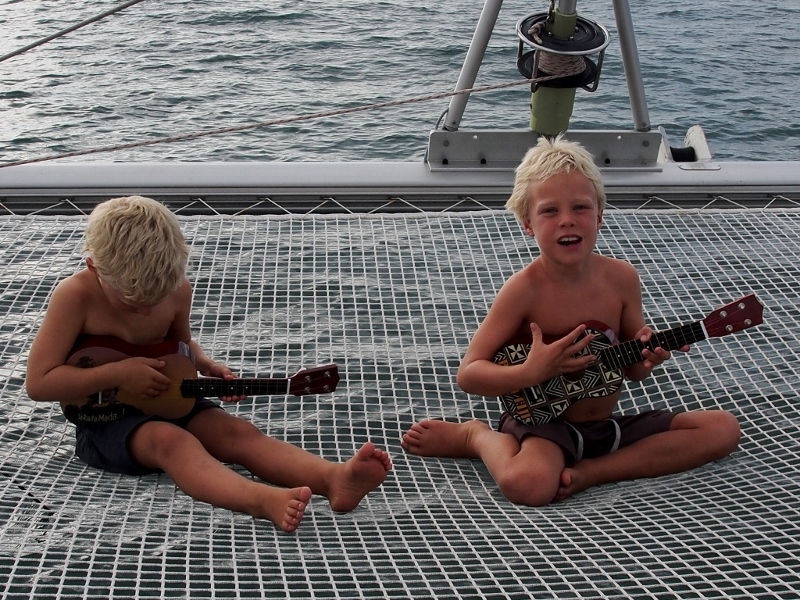
Thank you Noah and Kai for the ukuleles
Two man band – thank you Noah and Kai for the ukuleles

“Mummy, why is there not very much food?” whispered Lukie, leaning forward across the table. “Is this all we’re going to get?”

“No”, I whispered back, “don’t worry, we’ll get more”.

We had told the kids that it would be fine dining, that there would be no kid’s meals, no pizza or chips. But it was a bit later than our normal dinner time, and Lukie was starving.

The waiter finished pouring the water and left.

Four prawns lay beautifully displayed in the centre of a square plate, smothered in a masala sauce, delicately decorated with thin strips of carrot, cucumber and coriander. They smelled delicious.

“Mummy, can I please have a prawn?” asked Lukie. “Or maybe two, maybe I can have Matias’s, he doesn’t like prawns”.

“Let’s save the extra one for Daddy”, I said. “It’s his birthday we’re celebrating”.

We were at the exclusive ‘1808’ restaurant, at Castaway Island Resort in the Mamanuca Group of Fiji, splurging on a gourmet meal out to celebrate David’s upcoming birthday. His birthday is tomorrow but as we’re leaving Fiji today, we thought we’d have a meal out whilst having access to a nice restaurant.
Us with Bob in the background

And it certainly was an inspiring dining experience, fusion Asian Pacific cuisine executed over a camp-out kitchen set up in the sand, overlooking the sea, the dishes arriving as they were cooked, all locally inspired sensational bursts of flavour and texture such as seawater confit of pork belly, lemongrass tea chicken with coriander salsa verde, and sizzling Yagara pepper beef. We’d had a wonderful day at the island, snorkelling the pristine reef, watching superyachts and seaplanes whizz by, relaxing one final day. And now this incredible meal to round it off with, easily the best food we’d ever had in our lives.

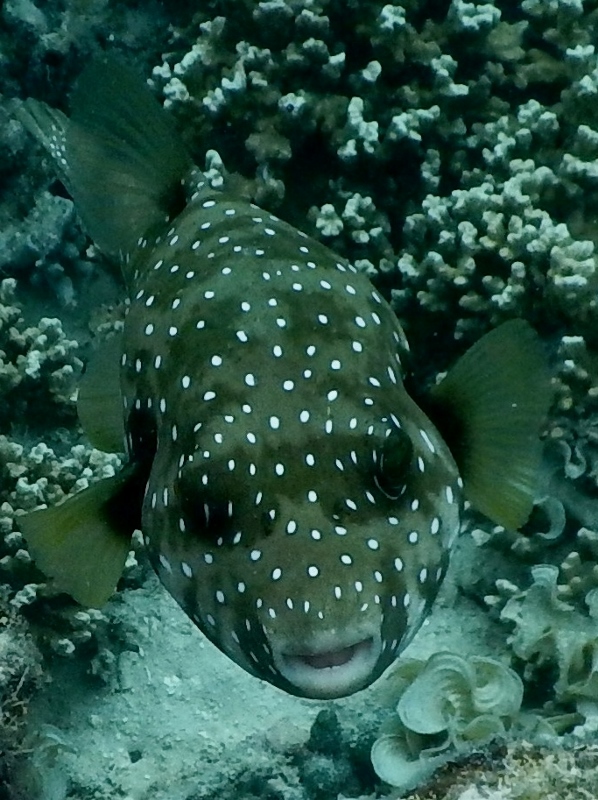
Timid white-spotted puffer

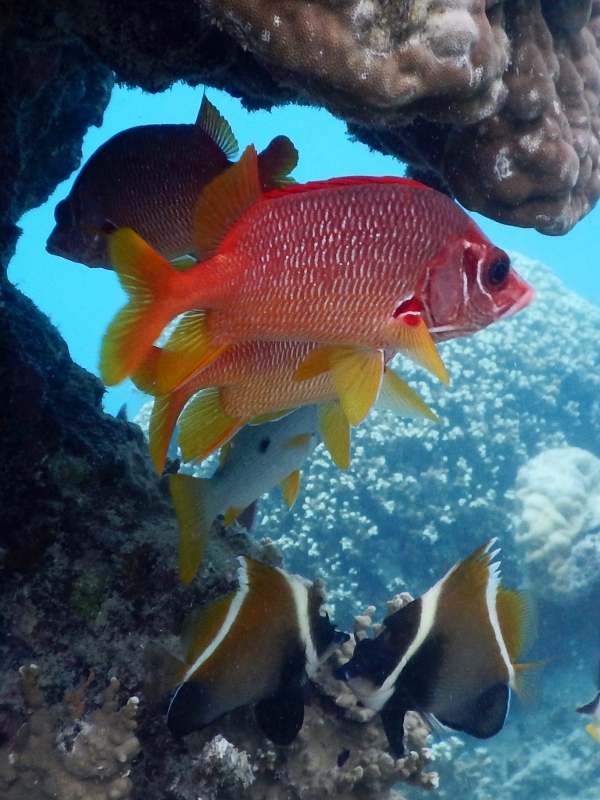
Colourful fish assembly

We were on our way to Nadi, to provision for our upcoming passage before checking out. Originally planning to go to New Caledonia, we’d made a last minute decision to stop over at Vanuatu to see the famous active volcano at Tanna on our way to New Caledonia, making the trip three nights rather than four. The weather was looking good for a departure on 2nd October, steady winds, fast sailing on a nice beam reach.

Spotted eagle ray
Spotted eagle ray

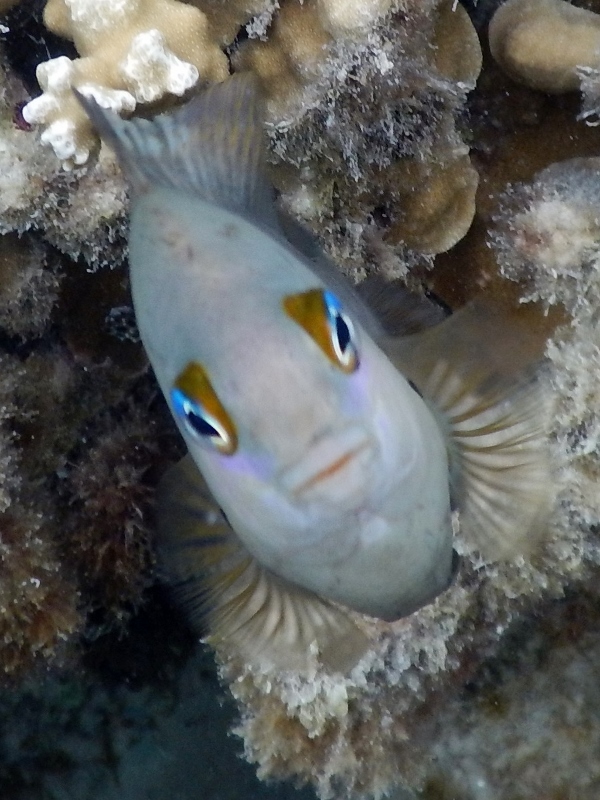
Defensive damsel on the attack

Since Alexis and Cara left us we’d been relaxing in Blue Lagoon, swimming and snorkelling, and had watched Wales beat England in the rugby at the local yacht club. Huge super yachts had arrived there and anchored some distance away and we watched the kerfuffle as the resort staff got ready for the ‘cultural welcome’ for the owners. One of the huge ships anchored looked like a research or navy ship, decked out as it was with a helicopter and a crane. The staff told us that this was the ‘shadow ship’ of the other yacht, the vessel bearing the toys for the owner to enjoy – the water skiing boat, bigger than Bob, being the tender, the helicopter for the scenic rides, the sports equipment to ensure a great experience for the owner without him having the inconvenience of having to interact with lowly helicopter mechanics and kite surfing instructors during the remainder of his stay.
Different world – I wonder how much fossil fuel they burn up in a year, two huge vessels chugging along from one desirable destination to the next, ready for the owner to descend upon them whenever he or she gets a break in their busy schedule.

Toy bearing 'shadow ship', complete with helicopter and crane
Toy bearing ‘shadow ship’, complete with helicopter and crane

In any case, I hope they enjoy Fiji as much as we have. It has been an incredible place, full of beautiful islands and underwater treasures. But the best thing has been the people – the incredibly friendly islanders, the cultural melting pot mixing Indians, Fijians and on the mainland also Chinese, resulting in breathtaking diversity on the streets and buses, delicate Indian ladies adorned in sparkly jewellery and glittery silk saris next to huge Fijian mamas sporting the signature short cropped afro and sober church wear. The food at every street vendor is wonderful – delicious curry bites dipped in hot sauce, a street version of the Indo-Fijian fusion cuisine, without the refinery of the 1808 restaurant but still tasty and at a fraction of the price.

Sparkling saris for sale

Oh, Fiji, we’ll miss you and are sad to leave – we have so enjoyed visiting here, getting to know the culture a bit, visiting villages on remote islands from east to west. Moce, and Vinaka for your hospitality.

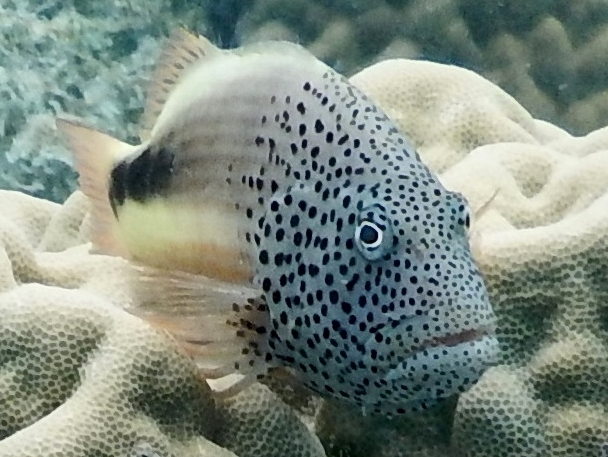
Bye bye freckled hawkfish

Disconnected

OLYMPUS DIGITAL CAMERA

By now we’ve had almost a year without much internet access, bobbing around as we do on huge oceans or sitting on remote anchorages in our little boat, blissfully unaware of what is going on in the world and shamefully uninformed of the events unfolding in the lives of many of our friends and acquaintances.

It has been interesting to go through the process of partial disconnection, confronting at times, and a real eye-opener as to the real state of onlineliness of much of the world.

We are, of course, still connected – just less connected than what we used to be back when we lived on land. On Bob the Cat, our connection to the wider world is via the Iridium satellite link through which we receive weather information and emails from close friends and family. It provides a vital link to the outside world, but it is intermittent, slow and only good for the receipt of limited data. Occasionally people try to send us photos or links to websites, leading to messages which can take anything up to a week to download, the images attached to which we never get to see because we simply can’t open them. Often, friends back home will push the reply button to an email that I have sent, unaware that the inclusion of a string of previous emails will mean that the download of their message will take twice as long.

Some of our yachting friends attach small novels to the end of their emails with exact instructions on how to limit sending lots of data, including strict instructions not to press the ‘reply’ button but instead send a new message so as to not overload the recipient. The problem is that the emails are often just strings of numbers, which friends at home naturally find hard to remember.

Although our Iridium plan is for ‘unlimited data’, the limited bandwidth means that we can’t browse the internet at all using it. And I mean not at all – it takes about a week to try to upload the front page of the Google website, and we have yet to do one successful search.

Looking ahead to distant shores

Even with our full life travelling around the perpetually sunny tropics, we do still feel like we need the internet occasionally – to download or send Customs forms, to figure out which marina to go to in a new place, to research where to go in the places we’re about to visit, and to update the blog.

When the need hits us, we have two options – either we visit an internet cafe for half a day or we buy a local SIM card and hotspot one of our mobile phones.

No online recipes for cooking our fish

In most of the places we’ve been, internet cafes have been a less than reliable option. They exist almost everywhere nowadays, but connections are often ropy to say the least. In Bora Bora we had two very expensive dinners in a yacht club in the hope that we could update the blog, to no avail. In Galapagos, the connections in the internet cafe timed out again and again, leaving us with downloaded emails that we couldn’t reply to and no wiser as to where to send our leaving forms should we ever succeed in fully downloading them. Our laptops are old with shocking batteries which means that even if a device is fully charged, we get a maximum of 20 minutes staring into a screen darkened by a power saving reduced backlight, rendering the images on the screen largely indecipherable against the backdrop of bright tropical daylight, our sweaty fingers feverishly maneuvering the mouse, trying to upload pictures against the relentlessly ticking clock of steadily reducing battery power. Some places have power points available for customers, and we’ve sat for hours, drinking one grapefruit juice after another whilst catching up on import regulations for Tonga or emailing potential brokers for selling the boat in New Caledonia.

SIM cards are available in most places, but as we have to pay overprice for the data we use hotspotting the mobile, we have to be rather strict about internet usage. Things like Facebook are prohibitively expensive; just a simple log-on can cost hundreds of megabytes of data because of the upload of scores of photos in the posts we’re anticipated to scroll through. I was never a big Facebook poster before we left, but I used to log in from time to time, quietly stalking the lives of more actively posting friends and acquaintances. Now I only use Facebook to quickly put up a link to my blog, and it’s been almost a year since I’ve been able to scroll through the lives of others. Which means that I’m woefully out of touch with what people are having for dinner, where they’re holidaying and the achievements of their incredibly talented offspring. I no longer know whose daughter won Player of the Day at soccer, whose son scored highly at the regional swimming competition or whose beloved child aced the spelling bee at school. There is a gap in my life which used to be filled with pictures of the fancy houses / cars / jetskis purchased by wealthy colleagues, the gruelling sporting events completed by people I went to primary school with, and the garage sales raising funds for Plunket in my local community. Add to that the fact that I’m totally out of touch with the latest throng of hilarious cat videos, and you can see why I feel so disconnected.

Lukie browsing a well-thumbed copy of Captain Underpants
No new books – Lukie browsing a well-thumbed copy of Captain Underpants

It is not just my voyeuristic self that has noticed the change. We all miss the instant access to information that we’ve grown accustomed to from our settled life – instant answers to queries satisfied only by a quick peek at Wikipedia, the aimless searching for stuff that would be incredibly useful for our homeschooling daily life, one query following another to explore a topic according to our fancy. With proper internet access we could have learned so much more, could have easily targeted the schooling to make it super relevant to the places we have visited. Instead, we’ve found ourselves forced to go ashore, visit locals, go to museums, ask questions and spend hours in bookshops looking up guidebooks, swapping precious Caribbean fish guides for thin volumes describing the culture of Pacific peoples.

No internet means that it is hard to come by information on fiddler crabs
No internet means no information on fiddler crabs

I grew up like that, of course – back when research meant a visit to a library, when you had to wait a month for a copy of a research paper from a journal held in a distant library. Nowadays our living rooms have taken over from libraries as places of research, the latter becoming largely obsolete buildings housing out-of-date printed material, offering mum and bub toddler time and displaying tattered copies of children’s books.

The connectedness we took for granted in our home life is definitely compromised out here, on the ocean, in the Caribbean, Central America and the Pacific. At home we read exciting articles in New Scientist describing the increased internet access in developing countries, outlining how former ‘dark’ continents have become lit by the blue-white glow from countless wireless devices, waved about by rich and poor alike. That is not quite how it seems where we’ve been – we’ve got more of a dusky impression of the state of internet accessibility.

Old-fashioned entertainment

It isn’t at all bad to be disconnected, of course. We avoid the tedious day to day news and only hear the really big stuff, like the insane rise of house prices in Auckland. The downfall of Tony Abbott or the change of Labour Party leadership in New Zealand takes months to filter through. And nothing quite beats the thrill of arriving somewhere with internet access, when we get out the Kindles and start downloading reading material, Matias reading non-stop for days afterwards, completely submerged in the magic world of Harry Potter, Demon Dentists and I Survived books.

Purple imagination
Purple imagination

We trust that we’ll find out about the important stuff when we need to – and generally we do. We know when the next Rugby World Cup game is on, and which village we can watch it in, because the locals here are crazy about rugby. We found out in time about the tsunami that struck Fiji two weeks ago, and David stayed up all night to watch the depth sounder show the slow rise of Bob as she bobbed gently up and down atop the 3/4 of a metre wave that passed under us in the spot we were anchored in.

The record of a tsunami
The record of an overnight tsunami

We know when the sun is rising in the morning, when it sets at night, and whether a full moon is likely to grace us with its presence on our lonely night watches on the way to Vanuatu. The rest can wait until we get back home, and in the meantime we hope our friends will excuse the lack of ‘likes’ we offer their online existence – you are in our thoughts and hearts, we just don’t have enough bandwidth to show our appreciation through Facebook.

Mega moon over the anchorage

Fiji – Mamanucas and Yasawas with the Berthot-Craigs

Alexis and the crew
Alexis and the crew

“Kids, there’s lunch”, we called out over the water.

The boys didn’t turn around. They were bent over something in the water, peering out over the side of the kayak.

“Come back”, we shouted. “Lunch is ready”.

Lukie reluctantly turned, causing the kayak to wobble violently.

“We’re fishing”, he shouted. “We caught stuff”.

“Well, bring it back”, we replied. “And come and have lunch”.

After another ten minutes they started on their way back, Matias heaving the paddle, Lukie and Noah bent over the seat of the kayak.

“We caught seahorses, and baby fish”, they exclaimed as they came closer to the boat. “They’re in the seaweed. We made a habitat. It’s in water in the bottom of the kayak. Have a look”.

And there it was, a thick wad of seaweed in a pool of water at the bottom of the kayak. I brought out a container and helped them transfer their treasure safely into it. There were indeed baby fish, including tiny pipefish that resembled seahorses, feebly swimming in amongst the bulbous seaweed floating in the bucket.

Double jump: Matias and Noah
Noah in the ropes
Noah in the ropes

It was Noah’s first day on the boat, and he’d settled right into it, gamely jumping in the kayak to go ashore with Matias and Lukie, the rest of us following in the dinghy. Our old friends from Australia, Alexis and Cara and their children Noah (6) and Kai (3) were visiting for ten days. They had arrived in Fiji a couple of days previous and had relaxed at a resort, snorkelling and windsurfing, before we picked them up at Mana Island in the Mamanucas and headed north.

Cara grinding
Cara grinding


This was our first stop, Yanuya Island. We had just been ashore visiting a village where we had done our sevusevu, presenting kava to the chief. We had bought some shell bracelets and the kids had had a play with the local children, jumping off the kayak again and again in the shallow waters. It was on their way back to the boat that the boys had captured the seaweed and the juvenile fish hiding in it.

Water play with the village boys


The next nine days was a blur of activity. We visited the islands where famous movies like Castaway and Blue Lagoon were filmed and swam in the crystal clear waters of turqouise lagoons over white sand and colourful coral reefs. We saw huge Napoleon wrasse and swam with gigantic manta rays, Noah excitedly snorkelling right next to the huge creatures, his eyes wide with wonder.

Alexis bomb
Alexis bomb


The Berthot-Craigs took to the water with relish, the kids eagerly jumping off the boat at every opportunity and playing involved kayak chasing swimming games on every beach we visited. When not expertly driving the dinghy, little Kai snorkelled up a storm, impatiently waving away his parents on his first go, eagerly kicking ahead, keen to see more and more of the colourful fish.

Noah diving
Noah diving


Underwater Kai
Underwater Kai

The kids spent hours playing on sandy beaches and exploring rocky tidal pools, finding crazy crabs, slimy snails and shiny shells. They played rugby with Alexis and attacked each other in the shallows, pretending to be seamonsters. When we could cook out they collected mountains of firewood for bonfires on the beach, and we cooked sausages and freshly caught fish over open fires, the kids gingerly toting huge sticks with dough wrapped around the end to cook smokey damper the way it should be, burnt on the outside and slightly raw on the inside.

Dinghy driver Kai
Dinghy driver Kai


Exhausted Kai
Exhausted Kai

Alexis had brought along his windsurfing gear all the way from Australia, but unfortunately we didn’t get much wind on their stay on the boat, so he limited his efforts to a gentle breeze blowing on a misty morning.

Alexis windsurfing
Alexis windsurfing

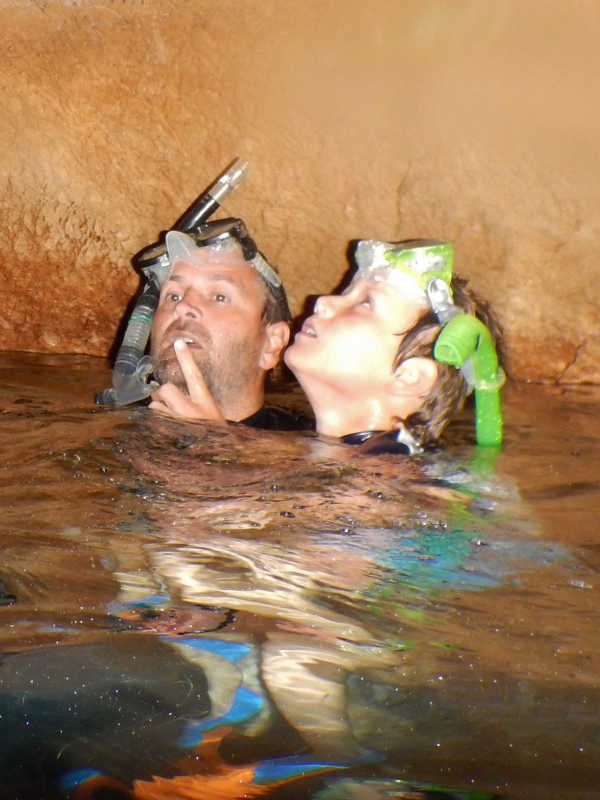
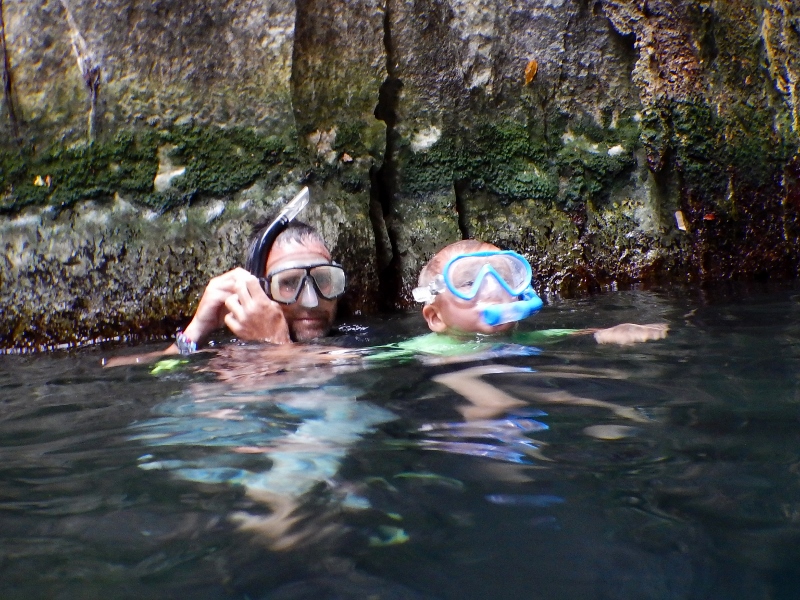
At Sawa-I-Lau we visited the underwater limestone caves, thought to have formed hundreds of metres below sea level only to be uplifted over time to their present location, where they are accessible to man. To enter the caves we had to climb a set of stairs to the entrance from where we proceeded, bent over to avoid hitting our heads on heavy rocky outcrops, down another set of stairs descending steeply into the waterfilled cave. We jumped into the cold water, our snorkelling gear in place, enjoying the magnificent view of the orange vertical striated walls extending to 20 or so metres above the water surface to the bottom about 6 m below it. The outer cave is lit by a small opening to the sky above but beyond it is the inner cave, which is almost completely dark. The inner chamber is accessible only through a partially submerged entrance, but the kids showed no fear, diving bravely through to the dark interior. The inner cave was a spooky place, full of friendly white eels which undulated around our feet in the beam from the underwater torches. Our speech echoed loudly through the chamber, and with all the shining beams from the torches it was near impossible to see the exit. Thankfully our friendly local guide showed us safely through to the well lit outer cave, where the kids dived for treasure before exiting in a flurry of screams when the sealice residing on the rocks started biting them.

Alexis and Noah in the inner chamber


Cave explorers Alexis and Kai

“That was amazing”, said Noah once safely warming up on the beach outside of the cave.

And indeed it was – but then the whole nine days were amazing, good times catching up with old friends, our kids meeting their wonderful children, quickly setting up a repertoire of games, interrupted by brotherly fighting, sharing exciting experiences. Hopefully it won’t be long before till we catch up again.

Last night champers
Last night champers
Sunset over Navadra Island

Fiji – kitesurfing and regatta mayhem

Water toy presents from Andrew

“Grab a drink”, shouted the woman at the stall, waving what looked like tomato juice at us. We had just finished talking to the New Zealand Biosecurity officials about the requirements for getting the boat into New Zealand, and were settling in on the beach to watch a round of hobie cat races.
David grabbed a glass, taking a bite of the crunchy celery stick.
He took a sip and winced, unprepared for the hit of vodka, his tastebuds not quite ready for the onslaught of alcohol at 8 am in the morning.
“It’s not too strong”, said the woman.

Lukie doing a treasure hunt

It was regatta week in Musket Cove, in the Mamanuca group of Fiji. The normally calm bay was transformed from a mellow anchorage abutting a moderately empty resort into a heaving mayhem of drunken festivity for one week. Most of the yachties in Fiji were here, taking part in not-so-serious racing and very serious drinking. Each day a plethora of activities were on offer, from hobie races to hairy chest competitions, each attended by scores of bleary eyed boaties happy to have an excuse to party.

Starfish hunting on the beach

We had come to Musket Cove to go kitesurfing, on the flat water next to the sandbar edging the bay as well as on the nearby Namotu break, a world famous wave. Our participation in the regatta events was unintentional, but as it turned out that several of our boating friends with kids were there, we happily joined in for a bit of post kitesurfing fun and games.

Catching up with old boat buddies

Our old pal Andrew from Raglan joined us in Musket Cove for a day, having just delivered a superyacht from New Zealand. Tempted by the wind, Andrew managed to find one day in his busy schedule where he could grab a ferry from Nadi, so we picked him up and went to Namotu for the day on the wave.

Andrew trying his luck at fishing

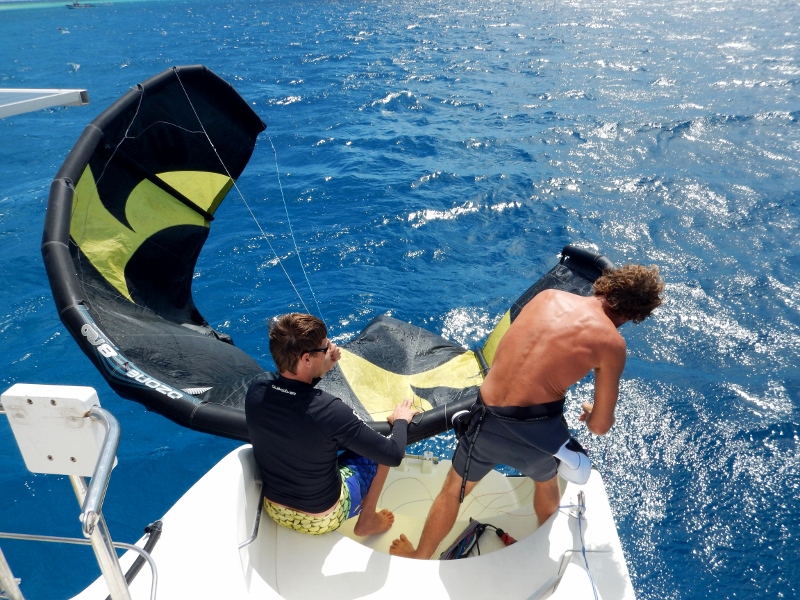
By this stage we had perfected the boat launch, slowly feeding out the lines to send the kite out behind the anchored boat and gently manipulating them until the kite sat nicely on its side, bobbing up and down on the water surface, fastened to a carabina on a piece of line hanging off the boat, ready for one of us to jump in the water, hook in, and get going.

Andrew kiting the lagoon at Namotu

Next to us on the sandbar was the superyacht owned by one of the Google executives, a great monstrosity of gleaming powerboat housing tired uberrich people for their week of relaxation and kiting in the tropics.

Mudpuddling
Mudpuddling

And so the week went, kiting alternating with watching pseudo races and judging dinghy decorating competitions. The kids had a ball catching up with their boat kid friends, roaming along the beach in thick gangs, fired up on lollies and icecream from treasures found buried under the sand.
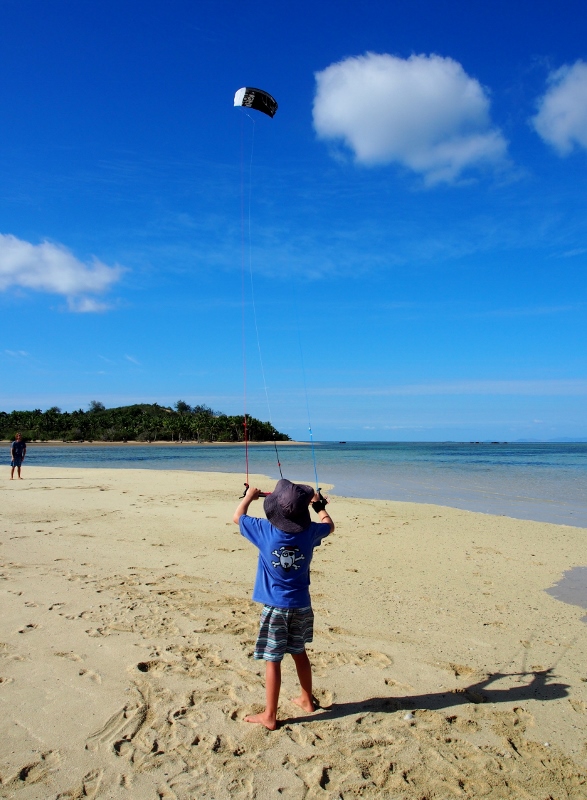
When not roaming on the shore, the kids took turns flying their new trainer kite, swooshing it around in big figures of eight, feeling the pull of the kite in the light breeze.

Matias flying the trainer kite
Fun on the tramp
Fun on the tramp

Fiji – Mamanucas and Yasawas with the Ross-Grants*

*Not wanting to favouritise any one family name over another, I normally combine two-name families into one. But as Kate and Duncan are Ross and Grant, respectively, I fear I might offend them if I abbreviate it to the Rants, or the Gross. Perhaps the the Kaduncs?

OLYMPUS DIGITAL CAMERA
Kate taking the plunge


Cooling off in the water
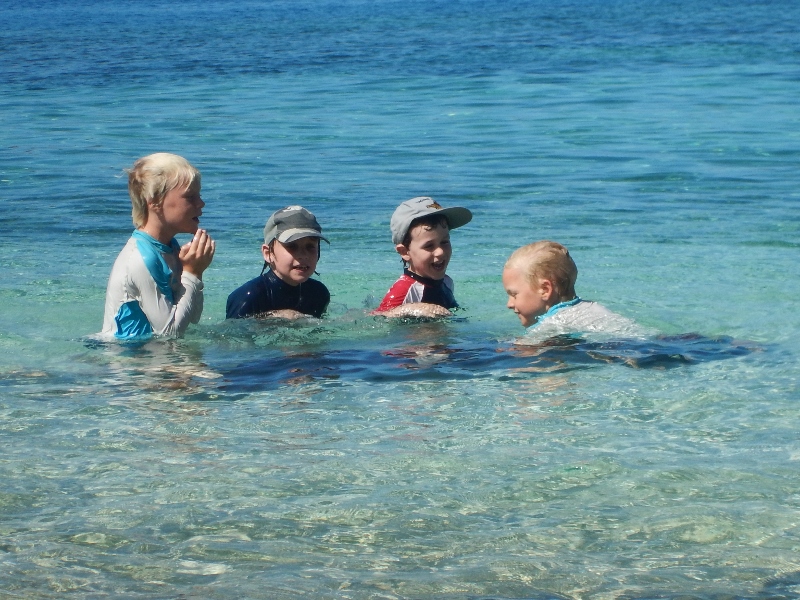
Matias, Toby, Remy and Lukie cooling off in the water

“And I ask you, what is your relationship with God? Do you believe in our Father the Lord and his son Jesus Christ?” Mary leaned forward, fixing Duncan sternly with a steely gaze lazering forth from above the narrow-rimmed glasses perched atop her nose.

“Do you believe in our Lord, do you love God as we do?” she repeated, her voice rising as her hands lifted from her lap. “Do you cherish our Lord, who gave us his son to save us from our sins?”

Duncan shifted uneasily under her steady stare, subtly changing his uncomfortable cross-legged position on the hard mat. Was he meant to answer, or was the question rhetorical?

“Because we believe that the Lord Jesus Christ died to save us from our sins. And we love the Lord. And we love his son Jesus. And we are happy that you are here today, to share our service. We are happy to worship the Lord with you, to pray and to sing with you”.

“Hallelujah, hallelujah”, exclaimed Dorothy softly in the background.

Mary’s glare widened from Duncan to encompass the whole of the darkened room. Next to her was Dorothy, a large lady in her forties, with the signature tightly cropped short Fijian hair, clad in a long, loose fitting darkly patterned dress. Dorothy’s husband, a fit looking man in his forties or early fifties was by her side and next to him, in a narrow doorway lit from behind by the bright outside sunlight, a heavy woman missing most of her teeth sat bottle feeding a baby. On the other side of the door we sat, a row of white faces, skinny bodies and wide-eyed children – Kate, Toby, Remy and Duncan, followed by myself, Matias, Lukas and David. Next to David, on the other side of another small door sat two toothless elderly villagers clad in Hawaiian shirts and sulus, their eyes closed, lips mumbling barely audible Hallelujahs.

Duncan relaxing after church


We were in a small Fijian village on the island of Wayasewa. Our friends Kate and Duncan and their boys Toby and Remy had been on the boat for three days. We had anchored in the calm bay off the small village on Saturday afternoon, and upon presenting our sevusevu to the elders were promptly invited to join the church service the following day, which we’d happily accepted.

Captain Remy
Captain Remy


“So Lord we pray for forgiveness for our sins, we entreat you and beg of you to forgive us, because we love you Lord, love you.” Mary’s voice boomed, colour rising on her face, sweat pearling on her brow.

“Hallelujah”, moaned Dorothy, swaying from side to side on her place next to Mary on the mat, eyes closed. “Hallelujah, oh Lord. Hallelujah”.

Water fun
Water fun

It had been quite an experience to visit the village. When we arrived on Sunday morning at the appointed time, ready to go to church, the villagers were all piling into a small panga which soon looked dangerously overloaded. It turned out that the church service was being held in another village, one hour boat ride away, and they were all going there. An elderly New Zealand couple from the other yacht anchored in the bay was crammed in amongst them, looking a bit nervous.

“Are you coming as well?” asked the man anxiously.

“Not sure”, we called back. “Good luck!”

Heading to church
Heading to church, dangerously overloaded

We hadn’t been invited to the other village, possibly because the boat was already too full. But we had been told to go to Dorothy’s house. As there was only one boat, and we were an additional eight people, the village elders had seemingly decided we should stay behind and that a special service should be held for us in Dorothy’s house.

Meekly following a young woman who had been sent out to fetch us we were led through the grassy village scattered with breadfruit and coconuts, past empty doorways revealing little of the dark houses behind. Dorothy’s house was large by village standards, and we were ushered into its surprisingly airy insides and invited to sit on tightly woven Pandanus mats with the elderly villagers looking on. After a brief welcome speech by Dorothy’s husband we were fed steamed buns and cups of hot tea which we sipped whilst complimenting our welcoming committee on the beautiful village, the new school and the general marvellousness of Fiji. Dorothy’s English was fantastic, and she was clapping her hands and smiling at our children, who came forth shyly to say hello and answer some questions.

Toby
Toby


Once tea was over, Dorothy fetched Mary, a tall, broad lady with a large face under a tight microphone cover of black hair wearing a starched cream shirt coupled with a long, dark skirt, who introduced herself briskly with a handshake designed to crush infidels.

DSCN6076 (800x600)


“And now we will sing”. Mary leaned back, resting her bottom onto her feet, exhaling and smoothing down her skirt. The brief sermon was over, and Dorothy’s husband opened the book of hymns laying in his lap.

“We don’t have any English ones”, he said apologetically, handing us a book and pointing to the correct place.

The elderly toothless lady who had hitherto remained silent signalled the pitch with a wavering voice, counted down, and then they all joined her in a Fijian hymn. Immediately, the most incredible singing filled the room, six voices rising in perfect harmony, enveloping the small room in God, beauty and light. With tears in our eyes we joined in as best we could, hoping that the addition of our unschooled voices wouldn’t ruin the glory of the moment.

Jumping fun with girls from the village


DSCN6027 (800x600)
Toby taking the plunge

Later, after having been treated to several marvellous hymns we went to donate some books to the school. Sitting in the shade of a tree by the waterfront we met a group of younger women. One of them had a young baby in her arms. When we went to say hello, she asked if we had any medicine for her baby, a five month old girl with a bad dose of scabies. The baby’s feet, armpits, tummy and arms were covered in raw-looking infected sores.

“Has she had it a long time?” we asked.

“For two weeks”, answered a friend of the mother’s. “There is no doctor here, but there is a nurse on the other island. She hasn’t seen the nurse yet, she comes over once a month.”

“It looks sore”, I said.

“It’s itchy. It’s scabies”, explained the mother. “Do you have any medicine for scabies on your boat?”

We went back to the boat and rummaged around our medical resources and found a tube of antiseptic cream. Scabies are small mites that get under the skin and cause irritation and infection, and they are treated with insecticides, which we didn’t have. We didn’t want to hand out antibiotic creams as the infections were secondary and really the baby probably needed treatment for the mites, so we settled for an antiseptic nappy rash ointments which would at least soothe the skin irritation, hoping that the mother would soon get to see the nurse.

DSCN6151 (800x589)

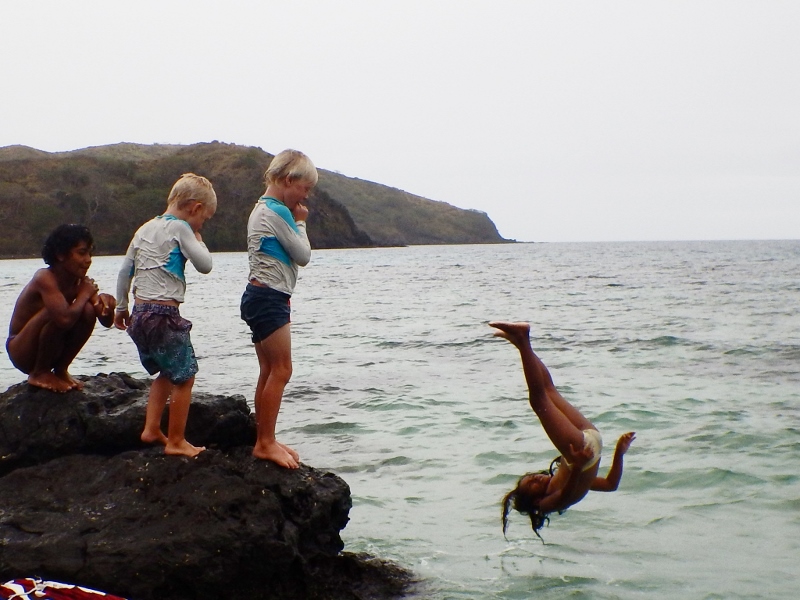
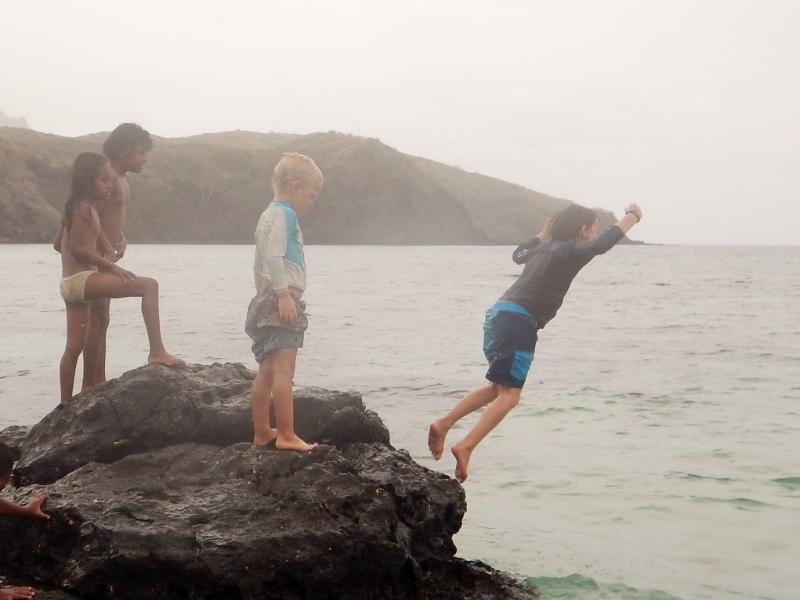
Back in the village the children came back from church and a group of girls soon joined us on the beach. At first they hung back modestly, asking us questions and practicing their excellent English, but soon they tore off their clothes and jumped in the sea, swimming and playing in the water with the boys. They were amazing children, looking after the foreign boys playing on their beach, helping our clumsy sons clamber onto rocks, showing them how to jump in, diving down and swimming under water for metres only to jump out and roar and splash to the great delight of our children.

Kate enjoying the underwater world


All worn out from water play

Fijians are the easily the friendliest people I have ever met. Wherever we go, we are greeted by people asking where we’re from, how we like Fiji, and which is our favourite team in the upcoming Rugby World Cup. The men stoop down and ask our boys whether they play rugby, how they like the All Blacks, and if they have seen the Fijian Rugby team play. The women stop me on the street to comment on how handsome the kids are, and children everywhere wave and shout “Bula, bula”, hello hello.


Entertaining the kids

Kate, Duncan and the kids brought with them brilliant weather and when not visiting villages we spent much time in the water – jumping off the boat, snorkelling brightly coloured coral reefs, and swimming with the obliging manta rays.

Another pass at Manta Reef

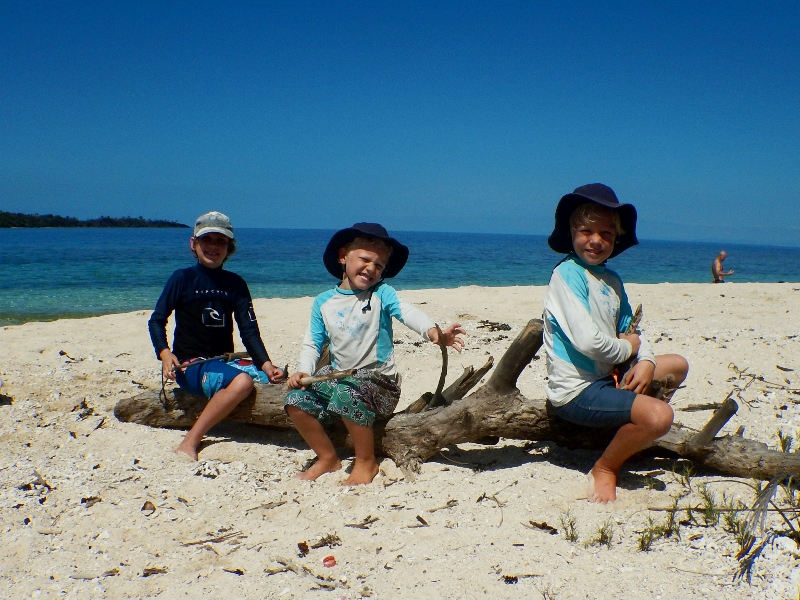
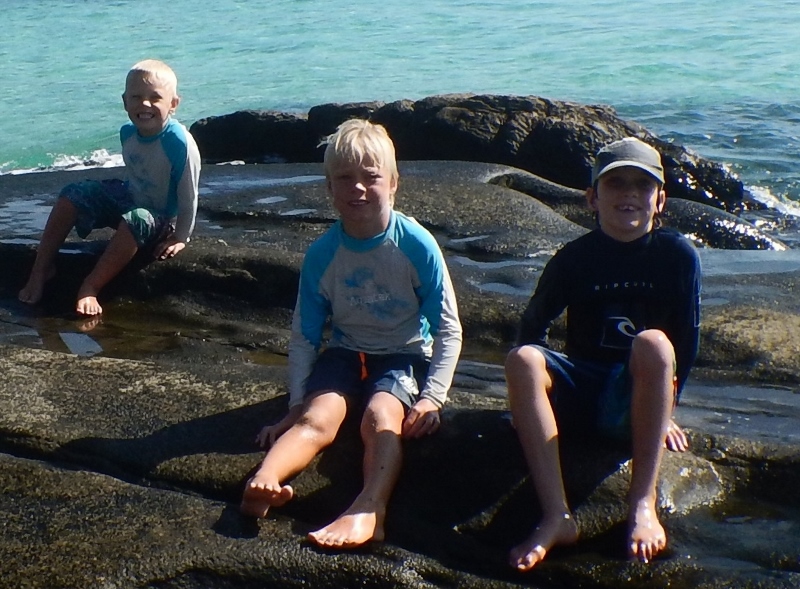
Thoroughly stoked to be back together, the four boys explored the beaches of deserted and inhabited islands alike, finding caves and sticks and turning them into homes and weapons. They played in the shallows, jumping from rocks and sliding down algae covered limestone to land in the clear blue water just beyond the sandy beaches. On the boat they created magnificent drawings of outer space and its creepy, alien inhabitants, and constructed intricate contraptions out of Lego, pausing only occasionally to ask for food and water.

Cook-out on the beach
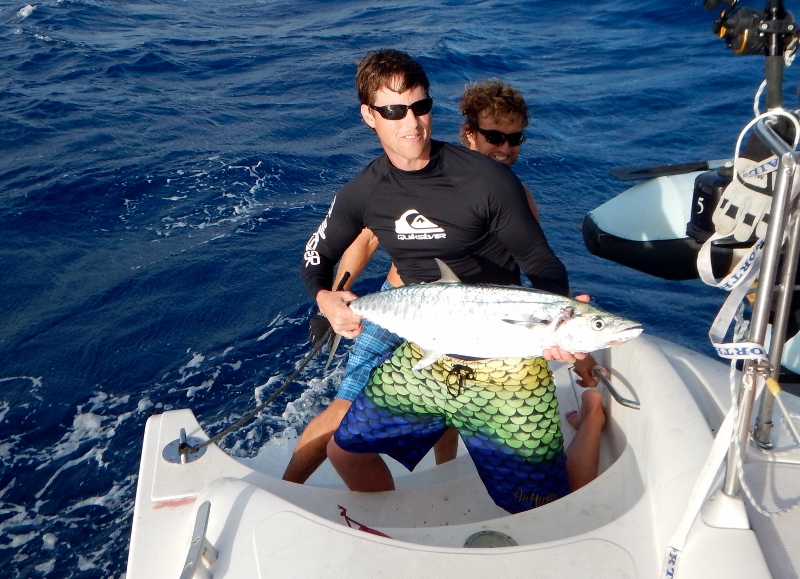
Duncan with a Spanish Mackerel - this one we did eat
Duncan with a Spanish Mackerel – this one we did eat

In between swimming and managing children, Kate cooked up a storm, serving delicious treats round the clock to the rest of us, and we soon found ourselves sitting belching quietly in the sun, feeling utterly spoiled with the good fortune of having such amazing friends come on board and share a week with us. Thank you for coming, Kaduncs, and we’ll see you next on the beach in Raglan.

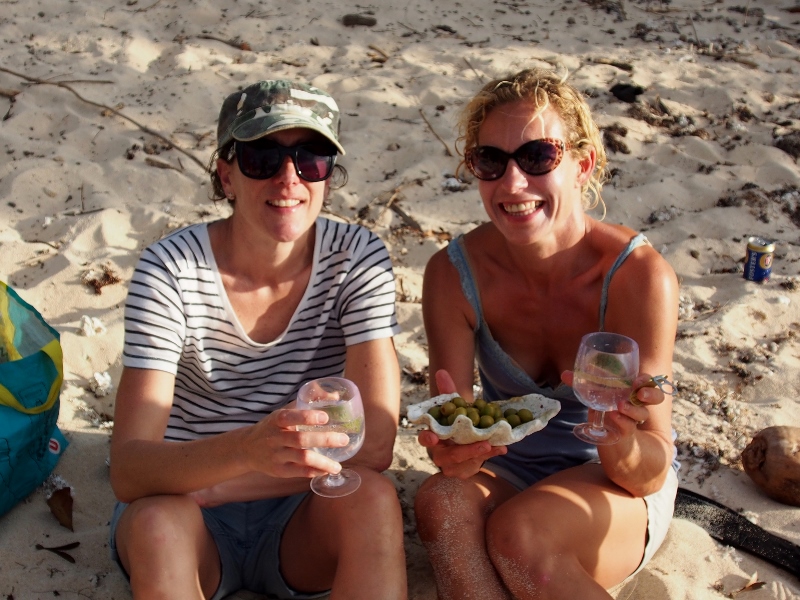
Olives and drinkies on the beach
Raglan girls in Fiji

Fiji – Mamanucas and Yasawas with the Daniels

DSCN5551 (800x600)


Matta lifted her head out of the water. “Wesawaysing” she said through her snorkel.
“I know”. I kicked my fins, floating on my back, basking in the hot afternoon sun. Although I couldn’t understand the words, I got the gist from the tone of her voice.

Matta and Kristi snorkelling

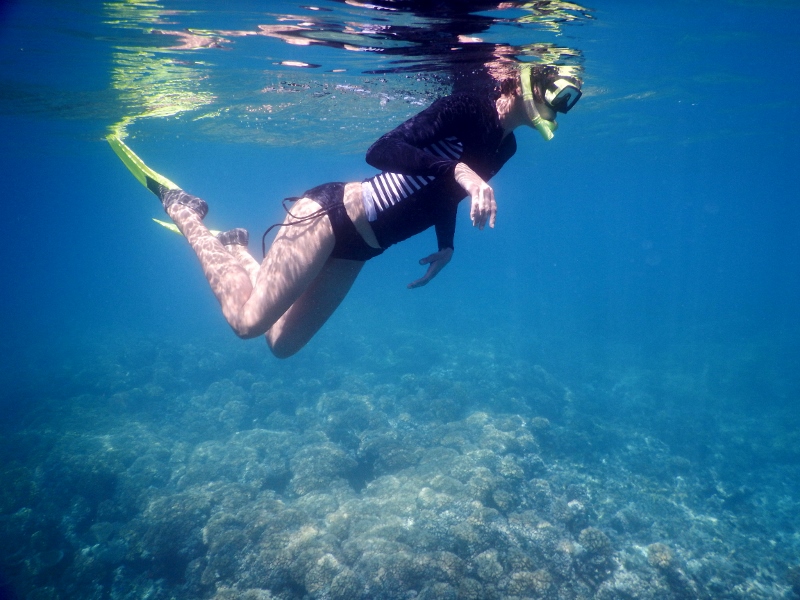
She spat out her snorkel, kicking to stay upright in the water. “It’s amazing!”, she said again. “It’s like a completely different underwater world”. She stuck her head down again, gazing at the corals below, at the fish teeming around her floating legs. Under her, a bright yellow butterflyfish swam back towards the reef, and she quickly stuck her snorkel back in so that she could swim off and chase it.

Matta and Kristi snorkelling

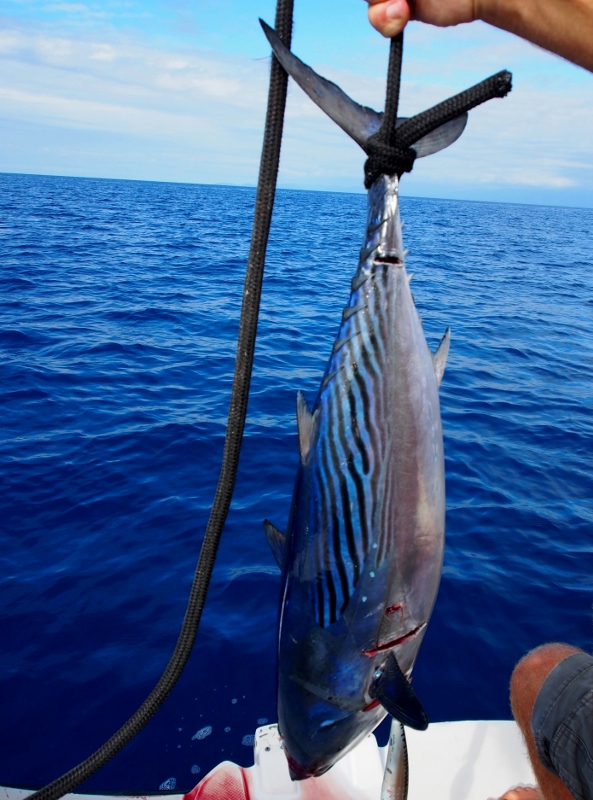
It was late afternoon. We had just arrived at Navadra Island in the Mamanucas, an island group west of Viti Levu in Fiji. Matta and had jumped in straight after anchoring to go for a snorkel while the others went to the beach after daring Adam to catch a goat with his bare hands to supplement our dwindling protein resources. We had caught a Spanish Mackerel a couple of days earlier but hadn’t cooked it because we weren’t completely certain it was safe to eat. They have ciguetera in Fiji, and as much as the locals said they thought it was safe, they had asked an awful lot of questions about where exactly we caught it, and how big it was, casting some doubt in our minds.

DSCN5525 (800x579)
Ciguetera catch

Completely at ease in the water, Matta had taken to the snorkelling the first time Adam took her in. She was amazed to be floating in an aquarium, delighted by the colourful corals, the curious fish coming up to check on her and the bright blue seastars littering the sandy bottom between the coral outcrops. Every spot we anchored in she wanted to snorkel, and now we were on our way up north to the Yasawas group of islands, to Manta Reef, to introduce her to some really big fish.

Jumping fun
Jumping fun

We had picked up Adam and Kristi and their children Matta and Marvin one early morning in Vuda Marina on Viti Levu. They had flown in from the States where they had spent the last six weeks visiting family. Despite the jetlag, the kids had been straight into boat life, Matta bouncing on the trampoline whilst Marvin stood singing, turning an imaginary steering wheel at the bow to drive the boat expertly for hours on end. When he fell and bumped his head, he rushed back to the bow after a quick cuddle with Kristi, sweeping the tears off his cheek as he ran, shouting “I have to go finish my song, Mom”.

Singing skipper Marv
Boat kids
Boat kids


Lukie horsie
Lukie horsie

In the warm afternoon on Vanua Levu, Matta and I continued to swim for a while before eventually climbing back out onto the boat. David was standing on deck, binoculars aimed at a super yacht that had entered the bay half an hour earlier.
“I think they’ve run aground”, he said. “Look, they’re trying to pull it out with their launch”.
It did look like it. Huge and shiny, the yacht was swaying wildly as the waves were throwing it this way and that on the reef. The motor launch was going as hard as it could, engines fully revved, but the yacht was not budging from atop the reef.

On the tramp
On the tramp
Jumping fun
Jumping fun

“That yacht is stuck”, Adam said as he, Kristi, Matias, Lukie and Marvin approached in the dinghy. “We’ve been watching it, it’s definitely run aground”.
“I know”, David said, “let’s go see if they need any help”. He climbed into the dinghy as the sandy kids scrambled out, stepping over the reef shoes and sandals scattered over the bottom of the boat.
They set off and we watched them head over. At this stage the towing rope had been attached to the mast and the launch was going full power to the side, trying to pull the yacht over just enough for the keel to get off the reef.

Happily afloat
Happily afloat

“It’s got to be nerve-wracking”, said Kristi.
“Yeah”, I said. “Imagine if the owner is not on board, if the crew are just hanging out in Fiji, waiting for a weather window to return the boat to New Zealand. And then they have to make that phone call”.
“Oh boy”, she said. “I think it’s getting clear, look”.
The launch had pulled the yacht over 45 degrees, the mast edging closer and closer towards the water when it suddenly lurched and righted itself, reversing full power off the reef.
Kristi and I cheered, imagining the damage below water and the bill to repair it, happy that it wasn’t us that had run aground.

Matta jumping off
Deep enough water to jump


Surfacing
Surfacing
Matias jumping
Matias jumping

Fiji’s 340 or so islands are surrounded by coral reefs, many lurking just below the surface of the water, ready to pounce on skippers caught unaware. There are charts for the area, but many of the reefs are uncharted and the waters are famous for wrecking ships. We can only sail during the day, when the sun is high enough in the sky for us to see reefs, and even then we have to stand on the bow, peering ahead wearing polaroid glasses to ensure that we spot any shallow water in front of the boat.

Matta and I spotting reefs

Keeping watch is not bad, though, as it helps us spot wildlife. On our travels with the Daniels we had two pods of dolphins come ride our bow waves, to the great delight of the children who were hanging over the bow, whooping as the dolphins surfaced half a metre away from their faces. One encounter was on a windless day and Adam, Matta and I jumped in the water, hoping for a play, but the dolphins kept their distance and eventually dived down, out of reach.

Matias watching dolphins
Dolphin filming
Dolphin filming
Matta and the manta
Matta and the manta
A giant ray
A giant ray
Small girl, big fish

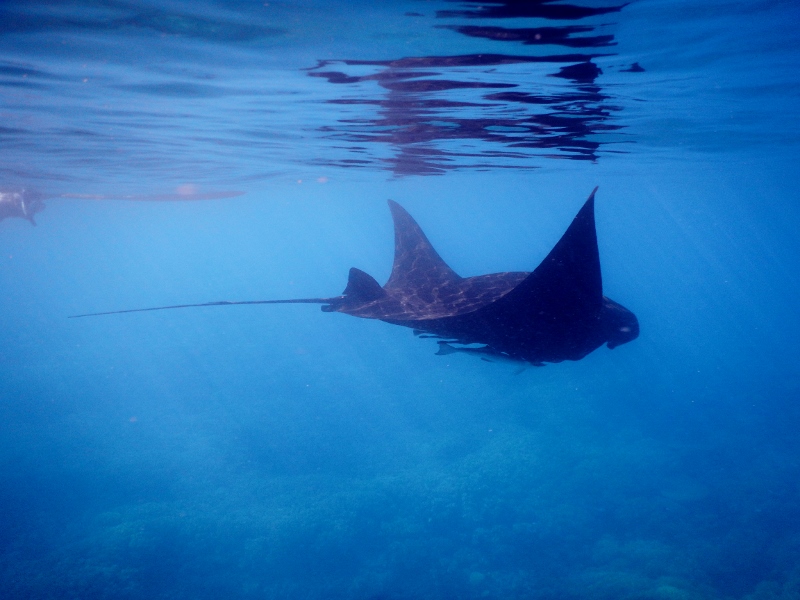
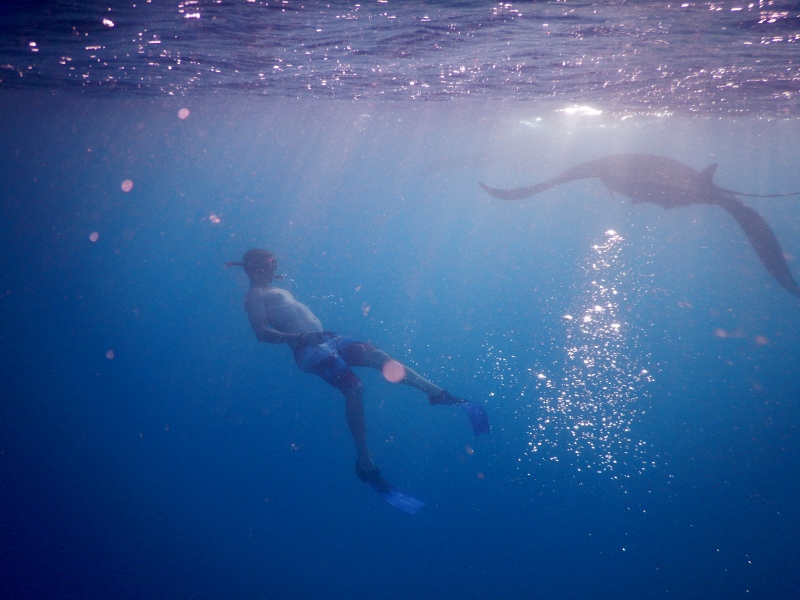
We had better luck with the manta rays, who appear regularly at the aptly named Manta Reef Pass. The enormous rays come at high tide to filter feed in the current of the pass, and on our first morning there, we turned up alongside hundreds of tourists from the two nearby resorts. The water was a bit manic, full of snorkellers with selfie sticks, 20 or so people per manta ray, manically thrashing after the graceful giants as they turned and dove to escape the crowds. But the kids loved it and Matta was incredibly excited to swim just above such huge creatures.

DSCN5798 (800x600)


Adam with the manta ray
Adam with a manta ray

We went again on the afternoon high tide and had them all to ourselves, four massive rays gliding around us in the fading light, one of them at least 4 m across, its mouth a gaping hole leading into a seemingly hollow interior. The following morning the Daniels and David went again, Matta squealing with delight as the huge creatures turned and twisted all around her.

On our way to see mantas

Later that day we pulled anchor to head back to Nadi to drop off the Daniels, and on our way out of the bay a lone manta ray feeding in the other pass raised one fin to wave us goodbye.
“Bye bye”, shouted Marvin, “bye bye manta ray”.

Sunset dinner
Sunset dinner

A day later he was waving goodbye to us after a week on the boat. It had been a great week, full of the delightful company of good friends for us and the kids alike, incredible sunshine, beautiful snorkelling, great kitesurfing, exciting marine life and one good fish caught just in time for a last fish supper. Bye bye Marvin, we’ll see you in New Zealand when we get back!

Launching kites from the boat

Fiji – Lomaiviti to Nadi

DSCN5355 (800x600)
Booby in the sky

It’s the middle of the night. All is dark, only the channel marker lighting the way through the treacherous reef blinks faintly, beaming out its warning of the dangers below the surface. Bob is bopping up and down gently, small wavelets pushing her from side to side. On the nearby shore two yellow lights illuminate the breakwater protecting the shoreline against the sea, casting an eerie light over the ancient rocks.

It’s 2 am and I’m wide awake, ready to start my night watch. I’m craving a cup of tea and a midnight snack involving copious amounts of Nutella. My body is ready for hours and hours of reading, interrupted every ten or so minutes for me to put down my book and stare into the darkness to check for reefs, vessels and other hazards. I am awake.

The only problem is that I ought to be asleep. We’ve arrived, Bob is perfectly safe, and I no longer need to be on watch. We’re firmly anchored onto a featureless sandy bottom off the township of Levuka on Ovalau Island in Fiji, and I no longer need to stay awake all night to keep us clear of hazards.

David and the kids are asleep, but I’m too jetlagged to nod off. Our latest passage watch schedule has David on watch from 7 pm to 2 am after which I take over until he wakes in the morning, usually around 9 am. We’ve just come from Tonga and it worked well; after a day we settled well into the new rhythm. The passage only took three days, but this is obviously enough for me to have fully realised my nocturnal self. So here I am, alert at 2 am.

The passage was rather uneventful apart from the port engine starter motor braking down, presumably on purpose, just to keep us on our toes. It happened on the second night, on David’s watch. Later on in the night I switched on the starboard engine to charge the batteries, and after half an hour that overheated, leaving us with no working engines. This wasn’t the first time the starboard engine had overheated – it had happened regularly since the oil cooling unit had broken back in the Tuamotus. After reasoning that it probably wasn’t strictly necessary to cool the oil, David boldly bypassed the oil cooler, only for us to discover that thereafter the engine had become rather prone to overheating. As a result we had limped along for months with a starboard motor that we couldn’t run for more than 20 minutes or so before it cut out due to overheating. Finally, in Tonga, we got the unit repaired and David reinstalled it, giving us two fully functioning engines. For about two weeks, anyway, up until this passage where suddenly none of them were working.

Playing cards whilst underway, Fijian coastline in the background

The following morning when David got up we assessed the situation. The port engine refused to start, so we had to give up on that. Hoping that the starboard motor had just been low on coolant we filled it up again and spend much of the last day willing it to work for long enough to allow us to navigate safely into the bay and anchor upon arrival the following day. The anchor windlass is powered off the starboard motor and so anchoring without it would be very difficult.

The following day we entered the Lomaiviti group of islands east of Viti Levu, and headed straight to Levuka town on the island of Ovalau. Just before the narrow pass leading into Levuka Port we switched on the starboard engine and crossed our fingers. Thankfully the engine fired up beautifully, and held its cool allowing us time to anchor safely. Phew.

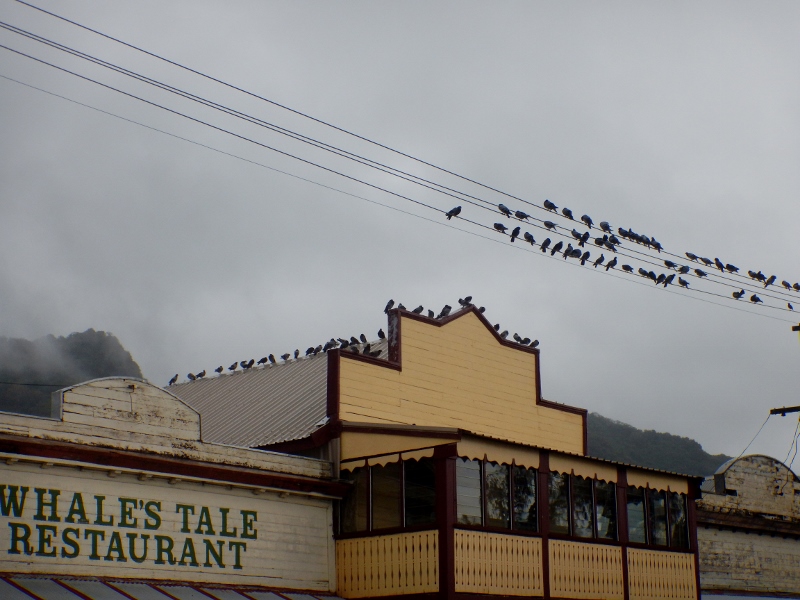
Pigeons on shop front in Levuka
Pigeons on dilapidated shop front in Levuka

And then, there we were, in Levuka – the oldest European settlement in Fiji, the capital of the first Fijian government, the wild west frontier town which used to have a terrible reputation as a seedy lawless cesspit, for decades the home of the terrible ‘blackbirding’ practices that forever changed the population of the western Pacific.

Fiji is a fascinating place. Called Viti by its original inhabitants, this vast group of more than 300 islands has been settled since the first Lapita people arrived from Vanuatu around 1500 BC. The firstcomers were followed by successive waves of Micronesian, Melanesian and Polynesian peoples who all took up residence on the fertile volcanic islands surrounded by fringing reefs teeming with fish. Archaeologists estimate that agriculture became commonplace in around 500 BC, after which the population increased and resource wars began. So bad was Fiji’s reputation as a home for fierce warriors with cannibalistic tendencies (one man alone, named Udreudre, was reported to have eaten at least 872 people) that Europeans gave the place a wide berth for centuries until a small group of whalers finally settled in Levuka in the 1830s.

The Europeans named the area Fiji, the Tongan name for the islands, the Tongans having had intermittent control of large parts of Fiji for centuries. Access to European weapons exacerbated the already fierce tribal feuding until the bloody wars finally came to an end when Ratu Seru Cakobau from Bau declared himself the winner. Missionaries entered Fiji from Tonga, and Cakobau converted to Christianity when the his allies in Tonga threatened to remove their forces which had been supporting him.

In the 1860s, following some misfortune and few misunderstandings, Cakobau became heavily indebted to some of the large trading companies that had set up in Levuka, and overwhelmed by his debts he ended up offering Britain the control of Fiji in return for paying off his debts. And so it was, that for about $45,000 worth of debts, Fiji became a British Crown Colony in 1874, and Levuka was pronounced the capital.

Levuka waterfront
Levuka waterfront

Set on a narrow fringe of foreshore backed by steep green hills, Levuka is an eerie place. Back in the 1840s and ’50s, when it was a drunken frontier town, the waterfront strip covered in bars and kava joints. It continued to grow, and in the 1870s the town was heaving, sporting 52 hotels and home to about 3000 Europeans. When Fiji became a British colony in 1874, Levuka became the capital and remained so until 1882 when it was moved to Suva because there wasn’t room for expansion in Levuka.

Levuka was also the Pacific centre of ‘blackbirding’, the large-scale movement of cheap labour from Pacific islands to Fiji, Samoa, Australia, Peru and New Caledonia. Sometimes the islanders entered the blackbirding ships of their own volition, eager to make a better life somewhere else, but often they were tricked by sailors dressed as priests or threatened at gunpoint, driven like cattle into the hulls of big sailing ships, off to spend their lives doing hard physical labour in far-flung destinations. This trade in humans devastated areas of the Pacific, leaving whole villages empty. One island in Tonga lost 40% of its population to Peruvian slave ships, and the country Tokelau lost nearly half its population to blackbirding. Huge amounts of Indians were imported as cheap labour into Fiji, to work on the sugar plantations, and to this day more than 35% of the population of Fiji are of Indian descent.

Levuka church tower
Levuka church tower

Levuka still sports some of the old buildings from its past days of seed and glory; the whole back end of town is a World Heritage site. Old churches stand next to Royal Hotels, shop facades advertise trading companies, and fine wooden buildings along the back street are interspersed with neatly mowed grassy parks, tennis courts and flagpoles, along with signs threatening legal action against anyone littering.

The historic serenity is somewhat disturbed by the town’s power plant on the water front, which sits screaming out a deafening roar 24 hours a day, creating a permanent town-wide tinnitus. Another sensory attack is provided by the tuna canning factory, cunningly located upwind of town as if to ensure that the strong fishmeal stench emanating from it will cause the maximum possible disturbance. The smell is palpable, almost physical; a mixture of aquarium fish flakes and ground up cat pellets lingering heavily in the midday heat, hovering just around nose height above the warm pavement on the main street.

After two days at anchor the noise and smell are getting to us and we decide to leave as soon as David has effected an ingenious repair to the port starter motor involving copious amounts of expoxy and duct tape. Miraculously it works, but he warns that it probably won’t last, and orders a spare part or two for us to pick up when we reach Nadi. In the market I stock up on fresh fruit and vegetables and also buy bundles of dried kava root, the obligatory gift we have to present in the customary sevusevu ceremony which we will be required to partake in whenever we anchor near any villages in Fiji. The tradition of sevusevu requires visitors to present kava to the chief of the village they’re visiting; a present in exchange for the hospitality of the hosts.

David with the kava, ready for sevusevu

After Levuka we went to the island of Makogai. From 1911 to 1969 Makogai was a leper colony, home to thousands of leprosy patients sent here from all over the Pacific to be cared for by kind nuns. Separate villages were built on the island for different nationalities, and an old map on the wall shows the location of the European village, the Fijian village, the Indians, the Samoans and the Vanuatuans as well as a village for ‘others’. The register records that a total of 4185 patients landed on the island, of whom 1241 died.

A hill of graves
A hill of thousands of graves

Nowadays the island is a marine reserve and home to a giant clam hatchery. Mr Navindar, the kind manager of the hatchery facilities took us on a tour of the ruins of the leper colony, showing us the open air movie theatre and the prison used to detain patients who had engaged in disorderly conduct. More than a thousand people are buried on the hill behind the current day hatchery, many of the graves unmarked, and Navindar spoke of visitors coming to the island to retrace their ancestors who passed away from the terrible disease.

Birds taking off, Makogai
Sunset on Makogai
Sunset on Makogai

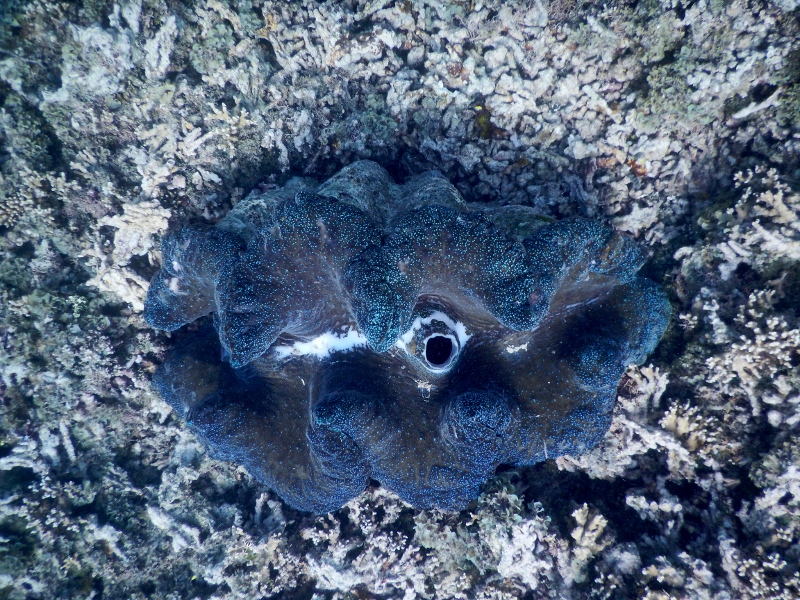
Blissfully unaware of the tragedies that once unfolded onshore are the giant clams in the bay. Imported broodstock from Australia, these gigantic molluscs lie gaping on the seabed, some up to a metre long, casually siphoning water through their glistening mantles. When we dive down to touch them they flinch but greedily remain open, not wanting to forego feeding opportunities just because of minor disturbances. These are the parents of the babies in the hatchery and are larger than any clams we’ve ever seen before. Being an excellent source of defenseless protein, the giant clam was nearly fished out in Fiji, and the hatchery was established to restock reefs around the country. Hatchery workers dive to inspect the giants in the bay regularly, peeking in at the gonads through the incoming siphon. If the gonad looks ripe, they lift the entire clam out of the water (apparently it takes four strong men to carry a large specimen), install it in a hatchery tank and inject it with serotonin, which causes the animal to spawn. Giant clams are hermaphrodites, releasing the eggs first and then a while later the sperm, and after business is completed the giant animal is taken back into the bay, placed gently on the sand, and given a respite for at least a couple of months.

An injured turtle rescued by the hatchery workers relaxes in a tank full of baby clams


Inside the tanks the eggs are fertilised and after a week or so the babies settle out from the water column after which they slowly grow until they are big enough to transfer into the wild. Giant clams are filter-feeders but most of their energy come from the photosynthesis carried out by the tiny symbiotic algae that reside in their mantle tissue. The hatchery target production was 30,000 juveniles a year, most of which will be placed on reefs around Fiji and hopefully grow into gentle giants.

A giant clam. The big opening on the right is the incoming siphon.
A giant clam roughly 1 m long. The big opening on the right is the incoming siphon.

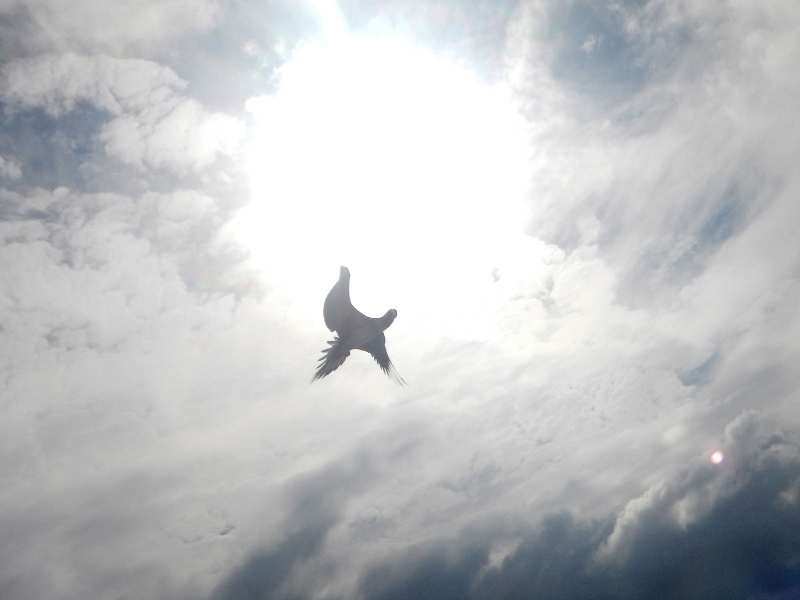
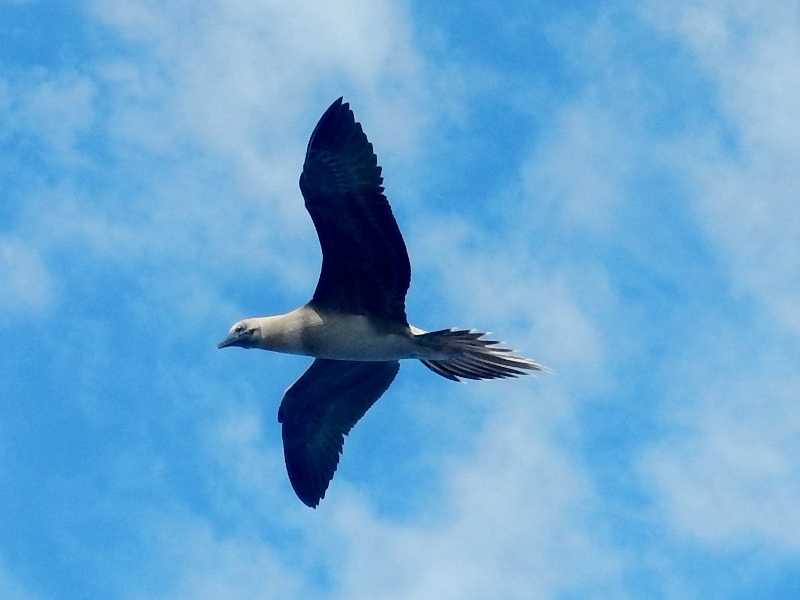
After Makogai, we went to Namenalala Island which is in the centre of the marine reserve surrounding the famous Namena reef. The island is home to a booby colony and as we came close birds were everywhere, swooping down upon us, following the boat as we sailed in. They were gorgeous, wide-winged and inquisitive, hovering in the sky, spreading their tail feathers as they slowed down directly above us to have a good look.

DSCN5359 (800x600)
Inquisitive booby

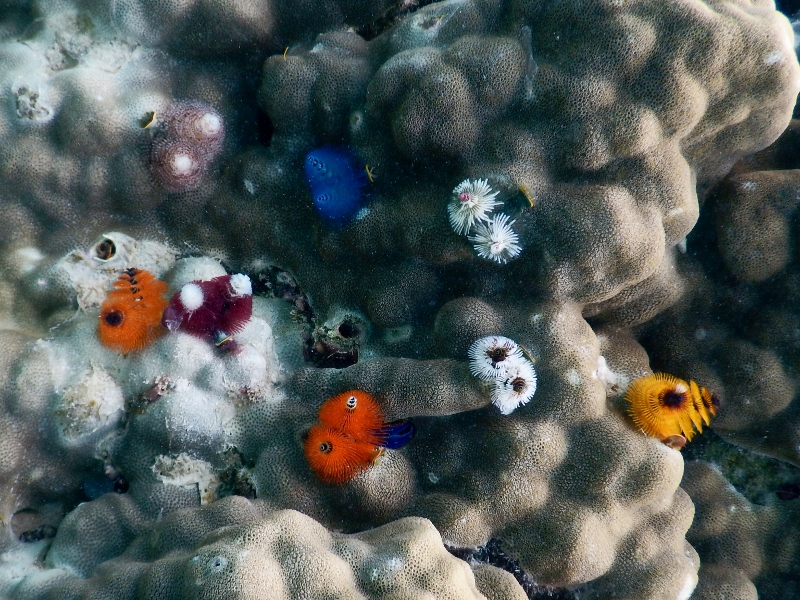
On shore the trees were full of boobies – suspicious mothers guarding small closed eyes chicks in nests, and large, clumsy, fluffy, white chicks perched atop fragile branches. The water in the bay was clear and full of corals adorned with colourful jewel-like Christmas tree worms extending their fans boldly to suck nutrition from the water. Reef sharks and rays swam in between coral boulders and schools of brightly coloured fish flittered about.

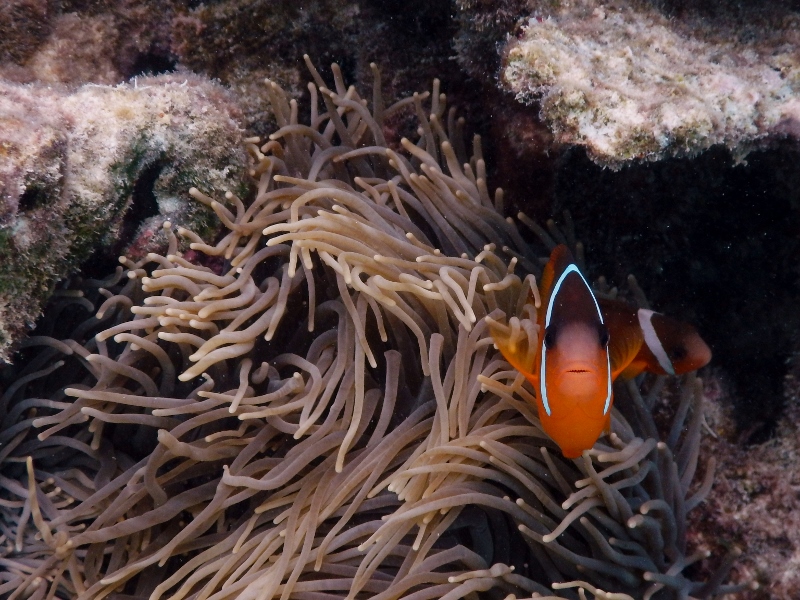
Territorial Nemo peering out
Territorial clownfish peering out
Christmas tree worms adorning a coral wall


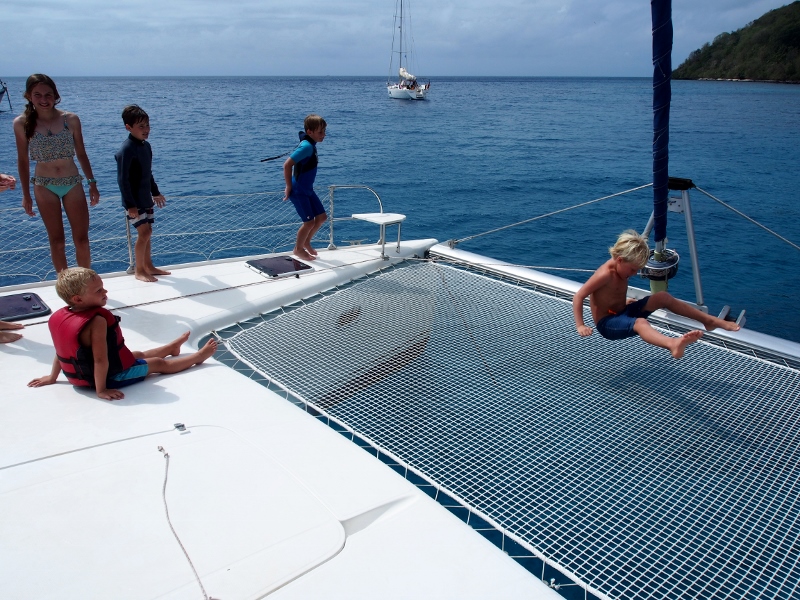
Three other boats with children were anchored in the bay and the children soon took turns jumping on our trampoline.

Jumping fun
Jumping fun

After two nights in Namena we set off to work our way towards Nadi, where we were meeting our next visitors, our dear friends the Daniels.

Snorkelling Namena reef
Goodbye to Namena reef
Booby mother and chick on Namenalala

On the way we went to idyllic Naigani Island where we anchored in a turquoise lagoon just off a deserted white sandy beach fringed with coconut palms. Next we visited Nananu-i-ra, a small island north of Viti Levu where we had a kitesurfing holiday three years ago. We came into the island on a calm afternoon, the reflections of the houses adorning the waterfront lengthening into the glassy waters. Hot from a windless motor we rushed ashore and revisited the site where the kids had their first snorkelling experience three years ago, off the pier where swarms of fish lurked waiting to be fed by eager holiday guests. The children soon found some other boat kids to play with and spent the afternoon playing in the water.

Nananu-i-ra
 Coming ashore on Nananu-i-ra


OLYMPUS DIGITAL CAMERA
Kid’s play on Nananu-i-ra

The following morning we set out early, intending to get to Vuda Marina in Nadi before nightfall. The Daniels were arriving two days later, and we had to provision and get the proper engine parts to replace David’s impromptu epoxy job before the engine malfunctioned again. Both engines had been working well during our recent Fiji explorations, but we were reluctant to rely on the epoxy repair for too long, especially given we would have guests on board most of the time for the next month and therefore would have to be in certain places at certain times to meet people.

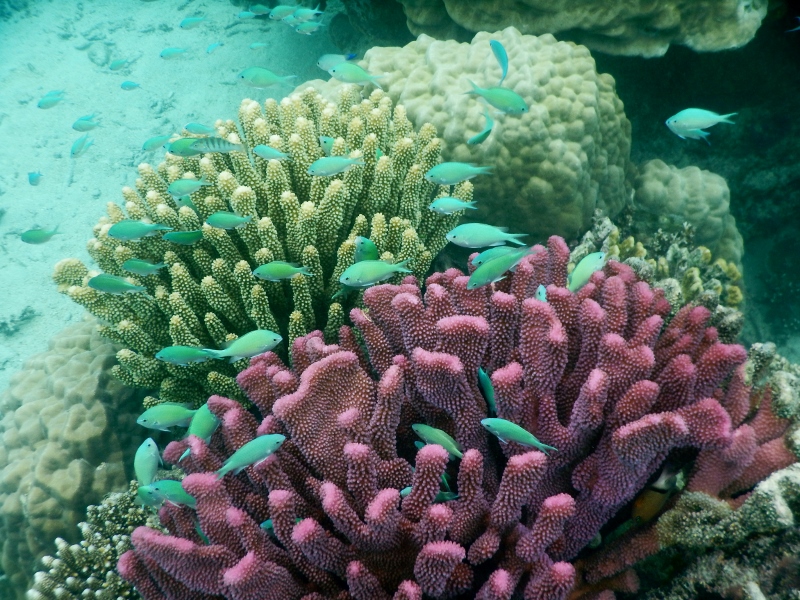
Namena reef
Corals and damsels on Namena reef

The forecast was for a gentle 5-7 knots of wind but as we motor sailed around the north western corner of Viti Levu, the wind strengthened steadily until we were driving full throttle into a 30 knot headwind. We spent the next three hours tacking every fifteen minutes in the narrow channel between the island and its fringing reef, making very little headway. As nightfall approached we had to concede defeat and head for the nearest anchorable spot, hoping that we could spot any reefs on the approach in the rapidly fading light. The bay was large and muddy, fringed with mangroves with the occasional reef sticking out, and we managed to anchor safely just as the sun set.

Finally in Vuda Marina, Nadi

In the morning we pulled anchor early and headed back out into the headwind, reaching Vuda just before lunch. Finally we were here, ready to provision, excited to have our very good friends join us for a week of adventures the day after.

OLYMPUS DIGITAL CAMERA