I’ve been wanting to see a dugong forever. I remember reading about them as a child in a Jaques Cousteau book we had lying around at home. Fascinated with their immense blubber, their hoover-like mouths, their docile grazing habits, I vowed when I was 10 years old that one day I would see one.
Now that we’re in Vanuatu I feel sure that the time has finally come. We’ve been in dugong territory before, in New Caledonia, but despite keeping vigorous lookout I never spotted one. The mistake we made was to assume they were like dolphins – that when they were about we would spot them, and that once we spotted them they would be interactive, frolicking around the boat, swimming up to us as we snorkelled.
Looking a bit more into dugong behaviour it seems I was naive. They are known to be incredibly shy of humans and have no desire whatsoever to play. Although they breathe fairly often (every 4-8 minutes) they don’t spend long on the surface at all, often just sticking their nostrils out of the water for a split second. Nor do they make any noise – no squeaking or clicking like dolphins or heavy breathing accompanied by clearly visible water spouts like whales. They spend almost all their time vacuuming the ocean floor, ingesting huge quantities of seagrass to keep up their well-padded appearance.
Dugongs are found in several areas of Vanuatu, and the mission when we leave Port Vila is to find one.
Our first stop is the northern end of Efate Island, where we spend a couple of days kitesurfing in high winds under moody skies. A private island offers a brilliant sandspit on which to launch; unfortunately, the absentee owner is not keen on us using it, so we launch in the water but the kids are still able to enjoy the flat water shallows.
There are meant to be dugongs in the area, but the windy conditions mean that it is almost impossible to see them – the water surface is broken by waves and they could be having a big meet-up right next to the boat without us noticing.
Matias kiting in the shallows no doubt passing over several dugongs.
After Efate, we head to Lamen Bay in Epi Island where dugongs are sometimes seen. The elusive beasts are absent, but lots of very chilled green and hawksbill turtles inhabit the bay, providing for some great snorkelling.
Green turtle flanked by remora.Local house in Lamen Bay, Epi Island.
From Epi Island, we head to Malekula Island. Malekula is famously the last place in Vanuatu where a human being was eaten, in 1969. It is also famous for the two inland tribes, the Big Nambas and the Little Nambas, named for the size of the men’s penis gourds. In addition to this interesting phallically-focused cultural division, they have dugongs.
We anchor in Gaspard Bay at the southern end of Malekula. The bay is a grey expanse of shallow water lined by lush islands bursting with green. The bottom is covered with seagrass, the preferred food of dugongs, and there is a resident population which is the target for many tours.
We kayak the perimeter of the bay, keeping an eye out for dugongs and surveying the seemingly impenetrable hillside jungle beyond the mangrove fringe. As we get closer to the shore, the noise rises to a deafening buzz of cicadas and birdsong.
The dugongs are about but hard to sneak up on and to begin with we only snatch brief glimpses: a square, grey snout sticking vertically up the water, quickly vanishing when I approach in the kayak, the gentle arc of a finless back curving through the water just ahead of David on the paddleboard.
David and the kids dugong hunting in Gaspard Bay.The tail end of a dugong.
On our second morning, the show is finally on when a dugong mother and calf surface right next to the boat, treating us to a nice view of tailfins and blubbery brown shapes logging just under the surface and generally frolicking around. David jumps in the water and manages to snorkel with them briefly, watching the pair slowly dive down and vanish in the murky depths.
I would have liked crystal-clear waters and a throng of dugongs so thick I couldn’t swim through it but realise that Gaspard Bay is probably as good as it gets with dugongs here. So I pronounce myself satisfied and we are finally able to move on. Next stop: the black magic volcanic island of Ambrym.
More approachable wildlife on Efate Island.View from Lamen Bay.
Our passage to Vanuatu was easy, taking four days and three nights, with calm seas sighing like ghostly whales pursuing our slow progress across the ocean. Vanuatu’s capital Port Vila, on the island of Efate, is due west of Fiji, so during the four days of passage we moved further and further away from the sun, the distance covered marked by ever later sunrises and sunsets. In this age of air travel, it is gratifying to be moving so slow (about 160 nautical miles, or ~290 km a day) that the incremental distances covered are felt as minutes of delayed sunsets per day, a visceral illustration of how the Earth is just a rotating ocean-covered ball spinning around the sun.
Angry booby.
On our second ocean day a booby hitched a ride for a night, landing on our rear solar panel after circling the boat for half an hour and remaining fast asleep with its head tucked under a wing on the bouncing boat as we transported it 100 NM west overnight. Come early morning it left after staring at us with stiff, tired eyes, indignantly lifting its head and ruffling its feathers whenever we got too close.
Wall mural in Port Vila.
Port Vila is small and full of Australian and New Zealand cruise ship passengers and the associated duty-free shops, selling French fashion, surfwear, perfume, handbags and alcohol. There are numerous restaurants and cafes, a small park and a bit of concrete for the kids to skate on. Beautiful tropical flowers border the parks, and palm trees are scattered across the lawned waterfront.
Fun at the park.
Bislama, the official language of Vanuatu is a pidgin language based on English with a few French words thrown in. Written Bislama is best understood by reading it out loud, exaggerating every syllable until the underlying English or French word becomes obvious. We buy SIM cards and I get a message advertising ‘tripol data tedei’ (triple data today), a ‘limited taem offa’.
David and I childishly find the language hilarious, particularly the liberal use of the word ‘blong’ (literally belong).
“Here, you have to see this,” I say, pulling him over to the ATM in town. “I can read Bislama. ‘Plis pusum kad blong yu i go insaed’ – Please put card belong to you it goes inside!”
“And here, the next screen – ‘Sipod kad blong yu i lus o wan man i stilim, plis kontaktem branj blong bank blong yu’ – if card belong to you is lost or a man steal him, please contact the branch that belongs to the bank that belongs to you!”
“And look at the library,” he responds, grinning broadly whilst gesturing towards a tall, dark building nearby. “Pablik Laebri Blong Port Vila”.
Hello is ‘alo’, thank you is ‘tankyu tumas’, sorry is ‘sore’, yes is ‘olraet’. Helicopter is ‘mixmaster blong Jesus Christ’.
Port Vila’s fresh market.
The provisioning here is great – if nothing else, the French left one positive legacy and the Bonne Marché is stocked with patés, cheeses, cured meats, feta cubes preserved in herbed oil, Nutella and other typical French delights. The fruit and vegetable market is sensational, a covered plaza stuffed full of fresh produce, sold by island women clad in colourful dresses sitting behind low counters. There is broccoli, red cabbage, pamplemousse grapefruits. Fragrant fresh coriander and lettuce heads strung on the bones of palm leaves. Shiny capsicums, rough custard apples, and buckets of glistening bush raspberries. Woven baskets of sweet potatoes and tripods of enormous yam, their tops tied together with palm leaves.
Fresh flowers at the market.
The entire country of Vanuatu is plastic bag free, and customers are expected to bring their own bags or baskets. At the supermarket, reusable plastic nets are provided for customers to weigh their fruit and vegetables; these must be surrendered at the check-out where you are expected to pour the produce into your own bag.
Perhaps partly as a result, Port Vila is remarkably clean. I remember the plastic mess of Tonga where we saw hordes of local kids throw plastic bags from their popsicles into the ocean. Here, there are bins everywhere, and no litter in sight.
We visit the Mele Cascades not far from Port Vila, a beautiful walk up a hill through cascading clear water. We all swim in the cool water and enjoy the beautiful scenery.
Tomorrow we’ll leave to head up north, hoping to spot dugons on the way.
“PACIFIC PAWA!” shouts the man with the megaphone.
“PACIFIC PAWA!” responds the crowd, fists pumping, bodies bouncing, sweat pouring in the hot midday sun.
“WE’RE NOT DROWNING! WE ARE FIGHTING!” yells the man.
“WE’RE NOT DROWNING! WE ARE FIGHTING!” echoes the audience, erupting in cheers.
The small hair at the back of my neck rise as I feel the surge of emotions of the protesters and supporters alike. The guy with the megaphone is wearing a tie-dyed sarong and a black t-shirt with a white logo on the front. Around his neck is a long necklace of oversized wooden pearls, and on his head, a spiky crown woven from palm leaves holds in his short, tight dreadlocks. Behind him, men, women, and children jump up and down in tune to the chanting, waving homemade paper banners and flags. Many hold up dainty palm leaf windmills which spin in the light breeze, small hazy clouds of green held up on long palm leaf sticks. The air is heavy with the pungent smell of sweat mixed with frangipani flowers and the fishy smell from the adjacent market. Behind the crowd of people, the neatly lawned park fringed by palm trees is a blur, an indistinct green background to the multicoloured protest.
“YA YA YA YA! PACIFIC PAWA!” he chants, raising his arm. The crowd erupts, roaring, clapping and yelling along.
It is Saturday morning in Port Vila, Vanuatu, on 8 September which is Climate Action Open Day, an event where youth representatives from southern Pacific states unite to urge action on Climate Change. The event is organised by the NGO CARE in partnership with the University of the South Pacific, who have set up a stage in the park at the waterfront. Loud music and agitating orations are projected to a large audience. Most of the speaking is done in Bislama, the local language, but it is similar enough to English that we can understand that the protesters are imploring action from Pacific neighbours as well as increased resilience-building efforts in the Southern Pacific states. Youth representatives from every South Pacific country are part of the protest, dressed in their national costume and waving their national flags, singing, dancing and chanting. A large crowd is gathered to watch and cheer on the protest.
A proud Solomon Islander wearing traditional costume.
Towards the end of the demonstration, the group moves to the boat dock and boards the beautiful, traditional Polynesian Okeanos Vaka Motu, a 14-metre elaborately adorned catamaran part of an eco-tourism operation which transports visitors between local islands powered by only the wind and coconut oil. The national representatives stand proudly along the bow of the catamaran, holding up flags and banners, their traditional costumes waving in the wind. Onlookers, locals and tourists alike, cheer and clap, stomping in time with the chanting. The man with the megaphone brings a large triton shell to his lips and blow hard, emitting a curiously deep, wailing sound. He blows it three times and then the protest is over and everyone stops to chat, admire the beautiful boat, approach the multinational assembly and ask questions about the cause.
Bow details of the beautiful Okeanos Vanuatu catamaran.
Climate change is only the latest threat in the long, brutal history of Vanuatu. The area was originally settled by the Lapita people (ancestors of Polynesians originating from Taiwan) about 3000 years ago. Around 700 AD, Melanesians arrived from the Solomon Islands displacing the Lapita entirely. For centuries thereafter, the islands were populated by autonomous clans who spoke different languages and raided each other’s villages, eating abducted victims to bodily incorporate their spiritual power.
Europeans entered the picture in 1606 when the Spanish Pedro Fernandez de Quiros sighted (and named) the island now known as Espirito Santo, thinking he had reached the elusive southern continent Terra Australis. He was attacked by locals and had to retreat, and subsequently, Vanuatu was visited by the French (Bougainville) in 1768 and James Cook (who named the area the New Hebrides) in 1774. Sandalwood traders began operating in the area from 1825 onwards; these paid for the wood with guns, tobacco or men from neighbouring villages to be cooked for important ceremonies. The traders treated the indigenous people abhorrently, occasionally taking to distributing smallpox blankets to clear areas of locals to ease access to the prized wood.
When Christian missionaries were sent from the London Missionary Society in 1839 the Ni-Vanuatu (people of Vanuatu) were tired of foreigners, and the new arrivals were promptly clubbed and eaten. After this, Polynesian missionaries were sent from Samoa, but these too sustained heavy losses and the mission was aborted until 1848 when Vanuatu’s Presbyterian mission was established on the island of Aneityum. Blackbirding, the coercion or kidnapping of villagers for use as poorly paid labour on sugar cane plantations in Australia and Fiji or nickel mining in New Caledonia, was rife, resulting in the departure of 50,000 Ni-Vanuatu men between 1863 and 1904, leaving many villages missing half their men. Few returned, although any surviving labourers in Australia were abruptly deported in 1906 when the White Australia Policy came into force.
When the Germans started to show interest in the area, the French and the English set up the Anglo-French Condominium of the New Hebrides and formally settled the islands. Close contact with missionaries, settlers, and smallpox purposefully introduced by the sandalwood traders, resulted in rampant disease which reduced the Vanuatu population from an estimated one million prior to European contact to 41,000 in 1920.
The French and the English continued to administer the islands jointly until rising discontent about land ownership (30% of the land was owned by French or English planters) led to a protracted and bloody struggle which culminated with independence in 1980.
Nowadays, the population of Vanuatu is about 280,000. The economy is mainly based on copra (coconut), beef, coffee, cocoa, and tourism is becoming more important.
Presently, climate change is the most significant threat to sustainable development in Vanuatu, mainly because of the predicted increase in extreme weather event associated with global warming. The main risk is increased frequency and severity of cyclones. In 2015, Cyclone Pam affected 64% of the economy, 60% of the population, and destroyed 96% of the country’s food crops. Apart from cyclones, other climate-related adverse effects to this tiny island state include its fisheries being impacted by rising ocean temperatures and ocean acidification, and the islands being inundated by sea level rise and associated coastal erosion.
Poster urging action from Australia’s new prime minister, Scott Morrison, an ardent climate change denier. Morrison got to power in late August 2018 as the result of a revolt within the country’s right-leaning liberal party, which arose when the previous liberal prime minister, Malcolm Turnbull, proposed to address climate change.
Currently, it seems a hopeless struggle. The South Pacific states contribute almost no greenhouse gases to the atmosphere, but as low-lying island states in the cyclone belt, they are disproportionally affected by a changing world. It is great to protest, and I hope with all my being that the world is listening to the South Pacific, heeding the warnings and fulfilling the heart-breaking messages of the paper placards:
We are people of the canoe, we are resilient to climate change
We’re not drowning, we are fighting
Honour Earth all life depends on it
Map showing the contribution towards climate change of different nations (top) versus risk of adverse effects. The countries most at risk are not the ones causing the problem – a matter keenly felt by the South Pacific nations. Source: Samson et al. (2011) Geographic disparities and moral hazards in the predicted impacts of climate change on human populations. Global Ecology and Biogeography 20 (4). https://doi.org/10.1111/j.1466-8238.2010.00632.x.
I admire the action day for its clear action focus – rather than just protesting, the slant is that everyone should join the battle to combat climate change. It is a strong and empowering message, urging Ni-Vanuatu to do something about the largest issue looming over their world today. But unfortunately, their influence over the core problem is minimal. They can work with NGOs and government organisations to increase resilience, to plan for more erratic climate, more frequent cyclones, reduced fishing crops. They can retreat from low-lying areas and plant different crops in new areas in an attempt to outsmart the weather. They can convert local vehicles to biodiesel from sugar cane and use the solar panels distributed by foreign aid organisations to minimise their own greenhouse gas output.
But the truth is that even people of the canoe can drown in a world of a couple of metres of sea-level rise. And going down fighting does not right this last in a long string of wrongs that the western world has imposed on Vanuatu since first contact.
I hope this demonstration, one of many taking place across the South Pacific to increase awareness and urge action on the issue, doesn’t fall on deaf ears.
A poignant piece of street art from Berlin that I stumbled over online. Made by Isaac Cordal, it is entitled ‘Follow the Leaders’.
Once upon a time, a beautiful princess, Yalewa-ni-Cagi-Bula (Lady of the Fair Wind) lived on a small island in Fiji. Of godly descent, she was the fairest of all women in Fiji; her beauty stunned all who beheld her, and any man who had set eyes on her was in awe and wanted her to become his wife.
Her home was an emerald green saltwater pool in a cave behind the ragged rocks that guard the western shores of Vatulele Island, over the seas from Viti Levu. Her beauty was so famous that chiefly warriors came from all over Fiji and beyond, from the whole of the Pacific, to ask for her hand in marriage. Each suitor brought a gift which they presented to the fair maiden, hoping that by bringing her earthly goods they could persuade her to marry them.
The princess was as picky as she was beautiful, and refused suitor after suitor, deeming them unworthy of her love.
The son of the highest chief in the north came bearing the tastiest fruit, asking for her hand. She asked him where the fruits were from, and when he spoke his home island, she refused him haughtily, saying that only fruits from heaven would be sweet enough to match her beauty.
The son of the highest chief in the south came bearing the shiniest pearls, asking for her hand. She asked him where the pearls were from, and when he spoke his home ocean, she refused him disdainfully, saying that only pearls from heaven would be shiny enough to match her lustre.
Finally, the son of the highest-ranking chief in the whole of Fiji came to ask for her hand, bringing a gift of succulent cooked prawns wrapped in banana leaf. She asked him where he was from, and he pointed just over the eastern horizon. She laughed scornfully and said that only a man from the heaven above would be supreme enough to match her divinity. Outraged, the chiefly warrior flung the prawns at the beauty, and when they scattered into the pond surrounding her they were restored to life. And that is how the prawns in the pond in the cave at Vatulele Island are red even when they are alive, unlike all other prawns who only turn red when they are cooked.
The ura mbuta, or ‘cooked prawns’ are rare, and to this day sacred to all Fijians. Visitors to the pond will sometimes see Yalewa-ni-Cagi-Bula at the cave but to locals she remains hidden. If the goddess is unhappy with you – if you haven’t presented your gifts to the chief of the island – no prawns will show themselves to you. If she is happy with you, the prawns will be out in great number.
Sacred prawn.
Mele smiles and takes a step back from Korolamalama Cave. We stand beside him, surveying the crystal-clear water and the red dots of prawns scurrying hurriedly around. There are plenty, so we must have followed good protocol when we did our sevusevu in the village. The pool is enclosed by vertical limestone rock, beyond which the coastal forest stretches, intercepted here and there by sharp rocky outcrops. The trees are big and tall, with thick, heavy roots spreading and rising far above the ground into a tangled mess of thick vertical branches. Behind the cave, a steep limestone wall rises perhaps 25 m from the ground. Trees poke out of the rock at the top, clinging to the limestone cliff with their roots stretching all the way down the side of the cliff to the bottom.
Large coconut crab crawling up tree roots hanging off the cliff.
The cave is not far from where we are anchored alongside a beautiful white beach on the western side of Vatulele island. Flanking the beach is an abandoned resort, complete with 19 bure (Fijian-style huts used in tourist accommodation), a white clifftop mansion, and several unfinished buildings on the foreshore. And a huge ferry wreck, a rusty death trap measuring 60 metres in length, which is parked on the sand at the southern end of the beach, just in front of the resort’s pink honeymoon suite.
Stunning coastline.
It is a stunning location. The outer reef is not far from the beach, the glassy lagoon providing calm waters for safe swimming and snorkelling on the many coral outcrops. The resort faces west which makes for spectacular water sunsets. White tropicbirds fly from the bush, their long tails clearly outlined against the deep blue sky. Whales pass on the outside of the reef, large black lumps passing by, clearly seen from the beach.
Wispy tropicbird in flight.
Forsaken since 2015, the resort has had four different owners since it first opened in 1998. The exclusive holiday accommodation was built at great expense by two Australians in a New Mexico – Fijian fusion style and for years the five-star resort was the most expensive destination in Fiji. The current owner, the multi-millionaire French-Australian Albert Bertini, closed down the resort when he ran into cash-flow problems after spending in excess of A$20M on building additions which now stand half finished on the foreshore.
Bertini, 50, was holidaying at the resort in 2011 when he decided on a whim to get married to his 24-year-old girlfriend and to buy the resort they married in to boot. The resort was in receivership at the time, and shortly after Bertini took over in 2012 he started renovating and building. A property tycoon worth an estimated A$400 million, Bertini started developing at full pace. It was around this time that he declared bankruptcy in Australia and fled the country leaving a string of creditors in his wake.
He began renovating the existing bure and started a string of new building projects, including a second floor on the white honeymoon villa to house his extensive wardrobe; more holiday accommodation at the back of the site; a stone-clad indoor garden sporting a Grecian design with 200 glassed windows hemming in a small grove of coconuts behind a swimming pool facing the beach; and a bunker-like protrusion on the foreshore, entirely clad in black mirrors, a building used as a storage facility for materials for the many building projects. His vision was to turn the resort into a paparazzi-free party venue for the rich and famous, a vision which he successfully persuaded a number of celebrities to invest in.
A half-finished building with 200 windows stands abandoned on the foreshore.
According to the villagers, he would tear the new buildings down as fast as he erected them, finding faults and changing his mind, leading to an endless cycle of building where nothing was ever completed.
The rusty ferry was his final touch, a departing gift to the site. Intended to be reconfigured to become a nightclub, he pulled it ashore at great expense, only to abandon the entire resort not long after.
Rusty ferry awaiting transformation into celebrity nightclub.
The resort is still beautiful, although neglect and the weather have taken their toll. Discrete from the outside, the insides of the bure are amazing with exquisite tapa cloth covering the ceilings entirely.
Tapa cloth covering the bure ceiling
Horrible damage was done to the resort by Cyclone Keni in April this year, which resulted in standing waves higher than 15 m and flooding of the forward row of bure, carrying sand and debris into the beautiful buildings. The cyclone winds blew off roofs and smashed the mirrors lining the concrete bunker on the beach, leaving a devastation of broken glass, wrecked concrete and huge boulders strewn across the foreshore. The cyclone also smashed the ferry apart and moved it further along the beach where it now lies blocking the views from the honeymoon suite. All over the western side of the island, trees were uprooted, and because nobody has bothered cleaning up the site, the carnage is still clearly visible.
The rusty wreck as seen from the beach.Dilapidated piano left in the ferry.
Mele works at the site as a security guard. He doesn’t know when the resort will be reopened but knows that Bertini is looking for buyers, and a few have come looking in the years it has been closed. Bertini is in and out of Fiji, where he has several court cases on the go, the charges including fraud and assault. Until the resort reopens, Mele is employed to keep the villagers from plundering wood, roofing, pipes and other goods. He’s from the village himself, the cousin of the chief, but lives onsite where he takes care of the two lovely dogs that Bertini abandoned.
On our last day on the island, Bertini turns up with a mate to pick up some clothes. I bump into him deep in the forest where I’m looking for rare birds. A short, wiry man clad in a white singlet, vertically striped pants, a bandana underneath a torn cap worn back to front and handmade Italian loafers, he resembles an eccentric trapeze artist on the run from Cirque du Soleil. Around his neck is a bolt tied into a leather string. On his left shoulder is a tattoo of a dark-haired woman, her hair running down his wiry arm, almost reaching his elbow. He speaks fast with a lot of hand movements and very intense eye contact.
“You should never do business in this country, never. The government will just fleece you, as soon as they discover you have money, they will just ask for fee after fee, charging you for everything, asking you to renew licences and pay more and more, until you have nothing left. What they want is for you to develop the place and then run out of money, and then they can take it over.” He takes his cap off, adjusts the bandana, and puts the cap back on.
His speech is littered with celebrity name dropping and references to all the money he’s lost, what the resort is worth, so many million-dollar figures that I have problems keeping track of it all. He reckons that the place is worth US$28 million, or perhaps it was US$32 million. He’s lost a lot of money, perhaps US$7 million a year, for at least the first two years, although that may have just been to the Fijian banks, or perhaps the Fijian government.
He loves Vatulele and has spent long periods, or perhaps 18 months or maybe just a month, here on his own, a time where he really got to know the rhythm of the place, learning when the turtles swim and the birds fly. He’s been awake at night when the moon is as bright as daylight. He’s explored everywhere and has found amazing stuff. Lost cities, with columns and carved head statues resembling those found at Easter Island. Blue holes and caves that nobody knows about. He has a deep spiritual connection to the site, the villagers, and the whole island. He really wanted the villagers to benefit from the resort, wanted them to run it, and he has helped them lots, building many houses, and looking after the old chief after he got a stroke.
His friend thinks that Fijians are just lazy and that the Indian-run government is ruining the country, taking it away from the indigenous Fijians. Bertini thinks that the laziness is partly the kava, that it’s like in the US where they drug their citizens, turning them into fat blobs that just sit and watch TV. In Fiji, it’s the kava drugging them all.
Now, reluctantly, he is giving up on the resort. He has subdivided his lease (the land is owned by a local on the island, but Bertini holds a 99-year lease) and is having it all valued, and it is worth perhaps US$24 million or maybe it was $34 million.
When I mention that I like the dogs he left behind, he offers that we can take one of them with us.
“Take her, you can take her with you, she loves boats,” he offers generously.
Having been here for a few days, we know that she loves boats – as soon as she sees us on anything that floats (paddleboard, kayak, dinghy), she swims out excitedly and tries to jump on board. If we refuse her advances she swims after us desolately for hundreds of metres, puffing for breath and guilting us with her big brown eyes.
The dog on the paddleboard.
The villagers allege that Bertini had a drug problem, but that kind of goes with the territory if you are a multi-millionaire wanting to develop an island for celebrities to ‘party on’ unwatched. Many mention that they did not like the direction the resort was taking, and the friends he was bringing. But they also acknowledge that had it worked out, they would have thought of him as a genius.
“If it works, he is brilliant,” comments one man. “If it doesn’t, he is a fool.”
It didn’t work, and now he is not much liked in the island’s main village.
We got all the gossip the first day when we went to the village to do our sevusevu.
“Everybody used to work in the resort,” explained Oona, the chief’s wife. “Then when it closed, suddenly there was no more work. We all want the resort to reopen, it was good for the village, good for the island. Now all we have is tapa.”
Tapa is the cloth made from the bark of the mulberry tree, and Vatulele is famous for the fine quality of the tapa they produce. The rhythmic beating of wood on wood can be heard miles away from the village, a loud, persistent dissonant banging pulsing out to sea and into the backland bush.
The banging comes from the production of tapa cloth. Each man on the island owns a stand of mulberry trees, and each woman works six days a week on the production of the valuable cloth. First, she strips the bark from the straight stem of the masi, as the tree is called in Fijian. Then she peels off the outer skin of the bark, leaving her with a white, pliable stretch of shiny bark. She next soaks it in seawater and then pounds the softened bark for hours until it forms a thin, white mat. The mat is dried in the sun, and once completely dry it is decorated with geometric patterns to make the coveted tapa cloth.
Detail from tapa cloth, showing the sacred prawns, tropicbirds, and ancient rock paintings of round faces.
The cloth used to be used as clothing by chiefly persons but nowadays is used as decorative wall hangings, table mats, or as wrapping for important gifts.
It is a lot of work. All day the women thump wood on wood, gradually working the bark fibres into each other, thinning the bark by mercilessly beating it, spreading it out with blunt force.
It’s a world away from catering to hard-partying celebrities, but with the way things turned out it is good that tapa making survived on the island. By village standards, it’s a lucrative industry, and the village appears wealthy, with many concrete and brick houses although these were probably built by Bertini.
In addition to the ghost resort, the red prawns and the beautiful cloths made by the charming villagers, Vatulele sports ancient rock paintings along the steep western cliffside. According to Bertini, the paintings are 3000 years old, made by the Lapita. (Originally from Taiwan, the Lapita are named for the distinctive pottery that characterises the archaeological sites where their remains are found. They colonised the Pacific in progressive waves of eastward expansion and are thought to be the ancestors of modern Polynesians. The earliest humans to inhabit Fiji, the Lapita were mostly displaced in Fiji by a large influx of Melanesians originally from Papua New Guinea. Today’s indigenous Fijians are a unique mix of Polynesian and Melanesian heritage, in contrast to more eastward islands (like Tonga, Samoa, Tahiti, Hawai’i, and New Zealand) where there are only Polynesians, and more westward islands (like Vanuatu, the Solomons, Torres Strait Islands and Papua New Guinea) where there are only Melanesians.)
The rock paintings sit high on the steep cliffside. They depict chickens with long finger-drawn tails, handprints and round sun-like faces, immobile images looking out over the calm lagoon, providing a rare window into a past culture that left no written records. The paintings are faint in places, faded by the sun and rain, and I wonder how many have already faded out of existence, and how long the remainder will last in this exposed location. In one place, a large piece of rock has been cut out; apparently, a beautiful octopus used to be there, but someone removed it out to keep for themselves. The cliff face used to be behind a stand of trees, but Cyclone Kenny smashed the vegetation and now they are open to the elements.
Faces in the rock.Rock chicken.
On our last afternoon, at Bertini’s urging, we visit the crystal caves, a large inland underground system which is flooded with saltwater. The cave ceiling is made entirely of crystals spilling down in lumpy bouquets like the heavy petals of a succulent flower. When you shine a torch on them they sparkle and glitter, a brilliantly shiny contoured ceiling made from crystal chandeliers. The crystals extend underwater, and the cave looks like it goes on forever, stretching darkly under water in the direction of the sea.
Glittering crystal shapes in Crystal Cave.Crystal cave shapes.Swimming in dark caves.
Like at Yalewa-ni-Cagi-Bula’s pond, faces, figures and ethereal shapes appear everywhere in the limestone rock, and it is easy to see how such landscape could inspire a deep spirituality, giving rise to legends and the ancient sun-like faces painted on the rocks of the coastline and Bertini’s ties to the island alike. Hopefully, he’ll find a good buyer for the resort, someone with plans that align better with the villagers’ aspirations.
When we leave, the dog sits on the beach looking mornfully after our boat.
“Is something burning in the kitchen?” asks David. He’s leaning into the saloon from the cockpit, a dark shape backlit by the setting sun.
I look up from the steaming stove where I’m painstakingly stirfrying vegetables one small bunch at a time to ensure perfect crispness. “No,” I say. “Everything is fine here.”
“Are you sure?” he leans further in, sniffing the fragrant air. “There is, like, ash coming out of the kitchen side hatch. I’m pretty sure it’s from the kitchen.”
“Nope.” I turn my back to him to fish the carrots out of the pan and place a small portion of carefully cut chicken strips in the hot oil. “No fire here. And I’ve had the hatch closed the whole time I’ve been cooking. So must be from somewhere else.”
“Weird. Maybe the villagers are burning rubbish or vegetation on the shore.” He lingers a moment longer in the doorway before heading back out into the cockpit.
“I hope it’s not another volcano!” I shout after him.
Last time there was ash on deck it was a volcanic eruption in Vanuatu, about two weeks ago just when we were getting ready to leave the Lau Group for Suva. We woke up one morning to find the boat covered in a substantial layer of fine ash, and after a little investigation discovered that the source was about 700 miles away, on Ambae island in Vanuatu, the huge ash cloud from which had been carried by winds to Fiji where it settled out over the sea, the land and our boat. The ash cloud disrupted Air Fiji flights for a couple of days, and one can only imagine how bad it must have been in Vanuatu.
Back then it took us days to clean up the mess, washing and wiping grey residue from our fine white deck, scrubbing black footprints from the cockpit flooring.
Now we’re at Ono Island, in the north Astrolabe reef by Kadavu, a large island 150 nautical miles south of Viti Levu, and I’m hoping this is not another volcano.
David comes back in as I’m draining the noodles. “I can see it now, there’s a fire on the shore, behind the palms. Probably just the villagers burning rubbish.”
“Great,” I say, wiping the hot steam from my brow with the back of my hand. “Well, dinner is ready, so can you please ask the boys to set the table?”
It is not until after the kids have gone to bed that we notice that the fire hasn’t gone out. It is now completely dark, and it is clear that the fire has spread: from the isolated spot behind the near-beach vegetation where David saw it, it has now conquered half the hillside. It is definitely out of control – the flames are licking up trees and as we watch it spreads rapidly, the red glow above the yellow flames lighting up the sky, the inferno reflected in the still water below. We can hear the roar and crackle as hundreds of trees combust, and the smoke is billowing over the boat as it moves out through the calm bay through the still night.
The hillside is alight
David and I sit watching it in horror for a while. I cough. He coughs. I rub my eyes – they are stinging from the smoke. He rubs his eyes. I cough again.
Thick smoke is now rising in a tall column off the hillside, visible against the fire-illuminated sky. We’re directly downwind and are getting the full fallout. The deck is covered in charred fragments of vegetation, piles of ash are nestling in against the steps at the stern.
Over the roar of the fire, we can faintly hear Matias cough from deep within the boat.
Finally, at 11:45 pm we stir. David says, “We better get out of here. We can’t stay in all this smoke, and it’s not getting better, there’s no sign of it abating.”
“But we can’t move the boat in the dark!”
“I think we’re going to have to.”
You need great visibility to move around in shallow bays with numerous uncharted coral reefs just below the water surface. Normally, we only move when the sun is out, and once out of open water one polaroid-sunglass-wearing person is always standing watch at the bow, pointing out the reefs that emerge as we draw closer to shore.
Now, it is midnight, the only light available the red glow of a raging bushfire.
I swallow in dread, and as David starts the engine I get the large torch out. We hoist the anchor and slowly creep around the coastline towards the bay where Naqara village is located, figuring that it is upwind from the fire and so unlikely to yield much smoke – and that if it does, the villagers will almost certainly need our help. Fish jump out of the water, startled by the torchlight I beam ahead of the bow, and every time I hear a splash I fear that it’s a reef, that we’re about to crash.
But in time we make it to the middle of the village bay and find what appears to be a flat, feature- and reef-less bottom. We put our anchor down with a sigh of relief. The village is completely quiet, only one light on, and no people can be seen moving even though half the hillside beyond it is engulfed in flames.
After watching for a while, we go to bed and are lulled to sleep by the crackling fire, the smell of smoke lingering in our nostrils.
In the morning, smoke is still rising from beyond the village hills. Boats are buzzing to and from the village, but thankfully everybody is fine, no damage to any houses. Just another rubbish fire going out of control.
Morning smoke…
The bay that burned was one that is used for film sets from all over the world. Fiji is a choice location for Survivor Series and tropical movie-making alike. When we visited Naqara a couple of days earlier, Job the chief talked about how the village-owned bays are booked out for filming for the next five years.
“This year it is the Sweden Survivor movie,” he said as he was walking us back to the dinghy after the sevusevu. “They have already built all the things they need, and they will spend 40 days here filming.”
He gestured beyond the steep hill towards the bay beyond. “They will stay on that beach over there, and on that island there, and on that beach too.”
“Wow,” said David. “So you’re busy with that.”
“Yes.” Job wiped his brow as he was wading through the shallow water. “After the Sweden, we have the Survivor France, and then after that the Sweden again.”
He glanced out over the shallows. “And then the year after that it is the Poland Survivor, and then the France again, some Robinson Crusoe show. And then maybe the USA the year after that.” He smiled.
“Wow,” David said again. “That is great, everybody coming here to film their movies and Survivor series. Well, I guess it is not a bad place to survive…”
“Yes, it is very good for us,” says Job. “Very popular to come here, and the villagers get work from it.”
Perfect scenery for movies.
Now, we just hope that the fire hasn’t disrupted the busy filming schedule.
It is a beautiful place, perfect for tropical idyllic island moviemaking. In the quiet village bay the steep hillsides are reflected in the deep green water, the water so calm that it offers a perfect mirror image of the hills and the clouds. The beach in the bay they will film in is white, coconut palms in the background, and inland vegetation lush and dense. The bay is fringed by a coral reef teeming with fish. Birds swish through the sky everywhere, landing noisily in trees.
Spadefish off the coral reefs in the North Astrolabe reef.
Now, the vegetation behind the palm trees is scorched, but the setting still looks nice, just a bit more mysterious and menacing. We think it’s the perfect setting for a survivor show and hope that the Swedes agree. It is lucky that they haven’t arrived yet – we’ve seen them scope the area, but they are not yet living there. Just as well – imagine the liability if a whole Survivor Series perished from on-set smoke inhalation.
It is great that Fiji can make money from the film industry. In 2017, 74 productions were shot in Fiji, which according to the Fiji Sun generated new economic activity of about FJ$350M. The USA Survivor show alone generates seasonal employment for 300 Fijians. It is a neat source of income for a developing country.
Sharpening wooden sticks ready for Orc attacks.It’s not just the international movie makers that want to survive outdoors in Fiji.
On our boat, the kids are increasingly keen to spend a night sleeping out by themselves on the shore. We have been trying to find them a deserted island to go to, and in the meantime, they’ve been camping out on the foredeck trampoline as a compromise.
It’s all part of the continued Lord of the Rings games. As they’re reading their way through the books it permeates everything we do, and presently they are deeply immersed in a game where the Elf Thamior (aka Lukas) and the Dwarf Thorin (Matias) find themselves in enemy territory, on a deserted beach backed by palm trees and steep bush-covered hills. Faced with such obstacles the two make plans to survive, collecting seashells, nuts, seeds and pieces of wood, all of which represents edible substances that will help them live through the night and face another day. Monsters lurk behind every corner, and as nightfall nears the two plan for a safe survival of the night, strategically storing their food, and identifying nearby cave-like shelters that might provide refuge should it rain.
The characters have evolved over time, and it is now clear that the Dwarf is rather foolhardy, recklessly tumbling headfirst into dicey situations, to the great frustration of the more reticent Elf, who deep down doesn’t really like risking his life that much. They are a good pair, though – without the Dwarf the Elf would never go anywhere, and without the Elf, the Dwarf would surely die within minutes.
And even though we encourage adventures and independence, we are very grateful that we didn’t let them sleep ashore by themselves on the night of the bushfire.
But Kadavu is not all surviving, smoke and movie sets.
Manta soup – filterfeeding at high tide.
The water between the islands just north of One Island teem with manta rays. The sea there is like manta soup, and everywhere we go we see them, huge black diamonds hanging just below the water surface, waving their fin tips out the water as if to warn us they are there.
At 2-4 m across they are incredible to see up close, gentle giants gracefully gyrating, twisting, twirling, looping, mouths gaping as they suck up plankton from the rich waters. When they are feeding they come across as hollow, just a cavernous mouth opening up into a rib cage, slatted gills clearly visible on their underside. We swim and dive with them and look on in amazement.
Matias approaching a manta ray much larger than himself.Lukie checking out the remora clinging to the underside of the manta ray.David checking out a manta ray being cleaned by patient, tiny cleaner wrasse.Just one huge cavernous mouth leading into a hollow interior.Elegant like a soaring bird flanked by remora.Frantic feeding.
Further south, on Kadavu Island proper we anchor in steep-sided bays and hike to inland waterfalls, swimming in the crystal clear pools below the thundering cascade. We travel up long rivers through mangrove swamps, spotting colourful native parrots, birds of prey and the occasional bat.
40-metre waterfall.Quiet, long rivers reaching inland through miles of mangroves.A drowned forest at the inland end of the river.
Travelling along the Kadavu coast we see fires everywhere, steaming smoke coming out of every hillside. We’re not sure how many of them are intentional but know that the pine plantations on the island are often burned off after felling and that elsewhere wild yam are harvested through burning the vegetation. But wildfires are common too in the dry season, destroying vast swathes of Fijian land every year. It certainly is fire season: it seems that no matter where we anchor we accumulate ash on deck, and after a while we get used to it, brushing off the soot and washing the deck carefully every morning.
Tomorrow we will leave Kadavu for Vatulele, a small island on the way to Viti Levu. Hopefully, the fire risk will be less there.
“Arghh,” says David. “One pooed on me, look!” He points to a dark splatter on his white board shorts.
“Gross,” I squeal. “Urgh, wipe it off! I guess we’re sitting just under them. They’re like furry birds, with claws.”
“Or like binbag-wearing possums,” says David. “Hanging like flies caught in a spider web, all wrapped up.”
“And they look ridiculous when they fly, like surprised beavers suspended in the air. Look at the feet sticking out the back!”
We can ridicule, but shrill shrieks reverberate through the air, echoing in the tight bay. The trees on the hillside rustle and move, branches rebounding with lightening loads. Above us, the sky darkens prematurely as thousands of winged creatures take flight at once, leaving the safety of the trees, soaring to the skies, and scattering wide against the backdrop of the setting sun. The air is heavy with ammonia, a thick smell of crowded animals that burns the inside of our nostrils.
Wedged in between the mangrove roots, the dinghy cannot move, and we sit craning our necks just under the steep, forested hillside, taking in the sky as it comes alive with dark, menacing shapes. Never before have we been so close to so many large animals moving at once. It is like a huge colony of roosting birds all taking flight from the same tree, at the same time.
It is dusk, and we’re in the Bay of Islands in Fiji, which is located on the north-western side of Vanua Balavu, a large island in the northern Lau Group. We’re watching the local fruit bats taking off for a night of festive foraging.
Menacing, winged possums…… looking stunned, feet hanging pointlessly out the back.
As the name suggests, the area is full of islands – uplifted limestone reef islets and larger, volcanic outcrops. It is spectacular scenery. Dramatic vertical rock faces surrounded by bush, overlooking crystal-clear bays, the water changing from deep green depths to aquamarine shallows. The imposing limestone walls and islands are dark grey, severe and full of jagged edges and sharp outcrops, the sort of landscape that will wreck ships, puncture inflatables, and cut your feet to shreds if you venture ashore.
Dramatic islets against a backdrop of forested hillside.Bob in Bat Bay.
There are hundreds of islands here of all sizes and we explore for days on end, slowly making our way along the shoreline, discovering shallow passages leading to hidden turquoise swimming holes, sandy-bottomed inlets bordered by vertical green walls, overhanging vegetation touching the water. Crevices, caves and fragile limestone bridges are everywhere, hiding dark secrets and screeching animals. It’s a fairy-tale landscape, heavy and lush, and far from the tropical beachy feel of Fulaga. Here, rather than superyachts, one expects headhunters, King Kongs or similarly sinister creatures to appear at the top of each hilltop – surely such beauty must come at a price.
Underwater is beautiful too. Shallow rocky outcrops are home to coral reefs teeming with fish, turtles and baby blacktip reef sharks. Soft, colourful corals sway gently in the underwater currents. Octopi hide in numerous crevices, pretending to be rocks as we approach only to turn a deep dark red colour just before sliding back into their hole once they know we’ve spotted them.
It is peaceful here. Although in the more accessible part of the Lau Group, we at first share the anchorages with just a couple of boats, and later we are on our own for a few days before a few more yachts arrive.
So we paddleboard and kayak and swim, exploring every nook and cranny, whooping with delight as we discover more hidden treasures, life somehow feeling extra exciting against such a breathtaking backdrop.
Lagoons leading into more lagoons, with tiny, sharp islands everywhere.
The kids are reading Lord of the Rings and are deep into games wherein Matias is a stubby, brutish, heavyset dwarf named Thorin and Lukas a benevolent, charismatic Elf called Thamior. This odd pair travels together in far-flung mythical lands, retrieving treasures and fighting evil. The games are oddly fitting with the powerful scenery: one could easily imagine a longboat carrying Orc-fleeing Elves paddling by in search of a spider-ridden cave to hide in, the underwater part of which might just reveal the gleam of an ancient golden goblet with magical properties.
The fruit bats add to the sense of darkness within beauty. Although they’re cute there is nevertheless something a bit menacing about bats – perhaps it is the Dracula association of vampire bats, perhaps just their chilling combination of mammal, bird and insect features.
Strange fruit hanging…
Their sleeping spot is not far from where we’re anchored, a hillside where black plump shapes hang from every tree like sinister overripened fruit, the branches bending under the load. A heavy musky scent hangs in the still air, the smell of thousands of mammals crowding a small space. They stir from their slumber whenever we approach, screeching and scratching, their sleep cocoons opening and faces and claws emerging. They stretch their umbrella wings, the shiny fabric tightening over the finger spokes. Beady black eyes fix us suspiciously, their ears erect, alert, twitching at every sound we make.
When we stay, they get more agitated and some take off like parachuting possums, strange furry fox faces and portly tummies attached to bird-like wings, tiny clawed spider feet sticking inelegantly out at back. Some have tears and holes in the wings through which we can see the sky behind. They circle and chatter and land on another branch, folding their wings, and clumsily climb through the trees using their feet, like giant grasshoppers navigating twigs and branches. Once in a suitable spot, they let themselves fall heavily, head down, their shiny black blanket wings tucked tightly around them.
I love watching their interactions – they squabble and bicker, scratch and twitch, bare their teeth and snap at their neighbours. Most look utterly exhausted, heavy with fatigue, and we feel guilty for approaching during their sleep time.
A male, hanging on by one foot.Why are you disturbing us?Just need to fold my wings, then I’m ready to go back to sleep.
At dusk, the hillside brightens and the sky darkens as they take off in great swarms, squeaking bat cries resonating between the hills. They fly off in all directions, over hills and water, in search of fruit trees ripe for pillage. We’re not sure exactly where they find fruit in the quantities required to nourish such extensive numbers, but presumably, papaya is a staple.
Plump, furry flying possum.
Inside a large, partially submerged cave we find microbats, who click and squeal as they echolocate in the darkness above us. Much smaller than the fruit bats they are difficult to make out and at first we think they are birds, but when we shine a torch we can make out the jagged edges of their wings.
Exploring dark caves.Microbats at the cave ceiling, illuminated by our torchlight.
In addition to bats and bays, there are a few beaches which we explore with other boats, lighting fires in the evening to cook damper around a stick or fish on a rack. As soon as night falls we are attacked by sandflies and have to flee back to the safety of our boats, anchored far enough from shore to prevent insects.
Damper on sticks over open fire.
After nine days in the Bay of Islands, we reluctantly leave. We’re low on cooking gas, and David is running out of beer, so we decide to go to Suva, Fiji’s capital, for a quick provision before heading to Kadavu south of Viti Levu.
We’ve had an incredible time in the Lau and are so happy we managed to get here – it is remote and different from anywhere else we’ve been, full of pleasant locals, amazing scenery and wonderful wildlife. One of Fiji’s hidden treasures, and how lucky we are to have seen it.
I feel miserable. My eyes ache like they have been subject to a sandfly attack. They are swollen, itchy and running. I’m sneezing again and again, my nose dripping with moisture. Clutching a tissue to my eyes, I hobble outside. “We have to get rid of it,” I sniffle, looking imploring at David.
“Okay, okay, we’ll eat it today,” he says emolliently. “But, it’s the only fruit we can get here, and you may just be getting a cold?”
I shake my head vehemently. It’s the papaya, I know it.
I developed an allergy to papaya when travelling in Africa when 18. It started out innocently enough, with slightly itchy eyes after I’d eaten the fruit. But soon it developed into a full-on condition, where I would react with violent sneezing, and runny, itchy eyes even when a papaya was within 10 m of me, particularly in enclosed spaces. Ever since then, I’ve avoided the fruit, and haven’t had a problem.
But desperate times call for desperate measures, and because we’re dangerously low on fruit and vegetables, I foolishly agreed to take one onboard for the kids and David to eat.
We’re in Vanua Balavu, in the northern end of the Lau Group in Fiji. Our trip north from Fulaga was swift and brutal. With 20-25 knots of breeze we were flying along at 8-10 knots. The side-on swell slammed us relentlessly, and we had to put foam in the liquor cabinet to keep the bottles from crashing.
The fishing made up for the uncomfortable conditions, and we hauled in yellowfin tuna aplenty, giving fish to every village we passed and filling up the freezer and fridge to boot.
Just as well that we’re catching fish, because food-wise, we’re running a bit low. By now we’ve run out of anything fresh apart from one lone pumpkin which lies rusting in a special locker, and a couple of shrivelled lemons rapidly deteriorating in the fruit net. Long gone are even the most long-lived, carefully rationed vegetables. We’ve eaten the carrots, crunched through the cabbage, stewed or roasted the eggplants. Cucumbers and lettuce went within the first week, oranges and apples lasted two and a half weeks. Now, four weeks since we last stocked up, we have nothing fresh left.
In Vanua Balavu, we head straight to the largest village of Loma Loma in the hope that we can provision a bit. There are two small shops in the settlement. The supply boat has just been in, and as we enter the first shop, a small, blue building on the waterfront, on Saturday morning, the owner is busy opening cardboard boxes and shelving supplies. A quick scan of the shop reveals the basic staples available in all Fijian villages – Punja Breakfast Crackers, Maggi Chicken Noodles, jam, soap, shampoo, razors and sanitary products. Optimistically, I ask about vegetables, eggs, refrigerated goods. The proprietor just shakes his head sadly. There is a vegetable market, but only on Friday mornings – we’re a day late. There is a guy who bakes bread in town, but he’s run out of flour – the new supplies having only just gotten in on the boat. There are no refrigerated goods. There are eggs, but not in his shop. Try the other one.
Nice church, but not a lot in the shop behind.
The second shop is behind the church. No signs mark it as a commercial establishment, but the veranda is clear of personal effects and when we squint we think we can see packets behind the slatted windows. We enter hesitantly.
It is indeed a shop, a dark room with a U-shaped counter backed by dusty shelves. An elderly Indian gentleman stands bent over an accounts book, entering columns of numbers. His wife is busy unpacking large, cardboard boxes.
“Bula,” I say, smiling politely. “Do you have any eggs?”
She wiggles her head, the ubiquitous Indian sign for ‘yes’, and points towards a box.
My heart lightens. Eggs. That is great.
Emboldened, I ask: “What about vegetables? Pumpkins, cabbage? Or even garlic?”
The man looks up. “No,” he answers sorrowfully, closing his booklet. “We ordered garlic, but it never arrived. But we have potatoes. And onions.”
“We also have peanut butter,” interjects his wife, holding out a jar of Kraft Smooth. “And cookies, and strawberry jam.” She gestures towards the shelf lined with brightly-coloured jars and plastic-wrapped cookies.
We settle for eggs, potatoes and some coconut cookies. In our desperation, we accept a papaya from the shop keeper’s garden, even though I know I’m allergic.
“Look on the bright side,” says David as we walk back to the dinghy. “If we had arrived yesterday, we could have gone to the market, and would have cabbages, but no eggs, because the boat wouldn’t have gotten in yet. At least we got eggs!”
I nod, and ponder our current situation of vegetable shortage, racking my brain for tasty recipes involving tinned and preserved goods.
The life of the cruising cook is one of uncertainty. Whilst in other situations, uncertainty may be the spice that makes life worth living, on a boat it most frequently leads to a spice shortage. Our food situation seems to be a repeated cycle of hoarding and bingeing, a bulimic cycle of deprivation alternated with plenty.
The problem is that when sailing, you don’t know exactly when your next stocking up opportunity is going to be. Will there be a market at the next island? Will there be a store where one can buy dry goods? Eggs? Will the villagers trade money or goods for local greens? Or will there be only coconuts, papaya, and possibly bananas?
Scouring the tidal flats with local kids.
Now, as previously described, I have stocked up, and we won’t starve. But when you’re living on a boat you occasionally want a bit of indulgence, a few delightful morsels to brighten your afternoon.
Boat cooking is a perpetual fight to stave off the hungry hordes. Meals hold off mutiny, provide a break in the routines, nourish our tired bodies, worn out from snorkelling and trekking, playing and sailing. They become a focal point. “What’s for dinner tonight?” is often the first question my perpetually hungry kids ask in the morning and David is frequently forced to listen patiently for an hour or so while I work out the ever-diminishing choices.
Before we left New Zealand, we had a month where we had to be ready to leave at a moment’s notice in a good weather window. So, whenever I could, I hoarded. I stocked up on fresh meat, vegetables, dairy at the nearest supermarket. I loaded eggs and fresh bread into my trolley. I carried last-minute muesli supplies back to the boat by the armful. I got ready for the two-week passage to Fiji. I planned at least four interesting meals cooked from fresh food that we could have first up, and then after that an assortment of meals containing longer-lasting or less-fresh ingredients. Some of the meals were appropriate for foggy mornings or chilly evenings, and I stocked a variety of spicy condiments to dress the fresh fish that we would catch.
And then, as the days passed and we didn’t leave, we slowly started eating into the supplies. Which is fine. I mean, I always knew we weren’t necessarily leaving at the first opportunity. And, let’s face it, we don’t need great meals on the passage, we can just have OK meals. So, we ate the chicken, the mince. We devoured the green beans and the eggplant. Soon, there were only three tomatoes left.
And then the dilemma started. Should we binge on the rest of the fresh while we could, eat the rest of the veggies as quickly as possible, have healthy, vitamin-filled meals, and then hurry out to stock up with fresh, to David’s disbelief? Or should we try to eke out the supplies, carefully rationing the vegetables so that we could just stock up right before leaving? Should I cut up one apple for the four of us for mid-morning snack or encourage the kids to have one each? Should I put four plump, juicy capsicum slices in Matias’s sandwich or just a smidgen of grated carrot? Would the aubergine last another day, or would it be best to eat it now but then have less variety for the journey?
Once in Fiji, we stocked up again, and for the trip to the Lau Group we carried as much fresh produce as we could. But by the time we get to Vanua Balavu it is all gone, finished, devoured, and digested, apart from aforementioned pumpkin and the newly acquired papaya.
Now, we do have tinned vegetables and half a pack of frozen peas. Tinned tomatoes, sweetcorn, peas, beans, beetroots, fruit, and some disgustingly slimy mushrooms. And preserved vegetables too – sundried tomatoes, pickled capsicums, gherkins, olives, sauerkraut, pesto. When the fresh ran out, we started on the preserves, finely slicing up precious chargrilled capsicums and sundried tomatoes, sprinkling sauerkraut like fairy dust on all dishes.
The hardest thing is not buying and storing the fresh food. It’s knowing when to use it by, judging the vegetables by their cover, opening bags and sniffing contents, feeling up firm shapes, checking for rot, slime, mould. Will the spinach go mushy if I leave it one more day? Will the oranges go dry, the apples floury? Can I stretch the pumpkin out to next week, or will it deviously look all great and then, once I open it, reveal a mouldy interior, leaving me wishing we’d eaten it straightaway? Are the eggs going to be firm and fresh or dubiously watery when I crack them?
The upside is that food shortages make for good eaters. The kids, being aware that we have nothing left, enthusiastically gulp down any vegetable we throw at them. Eggplants have never been a favourite; now they’re savoured. Freshly chopped cabbage promotes instant drooling. When Matias eyes his peas suspiciously (he’s never been a big fan), I just say it is the only thing we’ve got, and he drizzles them with lemon juice and gets on with it.
“Mummy, actually sauerkraut goes well with tuna,” he remarks after trying out a bit of sauerkraut in his tuna curry. “It tastes kinda salty, sour, like lemon juice.”
Lukie reaches across for the jar, scattering a big scoop on top of his plate. “Sauerkraut goes with everything,” he says authoritatively, biting into a forkful.
As we are running out, I find myself limiting the vegetable intake, pushing cheap carbohydrates for snacks and saving vitamin-filled foods for lunch and dinner, carefully rationing the intake so that the kids only get just enough to not develop scurvy. They have never eaten so badly before, endless amounts of crackers, pancakes, peanut butter sandwiches, and they savour every moment.
The approach of leaving everything till the last possible use-by-date leads to some seriously repetitive meals. When the cucumbers were about to go off, we had cucumber sandwiches for lunch, cucumber salad for dinner, and cucumber slices for snacks. Then it was three days of spinach, and after that, a week of eggplants – in stews, curries, on pasta, chargrilled, and oven baked.
At home, vegetables in the fridge are prone to drying out – salad will go limp, eggplant wrinkly. Here, the veggie fridge is wet. To prolong the fridge life of vegetables we have to guard them against the moisture – store them in plastic bags, wrap them in paper towel or (as I’ve taken to lately, now that we’ve run out of paper towel) the kids’ not-so-good drawings. Every item has to be checked every two days, and meal plans altered to accommodate what is deteriorating the quickest.
Back in Vanua Balau in the northern Lau, once we’ve filled up with eggs, we anchor off the village of Susui. After the sevusevu ritual is complete, they ask for a donation for rebuilding their church which was destroyed in Cyclone Winston. Thinking strategically, I smile and say that of course, we would love to donate. And then mention that we really need vegetables and that if they have anything extra, we would love to buy them off them. They smile too and promise that the ladies of the town will go pick some stuff from their gardens.
The following day we are presented with a plentiful bounty, freshly harvested. The price is a bit outrageous, but I really don’t care. The lady seems happy enough to sell them and we are desperate. Pumpkin, eggplant, lemons, spinach and coconuts. Enough to last us for weeks. We pay for the vegetables and donate extravagantly towards the church rebuild, leaving the village with everybody happy.
Yay, fresh fruit and vegetables again!
Whilst I scan my brain for more recipes involving pumpkin, I start mentally preparing myself for when we have to leave Fiji, sailing to Vanuatu which, somehow, I don’t imagine is great in terms of provisioning. Deciding that a wise woman knows when to ask for help, I put a notice on the ‘Women who Sail’ Facebook page, asking about provisioning in Port Vila, the capital. Within an hour, my inbox is filled with responses. I immerse myself in the replies, and after spending an afternoon online I know the best places to buy meat, salami, spices, groceries and fresh in all major centres of Vanuatu. I have also learned that bats are a staple easily obtainable in most Vanuatuan village markets and received advice on how to cook them (plenty of garlic, apparently). Getting further sucked into the online abyss, I download the Paprika recipe management app, which allows you to scrape any online recipes and store them offline (I immediately store a couple of tuna recipes, along with some advice on how to cook polenta, which I’ve been struggling valiantly to make edible lately, wondering how one eliminates the bitter aftertaste. Apparently, adding parmesan does the trick). I go all out and join the ‘Cooking on a Boat’ Facebook group, where enthusiastic boat chefs post daily food porn depicting their freshly prepared feasts (think fresh crab cakes in Maine, strawberry-drizzled hotcakes with whipped cream off Portland, Oregon, carrot cream soup with a sprig of tarragon in the Mediterranean). A mix of chefs and ordinary cruisers alike, the group soon comments on my Vanuatu provisioning enquiries with tips for preserving vegetables, eggs (waxing), butter (a process known as ‘brining’), and even cheese (cover it in oil, apparently).
A big change from my usual online shopping where a world of choice is only a click away, delectably fresh produce conveniently delivered at my doorstep within hours of ordering. Still unsure of how much of my time I want to devote to cooking (will I ever preserve eggs? Probably not. And cheese preserved in oil surely sounds like a recipe for botulism?) I am nevertheless grateful for the advice. With the remote places we’re heading, it may just be time to step up my game, learn some new skills.
But first, I need to find that papaya and throw it into the sea…
The locals are not the only great thing about Fulaga. The island is one of the most beautiful places I’ve ever seen. It is vivid and glossy, saturating the senses, every glance a photo opportunity. The crescent-shaped island is enclosed by a huge circular lagoon, bordered by wave-pounded reefs. Small uplifted limestone mushroom-shaped islets dot the lagoon, little tufted heads topped by unkempt coconut palms and pandanus, their necks carved by the tidal flows, their shoulders shrouded in aquamarine shallows. It is a picture-perfect tropical paradise – turquoise water, white coral sand, impossibly blue sky, and vividly green inland vegetation dripping with coconuts.
Limestone islet topped with palms.
Although the Lau Group has been inhabited for more than a thousand years, it is largely untouched by tourism and development, partly because of deliberate government effort to protect the culture of the islands and partly because the area is so hard to reach. Located halfway to Tonga and roughly 200 km south east of Viti Levu, to get to the Lau one must sail against the prevailing winds through swelly seas. Each island is the remnant of an individual volcano, so passages between the islands are in the open ocean, and the passes to enter the peaceful lagoons are most often narrow and raging with tidal currents, rendering any island-hop a non-trivial activity requiring careful planning. The reefs and lagoons are all poorly charted, so once inside the lagoon, a good look-out is essential if one is to avoid crashing into one of the numerous coral heads that lurk treacherously just below the water surface. For many years, tourists (including yachties) were not allowed in the Lau Group, but in the last decade it has become easier for boats to visit, and nowadays there are weekly flights from Suva to one of the northernmost islands.
Fulaga is located right at the southern end of the Lau Group, in the most remote part. The vast lagoon is perfect for yachts, with a multitude of superbly calm and scenic anchorages and easy access to the three island villages. Little sandy beaches appear at low tide everywhere, and the limestone islets are so picturesque that we marvel at the turn of every corner.
We spend close to three weeks in Fulaga, three weeks of soaking in the scenery, exploring and hanging out with the villagers and the other yachties.
Lukie snorkelling.
Matias chasing whitetip reef shark, camera in hand.
There are small coral bommies in the lagoon, but the best coral is out by the pass, and we snorkel the pass again and again, drifting along over exquisite coral gardens on an incoming tide. Everything is pristine, with giant trevallies, reef sharks, turtles and large schools of mean-looking barracuda and grumpy groupers with severe underbites slowly cruising atop coral and anemones, puffed up guards patrolling a garden of infinite crop varieties. Along one ridge is a big outcrop of cabbage coral, great green discs opening like lettuce leaves. Along another is a patch of staghorn coral, home to thousands of tiny, jittery damselfish who nervously duck for cover as we slowly approach. Around the corner is an assembly of curled-edged anemones shielding brightly coloured clownfish that stare up at us defiantly, safe in the arms of their poisonous friends.
Cabbage coral.Fleeing turtle.Shark on the prowl.Infinite underwater variety.Fulaga pass seascape.
There are two other boat families here, and the kids enjoy endless playdates on the beach and on the boats. They swim and run and walk everywhere together, playing imaginative games involving few ingredients other than water, sand, coconuts, twigs. When it is windy, we use the sandspit for kitesurfing, the kids attempting to learn or just playing in the sand or water for hours on end while the grown-ups enjoy the rarity of flat water and a beach to launch from.
Matias – budding kitesurfer?
During one of their beach forays they find a shark on the beach, Lukie running breathlessly towards me on the sunlit beach, wide-eyed with excitement:
“Mummy, there’s a shark, there’s a shark on the beach!”
Close behind him are the rest of the kids from the anchorage, clad in their rash vests, flushed with heat, sand sticking to their wet legs.
I follow them into the sun, around the sandspit and see the baby shark. It’s a tiny, dead blacktip reef shark lying limp on the golden sand by the edge of the high tide vegetation.
“It’s been stabbed in the head,” says Lukie gravely. “Look, it’s got a hole in the head.”
He points to where the blood is still fresh. The kids all gather around as I examine the shark.
“Yeah,” I say. “It must have been one of the villagers, they probably don’t want sharks around in the shallows.”
They nod solemnly and start preparing for the funeral, digging a hole in the sand, gathering palm leaves and a coconut shell for the headstone.
Water frolic.
Hunting coconuts.Cruising kids: sand drawing.
But all is not innocent play at Fulaga. During our second week there, the western world intrudes onto this remote location, wreaking tumultuous, tragicomic havoc.
We first know of the trouble when from the boat we see a boat full of villagers assembling on the sandspit where we’ve been kiting all morning. It is lunchtime, and the four kiting yachts have all left their kites on the beach, multi-layered brightly-coloured half domes perched on the white sand, quivering in the strong breeze. The villagers walk amongst the kites, some sit in the shelter of one.
Shortly after, Rick our anchoring neighbour, heads to the sandspit, no doubt to find out what is going down. As we finish our lunch we watch him deep in conversation with the locals. David decides to dinghy over there to see what is up, and a couple of hours later he comes back with a crazy tale.
When Rick came ashore the locals said they would like a chat about some stuff they had found on the beach, some plastic packets with a cow print on the side, and a Nike logo. They would like to know what it was, and would he mind having a look at it?
Assuming they had found some rubbish that a careless yachtie had let blow overboard, Rick agreed to have a look and mentally prepared an apologetic speech about how he would talk to all the cruisers to ensure that this would not happen again. Still ruminating over his response, he was surprised at what they brought him.
“It was like a slim white brick,” he explained over drinks the following evening. “Vacuum-packed, with a Nike logo on the inside, and then wrapped in several layers of clingfilm, and taped up. A longhorned cow logo was on the outside.”
“Almost like it was meant to be disguised as milk powder,” said David, who saw the packets when he followed Rick ashore. “It was strange – like a brick, but then there were these weird puncture holes in the side of the pack.”
“Yeah, I reckon that’s where they’d sucked the air out, created the vacuum,” said Rick. “So, I told the guy that I didn’t know a lot about these things, but that to me it looked like drugs. After all, white powder, vacuum packed… And they said they had found 28 packets, just washed up on the beach, scattered all over at low tide.”
He sipped his beer. “One of the guys bit into the corner of a packet, to see what it tasted like. He said his mouth went kinda numb.” He put down his beer, laughing helplessly. “I mean, imagine…”
“Anyway, I told them that in my opinion they shouldn’t open the packets or try to eat any more of it. They should store them somewhere and immediately contact the police and get the stuff off their hands.” He ran his fingers through his hair. “Just think, what if someone comes looking for it?”
Drug lagoon – innocently beautiful on the surface.
When we next visit the village, the talk is about nothing but the powder. Our host Mishiyake had found an additional 7 packets on the beach by the village. One of the head villagers had called the police, who arrived in a helicopter to collect the 35 packets. A couple of days later, the police confirmed that it was 35 kg of pure cocaine.
There was no doubt that the locals were in unfamiliar territory, out of their depth, and crazy rumours were circulating.
The head village guy claimed that the drugs were worth $408 billion, at which David laughed.
“That’s more than twice the GDP of New Zealand!” he chuckled. “It is worthless here, but you’re right, it would be worth a lot of money for the person who managed to get it into Australia. Maybe not quite billions, though…”
Asking us how people use cocaine (smoking? sniffing?) they told us about how they’d heard of a village in Papua New Guinea where all the villagers had been brutally gunned down by drug lords after some locals had found similar packets.
Everybody agreed that it would have been a yacht dropping the packets – either to some pre-determined destination for others to pick up, or in panic after some sort of scare. Presumably bound for the lucrative markets of New Zealand or Australia, the intention was probably for another boat to pick up the goods and transport it further west.
Discussions about the yachties were rife. Who had dropped it? Were they still in Fulaga? Or had they fled? Was anyone acting suspiciously?
“What about that guy, on that other boat?” said one of the villagers. “He looks like someone who uses drugs. I mean, he talks in a funny voice?”
Realising that he’s just picking on the guy with an unfamiliar accent who didn’t come to church, we reassured him that whoever dropped it has probably left the island by now. We were a bit surprised that the police didn’t even bother interviewing the yachties, but at the same time we felt sure that whoever brought it in is not still in the lagoon – I mean, they couldn’t have predicted how ineffectual the police response would be, could they?
After a few hours of discussion, outrage and fear were replaced by humour, and the villagers joked how instead of raising a measly couple of thousands in the church fundraiser, they could erect a whole new building if they had just kept a packet and gone to Suva to sell it. At this stage, the monthly supply boat was several weeks late, and the island was completely out of kava, which cannot be grown in the poor, sandy soils of Fulaga. With all the recent festivities they had pounded the last root to a dusty powder and drunk the last drop of the resulting brew, and as they were getting increasingly desperate they laughed that they should have kept a couple of packets to use in lieu of kava for a kava-drought emergency.
“But we don’t use drugs,” said Mishiyake seriously. “Not like in New Zealand, Australia.”
“No, no,” we say. Not if you disregard kava, anyway.
True, kava has about the opposite effect to cocaine – it is a mellowing drug, causing relaxation, slower breathing, inducing a trance-like state. It has antiseptic properties and is a known antidepressant. So all in all probably better for society than either alcohol or cocaine.
We reflect on how to the villagers we must seem like we’re from outer space, impossibly rich, from another world. With our fancy boats, our ability to go anywhere, our deep pockets and willingness to buy expensive tins and tourist curios. Like most well-meaning yachties we have brought along what we consider worthy presents to local communities: school supplies, fishing line, teabags and biscuits to give out. Some have brought reading glasses and brassieres from New Zealand charities. David and Rick spent a day in the village trying to help them repair an outboard that had seized.
Although happy with anything we bring, what our contacts really want is kava and American action movies. On Mishiyaki’s visit to our boat, we transfer New Zealand dub reggae and two Tom Cruise movies to his phone for which he is profoundly grateful even though the sound only works on one of them. Despite living so remotely he is already hooked on the best of western culture and his view of our reality is tainted by the Hollywood movies he plays on his small smartphone.
It is a time of rapid change for the inhabitants of Fulaga. Ten years ago, only three boats visited the island in a whole year; this year they are predicting 150 will come, and the lagoon is awash with cocaine. Villagers are still living a subsistence lifestyle but increasingly exposed to the wider world, for better or for worse.
By the time we leave Fulaga there are cobwebs on the transom and fouling on the anchor chain. Apart from forced stops for repairs, we’ve never stayed as long in one place before in our cruising life. We could easily spend another couple of weeks there but decide to head north when the winds turn to the east, grabbing a good weather window while we can. It’s been a great place to visit, and we wish the villagers the best with their escalating interactions with the modern western world, hoping that they can maintain their tight-knit community in the face of modern pressures.
Postscript:
After we’ve left Fulaga we hear from other cruisers that a couple of days after the Fulaga find, a boat called Shenanigans got busted in Suva with several kilos of cocaine. On board was a man and a woman, and when boarded the man tried to take his life, leaving the woman to deal with the authorities. He’s now in intensive care, and she is in prison, awaiting trial. We assume that they were somehow involved, although we still don’t understand the exact details. Had they been picking it up in Fulaga, and missed most of the load? Or were they the ones dropping it off, keeping only a few kilograms for good luck? We’ll never know…
Rick emailed to let us know that a few days after we left the Fulaga chief died. He was 92, so not a tragedy, but the villagers are distraught. Being an important component of any official gathering, kava is essential for funerals, and the supply boat still hasn’t arrived. The men are reduced to going around the three remaining yachts, begging for supplies, and we hope they got enough to carry out the required ceremonial grieving.
“Mummy?” whispers Matias. “Can you help us get something to eat?”
He gestures towards the line of boaties queueing up for the food table. Around them, the local Fijian villagers are all sitting, leaning back in the grass, chatting, and waiting for the guests to get their food before they eat themselves.
“I don’t know what all the things are, and I don’t know how to eat it either when there are no plates and no fork,” Matias whines. “How do I use this basket?” He impatiently shakes a small woven palm leaf basket in the direction of the food table. The other boat kids cluster around us uncertainly.
I guide them towards the end of the queue and slot them in behind a suntanned elderly couple, a procession of small tanned blond kids politely holding their baskets in front of them, imploring the Fijian women manning the food table to dish out some of the delicacies on offer.
It’s the afternoon of a pork feast put on by the local village for the cruising yachts. We’re on the island of Fulaga at the southern end of the Lau Group in Fiji. A remote location, the only foreigners that visit the area come by yacht, and presently there are 12 yachts spread over the huge lagoon. The island is home to three villages, and the largest, Moana-i-Cake, has organised to cook a pig in a traditional earth oven at a sandspit in the lagoon, which they serve to the villagers and cruisers in a day of festive interaction. The cruisers raise $200 to pay the villagers for the pig and contribute baking and salads.
Local kid with the trainer kite.
It is a great feast. The local village children all take part, and Matias and Lukie play endless rounds of soccer and rugby, tumble about in kayaks, throw frisbees and play tag, their blond heads disappearing in a cloud of black afros. The village men started the earth oven the night before, and the pig was put to roast with cassava and yam early in the morning. Yachties have been busy ferrying locals from the village to the sandspit since mid-morning, a 20-minute trip by boat. Once everyone has arrived, the Fijian matrons start weaving palm leaf mats for shade and to sit on, baskets to use for food preparation, and basket-like plates to eat from. Within half an hour a comfortable temporary settlement has been set up on the remote sandspit, and the men tend the oven while the ladies gossip and prepare food in the palm leaf baskets.
We’ve been in Fulaga for three days. It took us two days and a night to get here, a hard trip against the prevailing tradewinds. Early afternoon on the second day we approached the narrow pass and motored in against the swift outgoing current, marvelling at the peaceful glory of the calm lagoon.
Like everywhere in Fiji, visitors must sevusevu on arrival. Sevusevu is a mandatory offering of kava roots to the village chief, which is done by any visitor in Fiji, trading the mild narcotic that seems to form the basis of social life in Fiji for the permission to anchor off the island, swim in the waters and walk on the land. For our trip around Fiji, we have seven bundles bought from the market at Savusavu, one for each island we anticipate we’ll visit. Because we’ve caught an abundance of fish on the way, in Fulaga we also carried three fish as a present.
Dilapidated village post office.
The village is tidy, with small corrugated iron houses separated by grass and sandy paths. Situated right by the water’s edge, the houses overlook the white sand and light blue waters of the lagoon. Coconut palms and papaya trees are everywhere, and ornamental plants adorn several of the small house yards. Wispy trails of smoke snail up from little covered cooking enclosures attached to the houses. When we came to sevusevu, barefoot children were playing everywhere: a game of volleyball was underway in the village centre and small children ran trailing sticks in the dust, smiling shyly at us as we made our way to the chief. Adults stood around and chatted, calling out to each other between houses.
Weaving with Una.
We were soon enveloped in a small group of adults and children who escorted us to the chief’s abode. Our kava and fish offering was received in the traditional ceremonial fashion, with speechmaking and lots of clapping with cupped hands. In Fulaga, each visiting yacht is allocated a family who remains the point of contact for the duration of the stay and we were allocated a lovely grandmother called Una and her male relative Mishiyaki. After the chief’s welcome we were escorted to her house, where we sat cross-legged on the woven pandanus mats that cover the vinyl flooring, drinking coconuts, talking about children and fishing, agreeing that the next fish we catch should go to her rather than to chief and that we’ll come to church on Sunday and have lunch with the family afterwards.
Beachfront property: the view from Una’s house.
On the Sunday we attend the mandatory church session, all wearing our Sunday best. Church and kava seem to be the focal points of the community; the church is the only brick building in the village and the kava bowls are cut from the finest wood. Within the church, the whole village is assembled, and as the service starts the small building is saturated with multi-part harmonies, the men’s bass oscillating along the floor, the ladies’ sopranos dripping off the ceiling. A small triangle beats the rhythm and is the only instrument used.
The sermon is mainly in Fijian, but towards the end a small, animated woman stands up by the pulpit and delivers an address in thundering English, reaching out to the yachties by relating Jesus our Lord the Saviour to a safe anchorage in a storm, our only way past damnation to eternal life.
“If you will not receive our Lord, you will die,” she yells hoarsely. “Only through Jesus Christ can you live forever!”
She surveys us with furrowed brow, a room full of scared mortals, dressed in our finest, reaching for eternal life and hoping to bypass death.
I hum along to the singing when it starts up again.
The following week is the village meke, a church fundraiser organised as a singing dance-off competition, where representatives from the three villages on the island and from the neighbouring island Ogea compete and raise money at the same time.
Team Ogea in all their glory.
It is probably the weirdest show I’ve ever seen.
Our host family is from Ogea, and so we cheered on Team Ogea, photographing the splendid glory of the blushing dancers as they appear, wearing a mixture of woven pandanus and bright blue ribbon and cloth, with tinfoil adornments, greenery necklaces, and stick pompoms in their afros. After a singing procession to the village centre, each team must sing and dance to the assembled host village. During the second song, opposing teams start interfering with the dancers, and stout matrons come forward to spray baby powder into their hair and wrap them in long swathes of cloth. The fragile beauties sing unperturbed on during this ritual humiliation, bravely attempting to breathe through the clouds of powder, and as they are steadfastly ignored, the hecklers become progressively more outrageous. Before long the elderly women are draping leopard-printed underpants around the heads of the male singers, gyrating wildly, rising and stooping as they stomp towards the village chief, aggressively pointing sticks. Younger men dance forwards to present gifts to one or more of the dancers, attempting to kiss them and carry them off only to be indignantly fought off. The audience howls with laughter, hoot and shout before they break down again, tears streaming down their faces as they try to control their mirth.
Competitors covered in baby powder.
This continues for song after song, and the assembled yachties look on in wide-eyed surprise, feebly joining in the laughter as our host families join the general chaos.
Halfway through the dancing, we have a break to have lunch with our family.
“Malene, try this.” Sarah, an Ogean woman with great English offers me a plate. “It’s sea cucumber, delicious. Stuffed with fish and coconut cream. Delicacy.”
I put a small portion on my plate, and as soon as I bite into it I regret it. I’m not bad with weird food, but this is probably the worst thing I’ve ever tasted. My eyes water with revulsion as I try to swallow a piece of fishy jelly with an aftertaste of rotten seafood, my body shuddering as I barely manage to keep it down, the small hair rising on my arms. I quickly stuff some boiled cassava into my mouth, hoping to drown out the flavour, and gulp some coconut milk to help the dry cassava down.
“How do you like it, Malene?” asks Sarah, eagerly leaning over.
“Gweat,” I utter through the cassava mouthful, showing a thumbs-up. “Dewishous.”
She grins, and for a moment I think this is a trick, played on unsuspecting visitors. Is that a fake smile? Did she eat any herself? Is this part of the general fun of the day? Will they all fall over, laughing helplessly, mimicking our grimaces, after we leave? I wipe the conspiracy thoughts from my mind and glance over at David, whose eyes are bulging as he is trying to swallow.
Lukie taps me on the knee. “Mummy,” he whispers. “The sea cucumber…”
I nod slowly, unable to look at his plate. Eyes down, I swallow again as it dawns on me that I may have to eat his portion too. The awful taste still fills my mouth, my nostrils, unpleasant waves of rotten sea invertebrate reflux washing over my palate, threatening to drown me.
Lukie taps me again, sticking his face in front of mine, his breath stinking of decaying fish. So he too tasted it. Poor kid, it will probably put him off seafood for a lifetime.
He taps me again, his nose almost touching mine. Eyes wide, he surveys me beseechingly. “The sea cucumber,” he whispers again.
“Yes,” I croak.
“Can I have some more? I really like it!”
Strange kid.
How do you like the beans, Mishiyake?
I get my revenge on our last night at Fulaga, where Mishiyake comes to our boat and ends up staying for dinner. Not having planned for dinner guests, I dish out what I’ve prepared for ourselves: refried beans with homemade tortillas and sweetcorn, and a bit of sashimi tuna on the side, the fish a present from a neighbouring boat.
Mishiyake eyes the pale brown glutinous mass of beans suspiciously.
Noticing, I place a dollop on his plate. “And here you go,” I smile. “Black beans, mashed up!”
He smiles uncertainly, and doses lots of chilli sauce and cheese on top, cautiously taking his first bite. His face freezes at first, but after a while, he manages to chew and swallow. He drowns the small pile of remaining beans in more chilli sauce, adds more cheese, and slowly, slowly manages to finish it all. When he’s done I urge him to have more, but he adamantly refuses.
Pandanus mat weaving.
Food aside, it has been an interesting time of village interactions. Staying for three weeks in one place means that we’ve met Una and her family a number of times, and by the time we depart we are comfortable in each other’s company, sharing laughs and affection. We have spent time together in our present, and it strikes me how, despite our different frames of reference, cultures, pasts, and futures, we still connect so easily, sharing the basic stuff of humanity – the joy of children, the drudgery of housework, the excitement of fishing, celebrations, our fear of dying – and, of course, our aversion to unfamiliar food.
We arrived into Fiji just before the weekend and it took five days for us to get our Fijian cruising permit, five hot days where the boat was not allowed to leave the mooring in Savusavu. There was no wind, and although the town is nice enough, we were ready to leave when the permit came through. Savusavu is very sheltered, and when there is little wind it gets oppressively hot – the kind of heat that envelops you, sits heavily on your chest and flattens you into gasping, weary submission.
So, the moment the cruising permit comes through we are off, heading for Taveuni, the Garden Island east of Vanua Levu, where we know there is diving and kitesurfing and clean waterfalls.
After just a short trip across the ripping Somosomo Strait Taveuni appears: steep hills clad in dense vegetation, sharp peaks covered in mist, coconut palms lining the coast. A lush green jagged outline, appearing moist and cool to our overheated eyes.
We visit Paradise, a yacht-friendly resort with mooring buoys conveniently located just off their well-manicured gardens. The moorings are crowded with other yachts, all fast boats that are doing the ARC around the world rally and have just arrived from Tonga via the Lau Group.
They have been moving at breakneck speed – around the world in 16 months, stopping a few spots in each country, checking through customs in large groups, all organised by the rally. Normally, you have to clear into Fiji on the mainland (the large islands Viti Levu or Vanua Levu) but rallies like these gain permissions to clear in at the Lau Group so they don’t have to go back down against the wind to reach there like we will have to.
Only larger boats can make the tight round-the-world rally timeframe, and most of the boats in the anchorage are worth a great deal, their owners perma-tanned top achievers out to tick off a global circumnavigation, the kind of people who ‘do’ countries rather than visit them. They have had several expensive yachts run aground when trying to enter the notoriously poorly charted Pacific reefs in less than optimal light, and we chat for a while and get some waypoints for where they smashed into reefs around the Lau Group, the place we’re headed to next
After one night in Paradise, we continue our way north along Taveuni’s west coast, stopping for a couple of nights a couple of miles north, and then onwards until we finally reach a cooling breeze when we get to Matei at the top end of the island. Here, the hilly island no longer shelters us from the fresh tradewinds, and we enjoy a steady breeze, perfect for kitesurfing, and clear waters with great coral, perfect for snorkelling and diving.
Kiting off Matei.Matias hunting for the perfect photo.
Lukas hanging on the surface.
Located right on the dateline, Taveuni is full of inland wonders too – jungles, waterfalls and verdant bush, light rain showers, fragrant flowers, strange frogs croaking, and colourful birds calling. We visit a natural waterslide where we zip down the shallow-gradient section of a waterfall, zooming over the slippery smooth rocks, pushed along by a torrent of clear, cool fresh water. The kids go, again and again, wearing the bottoms of their shorts thin, yelling and whooping as they whizz past, screaming as they land in the deep pool at the end.
Waterfall shower.Getting ready for the drop-off.Sliding down the waterfall.Waterfall fun.
80% of the surface area of the island is a forest sanctuary, set up by foresightful locals deciding to bank on ecotourism rather than logging. The steep hills make for wonderful waterfalls, and we are amazed at the lush bush bordering the clear waterways, heavy epiphytes dripping off trees and fragrant flowers lining the walkways, making the jungle look like a soft green padded mattress with colourful dots from afar.
The downside to the lush natural beauty of Taveuni is endless stinging critters: mozzies, jellyfish, even famously poisonous plants, which leave us itchy and raw, covered in inflamed pink spots. The deep coastal waters near Paradise where we initially jump off the boat are like jellyfish soup, tiny little stingers that launch vicious attacks on any skin not covered by clothing. The stings swell up and itch for days, hurting so bad that Matias starts snorkelling in jeans, and I resort to a full-length, luminous turquoise lycra suit, a disco-queen remnant from the 1990s which only comes out of the cupboard in absolute emergencies. As I glide over the reef in my turquoise splendour, tiny striped cleaner wrasse stare at me in stunned silence before they timidly come up for a nibble, perhaps mistaking me for a mutant whale, and I can just imagine their conversation:
Baby cleaner wrasse: “Wow, Daddy, what is that? I’ve never quite seen one like that before. It’s huge and shining!! So blue!!! What is it?!?”
Daddy wrasse, looking up at large looming turquoise shape outlined sharply against the water surface. “I don’t know, Son. Never seen the like of it. Very shiny indeed. I’ll tell you what, though, whatever it is it’ll need cleaning. So, go on, do your thing, wriggle up, do the dance, and start nibbling!”
Not wanting to hurt their feelings or delicate skin, I gently wave the tiny wrasse aside, blowing out my snorkel, splashing my fins, trying to signal that I’m on the move and don’t want a clean, and the little fish rush back down to attack a patiently waiting parrotfish which looks annoyed at having its staff distracted by cheap bling.
Disco Diva confusing the local wildlife.
But all good things must come to an end. Taveuni, our first destination in Fiji, has been a beautiful place to visit, a vivid green jungle island fringed by colourful reefs.
Tomorrow, we’re off for the remote Lau Group in the south. We saw some of the islands from afar as we came up from New Zealand but weren’t allowed to visit until we’d cleared in with the Fijian Customs. It’s meant to be an amazing place, full of deserted islands, far-flung villages devoid of tourists, clear waters off the beaten track. There will be no provisions to be had down there other than the odd coconut, and no phone reception or internet, but plenty of visiting with village Fijians, snorkelling, kitesurfing and playing on beaches. We’ve been wanting to go for years and are looking forward to seeing it.
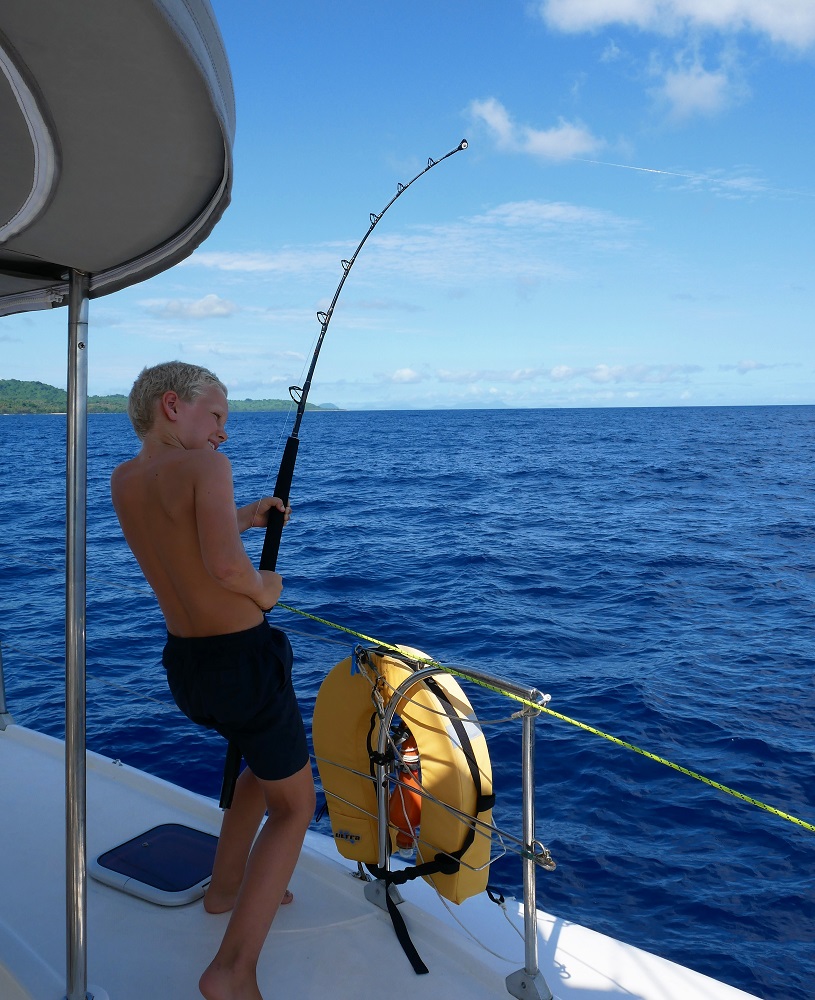
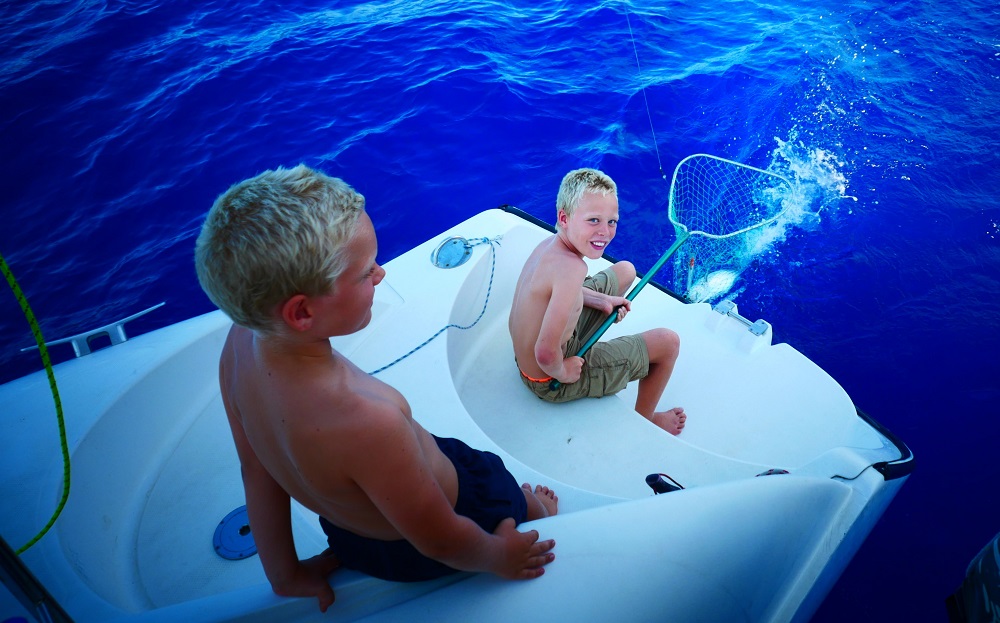


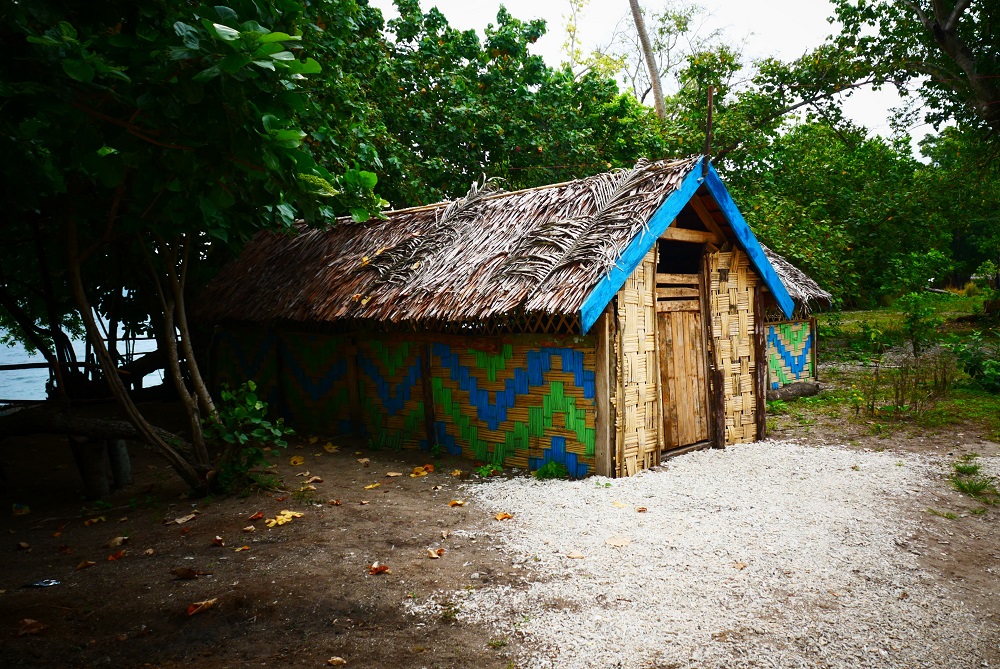

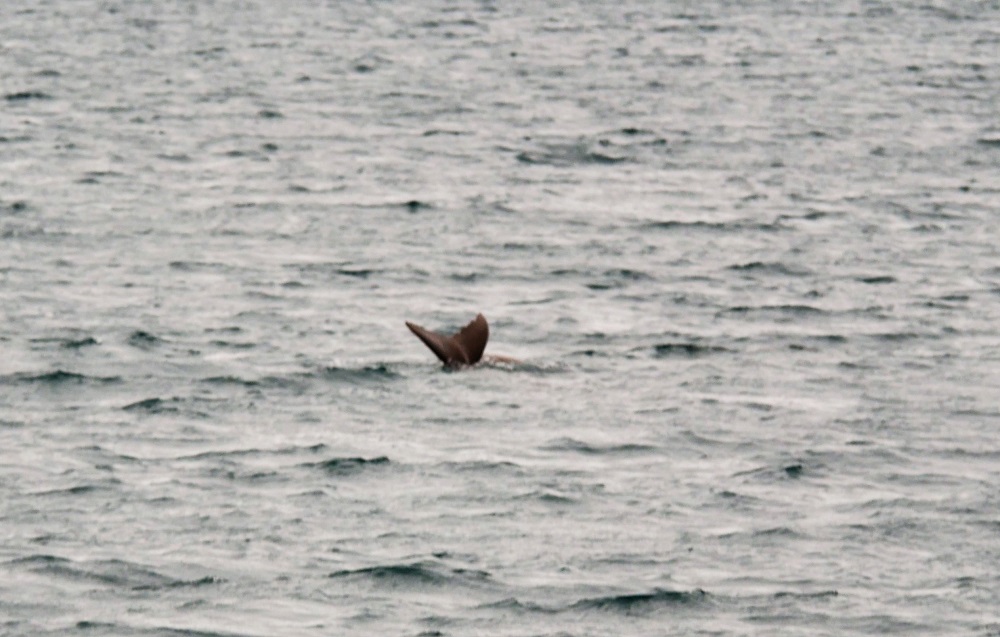

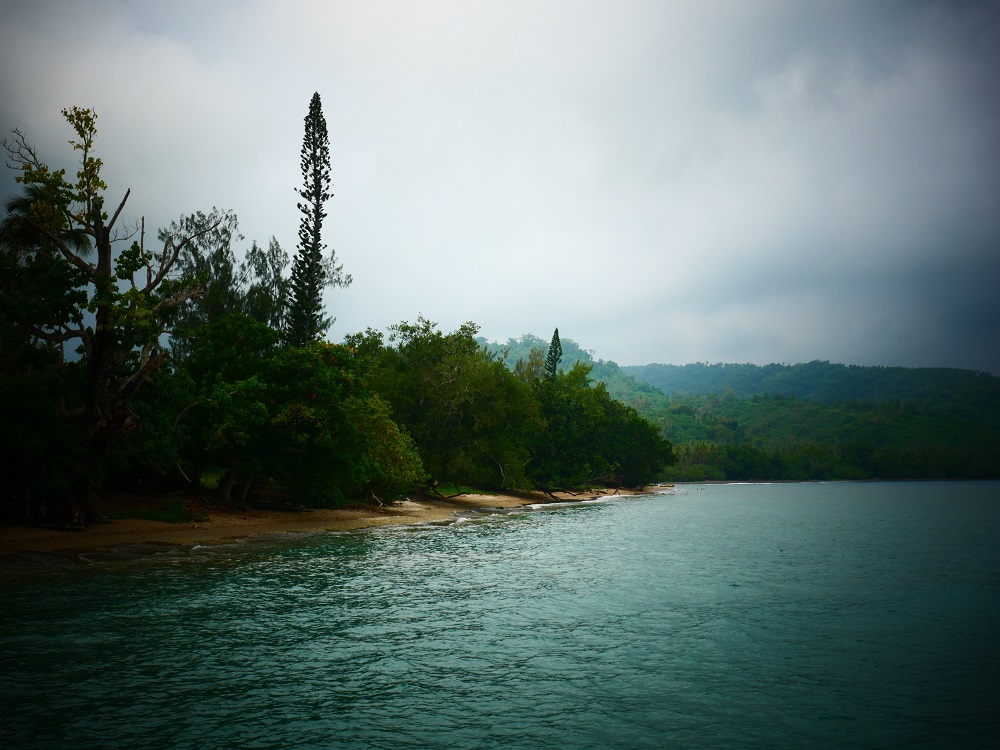
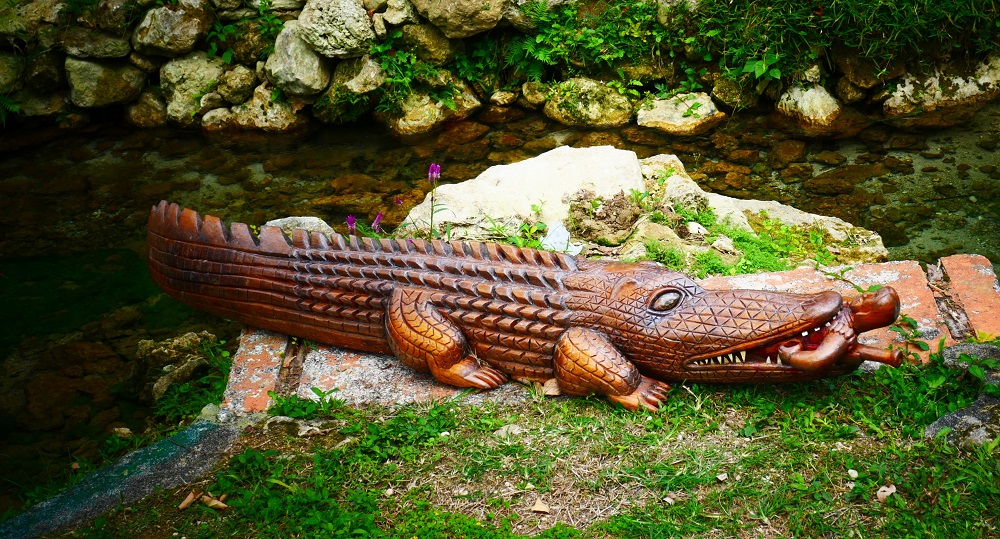

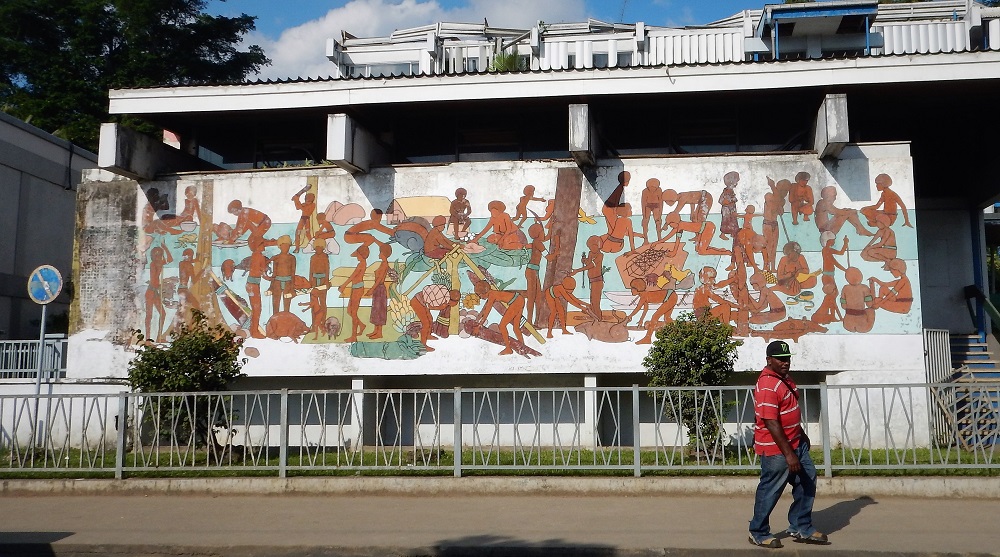


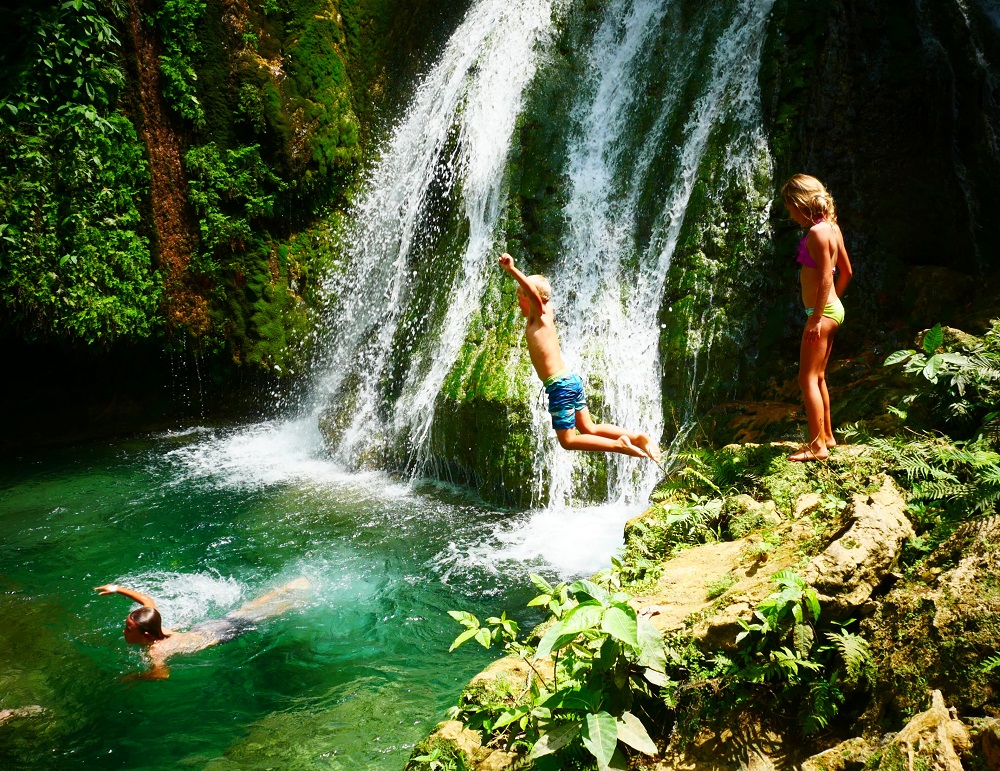

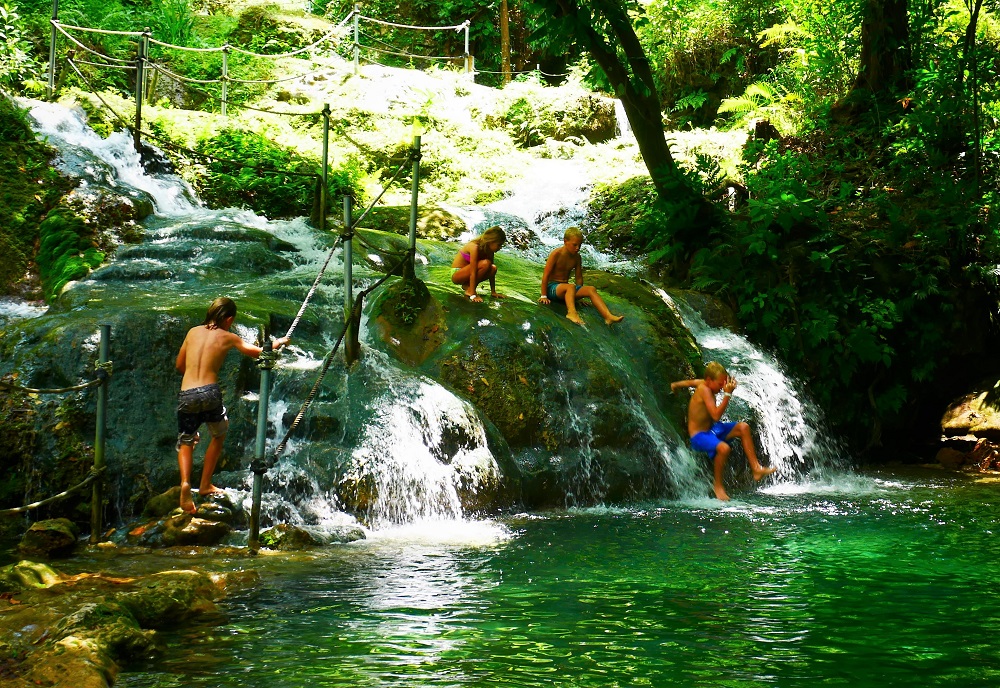


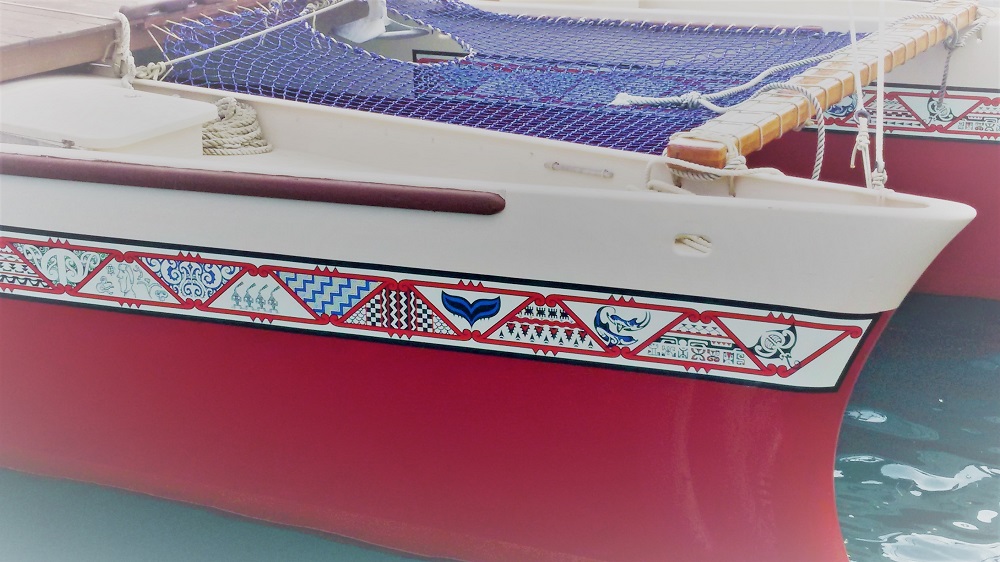

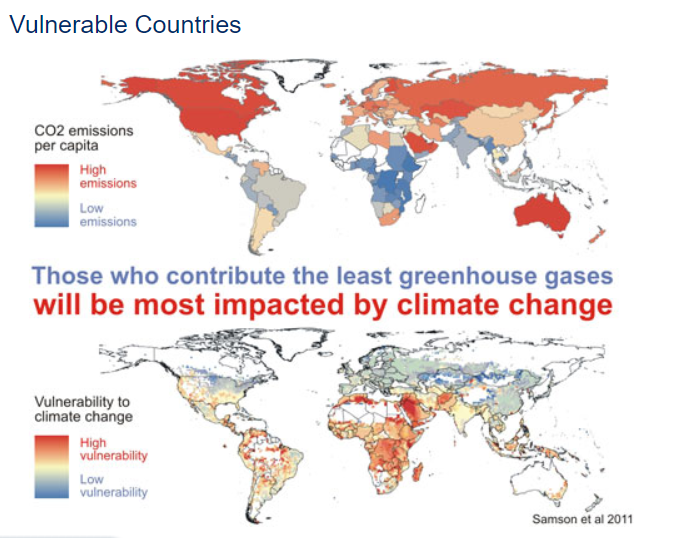
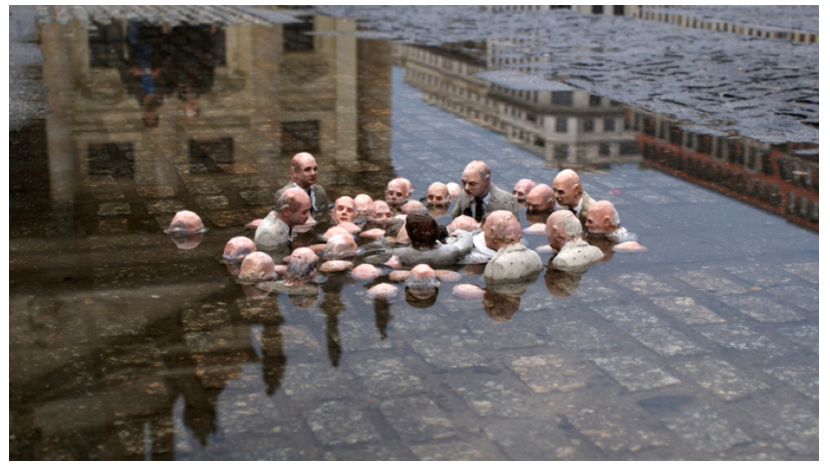
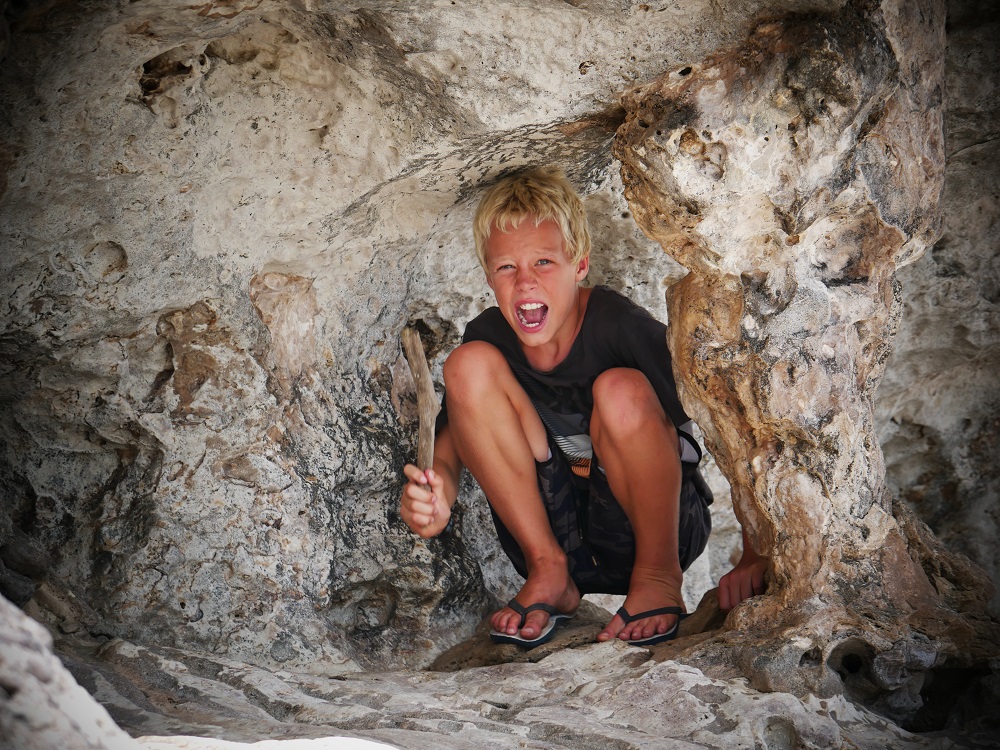

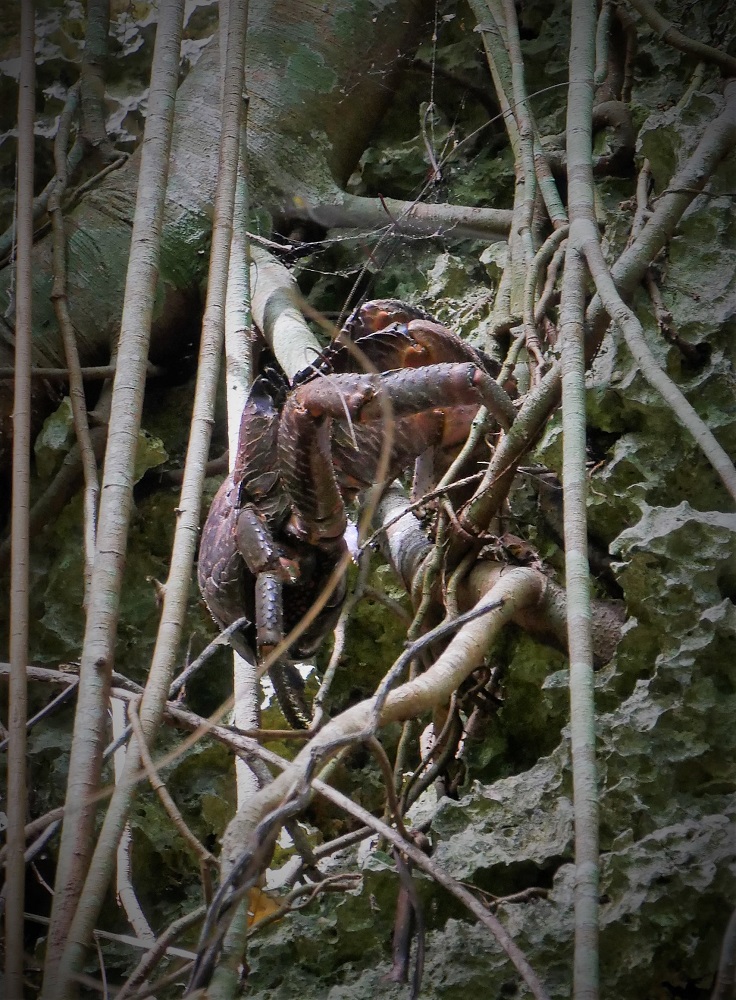
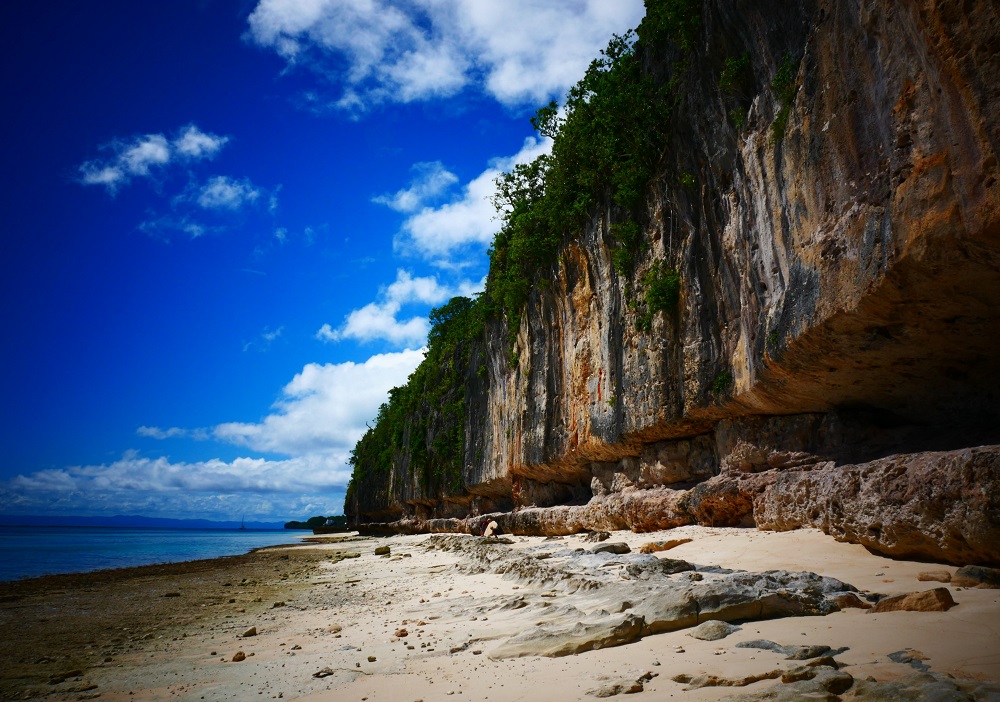
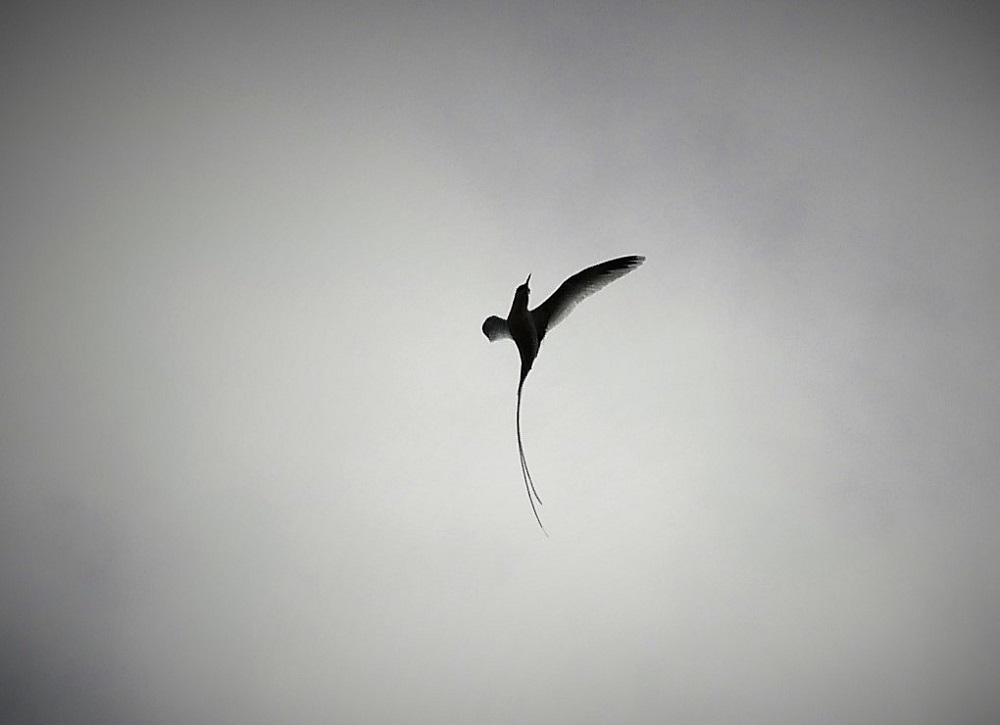
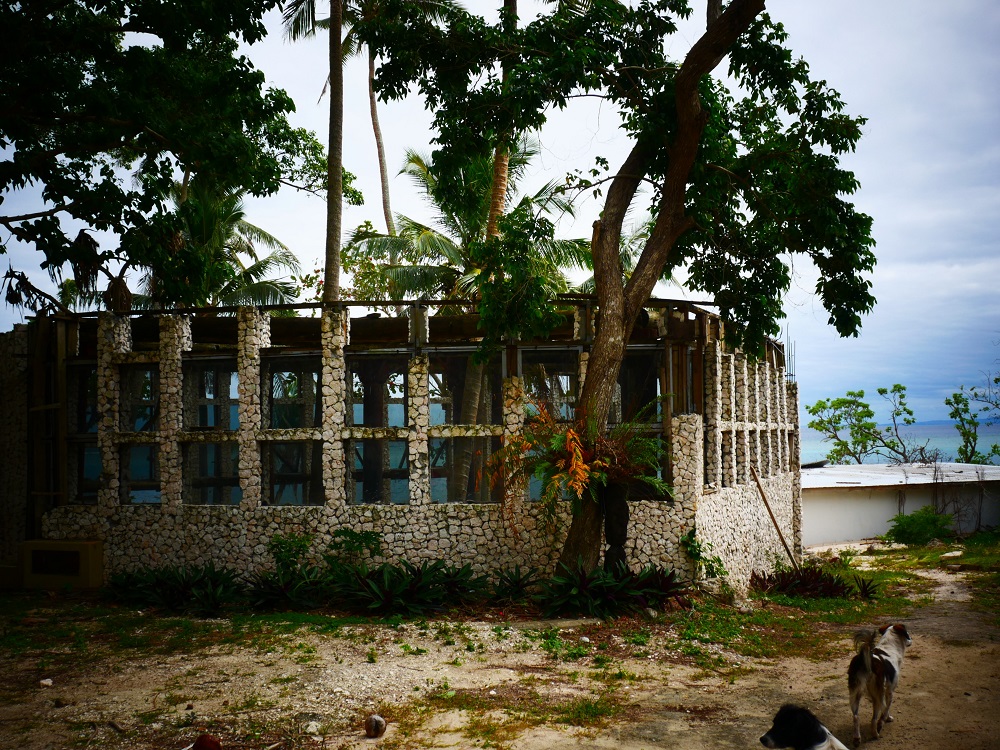
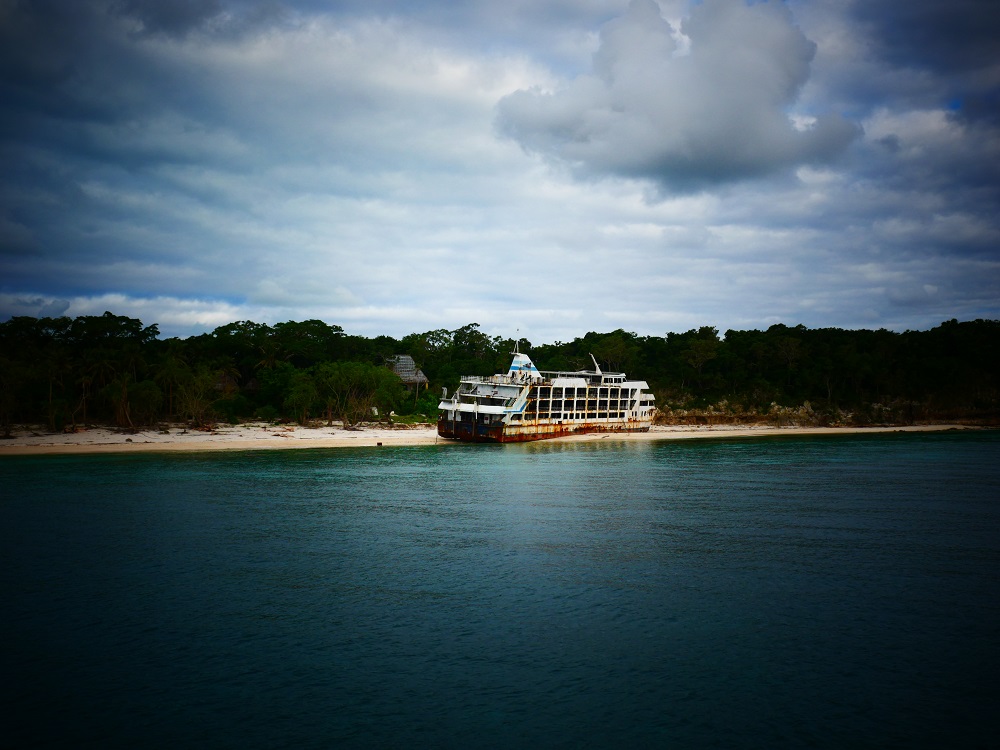


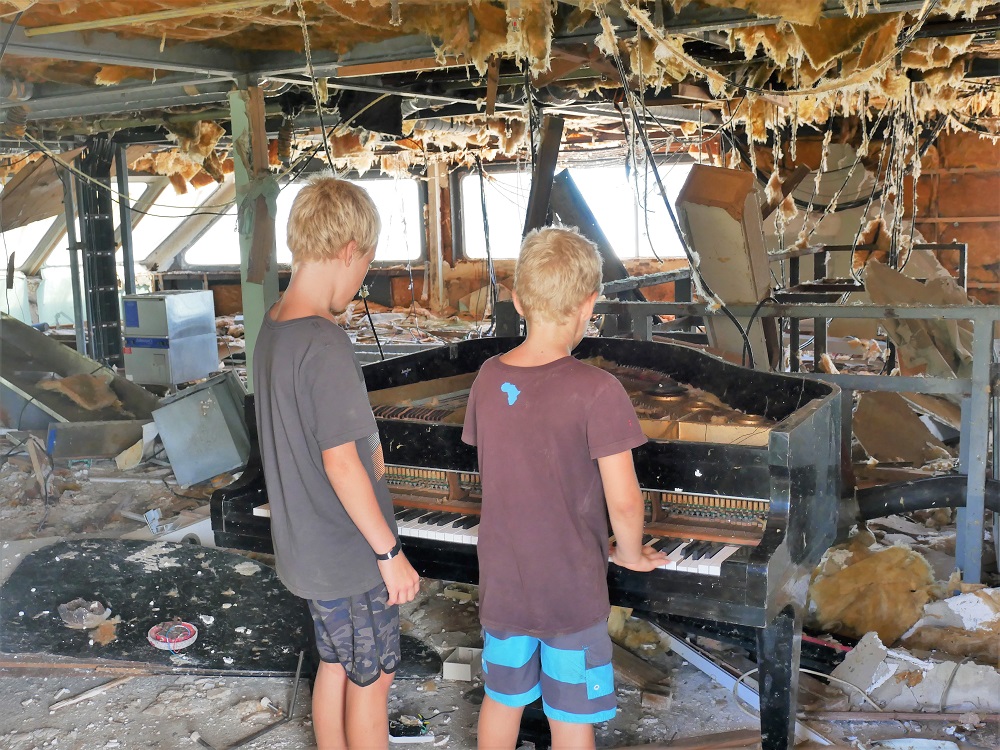
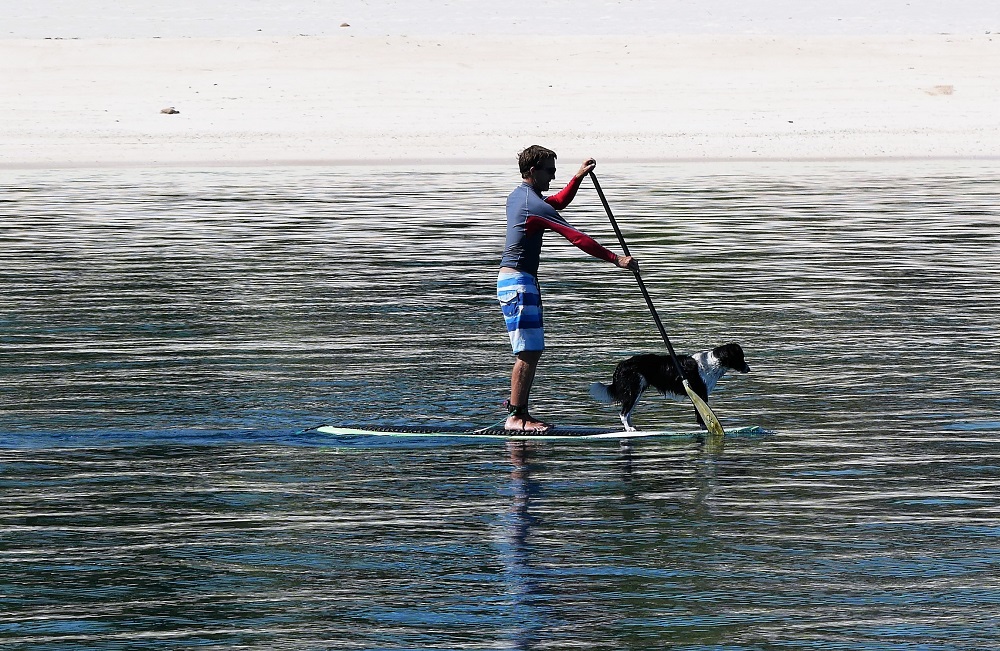

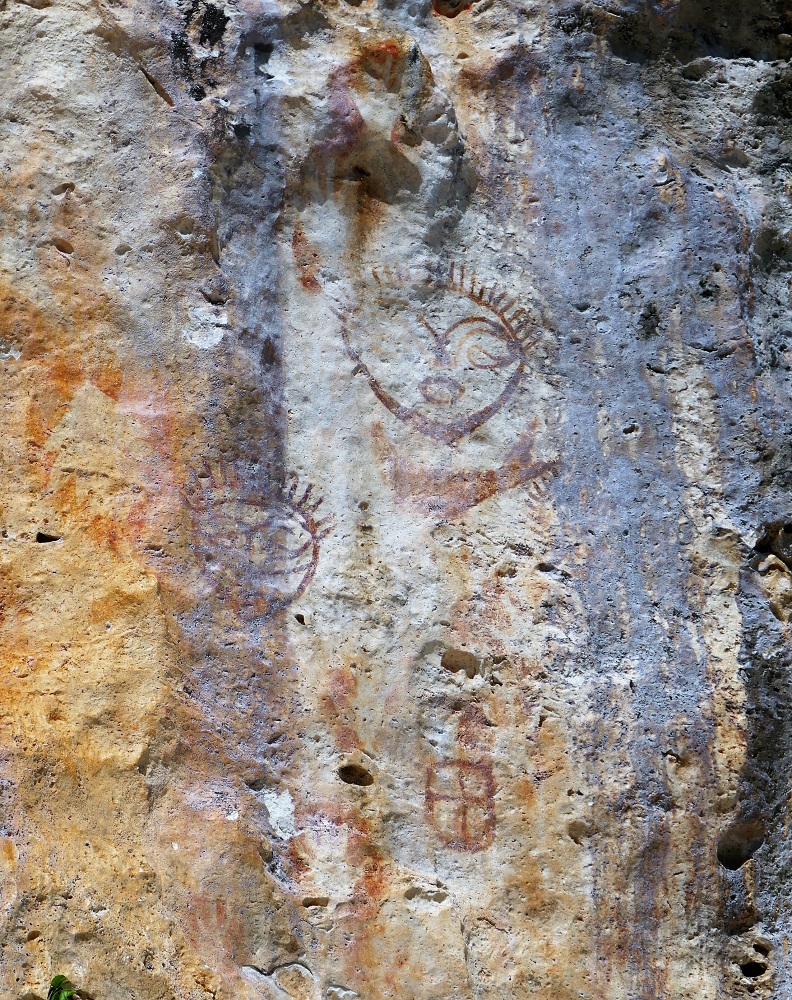
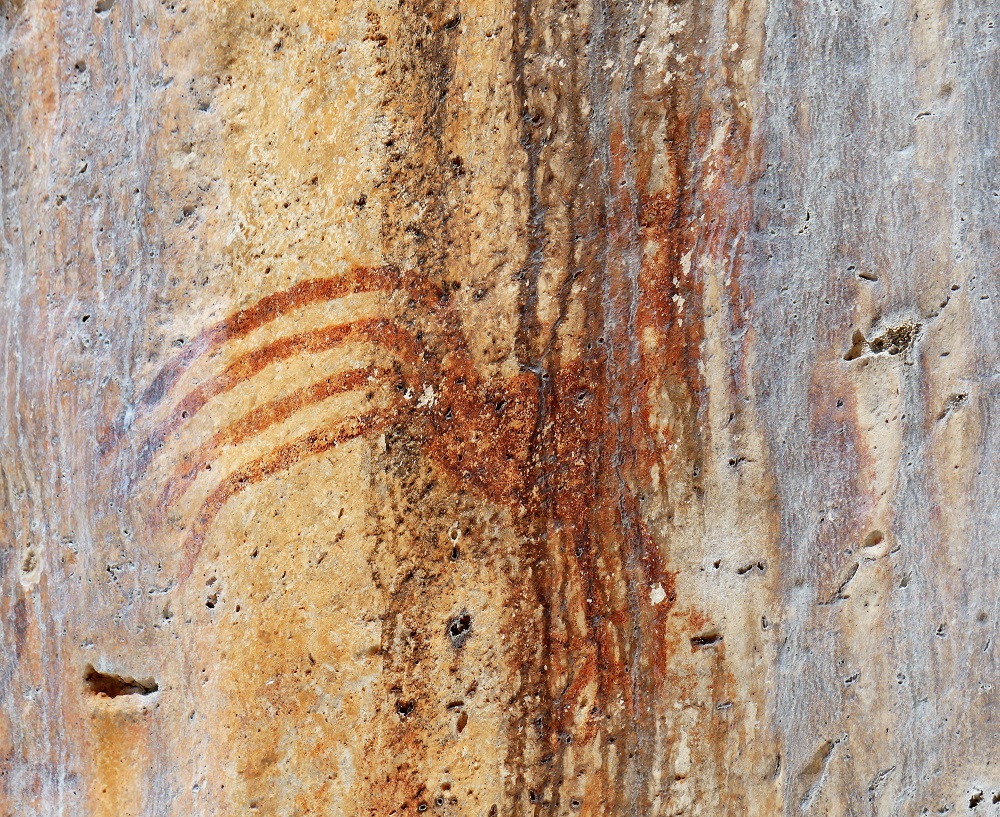


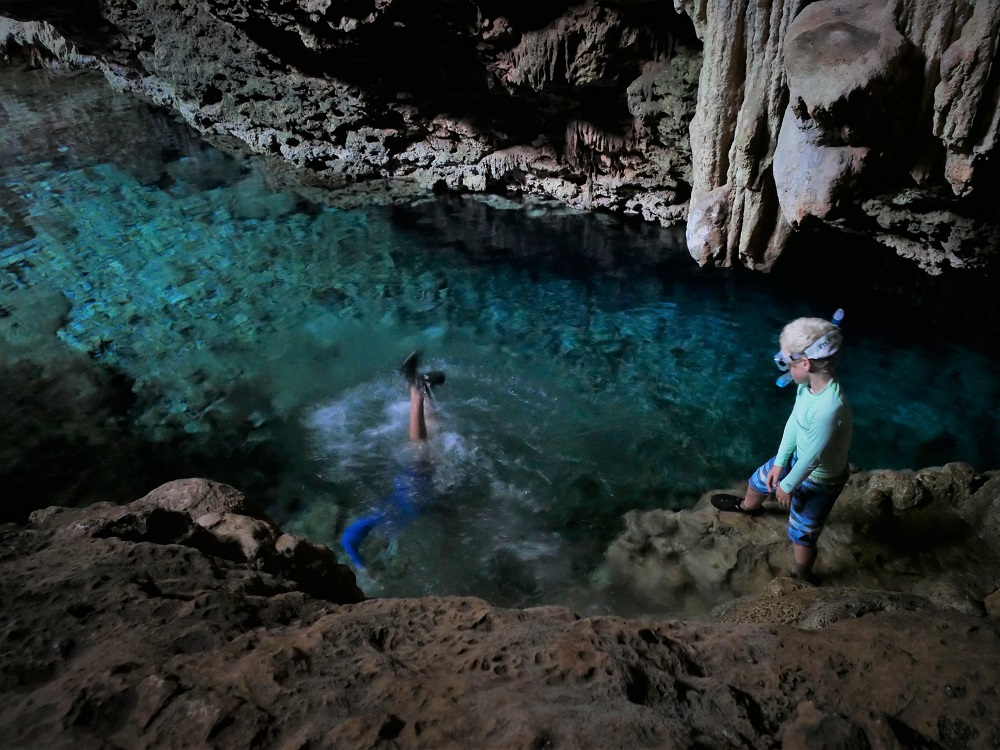

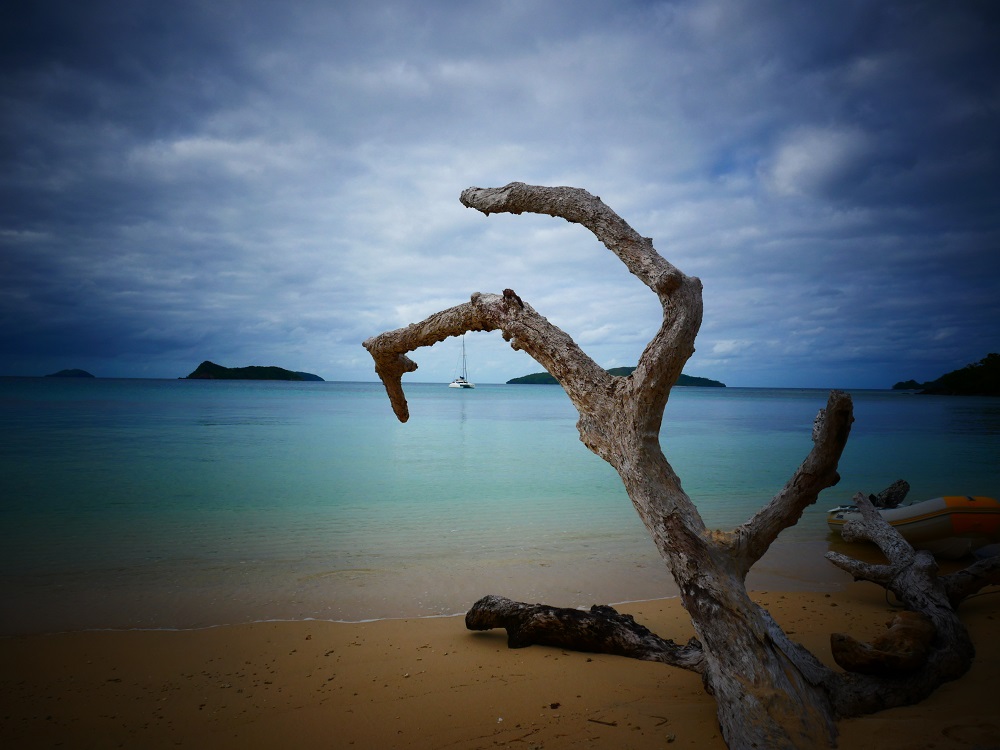


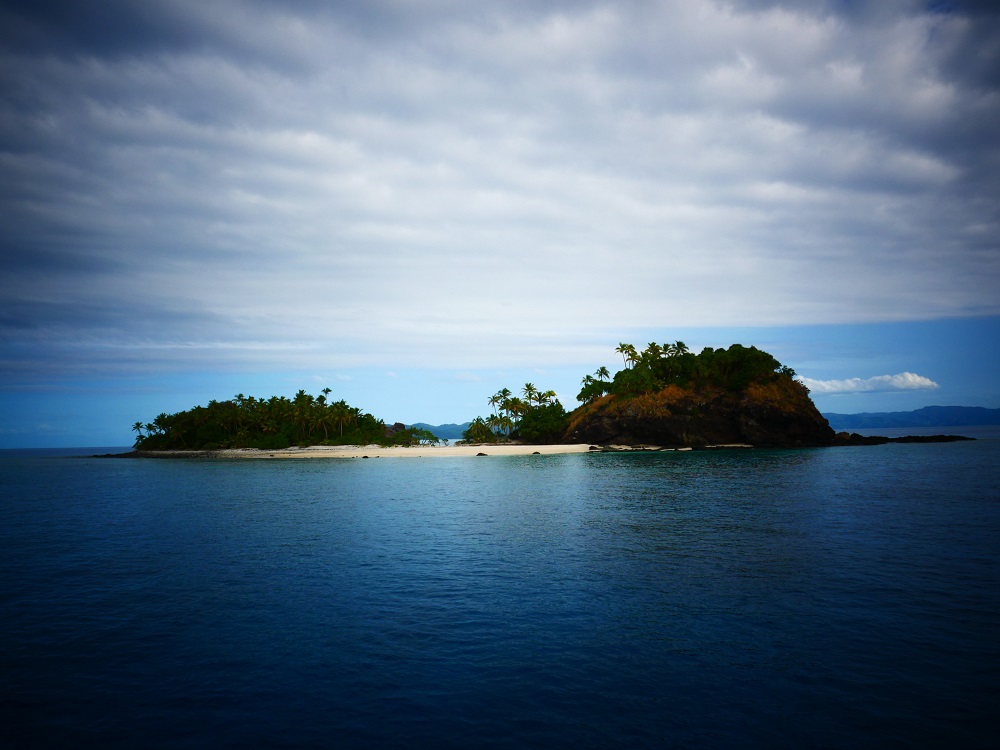


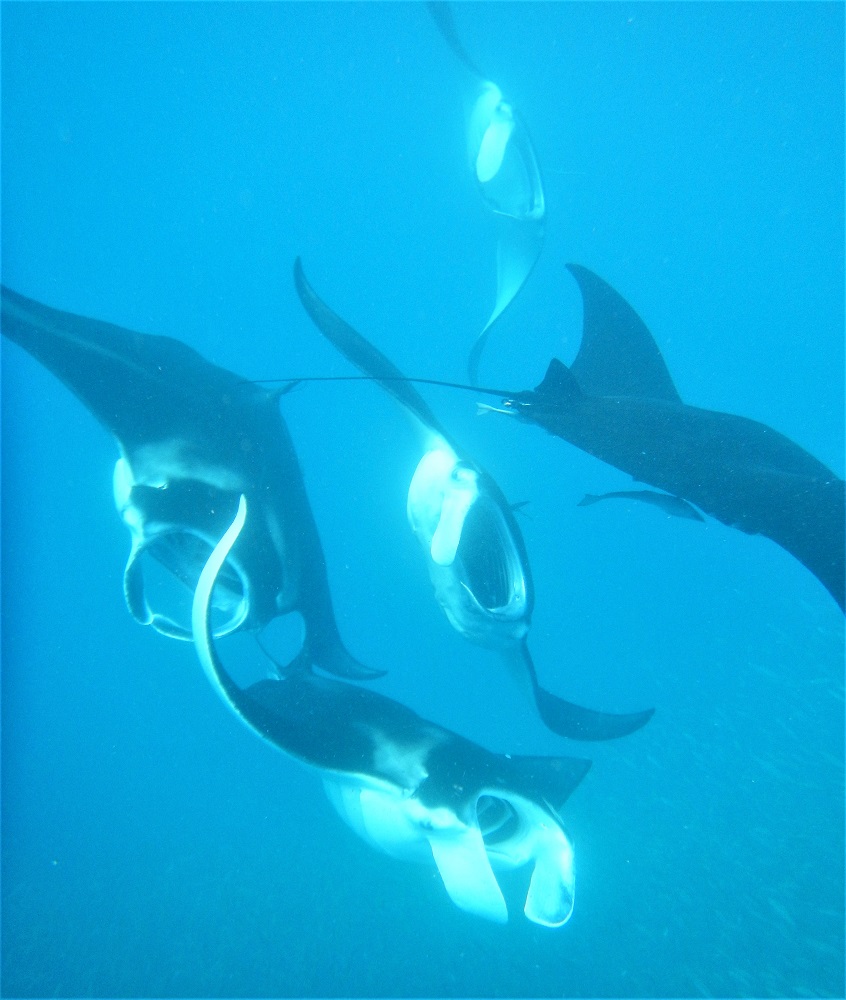

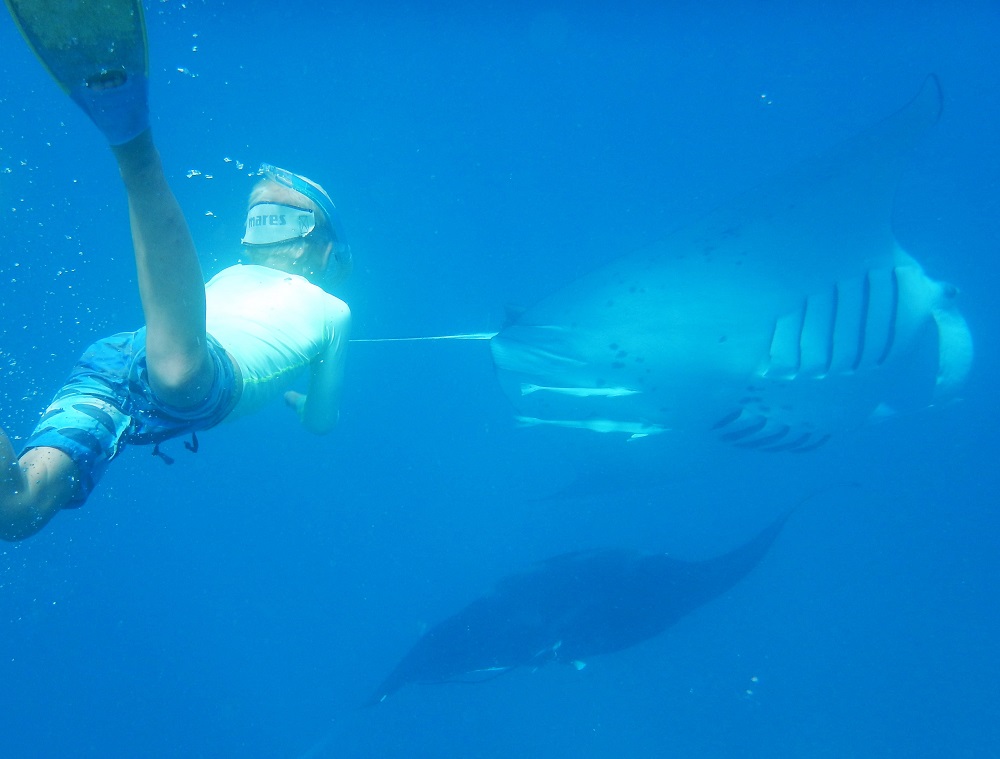


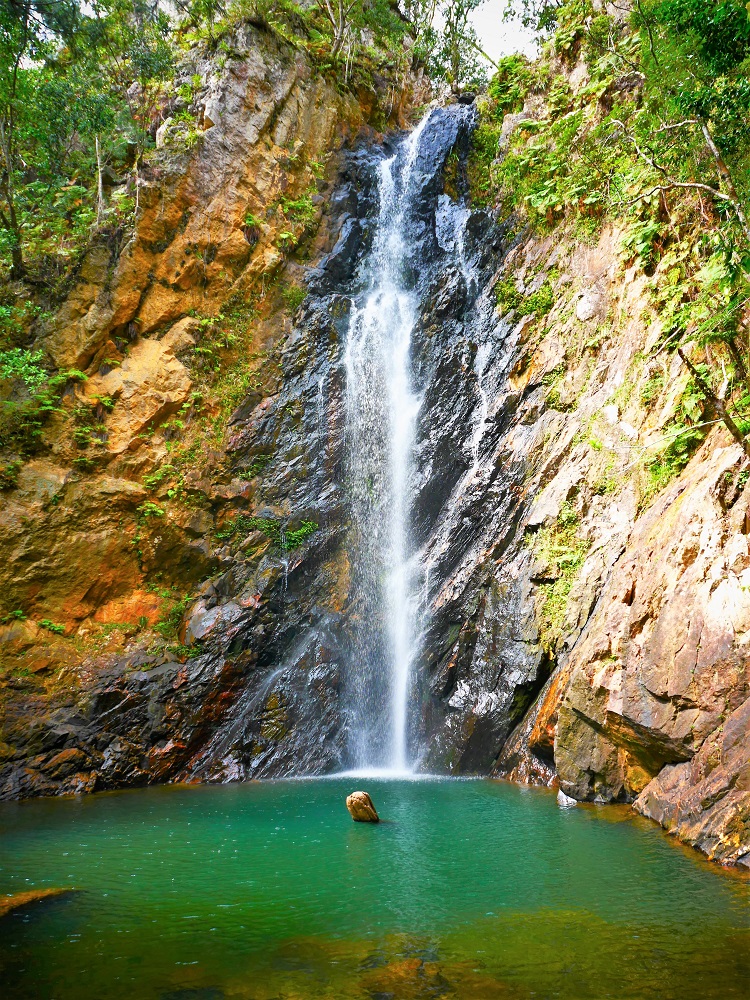
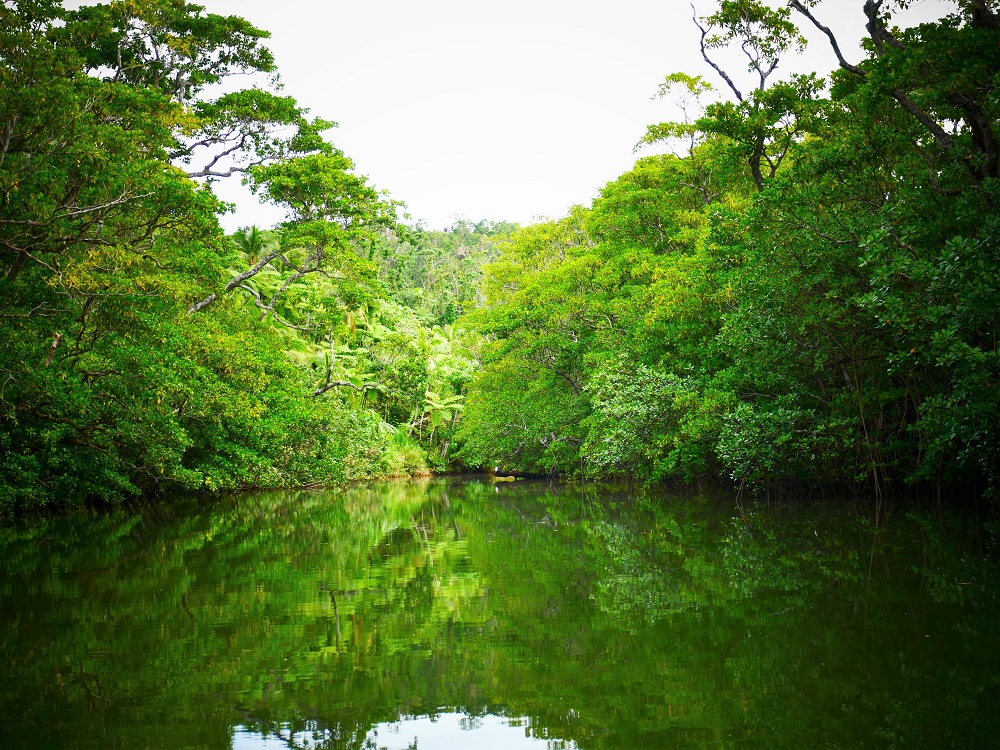

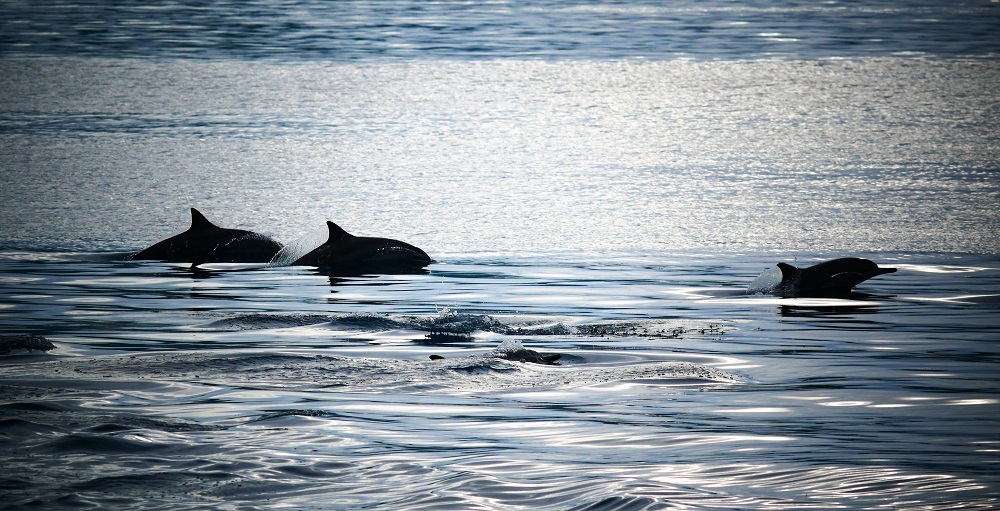
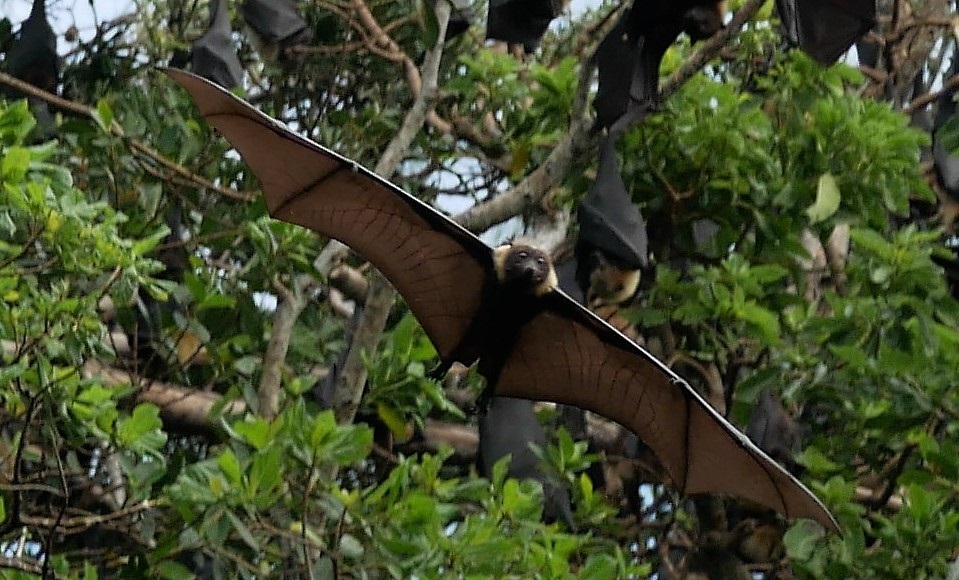


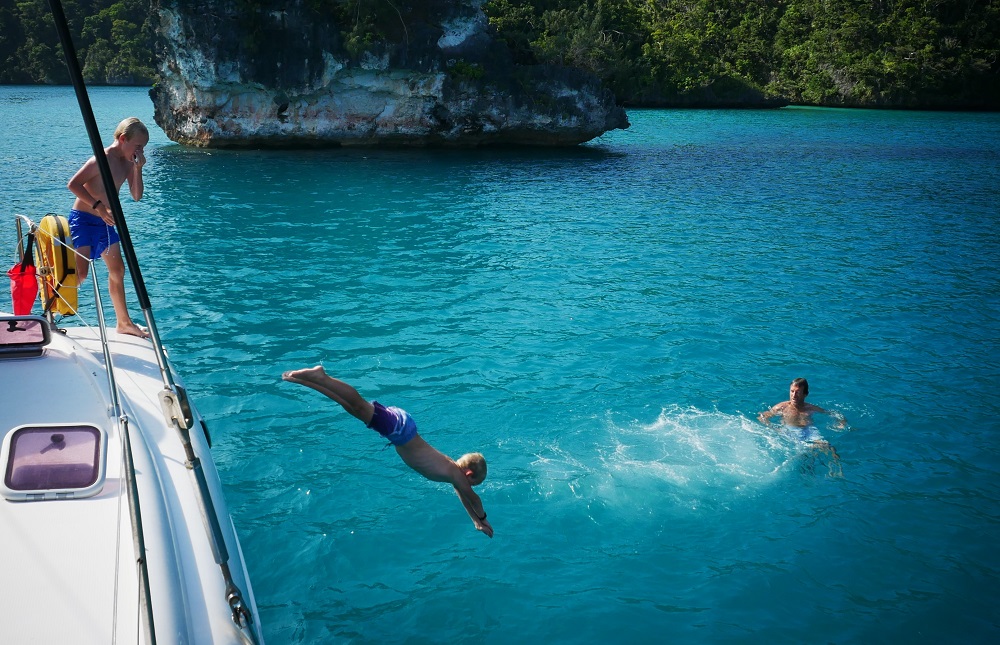
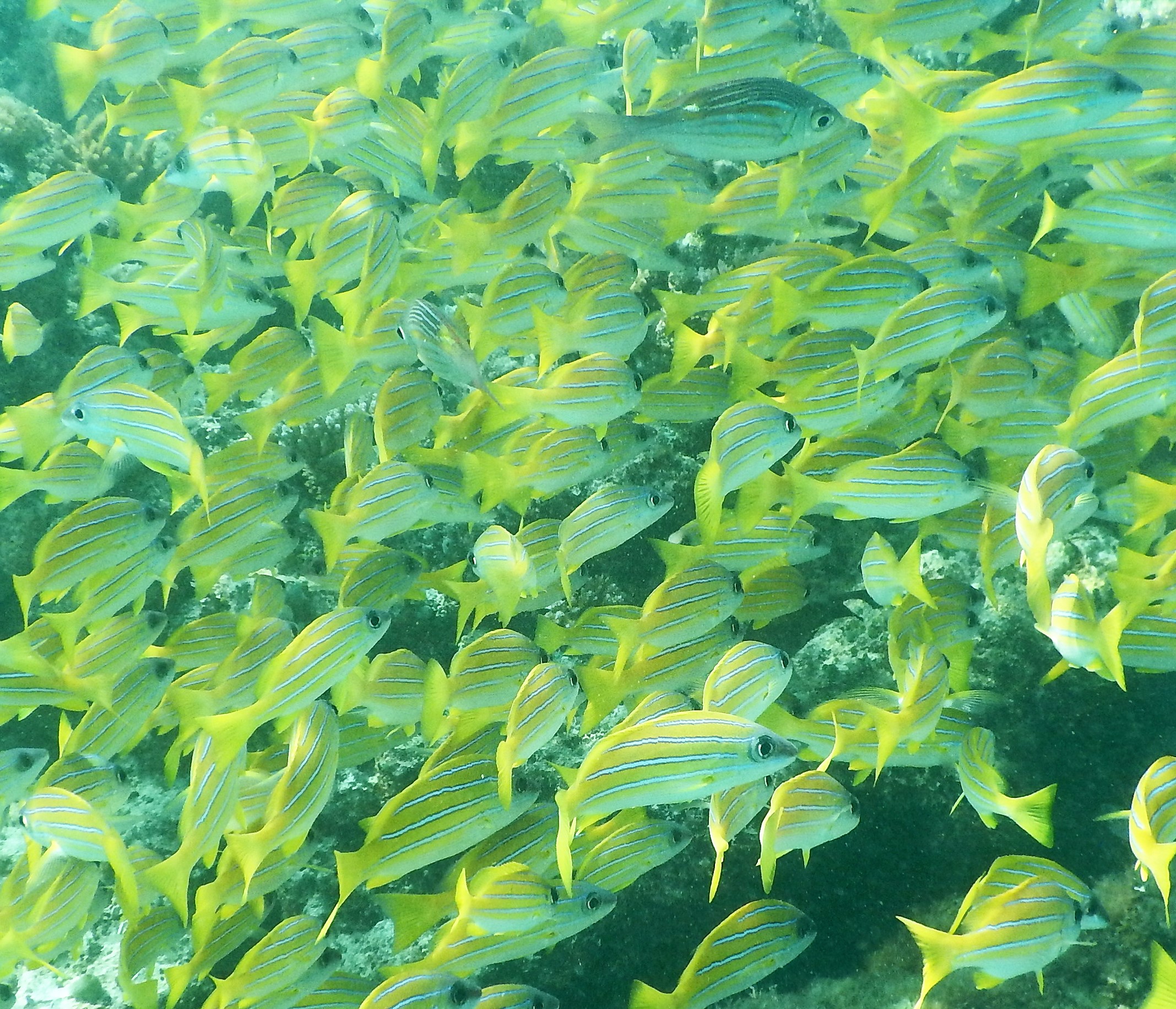
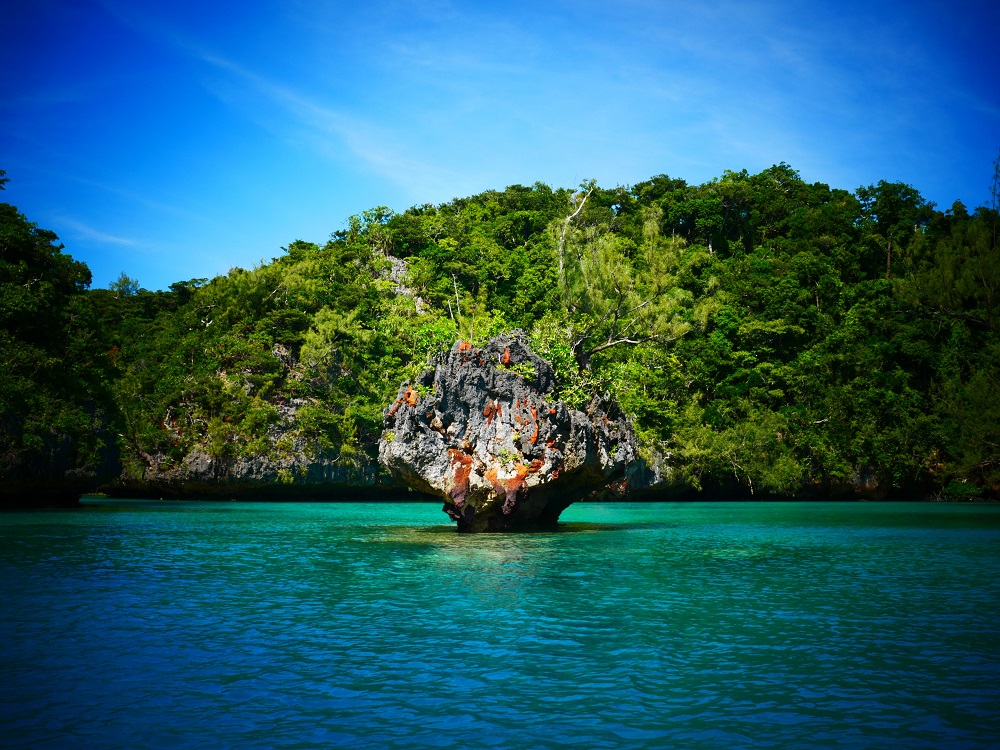
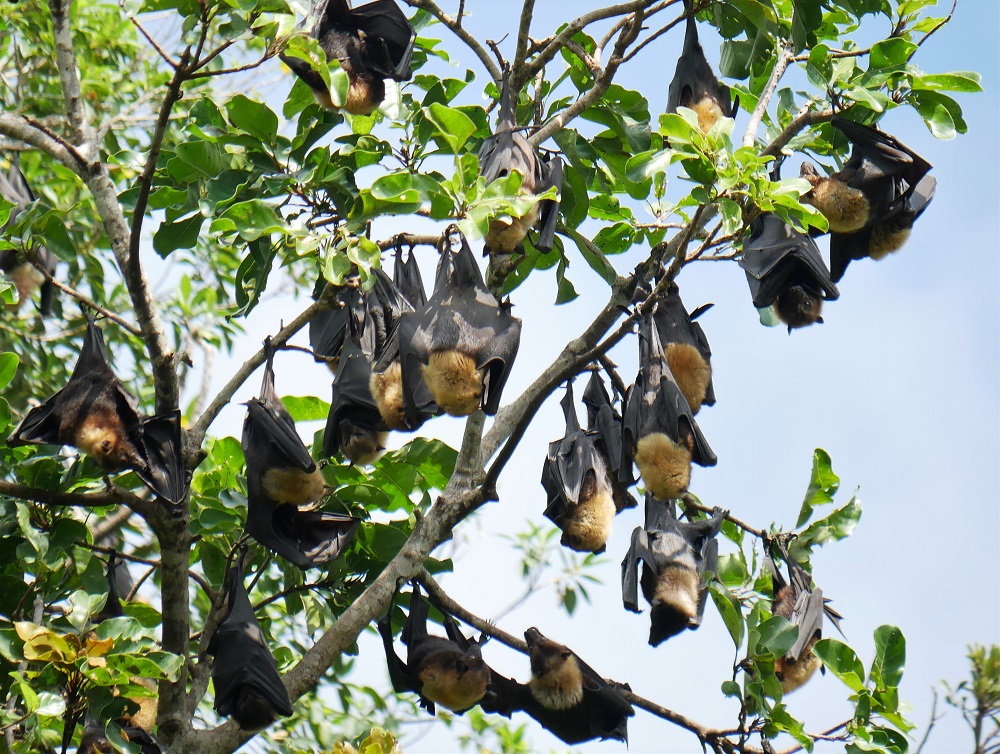


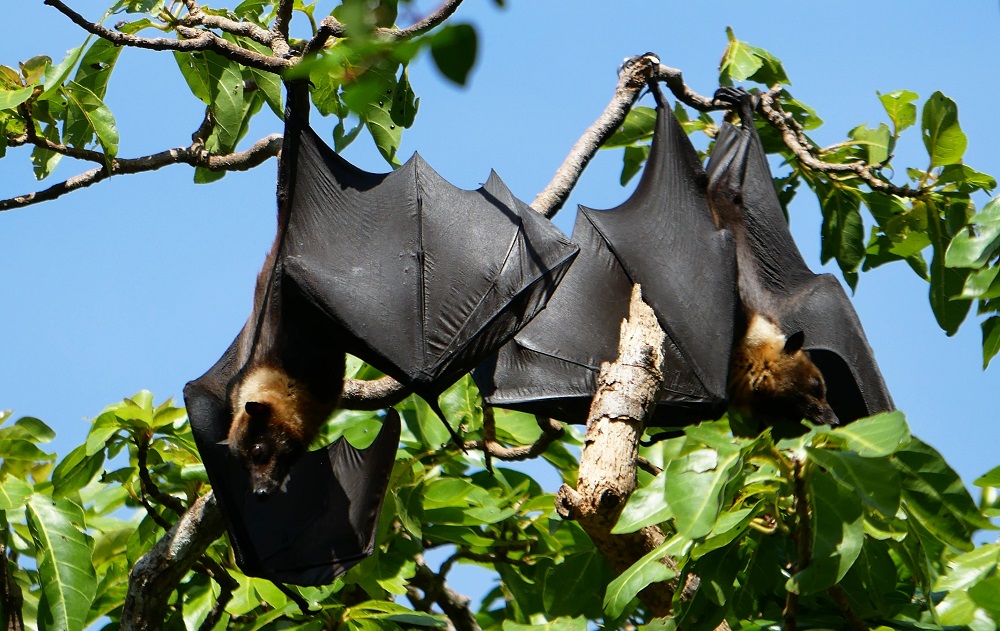

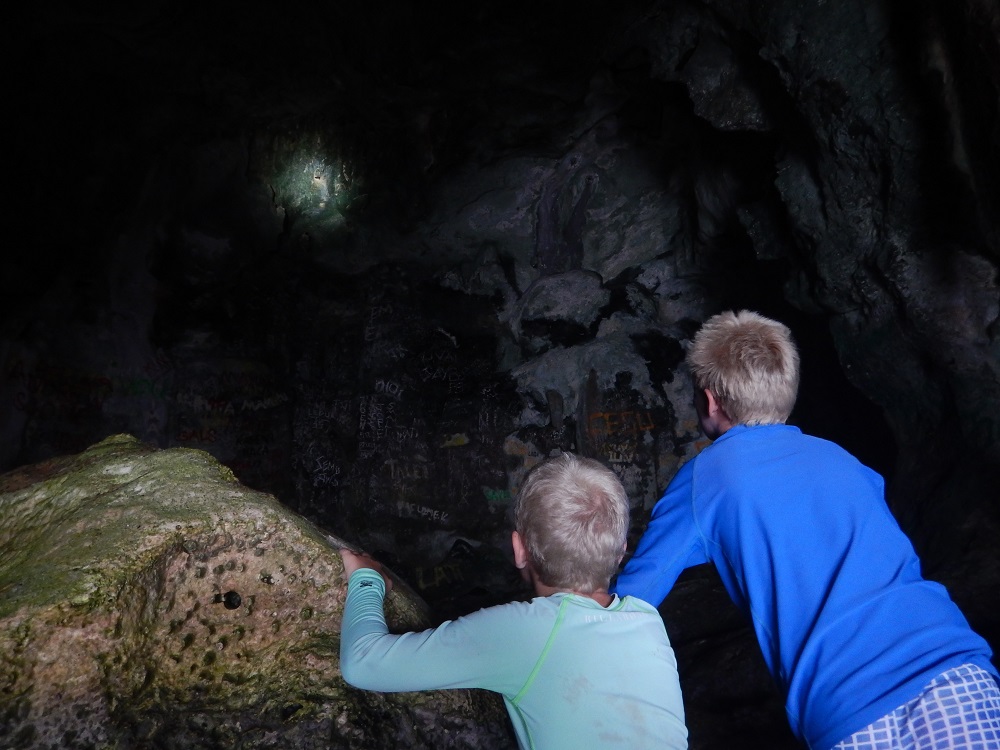


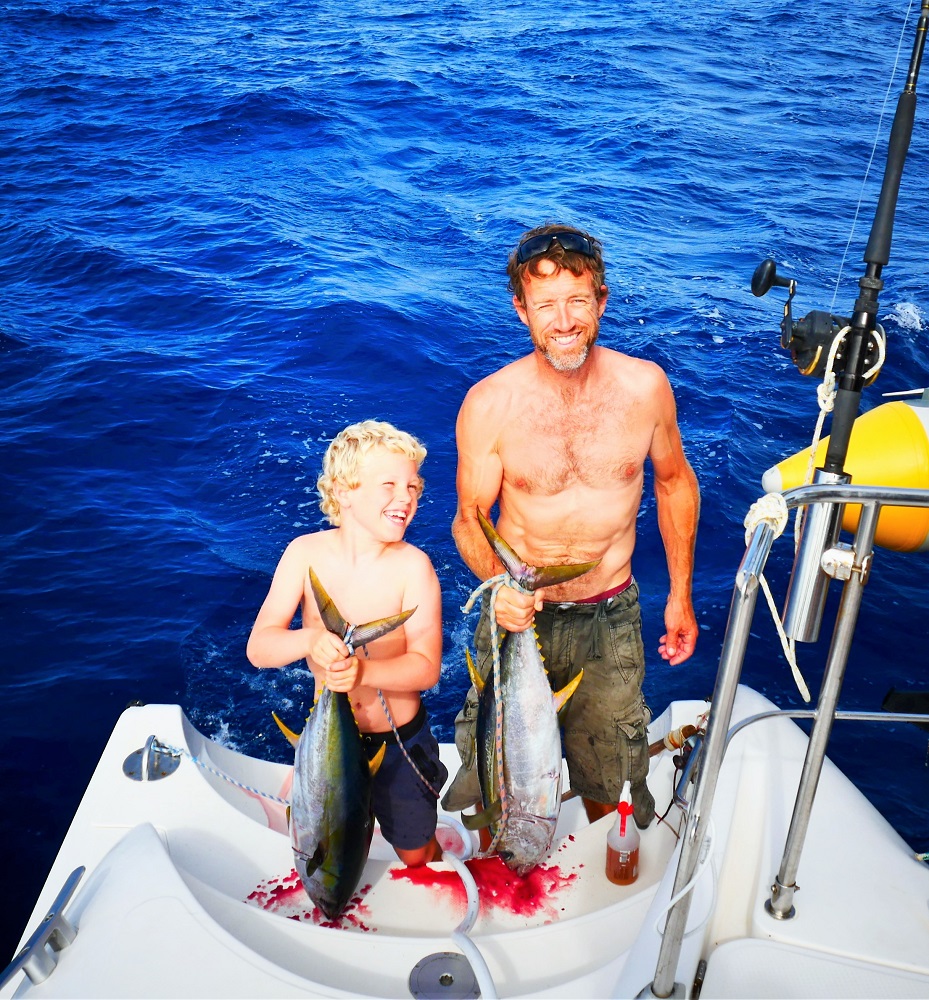
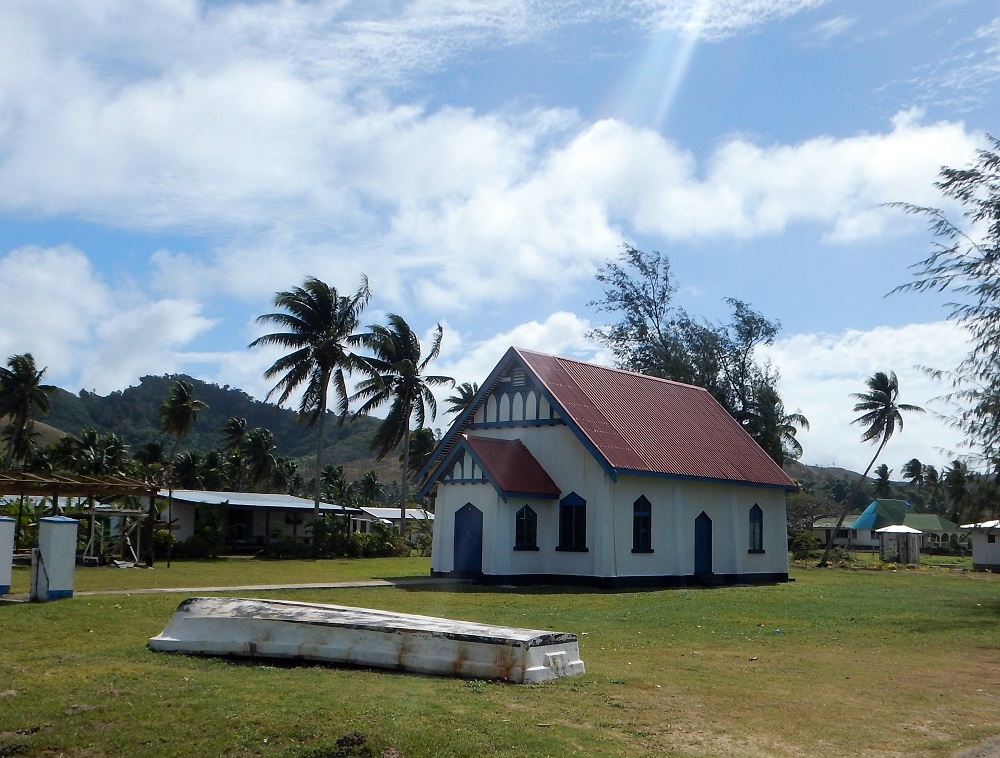
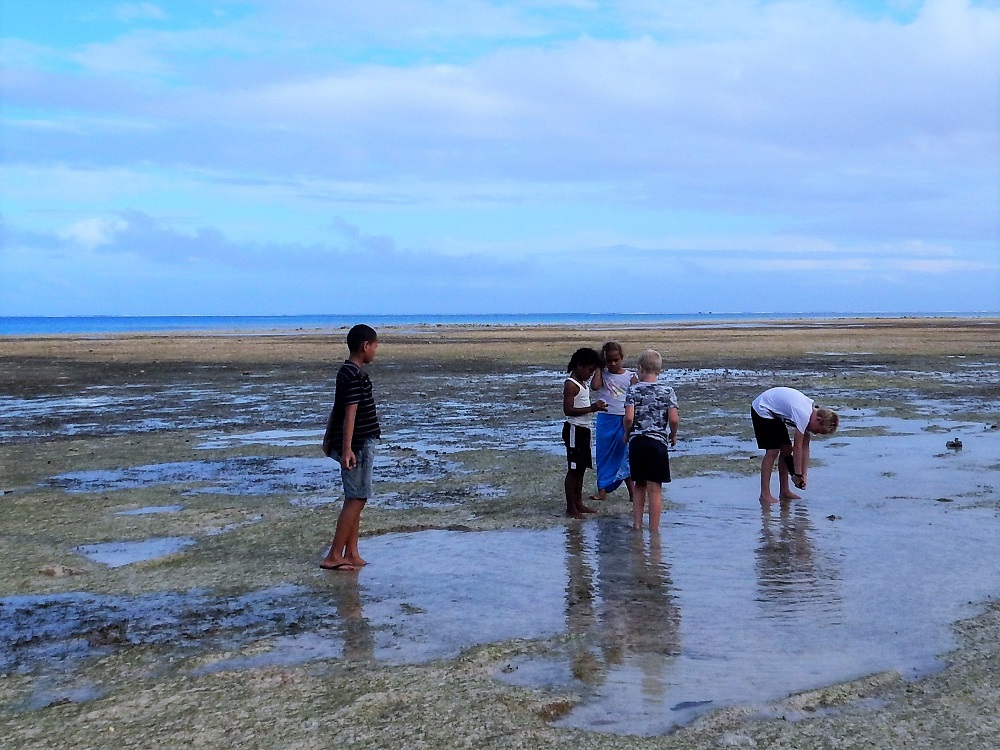


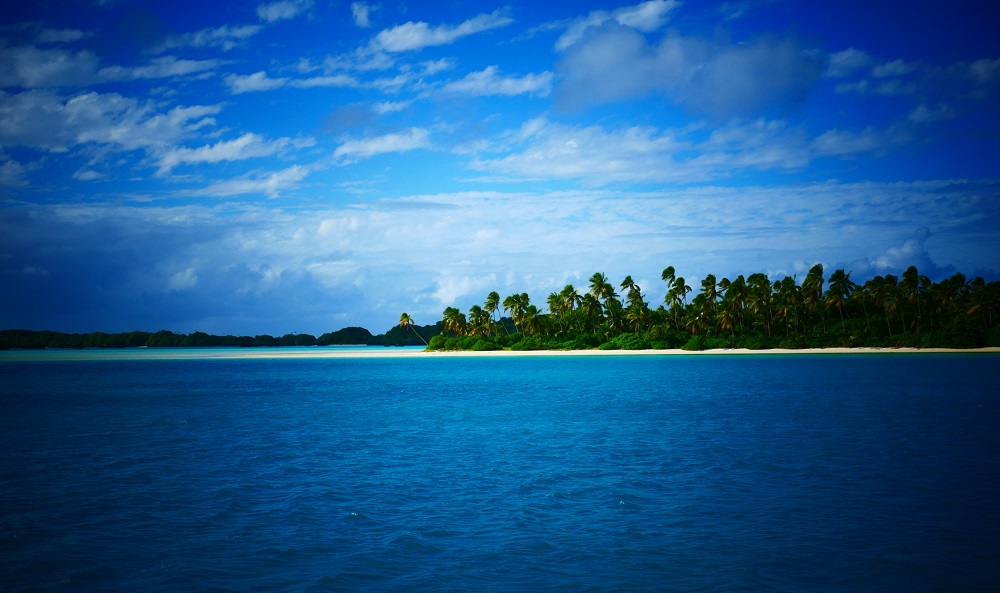
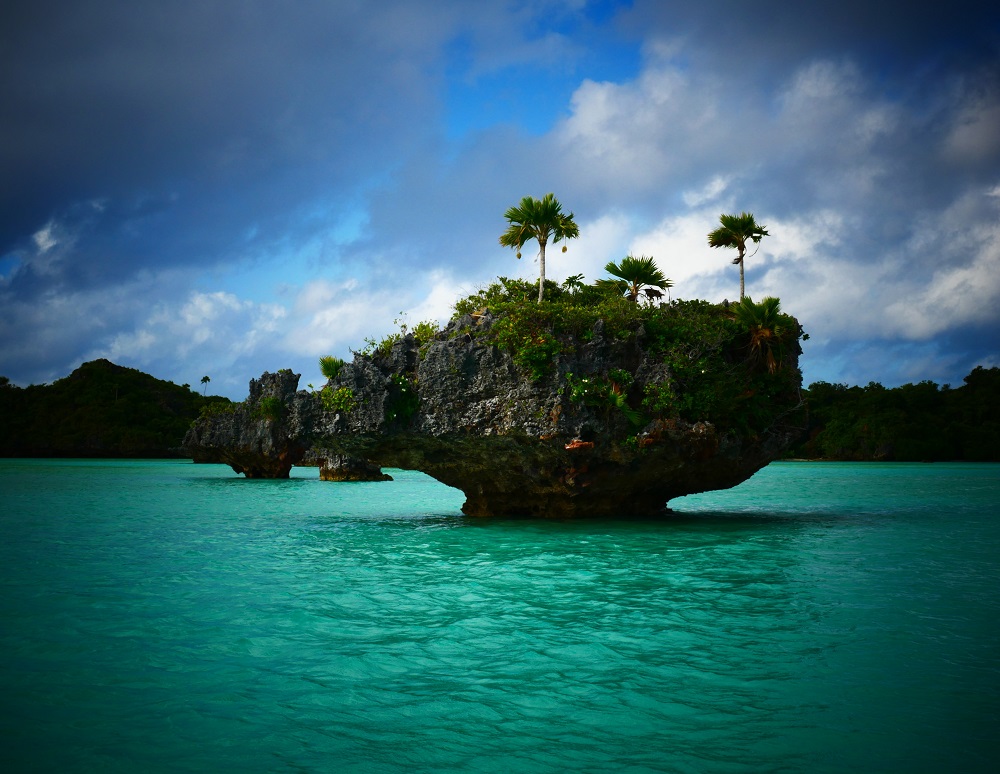

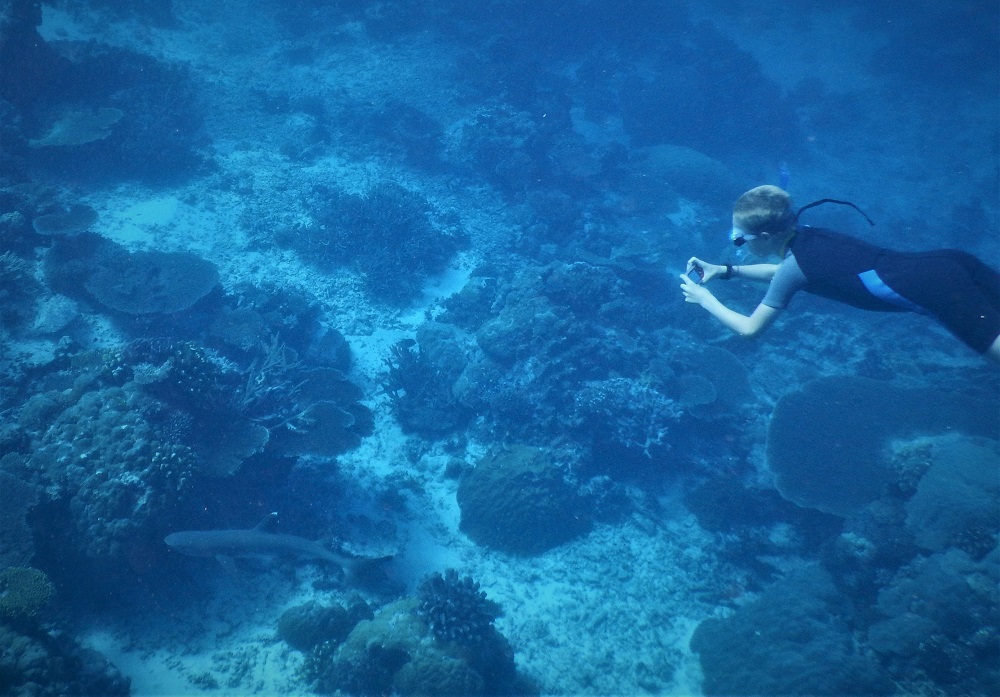

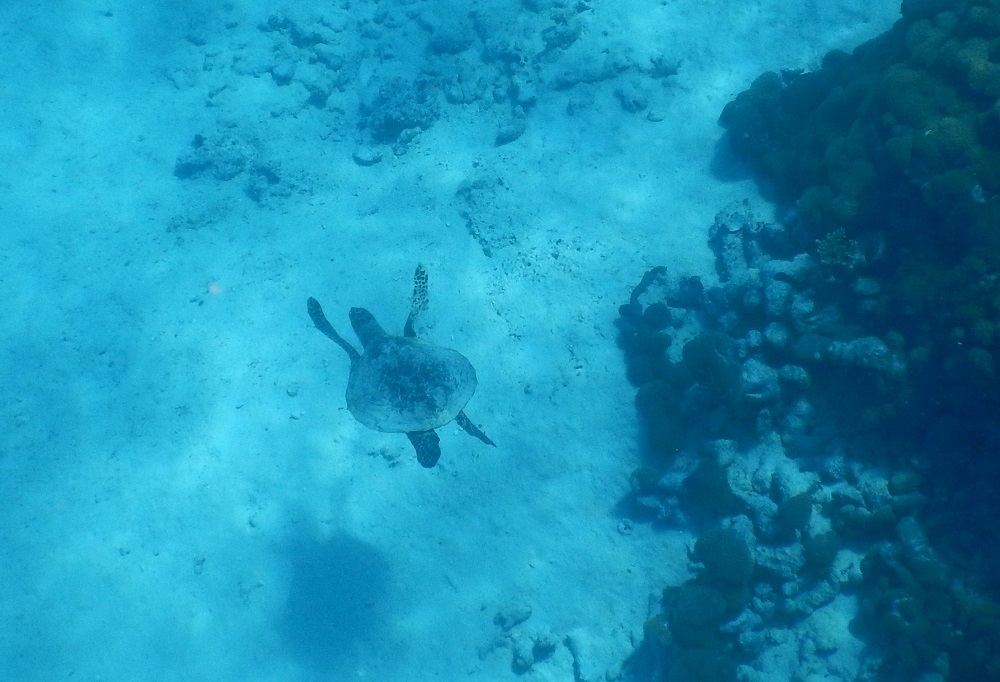
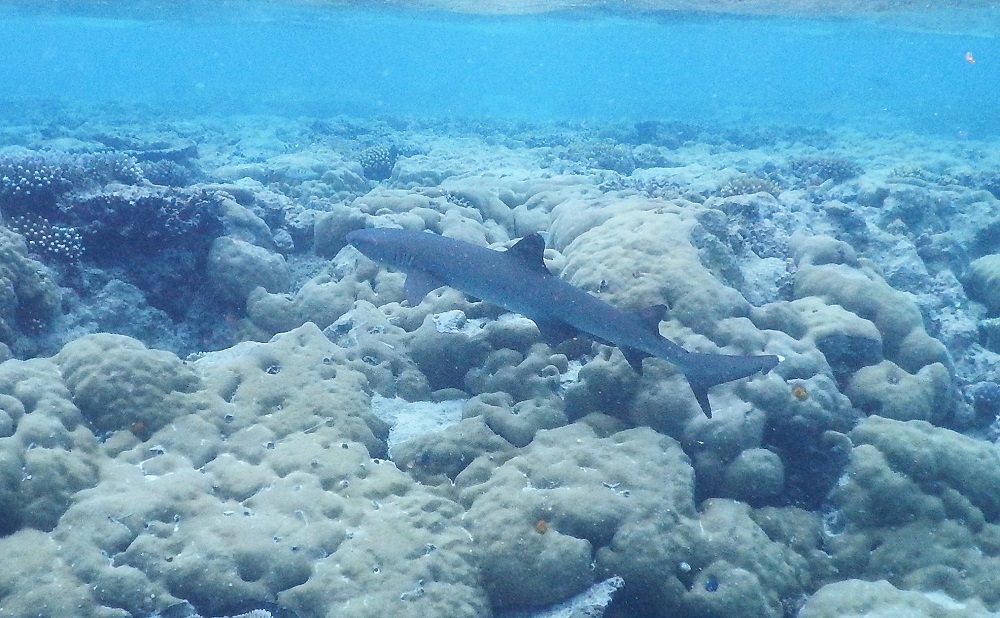

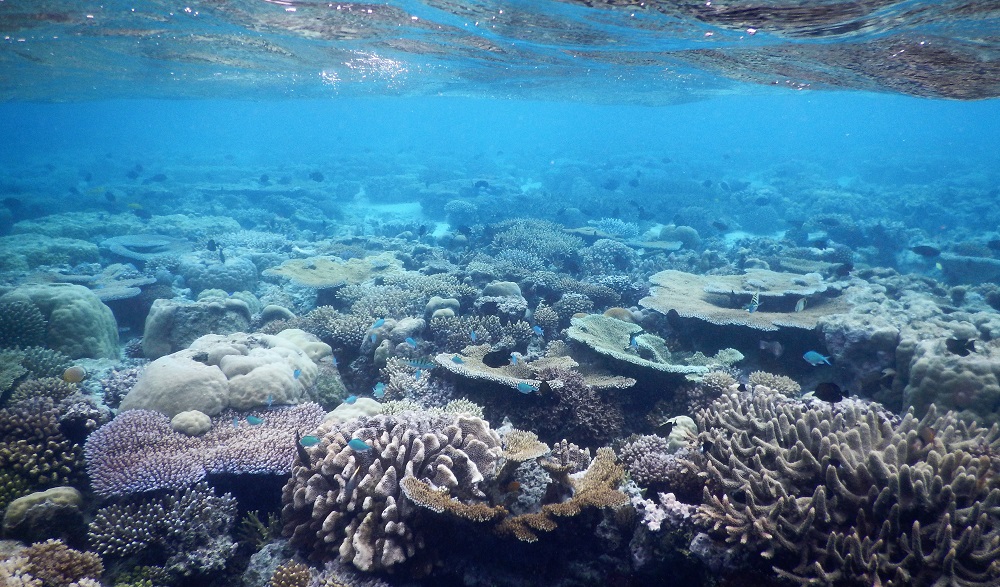

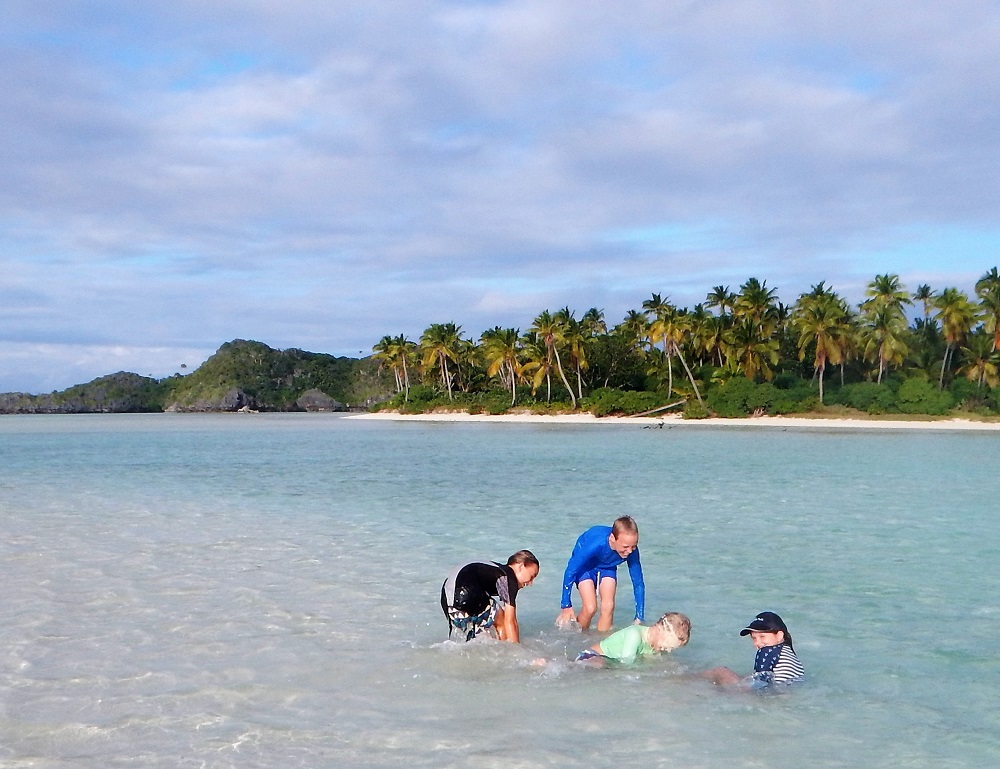

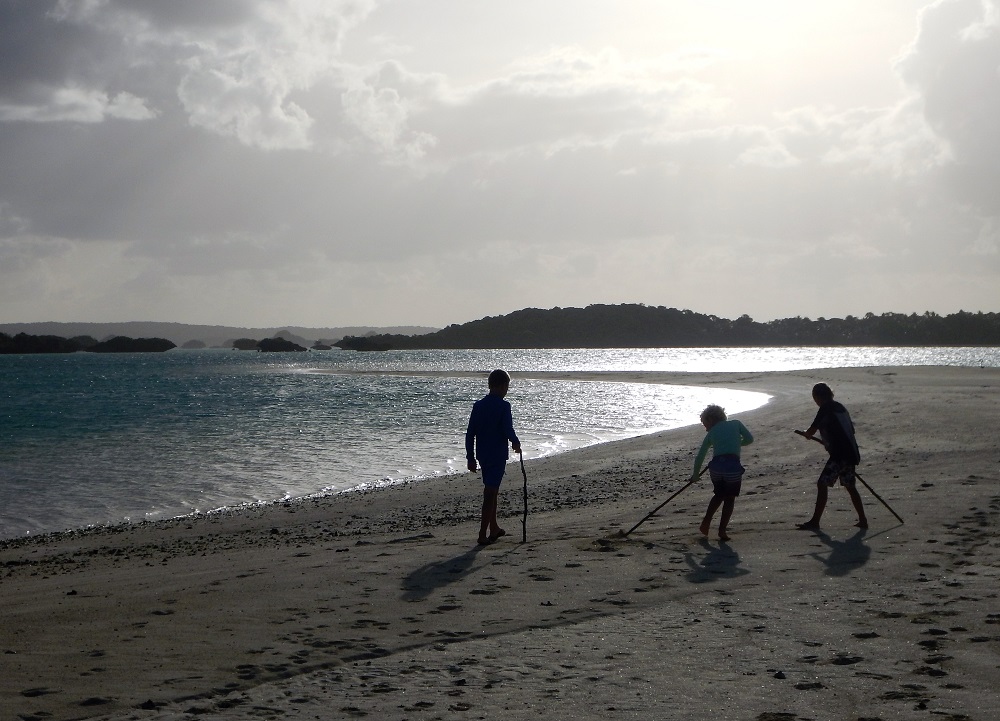
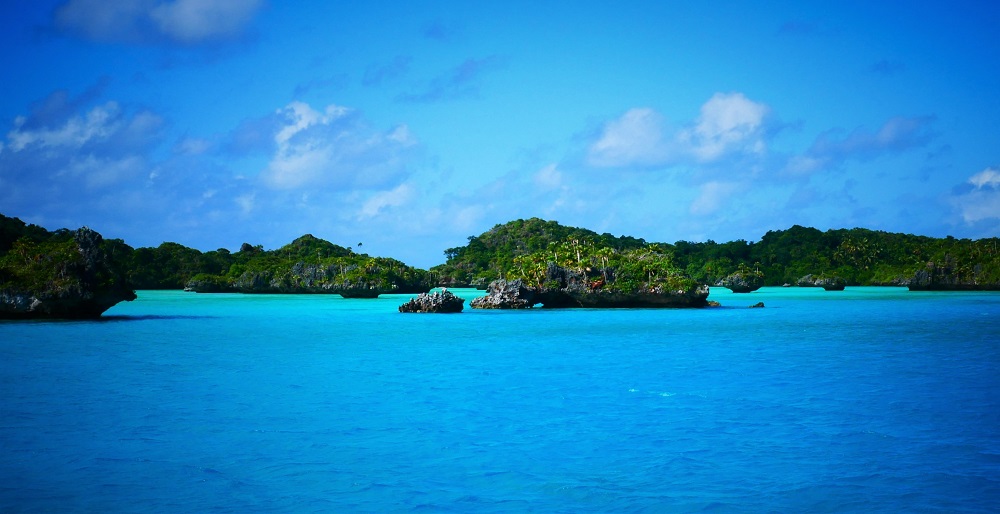



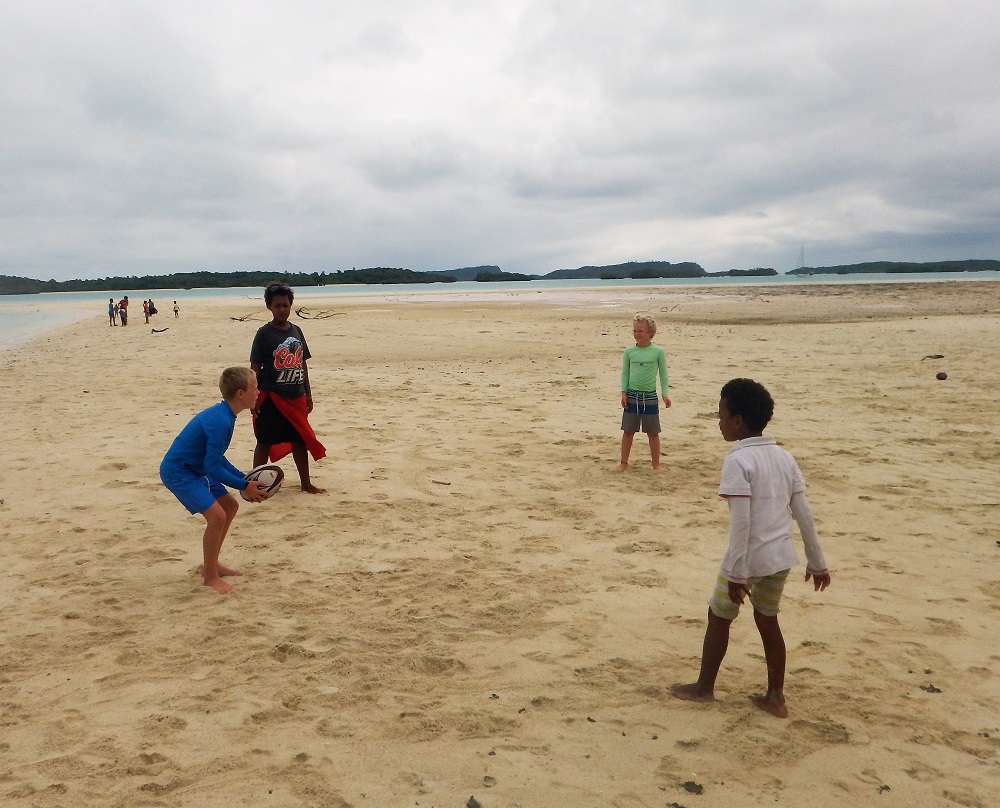

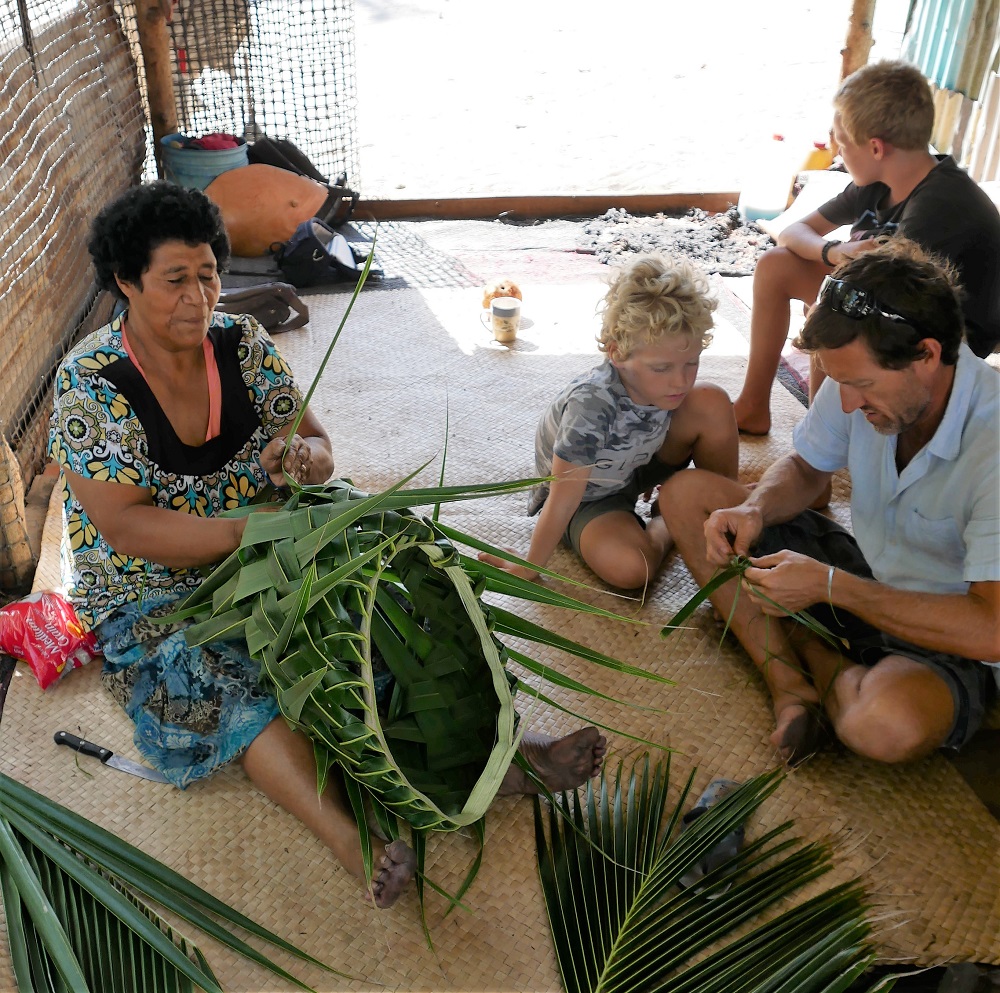

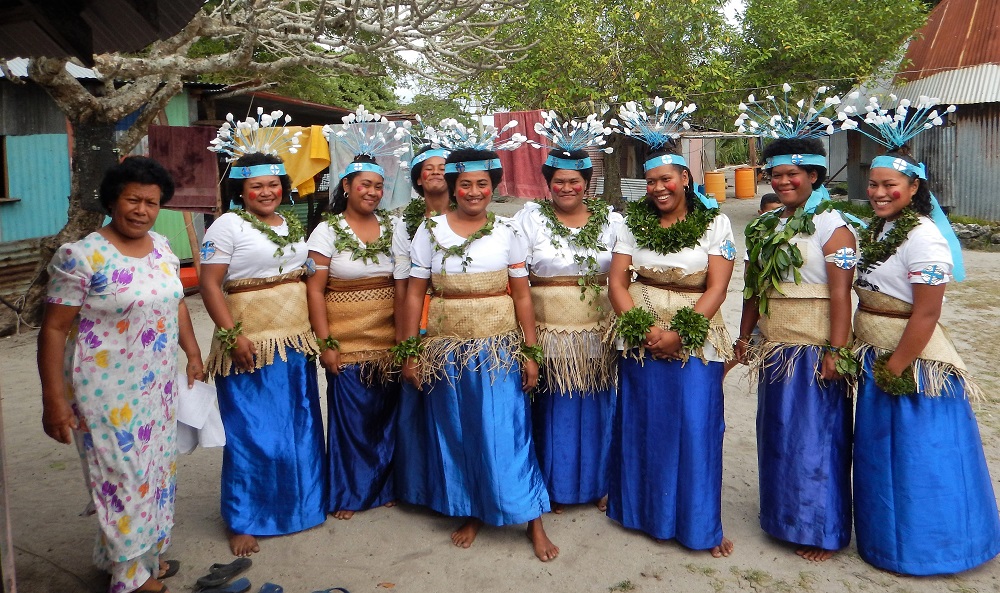
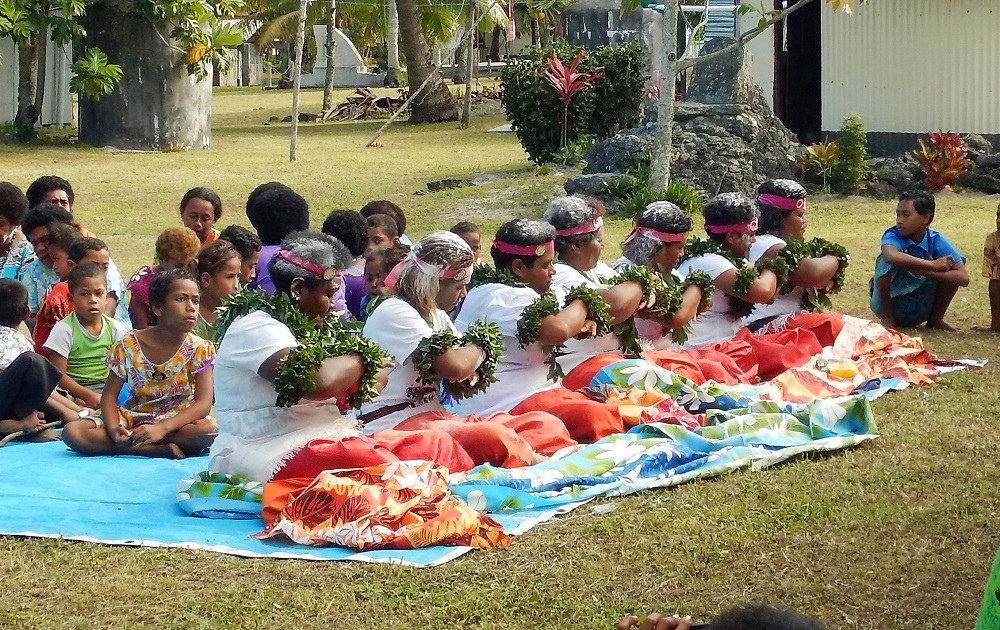


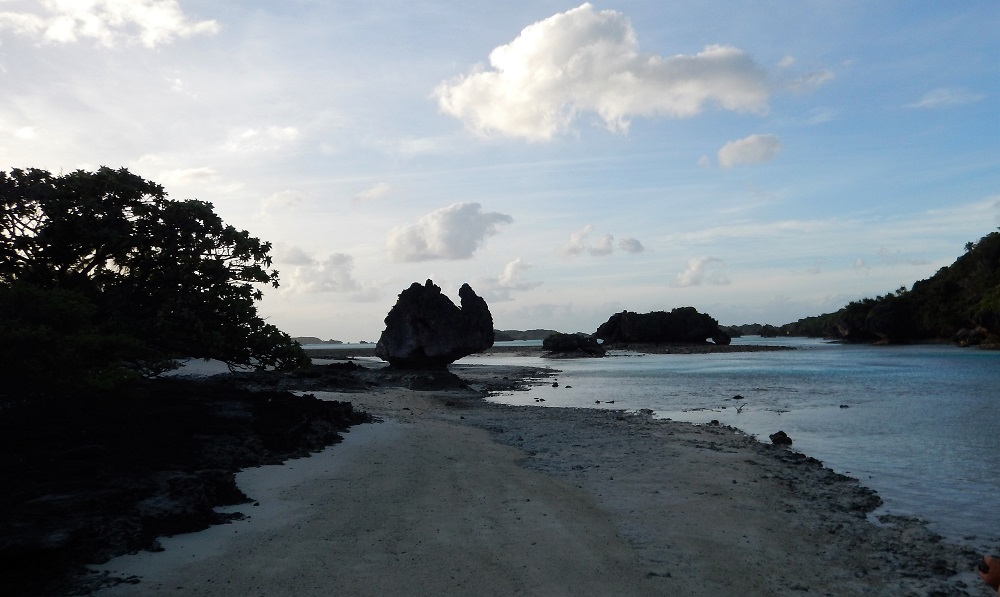

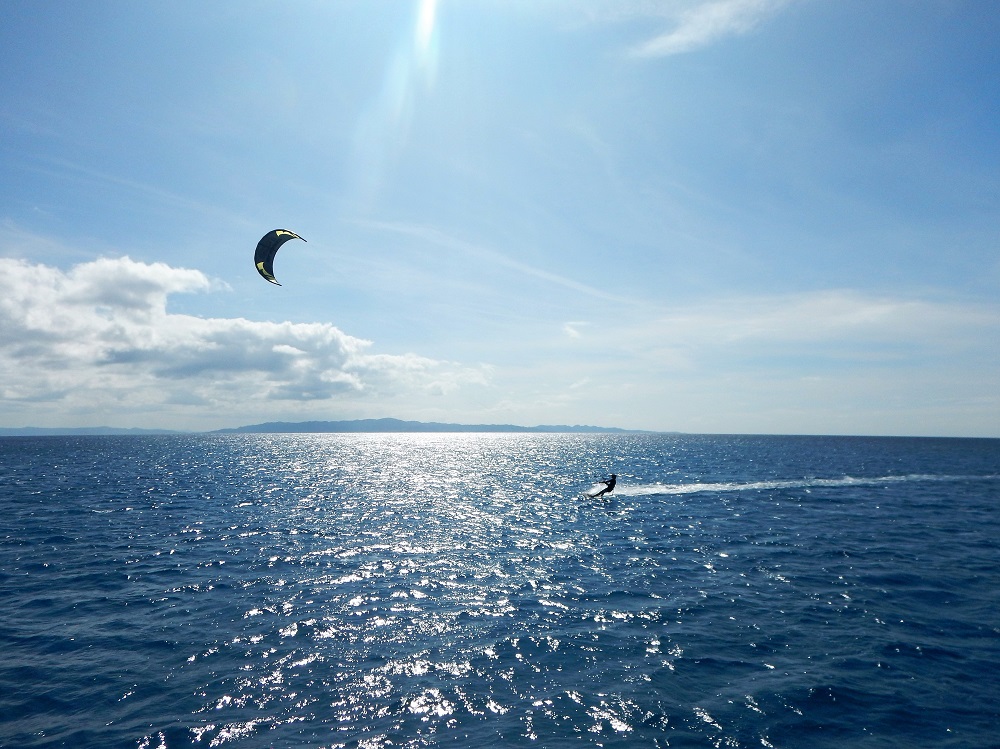
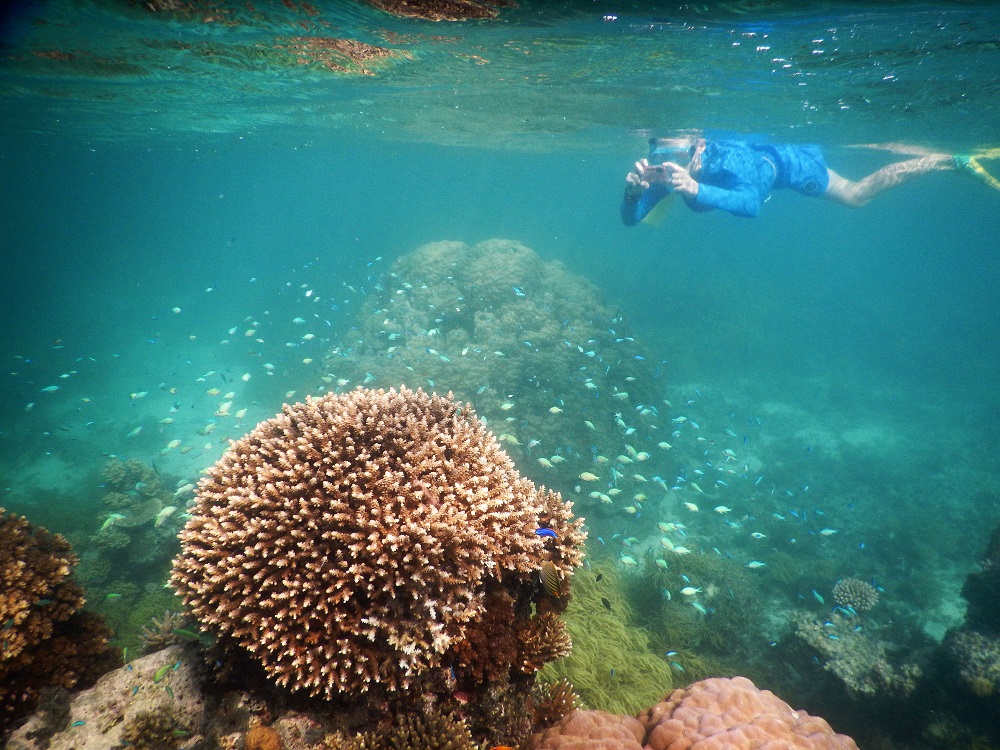


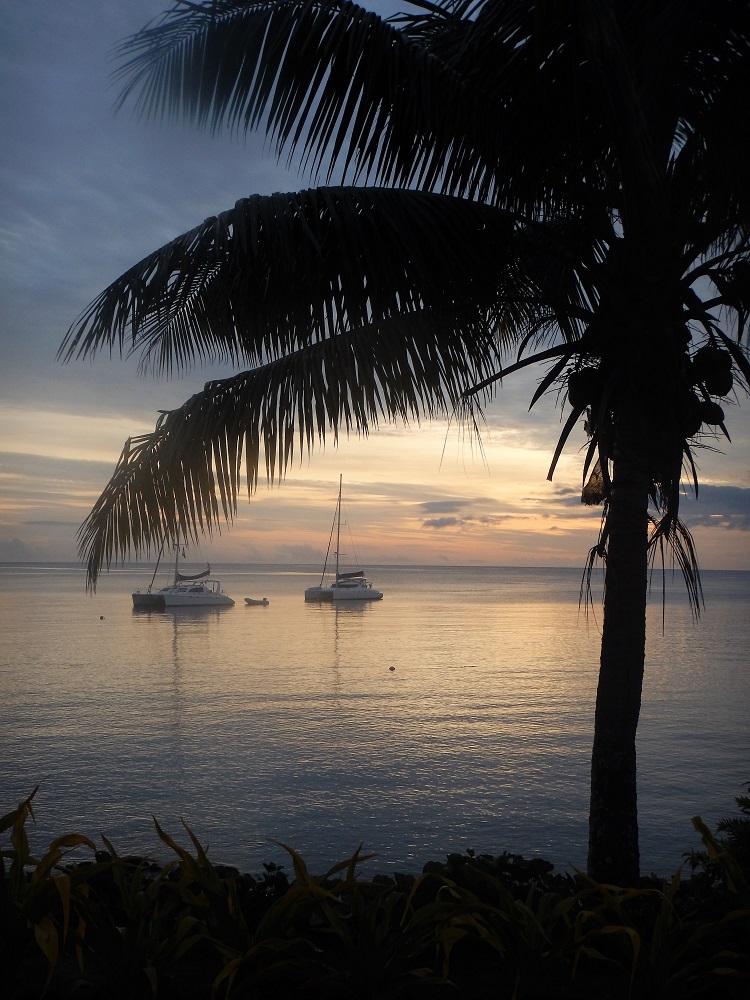
 SV Bob The Cat