Lizard rock! Can you spot the lizard? If you can’t, the answer is at the end.
The last few days we spent in the Anambas Islands, the land of gigantic rocks. Lukie and I played all over a deserted island, we explored caves and were nearly crushed by massive rocks.
In this picture, we are standing under a rock. How is it balancing? This rock is a quarterh of another bigger rock (which is too far right of the picture to show) which was split in half and then half again.
Uh oh, we are in trouble! We could only just hold it up. This side of the island is very steep. Lukie and I played at the bottom of the cliffside constantly worrying whether the heavy granite rocks would collapse onto us.
Another teetering rock. We were on our way to jump from the tall rock on the left into the ocean when the unstable rock started wobbling. We had to hurry because the balancing boulder was about to fall!
Lukie climbing into a cave we explored. We pretended a giant sandworm lived in the cave and we were explorers who needed to kill it. We searched all over but never found the worm.
Lukie and his crazy gymnastics. The cave was made of hundreds of rocks, some of which were jammed in big crevasses.
A close-up of Lukie’s petrified face. (He never got down, we left him for the worm.)
I’m gonna die! It’s a dangerous sport, rock hanging.
In places, the only way up the rocks was horizontal. Here Lukie and I are pushing apart the crevasse with our bare hands.
The jump rock! Lukie is doing his karate chop jump.
Me doing my sitting Yoda jump.
The triple-Mexican-wave-three-people-awesome-amazing-really-tall-pure- granite-rock-super-jump.
Here is the lizard from
the first picture.
The island is basically made of rocks. It is brilliant. My Dad thinks that the place used to be a big mountain and it degraded over time, but I think differently. I think a giant came along and threw boulders everywhere. The lizard above is probably a petrified dragon.
It is Saturday morning. All is still on Bob the Cat. There is no wind and the only sound is the faint noise of the gentle lapping of tiny wavelets on our hull and the cheery early-morning bird calls emanating from the steep jungle rising beyond the shores of the small bay we are anchored in. The sun is not far above the horizon but the calm day is already hot, the thermometer showing 27 degrees in the shade and rising.
It being a Saturday there is no schooling and the children have already gone to the deserted shore to jump off the large, smooth boulders into the shallow water. They are far enough away that we can’t hear them, and David and I relish the peace by enjoying a quiet cuppa – coffee for him, tea for me. The hot drink increases my body temperature and I shift uncomfortably, my sweaty legs squelching as I rearrange them. I wipe my forehead, mopping up a cascade of sweat before it reaches my eyebrows. Not that it matters – my eyebrows are already white-flecked with salt. The gathering point of all perspiration emanating from my forehead they act like miniature evaporation ponds, with the result that they produce a steady amount of what looks more or less like table salt. I scratch one eyebrow and am rewarded with a snow-like salt fall onto the table below. Great, I think as I absentmindedly gather up the white dust in one hand and reach over to drop it in the sink behind me. Maybe I can market my home-made salt in some organic outlet. Environmentally friendly home-made sodium chloride. I feel another droplet forming just below my hairline, getting ready to trickle down.
Kids coming back to the boat after beach play on a quiet Saturday morning in Tioman.
For the umpteenth time I wonder whether cruising in some of
the hottest parts of the world is advisable for women of the certain age that I’m
rapidly approaching. David claims to be hot too, but I seem to notice that mature
women such as myself suffer more than their menfolk. Are we the victims of hot
flushes or would anybody turn into a salt farm under conditions as inhumanely
hot and humid as these?
Hard to know, and it probably doesn’t matter much given there
is no changing the outcome. I turn on the fan, its whirring noise interrupting
the peace. Darting a quick look at David I see that he too is sighing with
pleasure as the air whirls past him, instantly increasing the evaporative heat
loss from his sweat-soaked skin, turning his cheekbones into salt farms too.
The Tioman coastline.
“It’s hot,” I croak.
“Well, they did warn us.” David grimaces. “Let’s face it. They
all said it was going to be hot…”
He’s right. Whenever we would discuss the heat with other
cruisers in Indonesia, they all said, “Just wait until you get to Malaysia. Then
you’ll know what hot is…” nodding knowingly and tapping their sunburned noses.
Now that we’re here, we understand. Despite the heat waves of
Europe, coming back to Malaysia was a thermal shock. It is hard to fathom how
people can function in their daily lives in heat like this. On our return from
Europe, as soon as we exited Singapore Airport the heat enveloped us – a heavy
blanket suffocating our initiative, the oppressive warmth slowed down our movements
and muddled our thoughts. In weather like this, just being awake is an effort,
and it is hard to accomplish much. After reaching the marina where we had left
Bob for a month, we acclimatised slowly whilst getting ready to leave.
Bob under sultry skies in Sebana Cove Marina.
Marina life is always uncomfortable compared to being on anchor.
Being adjacent to land, there is seldom much wind, which serves to make it even
more unpleasantly hot and plagued by mosquitoes at night-time. Marina water is
always dirty so a refreshing dip in the sea is out of the question, and nor is
it possible to cool oneself by wearing only a bikini: with boats tightly packed
in, the distance to even the nicest of neighbours is invariably too short for any
level of privacy.
The marina that we left Bob in, Sebana Cove, is a weird place. It is situated just across a narrow waterway from Singapore, in the newly developed part of southern Malaysia called Johor Bahru. Owned by the Sultan of Johor, the marina is part of a large, empty resort the main attraction of which is a golf course. A colonial-style main building featuring high ceilings, stone columns and numerous tiled staircases houses the resort reception, a restaurant, bar, gym and a library. Behind the grand building is a beautiful pool complex with curved swimming pools enhanced by bridges, bubbles and billowing cascades. Neat rows of palm trees line the long driveway which meanders past the undulating, immaculately short-clipped golf course lawns. Birds call from the shady tree-tops and squirrels and monkeys frolic on the roof. The resort accommodation is nicely done cottages recessed amongst large, shady trees.
Malaysian monkeys.
All of it splendid, immaculately kept, well-staffed – and completely empty. No guests stay in the cottages, no-one dines in the restaurant, and not once did we see anyone other than ourselves in the swimming pool. The golf course is empty, the bar deserted, the lounge chairs vacant. Two staff in dark suits man the empty reception and several waiters dressed in old-fashioned cabin-boy uniforms complete with sailors’ caps walk around aimlessly straightening up a knife here and pushing a chair in there in the bare restaurant. Every night, scantily clad beautiful young women sway in mile-high stilettos hugging the microphone stand as they croon soft pop cover songs to a vacant bar, the sailor waiters their only audience.
“They cannot possibly be making enough money to keep this
place open!” I exclaimed to David one night as we were sitting in the bar, us
and our yachtie friends the only guests in the establishment.
He looked across the empty bar to the happy hour lounge
where the singers were dancing suggestively for a roomful of empty seats. “I guess
it doesn’t need to make money if it is owned by the sultan…”
During our time there, the only people we saw at the resort
were two Chinese businessmen and the liveaboards from the 10 or so yachts staying
in the marina. The marina is incredibly affordable and the facilities nice, so
a steady stream of boaties frequent the place, but there is no way the meagre
earnings from that will make the resort go around.
Profitable or not, Sebana Cove is a nice enough marina, and
it greatly helped our return to the hot boat to have access to a pool and a clean
toilet block featuring endless cold showers. To help the resort business we ate
in the restaurant and drank in the bar, and the staff seemed grateful for the liveliness
we imparted to the echoing halls. The kids swam for hours every day in the pool
as David did minor repairs and installed the sparkly boat parts we had bought
in Europe while I cleaned, unpacked and provisioned in the air-conditioned
supermarkets of nearby towns.
The kids in the curvy swimming pool at Sebana Cove.
Once everything was installed and all the numerous newly
acquired parts (new trampoline, new stove, fresh lightbulbs) had been put to
good use, we were ready to leave for Pulau Tioman, a small island off the east
coast of peninsular Malaysia where we’d heard of beautiful diving, luscious
jungle and white beaches.
Which is where we are sitting now, sweating.
Matias deep in the Tioman jungle.Jungle treetops.
After eight months in Indonesia, Malaysia feels familiar yet different. Being neighbours, Malaysia and Indonesia share their language and the dominant religion of Islam, as well as the Malay ethnicity of the majority of their populations. Yet Malaysia is very different from Indonesia. For a start, it is relatively small where Indonesia is positively massive. Indonesia’s land area is six times larger, and its population number almost ten times that of Malasia. Malaysia is relatively rich in natural resources and as a result, it is now one of the wealthiest countries in south-east Asia, with a GDP per capita that is more than double than that of Indonesia. The two countries have a similar past, both being colonised first by the Portuguese and then by the Dutch, but in Malaysia the British took over from the Dutch in the late 18th century, leaving a lasting influence, including widespread proficiency in the English language, rubber and tea plantations and efficient infrastructure. The Brits imported large numbers of Chinese and Indian people, with the result that 23% of Malaysia’s population is of Chinese heritage and 7% of Indian origin.
Malaysia’s main exports are tin, rubber, palm oil and fossil
fuels, and in an attempt to keep most of the petroleum-related earnings within
the economy, the country has ambitious plans to double its refining capacities.
Thus, near Sebana Cove Marina the huge Pengerang Integrated Petroleum Complex
is under construction, the footprint of which will see several villages moved
to make way for progress. For a long stretch on our way out to the Strait of
Singapore from the marina we see nothing but oil tankers and rig platforms ready
for deployment, sights that will likely continue to dominate the horizons of
these parts for years to come.
It was a relief to leave the marina and the dusty mainland behind,
and the island of Tioman is all that we hoped for, being on anchor off a lovely
island with clean water and white beaches feeling luxuriously like a proper
return to our normal cruising life.
Kids jumping in the waves on Tioman.
As I sit sweating on the anchorage on this our last day
there, I think of what a beautiful place Tioman is. A steep island, the
interior of which is entirely covered in thick, old growth, lusciously green
jungle, Tioman is full of small resorts catering for tourists from all over the
world. White sand beaches line the numerous small bays indenting the coastline
and large boulders stacked haphazardly adorn every headland. With a large
marine reserve, the island is popular with backpackers and divers, and the
water is clean, full of hard and soft corals, turtles, sharks and lots of tiny
critters that have divers frothing with enthusiasm.
A blue dragon – a beautiful nudibranch, found in the shallow waters of Tioman.
The island is full of young sunburned Europeans carrying large backpacks on their strong shoulders and Chinese tourists with trendy sunglasses wheeling candy-coloured hard-shelled cabin-luggage along the bumpy pavement. Dive boats zoom around the coastline constantly and boatfuls of snorkellers wearing bright red lifejackets are disgorged hourly along the shallow reefs lining the quiet bays. Ashore, small cafés and restaurants line the waterfront, and the delicious smell of freshly barbecued chicken satay permeates the air. The open-air food court on the river features traditional Malay cuisine, and along the main road there are several Chinese eateries, complete with red paper lanterns and gilded dragon carvings. The singing from the mosques can be heard five times a day but the place is touristy enough that visitors wear bikinis on the beaches and sleeveless tops in town, although the line is drawn at serving alcohol in the restaurants, something that no establishment allows.
Lukie on a try dive.Matias exploring an underwater gym.
Whilst we’ve been here we’ve been diving and snorkelling, fully enjoying being in a place where you can jump into clean water anytime and anywhere. We’ve climbed across the island in the thick jungle, have eaten out and relaxed in the heat, only to jump in the sea once again to cool down. Each day, the hot, windless mornings give way to terrifically windy evenings, when the catabatic winds from the inland mountains sweep through the anchorage cooling us down, the storm-like intensity of which keeps us all awake many a night.
Cooling down in an inland waterfall in Tioman.
As a first introduction to Malaysia, Tioman has been great. But after just over a week here it is time to move on. We have about a month left until the north-western monsoon starts, and in that time we would like to see the Anambas, a remote Indonesian island group north-east of Tioman. Once the monsoon changes it is time to leave the east coast and head north-west to explore more of Malaysia.
Full of good impressions we leave Malaysia and head back to Indonesia, for one final fling.
Shy Tioman cuttlefish pretending to be a rock……only to change into a paisley-patterned horned monster when we get closer.
After checking into Malaysia 21 July and a quick pack and clean-up of the boat, we left Bob the Cat safely tethered to the sunny dock at Sebana Cove Marina just across the water from Singapore, where it would stay for a month while we went to Europe to visit family.
We arrived in London on the day Boris Johnson became Prime Minister. It was a brilliantly shiny summer morning, the only clouds on the horizon those caused by the strong sense of political despair felt by roughly half the British public and the entirety of the European media. On this, the second day of a suffocating heatwave that had gripped the European continent, the news headlines alternated between Boris dismay and weather shock; gloomy economic forecasts for a no-deal Brexit interspersed with unsettling weather predictions of record-high temperatures in no less than nine European countries. All over the continent children were warned not to play sports outside, schools resorted to frequent dousing of pupils with cold water, and nursing homes equipped the elderly with hydration packs in attempts to stave off health-related impacts of the heatwave.
Heatwave in Denmark: hot enough to go to the beach.
After one short night in the UK we flew on to Denmark where we guiltily enjoyed the heatwave. It lasted for almost the entire two weeks we were there, bringing beautiful weather – 30 degrees, sunny, and relatively dry (60% humidity as opposed to the >90% plaguing Malaysia) – but, being unused to the temperatures, Danish people were suffering. Everyone we met was huffing and puffing, wiping their brows and taking frequent showers, some resorting to staying indoors to lie prostrate beneath fans, afraid to go out lest they succumbed to heatstroke.
Too hot: Lukie dressed like a Danish prince in a centuries-old castle.
When you come straight from a year sailing in the back of beyond of Papua New Guinea and Indonesia, you fully appreciate the miracle that is Western Europe. Denmark is an amazing country. Orderly and clean, full of good-looking, well-dressed, incredibly affluent people efficiently going about their daily business, following the sensible rules of a highly functioning welfare society. Tolerant and politically moderate, Denmark ranks amongst the first for gender equality in the world. The population recently voted in a new social democratic government led by a young female, 41-year-old Mette Frederiksen. Broadly supported by the population, her government has just put in place what is called the most ambitious climate change-related goals in the world. It is a country of lakes and spongy shores covered in reeds, of villas fronted by green lawns immaculately mown, of well-tended flower beds blooming under the Danish flag, of doves purring and swans quietly grooming along the slow-flowing river shores. Public transport is clean, reliable, comfortable and affordable, with trains, buses, undergrounds and ferries transporting people to and from work and leisure activities with no delays and few malfunctions. Even the poor in Denmark lack for nothing and its citizens are consistently reported to be amongst the happiest in the world. It is a cleaner, wealthier and more politically correct version of New Zealand, these small countries the lone voices of reason in a world increasingly gone mad.
Summertime in Denmark: walking in the green woods.
Not that Danish people are always happy. Recently, national demonstrations shook the country when parents took to the streets to demand higher teacher-to-child ratios in the country’s kindergartens, the outrage sparked by national averages of 3.8 children per adult in the age group 0-2 years, and 6.6 children per adult for children aged 2-5 years (in comparison, New Zealand legal minimum ratios are 5 children per adult for 0-2 year-olds and 10 children per adult for 2-5 year-olds, ratios that nobody questions). And when we were there, large parts of the population were gearing up for protests against President Trump, who was scheduled to visit Denmark in the beginning of September. He had requested an invitation and Denmark’s Queen Margrethe had obliged, with the Danish government hoping to further trade talks.
The kids playing with one of my sister’s snakes.The kids strapped in and ready for a harrowing ride in a Danish amusement park.
On our two-week-long visit we enjoyed the break from the heavy heat and chaos of Malaysia and Indonesia. We caught up with family, doing small trips that suited the weather – enjoying the heatwave at the beach, seeking shady respite in the lushly green forests, visiting castles and museums and generally revelling in the quiet order and predictability of a modern western country. We went everywhere by public transport, sinking into the soft seats of near-silent, pristinely kept buses and finding seats amidst bikes and prams on frequent early-morning trains busy with commuters. We took full advantage of the sudden access to first-world healthcare and visited dentists and opticians, enjoying the feeling of safety that comes from being seen by professionals. Knowing that we needed to prepare for cooler weather in Scotland, I dragged the children on long, exhausting shopping trips to expensive Danish malls, selecting footwear for ever-growing feet and trousers for longer legs.
Matias chasing gulls on a Danish lakeshore.
After Denmark we went to Scotland to catch up with David’s family. We hired a car in Edinburgh airport and drove alongside the green Scottish hillsides, marvelling at peaks and valleys, at picturesque stone cottages adorned by flower baskets flanking the front doors in small villages, at the neat signs advertising local attractions and the steady stream of tour company buses. Scotland is a place of uninterrupted vistas of miles and miles of land, sea and lake, with no apparent human presence, the only living creatures visible a soaring eagle or two and a few white flecks of sheep against the brown-green tussock. The heatwave had ended and normal Scottish summer begun, which meant rainfall and low-hanging, brooding skies darkening the hills and mirroring in still lochs, the occasional ray of sunshine a luminous shaft descending from the heavens, its reflection almost blinding in amongst the gloomy surrounds.
Dark clouds suffocating the light over a Scottish loch.
After almost a year in Indonesia, one of the most populous countries on earth, the desertedness of Scotland seemed amazing – we had forgotten what space in nature looks like, how the stillness of uninterrupted scenery expands your breath and quietens your soul. The rain continued for the two weeks we were there, making the rivers cascade down hillsides with tremendous force, the forest undergrowth spongy and the mushrooms plentiful, and we headily picked our way through fields of orange chanterelles, marvelling at their abundance.
Lukie swinging from moss-covered branches in the deep, dark, Scottish woods.
Food shopping in modern, western supermarkets was a revelation, the overwhelming choice of dew-dropped, fresh and fragrant produce almost alarming. Upon leaving Malaysia we had wowed to eat as little rice and as few eggplants as possible whilst away, and so we gorged ourselves on new potatoes, succulent berries, dark green broccoli and crunchy capsicums. The ubiquitous plastic wrapping of fruits and vegetables was a bit of a shock – we had expected to find less plastic in Europe than in Indonesia but in reality Danish and UK supermarkets were overwrapping food to an almost absurd level, the rise of convenience foods leading to customers buying ten slices of salami double packaged rather than a sausage to slice themselves, and apple pieces preserved in juice embalmed in plastic to avoid the inconvenience of having to chew a whole apple. Seemingly unaware of the irony, organic food labelled ‘better for the planet’ was triple wrapped to distinguish it from the less worthy mass-produced vegetables, and all the supermarkets proudly advertised that they were ‘plastic bag free’, selling durable multi-use plastic bags at the check-out to ensure that customers could blithely double their ecological footprint through needless generation of plastic waste without denting their feeling of virtuousness.
Rolling in the lush grass adjacent to an ancient castle in Scotland.
With family we visited castles and woods, the kids rolling down hills of green grass and sliding around on rocky intertidal shores heavy with slimy bladderwrack, catching crabs and caterpillars, and dipping their toes in the chilly dark waters of quiet lochs. We cooked and baked, celebrated birthdays with lavish spreads and sparkling wine and generally enjoyed the cool weather and beautiful surrounds.
David on his way to the boggy shores for a mushroom hunt.
We left after ten days of marvellous family time and began the long drive to London, swiftly leaving the emptiness of Scotland behind and entering the hustle and bustle that is UK motorway driving. The satnav in the hire car hilariously broadcast directional advice in imperial units, telling us to veer left ‘in seven-tenths of a mile’, and ‘take the third exit on the roundabout in 200 yards’, only just stopping short of advising us how many inches remained to our destination. As we drove south, David stopped at multiple hardware shops and chandleries, coming back to the car mumbling about ‘hardware regret’, the worry that whatever he didn’t buy in this land of plenty would be the part he would need the most upon our return to Malaysia. I understood perfectly, suffering as I did from not dissimilar bikini-related fears that in months to come I would be bedevilled by contrition and bemoan my frugality and the consequent lost opportunity of shops full of clean, new swimwear. Learning our lesson, to ensure that we wouldn’t suffer from ‘cheese regret’, we stopped in a supermarket on the to our final hotel just before Gatwick Airport to load up on cheese and salami, asking the baffled concierge at the hotel if they could please store ten kilograms of dairy and cured meats in their commercial refrigerator.
View to a Scottish Estate.
The political tumult continued during our visit. Trump made headlines by requesting discussions of a potential purchase of Greenland, part of the Danish realm, on his upcoming state visit to Denmark. The Danish Prime Minister labelled the notion ‘absurd’, following which the wounded president tweeted the cancellation of the visit, calling Mette Frederiksen a ‘nasty woman’, enraging the Danish public and giving rise to numerous cruel caricatures depicting an overgrown baby Trump throwing a tantrum. Meanwhile, in Britain, widespread public fears of the potentially dire consequences of a no-deal Brexit were fuelled by leaked cabinet reports discussing worst-case scenarios of food and medicine shortages come Brexit day.
A different outlook: a stark gravestone from a Scottish graveyard overlooking the water.
As we flew out, the weather forecast was once again headline news, with more heatwaves looming. Boris was in Europe trying to sweet-talk EU leaders into a deal involving removing the Irish backstop, arrogantly predicting that he would manage to achieve what Theresa May’s government had not. Not unexpectedly, the big M’s of Europe, Merkel and Macron, failed to send the hoped-for signals and Boris, who came to office only a month earlier promising that the likelihood of a no-deal Brexit was minuscule was forced to backtrack and admit that perhaps his government too would fail to secure a deal. Meanwhile, in Denmark a fast-growing diplomatic crisis had been averted by Mette Frederiksen calling up Trump, managing to sweet-talk him to the extent that he relabelled her ‘a tremendous woman, a wonderful woman.’ Reading the headline just before entering the plane we drew a sigh of relief (the world war endangering my Danish relatives seemingly averted), relaxed in our seats and prepared ourselves for returning to the heat and hustle of Malaysia.
It had been an amazing trip, and wonderful to spend treasured time with family. The older you get, the harder it is to live far from kin, and as always we were sad to leave. As the plane took off we hoped for a good future for Britain and wished Europe good luck in what can only be described as tumultuous times.
Goodbye Scotland: a highland cow staring out from behind the fence.
There are giant rocks around the islands of Belitung.
Our last stop in Indonesia was a hundred times better than I
thought it would be. I never thought we would see dragons after Komodo island,
but I was wrong.
There are big rocks everywhere in Belitung.
Last week, Lukie and I decided to go ashore to play on an
island covered with big rocks. We were in a place called Belitung, a group of
islands in central Indonesia that we had stopped at on our way from Borneo to
Malaysia. Belitung is a beautiful group of atolls with smooth, white rocks surrounding
the small sandy islands filled with deep green forests. As soon as Lukie and I saw
the islands we went wild. We both wanted to go ashore to play pirates or
Jurassic Park.
Kayaking to Dragon Island.
We were anchored next to the biggest one. Our island had massive
rocks surrounding it as if a giant had carelessly dropped them, and a beach on the
opposite side. In the middle of the island there was a small forest.
When we got there, we dragged the kayak up the beach and ran
around, letting out all the energy we had stored up on the three-day passage from
Kumai. It had been a while since we had been on a sandy island, and this one
was amazing: the rocks on the island were massive and one had a stone ramp
going up it. You could jump over gaps onto other rocks and hide in caves. One cave was full of bats!
Me in the bat cave, ready to fight Lukie.
Lukie and I were climbing around the rocks when he wanted to
play Lord of the Rings, so I hid in the forest which was full of rocks, vines
and trees, to get away from his monster. After a while of sneaking around in
the forest I wanted to leave but a rustle of leaves told me not to. I looked
around to try and find the source of the noise. Was it coming from under a rock?
No, nothing there.
I started to run up some rocks to get to Lukie who was calling
my name. On the way to him I went through some boulders to remain hidden.
Suddenly, something appeared in front of me. I nearly fell off the rock with
surprise. I ran up to Lukie, my heart racing.
“Lukie! Guess what I found!”
“Shush Matias, Mummy wants a photo.” Our mum was just off
the rocks in the dingy with her camera.
“I found a monitor lizard!”
“No way? You’re lying!”
A monitor lizard is sort of like a Komodo dragon, just smaller and more grey or black. The one I saw was about 30 cm long.
Lukie and I on the large rocks.
My Mum said it was lunchtime and we promised we would come soon
in the kayak. But we shouldn’t have stayed. As soon as she had left it started
to rain and it became very windy. Lukie and I attempted to kayak back to the
boat but we were pushed downwind and ended up on the beach. Rain started to
pour down so hard it hurt so we tried to find shelter:
First we hid under an overhang with water pouring off it.
The water fell so heavily it was like a massage. We played with shells under the
waterfall for a while but then we got cold.
Then we moved to a little overhang high up near the bat cave.
We had to climb up there but we didn’t want to stay because it was too slippery
and it was a 10-metre drop at least if we slid off. The overhang wasn’t rain
proof, so we had to find somewhere else.
Last we went into the bat cave, which was full of tiny bats
the size of a baby’s fists. There was a lot of bat poo and it smelled strange, so
we left.
Once the rain had stopped we left the cave and on the way
through the forest we found a blue egg which was half broken. I picked it up
and showed it to Lukie. It was very leathery and had some yellow, runny yolk in
it. I thought it was probably a monitor lizard egg so we didn’t keep it, just
in case the mother would come and eat us.
We went onto a stone platform near where I had heard the rustle.
This time we didn’t hear anything but we saw the culprit. A big lizard was
looking at us, it was about a metre long: a monitor! It darted towards us like
a slingshot bullet and disappeared behind the rock we were looking from, which
was only about a metre away. We shot off the stone platform onto the beach,
quickly putting the kayak in the water. The wind had calmed down so we managed
to get back to the boat.
A few days later we went back to the monitor lizard island to
look for it again. This time our Dad was with us. At first, we heard the lizard
but didn’t see it. My Dad was scrambling over the rocks and I climbed after him.
When I reached him, he said that he had seen a monitor run under a rock. After
a bit of climbing we jumped down next to the hole and looked in. I saw it run
further into the cave and then it was gone. I got my camera ready and pointed
it in the hole.
“Matias, give your camera to me, I have an idea.” My Dad turned
on the flash and took pictures of the hole. After a couple of shots, we decided
it had escaped. I was a bit disappointed because I wanted to prove that I had
seen it and I wanted a photo.
Belitung was our last stop in Indonesia. There, we did
quarantine and harbour master and everything else we needed to do to leave the
country because we were going to go to Malaysia so we could fly to Europe to
see our family.
We were leaving Indonesia: NOOOOOOO!!!!! I am going to miss
the food, the animals and our friends. Well, some of our friends are in Malaysia,
so we will hopefully see them there.
There are certain things in life that you just don’t want to miss, and for us, a family of wildlife lovers travelling through Indonesia, seeing the orangutans of Borneo was one of them:
“Look, Mummy, there it is,” whispered Lukie as he pointed the binoculars up at a treetop some 30 metres away. “It’s huge!”
The tree shook as the giant shifted its weight, the slender
trunk bending precipitously.
Matias touched my arm. “There’s a baby too. Can I please have your camera?” he begged. “I really want to take a close-up picture, and your zoom is better than mine.”
I focused the camera on the dark shape in the treetop, using the zoom to get a better view. Up close I could see the beady black eyes, the soft unkempt orange fringe lining the wrinkled dark face, the fuzzy baby clinging onto long strands of chestnut fur. They were looking straight at me, peacefully noting our presence with no apparent alarm.
“They’re wonderful!” I said before handing the camera to Matias.
The mother turned her head and stretched out one enormously long left arm to grab a branch of a nearby tree. She leisurely leaned her full body weight towards the new tree and grabbed hold of a branch with her left foot, leaving her hanging casually outstretched between two tall trees, her baby encircling her waist with its long arms.
We were on a klotok, the onomatopoeically named brightly painted local houseboats used to take nature lovers up the Kumai River to the Tanjung Puting National Park in Borneo. Aria, our guide, had spotted the orangutans from his seat at the front of the boat and signalled for the driver to stop so that we could have a good look.
Quietly we sat there watching the sizeable orange shape calmly
staring back at us through the jungle foliage. She was on the northern side of
the river, which is not part of the National Park.
“Can she cross the river, to get to the National Park?” Matias
asked Aria.
Aria explained that orangutans don’t swim across the river and that the female and her baby were therefore stuck in the unprotected narrow band of vegetation shielding the river from the millions of hectares of ever-expanding palm oil plantations destroying the Borneo jungle of the hinterland.
Just hanging around.
We had come to Borneo on our way north from Bali. The third
largest island in the world, Borneo is smaller only than Greenland and New
Guinea. The southern roughly three-quarters of the island belongs to Indonesia
and the rest is Malaysian apart from the tiny Sultanate of Brunei. In
Indonesian, Borneo is called Kalimantan, a word rooted in the Sanskrit term for
‘burning weather island’, referring to the searing heat and dense humidity of this
equatorial jungle-clad location. It is just the kind of climate that an
orangutan prefers.
We had arrived in Kumai the day before, anchoring in the peat-stained dark brown river off the town of Kumai after a four-day passage from Bali that I would call nightmarish but which David merely labelled ‘stimulating’. We had good wind and an incredible amount of traffic leading to tense night watches where I sat, knuckles white, gripping the binoculars, frantically trying to make out which of the tiny, deceptively faint flashing lights were fish attracting devices (FADs) and which were fishing boats, and whether we were on a collision course with the incredibly bright lights dotting the horizon which might be squid boats, tows, cargo vessels, tankers or a healthy mixture of all four.
Squid boat on anchor.
The passage took us through a huge fleet of a thousand or
more squid boats, parked up in dense clusters on the extensive shallow sea to
the far south of Borneo, their bright lights ruining my night vision as they
lured unsuspecting cephalopods to the surface, their presence crowding my radar
screen.
Deciphering the meaning of different lights on night passage can be hard. Squid boats are generally stationary and intensely lit, but when they move they display the typical Indonesian fishing lighting (i.e. random cheerfully coloured flashing lights). The FADs and small fishing boats are hard to make out because they do not show up on the radar, and their faint multi-coloured blinking lights were hard to make out in the luminous sea of squid boats lighting up the moonless sky like a first world city. Cargo boats and tows can be distinguished from the squid boats by the fact that they are moving and generally use standardised lighting (i.e. showing starboard and port colours) and some of them are even on AIS, an extra bonus. Combine this confuddling mass of innovative approaches to lighting with intense sleep deprivation and a fast-moving sailboat and you get one of my versions of a passage nightmare (there are others: upwind sailing, no-wind sailing, nearshore sailing….).
I don’t mind moving through a sea full of boats in the
middle of the night (OK, that’s a lie – I do mind, but not as much) when using
the engine. But on this passage we were sailing dead downwind in a respectable
breeze with a goosewing sail configuration (mainsail on one side, genoa on the
other) which leaves very little leeway for manoeuvring, as any deviation from
course could lead to a crash jibe. This meant a narrow 10 degrees of downwind
leniency on the course steered, and my only option for bailing in a potential
collision situation was to head upwind, which given a catamaran’s tendency to
drift rapidly downwind as it is sailing along, is never a great option for
avoiding oncoming traffic. All this meant night watches spent nervously weaving
my way through the never-ending squid fleet, dodging one vessel only to see
five more ping up on the radar, the whole affair leaving me so traumatised that
once my watches had finished I had trouble sleeping, and when I did fall asleep
it was a broken, uncomforting rest, harrowed by vivid dreams of terrifying head-on
collisions with spiky squid boats.
“It’s not so bad,” said David cheerfully after the first
night. “I prefer squid boats to FADs. At least they are stationary, which means
that you can easily avoid them.”
“Sure,” I sighed. “I just prefer open ocean, with no squid
boats, no long and poorly lit tows, no small but lethal FADs….”
One of the many tow boats heading out of Borneo.
Despite the stimulating sailing conditions we got there and
as we approached Borneo the weather became hot and humid and the seas stilled,
until on the fourth morning we arrived at the flat, brown expanse of the Kumai
river mouth. I was expecting a mountainous interior but southern Borneo is flat
as a pancake, a large low-lying semi-inundated peatland covered in dark short
jungle.
Boarding the klo-bang-tok.
To see the orangutans we organised a three-day trip up the
Kumai River to the Tanjung Puting National Park on a slightly dilapidated
bright green klotok complete with a captain, a cook, a boatboy and a wildlife guide.
The river is full of these picturesque houseboats, travelling slowly up the
still waters, brightly coloured dots against the vivid green walls of nearshore
vegetation. Our klotok was at the cheaper end of the spectrum, and after a few
hours of travelling up the river we realised why.
“Ours is a klo-bang-tok,” said David, commenting on the
unhealthy sounding engine which had a tendency to stall whenever we slowed down,
causing no end of hassle for the captain and the boatboy who then had to work furiously
to restart the thing. During the lengthy restarting procedure we would drift
perilously down the river, our cook and boatboy shouting loudly to alert
oncoming klotoks to our compromised engine so that they could take appropriate
evasive action.
“We’re the slowest boat on the river!” exclaimed Matias
jubilantly as yet another klotok overtook us, and he was right, but it didn’t matter
– the toilet was tolerable, the beds comfortably enshrouded in dense mosquito
nets, the food wonderful, and our slow progress meant that we got to see
everything in slow motion, sometimes netting a view twice when engine failure
forced us backwards.
The kids relaxing in their aft double bed.David looking for wildlife from the klotok bow.River vegetation.Klotoks lining the river.
The klotok trips up the river Kumai take visitors to the Tanjung
Puting National Park. Orangutans are everywhere in the south Kalimantang jungle
but are more concentrated in the 400,000 hectares of forest of the national
park, which was first protected in the 1930s by the Dutch colonial government to
protect the resident orangutan and proboscis monkey populations of the area. It
became a UNESCO Biosphere Reserve in 1977 and a national park in 1982.
In Tanjung Puting’s Camp Leakey is an orangutan rehabilitation
centre. The centre was established in 1971 by the world’s first orangutan
researcher, Dr Galdikas, to provide a site where orangutans rescued from
captivity (e.g. casualties of the palm oil plantation expansion entering the commercial
pet trade) could be re-established successfully in the wild. Orangutans enter
captivity mainly as babies when their mothers are killed for bush meat, as agricultural
pests, or in the palm oil plantations that are rapidly expanding and overtaking
the jungle. The locally run Orangutan Foundation International organisation rescues
the captive orangutans and brings them to the rehabilitation centre for care,
and to date more than 300 ex-captive orangutans have been released into the
wild of the park.
Near-naked baby resting atop Mum’s belly.
The rehabilitation involves health care as well as teaching juvenile orangutans how to get on in the wild. Orangutan babies live with their mother for 5-6 years in the wild, during which time she teaches them social interaction as well as how to forage and which plants and insects are safe to eat. At the rehabilitation centre, human carers replace the mother and attempt to teach the juvenile orangutans self-sufficiency.
Tired mother taking a break from teaching her young.
To ensure that the released animals do not impact adversely
on the wild population of the area, three feeding stations have been established
in the national park to supplement the food that the ex-captive animals find in
the wild. Here, the park rangers provide food like bananas, sweet potatoes and
sweetcorn once a day, and if any of the rehabilitated animals are struggling
for food, they can come and avail themselves of a free lunch. The feeding
stations provide an excellent opportunity for tourists to view the orangutans up
close, and the wildlife tours from Kumai bring scores of visitors up the river
every day, wildlife lovers who stand sweating with us in the humid jungle,
absently swatting away mosquitoes as they gawp at these fascinating animals.
Just hanging around: a subordinate male lounging in the jungle foliage.
Orangutans look amazing. They are like huge, furry humans
with incredibly long arms and thick, heavyset chests crowned with massive
shoulders atop a short, spindly, bowlegged bottom culminating in large,
hand-like feet. They are incredibly hairy, rippling muscles showing under a
thick, fuzzy, orange fur. On the ground they walk either upright with a
knees-out-bowlegged gait or on all four resting their heavy upper body weight
on their knuckles, but really they are very rarely on the forest floor, preferring
instead to spend their life in the treetops. Here they are incredible to watch,
a blur of orange fur moving swiftly through the foliage, swinging from branch
to branch like Tarzan (although I guess strictly speaking he got it from them),
moving fluidly from tree to tree using their weight to pivot the treetops as
they swing backwards and forwards, increasing momentum until sufficiently close
to the next treetop to grab hold and swing over. They comfortably spend hours just
hanging from branches, their long furry limbs sharply outlined against the
bright sky beyond the canopy.
Furry limbs silhouetted against the sky.
Unlike other apes, orangutans are solitary, and natural interactions between individuals are limited to brief mating events, the lengthy dependency of young on their mother, and loose gangs of youths who hang together before they start reproducing.
Large alpha male in the treetops.
This means that the interactions we witness at the feeding
stations are those between animals who don’t naturally have much to do with one
another. Only a few of the released animals come back for food, but each of the
three feeding stations is dominated by a huge alpha male who monopolises the supplies,
stoically chewing his way through immense piles of bananas, yams and sweetcorn,
and only leaving the feeding platform once he is absolutely stuffed. The alpha
males are recognisable from their huge size – they are about twice as big as
the biggest females – as well as by the large cheek pads which makes their face
imposingly wide compared to females and subordinate males. The alpha male is
the first to eat, and whilst he is stuffing his cheek-pad-enhanced face the
rest of the orangutans sit hiding in treetops, hungrily waiting for an
opportunity to sneak down and steal some food. Occasionally the alpha male will
let females with babies come down to get some food, but he never tolerates the
approach of another male, and when one approaches he gets up slowly and starts
to knuckle-walk towards them, showing off the scarily full breadth of his
shoulders. The dominant male hogging the food clearly upsets some of the rival
males, who sit screeching in the treetops, tearing off branches and throwing
them down in an attempt to provoke a reaction, but to no avail – the big guy sits
calmly ignoring them, secure in his power, safe in his dominance, stoically
eating through another kilo of fruit even though his rather solid shape would suggest
that he ought to start limiting his carbs.
Just one more wafer thin mint…Terry the alpha male from feeding station three enjoying his sweetcorn and a tub of milk. The alpha male: large cheek pads, huge shoulders, long arms, thick fur.
Once the alpha male has had his fill and has left the feeding station, the subordinate males and low-ranking females come down to eat. Only the largest females dare eat on the platform, the rest steal food, nervously looking right and left and keeping a hold of a branch so they can retreat rapidly. On the platform they stuff their faces and gather as much as they can hold in their mouths, hands and feet, like bulimics stocking up for a late-night binge, before fleeing rapidly, their escape slowed down by their full hands and feet. The near-naked babies cling to their mothers’ long fur and older juveniles keep one hand on the mother always, a lifeline to instant protection and effusive motherly love.
Brave older female eating on the platform.Timid younger female attempting a wild flight with sweetcorn.Another female with young attempting to transport hoarded sweetcorn into the safety of the trees.Young baby, safely ensconced between Mum’s legs, on the feeding platform.
It is not only orangutans enjoying the feast – a fast-moving
ex-rescue gibbon also comes down to steal some food, running along the platform
bananas in hand before quickly climbing to the safety of the spindly branches
of a nearby treetop, and a troop of longnosed wild boar gallop in and start
excitedly sniffing the undergrowth, excitedly hoovering up the leftovers.
Quick mission: gibbon getting some loot.Safely back in the trees.Wild boar munching on some sweetcorn leftovers.
Occasionally the alpha male will return to the platform for
another snack after seeing how popular the food is, slowly moving this way and
that to chase off anyone else enjoying the event, making sure that his is an
absolute monopoly. It is incredibly funny to watch, an ape soap opera featuring
characters with different personalities – the bullying chief, the mocking subordinate,
the nervous young mothers tightly grasping their fragile-looking babies, the seasoned
mothers of two moving with more confidence – so human-like that we all
recognise them: after half an hour of witnessing the overt display of stubborn
patriarchal dominance the lady next to me quips that she’s pretty sure she’s
worked with that guy in the past, and the female colleague with whom she is travelling
laughs in agreement.
King of the treetops – those that can bear his weight, anyway.
The jungle is full of interesting creatures. From the klotok we saw macaques and one afternoon, Aria spotted a troop of proboscis monkeys lounging in a tall tree. Named after their prominent facial protuberances, the proboscis monkeys are hilariously discontent-looking, a group of sour-faced, potbellied semi-humans sitting quietly, little fur hats and scarves framing their hairless faces dominated by noses that would put Pinocchio to shame. The males’ Yassir Arafat noses are long, bulbous and overhanging, and the females’ sharply pointed beaks would make Cleopatra pale. They look cheated, glum and resigned to their fate as they sit there in the top of a tree, their skinny arms and legs casually holding onto fragile branches, their long furry tails trailing below them.
Glum male proboscis monkey.Sharp-nosed female.Contrast profile of female proboscis monkey. A troop of proboscis monkeys darkening the trees.
At night we went trekking in the jungle, the kids excitedly
following Aria our guide as he showed us huge bird-eating spiders and small spider-eating
birds, using a long twig to lure hairy tarantulas the size of a grown man’s
hand out of underground caves and a torch to illuminate furry caterpillars dripping
from vegetation and birds curled up into balls hiding in tree holes, as well as
the ominous tracks of wild boars.
Furry bird-eating tarantula – this one was as big as a grown man’s hand.Red-crowned barbet sleeping in a woodpecker hole.Macaque monkey.
The Borneo rainforests are magic and teeming with life, but sadly they are diminishing at an alarming rate. The critically endangered orangutans only live here and on the island of Sumatra and the populations are declining fast: 60% of Borneo’s orangutans have perished over the past 60 years. Around 45,000-69,000 orangutans remain in Borneo and these populations are projected to continue their drastic decline. The main threat to the Borneo population is logging and forest fires, at the root of which is the rapid conversion of tropical rainforest to lucrative palm oil plantations. Palm oil is used for cooking, cosmetics, mechanics and biodiesel, and Indonesia is the world’s biggest producer and consumer of the commodity, providing roughly half the world’s supply. A major economic earner for the country, palm oil contributed 11% of Indonesia’s export earnings in 2018 and production is projected to increase dramatically over the coming years as more rainforest is cleared. The oil is everywhere in Indonesia – it is the only cooking oil that you can buy in all but the large cities in Indonesia and the biodiesel is sold at all petrol stations.
David and Lukie with Aria, our guide, in front of a palm oil tree.
Palm oil is unavoidable in Indonesia and we sharply feel the irony when, after visiting a national park museum which documents the wildlife destruction caused by the insidious spread of palm oil plantations, we head back to the palm-oil fuelled klotok and eat our delicious lunch of fish deep-fried in large vats of palm oil.
Matias proudly showing off the tree he planted in Tanjung Puting National Park.
It’s a sad state of affairs and when the guide suggests that the kids each plant a tree in the reserve to help maintain the forest they jump at the opportunity. In fifteen years the trees they planted will be more than 2 metres tall and we hope that the habitat left will be enough to sustain the orangutan populations.
Long may the jungle live.
The town of Kumai is not particularly charming, and after stocking up with diesel and vegetables we left Kalimantan behind. As we sailed away from the island we mentally readied ourselves for another run in with massive squid fleets as we headed west. We were super happy to have seen the orangutans but, like so many times before here, once again feeling like we got there just in time. Oh Indonesia, land of ever-diminishing rainforests, orangutan populations and squid stocks, what will become of you?
The Rizky eatery in Kumai town couldn’t lure us to stay.
It was early morning. David and I were standing on the bow of Bob the Cat looking out over Amed Bay in northern Bali. It was a scenic shoreline, dominated to the west by the imposing volcano of Gunung Agung and to the east by the rugged hills of the north-eastern Bali interior. In front of the green mountains was a thin line of flat black sand shore backed by luscious palm trees. The morning was quiet, Hindu Bali being the first populated place in Indonesia where we had not been woken by the melodic singing from a mosque, and serene little temples carved from heavy volcanic rock were visible along the cliffs towards the western end of the bay.
Not that we were looking at the scenery. We were anxiously focused
on the nearshore conditions.
“Do you think it’s going to be OK?” I asked nervously.
“It’s pretty rough, that’s for sure,” he replied. “We don’t
want him to drown – that would be a tragedy.”
“Maybe we should move?” I suggested. “Go to a calmer place?”
“Yeah, we could do. But the next sheltered anchorage is 40 miles away, though. It’ll take us eight hours with these light winds.”
The day had come where we had to part with Paco the Cat and we were worried about how to get him ashore. There was a bit of a swell rolling into the bay and on the shore the waves were pounding brutally against the steep, back sand beaches. We’d gone ashore the day before to get some dive tanks filled and had both gotten completely soaked whilst trying to hold the dinghy in the crashing surf and loading and offloading the cylinders. Now we were worried about how to safely get the cat onshore.
“The last thing we want is another dinghy capsize,” said
David. “We don’t want him to get wet, ideally.”
I looked at the shoreline. From afar the waves looked small,
narrow white undulating lines snaking their way up and down the black beach,
insignificant foam splashing over distant sand. But landing a dinghy in
anything but the smallest waves quickly becomes quite an ordeal. We can always anchor
the dinghy off the shore and swim in but trying to keep a caged cat comfortably
dry would be problematic.
“We could bring a boogie board,” I suggested. “Put the cage
on top and surf him in on the white water…”
David looked at me sceptically. “He’ll drown if the cage
goes under,” he said. He righted himself and turned towards the stern where the
dinghy was tied on. “Maybe it’s better around the corner. I’ll take the dinghy
over and see if there is a better landing spot there. If not, I guess we’ll
have to move.”
Paco the boat cat helping navigation planning.
The transfer had been planned for two weeks. Antonella and Pierrot, Paco’s owners, live in Bali, and whilst Pierrot was still in Europe, Antonella was ready to get her cat back. Their boat was on a mooring in the south of Bali, and we had agreed to drop Paco off on our way north from Lombok, making the north coast of Bali the ideal meeting spot. That morning, Antonella was on her way by road, and we had made ready for his departure, packed his little bag containing cat passport, anti-flea shampoo and fluffy towel, prepared the kids mentally for saying goodbye to him. Everything was ready. Now we just needed to keep him safe for the shore landing and all would be well.
Tiger Paco, fierce in combat.
We’d just spent ten days in the Gili Isles in north-western
Lombok. Part of the well-trodden Indonesian budget tourist path, Lombok’s Gili
isles (Gili means small island in the local dialect) are a quieter version of
the intense scene of neighbouring Bali.
It was a bit of a shock to the system to suddenly find ourselves in tourist-land. We first got a feel for the culture-clash that tourism brings to Indonesia on Lombok’s south coast where, on the kite beach, groups of local women would wander, clad in full hijabs, taking selfies against the wild ocean backdrop, whilst on the water a bikini-clad kitesurfing instructor was carving close to the water’s edge doing impressive tricks. She must have been getting crazy sunburnt in the searing sun, and also cold in the 20-knot breeze, but she continued undeterred, oblivious to the irony of parading a thong bikini a stone’s throw away from severely veiled local women. On the same beach we witnessed a skimpily clad honeymooning couple kissing in a suggestively close stance on the beach only to be met with loud cries of ‘no, no,’ from a group of local, hijab-wearing women and their accompanying menfolk who happened to be walking past.
Bikinis and boardies: tourists arriving back from snorkelling at Gili Air.Largely ignored: sign at the entrance to town asking tourists to cover up.
The Gilies take western tourism to an entirely new level. Here, ferries disgorge scores of bathing suit and board-short wearing 20-year-olds onto the floating jetty about 10 times a day, and the little island is full of young, tanned and largely naked Europeans, Asians and Australians. There’s a sign at the entrance to the town saying ‘please respect our culture,’ the local women wear veils covering their hair, and the local mosque blasts the prayers out loudly five times a day, but otherwise you could be in Ibiza, the tourists strutting about in their tight-fitting speedos, thong bikinis and high-heeled flip flops. We were anchored off Gili Air, a small round island fringed with white sand beaches leading into turquoise water sheltered behind a scenic barrier reef. The island is full of hotels and homestays, the premium water-front real estate lined with waterfront bars, hotels and restaurants offering bean bags and pastel painted loungers for punters to relax and enjoy the views. Every night the island kicks back during the three-hour long happy hour sessions where guests are served by busy waiters staggering under the weight of trays laden with pizzas and dew-dropped, crystal-rimmed margaritas, sidestepping the crowds to the beat of Ibiza Chill compilations.
Scenic view from Gili Air, north Lombok.Boat kids in a cafe.
It’s a world away from the Indonesia we’ve seen on our seven-month
long stint travelling the country, and whilst at first a bit of a shock to the
senses (the blatant bikinis, bars, blaring western music), Gili Air is quite a
nice little holiday place, an incredibly easy place to spend a week, a holiday
away from the challenges of our normal life on the boat in remote Indonesia.
Here, everything was easy. There was a well-maintained floating dinghy dock, so we didn’t have to land the tender amongst rubbish piles on a smelly beach or tie up to a dilapidated jetty featuring rusty nails sticking out perilously close to our inflatable. Here you could wear a singlet and shorts without offending anybody, be anonymous amongst hordes of red-faced tourists, and purchase anything that you might need. Everybody on the island spoke English and the shops were stuffed with items catering to western tastes, showcasing wares we hadn’t seen in almost a year like tahini, couscous, walnuts and sunblock. There were ten dive shops on the island and about 60 snorkel tour operators, scenic underwater landscape including a sculpture park, a lovely surf break on the southern reef just next to the anchorage, as well as white beaches, clean azure waters and the obligatory touristy shops selling clothes, souvenirs and massages. The island is so small you can walk around it in an hour, and is free of motor vehicles, offering bike rental and horse-drawn carts as the only means of transport other than walking.
Horse-drawn carts on Gili Air.Underwater statues off Gili Meno.Heading off for a surf in the morning.Lukie surfing the Gili Air break whilst Matias is doing his dive course.Lukie attempting small kite jumps in Gili Air.
It was a perfect place to relax, and we enjoyed our stay
there, catching up with friends, eating out and drinking cocktails on the beach
overlooking the sunset, biking around the island, and snorkelling, diving,
surfing and kitesurfing the surrounds. Matias took the opportunity to complete
the PADI Junior Open Water course with a dive shop (my formal instructor
registration lapsed long ago when I stopped paying the steep PADI fees, so I
can’t give him the certification card) and enjoyed days on the dive boat by
himself, coming back a proudly certified diver full of tales of swimming pool skills,
shipwrecks and scorpion fish. Our diving there was amazing, full of scenic underwater
landscapes and rare and cryptic lifeforms.
Crazy cryptic leafy scorpionfish.Scorpionfish.Weird horned thornback cowfish going about his business.Friendly turtle.Orange-banded pipefish courting.Striped puffer.Little toby hiding next to an urchin.
After nine days in the Gilies we were ready to leave, feeling
like we had seen most of the sights and that we’d had our fill of the endless tourist
crowds and the numerous ferries and tour boats speeding in the anchorage which
left Bob heaving in their wakes, glasses and plates flying about. Antonella was
eagerly awaiting the Paco delivery, and we left for Amed in Bali so that we
could be ready and waiting when she came by road.
Lukie snorkelling the Liberty wreck.
In Bali, before Antonella arrived, we had time to do a quick dive of the wreck of the USAT Liberty, a US army cargo ship which was torpedoed by a Japanese submarine in 1942 and beached in Tulamben Bay, near Amed – a wonderful coral-encrusted wreck lying in 5-30 m of water which was an exciting first dive as a qualified diver for Matias.
Friendly fish on the USAT Liberty wreck.Underwater silhouettes.Coral encrusted ship wreck, teeming with life.
Now, a day later, it was time to get serious about getting Paco ashore. I walked to the back of the boat as David was coming back from his dinghy reconnaissance.
“How was it? Any calmer over there?” I asked.
He climbed on board the boat. “It’s a bit better at the other
end of the bay.” He rubbed his chin and started laughing. “I’m making it sound
like surfing Jaws, aren’t I? It won’t be that bad, I’m sure we can do it…” He stroked
Paco who was approaching him, rubbing against his legs. “It’ll be OK, Paco, we
won’t drown you!”
Get me away from this boat and these children!Please let me go home…
In the end the transfer went smooth, David holding the dinghy
in place in the surf, Antonella lifting Paco packed away in his little plastic cage
and holding him high as she ran up the shore. And just like that he was off Bob
the Cat and out of our lives, leaving a huge Paco-shaped hole in our hearts,
the despair giving rise to eloquent art such as this poem by Matias which he
penned for homeschooling a day after Paco’s departure:
Brotherly love in the shallow waves of Kaliantan Bay.
The problem with surfing as a hobby when you live on a boat is that, as a general rule, surf breaks make for poor anchorages. The problem with kite surfing in Indonesia is that, as a general rule, any piece of flat water is occupied by seaweed farms.
With reckless disregard for such general rules, we headed west from Komodo to the wild south coast of Lombok for a week of enjoying huge swell, big waves and steady, strong winds. Open to the Indian Ocean, the southern shores of the Lesser Sunda Islands (of which Lombok is a part) is windier than the rest of Indonesia, and David had been eyeing up a perfect kitesurfing spot for a while, carefully earmarking a good-looking location for anchoring within easy reach of the breaking waves and sheltered flat-water lagoon.
Heading west from Komodo: into the sunset.
The location was not in our cruising guide, and we had heard of no other yachties going there, but nowadays anyone can assess an anchorage from satellite photos, and we were full of optimism. The anticipation of getting to a great kite spot had been building for a couple of weeks, and as we rounded the south-eastern corner of Lombok David stood at the helm, looking satisfied. “It looks like the perfect spot,” he said, grinning. “Waves for me, flat water for you and the kids.”
I looked at the huge breakers smashing against the steep, dark
cliffs of the shoreline. It looked pretty wild. “Uh hum,” I said non-committally.
“As long as there’s somewhere calm to anchor…”
Waves smashing against the steep rocky shore of southern Lombok.
“It’s a huge bay,” he said. “We’ll just tuck around the headland where it will be nice and flat, out of the wind, then it’s only about a mile by dinghy to the kite beach.” He beamed. “As long as it’s not full of seaweed farms, we’ll be sweet!”
Predictably, a little while later as we were approaching the
bay, I heard him swear from the cockpit.
“What’s that?” I called as I made my way out. “What’s the
problem?”
He was standing at the helm, binoculars pressed to his eyes.
“I don’t believe it!” he muttered. “Not again!”
I approached with my hand shielding my eyes, trying to make out what he was looking at. All I could see was a shoreline awash in foam, the huge waves crashing onto some very sharp looking rocks around the entrance and along the reef on the outside of the shallow lagoon. “What is it?”
He lowered the binoculars. “Seaweed farms!” he exclaimed. “I
don’t believe it! Every time we find a kite spot, it is full of seaweed farms!”
I mumbled something consoling and took the binoculars from him. Focusing on the inside of the bay I saw it – hundreds of buoys interspersed with thousands of plastic bottles, dotted all over the water surface, filling up the entire bay. My gaze swept backwards and forwards, trying to find a buoy-free area large enough for us to anchor. There was nowhere.
“It’s OK,” said David, snatching the binoculars back. “There’s
a channel through the farms there and an area just off to the side where I
think we’ll fit.” He held the binoculars to his eyes. “Or else we could maybe
sneak up there,” he said, gesturing further towards the headland, “as long as it’s
deep enough.”
After spending a couple of hours motoring up and down narrow channels choked by expansive seaweed farms we found a small area to anchor in, just to the side of the main thoroughfare. Not quite as tucked in behind the headland as we had hoped – it was exposed to the swell and a bit lumpy – but the anchor held and at least there was enough swing room to keep us safe from hitting a farm.
The kids kiting together (centre kites) in Kaliantan Bay. Matias pumping up his kite.Lukie landing a kite with David’s help.
And then we set about exploring the bay. The kitesurfing
spot was an excellent long white beach in front of which a shallow lagoon
extended out to a surf-battered reef stretching for miles and miles. Two kite
resorts had set up camp on the beach and several people were out kiting.
Over the next few days the swell rose and the entrance to the bay closed up, the huge waves crashing over the shallow bar reminding me of our hometown of Raglan where, at times, it is impossible to get a boat in or out of the estuary. When the violent rocking of the boat proved too much for even Paco the boat cat (who, given the constant exaggerated motion of the boat, seemed convinced that we were still on passage and spent his days curled up in a small ball asleep in a corner of the saloon seat) we moved to a spot closer to the headland where the swell was marginally smaller but still probably the worst I have ever experienced on anchorage. Trapped between seaweed farms and huge breaking waves we spent our days enjoying the wild elements. David and the kids found a small wave in the lee of the shore and spent the mornings surfing beautiful peeling waves, and in the afternoons we kite surfed in 20 knots of steady breeze, with Lukie just managing to hold onto a 4 m kite.
Matias taking off from the shallows.Lukie enjoying the flat water of the lagoon.
On our third day there the swell peaked. In the morning,
David and the kids had gone off for a surf and I was standing in the galley
making a cup of tea, when I heard their voices. Puzzled, I went outside to see them
paddling back the dinghy using David’s stand-up paddle.
“We tipped the dinghy, Mummy,” cried Lukie cheerfully. “The
waves were huge! And we lost the anchor, and Daddy’s sunglasses, and the bailer!”
David looked grim. “Bloody lucky I could right it,” he said.
“Now we have to see whether we can save the outboard.”
He had anchored the dinghy near the wave to let the kids out
and sat watching them for a couple of minutes to ensure they were OK before
heading out to anchor further away and jump in to join them. Whilst he was sitting
there a huge set had come through, waves building to break where he was
anchored, and when he rushed to raise the anchor it was stuck. He untied the knot
to the anchor rope and the dinghy started surfing with him in it and overturned
on the face of the wave, leaving the anchor with its rope and anything loose and
not floating at the bottom of the surf zone.
He spent the rest of the morning rinsing, drying and
lubricating the outboard and to our great relief managed to get it started
again. After running it for a while we decided to try to go kitesurfing but had
to bail when we nearly flipped the dinghy again approaching the wave-battered
shore. The swell was so big that it was impossible to land a dinghy safely on
the beach at high tide and we returned to the boat feeling lucky to have a
working outboard and no loss of life.
The boys leaving for a surf pre-dinghy-flip.
Retrieving the dinghy anchor proved problematic.
“Let’s try snorkelling for it this morning,” I suggested the
following day.
“Yeah…” said David hesitantly. “The visibility is pretty bad
over there, though. It is all stirred up by the waves. It won’t be easy to
find.”
We went anyway, and spent an hour searching in vain while
the kids were surfing, the two of us duck diving into the murky shallows adjacent
to the break and feeling our way over the sandy bottom, stumbling across coral
bommies that protruded sharply from the flats but seeing no sign of the dinghy
anchor or the 15 m of rope attached to it.
The following day we returned with scuba gear and spent an hour slowly swimming along compass transects, east to west and back again, covering a narrow swathe of about one metre either side of our path at a time, which was all that the poor visibility allowed. All to no avail, the anchor and rope remaining tantalisingly there but somehow hidden.
After that, we decided to come back at low tide in the hope that the visibility would be better then, and on our final day in the bay we managed to find the anchor, its rope deeply tangled in a tall branching staghorn coral. It took half an hour to carefully untangle the rope without breaking the coral and when it was all retrieved we drew a breath of relief and swore to replace the sinking rope with a floating line for easier future recovery should it happen again.
Kids enjoying the waves lapping up the shore at low tide in Kaliantan Bay.
After a week of surfing and kitesurfing every day and staying on a boat that was rolling like a Spanish bull trying to throw off a brutal toreador, we were tired and sore and in thorough need of a good rest. The swell mildened giving us a lucky break to exit the bay, and with Paco emitting an audible sigh of relief we put the wild southern coastline of Lombok behind us and headed for the west coast of the island to visit Lombok’s capital Mataram where we needed to do our last (!) Indonesian visa renewal.
David and the kids in front of the Islamic Centre Mosque in Mataram, Lombok.
Lombok is an interesting place, and like the rest of
Indonesia it is full of history. The original inhabitants of Lombok were the Sasak
people who governed the island through numerous feuding kingdoms. Originally a
mixture of Buddhist-Hindu-animists, the Sasak were forced to convert to Islam
in the 16th century, after which many began practising a mixed
religion called Wetu Telu that blended Islam with previous beliefs. In the
early 16th century the Balinese kingdom conquered Lombok, and in the
17th century the Dutch East India Company established a treaty with
a Sasak princess. Fed up with Balinese rule, the Sasak invited the Dutch to
rule Lombok in the late 19th century, after which the Dutch promptly
sent a large army and helped the Sasak fight off the Balinese.
The Hindu Meru temple in Mataram.Elaborate stone carving gracing the front of the Meru Temple.
Bali is predominantly Hindu, and the Balinese left several Hindu temples on Lombok. In Mataram we visited the Meru Temple, built in 1720, a large dilapidated complex of multi-tiered shrines to various Hindu gods and goddesses. Nowadays the vast majority of the population of Lombok is Muslim and only about 10-15% are Hindu.
The minaret of a neighbouring mosque can be seen through the archway of the Hindu Meru temple of Mataram.
After a day on the west coast of Lombok we headed to the Gili Isles further north where we were meeting up with friends and hoping to relax in a calm anchorage.
Luscious lips and fluttery lashes: a triggerfish on display.
When you spend as much time as we do in the water, fish become almost part of the family, their funny little faces the wallpaper of our life. Coral reef fish are so diverse that you always see something new, and when you really look at them, many fish look so weird that it is hard not to find them funny.
Following are some of our favourites, the little colourful, funny, odd or downright menacing faces we encounter day after day.
Impossibly square spotted boxfish.
The funny:
I know I’m a bit of a fanatic, but the thing about reef fish is that some of them just look so ridiculous that it beggars belief. The huge cataracty eyes of porcupine fish, the nervous kissy mouths of puffers, the bulging eyes ruining the disguise of spadefish – they are so ludicrous that it is hard to take them seriously. Same with the body shapes – I can respect a tuna or a shark, but what gave rise to the strange non-streamlined boxfishes, the triangular and strangely tail-fin-less tobys, and the insanely stretched expanse of cornetfish? And although I’m sure carefully evolved and incredibly adaptive, fish behaviour is really downright strange sometimes. Why does the trumpetfish think that hanging upside down renders it invisible? And the spadefish, carefully turning as you swim around them, trying to keep their slim side exposed rather than the expanse of their huge fins – it obviously works with predators, but really?
Long and incredibly thin: a cornetfish.Evil elf: opaque-eyed balloonfish. Boxfish coming up for a kiss.Blue triggerfish spitting out a foul-tasting rock.Ridiculously frilly ribbon eel.Juvenile spadefish with bulging eyes trying to show us their slim side.Trumpetfish: if I hang upside down I bet she can’t see me…
Evil lurkers:
Menacing predators with upturned mouths, bulging eyes and frilly eyelashes disguised as bits of coral or sponge are everywhere on the reef and given our untrained eyes, I’m sure we only spot a fraction of them.
Morose-looking crocodile flathead. They believe themselves to be so well camouflaged that you can swim right up and touch them. They steadfastly stay in place and refuse to believe that you have seen through their disguise despite all evidence to the contrary. Full-bodied scorpionfish disguised as coral reef.Another crocodile flathead – visible mainly through the bulging eyes.No disguise needed: hostile all-black lionfish.Grumpy scorpionfish: evil-doer hiding in plain sight.Cross-eyed moray eel coming up to bite.Devil scorpionfish pretending to be reef flat.
The terrified:
Most reef fish are prey and as a result many are nervous and skittery, fleeing the moment they see you to hide in expanses of corals or anemones or under dark ledges. Their huge eyes add to the general impression of a life lived in a state of near-constant panic.
Black-blotched porcupinefish hiding under a ledge.Nervous toby.Apprehensive ray hoping to hide.Wide-eyed triggerfish fleeing on our approach.Longnose filefish hiding in the coral.Distressed damselfish eyeing us suspiciously.Blackspotted puffer turning to flee.
The beautiful:
And then of course there are all the beautiful fish – the dazzlingly colourful, the intricately patterned, the insanely elegant, which combine to make coral reefs so stunning.
Colourful blue-girdled angelfish coming up for a look.Masked rabbitfish showing off intricate patterns.Zebrafish: black-tailed dascyllus hiding in staghorn coral.Boxy but beautiful.Yellow trumpetfish.Sharksucker evaluating us for suck-up potential.Symmetric perfection: reticent butterfly fish displaying his glamorous pattern. Sergeant displaying his beauty.Bright guineafowl puffer.
The water is thick with fish in Komodo National Park.
“Daddy,” said Lukie, “would you rather be eaten by a Komodo dragon or a saltwater crocodile?”
David looked out over the sunset colouring the quiet bay. “Hmm,”
he said. “It’s a tough one. Maybe a saltwater crocodile?”
“No, I think a Komodo dragon is better,” interjected Matias.
“At least you have a chance to run away from them. Saltwater crocodiles are
faster.”
“But the Komodo dragon may just bite you and leave you to
die from infection and poison.” Lukie collapsed on the cockpit seat with a
groaning sound, arms flopping, legs beset with spasms. He lifted his head to look
at the rest of us seated around the dinner table. “And then you have to lie there
for two weeks until you finally die and then they come and eat you.” He dropped
his head down to lie flat. “I think a saltie,” he said dreamily, looking up at
the cockpit ceiling.
Lukie ready to fight off dragons.
He abruptly sat back up and we continued eating, silently
contemplating a slow death by dragon poison combined with searing thirst and terrible
sunburn on the desolate trail of a bone-dry island. Lukie paused his chewing,
fork in mid-air. “Would you rather be attacked by a Komodo dragon or a great
white shark, then?” he asked, gesturing with the fork.
“Dragon,” said David and Matias in unison.
Lukie nodded. “Me too. Because with the shark you would
drown even if you are just injured, whereas with the dragon you might be able
to get help.”
Bob in Crocodile Bay by Rinca Island, Komodo National Park.
We were anchored just outside Komodo National Park and had
spent the day seeing the famous dragons on Rinca Island, one of the four islands
on which they are found. The park extends out to sea, covering the islands of
Komodo and Rinca as well as numerous smaller islets. It was established in 1980
to protect the dragons and preserve the amazing coral reefs of the many islands,
and the area is one of the most visited in Indonesia, both by locals and
tourists. In Rinca Island the bay where we anchored before going ashore to see
the dragons was full of phinisis, the
local tourist boats. Many of the boats were liveaboard dive charters who spend
their days ferrying divers to and from world famous dive sites and throw in a
land visit to see dragons for added excitement.
Komodo has fully embraced tourism, and the government is determined
to profit. In typical Indonesian fashion, the fee system is comprehensive and incredibly
complicated.
“So,” said David the night before we went to see the dragons.
“There’s a boat fee that we’ll have to pay, that’s Rp 100,000. And then we must
pay park entry, for foreigners that is Rp 100,000 per person per day. And a guide
fee, of Rp 80,000.”
I nodded. “Sounds quite expensive.”
“Oh, but you haven’t heard half. There’s a holiday fee of Rp
225,000 per person, which applies on any national holiday and on all Sundays.
Not sure if that is only for tourists or for locals too.” He sighed.
I nodded again. We were visiting the dragons on a Saturday,
but because it was the week of the end of Ramadan it would be a public holiday,
so we would have to pay the extra fee.
“And then, get this, there’s a hiking fee, of Rp 5000 per
person. And a Rp 10,000 ‘wildlife observation fee’ per person…” He buried his head
in his hands and groaned. “I mean, when do they charge that – how do they know
whether you’re observing wildlife?”
“I heard that there’s a camera fee, too,” I said. “So maybe we
just bring in the big camera and leave the phones on the boat, so we only pay
once?”
Matias diving in Komodo: better pay the ‘wildlife observation fee’.
“Mummy,” interrupted Lukie, sticking his head in from the
cockpit. “Would you rather be stuck on the island with just your camera, or with
just your phone?”
“Phone,” I responded, waving him away. “But we won’t be
stuck, there’s plenty of people there….”
Komodo dragons: worth every penny.
Seeing the dragons is, of course, worth the fees, and heaven
knows it would be good if the locals could benefit from tourism and thus be encouraged
to reduce development and destructive fishing within the park. Our guide on
Rinca Island was from the island and explained what the park means for the
locals. “When the government made the Park in 1980, they told the people living
on the islands that they must never harm the dragons,” he said as we were
walking along the sunny trail. “So even if you get bitten by one, you are not
allowed to kill it.”
The dragons are carnivorous; their traditional prey were the
small indigenous Timor deer living on the islands. People brought in pigs,
buffaloes and larger deer, which quickly became prey for the hungry reptiles,
who hide along animal trails and attack whatever comes along. Unfortunately,
that includes the occasional passing human.
Do the locals benefit from the park? we asked and he responded
that as most of the population are fishers and they fish on undisturbed, the
park brings no changes to their lives. A few sell wood carvings to visitors and
some are employed as rangers or guides but most of the park staff are from Java,
and so overall it makes little difference to his village whether there’s a park
or not.
Which leaves us wondering where all the money goes. Revenue
from the park admissions are not fed back into park maintenance and there is
therefore no incentive for the park to improve amenities. Not that they
necessarily need to increase visitor numbers: in 2018, the park revenue was Rp 32
billion, a nice little earner for the government, and the locals grumble that
the money goes towards paying for the governor’s big house on the hill.
Octopus coming out to play in Komodo National Park.
The outlandish fees certainly shorten our stay there. A day tied
up to a mooring to enjoy snorkelling, diving or surfing in the park will cost
us Rp 1 million (about NZ$100), which means that, being on a budget, we have to
carefully pick the days we enter the park. Anchoring in depths accessible to
yachts is forbidden in most locations, but there are insufficient moorings and
a lot of dive boats, which leaves us tying up to phinisis on crowded moorings while waiting for a free spot.
Clear water: Lukie snorkelling on the anchor chain in Banta Island, Komodo.
“Daddy, if the mooring fails, would you rather be tied up to
a phinisi, or have one tied up to
you?” asked Lukie one morning when a tourist boat politely asked to tie up to
us on a mooring just outside the park.
“Tied up to another boat,” said David as he made the visiting
boat’s rope off on the port stern cleat. “That way you can just untie if
something goes wrong. Whereas if they’re tied to you, you have to get yourself
off the mooring and get them off you.” He smiled and waved at the tourists who
were being served lunch on the phinisi
foredeck just metres from our stern.
Large pelagics swim by on the current-swept dive sites.
It’s easy to understand why the diving industry here is
thriving. The Komodo National Park is in the middle of the Indonesian
through-flow, which means insane currents swirling past steep underwater mounts,
making for exhilarating diving on vertical walls graced by huge pelagics like
Napoleon wrasse, groupers, and giant trevallies as well as sharks and turtles.
Shallow straits create ideal conditions for drift diving over current-scarred
bottoms hiding cryptic life cowering in the shadows of large manta rays waiting
for their turn at popular cleaning stations. Sheltered bays offer amazing coral
concealing large moray eels, pipefishes and colourfully fragile nudibranchs.
Manta rays playing with our dive bubbles.Manta poo landing on our heads…
If the fee was similar to that of Raja Ampat, we would stay
for weeks, cruising every inch of the park, diving all the famous sites, but as
it is we limit our stay to one week, dipping in and out of the Park to maximise
what we can see on our budget. Payment is to the rangers that patrol the park
and when they failed to approach us at Gili Lawa Laut north of Komodo where we’ve
been drift snorkelling with giant trevally in currents so strong that they
created little whirlpools we decided instead to donate the money to WWF marine
conservation efforts in Indonesia, figuring that they probably do a better job
at using the money to improve the environment than the Indonesian government.
Placid turtle allowing a close-up.
It turns out that we are just in time to see it all. The
government plans to close parts of the park and in 2020 all access to Komodo
Island will be terminated, ostensibly for ‘habitat restoration’ but rumour has
it that it is an attempt to clamp down on the illegal theft of dragons to
supply a lucrative overseas pet trade market. Diving will still be allowed, but
access to the most popular dive sites will be limited to a certain number of
boats daily, which is probably sensible in terms of limiting the harm done to
this breath-taking and unique environment.
Shy pufferfish trying to blend in with the background at Banta Island, Komodo.Razorfish trying to blend in with the background coral.
It is not just the underwater scenery that is amazing. The
islands here are volcanic and dry, hills covered in yellow grasses with green
vegetation and trees only gracing low-lying, shady valleys, a complete change
from the jungle-clad humid isles further north. We are now far enough west to
meet monkeys and snakes live on these islands too, and we are under strict instructions
not to take Paco the Cat ashore, although I’m not sure he’s entirely safe on
the boat with the giant sea eagles overhead forming menacing shadows with wings
outstretched, their beady eyes lusting for small furry prey.
Watch out for the eagles, Paco!
After an initial day of nervous uncertainty, Paco has relaxed
into the rhythm of life on Bob the Cat. Being a monohull cat, he wedged himself
tightly into a shelf for the first passage, expecting the boat to heel sharply
over as soon as the sails came up, only to look astonished when his shelf
remained level for the entire journey. Now a seasoned catamaran-cat, he knows
he can lie pretty much anywhere when we’re underway and has taken over large
parts of the saloon seats as he lounges about, fully outstretched, in the
midday heat.
Paco wedged into his shelf.
He is incredibly inactive and very tolerant, sleeping most
of the day away and simply stretching out further with a deep purr as someone
strokes him, only really waking up when he’s hungry, which sees him begging for
fish by randomly attacking the ankles of anyone stepping into the kitchen. His
preferred food is small mackerels, lightly steamed, and when we catch a tuna and
offer him a steaming slab of fresh sushi he eyes us reproachfully and stretches
his front paws up to the top of the fridge where his chilled mackerel are kept,
meowing to indicate what he wants. We’re used to overweight, grumpy Bob at home
who we thought was lazy, but Paco takes lethargy to a whole new level, and I do
wonder whether boat life is stimulating enough for a cat.
Ahh, I feel tired.Fully relaxed.Afternoon nap on the table.
“Mummy,” said Lukie one afternoon as we were surveying Paco’s
sleeping shape. “If you were Paco, would you rather stay in a Malaysian fish
market where you could explore wherever you wanted, or come and live on Bob the
Cat where there’s nowhere to go and nothing to chase, but there’s plenty to eat
and you don’t get run over by a motorbike?”
A hard choice indeed – the cats we see on the streets here
look terrible, all missing bits of their tails (presumably from being run over
by the ever-present motorbikes), limping around with manky eyes and infected
wounds dripping pus onto the pavement. There is no doubt that Paco’s life is easier,
and he doesn’t seem unhappy, just strangely inert for a relatively young cat.
“Probably live on Bob the Cat,” I said. “But all the same,
we better play a bit with him, keep him active.”
Bob in Banta Island bay.
Our last stop in Komodo was Banta Island, an uninhabited
volcanic island north-west of the Park where we relished a solitude not
normally encountered in the busy Indonesian waters.
David and Lukie climbing the hills of Banta.Cooking damper on a beach fire on Banta Island.
“Mummy,” said Lukie, as we were climbing the hill behind the
anchorage on a stunning afternoon. “Would you rather surf a tsunami or dive a
whirlpool?”
Hmm. “Dive a whirlpool,” I said remembering some wonderful times
in Scotland involving diving deceptively placid whirlpools at slack tide. “What
about you, Lukie?”
“Surf a tsunami I think,” he says.
“Alright,” I said. “Then I guess we better head to Lombok!” And there on top of the hill, we turned west towards the afternoon sun, squinting our eyes to look in the direction of our next adventure.
Looking north from Banta Island, the western seafront just visible to the left of the image.
I suddenly woke up and remembered TODAY WE ARE SEEING
DRAGONS!!!!!! Yes! I rushed upstairs and got ready. The boat was anchored by Rinca
Island in Crocodile Bay. Rinca Island is one of the only islands which has
Komodo Dragons, they only live in Indonesia. Did you know that Komodo Dragons
were named after Komodo Island which is right next to Rinca?
The dragons have forked tongues.
Immediately when we got to shore we saw some small macaque monkeys
running next to some dwarf trees. And two Komodo dragons slowly lumbering
around. The dragons were as long as I am, and a greyish black colour with
forked tongues flicking in and out; they did look a bit like dragons in a movie
but without any wings or spikes.
Macaque monkeys were running around.
The first thing we did was go to the ranger building to get
a guide. We needed a guide so we did not get eaten by the dragons. The dragons usually
eat pigs, deer, buffalo and monkeys, they have also been known to attack
humans. Their bite is deadly because they have poison and bacteria in their
spit. The guide would defend us with a stick: he spent six months training how
to fend off a Komodo dragon before becoming a guide.
Sunbathing.Lumbering around.Group of dragons sunbathing.
There were three walks: short, medium and long. We chose the long walk. Before we started we were shown various videos of people and animals getting attacked by Komodo dragons by the guide. Right at the start of the walk, we came across a group of eight dragons piled up on top of each other, sunbathing. They looked relaxed and proud. I asked the guide how the dragons kill their prey and he said that if they find a deer they jump up and bite their necks. But with buffalo, they bite their back leg and wait for their poison to kill it. The dragons use nests made by the megapode bird and guard their eggs until it rains after which the mud covers the nest.
Us and the guide on the top of Rinca island.
It felt amazing to see the dragons, they move like they are
the king of the island. They live up to 50 years. There are 1700 people and
1500 dragons on the island, on the threatened chart they are listed as vulnerable,
which is surprising.
Fat dragon by cafe.
After the walk we stopped at the café to get a drink. I
never realised how fat a Komodo dragon was until I saw it from the top, I could
see it from the café’s raised platform. Before we headed back we took one last
look at the monkeys and deer. Today was an amazing day.
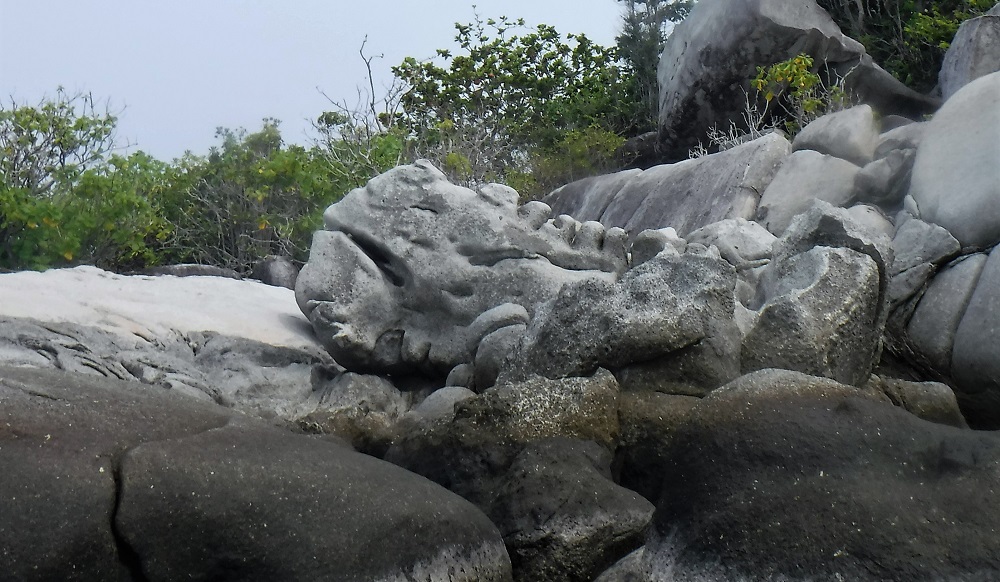
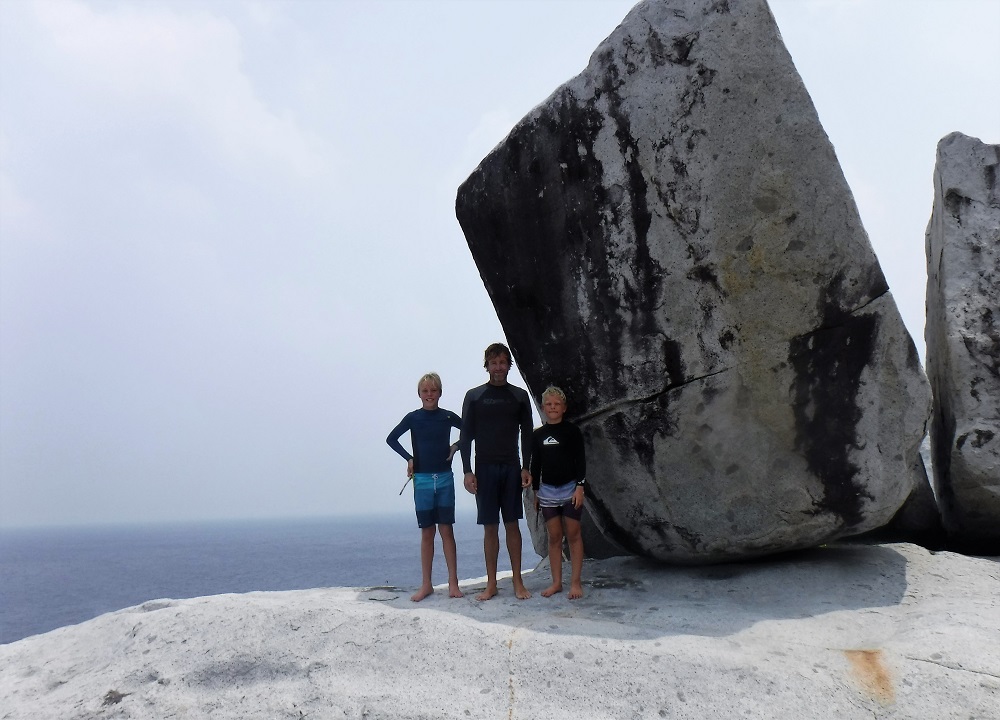


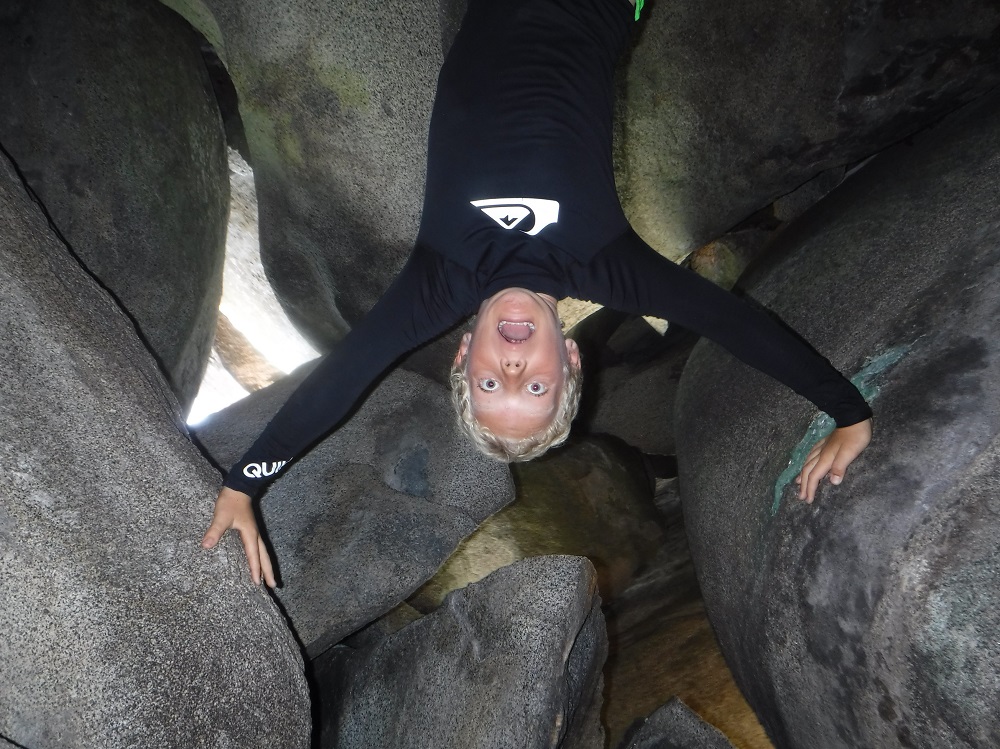

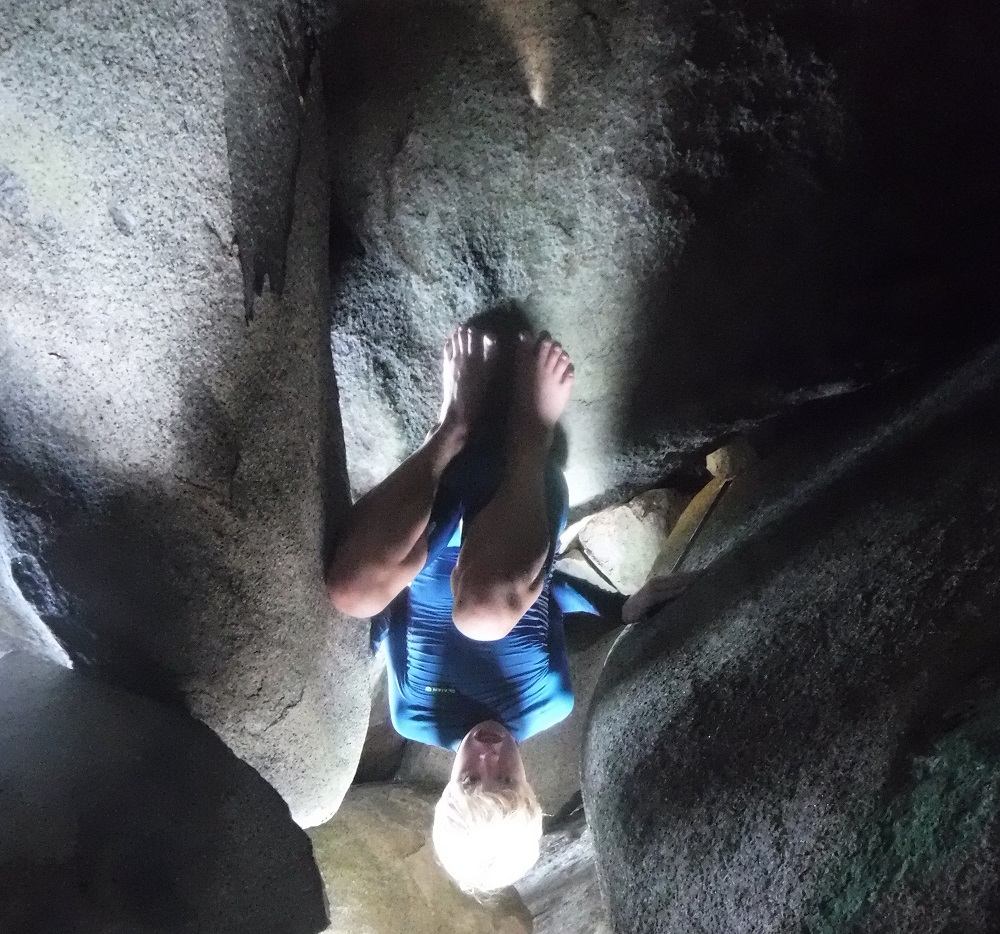
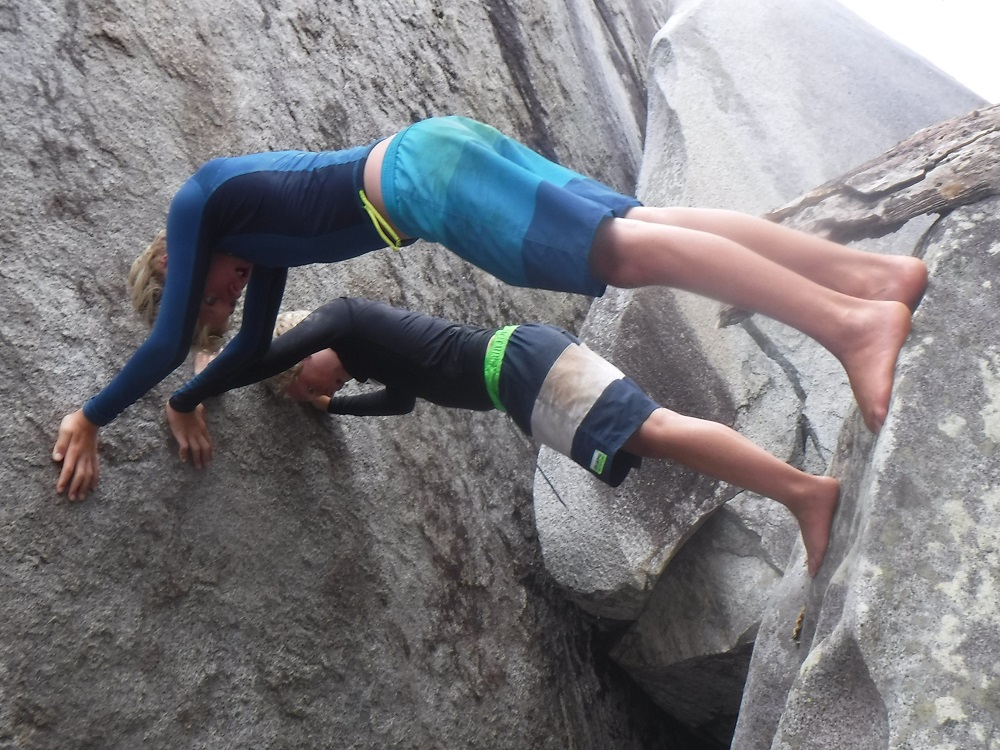

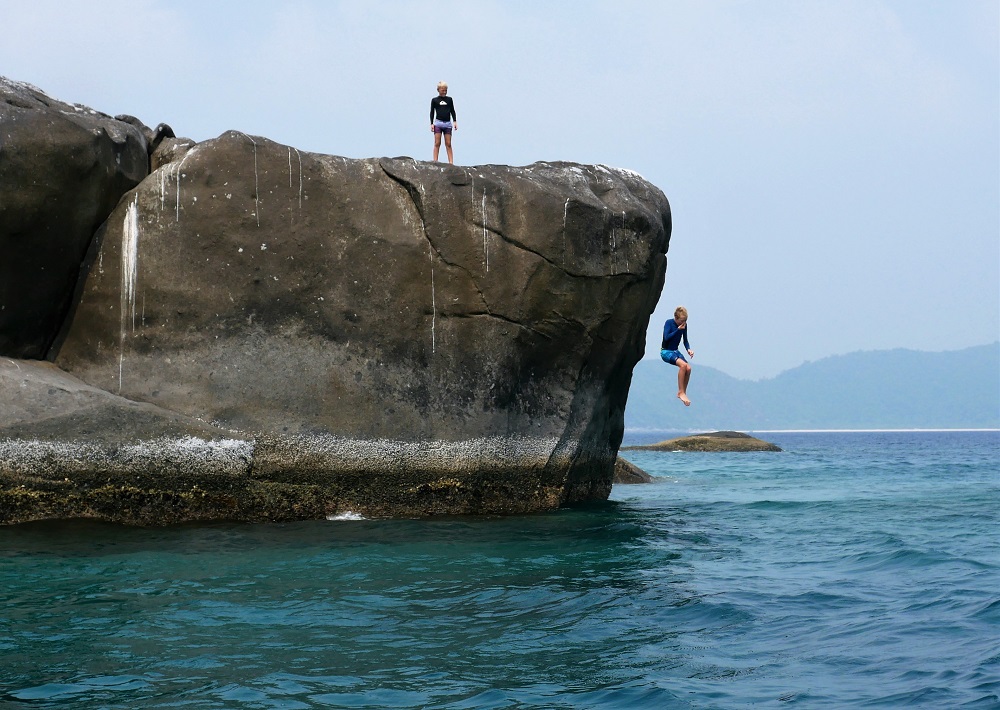

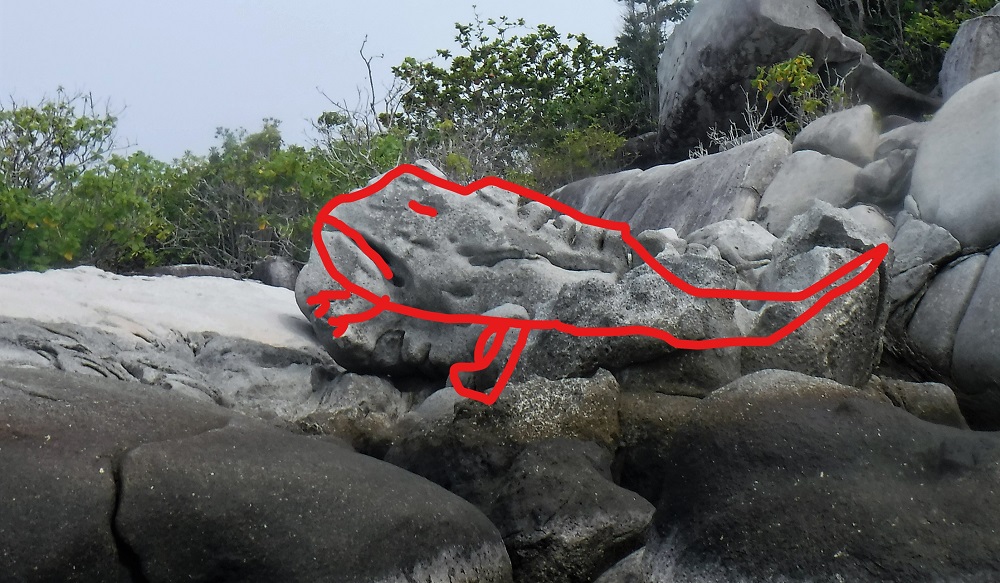


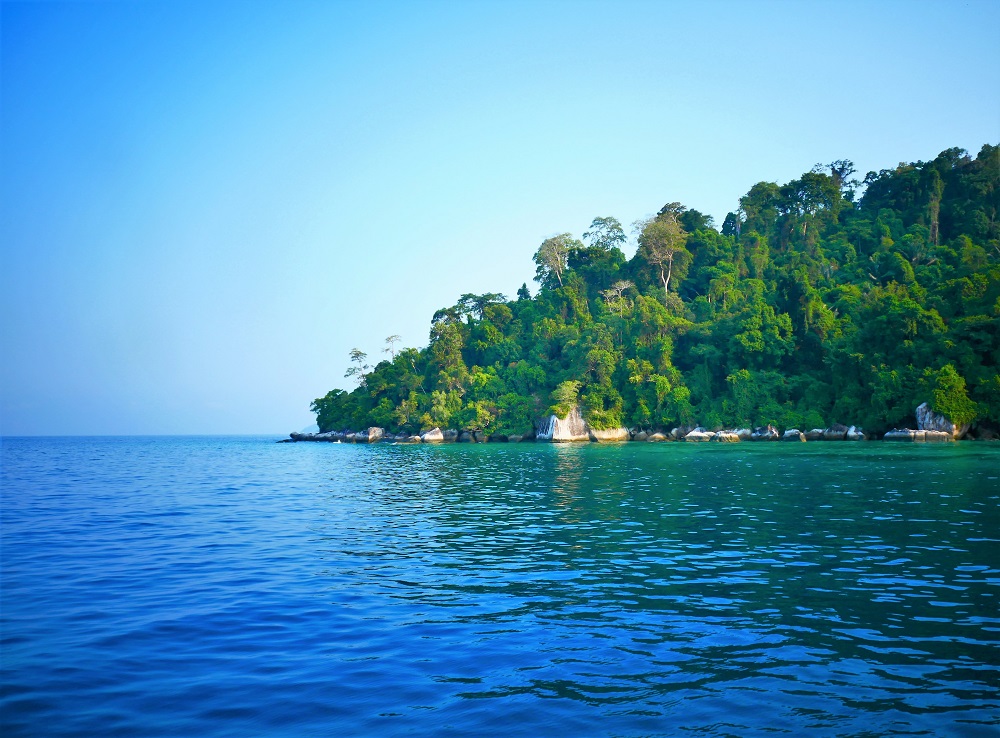

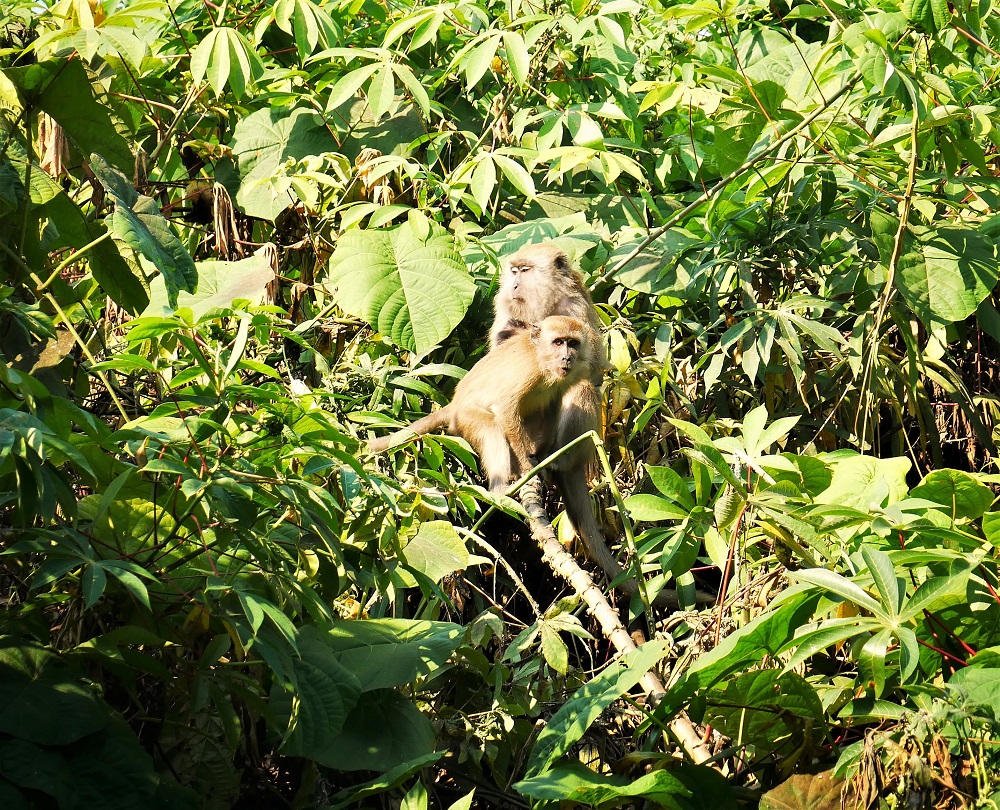
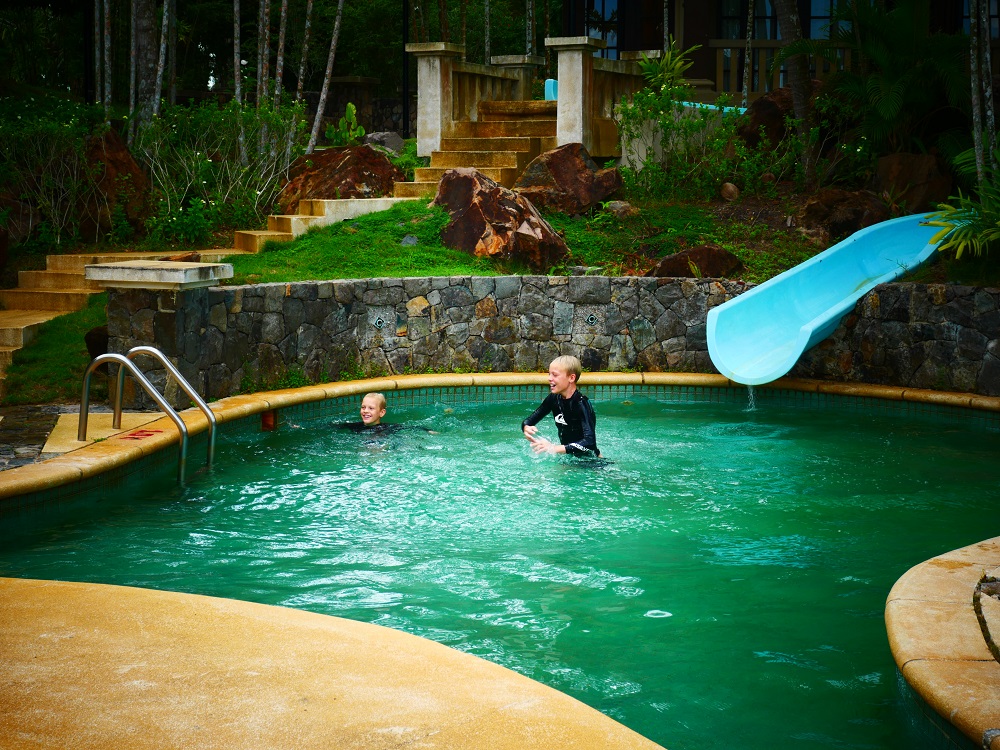
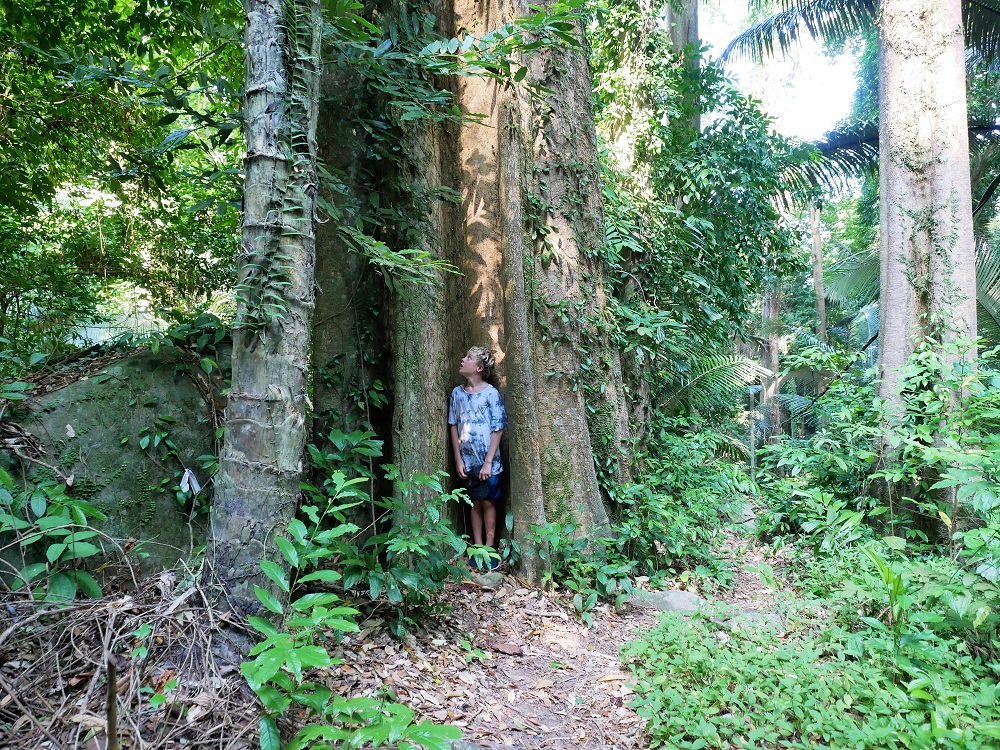
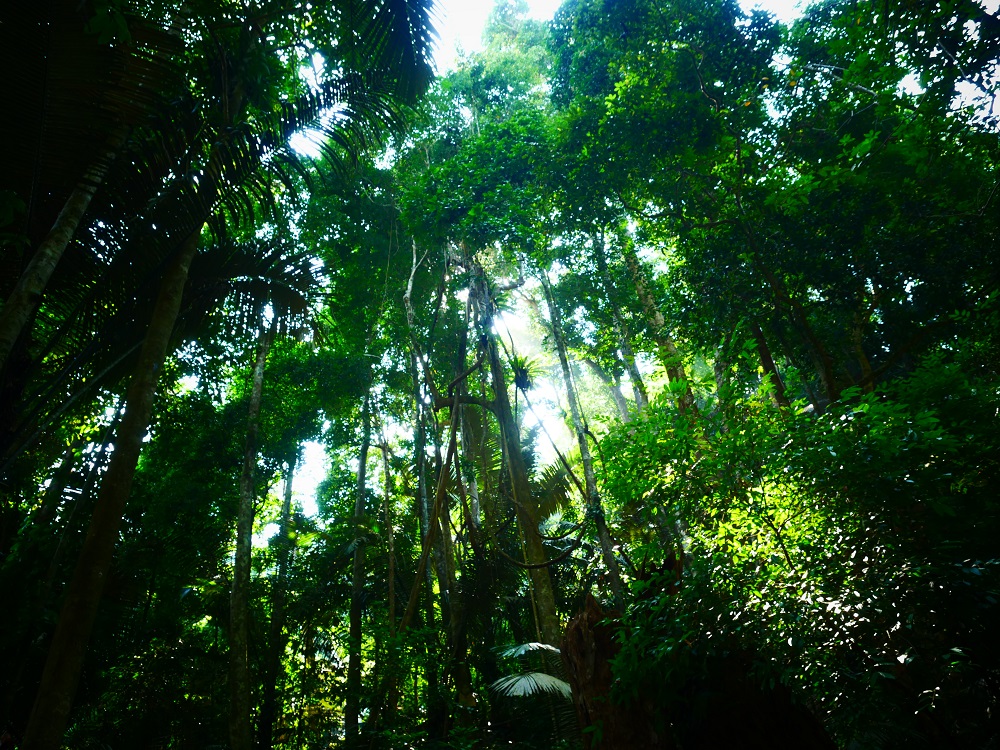


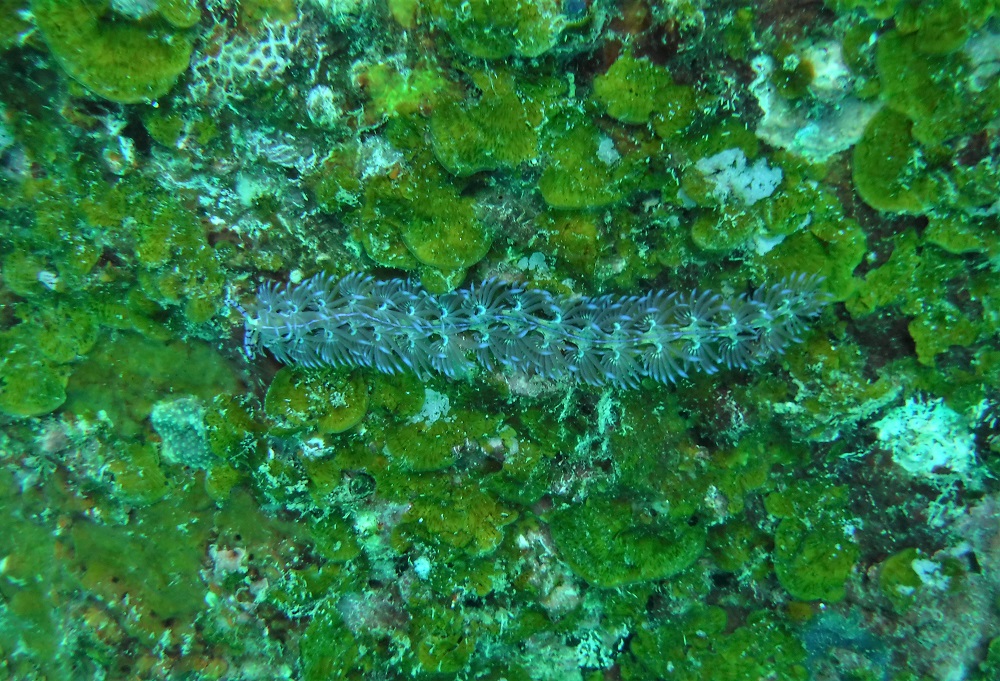


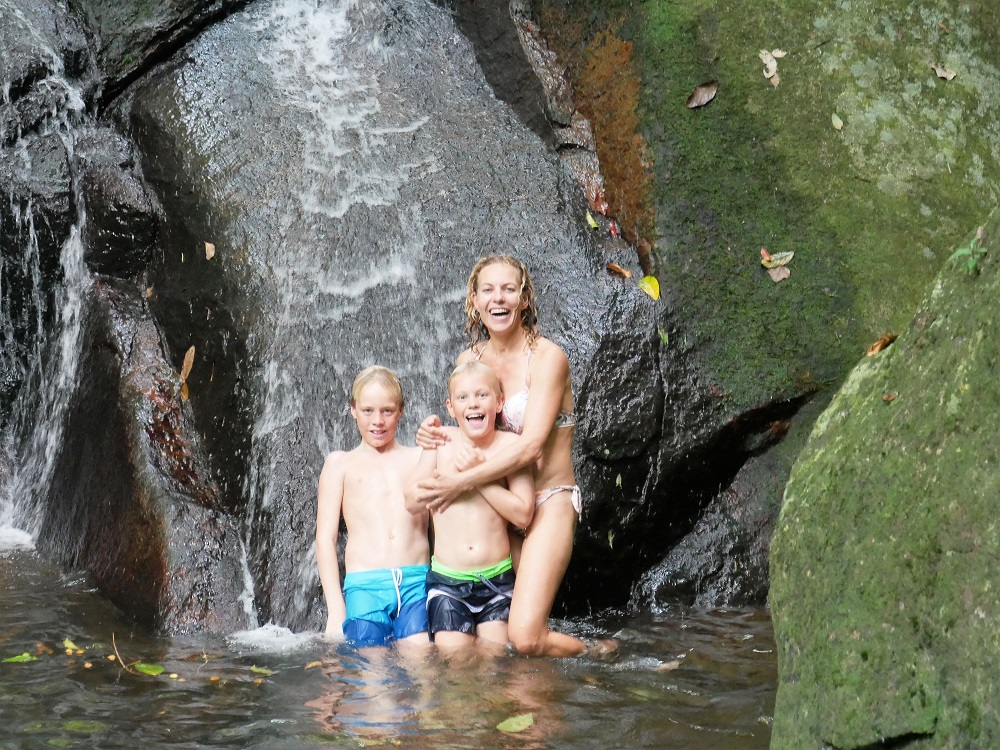

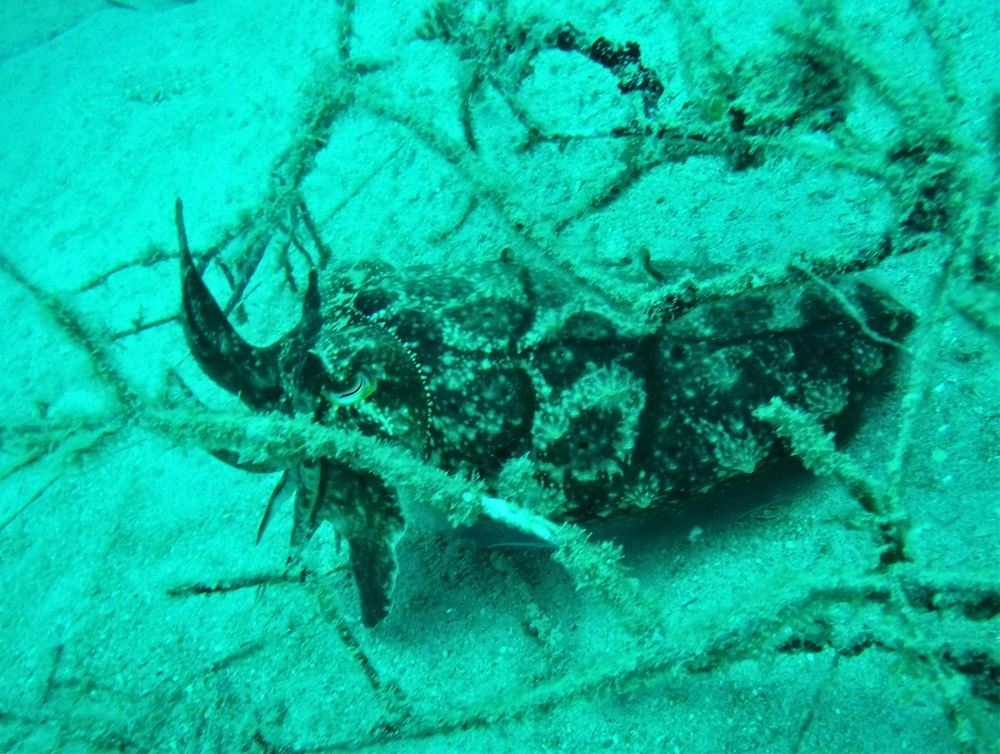


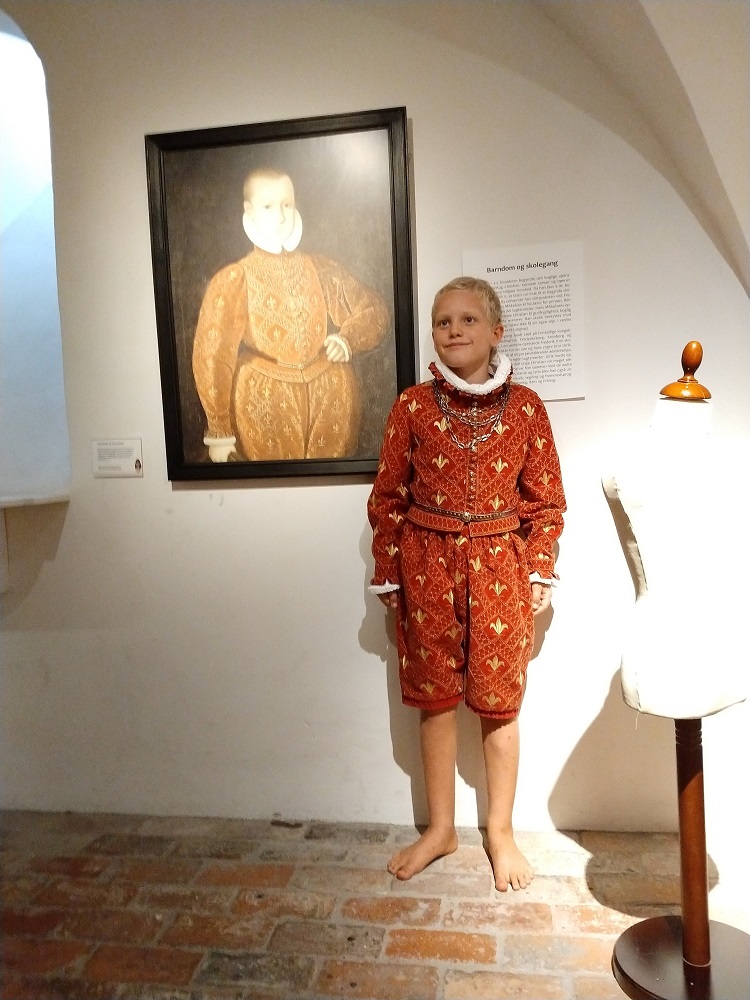


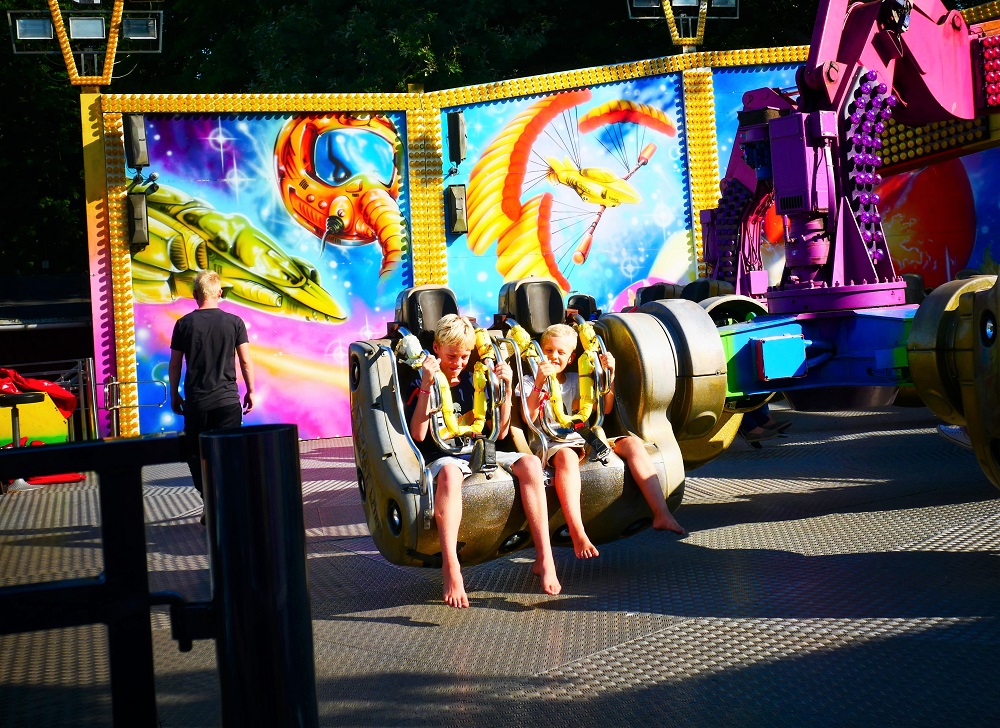

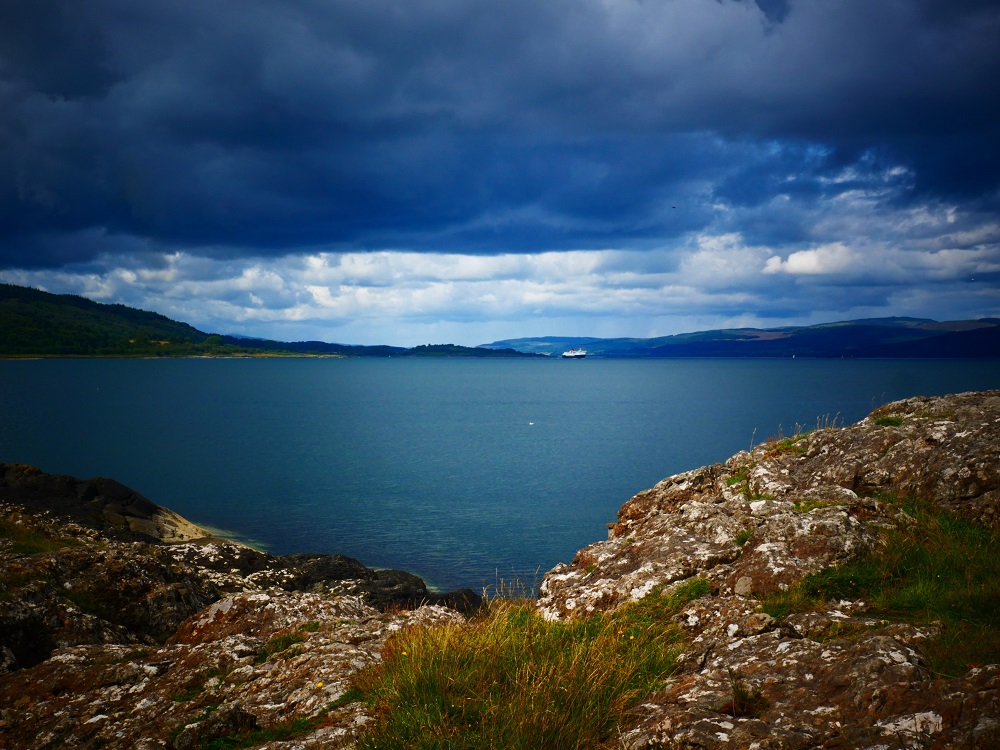
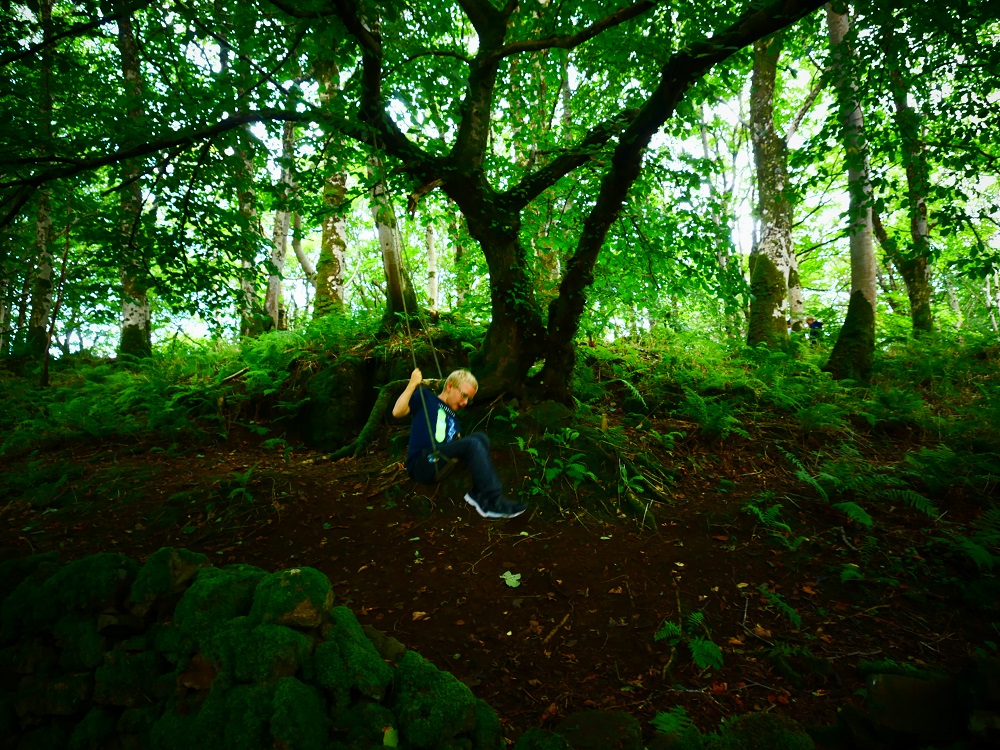


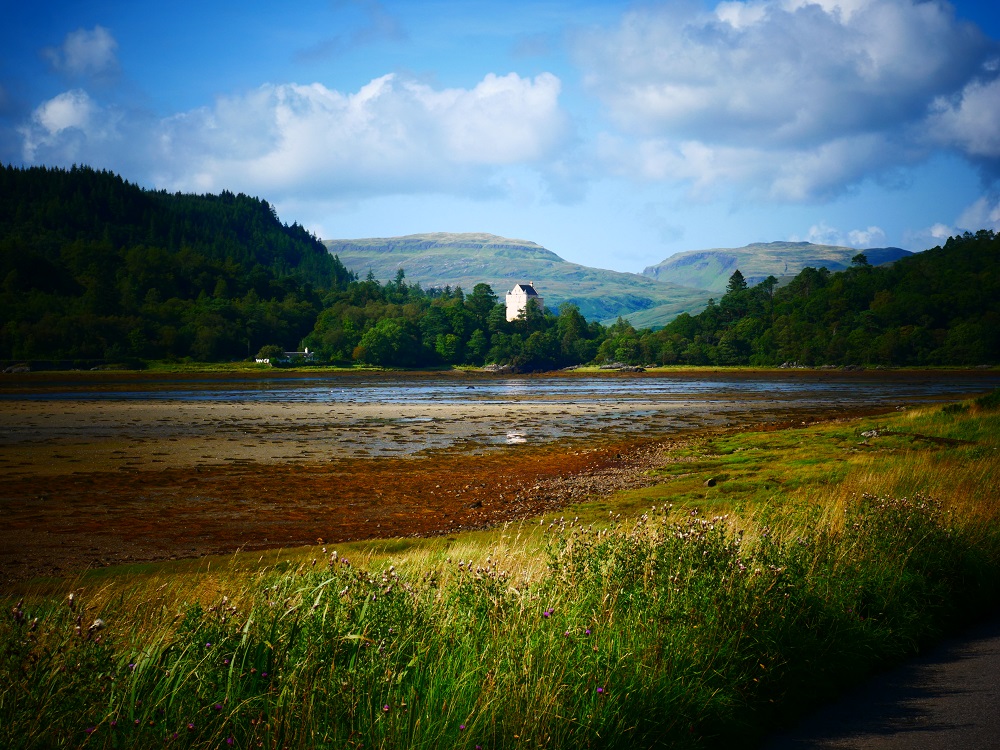

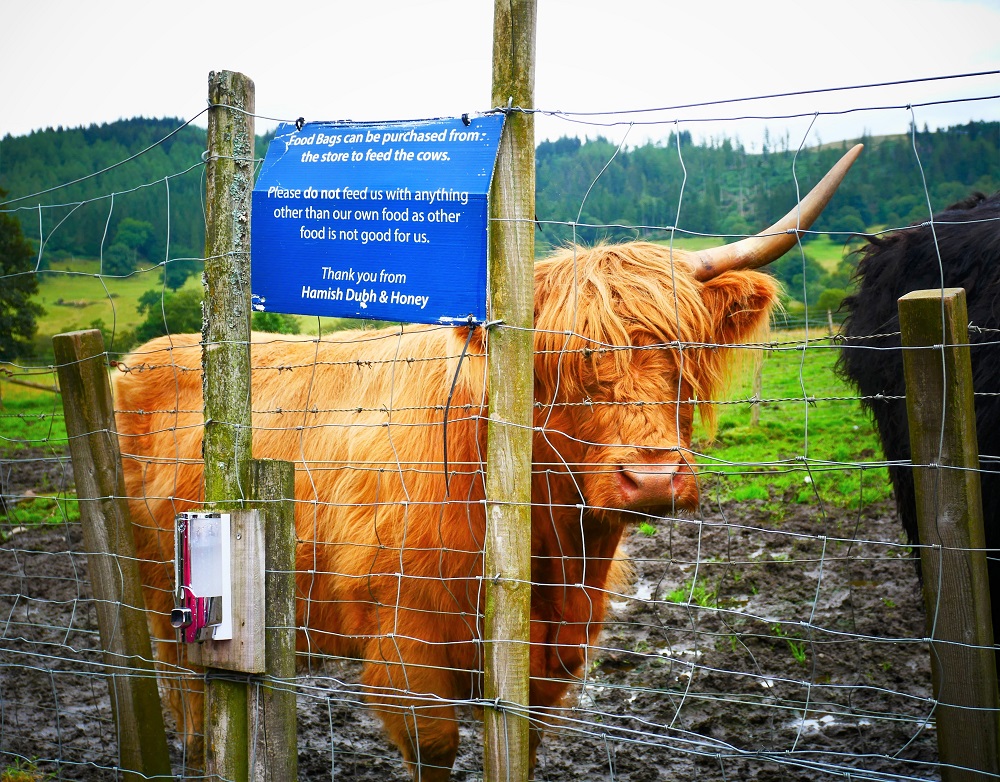


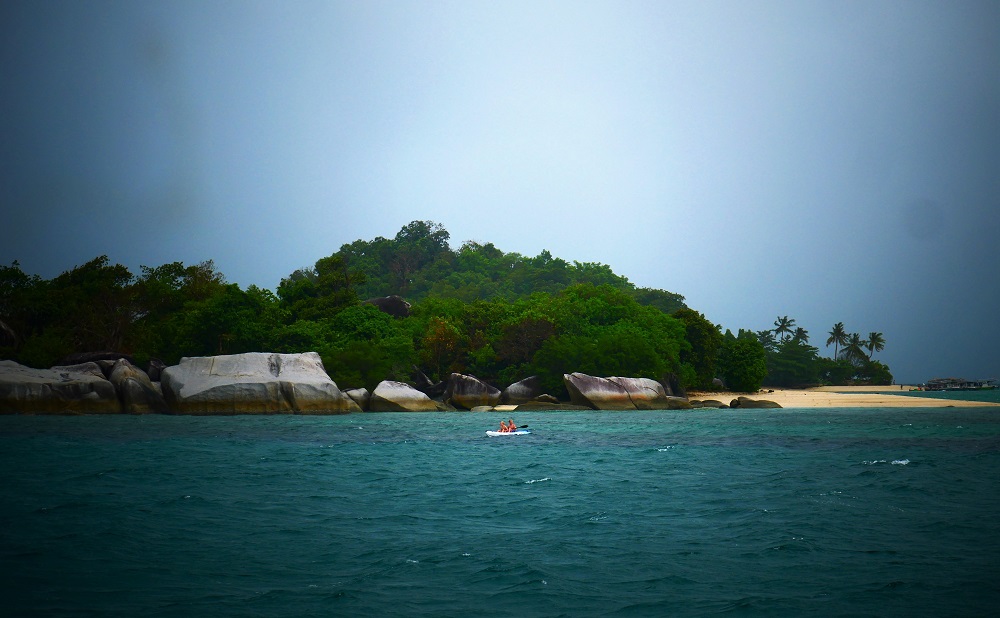
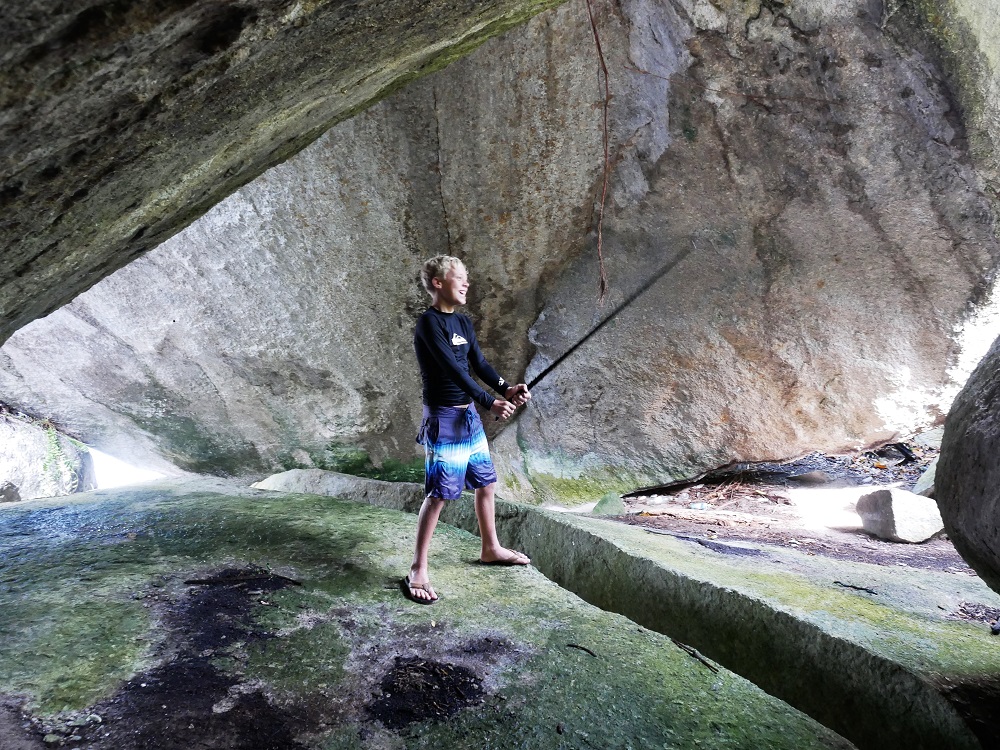

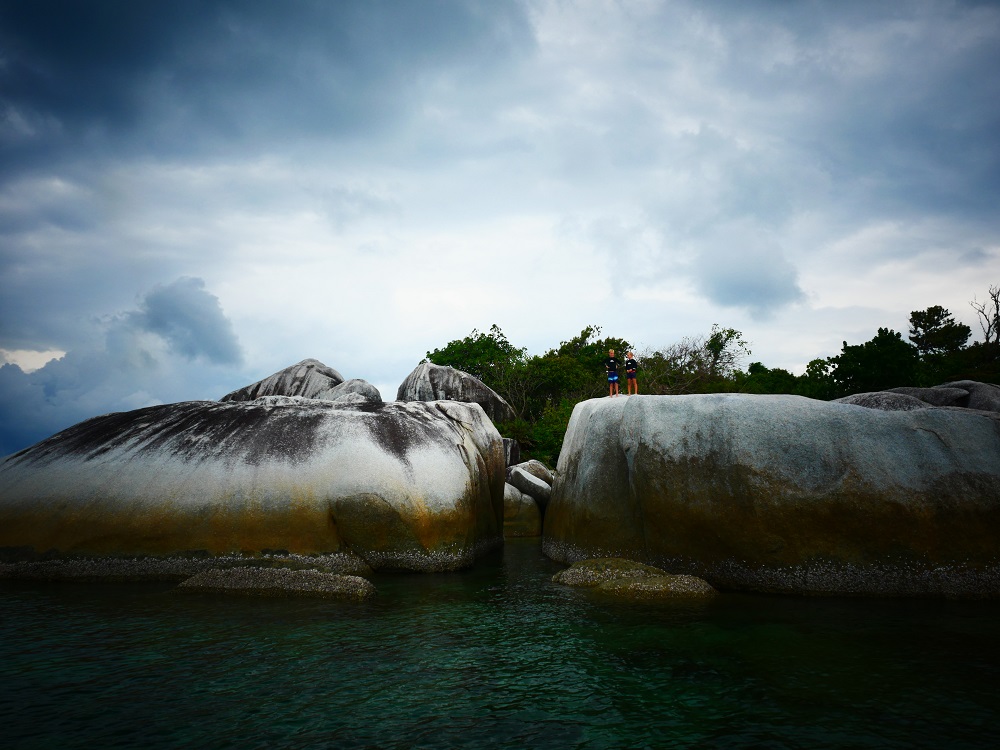
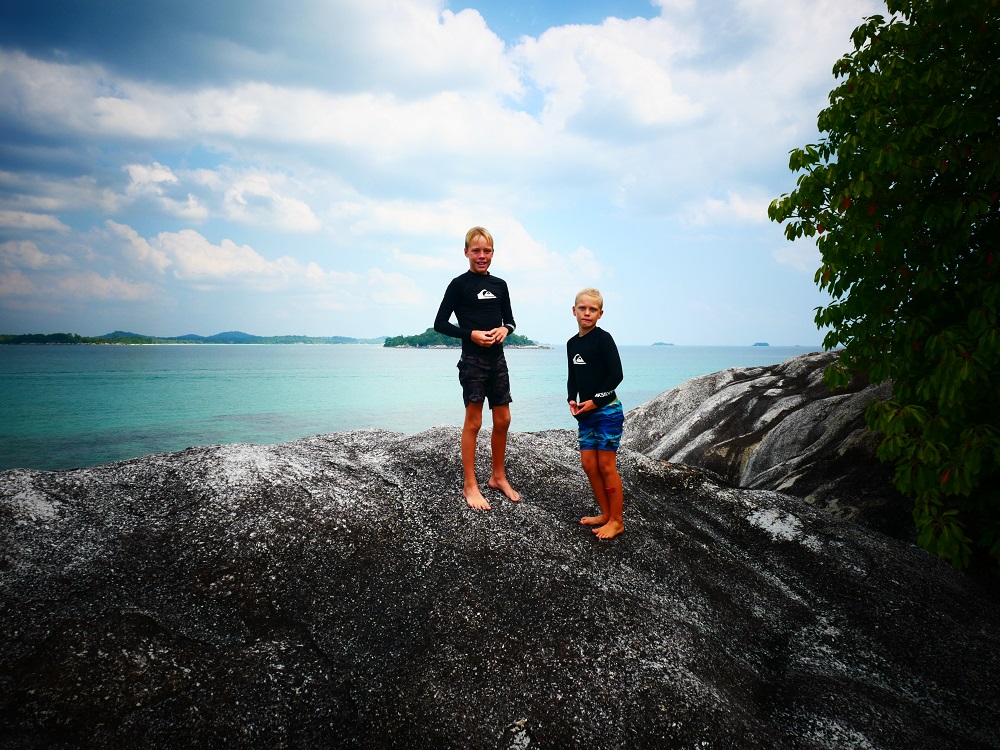

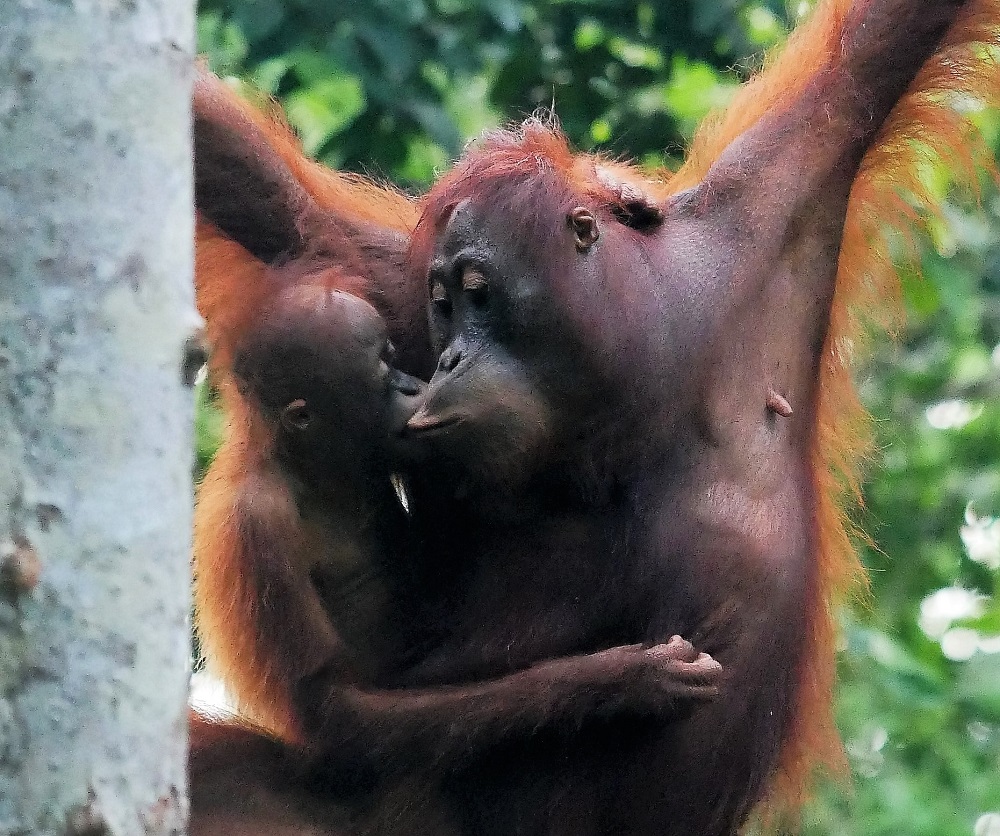

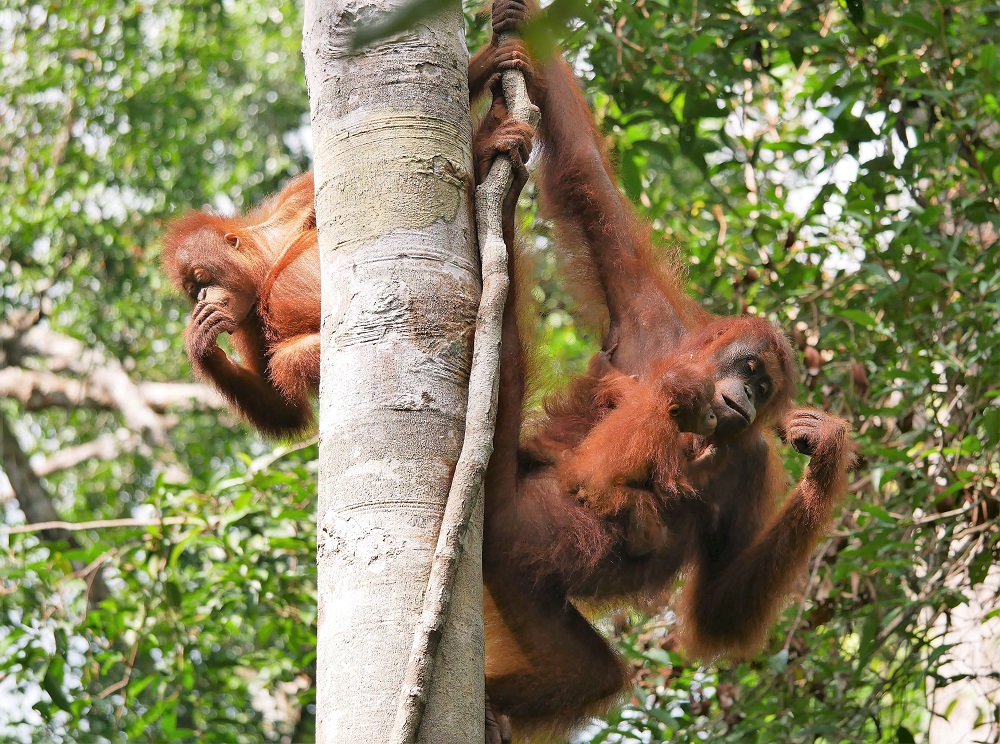


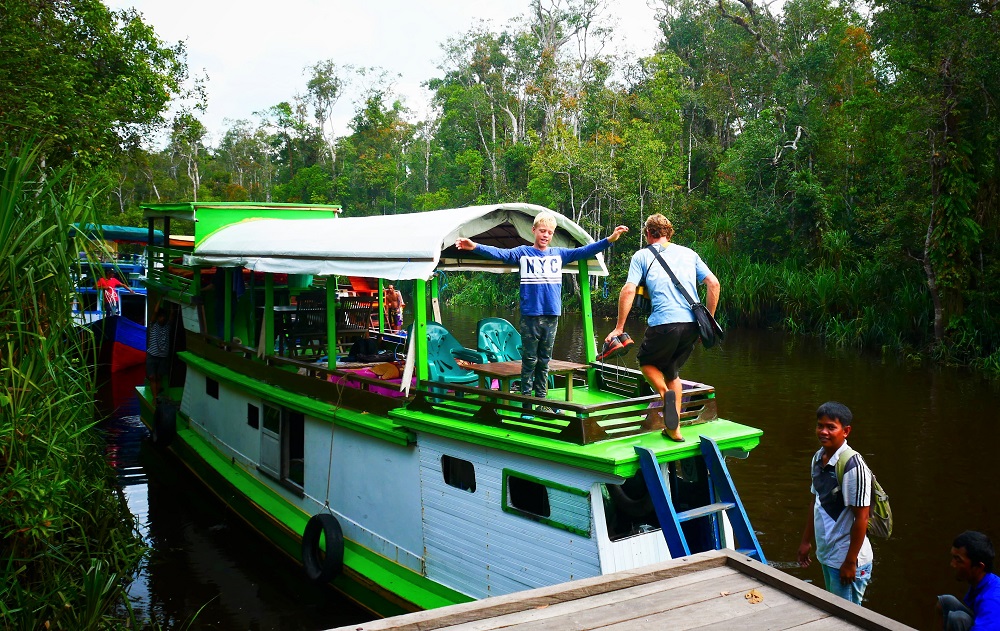

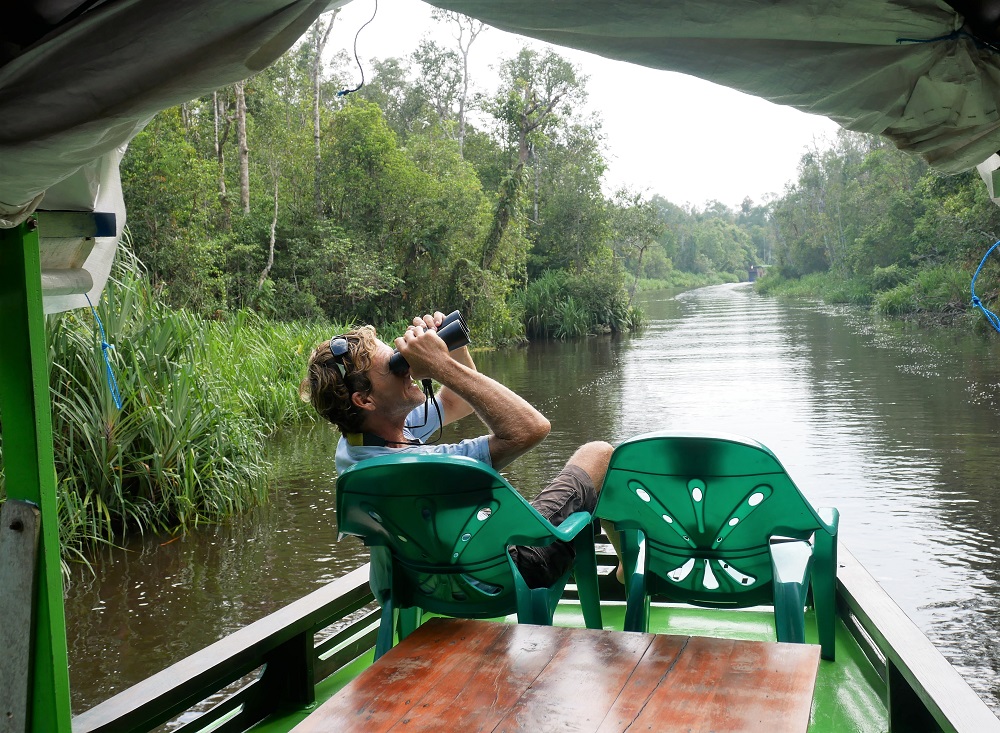

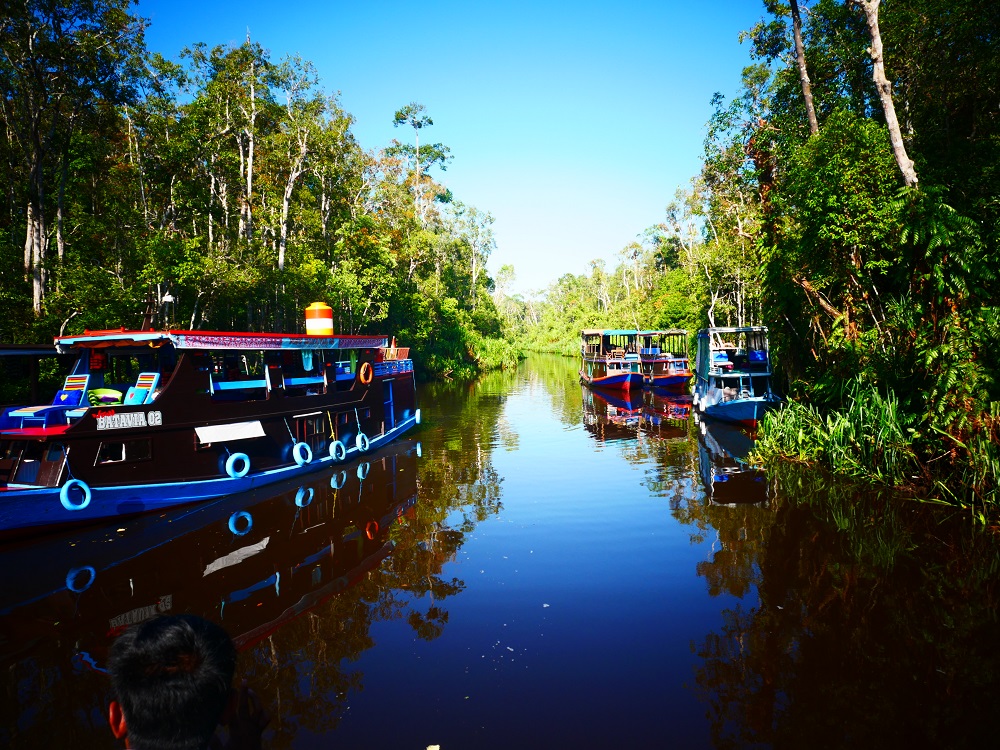
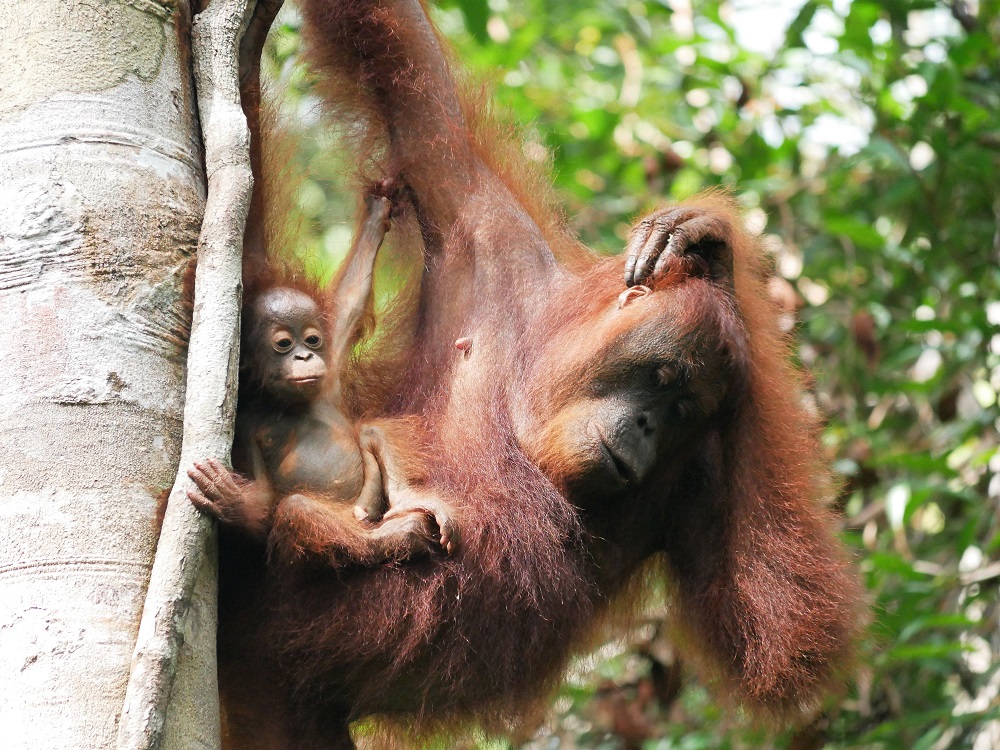

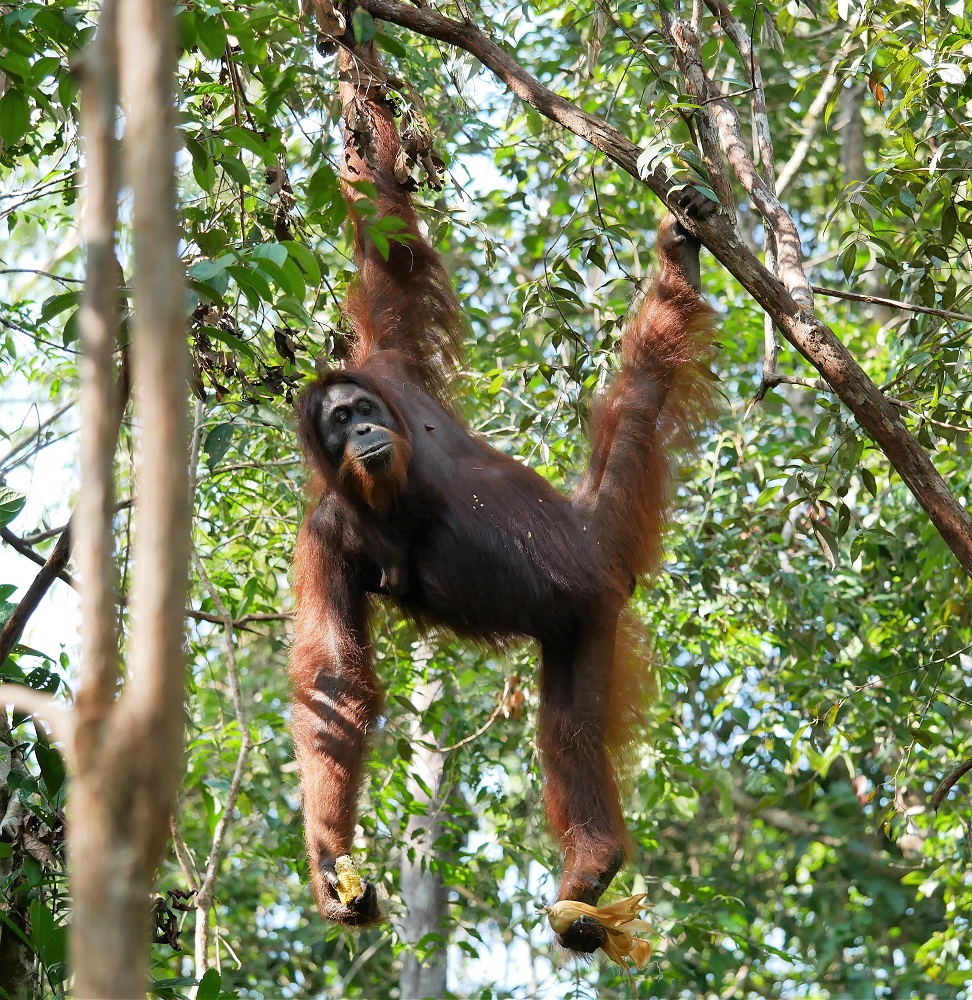

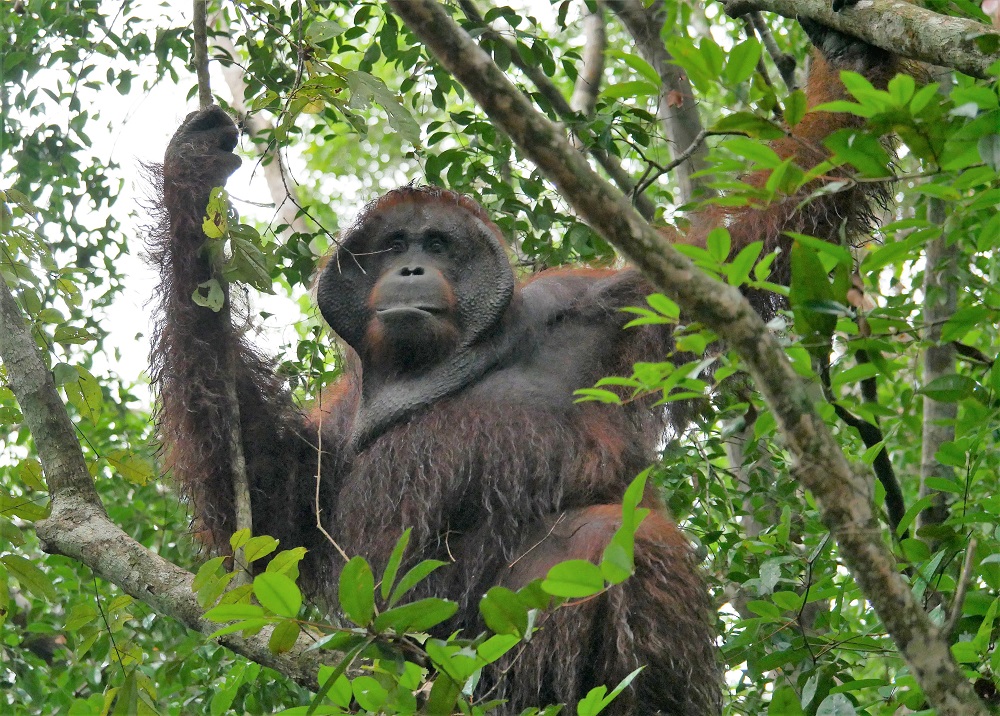


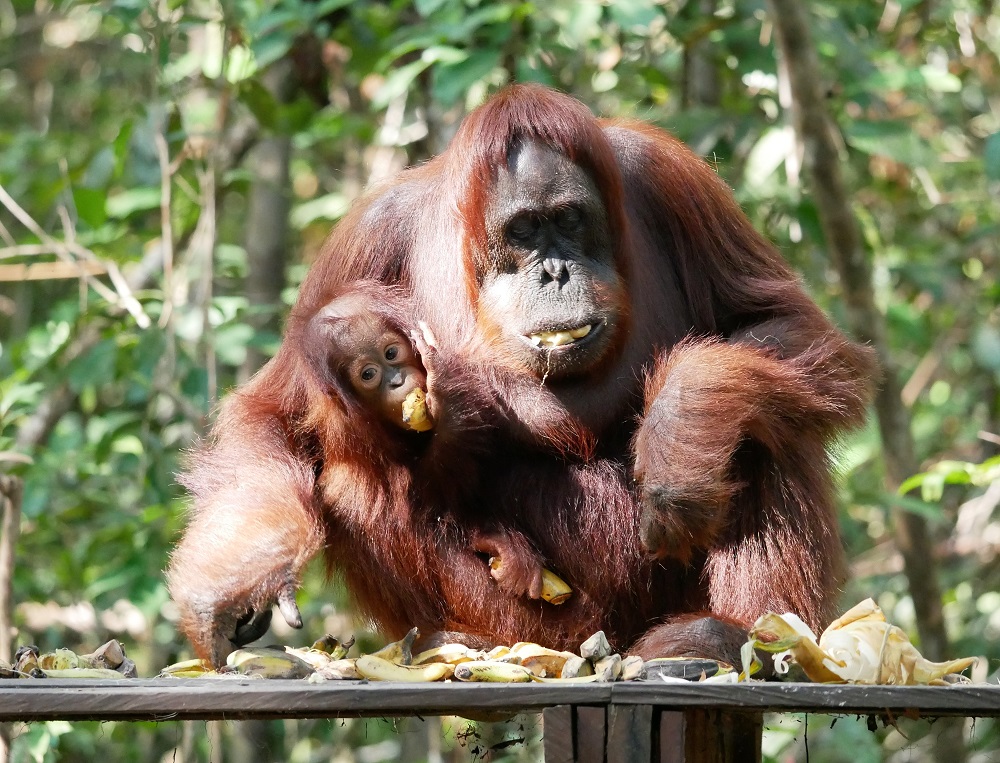

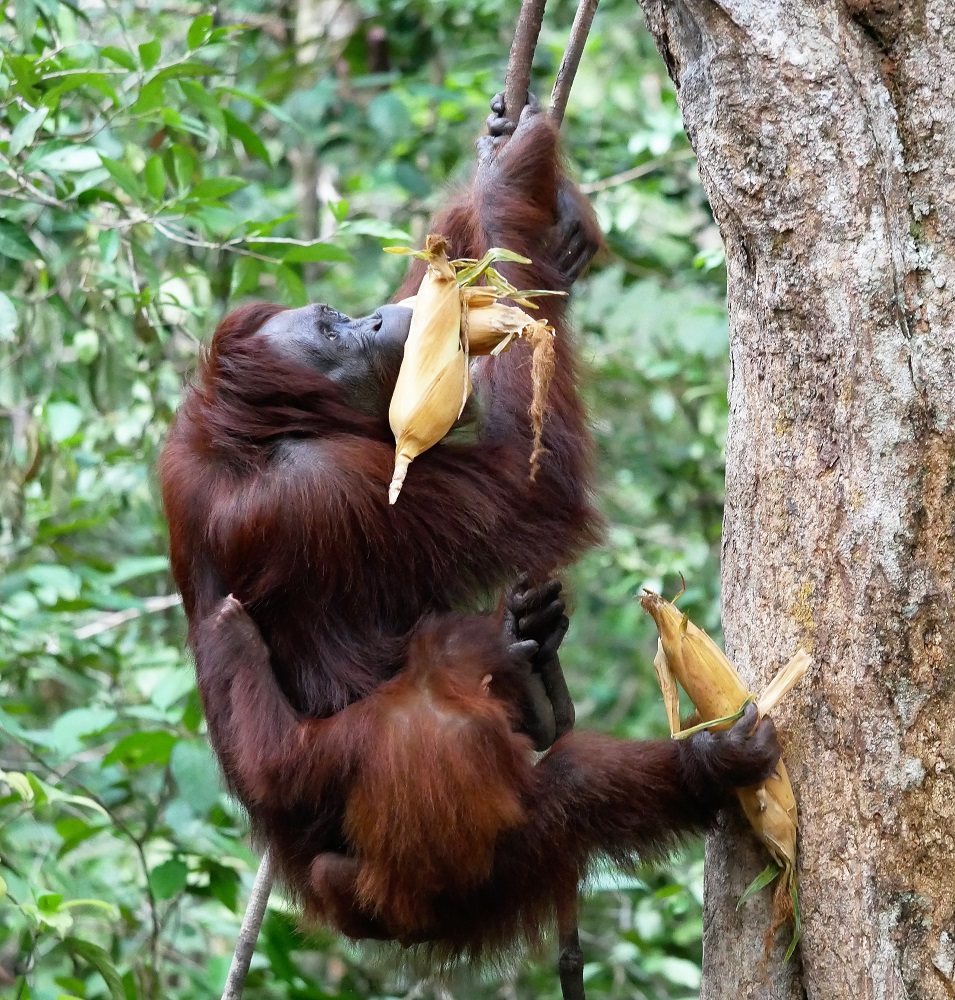


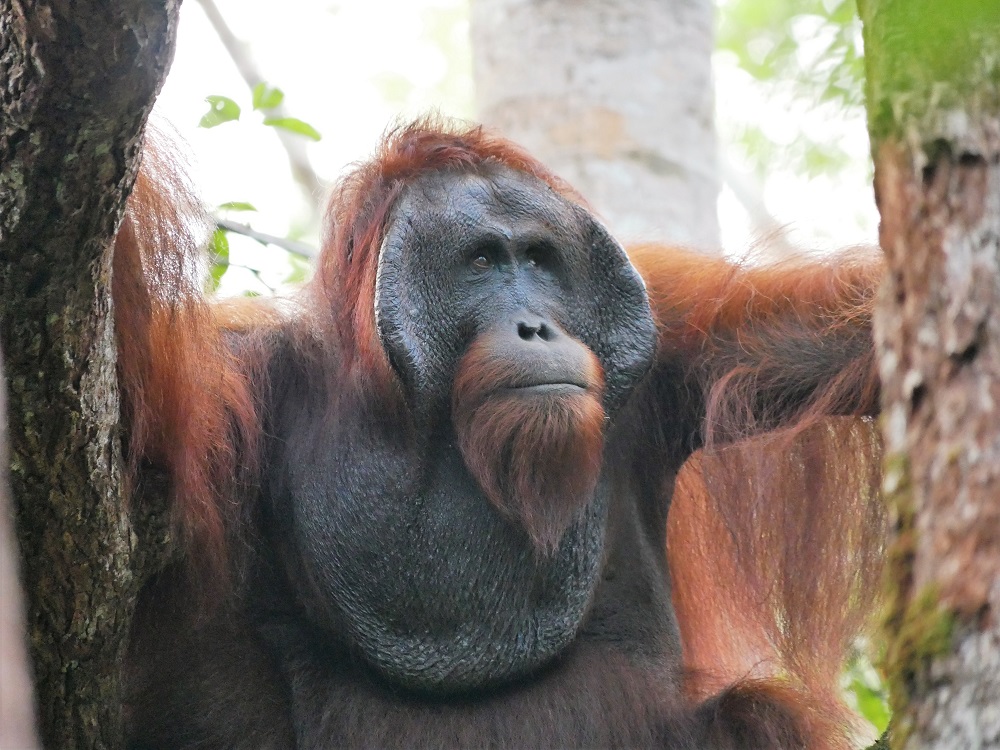

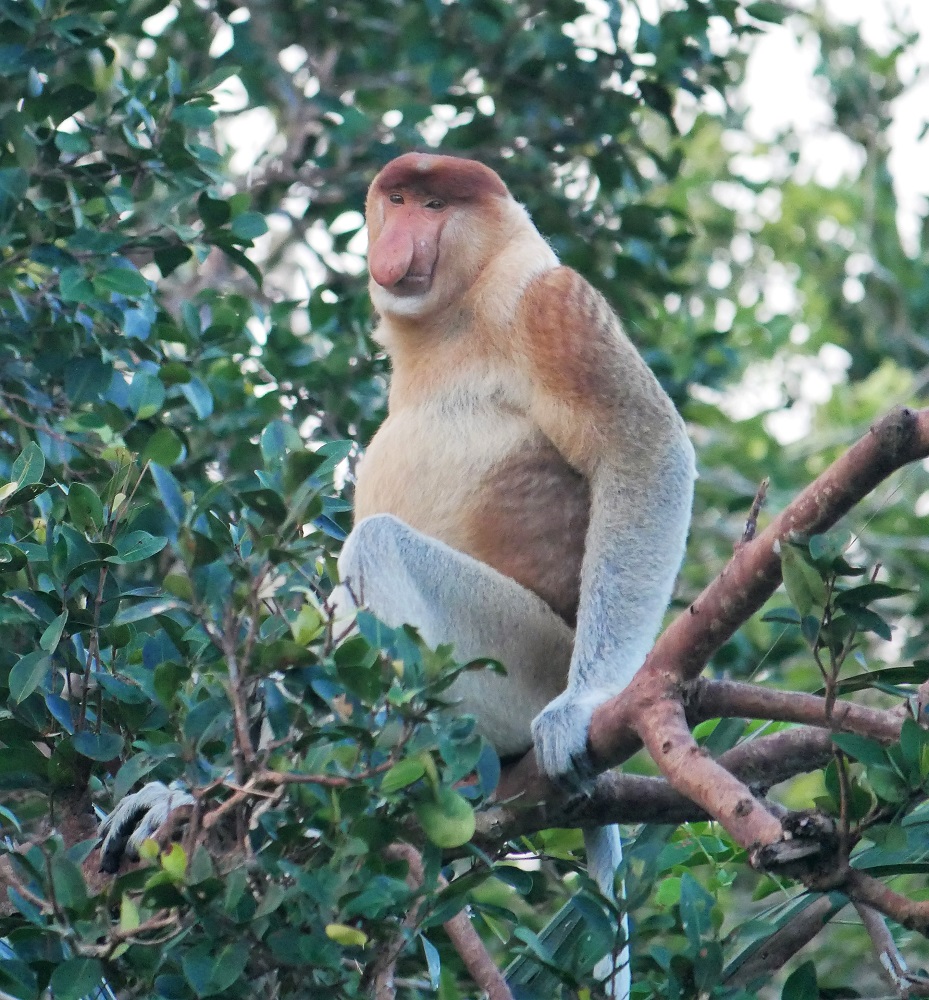


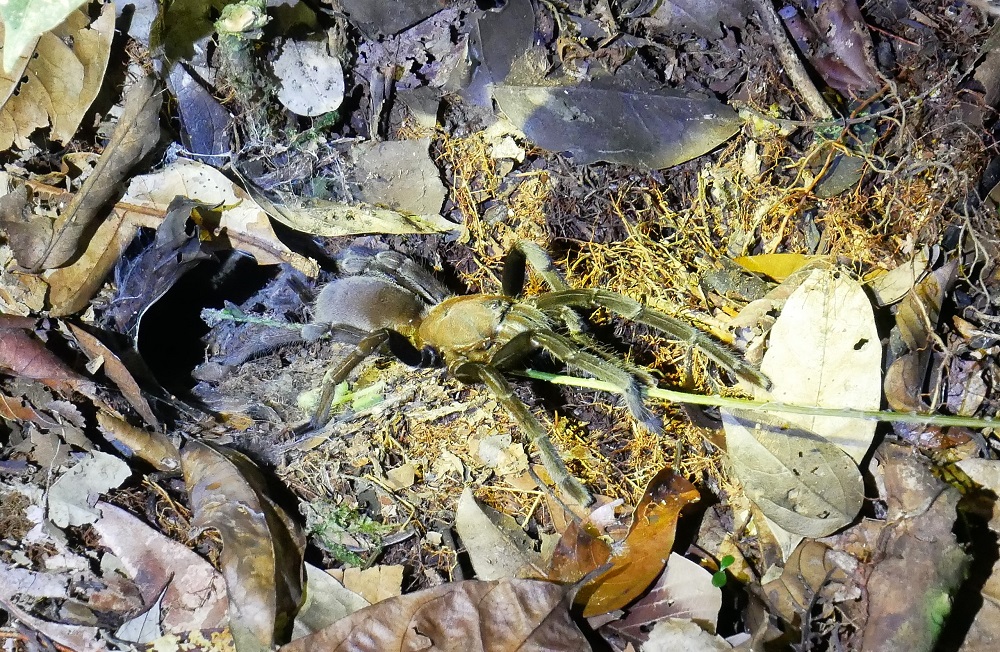
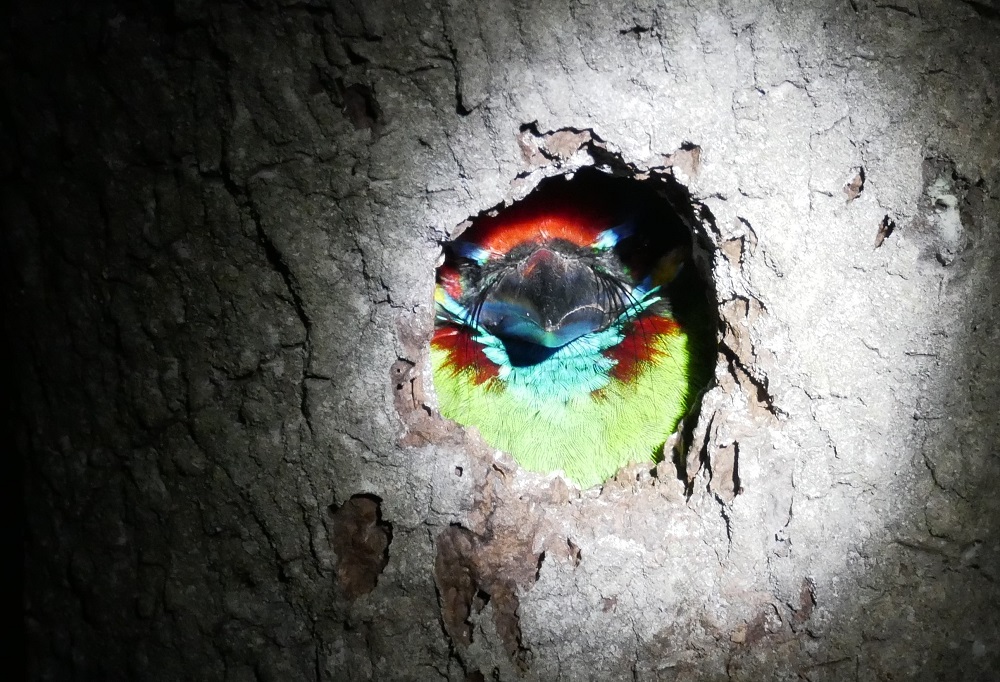
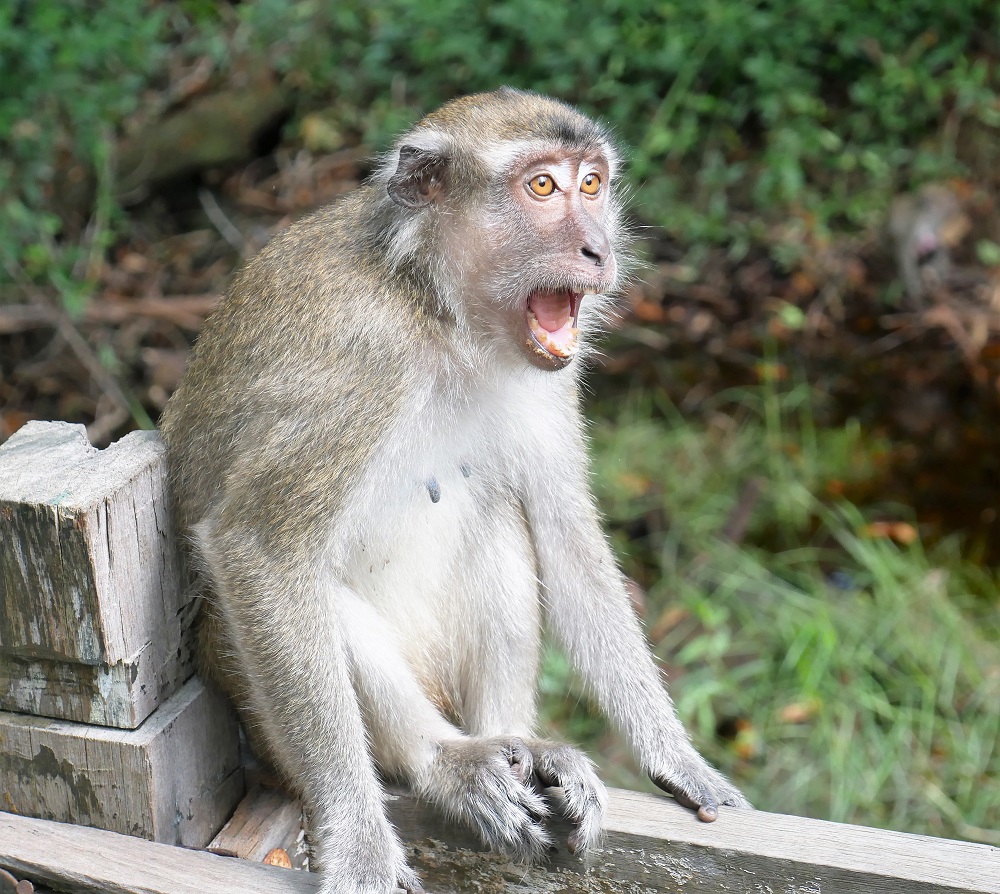


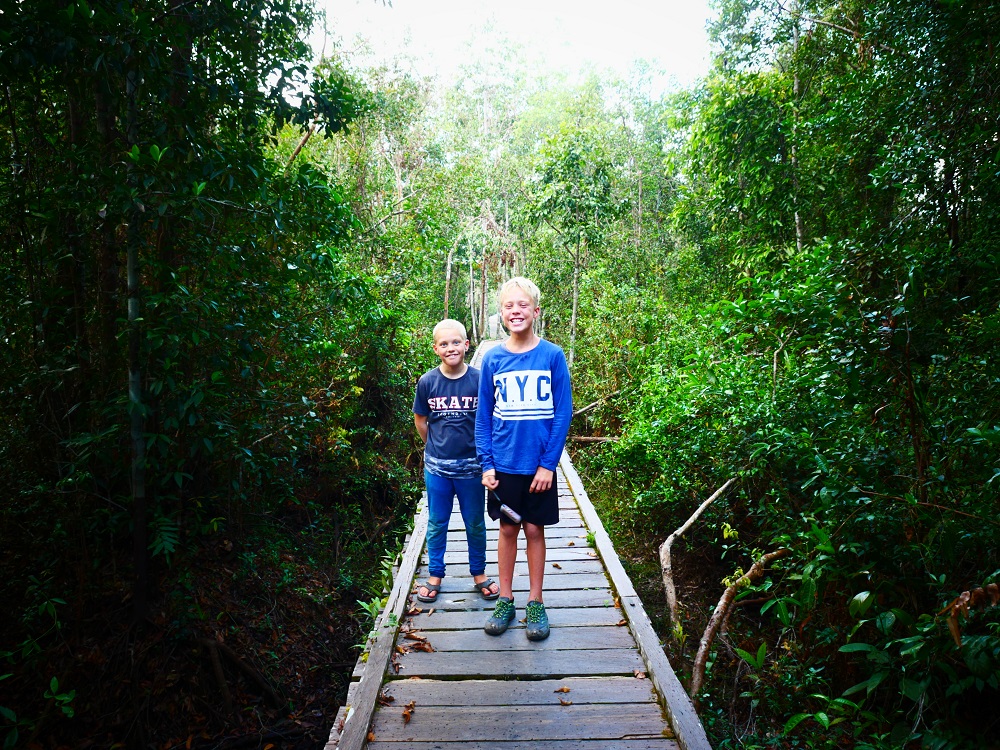


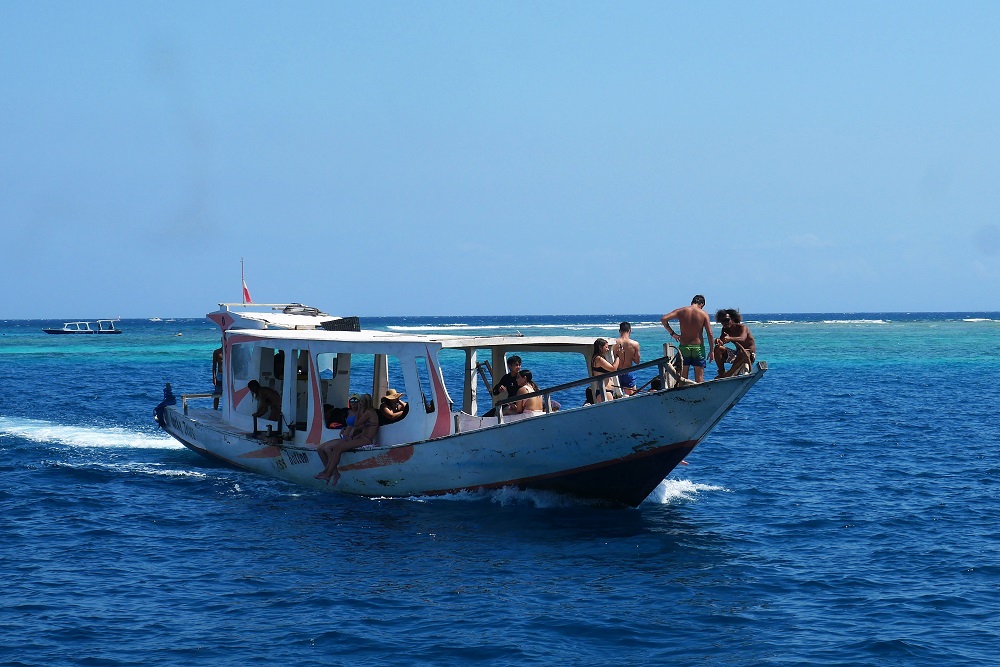


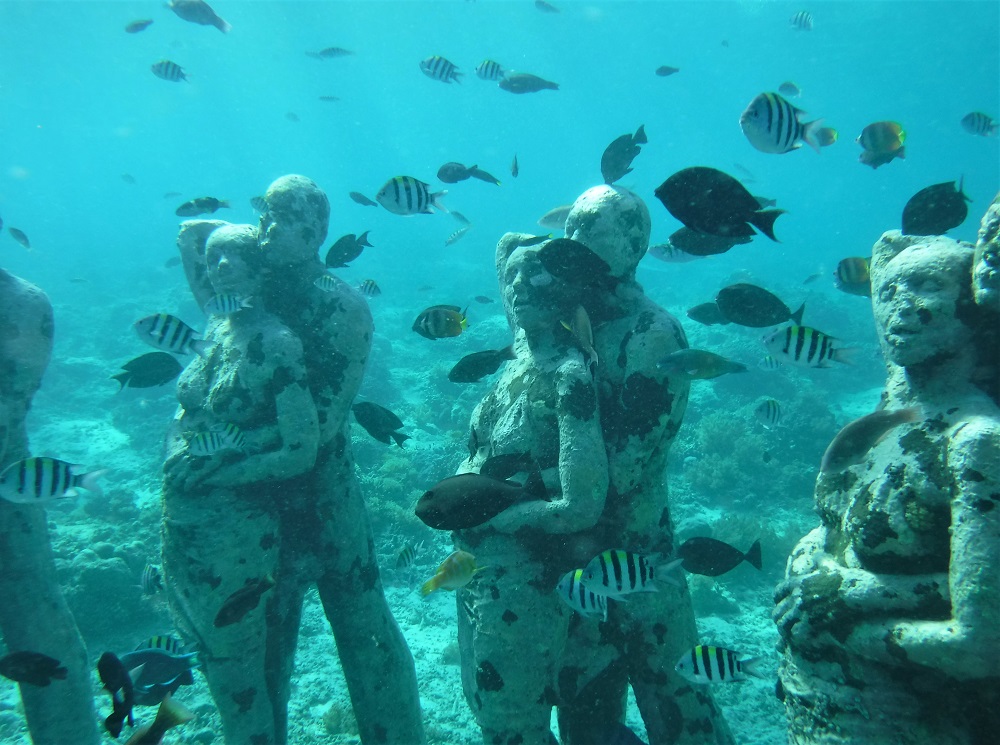
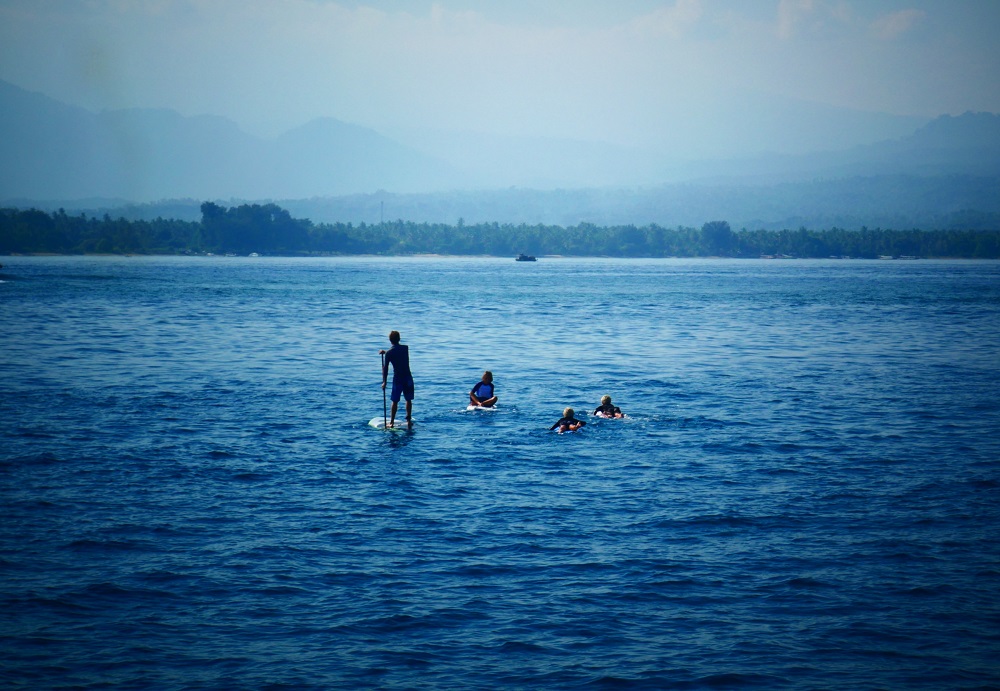

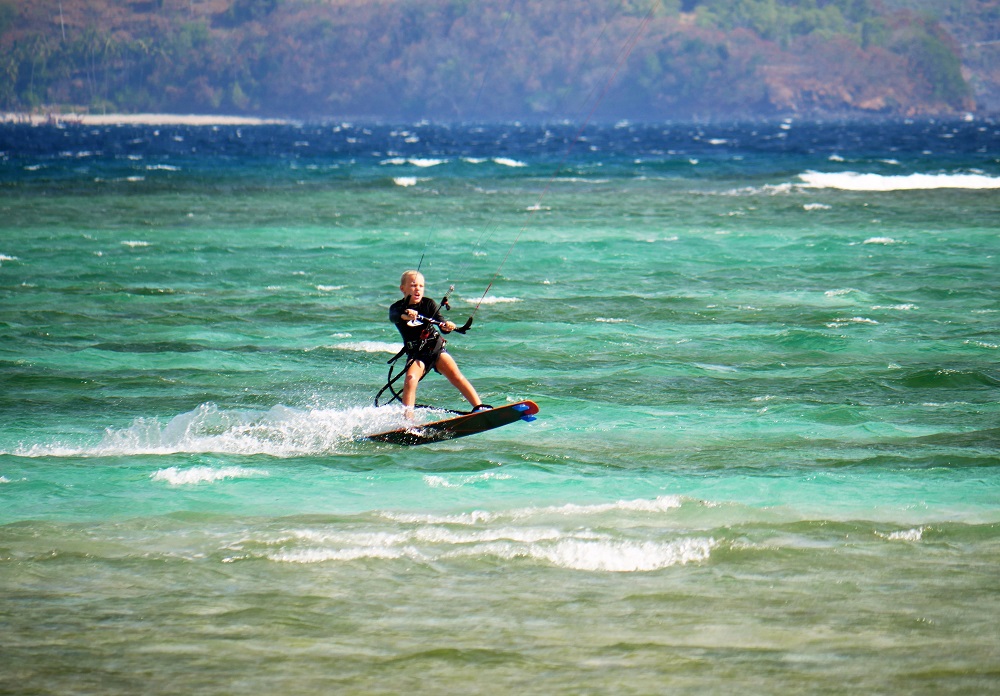

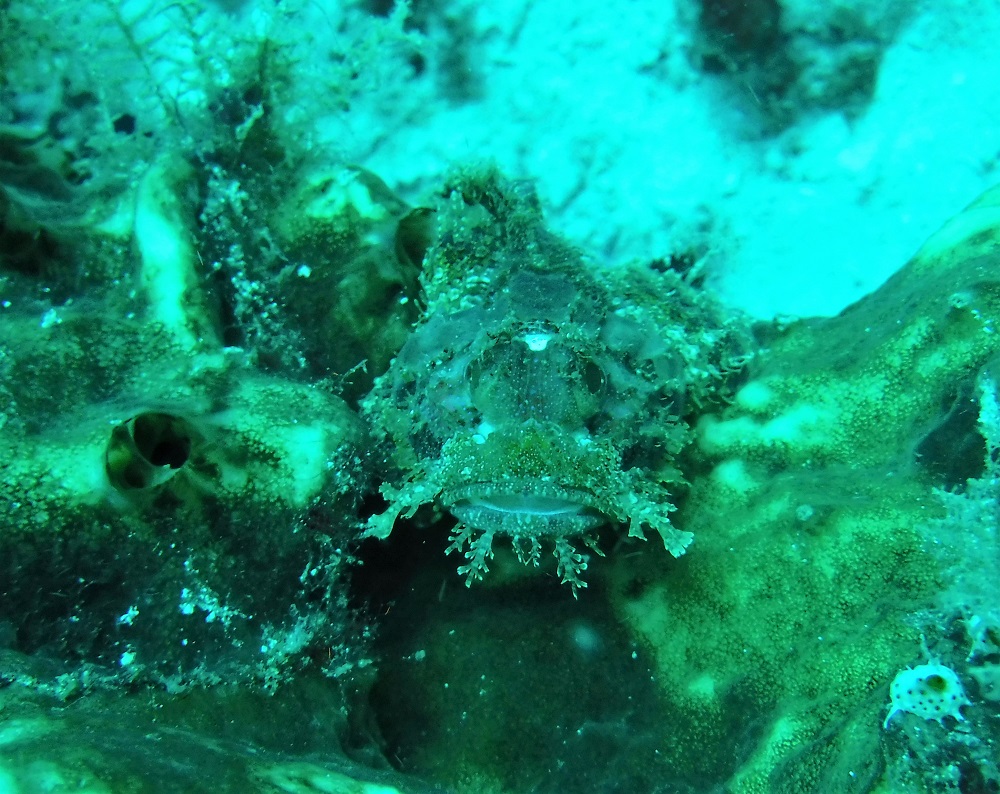

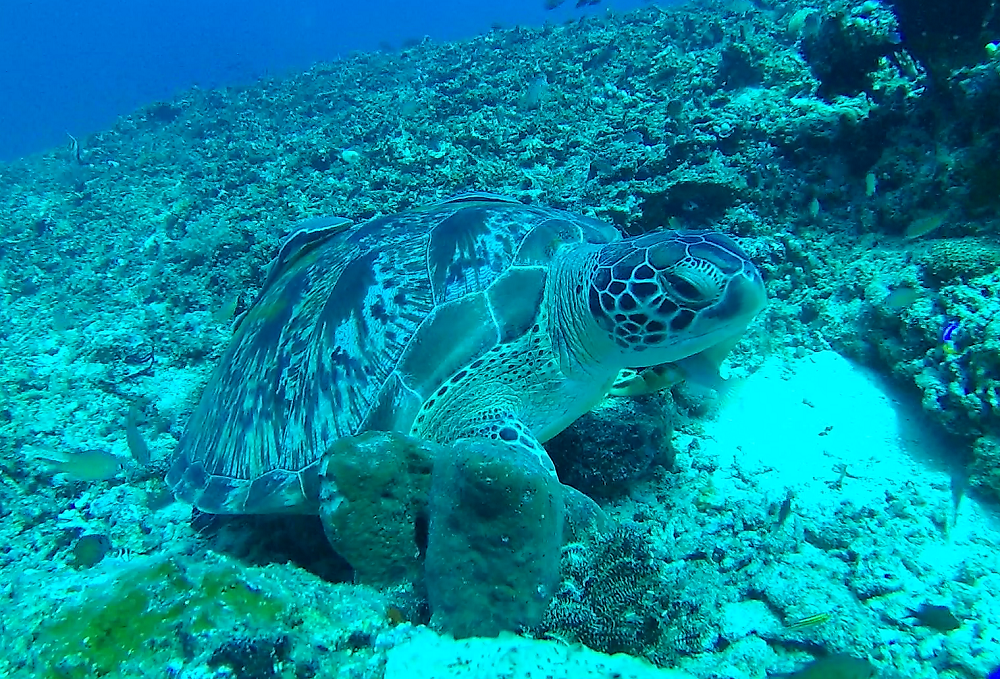
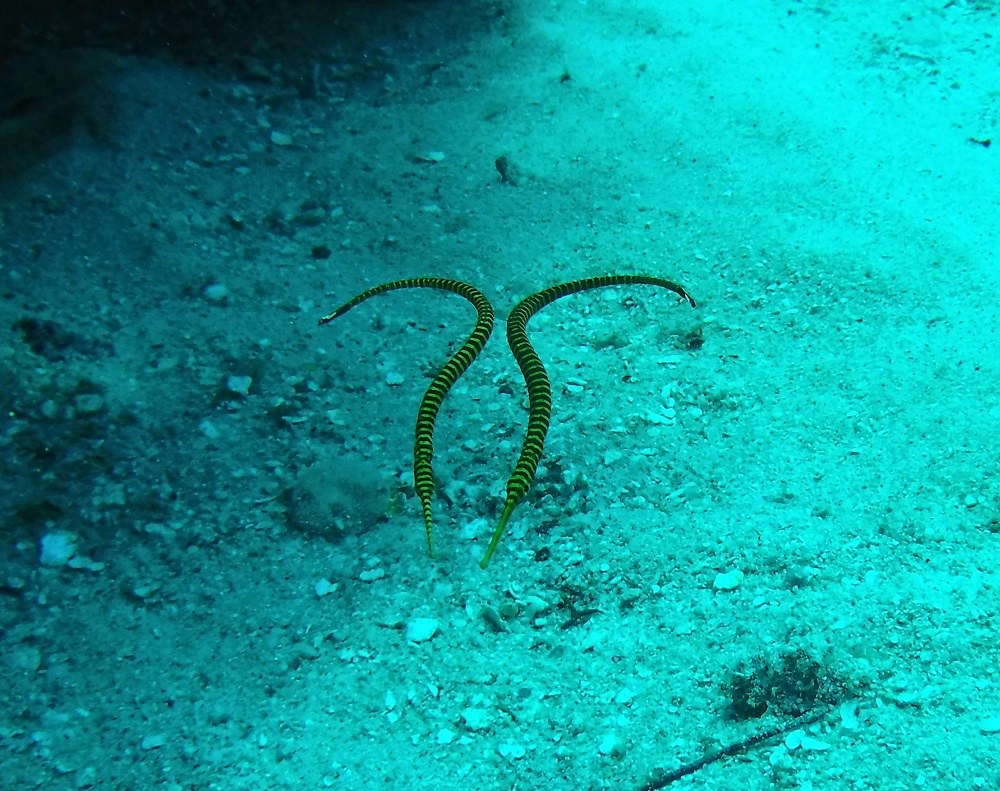


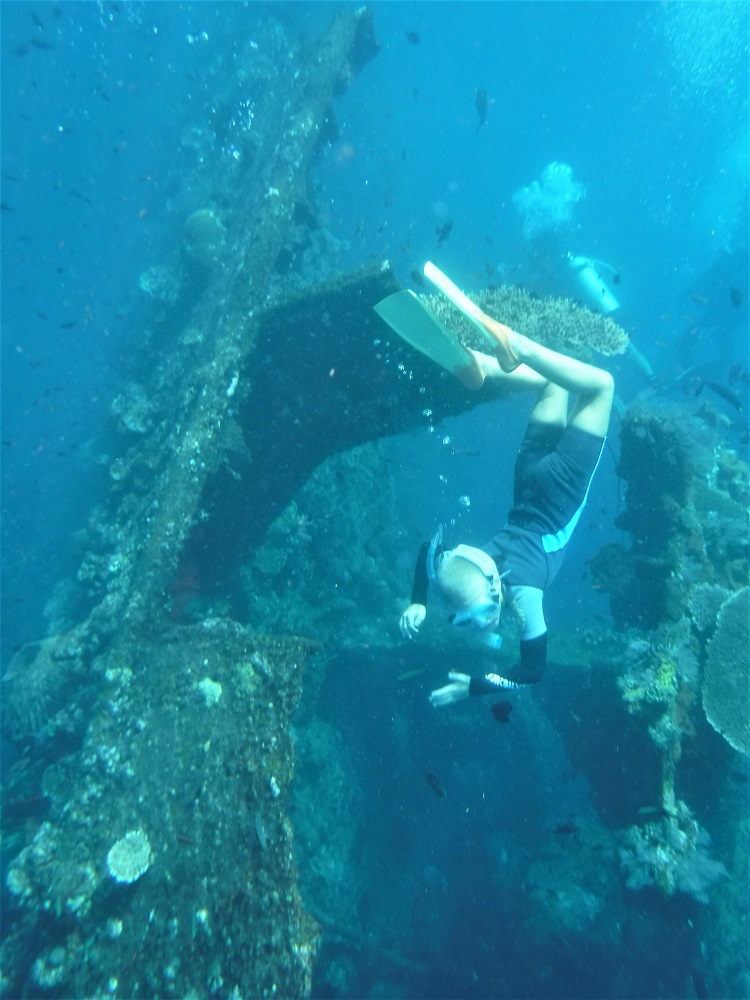

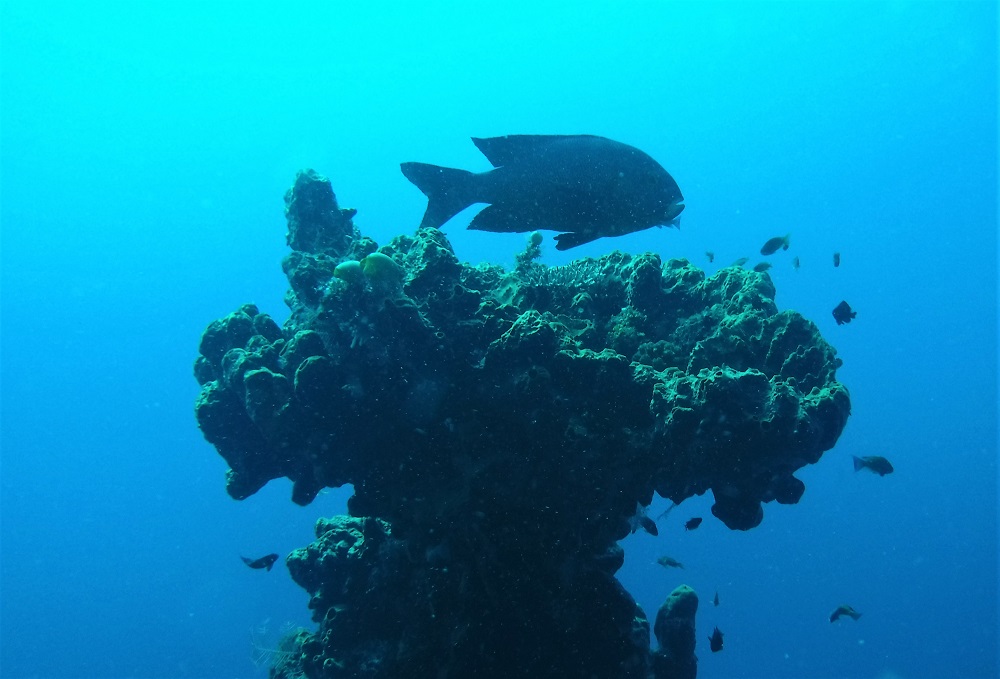
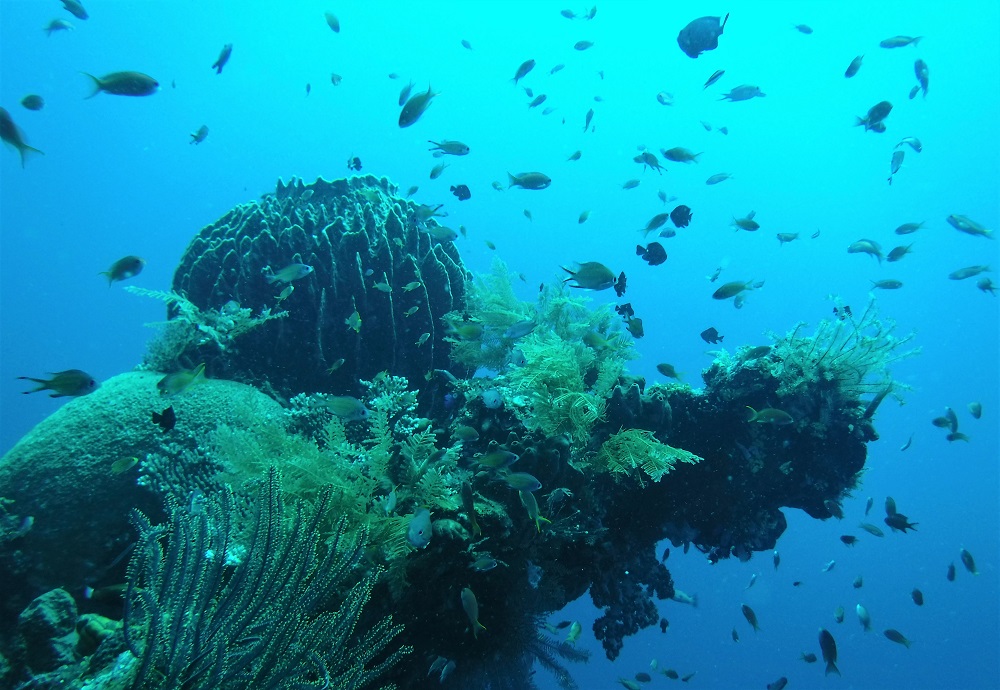

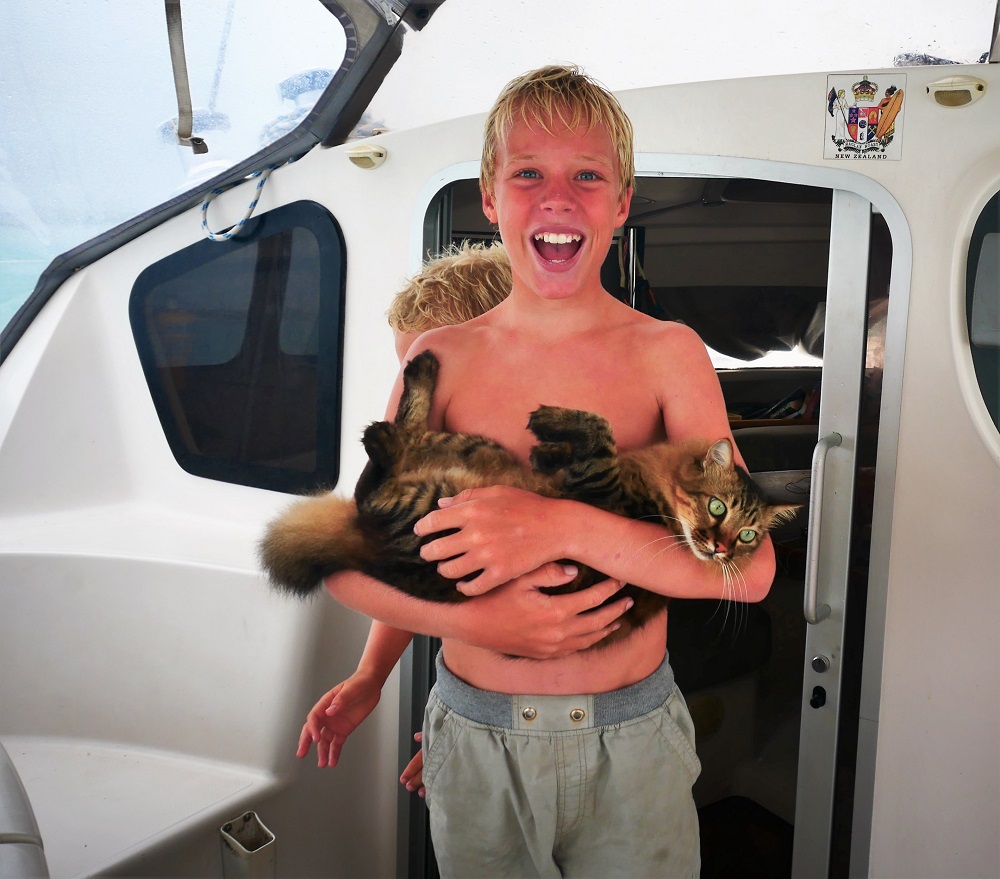


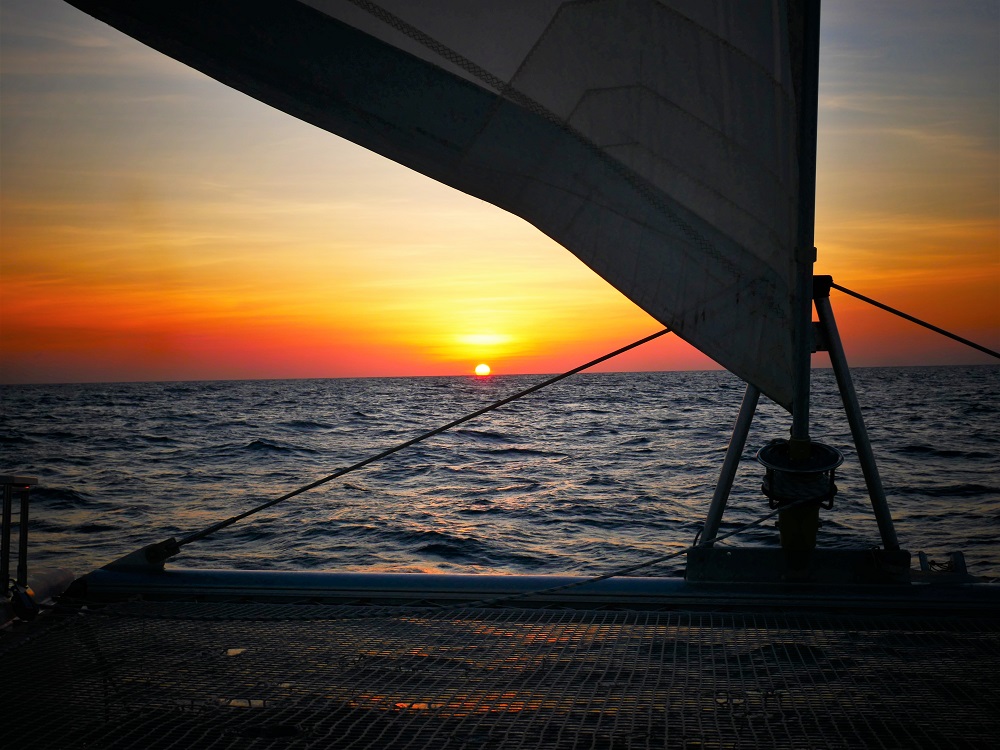
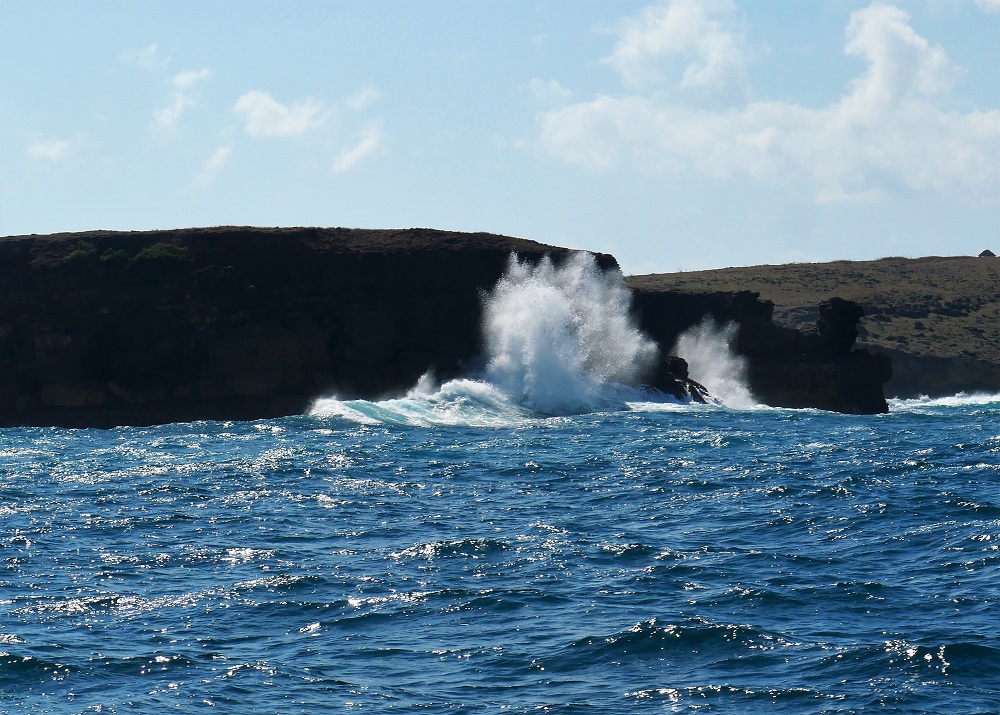


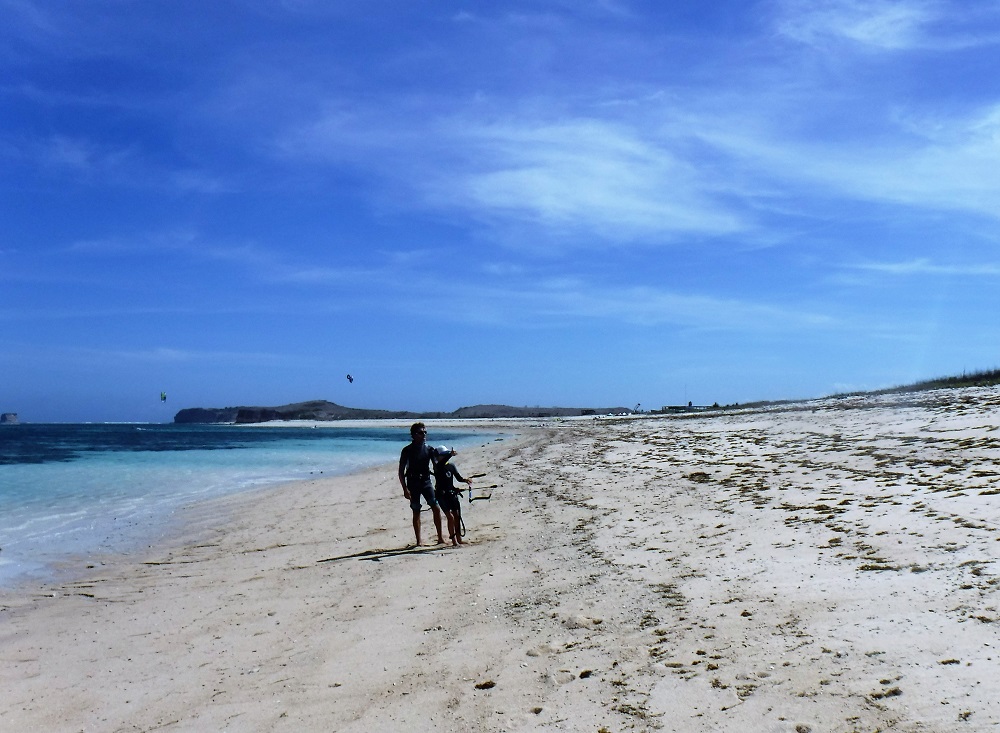
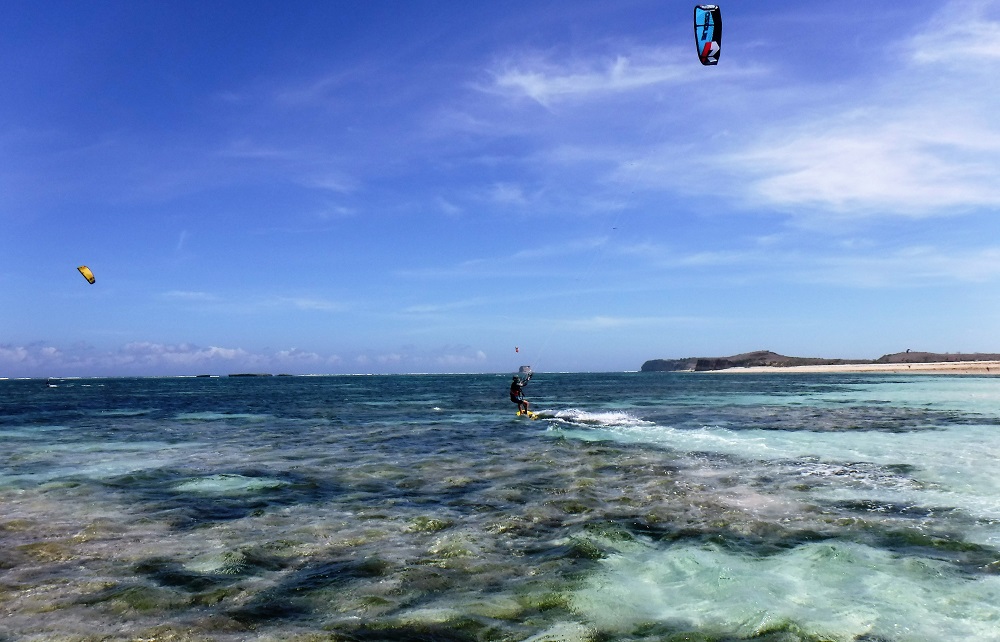
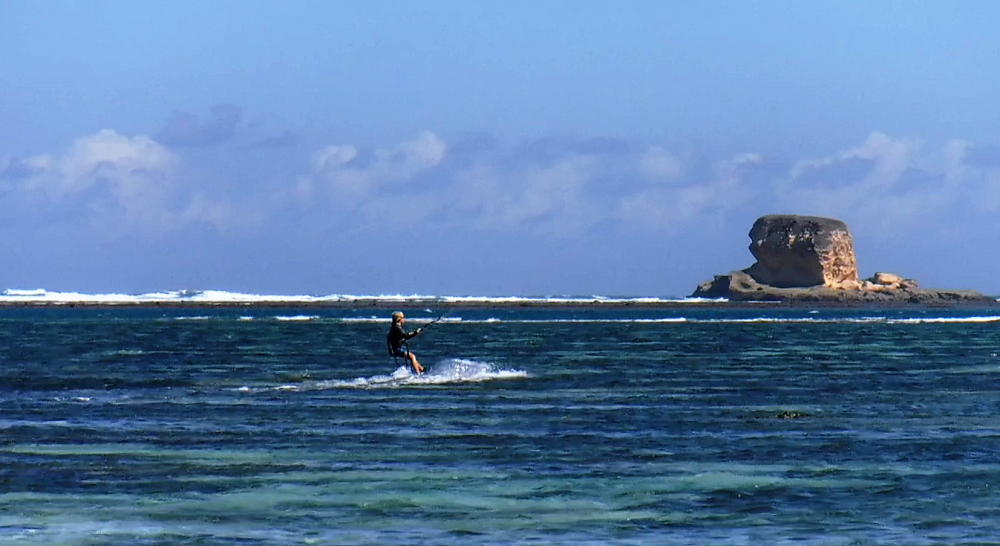

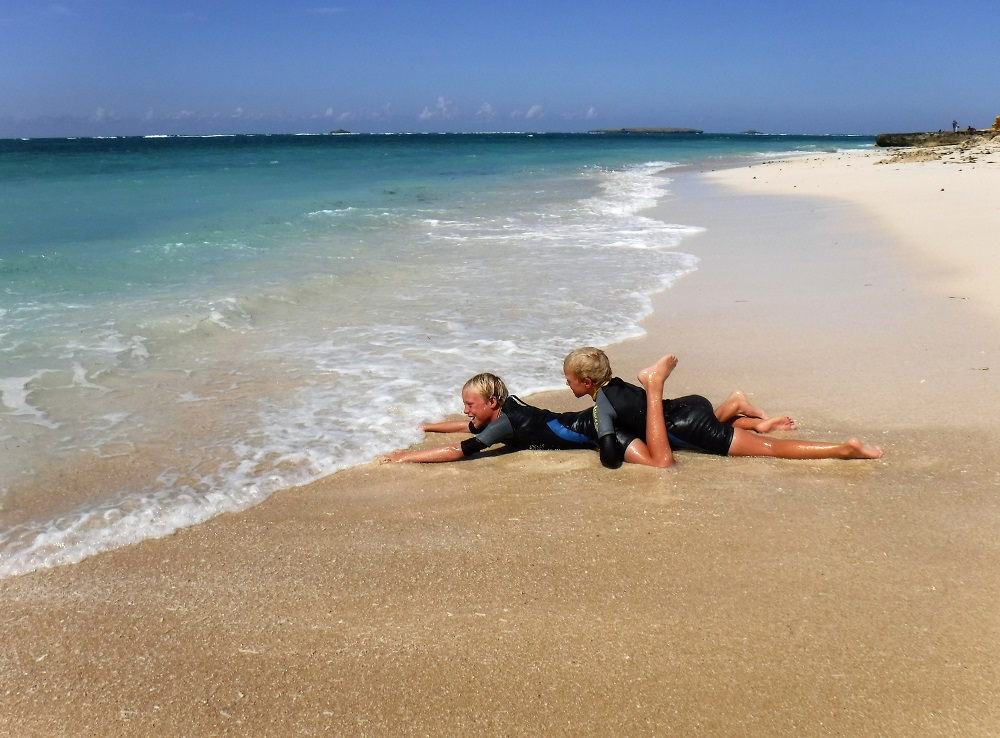
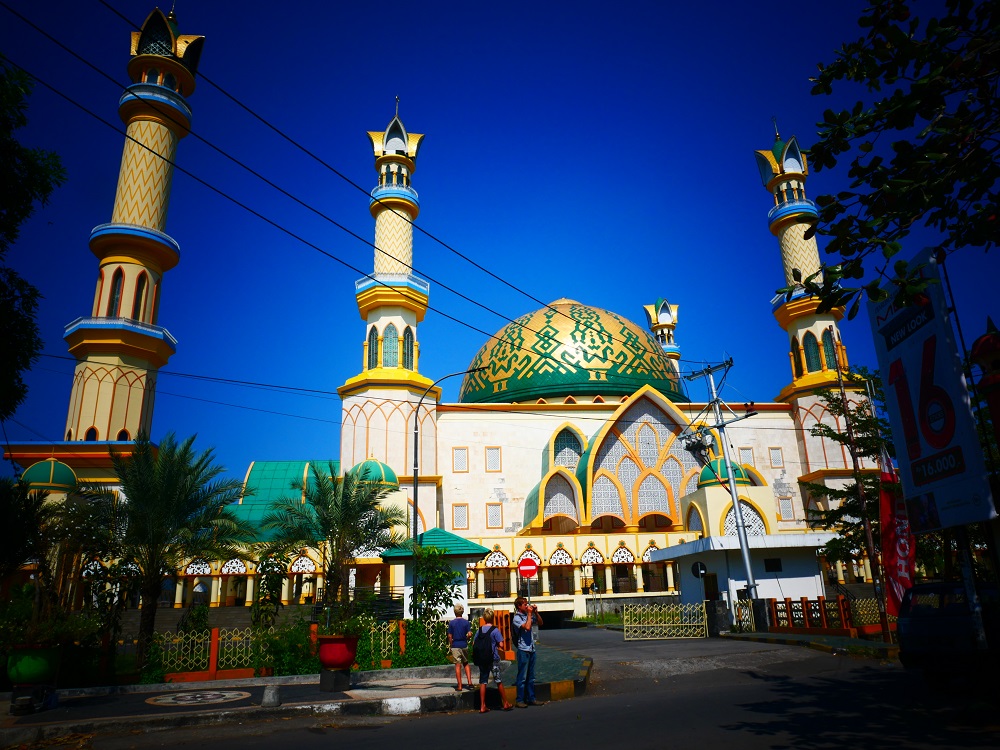
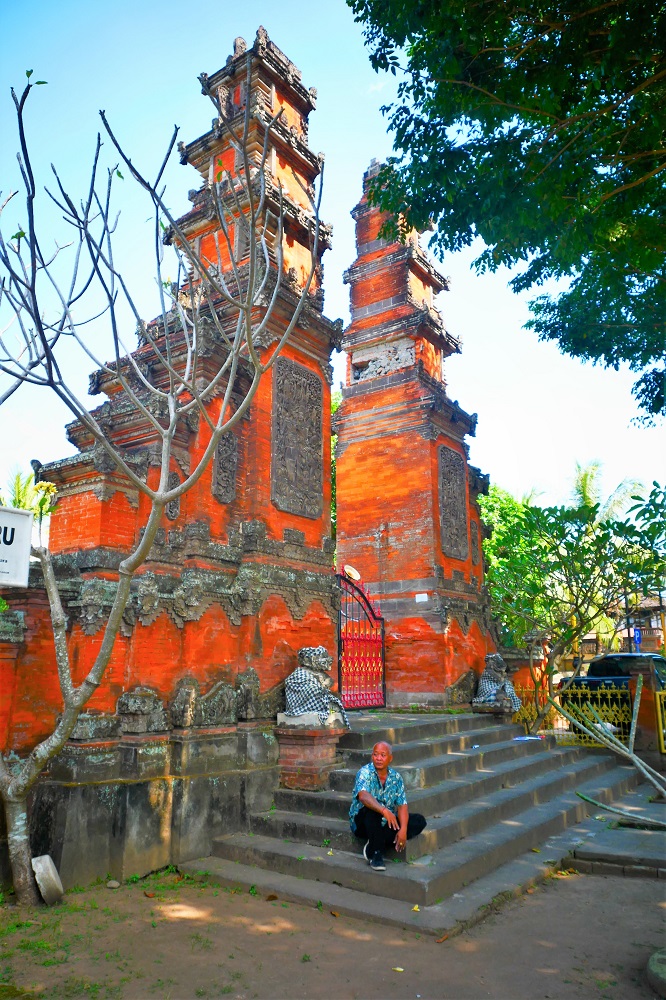
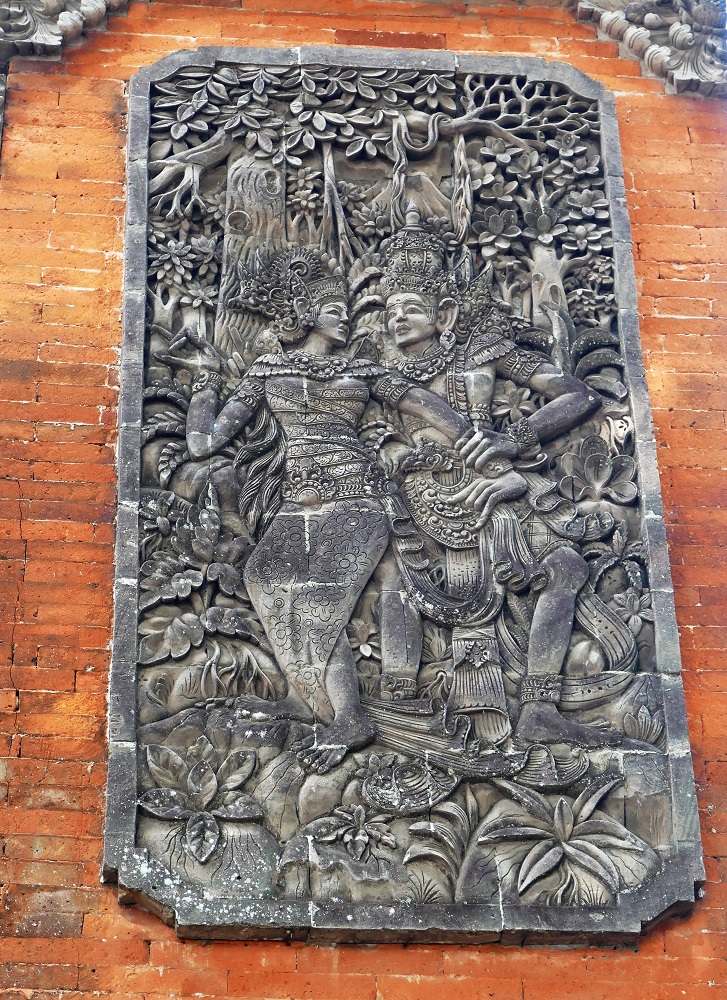

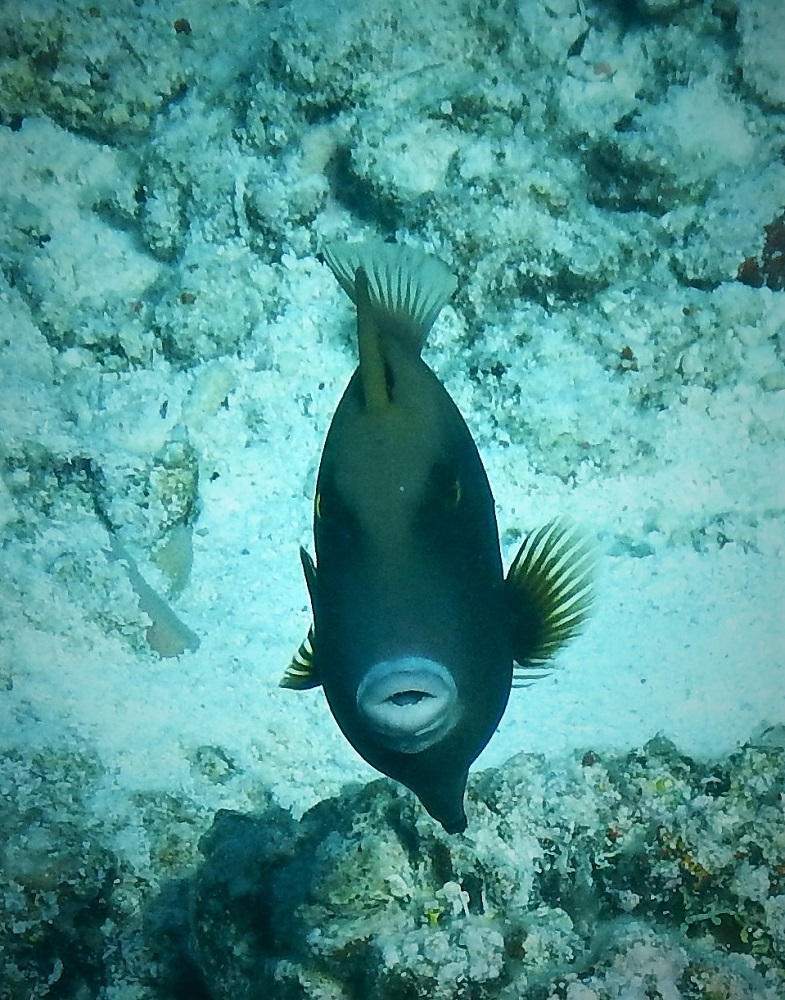
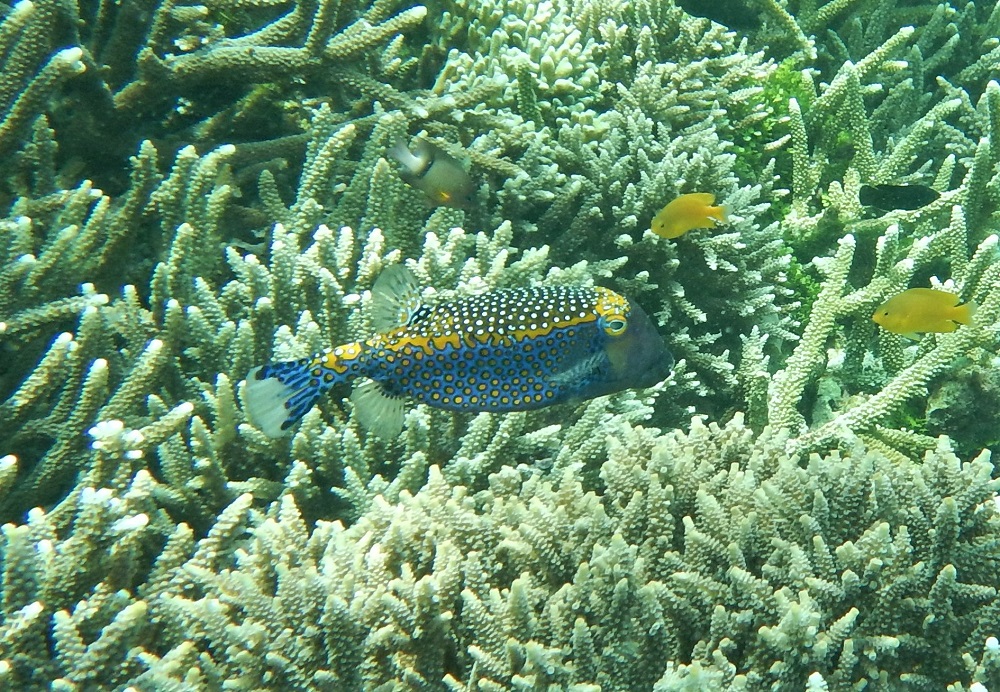
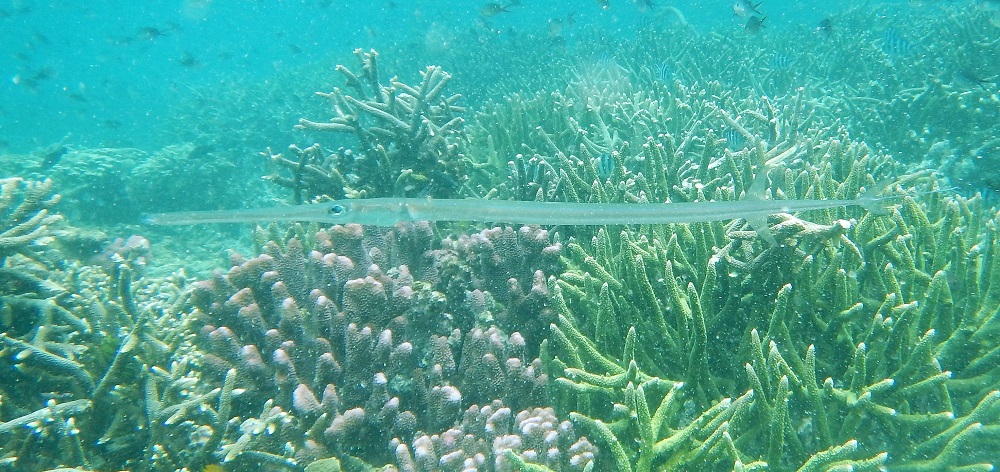
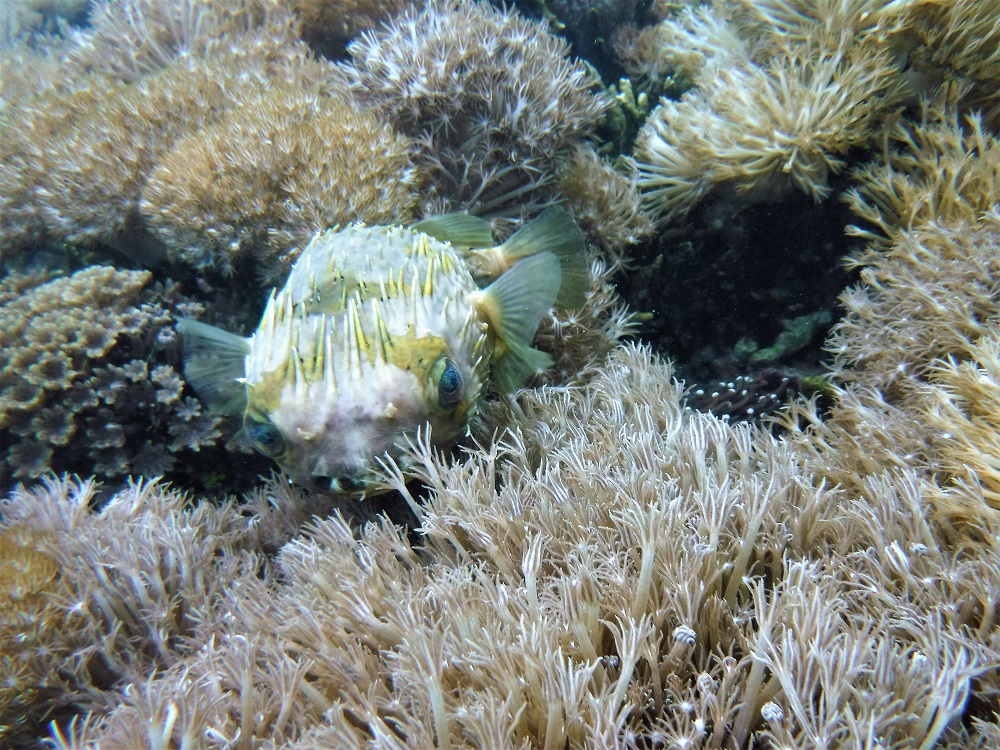
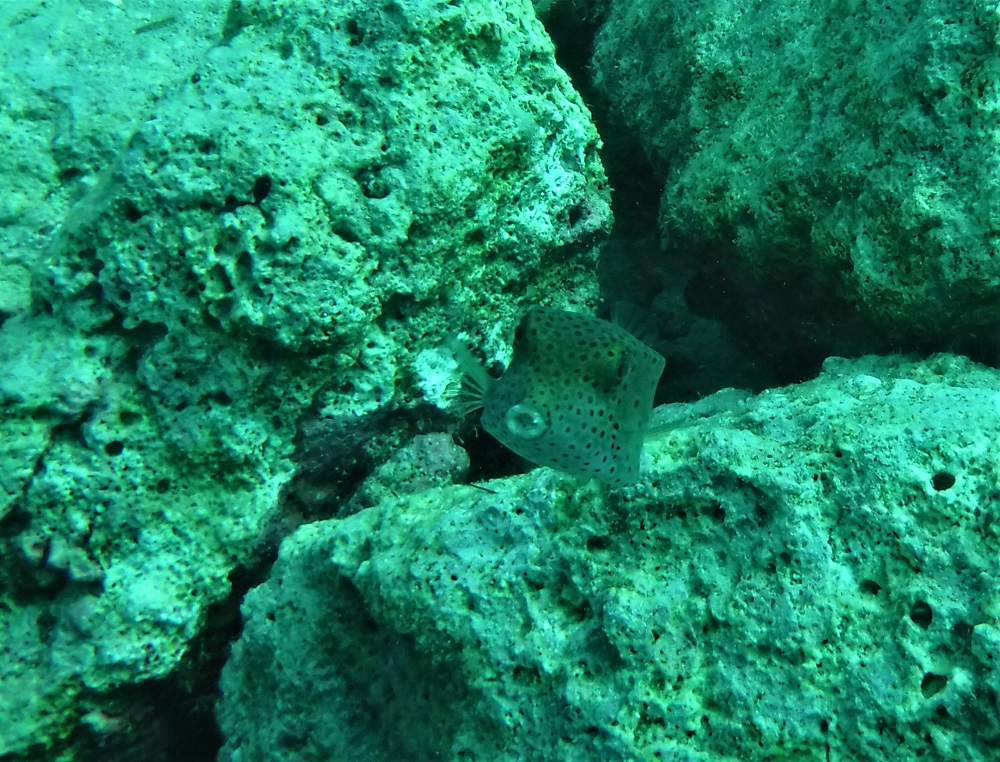
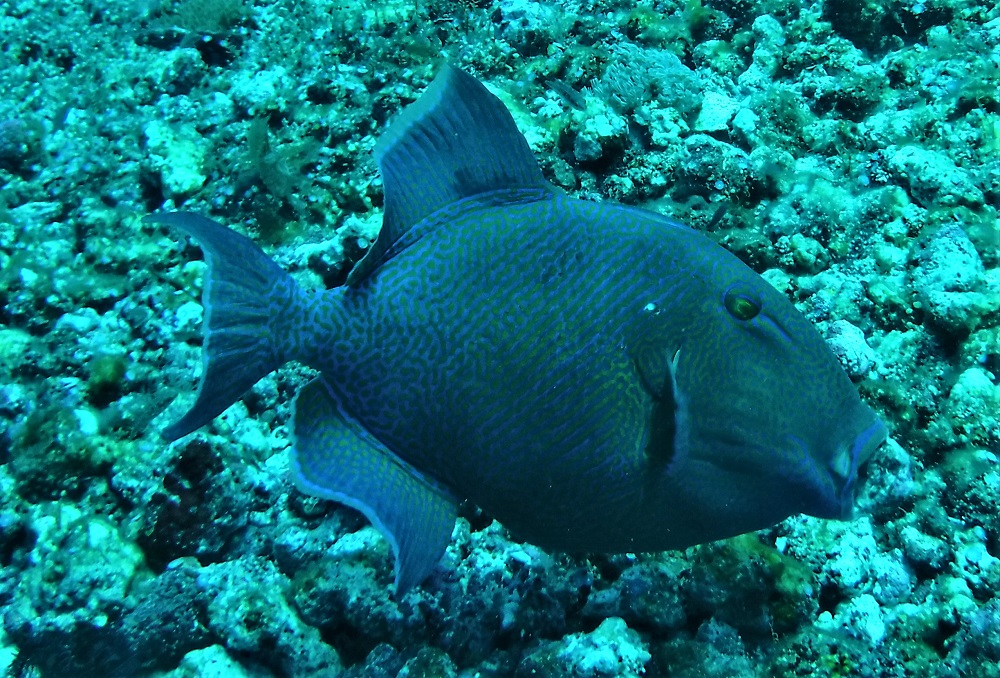
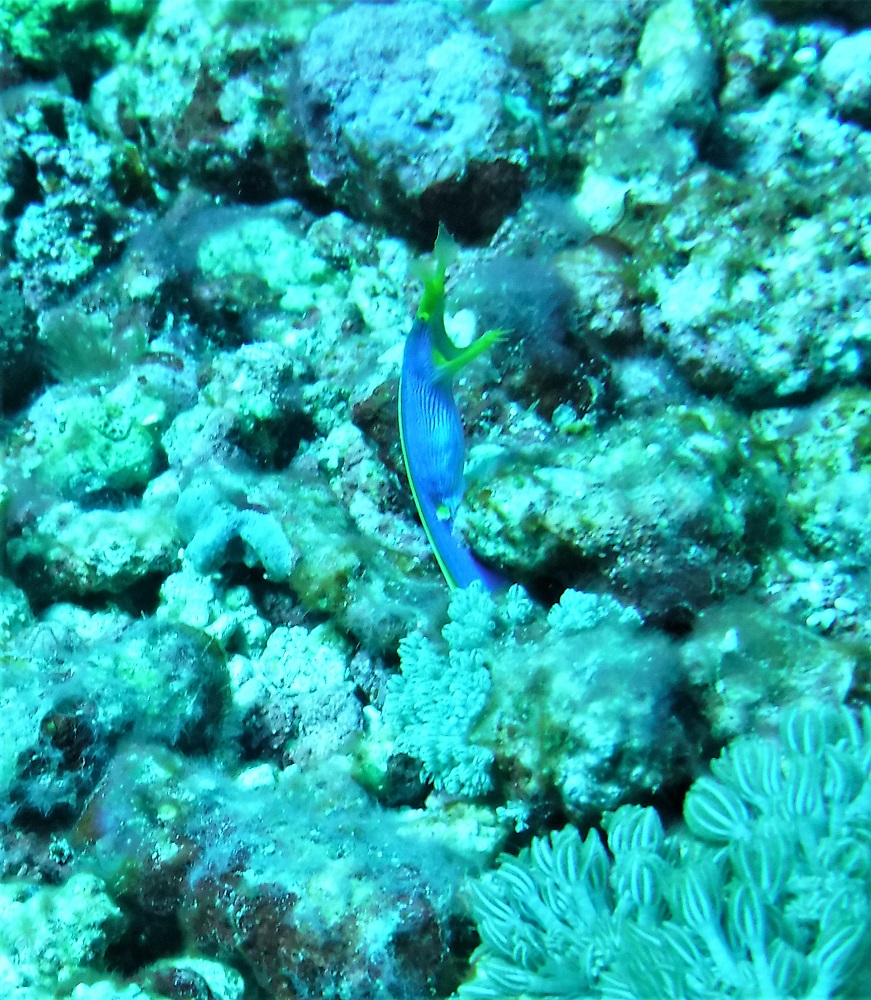
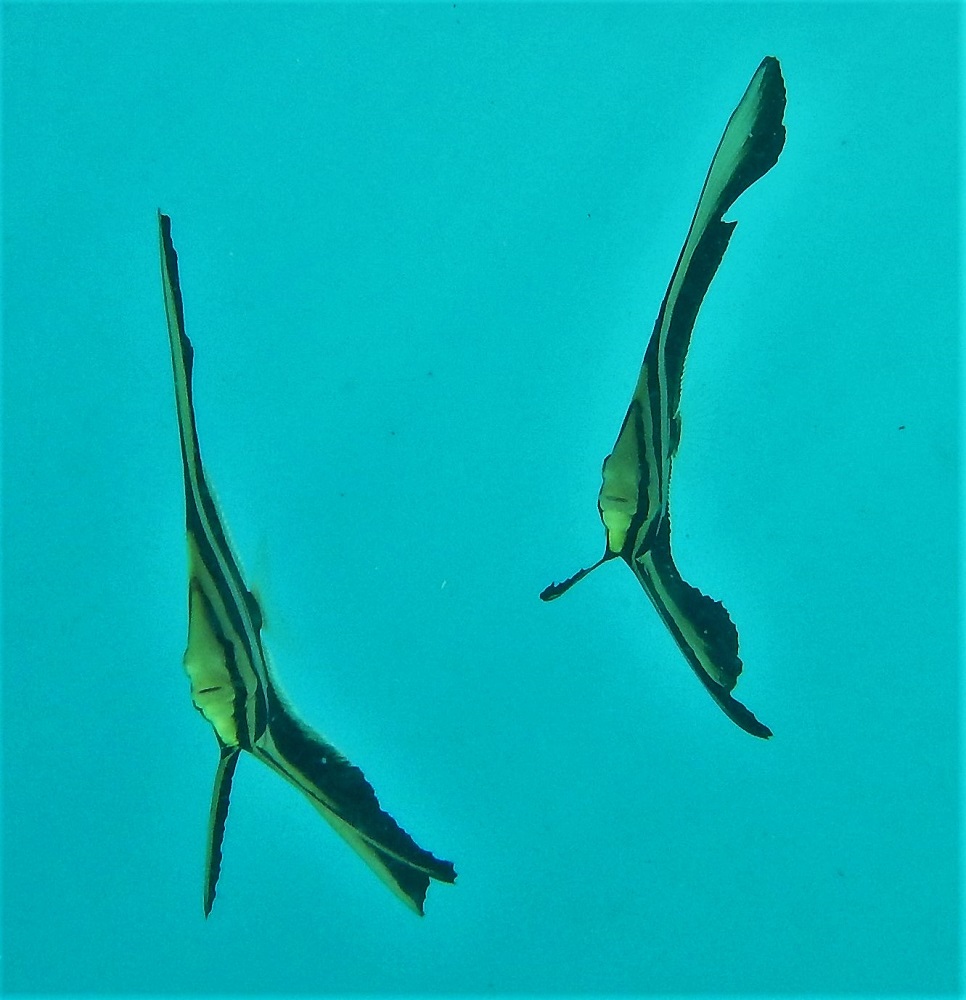
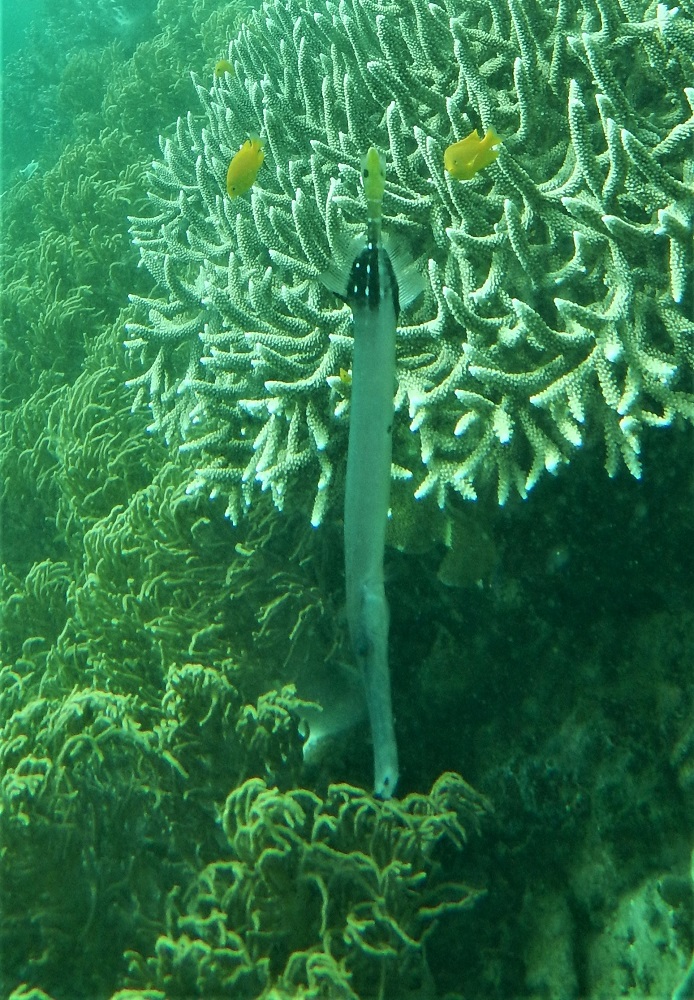
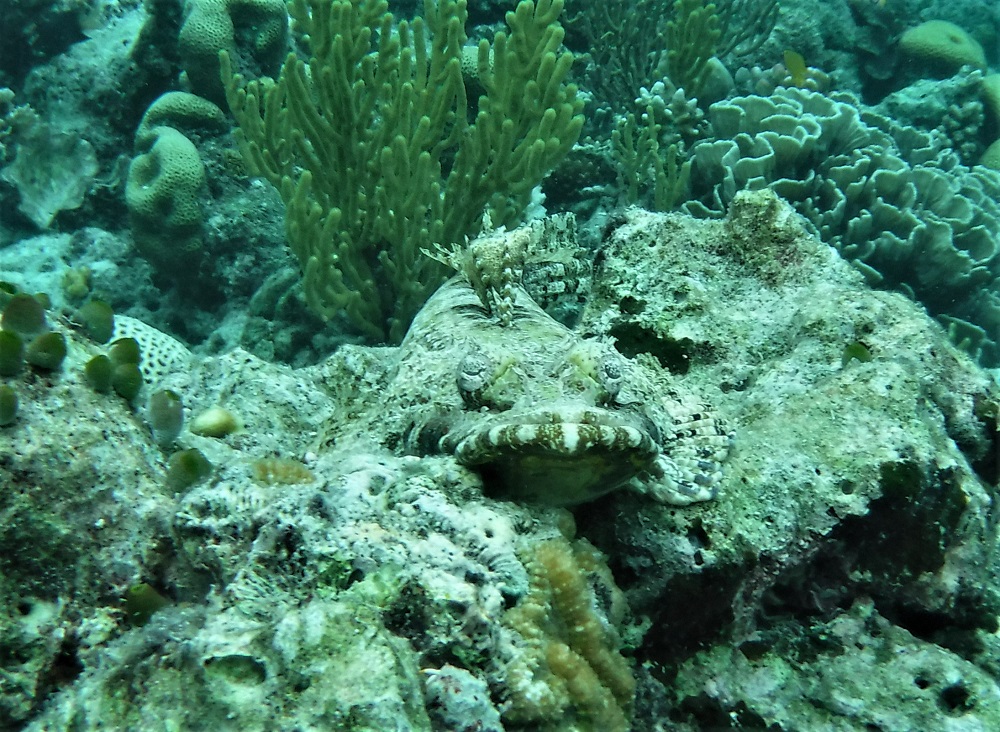


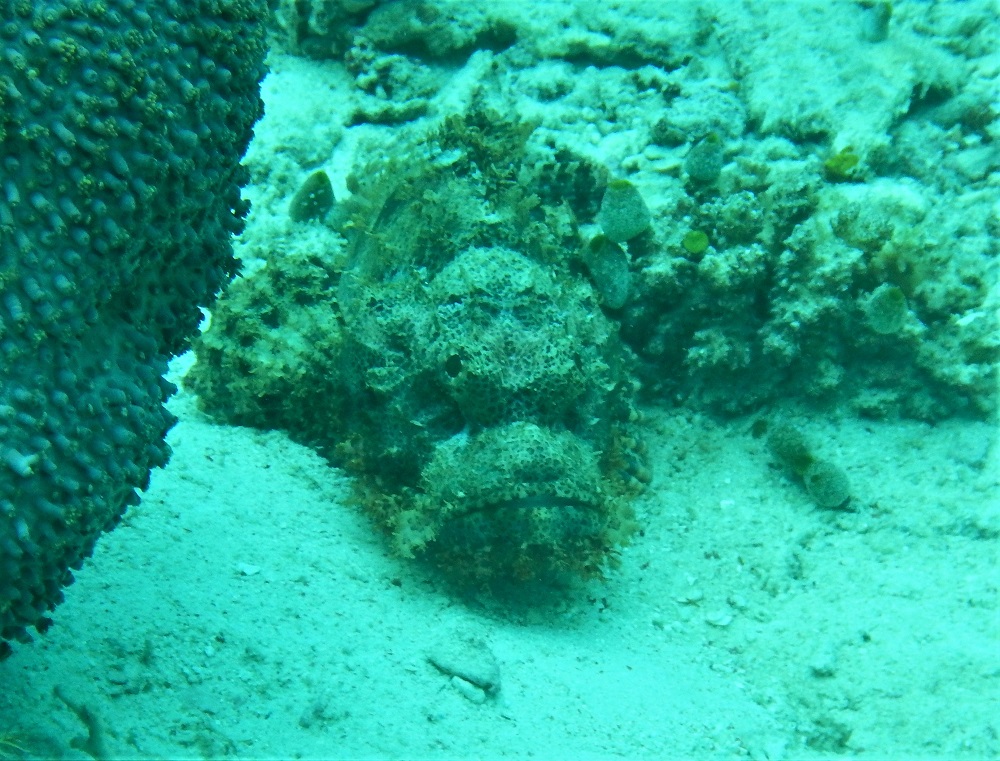


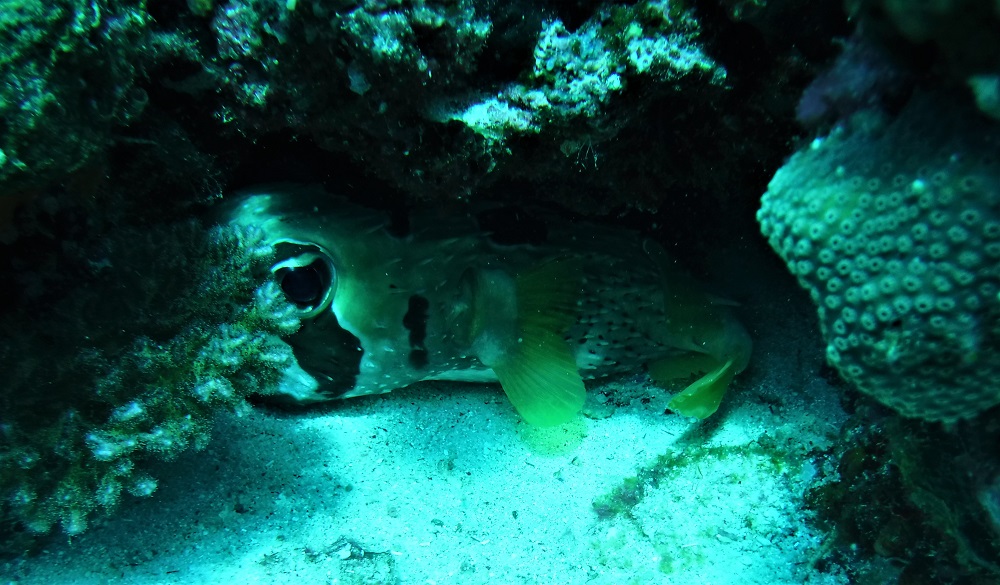
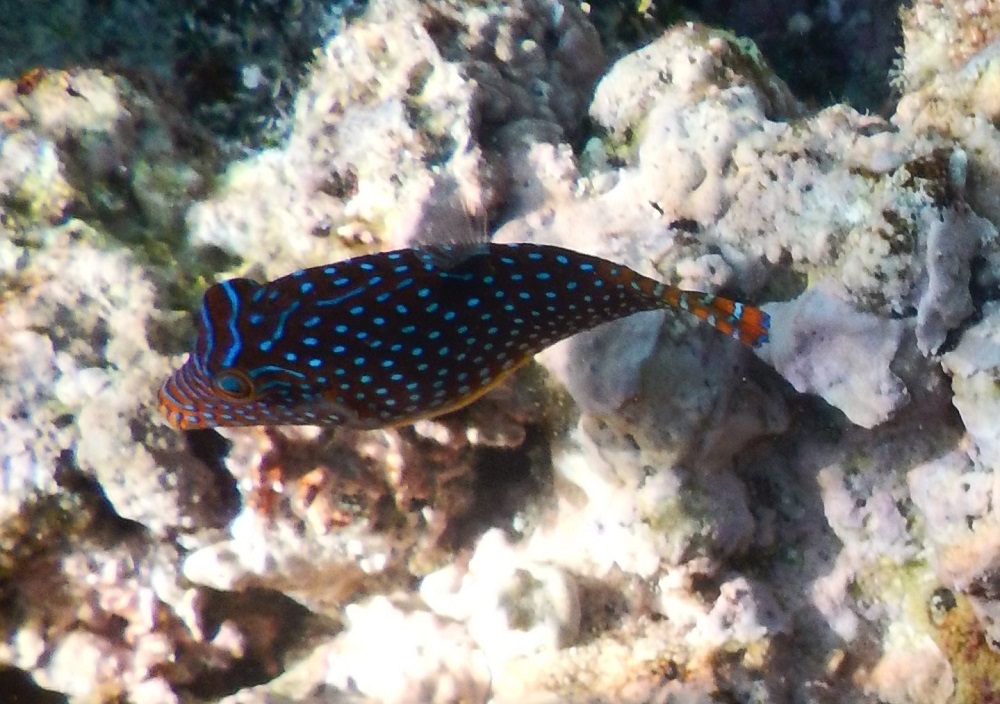
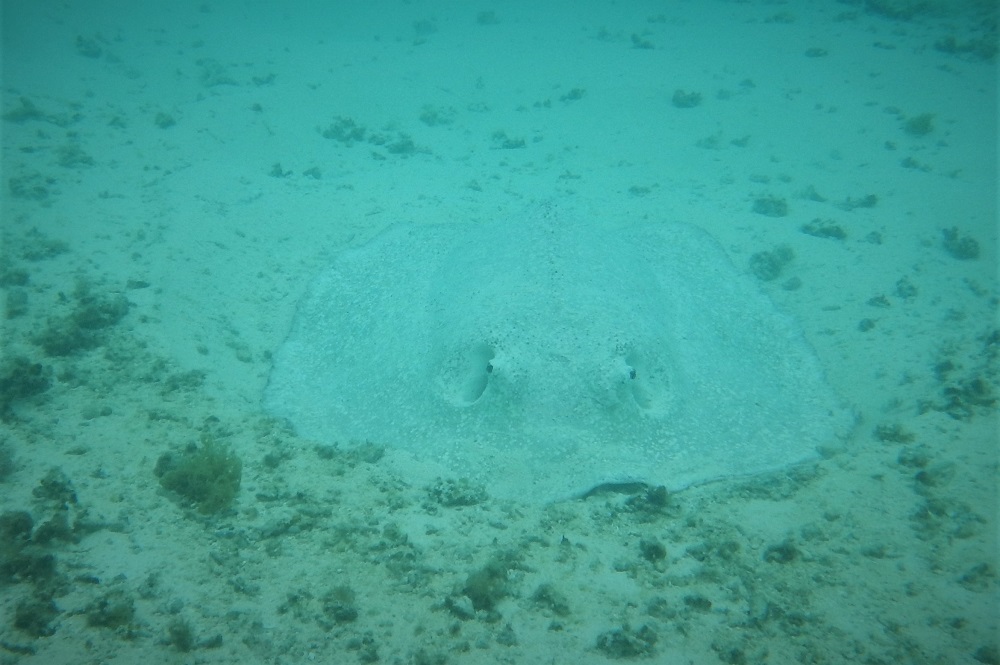

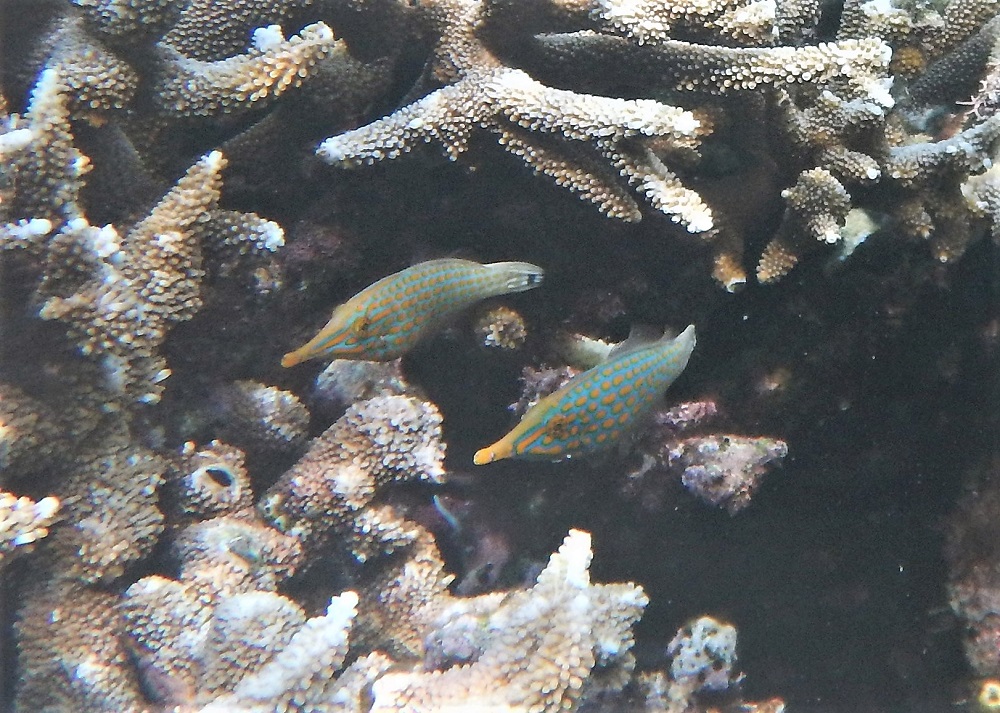
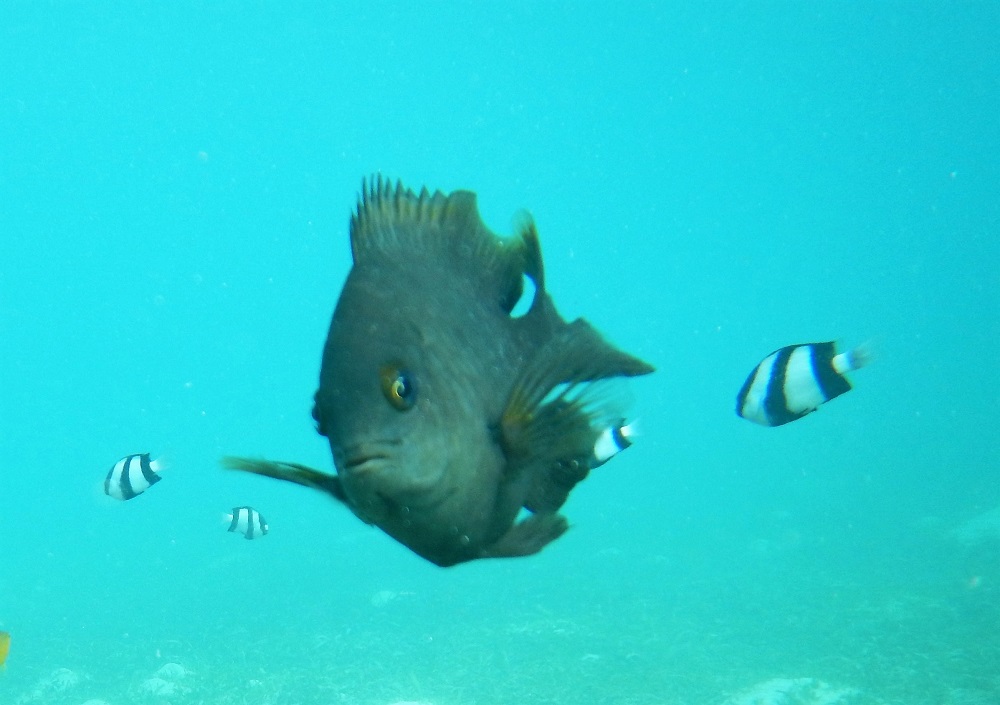

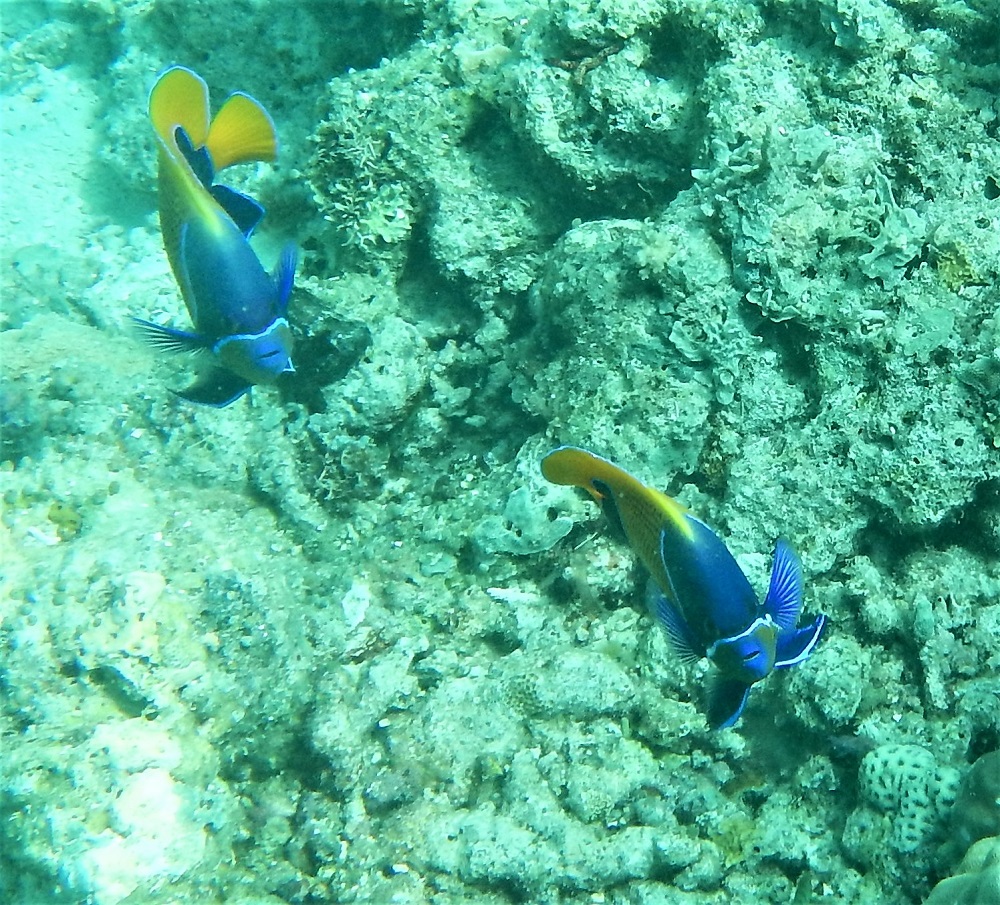
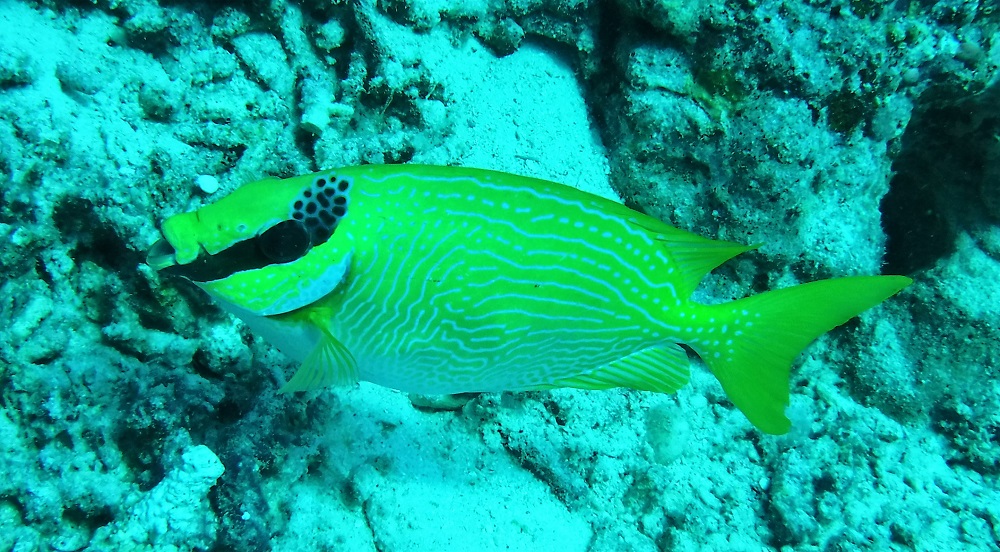
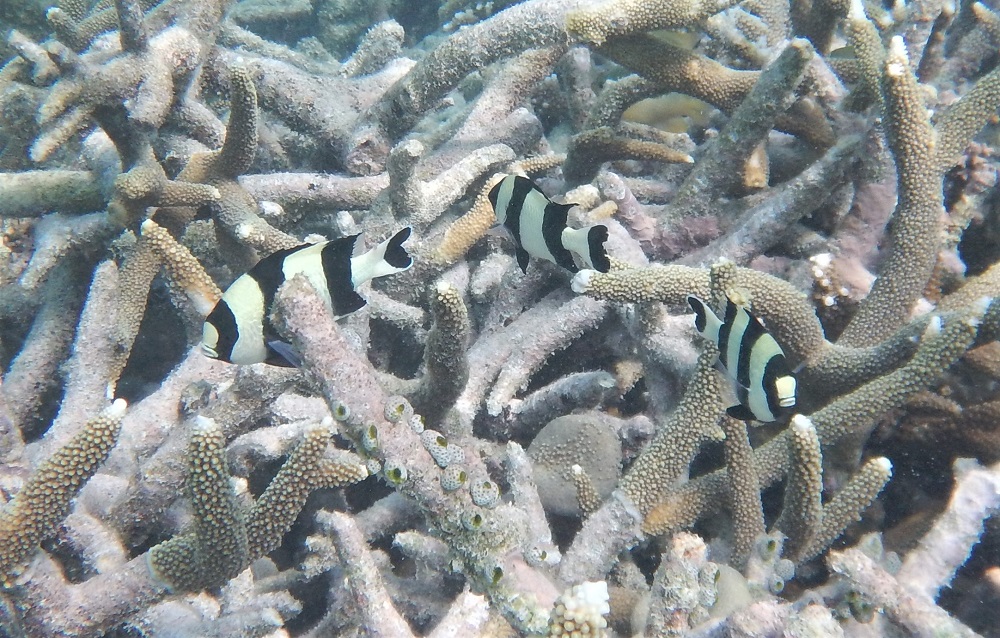

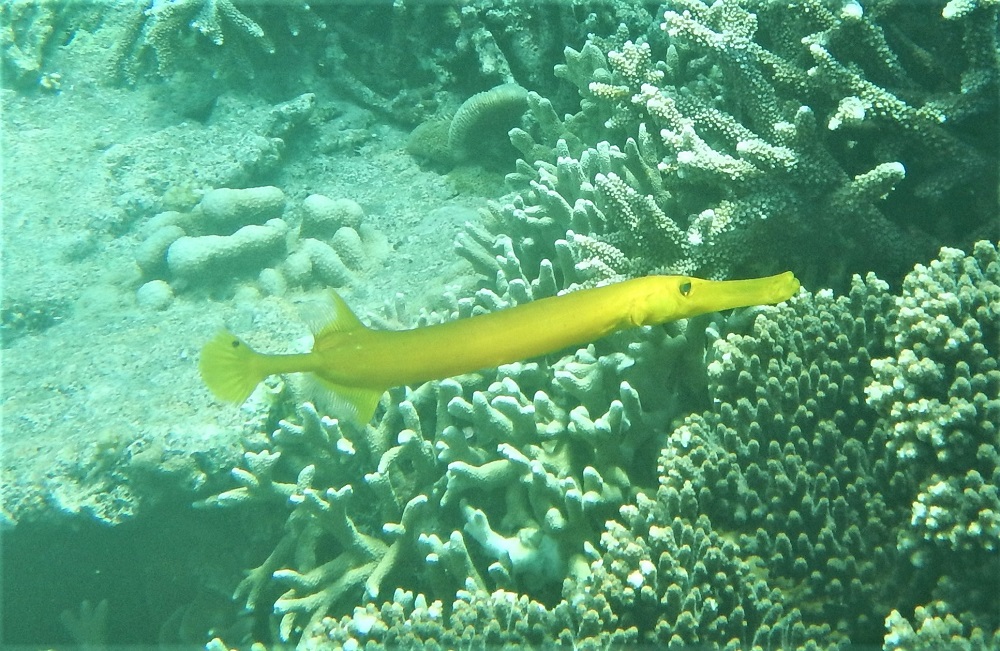
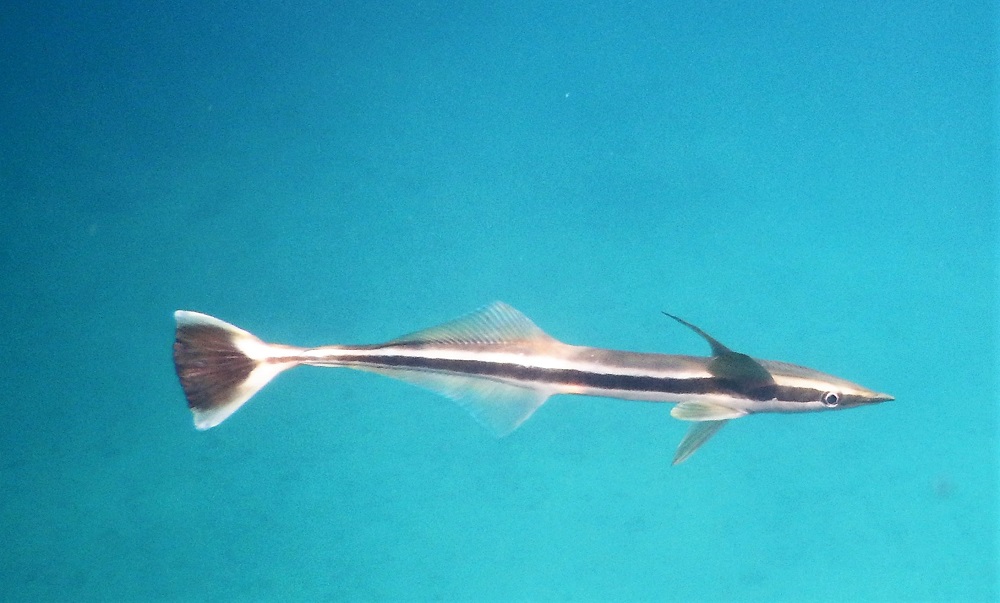
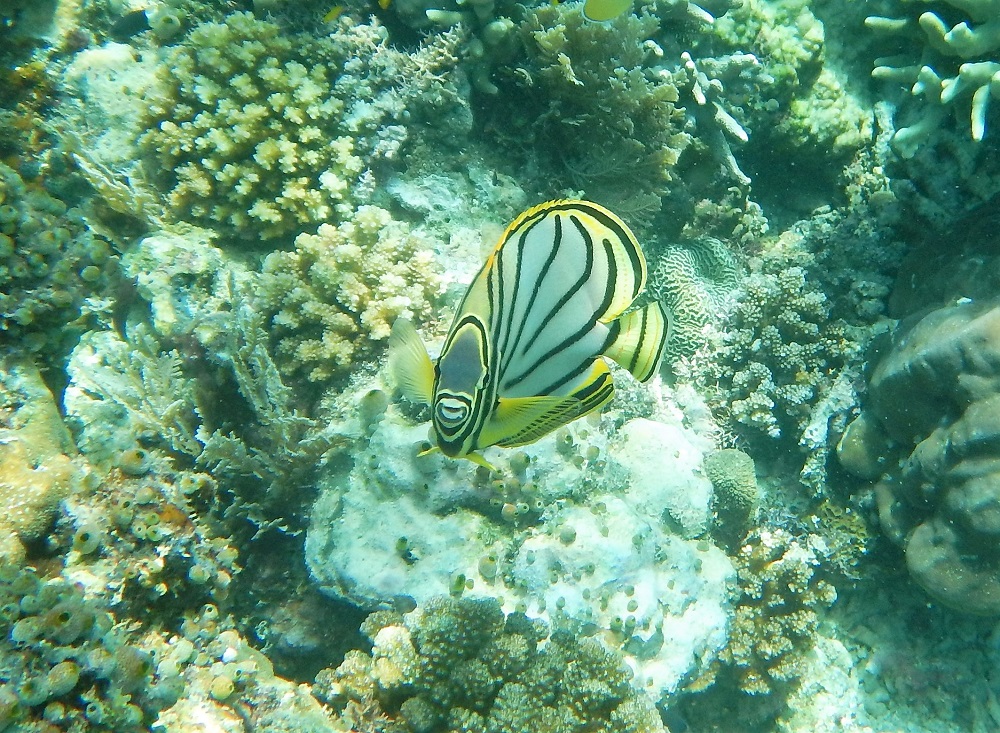
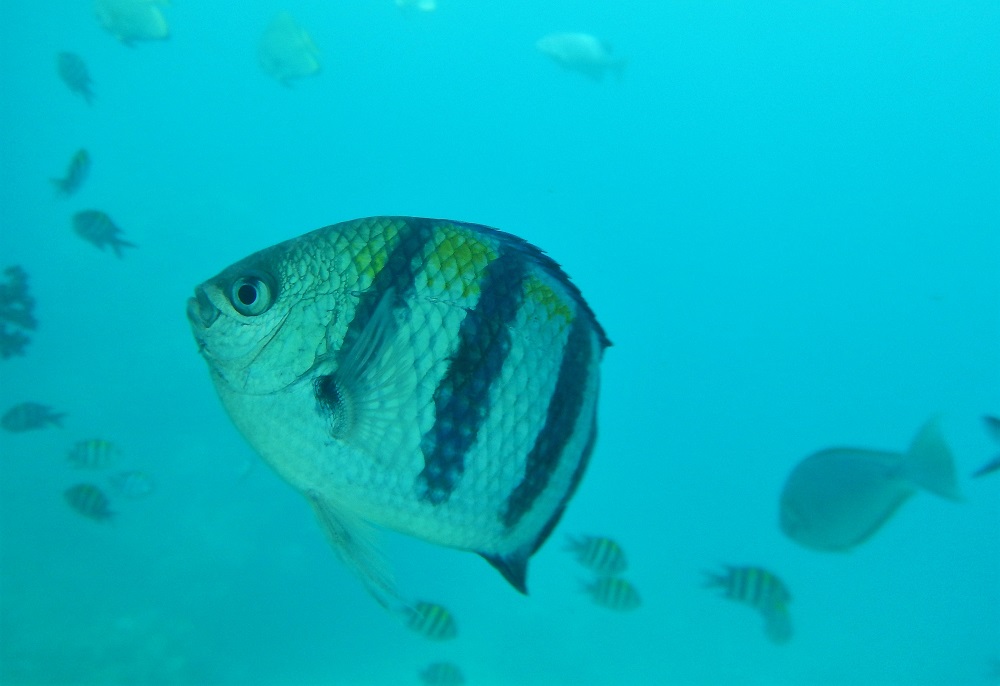

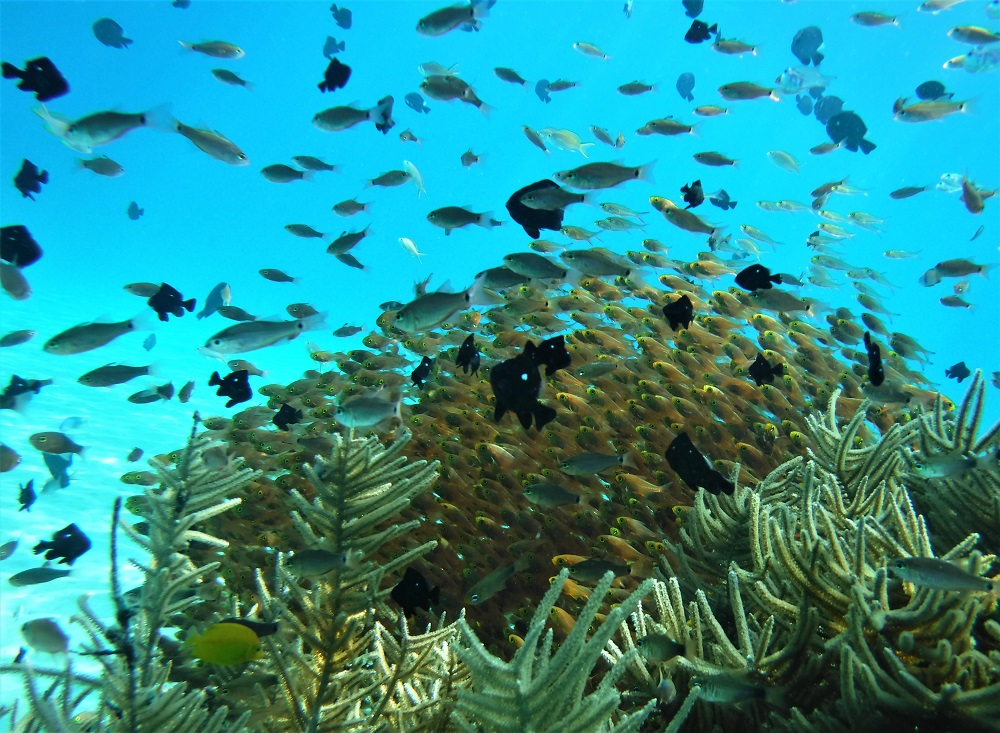


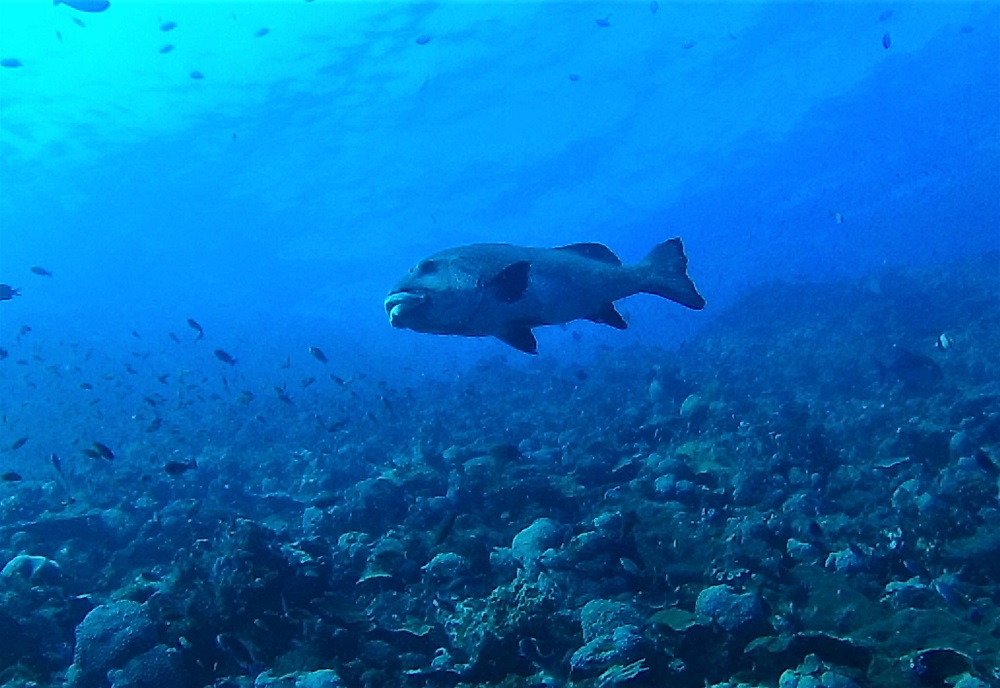
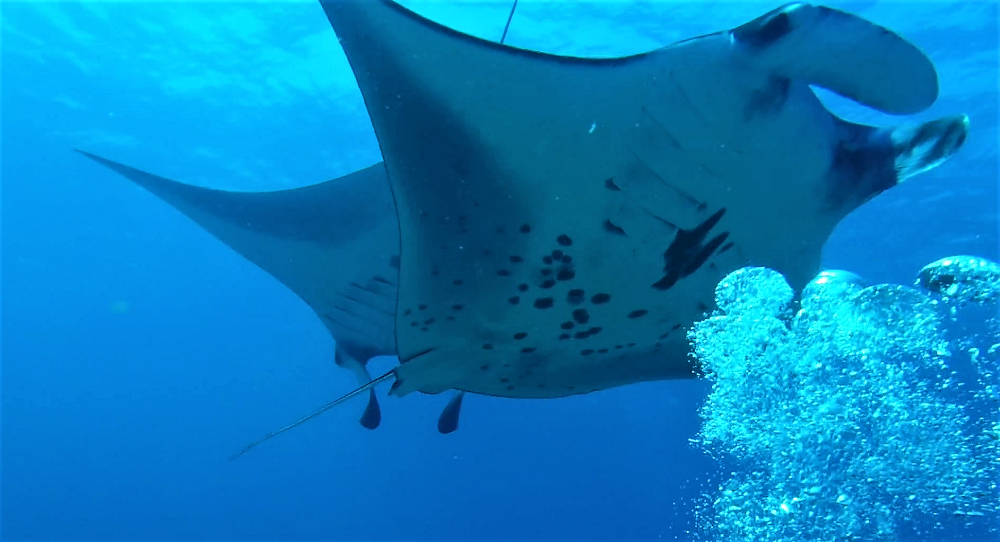


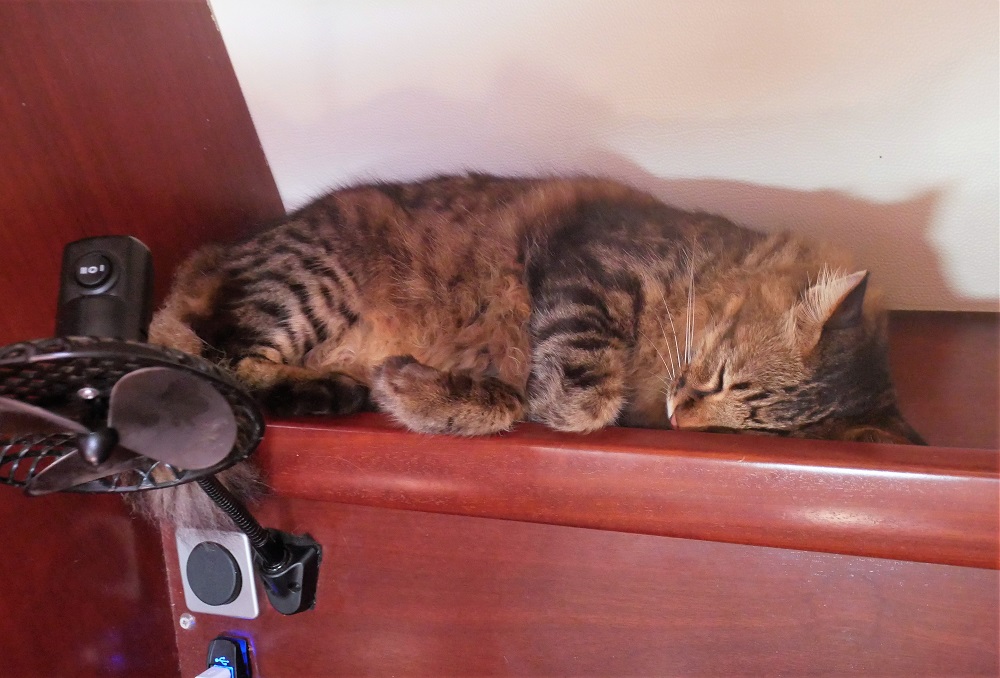



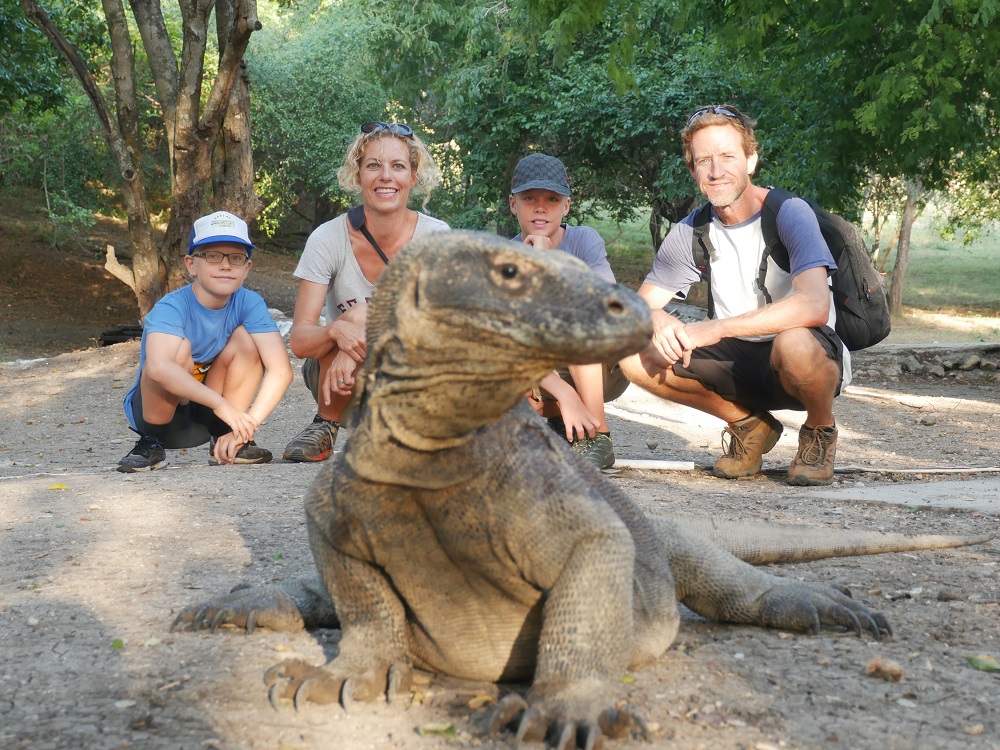


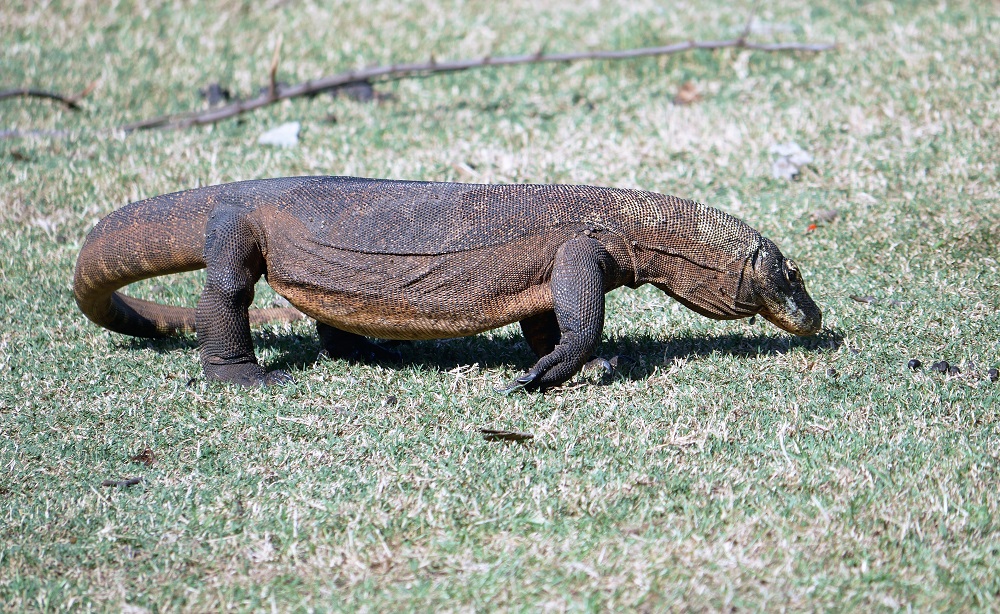
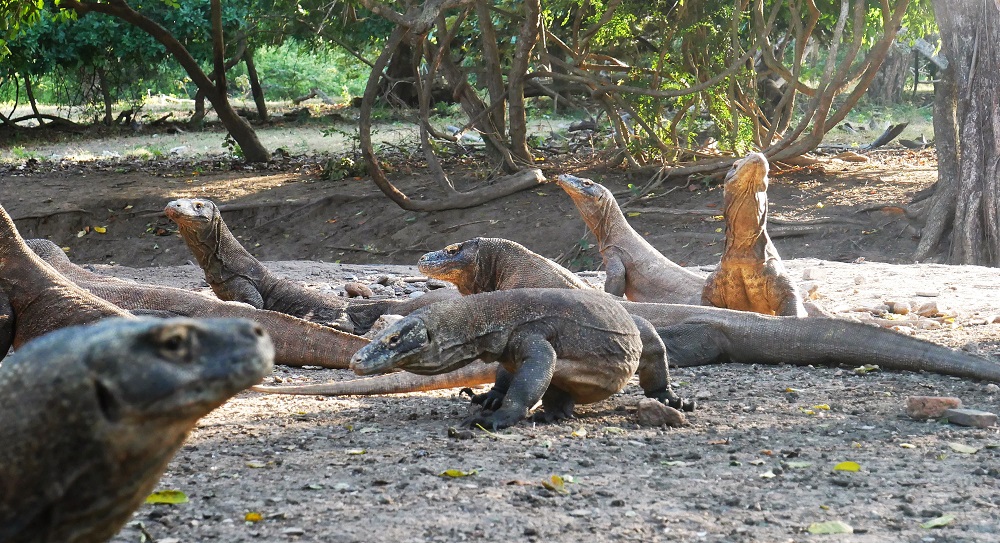


 SV Bob The Cat