Life on the hard

Cat out of water
Cat out of water

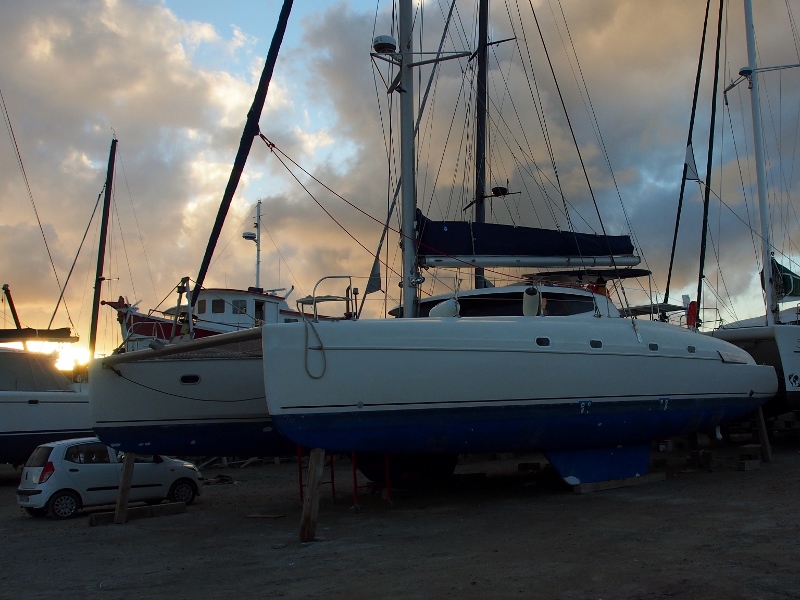
The boat is at Bobby’s Mega Yard, in Cole Bay. Bobby must have moved up in the world – when we used to live here he owned just the marina north of Philipsburg; nowadays there are three Bobby’s marinas, and a Mega Yard. Good on him – I used to work as a divemaster in the diveshop at the end of the pier next to the original Bobby’s, and remember my days there fondly. Back then I also had a business supplying sandwiches to Bobby’s marina stores, and whenever I was walking home at night the locals would shout ‘Hey, Egg Lady’. The business ended abruptly when someone found a live cockroach in a sandwich. Just as well, really, I didn’t want that nickname to stick…

Our first day in Bobby’s Mega Yard was truly awful – we had stayed next to the yard, ready to get lifted out in the morning, and a particularly evil swarm of mosquitoes lurked in the shadows, ready to attack as soon as we slept. I had fully lotioned up the kids, but they still got eaten alive. And I mean like probably 300 bites on Lukie – mainly head, torso and arms. He looks like he has measles. Matias fared a bit better because I got up in the middle of the night and sprayed some more stuff on him (Lukas was under a sheet, so I thought he was protected), but even he looks like he has the plague. I take them to the doctor, who sternly advises me that there is both dengue and chikungunya here, and that I really need to take more care. I protest vaguely (all I can muster in French), insist that I really did apply DEET, etc., and bow my head in shame, feeling terrible. He prescribes steroids, antihistamines, disinfecting gel, and tells me to not leave the island if they develop a fever, because he has special tricks for the treatment of chikungunya.

At this stage the kids are hysterical about mozzies, refusing to remain outdoors, and we head to the fortress of Marie-Claire’s flat, which is fully equipped with mosquito netting on windows, and air-conditioned bedrooms. Thankfully her children left behind some Playmobil toys, and Matias and Lukie are soon busy playing pirates, in between scratching themselves to bits. Their play alternates between the sad story of a crew of pirates who catch ‘dinghy fever’ from staying in a dinghy for too long and some kids that are kidnapped by bad criminals toting guns on an island full of Mafioso.
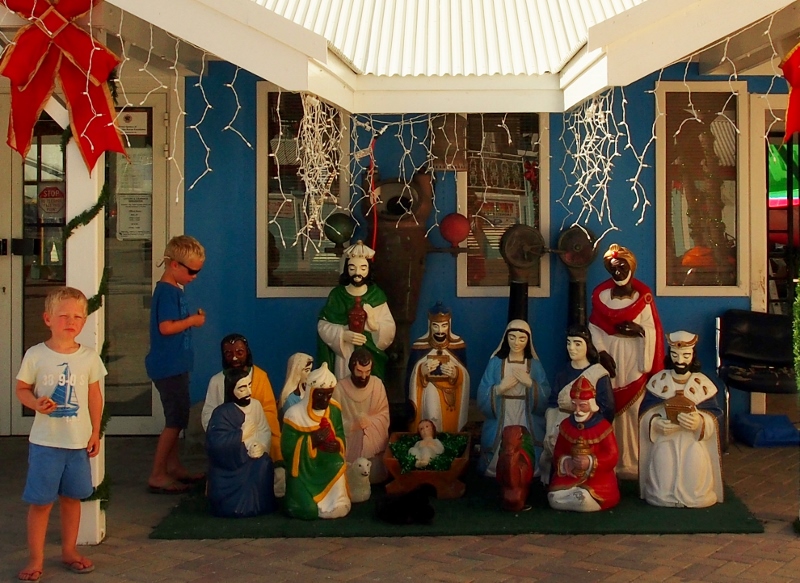
Christmas decorations St Maarten style

Back at the boat yard there are more bad news, as every bit probed and every screw pulled out reveal blockages, corrosion or leaks. The rudders are going to take time to fix, so we have no hope of getting back in the water within two days as originally estimated; it now looks like we will barely get out before Christmas. We’re paying by the day, and David spends his days shopping furiously for parts, sitting in traffic jams in the hire car, returning to the boat to discover yet more lists of fittings, screws, nets, chemicals and cleaning products needed.

It all has to be done, after all we’re making sure she is seaworthy for a Pacific crossing. But it sure is hard work. I spend hours (12 to be exact) painting the tattered neoprene dinghy cover a light eggshell blue, uncertain whether it will actually work or just peel off as soon as it is gets hot and wet, as the neoprene below continues to disintegrate. Predictably, the neoprene acts like a big sponge, soaking up the paint, and as I finish one end, the other is dry again so I can start again, slowly saturating the spongy material (I didn’t invent this treatment – the French swear by it – but I remain a bit doubtful. Won’t it just all peel off as soon as the dinghy twists and flexes in the water??) . David does more shopping, coming home with countless receipts from stores with names like Budget Marine and Island Water World.

Working on the boat
Working on the boat

Matias loses a tooth at the flat and it gets lost. We write yet another letter to the tooth fairy explaining how it got lost (the last one was lost whilst snorkelling) and start frantically searching for it, not wanting to leave Marie-Claire and her family an unpleasant present. We never find it. The air conditioning is wonderful, the first cool nights we have had for months, and we have to use double sheets in order not to freeze.

I bus all around the island to try to find childrens’ books for Christmas presents. There are none: although a great selection in French and Dutch, the English section is disappointingly poorly stocked. After spending two hours trying to get to the elusive English bookshop in vain (I end up in an obscure Dutch stationary shop near the airport) I break down crying in front of the Haitian bus driver, who tries his best to console me in Spanish. David does more boat shopping, setting up accounts and getting frequent customer cards in Budget Marine and Island Water World. We drive all around the island trying to find ATM machines that will give us money; for some reason our credit cards work only intermittently, forcing us to milk any machine that we encounter for whatever US$ or Euro it will give us. Despite my book shopping failures, I set off to try to buy some English language board games (chess, checkers, snakes and ladders, that kind of thing), but cannot find a toy store on the Dutch side, so eventually have to buy a multi-game in French and hope that we can make sense of the instructions for any games we don’t know. David shops some more, delivering parts to Frederick who is working on the boat, charging a hefty daily rate. Fair enough, he is exceedingly helpful and we wouldn’t get anything done at all without him, but it is still money. Our mobiles only work occasionally, and on opposite sides of the island, so we cannot communicate when apart, which makes it hard to organise anything. David tries to make an international money transfer to the South African guy fixing the rudder, which proves impossible without simultaneous mobile coverage and internet access, which we lack – the mobiles won’t work in the flat, the internet won’t work outside. Exasperated, he calls Westpac (our bank) but there is nothing they can do – St Maarten has such a dodgy reputation that they insist on extra security when dealing with any business here. We vow to change to a more international bank, but probably won’t realistically get a chance until we get back, by which time it will be too late.
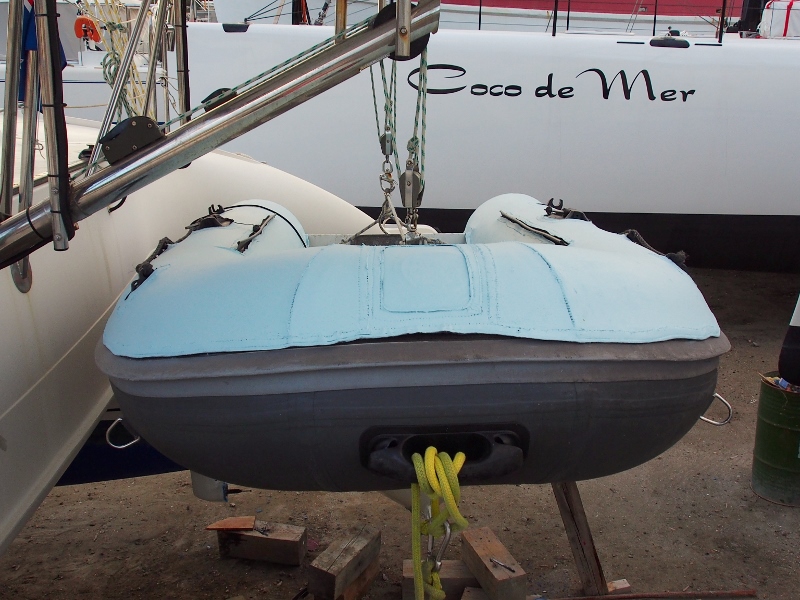
Dinghy following makeover

Not all leakages are on the boat: the water pipe leading into Marie-Claire’s flat develops a rather bad water leak overnight, and we have to try to find a plumber to fix it three days before Christmas. In French. We call the number listed in the yellow pages for a ‘Plombier’, but reach a shipping company. In the end, Marie-Claire’s intervenes from France, reaching a friend here who knows someone who knows a plumber, who promises to ring to set up an appointment when he gets a chance. We still haven’t heard from him, so in the meanwhile we’ve switched off the water.

For a bit of fun time we go to Maho Bay where the planes fly just overhead as they approach landing, and where crazy people wait on the beach to be blasted backwards into the water as 747s take off. We stay well out of the exhaust fumes and watch the show, the kids loving the action after a dull morning at the boat yard.

Quote of the week from Matias: ‘But Mummy, I don’t want to be a land lubber’, to which we reply that it wasn’t really what we envisaged either. The boat is going back in the water the 23rd, and then we’ll head off to the other side of the island for some Christmas fun, before we come back. There will still be more work to do here, but the rest can hopefully be done while we’re in the water.

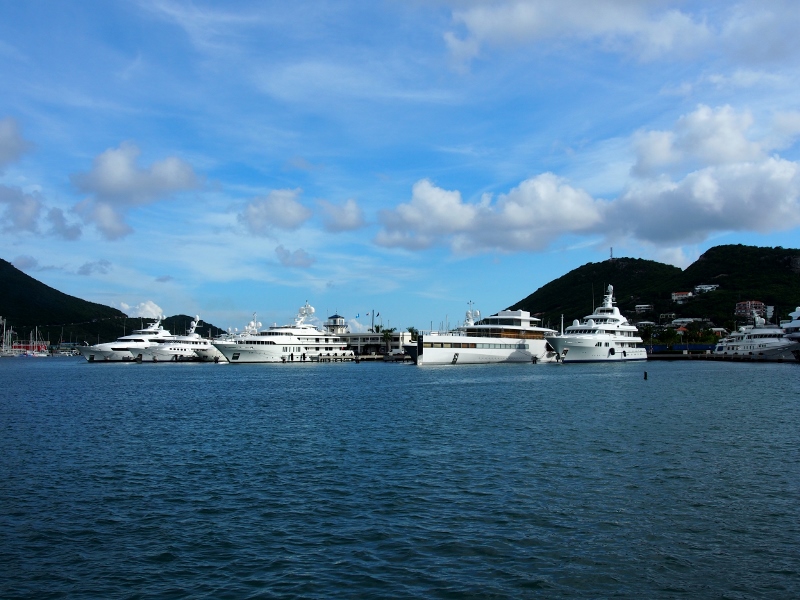
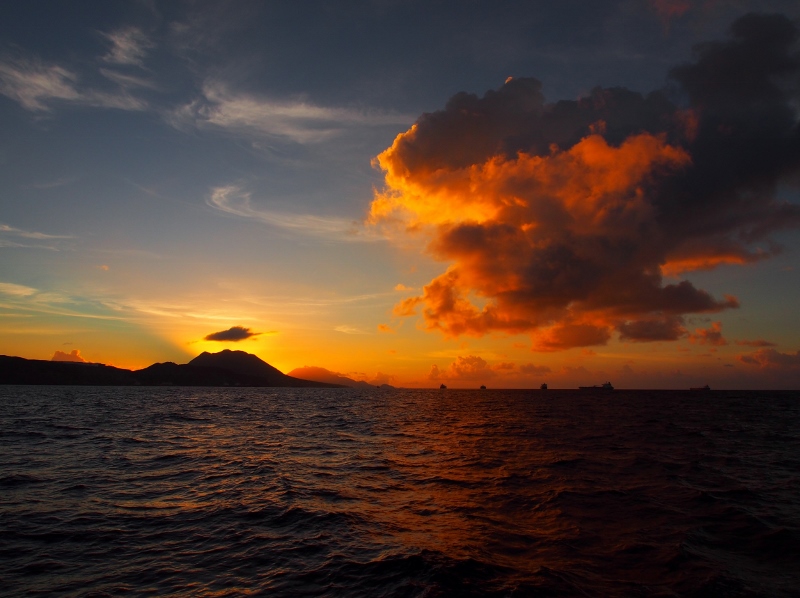
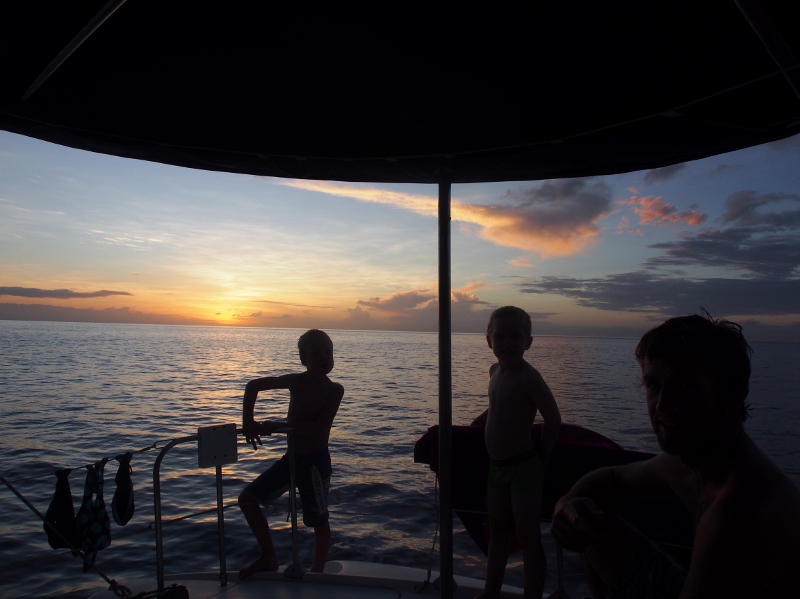
Sunset From Bobby's Mega Yard
Sunset Christmas greetings from Bobby’s Mega Yard

Crazy island

We’re at St Marteen because the boat needed to be lifted out of the water for a change of rudder bearings. We expected a few days out of the water while we go to the beach and do some Christmas shopping, and then straight back in, after which we’d go somewhere lovely to celebrate Christmas.

It turns out that the rudders themselves are corroded, and need replacing. At the same time, a hundred other little jobs have turned up, and as they all seem really important, we’re rushing around trying to fix this, paint that, replace something else.

St Maarten is a bit of a shock to the system after our lovely forays in the windward Antilles further south. It is loud, in-your-face, highly developed and utterly schizophrenic. Upon arrival we anchor straight by Princess Juliana International Airport whilst clearing customs. Every ten minutes we stop what we’re doing as a plane thunders overhead, discharging more tourists onto the island. Couple that with the police sirens, which are going off every ten minutes, and it makes for a very noisy island. There is a constant hum of heavy car traffic, loud music spilling from the windows of cars stuck in jams, waiting at the bottleneck bridges. After clearing customs, we go through the lift up bridge to Simpson Bay Lagoon, where the boat yard is. The lagoon is huge, and full of superyachts, each bigger, shinier, and more expensive than the other.

Our new neighbours
Our new neighbours

St Maarten is crazy. It is a small island (87 km2), housing roughly 75,000 people. The northern half of the island is part of France (Saint Martin), and the southern half is a separate country under the kingdom of the Netherlands (Sint Maarten). We cleared in on the Dutch side, because that is where the boat is being lifted out, but we’re living on the French side, house-sitting for the lovely Marie-Claire while she and her family are in France for Christmas. On the Dutch side they speak English, Dutch and English based Creole. On the French side they speak French. They two halves have different currencies, with Netherlands Antillean Guilder (official currency) and US dollars in use on the Dutch side, and Euro on the French side. They even have different religions, the French side being predominantly Catholic, and the Dutch side Protestant. The two sides have separate electricity supplies, with different voltages (110 volt, US style plugs in St Maarten and 220 volt, mainland Europe style plugs in St Martin). Which is a great annoyance to people like Frederick, who is helping us with all our boat repairs – he works on both sides and lives on the French side, and has to have two sets of power tools.

Like most Caribbean islands, St Maarten/Martin has an interesting history. It was named St Martin by Columbus, who claimed it for Spain when he first spotted it on St Martin’s day in 1493. Spain didn’t really care too much though, and the island was soon settled by the Dutch, who disrupted the local Caribs and took up salt production. They were followed by French colonists who grew tobacco. In 1648 France and the Netherlands signed the Treaty of Concordia, officially dividing the island into two sides. Subsequently, the island changed sides the usual few times, becoming all French, all Dutch, and even entirely English, before settling back down into its divided state for good in 1816.

The island is infamous for its corruption, crime and money laundering. The lax tax laws bring business, although plenty of it of a dodgy variety, and the island government on the Dutch side were thought to have close ties with the Italian mafia in the 1990s. For a long time it has been known as a place easy to get work, so immigration has soared – Dominicans, Haitians, people from the other Dutch islands like Curacao and Bonaire, as well as Chinese, European, South Africans and Americans. Both island halves have focused fully on tourism, and the island is now a popular cruise ship destination, bringing ashore more than 650,000 cruise ship passengers a year, mostly Americans. Philipsburg (the Dutch side capital) is a duty free port, which has made it a destination for tourists of the shopping variety. It is also a popular place for rich owners to store their superyachts. As expected, lots of poor immigrants coupled with extreme wealth on public display leads to a lot of crime. Marie-Claire advised us to never carry bags, to not walk out at night, to always lock the door of her apartment, and not open the door unless we know it is someone we want to see. Her flat is in Marigot, the French capital, and is guarded by three locks on the door, a grid iron gate over the door, as well as a gate at the entrance to the building. Funny to compare to Raglan, where many don’t lock their front doors, or their cars in the driveway. Within two days here, someone has tried to break into our hire car, and we are relieved that we got the full insurance, which includes theft and break in.

It is incredibly multicultural here. Most bus drivers and passengers seem to speak Spanish, and Chinese own all the small supermarkets with lovely names such as ‘Happy Family Supermarket’, ‘Lucky Times Supermarket’ or simply ‘Wealthy Supermarket’.

A more developed skyline than we're used to
A more developed skyline than we’re used to

The impression is of an island that has grown way past its point of sustainability. There is a round the clock traffic jam on the main road connecting Philipsburg to Marigot. The hillsides are dotted with half-finished concrete foundations for mansions abandoned by developers. Rubbish litters the roads everywhere, and spontaneous dumps abound by the roadside. The marina waters are foul, brown and pungent, the stench mixing with the smell of food from the waterside cafes. Alongside all the rubbish is glam and glitter – the crystalline Christmas decorations overhanging the streets, the sun’s reflection in the shiny superyachts, the golden watches and diamond earrings of marina tourists traipsing around in their sky high heels.

It is wholly unrecognisable from 22 years ago, when we lived and worked here for the better part of a year – this was where we landed at Christmas after crossing the Atlantic in 1991 as hitchhikers on a small yacht. Back then, ironically, we spent Christmas painting a boat, and here we are again, doing boat maintenance as Christmas is approaching.

On our way to St Maarten

Looking ahead
On the lookout

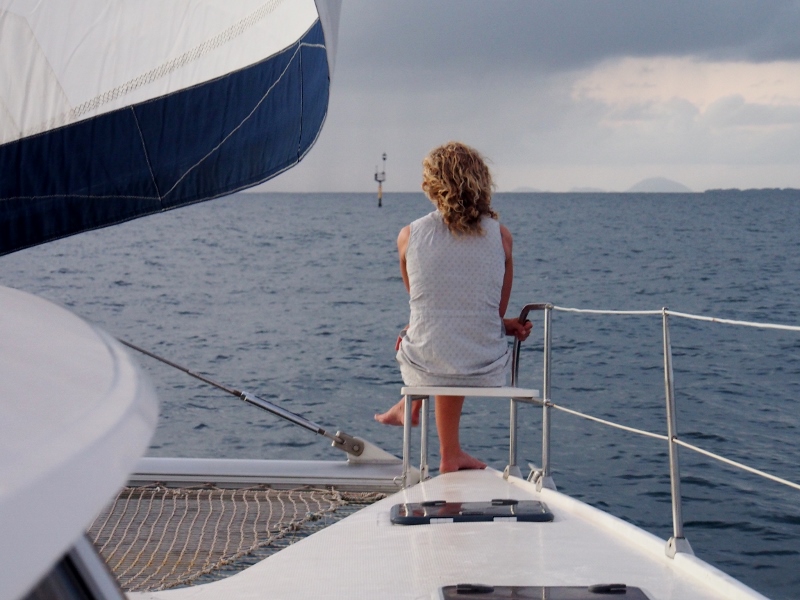
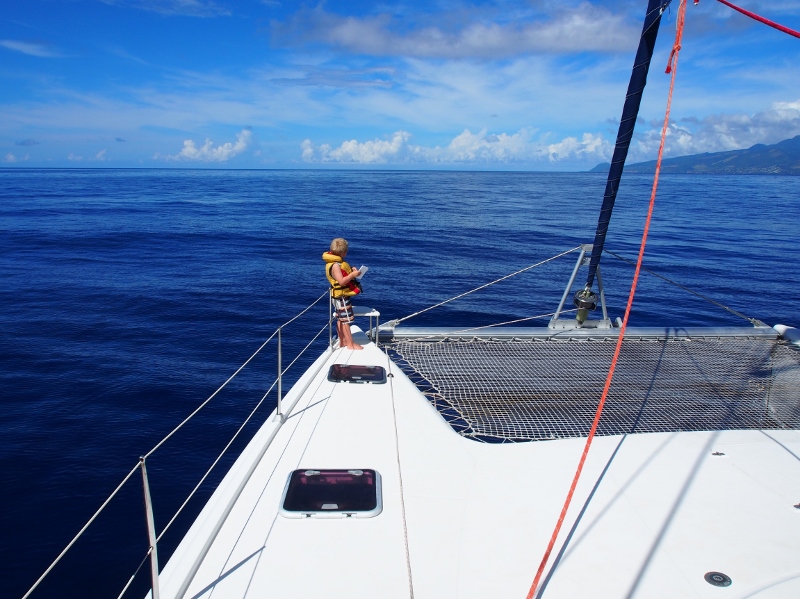
To get to St Maarten, where the boat has to be taken out of the water for us to change the rudder bearings, we travel for several days. We leave from the northern end of Martinique where the township of St Pierre is still a pale shadow of what it used to be prior to the 1902 volcanic eruption of Mount Pelee, an event labelled by experts as ‘the worst volcanic disaster of the 20th Century’. The town is full of ruins and a small museum shows pictures from before the eruption, when it was the sophisticated, bustling capital of the island, also known as ‘little Paris’. The eruption devastated the town, killing an estimated 30,000 people, including almost all the French settlers on the island, as well as the entire island government. Only one man from within the town survived the disaster, the prisoner Louis-Auguste Cyparus, who was protected by the thick walls of his dungeon. Two other people located on the outskirts of town survived, the remainder were burned alive and buried in the ruins. Several ships were anchored in the bay, all of which are now shipwrecks, making popular dive sites for the few visitors to the town.

Five master
Five master

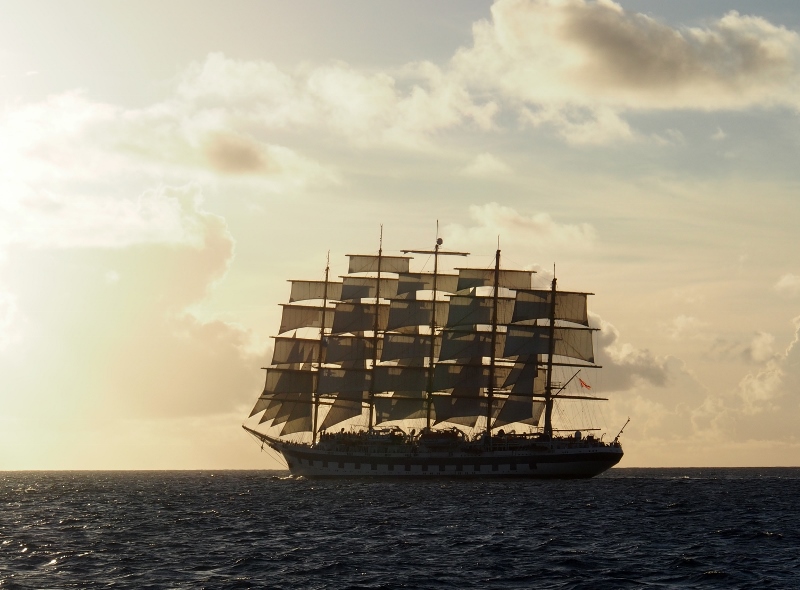
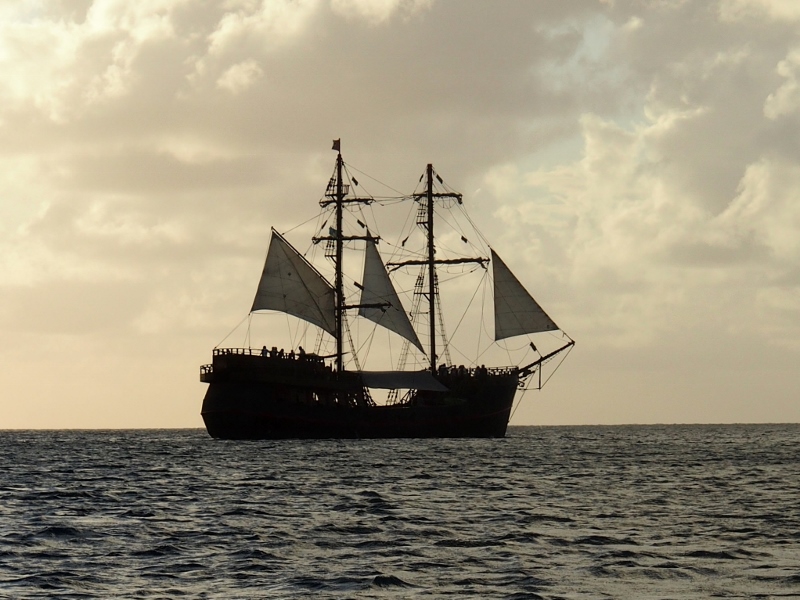
From St Pierre, we sail past Dominica and onto Guadeloupe, where we stay at Les Saintes for a night, spotting a beautiful five masted pirate ship on our approach. After a pleasant morning there, we take off again and head for mainland Guadeloupe, where we anchor at Pointe-a-Pitre. A friendly dolphin meets us at the harbour entrance and escorts us to our anchorage, turning side on to get a good look at the excited children who lie face down on the trampoline, mesh imprints on their cheeks. Our plan is to take a shortcut and go through the Rivière Salée which separates the two bulbous parts of the island, Grande Terre and Basse Terre. Only once we get there we realise that the river is closed for bridge traffic, the bridges permanently down. That will teach us to check ahead of time – although only really a detour of about 50 miles, it will cost us the better part of a day to make it up. It is hard to explain to the children how slow we really are travelling – less distance than from Raglan to Hamilton return will take eight hours on a windless day. Still, it is nice to revisit Pointe-a-Pitre, which is the place where we first met, 23 years ago.

So it’s up early the next morning, and back south again to round Basse Terre. On the way we meet a boatful of naked Germans in distress – they have caught their rudder on a lobster pot, and we hover at a discreet distance, conversing with them via radio, until we are satisfied that they have it sorted and don’t need our help.

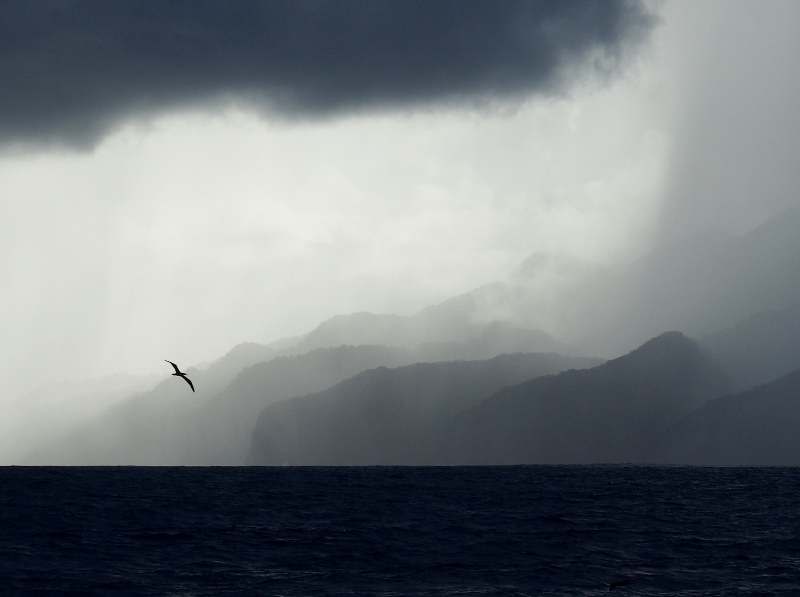
A bit of weather at the northern tip of Dominica

North of Guadeloupe we pass on the leeward side of Montserrat, another island with a history of volcanic disaster. When the Sourfriere Hills volcano became active in 1995, a large proportion of the island’s population fled. The volcano is still active, and a volcanic exclusion zone is shown on the charts; we give it a wide berth.

Night falls somewhere north of Montserrat, and we start night watches. David does the early shift from 8 to midnight while I sleep, and then I do midnight to 4:30, after which he gets up and does the sunrise shift. In terms of our bodyclocks we are either a great or a terrible match, depending on how you look at it. Great for night watches on boats, where we complement each other well: I can go to bed any time after 8 pm and am fresh straight away in the early morning, whereas David is at his best late at night, and is terribly grumpy first thing in the morning. Not fantastic for our busy daily life at home, where he is at his worst when we briefly meet before work in the morning, and I am tired and fading fast  after work at night. On a boat it is perfect, though, because we get to do our respective watches at night, and interact when we’re both peaking round the middle of the day.

Sunset

On this particular night we are showered in shooting stars, saturating us with wishes. The ocean sighs and heaves, groans and creaks, splashes and bangs. I look for whales in case they’re the cause of all the sighing, but can’t see any. The water is deep, and it is strange to think of the creatures underneath, sleeping, gliding through the depths, as we sail on the surface. There is not much to do on night watch: I scan the dark horizon for objects, vessels, check the radar to see if it has picked up anything, check the sails, the wind, the depth. After that I have a cup of tea and a snack, and then start the checking all over again. I’m reading ‘War of the Worlds’ by H. G. Wells, in which strange lights from the universe turned into malevolent Martians which wreak havoc on Earth. Hopefully the shooting stars I’m seeing are just a meteor shower.

Once I get my night vision in, lights are everywhere. As we make our way north, faint glows on the horizon turn into brightly lit islands. Glittery cruise ships speed past, lit up like Christmas trees. Lighthouses blink steadily. All this activity is matched in the sky above, where we are headed straight into the big dipper, a giant question mark in the sky suspended  over where we’ll end up tomorrow. Even the toilet bowl is alight with bioluminescence; I never knew it could be this fun to flush.

The children are adapting well to the passage, making up games as they go along. Matias writes endless letters to Santa, which David dutifully responds to at night, weaving a tangled web of present-bearing minions, some of which are boobies (seabirds) and some of which are invisible. We log plastics, they tie knots on ropes, making a maze to block the passageway from the cockpit to the saloon. We play a few games, cards, dominoes. They play with Lego, do some homeschooling, have a knot tying lesson with David. Slightly worryingly, one of Lukie’s Lego creation is a boy imprisoned on a boat, the minifigure chained to the top of what he explains is a slave ship. We decide not to read too much into it…

Letter to Santa, enquiring about the particulars of the minions who come with the presents to people living on boats

Plastics

Before we left Martinique, we met two women who have just crossed the Atlantic, on a 72 foot research sailing vessel entirely crewed by women. We get talking, and because we’re all marine scientists, the talk soon turns to work. Jenna Jambeck works for the University of Georgia, on a project tracking microplastics in the ocean. The cruise vessel was fitted with a small trawl, designed to collect whatever surface material they met along the way. They collected large volumes of plastics, and Jemma and her team are going to go back home and analyse the size fractions to predict what marine life the plastics are likely to affect, and in what ways.

Some of the plastic we met off the island of Dominica

We’ve seen lots of plastics floating on this trip already – although nothing compared to what I remember from Fiji, where entire windward sides of islands are covered in debris from cruise ships. Plastic bags, bottles, containers. Styrofoam, fishing line, bottle lids. On my brief holiday there a year ago, I stop picking it up after a day or two, there is just too much, overwhelming me into inaction. Similar to how many feel about climate change – it is too big, too pervasive for a single individual to do anything that might make a difference, the temptation being to give up, to not even do our best.

On this trip, plastic fatigue hasn’t yet set in, and we still pick up what we see. The children hoard plastics, guarding them from falling into the sea; we once showed them a documentary about seabirds starving to death because their tummies were full of plastics, and that made an impression that we can still easily refer back to when we need a reason not to litter.

Lukie busy recording plastics we see underway

Anyway, Jemma and her team developed an app to record and track marine plastics. We are using it as an educational tool for the kids on this trip, and if anyone else is interested in recording the plastic you see around coasts and marine environments, you can read more at http://www.marinedebris.engr.uga.edu/tracking.

We’ll log on as Bob the Cat, so if you wish, you can track what we see online. The kids have taken to the logging with gusto, writing down long lists, and tallying the numbers. On normal sailing here, we don’t see a lot, but off the island of Dominica, we saw lots and lots, probably refloated from the coastline by a rainstorm.

Happy tracking to anyone else who wants to report ocean or coastal plastics. And good luck to Jemma and her team – we hope you help find out what happens to the plastic, where it goes, what it does, giving us more evidence which may persuade governments to start doing something about the problem. It certainly looks like a great research programme, and it is being taken seriously at the highest levels in the US: http://news.nationalgeographic.com/news/2014/06/140613-ocean-trash-garbage-patch-plastic-science-kerry-marine-debris/.

Child play

Ewok ship
Ewok ship

The childrens’ games are evolving and the starwars characters are now decidedly nautical. The Ewoks go snorkelling, hunting Giant Tarantula Squid in the Mariana Trench. One character has invented a breathing apparatus, so he doesn’t have to come up for air – he goes spear diving to conquer the evil poisonous giant pufferfish that lurks in the deep.

OLYMPUS DIGITAL CAMERA

They ask time and time again for a speargun, and were very excited to go buy fishing gear with David. I have to patiently explain why we don’t eat turtles or kill whales.

For the last many weeks, any new Lego built has been boats. All shapes, colours and sizes. An Ewok boat, full of aquatic Ewoks. Alongside it is the coastguard boat, also full of Ewoks, who come to the rescue when volcanoes blast up nearby. (For the uninitiated, Ewoks are furry, fierce little animals from the Moon Endor).

Lukas has made snorkelling robots and accompanying submarines, and there is much talk about coming up for air, cleaning the masks and diving in murky waters. Equalising ears, slipping on fins and sinking deep. Hoisting sails, turning on engines, and setting anchors.

OLYMPUS DIGITAL CAMERAA lot of our homeschooling has been about marine things as the boys want to read books about marine life, about explorers and early human history on these islands. They ask endless questions about the bloodthirsty Caribs, slavery, and about the pirates that used to haunt the local seas. When back from snorkelling, they hunch over the fish book together, trying to identify what we saw. They spend hours looking for crabs, peering into each and every hole we meet – and we meet a lot! Hermit crabs are a real favourite, probably because you can pick them up without being too afraid to get nipped.

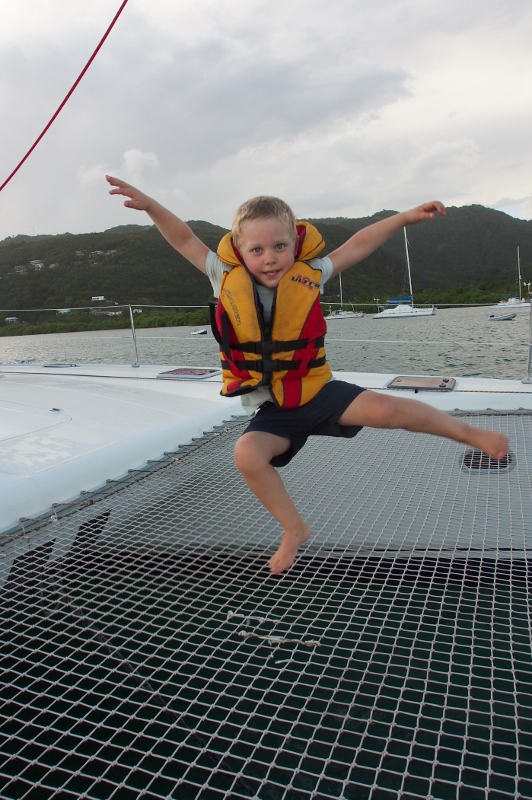
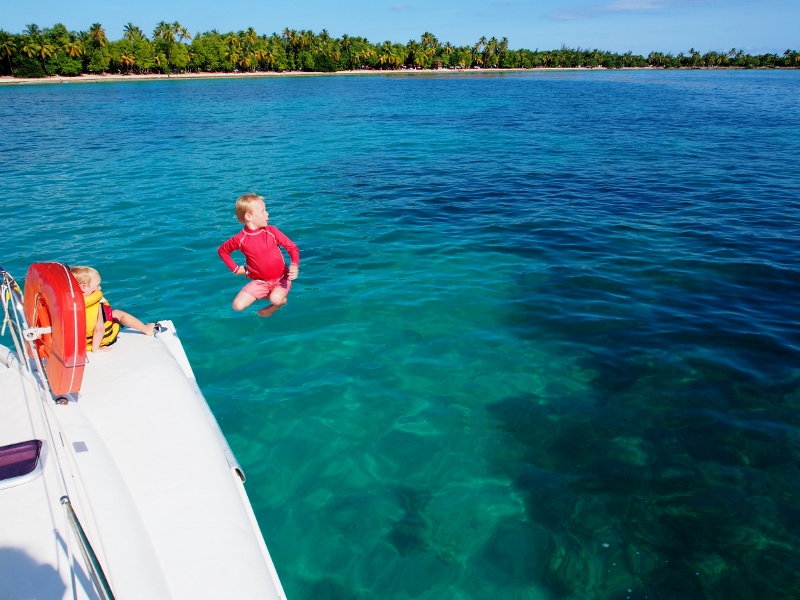
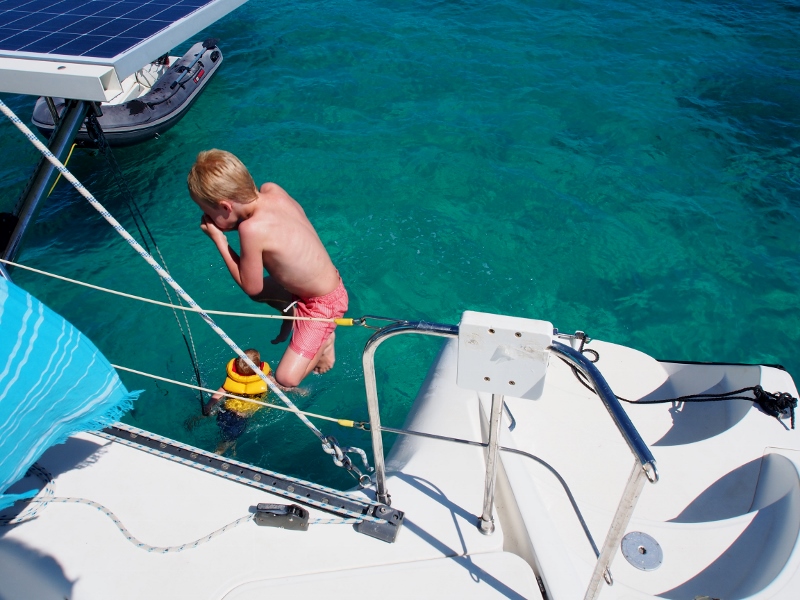
OLYMPUS DIGITAL CAMERAAnother favourite pastime is jumping. Trampoline when we’re in places where we can’t swim, in waves when we’re on a beach, and walking the plank when we’re on anchor. Amazing how long they can spend just jumping, swimming, crawling out, jumping again. And again and again.

OLYMPUS DIGITAL CAMERATheir stuffed animals Beaver (Matias) and Koala (Lukie) have remained important. Last Saturday was apparently Beaver’s birthday, and they spent the whole day planning what kind of party Beaver was to have, asking us to sing Happy Birthday and make cakes. This evening they asked what ‘Climbing Kids’ were, having heard about these from Beaver, who insists that it’s a movie. We have no idea what they’re talking about, and Beaver is asleep so we’ll have to check with him in the morning.

OLYMPUS DIGITAL CAMERA

Strange imaginary creatures still lurk around every corner, although they are decidedly more marine than before. Lukie has two imaginary friends whose chief habitat is navigational buoys, so whenever we pass a buoy he says stuff like ‘Oh, there’s Nijaga again, that’s his bouy’, or ‘Oh, that bird is sitting on Skiffie’s bouy’.

OLYMPUS DIGITAL CAMERA

Whenever we meet other children they are invariably French, but that doesn’t stop them from interacting, asking questions, using me as a translator. The other evening they started playing soccer in a small thoroughfare with two lovely local boys at Marin. One goal was the sea, the other the busy road. I stood guard, and they managed to keep themselves out of trouble, and the ball out of the water, most of the time.


Only the French…

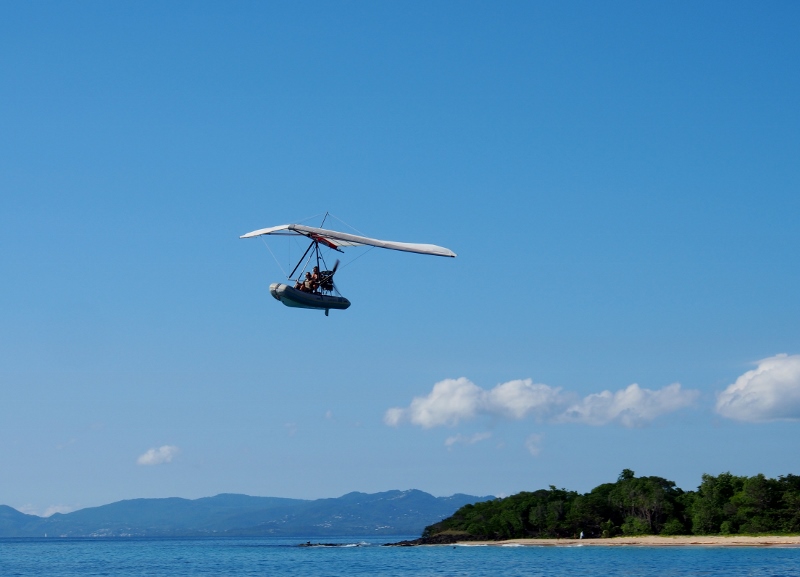
OLYMPUS DIGITAL CAMERAForget anything negative I said about the French – check this out. So cool. And so very, very French – adventurers, daredevils, crazy spirits.

There we were, just around the corner from Marin, Martinique, on a hot windless day. We left Marin to go somewhere we could swim, but after snorkelling for an hour we came out covered in rash. It seems the seaweed floating on the surface was stinging, or else harboured some stinging organism. There are several suspects, and we do the usual dousing in vinegar, crazy scratching, dreading a sleepless night ahead.

Flying dinghy
Flying dinghy

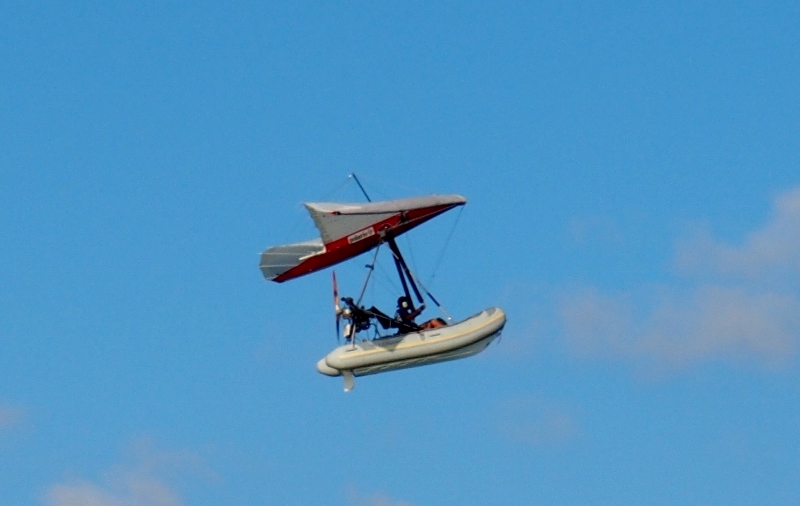
And then this thing appears out of thin air. That’s the dinghy I want.

They circle us several times, the kids shouting ‘Bonjour, bonjour!’. And then disappear back around the corner.

I hope they had a soft landing.

Fishing

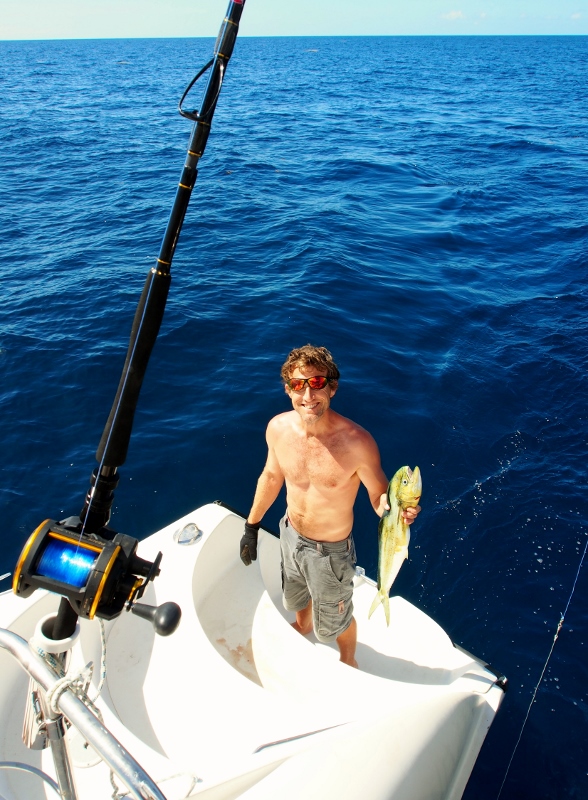
We leave St Vincent and the Grenadines, doing a long sail from Union Island to Bequia, and then onwards in an overnight stint from Bequia to Martinique. On the way to Bequia we catch our first good fish, a great family size mahi mahi.

Mahi mahi for dinner

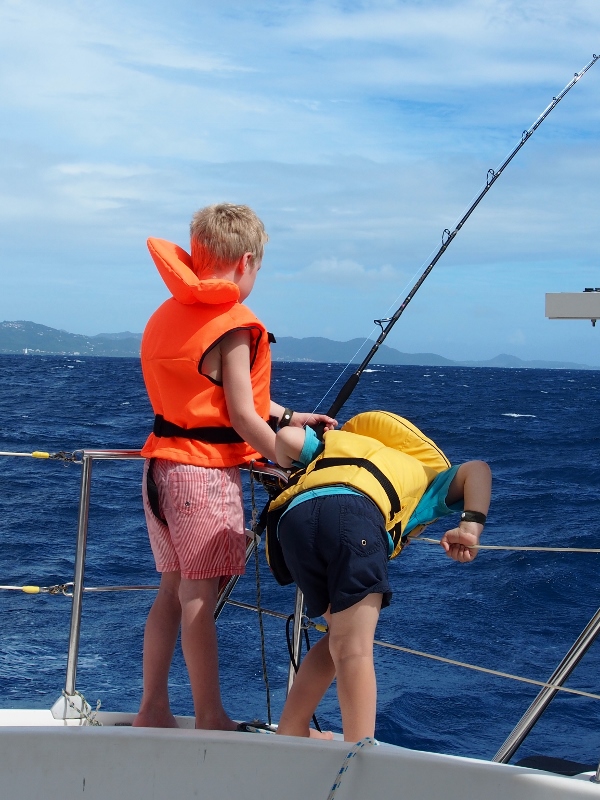
We’ve been trawling a lure on every trip, and caught a massive (easily over 1 metre) mahi mahi on a trip from Martinique to St Lucia. I was frantically trying to slow the boat, the boys were shouting, and David was reeling the beast in. And then I lost it when trying to gaffe it onboard.

I was so disappointed that I nearly cried – we’ve almost given up on meat, as the only available seems to be incredibly tough braising type steak or chicken that doesn’t look safe to eat. When we saw the fish on the line, we were all imagining dinner, transformed from a sweet potato curry into beautiful fresh fish steaks, drizzled in lemon juice, with cracked black pepper. But, off the hook he jumped, and probably for the best, since he was way too big for us to eat, it would have been a waste. Or so we told ourselves.

Next up we caught a barracuda, which we decided to let go because of ciguatera, a terrible toxin found in reef fish and their predators. Plus, I’ve never really thought of barracuda as an eating fish (but apparently you can)…

Sunset
Sunset

But this latest one got on board safely  – not being able to handle two failures in a row, I let David gaffe it, so it would be his fault if we lost it. The boys were besides themselves with excitement, and that night we feasted at sunset, whilst sailing back to Martinique.

It was full moon, and as the moon was rising and the sun was sinking, dolphins were playing in the wake at the back of the boat, jumping fully out of the water, spinning wildly, and then plopping back in with a massive splash. Magic.

The night was still, the water oily, and we were forced to motor most of the way. Dolphins joined us again at sunrise, and then let us carry on towards Martinique, and the boat work we have to do there.

Tobago Cays and End of the World Reef

Next stop is the Tobago Cays, five small island dots in a sea of turquoise, surrounded by shallow coral reefs. The area is a national park and is famed for its outstanding beauty and fantastic marine life (including turtles). We have a lovely sail down to the keys, top speed about 10 knots but happily sitting at about 8 knots for lots of the way. Flying fish jump across the bow, and boobies follow, duck diving to scoop up any fish they can catch near the surface.

Goods for sale
Goods for sale

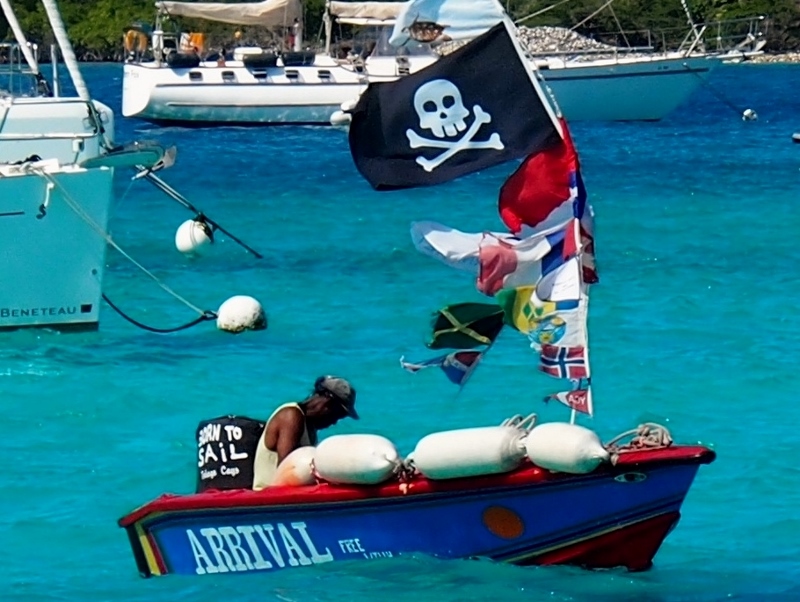
Once through the tricky pass to the entrance of the anchorage we are taken aback by the beauty of the place – turquoise water, white beaches, coconut palms, small vegetated islands, fringed by coral reefs. There are about 20 other boats in a small area of brilliant white sand and blue sea. We anchor, and are soon approached by boat boys. On offer are cigarettes, crayfish and croissants. Kind of strange to be offered croissants on an anchorage in the middle of nowhere, but we’re getting used to it. Where there is a need, there will be a service, and obviously there are enough boat traffic to make it worthwhile. It never ceases to amaze me how we human beings are so opportunistic, so good at making a living out of whatever is on offer.

Lukas the enthusiastic snorkeller

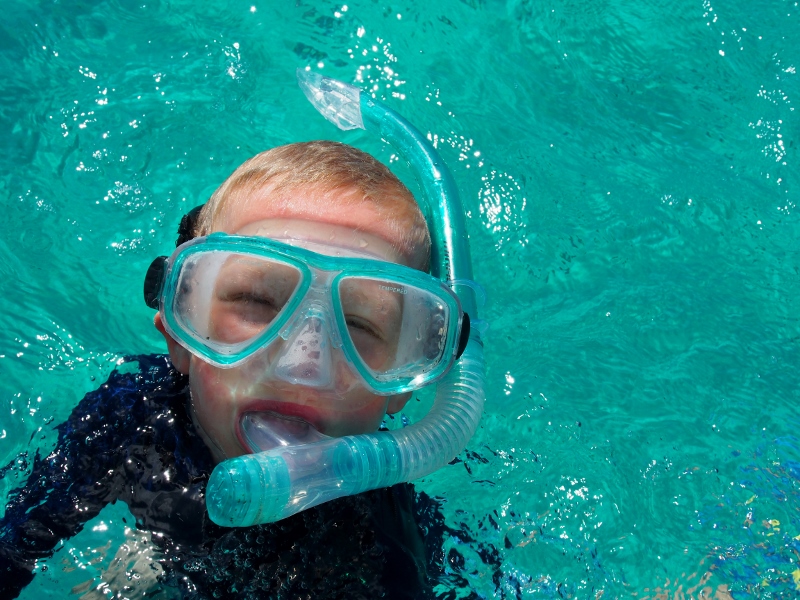
We snorkel lots, and on the sandy bottom beneath the boat we see sea urchins and small trunkfish, the latter coming up to take a nibble of our fins with their exquisite little kissy mouths. Lukie and I see a beautiful hawksbill turtle, gliding slowly through the water. Lukas is a sea of bubbles enthusiastically pursuing the turtle – he snorkels using both arms and legs and is faster than he is graceful. The turtle throws us a backwards glance, gently kicks its legs and is off.

Lukie greeting a tortoise

Lukas is getting really good at snorkelling, often the first thing they do in the morning is jump in the water, and on this trip he’s easily spent two or more hours in the water per day. He is practicing duck diving, not easy when you are still a pudgy pre-schooler, and he bobs quickly up to the surface like a cork. When he surfaces, he says to me in wonder ‘Mummy, when I dive down, my snorkel fills with water?’, obviously still not quite grasping the technical bits of snorkelling. But he’s unfazed by not being able to breathe periodically, he just grabs hold of me (I’m always near) and tries to climb on top of me, kicking his little legs and gasping for air. When he gets tired, he asks for a lift, clinging to my back like the shell of a turtle as I kick us forward. Being Lukie, the fact that he is submerged doesn’t stop him from talking, and he emits constant enthusiastic commentary on whatever we see plus whatever else goes through his mind. I’ve always enjoyed the peace of diving and snorkelling; alas that peace is gone now.

Catching some rays on the beach

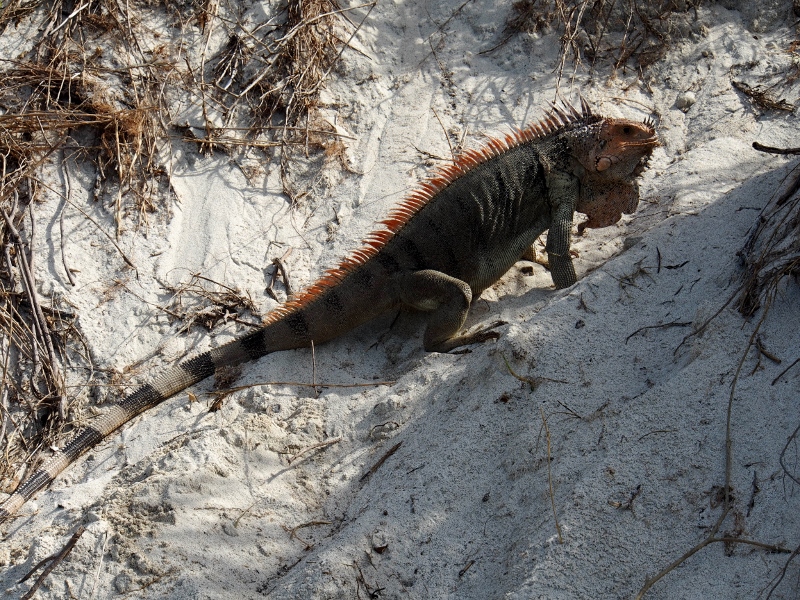
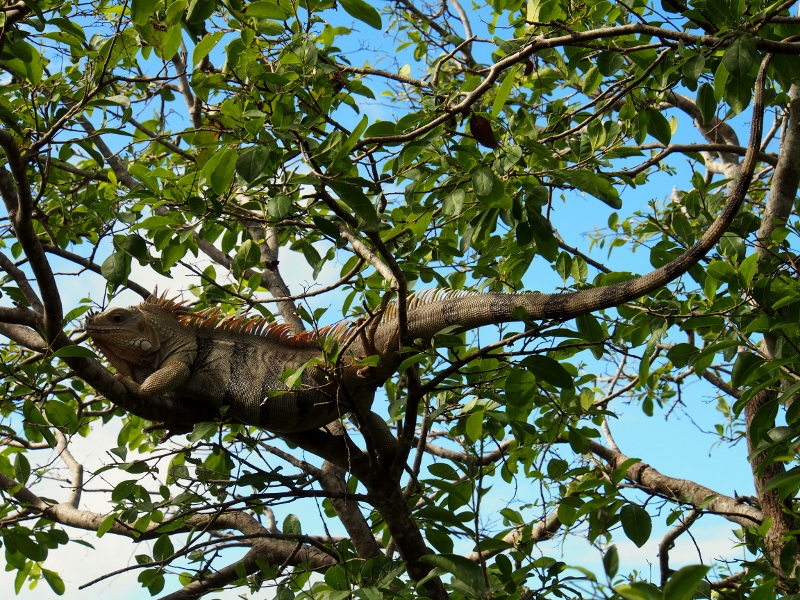
We explore the small uninhabited islands near the reef, climbing the hill behind the sand dune, arid soil covered in cacti, windswept trees and succulents. The islands’ main inhabitants seem to be huge iguanas, easily a metre long. They are everywhere, soaking in the early morning sun in the sand dunes, on the dusty path, in the undergrowth, perched at the end of a branch. We watch them slowly climb the trees, measuredly jumping from one branch to the next, the foliage dipping under their weights. Other inhabitants are beautifully rounded yellow-footed tortoises, the largest over a foot long, which wade slowly through the bush stopping periodically to gaze around them and eat what looks like rotten leaves. There are also large hermit crabs everywhere, scuttling away in their borrowed shells as we approach.

OLYMPUS DIGITAL CAMERA
Lounging in the treetops

One evening we go ashore to where the locals cook lobster for guests from the visiting yachts. The boys are fascinated to watch the young men grab the lobsters by their antennae, hold them firmly and then swiftly chop them in half. The lobsters continue to twitch a long time after being halved, the legs frantically moving as if they were still hoping to flee.

Butchering lobsters
Butchering lobsters

Seated at a wooden table, with plastic plates, we are served the most amazing lobster dinner. Four half lobsters, fried plantain, barbecued potatoes, carrots and some other unidentifiable root vegetable, and lots of rice. Matias is squeamish about eating the lobster but Lukie digs in, quickly finishing half a lobster and eagerly asking for the other half. We end up breaking open every leg to pry out more juicy meat with Lukie hungrily watching, asking for more. After dinner, the boys are off spotting crabs with headtorches with their new friend Peter, a Polish boy we met.

Lobster cook-out on the beach

George, A.K.A. Mr Fabulous is the guy who originally thought of the concept of cooking crayfish for tourists. He explains how it took him four years to develop from idea into a business. Initially, yachties were sceptical and unwilling to come ashore for a meal and he used to have to offer to cook the meal for free, giving the recipients the option to pay if they felt it was worth it. They obviously did, word spread, and now they are busy. But he is still struggling, mainly with the lack of local organisation and the way the rangers of the national park don’t have the interests of the environment or the local people at heart.

Lukie on his second half lobster

He would like to see the area better patrolled by rangers, fining people who rubbish and reprimanding people who don’t follow park rules. He wants to start a lobster seeding facility, replenishing the local reefs with lobsters. Most of all, he wants the environment properly protected, with locals able to make a living from the tourist that flock to visit the Cays.

It is tricky. Each ‘operator’, the guy in the boat who approaches the yachts, employs at least five people to catch and cook the lobsters. There are a total of 30 operators and so about 150 locals living off the lobster beach dining experience. Some of the guys are great, knowledgeable about the area and its history and keen to protect the amazing resource just beyond their doorstep. Others are in the business for a quick buck, and are happy to look the other way if boats anchor on the seagrass, or if local fishermen stray into the park to fish. Although a different area, it seems to me that the issues are not so very different from those back home in New Zealand, the eternal conflict between people needing to make a living and the preservation of the environment upon which that living is based. I agree with Mr Fabulous that ultimately the most important thing here in the Cays is to protect the outstanding environment, because all the local businesses revolve around the tourists that the area attracts. But I wonder with him about the effect of all the people – the coral reef is already showing signs of wear and tear, it is overgrown with algae in places, possibly a result of the high density of boats that occupy the area in the season, all releasing nutrients.

An agile iguana climbing a tree

We feel privileged to visit, to swim with the turtles and rays, to show the children this wonderful environment of iguanas and tortoises. But we know that ultimately too many well meaning visitors like ourselves can easily wreck the place if it is not soon better policed.

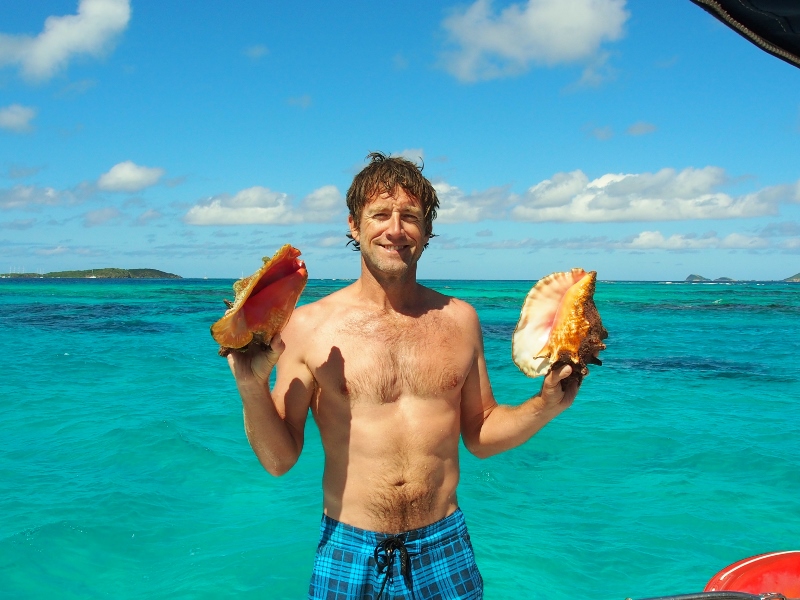
As a final farewell to the area, we sail to the ‘End of the World Reef’ beyond the keys – an amazing coral plateau at the edge of the Atlantic. We snorkel and catch Conch, and after checking that the local conch fishery is sustainable, David and the kids extract the slimy slugs from the beautiful shells.

Anchored at the End of the World Reef

We laugh as we’re sitting at the end of the world, yet connected enough to download ‘the Cruising Chef’s Cookbook’ on the kindle, to find a recipe for conch. David ends up beating them fiercely with a hammer to tenderise them, and then sautéing them with garlic and fresh basil for lunch. Drenched with mayonnaise on homebaked bread fresh from that morning, with a squirt of lemon juice and cracked black pepper, they are sweet, juicy and utterly lovely. Lukie digs in, but Matias eyes them suspiciously and sticks to a grated carrot sandwich.

Man conquers Conch at the end of the world

Beautiful Bequia

OLYMPUS DIGITAL CAMERA
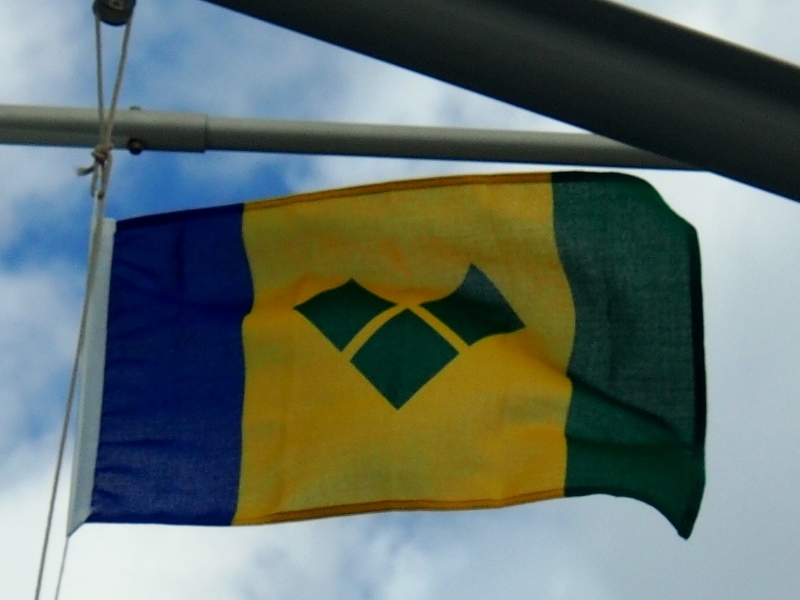
St Vincent and the Grenadines flag

In our trip to the Grenadines, we decide to bypass St Vincent (which has a reputation for being somewhat unsafe) and aim for the island of Bequia for our first stop. The largest of the St Vincent dependencies, Bequia is a small island just south of St Vincent home to about 6000 people; the descendants of African slaves, Scottish and French settlers, and New England whalers. Whale hunting from small local skiffs still takes place off the island whenever the opportunity arises.

We arrive in Port Elizabeth which is moderately busy, with boats anchored close to one another on both the southern and northern edges of the bay. The island is known for its friendly locals, beautiful scenery, quaint towns and great marine life.

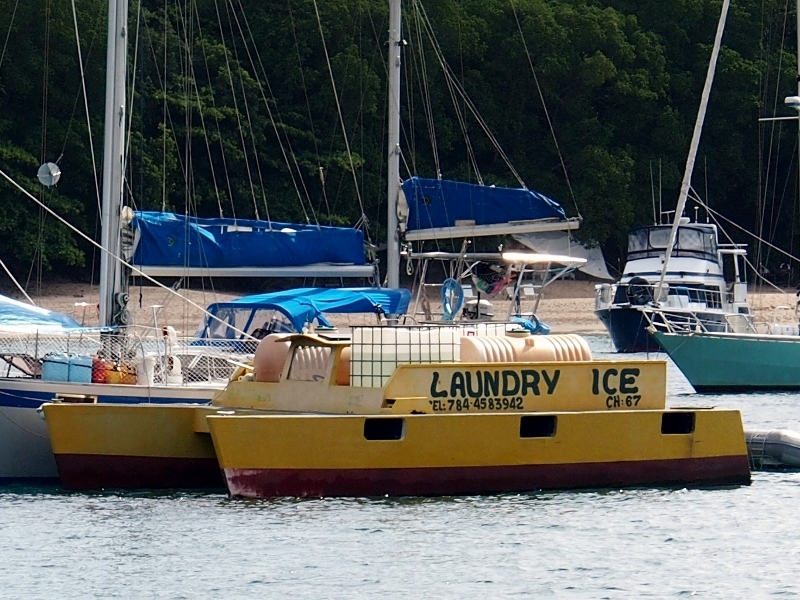
The laundry, ice, water and diesel service boat

Port Elizabeth certainly has amazing services for yachts. Name whatever you desire, and there’ll be a boat providing it to you. We spot the all in one laundry, ice, water and diesel service boat, and call them on channel 67 and request a laundry pick up. Next day they deliver clean, neatly folded fragrantly smelling clothes. There is also a baguette and croissant boat, which takes bakery orders and delivers the goods fresh for breakfast. A rasta dude offers to clean the boat until it ‘shines like a newborn baby’. He has lived in Sweden for many years and has a special cleaning product which he bought from a guy from Frankfurt. He paddles out on a standup to offer his services to yachts, and as the wind picks up we give him a tow back from a hard day’s work. The locals are friendly and act with quiet dignity, and we get a sense that the place is not as poor as St Lucia. Here good services are offered at a premium price and the many tourists are happy to pay. The result is a thriving place full of happy tourists. We meet many people from hotels, who all came here on the recommendation of someone.

Cleaner dude catching a tow from our dinghy

There is great snorkelling just by the boat – seagrass bed, with pipefish, strange eels, and an octopus changing colour as it tries to outswim us – white over the sand, green stripes over the seagrass bed, a thick cloud of ink coupled with a darker shade in a last ditch attempt to deter us. A long nosed pipefish does the same, and we follow it for a great distance, watching it change its hue to blend in with the bottom. A graceful stingray glides by, and we spot a lumpy searobin, curiously ugly, walking along the bottom on its little legs. When we dive down it cowers and fans out a beautiful set of wing like fins, edged with iridescent blue, to try to frighten us off.

On the reef next to the little beach that we’re anchored next to, we see a delicate beige eel with daint white spots, sliding over the rocky reef, looking for coverage as our shadows darken its path.

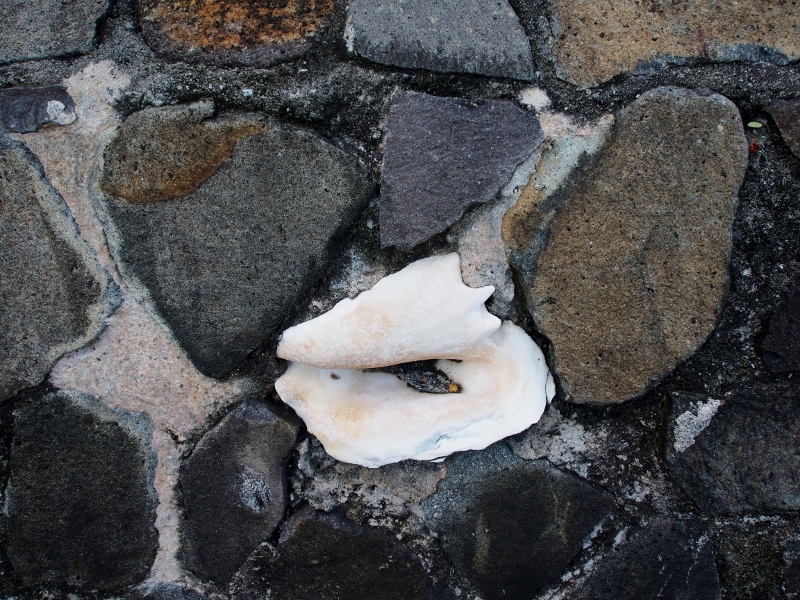
Conch shells inset into the stone wall lining the bay walkway

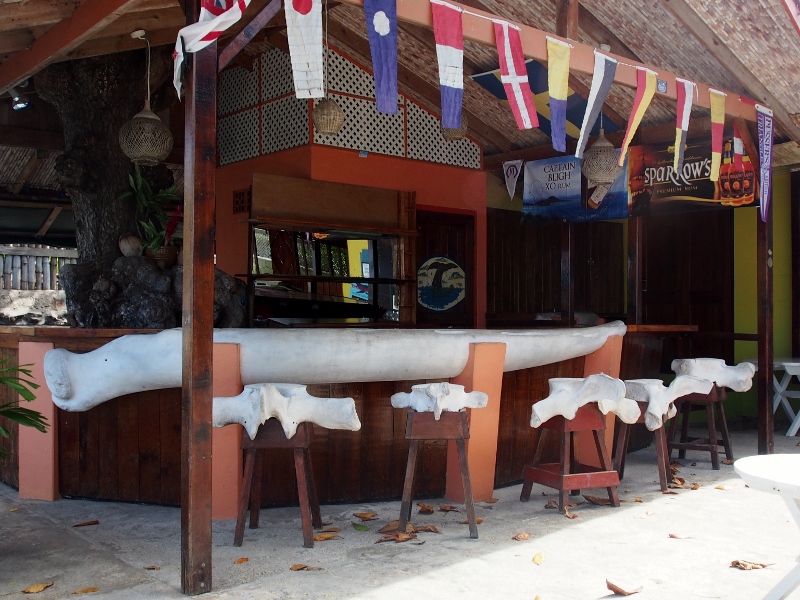
The town is pretty and full of character. Set on a steep hill, the main road lines the waterfront, with colourful houses dotted on the hillside behind. A narrow strip backed by colourful flowering trees and cosy looking restaurants lines the southern end of the harbour where we’re anchored. Conch shells are everywhere, and one day for lunch we try a conch roti. A bit chewy, but Lukie loves it… A restaurant on the waterfront has furniture made from whalebone, so you can sit and sip your cold beer, your backside planted on the vertebrae of a whale.


Whale bone seats in waterside restaurant

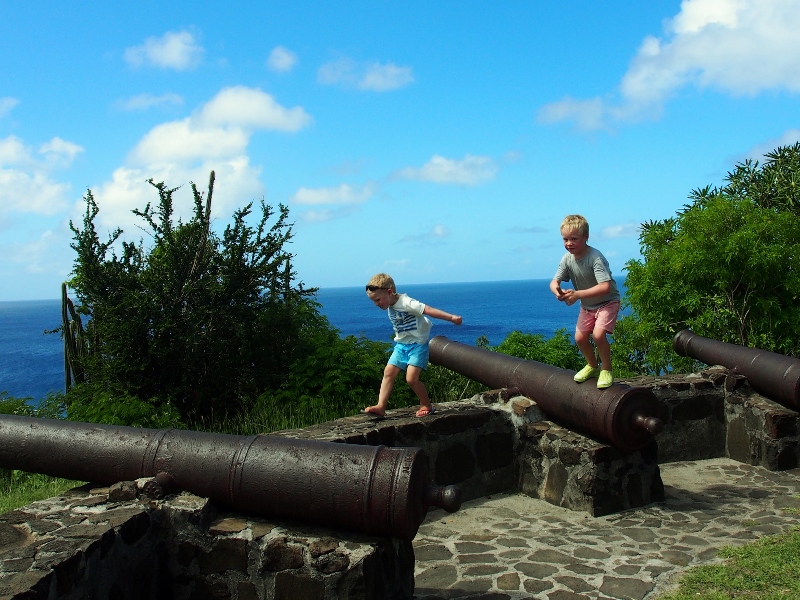
On the northern hill overlooking the bay and the sea beyond sits a small fortress, complete with black canons pointing out the sea. Apparently of the five canons two were French and three English  – the two nations fought each other fiercely and would take turns shooting down each other’s warships, but stuck to their separate canons.

OLYMPUS DIGITAL CAMERA

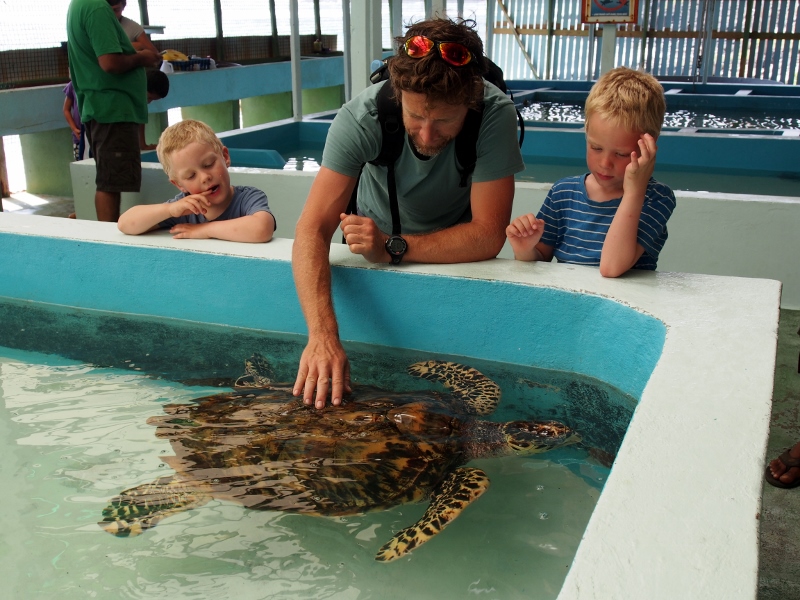
The next day we visit a turtle sanctuary, a facility on the other side of the island where they collect baby Hawksbill turtle and rear them to 5 years of age in captivity. The Hawksbill turtle is threatened with extinction and a local Bequian named Orton ‘Brother’ King decided to help the population by increasing the chances of survival of a few of the thousands of juveniles that they get on the island each year. In the wild, the survival of Hawksbill turtle is less than 0.1%, but at the sanctuary they get rates of about 30%.
18 year old turtle
18 year old turtle

Each year, they protect the eggs laid by local turtles until they hatch, and then they capture about 250 juveniles as they crawl out to the sea. They rear them to about 5 years of age where their survival rates in the wild are good and then set them free. The facility is located on the Atlantic side of the island, so there is a plentiful supply of fresh clean water which they pump in daily to change the water in the tanks. The juveniles are tiny, and surprisingly clumsy, promptly bobbing up every time they try to dive down. Apparently, in the wild they don’t really dive until they are at least a year old, where they become less positively buoyant. It is a valiant effort, but apparently Orton is retiring next year, and the future of the sanctuary is uncertain. Bycatch in local fisheries is the major cause of death of the Hawksbill turtle in the wild, and global organisations such as the WWF have initiatives underway to encourage fishermen to change hooks to some less dangerous to the turtles. They are beautiful animals, the descendants of a group of reptiles that have swum in the Earth’s seas for 100 million years. We hope the initiatives to save the turtles are effective; it is a shame if they were to go extinct on our watch.

Teenage hawksbill turtle

Teenage hawksbill turtle


Rainbows, pirate ships and boat boys


St Lucia flag
St Lucia flag

Our impressions of St Lucia are brief as we only spent two and a half days there, hopping down the leeward coastline on our way to the Grenadines. It is a spectacular island – steep volcanic terrain, even more pronounced than on Martinique, covered in the same dense lush jungle. Hillsides plunging directly into the sea, with few bays, depth increasingly rapidly offshore.

OLYMPUS DIGITAL CAMERA
Pirate ship

We arrive late afternoon in Rodney Bay at the north end of the island where we clear customs and stay for a night. The boys shout in excitement when they see what looks like a real pirate ship cruising by, music blasting from it. Lukie is envious of the pirates because they are having such a fun party, and we promise him that we will dance and party on his birthday.

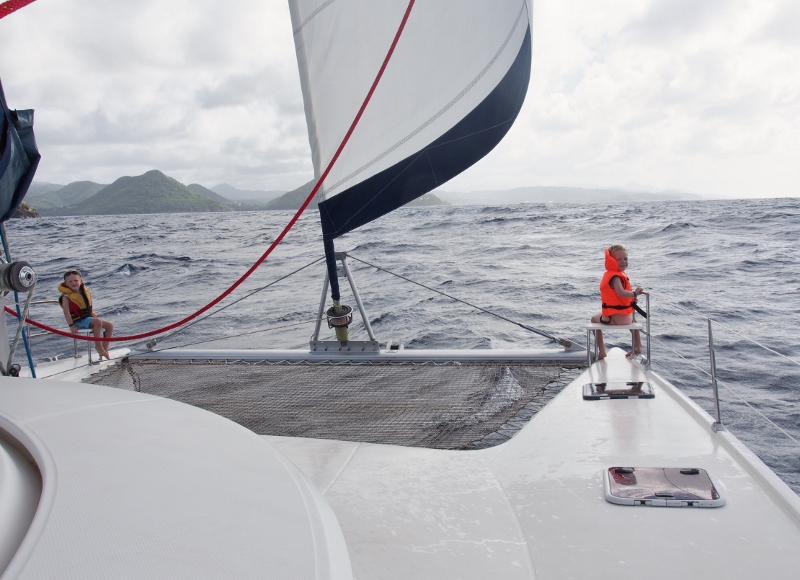
The boys in their favourite sailing positions, spotting St Lucia ahead

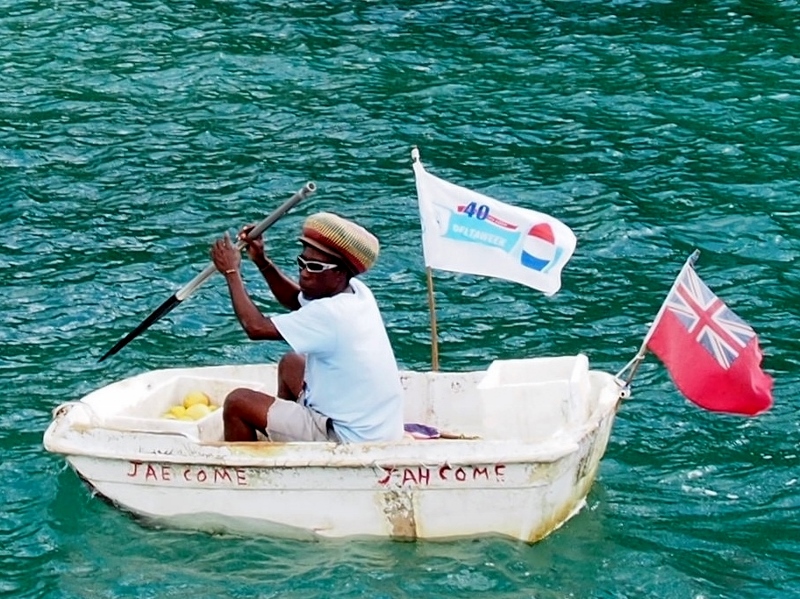
The following day we sail south to Marigot Bay, a sheltered bay famous for its beauty. As we enter the bay we meet our first boat boy –young men zooming around in dinghies, hanging around on the lookout for incoming yachties, offering mooring bouys, sightseeing trips, t-shirts, tourist trinkets, fruits and vegetables, and anything else that you may desire. Their boats range from kayaks and tiny rowing boats to fancy dinghies, the latter apparently often stolen from past visitors. Some are chilled dudes paddling around peddling a bunch of bananas, hoping to make a buck, whereas others zip about with massive outboards, carrying iphones in waterproof pouches around their necks, in constant communication orchestrating the movement of boats and services across the bay. Outboards are clad in colourful t-shirts to shield them from the sun, which gives each boat its own cheerful personality.

OLYMPUS DIGITAL CAMERA
Fruit and veg boat boy

St Lucia is significantly poorer than Martinique, and has a bloodier past. The local Caribs were particularly fearsome, and fought off colonisation from Europeans for a good 200 years after their first ‘discovery’ by Columbus. Like Martinique, the island was fought over by the English and French, and St Lucia managed to change hands no less than 14 times before it finally became English in 1814. As a result, the local Patois language is very French in origin. Slaves were imported for sugarcane plantations, and the population is now predominantly of African origin. St Lucia became independent in 1979, and the economy is now based mainly around agriculture (bananas, coconuts, cocoa, citrus), as well as a developing tourism industry.

Because of the poverty, crime is more common here than in Martinique. We try to stick with one boat boy at a time, establishing a relationship and paying fairly for their services in the hope that that will protect us from break-ins. After all, they live of yachties, and have a strong interest in the island having a safe reputation. Peter, the boat boy we meet in Soufriere, tells us about his life, pointing out his house on the shoreline. He is young, not more than 25, and already has a flash dinghy with a large outboard, and an iphone around his neck. He tells us that he sits in his boat on the lookout for yachts most of the time each day, and we imagine his life, getting by on whatever he can make out of the passing boats.

After our anchor dragging sagas (perhaps more imaginary than real, but I’d never admit that) we want a mooring, and negotiate the price with the ‘Boss Man of the Balls’. Having paid a steep EC$80, we get our ball, and a good night’s sleep.

Rugged volcanic coastline of Soufriere

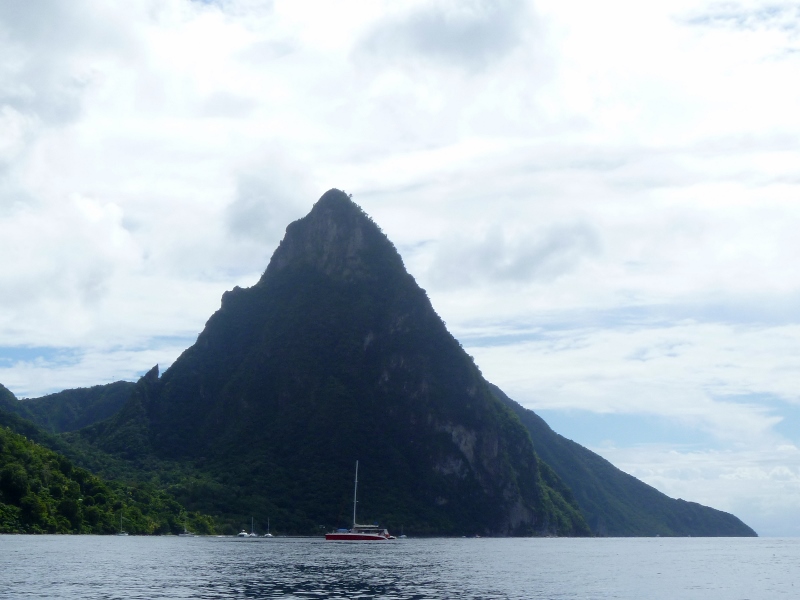
The next day it rains relentlessly, although we manage to glimpse a few rainbows when the sun pokes out briefly. After buying a bit of fruit and veg from a passing boat boy, we head south to Soufriere, with the plan of tanking up with water before heading for the Grenadines where water is scarce. At Soufriere the local boat boys seem hopeful that we can get water on the town dock, but an official bearing a radio clearly doesn’t rate our chances. A serene rastafari sits in lotus position on the dock, but we don’t feel similarly patient and give up in favour of going to visit the famous local bat cave, paying Peter the boat boy handsomely for showing us. The cave rises from the sea, a narrow fissure in the rock, its almost vertical walls covered in bats. You can smell them some distance away from the entrance, and fish flock underneath, eating the droppings. Strong tidal rips rush past the cave around the point, and we don’t fancy our chances snorkelling here.

Peace before the flying ant storm

So we move around the corner to the bay just north of Soufriere and spend the afternoon playing in the water of a marine reserve. The boys each buy a bamboo catamaran off a passing boat boy. All seems peaceful until shortly after dusk, when we are inundated with millions of tiny flying ants. They are attracted by the light so we shut all hatches and huddle in the dark, and decide to go to bed early. The following day we set out for the island of Bequia in the Grenadines early – we are off the mooring at 5 am, ready for our 10 hour long trip. En route we spend hours cleaning the tiny ants, now mostly dead, off the deck. There is little wind, so not much else to do, and once we’re finished, David makes bagels for lunch.