Boys’ boat blog: huge ships in Singapore Strait

This is CS Development.
Hello!

Introduction

Singapore Strait is one of the busiest shipping lanes in the world, and some of the biggest ships in the world use it! It is 105 km long and 16 km wide and around 2000 merchant ships go through it every day. A quarter of the worlds traded goods go through the Singapore Strait. The largest container ships in the world are about 400 m long and many of these go through the area.

Our AIS (Automatic Identification System) logs all the ships we meet in a 20-mile radius. We wanted to find out if:

  • Cargo ships are bigger than tankers
  • Longer ships are wider
  • Wider ships have deeper draughts
  • Smaller vessels travel faster
  • Cargo ships travel faster than tankers
  • There are more cargo ships than tankers.
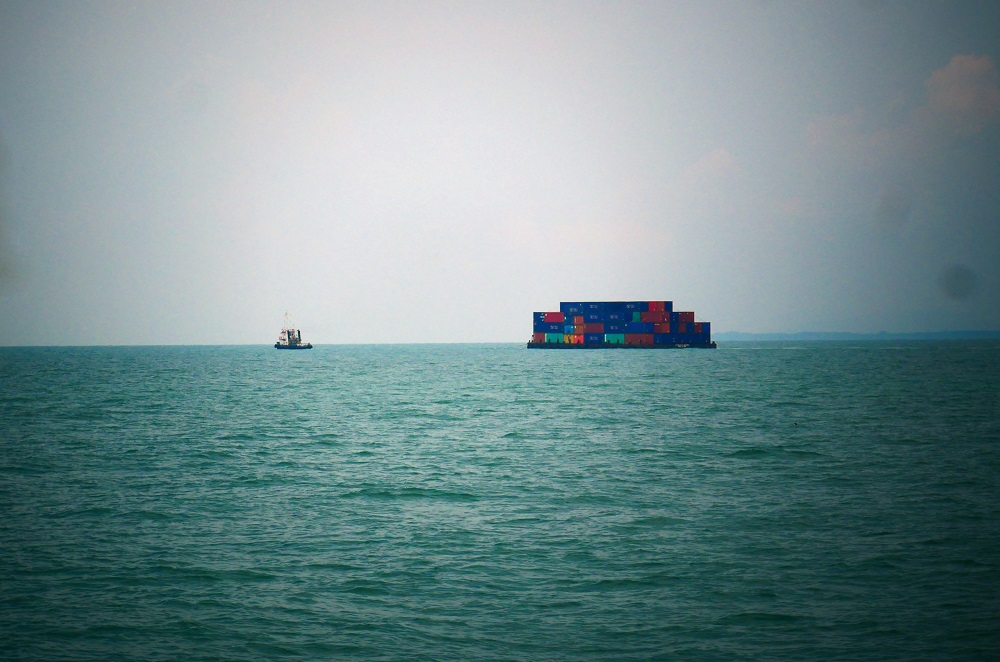
A tug boat.

Method

On 12 and 13 October 2019, we logged details from ships we met in the Singapore Strait for a period of 18 hours as we were sailing along. The things we logged were:

  • MMSI number (maritime mobile service identity – the ship’s unique identifier code)
  • Name
  • Length
  • Width
  • Draught
  • Speed
  • Position
  • Port of destination
  • Time
  • Type
  • Status, underway or at anchor
  • Latitude
  • Longitude
  • COG (course over ground)

We entered the data into an Excel spreadsheet where we analysed it for our boat school maths.
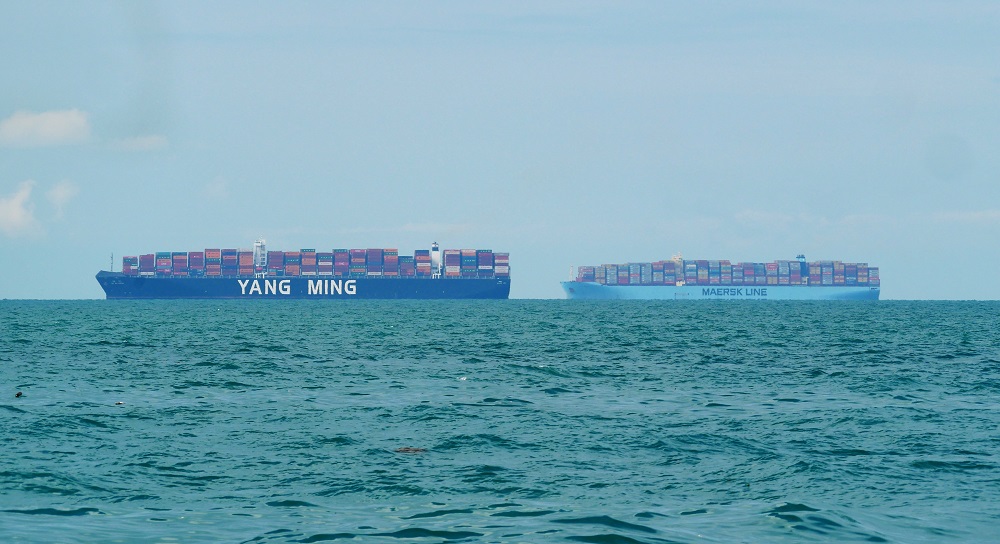
Huge cargoships.

Results and discussion

We logged 132 ships in total, of which 18 were too far away to get the type (the AIS records more details as the ships come closer). 36 ships were heading to Singapore, and 18 to China. 16 were heading to places in Malaysia, some to Japan and some to Indonesia, as well as Australia, Taiwan, Thailand, Vietnam and Brunei.

The pie chart below shows the number of each type of vessel.

Overall, we saw more tankers than any other ships, although cargo ships came close. All the other types of ships were very scarce. This makes sense because Singapore Port is the busiest cargo port in the world and almost a third of the ships were going there, and some of the other ships might have come from there.

The next graph shows the length versus the width of the ships.
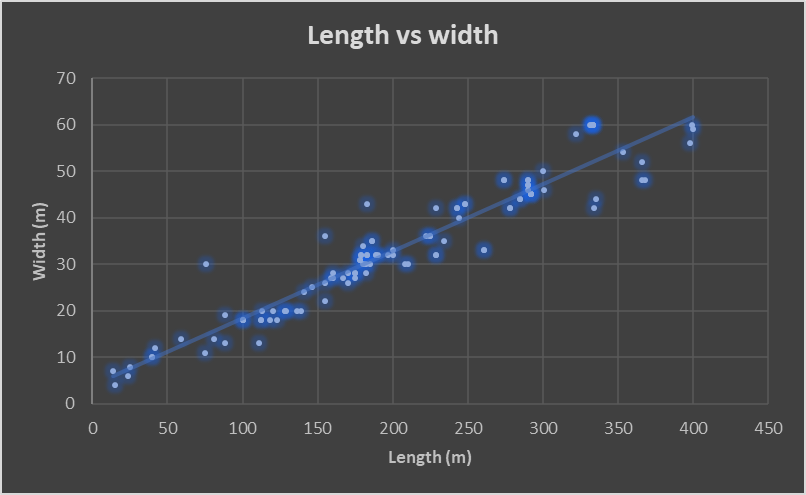
The ships increase in width as they increase in length. According to our data, the width of a ship is about 19 per cent of the length, although it does vary.

The graph below shows the relationships between the draught and the width.

We assumed that the wider the ship is the deeper the draught. Our data showed that it was generally true, but it varied quite a bit.

The longer the ship, the wider it is. The draught has to be bigger on the bigger ships otherwise the ship will not be weighed down.

The next graph shows speed versus length.
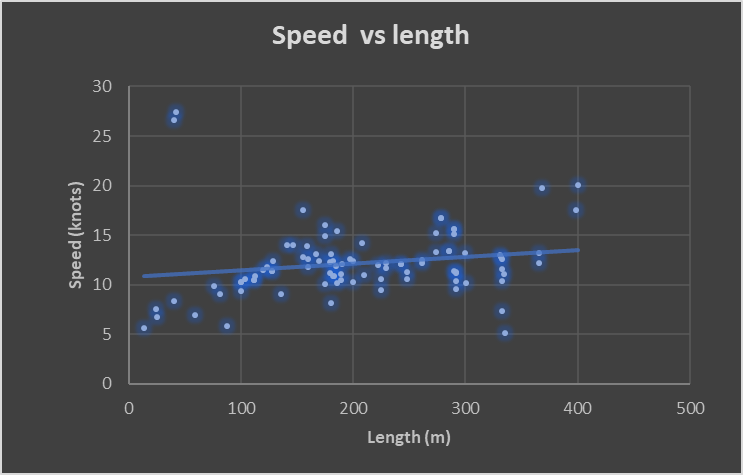
One of our hypotheses was that smaller vessels travelled faster than larger vessels. This was proven to be false. The two fastest ships were small, about 40 metres long, and were ferries.

We wanted to see if there was a difference in the speed of cargo ships and tankers. The next graph shows this.
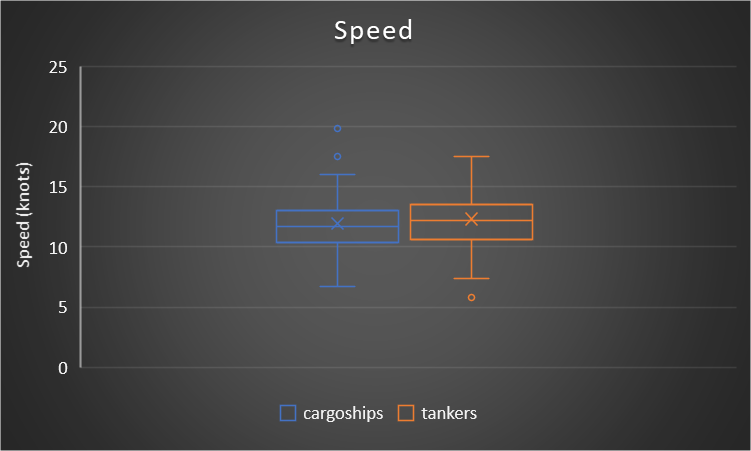
We thought that cargo ships travel faster than tankers, and we were right: the maximum speed of cargo ships was higher than tankers, but the tankers’ median speed was higher.

Below is a box plot showing the length of different types of ships.

Our last assumption was that cargo ships were bigger than tankers. This one varied a lot, but cargo ships beat tankers by more than 50 m, in terms of their maximum. The largest ship was 400 metres, so it was one of the largest ships in the world! The smallest cargo ship was much smaller than the smallest tanker, and the range of sizes in cargo ships was much larger than tankers.

Nowadays ships are reaching their maximum size. Too much bigger than 400 metres and the ship will not fit under any bridges, not fit through any canals, be very restricted to move, and will not be able to go in places much shallower than 20 metres. For example, a ship over 320 metres long cannot go through the Panama Canal, and a ship deeper than twenty metres cannot go through the Suez Canal.

Conclusion

We saw a lot of ships but if we continued plotting, we would have found many more. Most were recorded during the night. To make it more fun we pretended we were blowing them up so we needed all their statistics to find the right bomb.

Lukie’s boat blog: slugs and snakes

On the reefs of Indonesia, a war is brewing.
Mr Flatworm is looking for the secret entrance to the meeting room. He needs to participate in war plans against the snakes. “Ah found it!”

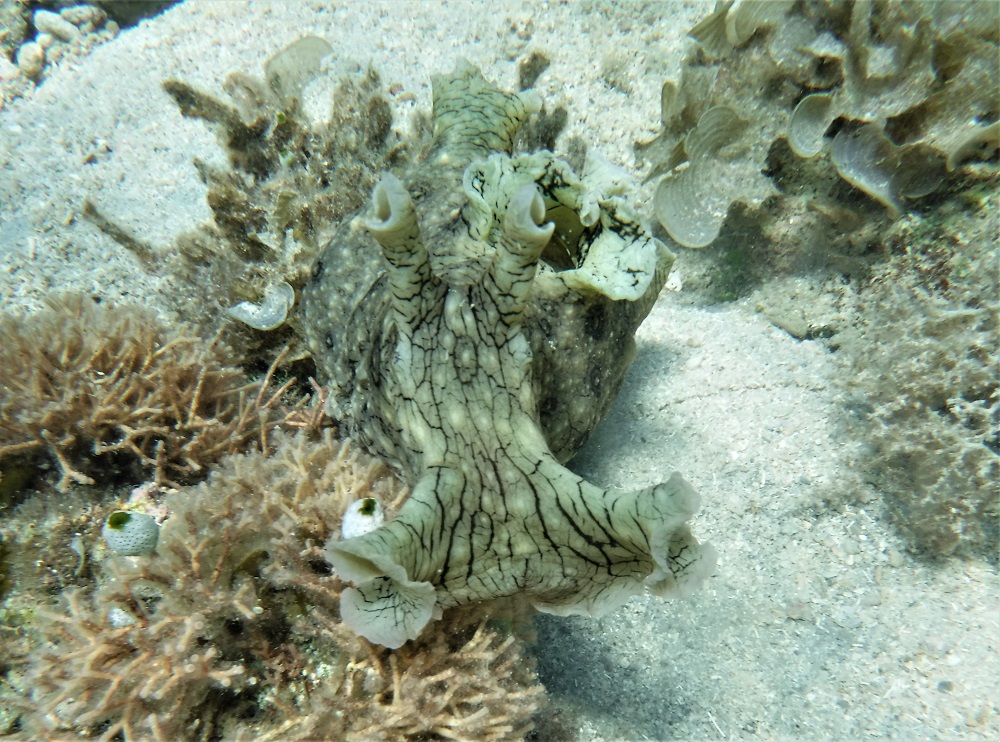
Nudie does not usually go to meetings but this one is important. The snakes are going to eat them and Nudie is a good negotiator. He has made a plan of where to put the defences over the reef.

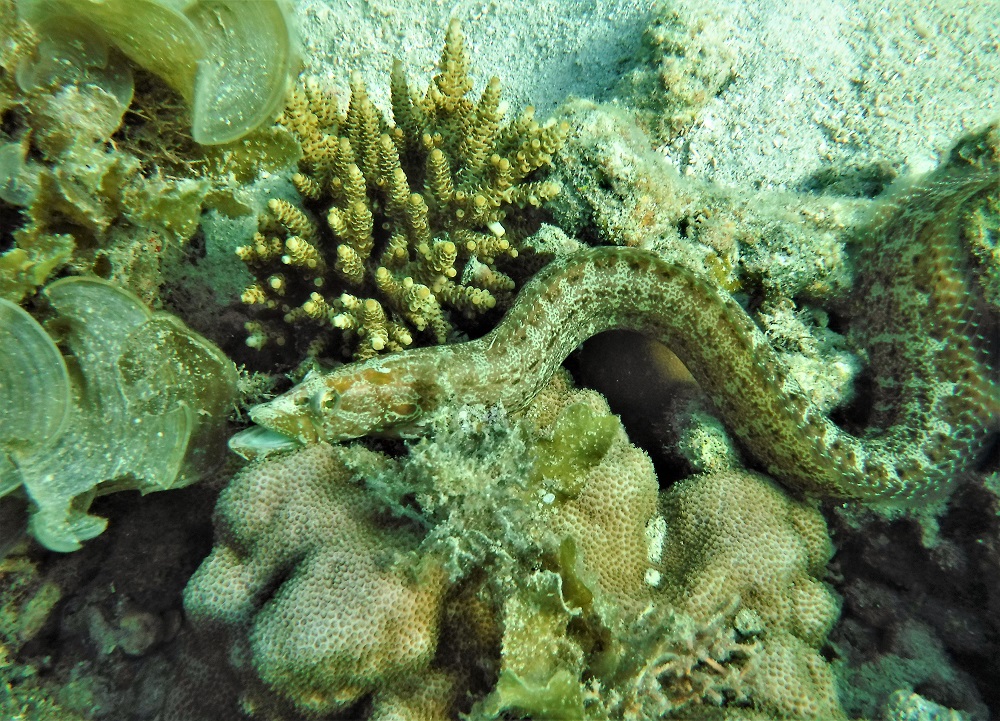
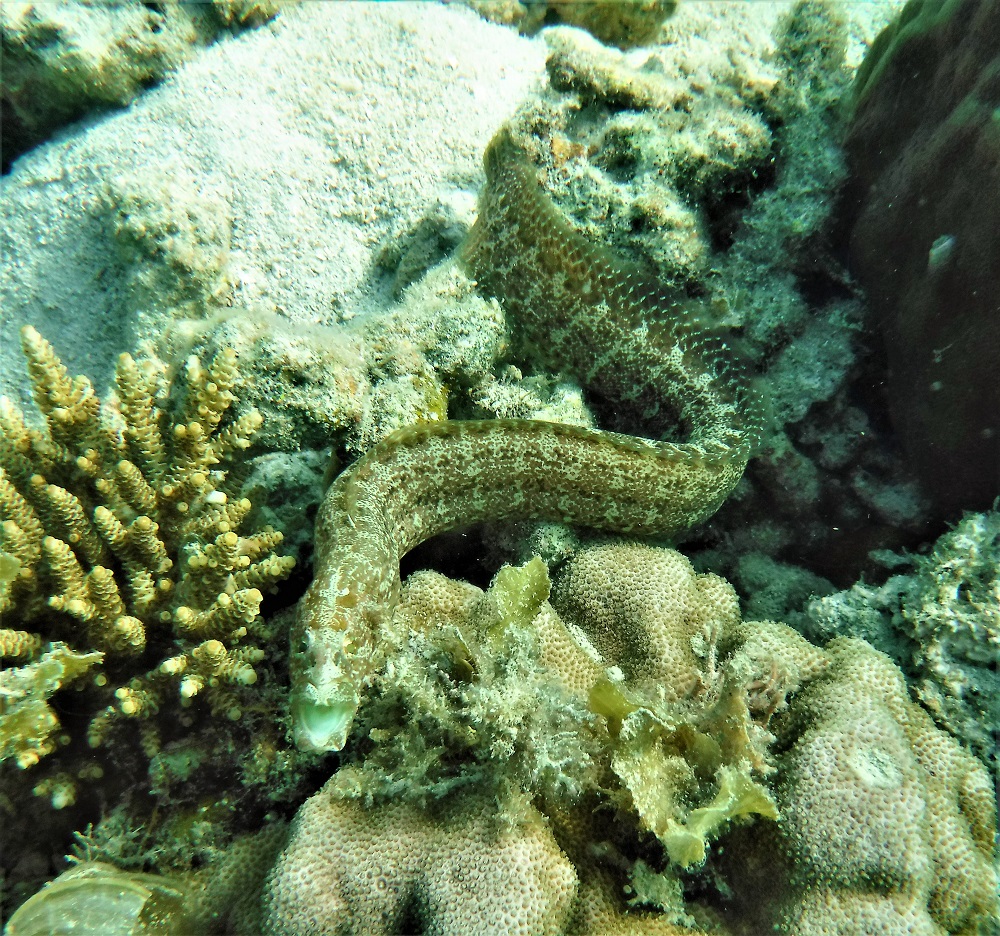
Meanwhile, King Moray is making a sneak attack plan. Eels and snakes are on the same team. He is going to send two assassins to go to kill two different targets. One is Queen Leafy, the other is the humans, the slugs’ two most powerful allies.

“Must go warn Queen Leafy!”  says the Urchin Fish.

“Must go warn the humans!” says Frank. Sadly, Frank never knew the humans lived out of the water. He can’t go onto a boat, so the humans were never warned.

These tube worms are Evil Pit Monsters that are ready to eat slugs on a moment’s notice. They are in the deadly prisoner pit. Once the slugs are captured, they will be thrown in here.

Sneaky Snake gets ready to kill the humans that are his targets. They are on their command ship. Humans are huge and he is small but his poison can kill them.

In the secret meeting room everybody is restless. “Everybody calm down!” says King Glutton, who is the king of the sea hares.

“Uhh, this is not working.” He shouts: “ORDER IN COURT!”

Everybody is silent.

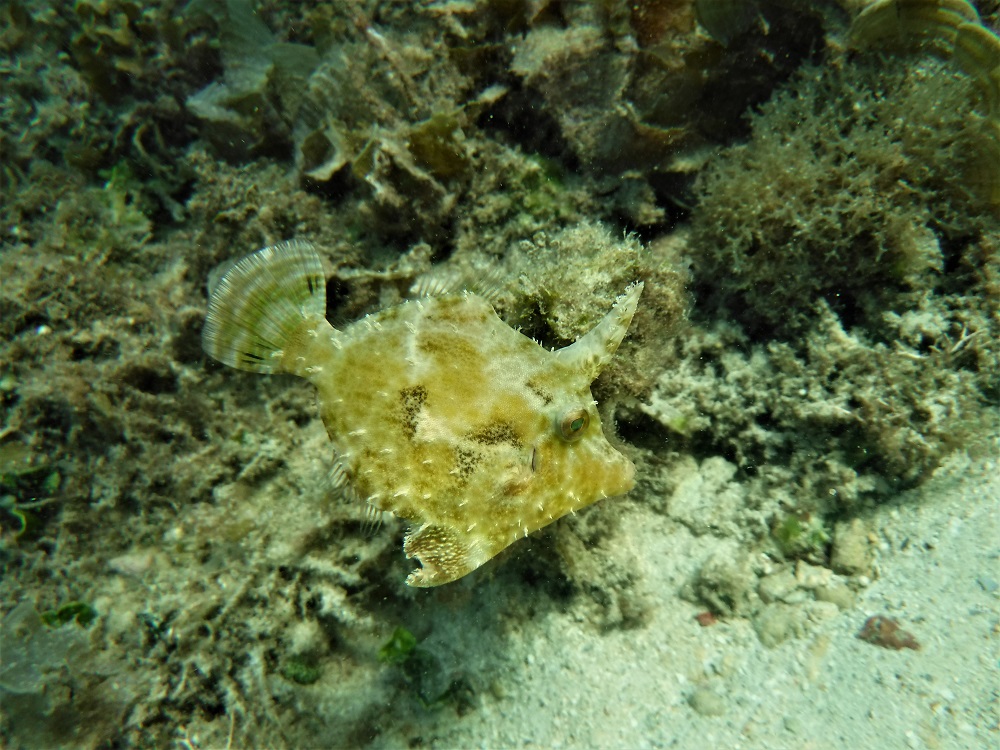
In the Leaf Head Palace, Queen Leafy is having some trouble. “Ahh! Go away,” she says to the Camouflaged Stalker. She knew she was being stalked but she hadn’t expected this!

“Never! I am here to kill you,” says Camouflaged Stalker.

“Die!” He lunges at Queen Leafy.

“I’ll save you!” shouts the jellyfish projectile fired by the slugs’ cannon. It smashes into the Camouflaged Stalker who swims away screaming: “It stings, it stings!”

On the humans’ command ship Sneaky Snake snuck along the top of the door but he slipped and fell on one of the human’s feet. The human shrieked and kicked him off. Suddenly a light was shining on him, he screamed “Ahhh! the light.” The humans plopped him into the sea.

“I’m scared,” says an innocent bystander, pretending to be a rock. He saw the slugs, Queen Leafy and the humans drive the snakes of the reef but he was still terrified.

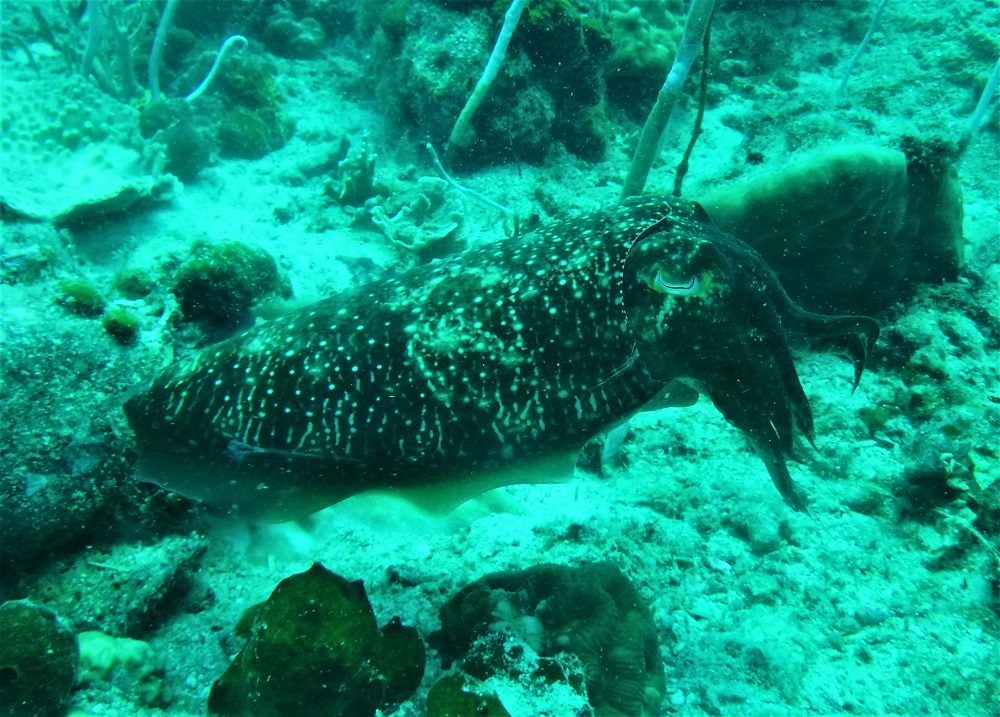
“Ggggggooooooddddddbbbbbbbyyyyyyyeeeeeeee,” says the giant cuttlefish. Thanks for reading.

Matias’s boat blog: Amazing Anambas

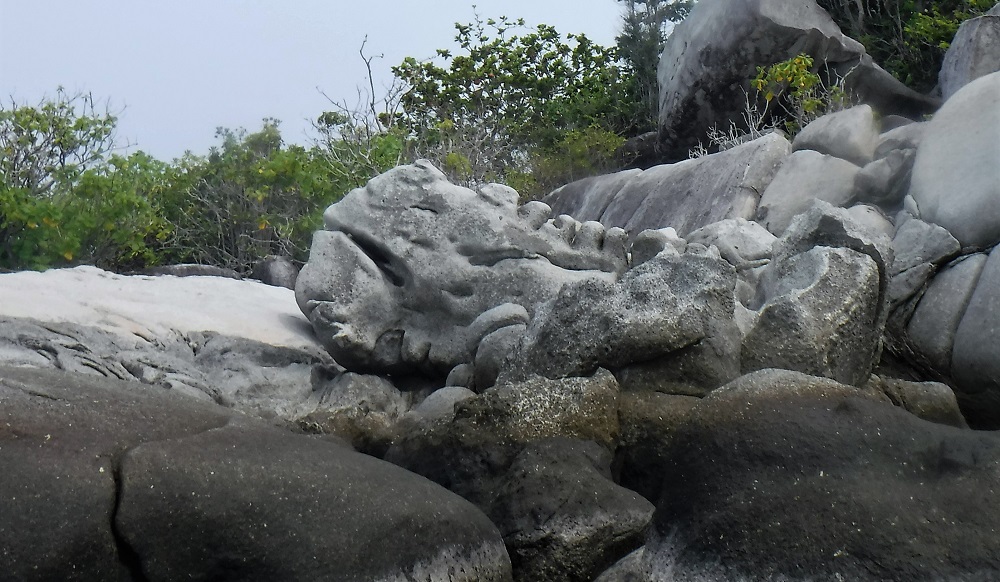
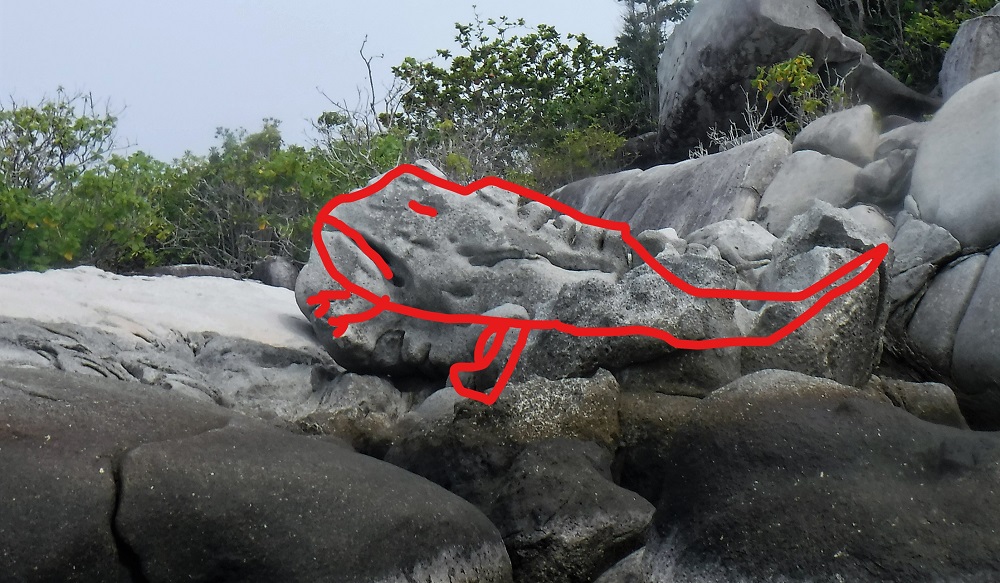
Lizard rock! Can you spot the lizard? If you can’t, the answer is at the end.

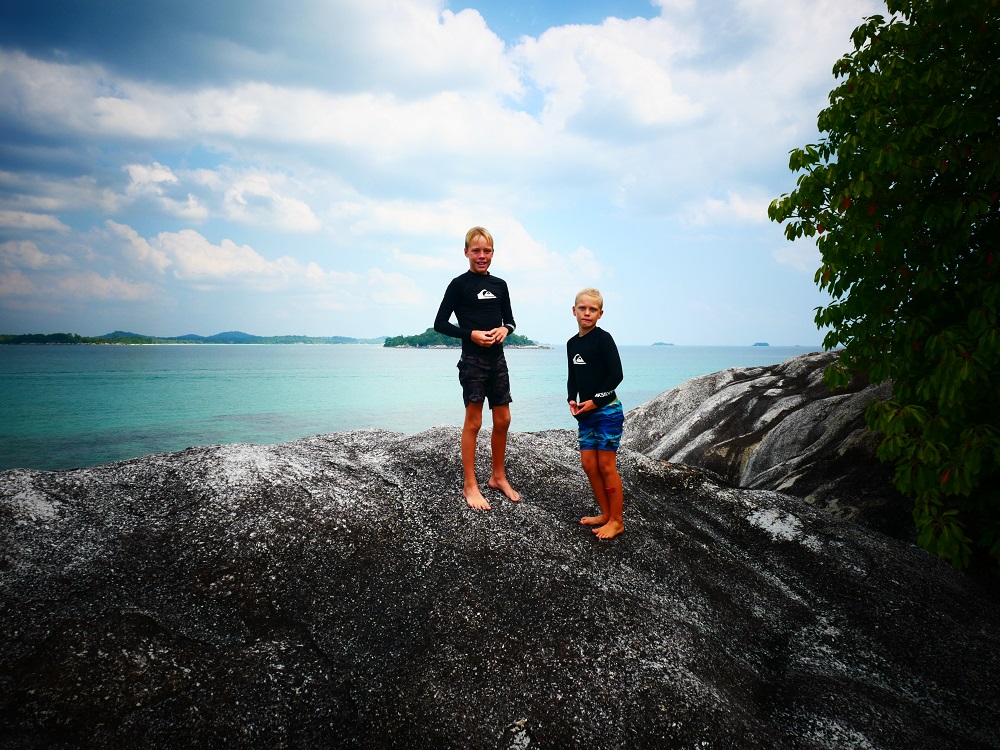
The last few days we spent in the Anambas Islands, the land of gigantic rocks. Lukie and I played all over a deserted island, we explored caves and were nearly crushed by massive rocks.

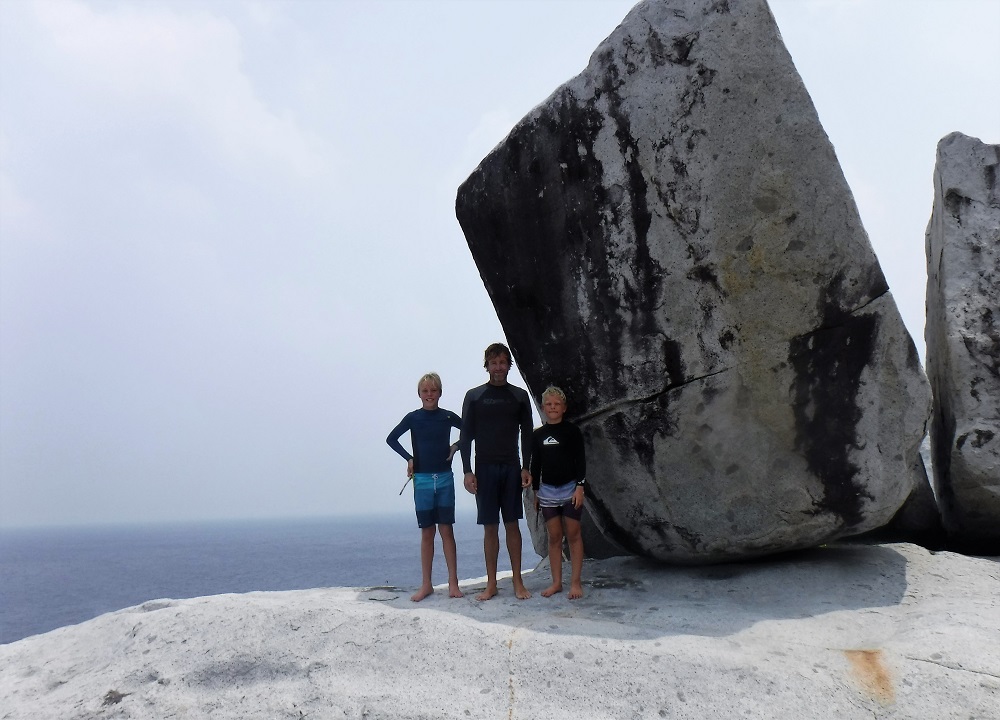
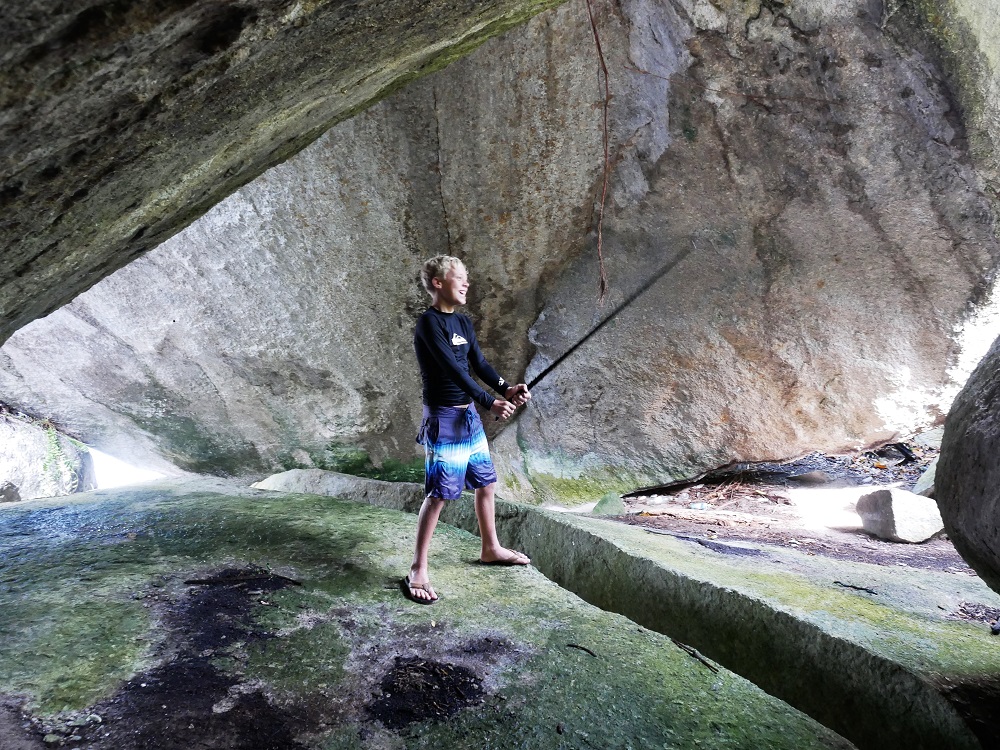
In this picture, we are standing under a rock. How is it balancing? This rock is a quarterh of another bigger rock (which is too far right of the picture to show) which was split in half and then half again.

Uh oh, we are in trouble! We could only just hold it up. This side of the island is very steep. Lukie and I played at the bottom of the cliffside constantly worrying whether the heavy granite rocks would collapse onto us.

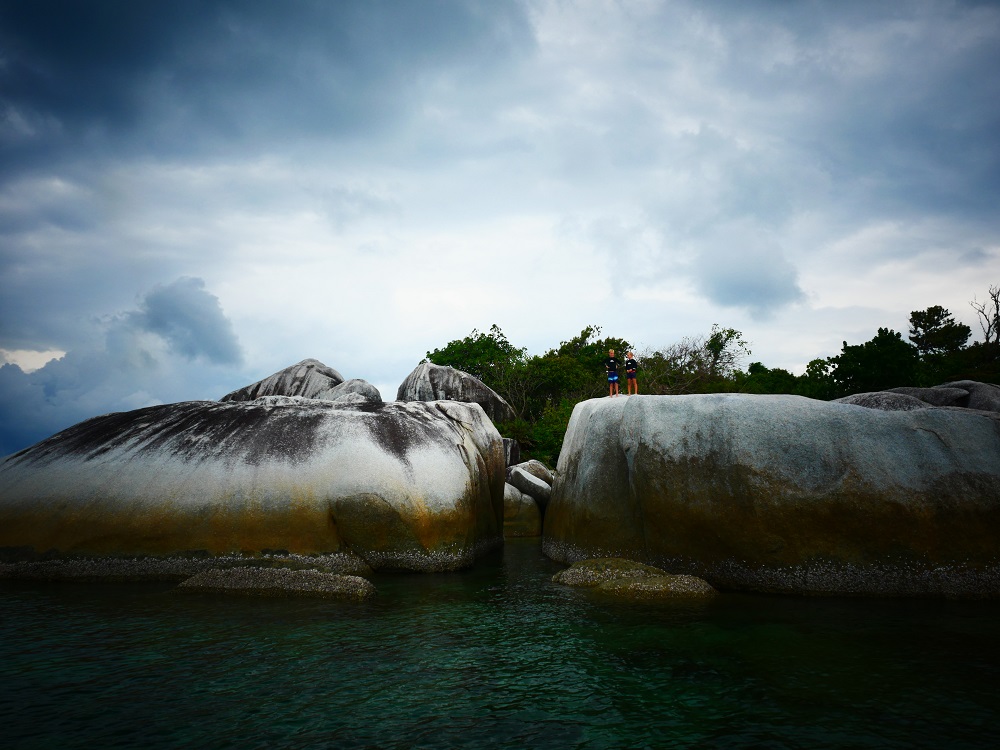
Another teetering rock. We were on our way to jump from the tall rock on the left into the ocean when the unstable rock started wobbling. We had to hurry because the balancing boulder was about to fall!

Lukie climbing into a cave we explored. We pretended a giant sandworm lived in the cave and we were explorers who needed to kill it. We searched all over but never found the worm.

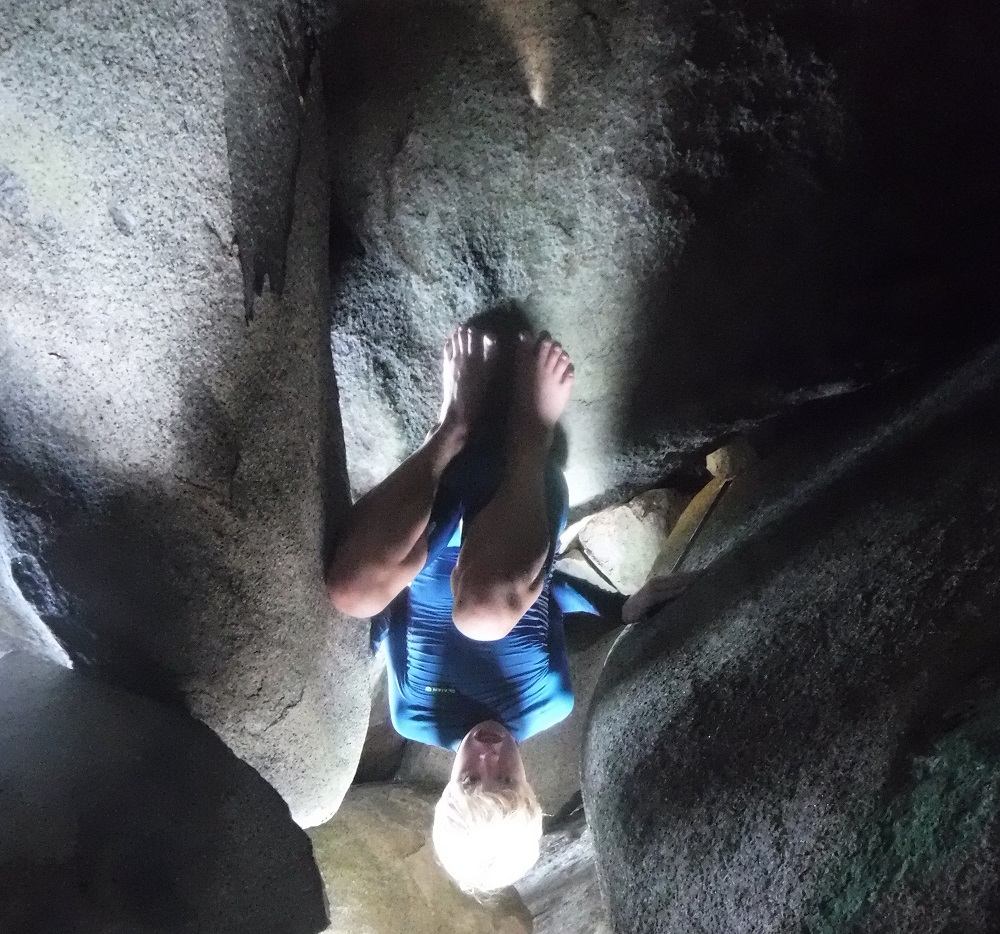
Lukie and his crazy gymnastics. The cave was made of hundreds of rocks, some of which were jammed in big crevasses.

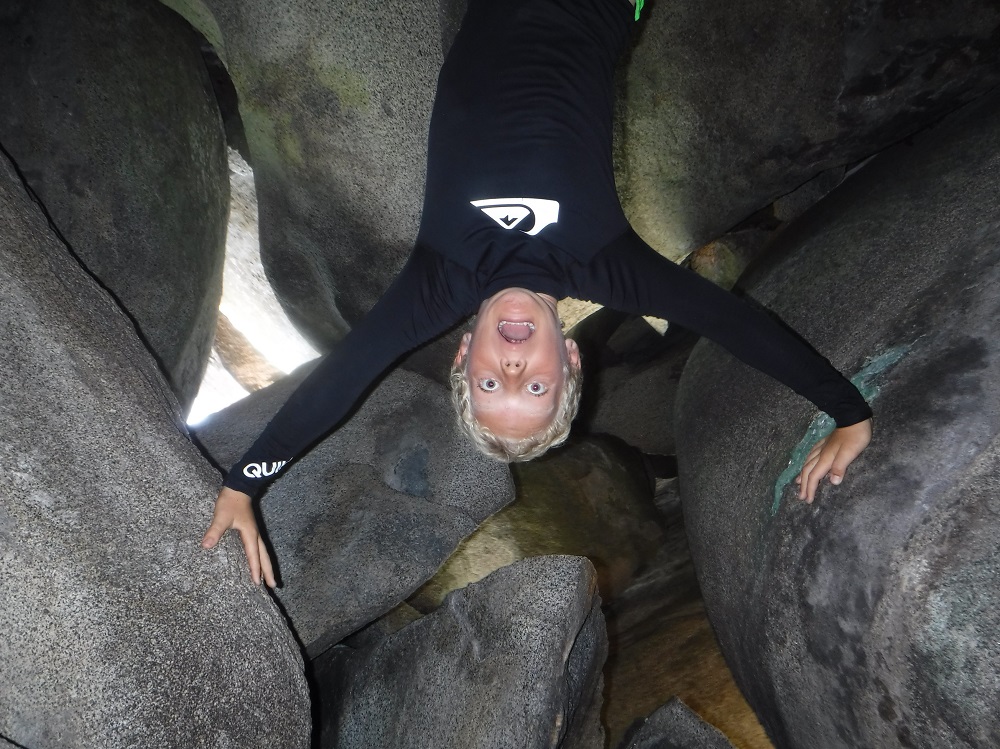
A close-up of Lukie’s petrified face. (He never got down, we left him for the worm.)

I’m gonna die! It’s a dangerous sport, rock hanging.

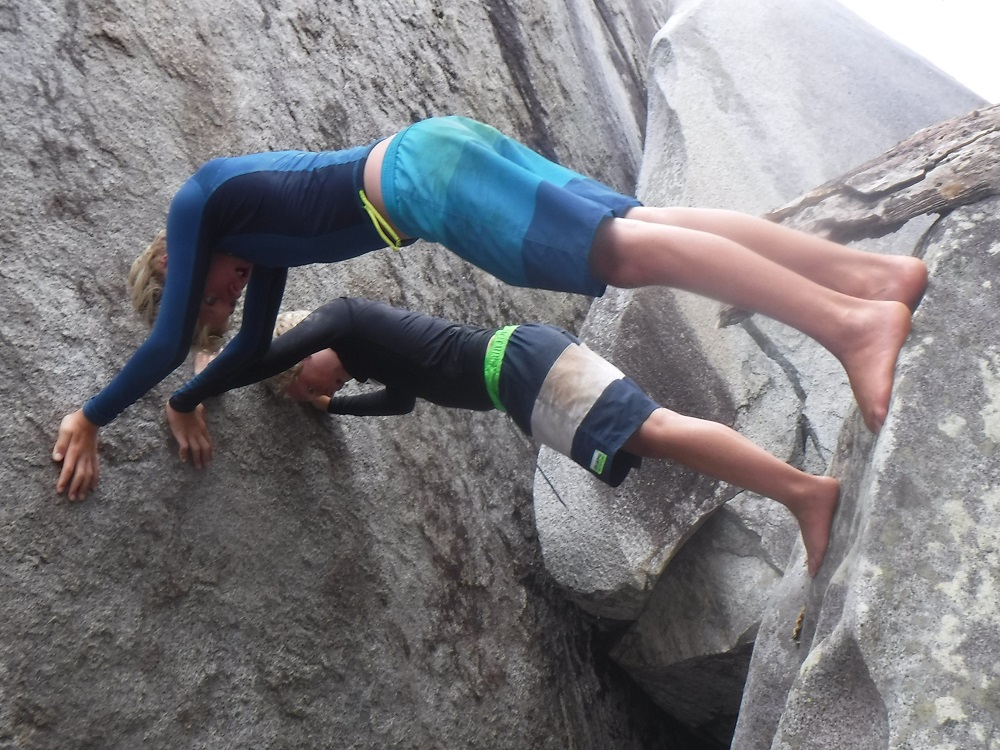
In places, the only way up the rocks was horizontal. Here Lukie and I are pushing apart the crevasse with our bare hands.

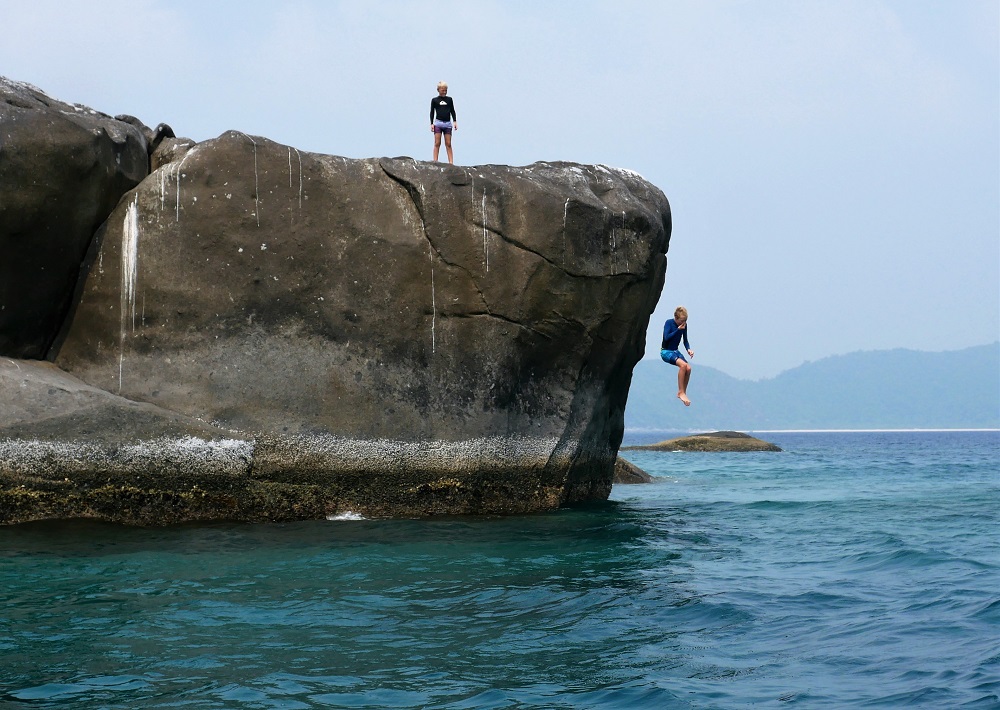
The jump rock! Lukie is doing his karate chop jump.

Me doing my sitting Yoda jump.

The triple-Mexican-wave-three-people-awesome-amazing-really-tall-pure- granite-rock-super-jump.

Here is the lizard from the first picture.

The island is basically made of rocks. It is brilliant. My Dad thinks that the place used to be a big mountain and it degraded over time, but I think differently. I think a giant came along and threw boulders everywhere. The lizard above is probably a petrified dragon.

Matias’s boat blog 24 Jul ’19: Belitung dragons

There are giant rocks around the islands of Belitung.

Our last stop in Indonesia was a hundred times better than I thought it would be. I never thought we would see dragons after Komodo island, but I was wrong.

There are big rocks everywhere in Belitung.

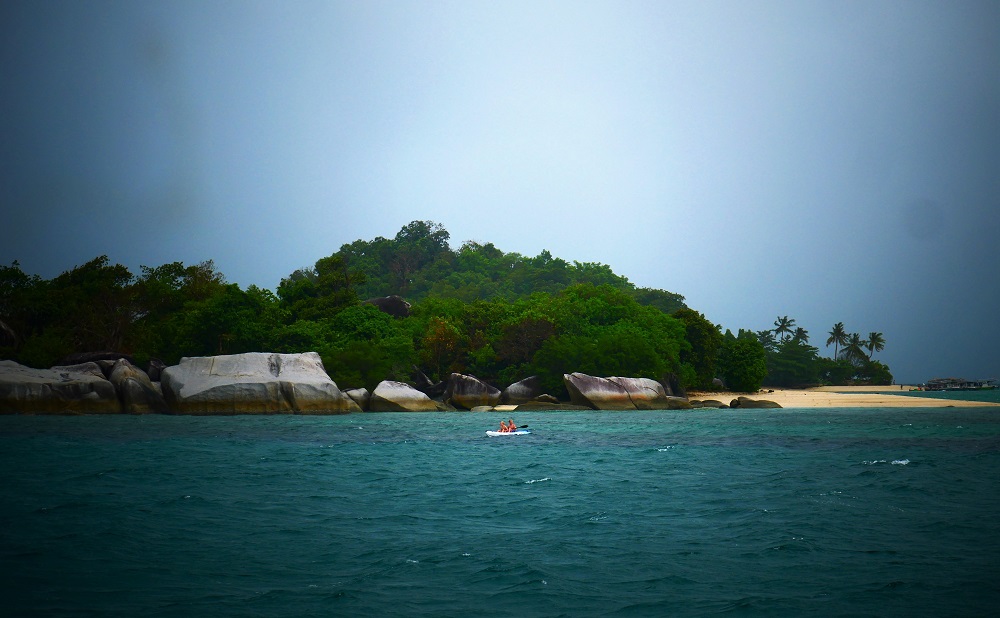
Last week, Lukie and I decided to go ashore to play on an island covered with big rocks. We were in a place called Belitung, a group of islands in central Indonesia that we had stopped at on our way from Borneo to Malaysia. Belitung is a beautiful group of atolls with smooth, white rocks surrounding the small sandy islands filled with deep green forests. As soon as Lukie and I saw the islands we went wild. We both wanted to go ashore to play pirates or Jurassic Park.

Kayaking to Dragon Island.

We were anchored next to the biggest one. Our island had massive rocks surrounding it as if a giant had carelessly dropped them, and a beach on the opposite side. In the middle of the island there was a small forest.

When we got there, we dragged the kayak up the beach and ran around, letting out all the energy we had stored up on the three-day passage from Kumai. It had been a while since we had been on a sandy island, and this one was amazing: the rocks on the island were massive and one had a stone ramp going up it. You could jump over gaps onto other rocks and hide in caves.  One cave was full of bats!

Me in the bat cave, ready to fight Lukie.

Lukie and I were climbing around the rocks when he wanted to play Lord of the Rings, so I hid in the forest which was full of rocks, vines and trees, to get away from his monster. After a while of sneaking around in the forest I wanted to leave but a rustle of leaves told me not to. I looked around to try and find the source of the noise. Was it coming from under a rock? No, nothing there.

I started to run up some rocks to get to Lukie who was calling my name. On the way to him I went through some boulders to remain hidden. Suddenly, something appeared in front of me. I nearly fell off the rock with surprise. I ran up to Lukie, my heart racing.

“Lukie! Guess what I found!”

“Shush Matias, Mummy wants a photo.” Our mum was just off the rocks in the dingy with her camera.

“I found a monitor lizard!”

“No way? You’re lying!”

A monitor lizard is sort of like a Komodo dragon, just smaller and more grey or black. The one I saw was about 30 cm long.

Lukie and I on the large rocks.

My Mum said it was lunchtime and we promised we would come soon in the kayak. But we shouldn’t have stayed. As soon as she had left it started to rain and it became very windy. Lukie and I attempted to kayak back to the boat but we were pushed downwind and ended up on the beach. Rain started to pour down so hard it hurt so we tried to find shelter:

First we hid under an overhang with water pouring off it. The water fell so heavily it was like a massage. We played with shells under the waterfall for a while but then we got cold.

Then we moved to a little overhang high up near the bat cave. We had to climb up there but we didn’t want to stay because it was too slippery and it was a 10-metre drop at least if we slid off. The overhang wasn’t rain proof, so we had to find somewhere else.

Last we went into the bat cave, which was full of tiny bats the size of a baby’s fists. There was a lot of bat poo and it smelled strange, so we left.

Once the rain had stopped we left the cave and on the way through the forest we found a blue egg which was half broken. I picked it up and showed it to Lukie. It was very leathery and had some yellow, runny yolk in it. I thought it was probably a monitor lizard egg so we didn’t keep it, just in case the mother would come and eat us.

We went onto a stone platform near where I had heard the rustle. This time we didn’t hear anything but we saw the culprit. A big lizard was looking at us, it was about a metre long: a monitor! It darted towards us like a slingshot bullet and disappeared behind the rock we were looking from, which was only about a metre away. We shot off the stone platform onto the beach, quickly putting the kayak in the water. The wind had calmed down so we managed to get back to the boat.

A few days later we went back to the monitor lizard island to look for it again. This time our Dad was with us. At first, we heard the lizard but didn’t see it. My Dad was scrambling over the rocks and I climbed after him. When I reached him, he said that he had seen a monitor run under a rock. After a bit of climbing we jumped down next to the hole and looked in. I saw it run further into the cave and then it was gone. I got my camera ready and pointed it in the hole.

“Matias, give your camera to me, I have an idea.” My Dad turned on the flash and took pictures of the hole. After a couple of shots, we decided it had escaped. I was a bit disappointed because I wanted to prove that I had seen it and I wanted a photo.

Belitung was our last stop in Indonesia. There, we did quarantine and harbour master and everything else we needed to do to leave the country because we were going to go to Malaysia so we could fly to Europe to see our family.

We were leaving Indonesia: NOOOOOOO!!!!! I am going to miss the food, the animals and our friends. Well, some of our friends are in Malaysia, so we will hopefully see them there.

Dragon Island.

Lukie’s boat blog: Dragon Island

Us behind a real dragon!

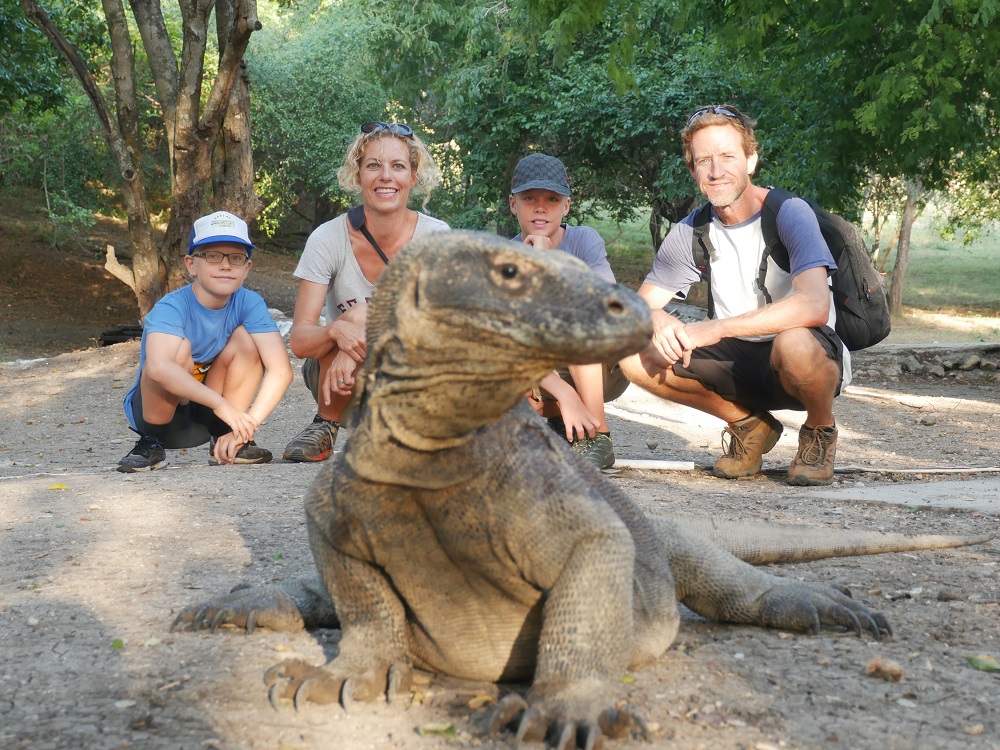
I suddenly woke up and remembered TODAY WE ARE SEEING DRAGONS!!!!!! Yes! I rushed upstairs and got ready. The boat was anchored by Rinca Island in Crocodile Bay. Rinca Island is one of the only islands which has Komodo Dragons, they only live in Indonesia. Did you know that Komodo Dragons were named after Komodo Island which is right next to Rinca?

The dragons have forked tongues.

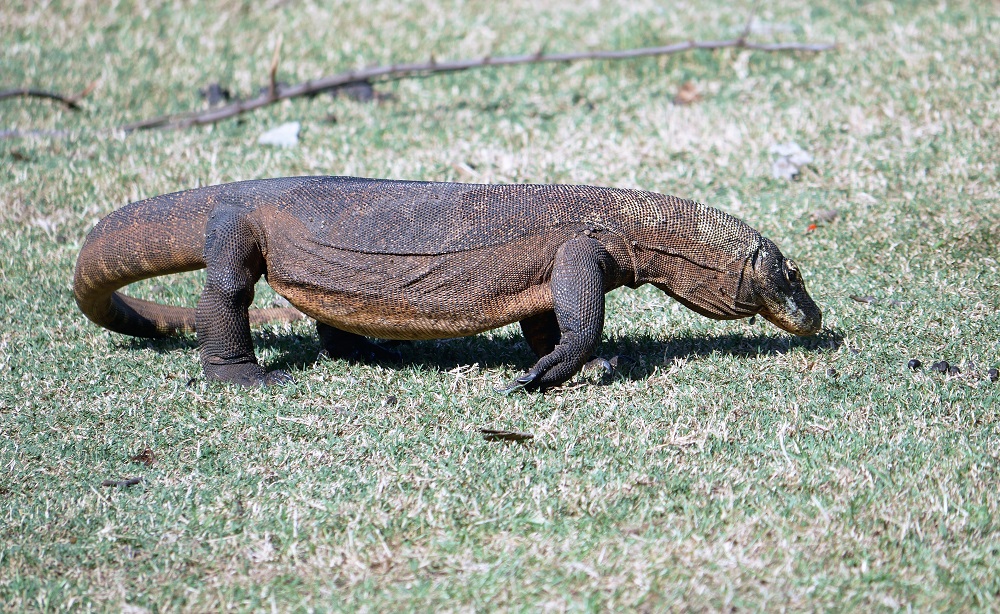
Immediately when we got to shore we saw some small macaque monkeys running next to some dwarf trees. And two Komodo dragons slowly lumbering around. The dragons were as long as I am, and a greyish black colour with forked tongues flicking in and out; they did look a bit like dragons in a movie but without any wings or spikes.

Macaque monkeys were running around.

The first thing we did was go to the ranger building to get a guide. We needed a guide so we did not get eaten by the dragons. The dragons usually eat pigs, deer, buffalo and monkeys, they have also been known to attack humans. Their bite is deadly because they have poison and bacteria in their spit. The guide would defend us with a stick: he spent six months training how to fend off a Komodo dragon before becoming a guide.

Sunbathing.
Lumbering around.
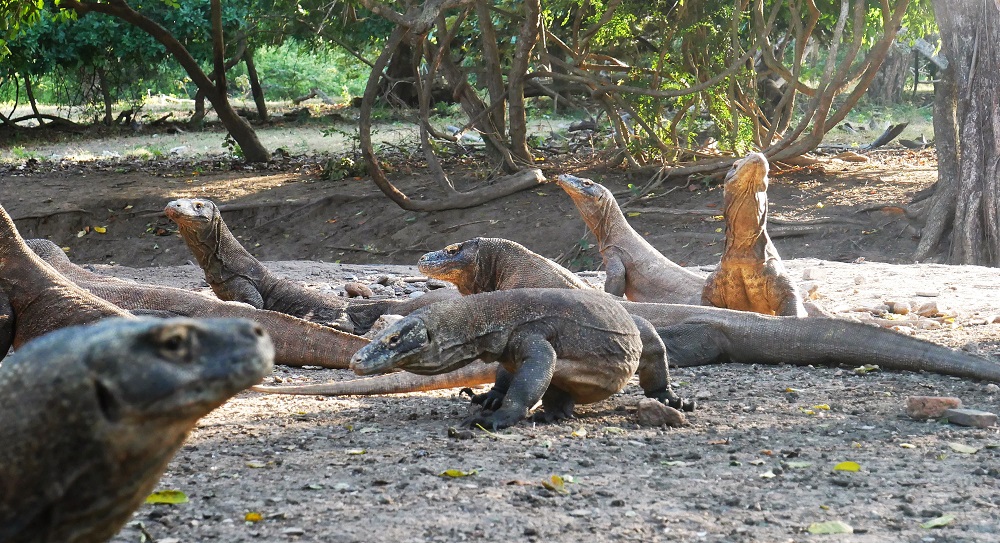
Group of dragons sunbathing.

There were three walks: short, medium and long. We chose the long walk. Before we started we were shown various videos of people and animals getting attacked by Komodo dragons by the guide.  Right at the start of the walk, we came across a group of eight dragons piled up on top of each other, sunbathing. They looked relaxed and proud. I asked the guide how the dragons kill their prey and he said that if they find a deer they jump up and bite their necks. But with buffalo, they bite their back leg and wait for their poison to kill it. The dragons use nests made by the megapode bird and guard their eggs until it rains after which the mud covers the nest.

Us and the guide on the top of Rinca island.

It felt amazing to see the dragons, they move like they are the king of the island. They live up to 50 years. There are 1700 people and 1500 dragons on the island, on the threatened chart they are listed as vulnerable, which is surprising.

Fat dragon by cafe.

After the walk we stopped at the café to get a drink. I never realised how fat a Komodo dragon was until I saw it from the top, I could see it from the café’s raised platform. Before we headed back we took one last look at the monkeys and deer. Today was an amazing day.

Deer on Rinca Island.
Macaque monkey eating a nut.

Matias’s boat blog 6 May ’19

Me diving.

Impressions from Wakatobi

I have not had an idea of what to write about as we have been moving from city to atoll to reef to a dive resort, which is where we are now.

Last week, a Swedish boat with two 10 and 11-year-old girls and a 6-year-old boy invited us over for dinner. The kids didn’t speak much English so we played card games and pillow fights where Lukie attempted to suffocate me. When we arrived Mum and Dad got out of the dingy with Lukie. I was about to get out too when I noticed a moving rope on the petrol tank.

It was a sea snake! It slithered off the tank into the water at the bottom of the dingy. I picked it up and put it in the bailer. They are very poisonous but their mouths are so small that they can only bite the skin in between your fingers, so that’s why I didn’t hold it.

“What does it feel like Matias?” asked Lukie as I dropped it in the water.

“Like a sea snake,” I answered as I was getting out. It felt like a rough rubber hose.

Sea snake

The Swedish boat had bought a big trevally that we had for dinner after Lukie had decided I was not a soft toy that he could strangle. This also happened to be the first time I have tasted cuttlefish. A woman from another boat had brought a curry to the party. I ate the curry, it tasted good. Afterwards, my mum asked me if I liked the cuttlefish and I said:

“What cuttlefish?” The cuttlefish was in the curry.

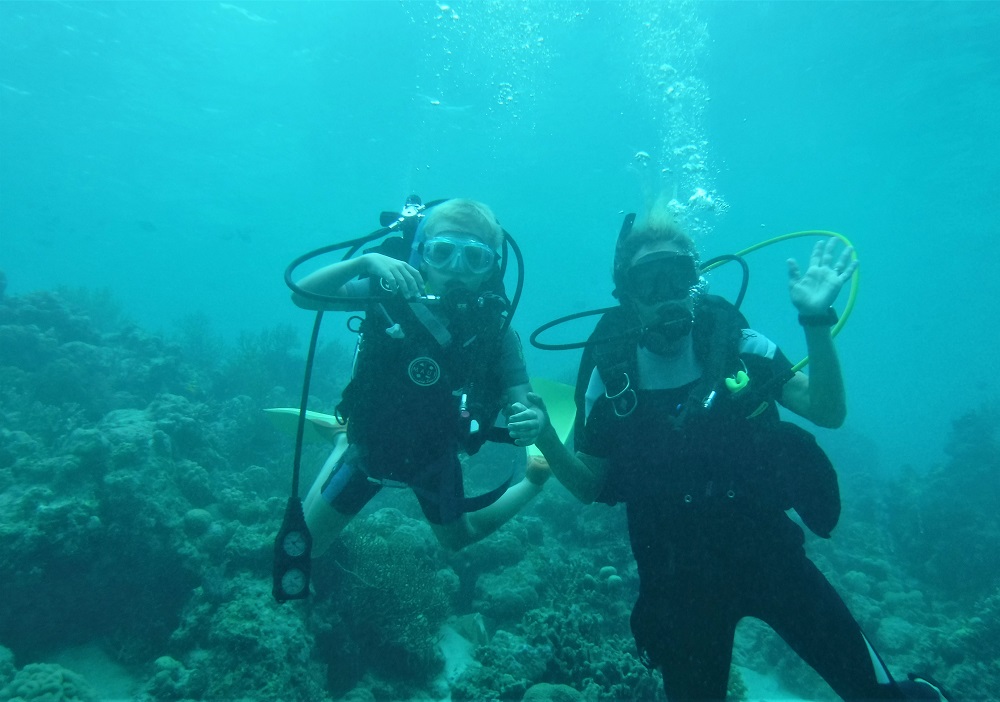
The day after the dinner, I did a try dive with my mum. I had to put on my BCD, buoyancy compensation device, and roll backwards into the water from the dinghy. I was wearing my short wetsuit so as soon as I went down to 5 metres I was freezing.

The day after, me and my mum did another 2 dives, one in the morning and one in the afternoon. On both I was wearing a longer wet suit, but on the second when I went to 11 metres I was a bit cold.

Under the water were some bamboo platforms where we practised some skills like taking off my mask and recovering my regulator so I could get it back if it fell out of my mouth. We did a tour around the area and had a spade fish follow us around. When I waved my finger at it, it started to chase my finger until the last second where it turned away and started to do fishy things again.

Me and my mum on the bamboo platform.

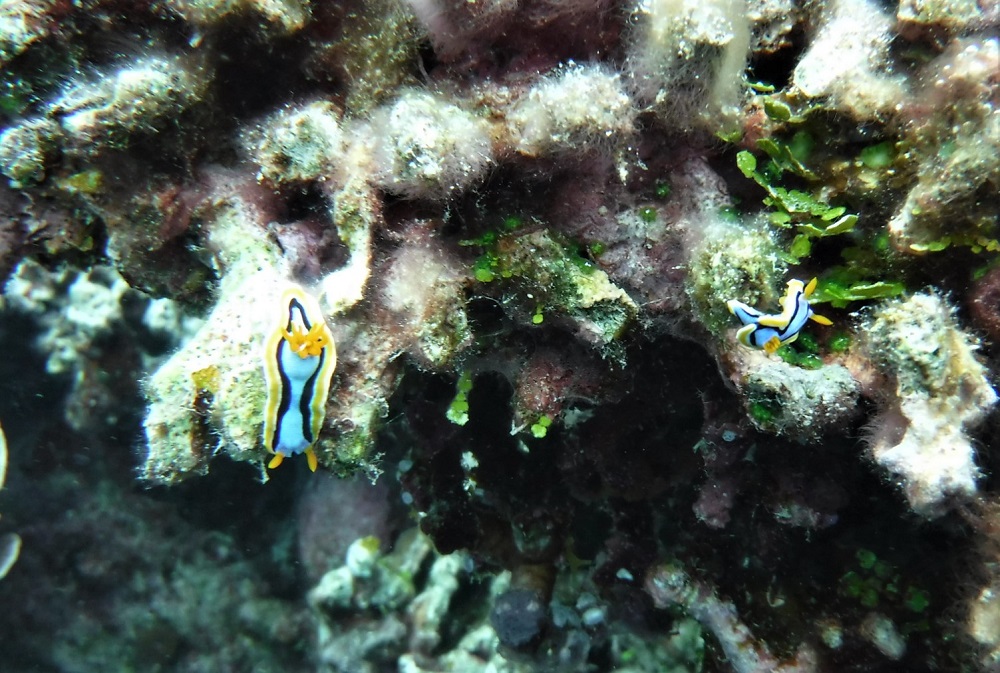
We also saw some nudibranchs that we had never seen before.

I like diving because you get more time in the water than when snorkelling, so you can get a better look at things.

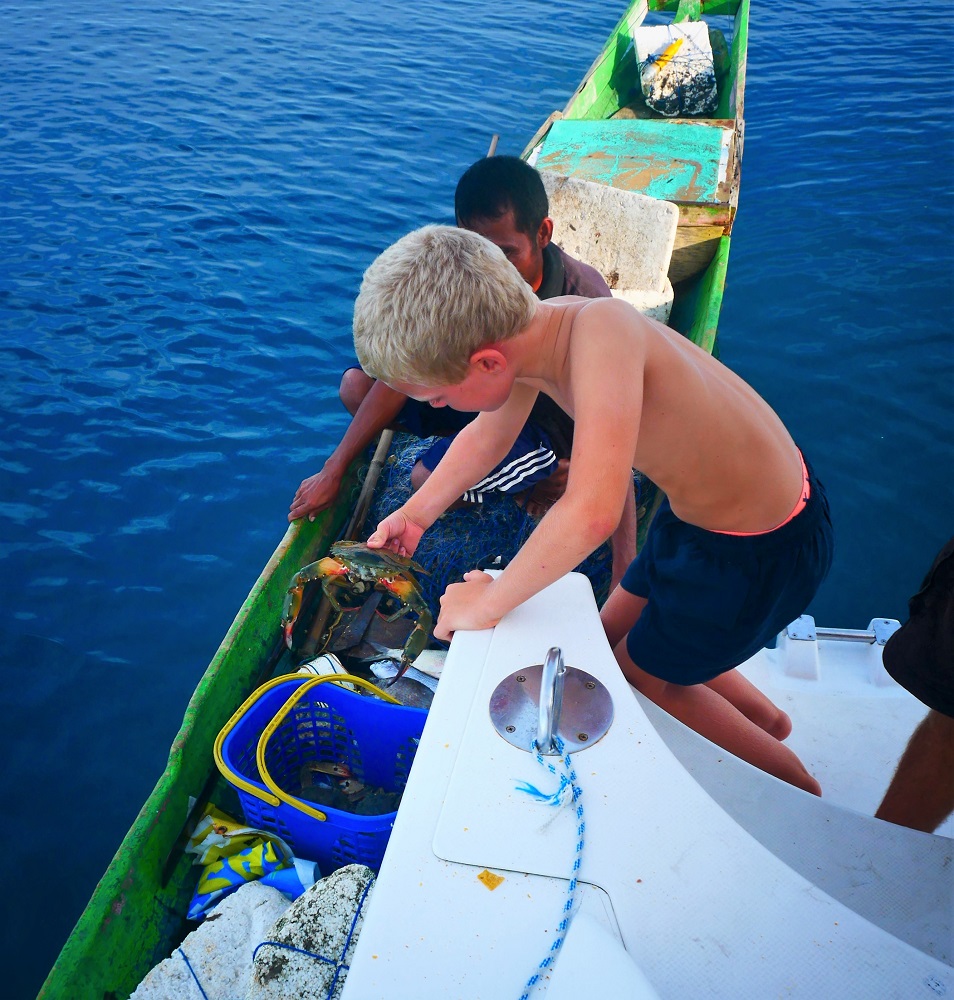
In the afternoon a local in a boat tried to sell us a fish. We already had some so we said no thanks. Then he offered us some crabs. They were half a foot long and still alive so we decided they could be dinner.

After thanking the local fisherman and giving him some money, we put them in a bag which we tied to the boat and dropped into the water. My Dad cooked them at lunch time, and at dinner I tried some. I am not a big fan of crab or crayfish, and I was not expecting it to be so cold. I would have liked them more if they were warm.

The day before yesterday I did my last dive. On the dive we did no skills and saw lots of sea snakes. When we got out Lukie said:

“Matias did you see all those sea snakes? One zoomed out from the water and nearly hit me!”

I nodded and unclipped my dive gear. Lukie asked my mum whether he could have a go so a second later he was under the water looking for more snakes.

Luki.e and my mum

Yesterday a local in a boat came up to us. He offered us a bucket of water. Inside were a bunch of lobster tails.

“Wait here,” I told him.

I went to Dad and said:

“A local want to sell us lobster tails.”

My dad looked puzzled and went to see.

“Ah, mantis shrimps!” he said.

I went inside to Mum. “What are manta shrimps?”

Mantis shrimps are fat shrimps the size of your foot with eyes and legs like a praying mantis, just only more scared-looking than evil-looking.

In the evening we had some other people over. Lukie and I were mainly playing in my room while they were there, and when they were leaving I asked: “What did we do with the mantis shrimp?”

“We had it for dinner, did you not get any?” my Dad said.

“Aw, I wanted some!” said Lukie, a little bit annoyed.

Apparently, it tasted like lobster.

Kids’ blog 11 Mar ’19 – Beach cleanup

Plastic in the ocean is a problem. While sailing around in Indonesia we have seen a lot of plastic on beaches and in the ocean.

Plastic in the sea is bad because fish die. They eat plastic because they think it is food. If they keep eating plastic, their bellies will get full because they cannot digest it. The fish will keep on eating because they are hungry, but they will have no space for any more food, and then the fish will starve. Plastic ropes and nets can tangle up animals like turtles and dolphins underwater, who will die because they will not be able to move to the surface to breathe.

We came up with an idea to collect data on how much plastic there was on an island called Pulau Leleve for our boat-schooling.

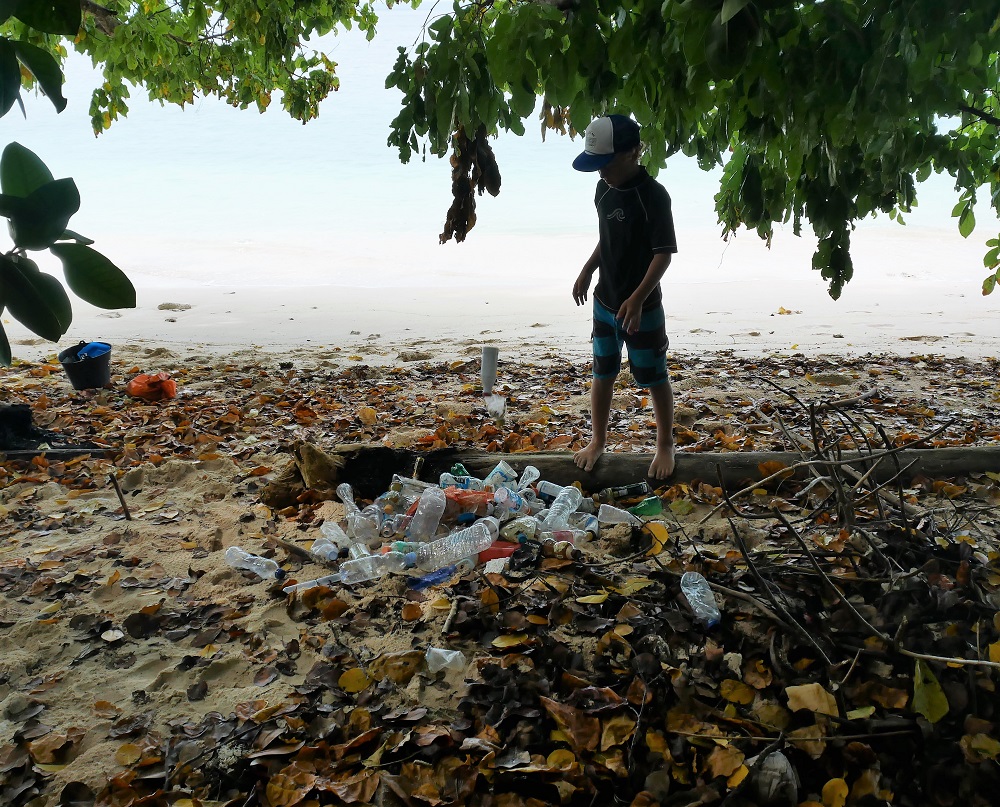
Pulau Leleve is a small island east of Halmahera in the Molucca region of Indonesia. Nobody lives on Pulau Leleve but fishermen visit it sometimes. It has a beautiful white beach and further up the shore perfect, shady, plastic-filled areas of shoreline for us to sample.

Our hypotheses were:

  • There is more than 20 pieces of plastic per every 10 metres of shoreline.
  • Every ten metres of shoreline there is more than a bucketful of plastic.
  • We will find more plastic drinking bottles than any other category.
  • Most plastic on the island is under thirty centimetres long.

Methods

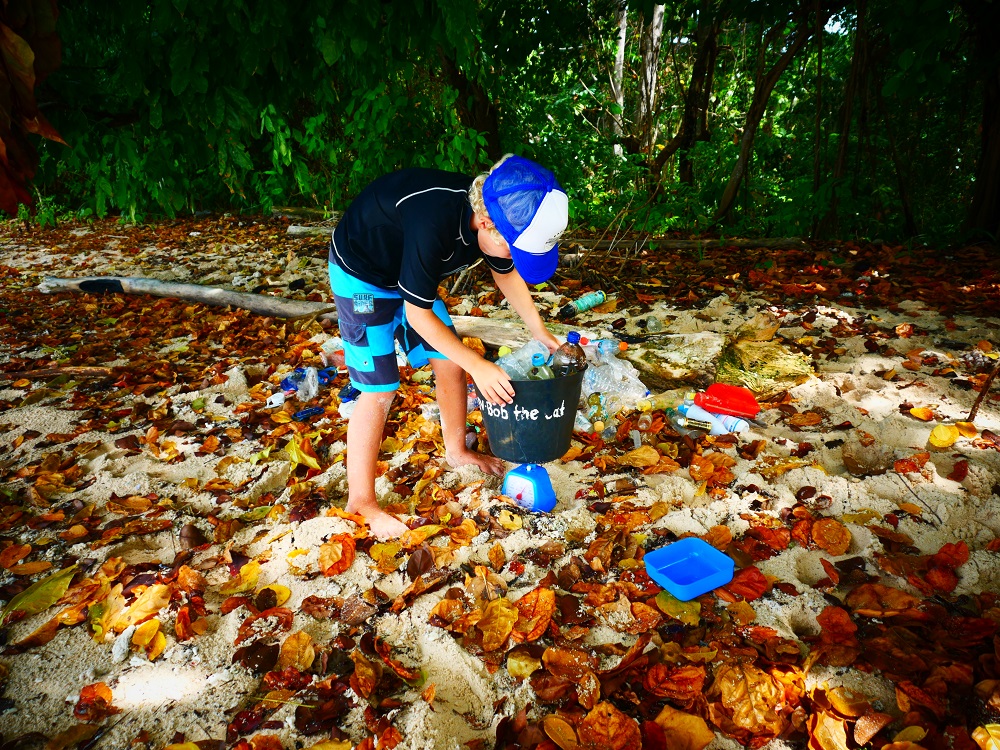
We went to a beach and found a place to collect rubbish. We measured a 10 x 10 m square with a measuring tape above the high tide line. Then we gathered all the plastic and counted and sorted it into categories. The categories were:

  • Drink bottles
  • Other bottles
  • Cups
  • Shoes
  • Styrofoam
  • Bags
  • Rope
  • Fragments
  • Ice lolly tubes
  • Lighters

We weighed all the categories and estimated the total volume of plastic found using a 10-litre bucket. We then repeated the process in a different area.

The beach on Pulau Leleve.

Picking up rubbish.

Weighing the plastic.

For analysing the data, we put it into an Excel spreadsheet. We plotted some graphs and made some tables. We then measured the perimeter of the island on Offline Maps and used this to estimate the total amount of rubbish on the island.

Results

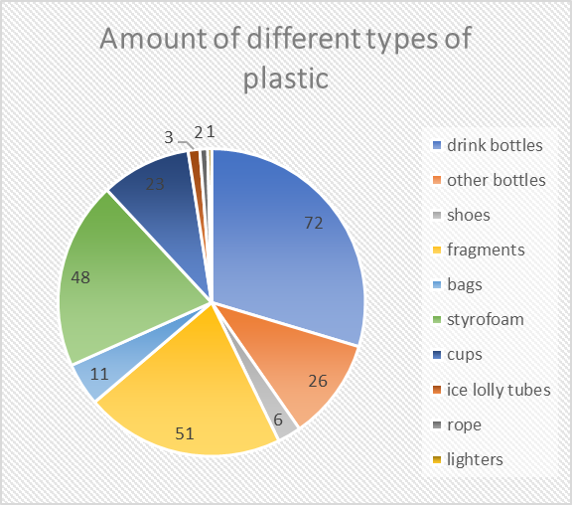
This graph shows the amount of plastic we collected in total. The most common type was plastic water bottles, followed by fragments, then styrofoam.

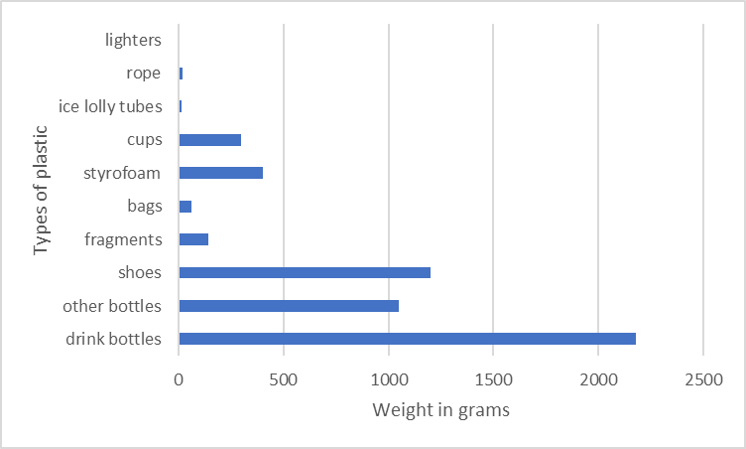
This graph shows how much the plastic weighs. We only found six shoes, but they weighed a lot.

This is a dot plot to compare how much the different types of plastic weighed and how many pieces there were. We found more water bottles in weight and number than any other category. Even though we had a lot of fragments and styrofoam they did not weigh a lot.

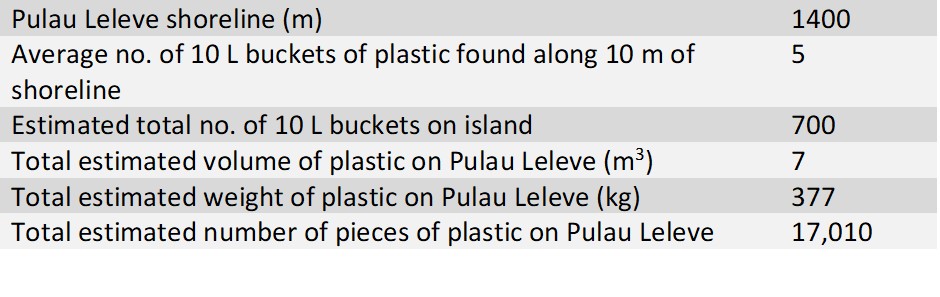
These tables shows how much plastic we estimate is on the entire island. If the amount of plastic we found is present everywhere, there will be close to 7000 bottles on that small island, weighing more than 225 kg! If this rate of waste keeps up there are soon going to be entire islands that are made of plastic.

We think there are 7 cubic meters of plastic on the island – that’s enough to fill more than 2 large family cars. In total we estimate there are more than 17,000 pieces of plastic, weighing more than 350 kg on this small island.

Discussion

Our hypothesis was that there would be more than 20 pieces of plastic per every 10 metres of shoreline. In fact, we found more than 120 pieces per 10 m – that is more than 6 times the amount we thought we would find!

Another hypothesis was that for every ten metres of shoreline there would be more than a bucketful of plastic. We found 5 bucketfuls.

We thought that there would be more drink bottles than any other type of plastic. In Area 1 there was more Styrofoam, but after adding Area 2 we had more drink bottles than any other category.

We also thought that most of the plastic would be under thirty centimetres long, and we were right again. The only plastic over thirty centimetres long was a piece of Styrofoam that was thirty-two centimetres.

We think this is a lot of rubbish to find in a small area. We reckon we probably missed out some because some bits would be too small and some could be buried under dirt and leaves.

If the plastic went into the ocean the fish and turtles in the area might die or go away. Boats might get their propellers stuck in plastic and the water will get full of microplastics.

We think the Indonesian government should ban some types of plastic that are used a lot, like water bottles. We also think the Indonesian people should be educated to stop throwing plastic on beaches and in the ocean.

Writing down numbers.


Matias’s boat blog 11 Dec ’18

Hello.

Remember me?

The whale shark is definitely the biggest fish I’ve ever seen. We are in a place that looks like the Bay of Islands in Fiji. It is called Triton Bay and here we will dry out the boat. At high tide we parked in a little swimming pool sized offcut in the side of the island. In the morning (which is low tide) the boat is on the ground. My Dad wants to change the prop but it is still too deep.

Mr Round.

Me and Lukie jump in, not realising that we should be doing home schooling, and when I touch the water my feet hit the bottom before my waist gets wet. After schooling I swim around and find a strange looking bit of seaweed. I poke it and it curls around my finger. Two eyes pop open then it dawns on me what it is.

I’m in the wrong place.

A seahorse! I show it to Lukie who starts yelling for our Mum to come. “MUMMY!” “MUMMY!”

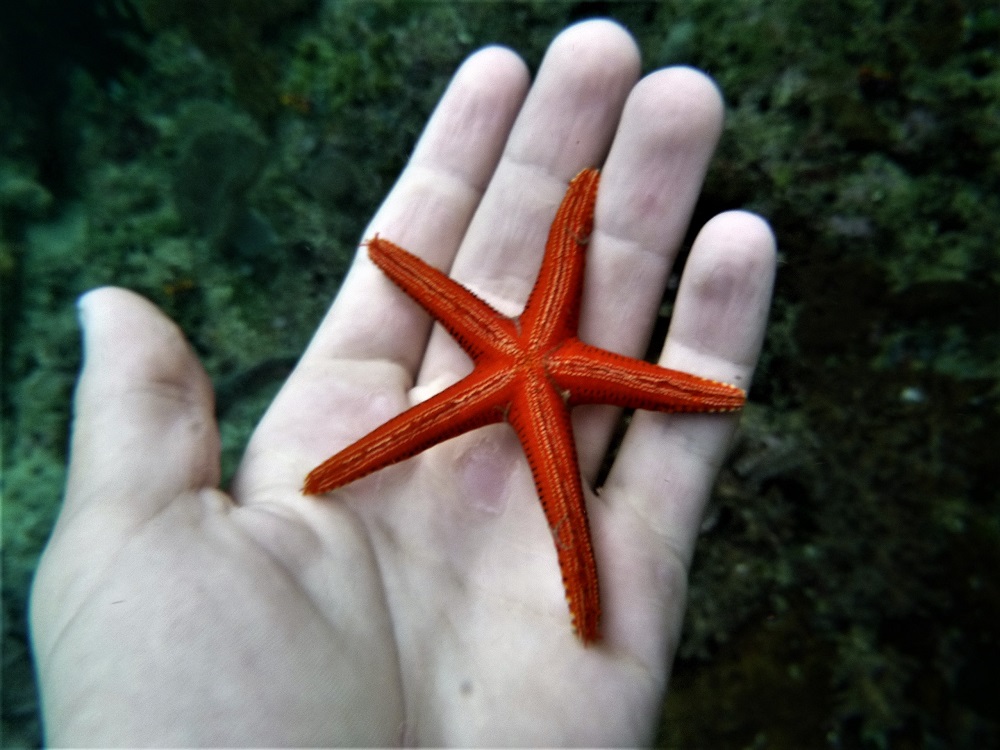
Am I a star or a fish?

I put my head under the water to drown out the noise. The next morning we leave for Triton Bay Divers and we will probably go back to the shallow bay to dry out the boat in an even shallower place. Today we will go for a snorkel in a famous dive area, let’s see how it goes.

Caution! Swim whenever!

As soon as I leave the dinghy a soft coral-covered rock comes into view. Massive butterfly fish swim about, I could swim right down to them and snap a photo. I slowly let the current drag me along.

“Why did that kid lift me up?” says Orange the Starfish.

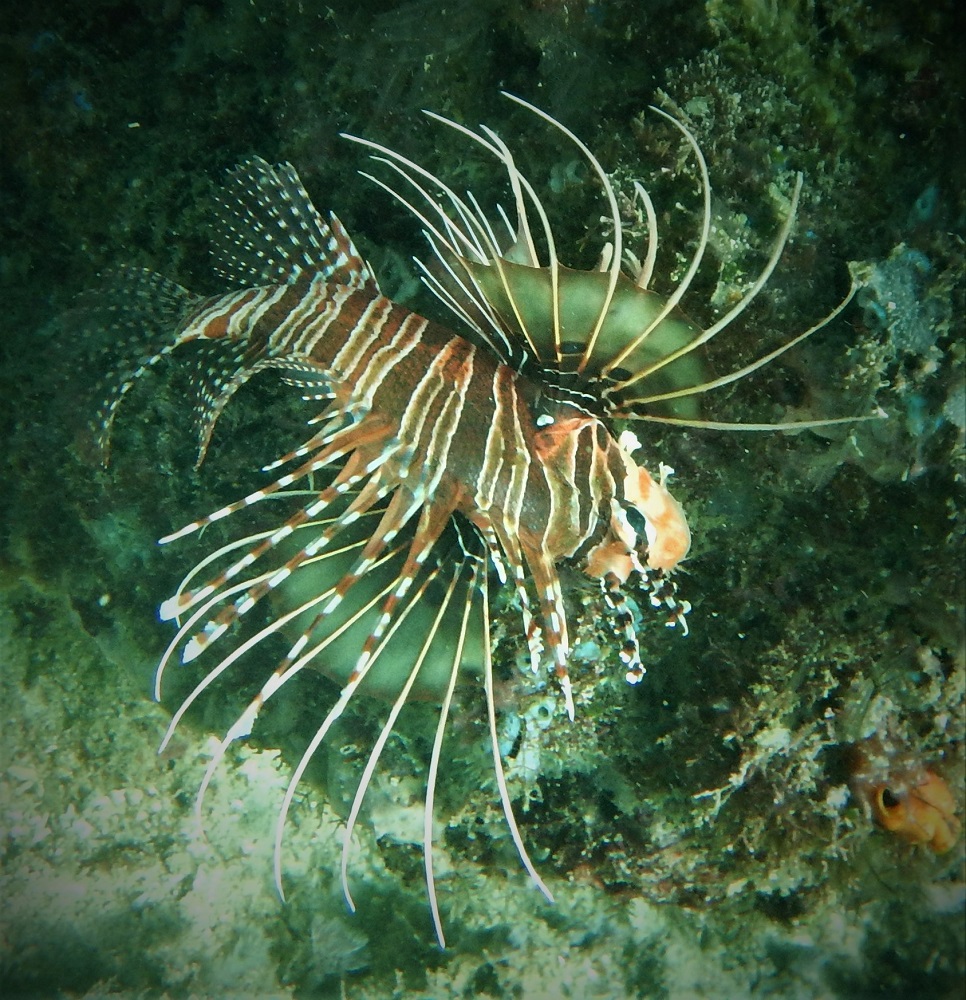
I swim around the rock and into a lion fish, spines raised and ready for attack. Lukie shows me a little orange starfish, then he tries to get me to follow him to more starfish, and I do.

Brittle star looking things that are called feather stars are curled up in balls, using their arms to catch plankton. Here really big jellyfish live, dark brown and see-through ones come across my path. I don’t go near them as they are 20cm long! That’s a big jelly.

Me a cute, lubly, flwuffy bwittle stwar fwing.

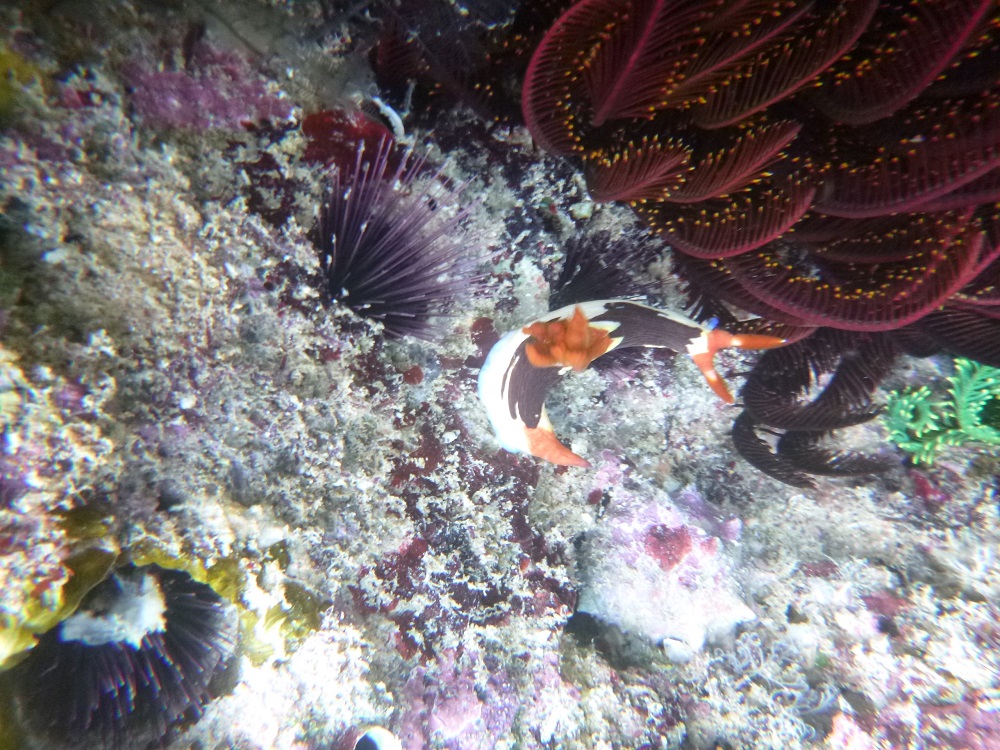
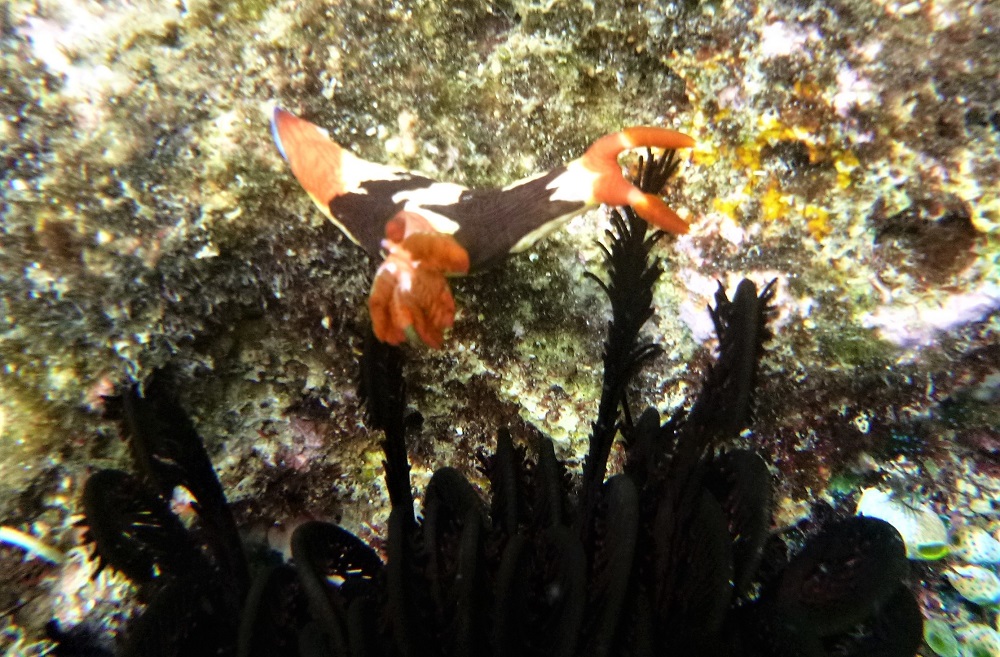
I bump into a solid object in the water, but I can’t see it. I swim back to get a better look. It’s a massive, solid, see-through plankton. That’s really weird. Now I see a nudibranch. A nudibranch is a sea slug thing. This one was really cute and it had gills on its back! That’s like having your nose on your back, how strange is that?

I’m in the right place. Nudibranch.

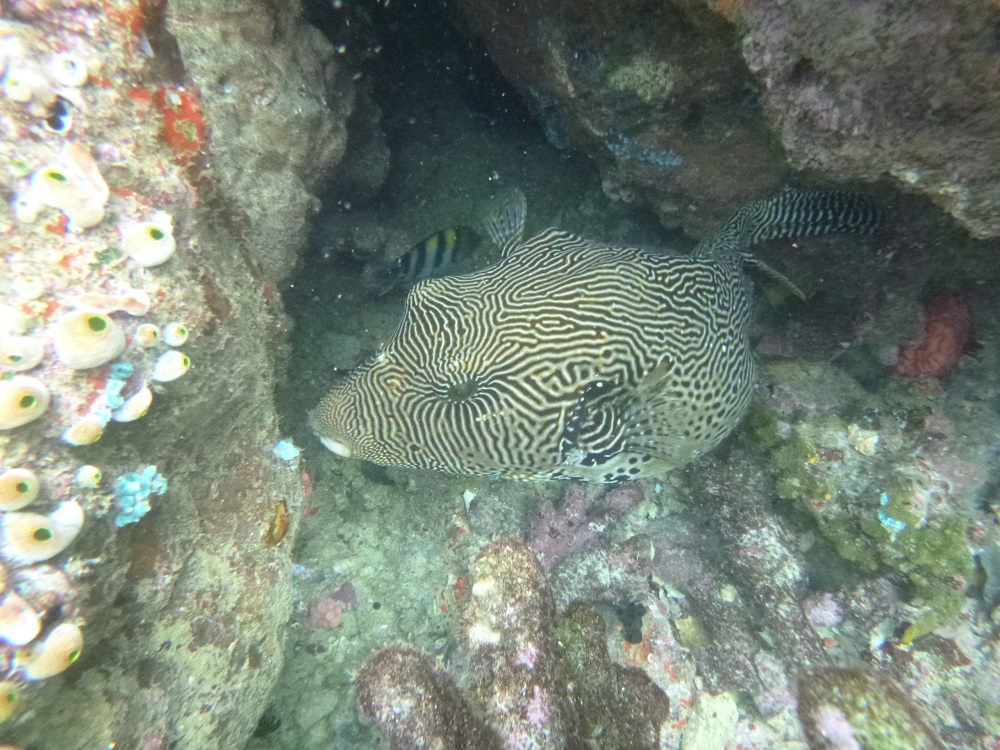
On this snorkel I saw a lot of weird things. Next we went to a swim through, as soon as you got through you got swept away, around a rock and back where you started. Before I went through me and my Mum took photos of a big… hang on let me think… a pufferfish? Yeah, I think it was a spikeless pufferfish, anyway.

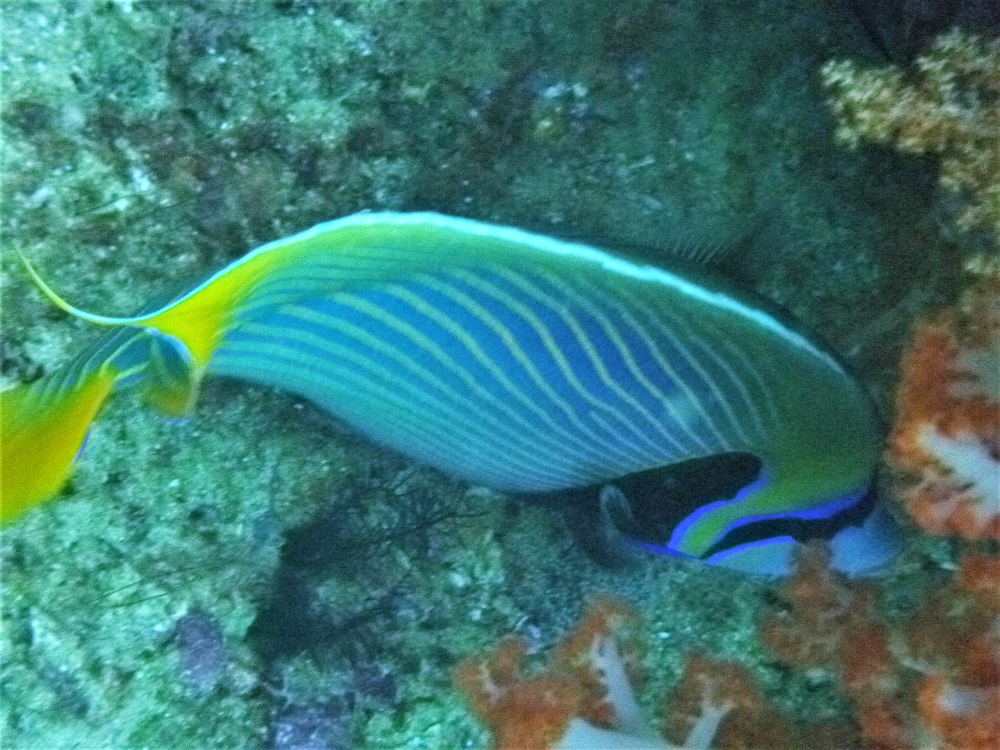
Adult butterfly fish with no punctuation

I swam through the swim through, the current quickly took me around, I did it again and again and again. Eventually I got cold, so just before I got out I swam down under a ledge to find a big fish to photo, and I found one, a big one.

I’m a big puffer!

A large shark swam around, with no tips on its fins. Instead of taking a photo I swam back up and climbed into the dinghy. We managed to stop Lukie doing another swim through, so we could leave.

Baby butterfly fish.

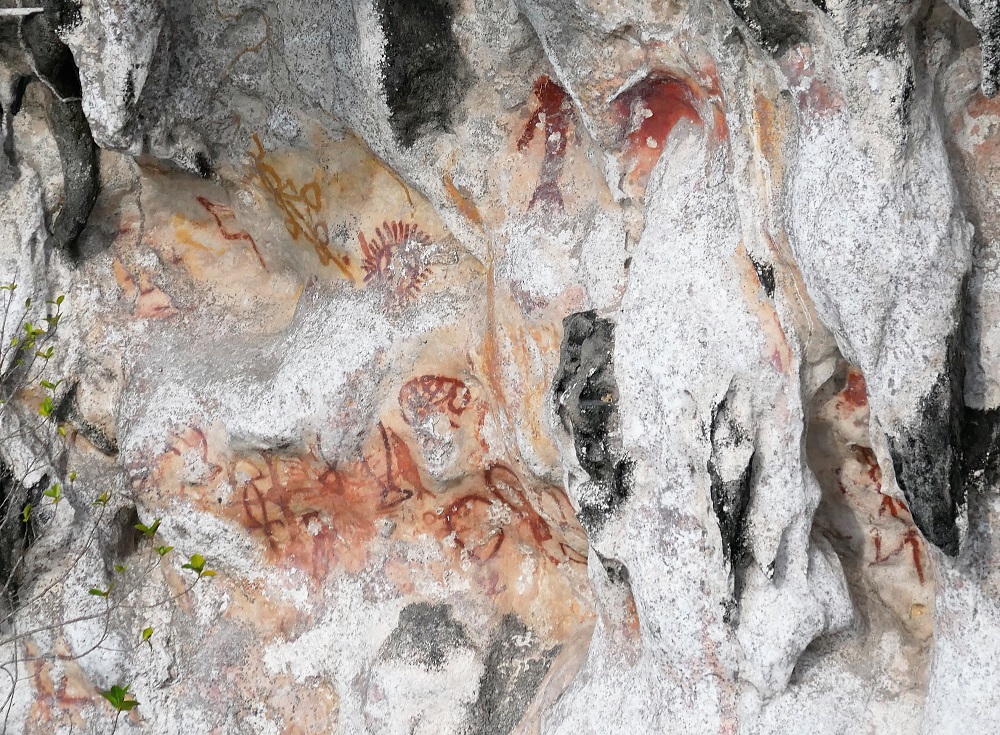
Some days later we saw some very old cave paintings, they were super cool, I never knew that cave people could draw that well. It was good for back then, but its really not much better than what a three-year-old could do, no offence, Cave People!

Interesting drawing from thousands of years back…

Byeeeeeee!

Matias’s boat blog 10 Dec ’18

Hello!

I’m looking at yoooooooouuuuuuuu!!!!!!!

We have left the rubbish-filled Port of Tual and we are heading to Namatote Island were apparently you can see whale sharks. We arrive in the afternoon with a Swiss boat called C’est Le Vent which is pronounced Say Le Vong in French.

Me taking a photo.

Early in the morning we get up at about half past five to get ready to see the whale shark or hopefully sharks. Apparently, there are two babies (which are boys and each about six metres long) and a nine-metre female. The locals say females are hard to catch to tag.

I’m ready to eat!

After a big breakfast and a lolly from the Christmas calendar we zoom towards one of the fishing stations out in the bay. As we get closer, we see two fishermen throwing small fish in the in the water while another two wander around.

His pet remoras.

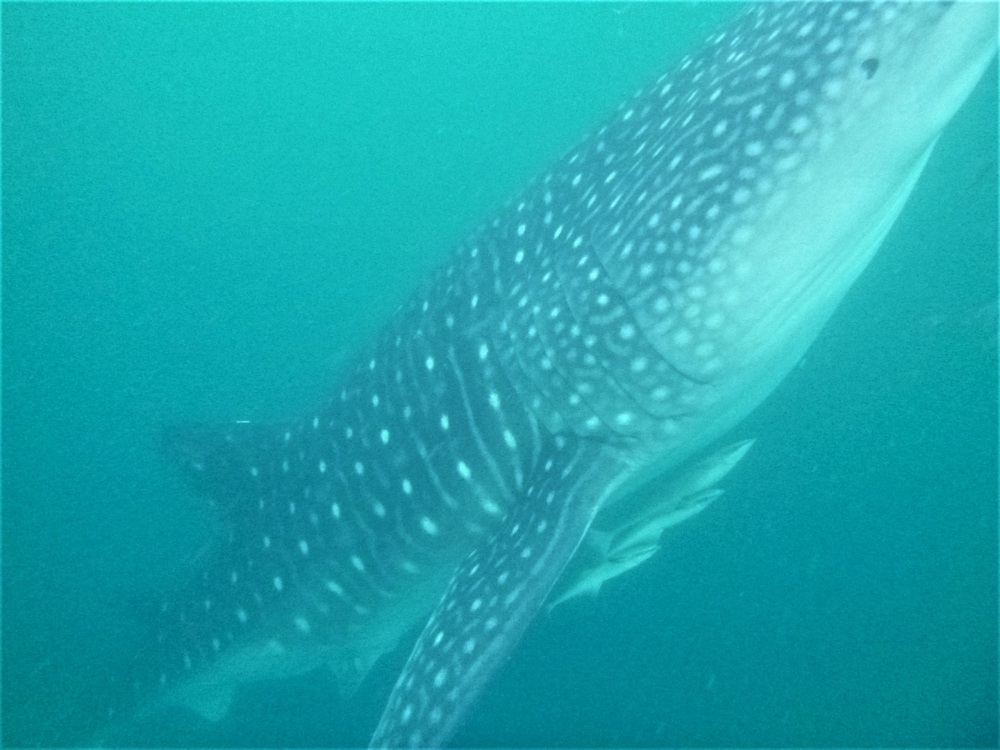
“Look! Look!” shouts Pierre from C’est Le Vent. A big spotty, black whale-looking thing slips right under the dinghies. Lukie slides in followed closely by my mum then me and Daddy. I get my camera out of the boat and start snapping away.

Yummy fish!

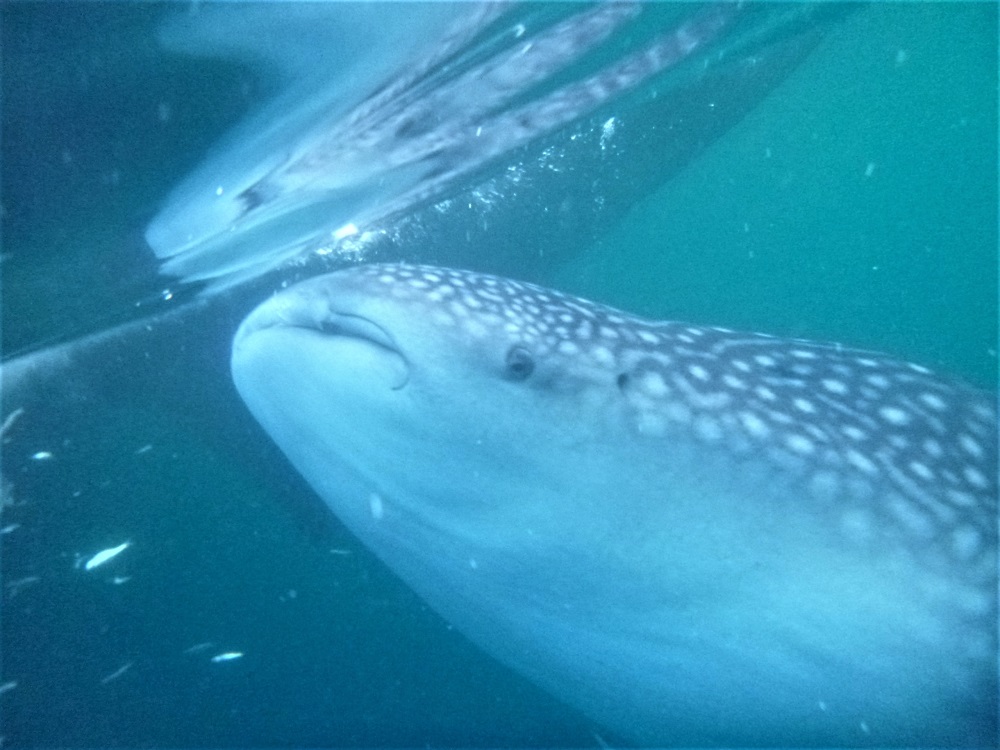
A six-metre whale shark sucks in water with small dead fish too. It was like a two-year-old. It spilt lots of fish and swam after other little fish (which were alive and swimming under him) and didn’t seem to notice us.

Look at me! I’m big!

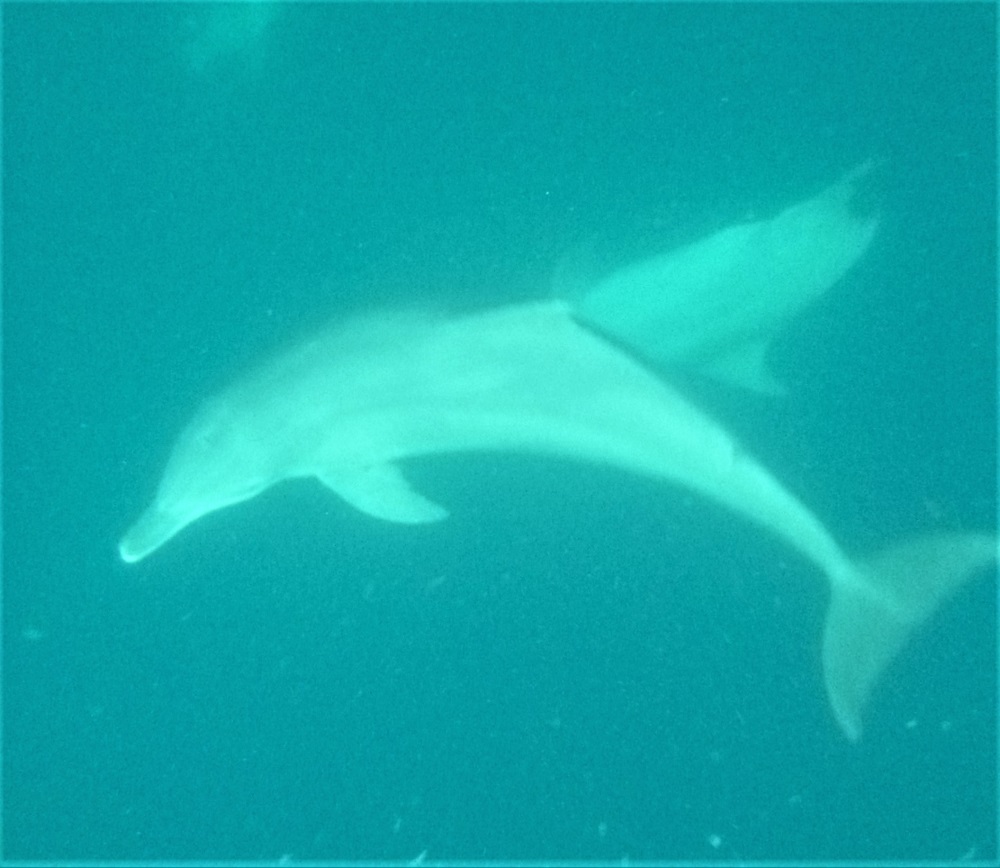
Dolphins also came in at one point to get some of the fish and the birds in the sky never really dived down. The shark swam under the fishing station and then we all started to talk.

I want fooooooooooood!

“Wow!”, “That was big!”, “Moan!!!” That “moan” was not from us. The whale shark swam into the dingy rope!

Franks tail.

It thrashed around spraying lots of water. Finally, it dived down again, we all thought it was gone, but no! It came back up chasing lots of fish that stayed just out of reach of its massive mouth. Just then a diving boat arrived, and the instructor told them to hop out.

Dolphins.

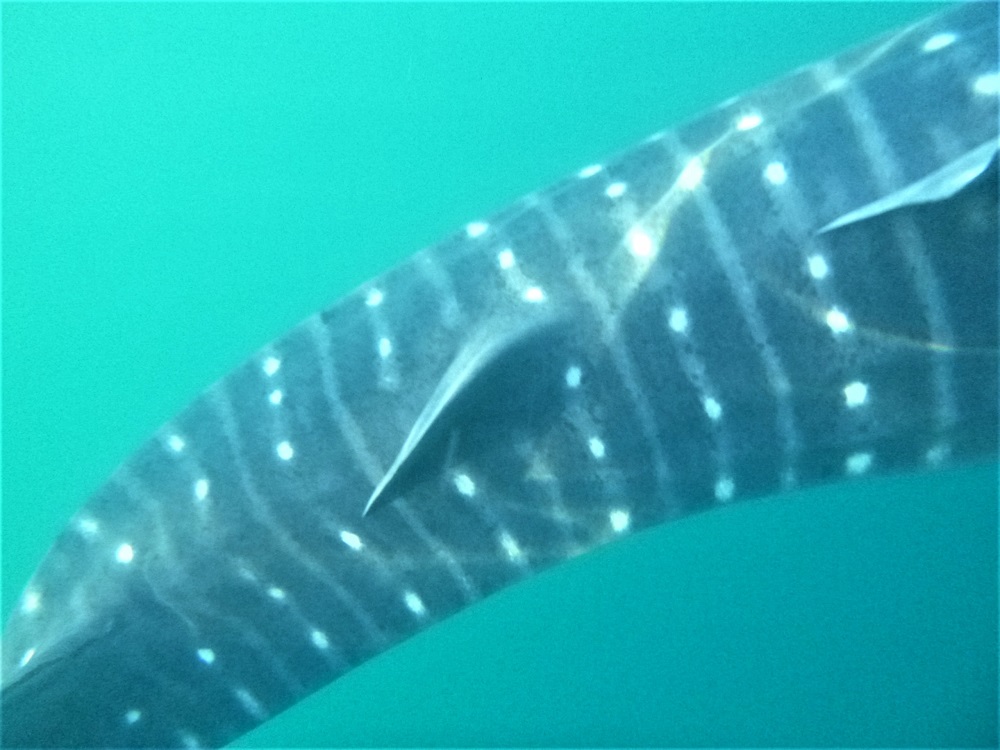
We all climbed up onto the fishing station (which was called a bagan) and watched the divers descend under the six-meter baby. Up here the view of the whale shark was not obscured by the blurry water, so it looked cool. You could see the stripy and dotty white pattern snaking down its rigged back.

“Wow,” says Lukie.

We left for Triton Bay the next morning. By the way, we called the whale shark Frank and went back to see him another day, he was so cool.

Goodbye snorkellers!

Matias’s boat blog 25 Nov ’18

Hello!

Mr 2 metre wide mouth.

The last place before Port Moresby we have been was in the Louisiades and I got a lot of pictures from the amazing reefs. One coral bommie we went to had a tunnel going the whole way through and coming out on the other side and in the very middle. Inside the tunnels, there were bazillions and trillions of fish that were the size of my fingernail.

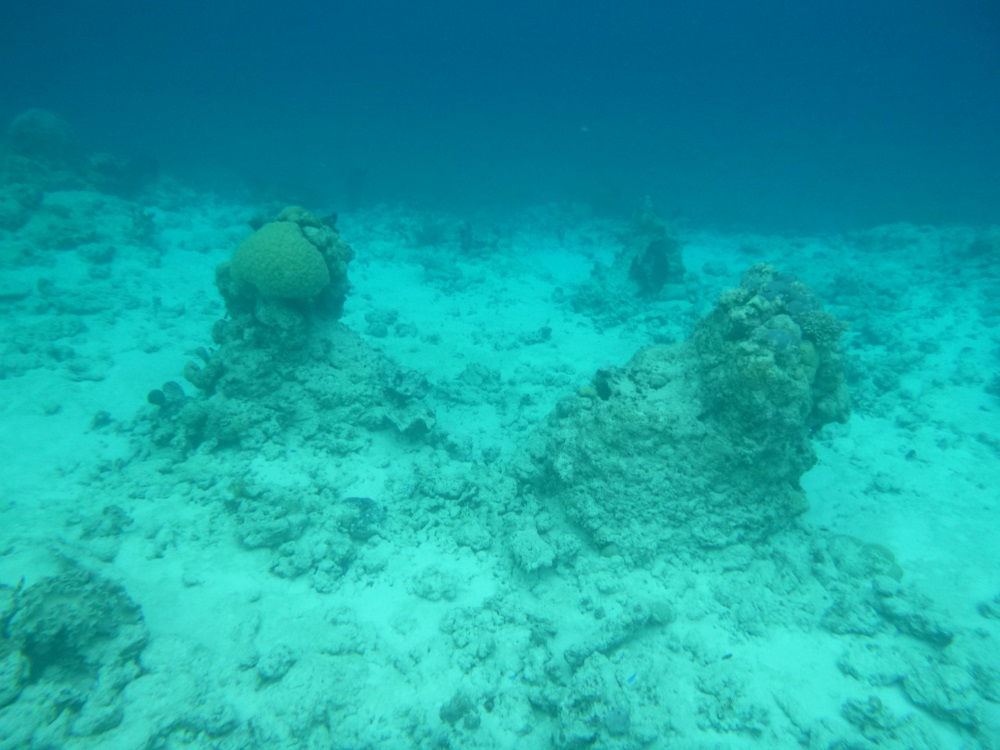
Coral stalks.

Here fishie, fishie, fishie…

We went to a place in the Louisiades where we snorkelled a plane wreck. The plane was from world war 2 and it was shot down by the British. The plane was covered in coral and fish that like to bite you. I played with the biting fish a lot.

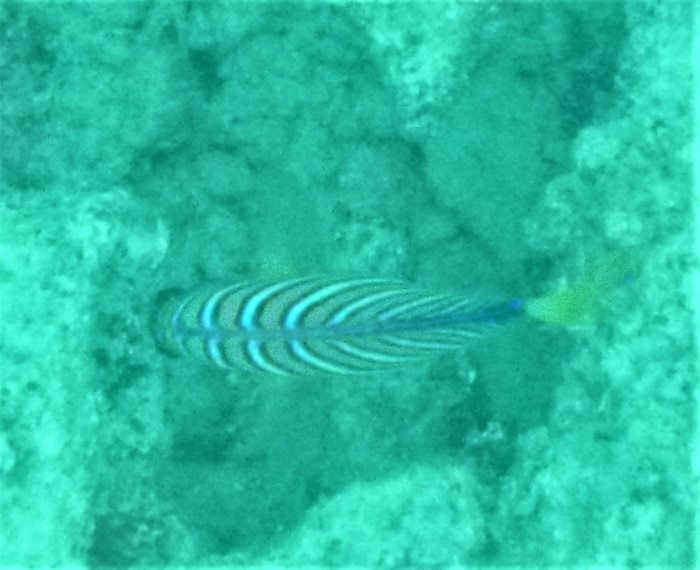
Biting clownfish.

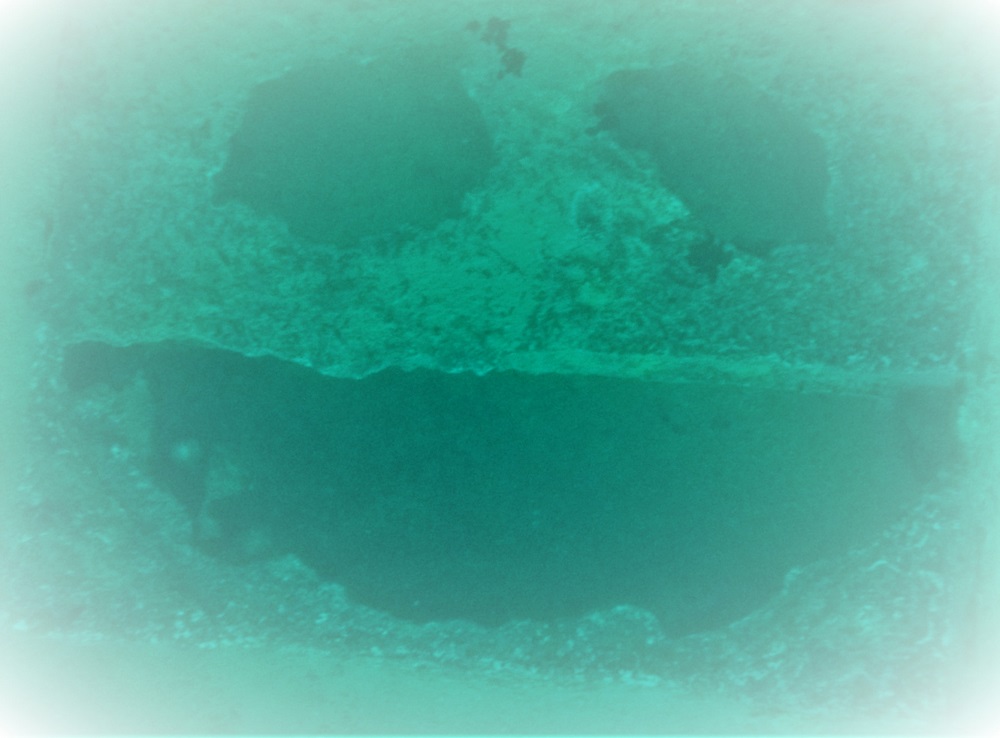
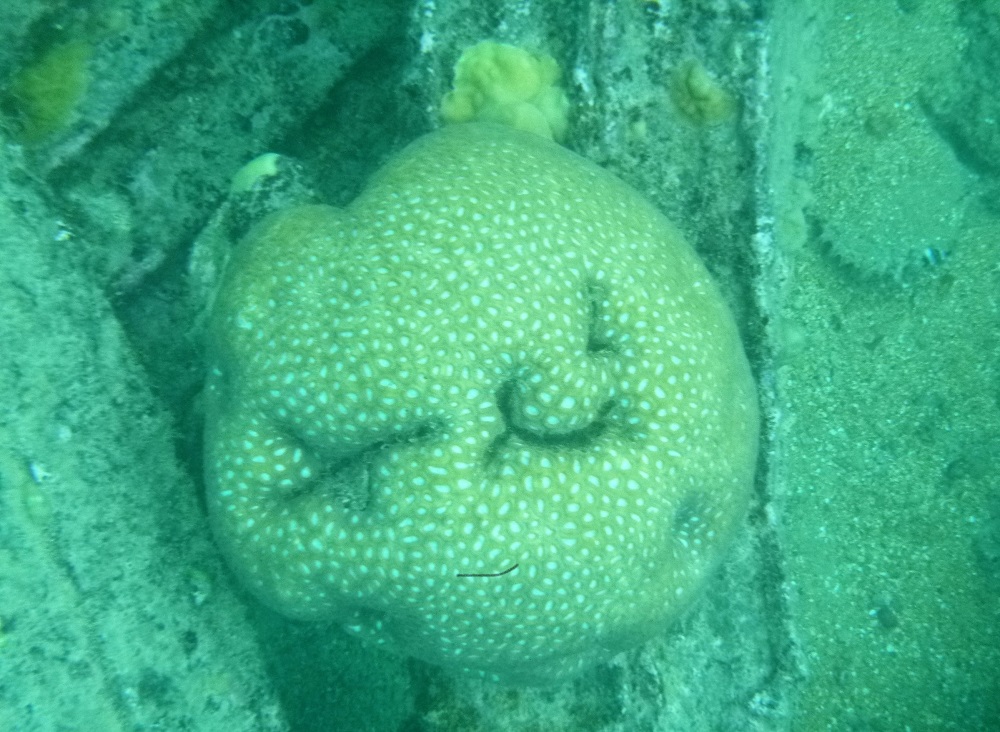
This is a random brain coral that had eyes and a mouth

We are now in an Indonesian city called Tual. Most of the people on shore have never seen a white skinned person. When we went ashore people were taking pictures and selfies with me, Lukie and our friends from So What. We had a plan to charge them 5 dollars for a picture.

The king of the sea.

Dirty water colliding with clean water in Vanuatu.

BYEEEEEEEEEEEEEEEEEEEEEEEEEEEEEEEEEEEEEEEEEEEEEEEEEEEEEEEEEEEEEEEEEE!