
I was sitting in the cockpit in that queasy half sick overtired state that characterises my night watches, all rugged up in my jeans and my skiing jacket, bracing myself against a cold southerly breeze. It was a couple of hours before dawn on the last night before we reached Beveridge Reef and it suddenly dawned on me what a terrible idea it was to go looking, on purpose, for a shallow subsurface reef in the middle of a deep ocean.
Our ‘safe waypoint’, somewhat to the south west of the green splodge that indicated Beveridge on the chart plotter, was about 15 miles to the southwest of our current position. Next to the green blob was a footnote, stating that the reef could be somewhere else, that in fact it had also been reported to be 3 miles to the north east of the position marked on the chart. The ‘safe waypoint’ that we had was from a mud map displayed in an unpublished cruising guide compiled by yachties that had travelled this part of the world in the past; the mud map had been scribbled by a brave cruiser who ventured into the lagoon in 2010, where he drew a rough chart marked with a couple of safe waypoints for the approach to the reef.
And, although grateful for the chart which we’d definitely need to negotiate this reef safely, I was beginning to wonder just how much we could trust it. Beveridge Reef is a sunken atoll, a barrier coral reef which just breaks the surface of the water at low tide, surrounding a calm, sandy lagoon. It is in the middle of nowhere, 130 miles from Niue, 400 miles from Tonga, an oblong circle of shallow calm rising abruptly from a deep and often rough ocean. We really wanted to go there, to see a lagoon in the middle of the deep ocean, to go where not many others go and cast down our anchor in the middle of the Pacific for a restful night or two on the way to Tonga.
As incredible as it doubtless is to experience the reef amidst the sea, it dawned on me sitting there, well before dawn, that we’d have to get bloody close to actually see this thing. With no land breaking the water surface, no vegetation, sand dunes or hills raising the land above the waves, Beveridge can only be detected by the thin line of savagely breaking waves that marks the edges of the reef. Being so far from other land, surrounded as it is by seas of more than a kilometre deep, it crops up unexpectedly, and the reef has wrecked scores of boats before modern charts and navigation techniques. In fact, it still does wreck boats, as evidenced by the mark denoting the wreck of the tuna boat “Liberty” on the 2010 mud map. The fishing vessel stranded in 2006 where it must have strayed too close to the breaking waves of the reef in a rough storm, only to get tossed over to the inside of the jagged edges of the sharp coral platform that lines the lagoon.
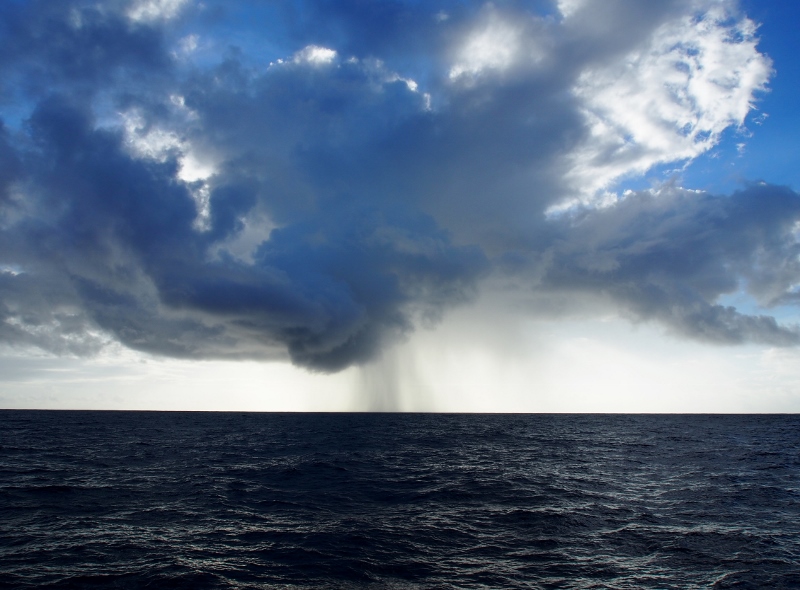
And here I was, alone in the cockpit at 4 am, staring into the impenetrable pre-dawn darkness, eyes squinting against a stiff breeze, chilled to the core by the icy southerly winds that had plagued us for the last couple of days. According to the note on the chart plotter, the reef could basically be anywhere near here, and so I sat motionless, peering into the vast darkness trying to detect lines of white water, straining my ears listening for the sound of crashing waves or a crashing hull, hoping that the former would come first.
The kids got up and I briefly left my station to fix them some breakfast, and around 7 am a dead tired David poked his head out the cockpit. “Any sign of it yet?” he asked in a weary voice, hoarse from having been up for nights on end negotiating rough weather. I answered that, no, I haven’t seen it yet, but that that was no real surprise given there hadn’t really been enough light for me to see it even if I was right on top of it. Although at this stage a thin yellow line was starting to hold its own in the rough location of the reef amidst the scatter of wave noise on the radar screen, a comforting sign that the modern instruments were helping us somewhat.
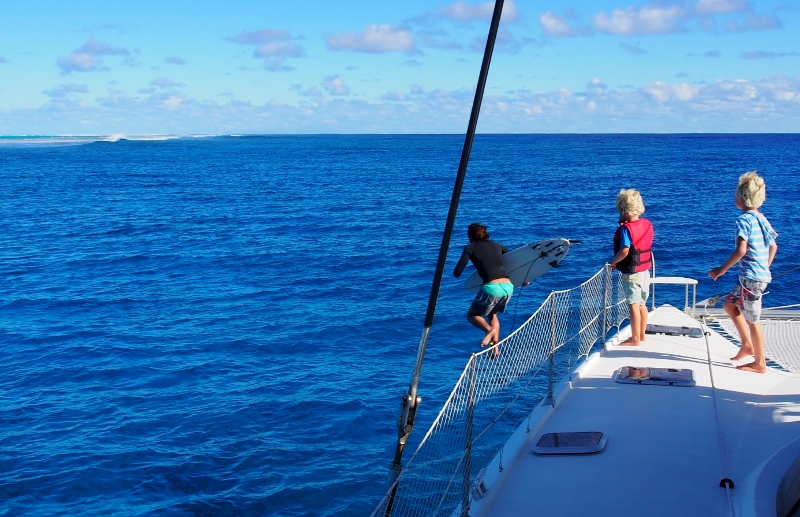
And sure enough, before long we could see a thin line of white water, and as we edged closer the incredible sight of a calm, turquoise lagoon appeared behind the waves in the middle of the rough sea. We motored on, carefully staying beyond the back of the peeling waves, eyeing up the pass to the lagoon, when suddenly we heard a loud breath and saw a sperm whale logging on the surface, just 100 m off the boat.
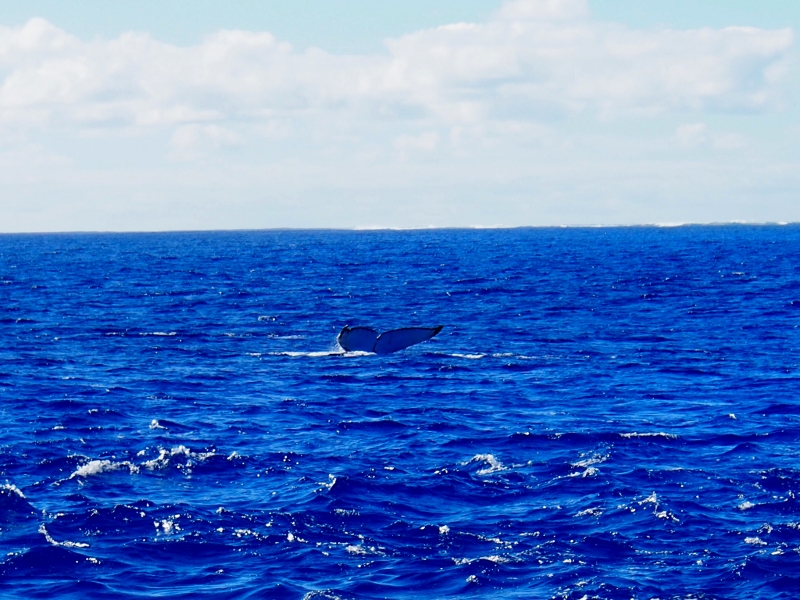
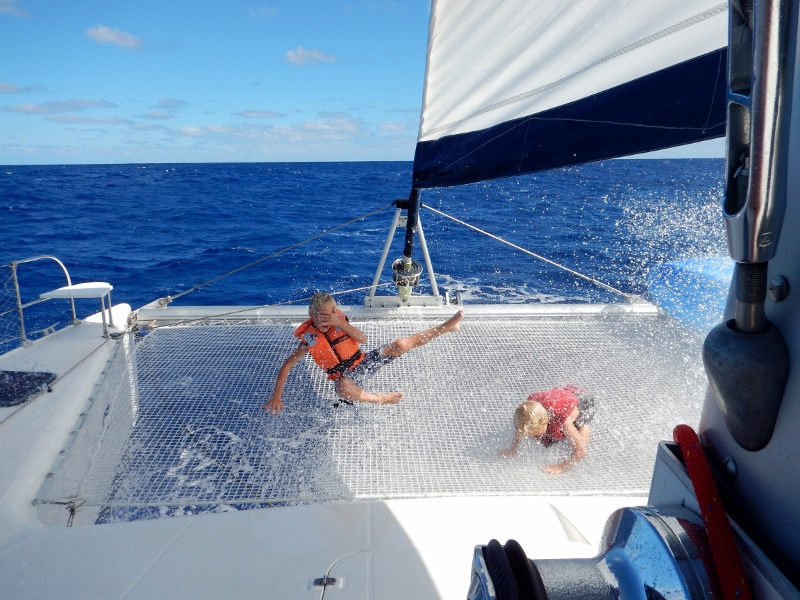
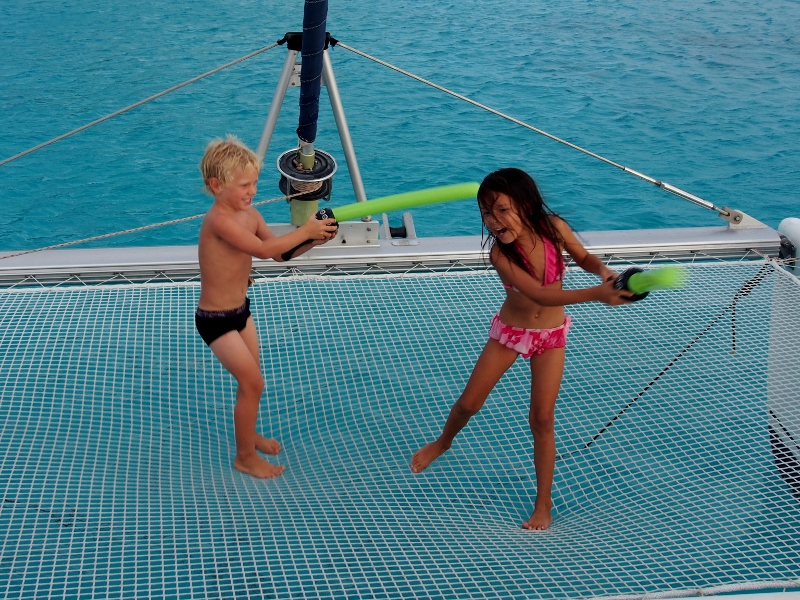
“Whale!” the kids shouted excitedly, jumping up and down on the trampoline, pointing towards the square, dark shape and we all watched as the gigantic creature took another breath and disappeared below the surface.
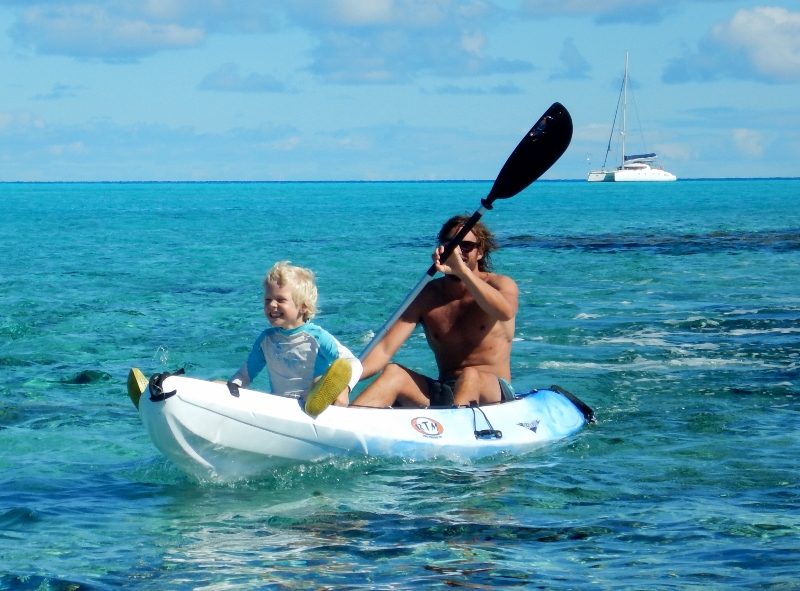
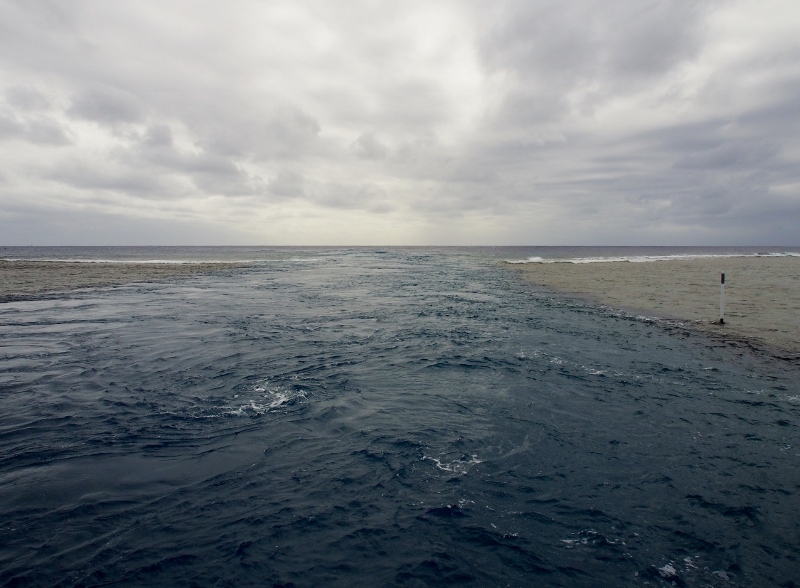
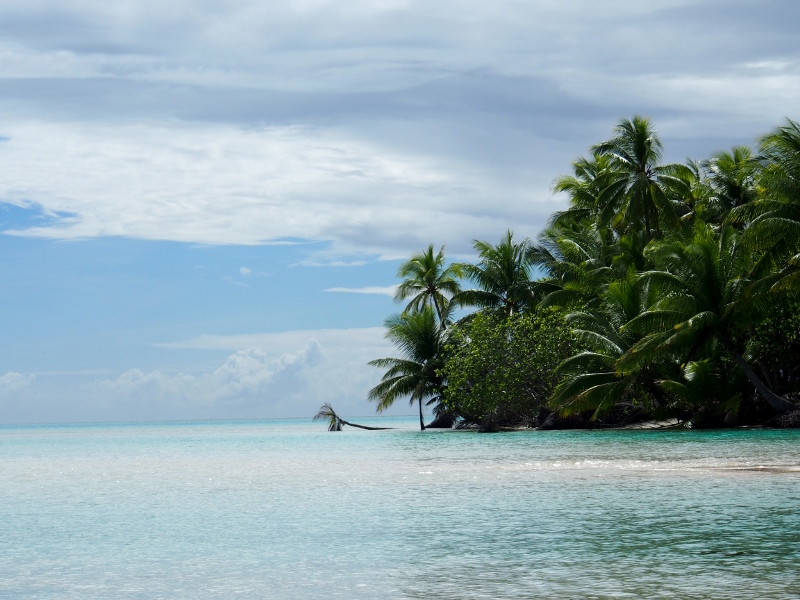
After hanging around for a while to see if it would reappear (it didn’t), we motored through the relatively mild pass and made our way to the lee side of the lagoon to anchor. Beveridge Reef is a strange place. The water is 10-15 m deep all throughout the lagoon, and along the edges the sand abruptly rises to form a wide, shallow (~3 m) sill, providing a light blue border all the way out to the browny coral reef where the huge waves crash down. Rarotongan myth has it that there used to be an island there, which got swept away by a hefty cyclone that washed away soil, sand, people and vegetation. Which is entirely possible, given the fierce tropical cyclones they get here – imagine that!
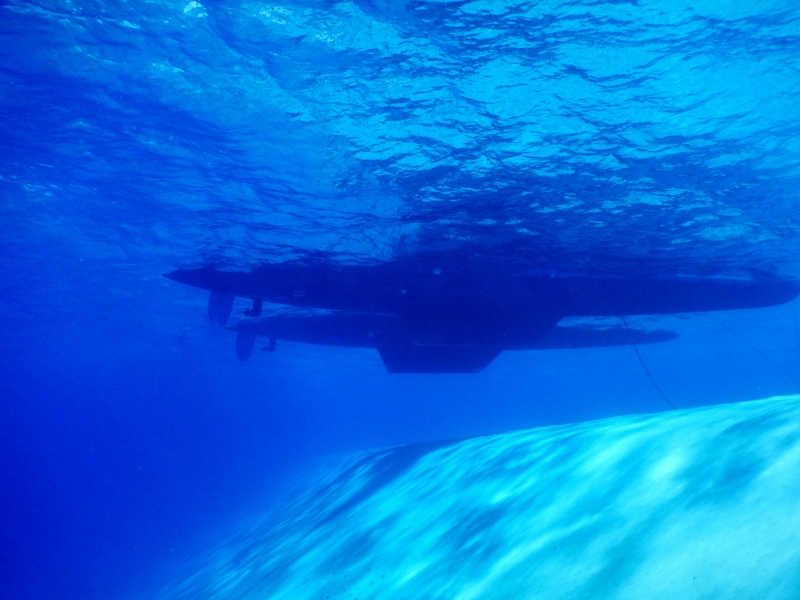
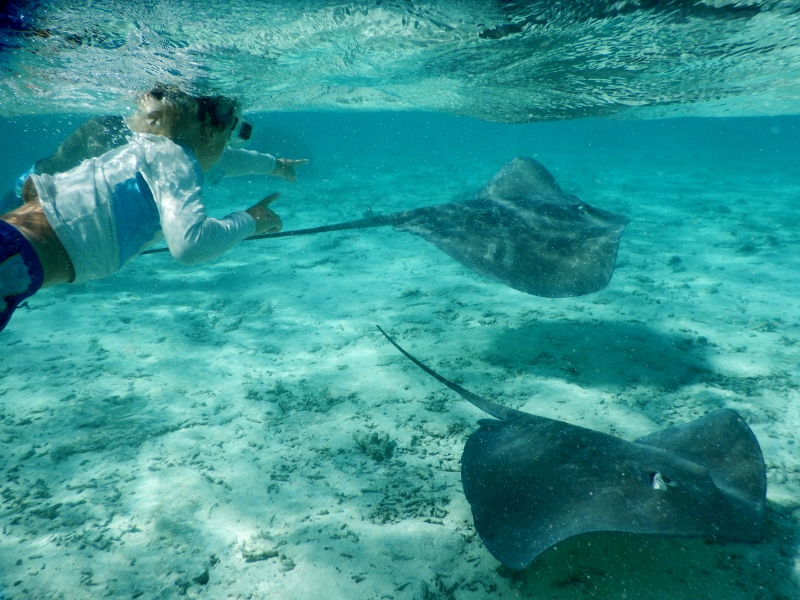
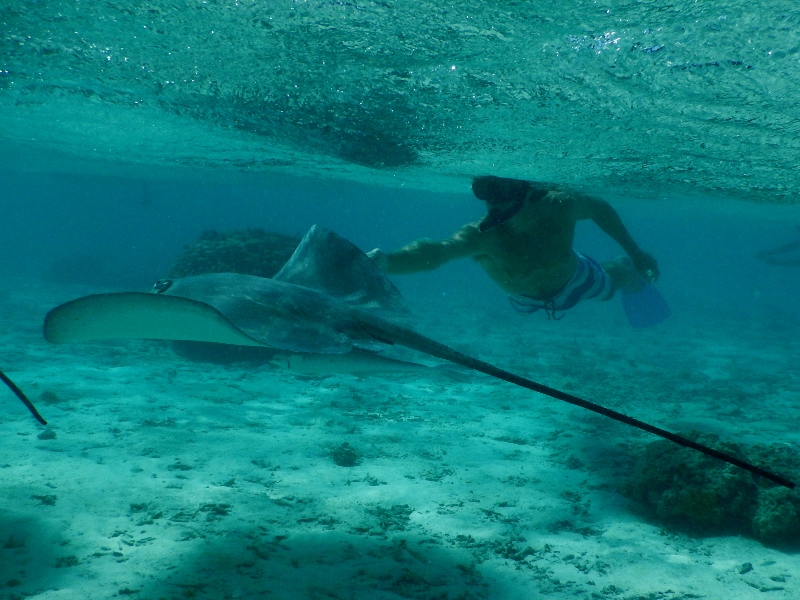
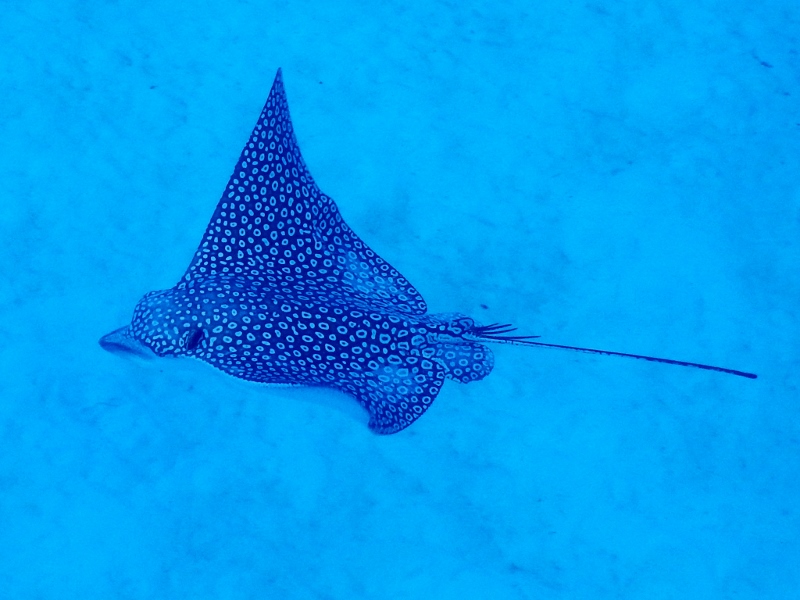
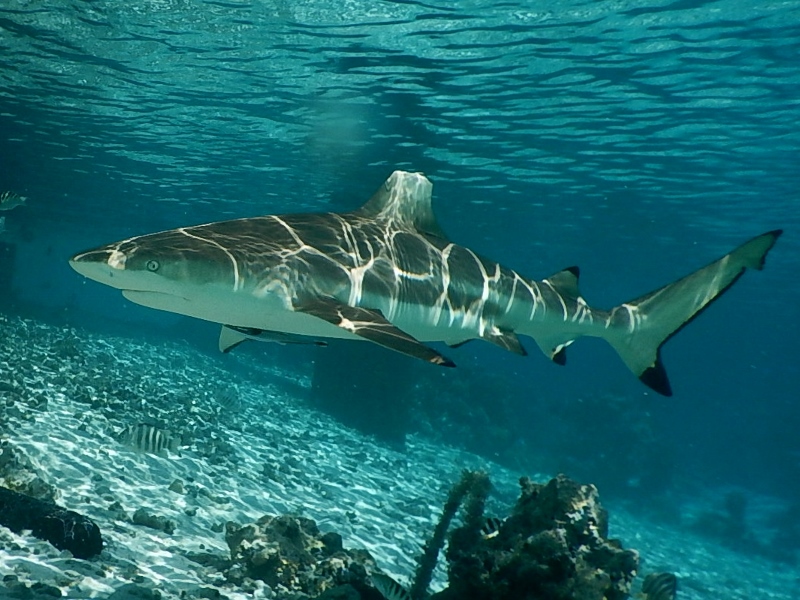
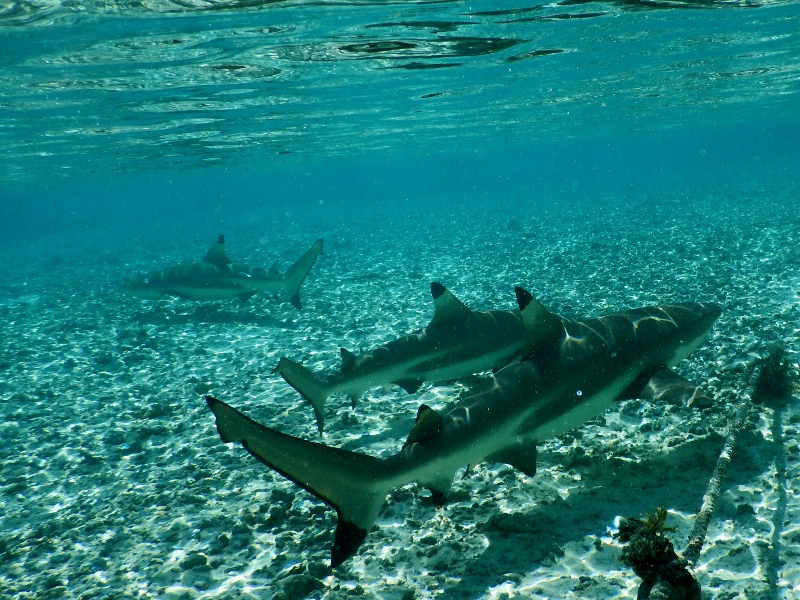
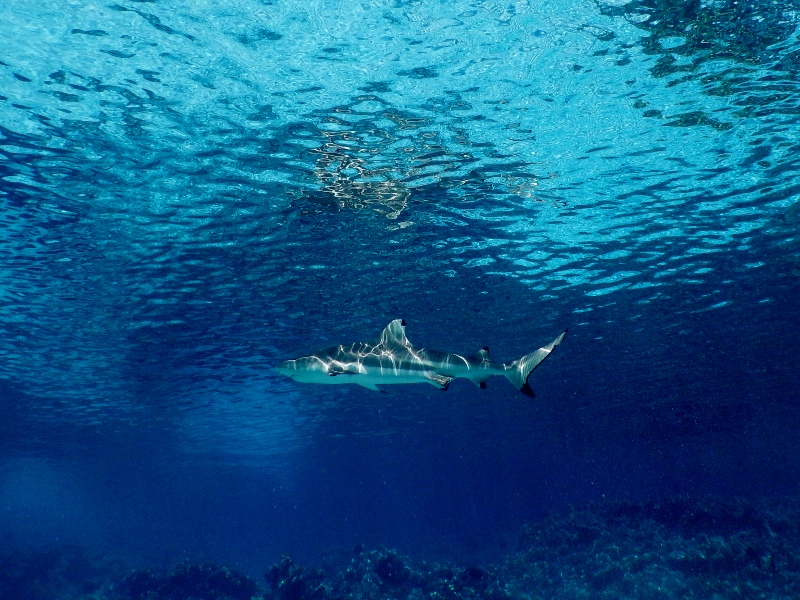
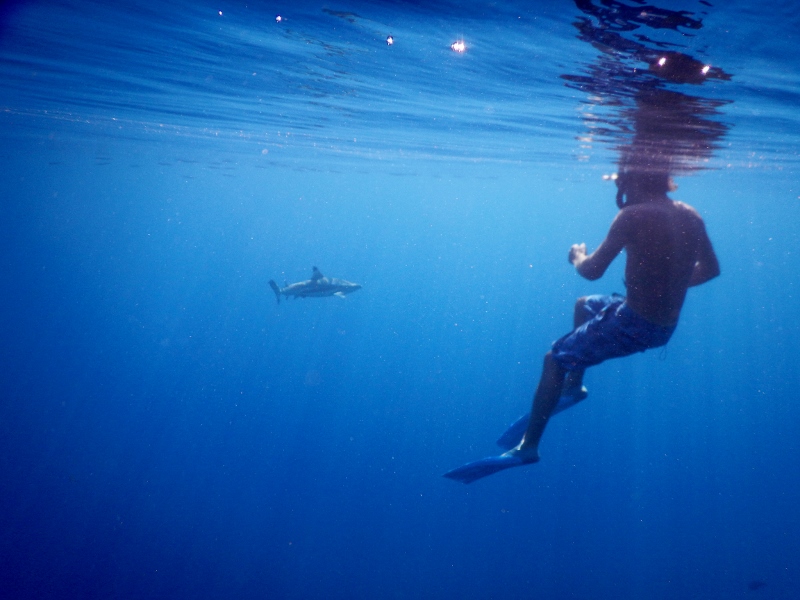
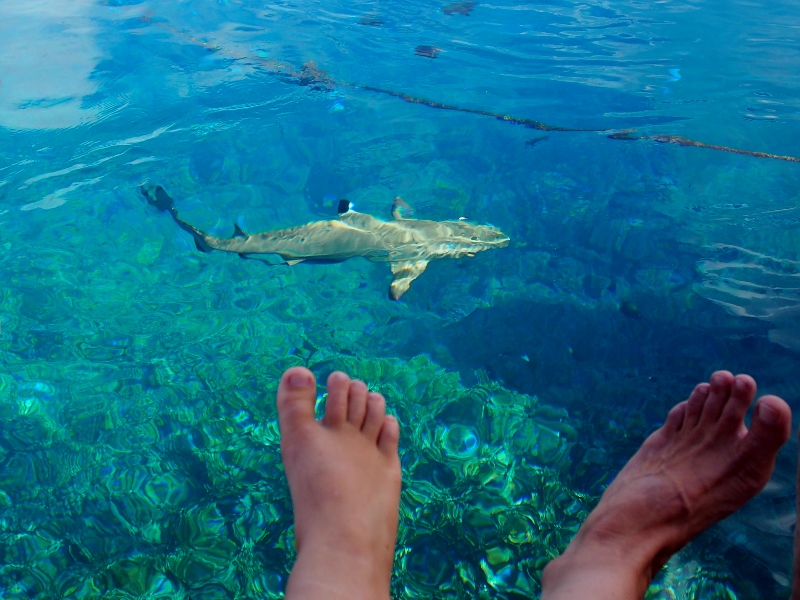
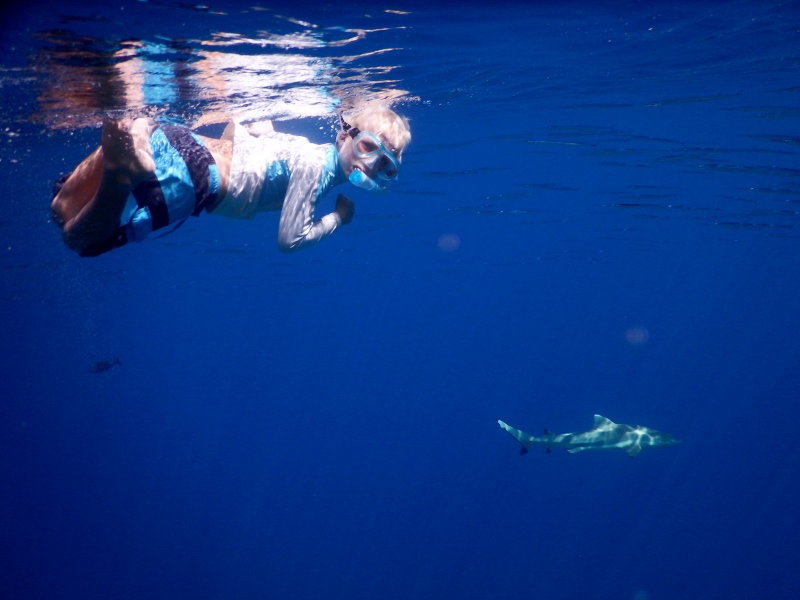
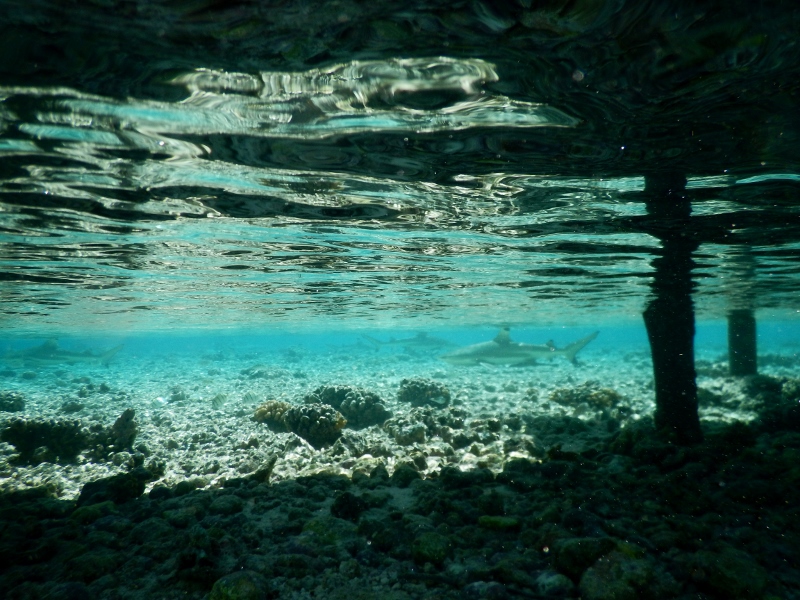
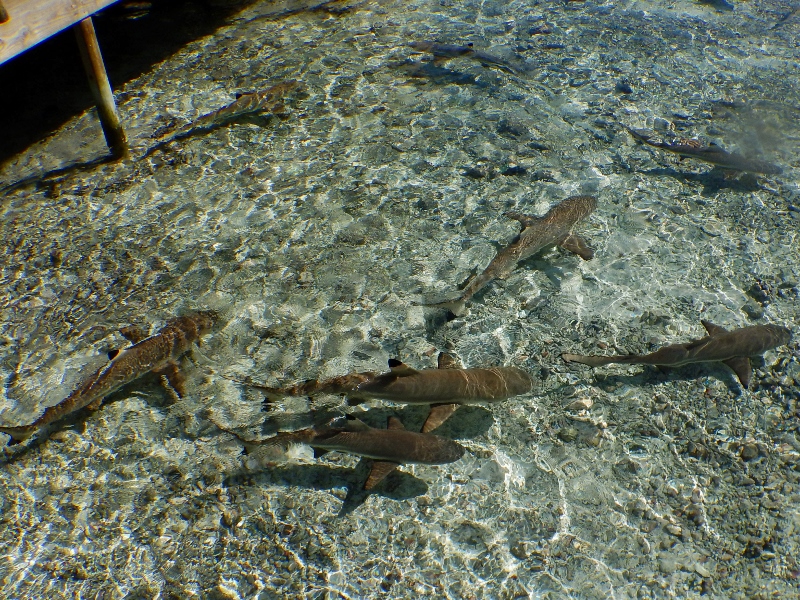
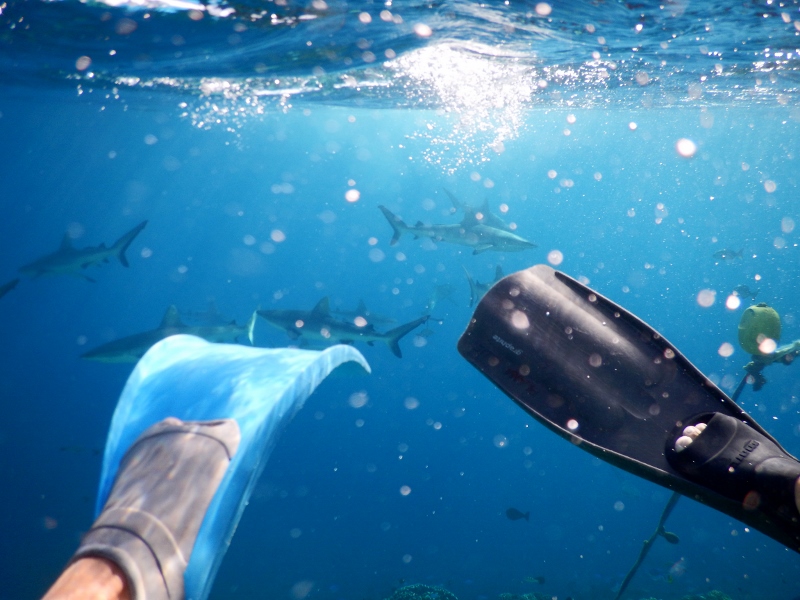
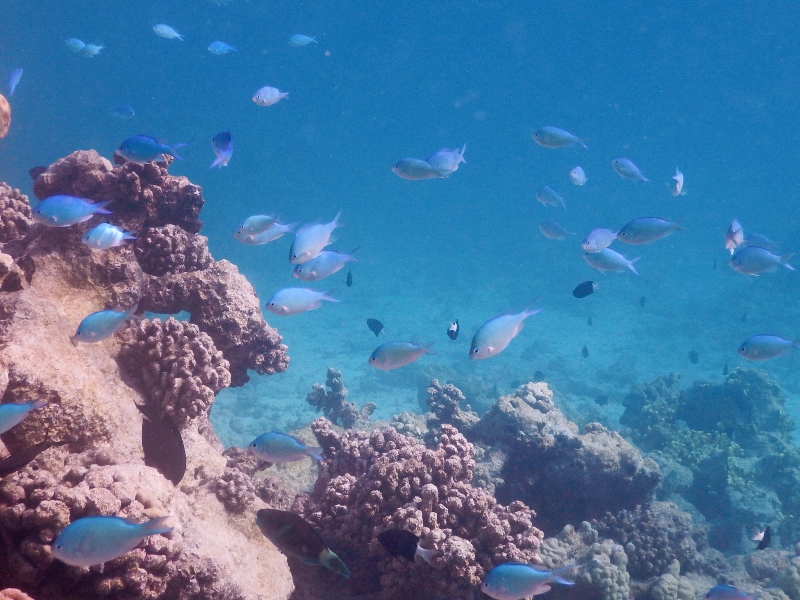
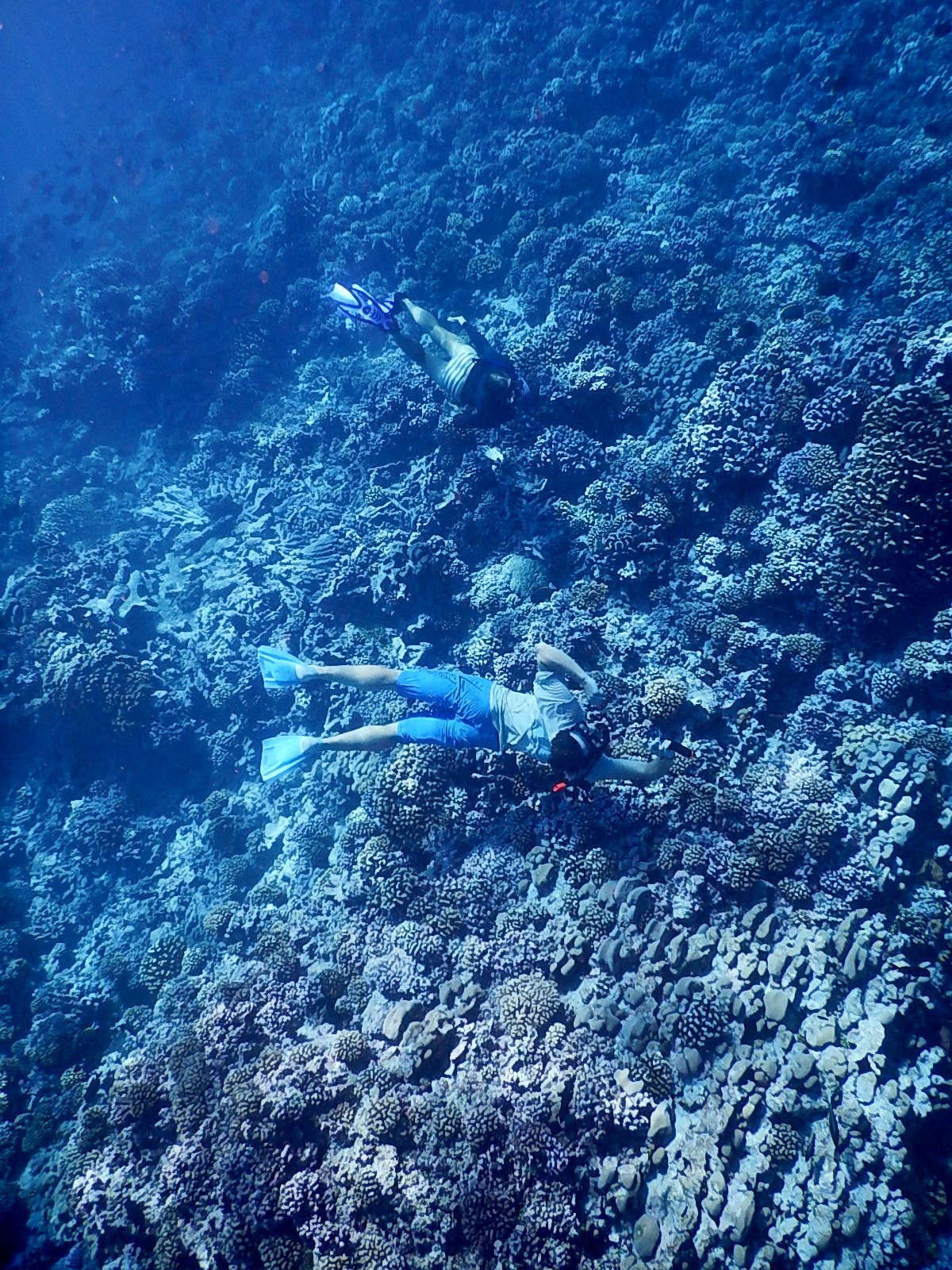
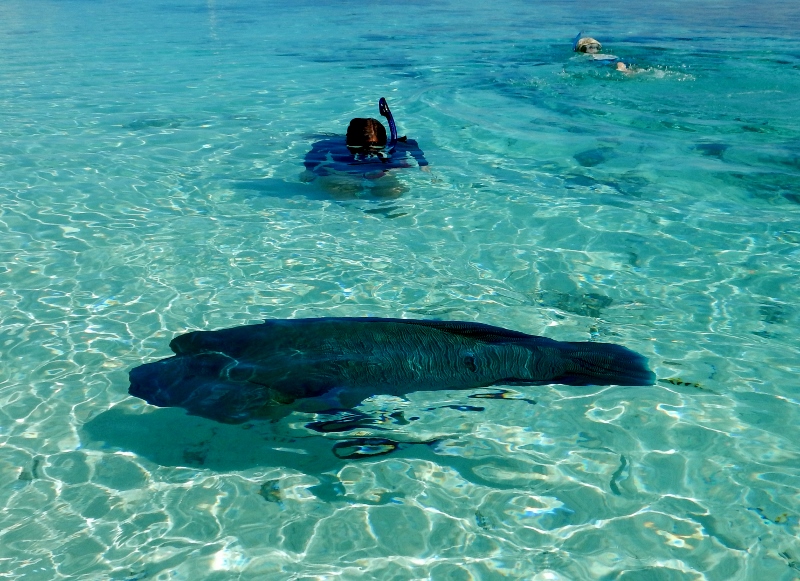
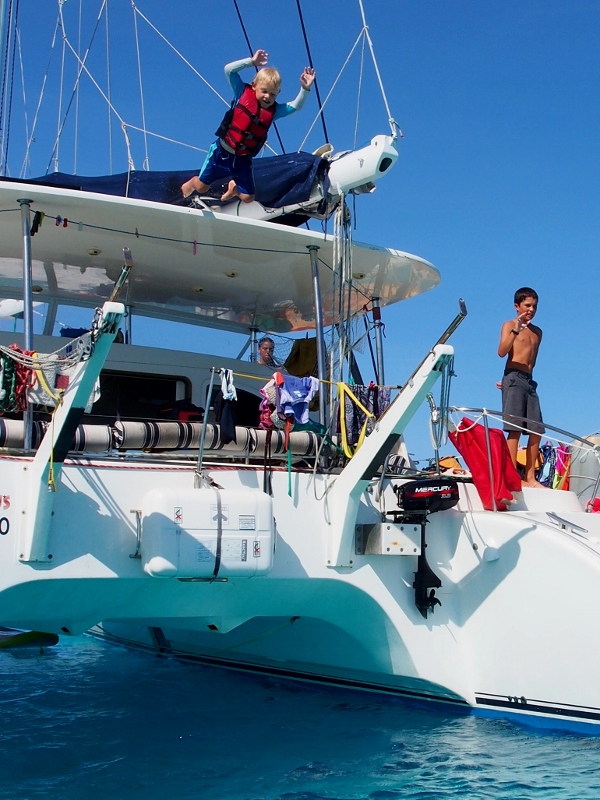
We anchored on the edge of the sill, Bob hanging suspended into the darker blue water of the deeper part. The water was like a swimming pool – crystal clear, with visibility of over 50 m, providing sweeping views over the lovely sandy bottom and the slope down to the deeper part of the lagoon which was dotted with small coral outcrops. Stingrays and grey reef sharks quickly came up to investigate, making us a bit nervous about jumping in – greys can sometimes be dangerous and they did seem quite curious, coming up to the swim ladder to check us out.
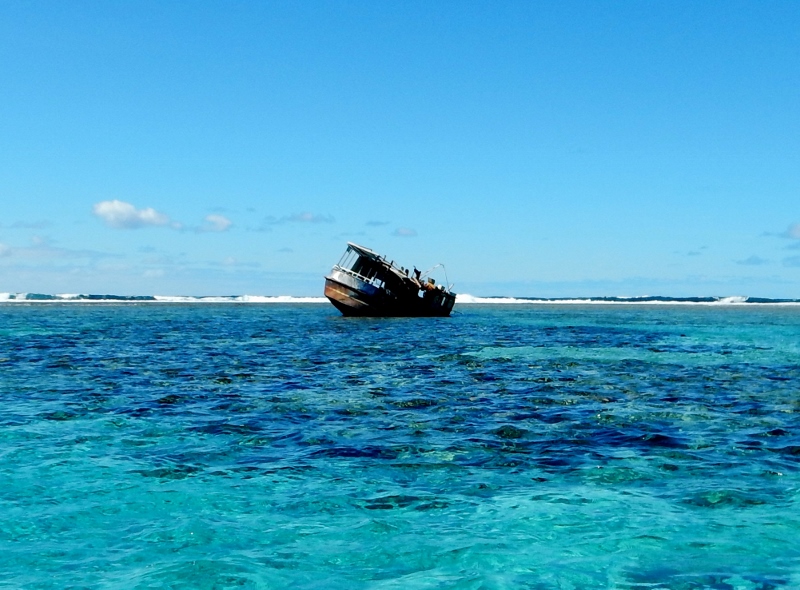
The following day we took the boat over to the wreck of the tuna boat that is lying on the edge of the reef on the eastern end of the lagoon. Clearly visible from miles away, the intact wreck lies on a slight angle, bow deeply embedded in the reef, stern poking out, a big square eyesore. It was a strange place, a deserted rusty reminder of mankind on an otherwise undisturbed reef. We climbed on board the boat, hanging onto the rusty frames to keep ourselves upright on the steeply inclined and very slippery deck, taking in the longline still on its coil, the toilet deep in water and the cockpit full of crabs emerging from cavities that used to hold instruments. It must have been a big storm to throw a boat that size right over the shallow reef, or perhaps she was already inside the lagoon, seeking shelter from heavy weather but failing to find it? How horrible for the crew, perched on the battered structure in the middle of nowhere, in calmer seas once the storm was over but with no land in sight. We wondered about their fate, whether help came, and if it did, from where – Niue? How long would that have taken?
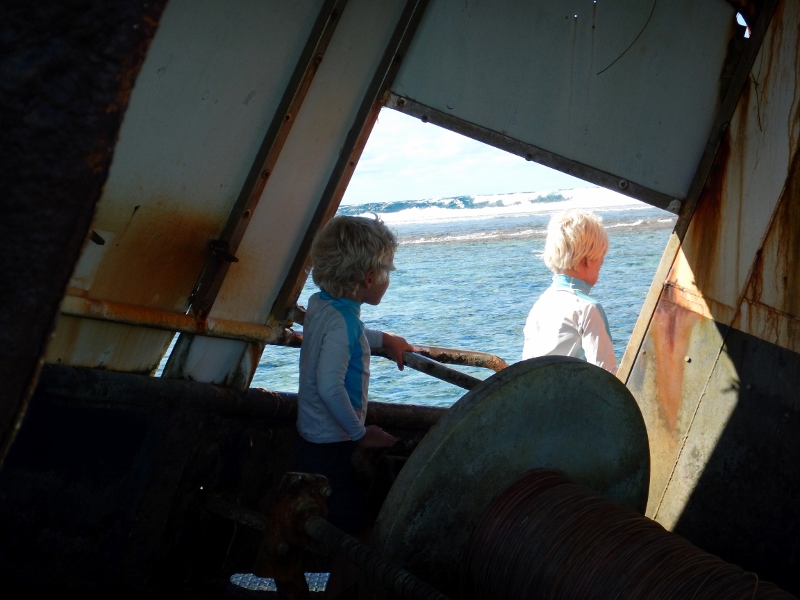
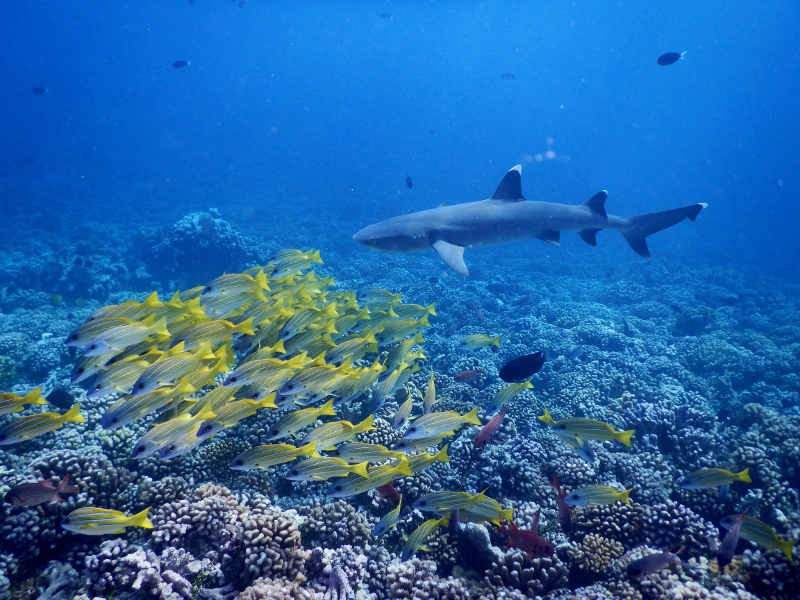
Cruising around the coral surrounding the wreck were a group of white tipped sharks, and we wondered whether the grey sharks came up to have a look at the wreckage, and how the stranded crew would have felt about having them circling the boat.

Beveridge Reef was first reported by Europeans in 1847 when the British Captain Lower-Tinger of the brigg Beveridge sighted the reef and promptly named it after his ship. Subsequent European visitors to the reef reported numerous wrecks, the testimony of the unhappy outcomes of less fortunate guests. There are meant to be more wrecks on the reef than the ‘Liberty’, but we couldn’t them – the strong waves and hungry sharks must quickly remove evidence of shipwreck.

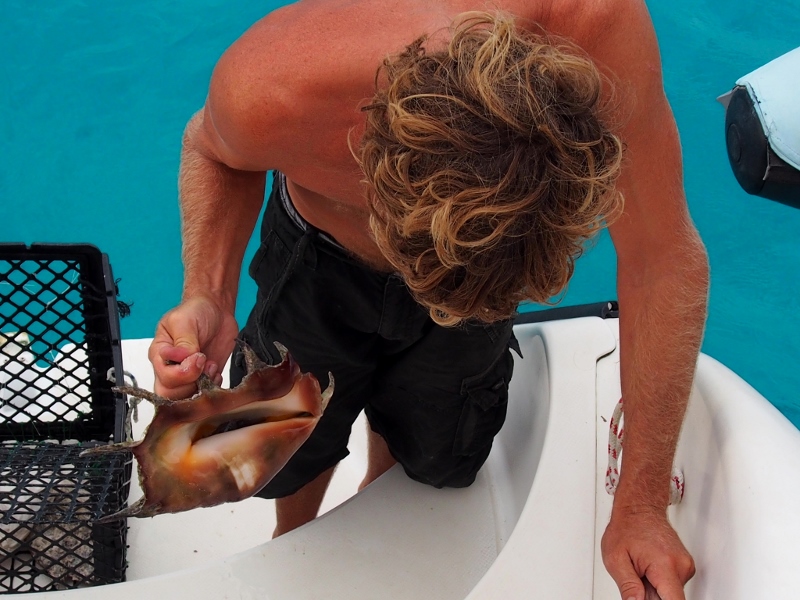
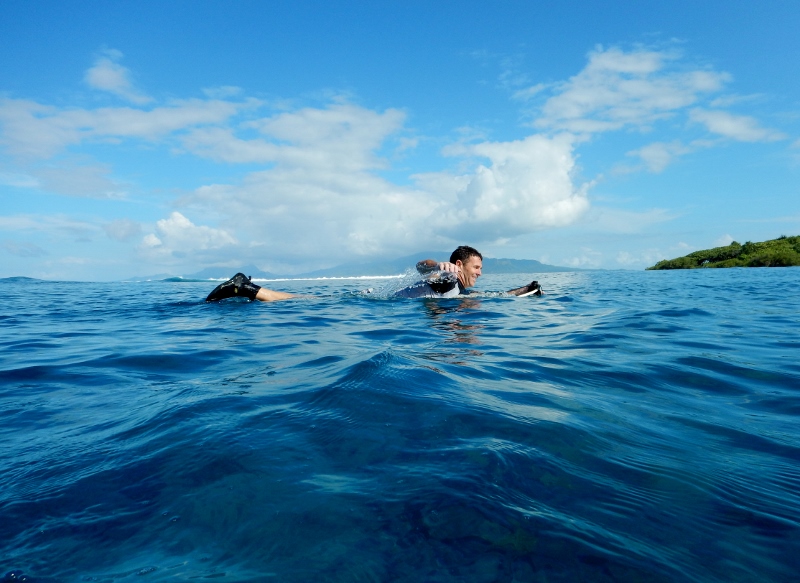
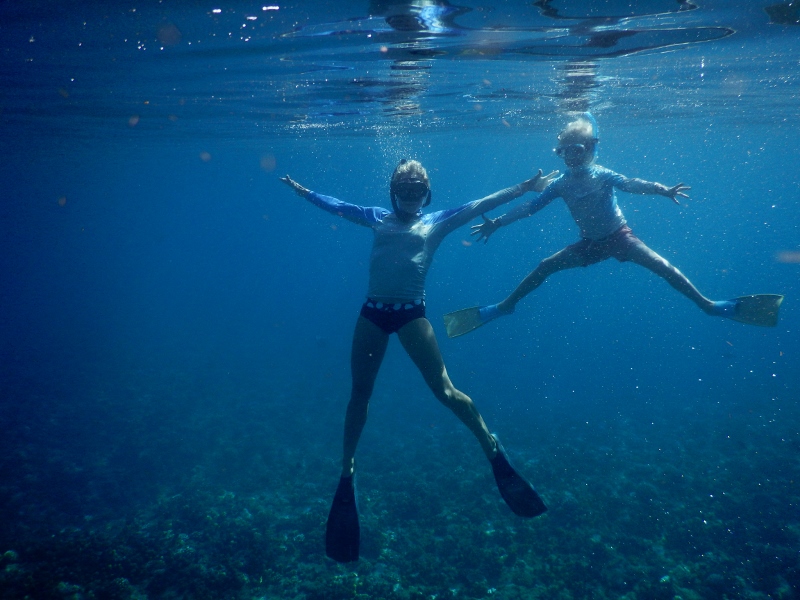
Back on the anchorage David snorkelled for conch but exited the water quickly once the grey sharks started showing interest, and just after lunch we pulled anchor to head out to Tonga. The visibility in the pass looked amazing, and Ed and I tried hanging off the swim ladder as we were drifting slowly through, but we both jumped out quickly when a group of grey sharks came up to check us out. Just outside the pass two humpback whales were frolicking, and we wondered if perhaps the lagoon was a breeding site for humpbacks, and if that was why the greys were so interested in medium sized shapes swimming close to the surface – perhaps they routinely attack humpback calves? The whales were amazing, lying breathing slowly on the surface, sending big spouts of water everywhere, gently rolling around before at last they dipped under, flicking their tails in the air. We watched them for ages, and as they were swimming close to the reef Ed noticed how nice the wave was looking, and he decided to jump in for a surf.











































 SV Bob The Cat