
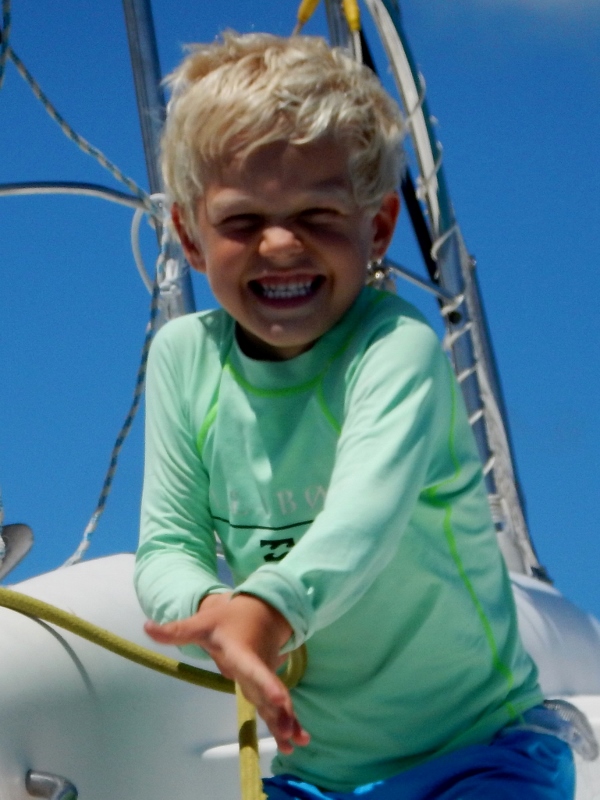
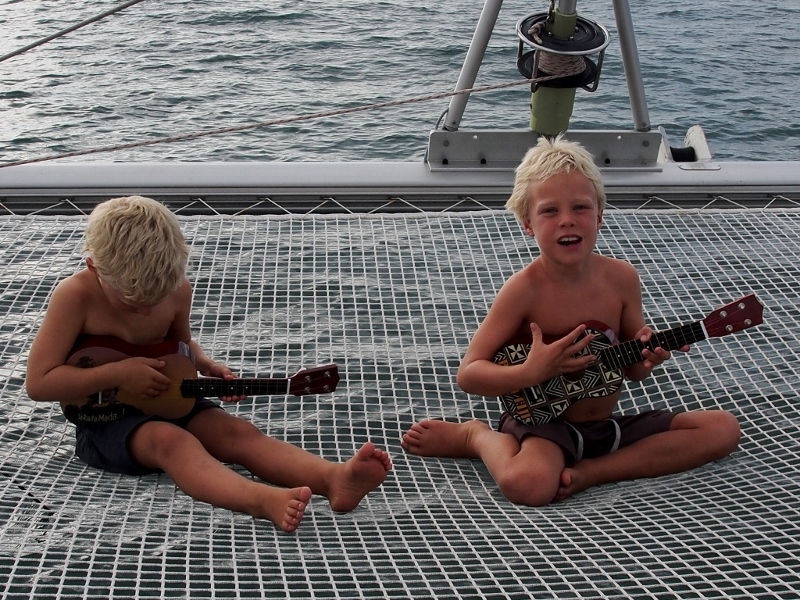
“Expelliarmus”, shouted Lukie, pointing his finger at Matias, who promptly dropped onto the trampoline, clutching his chest.
“Expelliarmus bombus”, repeated Lukie. “You are injured now”.
Matias lifted a slim twig with shaky hands. “Intertrudent”, he croaked, and immediately Lukie began to slowly sink down, his face twisted in agony, until he was lying prostrate on the foredeck.
I continued scrubbing the deck around him. “What’s ‘intertrudent’?” I asked.
Lukie lifted his head off the deck. “It’s what you say to a person, or an animal, and they dissolve. If it hits a thing, then it just bounces back, but people disappear”.
“Who are you guys?”
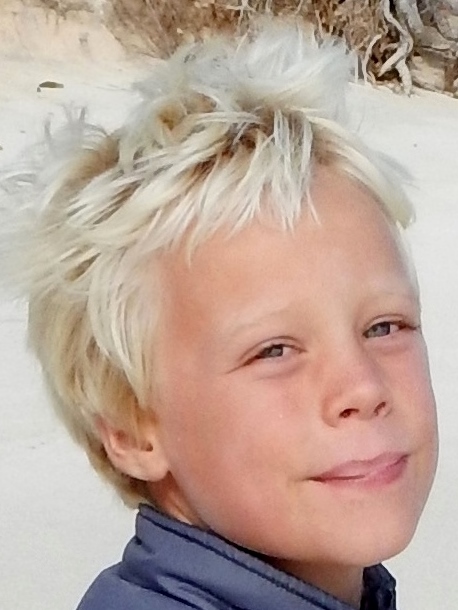
“Matias is Harry Potter, and I’m a small animal called a Lython. It’s a scaly lizard that walks on two legs, like a snake but with legs”. He sat up and indicated a small creature with his hands. “I’m blue and grey, and have green eyes, with black dots”.
“I see. And what do you do, what do Lythons do?”
“Lythons save people and stuff, and I can even fight Voldemort, by kicking him in the face”, he said seriously, kicking in the air to demonstrate. “I don’t use a wand, I can use my hands, like Dobby the House Elf, but Matias has to use a wand. Hedwig is on my shoulder, she likes sitting on me”.
“So now that you have been ‘intertrudented’, how do you get back?”, I asked.
“You have to drink some of Matias’s potion. Then you come back to life”.
The potion was brewing in a large red cauldron on the back step – apparently it needed to steep for hours in the sun for all the ingredients to infuse correctly. Some older potions had already been decanted into glass bottles which stood waiting in the shade, ready solutions for a wizard in a fix.
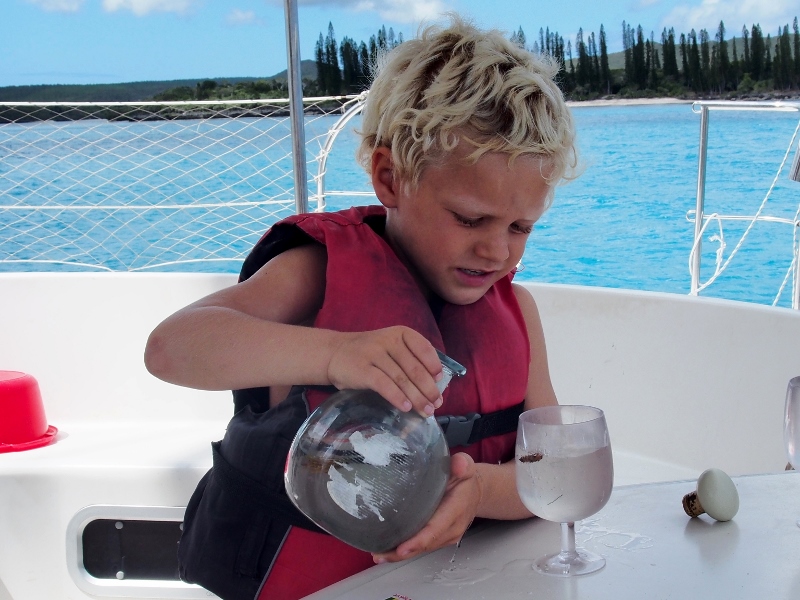
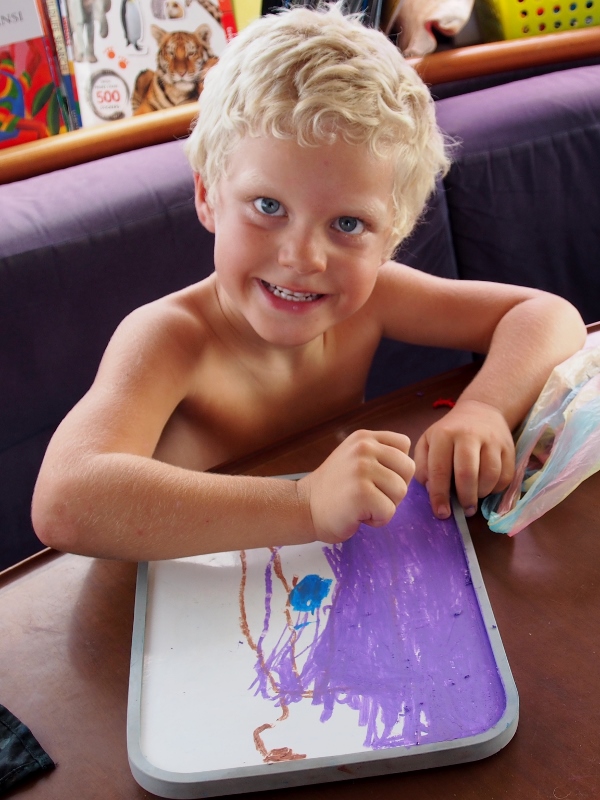
We were in the Isle of Pines, an island 30 miles south east of Grande Terre in New Caledonia. The children were going through a Harry Potter craze as Matias was reading his way through the books and I was reading them out to Lukie, the two of us forever trying to catch up with Matias’s nightly progress. Since we’d been here, the kids had spent hours every day writing potion recipes and collecting the required ingredients, carefully adding them in the prescribed order, steeping, stirring and dissolving ashes and twigs, crab shells and feathers. No matter what the original ingredients, Matias’s potions invariably ended up an unpleasant dark yellow colour.
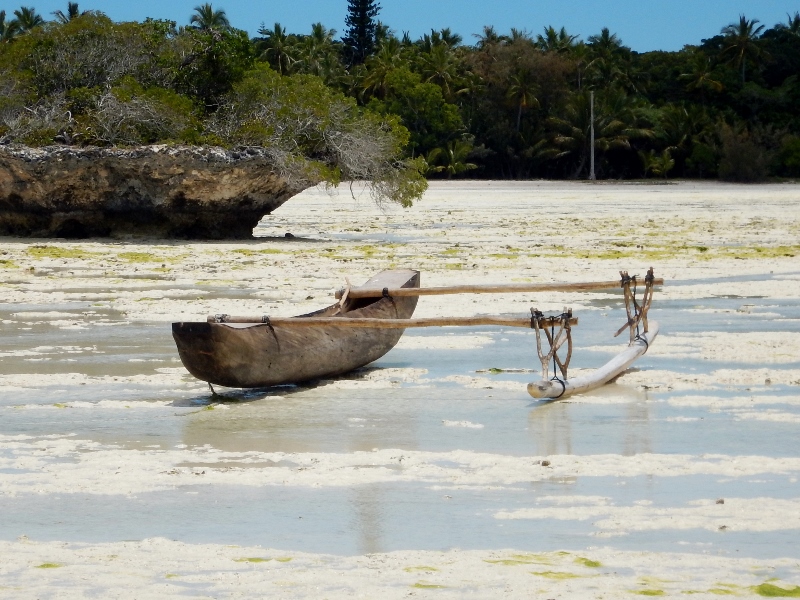
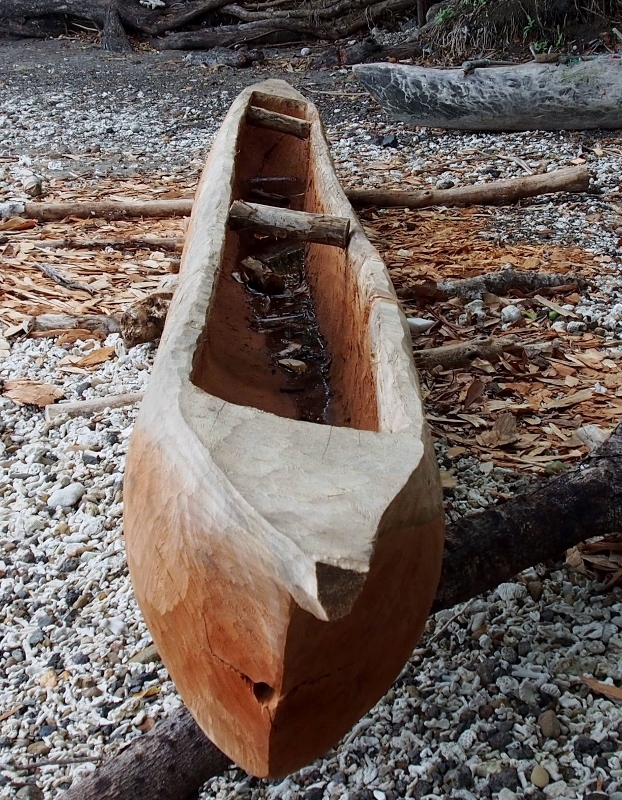
The Isle of Pines, or Kunie as it is known to the indigenous Kanaks, is a remarkable place. Named by Captain Cook for the tall araucaria pines which tower along the impressive coastline, the small island (17 km long, 14 km wide) is home to 8 Kanak clans who, when the Europeans arrived, were the only New Caledonians who could still sail, effortlessly navigating their 40-foot piroques (French name for the double outrigger canoes) using traditional melanesian techniques.
In 1872 the island became a convict settlement for political prisoners from the Paris Commune uprising in France, and later on Kanaks who had been involved with an uprising against the colonial powers were imprisoned there as well. The prison closed in 1911, after which the administration of the island was handed back to the Kunies.

We first arrived into the beautiful bay of Kuto, an idyllic aquamarine inlet framed by a long white beach, backed by majestic araucarias and the impressive Pic N’Ga, a 262 m peak. Little mushroom islets lined the edges of the bay, rock stacks that had been eroded away from the headlands forming dangerous looking overhangs that looked like they were only one erosive wave away from dislodging huge chunks of heavy rock into the sea.
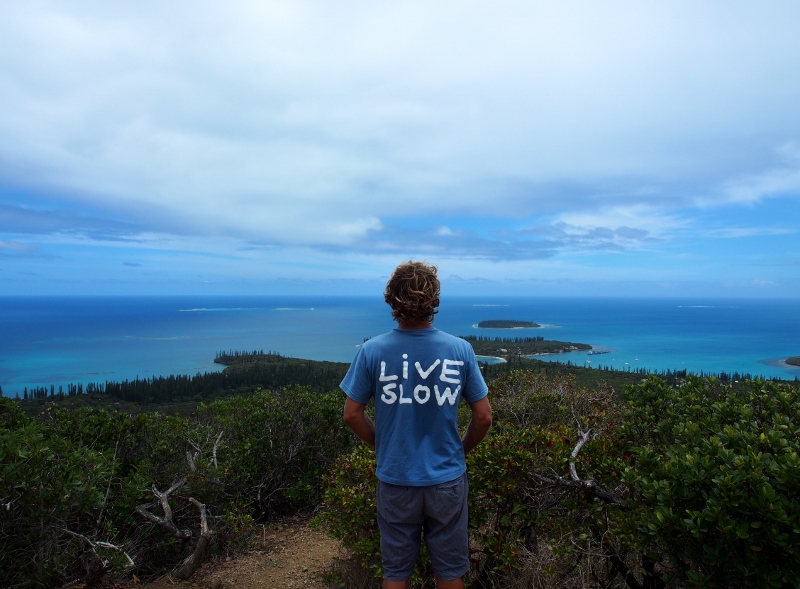
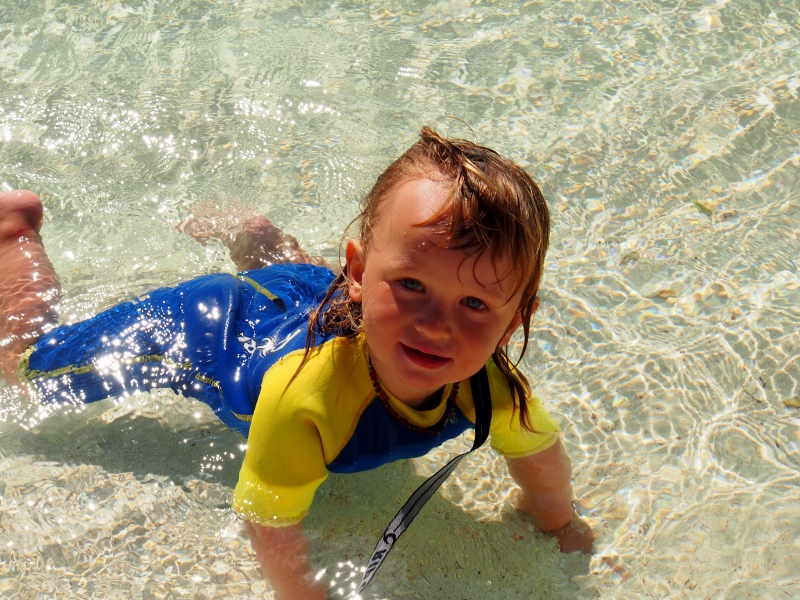
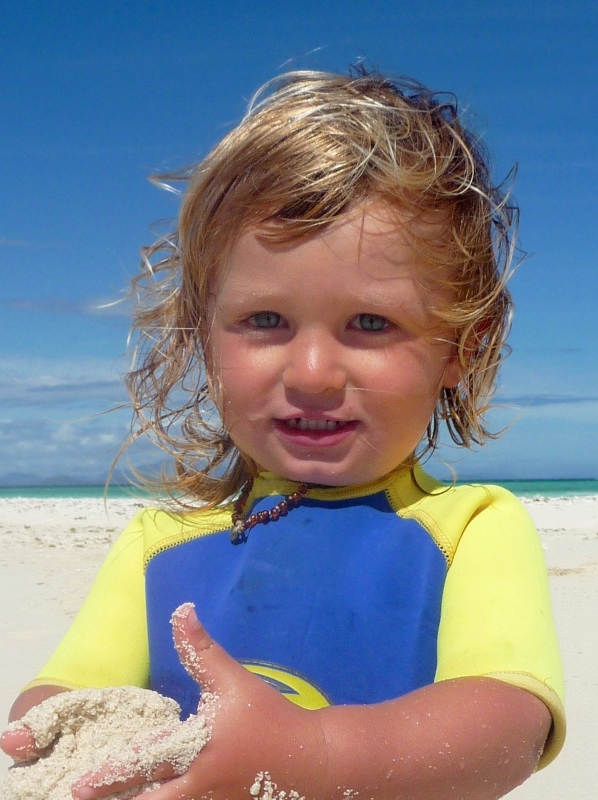
After a couple of days swimming in the clear waters of Kuto Bay, playing soccer and rugby on deserted white sandy beaches and climbing the dusty hillside to reach Pic N’Ga we moved around the corner to Vao, the main settlement of Kunie.
The trip there was tense. The waters surrounding Kunie are shallow and sharp reefs lurk just below the water surface in the uncharted bay of Vao. Our cruising guide had a couple of waypoints which we followed tremulously, me stationed on the bow looking out over the turquoise expanse of shallow water, squinting through my polaroids for the deepest route through to the anchorage.

Despite the breathtaking beauty of the place, there was only a handful of boats in Kuto, and no other boats visited Vao while we where there.
“Maybe sensible people stay away from uncharted waters full of reefs”, I reflected to David once we had safely anchored.
“How boring”, he said.
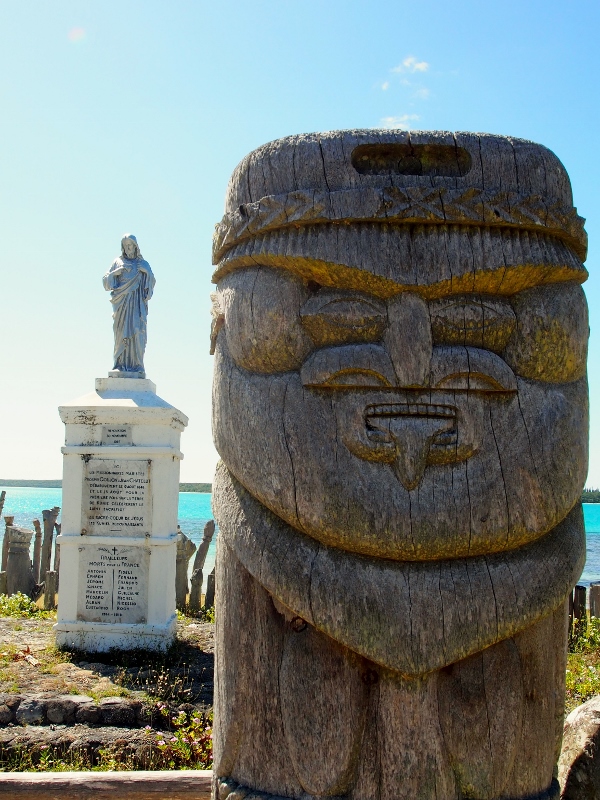
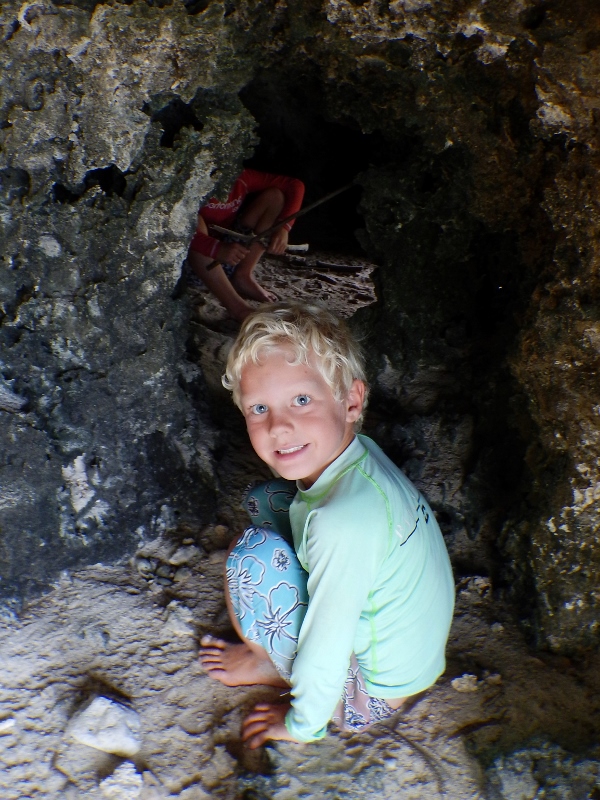
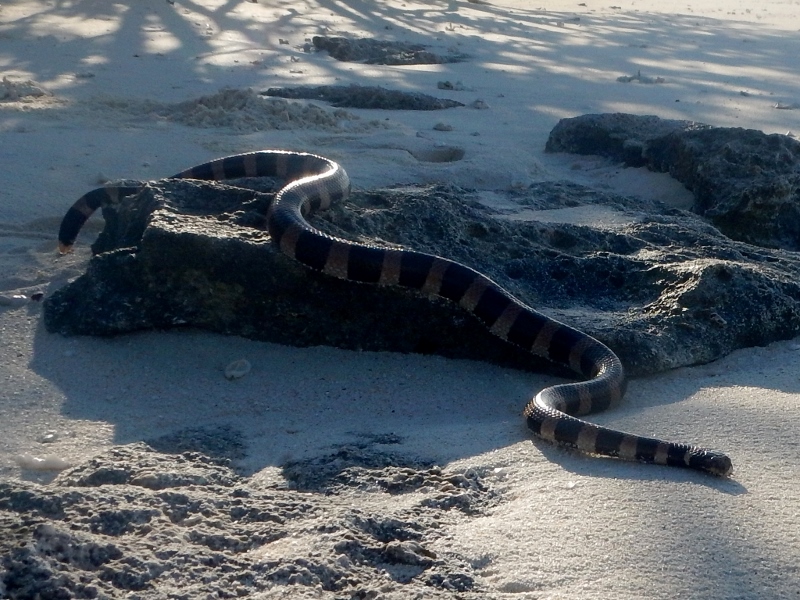
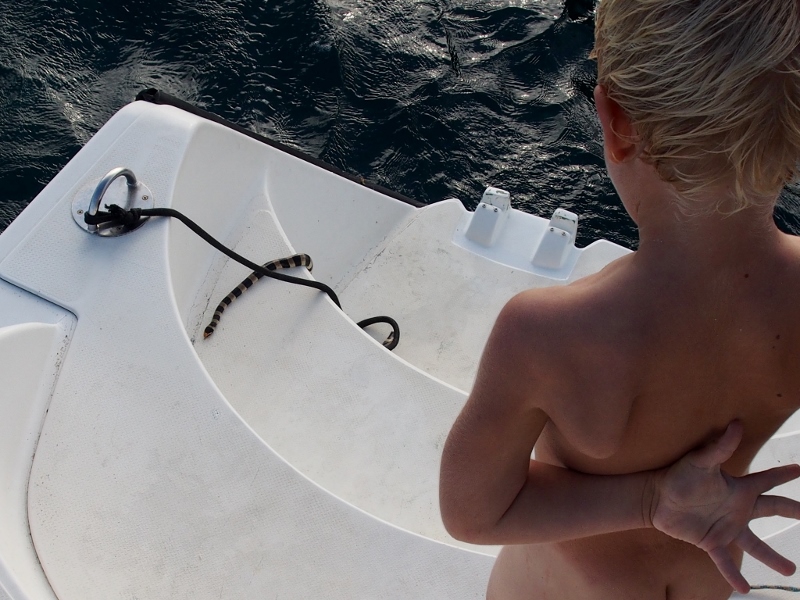
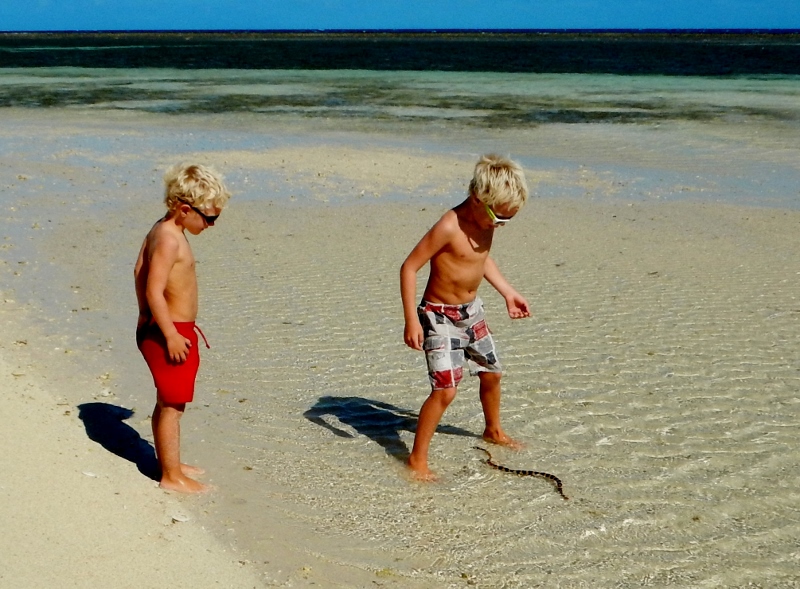
Vao is home to a fresh fruit and vegetable market and a nice little church, as well as several rowdy puppies and curious children that followed up enthusiastically up the road. Across from the town is a little headland with a few caves and lots of dead crabs and seasnake skins, cherished ingredients for seasoned potion makers, as well as a couple of araucarias which yielded valuable pine tree sap, perfect for fashioning stoppers for potion bottles.
After a day there, David cast his gaze north, towards the fabled bays of Gadji, where a group of idyllic islands sit just off the northernmost point of Kunie island.
“We can do this. Nothing like a bit of a challenge”, he said merrily. Glancing over his shoulder at the cruising guide I read the comment highlighted in red next to the route north:
DANGER – THE DEPTHS ON THIS PHOTOCHART ARE THE DEPTHS BETWEEN THE CORAL READS. MANY ISOLATED CORAL HEADS SCATTERED ALONG THIS ROUTE ARE NEARLY AWASH AT LOW TIDE. MAKE THIS PASSAGE ONLY WITH GOOD LIGHT AND GOING AGAINST THE CURRENT WITHIN 3 HOURS OF HIGH TIDE AND STEER TO AVOID THE REEFS.
So it looked like it was going to be a tricky passage to get up north as well. Back to the bow for me, and there I remained as we hugged the rugged coastline, marvelling at the mushroom stacks popping up all over the place, admiring the tall outline of the pines on the many narrow headlands, and shouting loudly whenever we neared the opaque turquoise waters indicating dangerously shallow sandy flats or the browny yellow stretches suggesting that a coral reef was just below the surface.

Just north of Kuto a wildfire was raging in the hinterland, and as we sailed slowly past we witnessed the sole helicopter tasked with putting out the fire as it came out to sea to fill the enormous bucket hanging off it with seawater, disappeared back into the dense smoke only to reappear minutes later as a small yellow fleck growing gradually in size, coming back to the sea for a refill. It seemed a hopeless task, a huge fire raging on a dry hillside densely clad in tall pinetrees, and only one little yellow helicopter to put it out. As we passed, we watched it refill six times, but we saw no discernible reduction in the size of the fire.

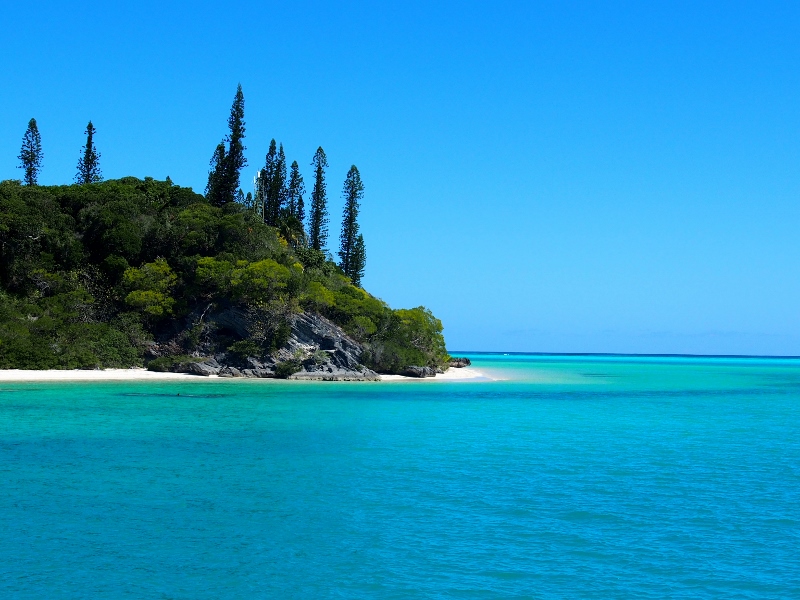
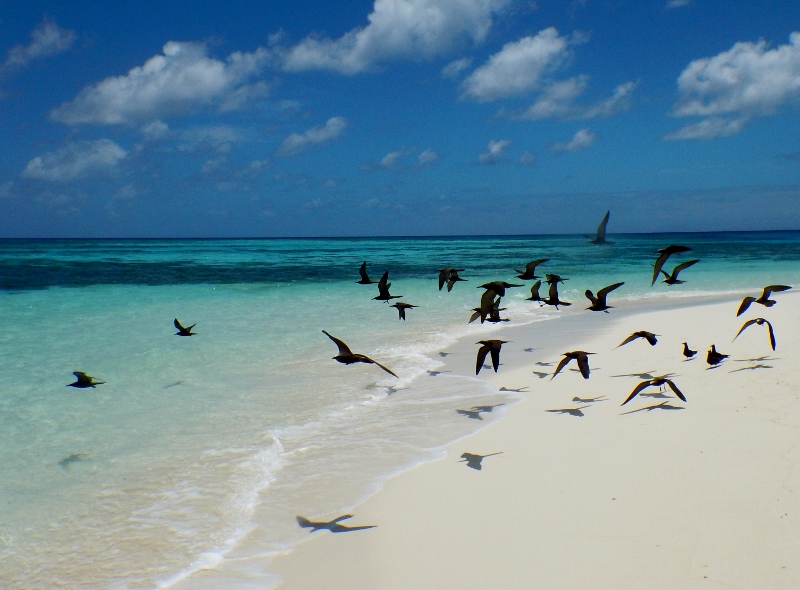
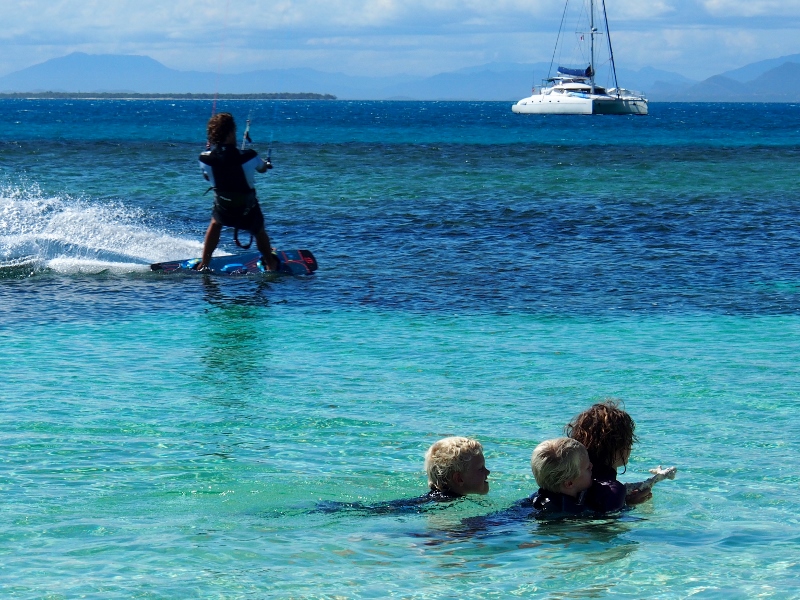
The smoke darkened the sky behind us as we rounded the corner and entered the most beautiful anchorage in the world at Gadji, a shallow, serenely aquamarine bay surrounded by small limestone islands covered in dense dark green vegetation, the requisite mushroom islets trailing obligingly into the bay after each headland.

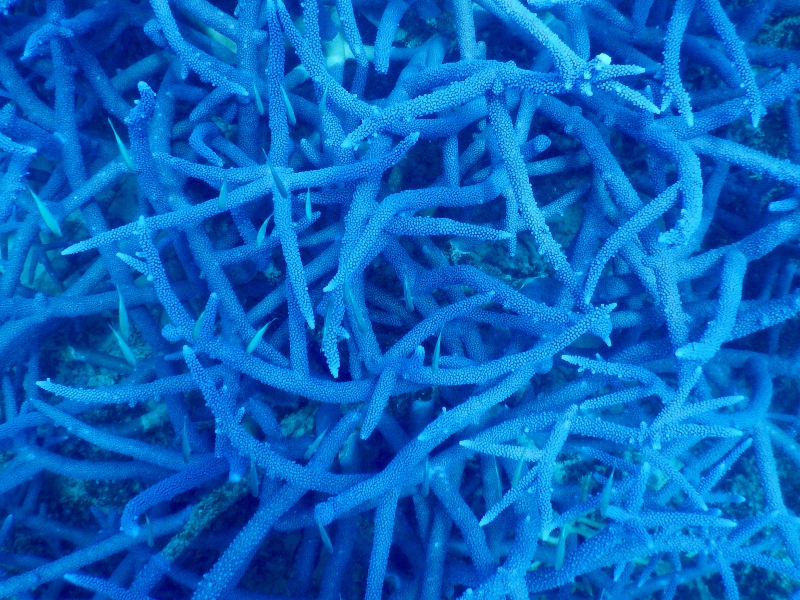
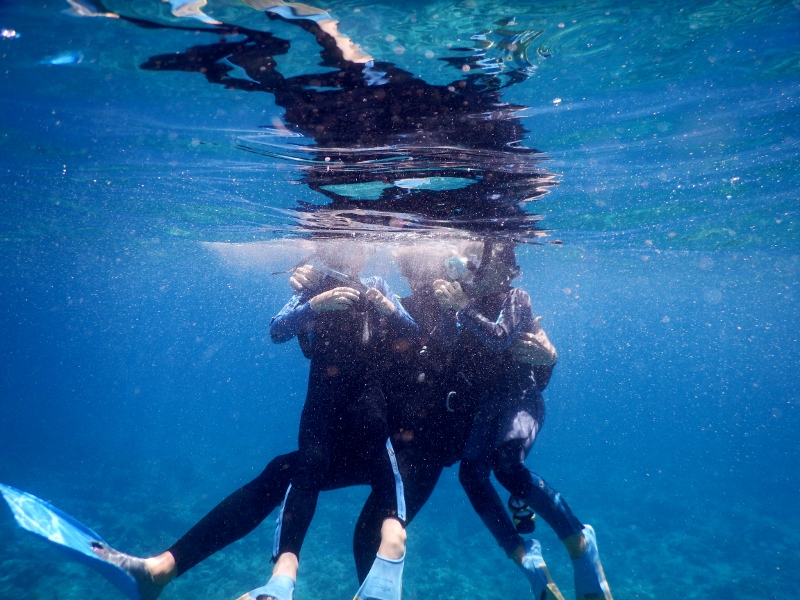
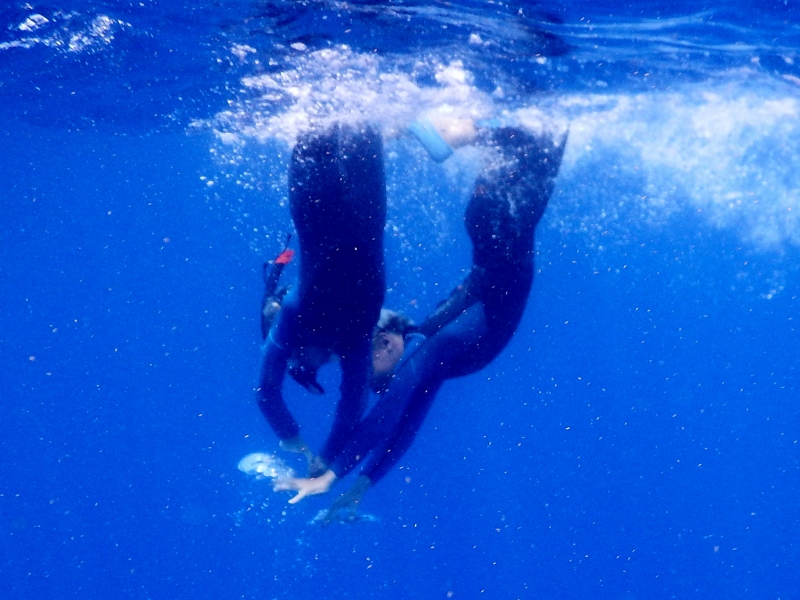
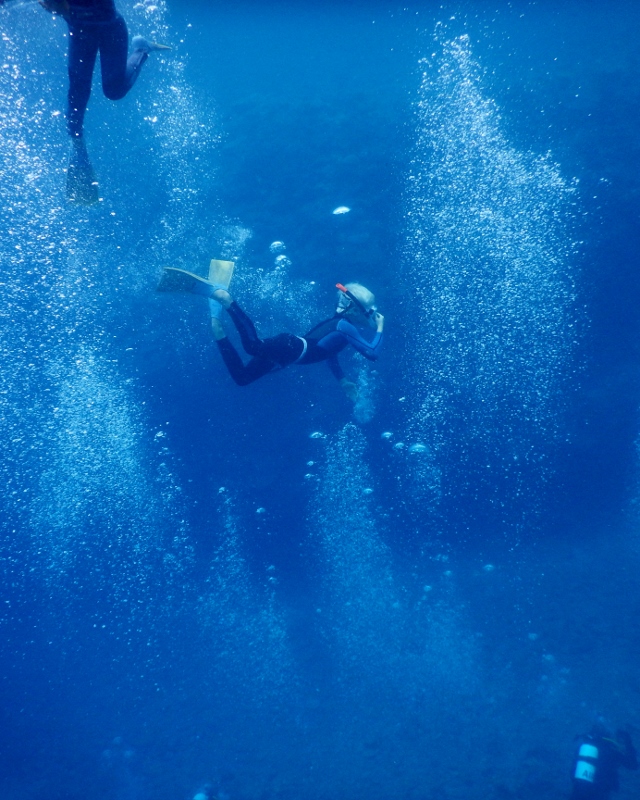
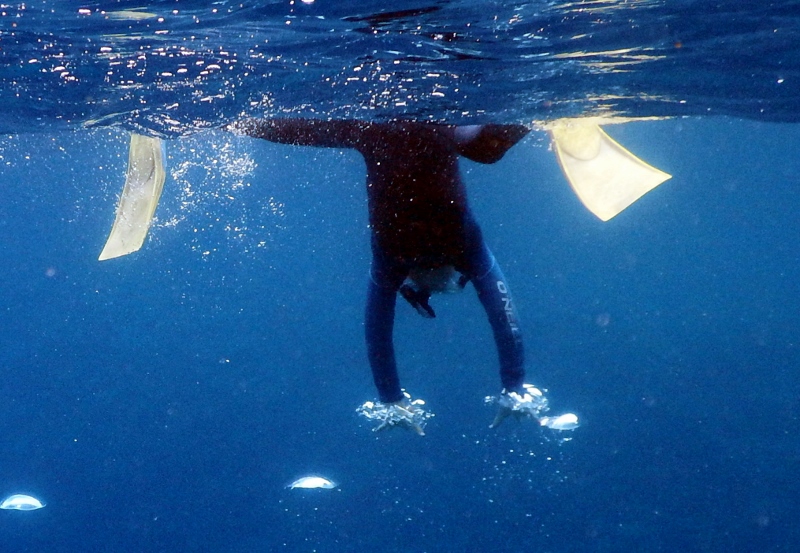
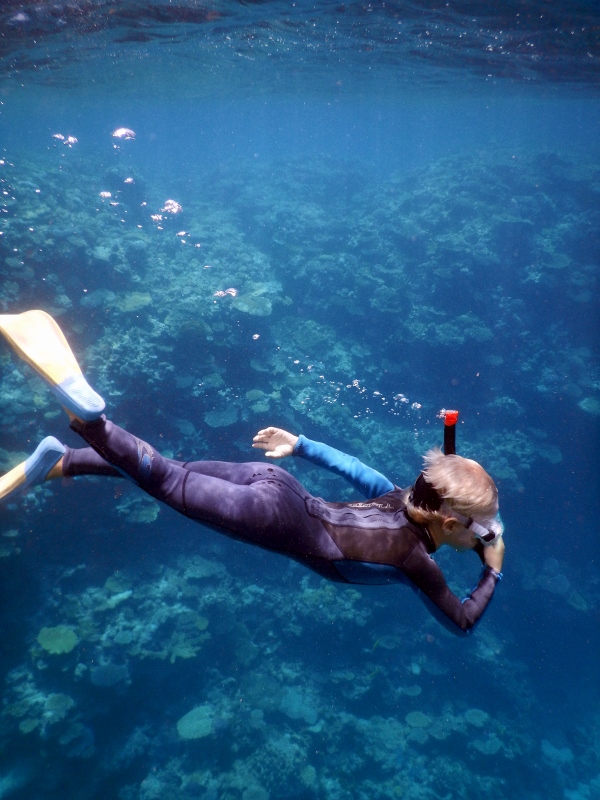
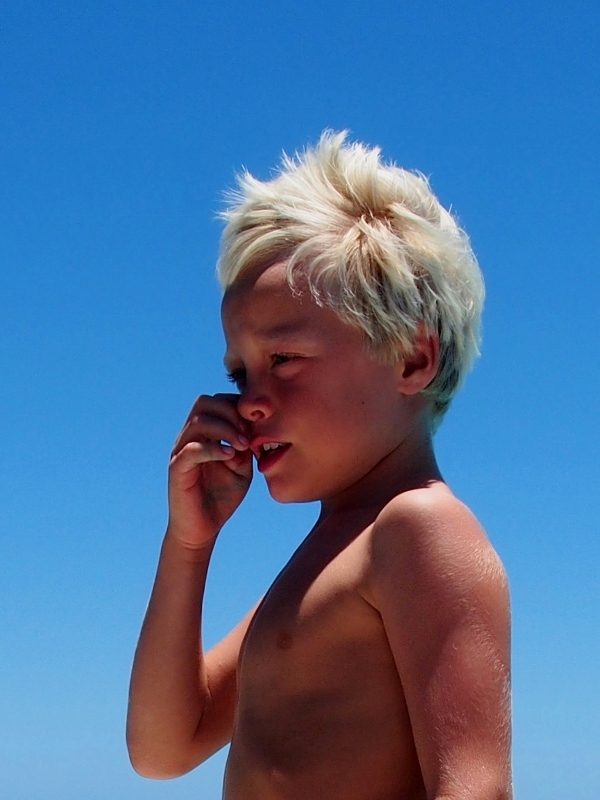
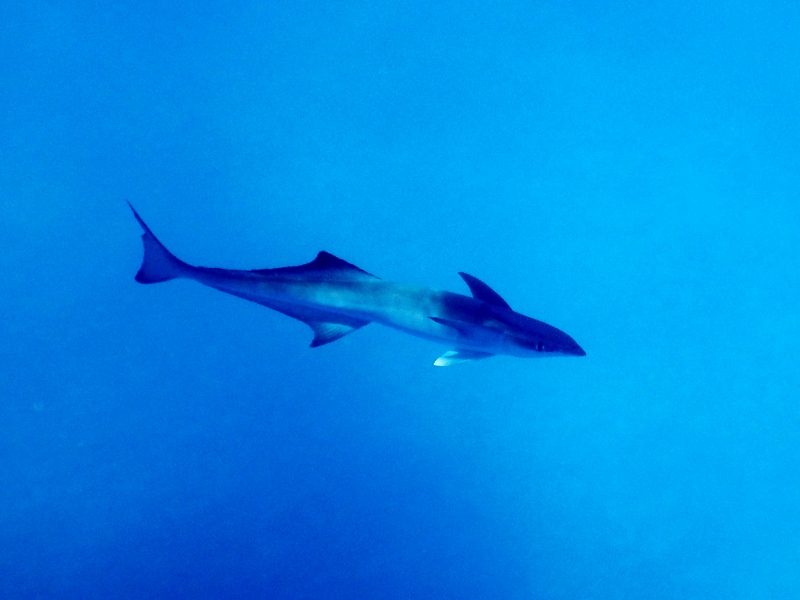
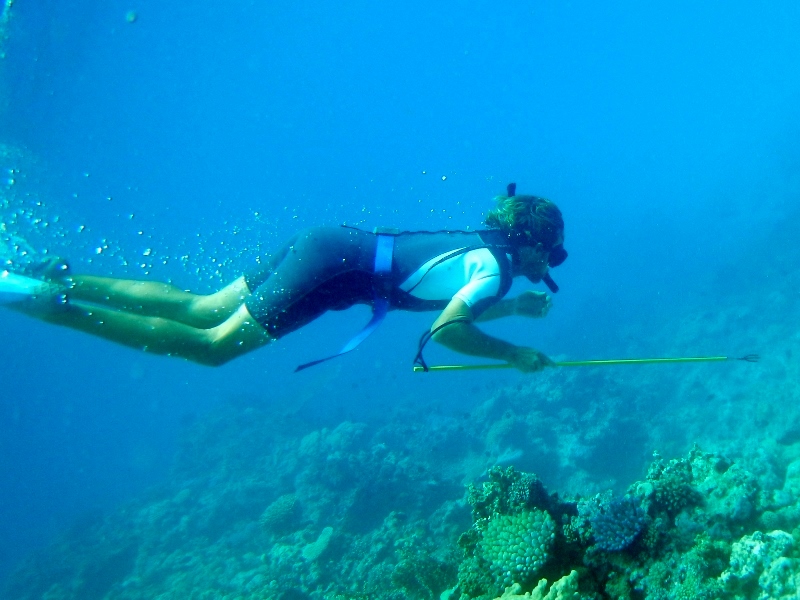
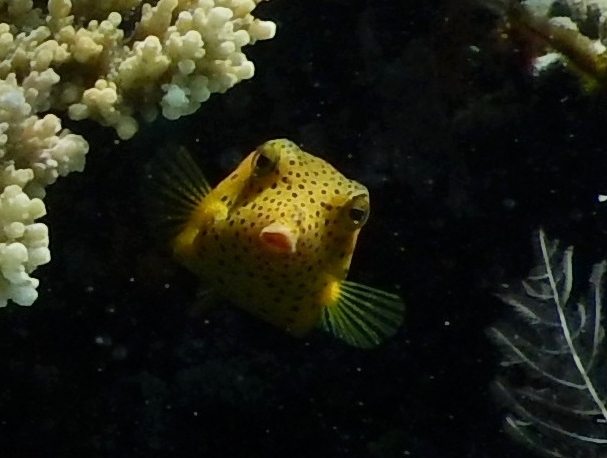
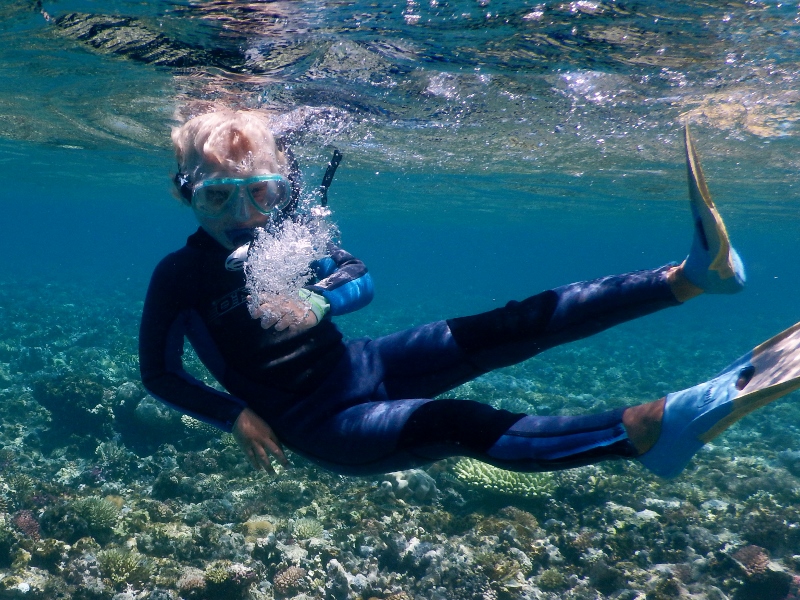
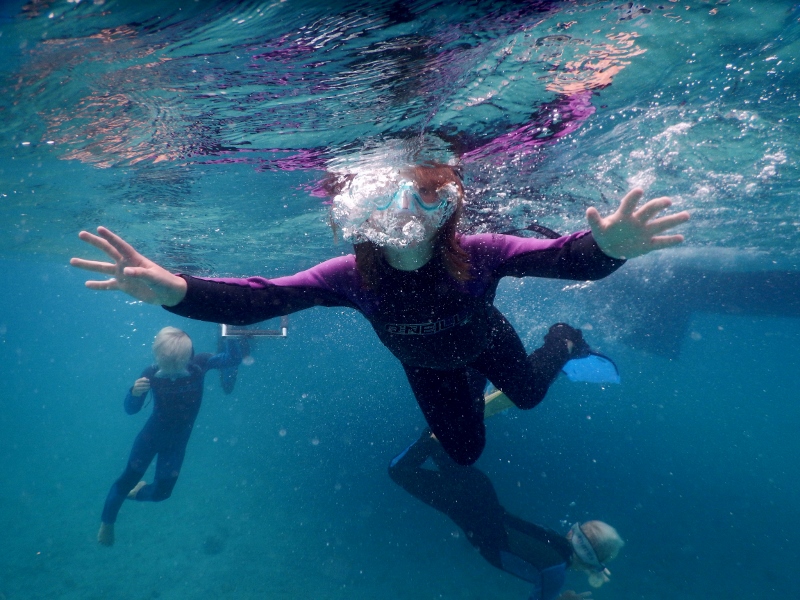
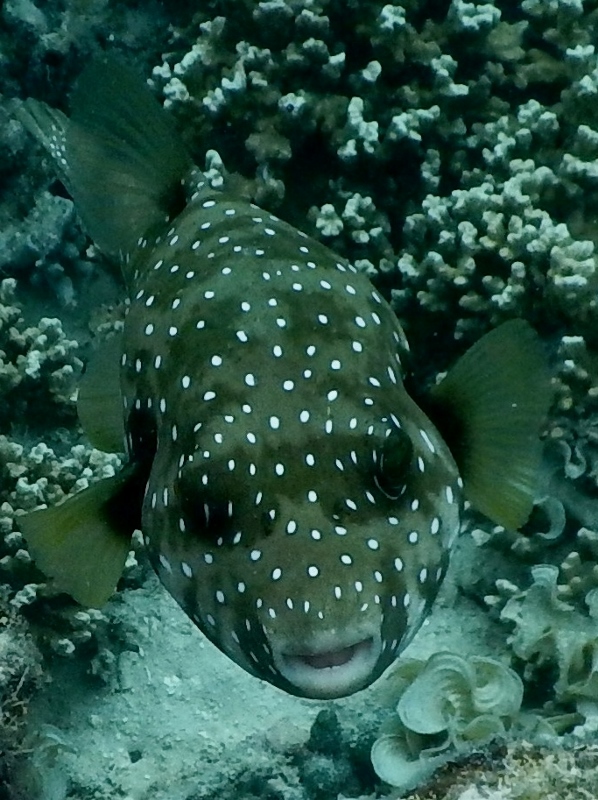
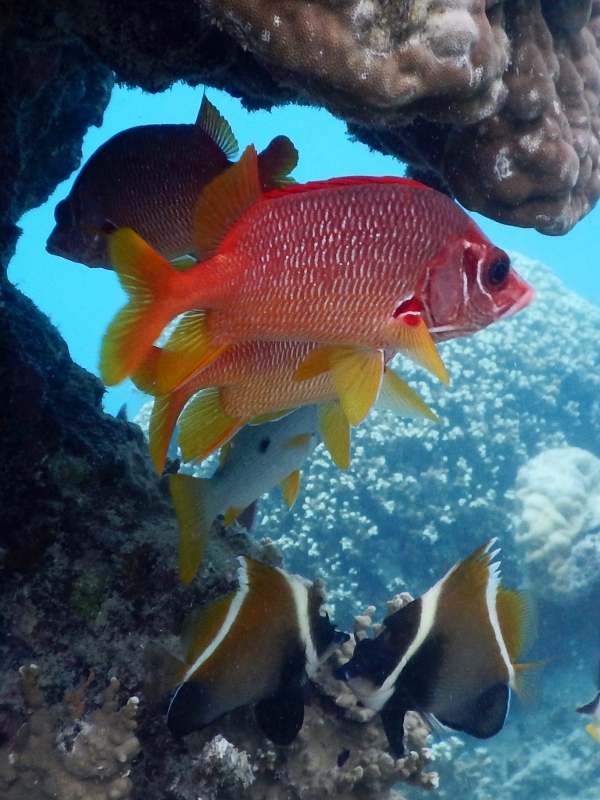
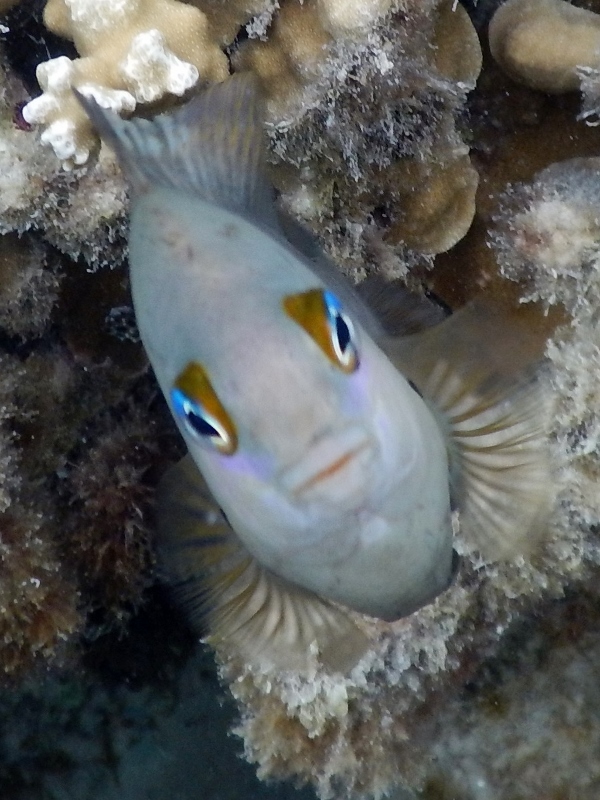
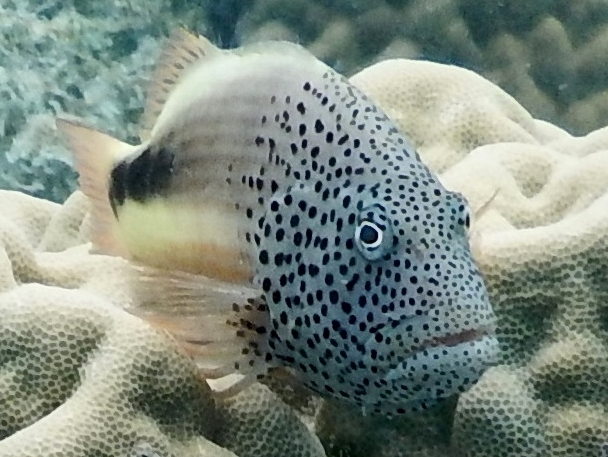
Our friends Bruce and Lynne were at Gadji too, and we spent our days with them, diving and snorkelling in the clear waters, spotting turtles and sharks hovering over beds of pristine corals full of fish. Out of the water we visited white beaches and climbed dark jagged limestone rocks, watched slender herons on expansive intertidal flats of silty white sand and spotted peregrine falcons perched atop tall trees. The kids continued their hunt for ingredients, recipe in hand, and brewed more and more elaborate potions, Lukie’s final effort requiring a staggering 9 billion crab eyeballs (which we eventually had to substitute for sand grains – should work).

“Lynne, I’ve made you a potion”, said Matias, proudly proffering a bottle filled with a cloudy yellow-brown liquid to Lynne as her and Bruce came over to our boat one evening for a sundowner.
“Great”, she said, holding the bottle out with two fingers and eyeing the solution nervously. “What does it do?”
“It’s for bravery, if you drink a tiny drop, you’ll become braver than anyone else in the world”.
“That is a great thing to put in a potion. Thank you so much”, she said graciously. “I’ll drink a drop whenever I need to be brave”.
She would need bravery to drink it, based as it was on salt water and decomposing twigs, but I guess superpowers come at a price.

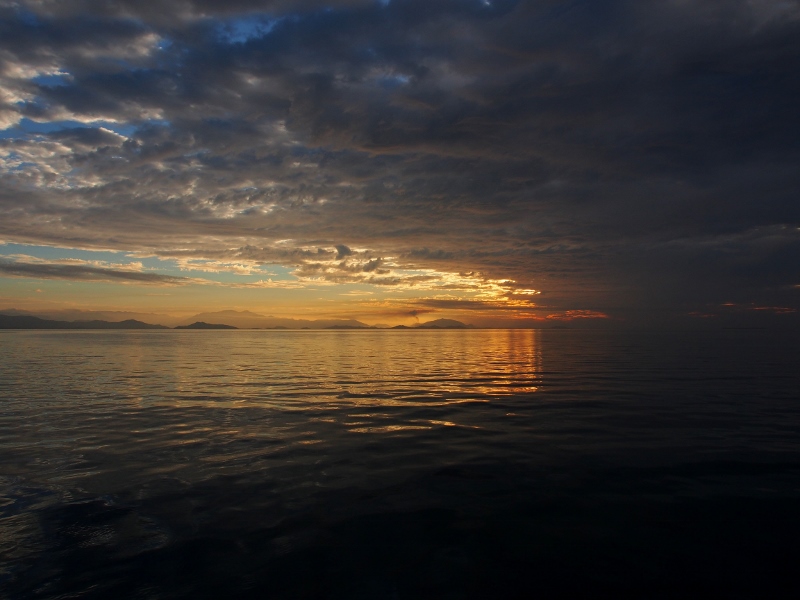
The following morning we pulled anchor, ready for the overnight sail to Ouvea, the northernmost of the Loyalty Islands, a group of islands 40 nautical miles to the east of Grande Terre. As we sailed out of the anchorage, the wildfire was still raging on the mainland behind us. Now on its sixth day, the thick black smoke was still rising, effortlessly transforming into dark grey clouds slowly trailing their way north in the light winds, overhanging the anchorage and blocking out the sun. The water in the anchorage was covered in burnt pine fragments which fell out of the sky, and as we motored north David got out the deck hose, cleaning them off as we broke away from the clouds and into the sunshine.











































 SV Bob The Cat