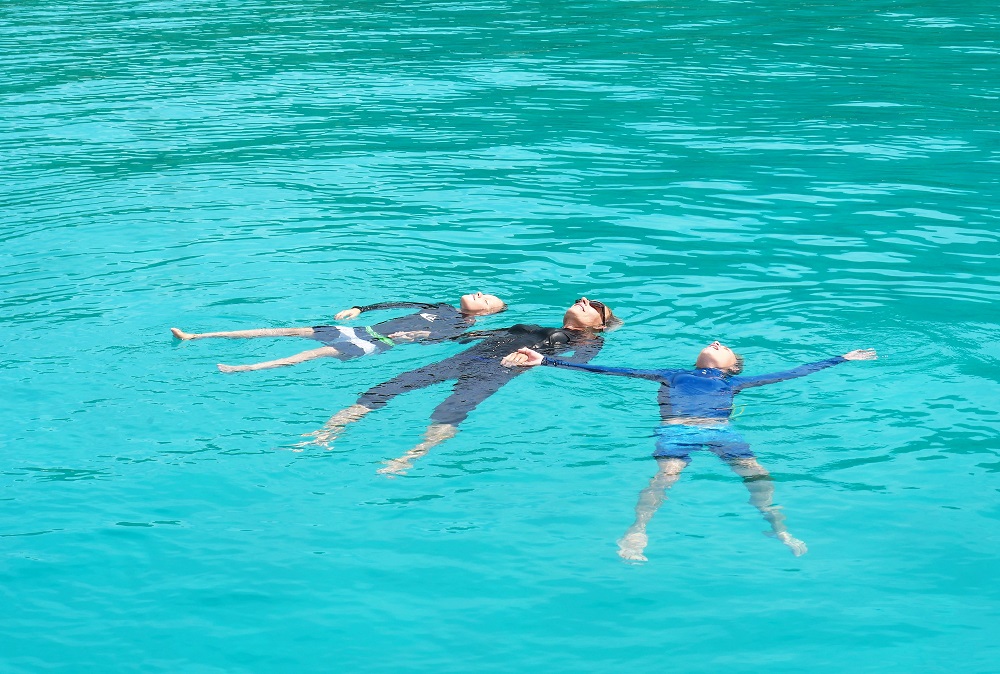
“Mummy, when are we going to be in clear water again?”
I sighed and look out over the horizon of masts spiking the low-hanging dark grey sky. The question, asked by Matias, is fair enough. Since leaving Indonesia we’ve been moving northwards along Peninsular Malaysia’s west coast, hopping from town to town, staying mainly in marinas. We’ve been in marinas in Puteri, in Pangkor, in Penang and in Langkawi. It’s a stark contrast to the deserted islands and crystal waters of the Anambas; here in Malaysia’s marinas, the water is thick and green and often covered in a membranous rainbow oil slick.
I shake my head. “Not sure,” I say, putting my arm around his shoulder. “Maybe in Thailand?”
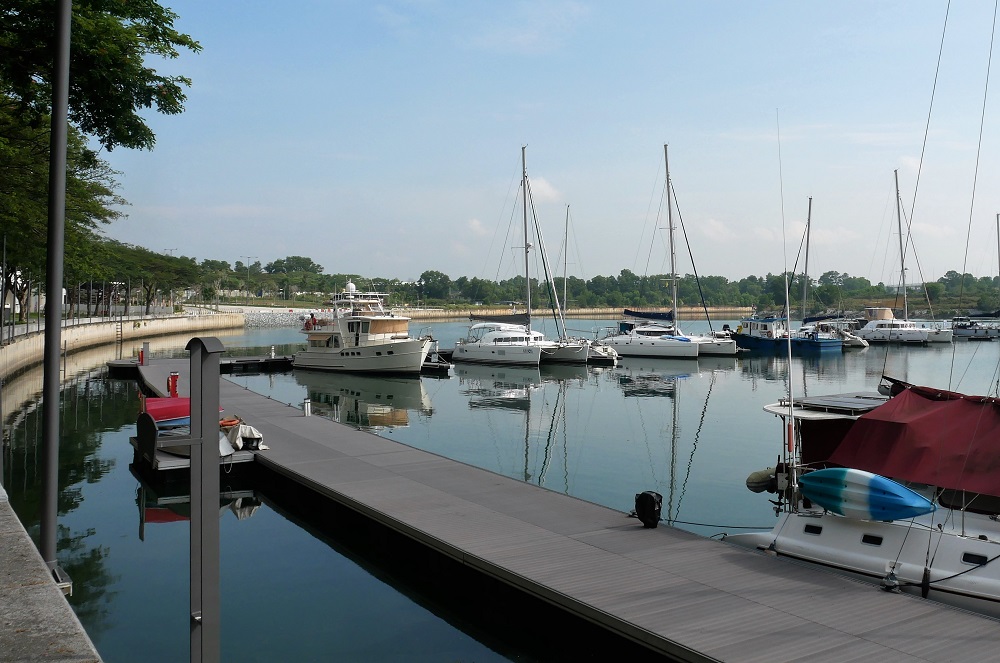
Matias is not a fan of marinas, and I’m not either. They are hot and windless, dirty and crowded, full of insects and bird poop. Unlike anchorages, they are too close to land to allow a cleansing breeze to alleviate the heavy pressure of Malaysia’s 30 degrees C and 95% humidity, leaving us gasping for air whenever we’re on board. At dusk the mosquitoes come out, so every night just as the air cools to a reasonable temperature, we have to close the boat up tightly, our fine-meshed mozzie nets stifling whatever minuscule airflow is present. Not that we can keep the hatches open anyway – it rains almost every night here, so we lie sweating on damp sheets, beady droplets drawing lines on our glistening bodies in the tightly closed-up boat, the only airflow present that propelled by the faintly whirring fans.


Marina living is dirty, too. No matter how fancy the place – how nicely maintained the boardwalks, how neatly swept the paved paths, how immaculately kept the thick green grass – the close proximity to shore brings an endless amount of black child-sized footprints trailing up our white gelcoat from the dock to the cockpit. No matter how many mats I put down and how many admonishments I issue the footprints continue over the cockpit seats and into the saloon. It’s not just our foot soles that are dirty; after more than a year of water living we are used to having white-clean nails but now that time is gone and we find half-moons of shore dirt imposing on the tips of our fingers, wedges of black impossible to dislodge from the children’s toenails no matter how hard we scrub.
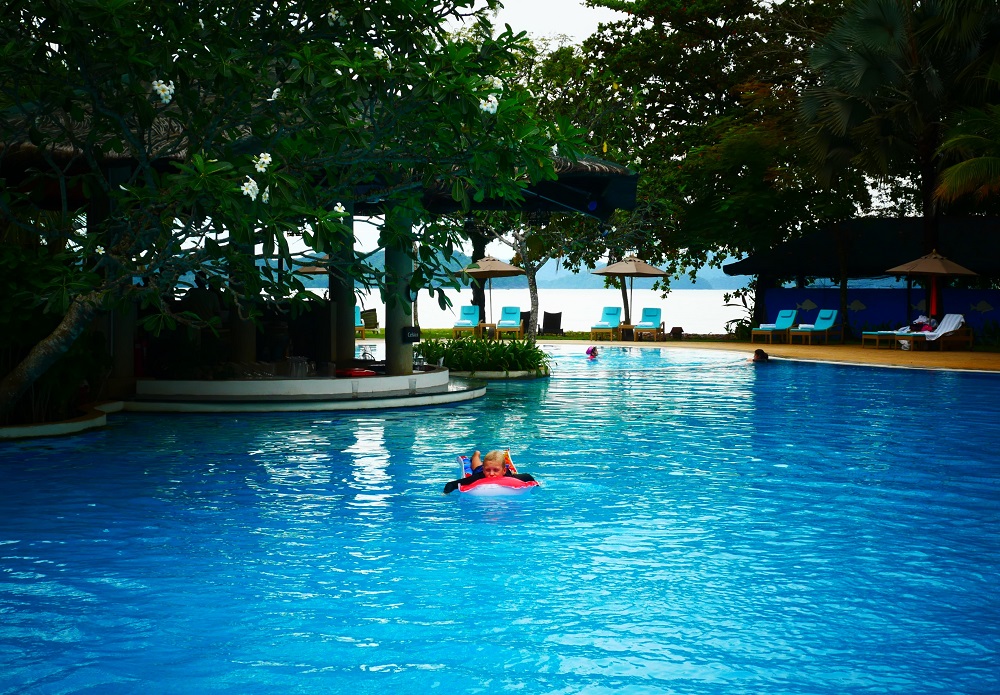
Of course, there are mitigating factors. There are the amenities, the flushing toilets that are nice to use, the one-push-and-its-all-gone a novelty that only fades slowly, approximately at the same rate as our hands soften with the waning of the toilet pumping calluses. Invariably, though, marina toilets are situated too far away – no matter which berth we are assigned, the nearest toilets are never less than a mile away. There are showers, too, with good pressure cold and sometimes lukewarm water under which we stand for long minutes on end, savouring the feel of fresh water cascading over our skin. The drawbacks to the showers are the mosquitoes hanging around in the perma-shade and the mouse-sized cockroaches that lurk in the drain, only to scoot out when I switch on the water, causing my heartbeat to shriek into sudden arrhythmia. On the boat, there is endless fresh water and electricity, which means that we can splurge when doing the dishes and use whatever power tool we want.
The latter is the reason we’re there, and I’m sure that the circumstances flavour my impressions of marina living. We are coming to the end of our journey and there are a thousand small things that we need to do to the boat to get it ready for sale. So, we’ve been hopping along from marina to marina, receiving parcels in one place, shopping for parts in another, settling in to do boat work in a third.

Working on the boat whilst you’re living in it is a bit like living in a house you are renovating – dirty and unpleasant, but cheaper than the alternative. So we put up with the clouds of sanding dust and varnish fumes, the endless drone of power tools, the living space so crowded with tools and brushes that there is no place to sit, the kitchen that is covered in drop sheets and masking tape.
Despite Matias’s dislike of marinas, the kids normally have fun there. Many places have swimming pools and most have large areas covered in concrete perfect for skateboarding. There are other boat kids too, and while the adults work, the kids roam free in large gangs, busily swimming, skating and exploring.

There are, of course, things to see here. You can catch taxis inland and explore tourist attractions, take long walks, visit waterfalls, scale small peaks in the searing heat. But with all the work we have on we tend to limit our excursions to shopping for boat bits, and so the only local attractions we see are busy shopping malls, the touristy beachfronts, and the creatures one finds in marinas.

Of these, the humans are the least charming. Normally, yachties are interesting people. They are the sort of men and women who make their dreams a reality, who get up and go, who are not afraid to grab life by the helm and steer into the unknown. They are people who choose their life rather than fall into it by default, doers not gonnas, the kind of people who are interested in nature and people and culture, who love exploring, who marvel at the wonders of the world. They are self-sufficient and capable, competent and sensible, not afraid of a life lived a bit differently, without too many safety nets. They are lovely people, interesting and interested, and a joy to meet.

Yachties like that tend to stop only briefly in marinas. They come there if they have some work to do on the boat, if they need to pick up visitors, or if they need a place to leave their yacht while they go overseas for a while.
There is another variety of yachtie in marinas, though. These are the ones that are stuck, for one reason or another. On our travels across the world’s oceans we have encountered a few places where people tend to get lost, the Hotel Californias of marinas and sheltered anchorages. St Maarten in the Caribbean is one example – most of the boats we met there never went anywhere. The marinas of Malaysia are the same. Here, unwary boaties find themselves stuck for years and we meet many of them. Presumably once proud and cheerily full of good posture and great spirit, they are now scowling weirdoes, ageing men and women walking with humped backs and a permanent grim expression etched onto their forehead. Their faded clothing and narrowed eyes speak of years spent hatless in the strong tropical sun. They normally walk with a spanner in one hand and a beer in the other and spend their time tinkering away on endless boat jobs whilst remaining pleasantly sozzled on the duty-free beer. They form close-knit groups whose collective waistlines slowly expand in tune with the dwindling of their bank accounts as they meet up at happy hour, red-faced and ruddy, to complain about the lack of skills of the local workforce. From Malaysia there are not many places to go – once you’ve exhausted Thailand, the only way forward here is across messy Indonesia or into the blue of the Indian Ocean, both of which are longer trips requiring planning and a seaworthy vessel, a daunting prospect for many. All this make the marinas of Malaysia places where trips are ended, dreams are packed up, stuffed into crates and shipped home, or just allowed to slip away imperceptibly, fizzling out like the bubbles in a can of beer left open in the strong summer sun.
In our marina hopping north, we’ve met countless yachties who have left the return to shore too long. They don’t tend to enjoy themselves an awful lot and don’t much like where they’re stuck. They dislike Indonesia and Malaysia because the anchorages are deep. Because the people are Muslim. Because the mosques are loud, the women wear burqas. Because the officials are difficult. Because people don’t speak English everywhere. Because you can’t buy cheese in many places and mayonnaise is difficult to find. We listen and nod and wonder if they went to the same places as us, the amazing sites of clear water and wonderful marine life, of beautiful people and incredible sunsets, white beaches and lushly vegetated peaks.
“I didn’t rate Indonesia,” said a woman I met in the marina lounge in Puteri.
“But we saw some amazing marine life!” I said. “Did you see the mantas, the whale sharks, the turtles?“
She shook her head, her mouth set in a permanent downward expression. “We have plenty of good marine life in Queensland where we’re from,” she said. “And there, I can get my cheese!”
I wondered silently why she and her husband didn’t just stay in Australia, where they can buy mayonnaise by the litre and don’t have to meet people of a foreign religion who don’t speak English? Seems a pity to go all this way only to hate every step of the journey because it isn’t back home. After all, what is the point of travelling if you don’t want to see anything new?

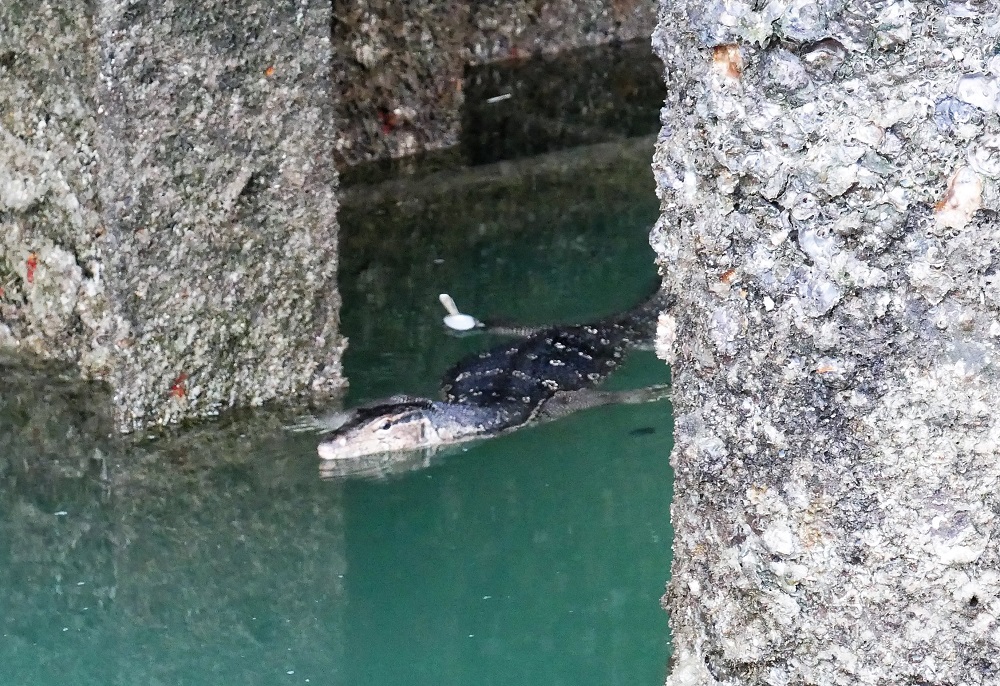
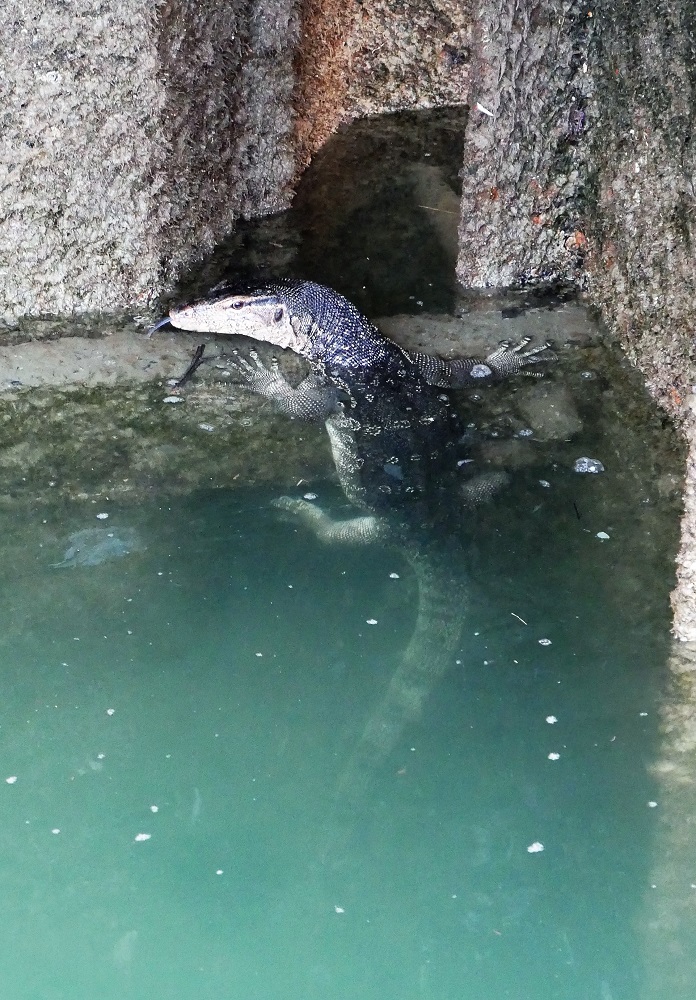
The non-human marina life is a little more rewarding. The green water is full of little fish, whose outlines we can only just make out as they swim centimetres below the surface. More exciting are the large yellow-striped monitor lizards that sit calmly sunning themselves on the intertidal rocks of marina walls. Some of them are over a metre long. Resting motionless they recharge their thermal batteries before slipping silently into the opaque water as we approach, hiding under dark pontoons or swimming languidly about amongst floating plastic rubbish, their large feet trailing behind as the body snakes itself forwards surprisingly fast. In one marina, one of the lizards was floating, bloated belly up, in the thick green water.
“I think he died because he was too fat,” said Lukie, looking up at me doubtfully.

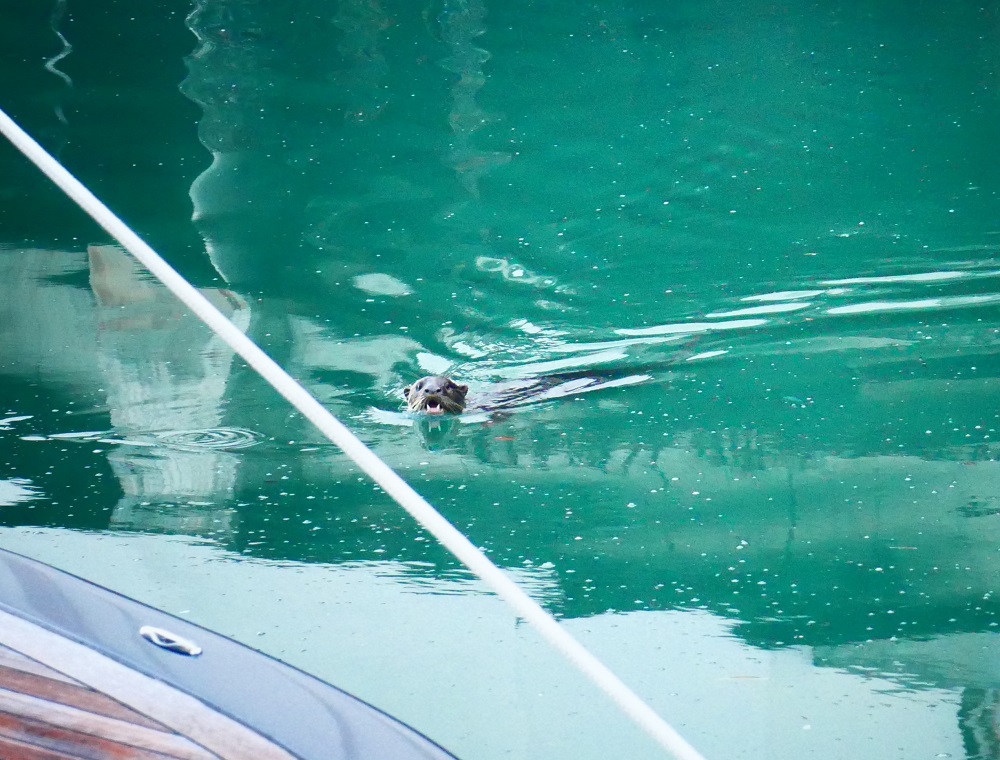
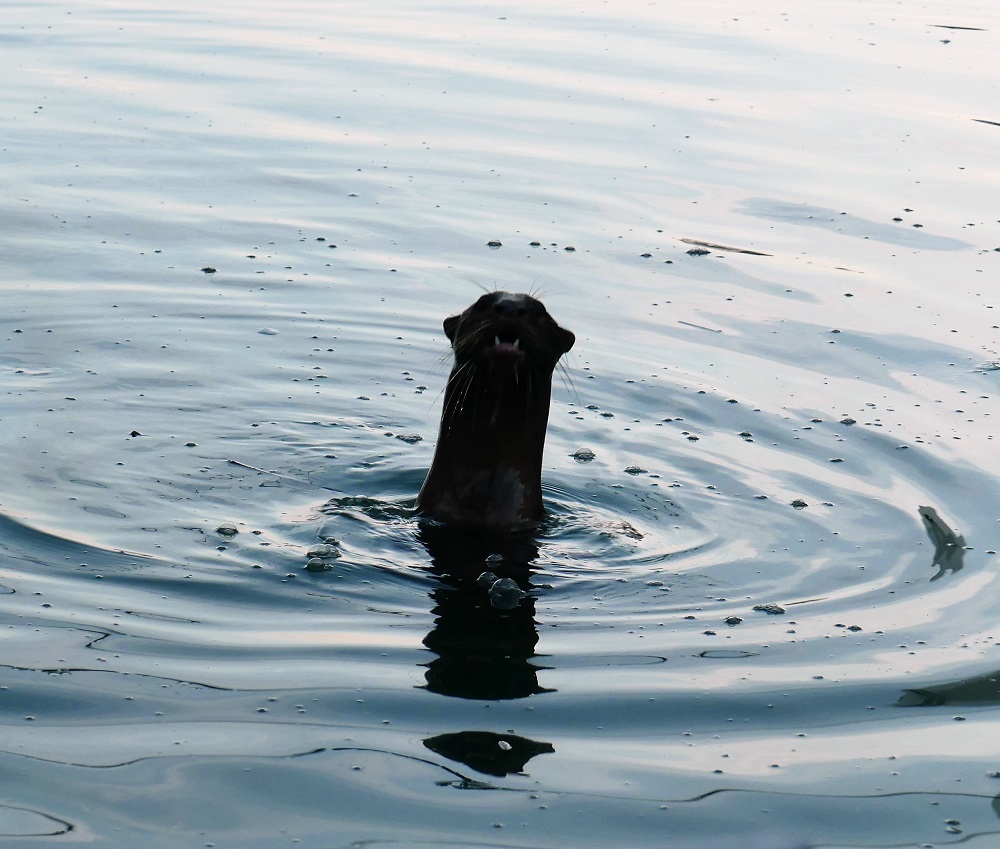
In the marina in Penang, a family of sea otters shrieked loudly, their high-pitched barks competing with the squealing of ropes stretched taut in the resonating marina swell. As we sat watching mesmerised, the otters climbed out onto the pontoon and deposited their fish catch, after which they engaged in loud arguments about who got to eat it, a hissing and screeching fest that only ended when the large marina crows started circling very low. Protesting loudly at the enormous dark birds, the otters slipped into the water, leaving behind a couple of half-eaten fish carcasses and a stinky mess of soft poop slowly spreading over the jetty in the light rain.


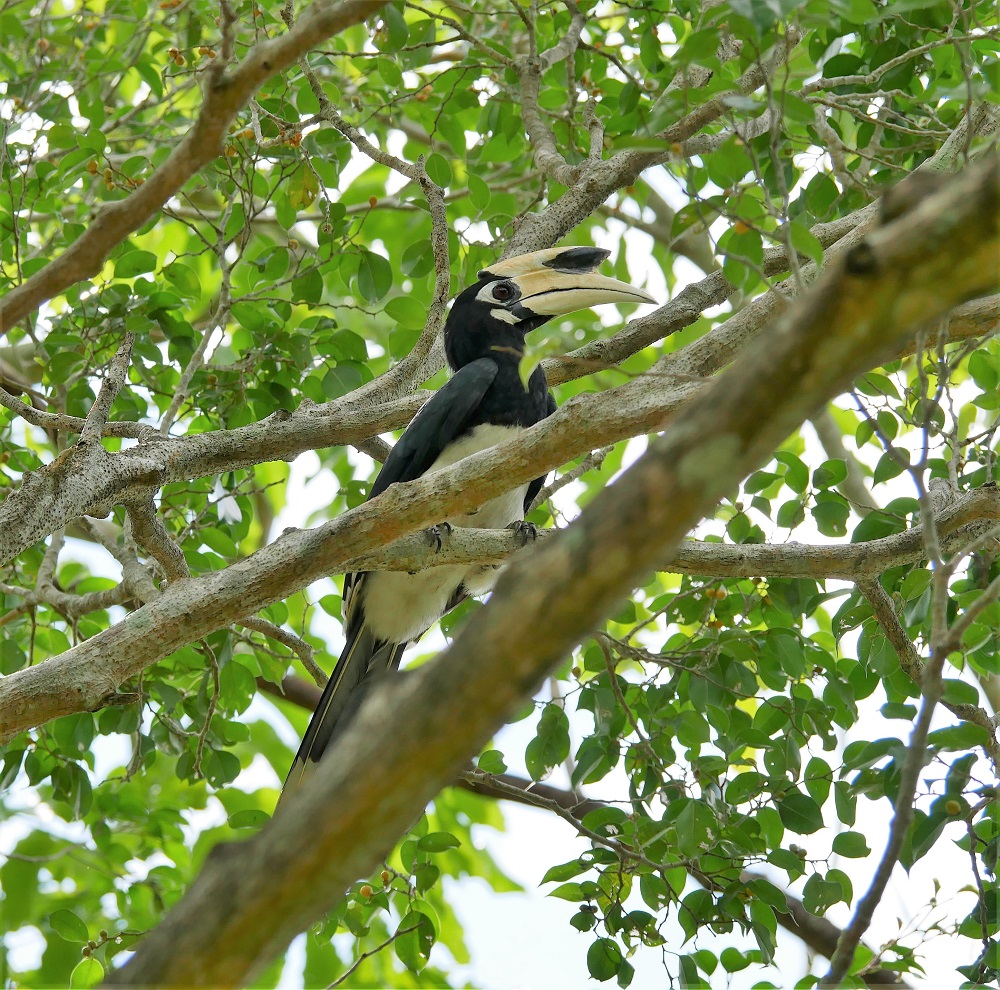
There are birds everywhere. The marinas seem to be colonised by crows rather than seagulls in this part of the world, although colourful hornbills have the upper territorial hand in Rebak Marina, Langkawi. Here, pairs of hornbills flew in tandem, settling loudly into swaying treetops, squawking and screeching as they courted the day away.

On the few anchorages we frequented in between marinas there was amazing life too. In Pulau Paya, just south of Langkawi, a lone dolphin came up to the boat in the early morning as we were untying from a mooring. We often see dolphins in Malaysia, but they tend to be quite shy. This one wasn’t – it wanted not just to ride our bow wave but to play with us. It kept circling the mooring, pushing the float with its snout, looking at us with beady eyes as it came up again and again for breath. When it stayed by the boat even after we drifted off the mooring we jumped in, and to our delight, the dolphin stayed to play. It circled us, whirling up the water, spinning us faster and faster as it wound us in a web of bubbles, its body passing only a few centimetres from our hands. We dived down and it followed, torpedoing itself through the water, spinning and circling us as we slowly floated back up for air. Wherever we swam it followed, doing small leaps out of the water as it sped past us only to slam on the breaks and cut right in front of our bodies when we got too slow. It was full of joy, showing off its superior swimming skills, good-naturedly laughing at our clumsiness as it patiently humoured our attempts to keep up.


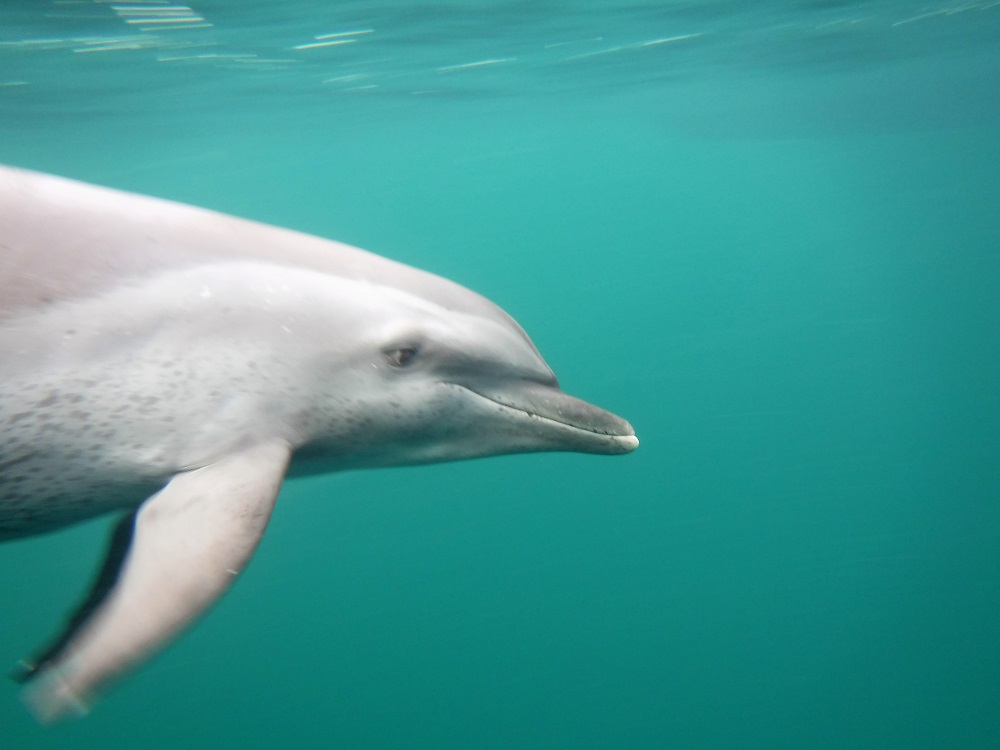
The kids yelped and splashed, frantically trying to outswim the dolphin with front crawl and foamy fins, diving after it with outstretched hands, the dolphin staying just outside of their reach but waiting for them whenever they started lagging. It was hilarious, a dolphin acting like a well-trained playful dog, a bored intelligent mammal looking for friends to share a bit of light-hearted playtime. We wondered what made it so – whether the locals feed it and why it was there all by itself; normally dolphins hang out in playful gangs, not unlike kids at a marina. When we finally left the anchorage it accompanied us for a mile or two, swimming not at our bow but alongside the cockpit, looking up at us beseechingly before peeling off and heading back to its island.

It’s a nice reminder of all the beautiful elsewheres out there. After a solid month of marinas, it is time for us to go off in search of a little nature, a bit of fun. There are boat jobs we can do on anchor and we better do them there, escape the marinas for a while. Otherwise, we might end up all weird and never escape at all.

 SV Bob The Cat