
After checking into Malaysia 21 July and a quick pack and clean-up of the boat, we left Bob the Cat safely tethered to the sunny dock at Sebana Cove Marina just across the water from Singapore, where it would stay for a month while we went to Europe to visit family.
We arrived in London on the day Boris Johnson became Prime Minister. It was a brilliantly shiny summer morning, the only clouds on the horizon those caused by the strong sense of political despair felt by roughly half the British public and the entirety of the European media. On this, the second day of a suffocating heatwave that had gripped the European continent, the news headlines alternated between Boris dismay and weather shock; gloomy economic forecasts for a no-deal Brexit interspersed with unsettling weather predictions of record-high temperatures in no less than nine European countries. All over the continent children were warned not to play sports outside, schools resorted to frequent dousing of pupils with cold water, and nursing homes equipped the elderly with hydration packs in attempts to stave off health-related impacts of the heatwave.

After one short night in the UK we flew on to Denmark where we guiltily enjoyed the heatwave. It lasted for almost the entire two weeks we were there, bringing beautiful weather – 30 degrees, sunny, and relatively dry (60% humidity as opposed to the >90% plaguing Malaysia) – but, being unused to the temperatures, Danish people were suffering. Everyone we met was huffing and puffing, wiping their brows and taking frequent showers, some resorting to staying indoors to lie prostrate beneath fans, afraid to go out lest they succumbed to heatstroke.
When you come straight from a year sailing in the back of beyond of Papua New Guinea and Indonesia, you fully appreciate the miracle that is Western Europe. Denmark is an amazing country. Orderly and clean, full of good-looking, well-dressed, incredibly affluent people efficiently going about their daily business, following the sensible rules of a highly functioning welfare society. Tolerant and politically moderate, Denmark ranks amongst the first for gender equality in the world. The population recently voted in a new social democratic government led by a young female, 41-year-old Mette Frederiksen. Broadly supported by the population, her government has just put in place what is called the most ambitious climate change-related goals in the world. It is a country of lakes and spongy shores covered in reeds, of villas fronted by green lawns immaculately mown, of well-tended flower beds blooming under the Danish flag, of doves purring and swans quietly grooming along the slow-flowing river shores. Public transport is clean, reliable, comfortable and affordable, with trains, buses, undergrounds and ferries transporting people to and from work and leisure activities with no delays and few malfunctions. Even the poor in Denmark lack for nothing and its citizens are consistently reported to be amongst the happiest in the world. It is a cleaner, wealthier and more politically correct version of New Zealand, these small countries the lone voices of reason in a world increasingly gone mad.

Not that Danish people are always happy. Recently, national demonstrations shook the country when parents took to the streets to demand higher teacher-to-child ratios in the country’s kindergartens, the outrage sparked by national averages of 3.8 children per adult in the age group 0-2 years, and 6.6 children per adult for children aged 2-5 years (in comparison, New Zealand legal minimum ratios are 5 children per adult for 0-2 year-olds and 10 children per adult for 2-5 year-olds, ratios that nobody questions). And when we were there, large parts of the population were gearing up for protests against President Trump, who was scheduled to visit Denmark in the beginning of September. He had requested an invitation and Denmark’s Queen Margrethe had obliged, with the Danish government hoping to further trade talks.

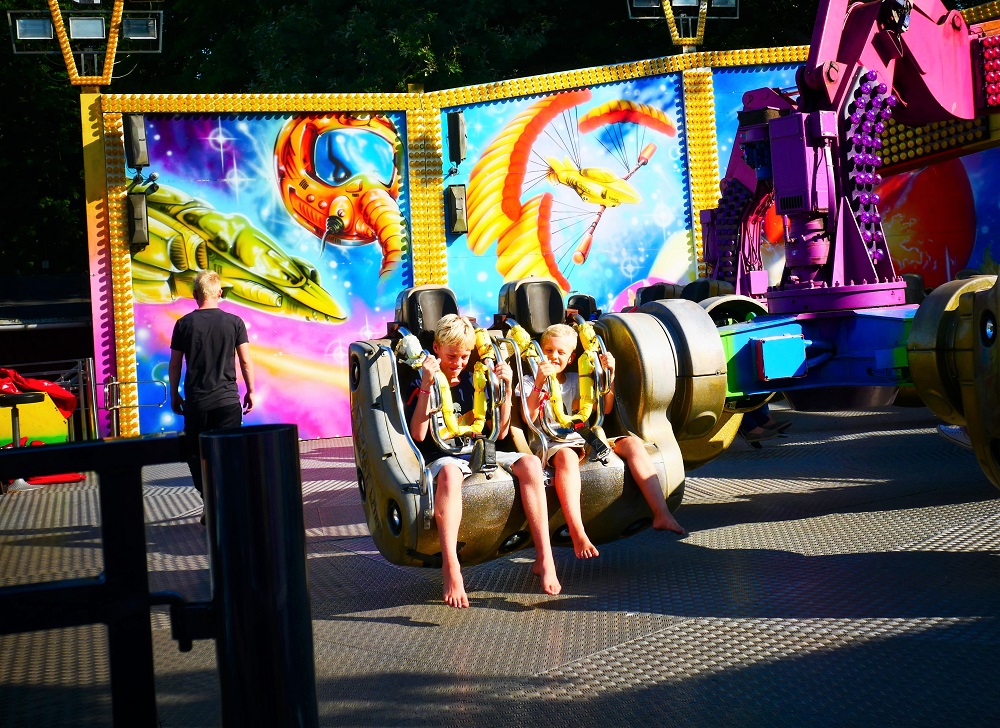
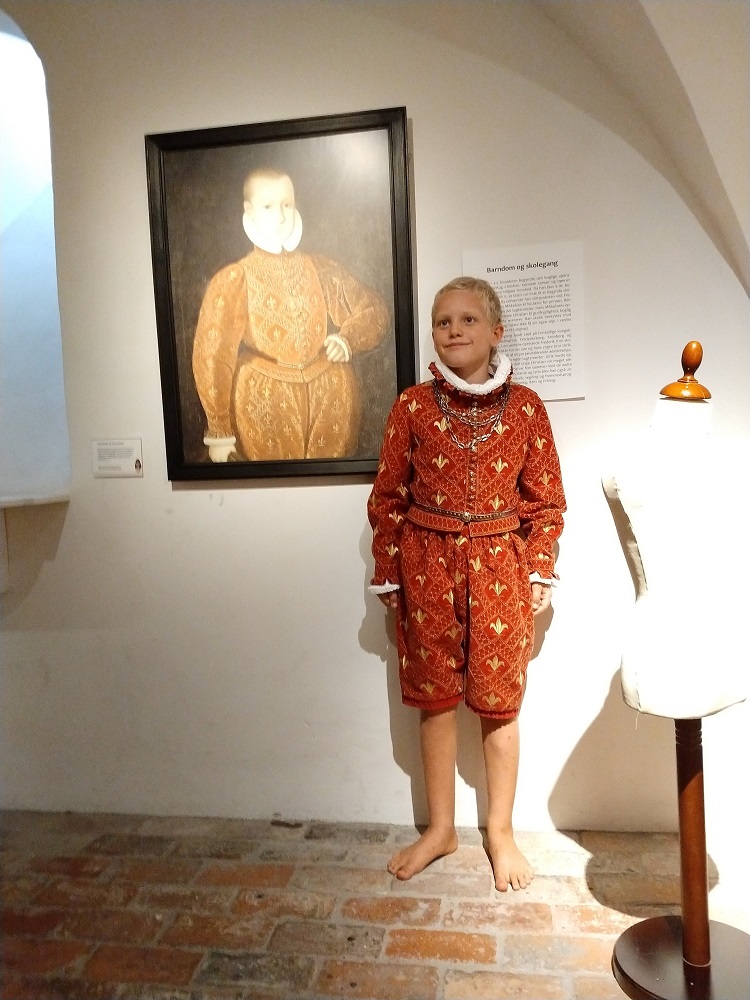
On our two-week-long visit we enjoyed the break from the heavy heat and chaos of Malaysia and Indonesia. We caught up with family, doing small trips that suited the weather – enjoying the heatwave at the beach, seeking shady respite in the lushly green forests, visiting castles and museums and generally revelling in the quiet order and predictability of a modern western country. We went everywhere by public transport, sinking into the soft seats of near-silent, pristinely kept buses and finding seats amidst bikes and prams on frequent early-morning trains busy with commuters. We took full advantage of the sudden access to first-world healthcare and visited dentists and opticians, enjoying the feeling of safety that comes from being seen by professionals. Knowing that we needed to prepare for cooler weather in Scotland, I dragged the children on long, exhausting shopping trips to expensive Danish malls, selecting footwear for ever-growing feet and trousers for longer legs.

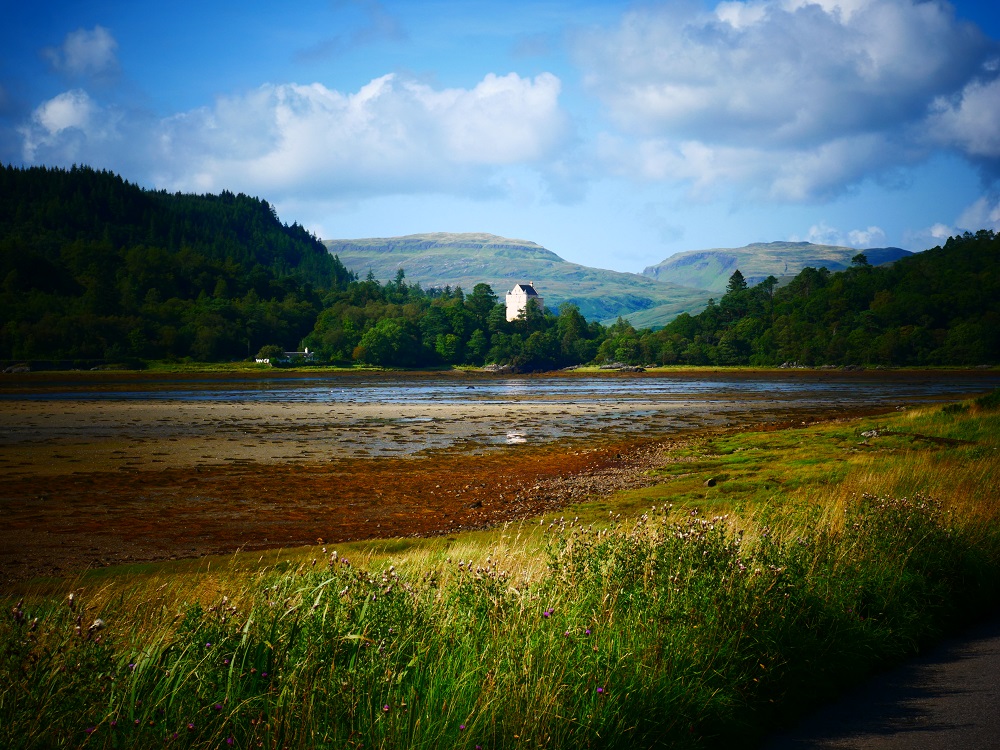
After Denmark we went to Scotland to catch up with David’s family. We hired a car in Edinburgh airport and drove alongside the green Scottish hillsides, marvelling at peaks and valleys, at picturesque stone cottages adorned by flower baskets flanking the front doors in small villages, at the neat signs advertising local attractions and the steady stream of tour company buses. Scotland is a place of uninterrupted vistas of miles and miles of land, sea and lake, with no apparent human presence, the only living creatures visible a soaring eagle or two and a few white flecks of sheep against the brown-green tussock. The heatwave had ended and normal Scottish summer begun, which meant rainfall and low-hanging, brooding skies darkening the hills and mirroring in still lochs, the occasional ray of sunshine a luminous shaft descending from the heavens, its reflection almost blinding in amongst the gloomy surrounds.
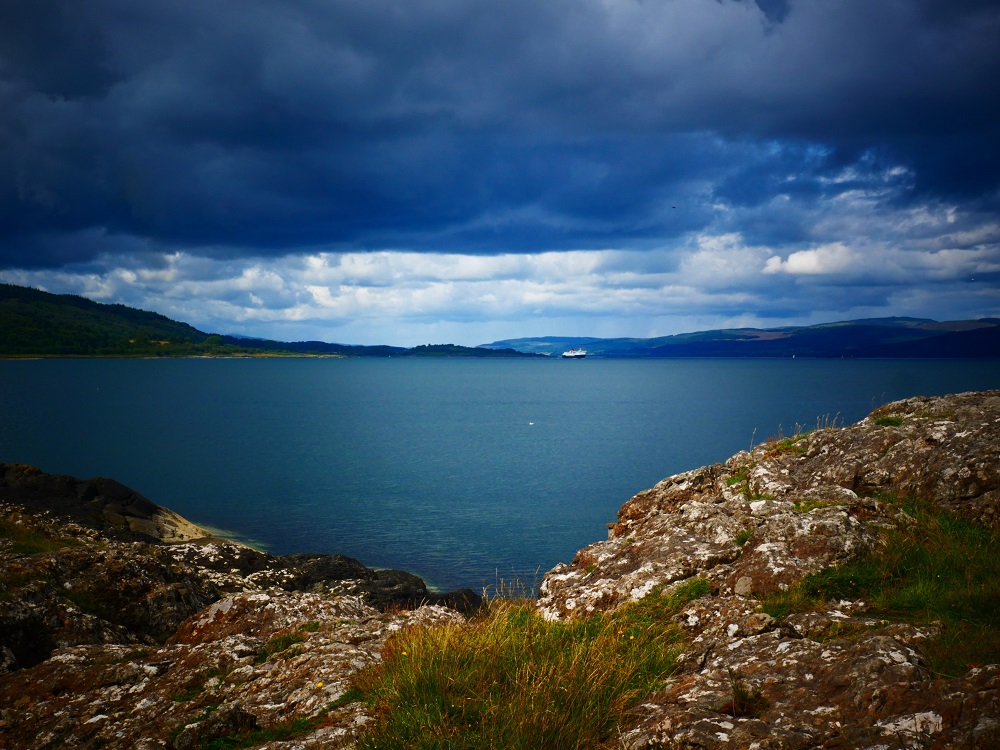
After almost a year in Indonesia, one of the most populous countries on earth, the desertedness of Scotland seemed amazing – we had forgotten what space in nature looks like, how the stillness of uninterrupted scenery expands your breath and quietens your soul. The rain continued for the two weeks we were there, making the rivers cascade down hillsides with tremendous force, the forest undergrowth spongy and the mushrooms plentiful, and we headily picked our way through fields of orange chanterelles, marvelling at their abundance.
Food shopping in modern, western supermarkets was a revelation, the overwhelming choice of dew-dropped, fresh and fragrant produce almost alarming. Upon leaving Malaysia we had wowed to eat as little rice and as few eggplants as possible whilst away, and so we gorged ourselves on new potatoes, succulent berries, dark green broccoli and crunchy capsicums. The ubiquitous plastic wrapping of fruits and vegetables was a bit of a shock – we had expected to find less plastic in Europe than in Indonesia but in reality Danish and UK supermarkets were overwrapping food to an almost absurd level, the rise of convenience foods leading to customers buying ten slices of salami double packaged rather than a sausage to slice themselves, and apple pieces preserved in juice embalmed in plastic to avoid the inconvenience of having to chew a whole apple. Seemingly unaware of the irony, organic food labelled ‘better for the planet’ was triple wrapped to distinguish it from the less worthy mass-produced vegetables, and all the supermarkets proudly advertised that they were ‘plastic bag free’, selling durable multi-use plastic bags at the check-out to ensure that customers could blithely double their ecological footprint through needless generation of plastic waste without denting their feeling of virtuousness.

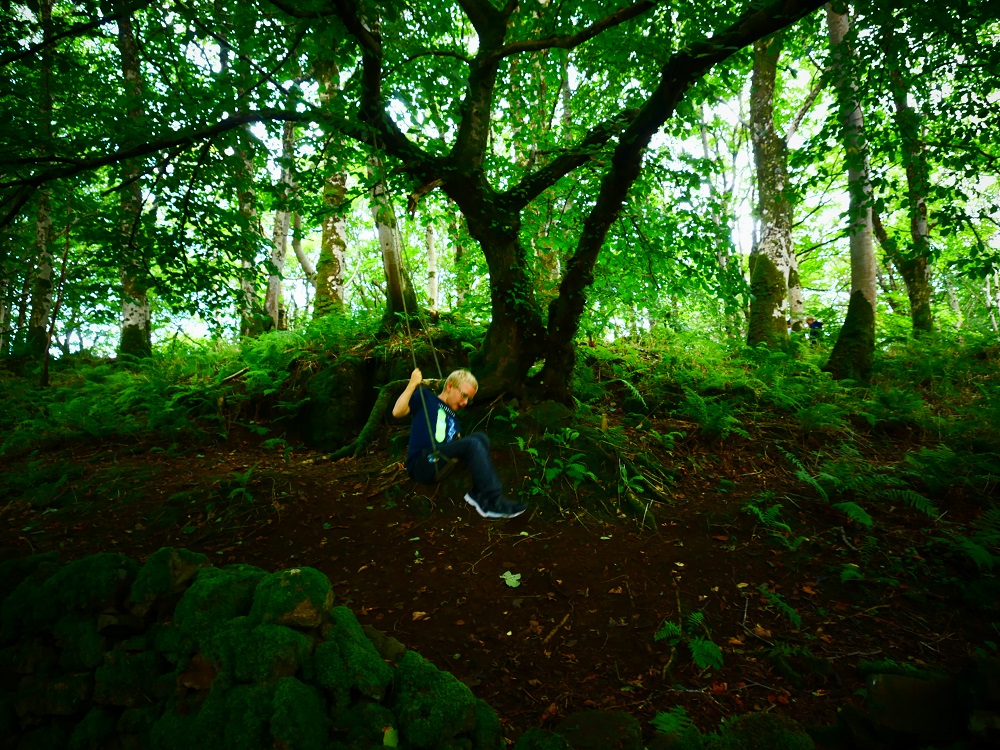
With family we visited castles and woods, the kids rolling down hills of green grass and sliding around on rocky intertidal shores heavy with slimy bladderwrack, catching crabs and caterpillars, and dipping their toes in the chilly dark waters of quiet lochs. We cooked and baked, celebrated birthdays with lavish spreads and sparkling wine and generally enjoyed the cool weather and beautiful surrounds.

We left after ten days of marvellous family time and began the long drive to London, swiftly leaving the emptiness of Scotland behind and entering the hustle and bustle that is UK motorway driving. The satnav in the hire car hilariously broadcast directional advice in imperial units, telling us to veer left ‘in seven-tenths of a mile’, and ‘take the third exit on the roundabout in 200 yards’, only just stopping short of advising us how many inches remained to our destination. As we drove south, David stopped at multiple hardware shops and chandleries, coming back to the car mumbling about ‘hardware regret’, the worry that whatever he didn’t buy in this land of plenty would be the part he would need the most upon our return to Malaysia. I understood perfectly, suffering as I did from not dissimilar bikini-related fears that in months to come I would be bedevilled by contrition and bemoan my frugality and the consequent lost opportunity of shops full of clean, new swimwear. Learning our lesson, to ensure that we wouldn’t suffer from ‘cheese regret’, we stopped in a supermarket on the to our final hotel just before Gatwick Airport to load up on cheese and salami, asking the baffled concierge at the hotel if they could please store ten kilograms of dairy and cured meats in their commercial refrigerator.
The political tumult continued during our visit. Trump made headlines by requesting discussions of a potential purchase of Greenland, part of the Danish realm, on his upcoming state visit to Denmark. The Danish Prime Minister labelled the notion ‘absurd’, following which the wounded president tweeted the cancellation of the visit, calling Mette Frederiksen a ‘nasty woman’, enraging the Danish public and giving rise to numerous cruel caricatures depicting an overgrown baby Trump throwing a tantrum. Meanwhile, in Britain, widespread public fears of the potentially dire consequences of a no-deal Brexit were fuelled by leaked cabinet reports discussing worst-case scenarios of food and medicine shortages come Brexit day.

As we flew out, the weather forecast was once again headline news, with more heatwaves looming. Boris was in Europe trying to sweet-talk EU leaders into a deal involving removing the Irish backstop, arrogantly predicting that he would manage to achieve what Theresa May’s government had not. Not unexpectedly, the big M’s of Europe, Merkel and Macron, failed to send the hoped-for signals and Boris, who came to office only a month earlier promising that the likelihood of a no-deal Brexit was minuscule was forced to backtrack and admit that perhaps his government too would fail to secure a deal. Meanwhile, in Denmark a fast-growing diplomatic crisis had been averted by Mette Frederiksen calling up Trump, managing to sweet-talk him to the extent that he relabelled her ‘a tremendous woman, a wonderful woman.’ Reading the headline just before entering the plane we drew a sigh of relief (the world war endangering my Danish relatives seemingly averted), relaxed in our seats and prepared ourselves for returning to the heat and hustle of Malaysia.
It had been an amazing trip, and wonderful to spend treasured time with family. The older you get, the harder it is to live far from kin, and as always we were sad to leave. As the plane took off we hoped for a good future for Britain and wished Europe good luck in what can only be described as tumultuous times.
 SV Bob The Cat