
The problem with surfing as a hobby when you live on a boat is that, as a general rule, surf breaks make for poor anchorages. The problem with kite surfing in Indonesia is that, as a general rule, any piece of flat water is occupied by seaweed farms.
With reckless disregard for such general rules, we headed west from Komodo to the wild south coast of Lombok for a week of enjoying huge swell, big waves and steady, strong winds. Open to the Indian Ocean, the southern shores of the Lesser Sunda Islands (of which Lombok is a part) is windier than the rest of Indonesia, and David had been eyeing up a perfect kitesurfing spot for a while, carefully earmarking a good-looking location for anchoring within easy reach of the breaking waves and sheltered flat-water lagoon.
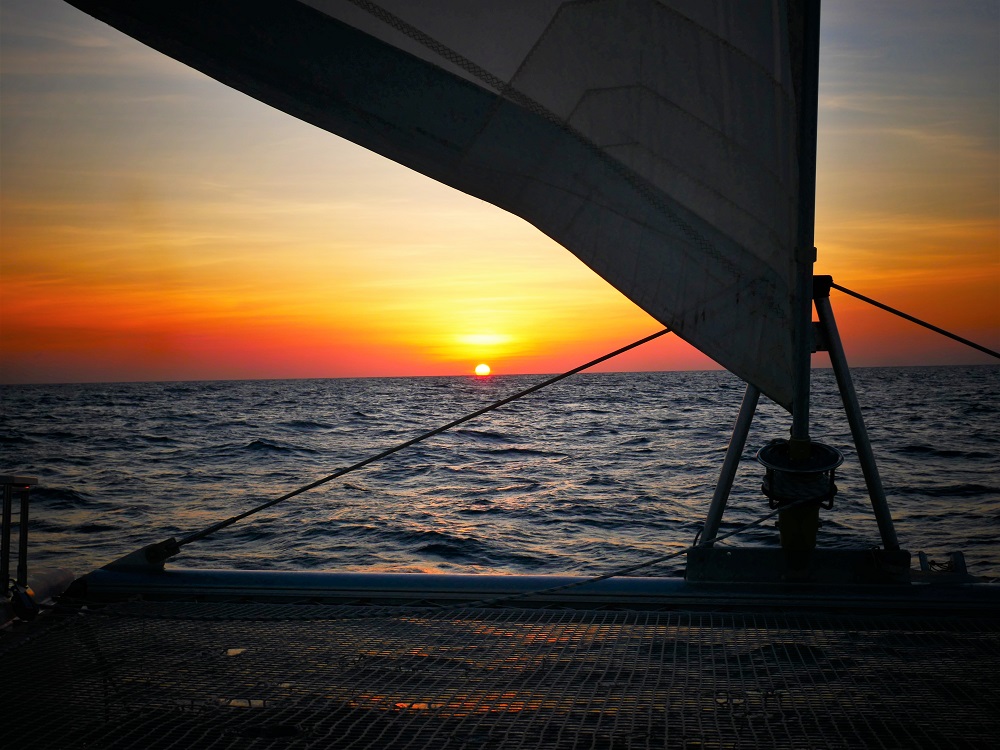
The location was not in our cruising guide, and we had heard of no other yachties going there, but nowadays anyone can assess an anchorage from satellite photos, and we were full of optimism. The anticipation of getting to a great kite spot had been building for a couple of weeks, and as we rounded the south-eastern corner of Lombok David stood at the helm, looking satisfied. “It looks like the perfect spot,” he said, grinning. “Waves for me, flat water for you and the kids.”
I looked at the huge breakers smashing against the steep, dark cliffs of the shoreline. It looked pretty wild. “Uh hum,” I said non-committally. “As long as there’s somewhere calm to anchor…”
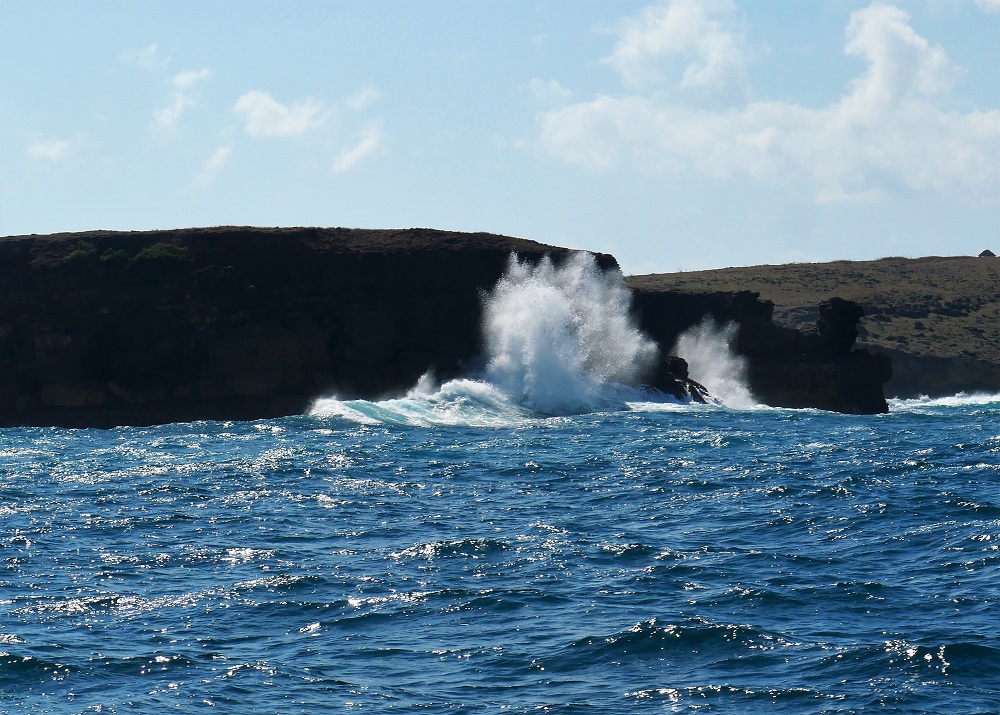
“It’s a huge bay,” he said. “We’ll just tuck around the headland where it will be nice and flat, out of the wind, then it’s only about a mile by dinghy to the kite beach.” He beamed. “As long as it’s not full of seaweed farms, we’ll be sweet!”
Predictably, a little while later as we were approaching the bay, I heard him swear from the cockpit.
“What’s that?” I called as I made my way out. “What’s the problem?”
He was standing at the helm, binoculars pressed to his eyes. “I don’t believe it!” he muttered. “Not again!”
I approached with my hand shielding my eyes, trying to make out what he was looking at. All I could see was a shoreline awash in foam, the huge waves crashing onto some very sharp looking rocks around the entrance and along the reef on the outside of the shallow lagoon. “What is it?”
He lowered the binoculars. “Seaweed farms!” he exclaimed. “I don’t believe it! Every time we find a kite spot, it is full of seaweed farms!”
I mumbled something consoling and took the binoculars from him. Focusing on the inside of the bay I saw it – hundreds of buoys interspersed with thousands of plastic bottles, dotted all over the water surface, filling up the entire bay. My gaze swept backwards and forwards, trying to find a buoy-free area large enough for us to anchor. There was nowhere.
“It’s OK,” said David, snatching the binoculars back. “There’s a channel through the farms there and an area just off to the side where I think we’ll fit.” He held the binoculars to his eyes. “Or else we could maybe sneak up there,” he said, gesturing further towards the headland, “as long as it’s deep enough.”
After spending a couple of hours motoring up and down narrow channels choked by expansive seaweed farms we found a small area to anchor in, just to the side of the main thoroughfare. Not quite as tucked in behind the headland as we had hoped – it was exposed to the swell and a bit lumpy – but the anchor held and at least there was enough swing room to keep us safe from hitting a farm.


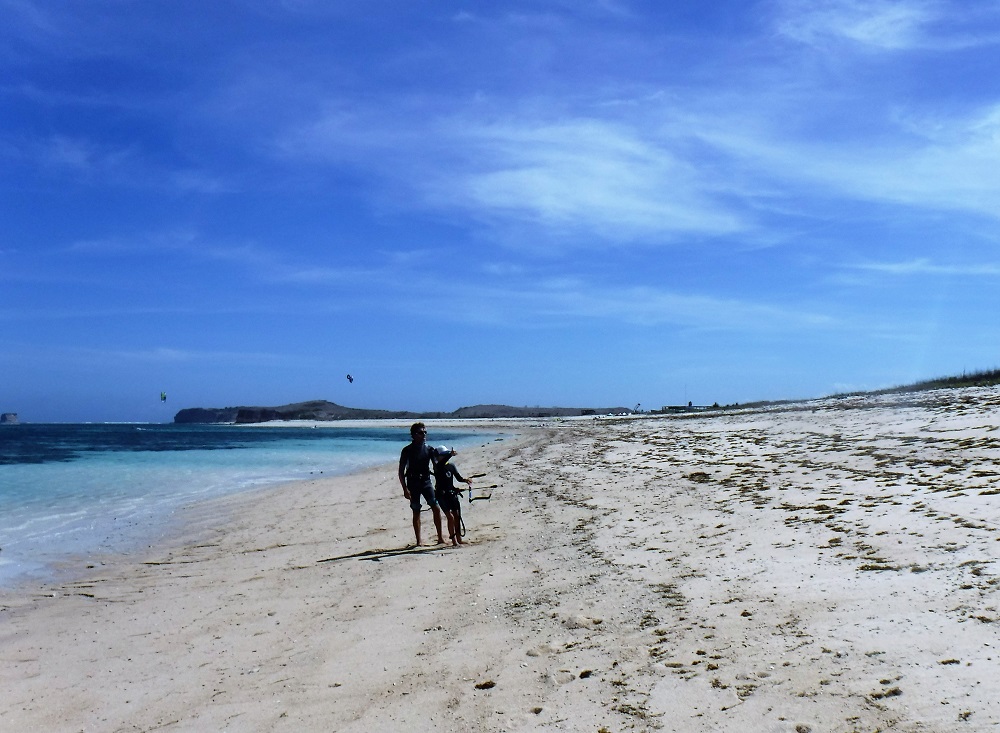
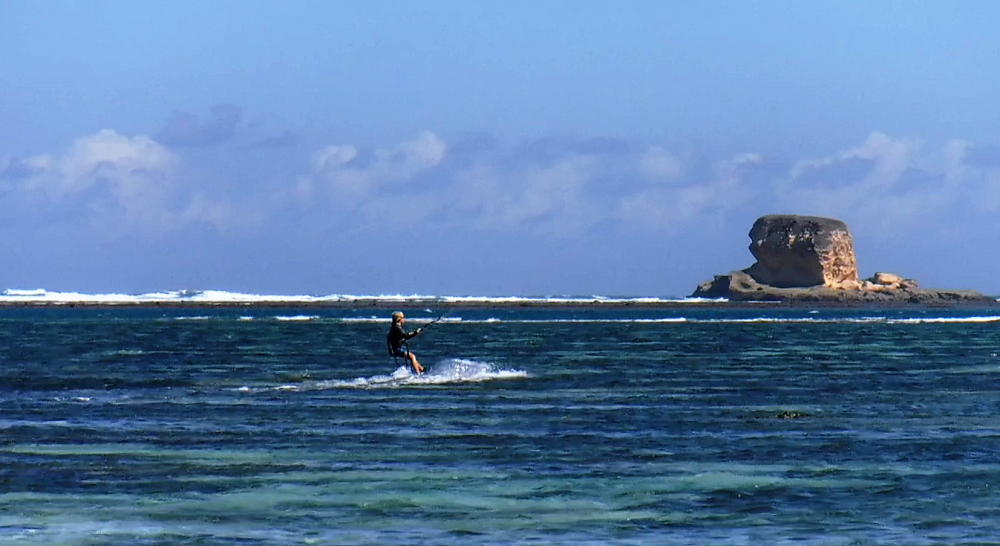
And then we set about exploring the bay. The kitesurfing spot was an excellent long white beach in front of which a shallow lagoon extended out to a surf-battered reef stretching for miles and miles. Two kite resorts had set up camp on the beach and several people were out kiting.
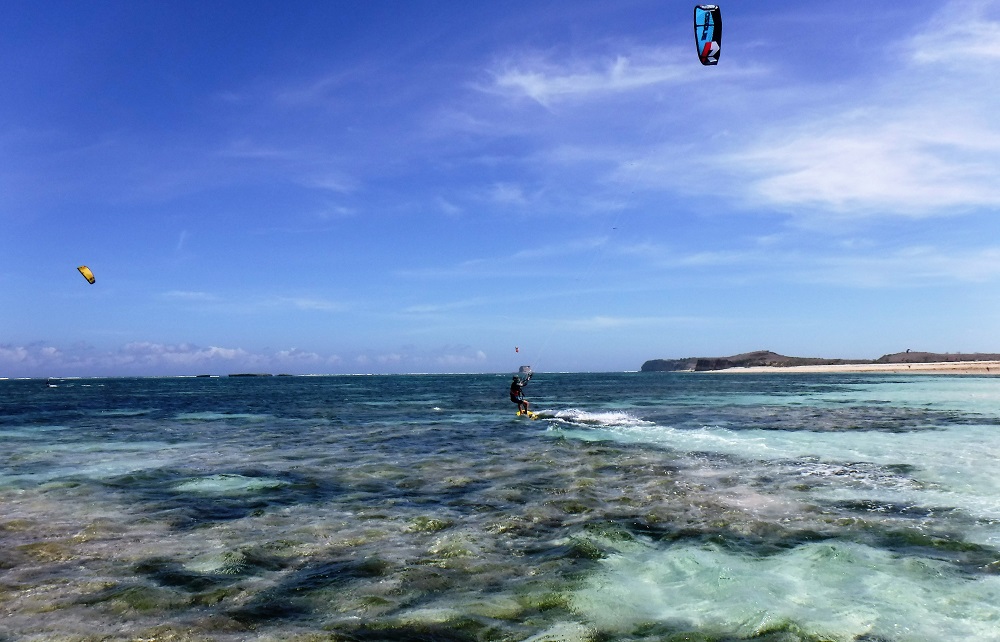
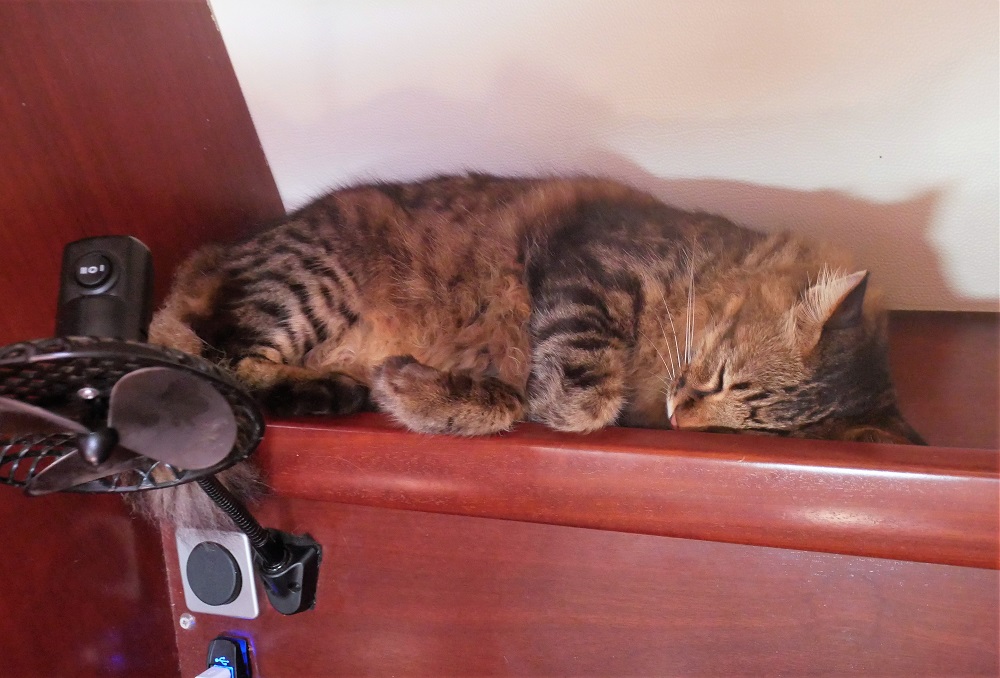
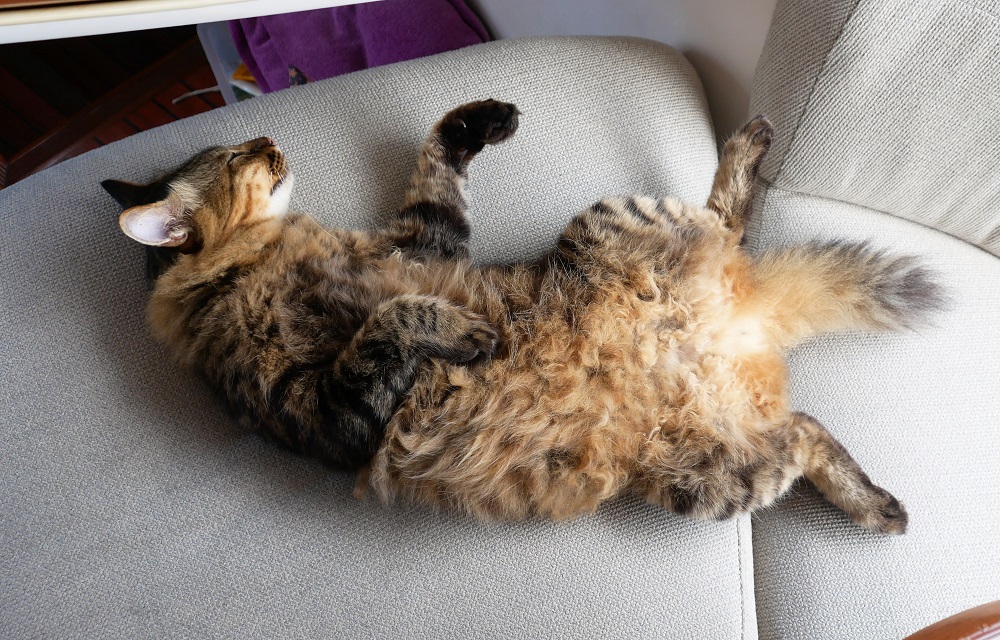
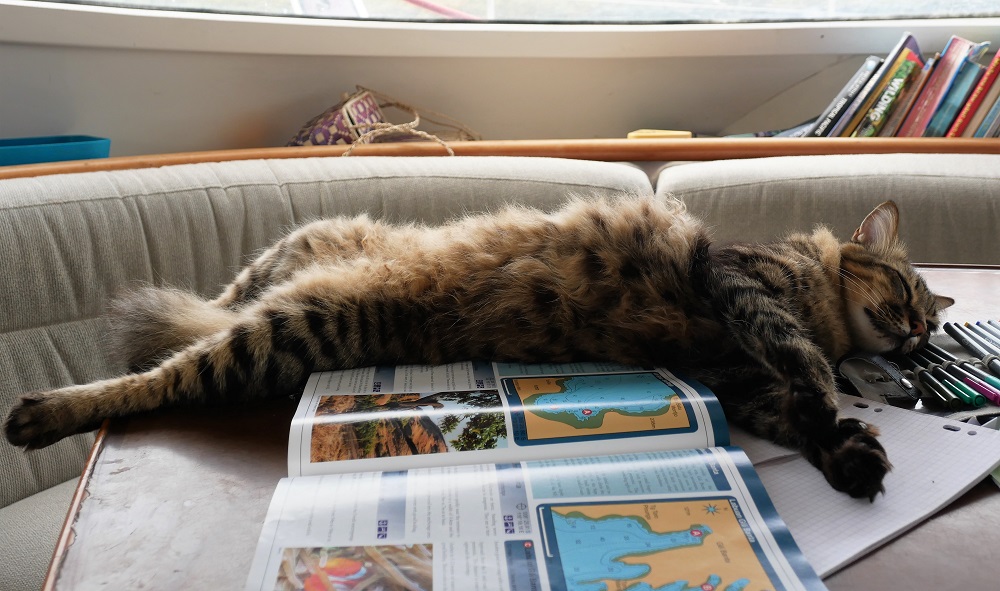
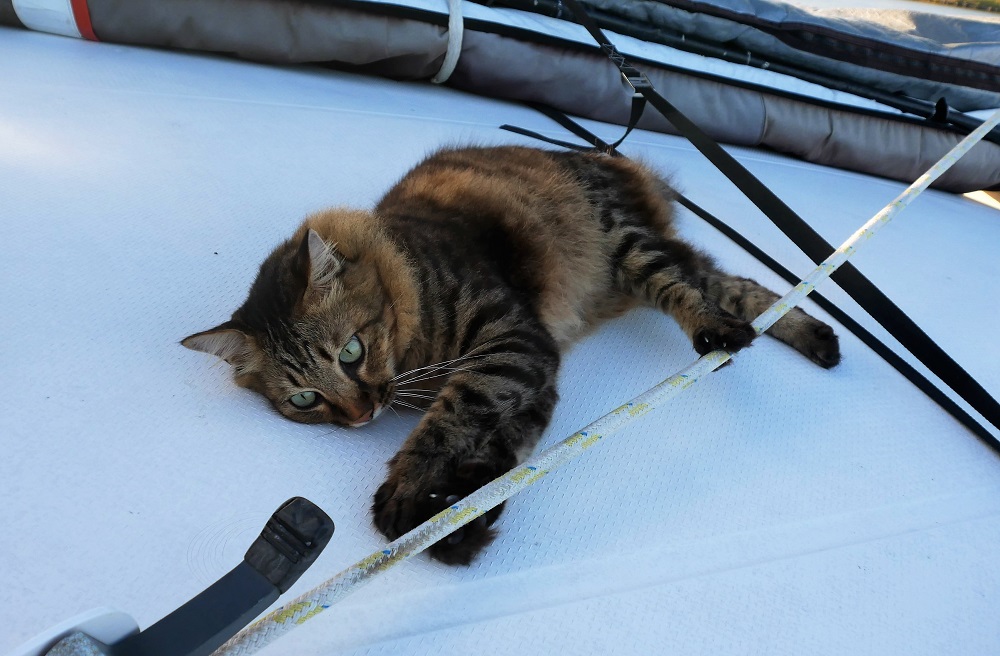
Over the next few days the swell rose and the entrance to the bay closed up, the huge waves crashing over the shallow bar reminding me of our hometown of Raglan where, at times, it is impossible to get a boat in or out of the estuary. When the violent rocking of the boat proved too much for even Paco the boat cat (who, given the constant exaggerated motion of the boat, seemed convinced that we were still on passage and spent his days curled up in a small ball asleep in a corner of the saloon seat) we moved to a spot closer to the headland where the swell was marginally smaller but still probably the worst I have ever experienced on anchorage. Trapped between seaweed farms and huge breaking waves we spent our days enjoying the wild elements. David and the kids found a small wave in the lee of the shore and spent the mornings surfing beautiful peeling waves, and in the afternoons we kite surfed in 20 knots of steady breeze, with Lukie just managing to hold onto a 4 m kite.
On our third day there the swell peaked. In the morning, David and the kids had gone off for a surf and I was standing in the galley making a cup of tea, when I heard their voices. Puzzled, I went outside to see them paddling back the dinghy using David’s stand-up paddle.
“We tipped the dinghy, Mummy,” cried Lukie cheerfully. “The waves were huge! And we lost the anchor, and Daddy’s sunglasses, and the bailer!”
David looked grim. “Bloody lucky I could right it,” he said. “Now we have to see whether we can save the outboard.”
He had anchored the dinghy near the wave to let the kids out and sat watching them for a couple of minutes to ensure they were OK before heading out to anchor further away and jump in to join them. Whilst he was sitting there a huge set had come through, waves building to break where he was anchored, and when he rushed to raise the anchor it was stuck. He untied the knot to the anchor rope and the dinghy started surfing with him in it and overturned on the face of the wave, leaving the anchor with its rope and anything loose and not floating at the bottom of the surf zone.
He spent the rest of the morning rinsing, drying and lubricating the outboard and to our great relief managed to get it started again. After running it for a while we decided to try to go kitesurfing but had to bail when we nearly flipped the dinghy again approaching the wave-battered shore. The swell was so big that it was impossible to land a dinghy safely on the beach at high tide and we returned to the boat feeling lucky to have a working outboard and no loss of life.

Retrieving the dinghy anchor proved problematic.
“Let’s try snorkelling for it this morning,” I suggested the following day.
“Yeah…” said David hesitantly. “The visibility is pretty bad over there, though. It is all stirred up by the waves. It won’t be easy to find.”
We went anyway, and spent an hour searching in vain while the kids were surfing, the two of us duck diving into the murky shallows adjacent to the break and feeling our way over the sandy bottom, stumbling across coral bommies that protruded sharply from the flats but seeing no sign of the dinghy anchor or the 15 m of rope attached to it.
The following day we returned with scuba gear and spent an hour slowly swimming along compass transects, east to west and back again, covering a narrow swathe of about one metre either side of our path at a time, which was all that the poor visibility allowed. All to no avail, the anchor and rope remaining tantalisingly there but somehow hidden.
After that, we decided to come back at low tide in the hope that the visibility would be better then, and on our final day in the bay we managed to find the anchor, its rope deeply tangled in a tall branching staghorn coral. It took half an hour to carefully untangle the rope without breaking the coral and when it was all retrieved we drew a breath of relief and swore to replace the sinking rope with a floating line for easier future recovery should it happen again.
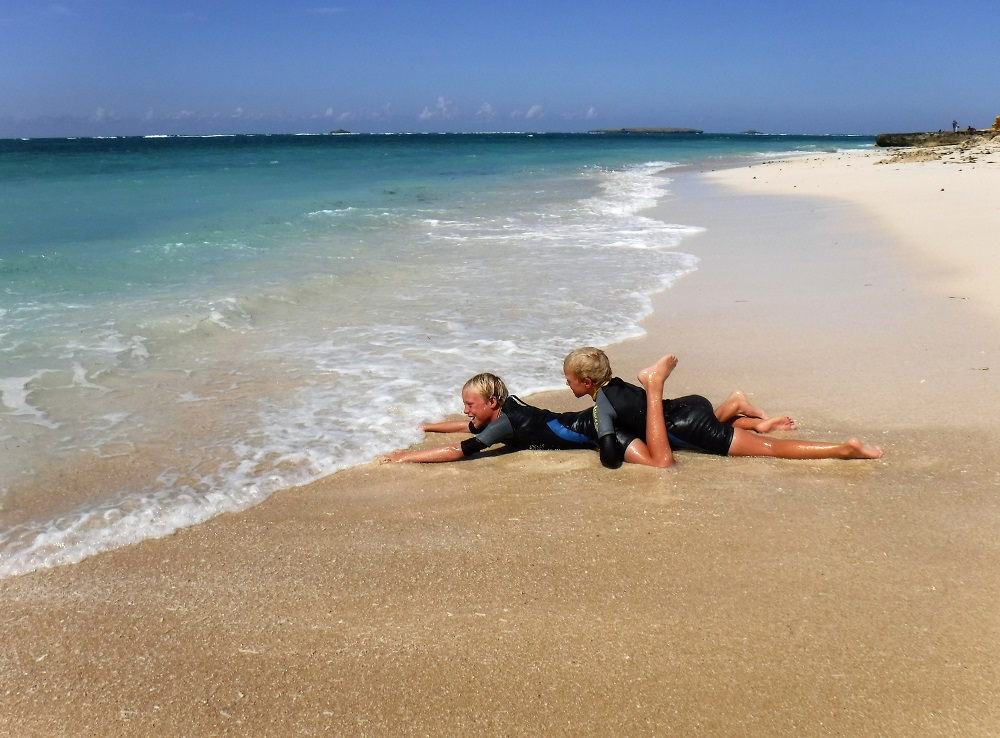
After a week of surfing and kitesurfing every day and staying on a boat that was rolling like a Spanish bull trying to throw off a brutal toreador, we were tired and sore and in thorough need of a good rest. The swell mildened giving us a lucky break to exit the bay, and with Paco emitting an audible sigh of relief we put the wild southern coastline of Lombok behind us and headed for the west coast of the island to visit Lombok’s capital Mataram where we needed to do our last (!) Indonesian visa renewal.
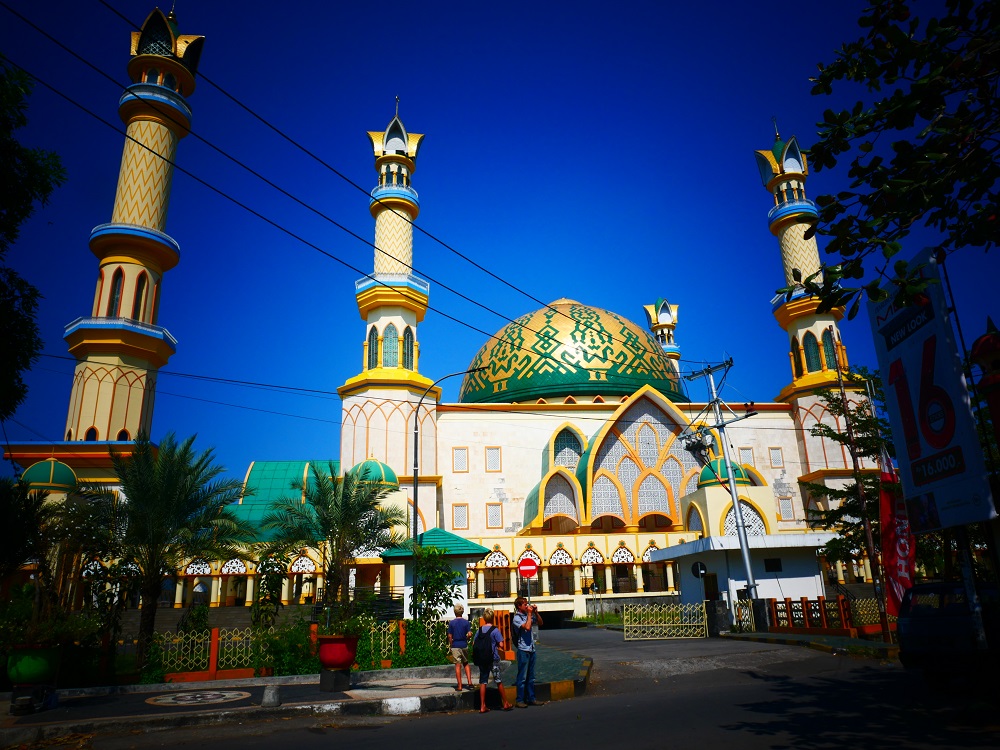
Lombok is an interesting place, and like the rest of Indonesia it is full of history. The original inhabitants of Lombok were the Sasak people who governed the island through numerous feuding kingdoms. Originally a mixture of Buddhist-Hindu-animists, the Sasak were forced to convert to Islam in the 16th century, after which many began practising a mixed religion called Wetu Telu that blended Islam with previous beliefs. In the early 16th century the Balinese kingdom conquered Lombok, and in the 17th century the Dutch East India Company established a treaty with a Sasak princess. Fed up with Balinese rule, the Sasak invited the Dutch to rule Lombok in the late 19th century, after which the Dutch promptly sent a large army and helped the Sasak fight off the Balinese.
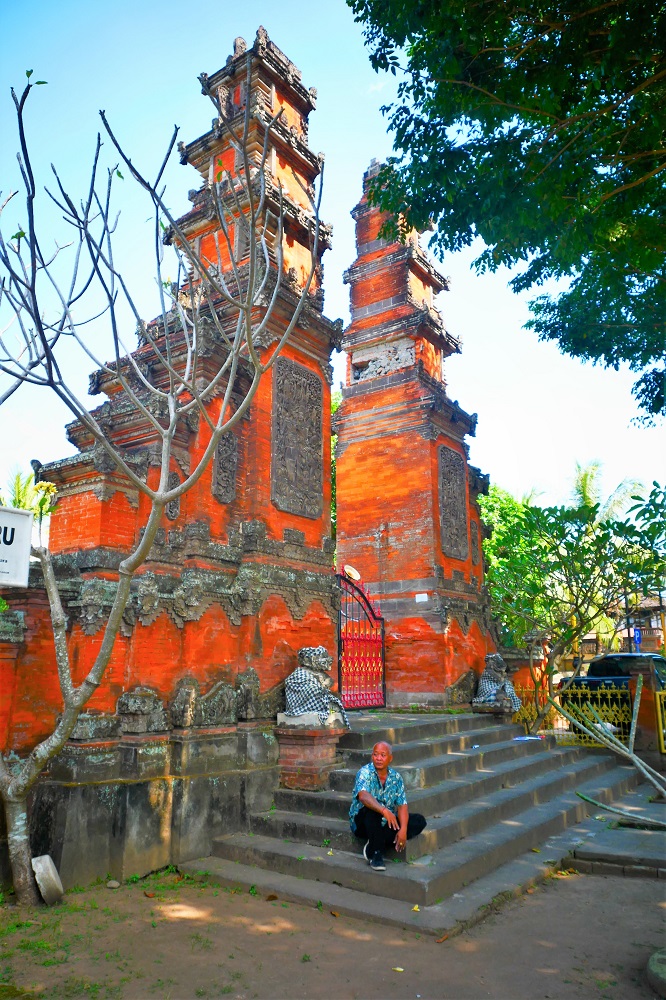
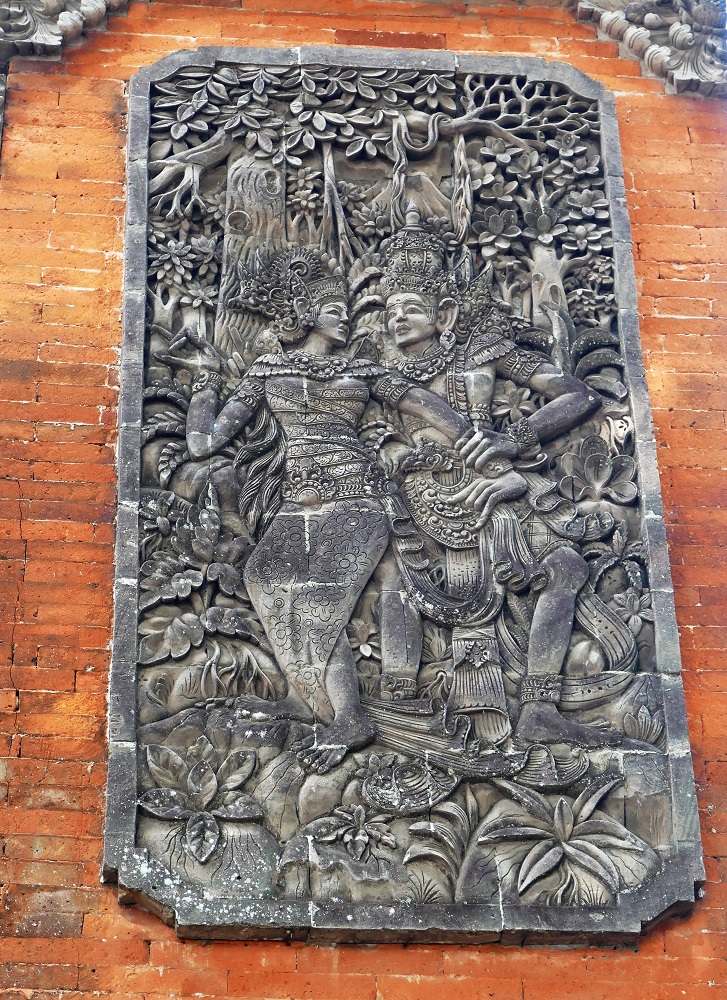
Bali is predominantly Hindu, and the Balinese left several Hindu temples on Lombok. In Mataram we visited the Meru Temple, built in 1720, a large dilapidated complex of multi-tiered shrines to various Hindu gods and goddesses. Nowadays the vast majority of the population of Lombok is Muslim and only about 10-15% are Hindu.

After a day on the west coast of Lombok we headed to the Gili Isles further north where we were meeting up with friends and hoping to relax in a calm anchorage.





















 SV Bob The Cat