I’m sitting on the starboard bow, squinting my eyes, binoculars at the ready, trying to spot buoys in our path as we slowly sail forward. The sea is flat and they should be easy to see, only we’re moving relatively fast, the buoys around here are very small and the afternoon sun is reflecting on the water, making it hard to see much.
Is that a buoy? I put the binoculars to my eyes and focus. Something white is bobbing up and down on the water surface, and there’s another white thing just along from it.
“Is that a buoy?” I ask Matias, who is sitting on the other bow.
He stands up and squints at the thing. “I think it’s just rubbish. There’s a net over there.” He points to our port side. Following his finger, I see a small buoy with a black flag protruding.
“Where’s the other end?” I ask, scanning the water ahead and to our starboard. Hopefully we’re not about to run over a net. “Can you see the other end?”
We’re both standing now, scanning the horizon. “Flag,” I yell to David who is at the helm.
David comes forward. “Where’s the other end? Check ahead and to starboard, I don’t want to run over it.”
It’s tricky sailing, this coastal Indonesian stuff. All day we’ve been weaving in and out of marked nets, surveying the horizon, peering at plastic on the surface trying to make out if it is tethered to the bottom, marking some sort of net, or just one of the billions of pieces of floating plastic that makes up the surface layer of the Indonesian territorial sea.
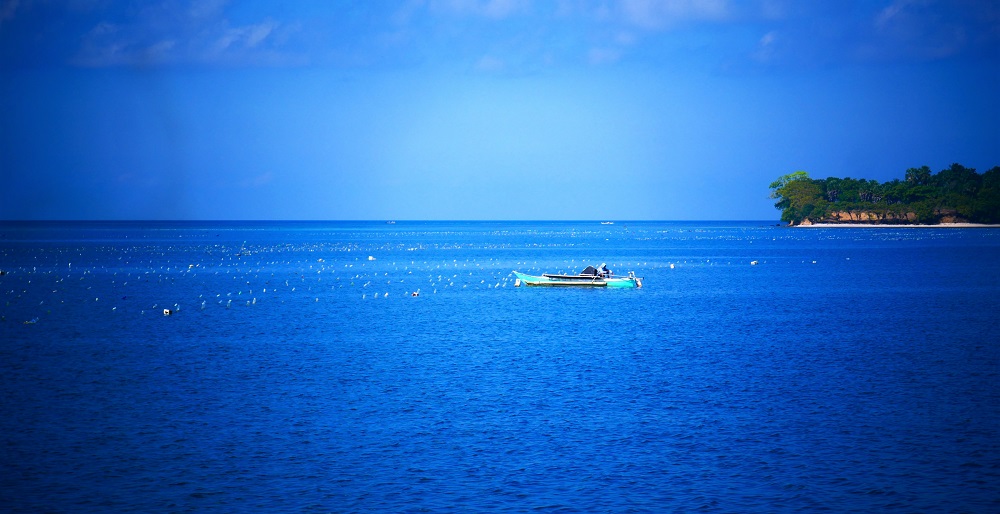
We’re on our way to Makassar, the capital of Sulawesi, where we need to renew our visas. The trip from Wakatobi has been interesting; as we left the deep seas of eastern Sulawesi the numerous Fish Attracting Devices (FADs) were replaced with equally numerous nets tethered to the surface of the shallow coastal shelf and, as we got closer to land, with thousands of seaweed farms.
We wanted to go kitesurfing at Jeneponto, a spot at the south-western end of Sulawesi where a kite resort is due to open in July. The area is subject to some local weather effects that make it uncharacteristically windy for Indonesia, and South-East Asia’s biggest independently run wind farm is sited just around the corner. The kite-resort-to-be is situated just back from a shallow, sandy bay opposite an idyllic-looking island with scores of spindly outrigger fishing boats landed on the white sand. On satellite imagery it looked the perfect spot to relax for a week before heading to the big smoke of Makassar, Indonesia’s fourth largest city.

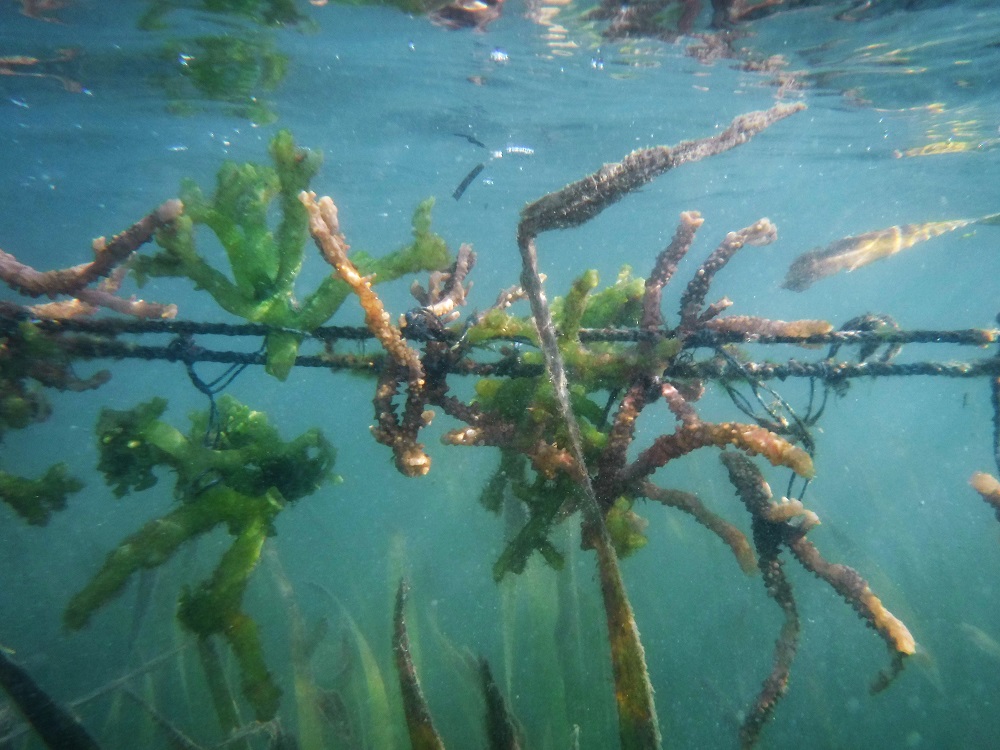
We arrived in the general area late in the afternoon and found that a few developments had taken place since the last satellite photo. The entire coastal area in front of the wind farm and beyond was now full of seaweed farms, large rectangular spaces marked out by plastic bottles attached to vertical lines in neat rows, the bottles spaced about a foot apart and sticking up from the water surface at an angle, barnacle growth weighing down their submerged necks. Interspersed between the farms were fishing nets marked by buoys at either end. About one hundred fishers were labouring the small bay, working the nets or harvesting seaweed from their fragile outriggers. The farms extended into our intended anchorage and we cautiously wove our way into the bay between the lines, finally stopping in a small empty space to put down the anchor.
“I don’t see where we can go kiting,” I said, surveying the wall-to-wall seaweed farms of the bay.
“Well, let’s anchor, and then we can go ashore to scope out the resort,” replied David.
As I started lowering the anchor, a fisherman started towards us, waving his arms wildly.
“Jaring?” shouted David, pointing down.
“Jaring,” answered the fisherman, indicating the extent of the net by pointing to two widely space buoys.
“Di mana jangkar?” asked David (where can we anchor?) and the fisherman grinned and waved for us to follow him.
“He must think we’re nuts,” I whispered to David as we followed the small outrigger to a corner of the free-looking space. “Coming here to anchor in the middle of their seaweed farms. It’s like camping in a New Zealand farmer’s cornfield.”
“Tidak jaring di sini,” shouted the fisher, indicating a tiny area with no nets. It was a bit too close to the seaweed farm for comfort but provided the wind direction didn’t change we’d be OK.
And so we anchored, surrounded by fisherfolk looking curiously on, no doubt puzzled as to why we’d chose to stop here, right in the middle of their seaweed farms, but also presumably aware that since their farms covered the nearest 500 hectares of shallow sea we had few other options.
Back in New Zealand I used to work on a marine spatial plan, an attempt to ensure that all marine users, whether commercial or recreational, were provided adequate space to do their activities. There, not surprisingly, aquaculture is only allowed in zoned areas, and once space has been allocated for aquaculture it is marked on charts and is off-limits to non-compatible uses like yachting. In Indonesia, there are no such plans, and everybody can do what they like: if seaweed farming suddenly turns profitable, there is no stopping locals from covering the entire nearshore area in seaweed farms, even if that may preclude activities such as boating, fishing and transport.
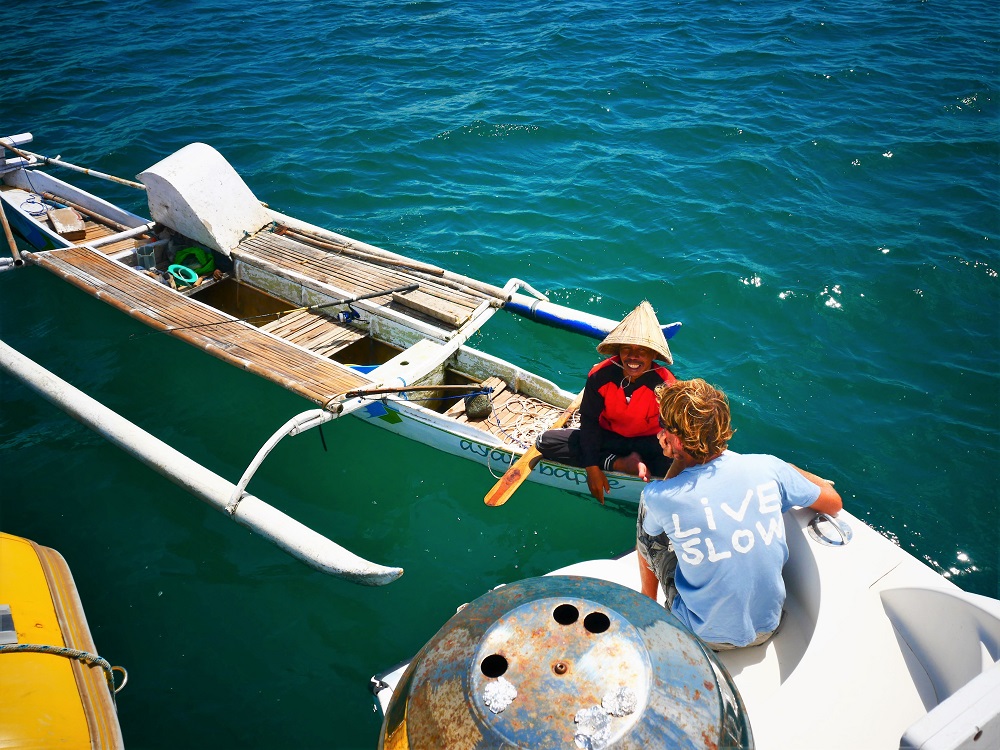
Udin, a local seaweed farmer, stopped by our boat to chat. He explained that the seaweed is sold to China and that the local farmers earn about $1 per dry kg. The population pressure is high here and due to overfishing the fish stocks are dwindling, which means that fishermen turn to whatever they can to make a living. So now everybody grows seaweed and use bottom nets to catch whatever fish they can in the tight spaces between the many seaweed farms, and the bay is busy with boats manned by fishers covered in heavy clothing from top to toe, their heads shielded from the searing sun by their traditional conical hats. The fishers travel to and from the farms all day, sitting fishing during any downtime from the harvesting or sowing of seaweed onto the thin lines. At the end of the day, only a handful of tiny fish lie listless in the bottom of the boat to show for all their efforts.
It is Ramadan, which means that no devout Muslim is allowed to eat or drink between sunrise and sunset. To show respect, we don’t eat or drink during the daytime when we’re ashore, but the boat is our home and Udin came onboard just as I had set out the lunch plates. The kids were busy helping themselves, and he surveyed the bread, cheese, sliced tomatoes and cups of water with obvious discomfort.
Would he like any? I gestured, but he shook his head, saying tidak, no. It must be hard? Yes, he is very thirsty and there are five hours left till sunset. The worst is that he cannot smoke, no cigarettes during the day. He sighed and closed his eyes, his head leaning back against the seat.
It is an interesting phenomenon, Ramadan. For a whole month, people lie around listlessly and ill-tempered, plagued by raging thirst, blood-sugar lows and acute nicotine withdrawal. Everything slows down or stops, with a presumable huge knock-on effect on the economy. Ramadan started when we were in Wakatobi, and two days before it commenced I was trying to get some dive tanks filled at a dive shop, but they couldn’t do it because the guy who could operate the compressor was engaged in pre-Ramadan celebrations. Once Ramadan started I tried again, but then he was not at work because of Ramadan. Whenever we step ashore we see men and women lying sleeping the shade, turning grumpily as small children (who are allowed to eat) climb all over them, laughing and joking.
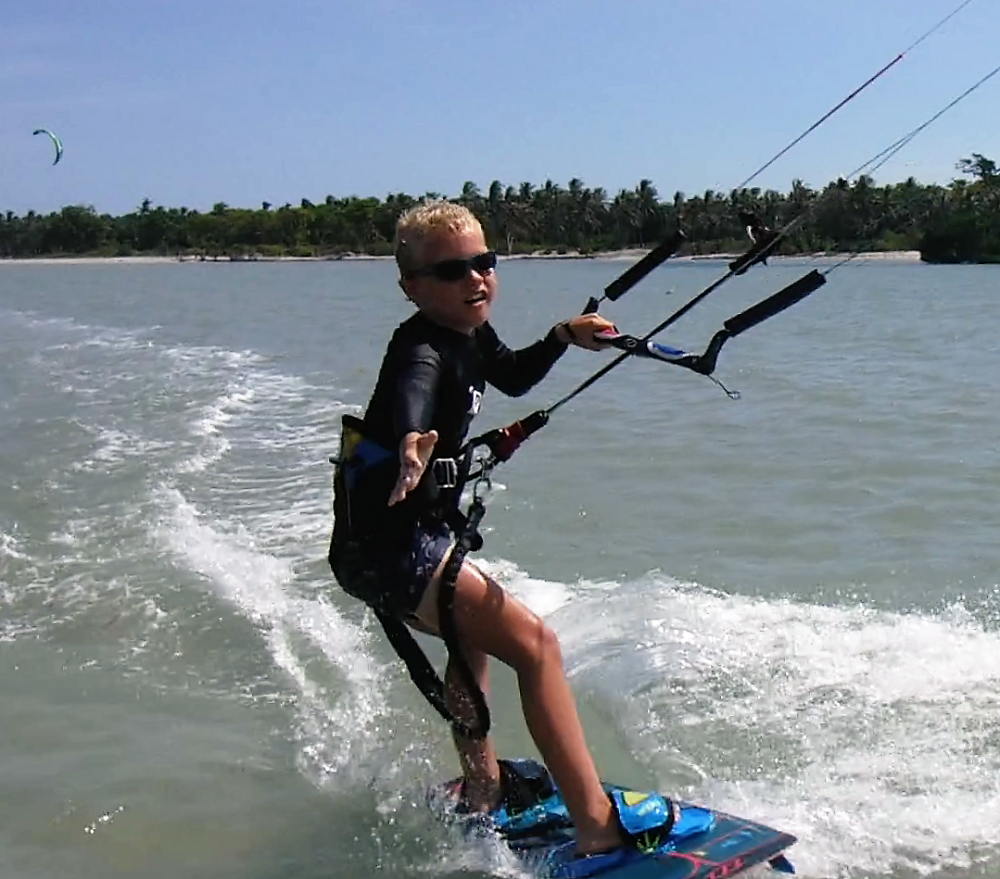
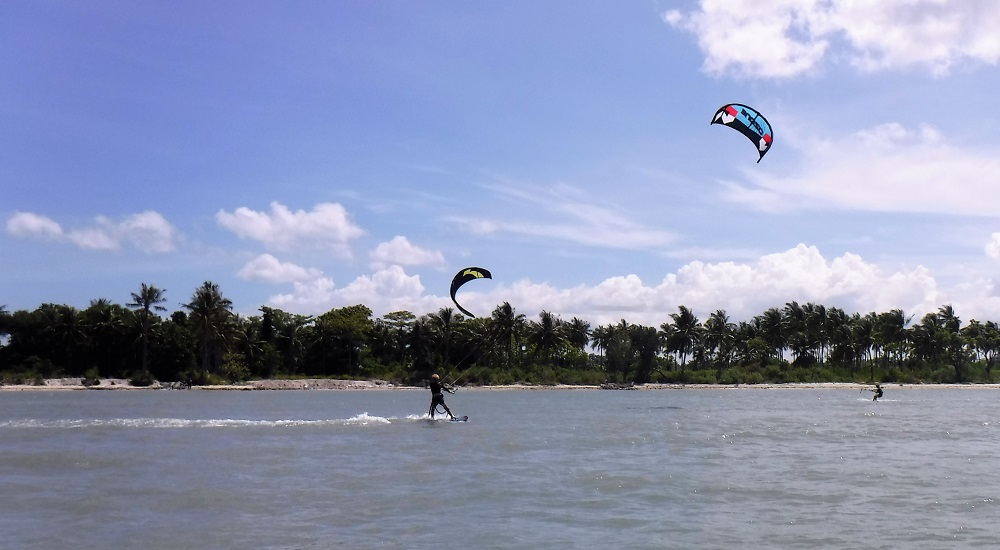
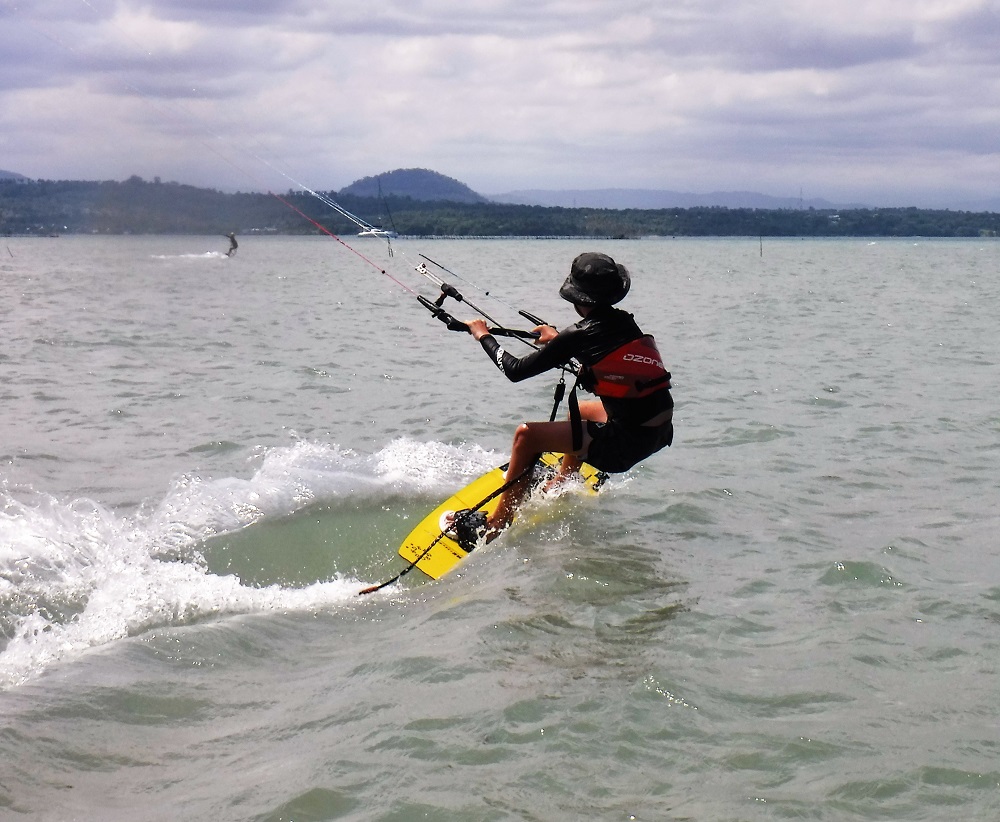
Despite the seaweed farms, we found a small area to kitesurf, a great spot on the intertidal sandbank where for parts of the tide it was deep enough for the kids to zoom up and down, and enjoyed a week of having the windiest spot in Indonesia all to ourselves.
“I still don’t exactly see how they can open up a kite resort here,” I said to David one evening as we were relaxing on the deck. The sun was setting, the orange and pink hues of the sky reflecting in the thousands of plastic bottles covering the surface of the bay, the tiny outriggers of the late fishers outlined sharply against the darkening sky.
“I know,” said David. “There is no space. It’s OK for our two kids to go at the same time but imagine having 15 or 20 kiters all trying to fit into that intertidal area. And what will they do at low tide – people aren’t going to want to pay to come and wait for the tide to rise…”

Now on the way to Makassar, as I sit on the bow trying to navigate us safely through the maze of seaweed farms, nets, and small fishing outriggers, I reflect on Jeneponto. I imagine that the developer of the resort is worried about the seaweed farms ruining his perfect kite spot, the accommodation for which he is already taking bookings online. But you can’t blame the locals for exploiting all available space for their semi-lucrative cash crop. It’s a poor area of Indonesia, and without the seaweed many families will struggle to have enough food to eat. Destructive fishing practices and general overfishing has clearly completely depleted the fish stocks on which locals traditionally relied, and something has to fill the gap. I recall a conversation with a French owner of a boutique adventure resort in Halmahera, who was complaining about the locals fishing the reefs around his resort
“I tell them it is not good to fish, that tourists will pay to come and see the fish,” he said. “They don’t have to kill them.”
I nodded. “How many local people do you employ in the resort?”
He looked down. “One,” he said. “The cook. But maybe if we grow, we can employ one or two more.”
Well. One employed person is not really going to replace the traditional income and food provided by fishing, and I guess over-exploitation of marine resources in Indonesia will not stop until realistic alternative livelihoods are available. At least the seaweed farming of Jeneponto is not extractive, and the farms will be providing shelter for juvenile fish, which may help restore the fish stocks of the general area.
And as much as I love kitesurfing, I would rather feed a couple of villages than line the pockets of an expat resort owner. So as we sail away I wish the seaweed farmers favourable conditions and bountiful harvests, and hope that somehow the kite resort can survive despite a severe lack of space.

 SV Bob The Cat