I’m standing in the galley preparing some lunch when Matias shouts from the trampoline, his voice carrying clearly through the open hatches.
“Incoming! Mummy, incoming!”
“Where?” I call as I drop the spoon I was holding into the sink and crouch down on the floor in one fluid, much-practiced move. Ninja-mum.
“At the back.” He leans in and speaks through the open hatch. “I think they’re coming right by us.” The lawnmower-like sound of a local boat engine grows stronger, the donk-donk-donk-donk-donking drowning out the music playing from our stereo.
From my kneeling position on the galley floor I glance at the clock. Ten to twelve. I might as well give up. “OK, thanks for the head’s up” I shout as I crawl along the saloon floor, keeping my head up so I can see where I’m going and my bottom down so that the passers-by can’t. The raised floor of the saloon is the trickiest and I lower myself so that I slide along the floor on my bare tummy, keeping both head and bottom low. The floor really could do with a sweeping, I think as I almost inhale a hairball and bits of sand and crumbs wedge themselves painfully into my sweaty thighs during my elegant progress. When I reach the staircase I shuffle around and descend the stairs into the port hull with a low backwards crab-like crawl.
The donk-donk-donking is now earsplittingly loud. They’re definitely close, and I can hear calling and hooting. It sounds like children.
Down in our cabin I stay low and reach up to quickly close the side hatch before I sweep a well-worn t-shirt and a skirt from the hook next to the bathroom door. I awkwardly dress in a crouched position, kneeling to pull the skirt up over my bottom and struggling to pull the t-shirt down over my sweat-soaked back. Once dressed, I stand tall and quickly step upstairs, tidying my hair. I can hear calling, and the engine noise is still present, but is it getting fainter?
“Who is it?” I shout out into the cockpit. “Are they still here?”
Matias stands in the doorway, a dark shape against midday brightness. “They just did a fly-by and took some photo. They’re heading away now.”
I breathe a sigh of relief and quickly tear off the t-shirt and yank off the skirt. The clothes are already damp from sweat and I hang them on the hook next to the kitchen so they’re ready for when the next boat comes.

We’re in Banda, the southernmost islands of the Moluccas, and staying cool is a problem. The weather has been hot and heavy since we arrived, humid squalls interspersed with blinding sunshine. It’s a lot warmer here than up north, and we’re constantly soaked in sweat, the frequent rainfall meaning that we can’t open the hatches half the time, which makes the interior of the boat like an oven. We do have fans, but their feeble flows are inadequate to cool down the 30°C humid air. The only way to cool down is to wear as little clothes as possible and jump in the water as often as possible.
Both those options are somewhat restricted by the high volume of boat traffic on the anchorage. The main bit of Banda consists of three islands clustered closely together and the anchorage is just off the main town, right in the middle of the local boating lanes. It’s like being parked in the middle of a four-lane highway. The long, slender, local water taxies drive between the islands, and local fishers navigate smaller fishing canoes from town to the many FADs gracing the channels, fishing and transporting catch to the market or to the large refrigeration ship moored in the bay. Low-lying broad barge boats sluggishly move large amounts of ocean-weathered rock from the volcanic island of Banda Api to town, and shiny dive boats full of tourists zoom from the many dive resorts on Banda Neira across the channel to access dive sites off the surrounding islands.
To make matters worse, Bob’s wrap-around windows make her a bit of a glasshouse. It is great to be able to look out, but unfortunately it also means that people can look in if they come close enough – which they do, and not just because we’re in the way. Yachties are a bit of a curiosity here, which means that the local boats will go out of their way to pass within a few metres so passengers and crew can take pictures and shout greetings, hooting and hollering as they wave their cellphones and gesticulate wildly in our direction.
All in all not a very private anchorage, and out of respect for the strictly Muslim population of Banda there is no doubt I should remain thoroughly and decently dressed whilst parked in such a public space. And I would, I really would – if it just wasn’t so crazy hot! Wearing clothes mean a constant trickle of sweat down the small of my back, a permanent film of liquid behind my knees, a sticky forehead and an itchy neck, as well as a steady stream of t-shirts to wash with our limited water-maker fresh water supplies. David and the kids just go bare-chested, greeting the traffic with friendly waves as they stand in full view on the deck, legs wide apart and feet planted firmly, only wearing shorts. Whereas I hide indoors in my bikini, crouching low every five minutes to prevent anyone spotting my indecent near-nudity, only putting on clothes for when I’m outside on the boat – eating in the cockpit, hanging up clothes, tidying or loading the dinghy.
Lunch is nearly ready, and I gingerly step just outside in the cockpit for a breath of fresh air, towel at the ready should a boat approach. I survey the landscape and sigh contentedly. Other than the stuffy heat, Banda is bewitching. Steep, dark green volcanic islands rising from the deep sea, the conical volcano of Gunung Api shrouded in cloud, the lower lying islands of Banda Neira and Banda Besar shimmering aromatically under the hot sun.

The native trees of these islands have shaped their history dramatically. Home to all the world’s nutmeg, the Banda Isles have been important for traders for thousands of years. Since prehistoric times nutmeg and mace have been used as flavourings and medicines, and Arab traders used to come to the Bandas to trade cloth for the coveted spices, which they then on-sold in India and Europe. The Arab traders kept the exact location of the spice islands secret, but as Portuguese ships began to enter the region in the early 1500s, European powers became aware of the lucrative islands. The Portuguese tried in vain to establish themselves in Banda but when the locals steadfastly withstood the attempts to Christianise them, they eventually gave up and moved their attention further north. This made way for the Dutch East India Company, which after realising how lucrative a monopoly on the world’s nutmeg would be, moved in with force, enslaving the few locals they didn’t manage to kill in the Banda Massacre of 1621. Realising how a Dutch spice monopoly would harm them, the English occupied the outlying Banda Island of Run, and in response, the Dutch got ready to defend their territory. And thus the Spice Wars began.

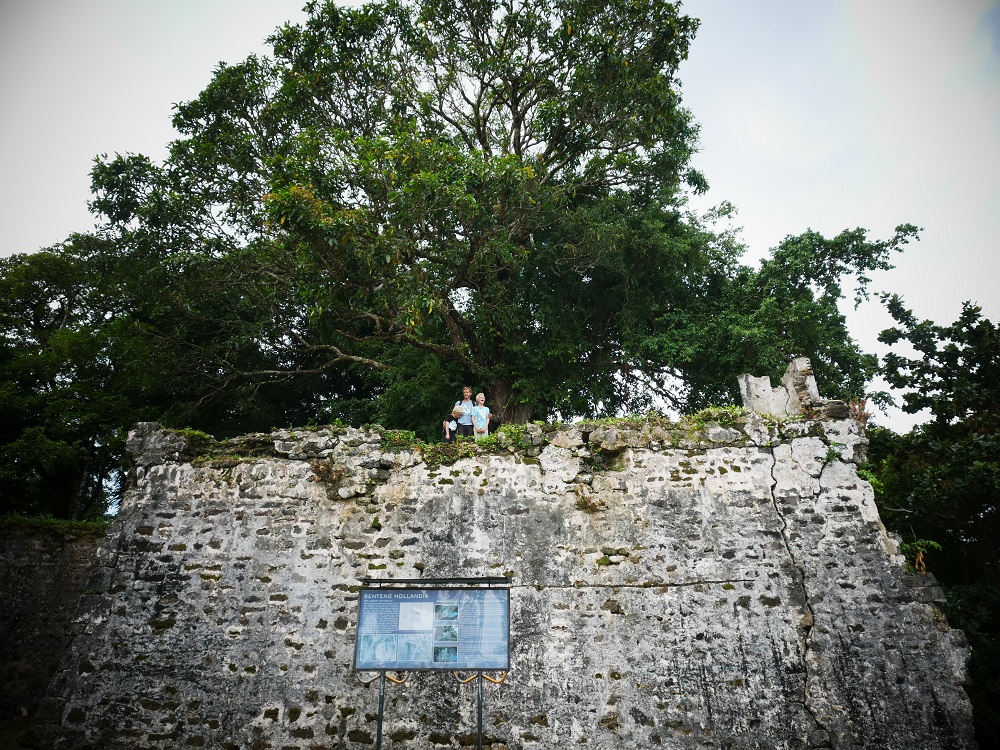
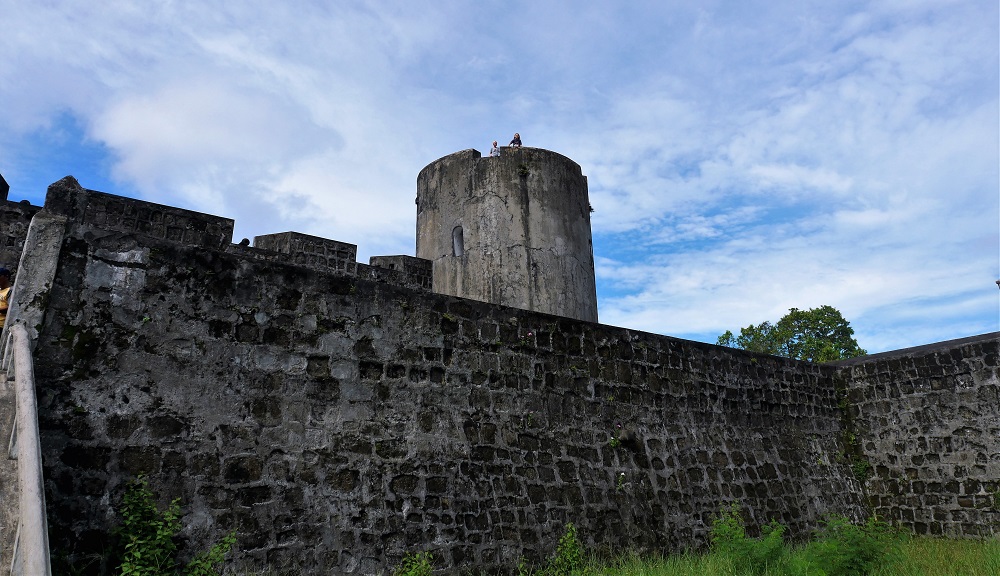
Evidence of centuries of spice conflict are everywhere in Banda. The quaint little township of Banda Neira (the Banda Island capital) with its narrow, fragrant streets lined with multi-storied colonial buildings, is situated below the imposing Fort Belgica, built in 1611 and reinforced and expanded in 1672. It overlooks the lower-lying ruins of Fort Nassau, which was built earlier not far above the high tide level by the Dutch at a site of an old Portuguese attempt at a fort from 1529. A third bastion, Fort Hollandia, built in 1624, graces the hills of the nearby island Banda Besar, its canons pointing out over the narrow channel between the islands, ensuring that any enemy ship was within range of the Dutch forces. We visit the dark, stone-walled forts, gazing out over the luscious landscape through tiny windows perched high on thick walls. To the kids’ delight, old, rusty canons are everywhere – in the forts, but also on street corners, perched at the end of narrow park areas, littering the roadside amidst a drift of rubbish.


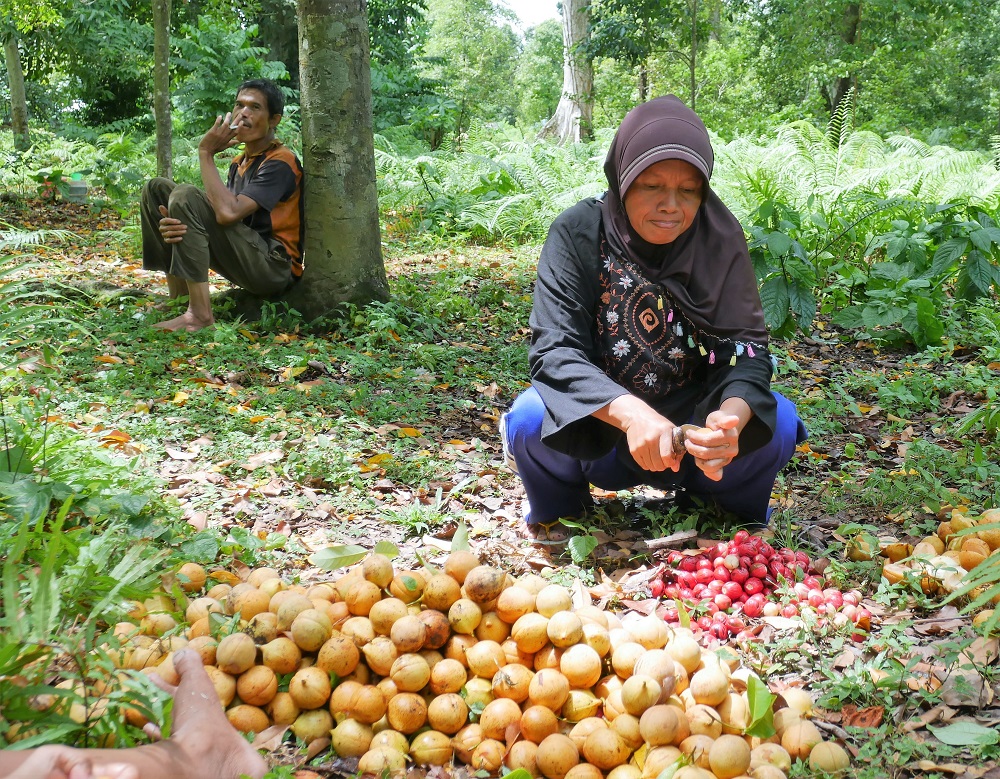
Spice is still the key to wealth on these islands. On the large island of Banda Besar, the nutmeg trees grow in the shade of giant kenari trees bearing their sweet tropical almond-like nuts. Nutmeg hangs in rich bunches off the slender trees, ready to be picked three times a year whereas the kenari nuts drop to the leaf litter on the shady ground, where they are picked up daily by industrious workers. Cinnamon trees abound in roadside gardens, the fragile young trees cut down when the bark is thick enough to peel, the leaves spreading a spicy aroma mingling with that of nearby colourful flowerbeds. Clove trees are grown in plantations, the aromatic flower buds picked only once annually after the flowers have turned bright red. The plantations are owned by the Indonesian government who pays each family for harvesting and drying the valuable spices, providing a steady and not insignificant income for all households in this outlying region of Indonesia.
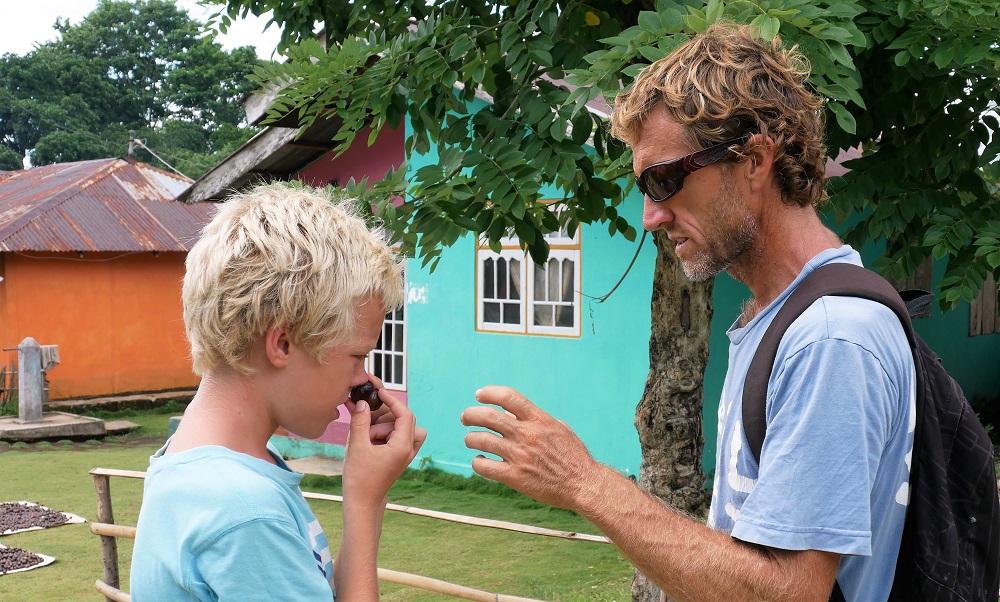

Spices are everywhere in these fragrant isles. Nutmeg and mace are drying on mats in front of local houses, the vivid red of the mace livening up the narrow, sun-baked streets. Bags of cinnamon bark the size of large papyrus scrolls are offered for sale in the local market alongside dried lacy mace and chewy, candied nutmeg peel, the scent of which complements the spicy gingery tones emanating from bags of cloves, powdered turmeric, and numerous piles of fresh ginger and turmeric. We buy spice cakes and almond slices heavily infused with cinnamon and nutmeg, drink chilled cinnamon tea and nutmeg coffee in street-side cafes, and taste the islands’ signature dish of terong goreng kenari – fried eggplant with a spicy kenari-nut sauce.


In the 17th century the spice trade was the driver of the global economy, nutmeg was worth more than gold by weight, and the Dutch were very keen to have a monopoly over the nutmeg trade. The English occupied a tiny island (Run) in the Banda group, and after 60 years of fighting over it, the two countries finally compromised in the Treaty of Breda in 1667 (later labelled ‘the real estate deal of the millennium), whereby the Dutch surrendered Manhattan, an obscure island of low-lying swamp in New Netherlands in North America in exchange for the English surrendering the tiny island of Run in the Banda archipelago.
Thus set up for a lucrative monopoly, the Dutch East India Company ran the Banda Islands in spectacularly brutal fashion, decimating the original Bandanese population and importing hundreds of slaves each year to replace those who died under the savage conditions on the Dutch-run plantations. To protect their resources the Company destroyed all nutmeg trees on the outlying islands of Run and Ai, imposed the death penalty for stealing, selling or growing nutmeg elsewhere, banned the export of trees and rendered all exported nutmeg infertile by dipping it in lime before shipping.
The monopoly ended in 1810 when the British stormed the island of Banda Neira and quickly removed many nutmeg trees, which the British East India Company successfully transplanted anywhere tropical and fertile they had access to – Penang, India, the West Indies and Grenada. By that stage the Dutch East India Company had gone bankrupt and the Dutch government had taken over the running of the Dutch East Indies, the precursor of Indonesia.

In recent years the only violence in Banda has been the eruption of the volcano, Gunung Api, on the island of Banda Api in 1988. Fortunately, the wind was blowing the hot ash off the main township and only one person died. The settlements on the island were abandoned thereafter and nowadays only few houses grace the steep foreshore. You can still see the black flow of lava down the hillside, continuing into the sea and making for incredible snorkelling, the shallows full of wave-swept lava boulders where the boys and their friends snorkel to find gems, little white and yellow crystals locked within the cooled, solidified lava. Deeper, the lava was quickly colonised by corals and the site now boasts more coral diversity than the surrounding, non-impacted reef.
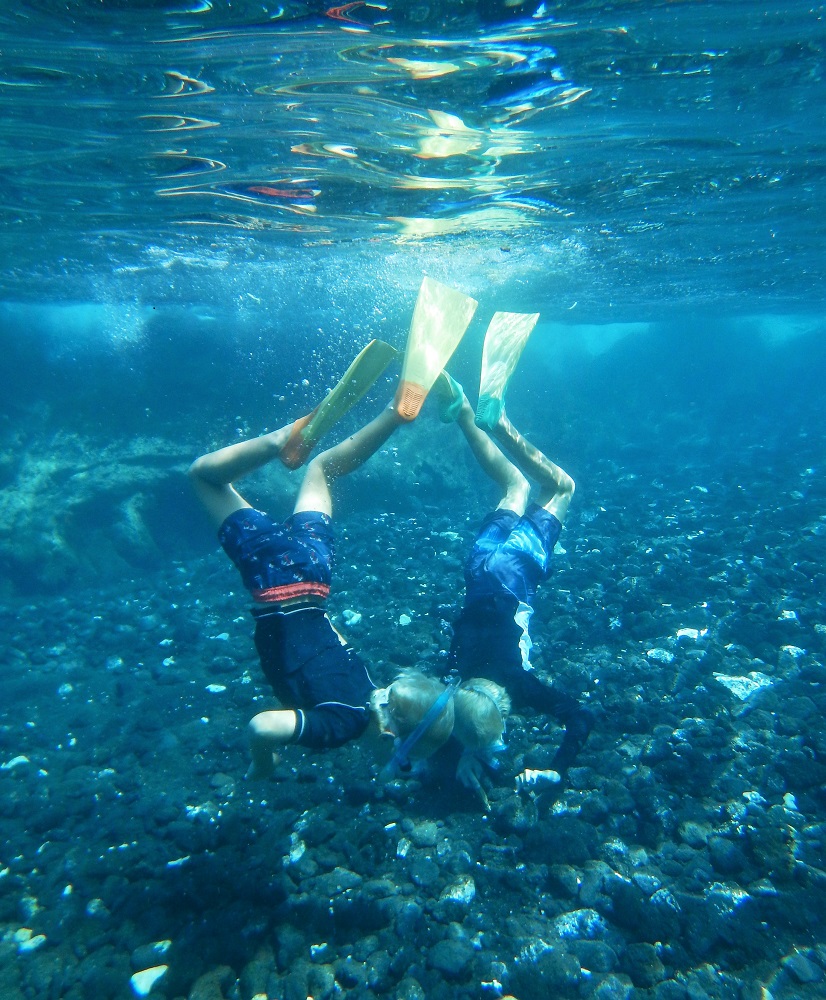
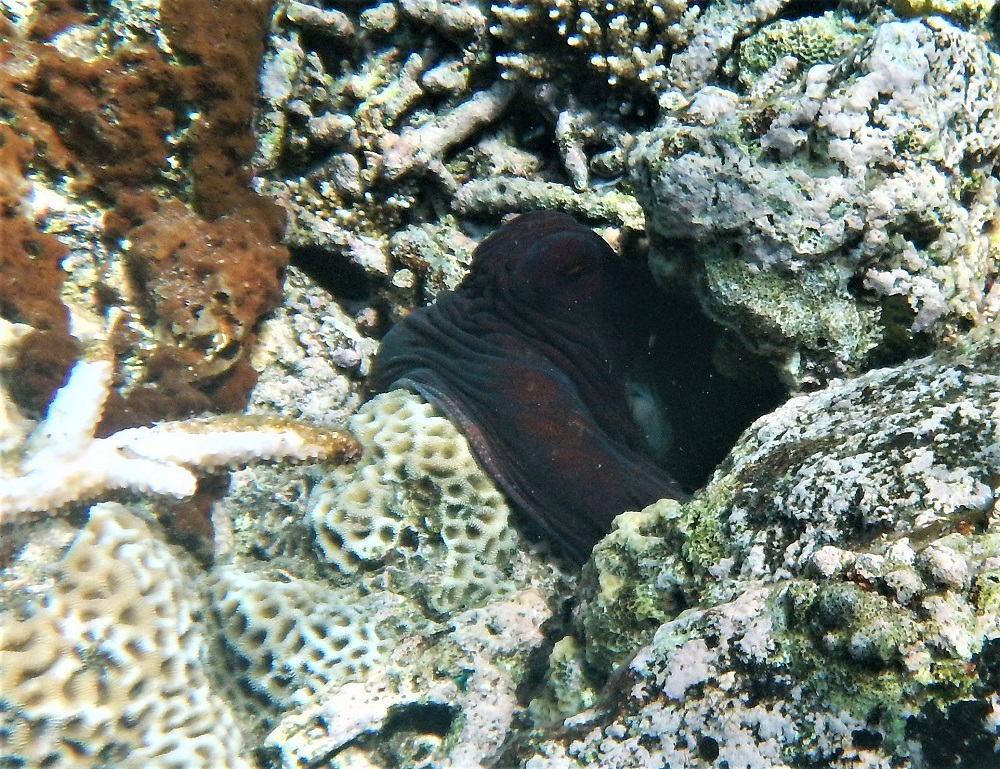
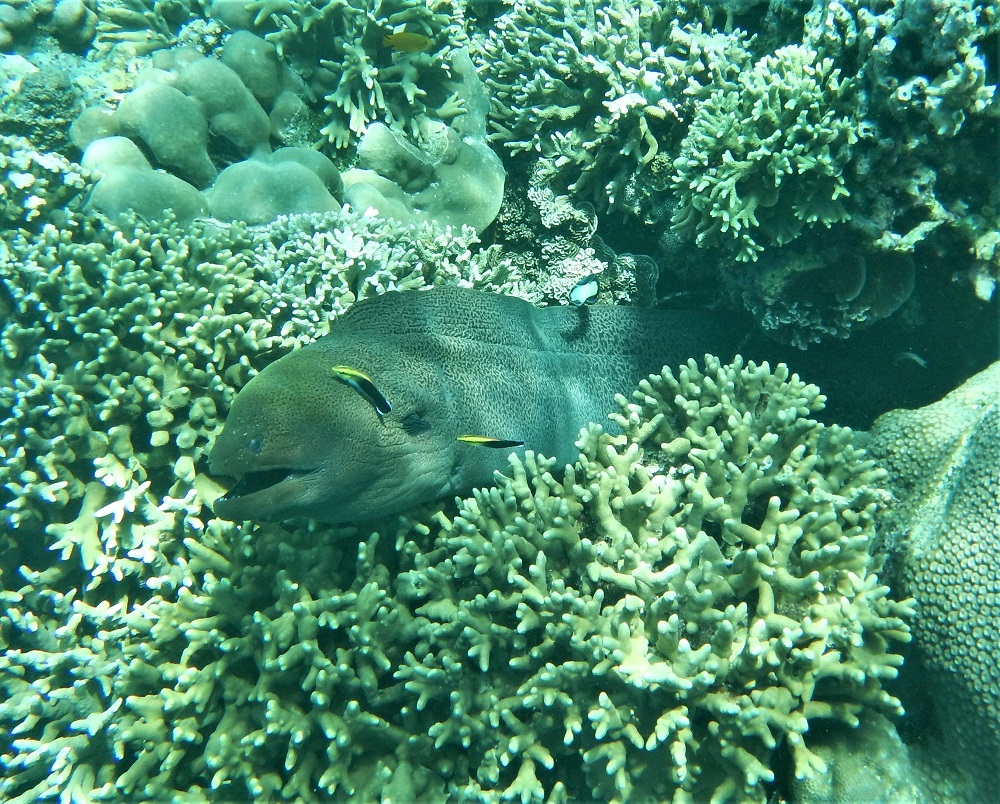
There are many tourists in Banda, mainly divers who have come to sample the wonders of the famously clear waters. The Banda Trench which is 6000 m deep is located to the south of the islands and the strong currents in the area makes for wonderful drift diving and famous wall drop-offs graced by large pelagic fish, including hammerhead sharks, one of which Matias spotted whilst snorkelling. We dive and snorkel clear, deep reefs, coming close to huge Napoleon Wrasse, enormous moray eels, well-camouflaged octopuses and swarms of colourful reef fish.

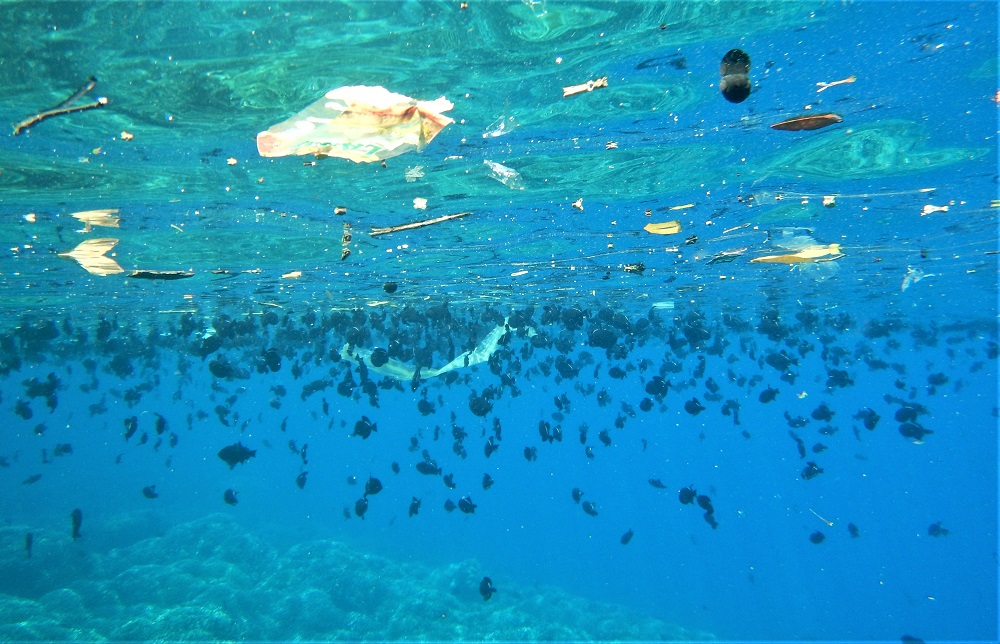
Unfortunately, there is quite a lot of rubbish in the water here, although it is clear that, unlike most places in Indonesia, the locals are trying to do something about it. Colour-coded bins line the narrow streets everywhere, and generally the town of Banda Neira is clean. We find out why when we meet the local school teacher, Mr Man, a short middle-aged man on a moped who stops us on the street of Banda Neira.
“Hello,” he says, clasping my hand with both of his. “My name is Mr Man. You must come and meet the school children.” He smiles and keeps hold of my hand. “You must come and help clean up the plastic from the beach, with the children.”
“Yes, the plastic is very bad for the ocean,” we respond. “What are the school children doing?”
“It is big, big problem. Education is very important. Come tomorrow and the children will pick up rubbish with you, and dance, and then we converse in English. The children’s parents will be very happy if you converse in English.”
We agree to meet him the following afternoon and he takes us to meet his keenest students, a group of lovely teenage girls who, clearly briefed, perform like well-trained actors. Their first task is to do a traditional dance for us (“Again,” shouts Mr Man when the music stops), veiled Muslim girls adorned with fern leaf crowns gyrating to traditional Indonesian music in their tight black jeans, iPhones poking out of their back pockets. After the dancing, we gather inside the classroom for the scheduled English conversation.

“Speaking English is very good for them,” Mr Man explains as he barks orders in Indonesian at the girls seated in front of us on old-fashioned school benches. “Their parents will be very happy.” He looks out over the girls. “Now, plastic!” he yells, and the class obediently hold up laminated cards spelling out the evils of plastic whilst they shout “Keep Banda Clean” in unison.
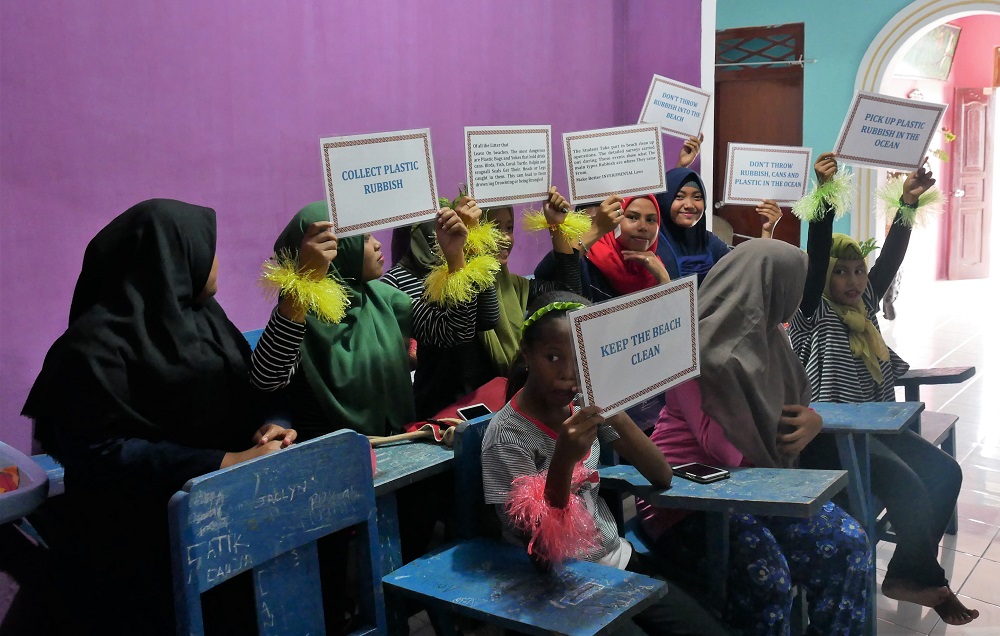
“Now, introduction!” he shouts after we’ve taken pictures of the earnest budding environmentalists, and one by one the girls stand to introduce themselves.
“Hello Mister and Missus, my name is …, my mother name is …, my father name is…,” they continue, introductions dragging painfully on and on until all their relatives have been properly presented. Next, Mr Man commands us to introduce ourselves, after which the girls are allowed to ask us questions: “What is your work?”, “Where do you come from?” and “Can we visit your boat?”
The day finishes with a couple of songs (“Sing Brother Jacob,” Man bellows, and they break into song. “Now in French!” he commands, and they sing along in non-recognisable French: “Fraca Shaka, Fraca Shaka, doray vous, doray vous…”), finishing off with ‘If you’re happy and you know it, clap your hands’.
It’s a bizarre, if well-meant, performance, and our role is clearly to listen and applaud, a live audience witnessing the success of Mr Man’s teaching practices. We never get to pick up any rubbish with the girls, but after the performance Mr Man shows me a book he has drafted on the evils of plastic contamination of the local seas and we contribute generously to its publication.
The following afternoon the girls visit all the yachts in the harbour, exclaiming about our taps, the trampoline, the deck, in between chasing after our children, cellphones outstretched, clamouring for close-up shots and selfies. The kids and their friends take it as a game and flee enthusiastically, screaming as they scramble through hatches, pursued relentlessly by veiled girls. After we’ve had tea and cake, the girls request music (Ed Sheeran, Katie Perry) which we play loud on the stereo, the visitors crooning along, eyes closed.


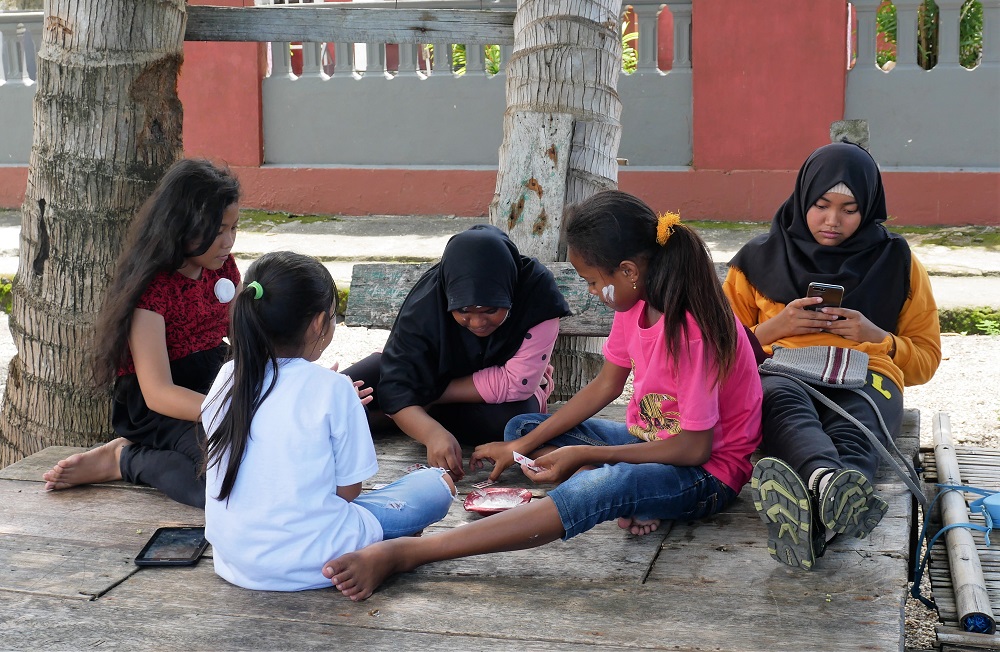

I’m in constant awe of the women here, wondering how they survive the heat, fully covered up as they are in jeans, long-sleeved pullovers, thick veils covering their hair – and then dancing, running after my kids, playing ball in the backyard gardens. It must mean that I could get acclimatised!
Back in the galley I wipe my brow. Lunch is ready and I call the children to start putting things out so we can eat in the cockpit. I look around. No boats nearby. Dare I eat in my bikini? David and the kids come out and sit down, cutting bread and cheese, slicing tomatoes. I make a sandwich and rush to seat myself in order to provide less of an obvious figure, and have just sunk my teeth into the sandwich when I hear the donk-donk-donking of a local engine.
“Duck, Mummy, duck!” urges Lukie and I quickly lie down, pressing my body against the sticky seat, clutching my sandwich to my face, hoping that my behind is not sticking up beyond the line of sight of the local boat.
“Have they gone?” I croak, still clutching my sandwich to my face.
David looks around and starts laughing. “You can sit up now,” he says. “They’re gone – and besides nobody is looking at us anymore. Check this guy out!”
He points, and I sit up to look out and see a completely naked man standing at the back of the German yacht which is anchored nearby. The boat came in early that morning and the man is having a long shower, rubbing generous helpings of soap into his private parts before turning around so that he can rinse off his behind, bending slightly to make sure that the water gets right in where it’s needed. Once his bottom is clean, he stretches out, closing his eyes and holds the showerhead up high, letting the cool water splash down his naked body, obviously relishing the rinse. We stare in disbelief as we chew our sandwiches, and when we look around we see that all local boat traffic has come to a complete standstill, the fishers staring at the naked man parading in full view of the entire town, their jaws hanging open.
“Bloody Germans,” I quip with a grin, “always naked!” and I swallow the rest of my sandwich and move my scantily clad body back inside the boat before anyone sees me.

 SV Bob The Cat