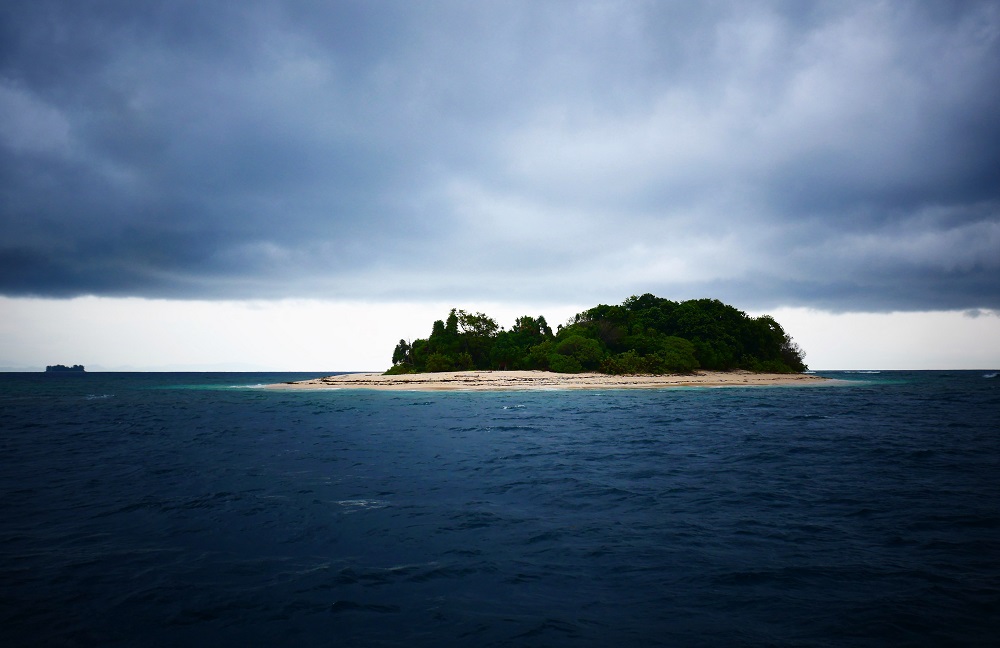
We were in Pulau Joronga, an atoll south of Halmahera, when we heard about the attack. It was early morning on Saturday 16th March. I was sitting in the cockpit looking out over the tiny islet we were anchored next to, a cup of steaming tea in my hand. Birds were singing and a large sea eagle was soaring above the tall vegetation growing on the little island. It was doing loops, away from the island and back again, surveying the shallow sea for fish.
I heard David come upstairs and put the kettle on. The children were chatting quietly in the background while he was rustling the bread bag, lighting the stove to make toast.
Pulau Joronga is a super quiet spot, a large lagoon surrounded by tiny islets. There was a mild breeze, but the air was already hot, the sun shining through the clears and warming the cockpit like an oven. The eagle passed over again, but the wind was ruffling the sea making it hard to see the fish, so it returned once more to the island, wide wings outstretched as it glided darkly against the light sky.
David came outside, hair in disarray, phone in hand.
“Did you hear? There’s been a shooting in New Zealand!”
I tore my eyes away from the eagle and looked up at him. “Oh, that gun scare – near a school? In the Bay of Plenty? That was a couple of weeks ago.”
“No, this is yesterday.” He ran his fingers through his hair. “A shooting in a mosque. 49 people dead.”
I sat up straight. “What?”
He handed me the phone and I read – CNN news, delivered via satellite. Mass shootings in two mosques in Christchurch. Men,women and children shotat. 49 dead. Right-wing, white supremacist, anti-immigration terrorist attack. In New Zealand.
It is incomprehensible. In New Zealand? But there are so few Muslims in New Zealand. It is not an issue there. I’m used to conversations about ‘the Muslim problem’ with European relatives, conversations echoing sentiments of unfamiliarity, crowdedness, foreignness, and most of all fear. I’m used to the blanket hostility against Islam of some Americans. But New Zealand? I can honestly say I’ve never heard anyone voice that Muslim immigrants pose a problem there. I’ve heard Kiwis worry about Chinese buying up land and ‘taking over’ New Zealand, and of course, we have our conflicts between Maori and Pakeha. But I’ve never heard anybody voice fear, or anger, about Muslims in New Zealand.
I sat stunned, tears in my eyes, my head in my hands. Incomprehensible.

Pulau Joronga, where we were, is just south of Halmahera. Since leaving Morotai, we’ve been working our way slowly south, needing as we do to be in Ambon for the next monthly visa renewal. Ambon is in Central Maluku and so we’ve been sailing south, down the coast of Halmahera, past little townships discerned through the heat haze only via the reflection of the green, shiny mosque domes perched just uphill from the glistening water.

It is a peaceful part of the world and we’ve been sailing slow, sightseeing, having conversations and playing music, meeting the locals in this part of the world. And they’ve all been so nice – like all Indonesians, everyone we’ve met has been exceedingly helpful and friendly.
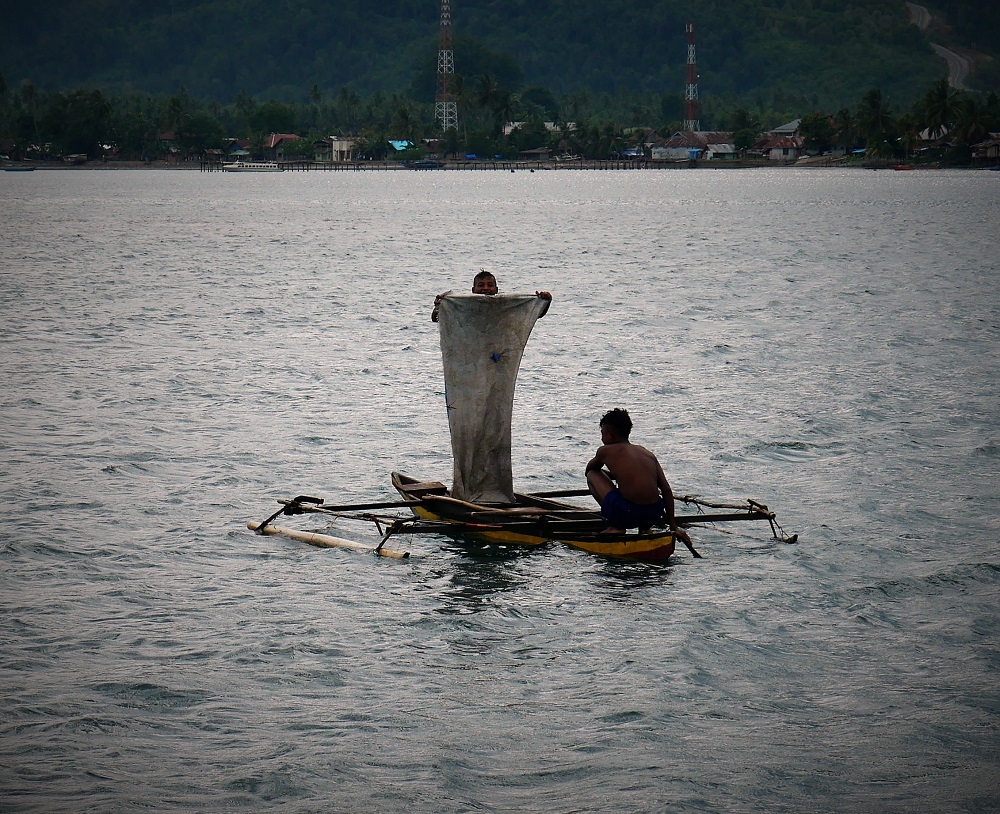
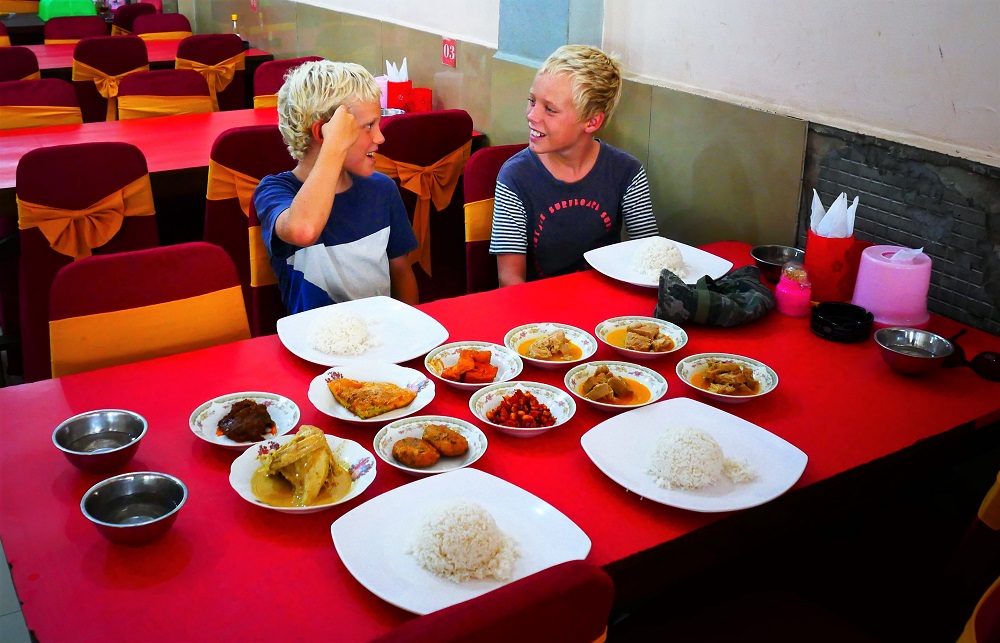
We visited Buli town, a small mining town based at the foot of scarred hills whose narrow waterside streets were drenched in the stench of drying fish. Here we bought vegetables, took selfies with local shop-owners, and went out for an immensely delicious lunch at a Padang-style restaurant, where customers choose from the many delicious dishes advertised on the shelves in the restaurant window. By pointing at different dishes, we managed to order exquisitely delicious sticky-fried sweet and sour tofu, curried jackfruit, tempeh fried with peanuts, chilli and tomatoes, beef rendang curry, vegetable-filled omelettes and potato cakes, all of which we ate quietly under the supervision of the eager restaurant matron.

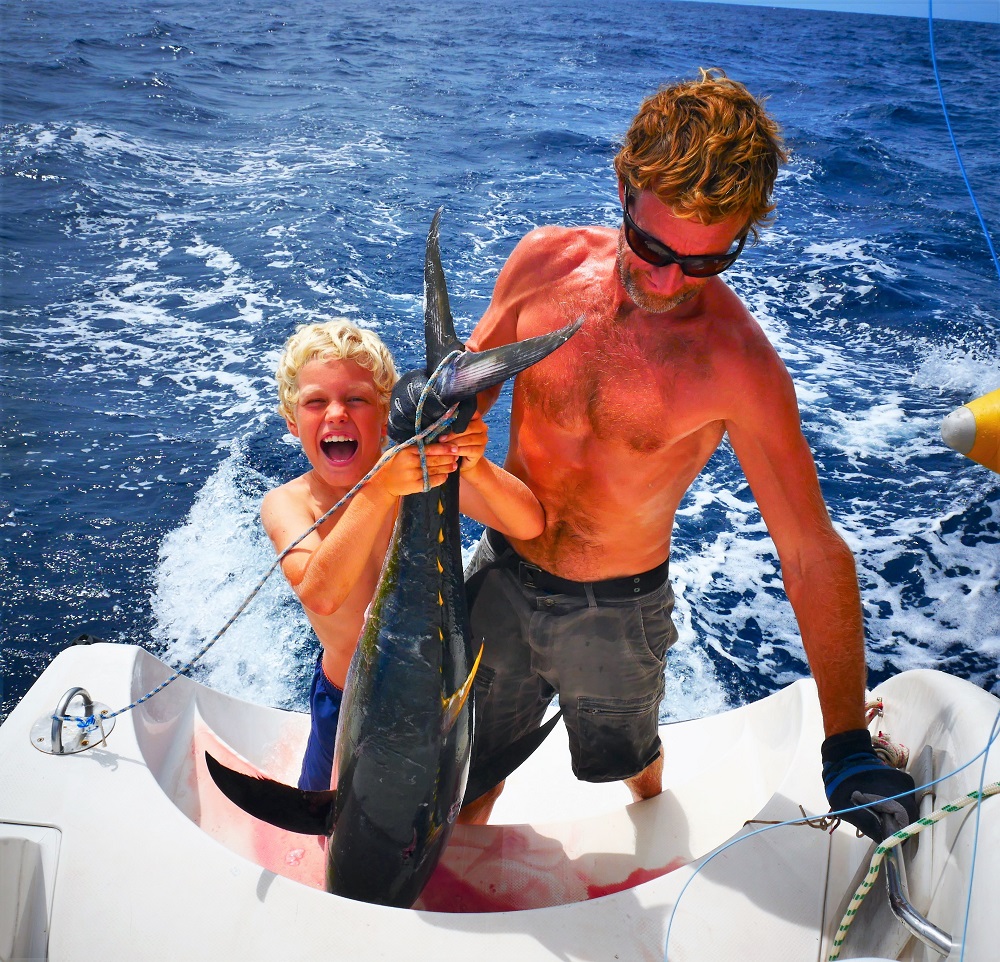
Halmahera is tuna country, and several commercial operations are based there. On the way south from Morotai we caught a huge yellowfin tuna, which at about 30 kg was only just lighter than 8-year-old Lukie. After we’d filleted half the fish our freezer was full to brim of sushi-grade tuna and we shared the rest with the fishermen we met at our first stop at some small islets off central Halmahera. When David offered them half the fish, they first refused it, saying that they had no ice or refrigeration to keep it, but once he’d filleted it we managed to distribute half-kilo chunks of tuna to the surrounding fishers no problem.
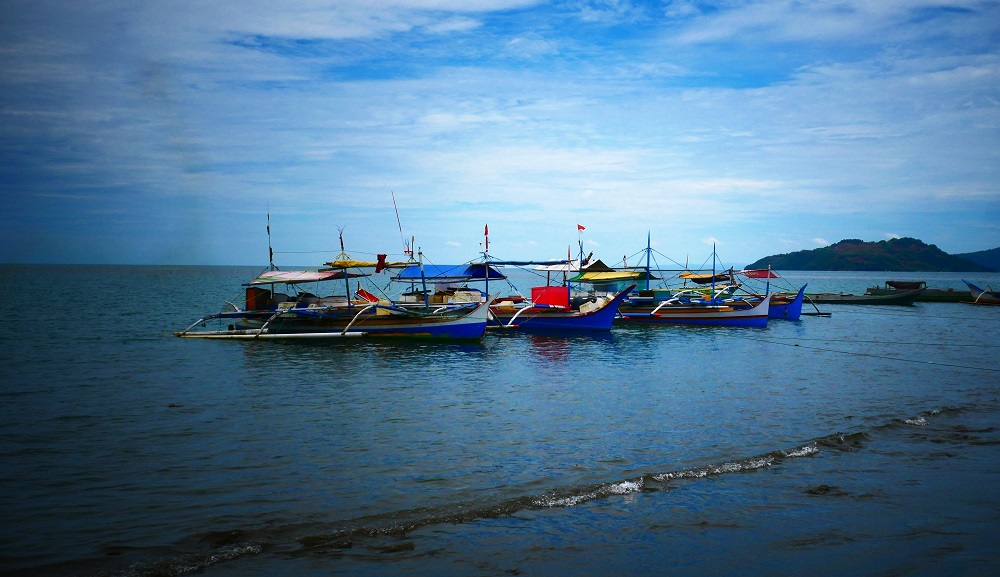
Nobody there seemed to know where New Zealand is – when we said where we’re from they just smiled uncertainly and nodded, no glimpse of recognition in their eyes. People know Australia, the UK, the Netherlands, the US. But not New Zealand.

A couple of days before arriving at Pulau Joronga we were in Pulau-Pulau Widi, a huge atoll about 12 nautical miles east of southern Halmahera. Here, we met Carlos, a young builder from Java who has been contracted to build a high-end resort on the little islands lining the lagoon. The first person we’ve met who spoke English since Anna in Morotai, he came by in a longboat full of men on our first morning there.
“Hello,” he shouted.
“Hello,” we yelled back. “Selamat pagi.”
“Where are you from?” he asked, one hand holding onto our deck as he balanced upright in the wobbly longboat, the other hand shading his eyes from the sun as he squinted up at us, standing above him on the deck.
“New Zealand.”
“Ahh. Europe.” He nodded sagely.
“No – more like Australia. Near Australia.”
“Ahh. Australia. Australia. Welcome to Paradise.” He smiled and widened his hands, indicating the still lagoon, the quiet, mangrove lined islets, the turquoise sandbar behind the seagrass-filled shallow bay.
“Thank you. It is very beautiful here.”
“You come and see my buildings? Maybe one day you come and stay here, not uncomfortable like on a boat, nice houses, very comfortable.”
We were chagrined at having to describe ourselves as Australians, but now, a few days later, after this attack, we’d give a lot to go back to anonymity. Presumably, New Zealand’s status as largely terra incognita in Indonesia has changed now that we’re associated with a terror attack on Muslims, associations that will likely take many years to fade in this country already torn by secular conflict.
When we visited the building site, Carlos explained the plans. The project is run by an English lady called Natalie, who has visions of turning Pulau-Pulau Widi into a Maldive-like resort, with little cottages dotted on all the islands.
“We will build a hundred houses,” explained Carlos, extending his cigarette pack towards us and raising his eyebrows when we declined. He makes the houses in Ganelua, the nearest village on the Halmahera mainland, and then ships them to Pulau-Pulau Widi for assembly there. He is employing twelve men from the village and has so far constructed one house which they were assembling when we visited. Carlos has done business elsewhere in the world, has shipped houses to Darwin, Australia, the Philippines, and the Netherlands, and he wants to do business with us.
“You must be rich,” he said, grinning. “To be able to sail in a big boat like that.”
We smiled and said that we had been working hard and that we have to go back to work when we return to New Zealand. And that we are very happy to be able to see beautiful Indonesia.
“Well, happy is good, but happiness, it costs money.” He laughed loudly and wiped his hands on his t-shirt before offering us cigarettes again, shrugging his shoulders when we declined once more and lighting one for himself.
“I can build houses for New Zealand. You buy from me, you sell in New Zealand. I ship the house. Good, strong Indonesian hardwood. You have hardwood in New Zealand?”
“Yes, but it was all felled. It takes hundreds of years to grow. They used it all. So nowadays houses are made from pine, grown in plantations.”
“I can ship you hardwood houses.” He slapped David on the back. “I ship to you, you sell on, you take 50%! We do business together, you a businessman, yes?”
They were beautiful houses, but we’re not sure we want to be part of the demise of the Indonesian hardwood forests. On this atoll, all trees are protected.
“We can’t get wood from this island,” sighed Carlos. “We’re not allowed to cut trees. There are many good trees, good wood, here. But we can’t use.”

Apart from Carlos and his crew, there were about 30 fishers in the lagoon, living in stilt houses perched over the turquoise shallows. From the village Ganelua on the Halmahera mainland, they come to Pulau-Pulau Widi for months on end to fish, salting and drying their catch to bring back to the village to sell. The entire atoll is a forest reserve and no forest clearing or agriculture is allowed on any of the small islets surrounding the calm lagoon, so they bring vegetables along and get new supplies from the village when they run out. A policeman comes a couple of times a month to stay in a little stilt house and check that nobody is felling any trees.

We met Amat and Labeebah, a young fishing couple who live here in their stilt house for two months, then go back to the village for one month, then back here for two months, and so on. With them, we spoke in stilted Bahasa using a lot of gestures and when they asked if it is just the four of us (empat orang – four people) sailing around and we nodded they laughed and laughed, repeating it over and over, chuckling with mirth. Empat orang sailing around and around! How crazy! They served us tea and fried cassava in their immaculately clean house where we sat chatting, our faces zebraed by the stripes of the light blue water shining through the gaps between the dark hardwood floorboards. They have elegant hoisting systems for their two larger traditional outriggers, a small generator for electricity at night, and lots of small fish (bream and snapper) drying out the back – ikan garam (salt fish) as they explained. They offered to give us cassava and salt fish to go, and we declined politely even though Matias looked longingly at the cassava, and when we returned to the boat Lukie and I baked some chocolate brownies for them in an attempt to offer something back to these people who have so little and yet are willing to part with it to total strangers at the drop of a hat.


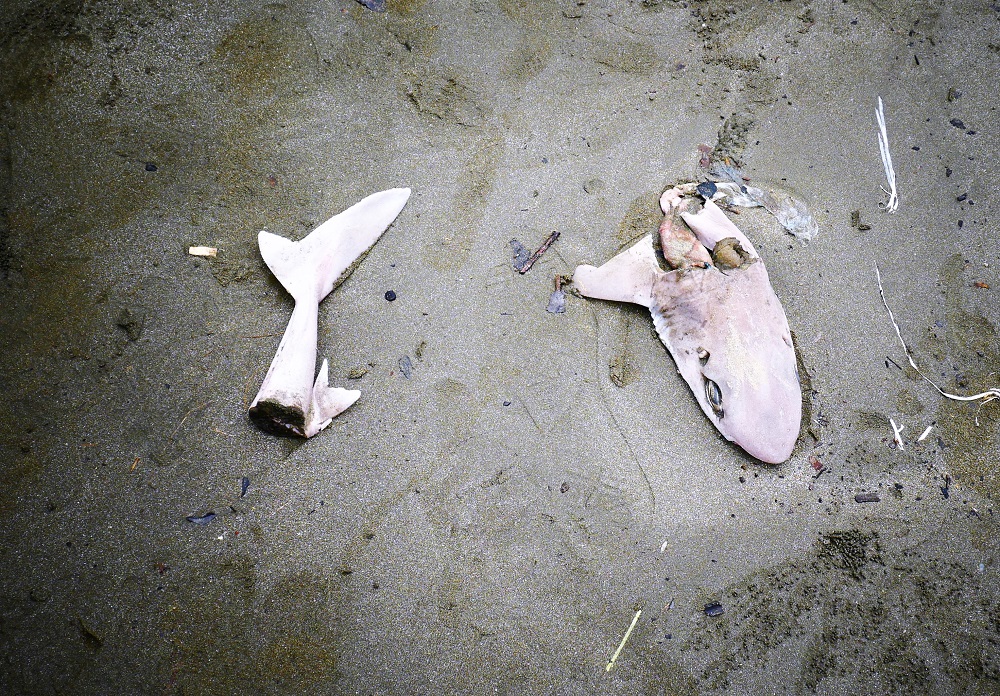
When interacting with locals here, our fish books are always a hit. Most people we meet are fishers and we have hour-long discussions about which fish we and they catch, what we see in their seas. In Pulau Widi, two middle-aged fishers came to our boat for a cup of tea, poring over fish books and our Indonesian Cruising Guide and excitedly discussing the sizes of the different fish they catch here as well as the ones they’re not allowed to catch. They can’t catch turtles, sharks, manta rays. Blast fishing is prohibited because it is bad for the reef, although we’ve seen evidence of it everywhere around Halmahera and Morotai, large patches of smashed up coral next to areas of thriving, live coral bursting with life. They laughed at the sounds of our children playing and asked whether we really only have two kids? When we answered yes, they laughed again, slapping David on the back as they held up their fingers to show how many they have – six and five, respectively. All grown up, back in Ganelua Village.
Are they Muslims, we asked? Yes, there is no mosque here, but there is one back in the village – everybody in Ganelua is Muslim.
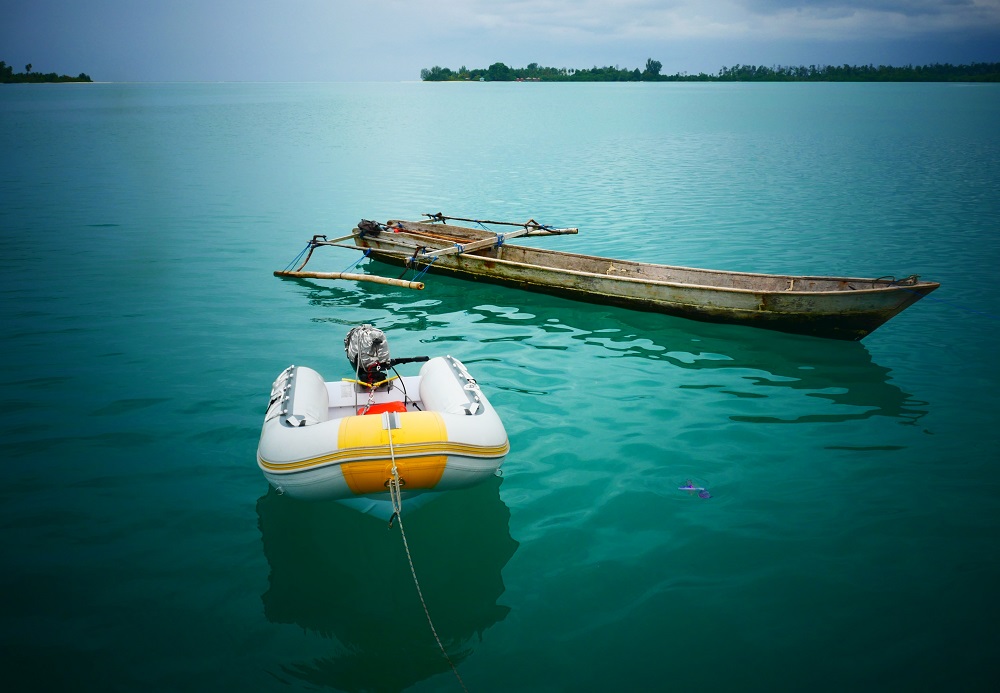


Pulau Widi was perhaps the serenest place we’ve ever been, and along with Morotai certainly the cleanest (no plastic pollution) location we’ve been in Indonesia – a glassy lagoon bordered by tiny, narrow islands, thousands of small white beaches backed by lush green jungle resonating with birdcalls. Mangroves line stretches of the little islands and herons took off and millions of fish jumped as we glided past silently on paddleboards. We hope that the tourists visiting the upcoming resort won’t disturb the peace and traditional way of life of the fishers in their stilt houses, but rather that they will benefit this community, create other means of income – at least for a while. I’m reading about climate change and am surprised to see anyone willingly want to copy the famously soon-to-be-under-water Maldives. Here, a major resort is planned for sites less than one metre above sea level; nowhere in Pualu-Pulau Widi is more than a couple of metres above sea level and the reality is that these atolls will all be gone in 50 years’ time. But I guess maybe there is some profit to be had in the meantime.
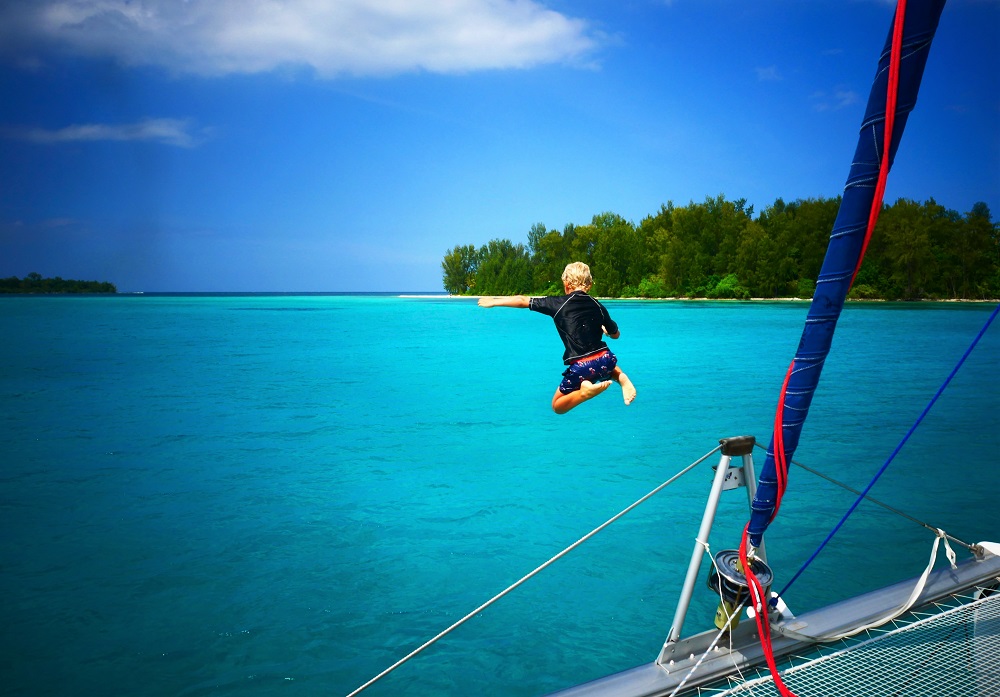
A couple of days later in Pulau Joronga, we were sitting stunned and numb, no longer noticing the eagle flying overhead, trying to process that a terrorist attack against Muslims has taken place in our country. We could only access snippets of news via satellite and learned that New Zealand is reacting by tightening gun laws and renouncing the Australian who carried out the attack. We feel awful for the families of the victims, for all the Muslims in New Zealand and for all Kiwis in general, who have had our peaceful country violated by the zealous hatred of a disturbed individual.
After the news had sunk in, we considered what it meant for us, travelling as we are in a Muslim country. We spent a day on the boat and on the beach, swimming and snorkelling, chatting to passing fishermen who brought us fresh drinking coconuts unprompted and without asking for payment. The people living there hadn’t heard the news – there was no internet there – and we tried to find out as much as we could about the Christchurch mosque attacks via satellite news before we got ready for the two-day passage to Ambon. The capital of the Moluccas, Ambon was the origin of the anti-Christian violence erupting in the Moluccas in 1990 and we’re nervous about how people feel there about this recent anti-Muslim attack. The anti-Christian sentiments in the more remote parts of Indonesia are fuelled by historic differences between neighbouring communities. But in larger cities like Ambon, there is always a risk of Muslim radicals, anti-westerners like those that engineered the Bali bombings back in 2002.
It is bad timing to go to a large Indonesian city less than a week after people have committed atrocities against Muslims in your country. Apprehensive about retributive violence we removed our New Zealand flag and covered up the large ‘New Zealand’ port of origin painted on our stern.
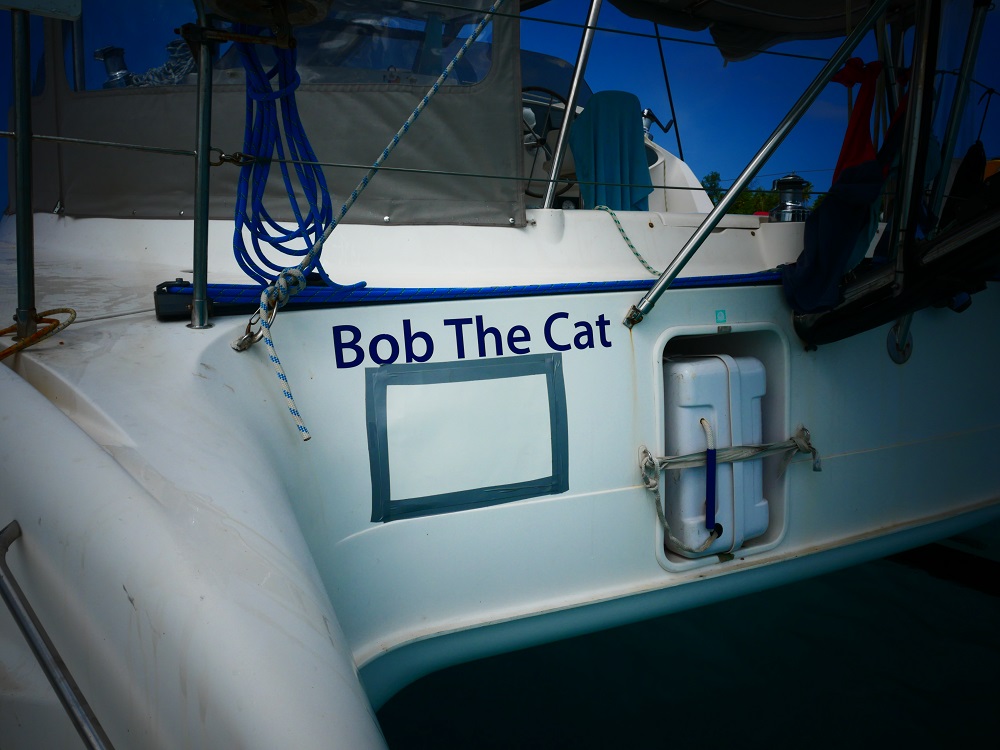
I looked at David. “Where should we say we’re from, if people ask?”
“Denmark?” he suggested.
“No. They did the Muhammad cartoons, they’re known in the Muslim world.”
“Well, it sounds like the attacker was Australian, so we can’t say Australia. And the US is out, obviously. UK is probably safe, but then there’s the history of colonialism. We could just say ‘Europe’?”
“Or how about Canada? They haven’t done anything to Muslims, have they?” David is Canadian by birth, so it wouldn’t be a total lie. “Or I could say that I was born in Iran.” After all the interrogation I’ve faced in western airports around the world whilst travelling with my Danish passport listing Iran as my birthplace it would be nice to finally be able to state that I was born in Iran and receive a positive response.
“Well, I’m not sure what the status of conflict is between Sunni and Shia Muslims. So maybe not.”
He’s right, we don’t know enough about it. So we resolved to say we’re from Canada if people ask and set off towards Ambon hoping that there were no Indonesians amongst the victims and that there are no crazy radicals residing in Ambon. As a minimum, we must spend three days there (that’s how long the visa takes to process), and with nothing indicating we’re from New Zealand we hope to slip below the radar of any discerning fundamentalists patrolling the harbour or walking the streets.
New Zealand will never be the same after March 15th 2019, and neither will we. Travelling the world as we do, we never take for granted the kindness of strangers, all the people of different countries, religions, and political persuasion that we meet who go out of their way to make our acquaintance. Such tolerance and kindness make the world a better place, and I am ashamed that Muslims in New Zealand were not safe from the vile hatred of the minority.
We can only echo the many when we say: Kia Kaha to all Muslims in New Zealand, to Christchurch, and to all New Zealanders who find their world forever changed by this senseless act. From here in Indonesia we too unite with you in grief.

 SV Bob The Cat