
After almost two months in Raja Ampat the time came for us to leave in search of new adventures and different scenery. Indonesia is huge and we could easily spend years here without seeing it all. We plan to be in Singapore by August, and if we want to experience even a fraction of this amazingly varied country, we’ve got to keep moving westward.
With this in mind, once our vegetables had run out completely and the time for visa-renewal was looming, we left Sayang in north-western Raja Ampat and spent a pleasant 24 hours heading west to reach Halmahera, an island in the north Moluccas.
Also known as the Spice Islands, the Moluccas reach from Banda Island in the south to Morotai Island in the north, more than 1000 islands spread over 850,000 km2 (of which more than 90% is ocean), spanning 420 or so nautical miles from north to south. The site of ancient local kingdoms, the Moluccas have been important for spice trade a thousand years, particularly for nutmeg and cloves which originated only on these islands. In the late 16th century after some fighting between the British, Portuguese, Spanish and Dutch, the Moluccas were colonised by the Dutch East India Company who remained in control of the area, and the astonishing profitable spice trade, until 1942.
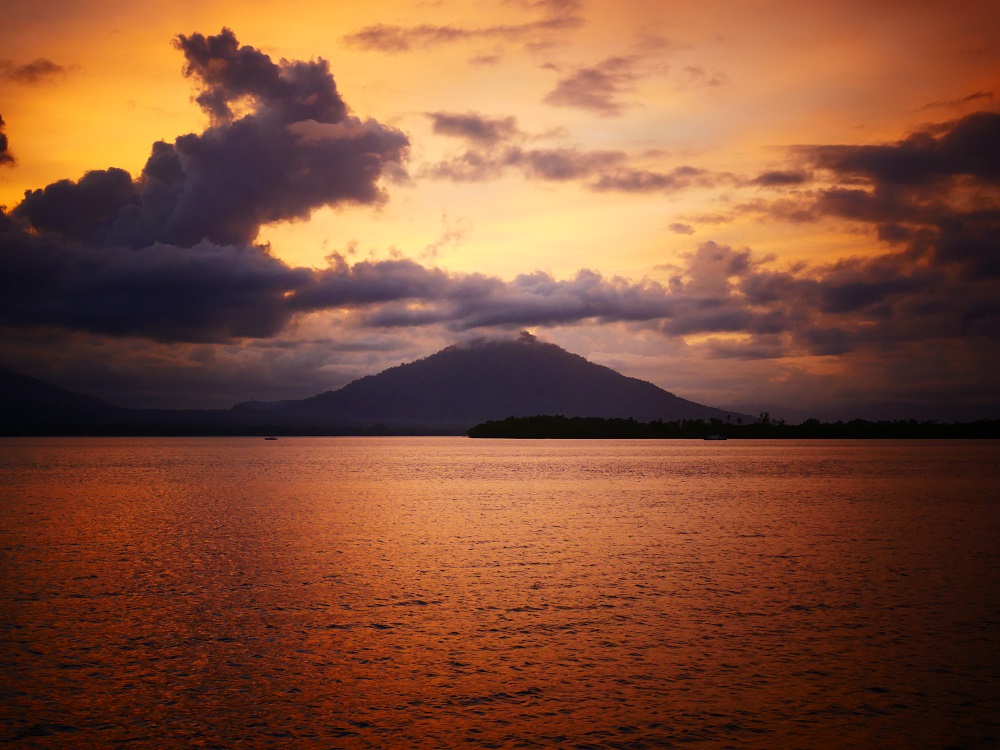
Halmahera, the largest island in the Moluccas, is a K-shaped island sporting no less than nine volcanoes, of which five are still active. Our first stop here is Tobelo, a harbour town on the north-eastern shore of Halmahera of large enough size for us to reach an immigration department office to do our monthly visa renewal. A bustling town set against the backdrop of a distant volcano, Tobelo has several supermarkets and a couple of fresh markets, and we spend a day putting our visa in for renewal, restocking with food supplies and refuelling.
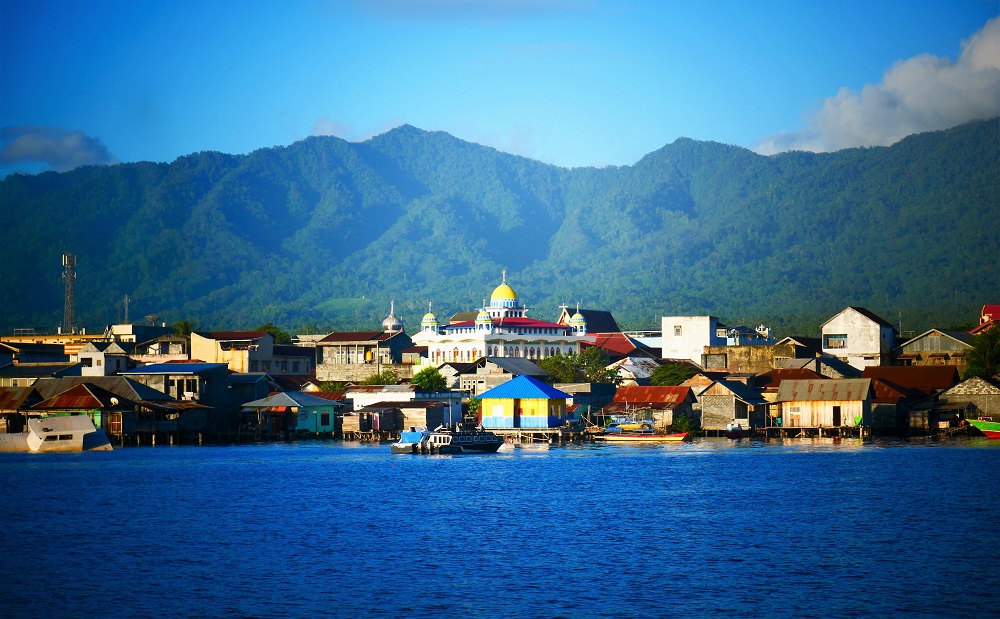
Tobelo is predominantly Christian, but a sizeable Muslim minority lives here and the town contains several mosques. In 1999, Tobelo erupted into religious violence as the Maluku Sectarian Conflict which started in Ambon further south swept north, seeing hundreds of people killed and ultimately leading to the displacement of most of the town’s Muslims. A fragile peace has since been established and many Muslims returned to the area, but Muslims and Christians still live segregated lives in Tobelo, and military outposts remain in some areas of Halmahera to prevent outbreaks of fresh violence.

Although it may be the minority faith, of the two religions Islam is definitely the loudest. When anchored in front of the town we are awoken by deafening melodic singing from the mosques at 5 am, so loud that it feels like a loudspeaker is installed in our cockpit. At sunset, three different mosques each broadcast their own muezzin calling to prayer, resulting in a cacophony of competing Arabic melancholic song reverberating across the otherwise quiet bay, and we can only imagine how loud it must be in town. The singing abruptly stops at 7 pm, after which the loudspeakers start broadcasting sentimental western pop music from the 1980s, including Celine Dion’s “I want you to need me” and Meatloaf’s “I would do anything for love”, and we imagine the sudden shift a result of a fist-fight culminating in some Christians, fed up with the Arabic prayer call, taking control of the microphones.

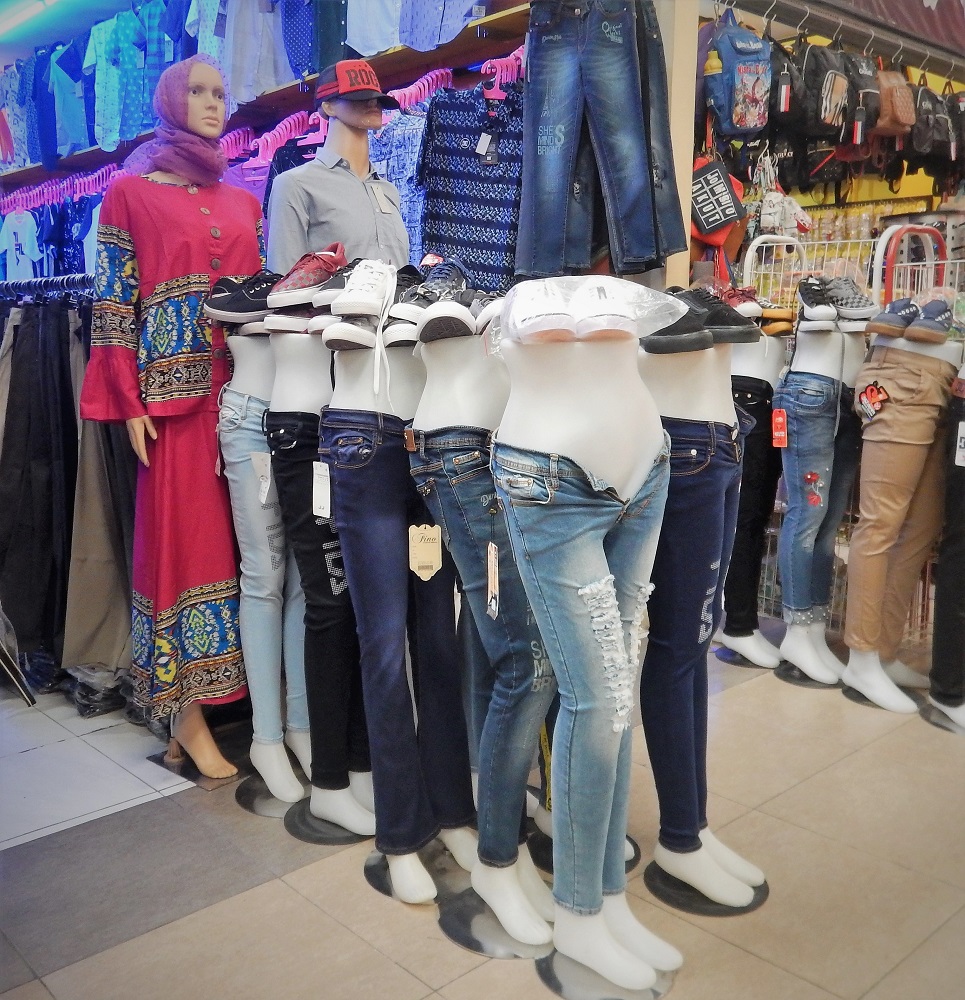
We don’t see any sign of violence and the population is incredibly friendly, calls of “Hey Mister!” following us wherever we go. As usual, the kids are a great hit with the local women, who frequently come up to exclaim at their blond hair and blue eyes, and Matias uses his charm to expertly navigate the local market, searching out the best fruit and vegetables. He’s learnt the numbers in Bahasa and is in charge of negotiation and payment when we buy fresh.


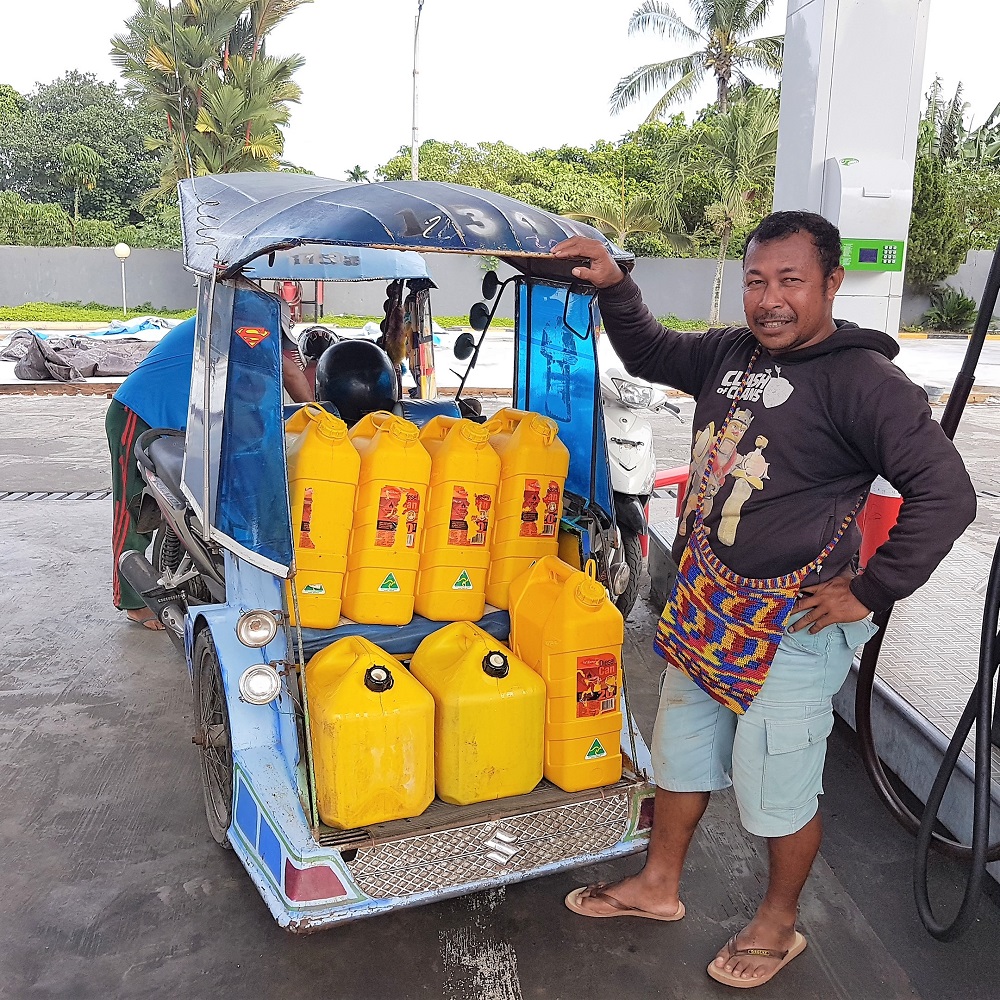
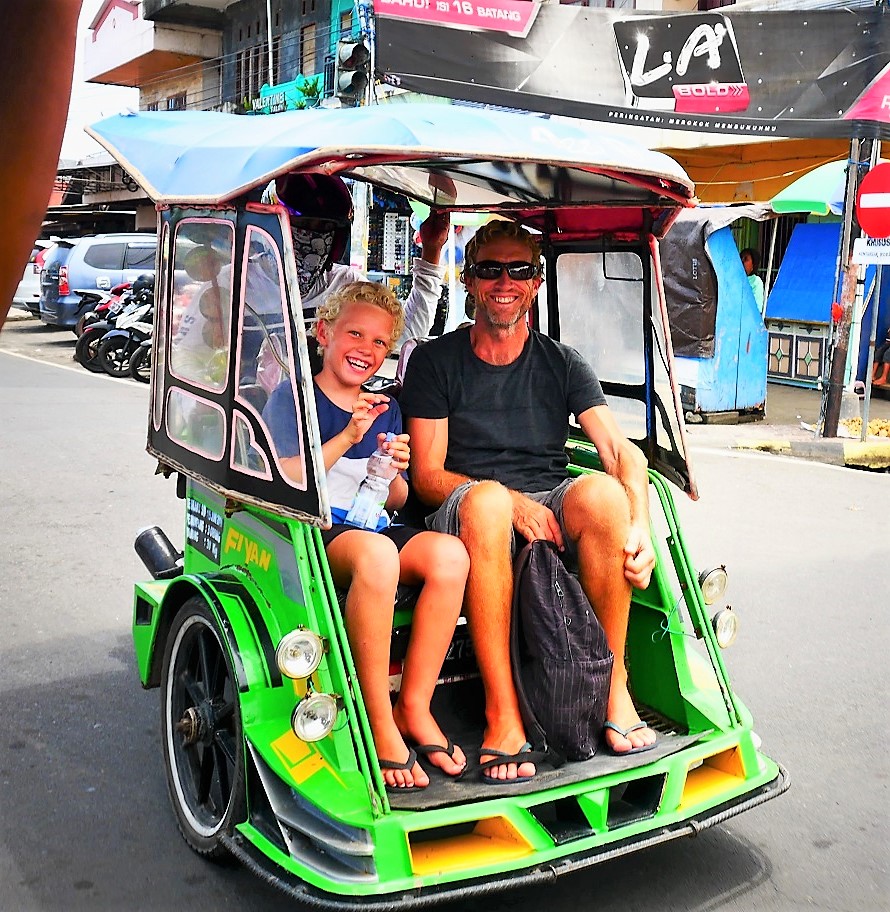
Transport in town is by bento, the local rickshaw taxis, which involve the passengers sitting up front where the risk of injury should a crash occur is highest. The drivers weave deftly in and out of traffic, expertly scaling steep driveways and potholed roads as they bring us and our heavy shopping safely back to the harbour. The petrol station is out of town, and when, armed with eight 20-litre jerry cans we attempt to hire a bemo, one of the shared car taxies, a bento driver talks us into refuelling by bento instead, a move that sees him transporting 120 litres of diesel on the front of his little bike whilst a second bento follows carrying us and the petrol.
We’re learning to cook Indonesian food and eat out at every opportunity to get some inspiration, using the newly found internet to download every dish we try. The kids have become experts at determining which dishes are least likely to be fiercely hot but the local patrons still laugh at them as they gasp and gulp down litres of water after every meal.
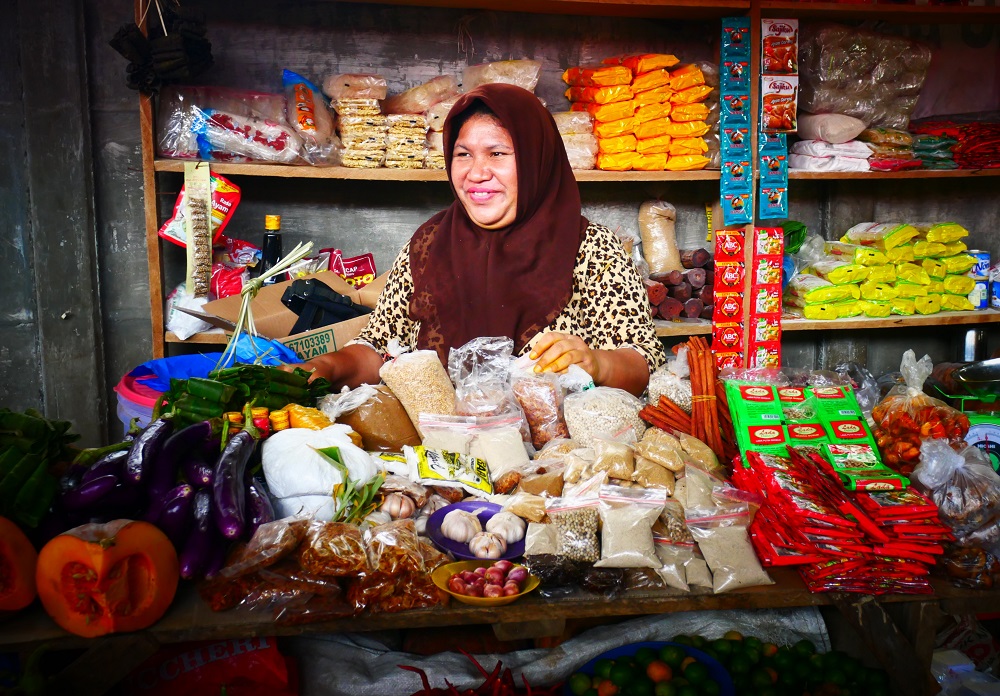
At the market we stock up on previously untried ingredients, buying laos (a local type of galangal), candle nuts, jerut purut (kaffir limes) and salem (a local aromatic leaf used in most Indonesian recipes), as well as several types of hitherto untested fruits.


During the three-day wait for the visa, we move to an anchorage a couple of miles from town, a quiet spot between sandy atolls with a nice surf wave and decent snorkelling. While there, we are visited by kids coming up to the boat in their dug-out canoes to chat and sell coconuts and mangoes.


“Hey Mister. Hey Mister, Mister,” they say as they offload a rock anchor onto our stern and climb onboard, curiously stretching their legs and peeking around corners to see how we live. They are from Kokara, the local village, and aided by Google Translate, we converse for hours in broken Bahasa about their lives. Sons of fishermen they fish too after school, and they proudly display their home-made wooden goggles and spearguns, as well as a meagre catch of six tiny bream, their families’ dinner tonight. We donate a spare kids’ mask and snorkel to a gang of three to help their efforts and they leave only to return the next day with a gift of six drinking coconuts.

Halmahera is charming and relaxed, and very different from the more Papua-dominated Raja Ampat and Triton Bay, the Indonesian regions we’ve seen so far. The volcanic backdrop lends welcome drama to the sandy beach palm-fringed island landscape, even if the ash deposited on deck every day gets a bit tiring to wash off. The eastern coastline means that there are lots of waves and a fair bit of wind. The other yachties we meet here are all hardcore Australian surfers, weather-beaten Queenslanders wearing broad-rimmed hats and boardshorts who have been surfing Indonesia for years and happily share their secrets, leaning heavily over charts to discuss surfbreaks and swell size, Bintang lager in hand.
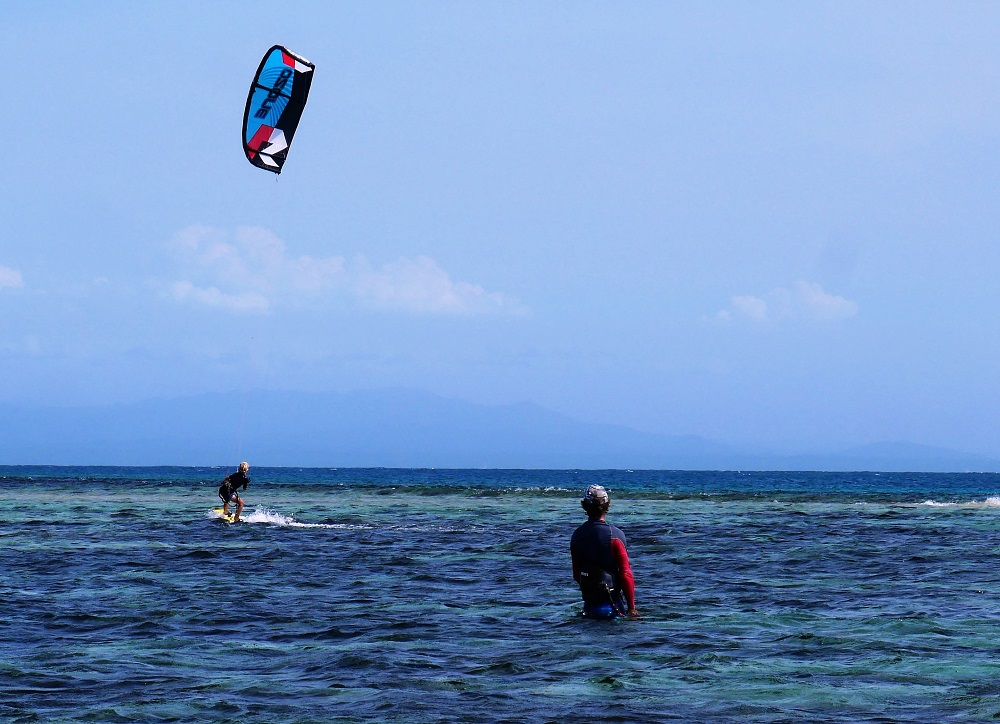
It’s a nice change from all the snorkelling, and we surf most days, with David even getting to do some wave kiting, his first since Fiji. And there is so much more to see: first we’ll head to Morotai Island in the north, and after that we’ll explore the southern shores of Halmahera, before heading further south in the Spice Islands.

 SV Bob The Cat