
Time flies when you’re having fun, and this week it is two months since we arrived in Indonesia. It’s been a great two months full of oceanic wildlife and beautiful islands, but all good things must come to an end and now it’s time to renew our visa.
“They do not make it easy for you, that’s for sure,” sighs David as he gathers the documentation required, stuffing folders into his backpack and smoothing his crumpled shirt with his hands. “I mean, the whole thing is so backwards. No other country makes you get fingerprints for a visitor’s visa. And to make us come back again and again, and the whole agent thing. So time consuming!”
“I’m sure the US wants fingerprints…” I respond.
“Yes, probably, but unlike the US you would have thought they would want visitors here, what with tourism being a big earner and all.” He sighs again and sits down to put his shoes on, sweat pouring down his face. “I mean, the whole agent thing – that is just so ridiculous!”

It’s 10 am and 30 degrees C in the shade. There’s an overwhelming stink of dried fish in the air, the sun is beating down mercilessly and we are getting ready to go ashore to the immigration office. In Indonesia it is important to dress formally for such occasions and David is wearing long pants, shoes and a shirt, which is a lot of clothes for the weather. For women, the dress code is less onerous – as long as I look tidy and my knees and shoulders are covered I won’t offend anyone. The kids are wearing clean t-shirts and shorts and have washed for the occasion.
David is right. Indonesian visa procedures are ridiculously complicated; the bureaucracy here is energy sapping and relentless. There are a couple of visa options for yachties wishing to cruise in Indonesia. On arrival in all but the bigger ports you can only get a non-renewable one-month visa, so most boats opt to get a visa prior to arrival which gives you an initial two months in the country, and which thereafter can be renewed every month until you’ve been here for six months. We organised our visas through the Indonesian Embassy in Port Moresby, which required multiple copies of many forms and two visits to the embassy. In the past the two-month visa required a letter of support from an Indonesian citizen. This rule was changed in 2017 and the changes posted on the Indonesian Immigration Department’s website. However, frustratingly, most embassy officials and Immigration officers haven’t caught up with the changes, which means that a letter is still required when obtaining the two-month visa in most locations. Of course, many visitors don’t know an Indonesian citizen, but fortunately there are a host of ‘agents’ whom you can engage for $75 to type a letter stating that you are of good character and that they vouch for you. It seems pretty crazy that you can pay for someone to vouch for your character, but the embassy in Port Moresby wanted a letter, and so we engaged Raymond the Agent, paid the money and got the required document.
Multiple copies of passport photos were also required; for some inexplicable reason these had to be against a red background, which added a fair amount of hassle as we stitched up red t-shirts as background and played with camera settings and facial expressions until we had the required deadpan look just right and looked like a family in dire need of antidepressants, yellow faces with sombre expressions against a blood red background.

Predictably, renewing the visa involves a whole new set of bureaucratic hoops we have to jump through. We have to visit an Immigration office, which in Raja Ampat means a trip to Sorong, the provincial capital located on the westernmost point of the island of New Guinea. Once again we need a letter from an agent for each family member and these letters each require a Rp 6000 (~60 cents) stamp placed on top of the agent’s signature, necessitating a visit to, and patient queueing within, the post office before the whole-day Immigration Department operation which involves filling in numerous new forms, the entire family getting fingerprinted and vetted and depositing our passports with the department for three days while they assess our case.
Three days in Sorong means that we might as well get on with some shopping and other city matters, and we have a long list of errands that we slowly work our way through. Thankfully Indonesians are some of the nicest and most helpful people we’ve met, and the frustrations of the bureaucracy are more than made up for by the loveliness of the general population.

The history of West Papua is conflict-ridden and bloody. Originally settled by Melanesians 40-50,000 years ago, the area was colonised by the Dutch in the 1600s and formally became part of the Dutch East Indies in 1824. Except for a period of two years during the Second World War when Japan occupied the northern part of New Guinea and surrounding islands, the region remained under Dutch control until the 1960s when Indonesian began muscling in on the territory in its bid to subvert western imperialism. At this stage the Dutch had been training Papuan independence forces for more than a decade, and following bloody conflicts the United Nations worked with the parties to plan a transition to Indonesian rule against assurances that the local population would be allowed to vote about independence at a later date. This date never materialised, and the subsequent heavy-handed thwarting of the Free Papua Movement by Indonesian military forces where an estimated 500,000 Papuans were killed and many more attacked, imprisoned and tortured, is officially known as the West Papuan genocide. To further Papuan ‘integration’, the 1970s and 80s’ Indonesian Government state transmigration programme saw tens of thousands of Javanese and Sumatran migrants settle in West Papua, and nowadays the population in the region is a mix between the native Papuans and Asian settlers.

Sorong is a bustling town and the logistical centre of the region’s booming oil and gas industry. The population is about 200,000 and growing exponentially which leads to a city bursting at the seams. The streets are teeming with motorbikes and cars and dusty building sites line the roadside.
About half the population are Papuan (of whom the majority are Christians) and the other half Javanese / Sumatran (mainly Muslims). Mosques and churches grace the hillsides and veiled Asian women wearing facemasks walk alongside Papuans clad in shorts and t-shirts. Children, cats and small street-side vendors are everywhere, the smells of deep fried fish and chicken wafting from the numerous small shacks advertising nasi goreng (fried rice) or mie goreng (fried noodles) lining the road.
Not knowing any Bahasa makes every shopping mission an adventure and we are eternally grateful to Google Translate which works a treat. Everywhere we go we type our English questions and read them out in broken Bahasa to patiently waiting shopkeepers and passing pedestrians who go out of their way to help us locate anything from dive tank fills to boat parts to specialised medical services.
And so we spend hours sweatily walking up and down hot and dusty streets, stepping over skinny cats with sappy eyes listlessly lying on piles of decaying rubbish wedged into the dry soil, ducking in and out of tiny, dark shops, the kids reluctantly trailing behind us as they are mobbed by crowds of eager selfie-seekers. We tour the town in bemos (local shared taxis), leaning over drivers’ shoulders to display Google Maps of where we’re going, communicating via sign language and our limited Indonesian directional phrases (‘left’, ‘right’, ‘stop’), smiling and nodding and thanking profusely every time we reach the desired location.
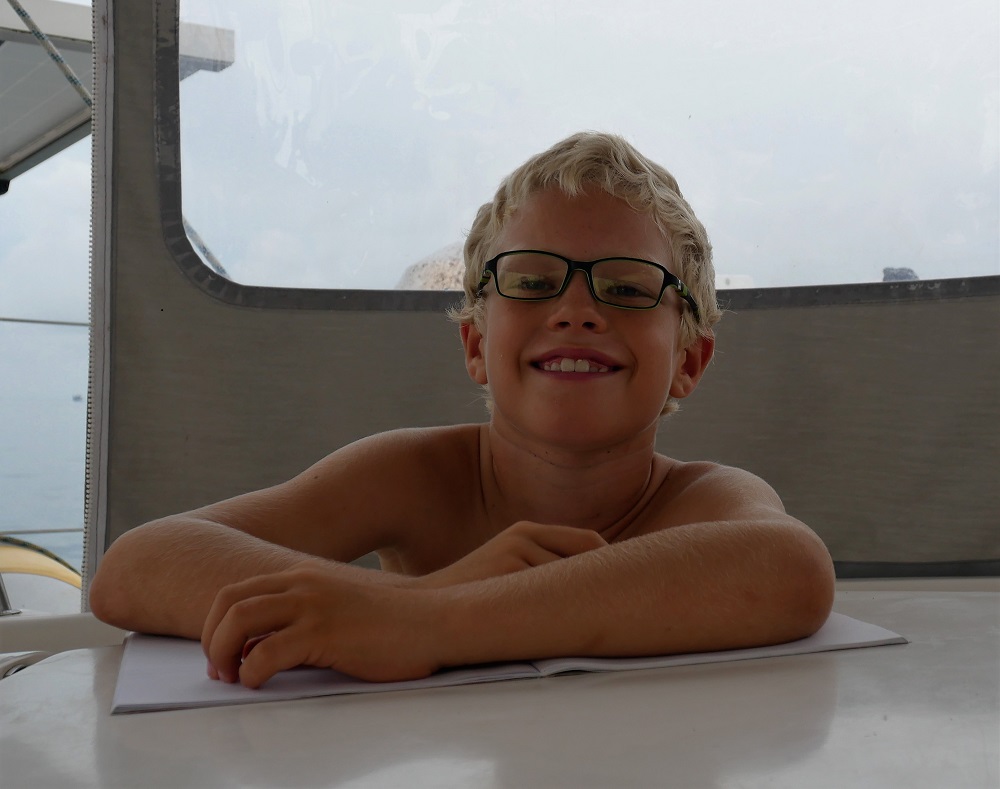
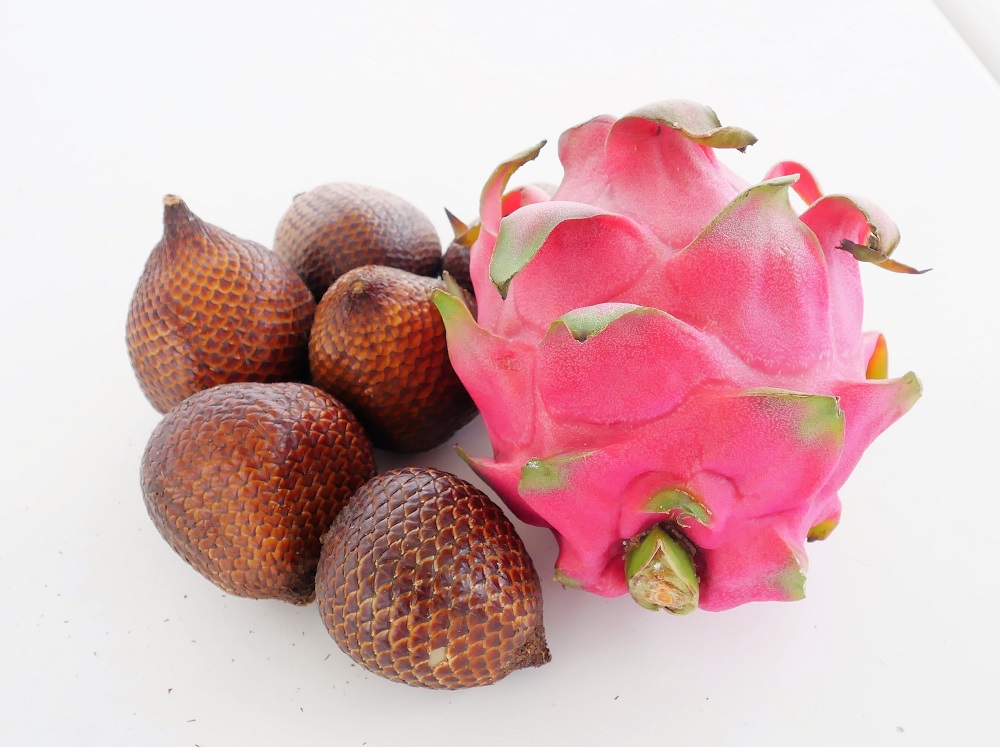
We visit an optician to get glasses for Lukie whose eyesight has lately deteriorated and walk out half an hour later with a prescription (-1 in both eyes) and a snazzy pair of glasses. We see a dentist to discuss what to do with Matias’s baby molars who are not budging even as the permanent teeth are coming out beside them, and fifteen minutes later we leave the premises, five baby teeth lighter and carrying a bottle of paracetamol and a course of antibiotics. A friendly nurse at the dentists goes out of her way to take me to an ophthalmologist so I can have my eyes tested while David oversees the negotiations with the dentist (there were none – he didn’t speak English and looked determined, so out the baby teeth came). While I’m at a department store with the kids shopping for hats and flip flops, David scours the town by bemo to locate boat parts and plumbing bits. We eat in food courts and roadside eateries, trying ten delicious tofu and tempeh dishes and breathing fire from the hot side-dishes involving chopped up greens, garlic and copious amounts of chilli. We find oats, butter and cheese (not available anywhere else in Raja Ampat) and stock up on frozen chicken, fresh fruit and vegetables.
In a blur of heat and a soak of sweat three days whirl past and as I’m getting the last of the fresh provisions David collects our passports, after which, exhausted and smelly, we’re ready to leave the city behind. We have a month until we need to be back to renew the visa again, and armed with a tonne of provisions and having warded off the worst of the medical emergencies, we are ready to say ‘so long, Sorong’.
 SV Bob The Cat