“So how much does it cost to be a guest on your boat?” I asked.
“Too much for me to pay,” said Saman. He sat down next to me. “I don’t know if is a lot of money for you, but is expensive for me.”
“I’m sure it would be expensive for me too.” I leaned back against a log of wood and looked out over the small sandy beach where his fellow crew members were busy setting up for a beach barbecue. “How many guests have you got?”
“At the moment we have six,” he said. “A family from France. He is the owner of the Juventus soccer team, and his wife and children.”
“Wow,” I said. “That does sound expensive. How many crew?”
“We are 17.”
“That’s a lot of crew for six guests.” I shaded my eyes against the sun, which was lowering in the sky. On the beach, the crew were setting up table and chairs, and a sun umbrella for shade. “What do they do, the guests? Do they dive?”
“No, these guys they surf. And some kayaking and some snorkelling.” He stretched his legs and we sat together watching one of his colleagues stick tall, wooden candle holders into the shallow water, carefully placing a tealight into each. Another uniformed crew member was busy hanging woven palm leaf art delicately from the surrounding trees. A third was raking the sand, artfully rippling it along the shoreline. “We spent three days near Sorong where there is a nice wave for surfing.”
“Oh, is there?”
“Yes, just a small wave. We have surf instructor on board. Some guests come for diving, some just to relax. Last year we had Tom Cruise come for ten days, and before that Tony Blair. They pay US$18,000 per day per guest.”
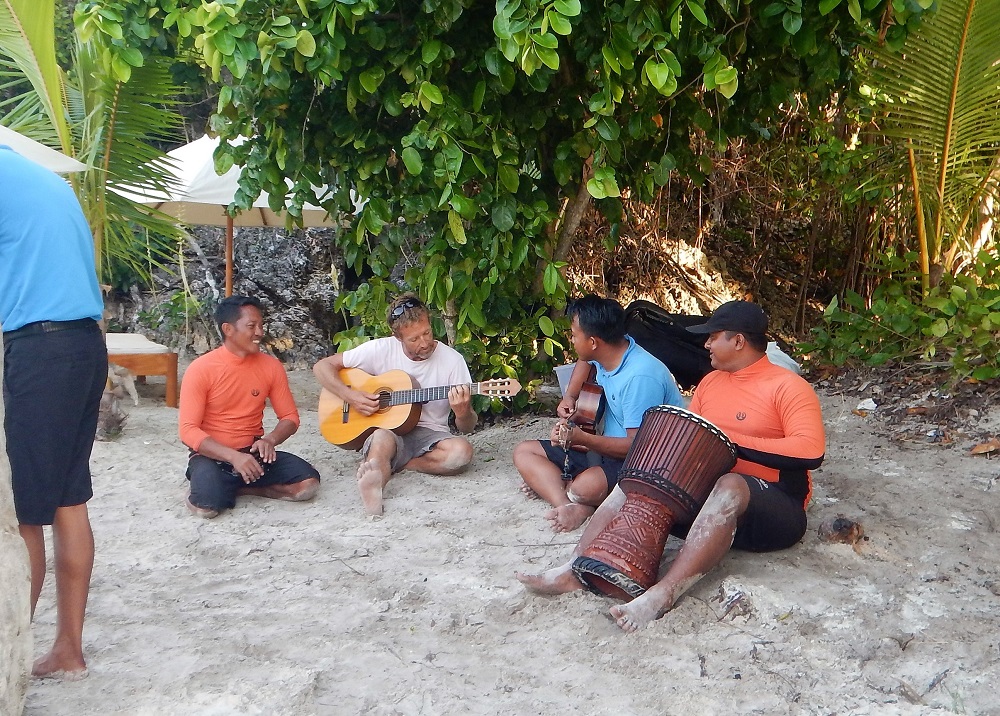
“Wow, that is expensive,” I said. “And this looks like pure luxury.” I indicated the beach which by now had been completely transformed, from a deserted strip of white sand bordered by wild vegetation into an elegantly manicured al fresco dining venue. A wooden table topped by a white tablecloth was set with silverware, porcelain plates, and glasses glinting in the fading sun. A tall flag swayed gently in the breeze. Driftwood sticks bundled together and fashioned into trees had been erected every few metres; from each branch hung a small rice paper lamp with a candle inside. A barbecue had been started, the smoke filling the air, the charcoal glowing, and cool-boxes containing meat and vegetables had been unpacked. Drinks were displayed in a large basin filled with ice, and over the gentle gurgle of small waves lapping gently against the limestone rock, three crew members were tuning their instruments, getting ready for the dinner performance.

“Are they nice, the guests?” I asked.
“Well, they don’t like to talk to us crew. They never shook our hands when they arrived, they only introduced to the cruise manager.” He looked sad. “Many of our guests are like that, they don’t introduce. But there was one, from Mexico, the producer of a tele-novella. He introduced and used to stay up and talk to us in the evening.” In the approaching dusk his face lit up at the memory of the one nice guest they’d had that year.

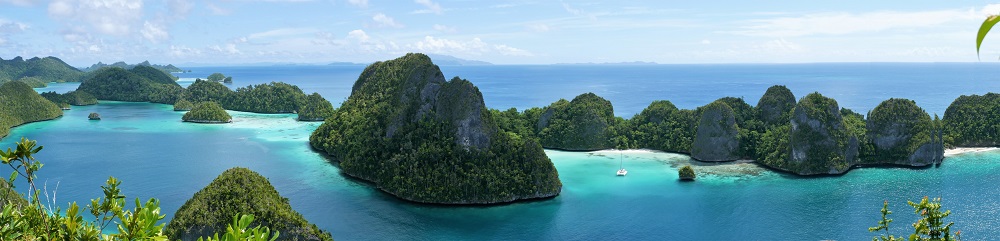
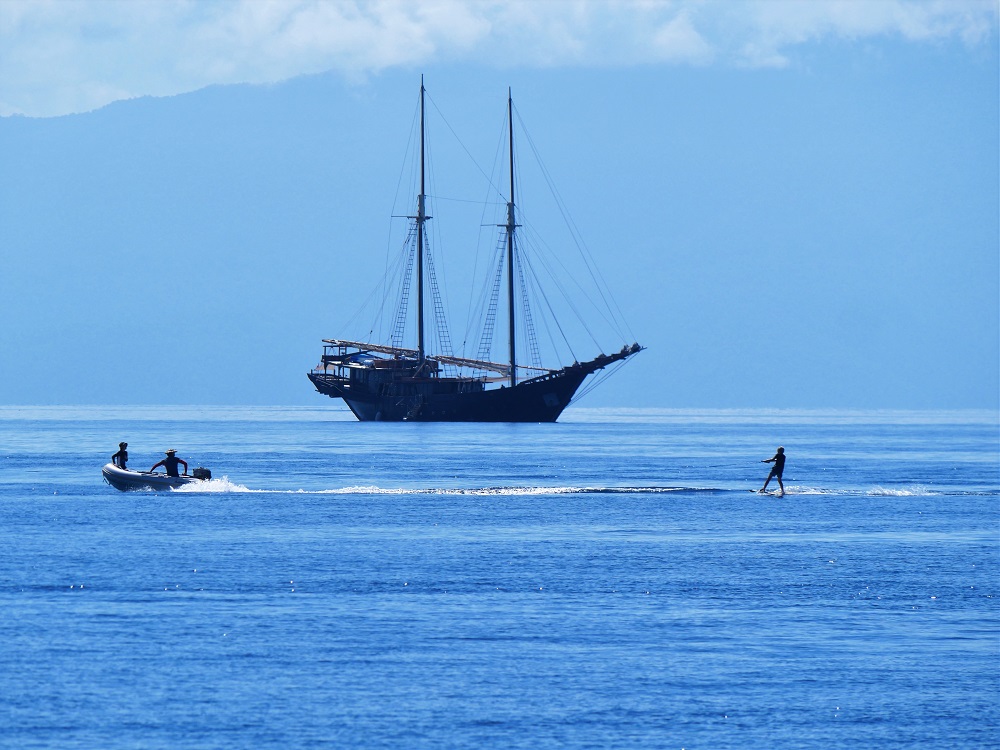
We were in the Wayag island group in northern Raja Ampat, eastern Indonesia. We had been having a sunset bonfire with some yachts on a tiny sandy beach when the crew of a luxury phinisi came to the beach. Traditional Indonesian sailing boats, the phinisi are used for charters throughout the country, and this boat was beautiful: 30 m of shiningly polished wood, elegantly shaped bowsprit, festively adorned interior and exterior.
Cruising is interesting in the way that it joins the rich, the poor and everything in between. Boats symbolise escape, freedom and exploring, appealing to adventurous and anti-establishment sailors alike. They also cost lots of money and as a result are a preferred vehicle for showing off amongst the super-rich. The ocean belongs to us all, and in our search for calm anchorages of serene beauty, astonishing wildlife and the potential for water sports, throughout the Caribbean and Pacific we have shared anchorages with gleaming superyachts and berthed in marinas next door to 40-metre floating mansions which are seemingly constantly being cleaned by large crews of staff wearing matching caps, polo-shirts and docksiders. We have kite-surfed with the Google founders, and ridden Richard Branson’s waves on Necker Island. In other words, wherever you go on a sailing boat in the tropics, you tend to meet the other 1%.
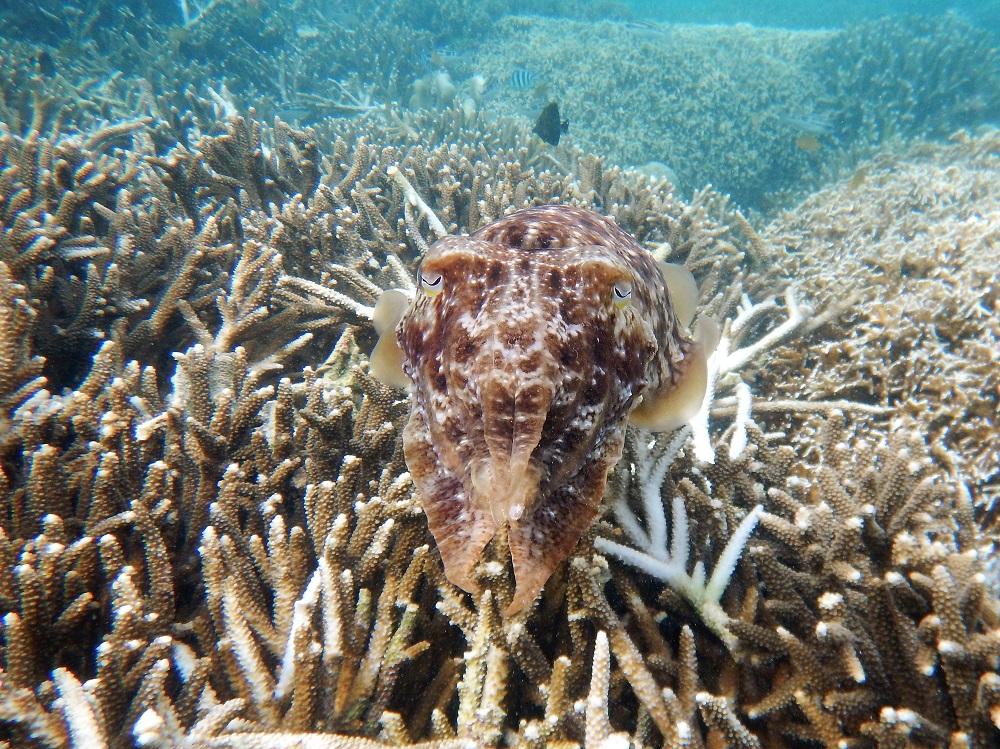
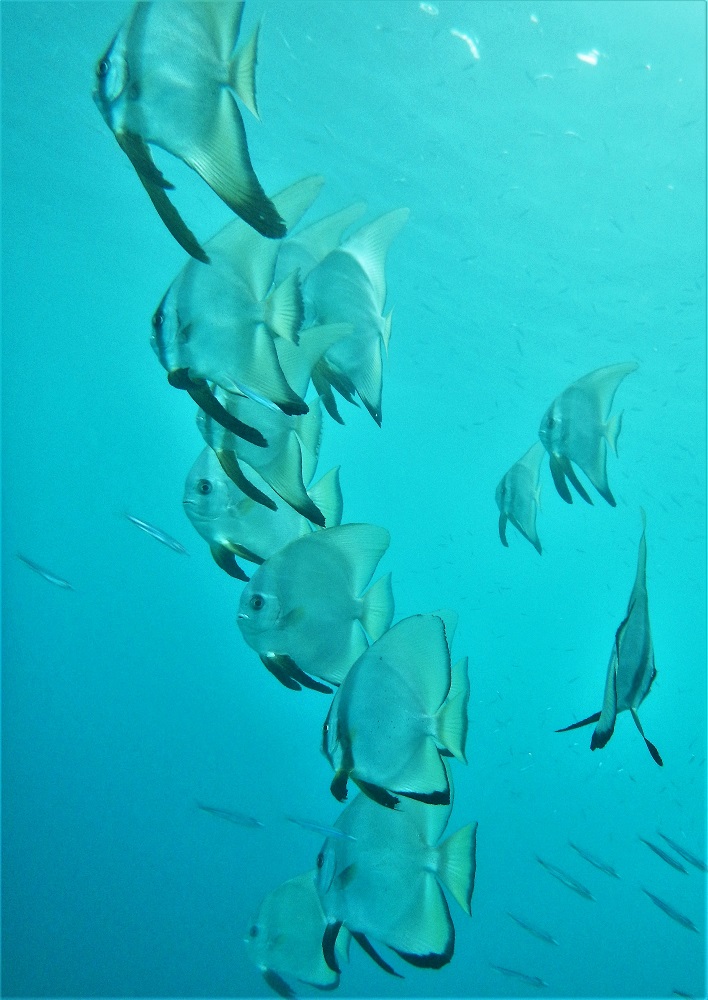
On Wayag Island, I reflected that it is easy to understand why the rich and famous come to Raja Ampat. Named for its four main islands (raja = king, ampat = four), the region is an area of unparalleled beauty renowned for its wildlife. It covers an area of over 4 million hectares, mainly marine, of which just under 1.5 million hectares are protected. Tourism is a main source of income, and much of that is diving: at the heart of the coral triangle, Raja Ampat is home to about 1500 species of reef fish and more than 550 species of coral, and is an important area for turtles, whales, dolphins, dugongs, sharks and manta rays, as well as saltwater crocodiles.
Since our post-Christmas provisioning, we had been island-hopping, exploring Raja Ampat, and even having seen just a fraction it was obvious why people with unlimited wealth flock here: it is a special part of the world.
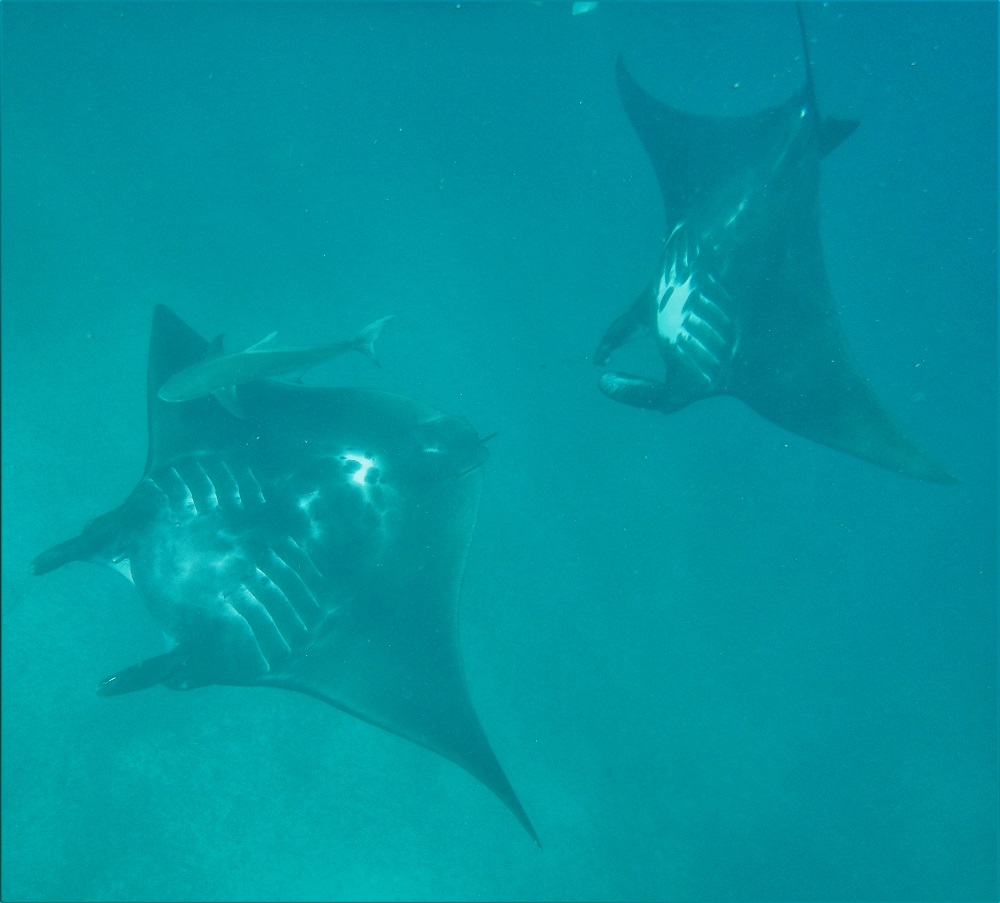
We spent time in Airborek, a small, sandy island in the Dampier Strait famous mainly for the incredible diving in the surrounding waters where manta rays frolic in the fertile waters. Here, the mantas were everywhere, their wingtips breaking the still surface waters of the anchorage in the early hours of the morning, their airborne acrobatics grazing the skies in the afternoon (apparently they jump in the hope that the landing will slough off some of the external parasites thriving on their skin). Wherever we went snorkelling they would join us, skimming the surface waters with their huge mouths, slurpily ingesting the tiny plankton that fuel the incredible marine fertility of the area. For the first time we saw black mantas, which are black inside and out, the only light feature on their bodies the pale grey shark suckers that clung onto their jet-black underbellies for the ride.

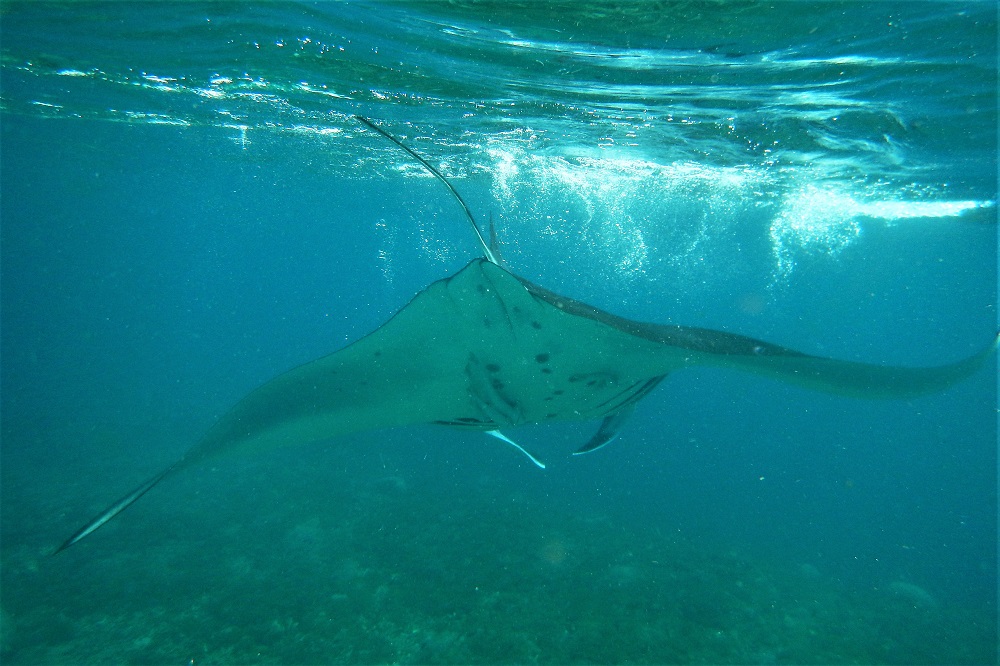
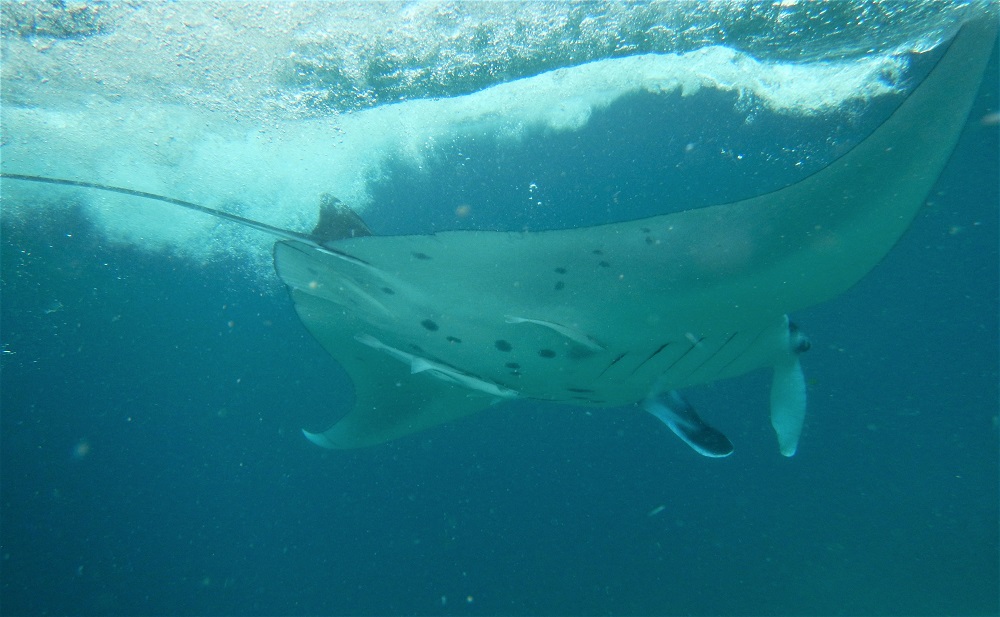

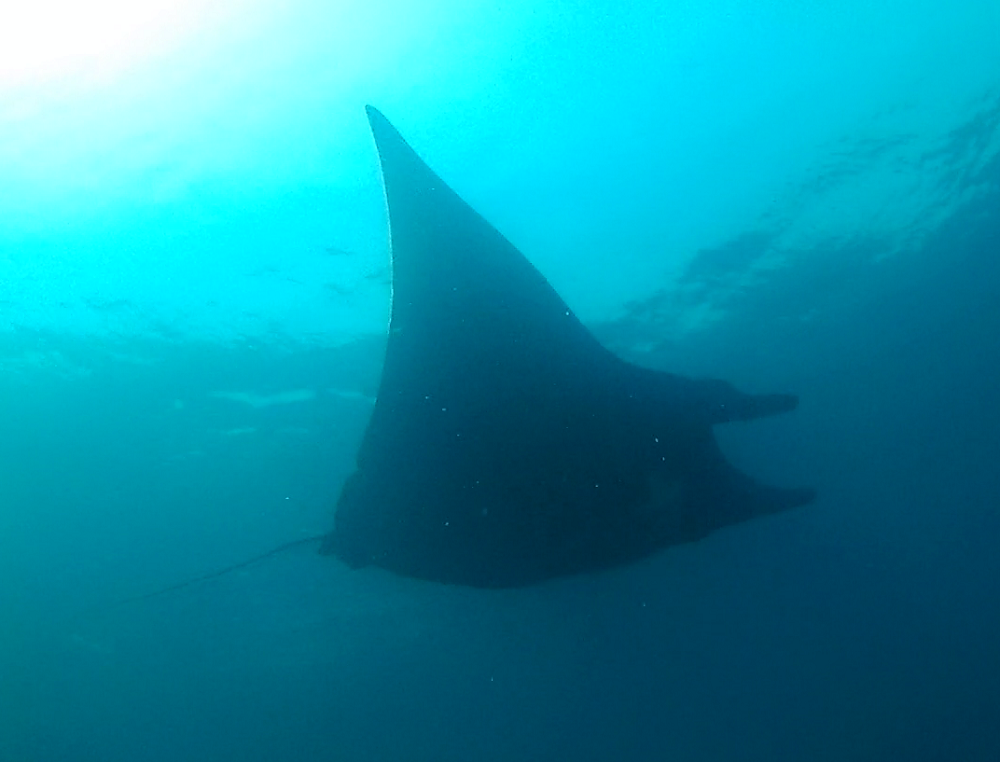


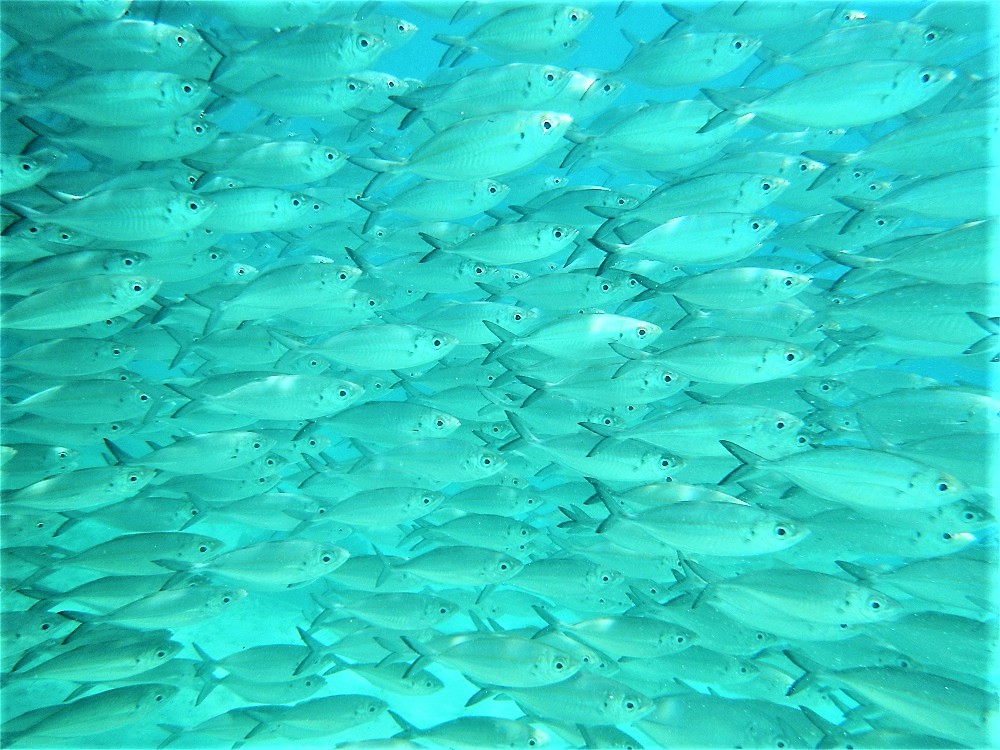
We met more mantas at Eagle Rock, a set of relatively remote rocks rising steeply from the deep sea where local upwelling and strong tidal currents make for excellent diving. Unprotected, the anchorage only works in extremely calm weather and we were lucky to be able to spend several days parked in the middle of a huge marine feeding frenzy. Here, insane amounts of fish gathered around the current-swept rocks, huge humphead parrotfish chewing away at the coral on the bottom, and large tunas, trevallies and sharks slowly patrolling mid-water amongst millions of smaller fish, the schools of which at times were so dense that you could see nothing else. The anchorage boasted an embarrassment of manta rays; no matter where or when we jumped in the water they were there, gliding by, mouth agape, ingesting plankton, hovering over cleaning stations whilst tiny wrasse were busy nibbling off parasites. Curious by nature, the mantas sometimes came so close that I worried they mistook me for a mate.



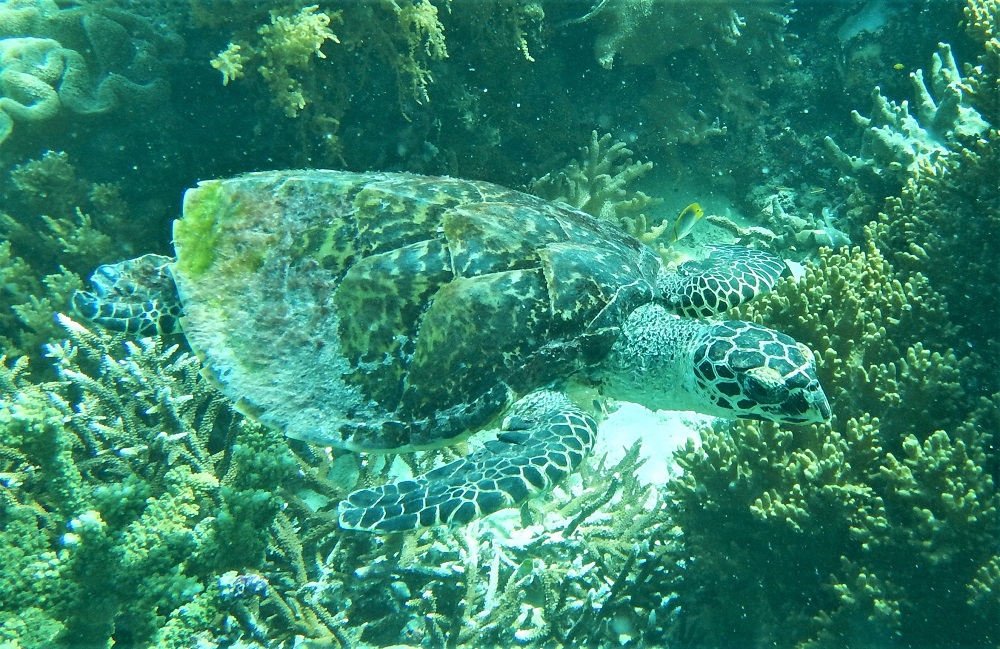
We did more snorkelling in the pass off Yangelo island, along the sides of which lies a lovely coral garden where the visibility was astounding and turtles glided by silently, not scared at all.
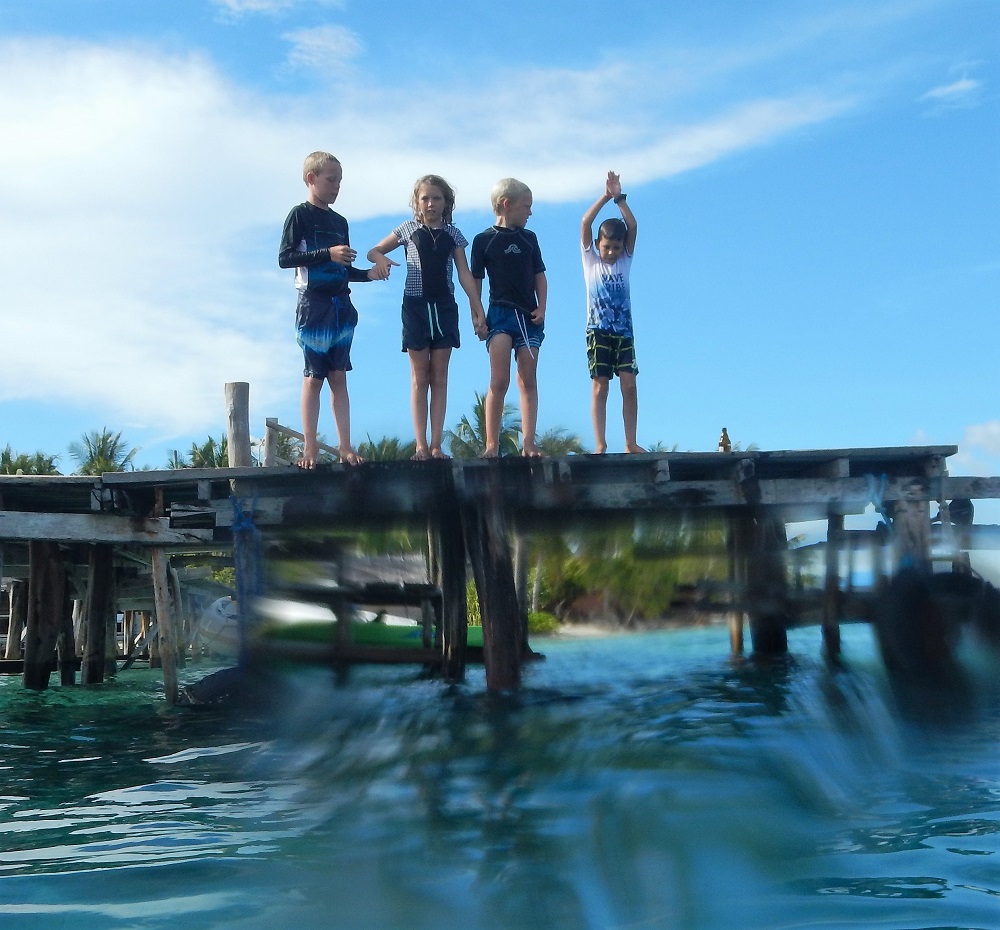
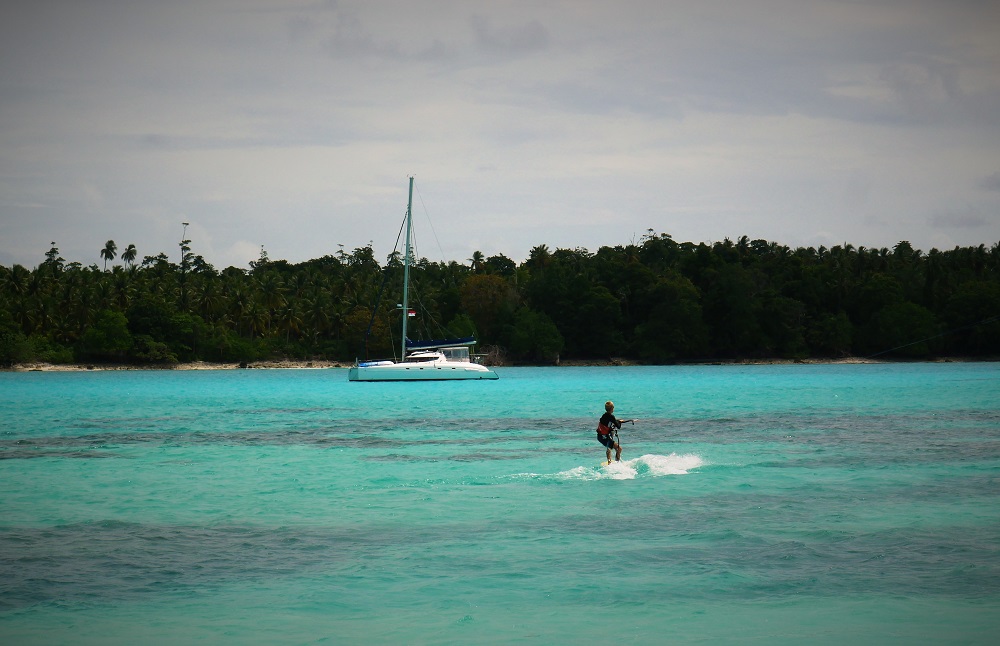
We visited Sayang in the far north, a low-lying island fringed by endless white beach bordered by a huge turquoise expanse of shallow water, the perfect kite spot for which we were sadly lacking a convincing breeze, but where we nevertheless enjoyed sharing an enormous natural swimming pool with only one other boat. The island is a protected turtle breeding sanctuary, and when the kids were surfing the shallow reef break not far from the anchorage, scores of turtles fled their shadows.



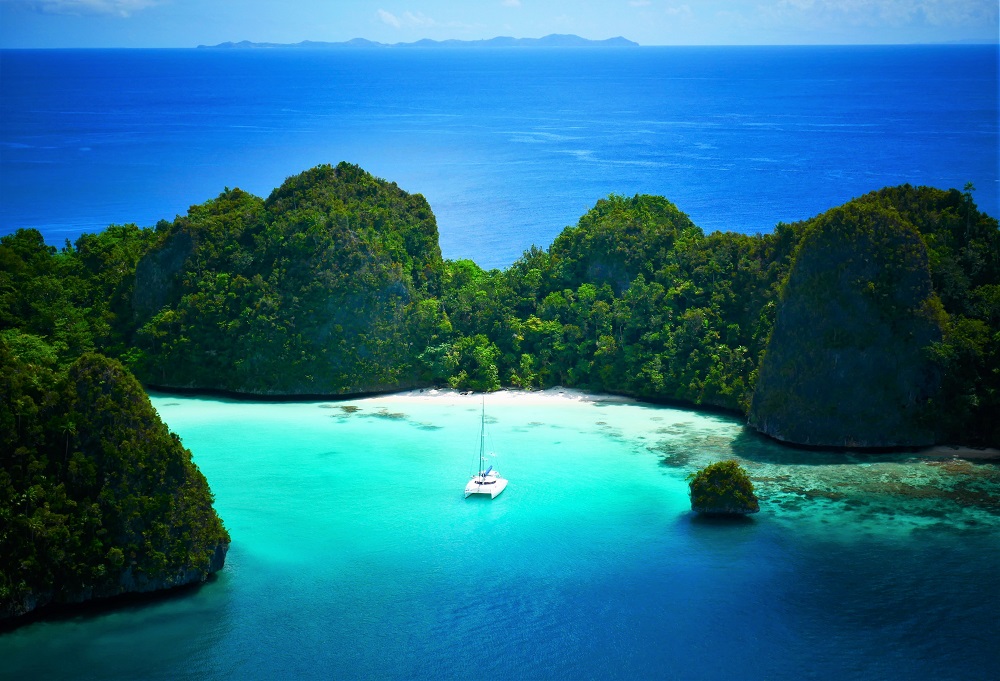
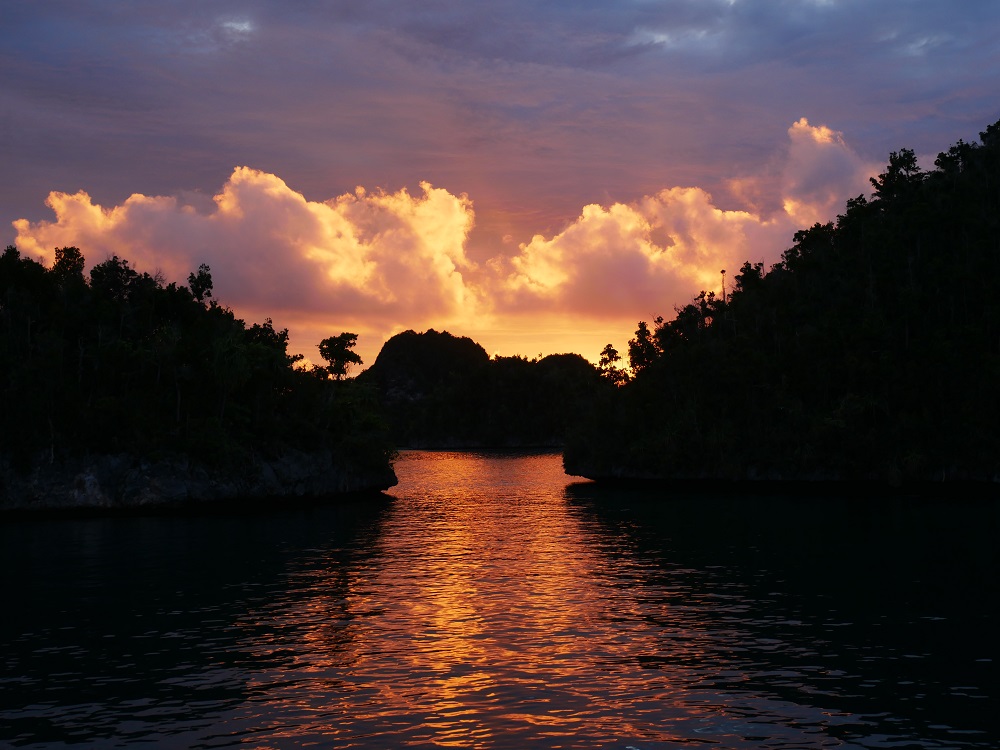
And we relaxed in Wayag, enjoying its deep, still lagoons of green-blue water surrounded by limestone rock, created five million years ago by industrious marine organisms and uplifted 1.8 million years ago to form sharp, vertical cliffs riddled with holes and undercut by waves. Topped by vegetation, the karst cliffs are remarkable and the area felt prehistoric, the rocks taking on shapes of faces, the tree trunks resembling dinosaurs, the frigate birds becoming pterodactyls soaring in the skies.


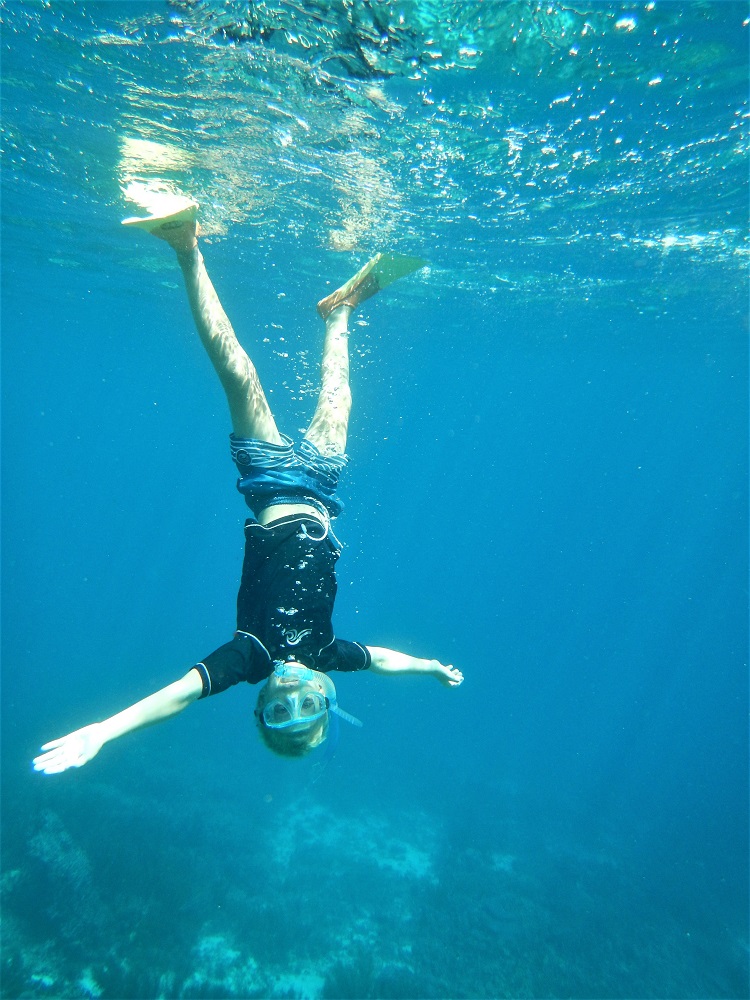

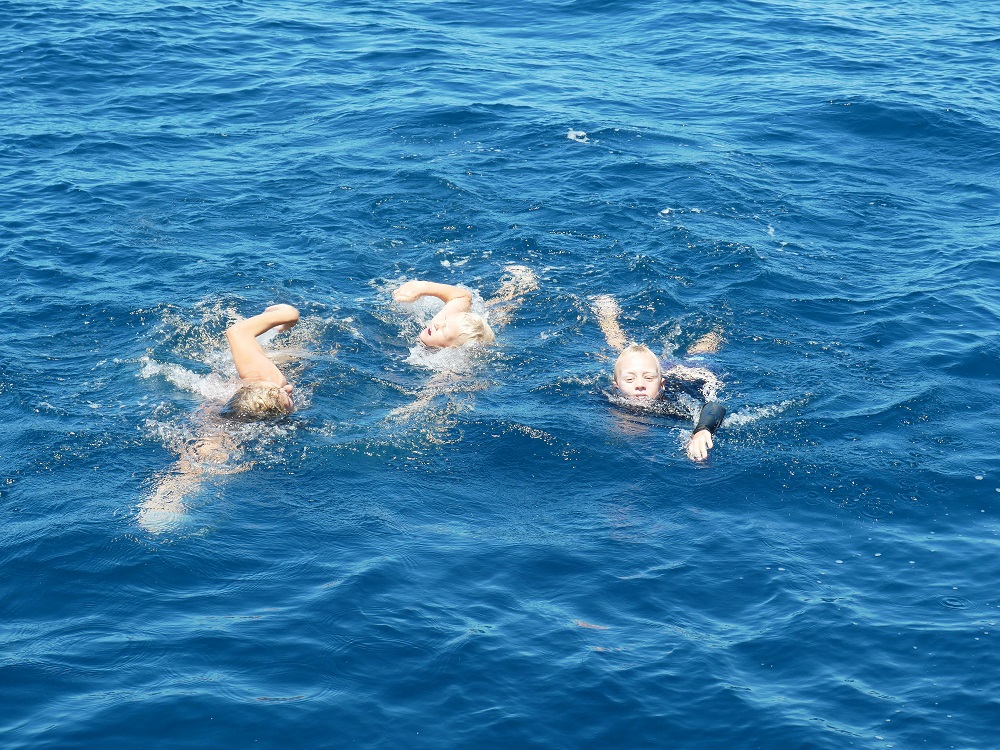
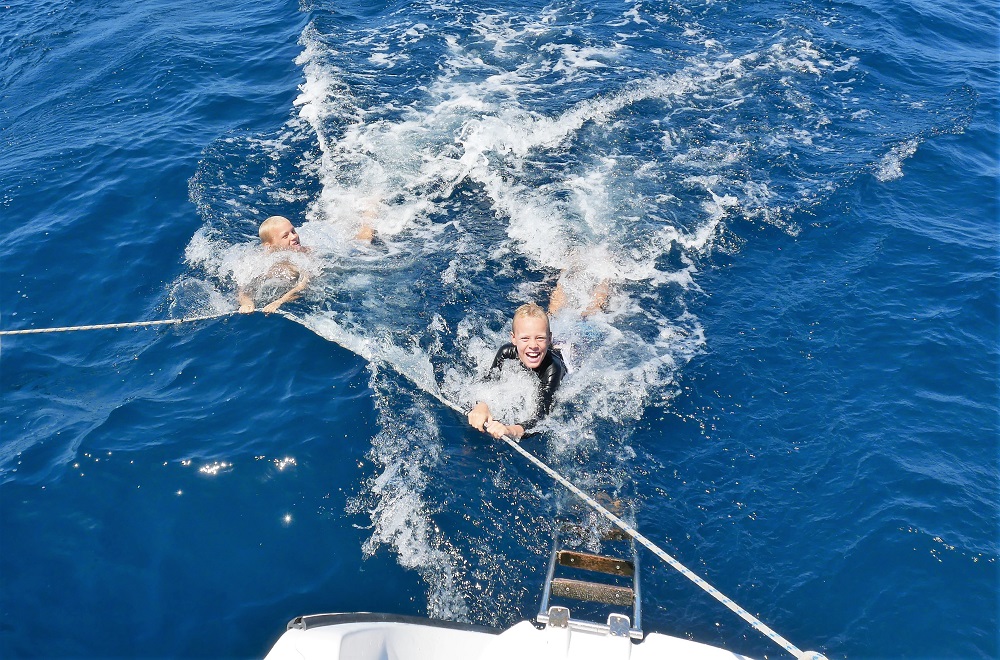
Whilst exploring, we crossed the equator from south to north and back again, sailing across the imaginary line the first time, swimming the next, the kids and I racing each other from one hemisphere to the other.

The Raja Ampat we saw was idyllic and dramatic, breathtakingly beautiful, and a wonderworld for anyone who enjoys marine life. Despite the large fleets of phinisis introducing hundreds of tourists to the popular dive spots we never felt crowded and were often alone on the beach and in the water. There were only a handful of yachts, and the beautiful anchorages were seldom crowded.

The only downside to this priceless destination is the plastic pollution. Even in the middle of a marine sanctuary we found it everywhere – large items like bags, cups, empty oil containers, sandals floating on the surface, smaller un-identifiable pieces suspended in the water column. It was heart-breaking to snorkel with manta rays in the nutrient-rich waters only to see them ingest minute plastic particles along with the thick swarms of plankton that should rightfully be their only food source. It was disturbing to pick up a suspended plastic bag mid water to find that it was home to three species of fish and a crab, and terrible to discover a heap of plastic bottles and used disposable nappies next to a sign advertising a famous walk on a remote island. And it was horrendous to hear time and again the hollow clonk as the boat hit a rubbish slick composed of plastic containers whilst we were underway between islands.
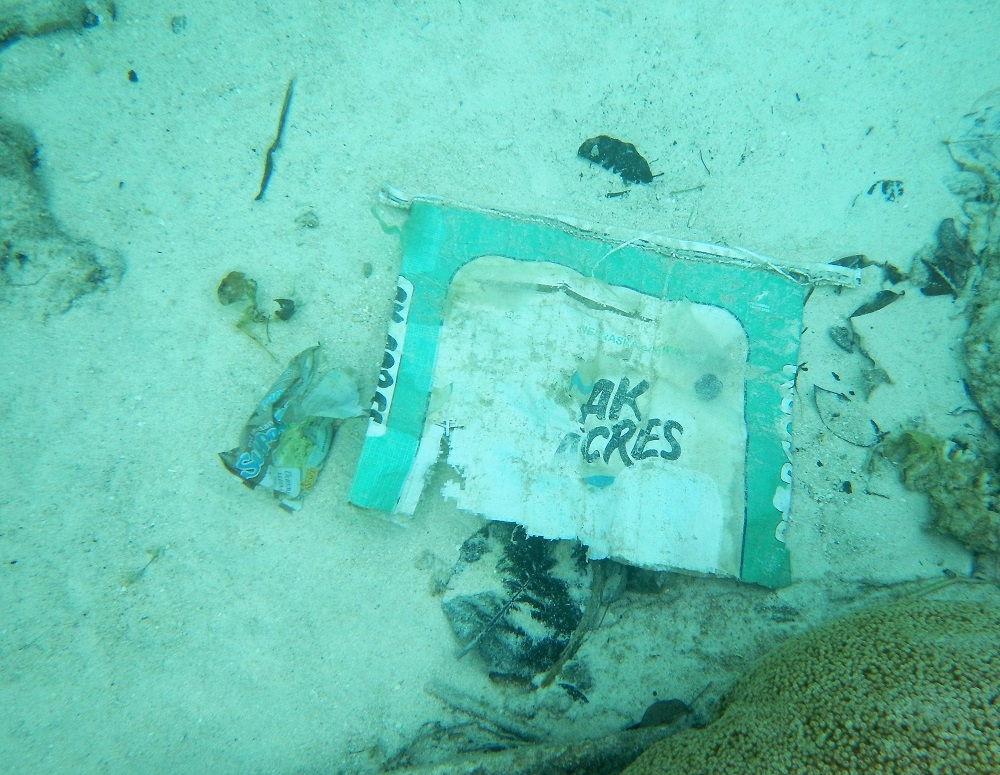
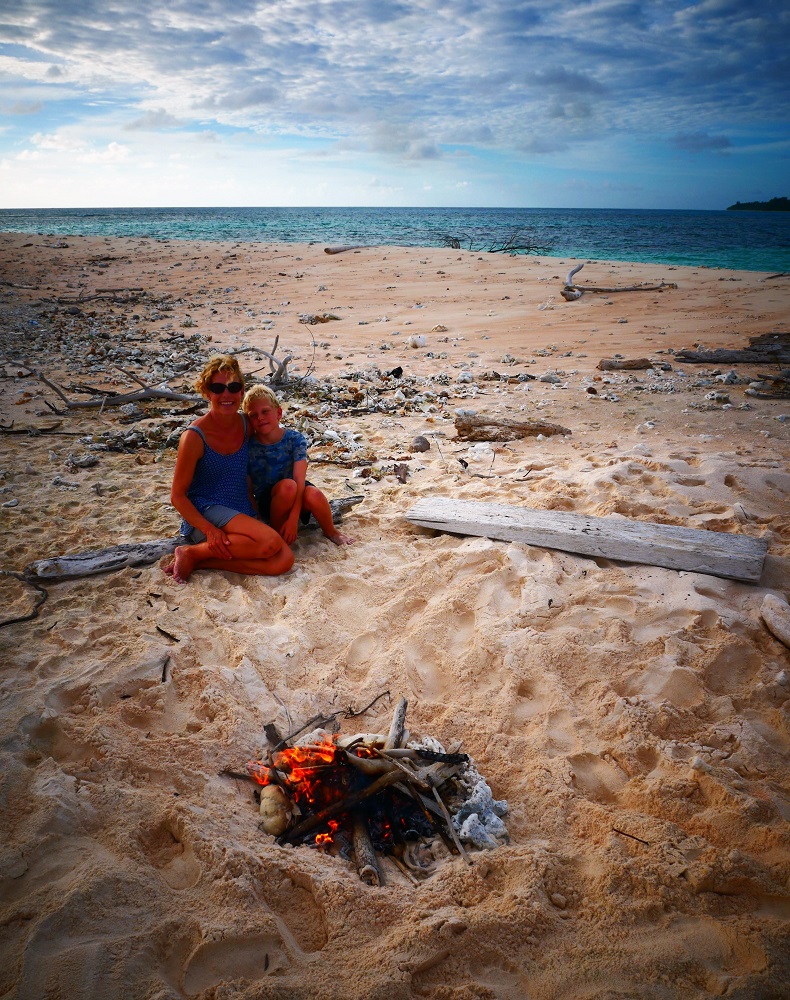
For a region covered in marine protected areas in a country which is aggressively promoting marine tourism, the never-ending plastic problem is disappointing. It’s shameful. Every beach is littered with washed up water-bottles, straws, plastic bags and sandals. Even at the top of the Wayag karst cliff, after an arduous, near-vertical climb, we found crushed drink containers and shiny lolly wrappers. On the beach in Sayang where turtles come to lay their eggs we gathered and burned hundreds of bottles – water, soft drink, talcum powder, oil, deodorant, lubricants, and sauce – anything you could imagine bottling – which had been swept up here by relentless wave action. Every time I snorkelled I picked up as much suspended plastic as I could carry back to the boat, but it was clear that our efforts didn’t make much difference – there is simply too much plastic in the ocean in Indonesia, even in marine parks and sanctuaries, for anyone to clean up.
It’s a growing problem and as the Indonesian population increases and consumption rises it will likely get much, much worse before any improvements are made. Raja Ampat is a wonderful place to visit and people pay thousands of dollars a day to come here and enjoy the watery wonders on offer. Imagine how wonderful it would be if we could keep its marine environment clean and free of plastic?
 SV Bob The Cat