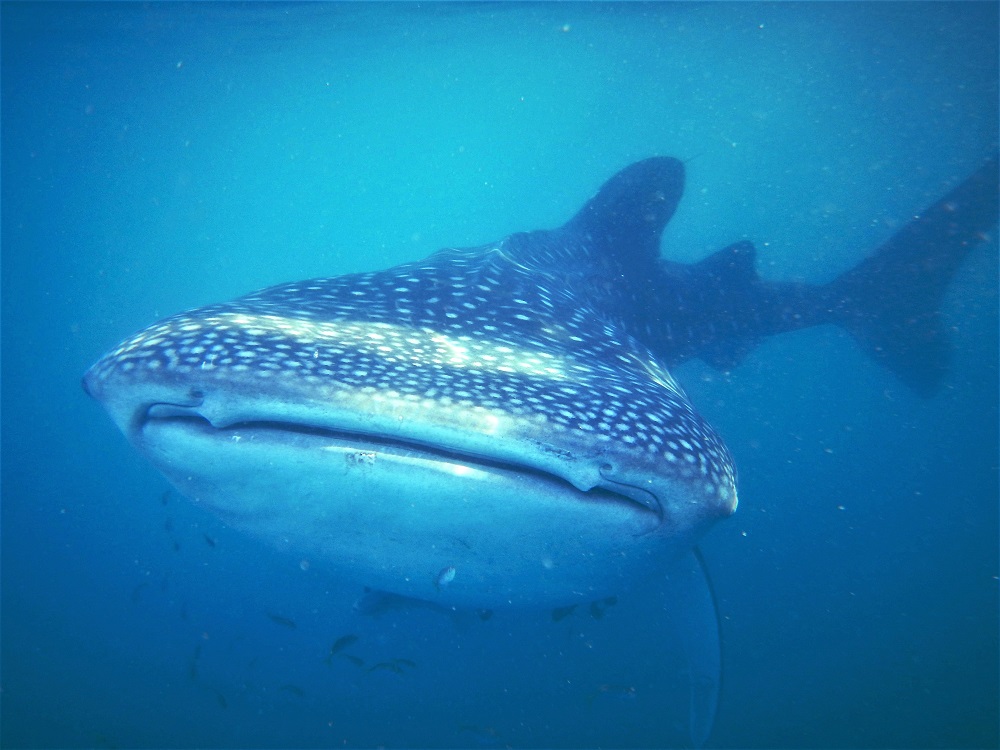
 “Mummy, look,” shouts Lukie. “Look, Mummy, look. LOOK how big it is!!!”
I peer over the side of the dinghy where a vast, patterned shape is appearing out of the depths. “I’m going to jump in,” I mumble, hastily fumbling my fins on with one hand whilst dipping my mask in the sea with the other.
“Me too!” yells Lukie. “Yeehaaa!”
He slips over the side of the dinghy and I follow him quickly, clutching my underwater camera to my chest. When I stick my head under water the huge shape is brought into focus, the blurry, distorted creature viewed from the surface transformed into an elegantly patterned, sharply outlined monstrously large fish. It’s coming straight at me. A large open mouth sucking in a mixture of surface water and tiny fish, the huge flabby gills expelling sharp streams of water and bubbles of air. A huge expanse of white belly shines eerily in the early morning light.
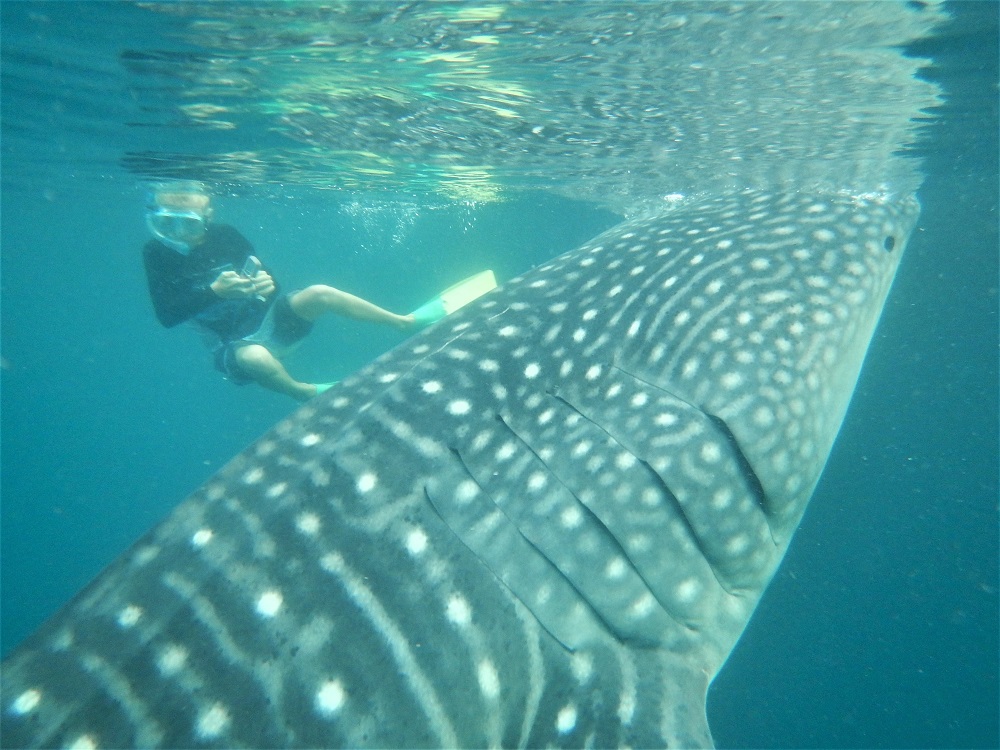

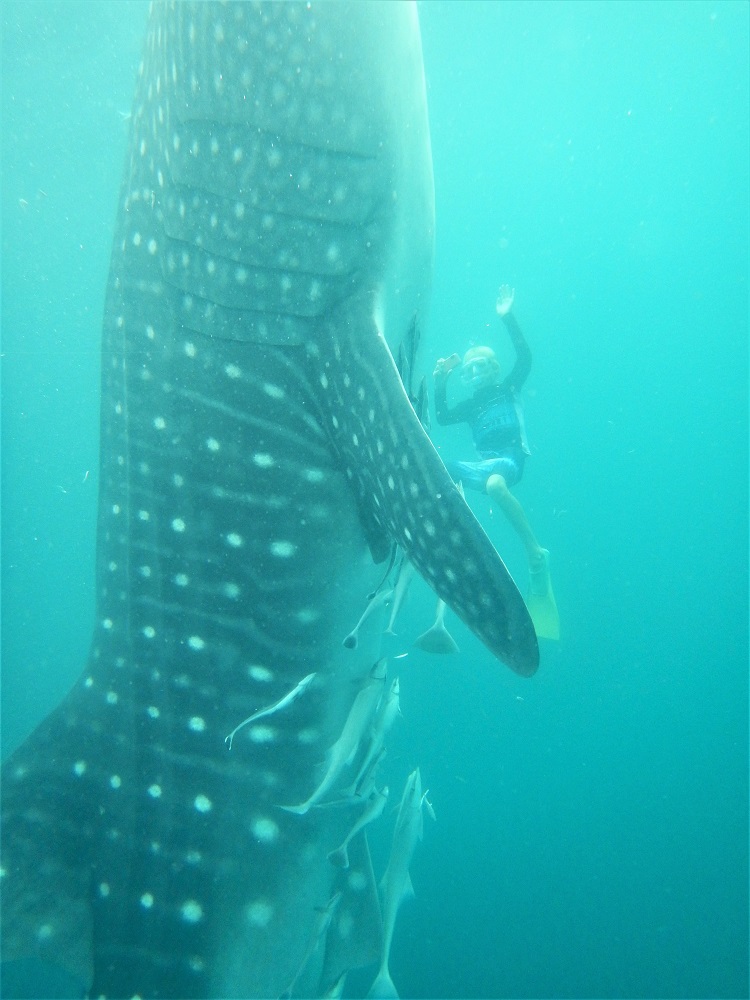
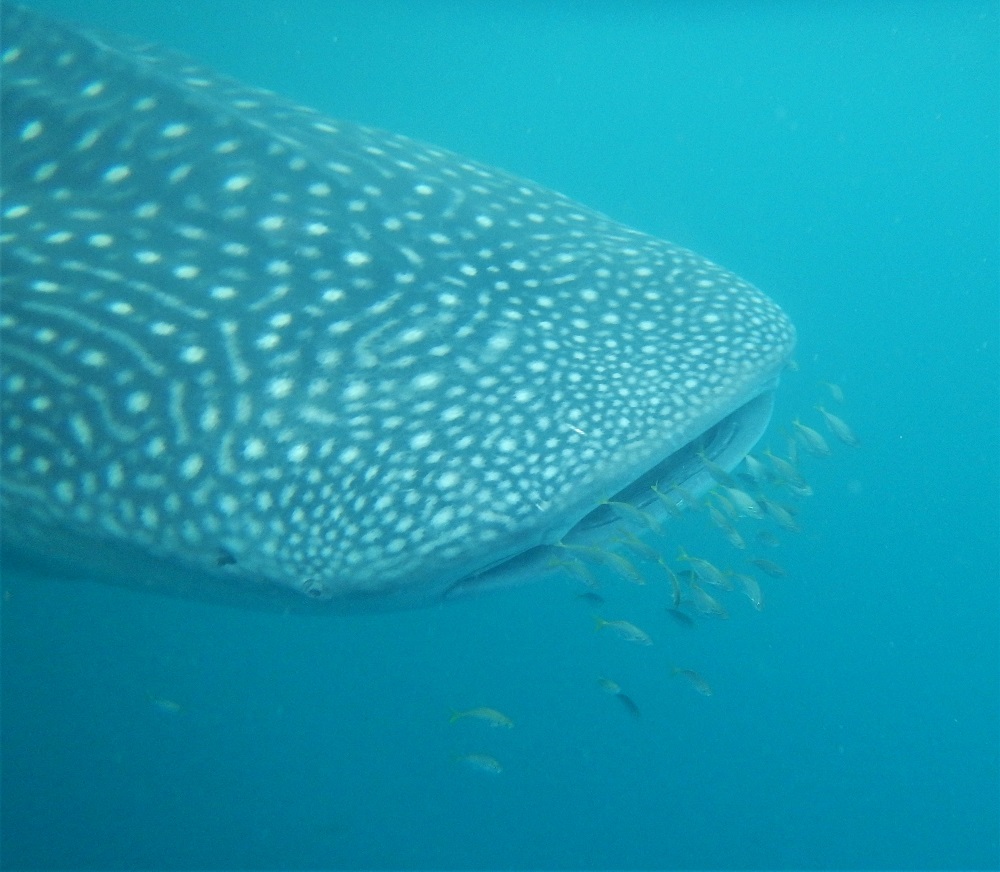
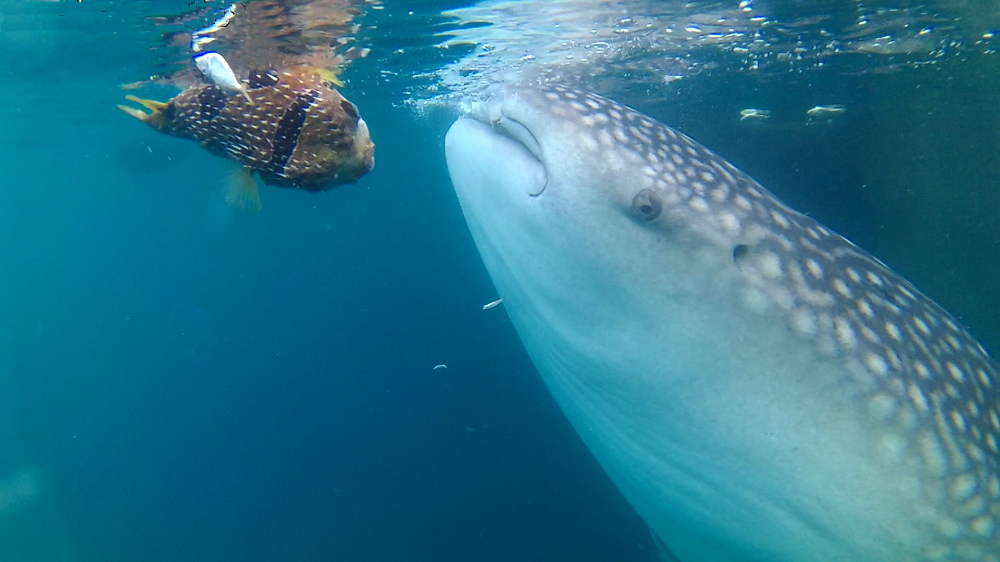
I back off hastily as the monster swims straight at me, my knees bent, my arms backpedalling. It seems fixated on the small fish just in front of its nose and doesn’t alter course. As it comes closer I can see the exquisite detail of the dot and line pattern adorning its back and sides, can count the shark suckers fighting to stick to its underside and can even make out the tail of a parasitic fish hiding in its earhole. Only at the last moment do I manage to veer off enough to prevent a collision.
This fish doesn’t care. It’s large and I’m small. It’s hungry, there is lots of food in the water, and it trusts that my small irrelevant shape will get out of the way as it swims back and forth, slurping in hundreds of small fish with every mouthful of water.

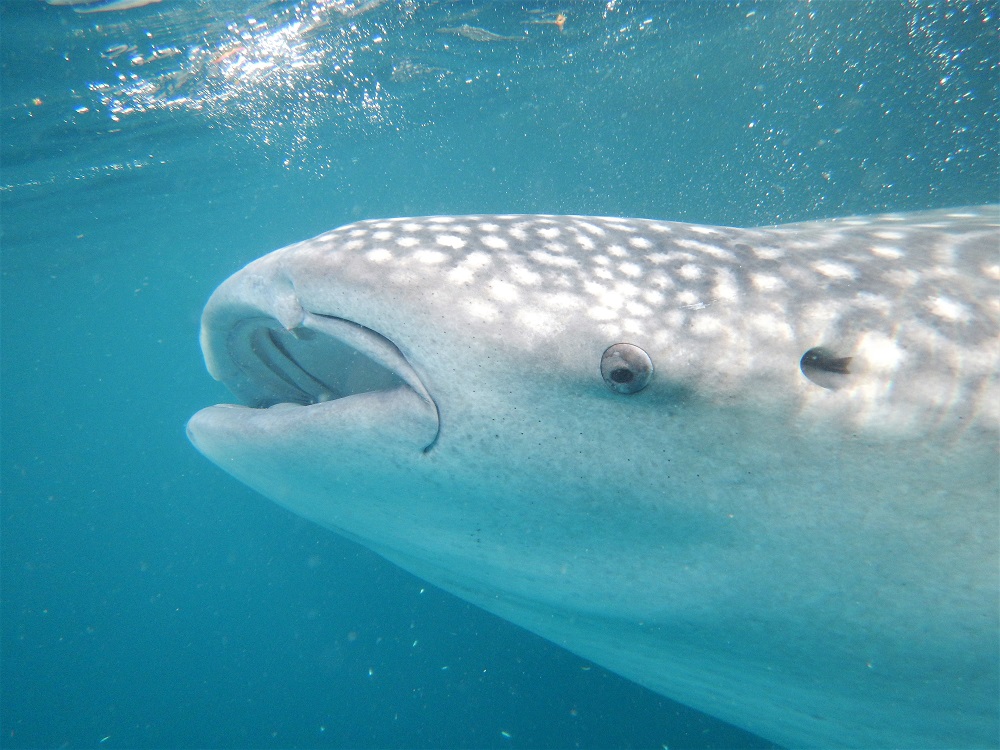
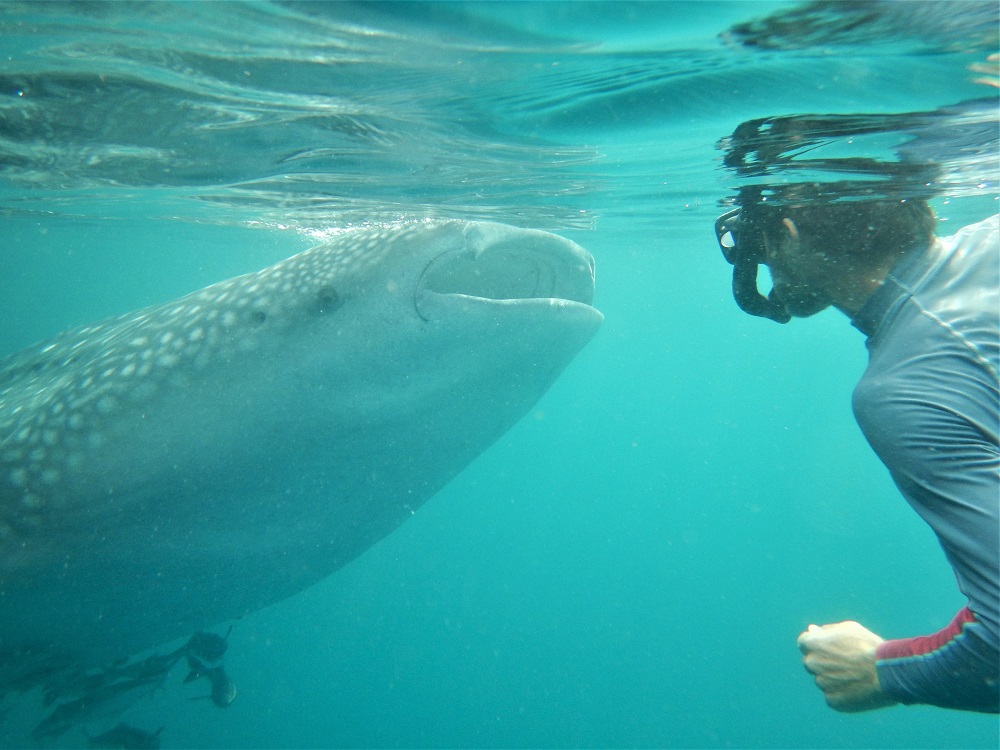 We’re snorkelling with a whale shark, the largest fish on the planet. This one is just a teenager, a mere 6 or so metres long, the size of a giant great white shark. Large adults grow to 18 m, larger than the biggest humpback whales.
We’re in Triton Bay, on the south-western corner of Irian Jaya, the Indonesian half of the island of Papua New Guinea. The area is an up-and-coming diving destination, a place fast becoming famous for clear waters, coral reefs of amazing abundance and diversity, marine mammals and whale sharks.


 Our boat is parked off Namatote Island and anchored in deep water in the bay just next to us are two bagans, the local fishing platforms. At night the bagans are brightly lit and fishers are busy hauling in huge netfuls of tiny baitfish, which they spread out over fine-meshed metal grates for drying in the daytime sun. Early in the morning, as the fishermen hoist the last of the night’s catch, whale sharks circle to gulp up the small fish that inevitably spill over the sides of the net.
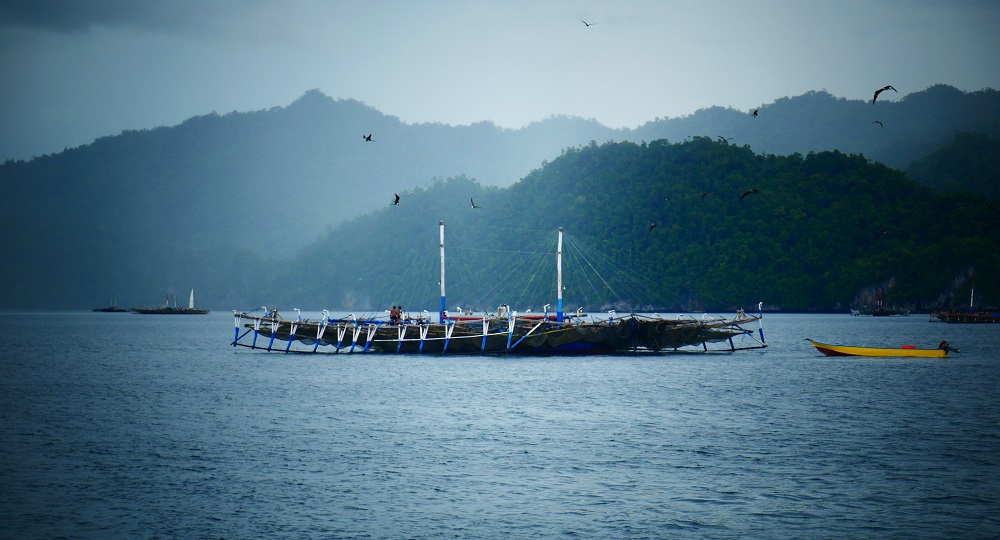
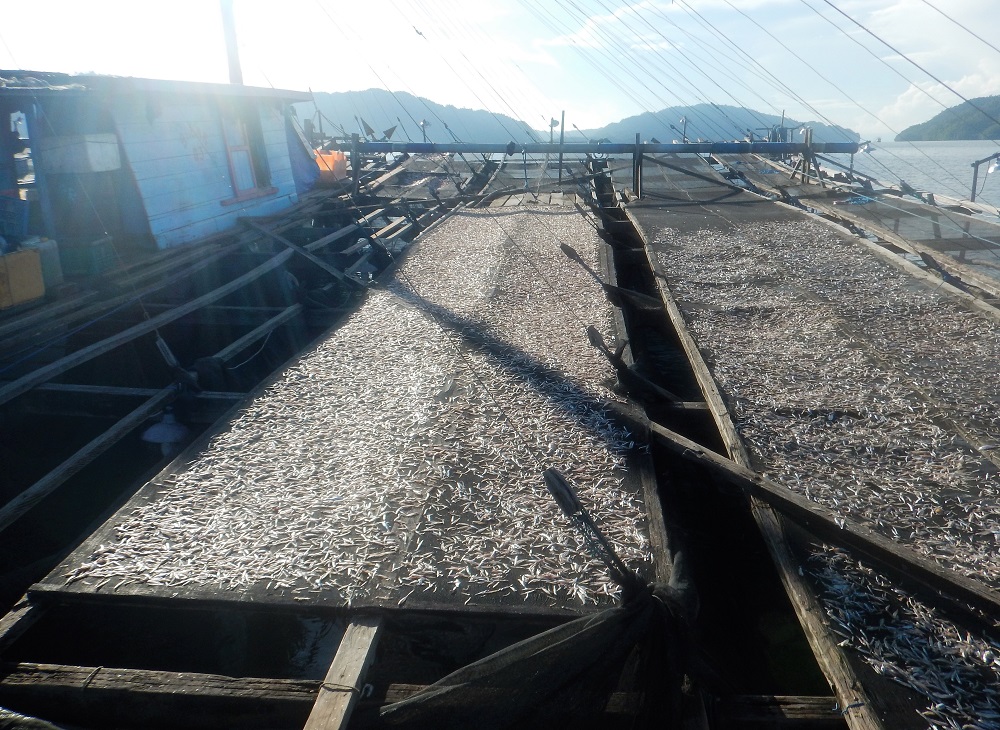
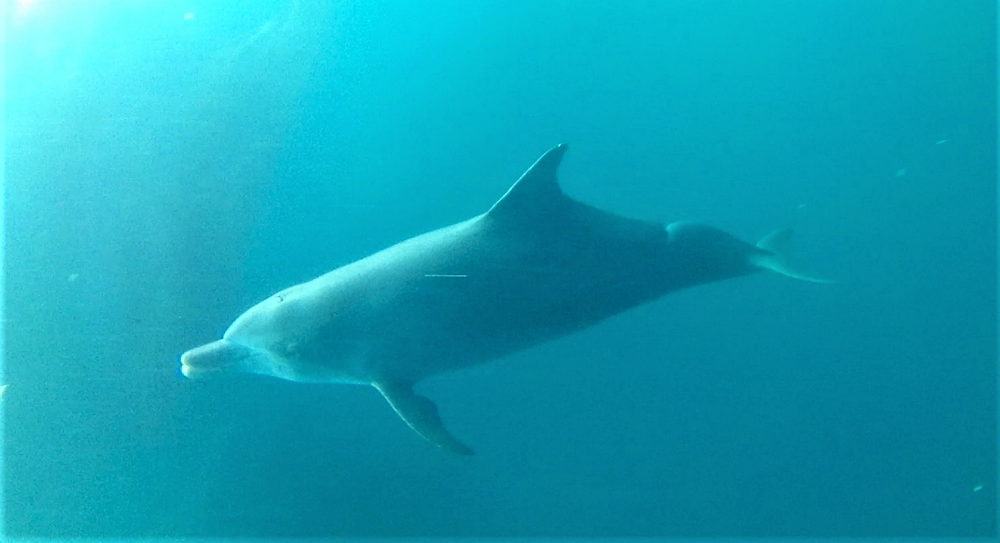
A thick stench of fish permeates the still morning air. The sky is alive with birds, their cries echoing in the quiet bay. Huge flocks of birds are circling the bagans, large frigate birds skimming the surface to pick up tiny floating fish, seagulls dive bombing to get to the catch first. In the water the bird cries are drowned out by the squeals and clicks of the large groups of dolphins that surround the whale sharks, busily diving and jumping, bumping the birds out of the way to scoop up the leftovers from the feast. A school of giant trevally are attracted by the fish debris slowly sinking towards the ocean floor and soon they are zooming in and out, grabbing small fish from under the slower whale shark.

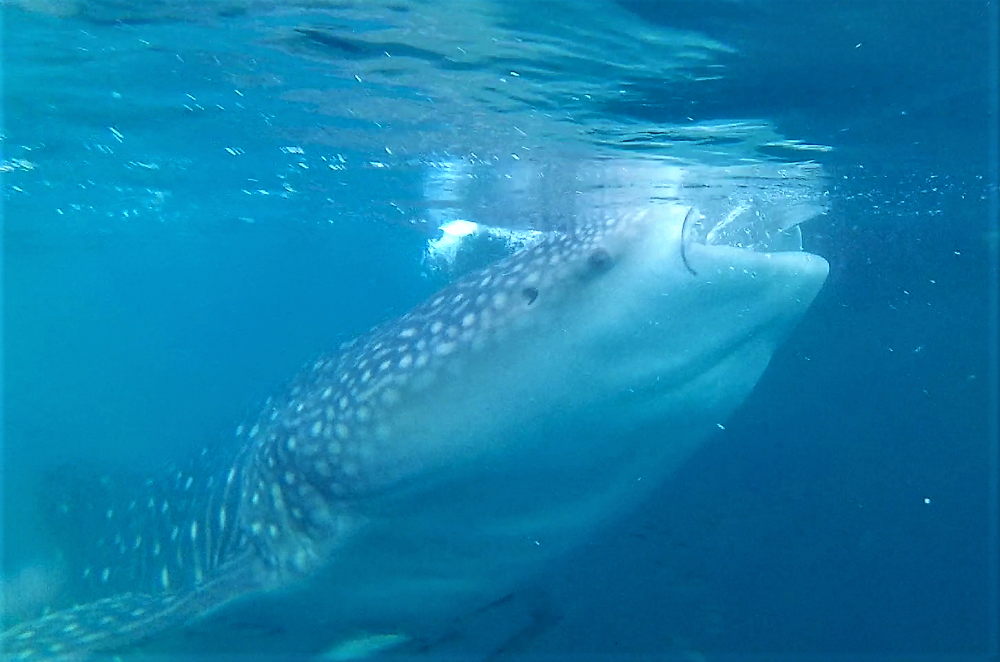 In amongst it all we swim within touching distance of the whale shark. We watch wide-eyed as it dives and circles below, and scramble to get out of the way as it comes back to the surface. The fishers above are throwing unwanted fish into the water, and the shark positions itself just below them, mouth wide open, frantically sucking the surface water, swallowing the little fish whole.

It is like a puppy under the dining table hoovering up falling crumbs, a huge, exuberant baby fish begging for food, impatiently crashing about at the surface below the nets, its toothless grin extending above the water surface, its small, beady eyes imploring the fishers to throw in some more.
The fishers laugh and throw in another handful. The whale sharks (ikan besar: large fish in Indonesian) is known to bring good luck, and the fishers treasure having them around. They sit smoking on the platform, looking out over the mayhem of birds, dolphins, sharks and us snorkelling. The radio is playing a catching tune and the men smile and tug on the small handlines they have suspended over the side, hoping to catch a big fish for dinner.
Must be an OK job.

 SV Bob The Cat