
When we left the Louisiades our port propeller disappeared. It just fell off, with no warning and leaving no trace. We think it happened on the second day of the passage.
This is bad news. With only one engine we have very little manoeuvrability. The next stage of our trip passes through the Torres Strait, the bit of ocean that separates northern-most Australia from Papua New Guinea. The Torres Strait is a tricky piece of water to get through. It is shallow (7-15 m) and narrow and has a busy shipping channel running through it. It is ravaged by strong tidal currents and bordered by treacherous coral reefs to the north and south. We need good weather, favourable winds, rested crew and two well-functioning engines to take on the Torres Strait. We scheduled our arrival in Port Moresby for early November to ensure that we have enough time to wait for a good weather window before the onset of the Indonesian monsoon. Once the monsoon sets in (normally in December), the winds will turn and we won’t be able to sail through the Strait.
We discovered the prop was gone on the third day of the passage when we switched on the engines to take the boat into the wind so that we could hoist the mainsail after sailing only under genoa for the first couple of days. David jumped in the water immediately, and to his chagrin saw that the entire prop was gone, only the grooved shaft remaining.
Now, propellers don’t just fall off – they may get damaged if you hit a reef or wind a rope around them, but they most certainly should stay in place. This prop had only done 400 hours of engine time and was still under warranty from when it was installed by a professional outfit in New Zealand less than a year ago.
Frustrated and apprehensive about having to try to source a new prop in limited time in a third world country, we arrived late afternoon in the blazing hot sun at the Royal Papua Marina in Port Moresby, the capital of Papua New Guinea.
Mainland Papua New Guinea is a notoriously dangerous place. Lawlessness, tribal warfare, gangs, random violence, disease (malaria, yellow fever, Japanese encephalitis, typhoid, cholera, intestinal parasites, zika virus), limited health care, and widespread government corruption makes it a particularly unpleasant place to live and to visit, and not a spot we would pick for staying a while to get spare parts.
Port Moresby is famously dodgy, with gun-toting local raskol (literally rascal, the tok pisin – PNG pidgin – for criminal) bands running amok, terrorising the general public with no regard to the largely ineffective local police force. Rated one of the ten most dangerous cities in the world, Port Moresby is home to about 300,000 people, of which 80% are estimated to be unemployed. Slums abound and the gulf between rich and poor leads to desperation with associated incredibly high rates of violence.
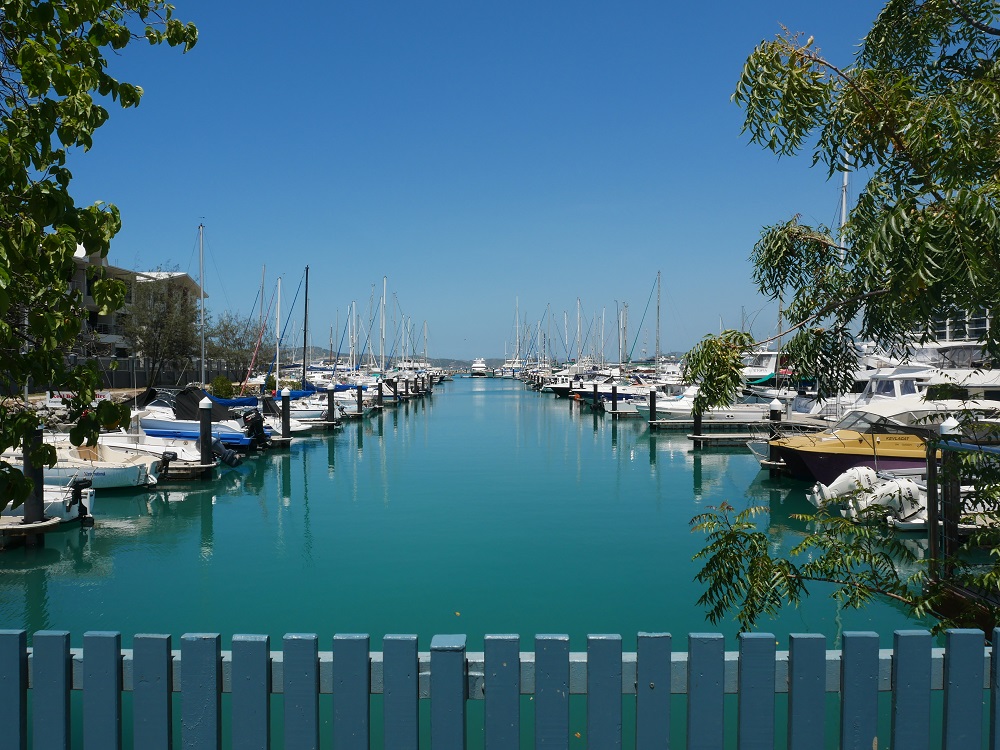
Knowing about these dangers we considered avoiding the stop but realising that we need the best possible weather to go through the Strait we decided to book a berth at the exclusive Royal Papua Yacht Club. The Yacht Club is a gated and guarded marina complex, a manicured waterfront home to the shining yachts of the capital’s well-to-do, flanked by expensive waterfront apartment blocks safely situated behind their own heavily guarded gates. Uniformed guards are everywhere in the marina, their shiny shoes and crisp white shirts with golden buttons reflecting the relentless sun as they patrol the grounds and stand guard in pairs at every external gate and doorway.
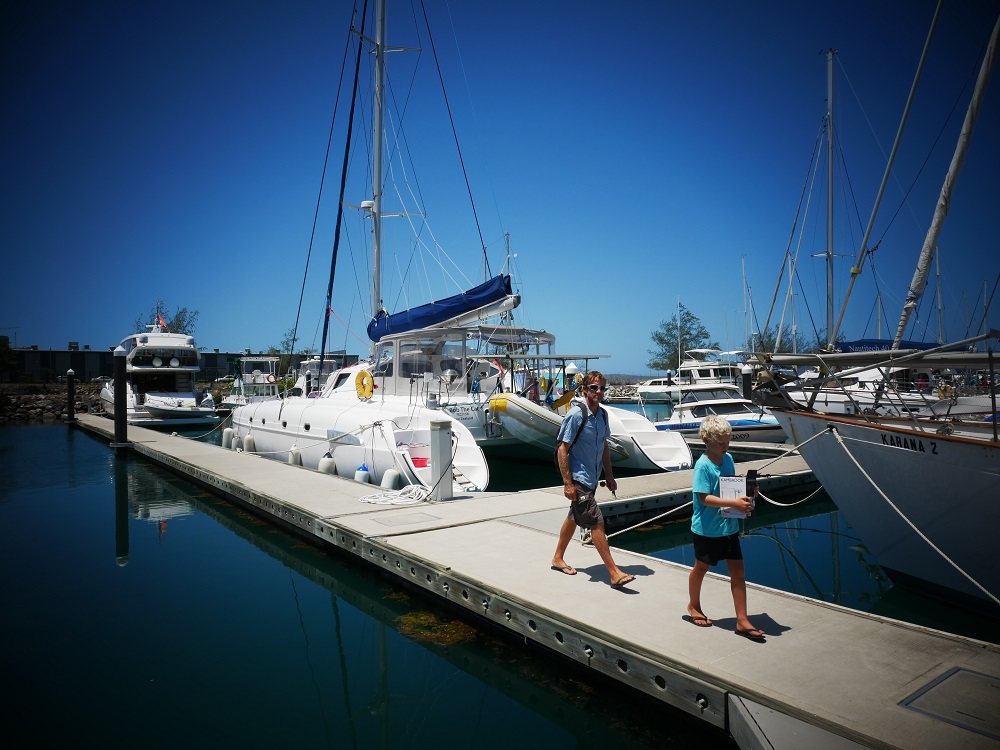
The marina is an awkwardly colonial place, reminding me of expensive hotels in larger African cities. The yacht club is huge and shiny, full of uniformed waiters that open doors, addressing us as Sir and Madam. Cleaners are everywhere, busily mopping the bathrooms, sweeping the concrete, shining the mahogany bar and polishing the windows, patiently wiping our kids’ fingerprints from the flawless glass doors at least 50 times a day. Heavily opulent Christmas decorations of green, gold and red adorn the pillars and ceiling arches, signalling the lavish celebrations to come. A high-end dining option in Port Moresby, the Yacht Club bar and restaurant is graced by wealthy businessmen, who lunch head-to-head discussing important matters over their stacked plates, their dark shirts stretched over bulging executive bellies. When the meal is done they get to their feet and finish lucrative deals with firm handshakes. Australians in sharp business suits strut importantly through the complex, carrying black leather briefcases and talking into cellphones with loud accents. It is a place where important leaders meet and in this country of gender inequality a male-only premise – the only women here are the waitresses and office staff.
Officially the worst city in the world to be a woman, Papua New Guinea has a dark record for gender equality. It is the world’s worst place for gender-based violence and it is estimated that in their lifetime about 70% of PNG women experience rape or assault. The police do little about domestic violence and alcohol intake is considered reason to excuse a man from charges. Widespread belief in black magic provides an easy out for any man who wants revenge, leading to epidemics of witch hunts. According to Oxfam, over 1000 witch hunts take place in Papua New Guinea each year, and the UN estimates that 200 of these result in witch killings (that’s per year!); innocent women brutally and cruelly killed by suspicious neighbours or dissatisfied husbands. Because of the widespread belief in magic, most witch killings are not reported, and of those that are reported to the police, most remain uninvestigated. The killing of witches has carried the death penalty since 2013 when the widely publicised killing of 20-year-old Kepari Leniata occurred. Accused of using sorcery to kill a neighbour’s young boy, Leniata was publicly stripped, tortured, and burned alive in a dump area of a busy slum. Excited spectators gathered in their hundreds on the street corners, egging on the mob violating her, filming her punishment and proudly sharing the graphic images on social media.
In 2017, Leniata’s six-year-old daughter was brutally assaulted by a mob of men who accused her of plotting to eat her neighbour’s heart in a quest to steal his virility. The little girl was tortured for days before a US aid worker managed to intervene and remove her.
Investigating 1440 cases of witch torture and killings over twenty years, the Australian National University found that less than one per cent of perpetrators were successfully prosecuted. The local law enforcement is so biased and the violence so widespread and insidious that real change will take many, many years.
Given the harrowing violence statistics, it is difficult to assess whether it is safe for us to venture outside of the marina compound. A number of expats live full time on boats in the marina (accommodation is hard to find and very expensive in Port Moresby, making a yacht parked in the marina an attractive option) and they all warn us from walking outside the safety of the gates, using public transport or hailing taxis on the street.
“It is not safe,” says a blonde our age. Sitting eating her brunch of poached eggs with hollandaise over a toasted muffin with a side of wilted spinach in the Royal Yacht Club restaurant, she gestures dismissively with her hands when we ask whether we should take a taxi to the National Museum. “You are a target, and it is not worth it.” She lifts her sunglasses to the top of her head and eyes us seriously as if to stress her point with eye contact.
“Definitely,” weighs in an elderly gentleman with a weather-beaten face on her right. “There is so much violence here. They hold up cars using roadblocks and will kill just to get your handbag. We hear reports every day.” He wipes his sweaty brow with the back of his hand and adjusts the collar of his faded pink polo-shirt before tucking back into his sausages and scrambled eggs.
“So what do we do?” I ask. “How do I get to the grocery store – we have to provision if we’re ever going to leave here?”
“I can drive you,” offers an Australian businessman who lives on a boat near our berth. “I’m going to the supermarket this afternoon. Just come and get me on my boat. Please, please do not try to walk there or hail a taxi on the street.”
At that stage I’ve already walked the 1 km to the supermarket twice in the company of Greg and Jenny from SV So What. A little uneasy we rushed along on the pavement lining the wide boulevard, suspiciously eyeing up all approaching men, mentally assessing their raskol potential, ready to break into a run and sprint the last 500 m to breathlessly reach the safety of the Waterfront Shopping Mall where uniformed guards waited by the revolving doors. On these occasions we safely managed to hail taxis to take us and our copious shopping back to the marina. But I guess there is no knowing whether we were just lucky – it is difficult to buy into the expat hysteria but their concerns are echoed in the advice featuring on all websites we visit.
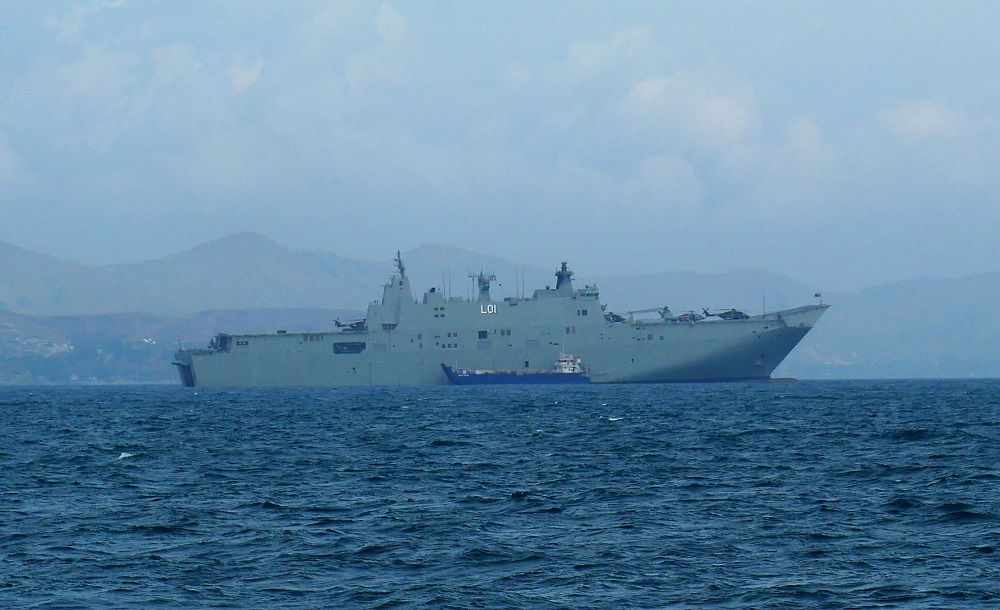
Our visit to Port Moresby coincides with the APEC Economic Forum, held in Papua New Guinea for the first time, to the great concern of the safety-conscious planners. Foreign dignitaries are arriving from every state and the city is crawling with military. The Australians have sent a huge warship, and the Americans their air force, and severe-looking muscular men with immobile pockmarked faces, army caps and mirror sunglasses, clad in camouflage uniforms, greatly outnumber civilians at all public venues. On the main streets, every tenth vehicle is a police car whose shrill sirens overwhelm other traffic noise day and night.
We ask Tracy Schreck, the aptly named expat general manager of Corps Security who is breakfasting with the marina residents, whether the APEC meeting and associated heightened security might make the city safer than usual at the moment?
“There are a couple of factors,” she responds, sitting back heavily in the garden chair of the breezy yacht club balcony. “The military presence is mainly to protect the delegates – they are not concerned about the safety of the general public.”
“Oh,” we say, chastened.
“But the police presence has definitely been ramped up and the public has been warned to toe the line,” she continues, flexing her tattooed shoulders. “Of course, the downside is that the APEC meeting is politically unpopular. They’ve spent millions shining up the city for foreign visitors, which many in the population are unhappy about. So there will be some uprising, some protests, in connection with the meetings.”
The APEC meeting is unpopular with everybody we speak to. In a country desperately in need of investment in health and education, spending millions on road upgrades and new buildings to impress foreign delegates seems absurd.
We want to take the kids to visit the National Museum, and after much deliberation we hire a ‘secure vehicle’ with driver from Tracy’s security firm. The car is a huge silver SUV with darkened windows driven by Simon, who wears a black uniform and dark imitation Ray Ban sunglasses, looking every inch the ex-military security guard. Simon is armed and a ‘duress button’ is installed in the vehicle, which if pressed will alert security headquarters from where a unit of armed guards will be dispatched to the duress location.
“Have you ever had to press the button?” I ask, leaning forward on the tan leather seat to speak over Simon’s shoulder.
“No,” he replies. “But they can see it’s a secure vehicle and know I am armed. So we are much less of a target than other vehicles.”
And so we sit in the dark car slowly cruising the busy streets, looking out over a city ready to explode. All shops have barred windows and shop car parks are protected by heavy metal gates opened and closed manually by the ever-present uniformed guards. Groups of bearded, dreadlocked men wearing rasta beanies loiter on every street corner, smoking and chatting. Workers in shop uniforms walk purposefully at the edge of the pavement, small bags worn around the neck banging against their chests, safe from pickpocketers. Women wearing loose long clothing walk hurriedly in groups, their heads down.
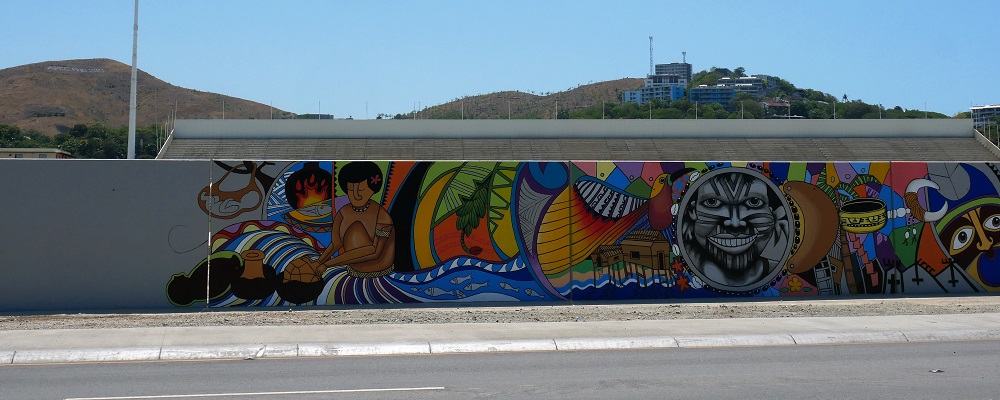
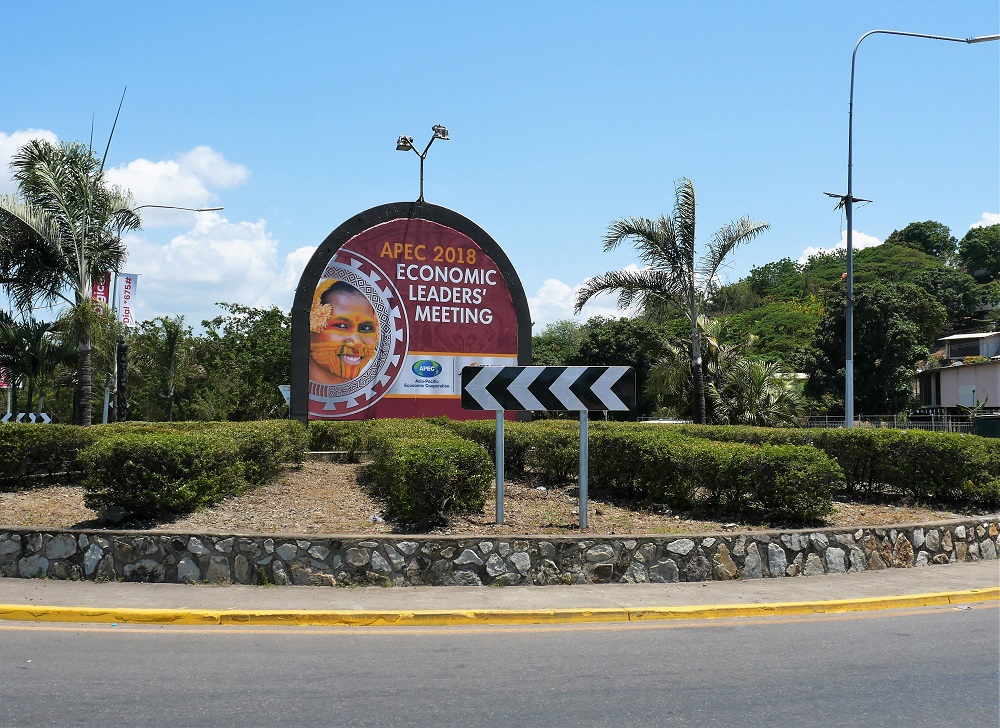
The city has been completely renovated in preparation for the APEC meeting. The roads have all been upgraded and are now smooth and wide. Every traffic circle is adorned with newly planted flowers, the arid soil around the plants carefully raked. Freshly painted murals featuring iconic Papuan and wider Pacific art adorn the concrete walls lining the streets, and brand new beautiful cultural statues stand proudly at the centre of every roundabout. Large banners advertising the APEC meeting hang pointedly from tall flag posts, the colourful posters proclaiming unity through diversity waving gently in the breeze, forming the backdrop of this city of fear.
Although women are always restricted compared to men, this is the first time I have felt my gender so keenly. I don’t enjoy being in a place where fear restricts my movements. Normally when we’re in a city I will get on with the provisioning and take the kids interesting places whilst David attends to boat repairs. Here, I keep having to ask David to accompany me to places I would normally be fine to go on my own – any trip outside the gated compound of the marina requires male company. It feels stifling and oppressive, and I wonder about the lives of the local women who have to spend their entire lives here.
I ask Rosemary, one of the Yacht Club waitresses, about going to the market by myself. Is it safe?
She laughs incredulously, hiccupping loudly. “No,” she shakes her head, still laughing, her cornrow braids glistening in the light. “No, it would not be safe for you to go alone. You need to take someone local, or at least go as a group.”
She is paid 4 Kina (NZ$2) per hour as a waitress and tells us that the Yacht Club is a strict employer.
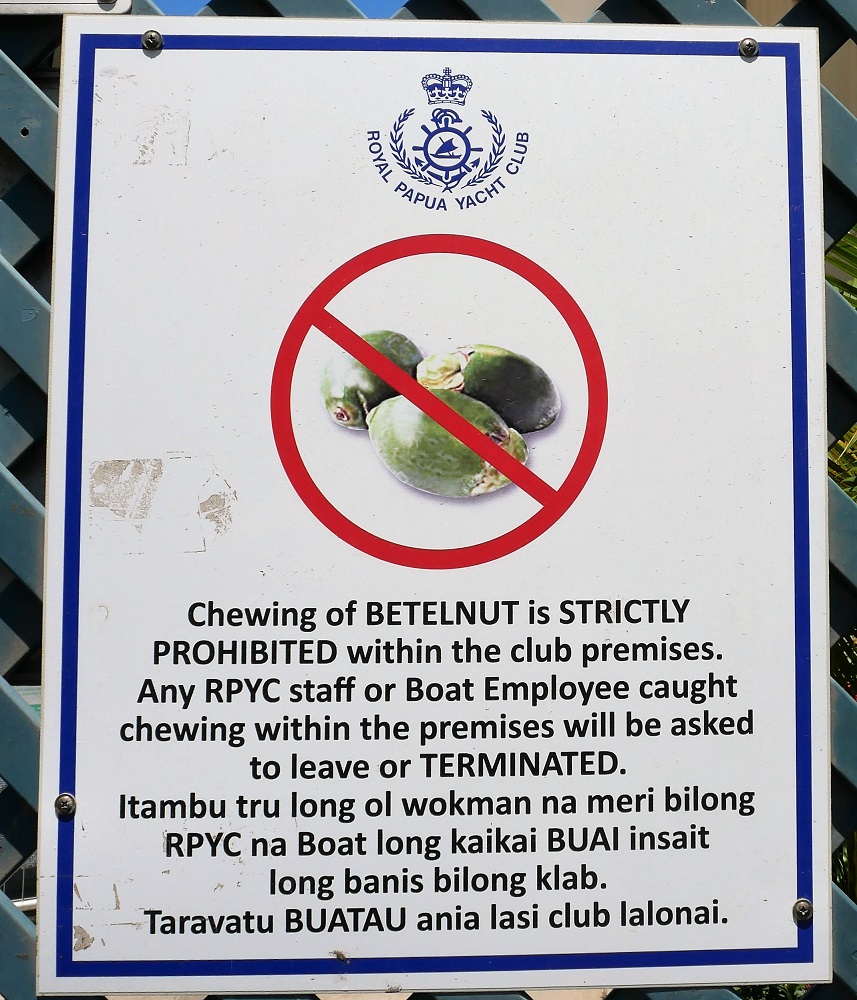
“If I am late for work, they turn me back at the gate,” she says quietly, eyeing the manager over my shoulder. “You are not allowed to smoke or to chew if you work here, they will terminate your employment if they find you chewing within the gates.” Her voice is deep and low, her English perfect.
She used to work as an intern for the Australian Embassy, who were paying for her to become educated in event management. Her life was looking promising, but then she became pregnant. Now she has two kids, the youngest 11 months old. Her husband is unemployed.
“It is not a happy situation at home,” she says. “But I try not to think about it when I’m here. It is not a great job, but it is a job.”
I smile sympathetically and feel guilty. The bill for the dinner we’re eating while I’m having the conversation with Rosemary comes to a total of 200 Kina for our family of four – it would take her more than a week to make enough money to take her family out for a meal here. Yesterday she was late for work and got turned back at the gate. She has no access to child care and has to catch three buses to make it here, making it hard for her to get here in the first place, never mind on time.
“The streets are busy at the moment,” she says. “There is police everywhere, it is making everyone nervous.”
She explains that the government has issued a warning: for the duration of the APEC summit, Port Moresby police will shoot to kill anyone causing trouble on the streets of the city.
“What kind of trouble?” I ask.
“Mainly drunkenness, but also anyone shouting or fighting,” she replies. “It is scary, you don’t want to be on the streets at the moment.”
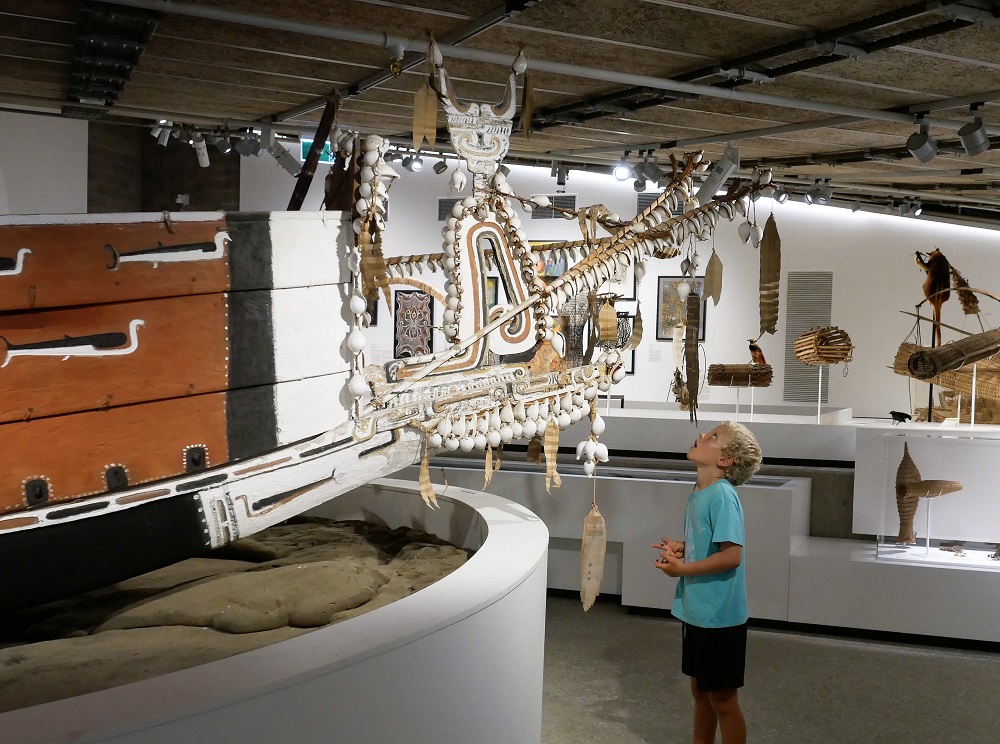
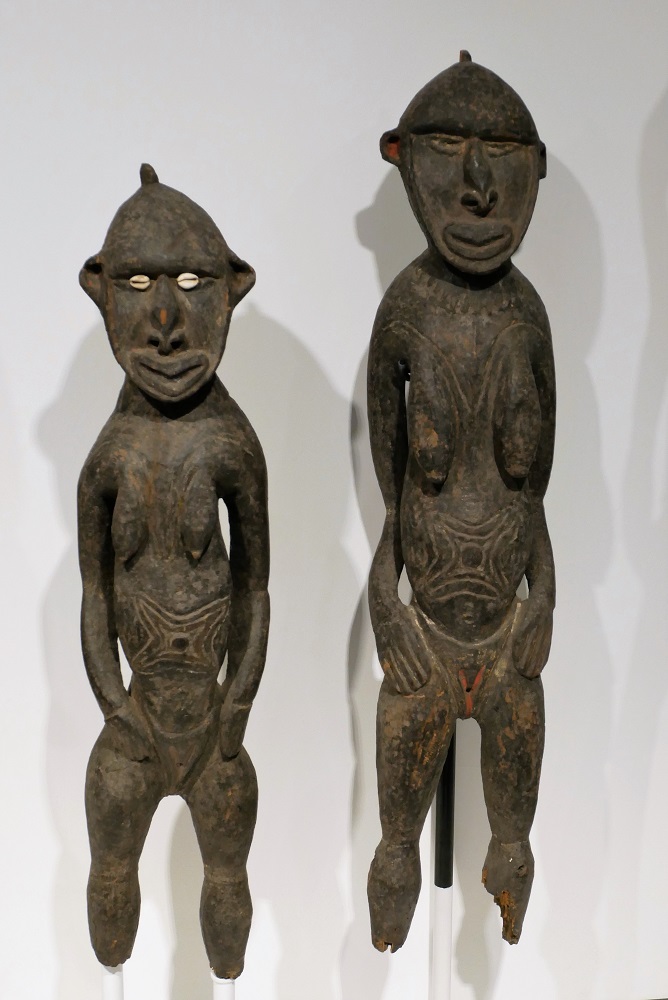
In the safety of the Corps Security car we manage to make it to the National Museum. Newly renovated for the APEC Summit, treasures from all areas of Papua New Guinea are elegantly displayed in the spacious building, cool spotlights and informative plaques highlighting treasured items. The museum is full of grimacing faces – masks and carvings – fashioned from wood and palm leaves, elaborately adorned with shells, feathers, shiny beetles and human hair.

The people of Papua New Guinea are incredibly diverse. First settled about 50,000 years ago, the steep topography of the country led to social isolation of individual tribes, and as a result the cultural variety exceeds that of any other place on Earth. When the Germans colonised Papua New Guinea in the late 1800s, the more than 800 perpetually warring tribes suddenly found themselves under colonial rule. Many tribes remained undiscovered until the 1930s, and on the Indonesian side of New Guinea, uncontacted tribes still live in the highlands. Nowadays there are more than 800 languages (languages, not dialects) spoken in Papua New Guinea, a country of about 8 million people.
It is a country steeped in magic and spirits, and animism, ancestor worship and sorcery still strongly feature in daily belief systems. The museum shows skull boards, used by headhunters to display their trophies. Up to about 100 years ago many tribes still required a young man had to get a skull for his initiation rite, after which he was allowed to carve his skull board, which he maintained throughout his life as a sacred display of enemies defeated.
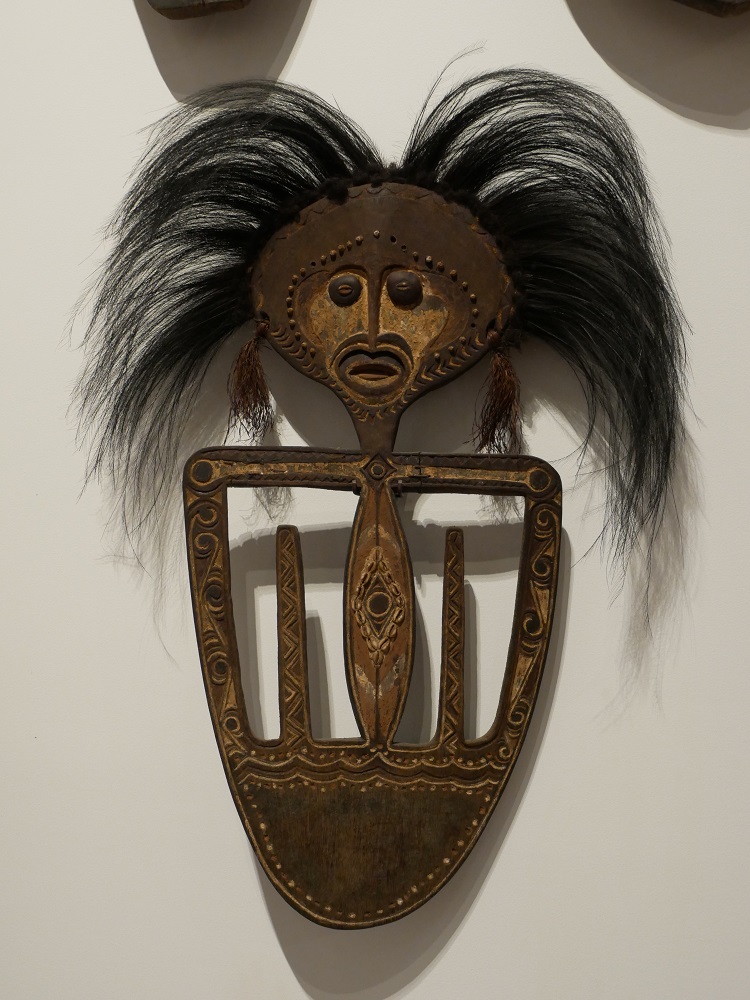
Masks were used for all formal occasions as media for harnessing ancestral spirits. The museum shows the special masks worn for circumcision rituals as well as the elaborately adorned whole-body masks used for initiation rites. These are amazing, featuring human and spirit heads, as well as totemic animals like crocodiles, cassowaries and parrots.
As we walk through the quiet halls of the museum I reflect that perhaps the current mainland Papua New Guinean state of extreme violence is the modern expression of the ancient cultures that sparked headhunting and cannibalistic orgies. Poverty and the desperation borne from extreme inequality are strong factors too, but there are other countries in the world where the divide between rich and poor is a chasm of unimaginable proportion (India, for example), countries where there is crime but not the level of horrific and casual violence reported here.
Hamstrung by fear of leaving the secure compound and worried about the impending onset of the monsoon and associated easterly winds, we are keen to leave as soon as possible, and impatiently await the arrival of the new propeller. David has installed an old propeller to keep us safe for the time being, but sending the new propeller to Port Moresby is the only option – we can’t get it sent to Indonesia because of the legendary bureaucracy of Indonesian customs. It has to be sent from Denmark to New Zealand and then on to Port Moresby, and we receive daily updates on its progress across the world from the New Zealand agent. The outfit that installed the prop refuses to honour the warranty, arguing that they have no evidence that we didn’t cause the damage in some way ourselves. We argue that the clean shaft shows that there was no impact or strain associated with its disappearance. They admit to putting a few extra spacers in when fitting the prop. We quote the guidelines for installation that specifically state only to use the provided parts. They concede that perhaps they are at fault and that maybe the reason the port propeller fell off and the starboard propeller is abnormally mobile has something to do with those spacers. The emails fly backwards and forwards between continents, each new exchange raising or lowering our mood according to content.
The manager of DHL Port Moresby is another resident of the Royal Papua Yacht Club Marina and he promises to fast-track the arrival procedure and get the parcel containing the propeller to us as soon as it arrives.
It is incredibly hot here. Staying in a marina means that we don’t get the breeze but do get mosquitoes, and so we have to close the boat up every night. David installs small electrical fans over every bed and we leave them on hurricane force overnight, their gentle breeze cooling our sweaty bodies. Every step outside is an effort and we are constantly dripping with sweat, fighting hard to stay hydrated. It is too hot to sit on the boat, so we spend much of our time in the air-conditioning of the Yacht Club Lounge, where after a couple of days I know every cheesy 1980s tune on the playlist (‘Ebony and Ivory’ by Paul McCartney. ‘Physical’ by Olivia Newton-John. Anything ever recorded by Elton John).
While we wait we avail ourselves of the luxuries of marina life. We fill up our water tank from the dock (rainwater – it tastes heavenly after six months of distilled water-maker water), we wash load after load of sweaty t-shirts in the laundry at the marina. We have showers every day, and use shore power to run our fridge 24/7 and our newly installed fans overnight, extravagant water and electricity usage we could never get away with whilst on anchor where it all has to be powered by solar.
Finally, after nine days the prop finally arrives on Thursday evening. We swiftly check out of Papua New Guinea and depart on sunny Friday morning, relieved to leave the hottest and most dangerous location we’ve ever been to in our lives. Ahead lies the trials and tribulations of the Torres Strait; the passage that will take us from here to Tual in Indonesia will take 7-10 days, and we are keen to get going.

 SV Bob The Cat