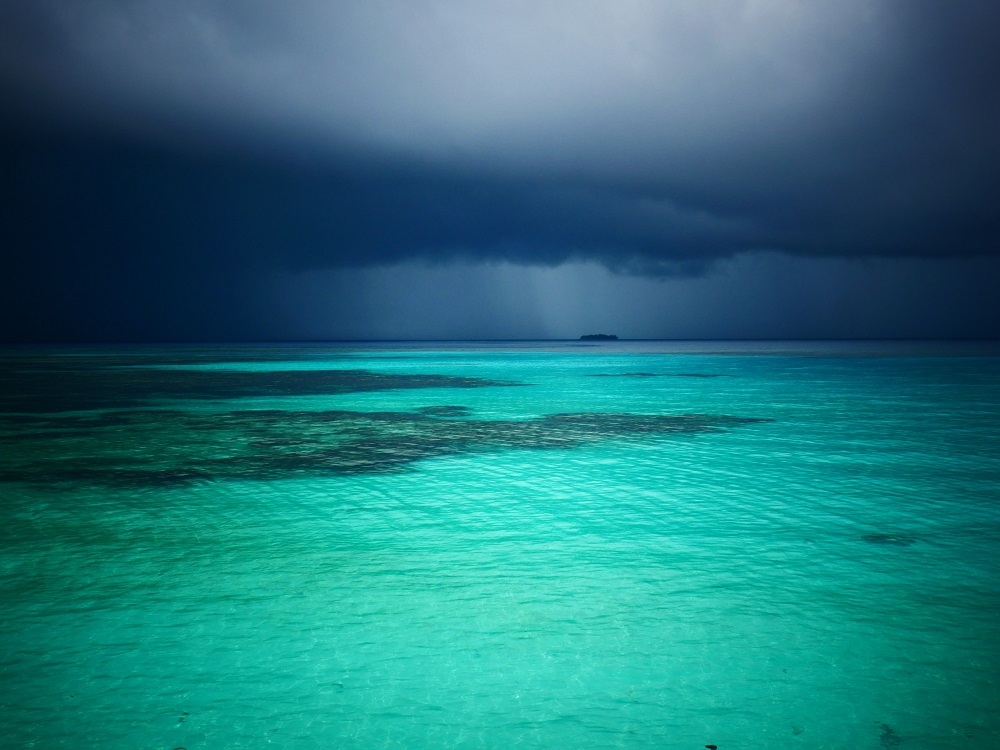
The Papua New Guinean Louisiade archipelago is a cruiser’s paradise of calm lagoons, white beaches, azure waters, short day sails, good fishing and friendly locals. It is the essence of tropical islands with all the magic of endless summer and abundant seas surrounding us until we’re dizzy with 360 degrees of searing sunshine and serene atoll beauty. Small, green conical volcanic islands are dotted throughout the archipelago, surrounded by azure reef-lined lagoons featuring hundreds of smaller white-sand islets bearing coconut palms, piles of driftwood and a bit of hinterland bush. The nearshore water is turquoise, the depths beyond the reef a deep dark blue, only interrupted by the dark outline of colourful coral reefs emerging from the glaringly white sand bottom.
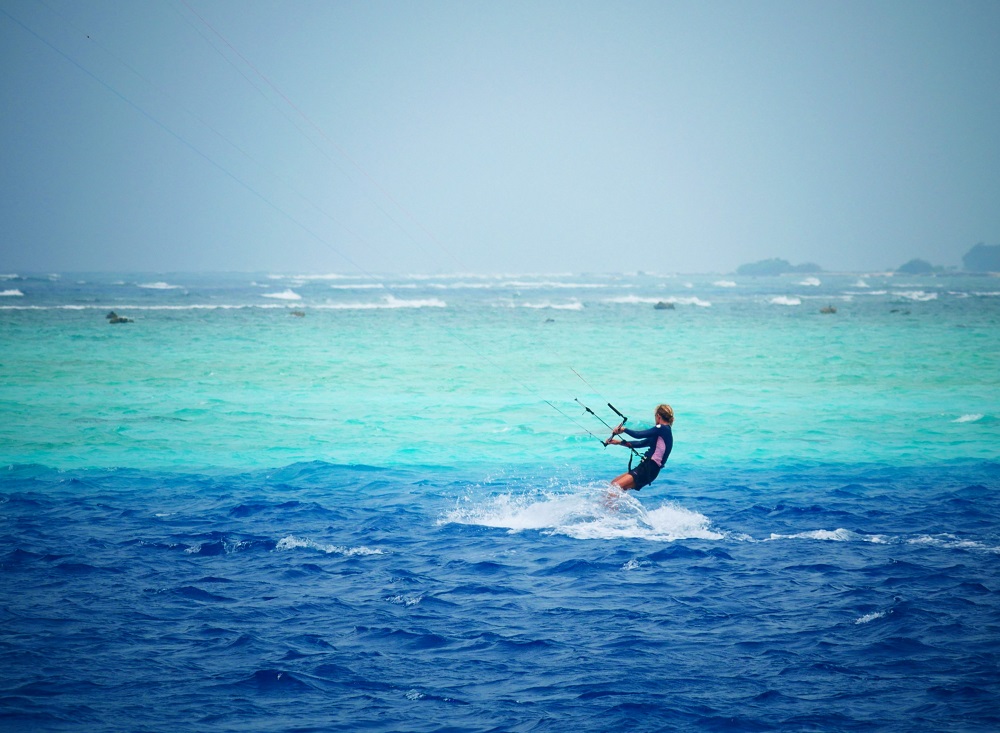
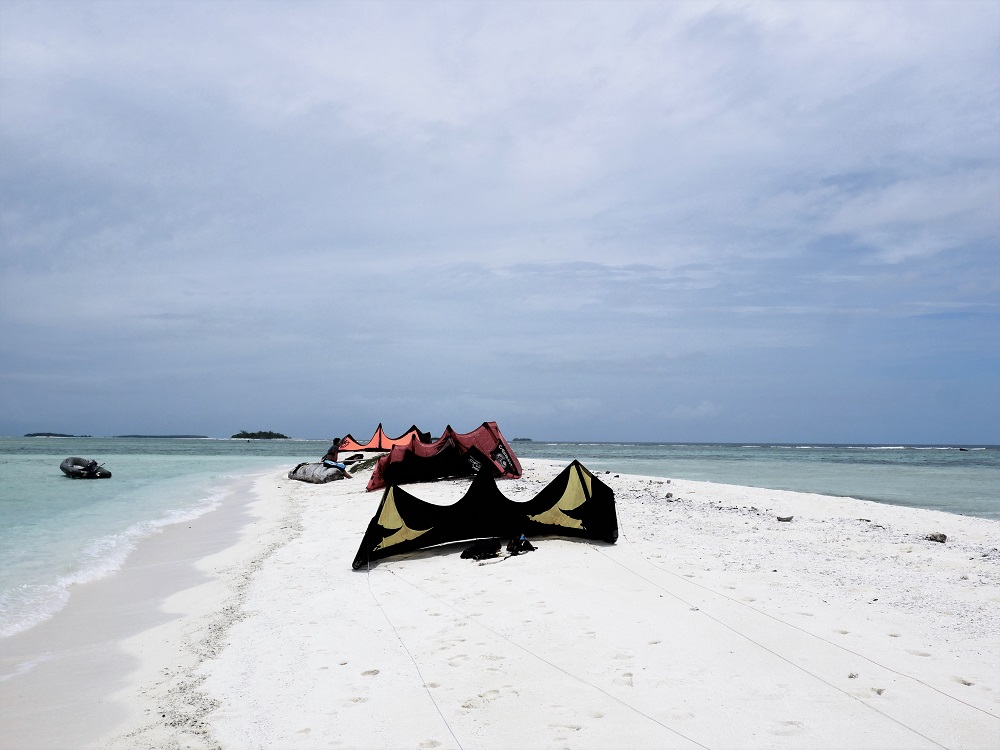
The place is littered with sandspits and graced by the tradewinds making the Louisiades an ideal spot for kitesurfing: the white beaches are great locations to launch from, the clear, warm, shallow waters of endless downwind drift ideal for the children to kite in.

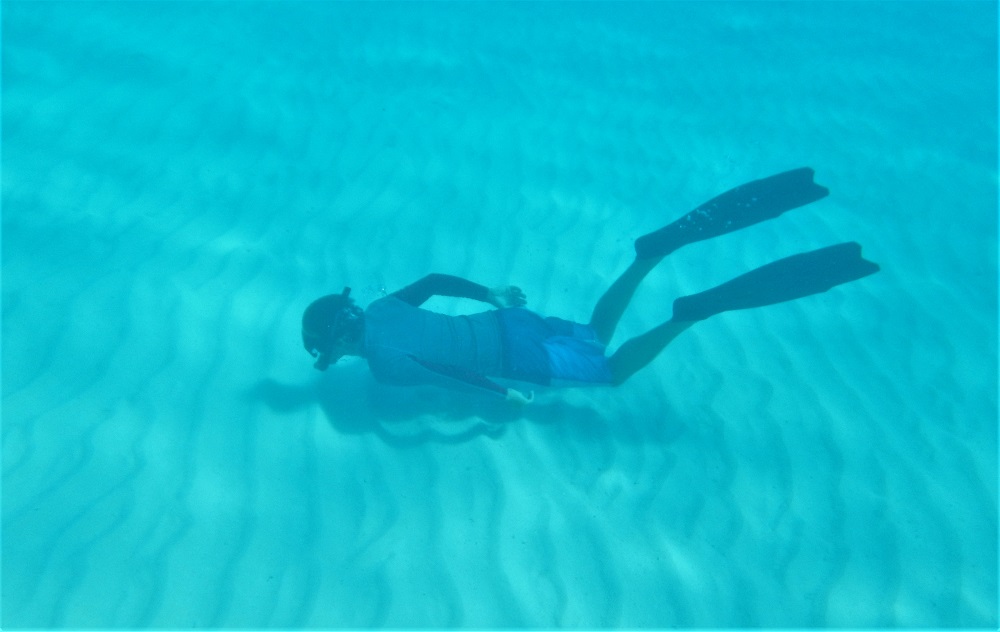
The snorkelling is great too. At the concerningly named Wuri Wuri Pass, we swim over scenic coral gardens populated by clouds of fish. In the bay off Panapompom Island lies a small wreck of a Japanese fighter plane from World War II. The Japanese occupied the neighbouring small island and when a US warship entered the bay, fighting ensued. Old men from the village still remember the event. A small plane was shot down during the skirmish and lies intact in 2 m of water. It is a lovely site – the plane is covered in anemones and aggressive damselfish vigorously defend their territory as we descend upon them: unfazed by our size they actively chase us and bite viciously with their small sharp pointy teeth.

Trade is part of the culture in this tropical paradise. The Papuan currency, the Kina, is named after the Kina shell, a beautiful lustrous pearl shell which used to be treasured as currency. Although money has been around in the islands for a while, shells are still used as currency in remote areas, and for island communities trading is a long-held tradition essential for forming neighbourly relationships.

This fundamental forming of mutually beneficial relationships extends to yachties too. As one local puts it: ‘We make friends with yachties by trading with them.’
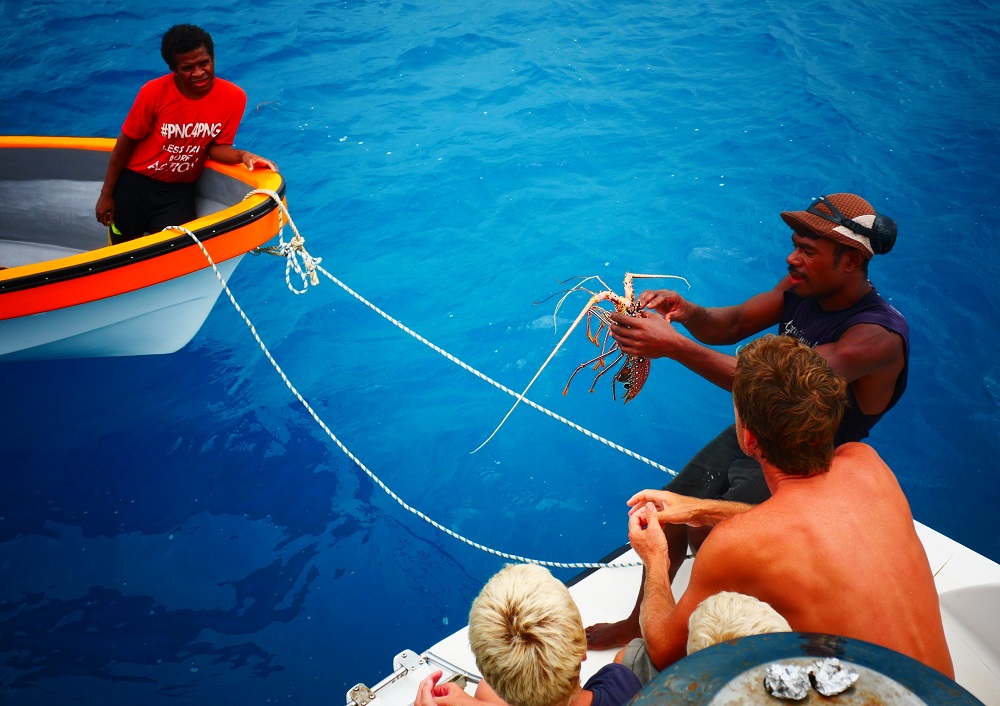
And so, as soon as we’re anchored near a village, the traders come in droves. Outboard-driven longboats full of dripping divers wanting to trade lobsters for old dive masks, fins, or snorkels. Spindly outrigger canoes tied together with palm string manoeuvered by elderly men asking for AA batteries, magazines or pens in exchange for garden produce, or by women and wide-eyed half-naked small children trading finely woven pandanus baskets and fruit for clothes, yeast, sugar and rice. We have brought soccer balls and school books, pencils, and pads for the children, which we dole out at any opportunity.
We never turn a trade down, and so accumulate a lot of finely woven baskets, but we do try asking for the stuff that we actually need.
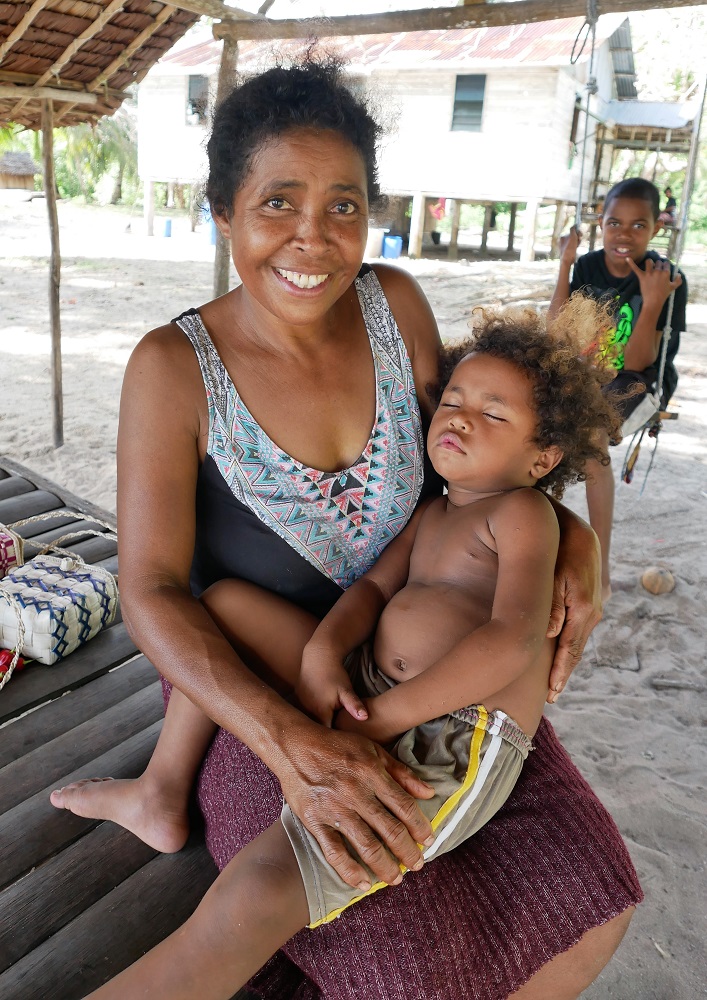
“Have you got eggs?“ I ask Julie, a local woman one day when we’re ashore. “Or greens – anything like spinach? Cabbage?”
“Yes, I can get some of the women who have eggs to bring some tomorrow. We have some greens for cooking, and pumpkin, sweet potato, taro, and yam?” she responds.
“We don’t need pumpkin or taro. But how about tomatoes? Green peppers? Or bananas?”
“We have chilli. And bananas. Lemons too. I get some of the women to come tomorrow.”
“What can we offer you in return?”
“I try to trade with yachts for the things that I can’t buy here,” she explains. “At the moment I need yeast – I have run out. The men are diving every day so I like to bake, they are hungry. So if you have some yeast I need that.”
We assure her that we have yeast. What else do they need?
“Sugar is good,” she says. “And lollies for the children. And balloons too for the children, many yachties bring that. Notebooks and pens and pencils I need also. I am leading a women’s group, we need to write down things, so notebooks are good. And Colgate – we cannot buy that here.

“I can get some vegetables from my garden, and from some of the other women. Limes, papaya, bananas. Maybe some women will have tomatoes,” she says, nodding to herself. “I will ask. We have no cabbage.”
“What can we bring for these women in exchange?”
“One, she has no clothes for her children, they are always naked apart from when they go to church. For her children’s clothes are good. Maybe sugar.”
I have nail polish and bracelets and pretty things for women – is she interested in that?
She smiles. “I have two daughters and many granddaughters. So bracelets and nail polish is good for me.”
And so the next day we head ashore, laden with jars of yeast and baking powder, bags of sugar, stacks of notebooks and bags of clothes.
It works remarkably well – we put out word of what we need (more eggs, more greens) and the next day someone paddles up to the boat with the produce asking to trade for what we indicated we still have left. There is a great appetite for trading here and we quickly run out of the most sought-after items – clothes (particularly for children), batteries, yeast, and magazines. Julie explains that the trade is supposed to be fair, that the value of what we swap should be about equal. But the temptation to keep asking for more when they suspect we’ll give it is too strong for even her to stick to principles of equal value and there is no doubt that we’re paying through the nose for the produce we get.
One morning, a young woman paddles up with her small child in a fragile outrigger. It is raining lightly and both her and the child are soaked through, tattered t-shirts and shorts clinging to their bodies. With one hand she is paddling into the wind to keep the boat next to our back, with the other she is bailing the low-lying canoe which keeps filling up from waves spilling over the edge.
“Come on board. Do you want to trade?” I ask, throwing her a rope to tie the canoe on.
“Yes,” she says, climbing onto the boat with a small banana leaf package in one hand, the toddler in the other.
“What do you have?”
She opens a wrap of banana leaves to show a small mound of sweet potatoes and a plastic cup holding one egg.
“I have sweet potatoes already,” I say. “But I’ll have the egg. What can we give you in return?”
“Hooks, fishing line?” she says. “Pens? Paper? Clothes.”
I bring out a couple of pens, three hooks and 10 m of fishing line, and she nods enthusiastically. Her sister paddles up in another outrigger canoe and they have a brief conversation in the local language.
“She has limes,” she says. “Do you want them?”
“I have limes already. But if she has any eggs I’ll take them.”
More conversation. “She has eggs back at the village. She bring tomorrow.”
I nod. “That’s good. I’ll give you rice? Sugar? And you bring eggs tomorrow morning.”
They leave with the hooks, line, pens and a kilogram each of rice and sugar. As they are paddling away, the sister turns towards me.
“I’ll bring egg tomorrow.”
I turn to David. “I hope she meant eggs, plural,” I say. “It’s a lot to pay for just one egg…”
The following day I wait in vain for my egg, but it is probably just as well – it is a long paddle for what she undoubtedly needs more than I.
“I want to encourage more yachts to come here,” says the Ward Councillor one afternoon as he is sitting onboard our boat chatting. “And we try to educate the community about not begging, about always bringing something to trade. We tell them to be respectful, not to let the canoe scratch the yacht and not to come on board unless invited.”
There is no doubt that trading leaves both parties with more dignity than outright begging, but many yachties still find the constant onslaught of visiting canoes too much after a while. There used to be an Australian rally going to the Louisiades but it was stopped, allegedly after participants found the constant interactions with locals too hard. We find people polite and respectful and everyone brings something to trade, but we still end up hiding inside when we’re doing schooling in the morning because if we go outside we will be interrupted so frequently that the children get nothing done.
It is a difficult balance – we are visiting their country, and we have so much and they so little, making them worthy receivers in every sense. I wish that I had brought more used clothing and children’s books; it would have been so easy to load up on that in New Zealand and would have been cherished here. The smaller Melanesian frames mean that our clothes fit them, unlike in Polynesia where only children were able to fit our adult clothes. (There are many charity initiatives whereby yachties transport used women’s bras to Fiji and hand out to locals, and I always wondered what all the size 26 Fijian ladies do with the size 10-16 bras that they receive from well-meaning middle-class Kiwis. They probably lean back heavily on their pandanus mats and laugh at the misplaced charity of all these pale, undernourished Palangi).
We help in other ways. David prints out charts for the area to help them in their fishing and diagnoses a battery problem in a grinding tool that isn’t working.
One island is famous for their sailing outriggers, and when we’re there they are building a large boat.
“It’s for the island of Sudest,” explains Martin, the elderly man in charge of the build. “We trade the boat for ten pigs and some shell-money that they have on their island. We don’t have the shell here but can use it to buy stuff from other islands.”
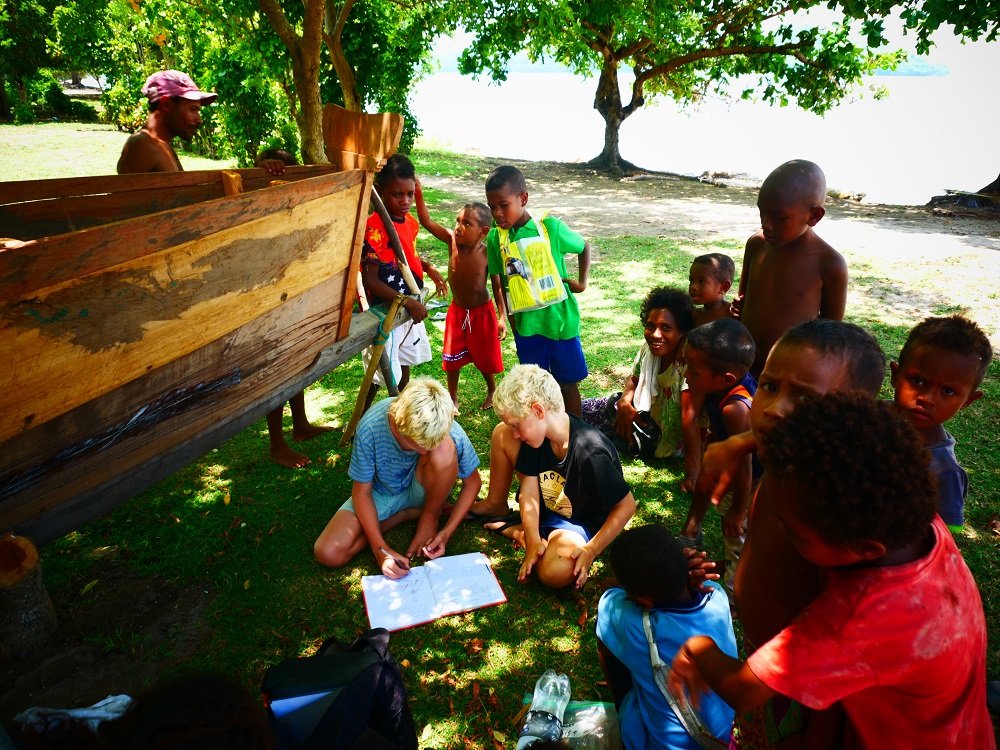
The boat is made from planks of hardwood that they have painstakingly chainsawed to the right thickness. One long plank has a crack in it, and Martin is asking David for wood glue to repair it. Traditionally, they would have replaced the plank, but our being here means access to tools and materials.
“I don’t think wood glue would work,” says David. “But I can bring in some epoxy, and we can fill the crack with that. I can bring in some stainless-steel screws as well.”
After a morning of hard work the plank is waterproof, the boat contains a few more screws, and Martin is grateful although David is not certain that he’s added a lot to the craft’s seaworthiness.

At the menacingly named Conflict island group, trading has been taken to the extremes by some Americans who apparently traded a whole atoll, including lagoons and about a hundred islets, for some tobacco with the naïve local owners in the 1980s.
The Conflicts is a beautiful place with stunning marine life. A recognised marine biodiversity hotspot featuring higher fish species diversity than the Great Barrier Reef, the island group is home to the Conflict Islands Conservation Initiative, started by the millionaire Australian owner who is a keen conservationist. He bought the entire atoll from the original American owners who were copra (coconut) farming and developed the place into a cruise-ship destination which now receives a couple of cruise ships a month during the season.

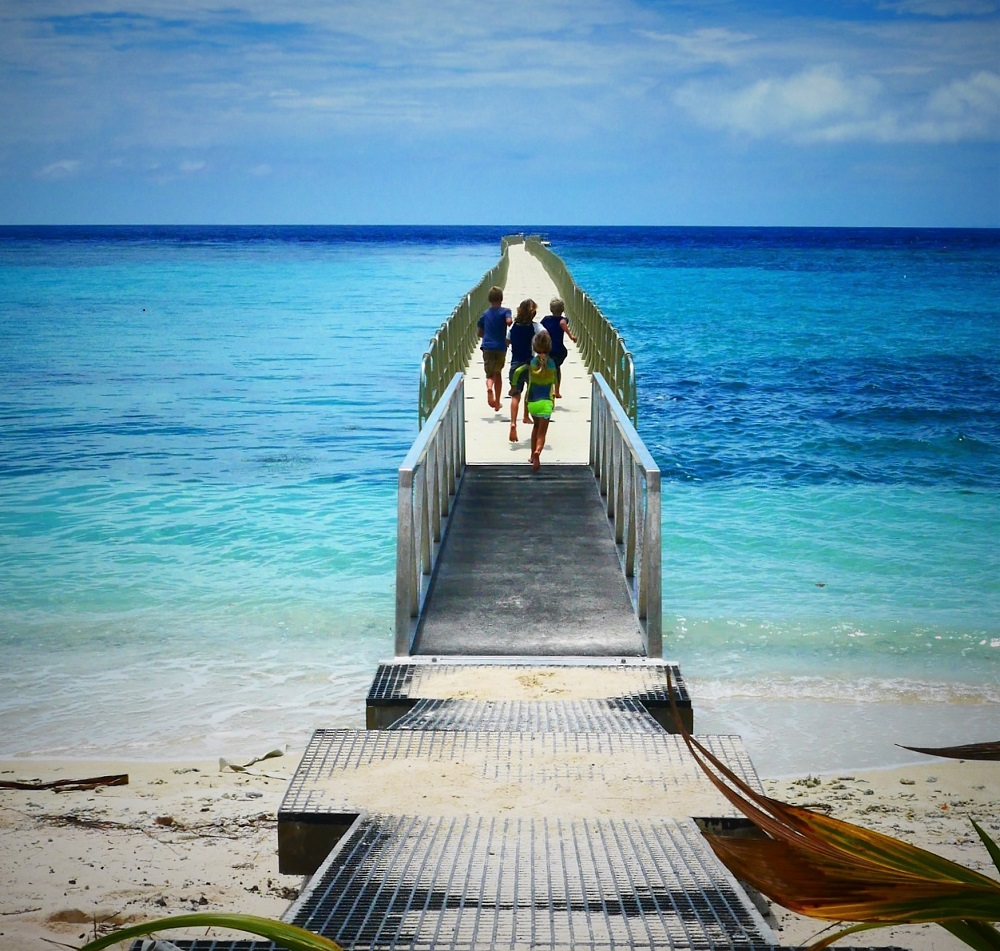
Here, we swim with turtles over pristine coral, seeing white, blacktip and grey reef sharks and tawny nurse sharks in the depths below. It is an amazing place. Because the Australian owns the entire atoll he is (rightly or wrongly) discouraging fishers from staying on the little islets that rim the spacious lagoon, making it hard for Beche-de-Mer divers to erect the small temporary camps present on most small islands which allow them to come fishing from far away and stay for weeks or months. The Conservation Headquarters and the main island is located at the far western end of the lagoon, where a huge 200 m long floating jetty is built out over the water right from the shallows out until the depth drops off to thousands of metres.

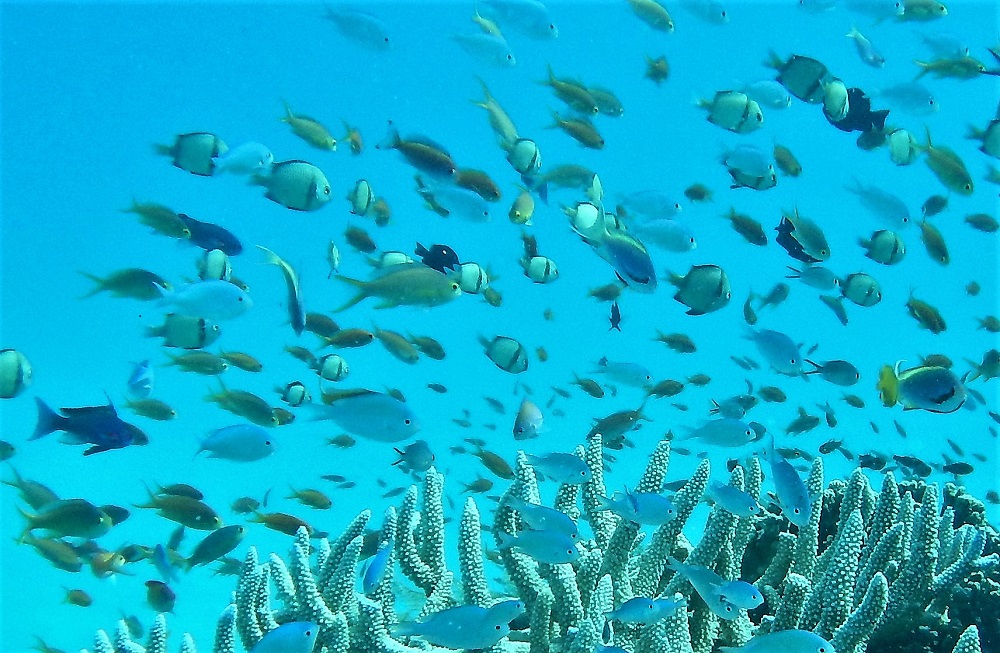

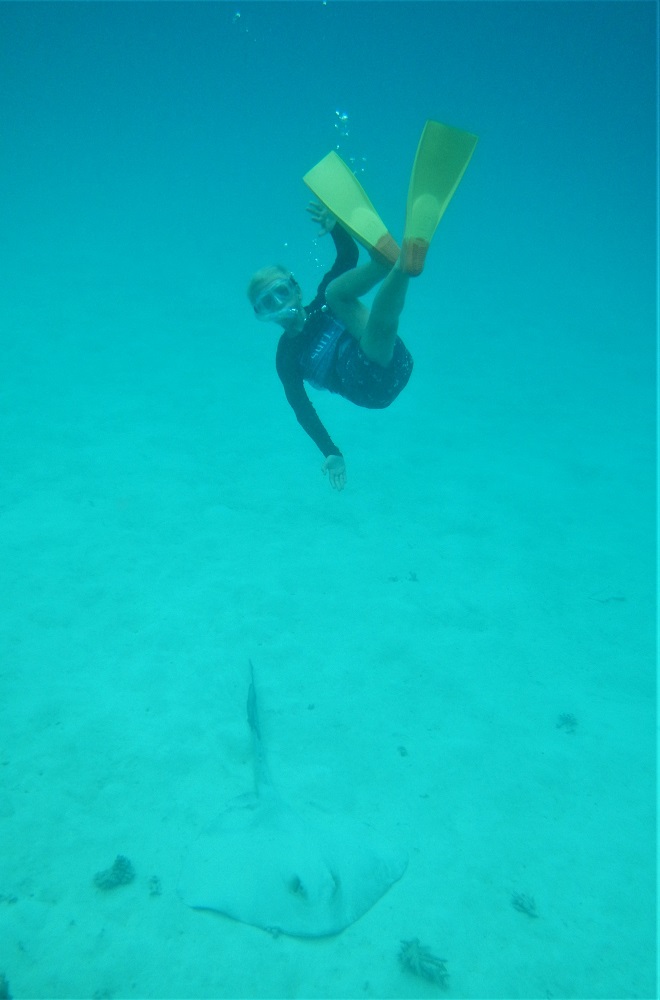

The marine protection makes for the best marine diversity I have ever seen, with thousands of coral species carpeting the outer reef walls over which dense throngs of fish of every variety hover. In this marine reserve we see sea cucumbers for the first time in the Louisiades, as well as good size turtles, sharks and a huge diversity of rays. The shallow coral reefs of the lagoon feature crystal-clear waters, aquarium-like conditions where little pristine coral reefs are dotted along the vast sandy bottom, each a home to tens of thousands of tiny fish that rapidly duck for cover within branching coral or behind swaying seafans as we approach. Onshore at the Conservation Centre is a turtle hatchery where volunteers from Australian Universities collect the Hawksbill and Green Turtle eggs from the beaches of the surrounds, transporting any at-risk eggs to the hatchery to see the babies safely hatched. They release hundreds of turtles at a time and keep some females for broodstock.
“The problem is that turtle eggs turn male if the temperature is above 28 degrees C,” explains Ed, the English manager of the island. “All the sand around here is around 31 degrees C so this year we only get male turtles hatching. The locals hunt turtles, preferentially females who they say taste better, so there are not many large-sized females left in the wild. They only breed once they’re about 30 years old.”
It is a good conservation effort trying perhaps in vain to make a difference. The Hawksbill Turtle is now critically endangered, and rising ocean temperatures combined with intensive hunting may drastically reduce the number of females to the point where local populations are not viable.
The Louisiades is full of dolphins. One day when sailing slowly west we meet a pod of Risso’s dolphins, the 4-metre ‘blackfish whale’ cousins of the melon-headed whale. About 50 of them are lingering at the surface just in front of the boat, their bulbous, beakless heads featuring what looks like a permanent smile as they log on the surface, occasionally doing headstands for no obvious reasons. The young are brownish, the females grey, and the males so heavily scarred that older individuals appear almost white, their docile-looking exterior obviously belying the true nature of their warrior ways.


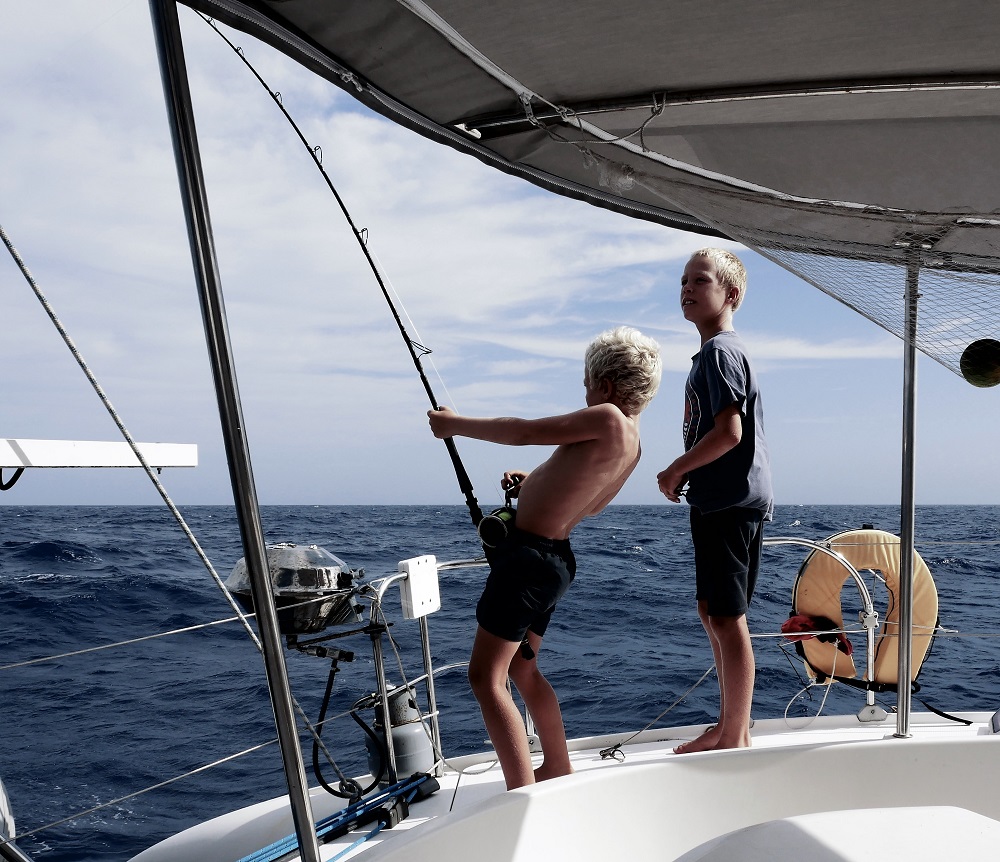
Where sharks in the eastern region were scarce due to shark-finning, nearer the mainland they seem to be thriving, although our evidence is circumstantial: every fish we catch seem to be missing a chunk. We catch two fish that have been victims of cookie-cutter sharks, bearing the signature circular wound on their sides. We hook a wahoo whose tail is bitten off while we reel it in, making it the easiest wahoo we’ve ever landed, and catch a dogfish tuna which is missing a huge bite by the time we land it.


It is hot and humid here, the air temperature 28-30 degrees C, the lagoon waters a balmy 28 degrees. When the wind is blowing the heat dissipates briefly, but on still days the scorching sun burns through the plexiglass hatches, leaving the interior of the boat like an oven. We spread a tarpaulin over the saloon hatches to keep the morning sun out and the children sit sweating doing their schooling until the sun rises high enough in the horizon to lessen the direct impact. Hottest are the rainy nights where we have to leave the hatches closed, the warm, stagnant air of the cabins festering as we lie breathless and sleepless, tossing and turning the night away bathed in sweat.
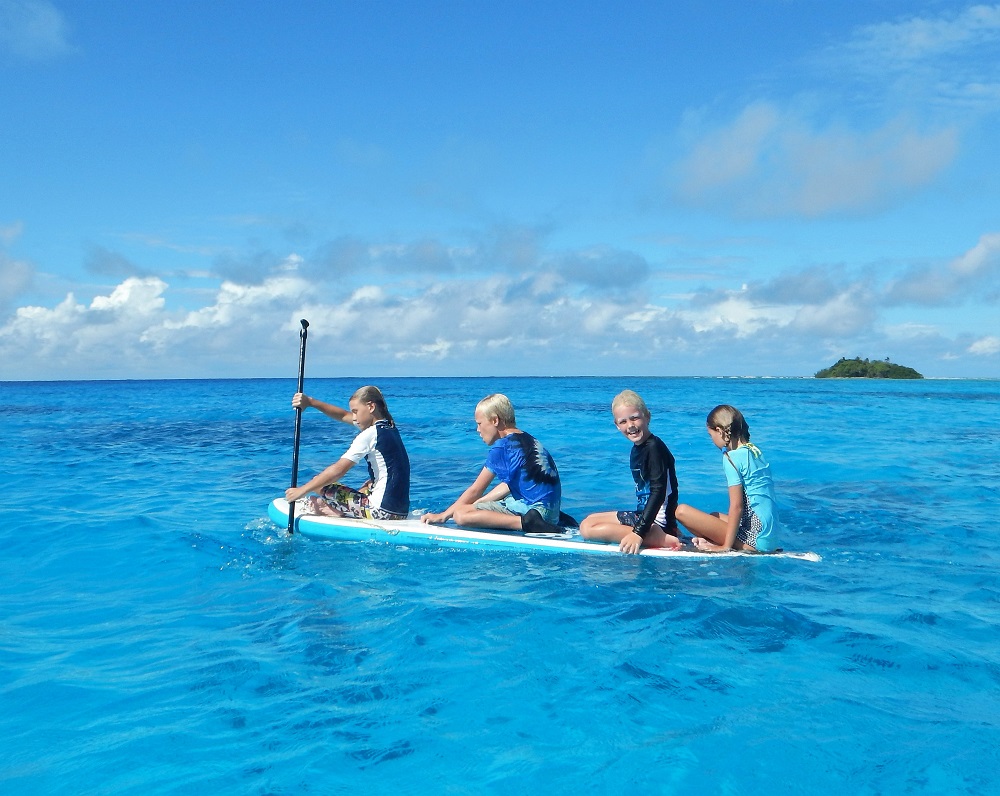
During the day the heat is easier to bear: we just jump in the turquoise water whenever we are too hot, the children spending most of their days kitesurfing, snorkelling, playing on the beach, or swimming and splashing in the shallow blue waters over sandy bottoms.
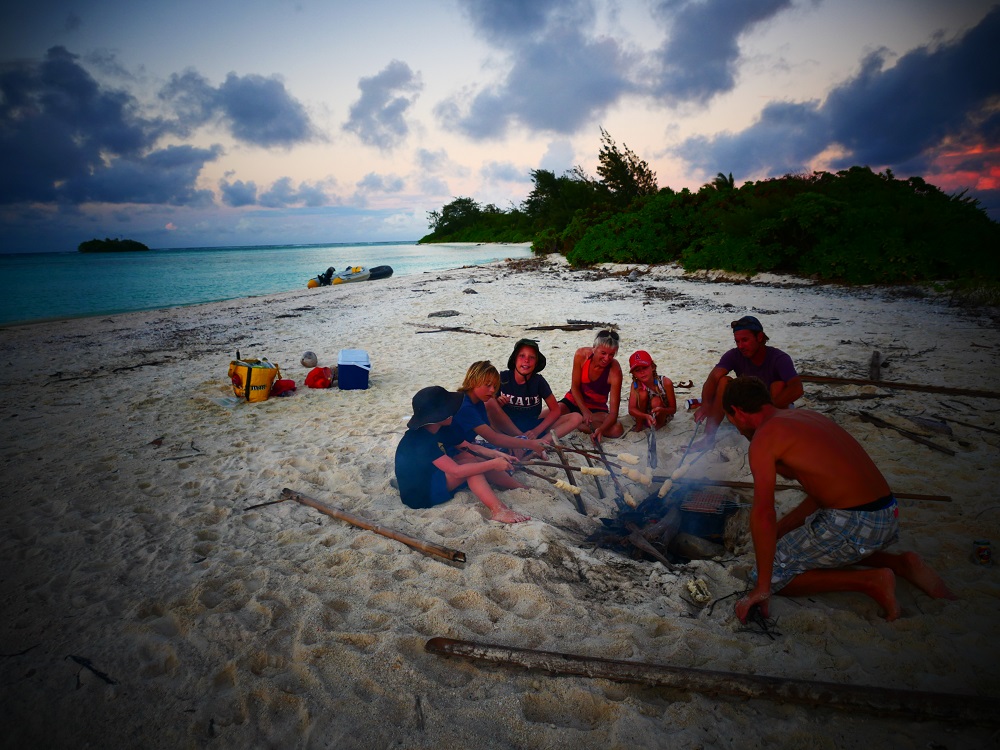


 By the time we leave the Louisiades we have traded all we have. Gone are the bags of sugar, rice and flour. The fishing wire and hooks have been given away, as have the soccer balls, school books, magazines and books, pens, pencils, notebooks, erasers and rulers. The spare spark plugs for outboards have changed hands, as have all extra clothes and batteries. In return we have received memories that will never be erased. We have eaten local produce and shellfish, we are brown and sore from weeks of kitesurfing, snorkelling, walking in villages and playing on beaches. The Louisiades is an amazing place, and we wouldn’t trade our experiences here for anything in the world.
 SV Bob The Cat