I’ve been wanting to see a dugong forever. I remember reading about them as a child in a Jaques Cousteau book we had lying around at home. Fascinated with their immense blubber, their hoover-like mouths, their docile grazing habits, I vowed when I was 10 years old that one day I would see one.
Now that we’re in Vanuatu I feel sure that the time has finally come. We’ve been in dugong territory before, in New Caledonia, but despite keeping vigorous lookout I never spotted one. The mistake we made was to assume they were like dolphins – that when they were about we would spot them, and that once we spotted them they would be interactive, frolicking around the boat, swimming up to us as we snorkelled.
Looking a bit more into dugong behaviour it seems I was naive. They are known to be incredibly shy of humans and have no desire whatsoever to play. Although they breathe fairly often (every 4-8 minutes) they don’t spend long on the surface at all, often just sticking their nostrils out of the water for a split second. Nor do they make any noise – no squeaking or clicking like dolphins or heavy breathing accompanied by clearly visible water spouts like whales. They spend almost all their time vacuuming the ocean floor, ingesting huge quantities of seagrass to keep up their well-padded appearance.
Dugongs are found in several areas of Vanuatu, and the mission when we leave Port Vila is to find one.
Our first stop is the northern end of Efate Island, where we spend a couple of days kitesurfing in high winds under moody skies. A private island offers a brilliant sandspit on which to launch; unfortunately, the absentee owner is not keen on us using it, so we launch in the water but the kids are still able to enjoy the flat water shallows.
There are meant to be dugongs in the area, but the windy conditions mean that it is almost impossible to see them – the water surface is broken by waves and they could be having a big meet-up right next to the boat without us noticing.

After Efate, we head to Lamen Bay in Epi Island where dugongs are sometimes seen. The elusive beasts are absent, but lots of very chilled green and hawksbill turtles inhabit the bay, providing for some great snorkelling.

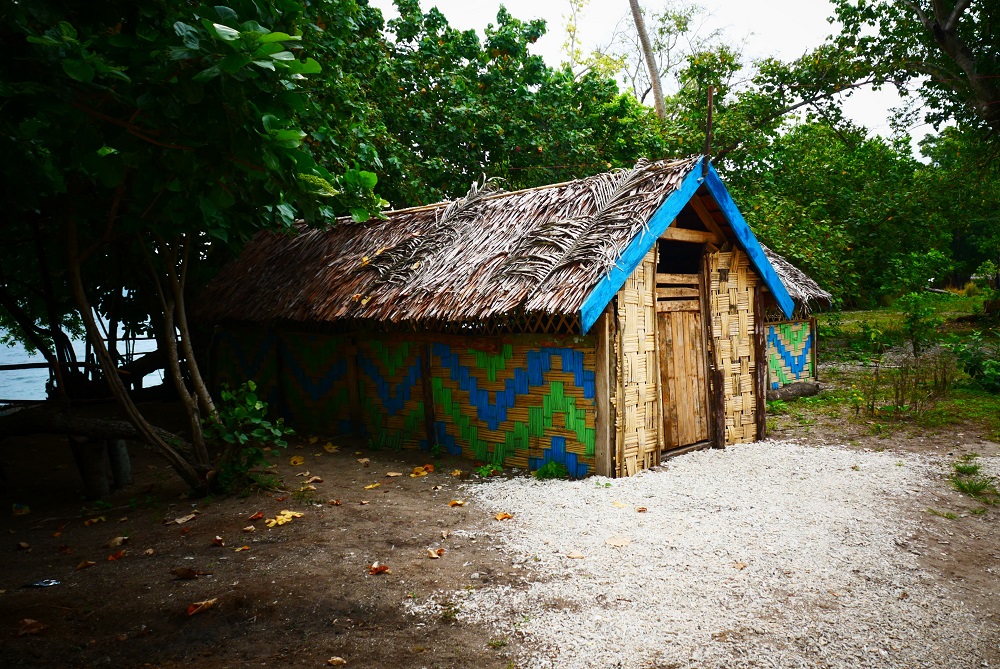
From Epi Island, we head to Malekula Island. Malekula is famously the last place in Vanuatu where a human being was eaten, in 1969. It is also famous for the two inland tribes, the Big Nambas and the Little Nambas, named for the size of the men’s penis gourds. In addition to this interesting phallically-focused cultural division, they have dugongs.
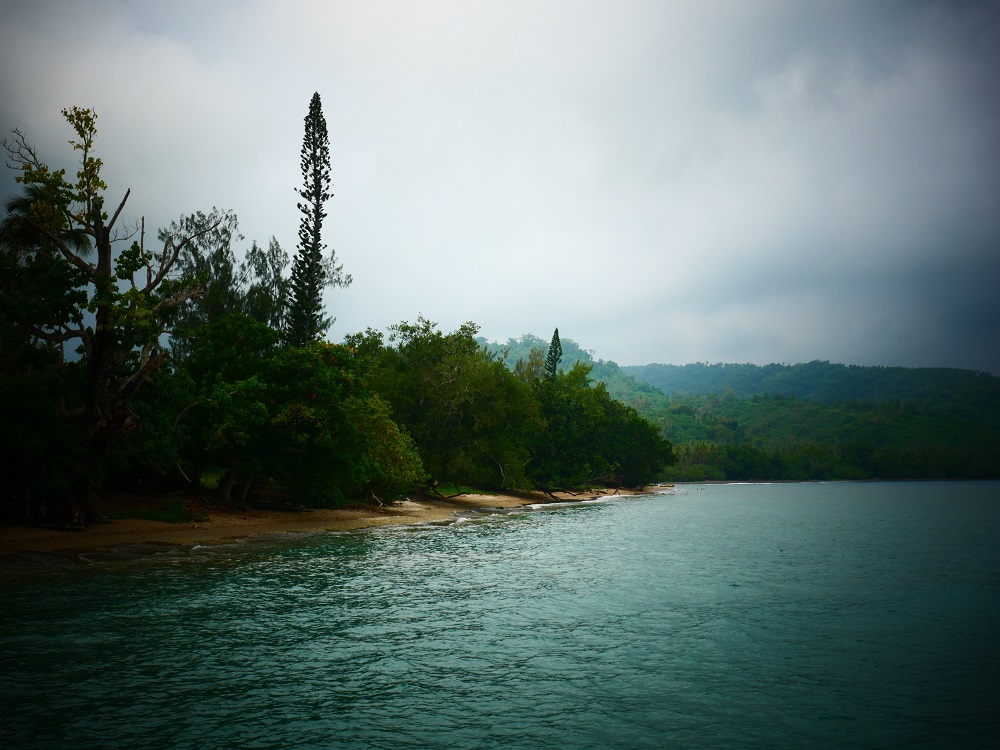
We anchor in Gaspard Bay at the southern end of Malekula. The bay is a grey expanse of shallow water lined by lush islands bursting with green. The bottom is covered with seagrass, the preferred food of dugongs, and there is a resident population which is the target for many tours.
We kayak the perimeter of the bay, keeping an eye out for dugongs and surveying the seemingly impenetrable hillside jungle beyond the mangrove fringe. As we get closer to the shore, the noise rises to a deafening buzz of cicadas and birdsong.
The dugongs are about but hard to sneak up on and to begin with we only snatch brief glimpses: a square, grey snout sticking vertically up the water, quickly vanishing when I approach in the kayak, the gentle arc of a finless back curving through the water just ahead of David on the paddleboard.

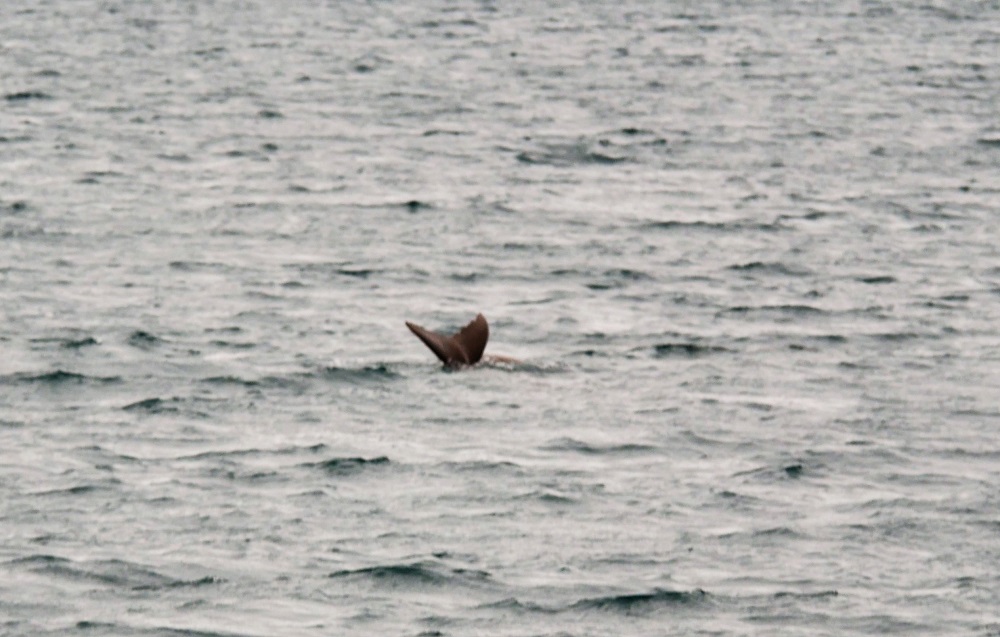
On our second morning, the show is finally on when a dugong mother and calf surface right next to the boat, treating us to a nice view of tailfins and blubbery brown shapes logging just under the surface and generally frolicking around. David jumps in the water and manages to snorkel with them briefly, watching the pair slowly dive down and vanish in the murky depths.
I would have liked crystal-clear waters and a throng of dugongs so thick I couldn’t swim through it but realise that Gaspard Bay is probably as good as it gets with dugongs here. So I pronounce myself satisfied and we are finally able to move on. Next stop: the black magic volcanic island of Ambrym.

 SV Bob The Cat