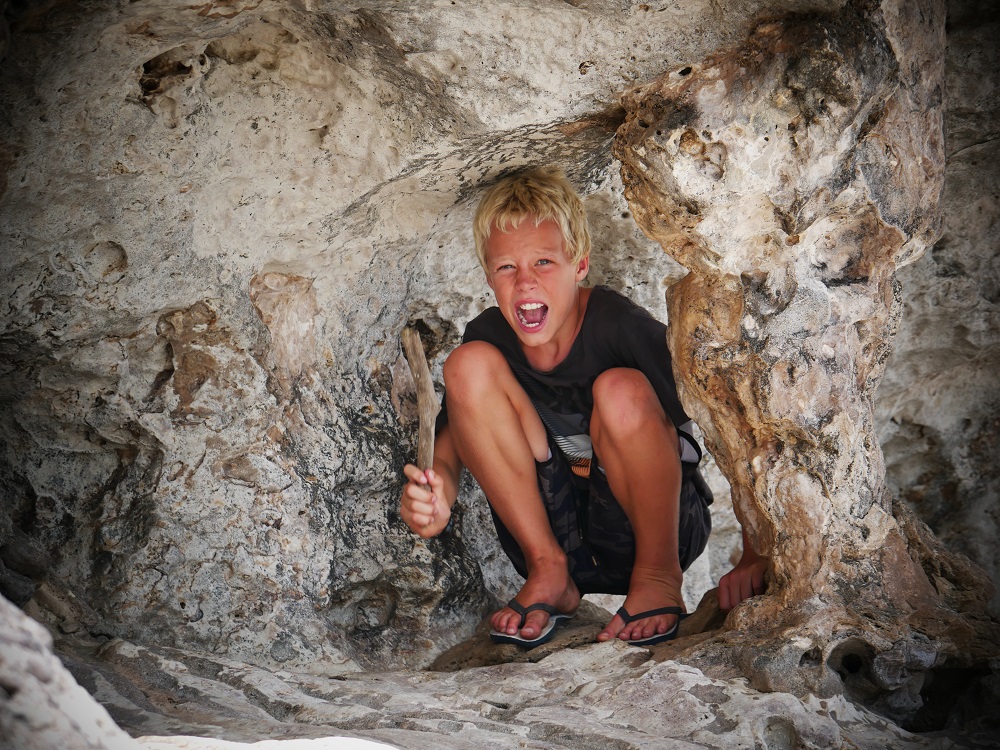
Once upon a time, a beautiful princess, Yalewa-ni-Cagi-Bula (Lady of the Fair Wind) lived on a small island in Fiji. Of godly descent, she was the fairest of all women in Fiji; her beauty stunned all who beheld her, and any man who had set eyes on her was in awe and wanted her to become his wife.
Her home was an emerald green saltwater pool in a cave behind the ragged rocks that guard the western shores of Vatulele Island, over the seas from Viti Levu. Her beauty was so famous that chiefly warriors came from all over Fiji and beyond, from the whole of the Pacific, to ask for her hand in marriage. Each suitor brought a gift which they presented to the fair maiden, hoping that by bringing her earthly goods they could persuade her to marry them.
The princess was as picky as she was beautiful, and refused suitor after suitor, deeming them unworthy of her love.
The son of the highest chief in the north came bearing the tastiest fruit, asking for her hand. She asked him where the fruits were from, and when he spoke his home island, she refused him haughtily, saying that only fruits from heaven would be sweet enough to match her beauty.
The son of the highest chief in the south came bearing the shiniest pearls, asking for her hand. She asked him where the pearls were from, and when he spoke his home ocean, she refused him disdainfully, saying that only pearls from heaven would be shiny enough to match her lustre.
Finally, the son of the highest-ranking chief in the whole of Fiji came to ask for her hand, bringing a gift of succulent cooked prawns wrapped in banana leaf. She asked him where he was from, and he pointed just over the eastern horizon. She laughed scornfully and said that only a man from the heaven above would be supreme enough to match her divinity. Outraged, the chiefly warrior flung the prawns at the beauty, and when they scattered into the pond surrounding her they were restored to life. And that is how the prawns in the pond in the cave at Vatulele Island are red even when they are alive, unlike all other prawns who only turn red when they are cooked.
The ura mbuta, or ‘cooked prawns’ are rare, and to this day sacred to all Fijians. Visitors to the pond will sometimes see Yalewa-ni-Cagi-Bula at the cave but to locals she remains hidden. If the goddess is unhappy with you – if you haven’t presented your gifts to the chief of the island – no prawns will show themselves to you. If she is happy with you, the prawns will be out in great number.

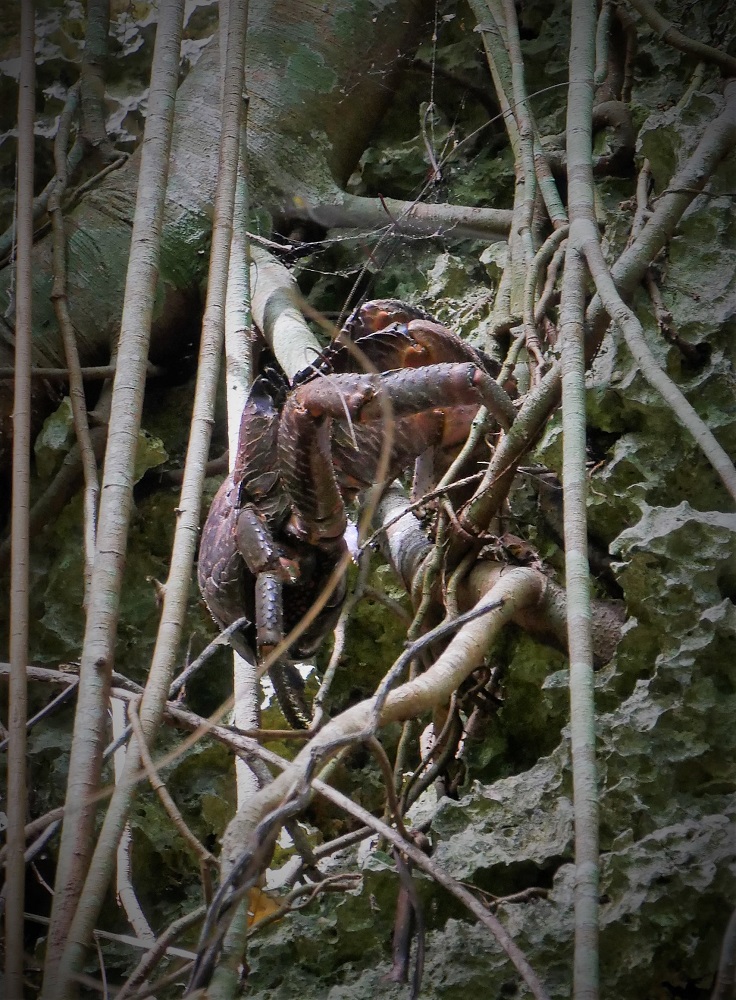
Mele smiles and takes a step back from Korolamalama Cave. We stand beside him, surveying the crystal-clear water and the red dots of prawns scurrying hurriedly around. There are plenty, so we must have followed good protocol when we did our sevusevu in the village. The pool is enclosed by vertical limestone rock, beyond which the coastal forest stretches, intercepted here and there by sharp rocky outcrops. The trees are big and tall, with thick, heavy roots spreading and rising far above the ground into a tangled mess of thick vertical branches. Behind the cave, a steep limestone wall rises perhaps 25 m from the ground. Trees poke out of the rock at the top, clinging to the limestone cliff with their roots stretching all the way down the side of the cliff to the bottom.
The cave is not far from where we are anchored alongside a beautiful white beach on the western side of Vatulele island. Flanking the beach is an abandoned resort, complete with 19 bure (Fijian-style huts used in tourist accommodation), a white clifftop mansion, and several unfinished buildings on the foreshore. And a huge ferry wreck, a rusty death trap measuring 60 metres in length, which is parked on the sand at the southern end of the beach, just in front of the resort’s pink honeymoon suite.
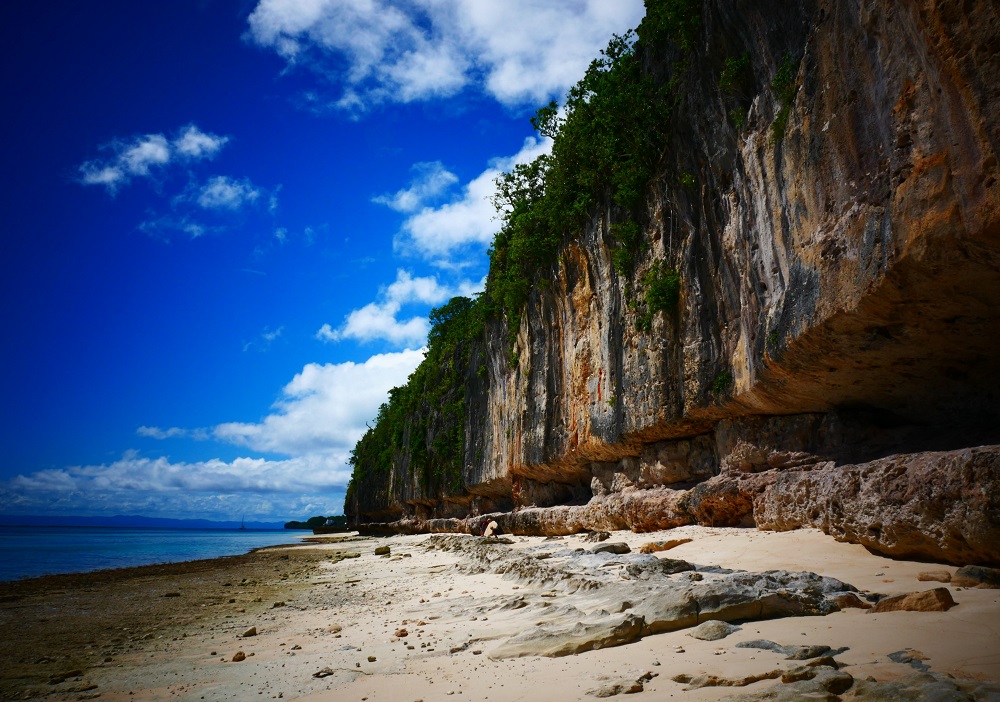
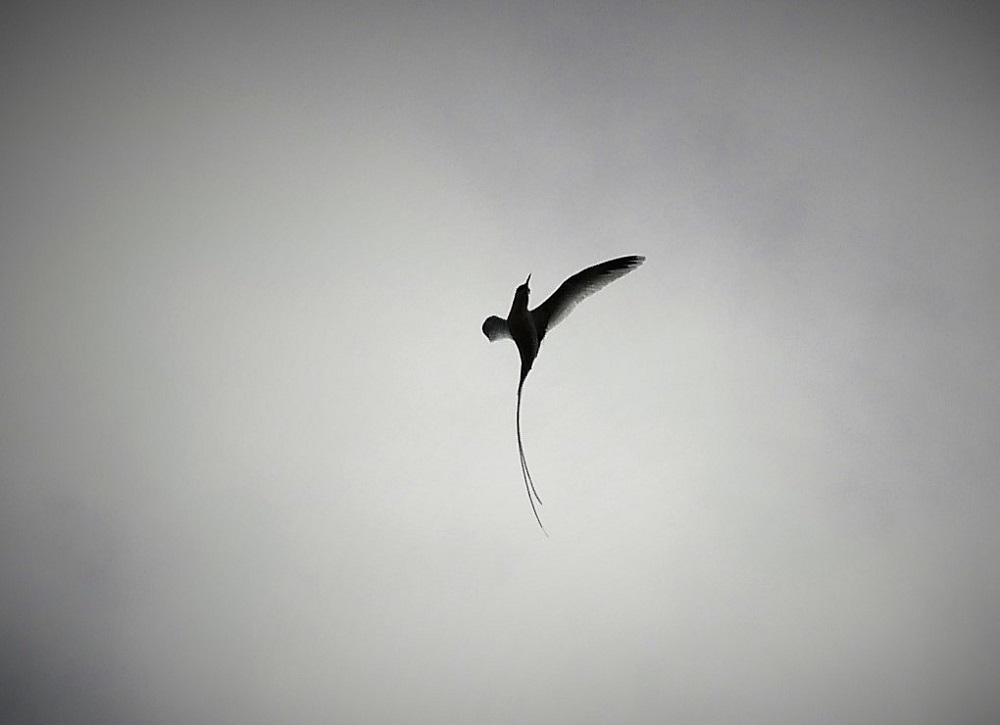
It is a stunning location. The outer reef is not far from the beach, the glassy lagoon providing calm waters for safe swimming and snorkelling on the many coral outcrops. The resort faces west which makes for spectacular water sunsets. White tropicbirds fly from the bush, their long tails clearly outlined against the deep blue sky. Whales pass on the outside of the reef, large black lumps passing by, clearly seen from the beach.
Forsaken since 2015, the resort has had four different owners since it first opened in 1998. The exclusive holiday accommodation was built at great expense by two Australians in a New Mexico – Fijian fusion style and for years the five-star resort was the most expensive destination in Fiji. The current owner, the multi-millionaire French-Australian Albert Bertini, closed down the resort when he ran into cash-flow problems after spending in excess of A$20M on building additions which now stand half finished on the foreshore.
Bertini, 50, was holidaying at the resort in 2011 when he decided on a whim to get married to his 24-year-old girlfriend and to buy the resort they married in to boot. The resort was in receivership at the time, and shortly after Bertini took over in 2012 he started renovating and building. A property tycoon worth an estimated A$400 million, Bertini started developing at full pace. It was around this time that he declared bankruptcy in Australia and fled the country leaving a string of creditors in his wake.
He began renovating the existing bure and started a string of new building projects, including a second floor on the white honeymoon villa to house his extensive wardrobe; more holiday accommodation at the back of the site; a stone-clad indoor garden sporting a Grecian design with 200 glassed windows hemming in a small grove of coconuts behind a swimming pool facing the beach; and a bunker-like protrusion on the foreshore, entirely clad in black mirrors, a building used as a storage facility for materials for the many building projects. His vision was to turn the resort into a paparazzi-free party venue for the rich and famous, a vision which he successfully persuaded a number of celebrities to invest in.
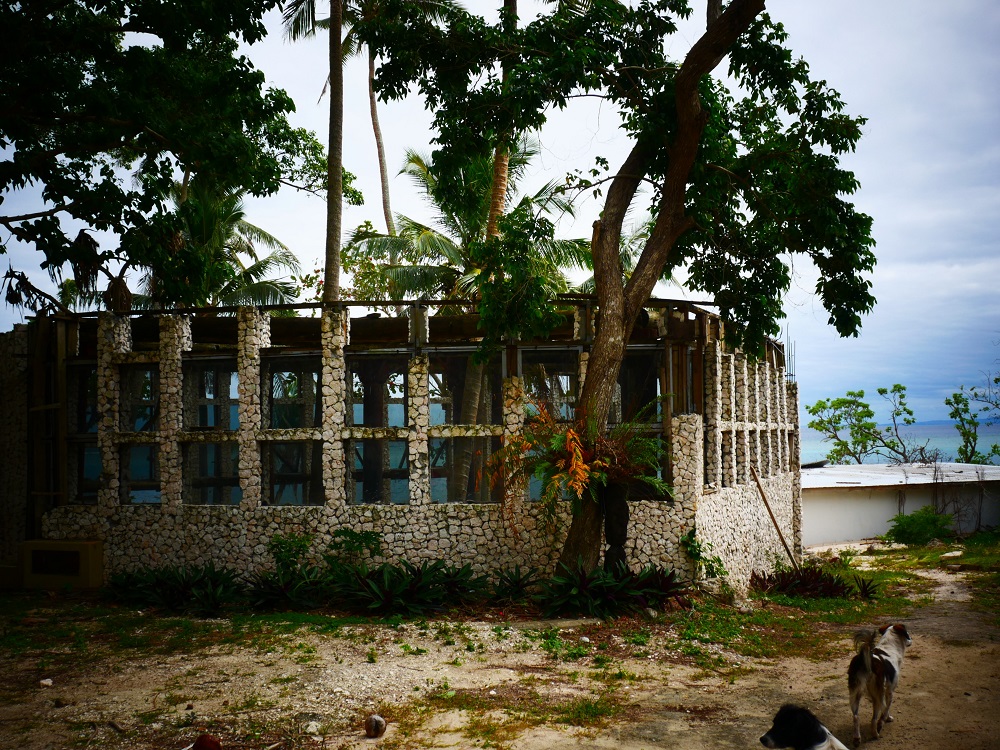
According to the villagers, he would tear the new buildings down as fast as he erected them, finding faults and changing his mind, leading to an endless cycle of building where nothing was ever completed.
The rusty ferry was his final touch, a departing gift to the site. Intended to be reconfigured to become a nightclub, he pulled it ashore at great expense, only to abandon the entire resort not long after.
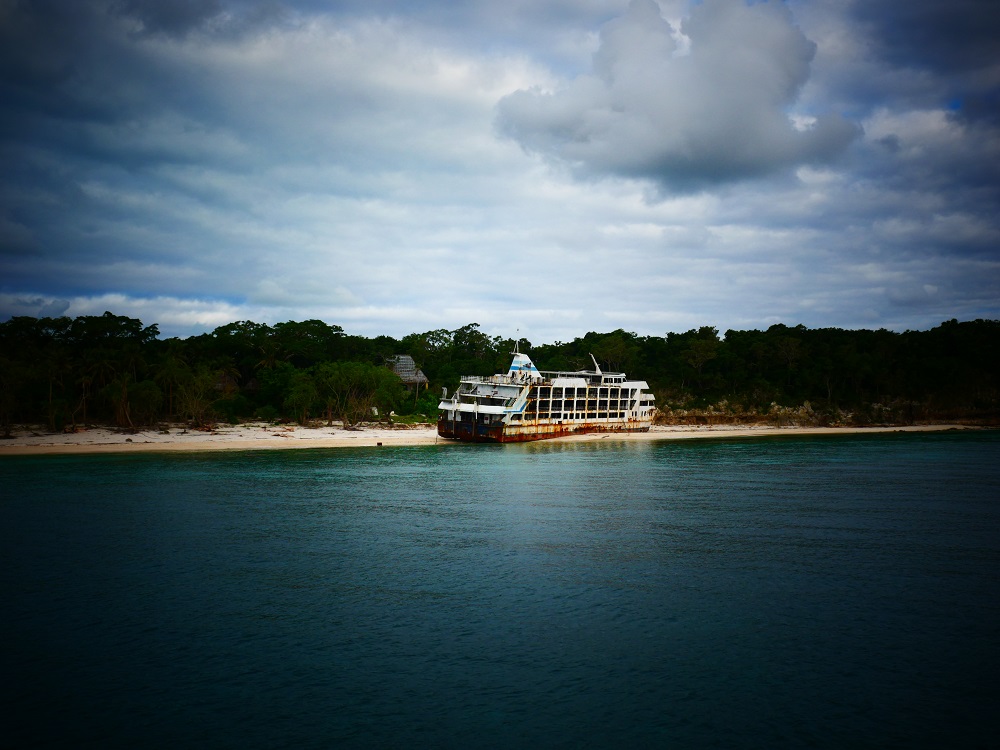
The resort is still beautiful, although neglect and the weather have taken their toll. Discrete from the outside, the insides of the bure are amazing with exquisite tapa cloth covering the ceilings entirely.

Horrible damage was done to the resort by Cyclone Keni in April this year, which resulted in standing waves higher than 15 m and flooding of the forward row of bure, carrying sand and debris into the beautiful buildings. The cyclone winds blew off roofs and smashed the mirrors lining the concrete bunker on the beach, leaving a devastation of broken glass, wrecked concrete and huge boulders strewn across the foreshore. The cyclone also smashed the ferry apart and moved it further along the beach where it now lies blocking the views from the honeymoon suite. All over the western side of the island, trees were uprooted, and because nobody has bothered cleaning up the site, the carnage is still clearly visible.

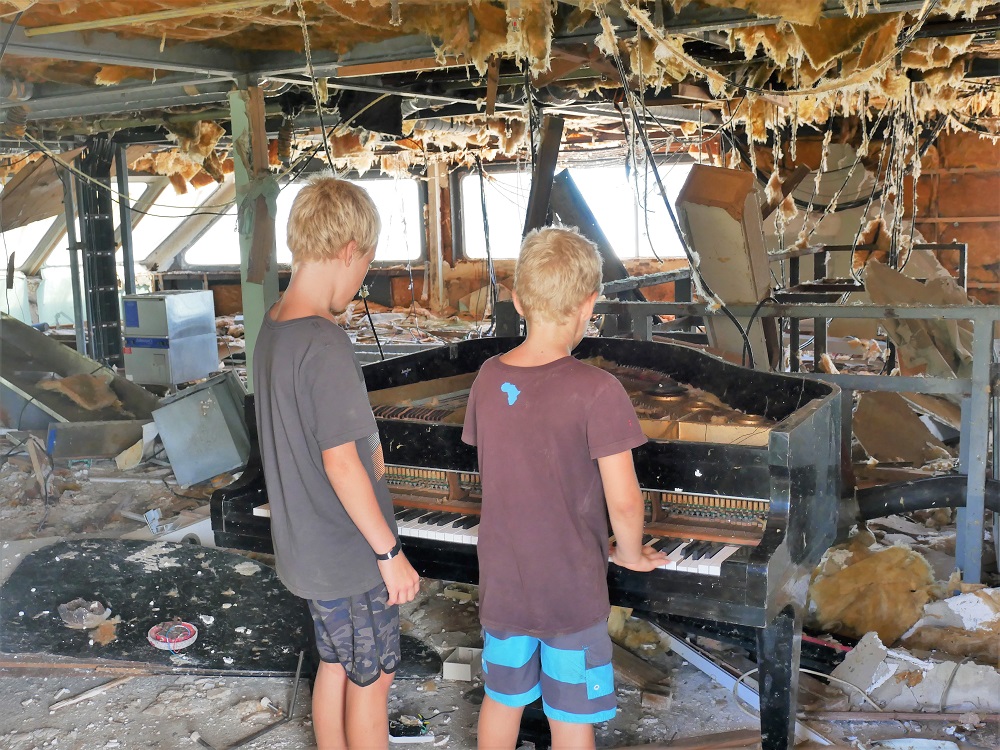
Mele works at the site as a security guard. He doesn’t know when the resort will be reopened but knows that Bertini is looking for buyers, and a few have come looking in the years it has been closed. Bertini is in and out of Fiji, where he has several court cases on the go, the charges including fraud and assault. Until the resort reopens, Mele is employed to keep the villagers from plundering wood, roofing, pipes and other goods. He’s from the village himself, the cousin of the chief, but lives onsite where he takes care of the two lovely dogs that Bertini abandoned.
On our last day on the island, Bertini turns up with a mate to pick up some clothes. I bump into him deep in the forest where I’m looking for rare birds. A short, wiry man clad in a white singlet, vertically striped pants, a bandana underneath a torn cap worn back to front and handmade Italian loafers, he resembles an eccentric trapeze artist on the run from Cirque du Soleil. Around his neck is a bolt tied into a leather string. On his left shoulder is a tattoo of a dark-haired woman, her hair running down his wiry arm, almost reaching his elbow. He speaks fast with a lot of hand movements and very intense eye contact.
“You should never do business in this country, never. The government will just fleece you, as soon as they discover you have money, they will just ask for fee after fee, charging you for everything, asking you to renew licences and pay more and more, until you have nothing left. What they want is for you to develop the place and then run out of money, and then they can take it over.” He takes his cap off, adjusts the bandana, and puts the cap back on.
His speech is littered with celebrity name dropping and references to all the money he’s lost, what the resort is worth, so many million-dollar figures that I have problems keeping track of it all. He reckons that the place is worth US$28 million, or perhaps it was US$32 million. He’s lost a lot of money, perhaps US$7 million a year, for at least the first two years, although that may have just been to the Fijian banks, or perhaps the Fijian government.
He loves Vatulele and has spent long periods, or perhaps 18 months or maybe just a month, here on his own, a time where he really got to know the rhythm of the place, learning when the turtles swim and the birds fly. He’s been awake at night when the moon is as bright as daylight. He’s explored everywhere and has found amazing stuff. Lost cities, with columns and carved head statues resembling those found at Easter Island. Blue holes and caves that nobody knows about. He has a deep spiritual connection to the site, the villagers, and the whole island. He really wanted the villagers to benefit from the resort, wanted them to run it, and he has helped them lots, building many houses, and looking after the old chief after he got a stroke.
His friend thinks that Fijians are just lazy and that the Indian-run government is ruining the country, taking it away from the indigenous Fijians. Bertini thinks that the laziness is partly the kava, that it’s like in the US where they drug their citizens, turning them into fat blobs that just sit and watch TV. In Fiji, it’s the kava drugging them all.
Now, reluctantly, he is giving up on the resort. He has subdivided his lease (the land is owned by a local on the island, but Bertini holds a 99-year lease) and is having it all valued, and it is worth perhaps US$24 million or maybe it was $34 million.
When I mention that I like the dogs he left behind, he offers that we can take one of them with us.
“Take her, you can take her with you, she loves boats,” he offers generously.
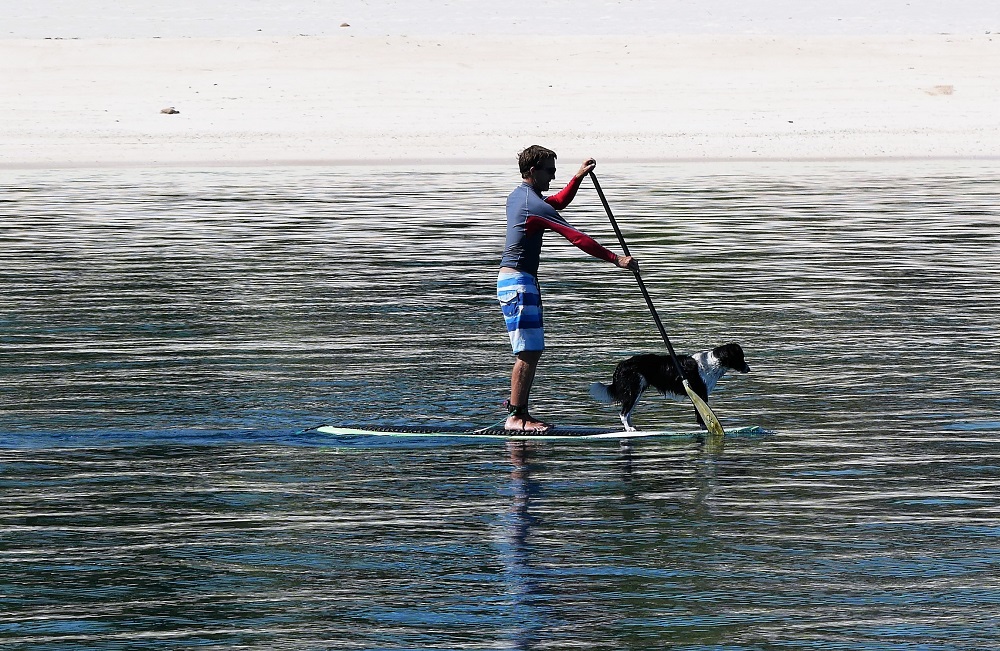
Having been here for a few days, we know that she loves boats – as soon as she sees us on anything that floats (paddleboard, kayak, dinghy), she swims out excitedly and tries to jump on board. If we refuse her advances she swims after us desolately for hundreds of metres, puffing for breath and guilting us with her big brown eyes.
The villagers allege that Bertini had a drug problem, but that kind of goes with the territory if you are a multi-millionaire wanting to develop an island for celebrities to ‘party on’ unwatched. Many mention that they did not like the direction the resort was taking, and the friends he was bringing. But they also acknowledge that had it worked out, they would have thought of him as a genius.
“If it works, he is brilliant,” comments one man. “If it doesn’t, he is a fool.”
It didn’t work, and now he is not much liked in the island’s main village.
We got all the gossip the first day when we went to the village to do our sevusevu.
“Everybody used to work in the resort,” explained Oona, the chief’s wife. “Then when it closed, suddenly there was no more work. We all want the resort to reopen, it was good for the village, good for the island. Now all we have is tapa.”
Tapa is the cloth made from the bark of the mulberry tree, and Vatulele is famous for the fine quality of the tapa they produce. The rhythmic beating of wood on wood can be heard miles away from the village, a loud, persistent dissonant banging pulsing out to sea and into the backland bush.
The banging comes from the production of tapa cloth. Each man on the island owns a stand of mulberry trees, and each woman works six days a week on the production of the valuable cloth. First, she strips the bark from the straight stem of the masi, as the tree is called in Fijian. Then she peels off the outer skin of the bark, leaving her with a white, pliable stretch of shiny bark. She next soaks it in seawater and then pounds the softened bark for hours until it forms a thin, white mat. The mat is dried in the sun, and once completely dry it is decorated with geometric patterns to make the coveted tapa cloth.

The cloth used to be used as clothing by chiefly persons but nowadays is used as decorative wall hangings, table mats, or as wrapping for important gifts.
It is a lot of work. All day the women thump wood on wood, gradually working the bark fibres into each other, thinning the bark by mercilessly beating it, spreading it out with blunt force.
It’s a world away from catering to hard-partying celebrities, but with the way things turned out it is good that tapa making survived on the island. By village standards, it’s a lucrative industry, and the village appears wealthy, with many concrete and brick houses although these were probably built by Bertini.
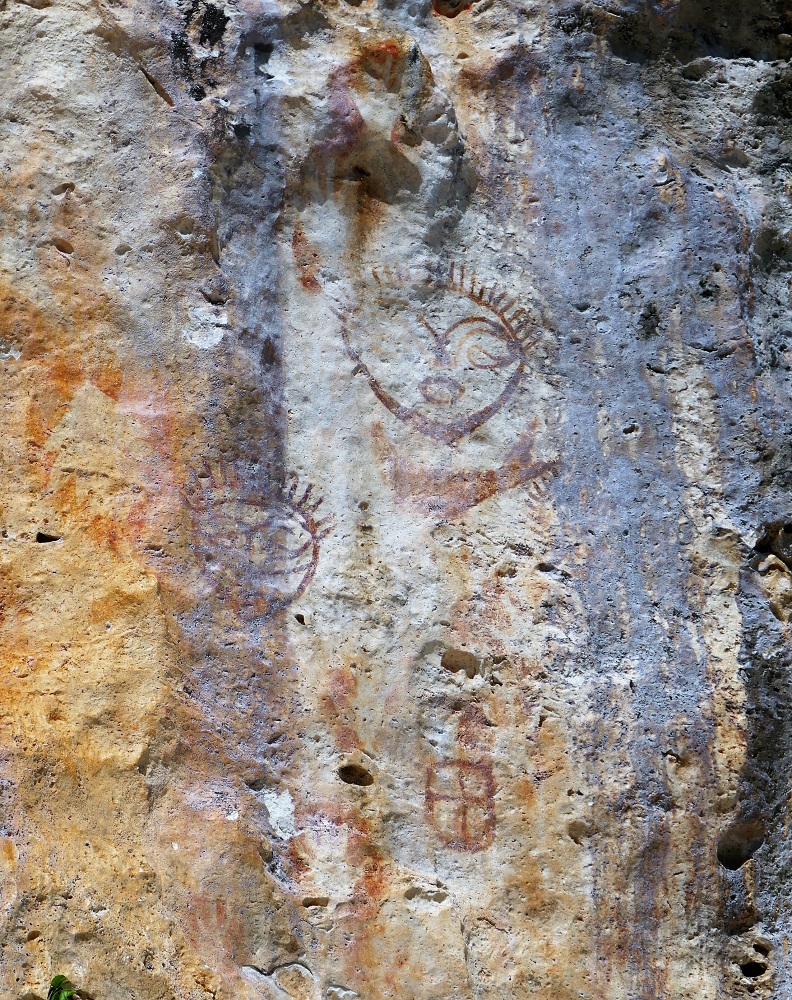
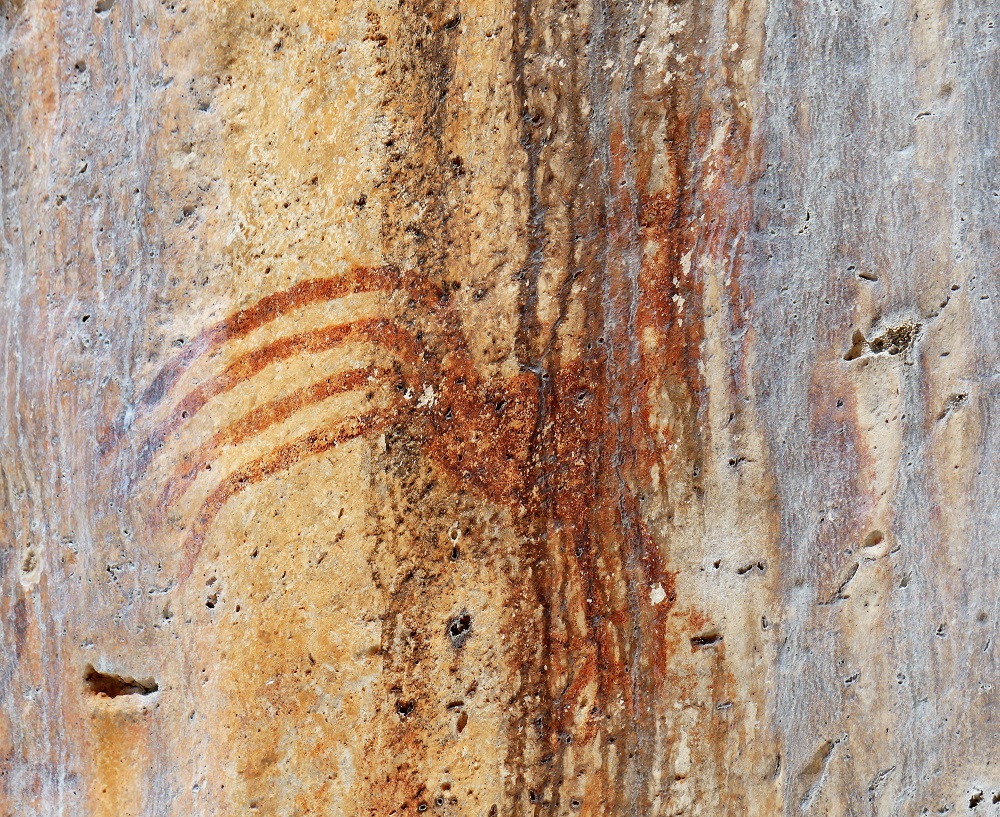
In addition to the ghost resort, the red prawns and the beautiful cloths made by the charming villagers, Vatulele sports ancient rock paintings along the steep western cliffside. According to Bertini, the paintings are 3000 years old, made by the Lapita. (Originally from Taiwan, the Lapita are named for the distinctive pottery that characterises the archaeological sites where their remains are found. They colonised the Pacific in progressive waves of eastward expansion and are thought to be the ancestors of modern Polynesians. The earliest humans to inhabit Fiji, the Lapita were mostly displaced in Fiji by a large influx of Melanesians originally from Papua New Guinea. Today’s indigenous Fijians are a unique mix of Polynesian and Melanesian heritage, in contrast to more eastward islands (like Tonga, Samoa, Tahiti, Hawai’i, and New Zealand) where there are only Polynesians, and more westward islands (like Vanuatu, the Solomons, Torres Strait Islands and Papua New Guinea) where there are only Melanesians.)
The rock paintings sit high on the steep cliffside. They depict chickens with long finger-drawn tails, handprints and round sun-like faces, immobile images looking out over the calm lagoon, providing a rare window into a past culture that left no written records. The paintings are faint in places, faded by the sun and rain, and I wonder how many have already faded out of existence, and how long the remainder will last in this exposed location. In one place, a large piece of rock has been cut out; apparently, a beautiful octopus used to be there, but someone removed it out to keep for themselves. The cliff face used to be behind a stand of trees, but Cyclone Kenny smashed the vegetation and now they are open to the elements.
On our last afternoon, at Bertini’s urging, we visit the crystal caves, a large inland underground system which is flooded with saltwater. The cave ceiling is made entirely of crystals spilling down in lumpy bouquets like the heavy petals of a succulent flower. When you shine a torch on them they sparkle and glitter, a brilliantly shiny contoured ceiling made from crystal chandeliers. The crystals extend underwater, and the cave looks like it goes on forever, stretching darkly under water in the direction of the sea.


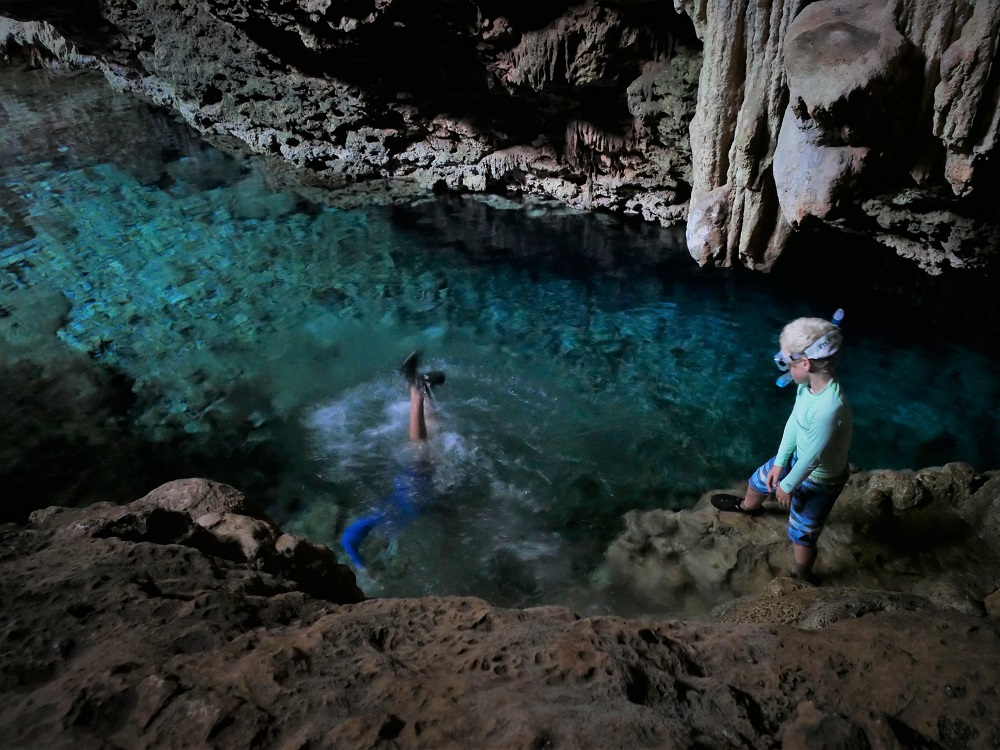
Like at Yalewa-ni-Cagi-Bula’s pond, faces, figures and ethereal shapes appear everywhere in the limestone rock, and it is easy to see how such landscape could inspire a deep spirituality, giving rise to legends and the ancient sun-like faces painted on the rocks of the coastline and Bertini’s ties to the island alike. Hopefully, he’ll find a good buyer for the resort, someone with plans that align better with the villagers’ aspirations.
When we leave, the dog sits on the beach looking mornfully after our boat.

 SV Bob The Cat