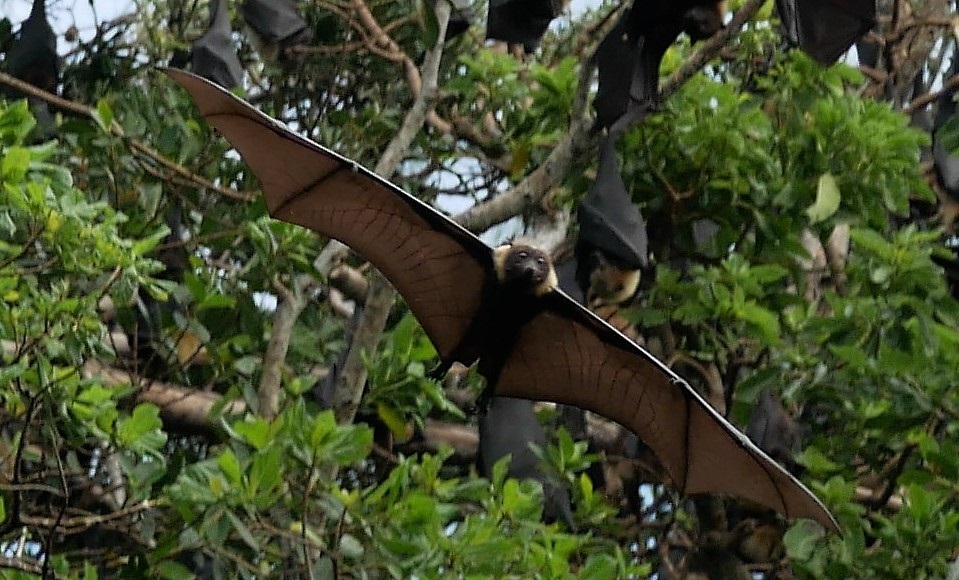
“Arghh,” says David. “One pooed on me, look!” He points to a dark splatter on his white board shorts.
“Gross,” I squeal. “Urgh, wipe it off! I guess we’re sitting just under them. They’re like furry birds, with claws.”
“Or like binbag-wearing possums,” says David. “Hanging like flies caught in a spider web, all wrapped up.”
“And they look ridiculous when they fly, like surprised beavers suspended in the air. Look at the feet sticking out the back!”
We can ridicule, but shrill shrieks reverberate through the air, echoing in the tight bay. The trees on the hillside rustle and move, branches rebounding with lightening loads. Above us, the sky darkens prematurely as thousands of winged creatures take flight at once, leaving the safety of the trees, soaring to the skies, and scattering wide against the backdrop of the setting sun. The air is heavy with ammonia, a thick smell of crowded animals that burns the inside of our nostrils.
Wedged in between the mangrove roots, the dinghy cannot move, and we sit craning our necks just under the steep, forested hillside, taking in the sky as it comes alive with dark, menacing shapes. Never before have we been so close to so many large animals moving at once. It is like a huge colony of roosting birds all taking flight from the same tree, at the same time.
It is dusk, and we’re in the Bay of Islands in Fiji, which is located on the north-western side of Vanua Balavu, a large island in the northern Lau Group. We’re watching the local fruit bats taking off for a night of festive foraging.


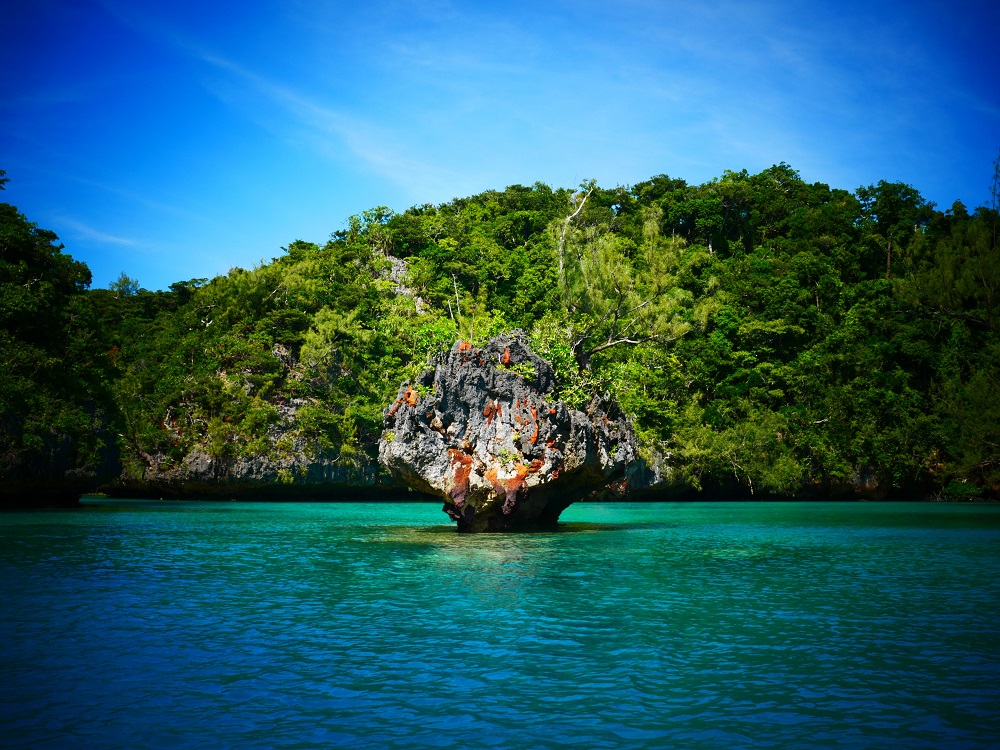
As the name suggests, the area is full of islands – uplifted limestone reef islets and larger, volcanic outcrops. It is spectacular scenery. Dramatic vertical rock faces surrounded by bush, overlooking crystal-clear bays, the water changing from deep green depths to aquamarine shallows. The imposing limestone walls and islands are dark grey, severe and full of jagged edges and sharp outcrops, the sort of landscape that will wreck ships, puncture inflatables, and cut your feet to shreds if you venture ashore.


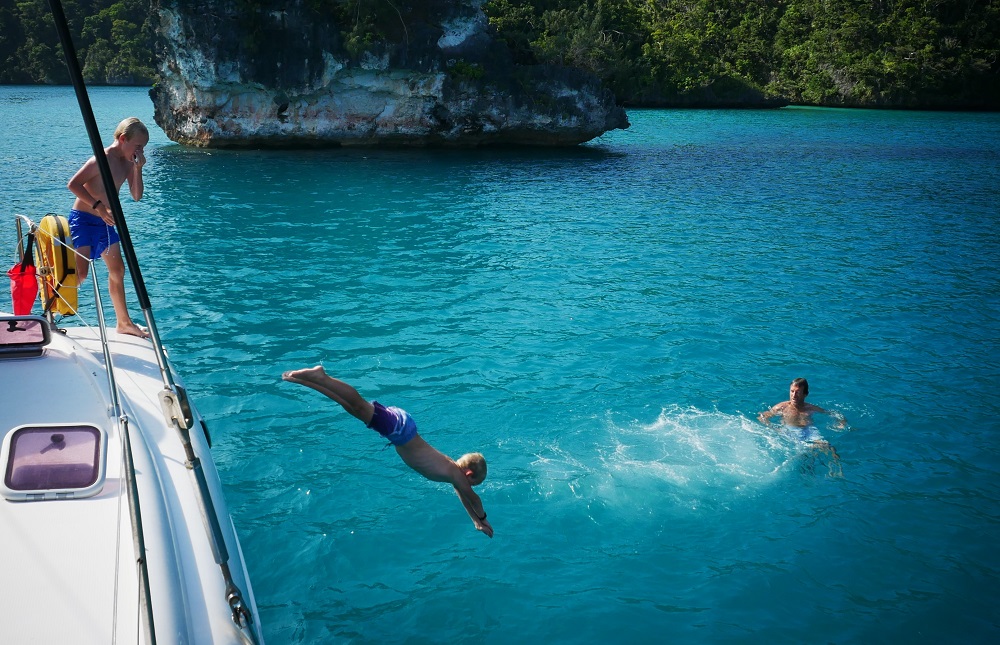
There are hundreds of islands here of all sizes and we explore for days on end, slowly making our way along the shoreline, discovering shallow passages leading to hidden turquoise swimming holes, sandy-bottomed inlets bordered by vertical green walls, overhanging vegetation touching the water. Crevices, caves and fragile limestone bridges are everywhere, hiding dark secrets and screeching animals. It’s a fairy-tale landscape, heavy and lush, and far from the tropical beachy feel of Fulaga. Here, rather than superyachts, one expects headhunters, King Kongs or similarly sinister creatures to appear at the top of each hilltop – surely such beauty must come at a price.
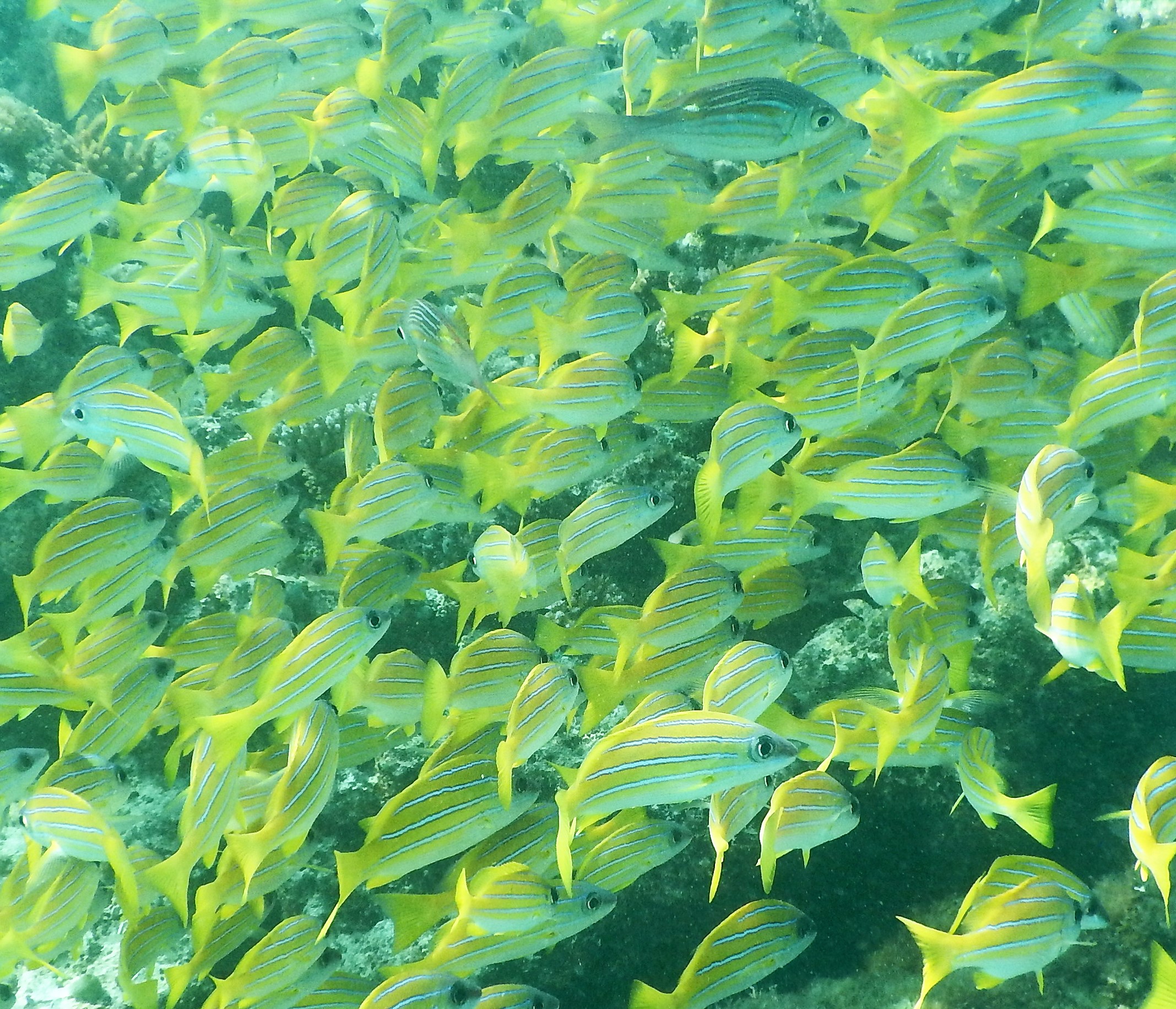
Underwater is beautiful too. Shallow rocky outcrops are home to coral reefs teeming with fish, turtles and baby blacktip reef sharks. Soft, colourful corals sway gently in the underwater currents. Octopi hide in numerous crevices, pretending to be rocks as we approach only to turn a deep dark red colour just before sliding back into their hole once they know we’ve spotted them.
It is peaceful here. Although in the more accessible part of the Lau Group, we at first share the anchorages with just a couple of boats, and later we are on our own for a few days before a few more yachts arrive.
So we paddleboard and kayak and swim, exploring every nook and cranny, whooping with delight as we discover more hidden treasures, life somehow feeling extra exciting against such a breathtaking backdrop.
The kids are reading Lord of the Rings and are deep into games wherein Matias is a stubby, brutish, heavyset dwarf named Thorin and Lukas a benevolent, charismatic Elf called Thamior. This odd pair travels together in far-flung mythical lands, retrieving treasures and fighting evil. The games are oddly fitting with the powerful scenery: one could easily imagine a longboat carrying Orc-fleeing Elves paddling by in search of a spider-ridden cave to hide in, the underwater part of which might just reveal the gleam of an ancient golden goblet with magical properties.
The fruit bats add to the sense of darkness within beauty. Although they’re cute there is nevertheless something a bit menacing about bats – perhaps it is the Dracula association of vampire bats, perhaps just their chilling combination of mammal, bird and insect features.
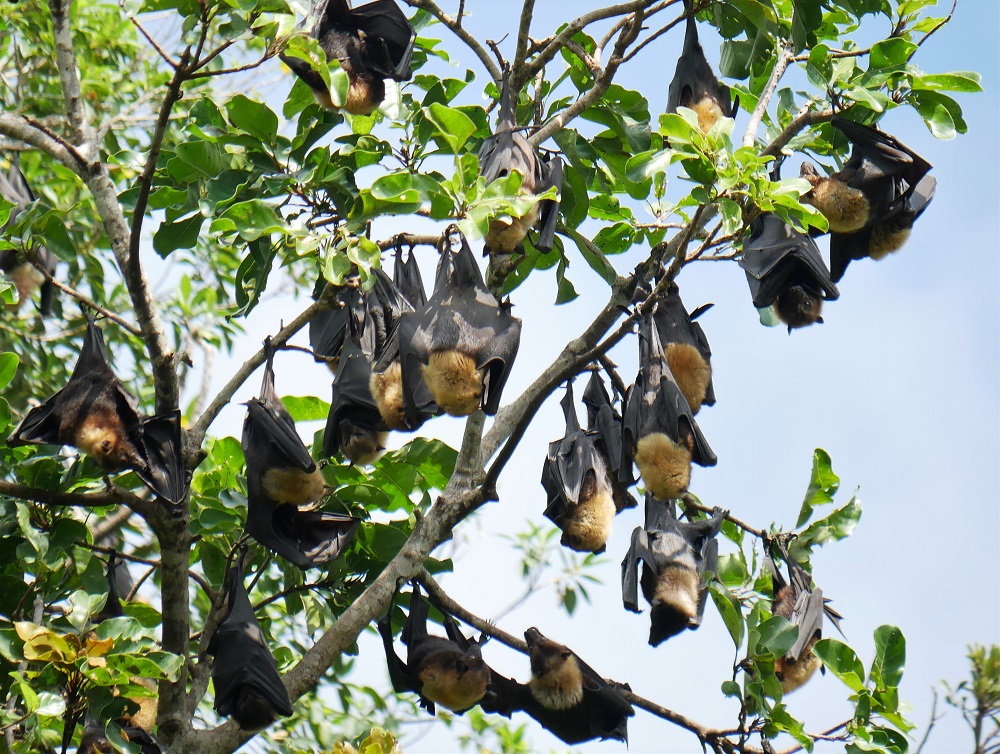
Their sleeping spot is not far from where we’re anchored, a hillside where black plump shapes hang from every tree like sinister overripened fruit, the branches bending under the load. A heavy musky scent hangs in the still air, the smell of thousands of mammals crowding a small space. They stir from their slumber whenever we approach, screeching and scratching, their sleep cocoons opening and faces and claws emerging. They stretch their umbrella wings, the shiny fabric tightening over the finger spokes. Beady black eyes fix us suspiciously, their ears erect, alert, twitching at every sound we make.
When we stay, they get more agitated and some take off like parachuting possums, strange furry fox faces and portly tummies attached to bird-like wings, tiny clawed spider feet sticking inelegantly out at back. Some have tears and holes in the wings through which we can see the sky behind. They circle and chatter and land on another branch, folding their wings, and clumsily climb through the trees using their feet, like giant grasshoppers navigating twigs and branches. Once in a suitable spot, they let themselves fall heavily, head down, their shiny black blanket wings tucked tightly around them.
I love watching their interactions – they squabble and bicker, scratch and twitch, bare their teeth and snap at their neighbours. Most look utterly exhausted, heavy with fatigue, and we feel guilty for approaching during their sleep time.


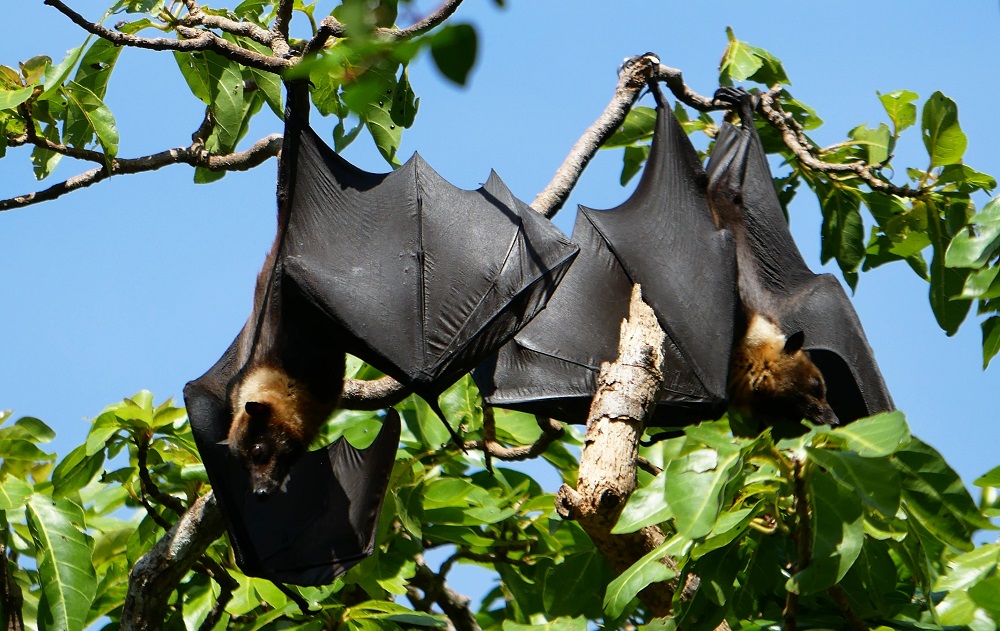
At dusk, the hillside brightens and the sky darkens as they take off in great swarms, squeaking bat cries resonating between the hills. They fly off in all directions, over hills and water, in search of fruit trees ripe for pillage. We’re not sure exactly where they find fruit in the quantities required to nourish such extensive numbers, but presumably, papaya is a staple.

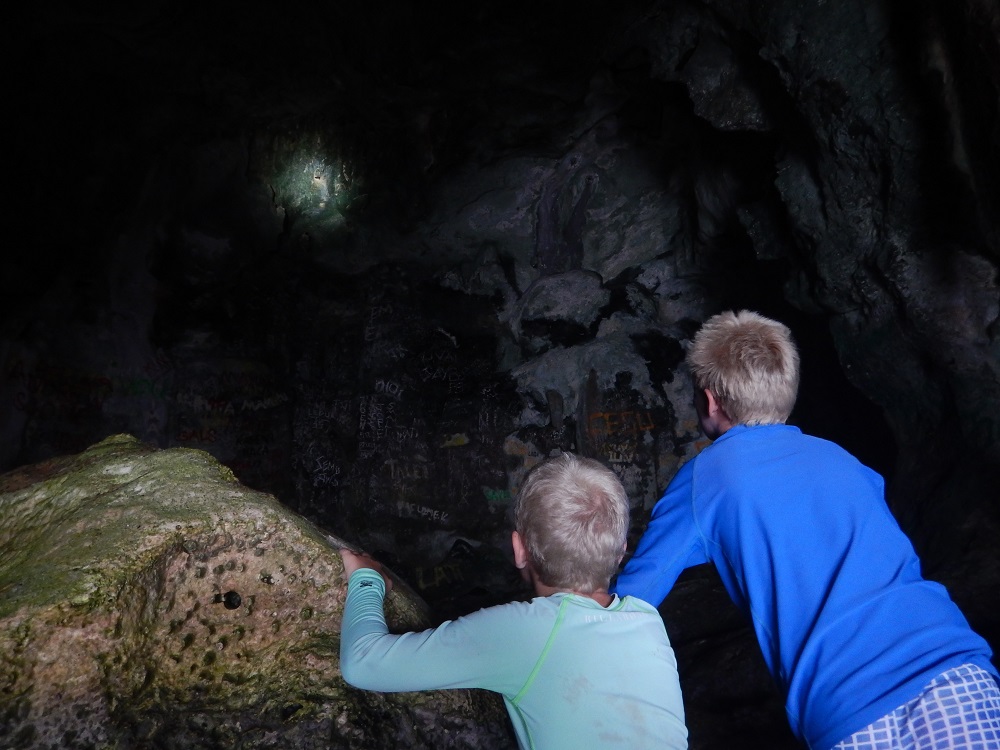
Inside a large, partially submerged cave we find microbats, who click and squeal as they echolocate in the darkness above us. Much smaller than the fruit bats they are difficult to make out and at first we think they are birds, but when we shine a torch we can make out the jagged edges of their wings.

In addition to bats and bays, there are a few beaches which we explore with other boats, lighting fires in the evening to cook damper around a stick or fish on a rack. As soon as night falls we are attacked by sandflies and have to flee back to the safety of our boats, anchored far enough from shore to prevent insects.

After nine days in the Bay of Islands, we reluctantly leave. We’re low on cooking gas, and David is running out of beer, so we decide to go to Suva, Fiji’s capital, for a quick provision before heading to Kadavu south of Viti Levu.
We’ve had an incredible time in the Lau and are so happy we managed to get here – it is remote and different from anywhere else we’ve been, full of pleasant locals, amazing scenery and wonderful wildlife. One of Fiji’s hidden treasures, and how lucky we are to have seen it.

 SV Bob The Cat