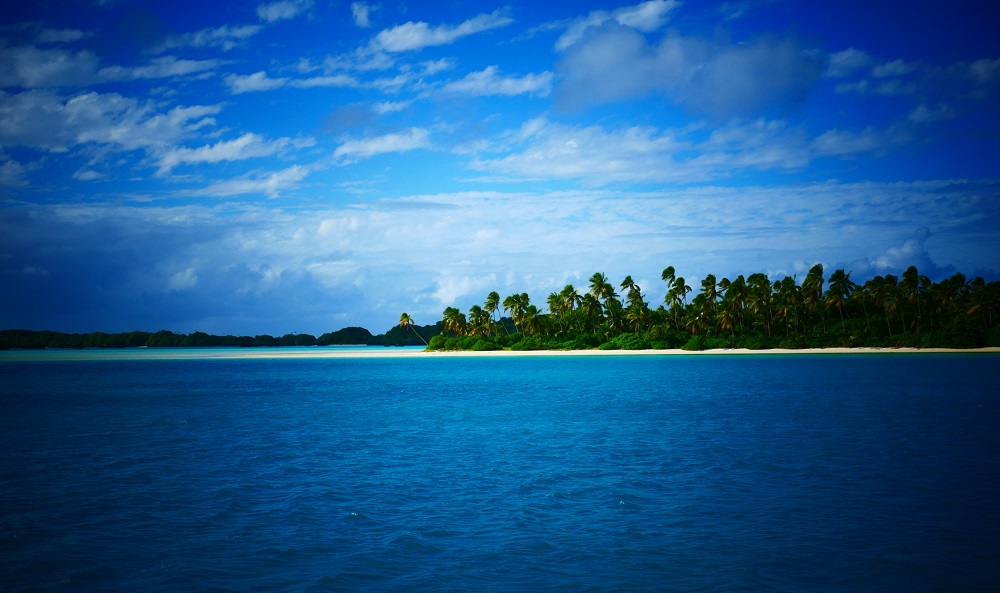
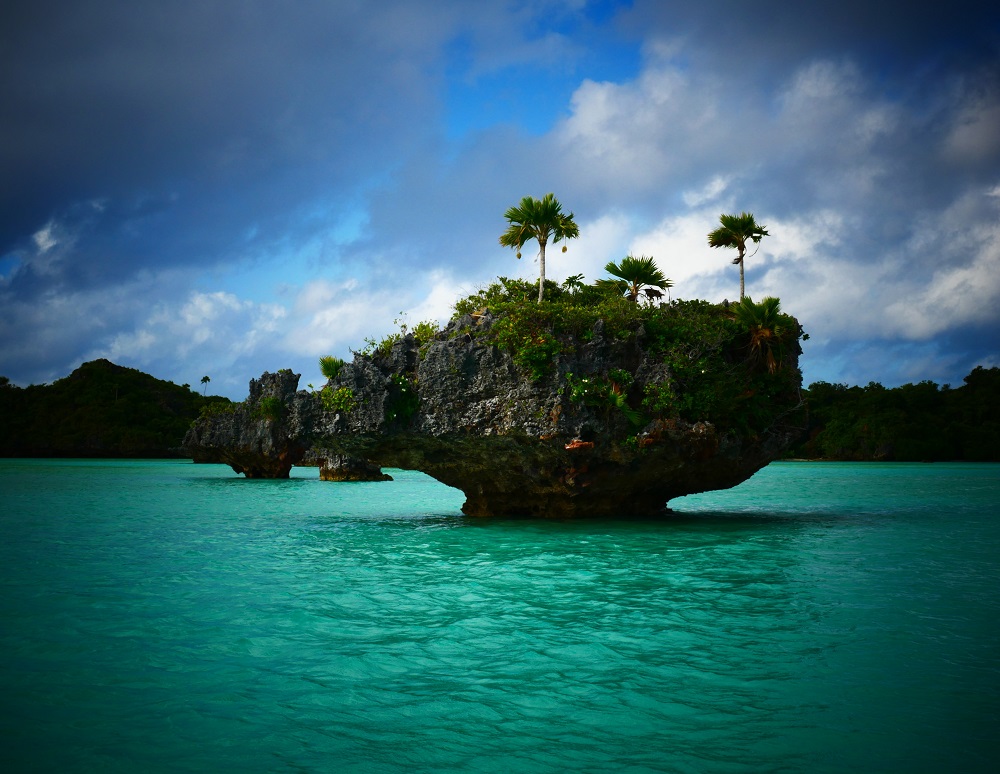
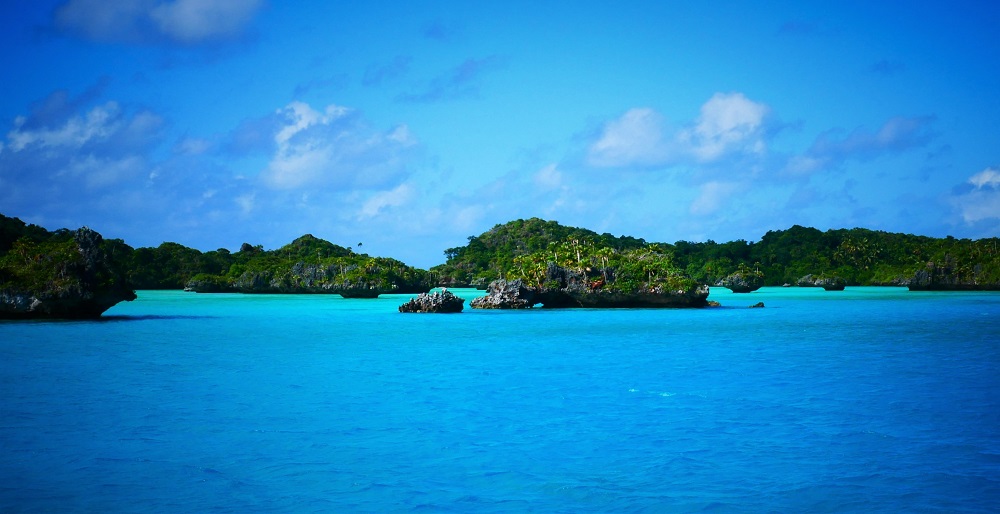
The locals are not the only great thing about Fulaga. The island is one of the most beautiful places I’ve ever seen. It is vivid and glossy, saturating the senses, every glance a photo opportunity. The crescent-shaped island is enclosed by a huge circular lagoon, bordered by wave-pounded reefs. Small uplifted limestone mushroom-shaped islets dot the lagoon, little tufted heads topped by unkempt coconut palms and pandanus, their necks carved by the tidal flows, their shoulders shrouded in aquamarine shallows. It is a picture-perfect tropical paradise – turquoise water, white coral sand, impossibly blue sky, and vividly green inland vegetation dripping with coconuts.
Although the Lau Group has been inhabited for more than a thousand years, it is largely untouched by tourism and development, partly because of deliberate government effort to protect the culture of the islands and partly because the area is so hard to reach. Located halfway to Tonga and roughly 200 km south east of Viti Levu, to get to the Lau one must sail against the prevailing winds through swelly seas. Each island is the remnant of an individual volcano, so passages between the islands are in the open ocean, and the passes to enter the peaceful lagoons are most often narrow and raging with tidal currents, rendering any island-hop a non-trivial activity requiring careful planning. The reefs and lagoons are all poorly charted, so once inside the lagoon, a good look-out is essential if one is to avoid crashing into one of the numerous coral heads that lurk treacherously just below the water surface. For many years, tourists (including yachties) were not allowed in the Lau Group, but in the last decade it has become easier for boats to visit, and nowadays there are weekly flights from Suva to one of the northernmost islands.
Fulaga is located right at the southern end of the Lau Group, in the most remote part. The vast lagoon is perfect for yachts, with a multitude of superbly calm and scenic anchorages and easy access to the three island villages. Little sandy beaches appear at low tide everywhere, and the limestone islets are so picturesque that we marvel at the turn of every corner.
We spend close to three weeks in Fulaga, three weeks of soaking in the scenery, exploring and hanging out with the villagers and the other yachties.

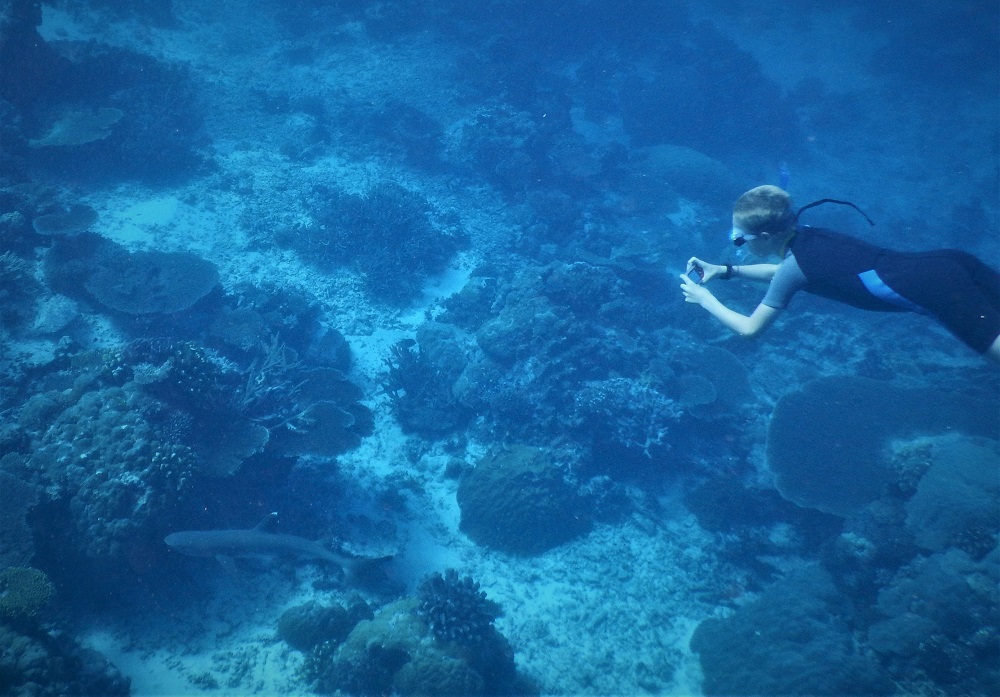
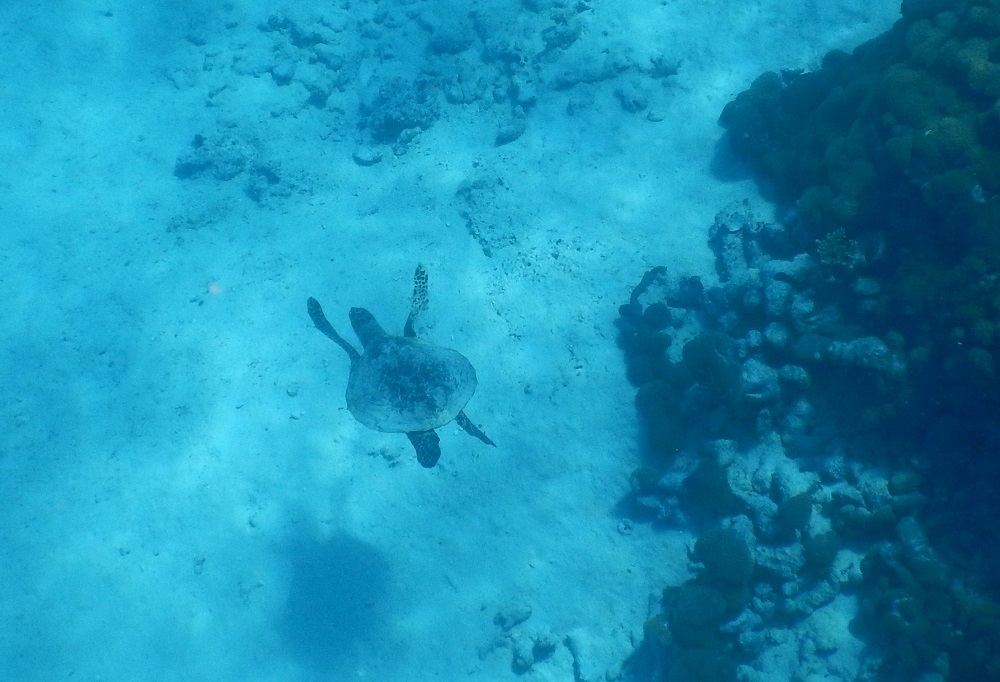
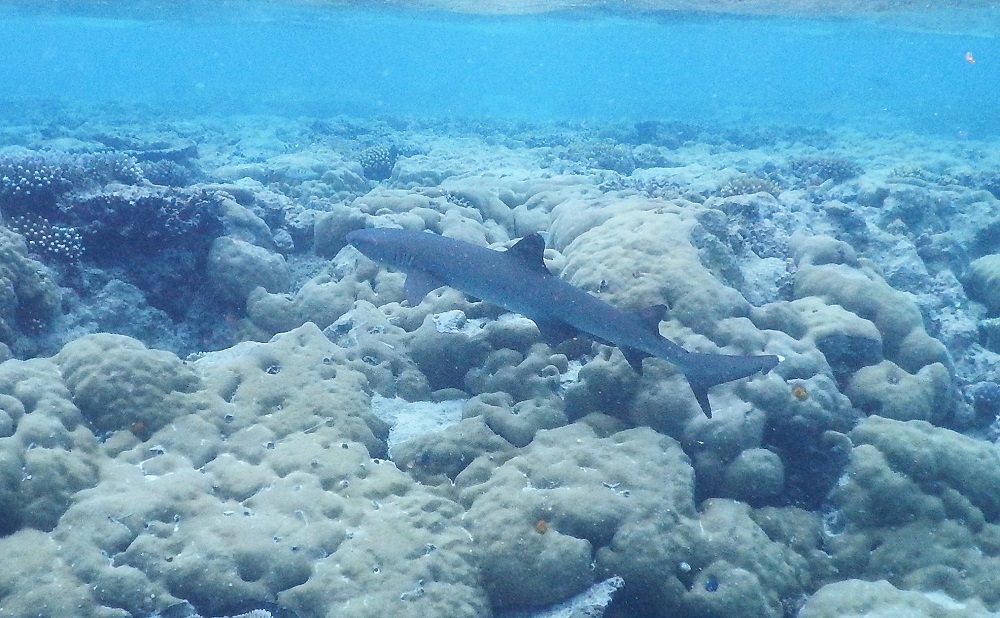
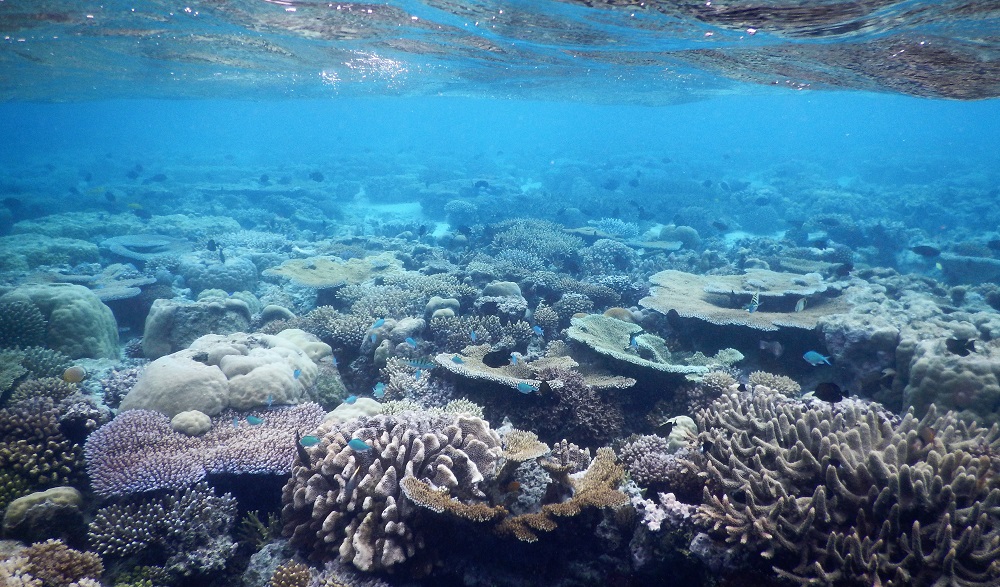
There are small coral bommies in the lagoon, but the best coral is out by the pass, and we snorkel the pass again and again, drifting along over exquisite coral gardens on an incoming tide. Everything is pristine, with giant trevallies, reef sharks, turtles and large schools of mean-looking barracuda and grumpy groupers with severe underbites slowly cruising atop coral and anemones, puffed up guards patrolling a garden of infinite crop varieties. Along one ridge is a big outcrop of cabbage coral, great green discs opening like lettuce leaves. Along another is a patch of staghorn coral, home to thousands of tiny, jittery damselfish who nervously duck for cover as we slowly approach. Around the corner is an assembly of curled-edged anemones shielding brightly coloured clownfish that stare up at us defiantly, safe in the arms of their poisonous friends.


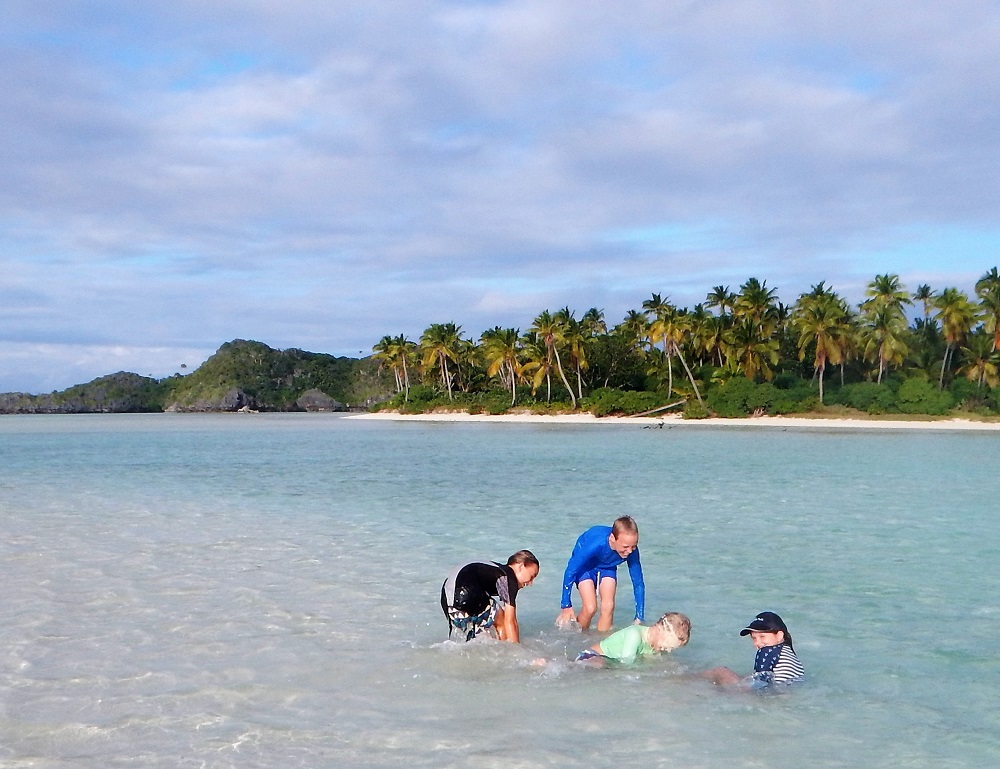
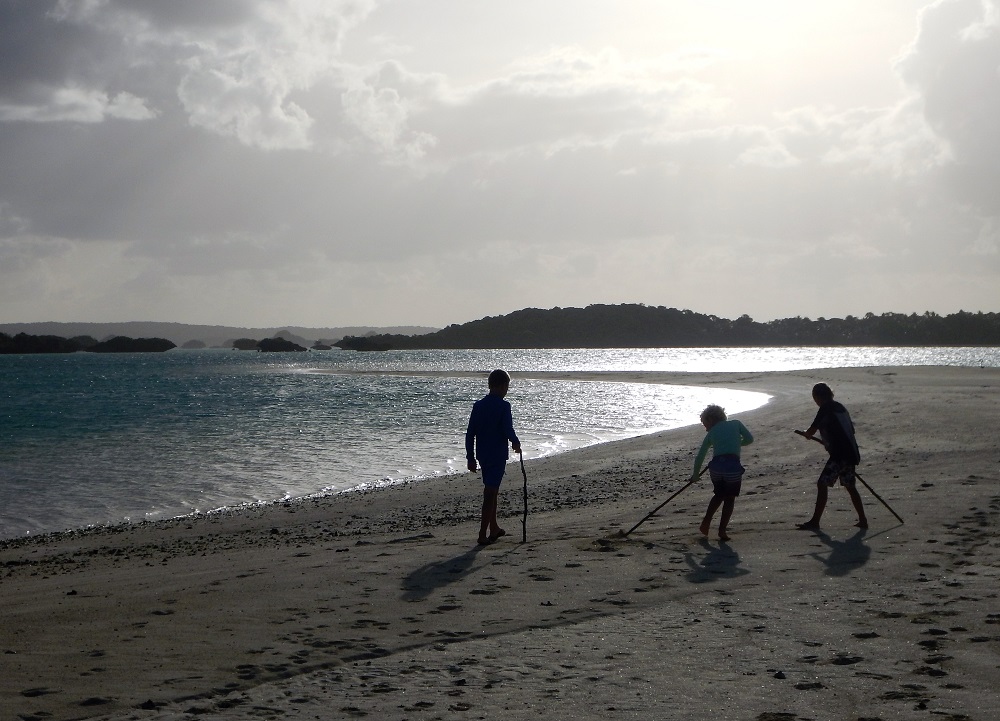
There are two other boat families here, and the kids enjoy endless playdates on the beach and on the boats. They swim and run and walk everywhere together, playing imaginative games involving few ingredients other than water, sand, coconuts, twigs. When it is windy, we use the sandspit for kitesurfing, the kids attempting to learn or just playing in the sand or water for hours on end while the grown-ups enjoy the rarity of flat water and a beach to launch from.

During one of their beach forays they find a shark on the beach, Lukie running breathlessly towards me on the sunlit beach, wide-eyed with excitement:
“Mummy, there’s a shark, there’s a shark on the beach!”
Close behind him are the rest of the kids from the anchorage, clad in their rash vests, flushed with heat, sand sticking to their wet legs.
I follow them into the sun, around the sandspit and see the baby shark. It’s a tiny, dead blacktip reef shark lying limp on the golden sand by the edge of the high tide vegetation.
“It’s been stabbed in the head,” says Lukie gravely. “Look, it’s got a hole in the head.”
He points to where the blood is still fresh. The kids all gather around as I examine the shark.
“Yeah,” I say. “It must have been one of the villagers, they probably don’t want sharks around in the shallows.”
They nod solemnly and start preparing for the funeral, digging a hole in the sand, gathering palm leaves and a coconut shell for the headstone.

But all is not innocent play at Fulaga. During our second week there, the western world intrudes onto this remote location, wreaking tumultuous, tragicomic havoc.
We first know of the trouble when from the boat we see a boat full of villagers assembling on the sandspit where we’ve been kiting all morning. It is lunchtime, and the four kiting yachts have all left their kites on the beach, multi-layered brightly-coloured half domes perched on the white sand, quivering in the strong breeze. The villagers walk amongst the kites, some sit in the shelter of one.
Shortly after, Rick our anchoring neighbour, heads to the sandspit, no doubt to find out what is going down. As we finish our lunch we watch him deep in conversation with the locals. David decides to dinghy over there to see what is up, and a couple of hours later he comes back with a crazy tale.
When Rick came ashore the locals said they would like a chat about some stuff they had found on the beach, some plastic packets with a cow print on the side, and a Nike logo. They would like to know what it was, and would he mind having a look at it?
Assuming they had found some rubbish that a careless yachtie had let blow overboard, Rick agreed to have a look and mentally prepared an apologetic speech about how he would talk to all the cruisers to ensure that this would not happen again. Still ruminating over his response, he was surprised at what they brought him.
“It was like a slim white brick,” he explained over drinks the following evening. “Vacuum-packed, with a Nike logo on the inside, and then wrapped in several layers of clingfilm, and taped up. A longhorned cow logo was on the outside.”
“Almost like it was meant to be disguised as milk powder,” said David, who saw the packets when he followed Rick ashore. “It was strange – like a brick, but then there were these weird puncture holes in the side of the pack.”
“Yeah, I reckon that’s where they’d sucked the air out, created the vacuum,” said Rick. “So, I told the guy that I didn’t know a lot about these things, but that to me it looked like drugs. After all, white powder, vacuum packed… And they said they had found 28 packets, just washed up on the beach, scattered all over at low tide.”
He sipped his beer. “One of the guys bit into the corner of a packet, to see what it tasted like. He said his mouth went kinda numb.” He put down his beer, laughing helplessly. “I mean, imagine…”
“Anyway, I told them that in my opinion they shouldn’t open the packets or try to eat any more of it. They should store them somewhere and immediately contact the police and get the stuff off their hands.” He ran his fingers through his hair. “Just think, what if someone comes looking for it?”
When we next visit the village, the talk is about nothing but the powder. Our host Mishiyake had found an additional 7 packets on the beach by the village. One of the head villagers had called the police, who arrived in a helicopter to collect the 35 packets. A couple of days later, the police confirmed that it was 35 kg of pure cocaine.
There was no doubt that the locals were in unfamiliar territory, out of their depth, and crazy rumours were circulating.
The head village guy claimed that the drugs were worth $408 billion, at which David laughed.
“That’s more than twice the GDP of New Zealand!” he chuckled. “It is worthless here, but you’re right, it would be worth a lot of money for the person who managed to get it into Australia. Maybe not quite billions, though…”
Asking us how people use cocaine (smoking? sniffing?) they told us about how they’d heard of a village in Papua New Guinea where all the villagers had been brutally gunned down by drug lords after some locals had found similar packets.
Everybody agreed that it would have been a yacht dropping the packets – either to some pre-determined destination for others to pick up, or in panic after some sort of scare. Presumably bound for the lucrative markets of New Zealand or Australia, the intention was probably for another boat to pick up the goods and transport it further west.
Discussions about the yachties were rife. Who had dropped it? Were they still in Fulaga? Or had they fled? Was anyone acting suspiciously?
“What about that guy, on that other boat?” said one of the villagers. “He looks like someone who uses drugs. I mean, he talks in a funny voice?”
Realising that he’s just picking on the guy with an unfamiliar accent who didn’t come to church, we reassured him that whoever dropped it has probably left the island by now. We were a bit surprised that the police didn’t even bother interviewing the yachties, but at the same time we felt sure that whoever brought it in is not still in the lagoon – I mean, they couldn’t have predicted how ineffectual the police response would be, could they?
After a few hours of discussion, outrage and fear were replaced by humour, and the villagers joked how instead of raising a measly couple of thousands in the church fundraiser, they could erect a whole new building if they had just kept a packet and gone to Suva to sell it. At this stage, the monthly supply boat was several weeks late, and the island was completely out of kava, which cannot be grown in the poor, sandy soils of Fulaga. With all the recent festivities they had pounded the last root to a dusty powder and drunk the last drop of the resulting brew, and as they were getting increasingly desperate they laughed that they should have kept a couple of packets to use in lieu of kava for a kava-drought emergency.
“But we don’t use drugs,” said Mishiyake seriously. “Not like in New Zealand, Australia.”
“No, no,” we say. Not if you disregard kava, anyway.
True, kava has about the opposite effect to cocaine – it is a mellowing drug, causing relaxation, slower breathing, inducing a trance-like state. It has antiseptic properties and is a known antidepressant. So all in all probably better for society than either alcohol or cocaine.

We reflect on how to the villagers we must seem like we’re from outer space, impossibly rich, from another world. With our fancy boats, our ability to go anywhere, our deep pockets and willingness to buy expensive tins and tourist curios. Like most well-meaning yachties we have brought along what we consider worthy presents to local communities: school supplies, fishing line, teabags and biscuits to give out. Some have brought reading glasses and brassieres from New Zealand charities. David and Rick spent a day in the village trying to help them repair an outboard that had seized.
Although happy with anything we bring, what our contacts really want is kava and American action movies. On Mishiyaki’s visit to our boat, we transfer New Zealand dub reggae and two Tom Cruise movies to his phone for which he is profoundly grateful even though the sound only works on one of them. Despite living so remotely he is already hooked on the best of western culture and his view of our reality is tainted by the Hollywood movies he plays on his small smartphone.
It is a time of rapid change for the inhabitants of Fulaga. Ten years ago, only three boats visited the island in a whole year; this year they are predicting 150 will come, and the lagoon is awash with cocaine. Villagers are still living a subsistence lifestyle but increasingly exposed to the wider world, for better or for worse.
By the time we leave Fulaga there are cobwebs on the transom and fouling on the anchor chain. Apart from forced stops for repairs, we’ve never stayed as long in one place before in our cruising life. We could easily spend another couple of weeks there but decide to head north when the winds turn to the east, grabbing a good weather window while we can. It’s been a great place to visit, and we wish the villagers the best with their escalating interactions with the modern western world, hoping that they can maintain their tight-knit community in the face of modern pressures.
Postscript:
After we’ve left Fulaga we hear from other cruisers that a couple of days after the Fulaga find, a boat called Shenanigans got busted in Suva with several kilos of cocaine. On board was a man and a woman, and when boarded the man tried to take his life, leaving the woman to deal with the authorities. He’s now in intensive care, and she is in prison, awaiting trial. We assume that they were somehow involved, although we still don’t understand the exact details. Had they been picking it up in Fulaga, and missed most of the load? Or were they the ones dropping it off, keeping only a few kilograms for good luck? We’ll never know…
Rick emailed to let us know that a few days after we left the Fulaga chief died. He was 92, so not a tragedy, but the villagers are distraught. Being an important component of any official gathering, kava is essential for funerals, and the supply boat still hasn’t arrived. The men are reduced to going around the three remaining yachts, begging for supplies, and we hope they got enough to carry out the required ceremonial grieving.

 SV Bob The Cat