
“Mummy?” whispers Matias. “Can you help us get something to eat?”
He gestures towards the line of boaties queueing up for the food table. Around them, the local Fijian villagers are all sitting, leaning back in the grass, chatting, and waiting for the guests to get their food before they eat themselves.
“I don’t know what all the things are, and I don’t know how to eat it either when there are no plates and no fork,” Matias whines. “How do I use this basket?” He impatiently shakes a small woven palm leaf basket in the direction of the food table. The other boat kids cluster around us uncertainly.
I guide them towards the end of the queue and slot them in behind a suntanned elderly couple, a procession of small tanned blond kids politely holding their baskets in front of them, imploring the Fijian women manning the food table to dish out some of the delicacies on offer.
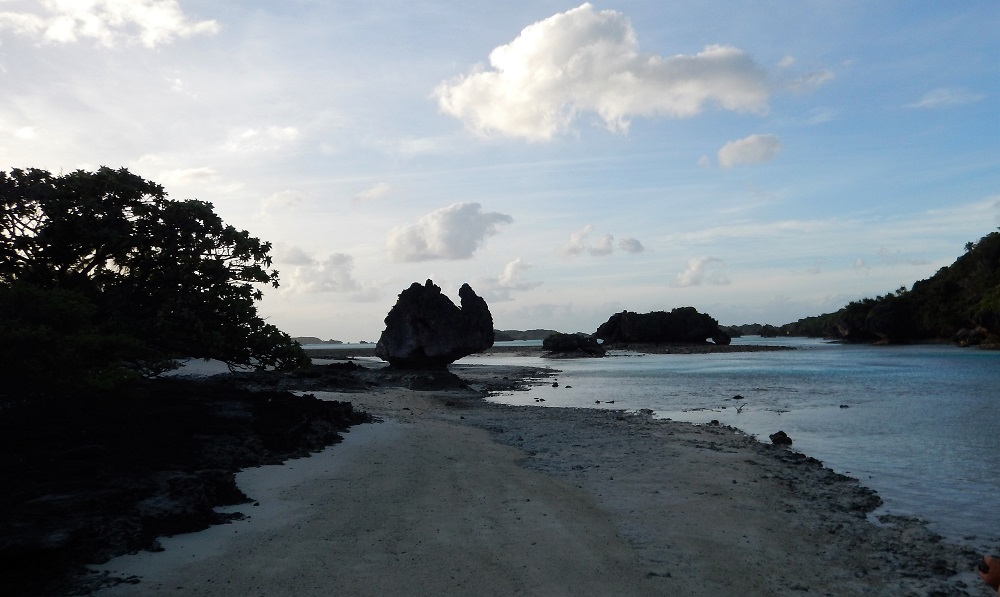
It’s the afternoon of a pork feast put on by the local village for the cruising yachts. We’re on the island of Fulaga at the southern end of the Lau Group in Fiji. A remote location, the only foreigners that visit the area come by yacht, and presently there are 12 yachts spread over the huge lagoon. The island is home to three villages, and the largest, Moana-i-Cake, has organised to cook a pig in a traditional earth oven at a sandspit in the lagoon, which they serve to the villagers and cruisers in a day of festive interaction. The cruisers raise $200 to pay the villagers for the pig and contribute baking and salads.

It is a great feast. The local village children all take part, and Matias and Lukie play endless rounds of soccer and rugby, tumble about in kayaks, throw frisbees and play tag, their blond heads disappearing in a cloud of black afros. The village men started the earth oven the night before, and the pig was put to roast with cassava and yam early in the morning. Yachties have been busy ferrying locals from the village to the sandspit since mid-morning, a 20-minute trip by boat. Once everyone has arrived, the Fijian matrons start weaving palm leaf mats for shade and to sit on, baskets to use for food preparation, and basket-like plates to eat from. Within half an hour a comfortable temporary settlement has been set up on the remote sandspit, and the men tend the oven while the ladies gossip and prepare food in the palm leaf baskets.
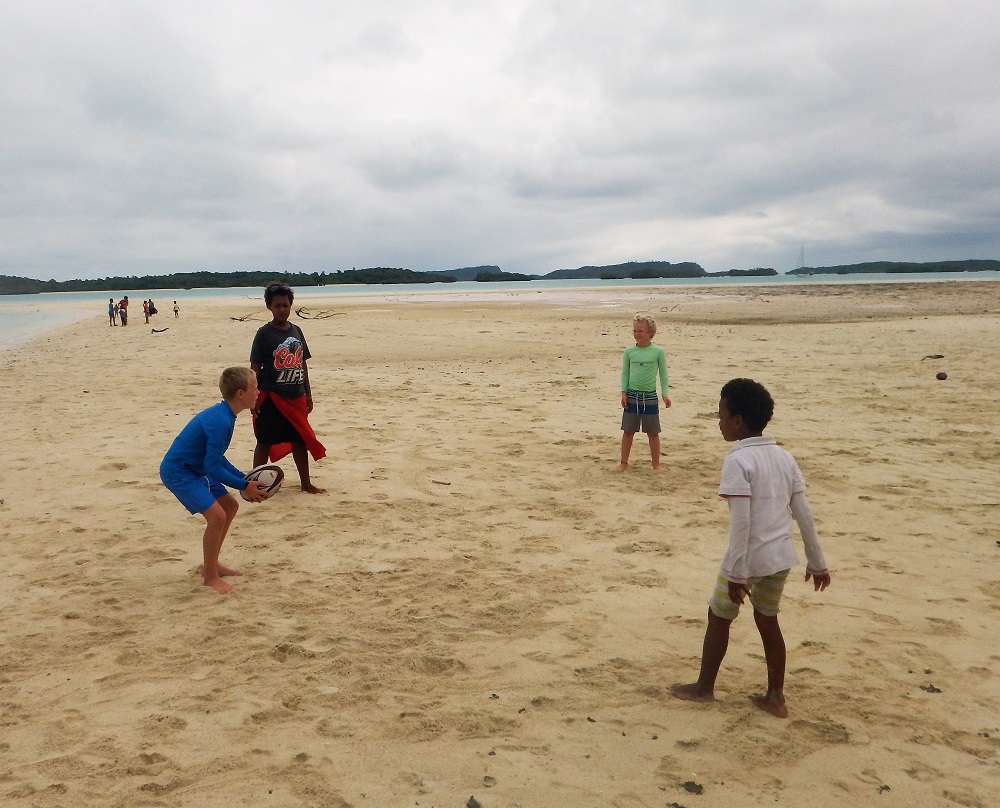
We’ve been in Fulaga for three days. It took us two days and a night to get here, a hard trip against the prevailing tradewinds. Early afternoon on the second day we approached the narrow pass and motored in against the swift outgoing current, marvelling at the peaceful glory of the calm lagoon.
Like everywhere in Fiji, visitors must sevusevu on arrival. Sevusevu is a mandatory offering of kava roots to the village chief, which is done by any visitor in Fiji, trading the mild narcotic that seems to form the basis of social life in Fiji for the permission to anchor off the island, swim in the waters and walk on the land. For our trip around Fiji, we have seven bundles bought from the market at Savusavu, one for each island we anticipate we’ll visit. Because we’ve caught an abundance of fish on the way, in Fulaga we also carried three fish as a present.

The village is tidy, with small corrugated iron houses separated by grass and sandy paths. Situated right by the water’s edge, the houses overlook the white sand and light blue waters of the lagoon. Coconut palms and papaya trees are everywhere, and ornamental plants adorn several of the small house yards. Wispy trails of smoke snail up from little covered cooking enclosures attached to the houses. When we came to sevusevu, barefoot children were playing everywhere: a game of volleyball was underway in the village centre and small children ran trailing sticks in the dust, smiling shyly at us as we made our way to the chief. Adults stood around and chatted, calling out to each other between houses.
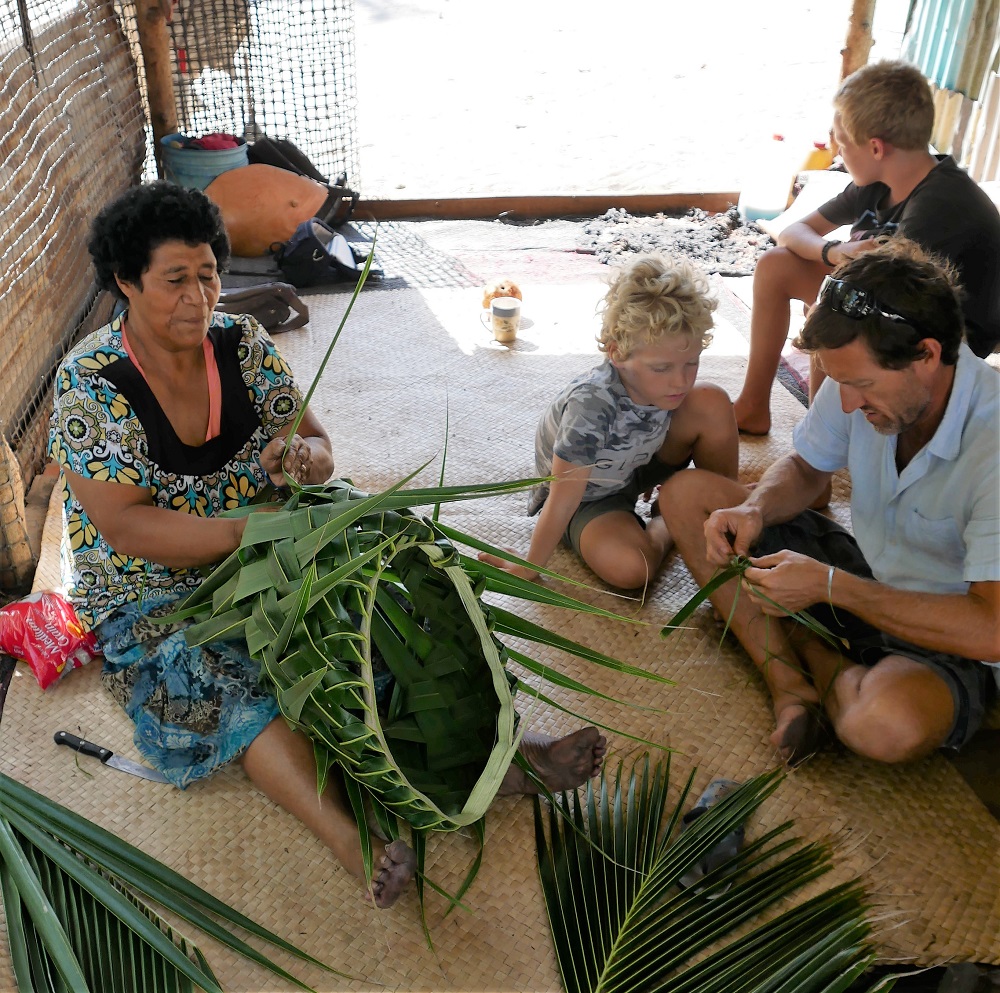
We were soon enveloped in a small group of adults and children who escorted us to the chief’s abode. Our kava and fish offering was received in the traditional ceremonial fashion, with speechmaking and lots of clapping with cupped hands. In Fulaga, each visiting yacht is allocated a family who remains the point of contact for the duration of the stay and we were allocated a lovely grandmother called Una and her male relative Mishiyaki. After the chief’s welcome we were escorted to her house, where we sat cross-legged on the woven pandanus mats that cover the vinyl flooring, drinking coconuts, talking about children and fishing, agreeing that the next fish we catch should go to her rather than to chief and that we’ll come to church on Sunday and have lunch with the family afterwards.

On the Sunday we attend the mandatory church session, all wearing our Sunday best. Church and kava seem to be the focal points of the community; the church is the only brick building in the village and the kava bowls are cut from the finest wood. Within the church, the whole village is assembled, and as the service starts the small building is saturated with multi-part harmonies, the men’s bass oscillating along the floor, the ladies’ sopranos dripping off the ceiling. A small triangle beats the rhythm and is the only instrument used.
The sermon is mainly in Fijian, but towards the end a small, animated woman stands up by the pulpit and delivers an address in thundering English, reaching out to the yachties by relating Jesus our Lord the Saviour to a safe anchorage in a storm, our only way past damnation to eternal life.
“If you will not receive our Lord, you will die,” she yells hoarsely. “Only through Jesus Christ can you live forever!”
She surveys us with furrowed brow, a room full of scared mortals, dressed in our finest, reaching for eternal life and hoping to bypass death.
I hum along to the singing when it starts up again.
The following week is the village meke, a church fundraiser organised as a singing dance-off competition, where representatives from the three villages on the island and from the neighbouring island Ogea compete and raise money at the same time.
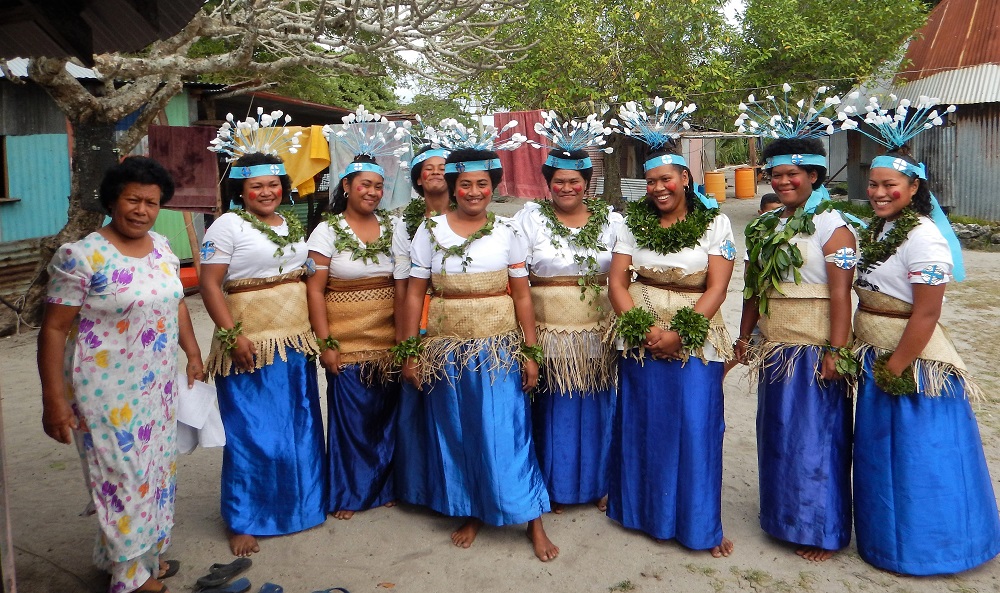
It is probably the weirdest show I’ve ever seen.
Our host family is from Ogea, and so we cheered on Team Ogea, photographing the splendid glory of the blushing dancers as they appear, wearing a mixture of woven pandanus and bright blue ribbon and cloth, with tinfoil adornments, greenery necklaces, and stick pompoms in their afros. After a singing procession to the village centre, each team must sing and dance to the assembled host village. During the second song, opposing teams start interfering with the dancers, and stout matrons come forward to spray baby powder into their hair and wrap them in long swathes of cloth. The fragile beauties sing unperturbed on during this ritual humiliation, bravely attempting to breathe through the clouds of powder, and as they are steadfastly ignored, the hecklers become progressively more outrageous. Before long the elderly women are draping leopard-printed underpants around the heads of the male singers, gyrating wildly, rising and stooping as they stomp towards the village chief, aggressively pointing sticks. Younger men dance forwards to present gifts to one or more of the dancers, attempting to kiss them and carry them off only to be indignantly fought off. The audience howls with laughter, hoot and shout before they break down again, tears streaming down their faces as they try to control their mirth.
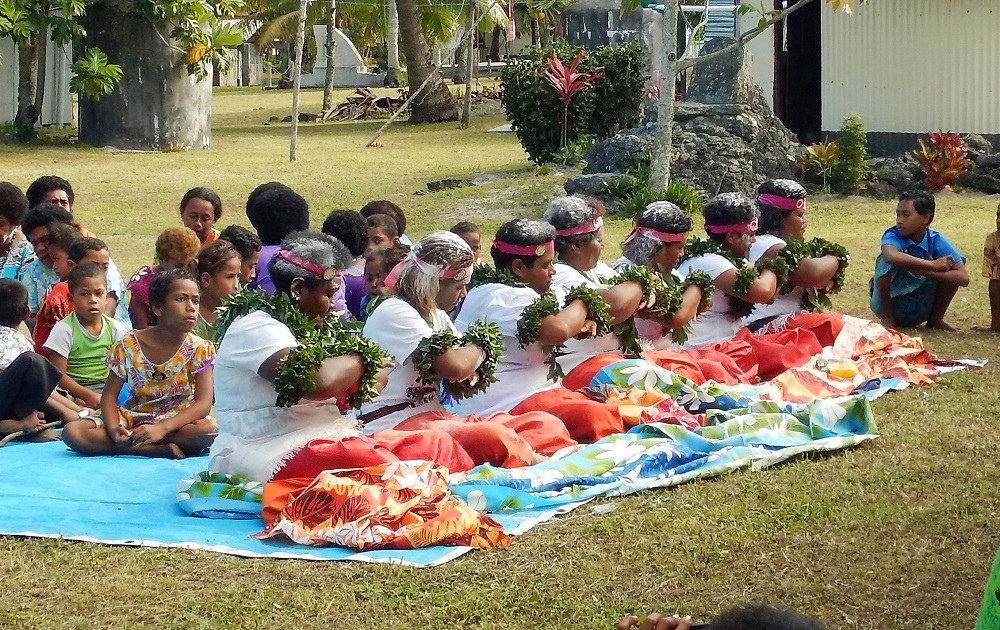
This continues for song after song, and the assembled yachties look on in wide-eyed surprise, feebly joining in the laughter as our host families join the general chaos.
Halfway through the dancing, we have a break to have lunch with our family.
“Malene, try this.” Sarah, an Ogean woman with great English offers me a plate. “It’s sea cucumber, delicious. Stuffed with fish and coconut cream. Delicacy.”
I put a small portion on my plate, and as soon as I bite into it I regret it. I’m not bad with weird food, but this is probably the worst thing I’ve ever tasted. My eyes water with revulsion as I try to swallow a piece of fishy jelly with an aftertaste of rotten seafood, my body shuddering as I barely manage to keep it down, the small hair rising on my arms. I quickly stuff some boiled cassava into my mouth, hoping to drown out the flavour, and gulp some coconut milk to help the dry cassava down.
“How do you like it, Malene?” asks Sarah, eagerly leaning over.
“Gweat,” I utter through the cassava mouthful, showing a thumbs-up. “Dewishous.”
She grins, and for a moment I think this is a trick, played on unsuspecting visitors. Is that a fake smile? Did she eat any herself? Is this part of the general fun of the day? Will they all fall over, laughing helplessly, mimicking our grimaces, after we leave? I wipe the conspiracy thoughts from my mind and glance over at David, whose eyes are bulging as he is trying to swallow.
Lukie taps me on the knee. “Mummy,” he whispers. “The sea cucumber…”
I nod slowly, unable to look at his plate. Eyes down, I swallow again as it dawns on me that I may have to eat his portion too. The awful taste still fills my mouth, my nostrils, unpleasant waves of rotten sea invertebrate reflux washing over my palate, threatening to drown me.
Lukie taps me again, sticking his face in front of mine, his breath stinking of decaying fish. So he too tasted it. Poor kid, it will probably put him off seafood for a lifetime.
He taps me again, his nose almost touching mine. Eyes wide, he surveys me beseechingly. “The sea cucumber,” he whispers again.
“Yes,” I croak.
“Can I have some more? I really like it!”
Strange kid.

I get my revenge on our last night at Fulaga, where Mishiyake comes to our boat and ends up staying for dinner. Not having planned for dinner guests, I dish out what I’ve prepared for ourselves: refried beans with homemade tortillas and sweetcorn, and a bit of sashimi tuna on the side, the fish a present from a neighbouring boat.
Mishiyake eyes the pale brown glutinous mass of beans suspiciously.
Noticing, I place a dollop on his plate. “And here you go,” I smile. “Black beans, mashed up!”
He smiles uncertainly, and doses lots of chilli sauce and cheese on top, cautiously taking his first bite. His face freezes at first, but after a while, he manages to chew and swallow. He drowns the small pile of remaining beans in more chilli sauce, adds more cheese, and slowly, slowly manages to finish it all. When he’s done I urge him to have more, but he adamantly refuses.

Food aside, it has been an interesting time of village interactions. Staying for three weeks in one place means that we’ve met Una and her family a number of times, and by the time we depart we are comfortable in each other’s company, sharing laughs and affection. We have spent time together in our present, and it strikes me how, despite our different frames of reference, cultures, pasts, and futures, we still connect so easily, sharing the basic stuff of humanity – the joy of children, the drudgery of housework, the excitement of fishing, celebrations, our fear of dying – and, of course, our aversion to unfamiliar food.
 SV Bob The Cat