“Look, mummy!” shouted Matias.
I looked back at him from my spot on the bow where I, the gong-spotter was perched, vigilantly looking out from my station. Matias was standing by the cockpit, pointing excitedly out to sea.
“What is it, did you see a gong?” I called, walking back towards him.
We’d been looking out for ‘gongs’ for days now, hoping to spot one of the many dugongs that call the New Caledonian lagoon their home. David had seen several when kite surfing over seagrass beds, and the kids and I were keeping a keen out, hoping to see a friendly ‘gong’ off in the distance as we sailed past.
There are an estimated 1000 dugongs in New Caledonia, all of them lying about in the shallow lagoon waters, lazily chewing vast quantities of seagrass, protected from the coldish water by their thick layer of blubber. They used to be hunted here (“taste like veal”, said the man at the marina office), and the population is still considered fragile. Large and docile, dugongs take ages to reach sexual maturity, and in the sixty-odd year lifespan of a female she will give birth to only five or six young. They are vulnerable to boat strikes, and to degradation of seagrass beds, seagrass being their only food source.
“No, I think it was a turtle”, said Matias. “But it was big”.

I slumped and headed back to my station. We’d just left Noumea, where we’d spent a couple of days doing stuff on the boat, provisioning, and hanging with some fellow cruising families who were now headed back to Australia. We were going to the southern lagoon to see for ourselves the beautiful pristine waters and deserted island that lie within the southern end of the barrier reef that surrounds New Caledonia.

When Vida and her family had left four days earlier, Matias had asked when the next visitors was going to come, and we had told him that this was it, nobody else was coming. Our trip was coming to an end, New Caledonia was our last stop before New Zealand, and in a month or so we would start looking for a suitable weather window for going back home.
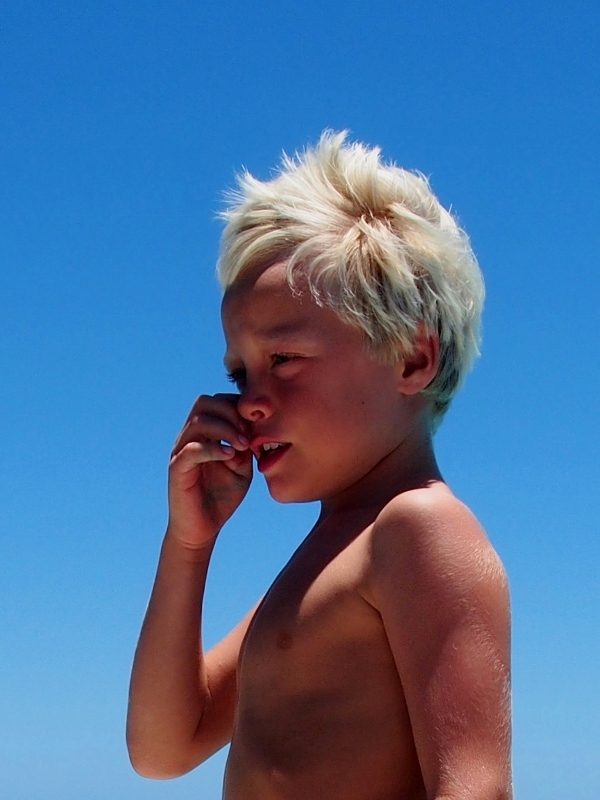
“But I don’t want to go home”, he said. “I want to stay on the boat”.
“I know”, said David.
We all felt that way, a sadness that our year away was about to end. Ridiculous, given that we still had more time left exploring New Caledonia than most families get for their holiday in a whole year, followed by some nice cruising time in the north of New Zealand before throwing ourselves back into work in the new year.
“But it will be fun, seeing Bob again. She’ll be missing us. And going back to school”, I said feebly. “Riding on the bus with Lukie, playing with your old friends in Raglan.”
“Also, don’t forget, we’ve still got another month here in New Caledonia before we head back to New Zealand, and then a month sailing around there before we go back”, David added. “Let’s make sure we enjoy our last while here”.

And there certainly was a lot to enjoy in this calm, windless week full of endless sunshine. The barrier reef surrounding New Caledonia is huge, second in size only to Australia’s Great Barrier Reef, teeming with a stunning variety of marine life. There are only a few islands in the southern lagoon, each of them chockers with seabirds and seasnakes, and surrounded by pristine coral reef teeming with turtles and sharks.

Our first point of call was Ilot Amedee, a small islet that we had first visited three years ago. A popular day-trip from Noumea, Ilot Amedee is a tiny island sporting an impressive, gleaming white lighthouse, 56 m tall, provided by the government of his Grace Napoleon III, Emperor of France, to help ships laden with French convicts navigate their way safely to Noumea.

When we arrived, Amedee was heaving with visitors. About a hundred tourists were packed onto the tiny island – some lying on sunloungers on the beach, some snorkelling the shallow seagrass covered bay, and some eating icecream on the shaded terrace overlooking the beach.
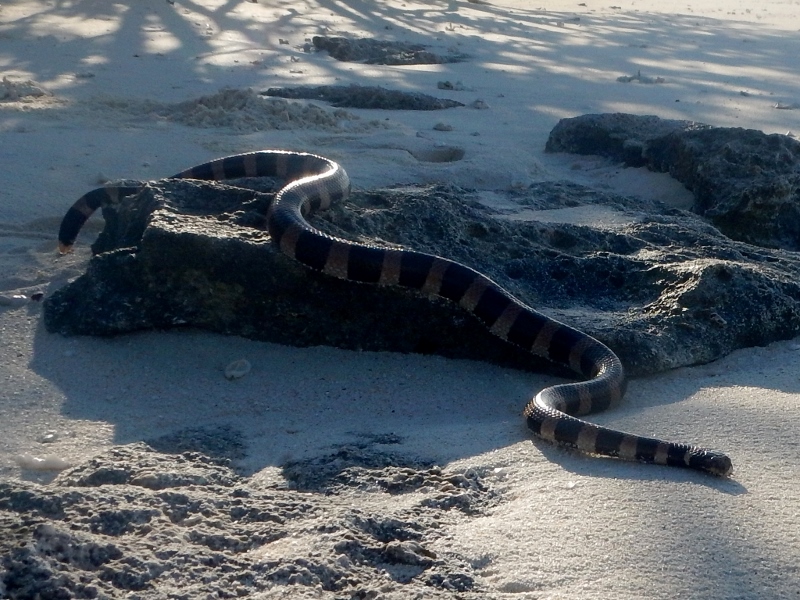
We anchored at about 2:30 pm and had just made it ashore when the ferry boat hooted, proclaiming its imminent departure, and the sun reddened visitors all queued up reluctantly to go back onboard, back to Noumea. By 3 o’clock they were all gone, and we had the island and the stunning calm bay all to ourselves, that is if you don’t count the seasnakes and the keen remora which soon sucked onto our hull, deciding that we were a place worth hanging onto.
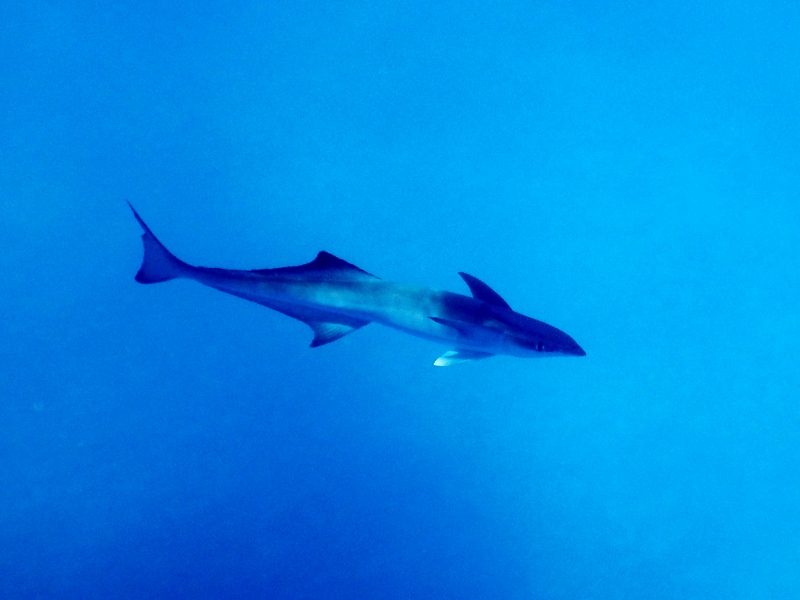
Despite the huge numbers of boats in Noumea, there were few yachts in the southern lagoon. We left Amedee the morning after, our keen remora hanging on for the ride, and sailed on to Ilot Kouare, the islet furthest south within the charted part of the lagoon.
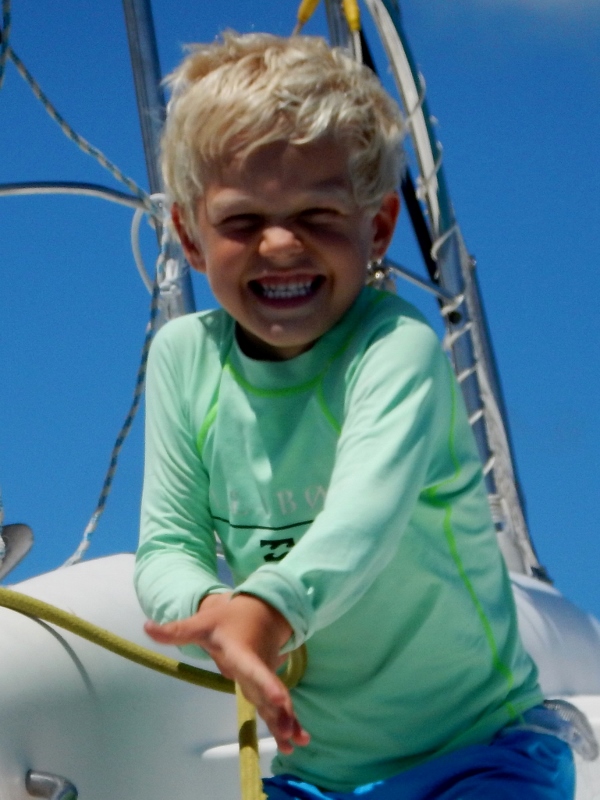
There were two other boats there when we arrived.
“What are they looking at?” said David.
He was sitting on the back step on the boat, putting on his snorkelling gear, ready to jump into the water. On our trip to Ilot Kouare he had noticed that the port rudder was behaving a bit funny, and now that we were anchored he wanted to jump in and have a quick look at it.
“I’m not sure”, I said. “They’re all pointing into the water”.
David watched them for a while longer, shrugged, and then jumped in. He took a deep breath and dived down under the port side hull.
I kept watching the other yacht. One of the guys walked towards the bow of the boat, lifting his hand above his head, waving at me. When he was sure he had my attention, he placed his right hand on top of his head, a fin, the universal sign for a shark.
Oh.
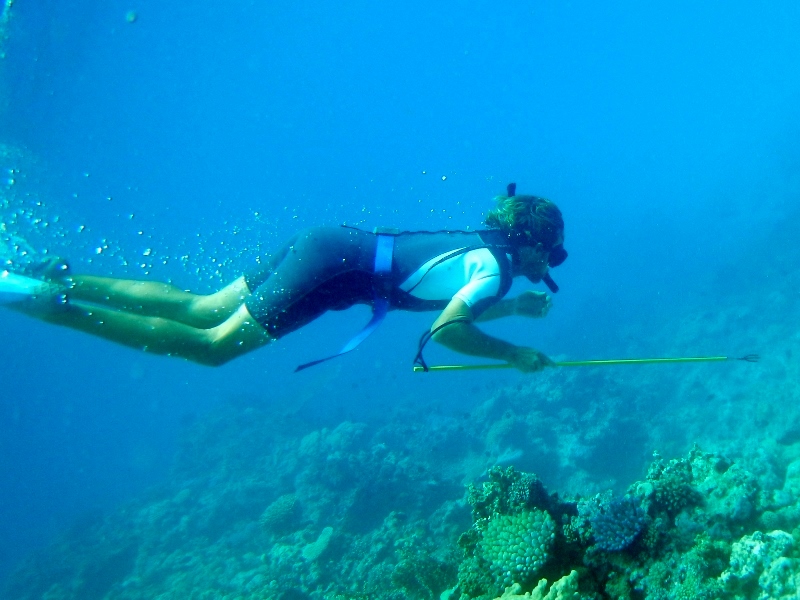
“David”, I called. “David, get out, there’s a shark!”
“Shark”, the guy from the other boat called. “Big shark”.
David surfaced next to the boat. “Eh?”
“Shark”, I said. “Get out. The guy saw a shark”.
He climbed out, wiping down his dripping hair.
“Well, there’s nothing obviously wrong with it”, he said, his mind still on the rudder.

Once he was safely on board, the boys and I dinghied over to the other boat, a French registered monohull full of Australians.
“It was big, 5-6 feet”, the man said. “Brown. I reckon it was a bull shark, or a bronzie”.
“Well, thanks for shouting out”, I said. “My husband was in the water, checking out our rudder”.
In May this year, a snorkeller had been killed by a bull shark at this island. Perhaps the shark was still hanging around. No more water fun for us in this location.
We stayed for a night at the island, kayaking over the colourful reef surrounding the small ilot, walking on the bright white sandy beach, spotting turtles and reef sharks in the shallow from the safety of the beach. Back on the boat we sat sweating in the sun, eyeing our remora enviously as it swam and glided through the turqouise waters, blissfully unaware of the lurking predators circling the anchorage.
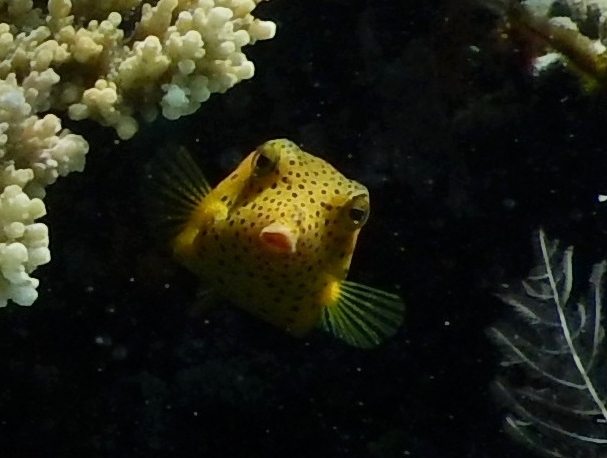
The next morning we upped anchor and left for the lower half of the southern lagoon. Because so few boats venture down there, the lagoon south of Kouare is not well charted, so I kept to my lookout post at the bow of the boat, looking out for the treacherous subsurface reefs that dot the lagoon. Resembling tiny pancakes against the background of a dark blue dinner plate, these circular reefs rise abruptly from the 30 or so metres of the lagoon to just under the surface. Fortunately they are easily spotted in calm weather by their bright green-yellowy colours, a stark contrast to the deep blue colours of the deeper waters, and we reached Ilot N’da without running aground.

Like all the islets in the southern lagoon, Ilot N’da was devoid of humans but home to scores of seasnakes slithering happily along on the beach, heating up in the warm sun, swimming merrily in the shallows and snaking along in the deeper water under the boat. On the beach were large, angry crabs striking a threatening pose as we came close, eyes raised on stalks, claws in the air, their black underbodies exposed as they bravely chased our shadows. Ospreys nested on the far side of the island and hundreds of black noddys roosted in the trees in the midday heat, only to head out to sea again for an afternoon feed.
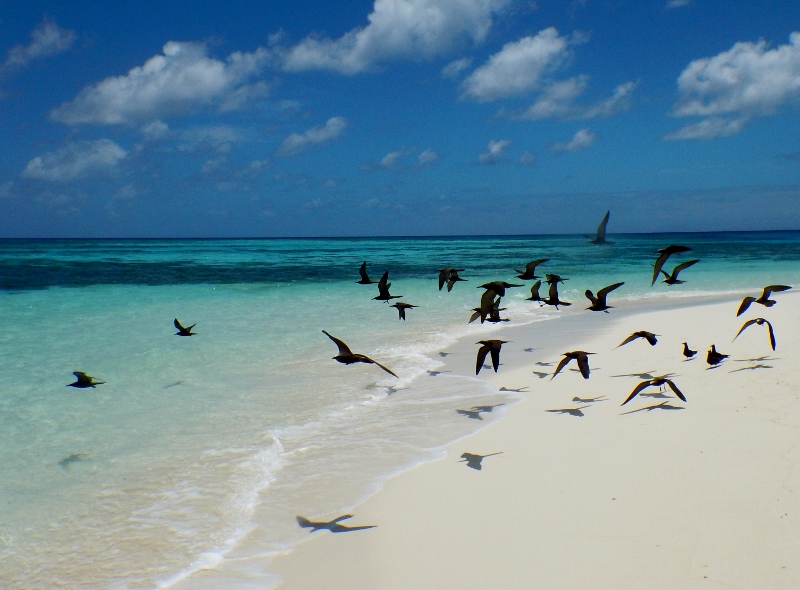
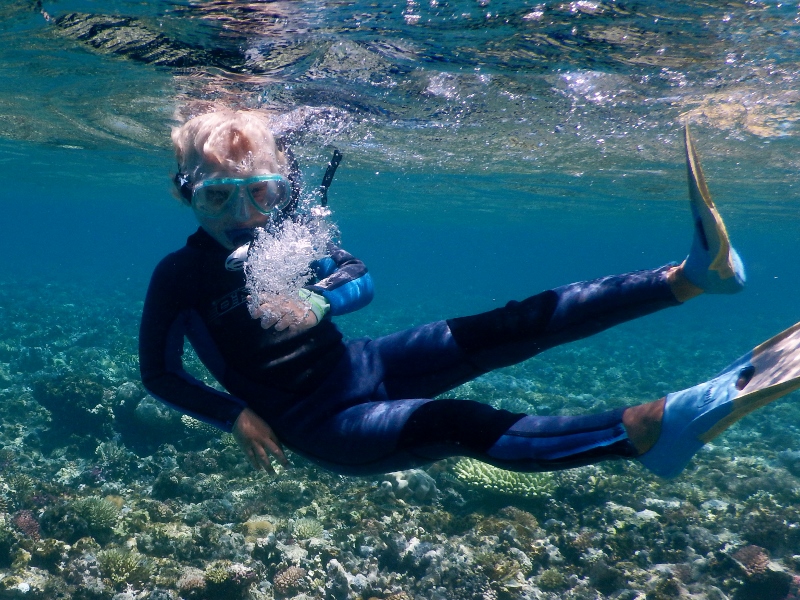
We spent three days at Ilot N’da, enjoying the spectacular snorkelling of two nearby pancake reefs, playing rugby on the beach blissfully unaware of the results from the Rugby World Cup final, and cooking our dinners on a camp-fire at the edge of the snake-grass. Every night at sunset the black noddies would swarm back to the island in their hundreds, the birds elegantly silhouetted against the spectacular sunsets.

Under the boat, our remora was joined by Trev, a giant trevally who discovered us as a good food source and did laps between the reef and the boat, coming back to check whether there was any new food with astonishingly regularity.

When the wind changed to the east we headed to the very southern end of the lagoon, anchoring for the day in the light blue-green waters. The water was clear and the nearby reef full of giant clams, which, although legal, we refrained from eating out of respect for their slow growth rates and heavily fished status.

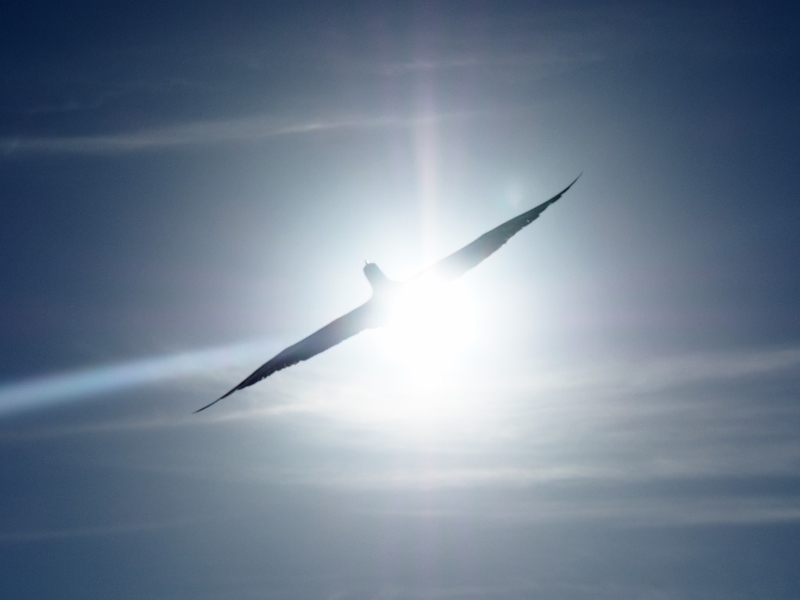
In the evening we headed back to a suitable night anchorage off Ilot Koko, a bird reserve closed for landing. Ilot Koko is one of only two islands in New Caledonia which is the home of the extremely threatened Fou Ra Pieds Rouge seabird (‘crazy bird with red feet’). From the boat we watched the swarms of birds rising from the dry branches in the centre of the small islet, and imagined the noise they would make. On the anchorage the boat was soon swarmed by boobies and frigate birds coming to check us out, the boobies trying to attack the wind vane on top of the mast in between swooping down low to take a closer look at the carcass of the dead tuna which was lying on the back step. Rarely have we seen so many birds, and never have they shown so much interest in us.

We didn’t get to see a ‘gong’, but with all that other interesting life around we hardly missed it. What an incredible place the southern lagoon is, packed with boobies and snakes, turtles and sharks, clownfish and corals.
 SV Bob The Cat