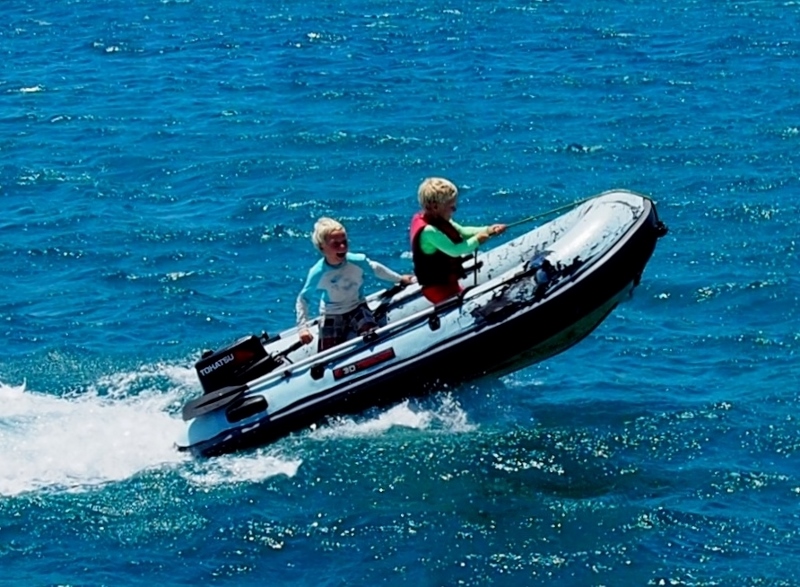
“Are you sure we should go today?” I asked.
David shrugged. “It won’t make a lot of difference if we delay it, this weather pattern will last to next week”.
I gulped. It had been a very rough passage from Fiji to Vanuatu, and I had been sicker than ever before, unable to do much but sit in the skipper’s seat and stare feebly at the horizon. It wasn’t that it was super windy, although we had been hit by a front or two; it was more the angle of the swell, the confused seastate tossing us around, jerking and slamming us one way and another until we were all covered in bruises.
“Well”, I said. “I guess we might as well go, then. I’ll take some seasickness pills, and give Matias some, too”.
And so we went, and in the end the seasickness wasn’t too bad, the pills keeping the nausea at bay for both Matias and myself. It was rough, though, waves crashing over us so frequently that it was impossible to sit in the cockpit without getting completely soaked. David kept maintaining that it really wasn’t that rough, that it was just the angle of the swell. But as far as I can remember, we’ve never before had so much water entering the cockpit.
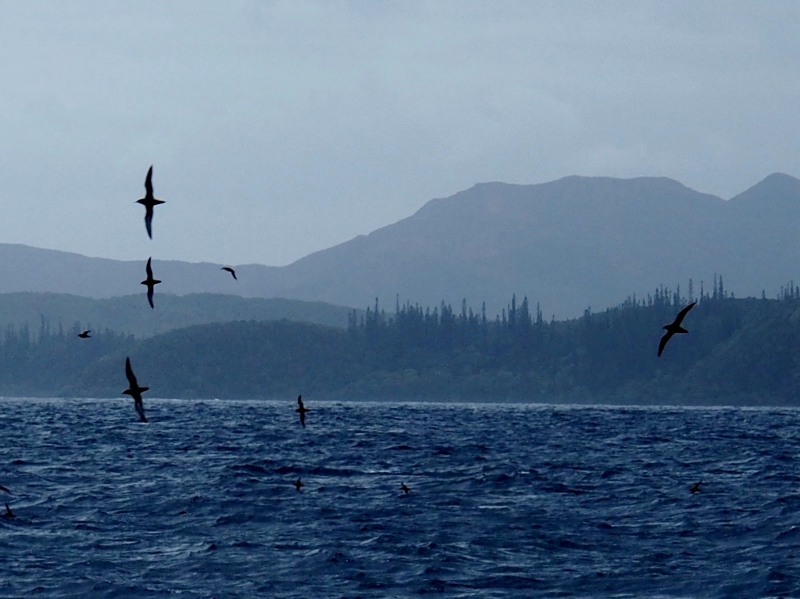
On the second day Grande Terre of New Caledonia appared on the horizon, misty rocks rising steeply out of the dark grey water. Apparently Cook named it New Caledonia because it reminded him of the Scottish highlands, and on our approach we could see why – dark, rugged, green hills set against a background of the bleak grey sky. We were further south now than we had ever been and the weather was cold, a chill southerly breeze blowing. I went inside and got out the woollies – we hadn’t needed them until now, but there was a limit to what we could stoically endure – and we rugged up, in layers topped with our offshore jackets.

New Caledonia was first settled by the Lapita people (named for a site on Grande Terre where their pottery was found) who arrived from Vanuatu arund 1500 BC. Captain Cook spotted Grande Terre in 1774, and a few English and American whalers and sandalwood traders settled down in the area in the 1800s. Missionaries arrived soon after, both Tongan protestants and French Marists. The indigenous people, the Kanaks, were meanwhile stolen in large numbers and sent to work as slaves overseas as blackbirders.
In 1853 Napolen annexed the country, ostentiably to protect the Catholic missions there, but really to claim the land and establish a penal colony on Grande Terre to ease up space in France’s overfilled prisons.
As settlers began to spread skirmishes between Europeans and the Kanaks became more common until they culminated in the Revolt of 1878. Following the revolt the Kanaks were brutally suppressed by the French regime.
With World War II came the allies, with US forces setting up camp in Noumea from where they would lead attacks on the Japanese in the Philippines and Coral Sea.
After the war New Caledonia was changed from a colony to a French Overseas Territory, and Kanaks were finally recognised as citizens and the wealthier Kanaks given the vote. Great nickel reserves were found on Grande Terre, leading to an economic boom in the 1950s and 1960s; today New Caledonia remains one of the world’s largest nickel producers.
With the improving economy came decades of bitter strife and bloody fighting between the Kanak independence movement and the French. Finally in 1988, the French Prime Minister Michel Rocard brokered the Matignon Accords, under which it was agreed that the French would support education, construction and infrastructure to help the economy of the territory, and that a referendum on full independence would be held in the future. The referendum was held in May 2014; the outcome was that New Caledonia remains French Overseas Territory for the time being.
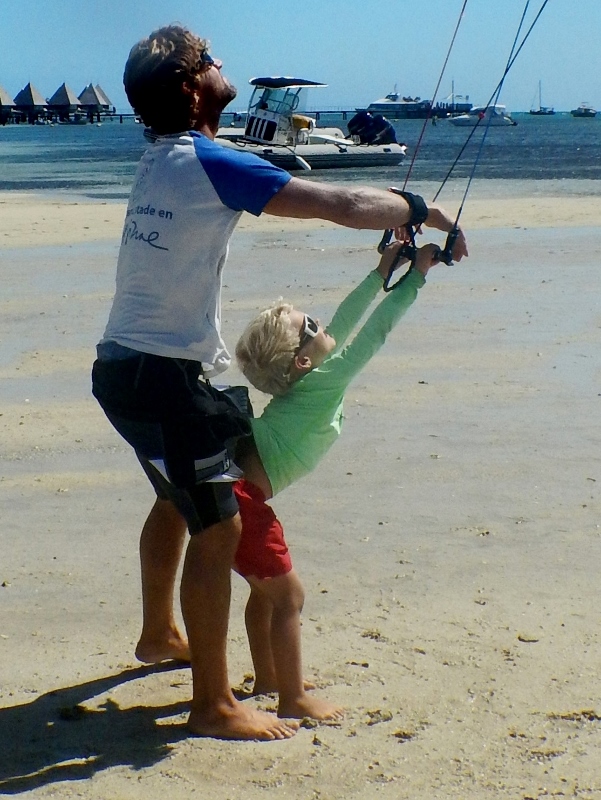
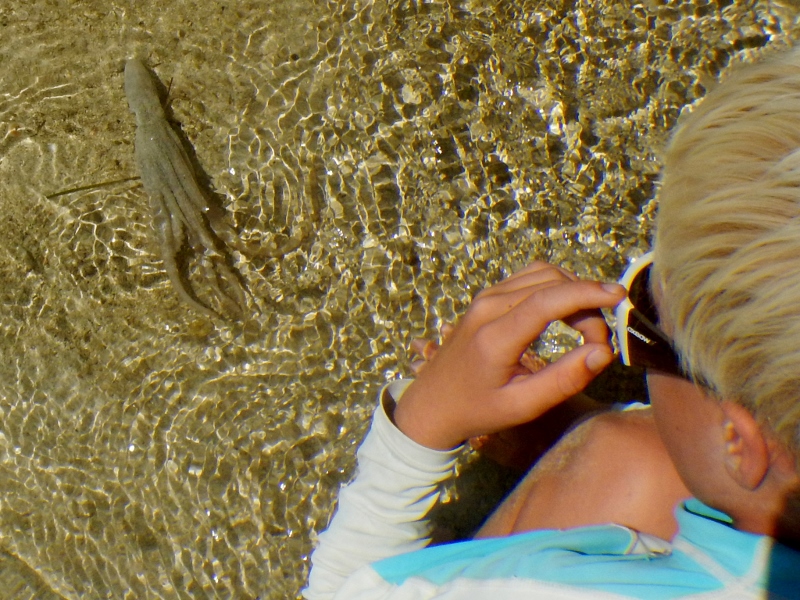
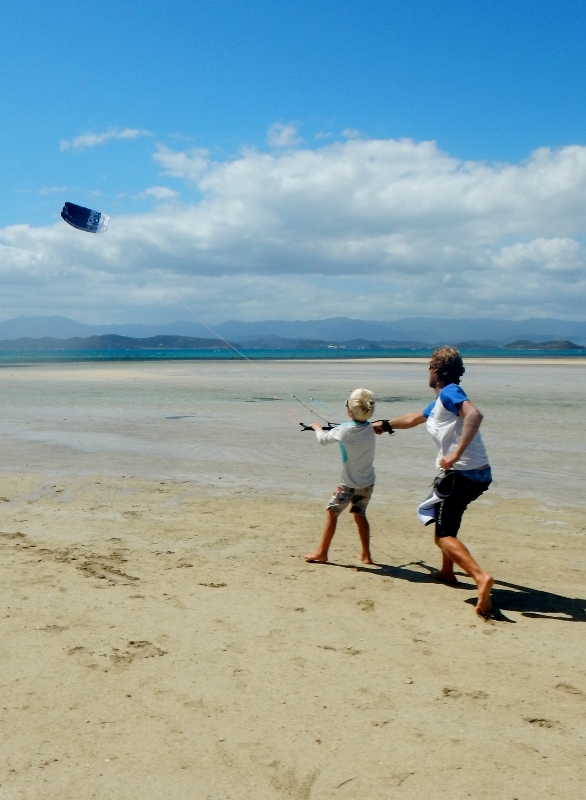
After spending a couple of days checking in and stocking up on parmesan, baguette and terrine du campagne, we left Noumea to spend some time on Ilot Nge, a wonderful little island about an hour’s sail from Noumea. The island has a great sandspit from which to launch a kite and wonderfully flat water behind the beautiful reef that surrounds it. The whole area is a marine reserve, and turtles and sharks came to greet us as we moored up on the buoys helpfully placed on the seagrass just off the beach.

A giant trevally and three remoras soon took up permanent residence under the boat; whenver we jumped in the water they would swim towards us in a hopeful manner, perhaps thinking that we were going to feed them.
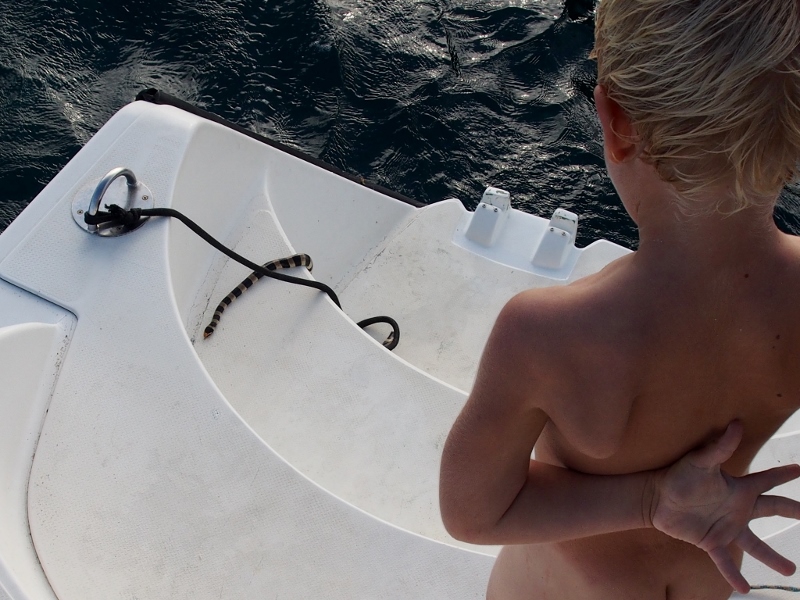
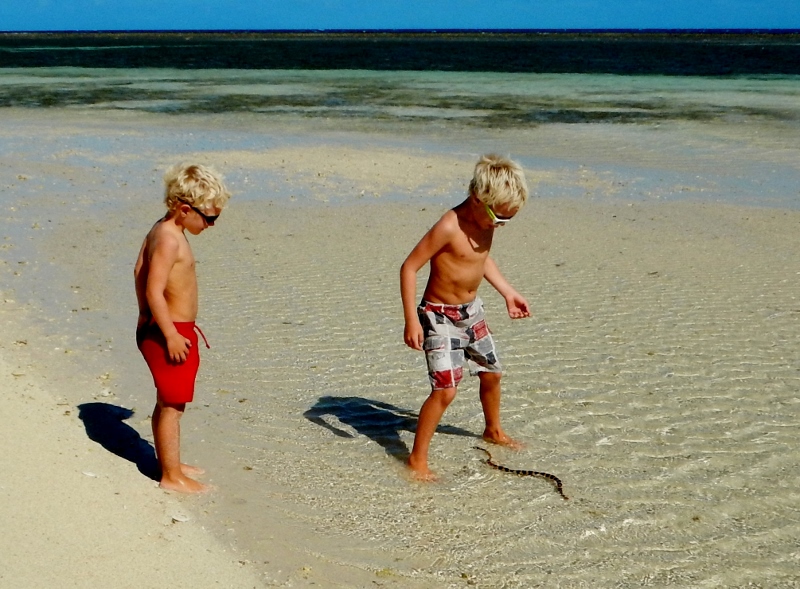
Seasnakes were also showing some interest in us, swimming up to us in the shallows, snuggling up to the fire we lit on the beach, and one even climbed onto the boat one evening, making me nervous about what I could expect to find in my bed the next morning.
Seasnake venom is the most toxic venom known and one bite from a seasnake can easily kill a grown person. However, the snakes are quite small, and their mouth can’t gape over much, so in reality the risk of getting bitten by one is rather low, although we did have to issue stern warnings to the kids to leave them alone.

When kitesurfing over the seagrass beds, David saw a couple of dugongs, huge brown shapes sitting near the surface calmly chewing the seagrass cud. Large turtles were cruising the bay, coming up for air every 20 minutes or so. What a place – we’re looking forward to spending the next month or so here!

 SV Bob The Cat