*Not wanting to favouritise any one family name over another, I normally combine two-name families into one. But as Kate and Duncan are Ross and Grant, respectively, I fear I might offend them if I abbreviate it to the Rants, or the Gross. Perhaps the the Kaduncs?

“And I ask you, what is your relationship with God? Do you believe in our Father the Lord and his son Jesus Christ?” Mary leaned forward, fixing Duncan sternly with a steely gaze lazering forth from above the narrow-rimmed glasses perched atop her nose.
“Do you believe in our Lord, do you love God as we do?” she repeated, her voice rising as her hands lifted from her lap. “Do you cherish our Lord, who gave us his son to save us from our sins?”
Duncan shifted uneasily under her steady stare, subtly changing his uncomfortable cross-legged position on the hard mat. Was he meant to answer, or was the question rhetorical?
“Because we believe that the Lord Jesus Christ died to save us from our sins. And we love the Lord. And we love his son Jesus. And we are happy that you are here today, to share our service. We are happy to worship the Lord with you, to pray and to sing with you”.
“Hallelujah, hallelujah”, exclaimed Dorothy softly in the background.
Mary’s glare widened from Duncan to encompass the whole of the darkened room. Next to her was Dorothy, a large lady in her forties, with the signature tightly cropped short Fijian hair, clad in a long, loose fitting darkly patterned dress. Dorothy’s husband, a fit looking man in his forties or early fifties was by her side and next to him, in a narrow doorway lit from behind by the bright outside sunlight, a heavy woman missing most of her teeth sat bottle feeding a baby. On the other side of the door we sat, a row of white faces, skinny bodies and wide-eyed children – Kate, Toby, Remy and Duncan, followed by myself, Matias, Lukas and David. Next to David, on the other side of another small door sat two toothless elderly villagers clad in Hawaiian shirts and sulus, their eyes closed, lips mumbling barely audible Hallelujahs.

We were in a small Fijian village on the island of Wayasewa. Our friends Kate and Duncan and their boys Toby and Remy had been on the boat for three days. We had anchored in the calm bay off the small village on Saturday afternoon, and upon presenting our sevusevu to the elders were promptly invited to join the church service the following day, which we’d happily accepted.

“So Lord we pray for forgiveness for our sins, we entreat you and beg of you to forgive us, because we love you Lord, love you.” Mary’s voice boomed, colour rising on her face, sweat pearling on her brow.
“Hallelujah”, moaned Dorothy, swaying from side to side on her place next to Mary on the mat, eyes closed. “Hallelujah, oh Lord. Hallelujah”.

It had been quite an experience to visit the village. When we arrived on Sunday morning at the appointed time, ready to go to church, the villagers were all piling into a small panga which soon looked dangerously overloaded. It turned out that the church service was being held in another village, one hour boat ride away, and they were all going there. An elderly New Zealand couple from the other yacht anchored in the bay was crammed in amongst them, looking a bit nervous.
“Are you coming as well?” asked the man anxiously.
“Not sure”, we called back. “Good luck!”

We hadn’t been invited to the other village, possibly because the boat was already too full. But we had been told to go to Dorothy’s house. As there was only one boat, and we were an additional eight people, the village elders had seemingly decided we should stay behind and that a special service should be held for us in Dorothy’s house.
Meekly following a young woman who had been sent out to fetch us we were led through the grassy village scattered with breadfruit and coconuts, past empty doorways revealing little of the dark houses behind. Dorothy’s house was large by village standards, and we were ushered into its surprisingly airy insides and invited to sit on tightly woven Pandanus mats with the elderly villagers looking on. After a brief welcome speech by Dorothy’s husband we were fed steamed buns and cups of hot tea which we sipped whilst complimenting our welcoming committee on the beautiful village, the new school and the general marvellousness of Fiji. Dorothy’s English was fantastic, and she was clapping her hands and smiling at our children, who came forth shyly to say hello and answer some questions.

Once tea was over, Dorothy fetched Mary, a tall, broad lady with a large face under a tight microphone cover of black hair wearing a starched cream shirt coupled with a long, dark skirt, who introduced herself briskly with a handshake designed to crush infidels.
“And now we will sing”. Mary leaned back, resting her bottom onto her feet, exhaling and smoothing down her skirt. The brief sermon was over, and Dorothy’s husband opened the book of hymns laying in his lap.
“We don’t have any English ones”, he said apologetically, handing us a book and pointing to the correct place.
The elderly toothless lady who had hitherto remained silent signalled the pitch with a wavering voice, counted down, and then they all joined her in a Fijian hymn. Immediately, the most incredible singing filled the room, six voices rising in perfect harmony, enveloping the small room in God, beauty and light. With tears in our eyes we joined in as best we could, hoping that the addition of our unschooled voices wouldn’t ruin the glory of the moment.
Later, after having been treated to several marvellous hymns we went to donate some books to the school. Sitting in the shade of a tree by the waterfront we met a group of younger women. One of them had a young baby in her arms. When we went to say hello, she asked if we had any medicine for her baby, a five month old girl with a bad dose of scabies. The baby’s feet, armpits, tummy and arms were covered in raw-looking infected sores.
“Has she had it a long time?” we asked.
“For two weeks”, answered a friend of the mother’s. “There is no doctor here, but there is a nurse on the other island. She hasn’t seen the nurse yet, she comes over once a month.”
“It looks sore”, I said.
“It’s itchy. It’s scabies”, explained the mother. “Do you have any medicine for scabies on your boat?”
We went back to the boat and rummaged around our medical resources and found a tube of antiseptic cream. Scabies are small mites that get under the skin and cause irritation and infection, and they are treated with insecticides, which we didn’t have. We didn’t want to hand out antibiotic creams as the infections were secondary and really the baby probably needed treatment for the mites, so we settled for an antiseptic nappy rash ointments which would at least soothe the skin irritation, hoping that the mother would soon get to see the nurse.
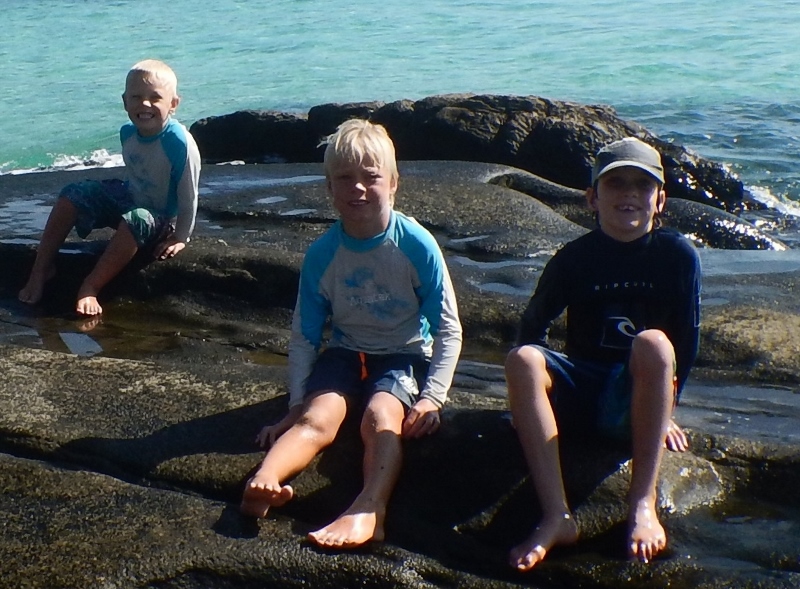
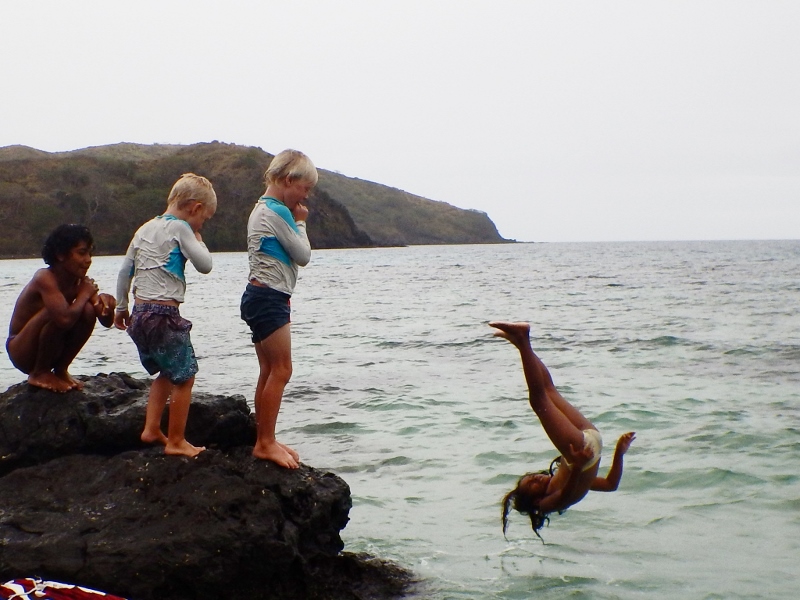
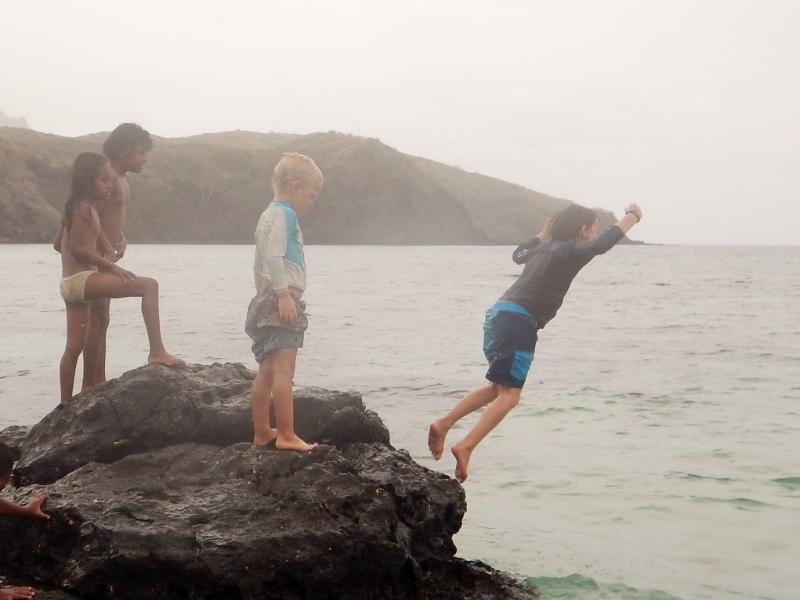
Back in the village the children came back from church and a group of girls soon joined us on the beach. At first they hung back modestly, asking us questions and practicing their excellent English, but soon they tore off their clothes and jumped in the sea, swimming and playing in the water with the boys. They were amazing children, looking after the foreign boys playing on their beach, helping our clumsy sons clamber onto rocks, showing them how to jump in, diving down and swimming under water for metres only to jump out and roar and splash to the great delight of our children.

Fijians are the easily the friendliest people I have ever met. Wherever we go, we are greeted by people asking where we’re from, how we like Fiji, and which is our favourite team in the upcoming Rugby World Cup. The men stoop down and ask our boys whether they play rugby, how they like the All Blacks, and if they have seen the Fijian Rugby team play. The women stop me on the street to comment on how handsome the kids are, and children everywhere wave and shout “Bula, bula”, hello hello.

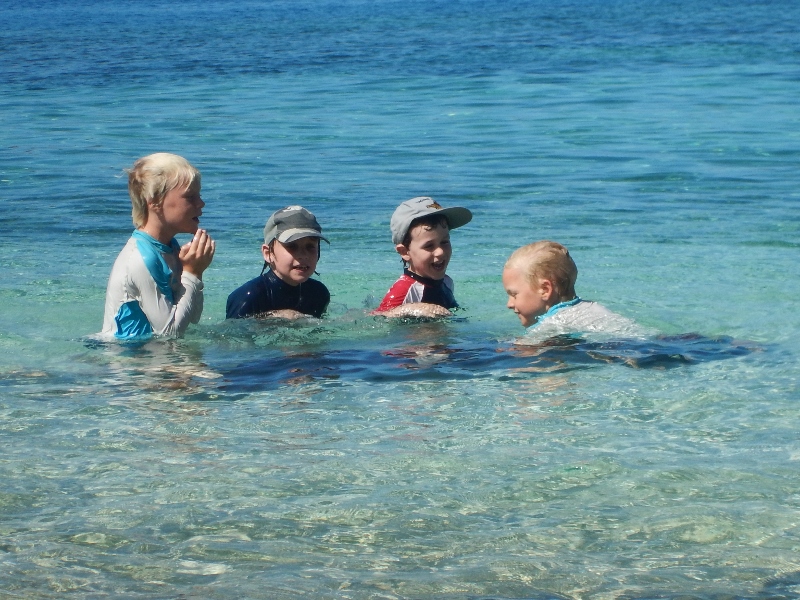
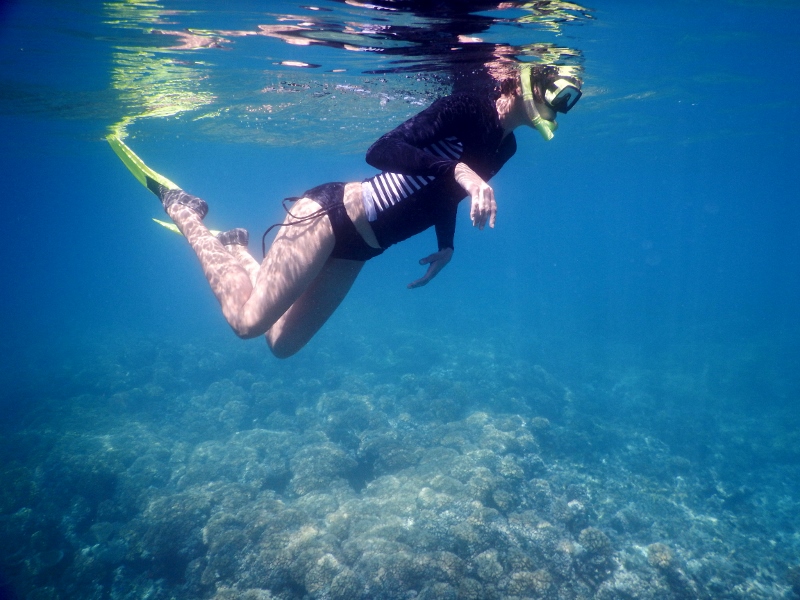
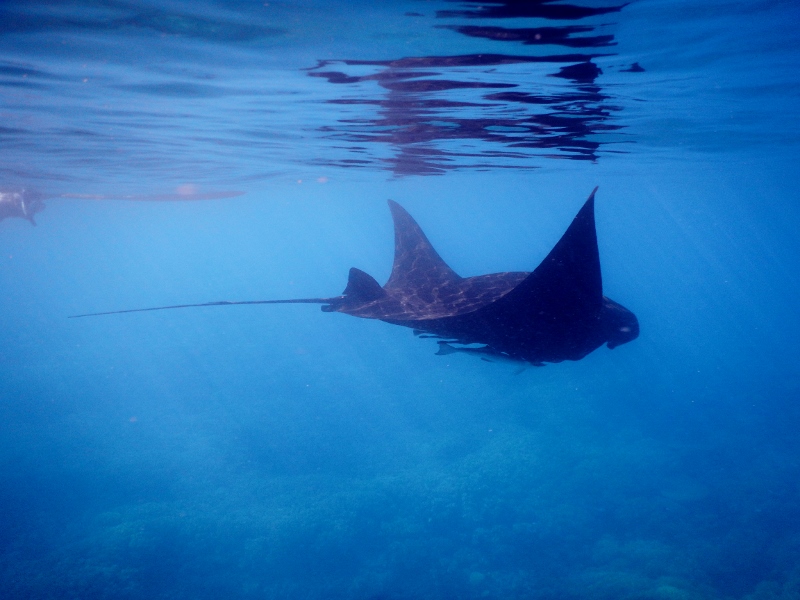
Kate, Duncan and the kids brought with them brilliant weather and when not visiting villages we spent much time in the water – jumping off the boat, snorkelling brightly coloured coral reefs, and swimming with the obliging manta rays.
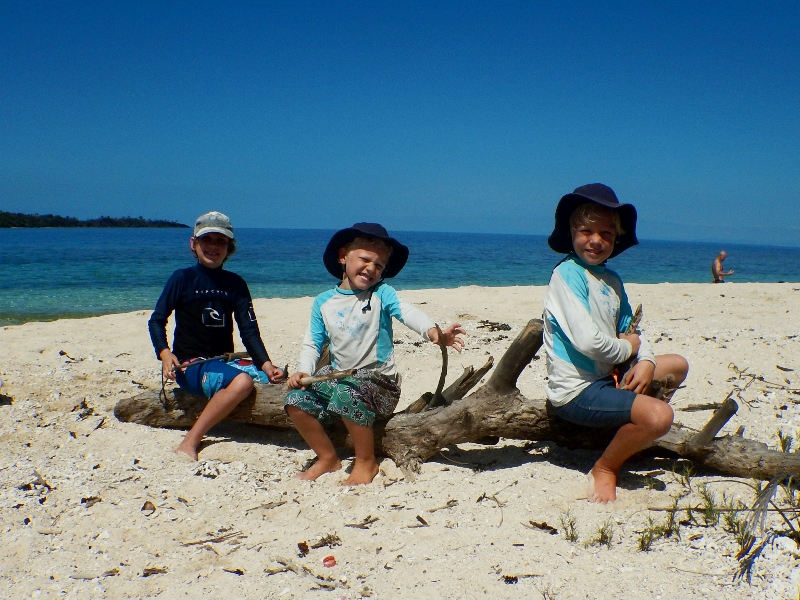
Thoroughly stoked to be back together, the four boys explored the beaches of deserted and inhabited islands alike, finding caves and sticks and turning them into homes and weapons. They played in the shallows, jumping from rocks and sliding down algae covered limestone to land in the clear blue water just beyond the sandy beaches. On the boat they created magnificent drawings of outer space and its creepy, alien inhabitants, and constructed intricate contraptions out of Lego, pausing only occasionally to ask for food and water.


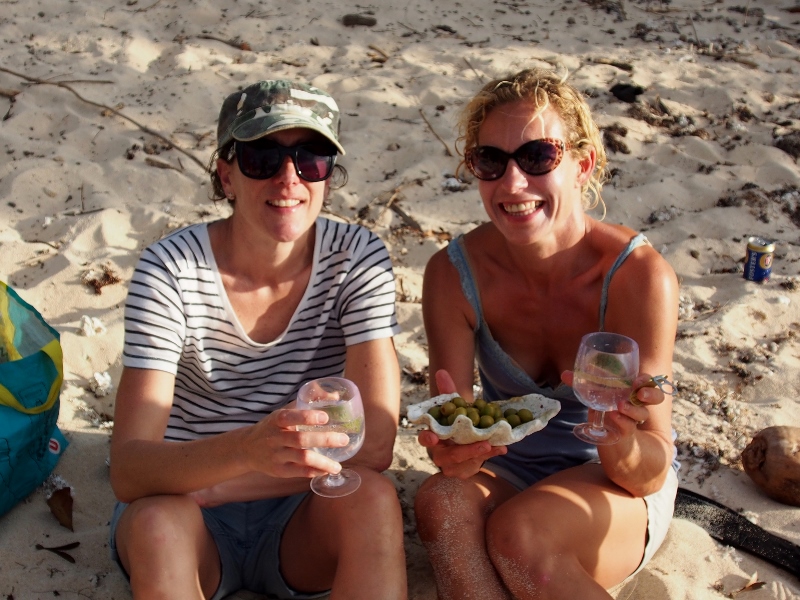
In between swimming and managing children, Kate cooked up a storm, serving delicious treats round the clock to the rest of us, and we soon found ourselves sitting belching quietly in the sun, feeling utterly spoiled with the good fortune of having such amazing friends come on board and share a week with us. Thank you for coming, Kaduncs, and we’ll see you next on the beach in Raglan.
 SV Bob The Cat