Disconnected

OLYMPUS DIGITAL CAMERA

By now we’ve had almost a year without much internet access, bobbing around as we do on huge oceans or sitting on remote anchorages in our little boat, blissfully unaware of what is going on in the world and shamefully uninformed of the events unfolding in the lives of many of our friends and acquaintances.

It has been interesting to go through the process of partial disconnection, confronting at times, and a real eye-opener as to the real state of onlineliness of much of the world.

We are, of course, still connected – just less connected than what we used to be back when we lived on land. On Bob the Cat, our connection to the wider world is via the Iridium satellite link through which we receive weather information and emails from close friends and family. It provides a vital link to the outside world, but it is intermittent, slow and only good for the receipt of limited data. Occasionally people try to send us photos or links to websites, leading to messages which can take anything up to a week to download, the images attached to which we never get to see because we simply can’t open them. Often, friends back home will push the reply button to an email that I have sent, unaware that the inclusion of a string of previous emails will mean that the download of their message will take twice as long.

Some of our yachting friends attach small novels to the end of their emails with exact instructions on how to limit sending lots of data, including strict instructions not to press the ‘reply’ button but instead send a new message so as to not overload the recipient. The problem is that the emails are often just strings of numbers, which friends at home naturally find hard to remember.

Although our Iridium plan is for ‘unlimited data’, the limited bandwidth means that we can’t browse the internet at all using it. And I mean not at all – it takes about a week to try to upload the front page of the Google website, and we have yet to do one successful search.

Looking ahead to distant shores

Even with our full life travelling around the perpetually sunny tropics, we do still feel like we need the internet occasionally – to download or send Customs forms, to figure out which marina to go to in a new place, to research where to go in the places we’re about to visit, and to update the blog.

When the need hits us, we have two options – either we visit an internet cafe for half a day or we buy a local SIM card and hotspot one of our mobile phones.
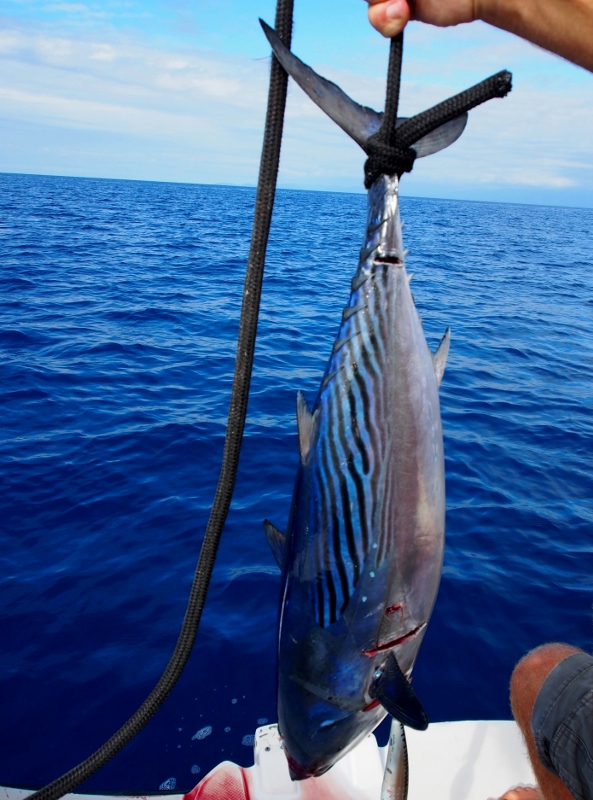
No online recipes for cooking our fish

In most of the places we’ve been, internet cafes have been a less than reliable option. They exist almost everywhere nowadays, but connections are often ropy to say the least. In Bora Bora we had two very expensive dinners in a yacht club in the hope that we could update the blog, to no avail. In Galapagos, the connections in the internet cafe timed out again and again, leaving us with downloaded emails that we couldn’t reply to and no wiser as to where to send our leaving forms should we ever succeed in fully downloading them. Our laptops are old with shocking batteries which means that even if a device is fully charged, we get a maximum of 20 minutes staring into a screen darkened by a power saving reduced backlight, rendering the images on the screen largely indecipherable against the backdrop of bright tropical daylight, our sweaty fingers feverishly maneuvering the mouse, trying to upload pictures against the relentlessly ticking clock of steadily reducing battery power. Some places have power points available for customers, and we’ve sat for hours, drinking one grapefruit juice after another whilst catching up on import regulations for Tonga or emailing potential brokers for selling the boat in New Caledonia.

SIM cards are available in most places, but as we have to pay overprice for the data we use hotspotting the mobile, we have to be rather strict about internet usage. Things like Facebook are prohibitively expensive; just a simple log-on can cost hundreds of megabytes of data because of the upload of scores of photos in the posts we’re anticipated to scroll through. I was never a big Facebook poster before we left, but I used to log in from time to time, quietly stalking the lives of more actively posting friends and acquaintances. Now I only use Facebook to quickly put up a link to my blog, and it’s been almost a year since I’ve been able to scroll through the lives of others. Which means that I’m woefully out of touch with what people are having for dinner, where they’re holidaying and the achievements of their incredibly talented offspring. I no longer know whose daughter won Player of the Day at soccer, whose son scored highly at the regional swimming competition or whose beloved child aced the spelling bee at school. There is a gap in my life which used to be filled with pictures of the fancy houses / cars / jetskis purchased by wealthy colleagues, the gruelling sporting events completed by people I went to primary school with, and the garage sales raising funds for Plunket in my local community. Add to that the fact that I’m totally out of touch with the latest throng of hilarious cat videos, and you can see why I feel so disconnected.

Lukie browsing a well-thumbed copy of Captain Underpants
No new books – Lukie browsing a well-thumbed copy of Captain Underpants

It is not just my voyeuristic self that has noticed the change. We all miss the instant access to information that we’ve grown accustomed to from our settled life – instant answers to queries satisfied only by a quick peek at Wikipedia, the aimless searching for stuff that would be incredibly useful for our homeschooling daily life, one query following another to explore a topic according to our fancy. With proper internet access we could have learned so much more, could have easily targeted the schooling to make it super relevant to the places we have visited. Instead, we’ve found ourselves forced to go ashore, visit locals, go to museums, ask questions and spend hours in bookshops looking up guidebooks, swapping precious Caribbean fish guides for thin volumes describing the culture of Pacific peoples.

No internet means that it is hard to come by information on fiddler crabs
No internet means no information on fiddler crabs

I grew up like that, of course – back when research meant a visit to a library, when you had to wait a month for a copy of a research paper from a journal held in a distant library. Nowadays our living rooms have taken over from libraries as places of research, the latter becoming largely obsolete buildings housing out-of-date printed material, offering mum and bub toddler time and displaying tattered copies of children’s books.

The connectedness we took for granted in our home life is definitely compromised out here, on the ocean, in the Caribbean, Central America and the Pacific. At home we read exciting articles in New Scientist describing the increased internet access in developing countries, outlining how former ‘dark’ continents have become lit by the blue-white glow from countless wireless devices, waved about by rich and poor alike. That is not quite how it seems where we’ve been – we’ve got more of a dusky impression of the state of internet accessibility.

Old-fashioned entertainment

It isn’t at all bad to be disconnected, of course. We avoid the tedious day to day news and only hear the really big stuff, like the insane rise of house prices in Auckland. The downfall of Tony Abbott or the change of Labour Party leadership in New Zealand takes months to filter through. And nothing quite beats the thrill of arriving somewhere with internet access, when we get out the Kindles and start downloading reading material, Matias reading non-stop for days afterwards, completely submerged in the magic world of Harry Potter, Demon Dentists and I Survived books.
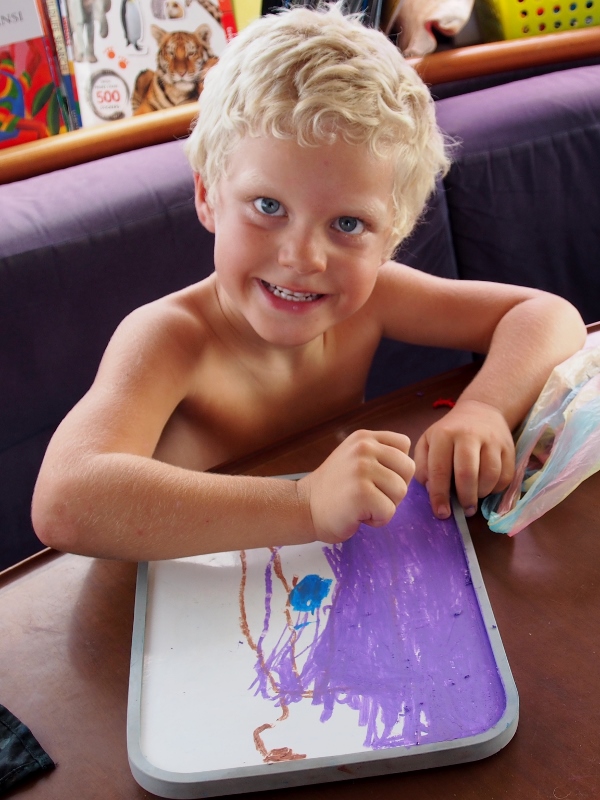
Purple imagination
Purple imagination

We trust that we’ll find out about the important stuff when we need to – and generally we do. We know when the next Rugby World Cup game is on, and which village we can watch it in, because the locals here are crazy about rugby. We found out in time about the tsunami that struck Fiji two weeks ago, and David stayed up all night to watch the depth sounder show the slow rise of Bob as she bobbed gently up and down atop the 3/4 of a metre wave that passed under us in the spot we were anchored in.

The record of a tsunami
The record of an overnight tsunami

We know when the sun is rising in the morning, when it sets at night, and whether a full moon is likely to grace us with its presence on our lonely night watches on the way to Vanuatu. The rest can wait until we get back home, and in the meantime we hope our friends will excuse the lack of ‘likes’ we offer their online existence – you are in our thoughts and hearts, we just don’t have enough bandwidth to show our appreciation through Facebook.

Mega moon over the anchorage

Fiji – Mamanucas and Yasawas with the Berthot-Craigs

Alexis and the crew
Alexis and the crew

“Kids, there’s lunch”, we called out over the water.

The boys didn’t turn around. They were bent over something in the water, peering out over the side of the kayak.
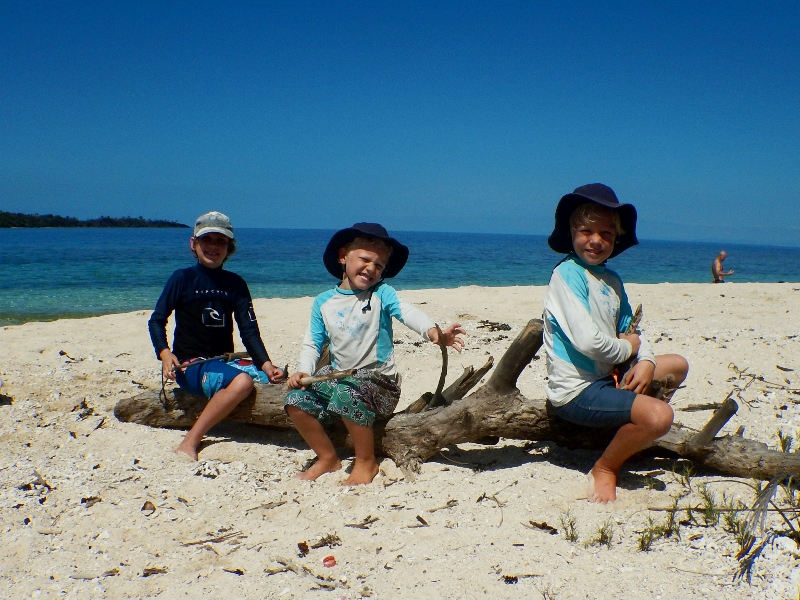
“Come back”, we shouted. “Lunch is ready”.
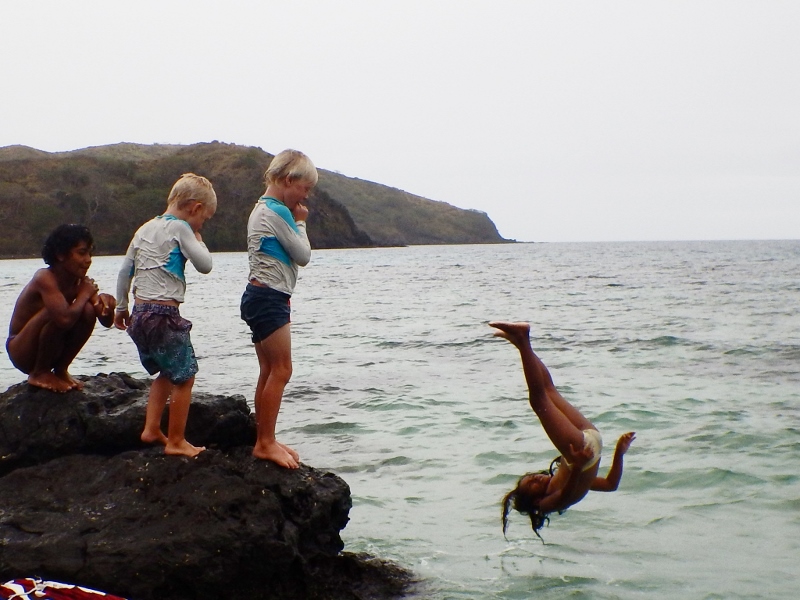
Lukie reluctantly turned, causing the kayak to wobble violently.

“We’re fishing”, he shouted. “We caught stuff”.

“Well, bring it back”, we replied. “And come and have lunch”.

After another ten minutes they started on their way back, Matias heaving the paddle, Lukie and Noah bent over the seat of the kayak.

“We caught seahorses, and baby fish”, they exclaimed as they came closer to the boat. “They’re in the seaweed. We made a habitat. It’s in water in the bottom of the kayak. Have a look”.

And there it was, a thick wad of seaweed in a pool of water at the bottom of the kayak. I brought out a container and helped them transfer their treasure safely into it. There were indeed baby fish, including tiny pipefish that resembled seahorses, feebly swimming in amongst the bulbous seaweed floating in the bucket.

Double jump: Matias and Noah
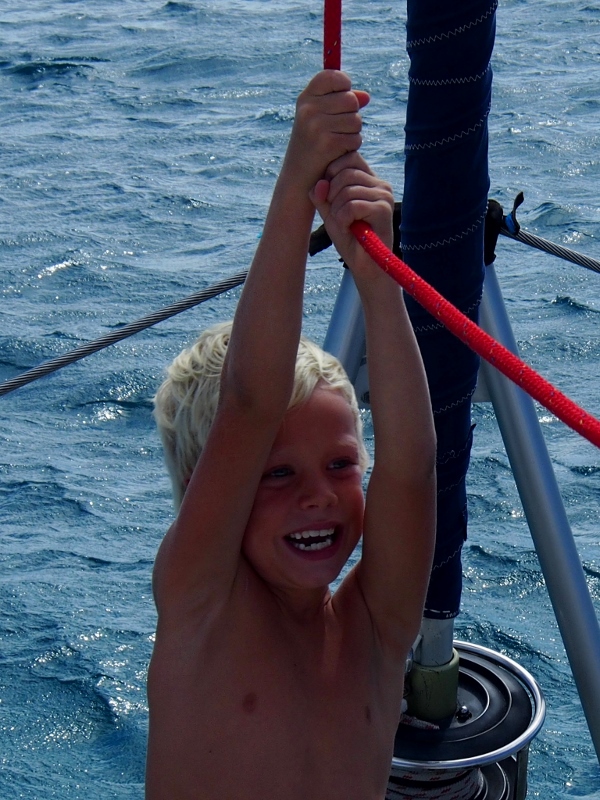
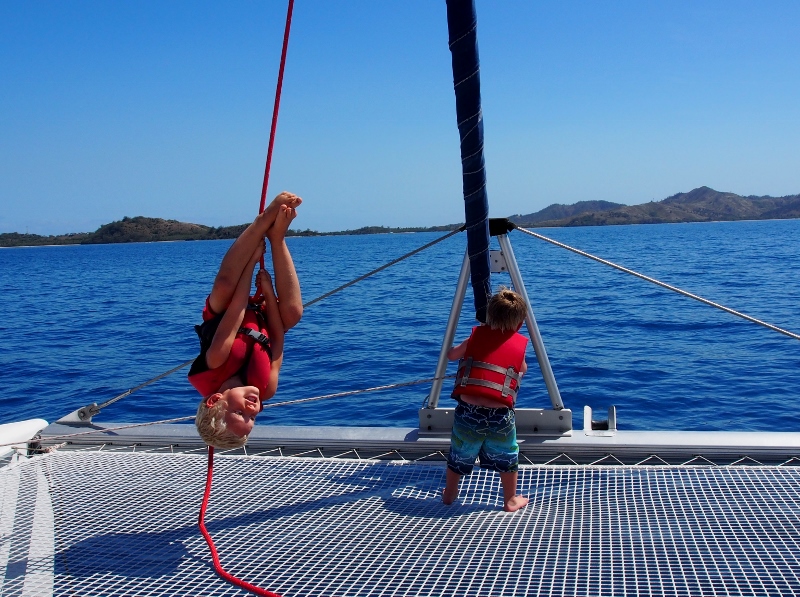
Noah in the ropes
Noah in the ropes

It was Noah’s first day on the boat, and he’d settled right into it, gamely jumping in the kayak to go ashore with Matias and Lukie, the rest of us following in the dinghy. Our old friends from Australia, Alexis and Cara and their children Noah (6) and Kai (3) were visiting for ten days. They had arrived in Fiji a couple of days previous and had relaxed at a resort, snorkelling and windsurfing, before we picked them up at Mana Island in the Mamanucas and headed north.

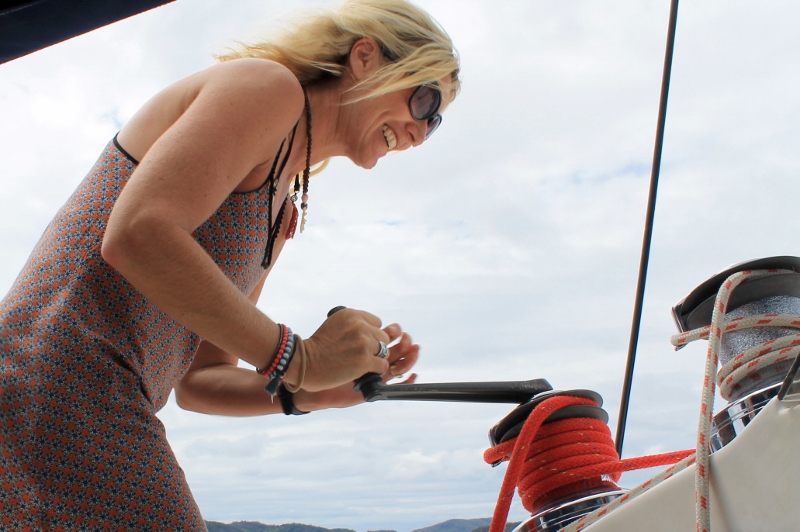
Cara grinding
Cara grinding


This was our first stop, Yanuya Island. We had just been ashore visiting a village where we had done our sevusevu, presenting kava to the chief. We had bought some shell bracelets and the kids had had a play with the local children, jumping off the kayak again and again in the shallow waters. It was on their way back to the boat that the boys had captured the seaweed and the juvenile fish hiding in it.

Water play with the village boys


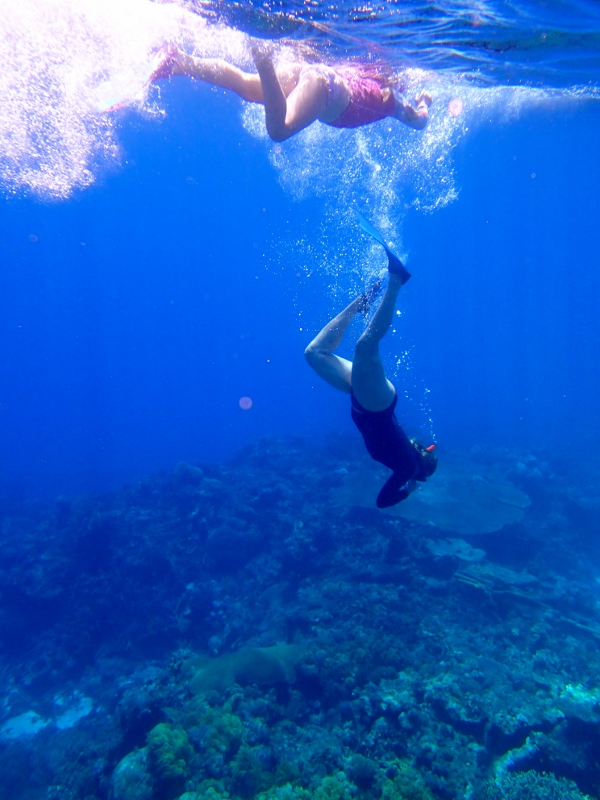
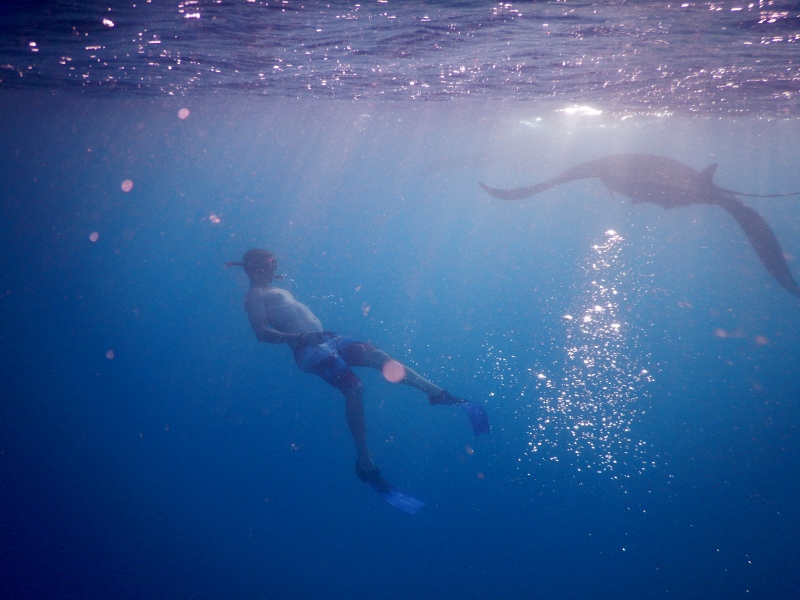
The next nine days was a blur of activity. We visited the islands where famous movies like Castaway and Blue Lagoon were filmed and swam in the crystal clear waters of turqouise lagoons over white sand and colourful coral reefs. We saw huge Napoleon wrasse and swam with gigantic manta rays, Noah excitedly snorkelling right next to the huge creatures, his eyes wide with wonder.

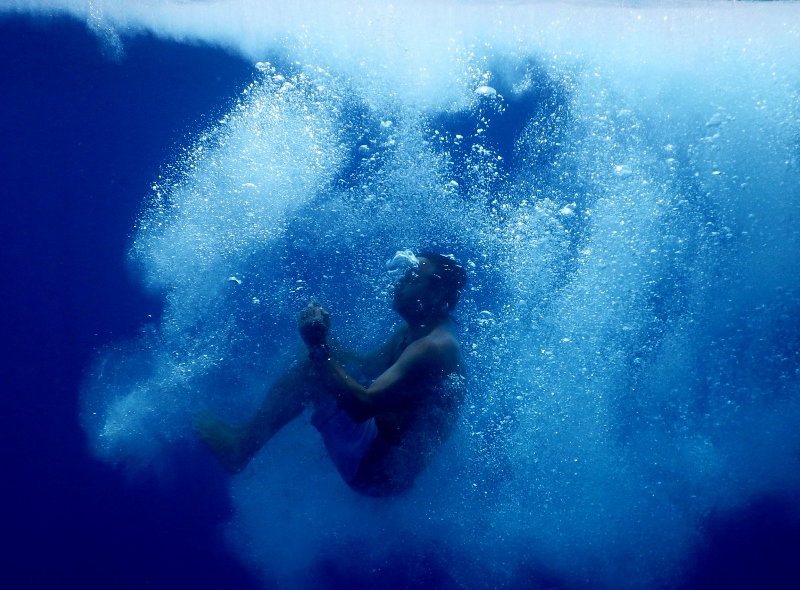
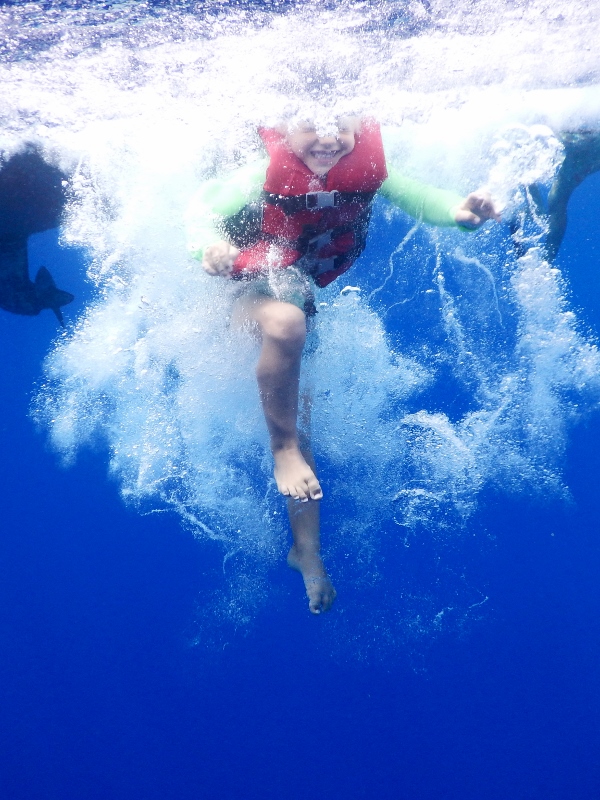
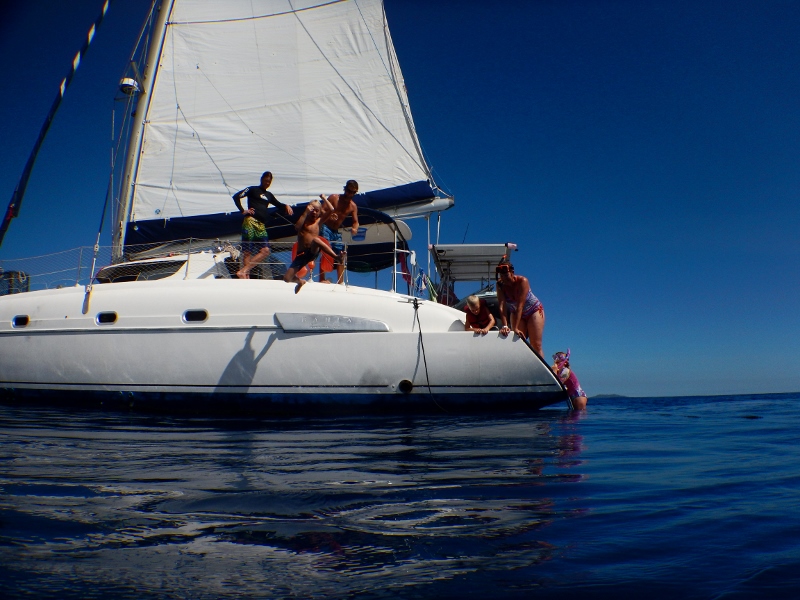
Alexis bomb
Alexis bomb


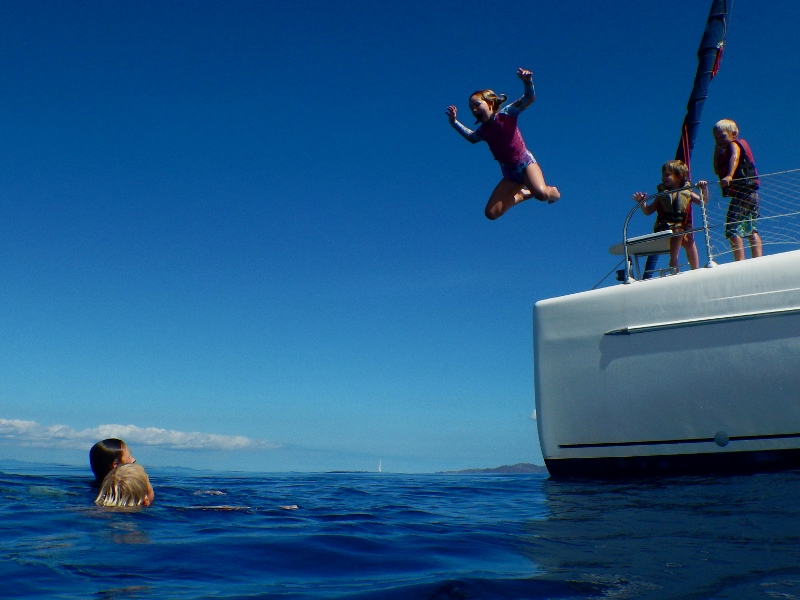
The Berthot-Craigs took to the water with relish, the kids eagerly jumping off the boat at every opportunity and playing involved kayak chasing swimming games on every beach we visited. When not expertly driving the dinghy, little Kai snorkelled up a storm, impatiently waving away his parents on his first go, eagerly kicking ahead, keen to see more and more of the colourful fish.

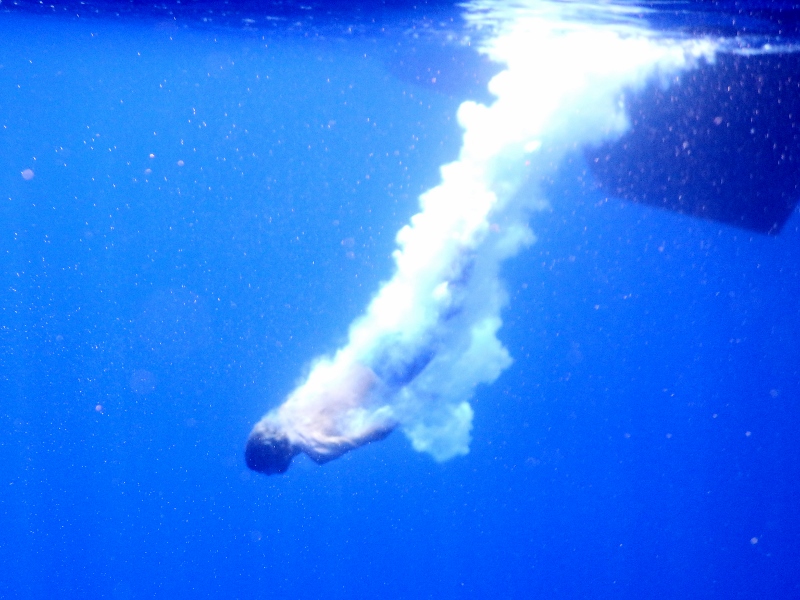
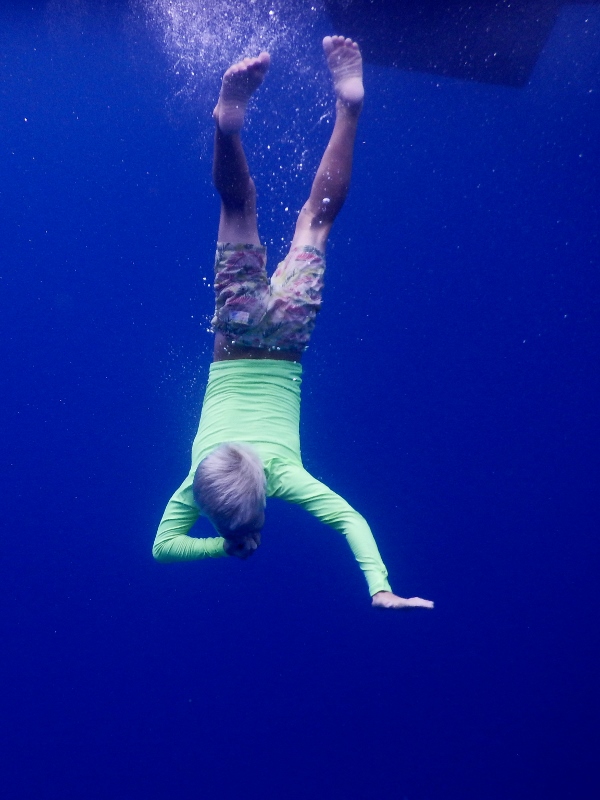
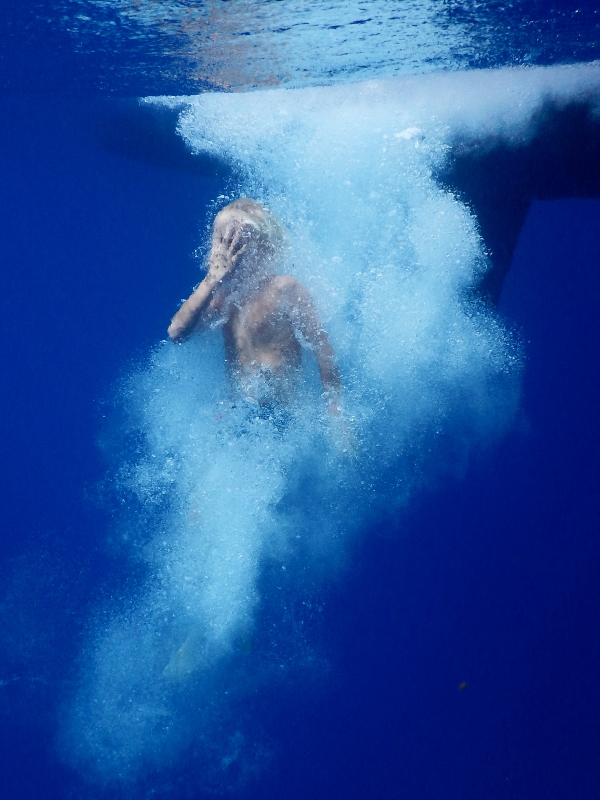
Noah diving
Noah diving


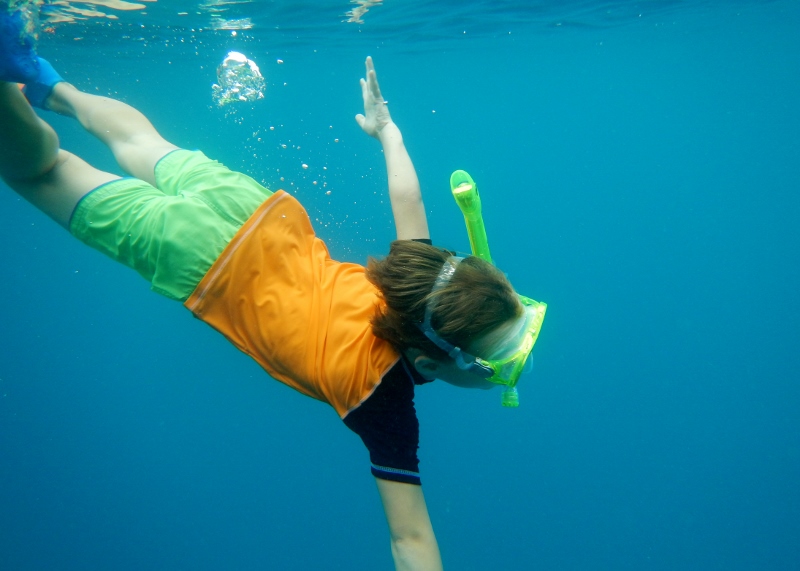
Underwater Kai
Underwater Kai

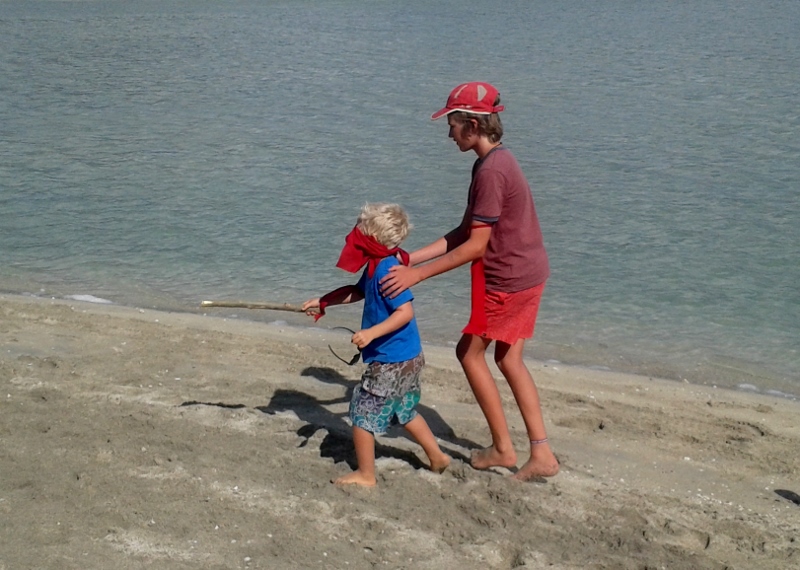
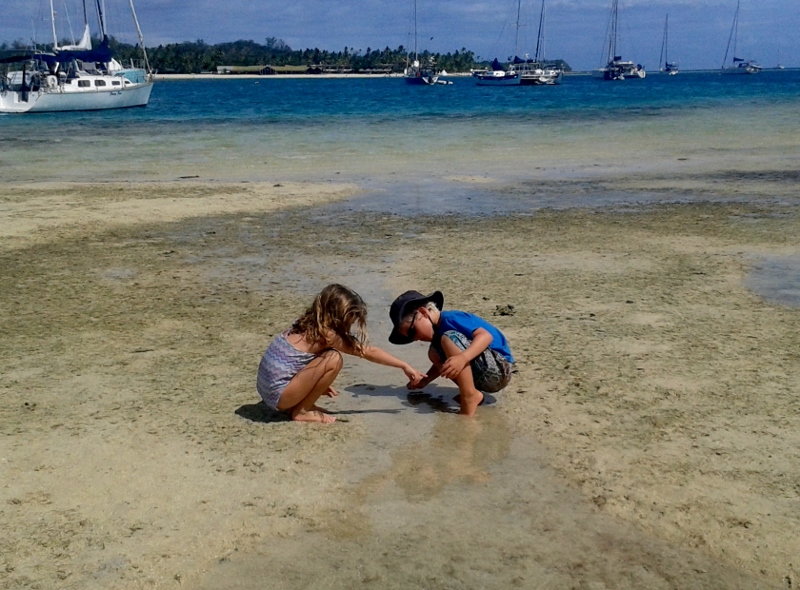
The kids spent hours playing on sandy beaches and exploring rocky tidal pools, finding crazy crabs, slimy snails and shiny shells. They played rugby with Alexis and attacked each other in the shallows, pretending to be seamonsters. When we could cook out they collected mountains of firewood for bonfires on the beach, and we cooked sausages and freshly caught fish over open fires, the kids gingerly toting huge sticks with dough wrapped around the end to cook smokey damper the way it should be, burnt on the outside and slightly raw on the inside.

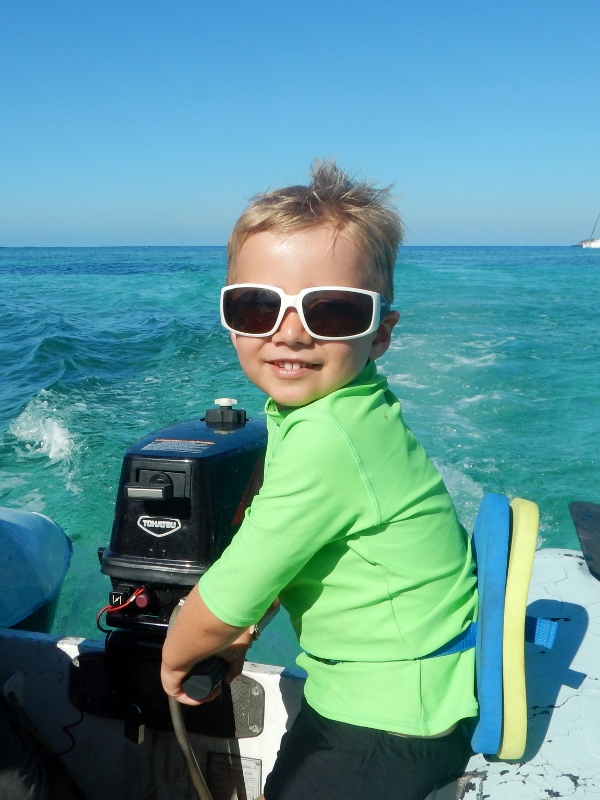
Dinghy driver Kai
Dinghy driver Kai


Exhausted Kai
Exhausted Kai

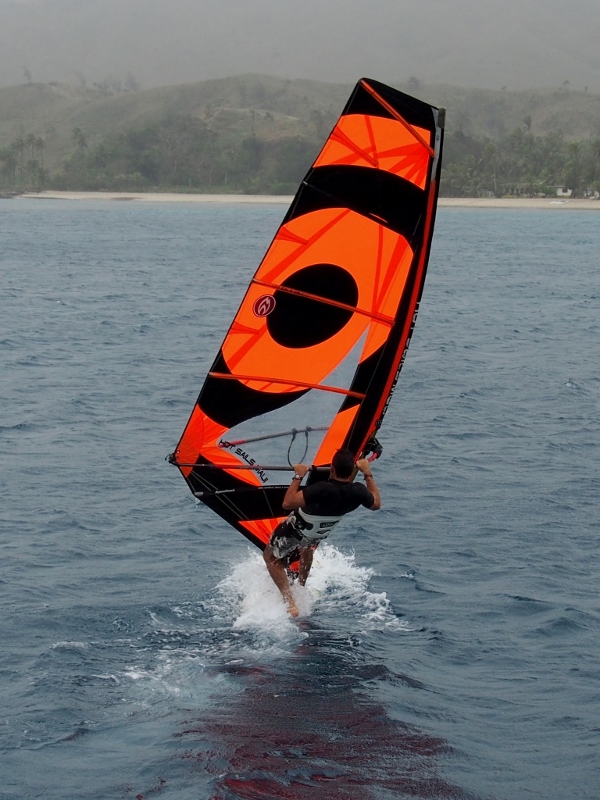
Alexis had brought along his windsurfing gear all the way from Australia, but unfortunately we didn’t get much wind on their stay on the boat, so he limited his efforts to a gentle breeze blowing on a misty morning.

Alexis windsurfing
Alexis windsurfing

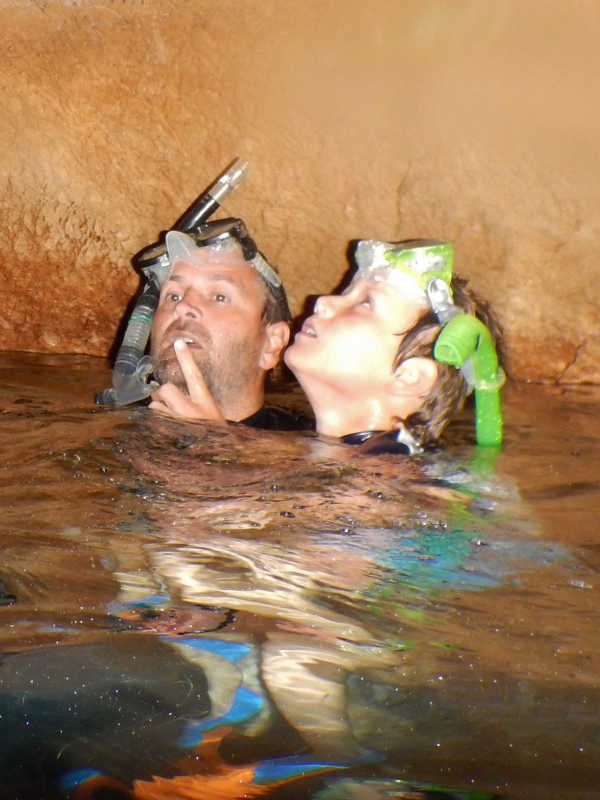
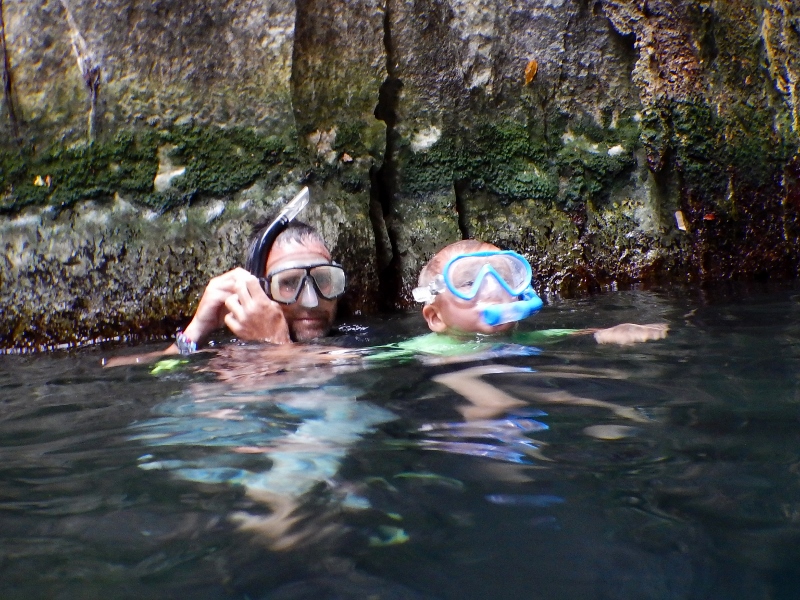
At Sawa-I-Lau we visited the underwater limestone caves, thought to have formed hundreds of metres below sea level only to be uplifted over time to their present location, where they are accessible to man. To enter the caves we had to climb a set of stairs to the entrance from where we proceeded, bent over to avoid hitting our heads on heavy rocky outcrops, down another set of stairs descending steeply into the waterfilled cave. We jumped into the cold water, our snorkelling gear in place, enjoying the magnificent view of the orange vertical striated walls extending to 20 or so metres above the water surface to the bottom about 6 m below it. The outer cave is lit by a small opening to the sky above but beyond it is the inner cave, which is almost completely dark. The inner chamber is accessible only through a partially submerged entrance, but the kids showed no fear, diving bravely through to the dark interior. The inner cave was a spooky place, full of friendly white eels which undulated around our feet in the beam from the underwater torches. Our speech echoed loudly through the chamber, and with all the shining beams from the torches it was near impossible to see the exit. Thankfully our friendly local guide showed us safely through to the well lit outer cave, where the kids dived for treasure before exiting in a flurry of screams when the sealice residing on the rocks started biting them.

Alexis and Noah in the inner chamber


Cave explorers Alexis and Kai

“That was amazing”, said Noah once safely warming up on the beach outside of the cave.

And indeed it was – but then the whole nine days were amazing, good times catching up with old friends, our kids meeting their wonderful children, quickly setting up a repertoire of games, interrupted by brotherly fighting, sharing exciting experiences. Hopefully it won’t be long before till we catch up again.

Last night champers
Last night champers
Sunset over Navadra Island

Fiji – kitesurfing and regatta mayhem

Water toy presents from Andrew

“Grab a drink”, shouted the woman at the stall, waving what looked like tomato juice at us. We had just finished talking to the New Zealand Biosecurity officials about the requirements for getting the boat into New Zealand, and were settling in on the beach to watch a round of hobie cat races.
David grabbed a glass, taking a bite of the crunchy celery stick.
He took a sip and winced, unprepared for the hit of vodka, his tastebuds not quite ready for the onslaught of alcohol at 8 am in the morning.
“It’s not too strong”, said the woman.

Lukie doing a treasure hunt

It was regatta week in Musket Cove, in the Mamanuca group of Fiji. The normally calm bay was transformed from a mellow anchorage abutting a moderately empty resort into a heaving mayhem of drunken festivity for one week. Most of the yachties in Fiji were here, taking part in not-so-serious racing and very serious drinking. Each day a plethora of activities were on offer, from hobie races to hairy chest competitions, each attended by scores of bleary eyed boaties happy to have an excuse to party.

Starfish hunting on the beach

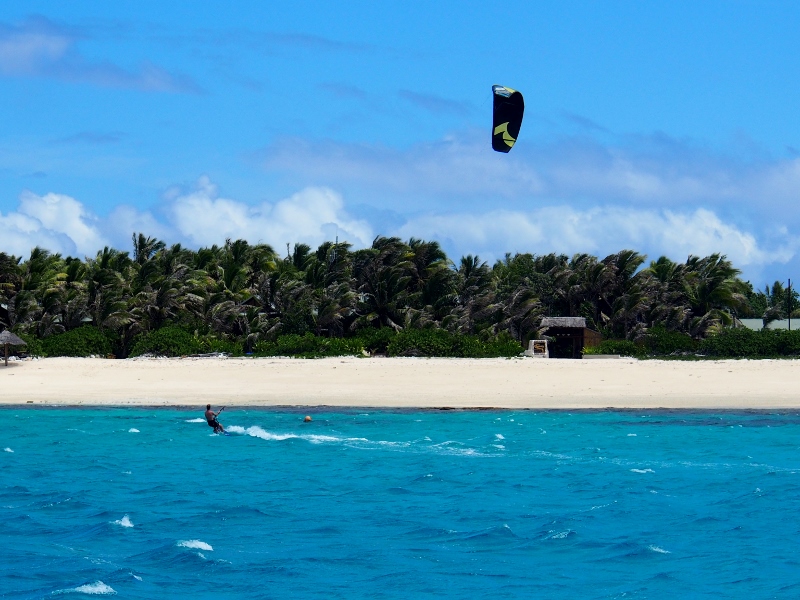
We had come to Musket Cove to go kitesurfing, on the flat water next to the sandbar edging the bay as well as on the nearby Namotu break, a world famous wave. Our participation in the regatta events was unintentional, but as it turned out that several of our boating friends with kids were there, we happily joined in for a bit of post kitesurfing fun and games.

Catching up with old boat buddies

Our old pal Andrew from Raglan joined us in Musket Cove for a day, having just delivered a superyacht from New Zealand. Tempted by the wind, Andrew managed to find one day in his busy schedule where he could grab a ferry from Nadi, so we picked him up and went to Namotu for the day on the wave.

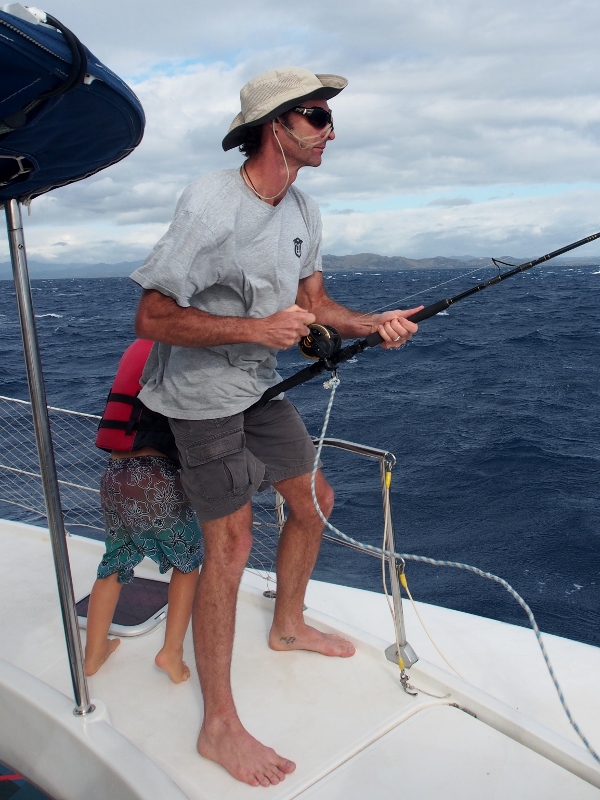
Andrew trying his luck at fishing

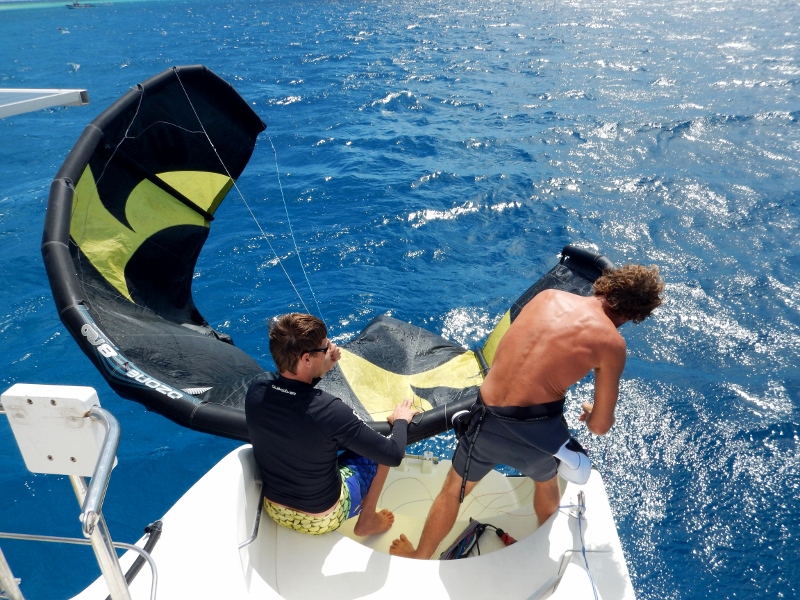
By this stage we had perfected the boat launch, slowly feeding out the lines to send the kite out behind the anchored boat and gently manipulating them until the kite sat nicely on its side, bobbing up and down on the water surface, fastened to a carabina on a piece of line hanging off the boat, ready for one of us to jump in the water, hook in, and get going.

Andrew kiting the lagoon at Namotu

Next to us on the sandbar was the superyacht owned by one of the Google executives, a great monstrosity of gleaming powerboat housing tired uberrich people for their week of relaxation and kiting in the tropics.

Mudpuddling
Mudpuddling

And so the week went, kiting alternating with watching pseudo races and judging dinghy decorating competitions. The kids had a ball catching up with their boat kid friends, roaming along the beach in thick gangs, fired up on lollies and icecream from treasures found buried under the sand.
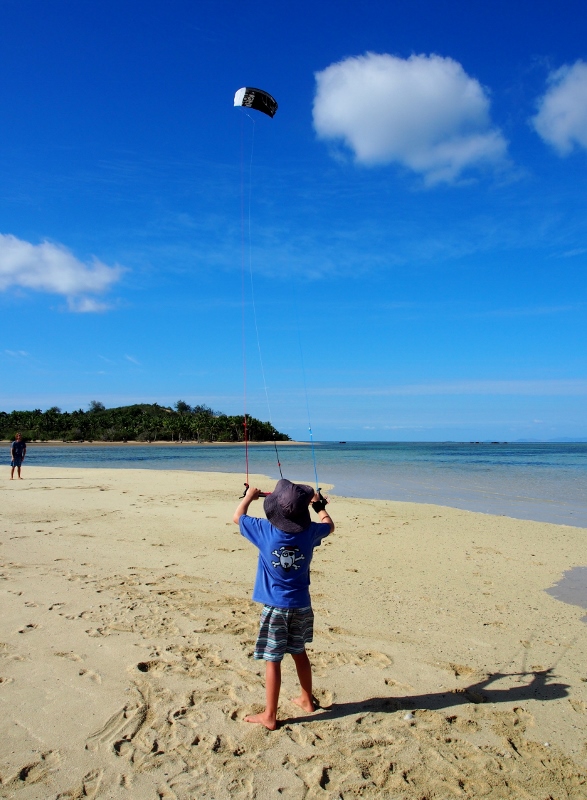
When not roaming on the shore, the kids took turns flying their new trainer kite, swooshing it around in big figures of eight, feeling the pull of the kite in the light breeze.

Matias flying the trainer kite
Fun on the tramp
Fun on the tramp

Fiji – Mamanucas and Yasawas with the Ross-Grants*

*Not wanting to favouritise any one family name over another, I normally combine two-name families into one. But as Kate and Duncan are Ross and Grant, respectively, I fear I might offend them if I abbreviate it to the Rants, or the Gross. Perhaps the the Kaduncs?

OLYMPUS DIGITAL CAMERA
Kate taking the plunge


Cooling off in the water
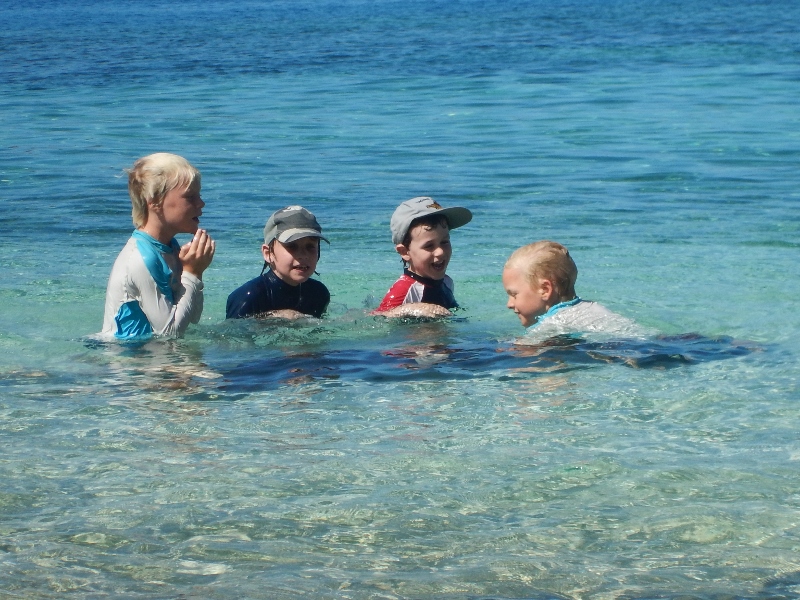
Matias, Toby, Remy and Lukie cooling off in the water

“And I ask you, what is your relationship with God? Do you believe in our Father the Lord and his son Jesus Christ?” Mary leaned forward, fixing Duncan sternly with a steely gaze lazering forth from above the narrow-rimmed glasses perched atop her nose.

“Do you believe in our Lord, do you love God as we do?” she repeated, her voice rising as her hands lifted from her lap. “Do you cherish our Lord, who gave us his son to save us from our sins?”

Duncan shifted uneasily under her steady stare, subtly changing his uncomfortable cross-legged position on the hard mat. Was he meant to answer, or was the question rhetorical?

“Because we believe that the Lord Jesus Christ died to save us from our sins. And we love the Lord. And we love his son Jesus. And we are happy that you are here today, to share our service. We are happy to worship the Lord with you, to pray and to sing with you”.

“Hallelujah, hallelujah”, exclaimed Dorothy softly in the background.

Mary’s glare widened from Duncan to encompass the whole of the darkened room. Next to her was Dorothy, a large lady in her forties, with the signature tightly cropped short Fijian hair, clad in a long, loose fitting darkly patterned dress. Dorothy’s husband, a fit looking man in his forties or early fifties was by her side and next to him, in a narrow doorway lit from behind by the bright outside sunlight, a heavy woman missing most of her teeth sat bottle feeding a baby. On the other side of the door we sat, a row of white faces, skinny bodies and wide-eyed children – Kate, Toby, Remy and Duncan, followed by myself, Matias, Lukas and David. Next to David, on the other side of another small door sat two toothless elderly villagers clad in Hawaiian shirts and sulus, their eyes closed, lips mumbling barely audible Hallelujahs.

Duncan relaxing after church


We were in a small Fijian village on the island of Wayasewa. Our friends Kate and Duncan and their boys Toby and Remy had been on the boat for three days. We had anchored in the calm bay off the small village on Saturday afternoon, and upon presenting our sevusevu to the elders were promptly invited to join the church service the following day, which we’d happily accepted.

Captain Remy
Captain Remy


“So Lord we pray for forgiveness for our sins, we entreat you and beg of you to forgive us, because we love you Lord, love you.” Mary’s voice boomed, colour rising on her face, sweat pearling on her brow.

“Hallelujah”, moaned Dorothy, swaying from side to side on her place next to Mary on the mat, eyes closed. “Hallelujah, oh Lord. Hallelujah”.

Water fun
Water fun

It had been quite an experience to visit the village. When we arrived on Sunday morning at the appointed time, ready to go to church, the villagers were all piling into a small panga which soon looked dangerously overloaded. It turned out that the church service was being held in another village, one hour boat ride away, and they were all going there. An elderly New Zealand couple from the other yacht anchored in the bay was crammed in amongst them, looking a bit nervous.

“Are you coming as well?” asked the man anxiously.

“Not sure”, we called back. “Good luck!”

Heading to church
Heading to church, dangerously overloaded

We hadn’t been invited to the other village, possibly because the boat was already too full. But we had been told to go to Dorothy’s house. As there was only one boat, and we were an additional eight people, the village elders had seemingly decided we should stay behind and that a special service should be held for us in Dorothy’s house.

Meekly following a young woman who had been sent out to fetch us we were led through the grassy village scattered with breadfruit and coconuts, past empty doorways revealing little of the dark houses behind. Dorothy’s house was large by village standards, and we were ushered into its surprisingly airy insides and invited to sit on tightly woven Pandanus mats with the elderly villagers looking on. After a brief welcome speech by Dorothy’s husband we were fed steamed buns and cups of hot tea which we sipped whilst complimenting our welcoming committee on the beautiful village, the new school and the general marvellousness of Fiji. Dorothy’s English was fantastic, and she was clapping her hands and smiling at our children, who came forth shyly to say hello and answer some questions.

Toby
Toby


Once tea was over, Dorothy fetched Mary, a tall, broad lady with a large face under a tight microphone cover of black hair wearing a starched cream shirt coupled with a long, dark skirt, who introduced herself briskly with a handshake designed to crush infidels.

DSCN6076 (800x600)


“And now we will sing”. Mary leaned back, resting her bottom onto her feet, exhaling and smoothing down her skirt. The brief sermon was over, and Dorothy’s husband opened the book of hymns laying in his lap.

“We don’t have any English ones”, he said apologetically, handing us a book and pointing to the correct place.

The elderly toothless lady who had hitherto remained silent signalled the pitch with a wavering voice, counted down, and then they all joined her in a Fijian hymn. Immediately, the most incredible singing filled the room, six voices rising in perfect harmony, enveloping the small room in God, beauty and light. With tears in our eyes we joined in as best we could, hoping that the addition of our unschooled voices wouldn’t ruin the glory of the moment.

Jumping fun with girls from the village


DSCN6027 (800x600)
Toby taking the plunge

Later, after having been treated to several marvellous hymns we went to donate some books to the school. Sitting in the shade of a tree by the waterfront we met a group of younger women. One of them had a young baby in her arms. When we went to say hello, she asked if we had any medicine for her baby, a five month old girl with a bad dose of scabies. The baby’s feet, armpits, tummy and arms were covered in raw-looking infected sores.

“Has she had it a long time?” we asked.

“For two weeks”, answered a friend of the mother’s. “There is no doctor here, but there is a nurse on the other island. She hasn’t seen the nurse yet, she comes over once a month.”

“It looks sore”, I said.

“It’s itchy. It’s scabies”, explained the mother. “Do you have any medicine for scabies on your boat?”

We went back to the boat and rummaged around our medical resources and found a tube of antiseptic cream. Scabies are small mites that get under the skin and cause irritation and infection, and they are treated with insecticides, which we didn’t have. We didn’t want to hand out antibiotic creams as the infections were secondary and really the baby probably needed treatment for the mites, so we settled for an antiseptic nappy rash ointments which would at least soothe the skin irritation, hoping that the mother would soon get to see the nurse.

DSCN6151 (800x589)

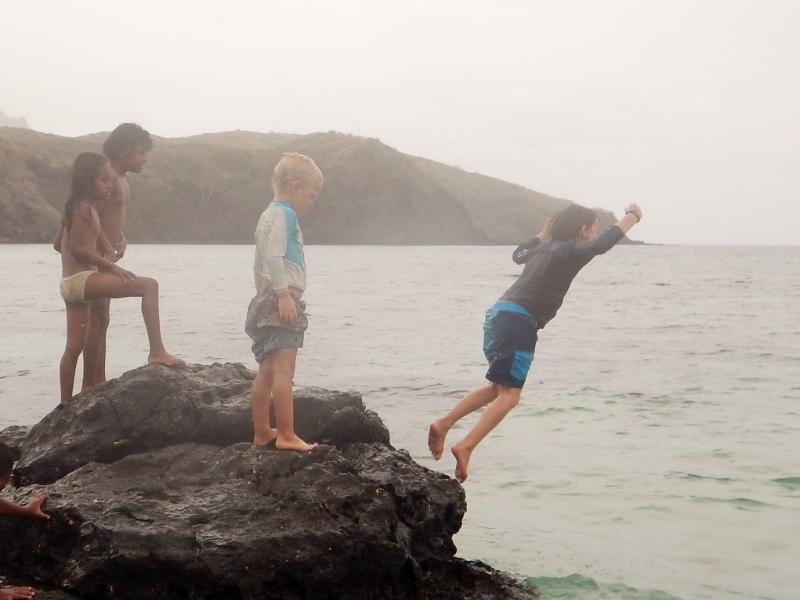
Back in the village the children came back from church and a group of girls soon joined us on the beach. At first they hung back modestly, asking us questions and practicing their excellent English, but soon they tore off their clothes and jumped in the sea, swimming and playing in the water with the boys. They were amazing children, looking after the foreign boys playing on their beach, helping our clumsy sons clamber onto rocks, showing them how to jump in, diving down and swimming under water for metres only to jump out and roar and splash to the great delight of our children.

Kate enjoying the underwater world


All worn out from water play

Fijians are the easily the friendliest people I have ever met. Wherever we go, we are greeted by people asking where we’re from, how we like Fiji, and which is our favourite team in the upcoming Rugby World Cup. The men stoop down and ask our boys whether they play rugby, how they like the All Blacks, and if they have seen the Fijian Rugby team play. The women stop me on the street to comment on how handsome the kids are, and children everywhere wave and shout “Bula, bula”, hello hello.


Entertaining the kids

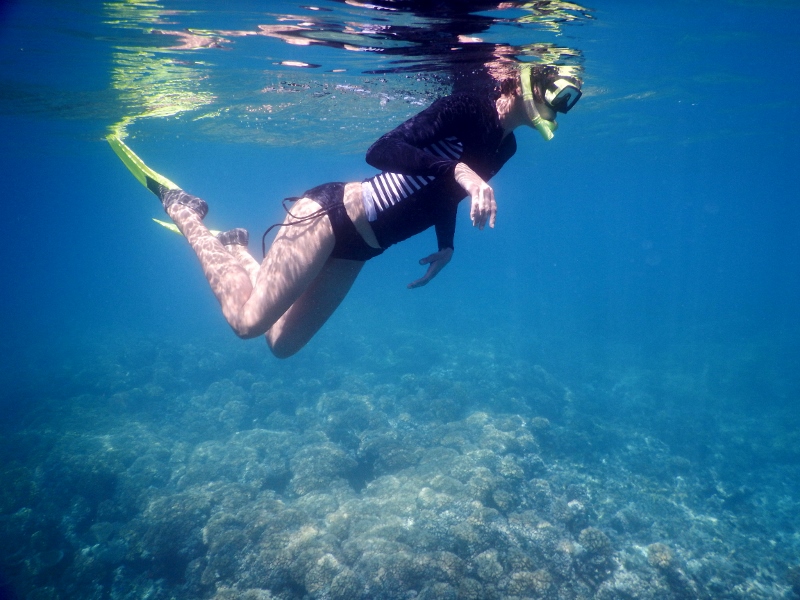
Kate, Duncan and the kids brought with them brilliant weather and when not visiting villages we spent much time in the water – jumping off the boat, snorkelling brightly coloured coral reefs, and swimming with the obliging manta rays.

Another pass at Manta Reef

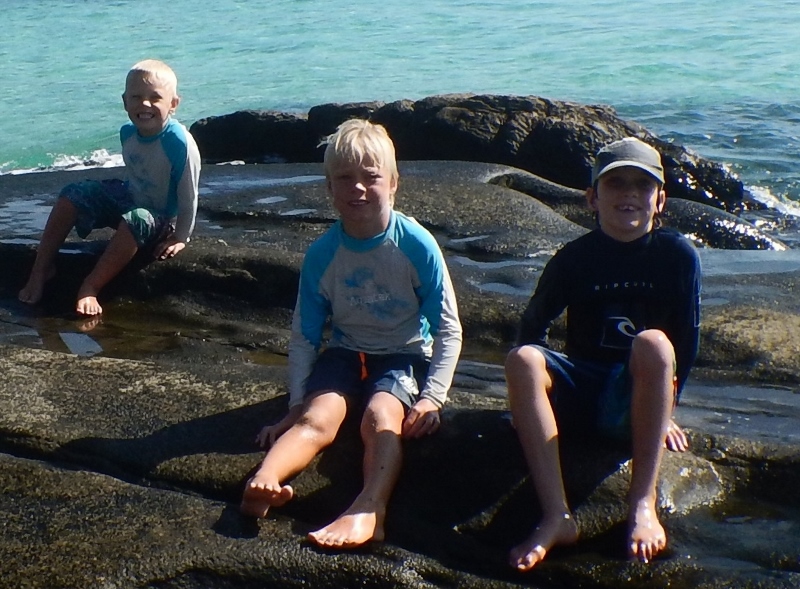
Thoroughly stoked to be back together, the four boys explored the beaches of deserted and inhabited islands alike, finding caves and sticks and turning them into homes and weapons. They played in the shallows, jumping from rocks and sliding down algae covered limestone to land in the clear blue water just beyond the sandy beaches. On the boat they created magnificent drawings of outer space and its creepy, alien inhabitants, and constructed intricate contraptions out of Lego, pausing only occasionally to ask for food and water.

Cook-out on the beach
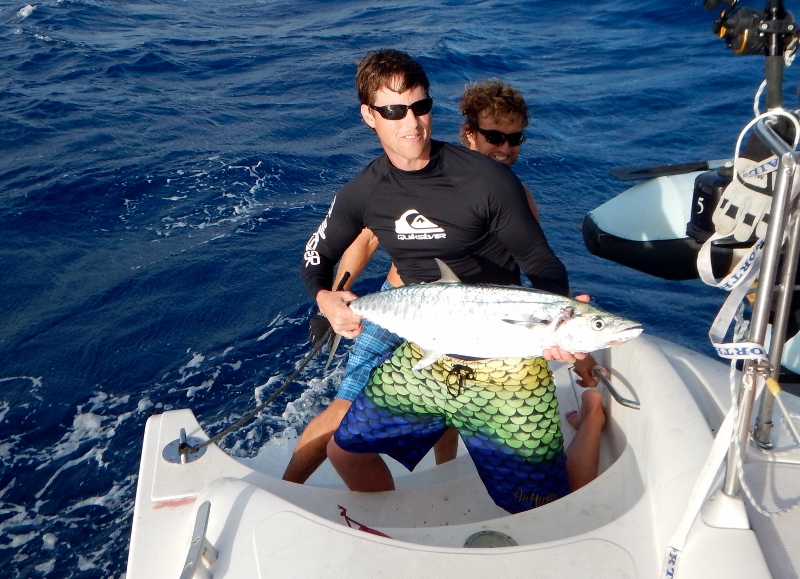
Duncan with a Spanish Mackerel - this one we did eat
Duncan with a Spanish Mackerel – this one we did eat

In between swimming and managing children, Kate cooked up a storm, serving delicious treats round the clock to the rest of us, and we soon found ourselves sitting belching quietly in the sun, feeling utterly spoiled with the good fortune of having such amazing friends come on board and share a week with us. Thank you for coming, Kaduncs, and we’ll see you next on the beach in Raglan.

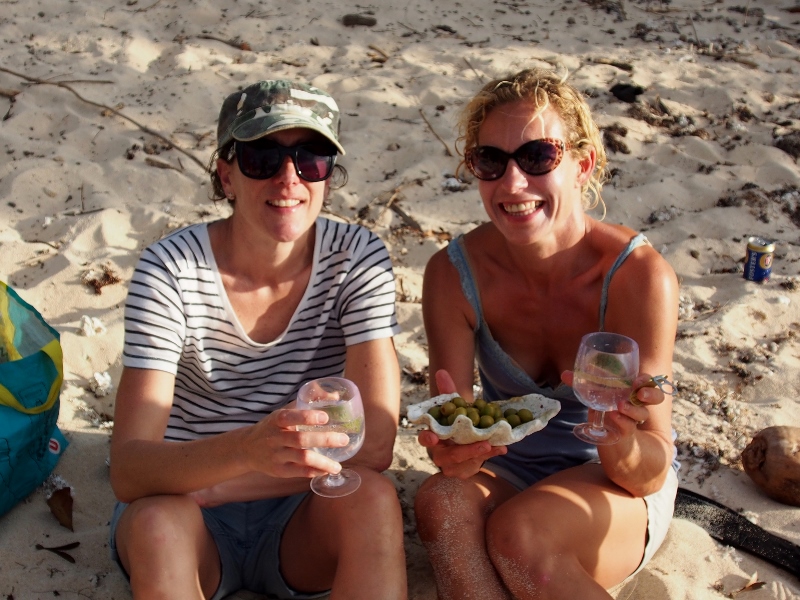
Olives and drinkies on the beach
Raglan girls in Fiji

Fiji – Mamanucas and Yasawas with the Daniels

DSCN5551 (800x600)


Matta lifted her head out of the water. “Wesawaysing” she said through her snorkel.
“I know”. I kicked my fins, floating on my back, basking in the hot afternoon sun. Although I couldn’t understand the words, I got the gist from the tone of her voice.

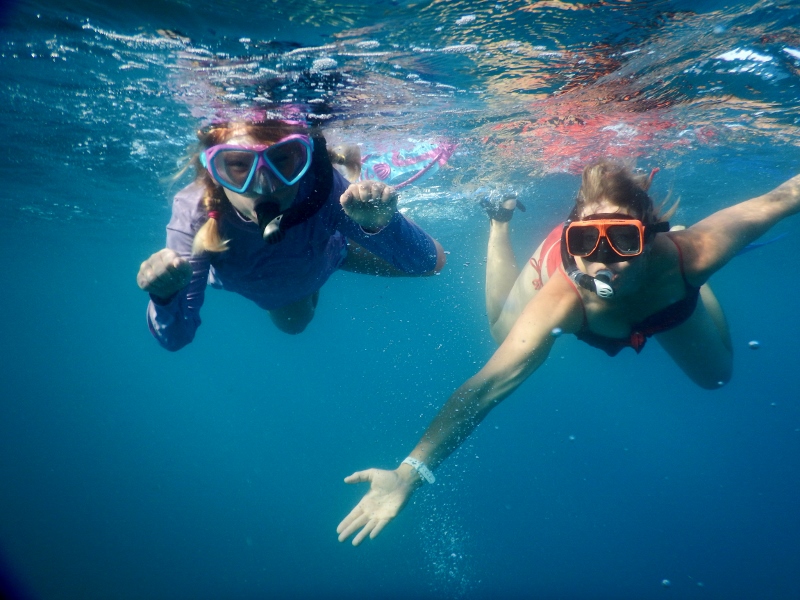
Matta and Kristi snorkelling

She spat out her snorkel, kicking to stay upright in the water. “It’s amazing!”, she said again. “It’s like a completely different underwater world”. She stuck her head down again, gazing at the corals below, at the fish teeming around her floating legs. Under her, a bright yellow butterflyfish swam back towards the reef, and she quickly stuck her snorkel back in so that she could swim off and chase it.

Matta and Kristi snorkelling

It was late afternoon. We had just arrived at Navadra Island in the Mamanucas, an island group west of Viti Levu in Fiji. Matta and had jumped in straight after anchoring to go for a snorkel while the others went to the beach after daring Adam to catch a goat with his bare hands to supplement our dwindling protein resources. We had caught a Spanish Mackerel a couple of days earlier but hadn’t cooked it because we weren’t completely certain it was safe to eat. They have ciguetera in Fiji, and as much as the locals said they thought it was safe, they had asked an awful lot of questions about where exactly we caught it, and how big it was, casting some doubt in our minds.

DSCN5525 (800x579)
Ciguetera catch

Completely at ease in the water, Matta had taken to the snorkelling the first time Adam took her in. She was amazed to be floating in an aquarium, delighted by the colourful corals, the curious fish coming up to check on her and the bright blue seastars littering the sandy bottom between the coral outcrops. Every spot we anchored in she wanted to snorkel, and now we were on our way up north to the Yasawas group of islands, to Manta Reef, to introduce her to some really big fish.

Jumping fun
Jumping fun

We had picked up Adam and Kristi and their children Matta and Marvin one early morning in Vuda Marina on Viti Levu. They had flown in from the States where they had spent the last six weeks visiting family. Despite the jetlag, the kids had been straight into boat life, Matta bouncing on the trampoline whilst Marvin stood singing, turning an imaginary steering wheel at the bow to drive the boat expertly for hours on end. When he fell and bumped his head, he rushed back to the bow after a quick cuddle with Kristi, sweeping the tears off his cheek as he ran, shouting “I have to go finish my song, Mom”.

Singing skipper Marv
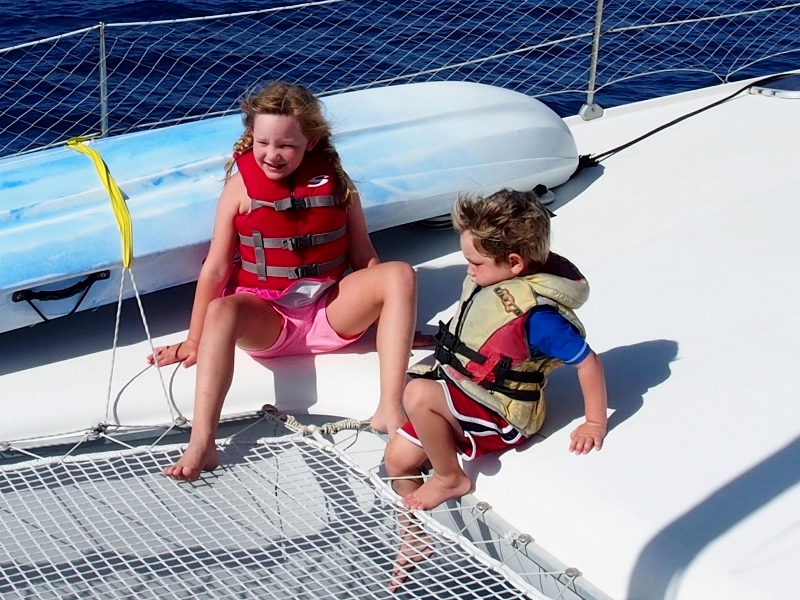
Boat kids
Boat kids


Lukie horsie
Lukie horsie

In the warm afternoon on Vanua Levu, Matta and I continued to swim for a while before eventually climbing back out onto the boat. David was standing on deck, binoculars aimed at a super yacht that had entered the bay half an hour earlier.
“I think they’ve run aground”, he said. “Look, they’re trying to pull it out with their launch”.
It did look like it. Huge and shiny, the yacht was swaying wildly as the waves were throwing it this way and that on the reef. The motor launch was going as hard as it could, engines fully revved, but the yacht was not budging from atop the reef.

On the tramp
On the tramp
Jumping fun
Jumping fun

“That yacht is stuck”, Adam said as he, Kristi, Matias, Lukie and Marvin approached in the dinghy. “We’ve been watching it, it’s definitely run aground”.
“I know”, David said, “let’s go see if they need any help”. He climbed into the dinghy as the sandy kids scrambled out, stepping over the reef shoes and sandals scattered over the bottom of the boat.
They set off and we watched them head over. At this stage the towing rope had been attached to the mast and the launch was going full power to the side, trying to pull the yacht over just enough for the keel to get off the reef.

Happily afloat
Happily afloat

“It’s got to be nerve-wracking”, said Kristi.
“Yeah”, I said. “Imagine if the owner is not on board, if the crew are just hanging out in Fiji, waiting for a weather window to return the boat to New Zealand. And then they have to make that phone call”.
“Oh boy”, she said. “I think it’s getting clear, look”.
The launch had pulled the yacht over 45 degrees, the mast edging closer and closer towards the water when it suddenly lurched and righted itself, reversing full power off the reef.
Kristi and I cheered, imagining the damage below water and the bill to repair it, happy that it wasn’t us that had run aground.

Matta jumping off
Deep enough water to jump


Surfacing
Surfacing
Matias jumping
Matias jumping

Fiji’s 340 or so islands are surrounded by coral reefs, many lurking just below the surface of the water, ready to pounce on skippers caught unaware. There are charts for the area, but many of the reefs are uncharted and the waters are famous for wrecking ships. We can only sail during the day, when the sun is high enough in the sky for us to see reefs, and even then we have to stand on the bow, peering ahead wearing polaroid glasses to ensure that we spot any shallow water in front of the boat.

Matta and I spotting reefs

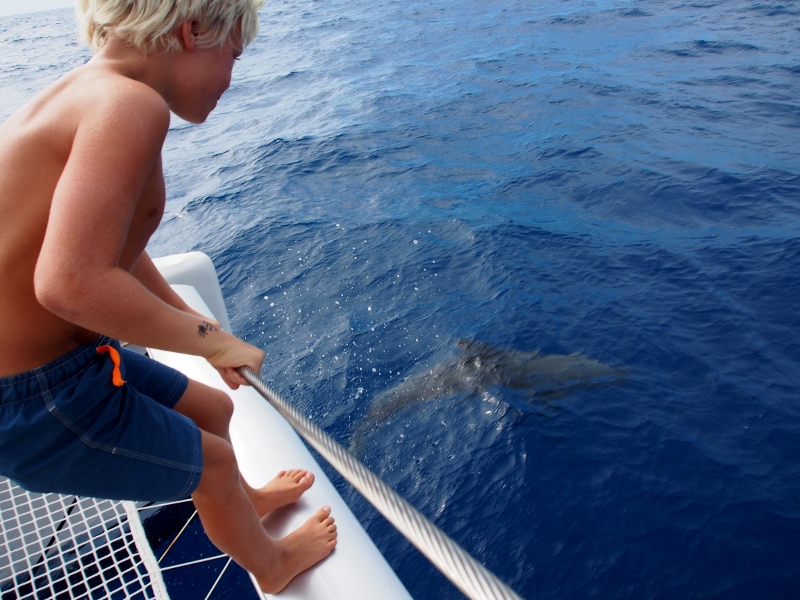
Keeping watch is not bad, though, as it helps us spot wildlife. On our travels with the Daniels we had two pods of dolphins come ride our bow waves, to the great delight of the children who were hanging over the bow, whooping as the dolphins surfaced half a metre away from their faces. One encounter was on a windless day and Adam, Matta and I jumped in the water, hoping for a play, but the dolphins kept their distance and eventually dived down, out of reach.

Matias watching dolphins
Dolphin filming
Dolphin filming
Matta and the manta
Matta and the manta
A giant ray
A giant ray
Small girl, big fish

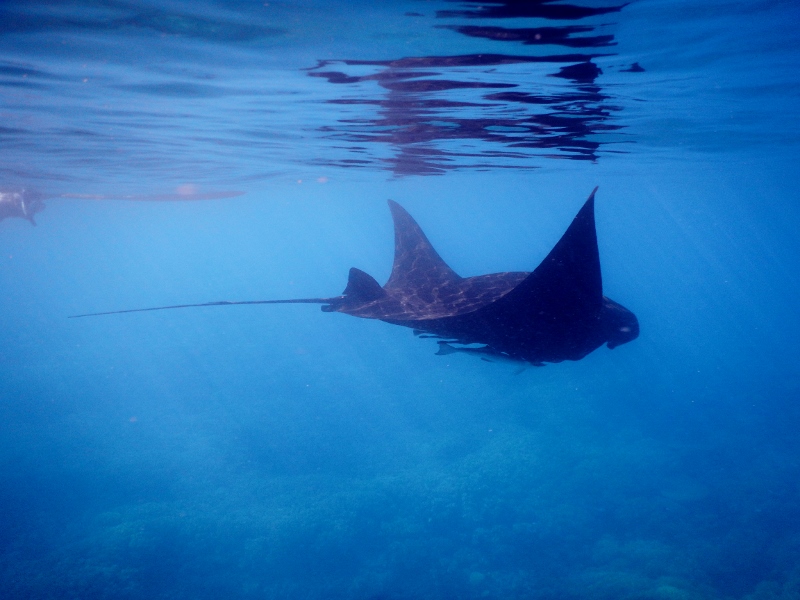
We had better luck with the manta rays, who appear regularly at the aptly named Manta Reef Pass. The enormous rays come at high tide to filter feed in the current of the pass, and on our first morning there, we turned up alongside hundreds of tourists from the two nearby resorts. The water was a bit manic, full of snorkellers with selfie sticks, 20 or so people per manta ray, manically thrashing after the graceful giants as they turned and dove to escape the crowds. But the kids loved it and Matta was incredibly excited to swim just above such huge creatures.

DSCN5798 (800x600)


Adam with the manta ray
Adam with a manta ray

We went again on the afternoon high tide and had them all to ourselves, four massive rays gliding around us in the fading light, one of them at least 4 m across, its mouth a gaping hole leading into a seemingly hollow interior. The following morning the Daniels and David went again, Matta squealing with delight as the huge creatures turned and twisted all around her.

On our way to see mantas

Later that day we pulled anchor to head back to Nadi to drop off the Daniels, and on our way out of the bay a lone manta ray feeding in the other pass raised one fin to wave us goodbye.
“Bye bye”, shouted Marvin, “bye bye manta ray”.

Sunset dinner
Sunset dinner

A day later he was waving goodbye to us after a week on the boat. It had been a great week, full of the delightful company of good friends for us and the kids alike, incredible sunshine, beautiful snorkelling, great kitesurfing, exciting marine life and one good fish caught just in time for a last fish supper. Bye bye Marvin, we’ll see you in New Zealand when we get back!

Launching kites from the boat