“Mummy, I don’t feel too good”. A pale-faced Matias staggered out of the saloon, clutching his belly, and collapsed onto the cockpit seat. “I think I’m going to vomit”, he gasped, lying back and closing his eyes. I quickly opened the locker and rummaged around for a bucket.
“Take this”, I said. “If you need to be sick, just do it in the bucket”.
Moments later he retched. Ed, sitting listlessly next to him, turned his head away, a pained look on his face. I gulped, feeling the cold sweat gathering on my forehead as I staggered to the side of the boat to empty the sloppy bucket into the heaving sea.
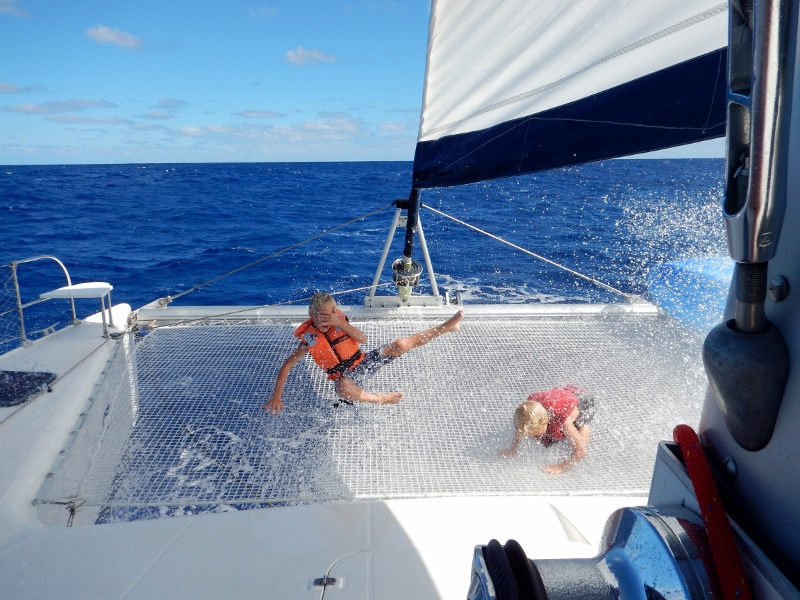
It was day one on our 800 odd mile trip from Mopelia to Beveridge Reef, the last stop before Tonga. The seas had risen to a good 3.5 m and the boat was slamming into the waves on a solid beam reach, jerking and heaving which made any movement hazardous. I had made a few forays inside in attempts to start dinner, but had had to come outside for air when nausea overwhelmed me. It didn’t help that Lukie had been playing in the far forward cabin, leaving the hatch ever so slightly unlatched, exposing a tiny gap in the otherwise water tight barrier of the large O-ring lining it. The waves were slamming over the bow, and in a matter of the 20 minutes it took for us to notice that the hatch wasn’t fully shut, the fenders, mattresses and cushions in the cabin were soaked and water had starting running down the door into Lukie’s cabin, onto his bed. We badly needed to get the mattresses and cushions out on deck to dry, but after just one trip into the airless cabins below to retrieve some soaked smelly cushions I collapsed in the cockpit, too sick to dare going back. Even David looked a bit peaky as he struggled up with a mattress.
Ed staggered up with effort, holding onto the table with both hands as he bent over to steady himself. “I think I’ll take a seasickness tablet”, he said.
I went downstairs and got some for myself and Matias as well. It was rough – it was only the second time in my life I’ve needed to take seasickness medication. The first time was on the Cook Strait ferry on a day so stormy that the ferry had been cancelled for the whole morning, which made me so scared that I popped a pill before we drove on. I fell asleep before we could get out of the car, and spent the rest of a crossing in a daze, trying to look somewhere else as the passengers all around me sat bent over, clutching their sick bags, staff running up and down the aisles between the seats with big black binliners to pick up the spoils in between sweeping vomit off the floor with big mops. I was hoping that the pills would have a similar effect now, put me to sleep so that I could wake refreshed and decidedly non-nauseous for my night watch.
We struggled through dinner and immediately after clearing the table Ed, the kids and I collapsed into queasy sleeps, leaving David alone in the dark cockpit to steer Bob safely through the swell.

It was our first longer passage for a while, but it seemed that it hadn’t taken long to sink back into the old familiar state of nauseous exhaustion that goes with the territory. Some people love passages – being out there, in the middle of the sea, at the mercy of Mother Nature and her whims, following the slow, gentle rhythm of the sun, stars and the moon, rising and setting, the boat bopping up and down on an endless sea. I certainly feel wonder and gratitude that life is big enough to allow for all this and that we are here witnessing whales swimming over fathomless depths, dolphins jumping at our bow, winds propelling us across a dark and deep ocean. But, on passage, all these feelings of wonder are always tarred with a slight queasy feeling, a heavy fatigue, a hungover, start-of-a-cold kind of feeling that lingers no matter how much I sleep or how many sunrises I witness.
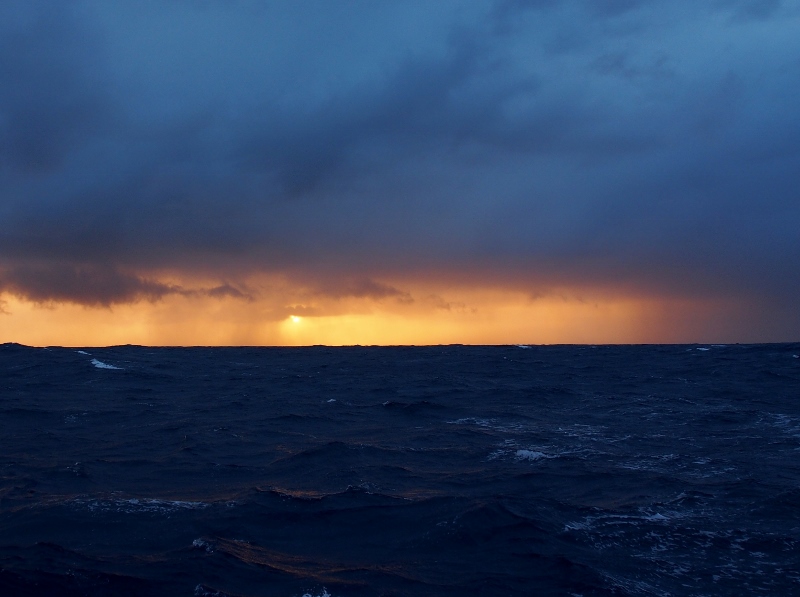
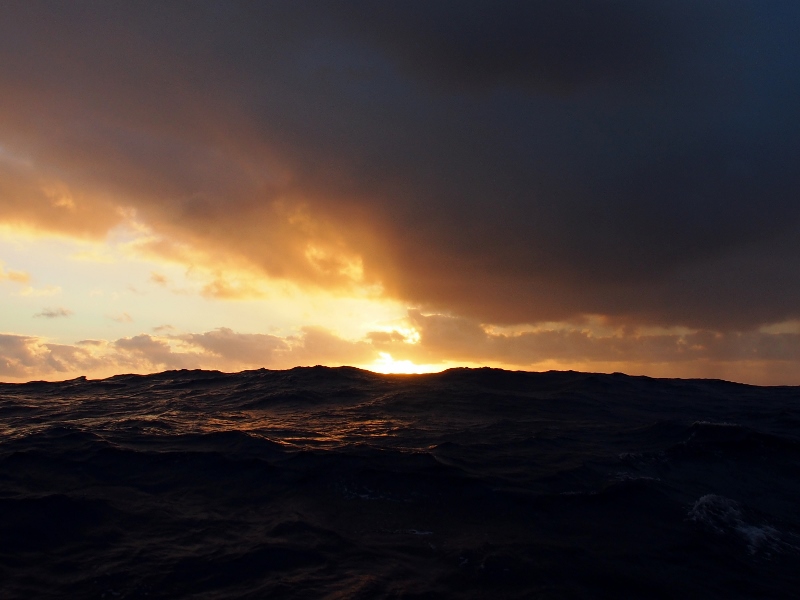
The swell lessened a tad over the next two days but the motion remained unfriendly, and by the third night we were all really tired. A series of squalls were beginning to roll over the horizon, and we put a third reef in the mainsail in preparation for a rough night. I woke up around 10:30, worried by the whistle of howling winds and the banging and crashing of the boat slamming into the waves. I could hear David reefing the genoa, and moments later he got Ed up to help him get rid of the mainsail altogether. I turned over in bed, hoping to fall back asleep before it was my turn to stand out there for four hours braving rain shower after rain shower. When I got on watch at 4 am the wind was all over the place, gusting to 30 knots periodically, and we were bouncing along on big seas under a stamp sized genoa. The sun rose in the midst of a squall, sending its beautiful yellow rays out from gaps in a black thundery cloud, the sun itself periodically blotted out by the large seas.
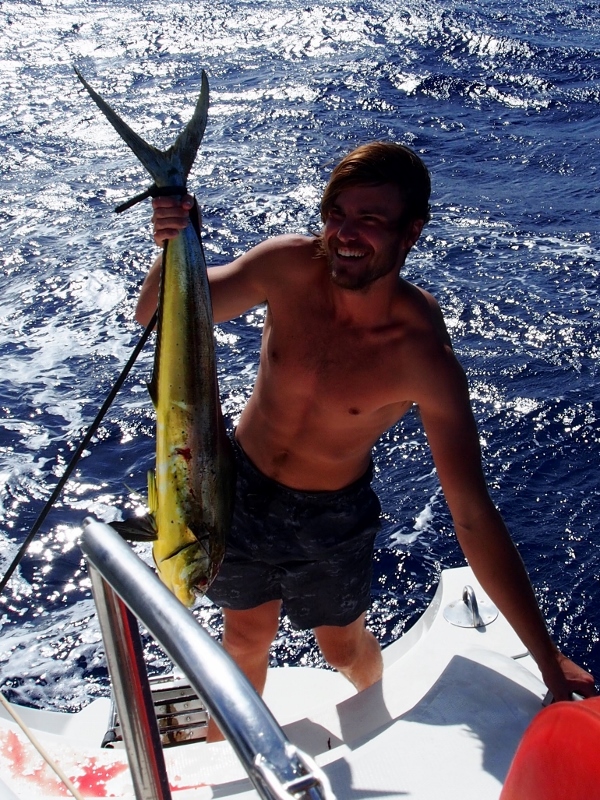
It turned into a nice day, and we managed to dry the boat out and catch a bit of sunshine before starting the preparation for the large forecasted front that hit us late the next day. As the clouds thickened moisture condensed everywhere, and inside the boat floors and walls were dripping, the children skating along on bare feet, shouting “Yipee!”. We reefed the mainsail right down again just in time for the stiff breeze and icy rain that hit after dinner. After the front the wind swung around to the southwest and we continued the roughly 250 miles to Beveridge beating into a merciless swell. Every time the boat gained a couple of metres it slammed into the next large wave, causing big bangs and crashes to reverberate through the hulls, leaving us all heavily seasick and thoroughly unrested. The weather had changed too.

“Mummy, where is my jumper, and my rain coat?” said Lukie, poking his head up into the cockpit early in the morning, in his usual bare-chested attire. “I’m really cold, and I want a jumper”. His hands were icy cold and for the first time on this trip I had to go rummage in dusty cupboards for our jeans and woollies. Both boys had grown so much since we were last in the cold that their jumpers were now stumpy on them, but they were still excited – any jacket is still a good cape and we haven’t had capes for ages.
 SV Bob The Cat