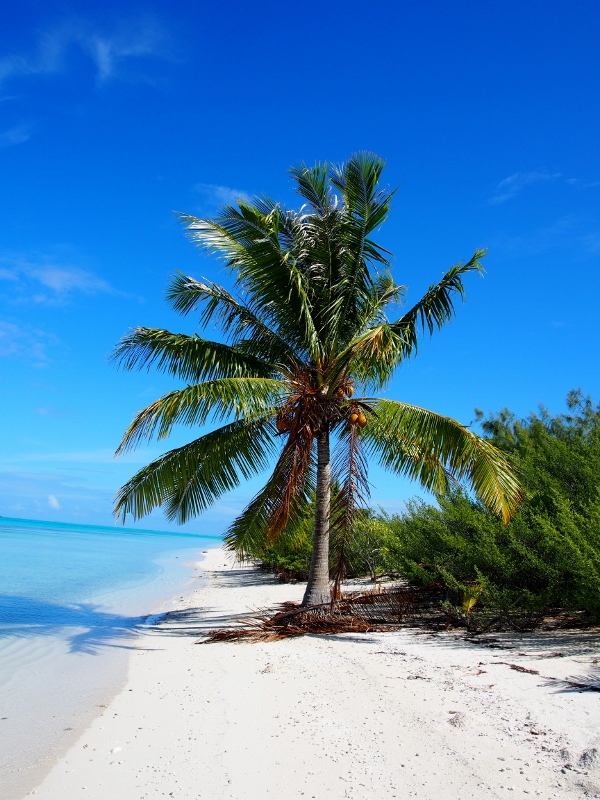
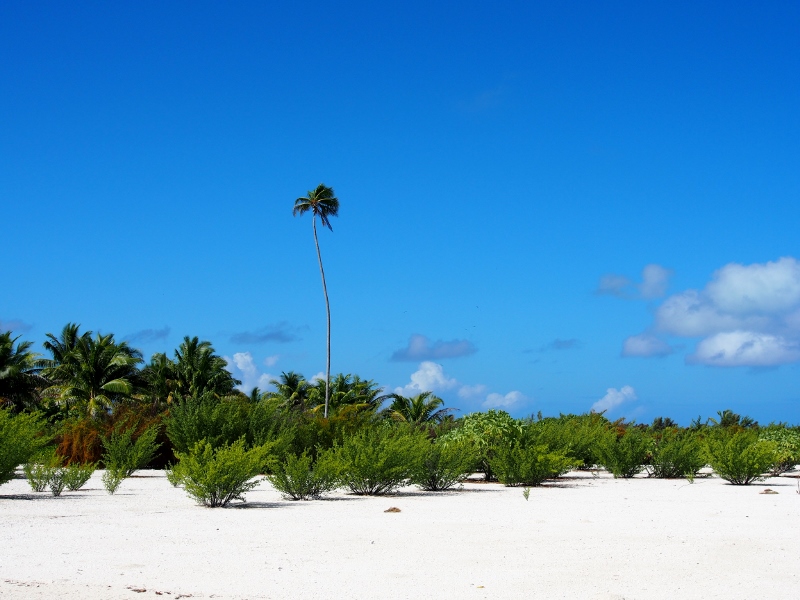
It is 1300 miles between Bora Bora and Tonga, and we were fortunate to have Ed, a friend of a friend from Australia, to help us on this stretch. To break up the trip we first did a 24 hour sail to Mopelia, one of the westernmost islands in French Polynesia where we were going to sit out a forecasted front. A small atoll 130 miles to the west of Bora Bora, Mopelia is more similar to the Tuamotus than the rest of the Society Islands, with no central island but only small motu dotting the reef edge, surrounding a light blue lagoon. The sail there was tiresome, with rain and less than optimal wind directions, and with one jibe and another we covered almost 200 miles before reaching the narrow pass leading into the lagoon.
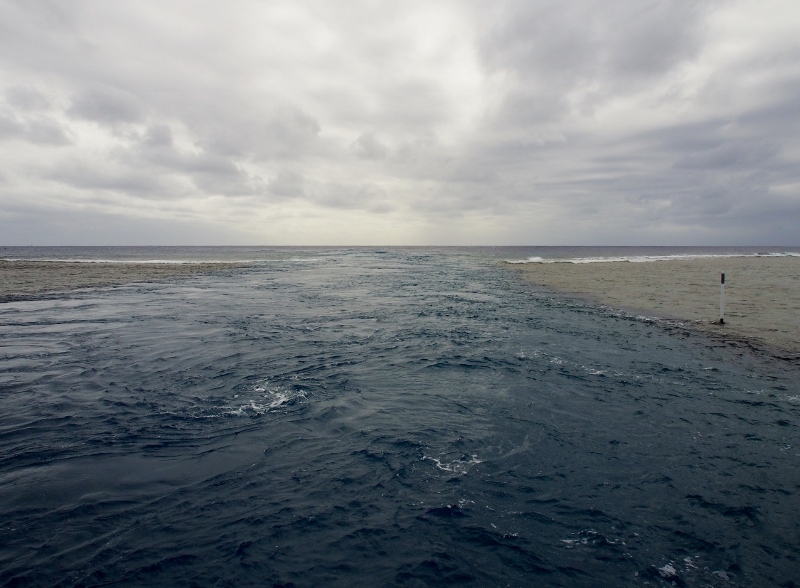
When we got there we hovered for a while on the outside of the pass, hesitating. Mopelia’s pass is famously impassable, and our view from the boat lived fully up to our worst expectations: white water frothing over the sill, whirlpools along the sides and standing water on the outside where the ocean swell met the currents gushing out. At just 15 m wide, the length of our boat, the pass was too narrow for us to turn the boat around, so once we entered we would have to be committed to keep going until we were through to the lagoon. We had already delayed our departure from Bora Bora by a day because we were worried that the large swell would fill up the lagoon with water from waves crashing over the reefs, causing a strong outgoing current giving little respite even on an incoming tide. But it still looked like it was running strong.
“Are we going in? Isn’t it too strong?” I asked nervously, not certain I really wanted to be there, the pull of the alluring flatness of the lagoon not quite trumping my fear of crashing onto the jagged reef edges poking up through shallow water on either side of the pass.
“I’m just lining us up”, David said, squinting at the reef through his polaroid sunglasses. “Only checking that we can motor against the current”.
I rushed inside attempting to have a look at our aerial imagery from the lagoon, but before I could switch on the computer, I felt the boat lurch and saw that he was starting the entry. Ed and I jumped to the bow to spot for the reef edge and anything else rising to the surface, calling out helpful advice like “getting awfully close on port, veer to starboard, quick!” and suchlike, even though it was doubtful David could hear a word we were shouting over the roar of the breaking waves and the rush of the maelstroms that were trying their best to suck us down.
Just before the end of the pass we spotted two submerged buoys that somebody had sneakily popped in the channel just to snare the lucky vessels that manage to make their way through the whirlpools, but by amazing feats of communication (a roar of “Neutral!! Buoys in the water!!!” from myself and Ed in unison) we cheated the evil locals or whatever crazy persons had placed them there, wiped our sweaty hands off on our t-shirts and congratulated ourselves on getting through to the lagoon.
Which was lovely and calm, a welcome change from the pass, and we leisurely motored across to the other side and threw in our anchor. As soon as we were anchored about 10 black tip reef sharks showed up, circling the boat hungrily, and I hesitatingly jumped in to check the anchor – they are not meant to be dangerous and we have never felt them to be interested in anything our size, but we’d never had them show that much interest in us at anchor before? Reassuringly, once I jumped in they scattered, leaving the kids confident enough to start their ‘we’re-on-a-new-anchorage’ jumping session.
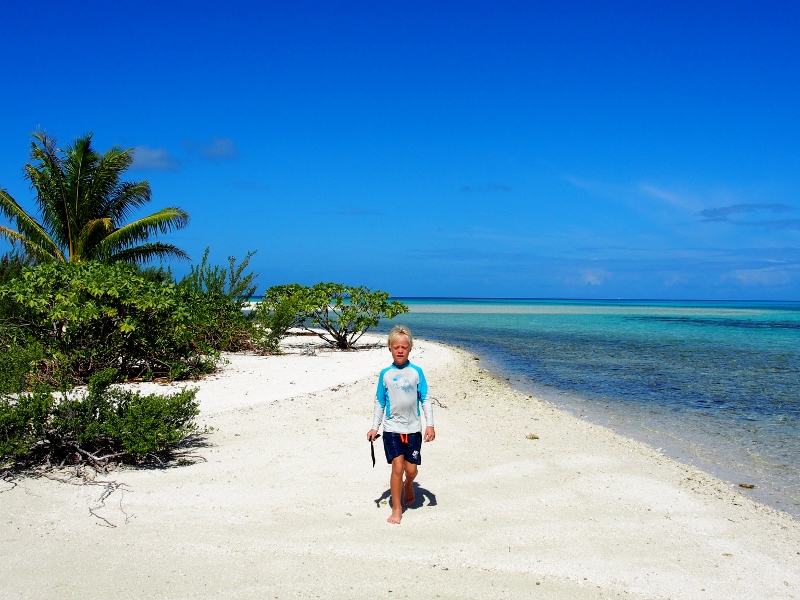
Another boat was at anchor there; despite our outstanding heroism we were obviously not the only ones brave enough to dare the pass, and on the shore we spotted people walking around. When we dinghied in we met a young man living there, who explained that he and his family had moved there three years ago from Ra’iatea.
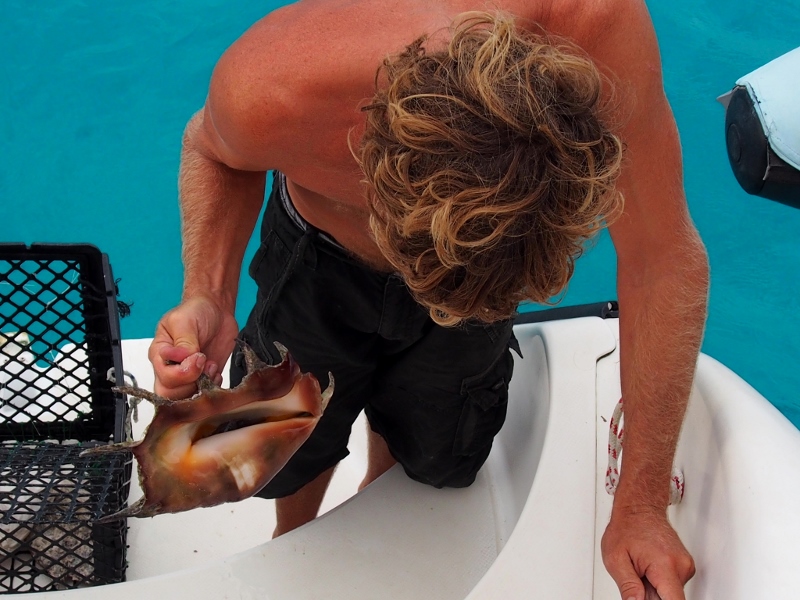

“Welcome to Paradise”, he said, in surprisingly excellent English, with a broad sweep of the hand indicating the light blue lagoon, the white sand, the swaying coconut palms, and the loudly squawking seabirds filling the sky.
We thanked him and chatted for a while. Apparently the sharks hang around boats not because they are trying to finish off anyone that managed to survive the pass, but because his family normally clean their fish catch on the boats in the lagoon, feeding the scraps to the sharks, thus training them to circle any boat entering the lagoon aggressively. He said they get about 70 yachts visiting a year, and then excused himself – he had to leave to go fix a broken truck. Slightly surreal – truck? Road? This was a tiny place, but I guess they must use them for copra farming.
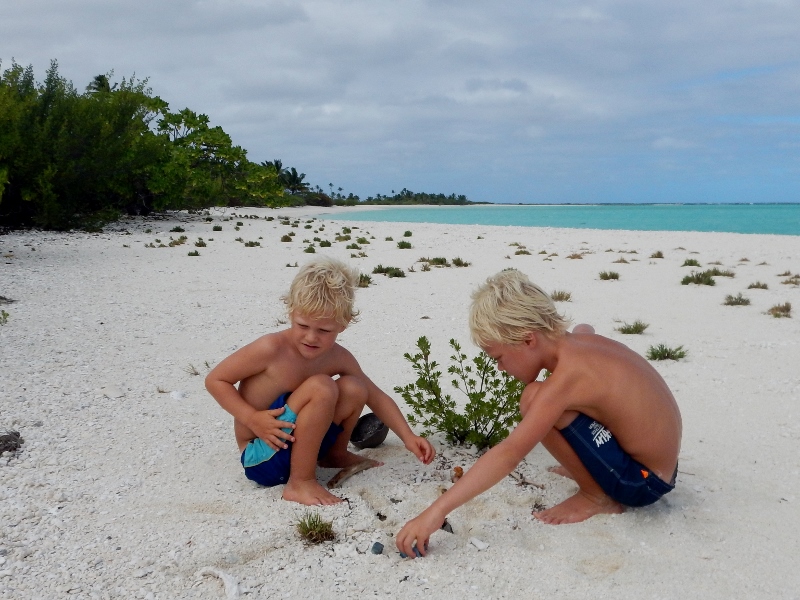
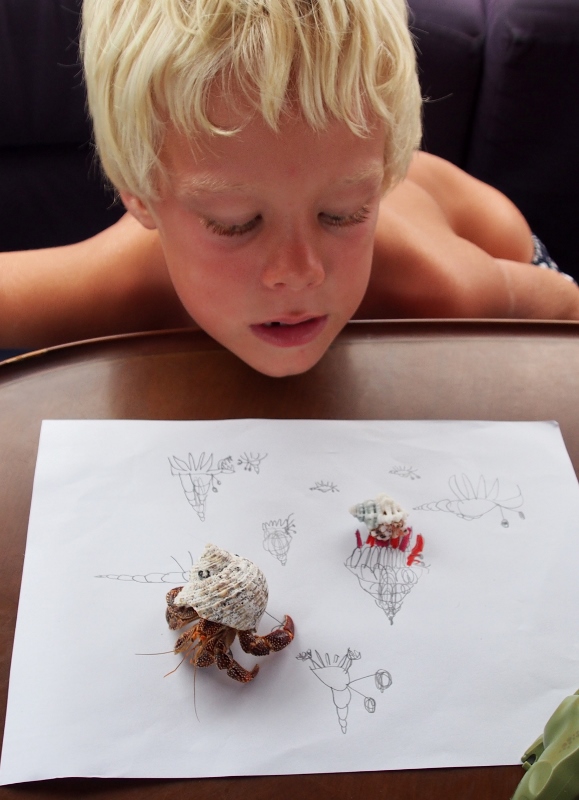
The kids collected some hermit crabs from the beach which we allowed them to keep on the boat overnight. They quickly turned all paternal, naming the smallest one Baby Butter and making elaborate Hermit Habitats for them to spend the night in. They were cute – all pale and delicate, with long slim quite hairy legs, cautious eyes on slender stalks and engaging sideways wobbles. The biggest one was initially called Micro, but after some enquiries it got changed to the more appropriate Mega, and I happily ticked off that box in the home-schooling curriculum. Once presented with an outstanding choice of empty shells in the Hermit Habitat, several of the crabs changed their shells for the bigger, better and shinier options provided, possibly because they were dead scared and hoping to slip away unnoticed in a new disguise.
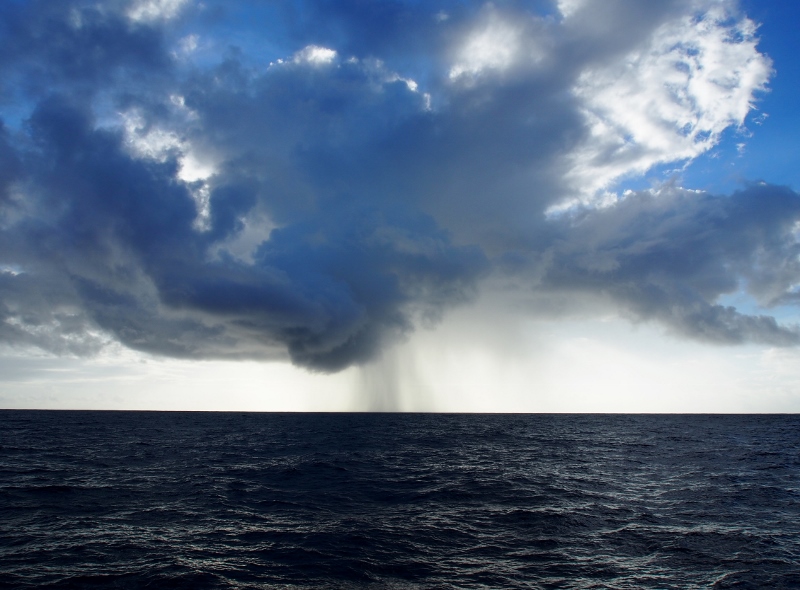
The big rainstorm hit the next day, leaving Ed, the kids and I thoroughly seasick as Bob pulled her best moves on the 1 m swell that suddenly appeared on the anchorage.
“A bit wobbly, innit?” offered David brightly about midday, surveying us, his green-looking crew, picking over our lunches. “Let’s move to somewhere more sheltered”.
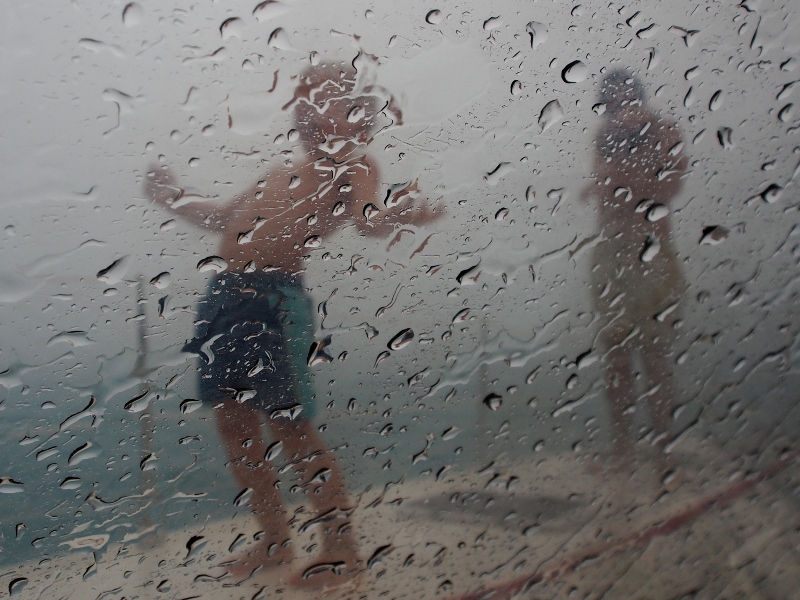
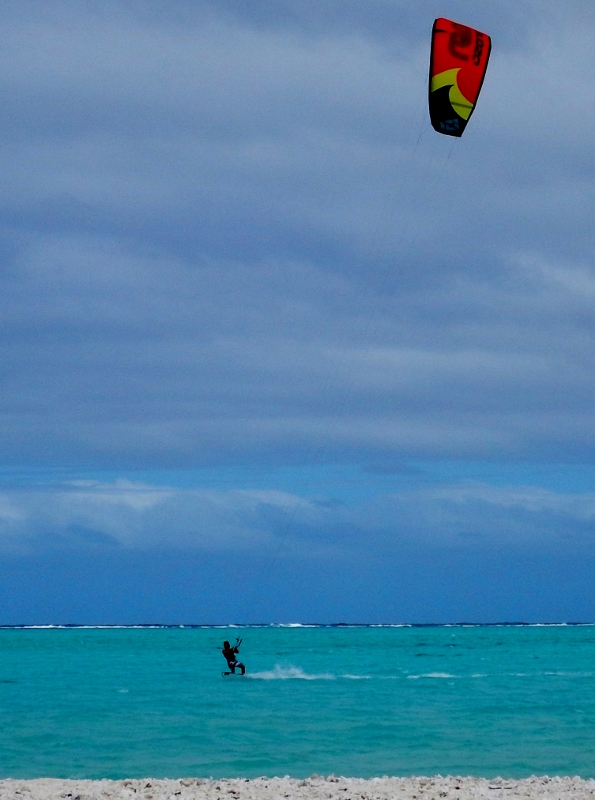
So after lunch, in the horizontal rain and stiff breeze, we pulled the anchor and moved to the other side of the bay, Ed and I shivering in our buoy-and-reef spotting positions on the bow, awash with the waves that we’re determinedly motoring into. The other side was lovely and calm and by the time we got there the rain had stopped and so we managed to have a couple of kitesurfs before pulling anchor to leave for our next stop en route to Tonga the following afternoon.
Which left only the dreaded departure, through the now furiously fast-flowing pass. At this stage, the increased swell had added the new and interesting dimension that large waves were now breaking on top of the outgoing current on the outside, and as we approached the heavy chop filling the impossibly narrow channel, David and I exchanged nervous glances before I averted my eyes and crossed my fingers as he put down the throttle, expertly navigating Bob through as she was being pushed this way and that, precariously close to the ragged reef edge and over submerged buoys at worrying speeds.
Once through, we steadied our shaky hands and started thinking of our next stop, Beveridge Reef – a sunken atoll in the middle of nowhere, 160 miles from Niue and 400 miles from Tonga.

 SV Bob The Cat