
‘Mummy, when are we going to be there? I can’t walk anymore”. Matias is dragging onto my hand, trying to bring us to a standstill in the middle of the winding road leading steeply uphill. I sweep at the swarm of mosquitoes covering my forehead and squint up at the imposing mountains rising above us. It is cool in the shade but we’re being attacked by mosquitoes; whenever I look down I can count about 20 of the buggers on each of my legs, sucking contently.
We’re about half way to the famous marae (stone temples) of Opunohu Bay, the fertile valley on the north side of the island of Mo’orea. It is a 9 km walk round trip, leading first to the marae, and then to the fabled Belvedere, the panoramic view of the two bays that adorn the north coastline of the island and Mount Rotui, the tall, rugged mountain that separates them.
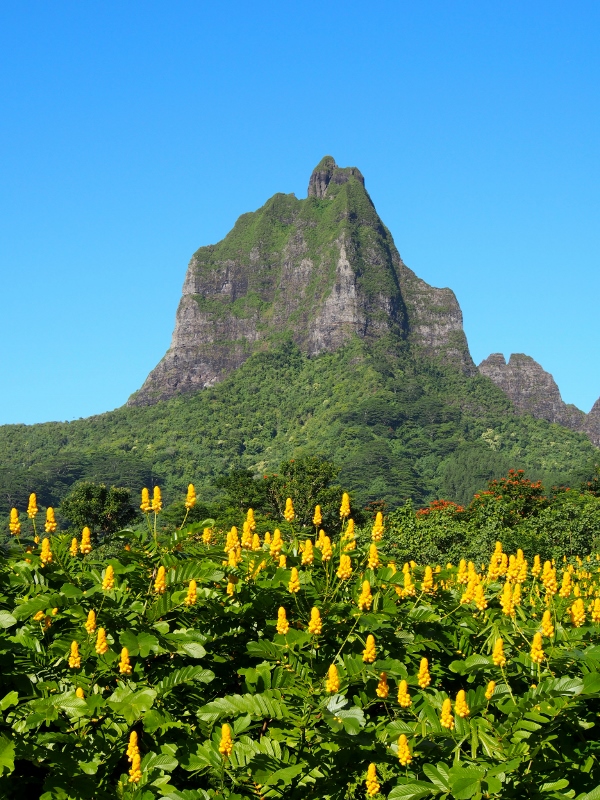
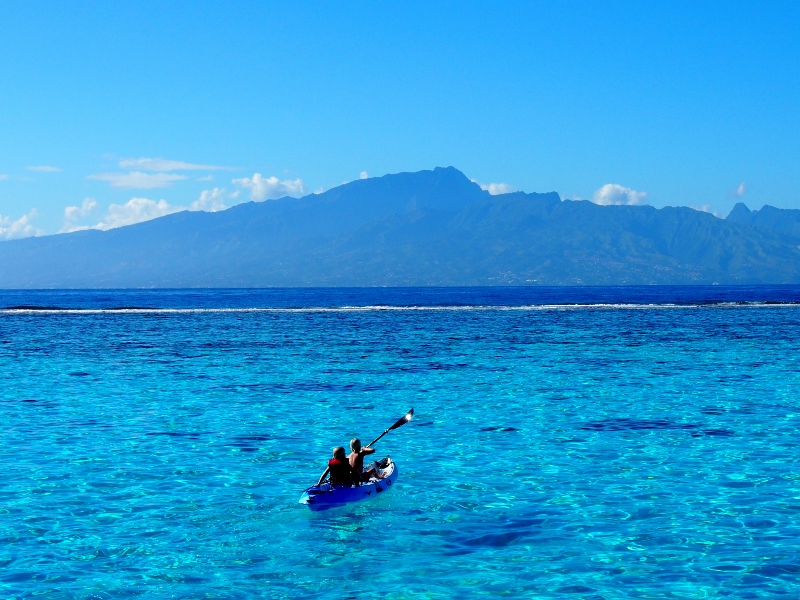
Part of the group of islands known as the Society Islands, Mo’orea is a young (1-2 million years old) volcanic island with steep hills surrounded by a barrier reef. Mo’orea (meaning yellow lizard – apparently the name of the chief family at the time the Europeans came, prior to that it was known as Eimeo) is clearly visible from Tahiti and the sail there took us only a couple of hours.
Settled by the Polynesians in the same wave as Tahiti around 200 BC, Mo’orea was first sighted by Europeans in 1767. When they arrived the island was heavily populated, but within a hundred years the Polynesian population was decimated by the usual mix of weapons, disease and alcohol that the Europeans brought with them. Dozens of marae are still scattered in the valleys of the island, the remains of the dense populations that used to live here. It is these temples that we have stopped in Opunohu Bay to see, but as it is nearing lunch time Matias’s enthusiasm for the ancient ruins is diminishing proportionally to his rising hunger.
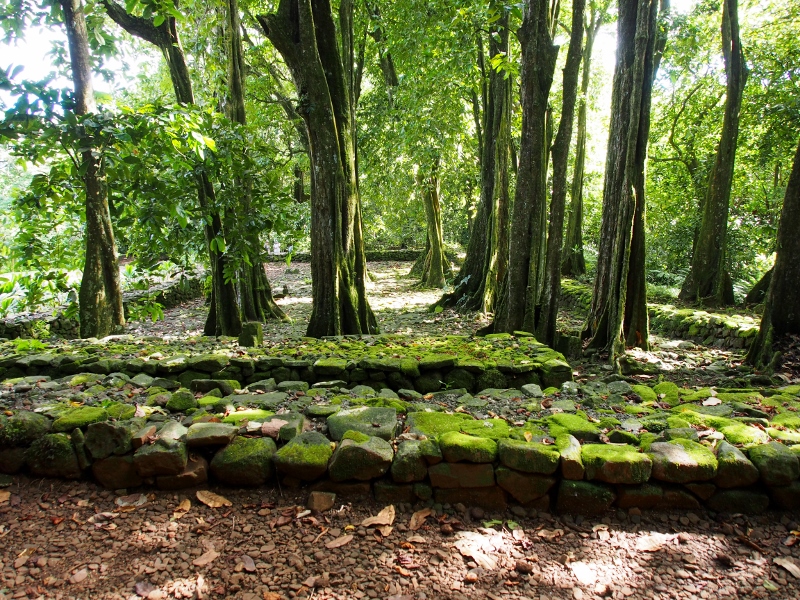
We finally reach the marae, square stone platforms built into the hillsides on which temples used to stand, ancient altars still visible in amongst the trees overgrowing the site. I get out the snacks and the complaining stops for a minute or two while we view the information panel that details the ancient archery competitions that used to take place here, the kids transfixed by the illustrations of the warriors that once dominated the island.
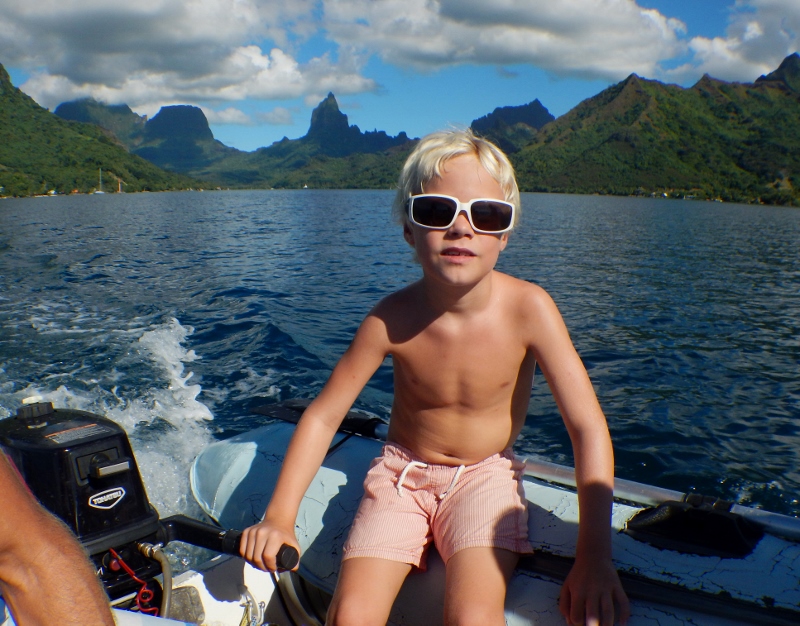
For the last couple of days we’ve been exploring the aquatic side of Mo’orea. It is a stunning island – steep and lushly vegetated, surrounded by a turquoise lagoon sporting clear waters and healthy coral. When we first arrived, we anchored on the eastern side, at Teavaro Bay which is a lovely stretch of lagoon with the view of Mo’orea’s steep bushclad hillsides on one side and sweeping views of Tahiti enveloped in clouds on the other side. Strong currents were flowing near the reef, and the boys had to hang onto ropes tied off to the end of the boat in order not to get swept away. The visibility on the eastern side of the lagoon was amazing – gin viz as my old diving buddies would say – and rays were everywhere. Light and dark eagle rays with their delicate ringed spots and peculiar beaked head, as well as black stingrays, gliding through the water just above the bottom, coming up only to check us out briefly.
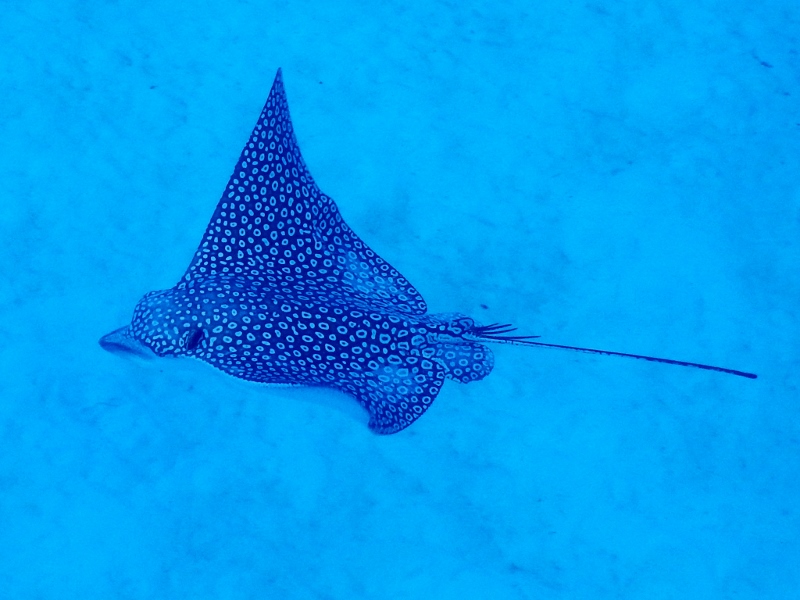
The southern end of the eastern bay is famous for its snorkel trail which takes visitors from a small motu to the edge of the reef. On our visit we soon found out why there is a trail – the waves crashing over the reef created a sweeping current which we have to cling onto the ropes joining up the buoys of the trail to pull ourselves forward against. The area is a reserve and home to several black tip reef sharks and stingrays which turned up in great numbers as we were nearing the shore at the end of the trail, circling us hungrily. And sure enough, when we climbed out of the water we discovered that a tourist operation is conducting a snorkel tour complete with shark and ray feeding next door.

I’m not sure about the wisdom of staged shark feeding – it disrupts natural behaviours and teaches sharks to associate humans with food. Apparently there have been some recent accidents at a shark feeding operation near Opunohu Bay on the north side of the island where a child was killed and an adult injured by over-excited lemon sharks during a feeding session.

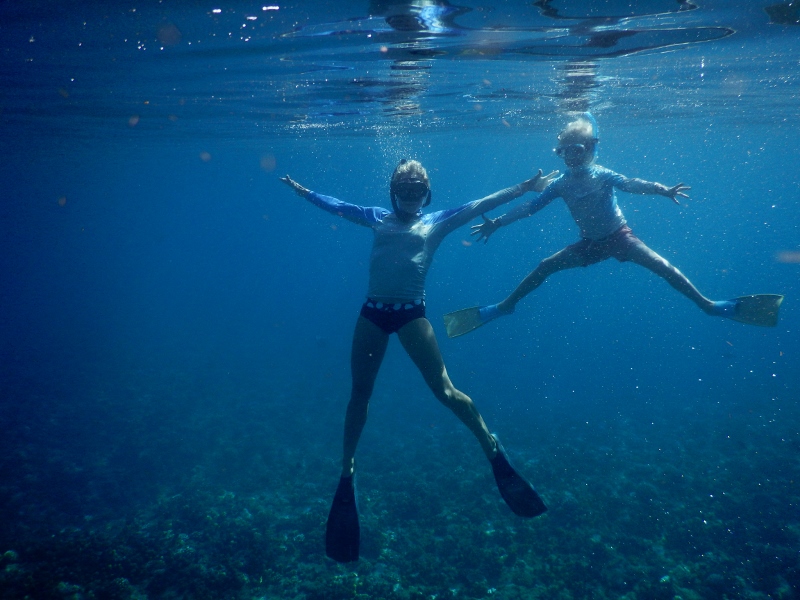
In the afternoon of our second day we picked up Pete from the ferry dock. It is great to see him, and here, surrounded by rugged mountains and turquoise sea, he and David are soon back in the old groove, deep in work discussions with a bit of philosophy thrown in. There is time for leisure too, and Pete goes for a quick surf on a local break on the way to Opunohu Bay while the kids and I chase a ray out the back of the boat.

The archaeological site in the valley behind the bay is the last stop before we head off to the island of Ra’iatea where we’ll spend a couple of days before sailing on to Bora Bora to meet Ed.
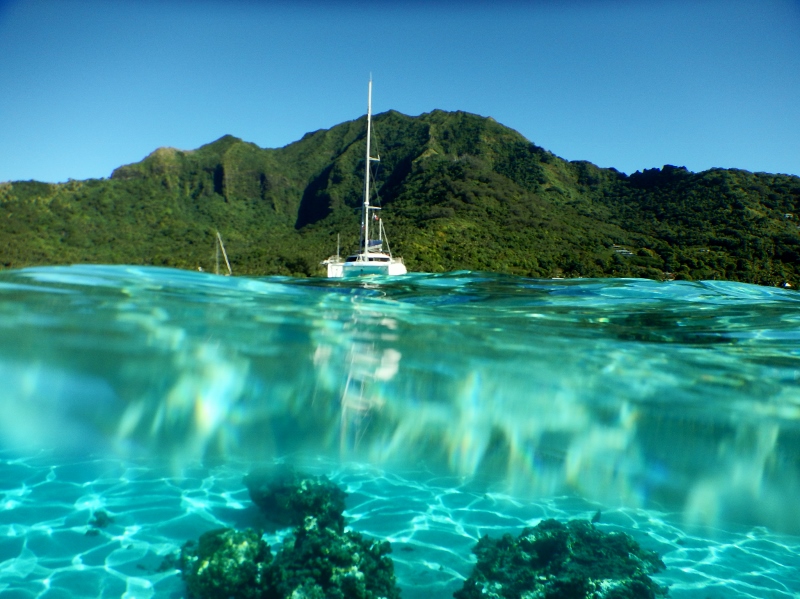
And the site is worth a visit, despite the mozzies and the whinging children. After a pack of crackers and some carrot sticks even Matias is ready to head on, and after the marae we make it all the way to the lookout where we rest for a while, refreshed by the glorious view of mountains and inlets, steep hillsides and bare rock backed by flat deep blue water. It is easy to understand why this valley was densely settled in ancient times, stone temples scattered amongst more temporary dwellings. It is a magical place and worth a long walk, even for two tired little boys.

 SV Bob The Cat