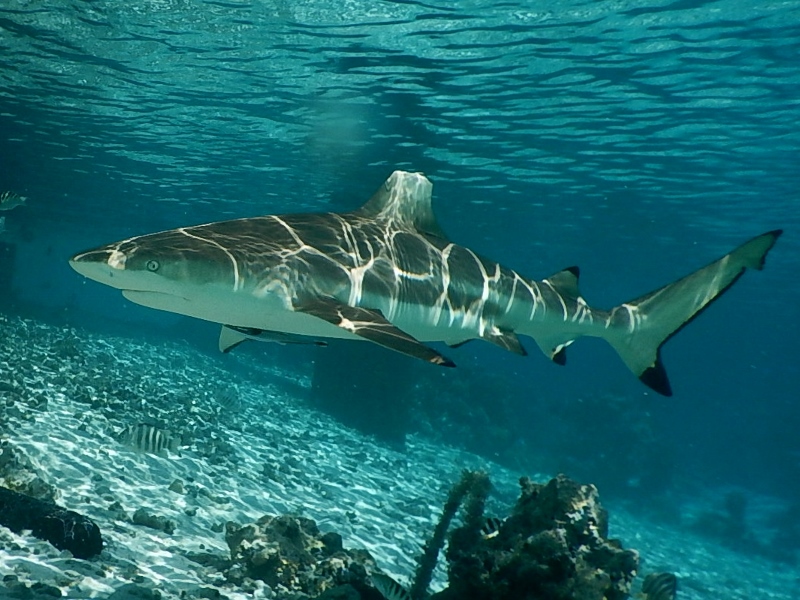
The Tuamotu atolls offer the most amazing snorkelling and diving we’ve ever had, and we are so happy to be here to see it all. 20+ years ago when I was diving in the Caribbean they used to have amazing fishlife and corals but this time around we didn’t see the same diversity and abundance of life there. The lesser populated Tuamotu islands is by far the most pristine place we’ve ever been, and we hope that their relative inaccessibility will act to preserve the untouched character of the atolls, and the incredible abundance of fish life.

By far the most exciting novelty of the Tuamotus to us is the number of sharks here. Blacktip reef sharks, whitetip sharks, grey reef sharks, tawny nurse sharks – they are all here, everywhere.

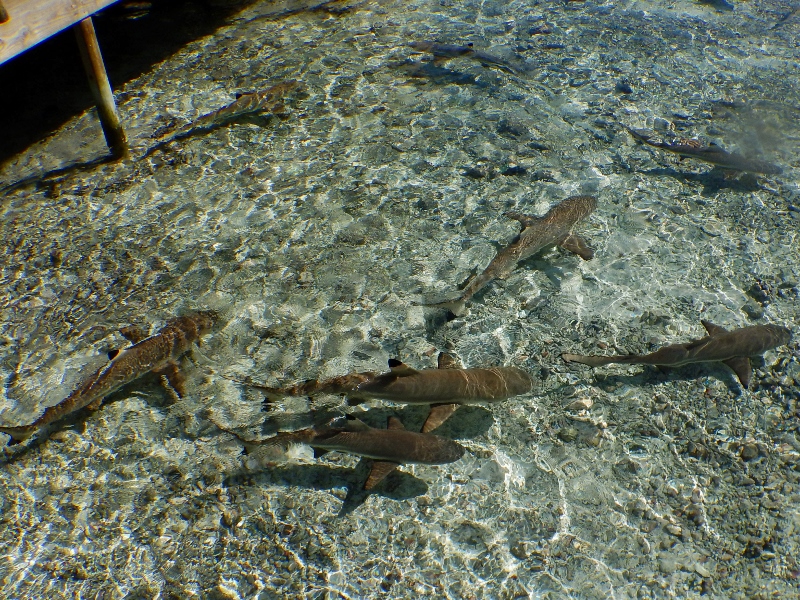
The grey reef sharks tend to hover down deep, the white tips a bit higher, and the black tip reef sharks and tawny nurse sharks come to the shallows and very close to snorkellers.
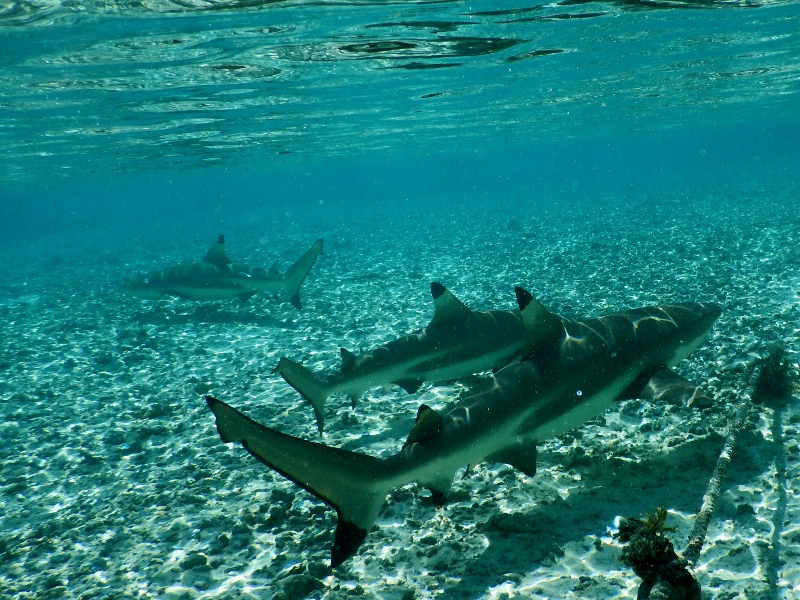
When swimming past they ignore us, acting completely unafraid. In Fakarava South they feed the black tips to make them come in, and some of them have damaged dorsal fins, probably from too close contact with a boat propeller.
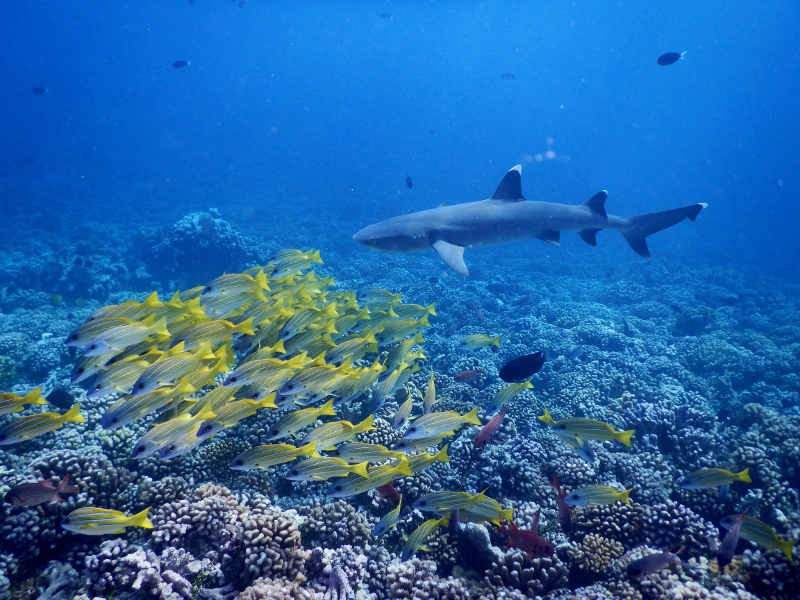
It is incredible to be able to just jump in the water and swim with sharks – this is the first place where we’ve ever been able to do so. Initially we were nervous, but the sheer numbers of divers and snorkellers enjoying close contact with sharks in Rangiroa convinced us that it was safe.

Taking their cue from the adults, the kids don’t seem scared at all; rather they are fascinated by the sharks initially and then quickly lose interest – they have no idea how special it is to be able to swim in the middle of a swarm of sharks.


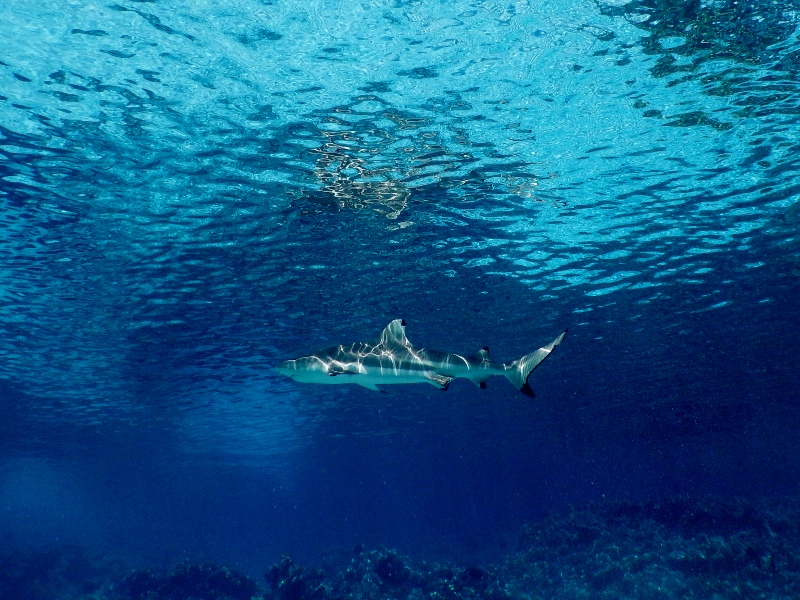

Us grown ups don’t lose interest – the sharks are always exciting. Although we soon stop pointing them out to each other when snorkelling: there are just too many, and at the end of our time in the Tuamotus we have become completely casual about them – oh, it’s just another blacktip.
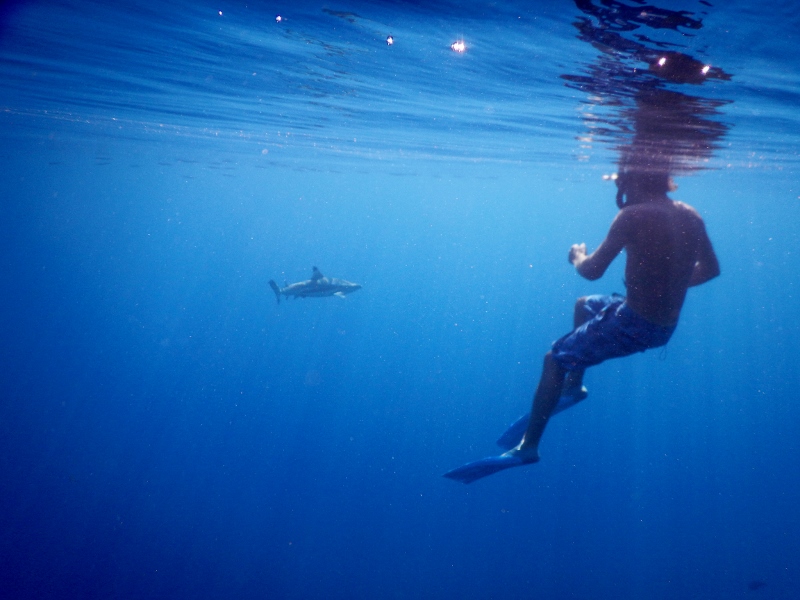
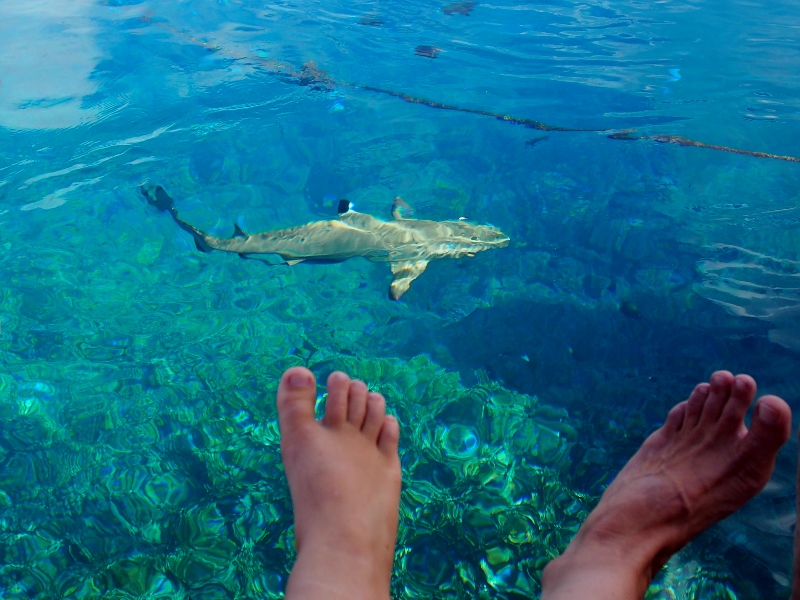
The amazing visibility helps too. In the Fakarava South pass we can see the large groups of grey reef sharks gathering at 20 m from the surface. When skindiving, we can get as close as 5 m. On scuba you can get a bit closer and spend a while longer looking at them, but those of us that stick to snorkelling don’t feel like we’re missing out.

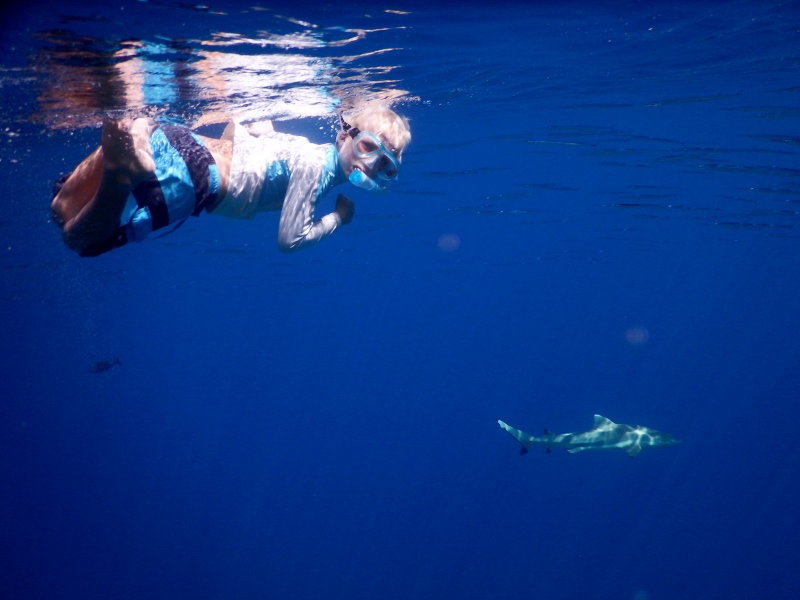
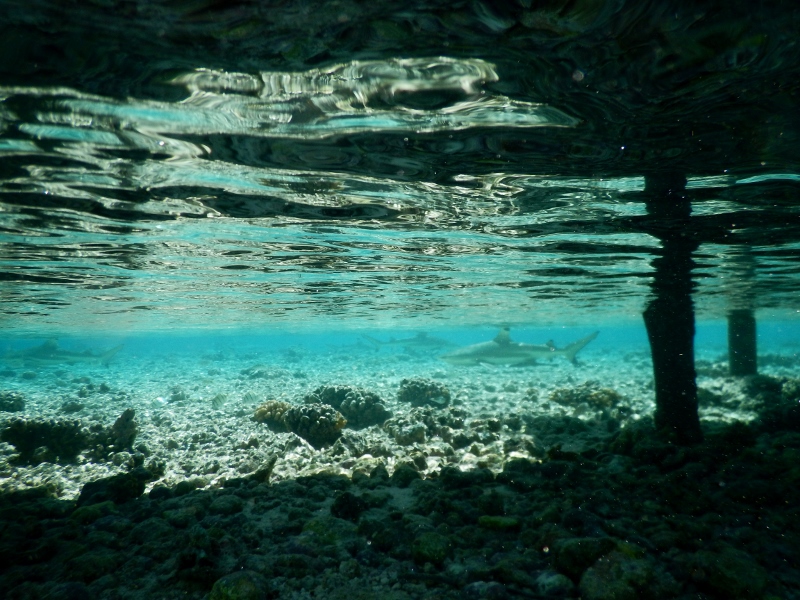

They are feeding them at the south pass in Fakarava, so they gather in huge numbers in the shallow water pool they call the swimming pool where the kids swim, as well as around the small restaurant on stilts.

Of the sharks we saw, only the grey reef sharks have any reputation for danger. In Fakarava south pass there were walls of grey reef sharks down deep, at least three groups of 25-30 sharks just sitting there, nose into the current, waiting for something to happen.
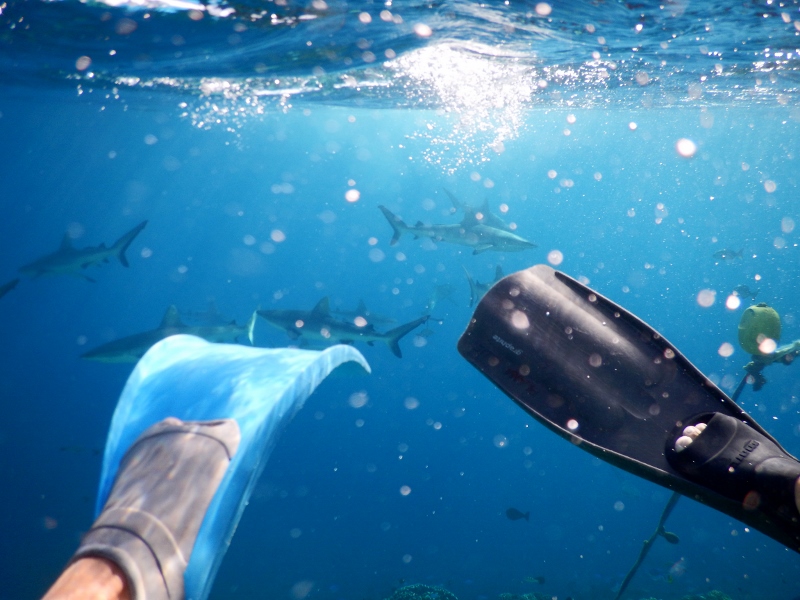
At one point they come up shallow and act a bit aggressively towards David and myself in the shallows, and we rush back to dry land. The behaviour of the sharks around the boat on anchorage change around the same time, and we figure that the film crew that are here filming a documentary about the pass are probably baiting them to get some exciting footage.

In Tahanea we use their methods when Seb spears a fish to use for bait for our cray pot. When we fail to attract crays, we decide to reuse the fish as shark bait, and Val gamely sets up her GoPro on the swim ladder and hangs the carcass over the back step.

The blacktips approach immediately, and after circling the bait for a good five minutes they start striking it.


We leave the Tuamotus a bit too soon – there are so many atolls, and it would have been amazing to spend longer here, see more, meet more sharks. It is truly remote and a destination that only cruisers and a few wealthy tourists ever get to see. We feel privileged that we got to see it, and to show our children what pristine coral reefs look like. We hope with all our hearts that the atolls survive the next century with all the changes that global warming and associated sea level rise and ocean acidification will bring.

 SV Bob The Cat