Ra’iatea and the marae at the centre of the world

OLYMPUS DIGITAL CAMERA

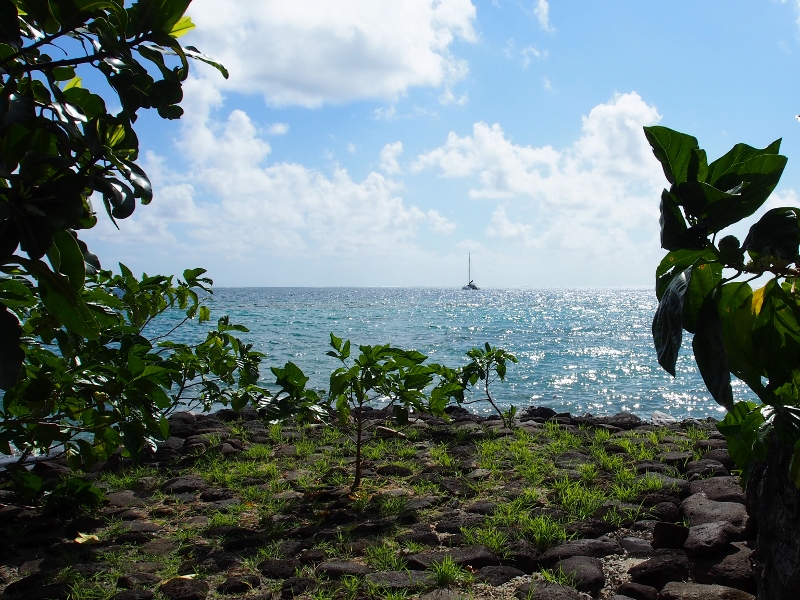
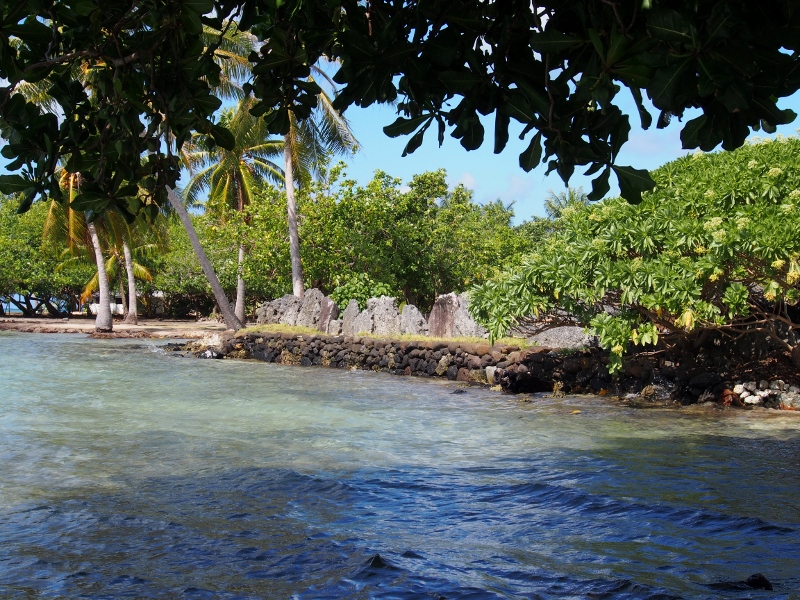
The mid-morning air is still and hot, with a faint smell of smoke. The sun is blazing down on the black basalt rocks in the large paved area where we stand just behind the water’s edge. The shallow water next to the ancient rock wall is calm and flat, but looking out we can see the thick foamy layer of white waves on top of the reef behind the blue-green lagoon. The sound of the pounding surf hums in the background, mixing with bird song and the clucking of numerous chickens that run wild in amongst the stones, pecking at crabs hiding in the sand between the rocks in the shade of large trees.

OLYMPUS DIGITAL CAMERA
Hiding in a tree on the marae


The flat coastal strip, a narrow border between the shallow lagoon and the steeply vegetated hills, is dense with rock foundations, carefully positioned by ancient hands to please the gods that ruled their world.

This courtyard was built in the 14th century, from basalt and coral rocks supplied by local families on the orders of the priests of the cult of Oro, the god of war. Using huge fossilised coral slabs standing erect and forming a jagged edge, they fenced off one end of the paved areas to demarcate an especially sacred area for the gods and ancestors. Where we are standing, thousands of people have stood in the past, focusing their hopes and aspirations into prayers to stern and demanding gods.

It’s a spine-shivering experience to be here, the religious centre of the Polynesian Pacific. We are at the Taputapuatea marae, the most important temple in all of Polynesia, on the island of Ra’iatea in the leeward Society Islands of French Polynesia. Ra’iatea used to be known as Havai’iki Nui, and legend has it that it is here that at least some of the waka (canoes) that arrived in New Zealand came from. The Taputapuatea marae was so important that each waka that took off from Ra’iatea to colonise new lands brought with them a stone from here to imbue special powers into the marae that they would erect in their new home. Ari’i (chiefs) from the Australs, the Cook Islands and New Zealand would come back for centuries to this location for important ceremonies.
Bob parked in front of the marae

As we stand here we imagine them taking off, full of hope and fear, blessed by Oro or maybe ousted by his adherents – who will ever know? We imagine their two-masted double hulled waka packed to the max with people, water, tools, weapons, provisions and animals for a new life on distant islands yet to be discovered. We imagine the months at sea ahead of them, with storms and doldrums, their only shelter a small thatched hut joining the two hulls of the vessel; the only shade from the hot sun the triangular sails woven from palm or pandanus leaves.

It seems incredible that New Zealand was colonised by people from here, so far away. Incredible that the relatively small waka that we see drawings off could handle the journey south, and that they would face the hardship of a return journey to come back for ceremonies thousands of miles away. Incredible that we’ve been to the Tuamotus, where they have a legend about the Tainui waka, which, when it arrived in New Zealand, landed close to Raglan where we live. The Tuamotu legend features identical names of the waka and the chief on board as the Maori legend, suggesting that Tainui did indeed leave from those barren atolls. And incredible that we’re now here in Ra’iatea where at least some of the other waka left from, that we’re at the marae at the centre of the Polynesian world, at a site where thousands of direct ancestors of New Zealand Maori have stood before us.

For these people the marae was the meeting ground between humans and the divine. Archaeologists have dated the remains of the Taputapuatea marae to the 14th century, but it is likely that what we see now replaced older, more transient structures, and that the site was a place of worship for centuries before anything permanent was built.  Drawings from the early European visitors to Polynesia indicate that the houses on the marae had no walls but instead had poles onto which thatched roofs were perched, with one or more rows of upright coral slabs separating the ahu (sacred part) from the rest. The fare ia manaha, the most sacred house on the marae, housed the most sacred icons, the to’o (images of gods) and ti’i (tiki in Maori and Marquesan: images of deified ancestors). This fare was so important that a human sacrifice was required for its construction, the remains of the victim buried under the central part of the house. Towering above the marae were unu, tall wooden fork-like totems, carved with images of ancestors, gods or animals, which were erected along the edges of the ahu. Special human sacrifice marae had special forked unu, without carvings or designs, erected alongside the stacked skulls of the victims. Other houses on the marae were for the dead (fare tupapa’u), where the bodies of deceased people of importance were held, sometimes for many days, before being taken away and buried. The marae also included numerous round-roofed buildings for canoes, with special structures for each of the many types of waka.
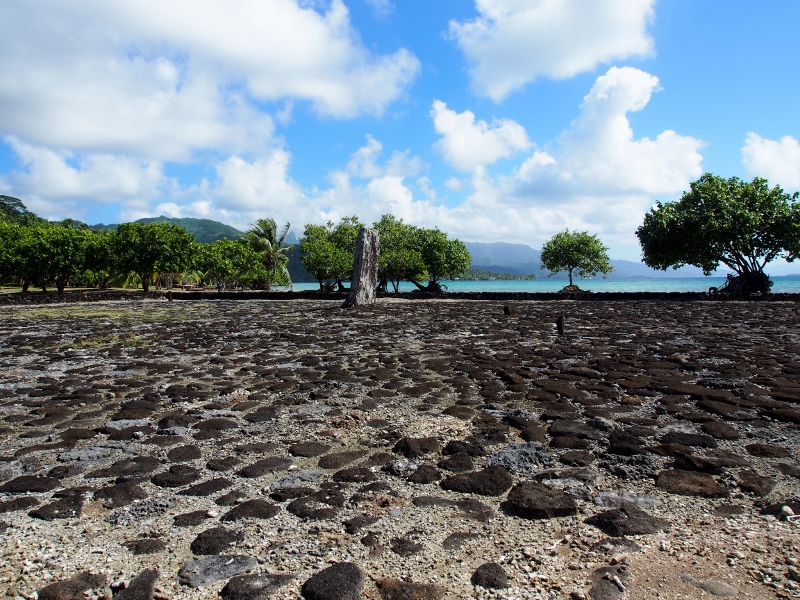
Ancient courtyard
Ancient courtyard

We’re interrupted in our contemplations by the kids – they’ve found a huge hermit crab in one of the ancient ahu, and after we finish looking at that it is time for lunch. It is hot and they’re thirsty and hungry, so we sit down in the shade of a large tree and have a picnic, in this peaceful location that harbours such a chilling and gruesome past.
OLYMPUS DIGITAL CAMERA

We’ve been in Ra’iatea, in the leeward group of the Society Islands, for a couple of days, having sailed here overnight from Mo’orea, a calm, moonlit passage for Pete’s first night watch. Ra’iatea is, right next to the island of Taha’a, two ancient volcanoes forming separate islands encircled by one common lagoon. After Tahiti, Ra’iatea is the second largest of the Society Islands, but it is very quiet – there are no beaches here, so not many tourists, although there are a few sailboats.  Legend has it Ra’iatea was one of the first islands to be settled in the Societies, probably by people from Samoa. In ancient times Ra’iatea used to be the religious and political centre of the Societies, and it is thought that Tahiti was settled by people from here. Only when the Europeans arrived with their ships, finding Pape’ete a better harbour, did the capital of the Societies shift to Tahiti.

Matias playing with a cat on the beach

Our first night here we tied up to the wharf at the main town of Uturoa, a useful place next to supermarkets and sailmakers where cruisers often come to stock up. Unfortunately the conveniences come with a downside, and we were told to tie ourselves on tightly as the local youths have in the past untied yachts in the middle of the night, no doubt laughing their head off as they watched them drift towards the reef in the darkness. As it happens, the Australian boat next door ends up being broken into and having a laptop stolen during the night, but fortunately we’re spared – it’s possible that the lights we leave on all night for the kids may have deterred intruders.

Despite all this, Uturoa is heaven to us – we get minor repairs done on both our sails and even get – Hallelujah – a bottle of gas for cooking! So now we are truly free of worry – we were uncertain that we had enough gas to get us to Tonga, but because of the Tahitian gas strikes we couldn’t find any gas anywhere. Now, with gas, we can bake and do all sorts of frivolous things. I’m sure Ed doesn’t realise how close he got to eating cold tins (corn beef with sweetcorn? Artichoke hearts with beetroot and SPAM? – I’m sure we could have made it delicious), but at least now he is assured fresh bread on the passage to Tonga.

Lukie on the river
Lukie on the river

And there are other attractions to Ra’iatea too. On our way back from the marae, the boys and I kayaked up the Faaroa River, gliding swiftly over the still, green waters, our turbulence disrupting the perfect reflections of the dense jungle surrounding the river banks. The river is lined with miro trees, and whilst we were sitting amidst buzzing dragonflies admiring the scenery, their perfect yellow flowers dropped all around us like snowflakes, sending out ripples as they landed softly on the water.

Miro tree flower in the calm river


It has been hot, and we have been spending as much time as possible in the water. In the pass near Uturoa the kids and I explored a motu full of friendly cats and chickens gorging themselves on coconuts and crabs. When we snorkelled the pass, David and Pete collected spider conch and another seasnail, leading to culinary delights such as fried conch for lunch and rubbery slug curry for dinner. On our way out of Ra’iatea, Pete had a few more surfs in the lagoon off Taha’a island while David and I drift snorkelled with the kids, admiring the luminous green corals that shine with a phosphorescent hue.
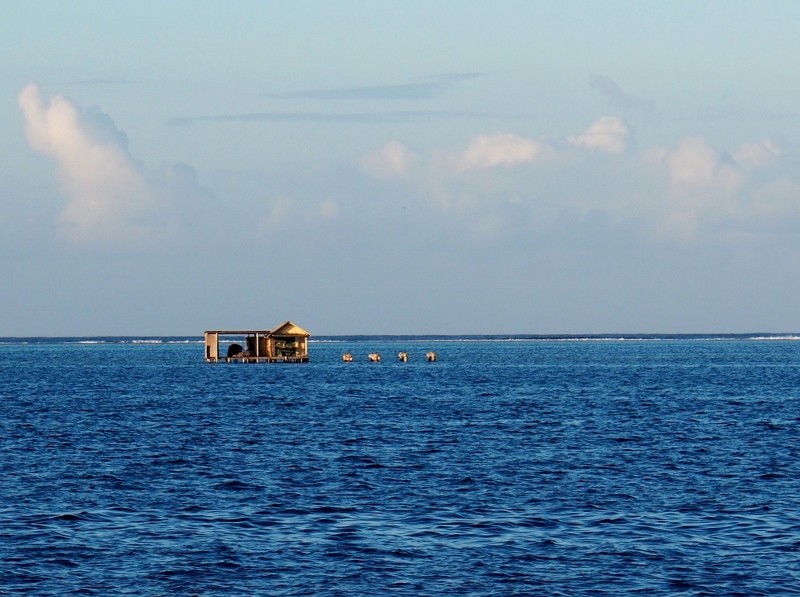
Tiny house iin the middle of the lagoon

And then, as usual, it is time to leave, to get to Bora Bora to pick up Ed. And so we leave to head east, like many double-hulled waka have before us, only stocked with butane gas and tins rather than firewood and live chickens.
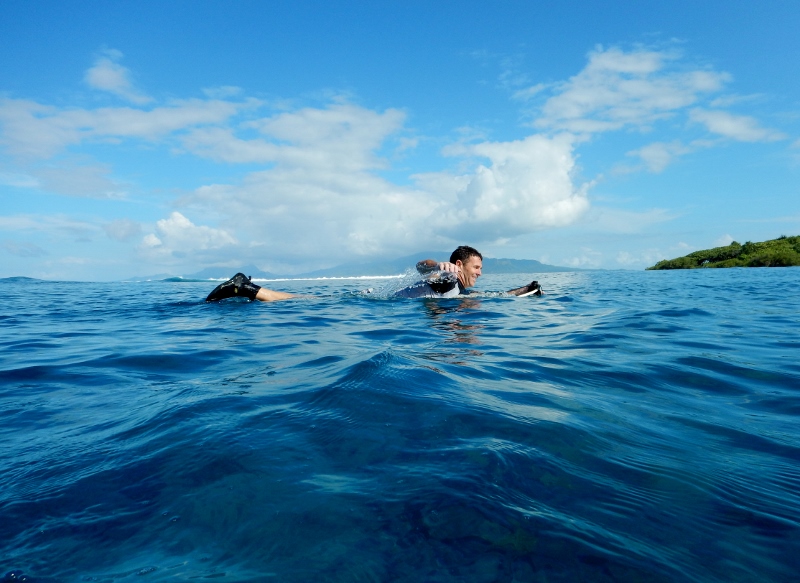
Pete heading for a surf

Mo’orea

View of Opunohu Bay, Mo'orea
View of Opunohu Bay, Mo’orea

‘Mummy, when are we going to be there? I can’t walk anymore”. Matias is dragging onto my hand, trying to bring us to a standstill in the middle of the winding road leading steeply uphill. I sweep at the swarm of mosquitoes covering my forehead and squint up at the imposing mountains rising above us. It is cool in the shade but we’re being attacked by mosquitoes; whenever I look down I can count about 20 of the buggers on each of my legs, sucking contently.
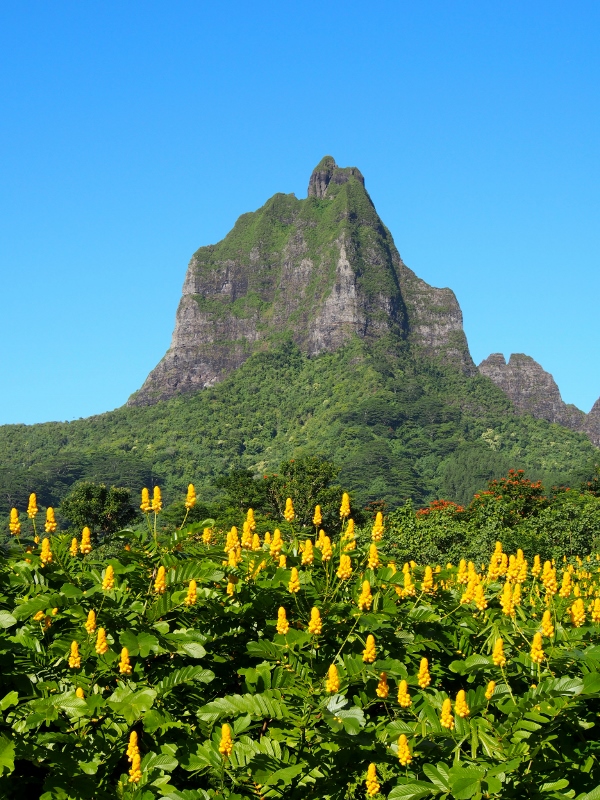
We’re about half way to the famous marae (stone temples) of Opunohu Bay, the fertile valley on the north side of the island of Mo’orea. It is a 9 km walk round trip, leading first to the marae, and then to the fabled Belvedere, the panoramic view of the two bays that adorn the north coastline of the island and Mount Rotui, the tall, rugged mountain that separates them.

Rugged highriser
Rugged highriser

Part of the group of islands known as the Society Islands, Mo’orea is a young (1-2 million years old) volcanic island with steep hills surrounded by a barrier reef. Mo’orea (meaning yellow lizard – apparently the name of the chief family at the time the Europeans came, prior to that it was known as Eimeo) is clearly visible from Tahiti and the sail there took us only a couple of hours.

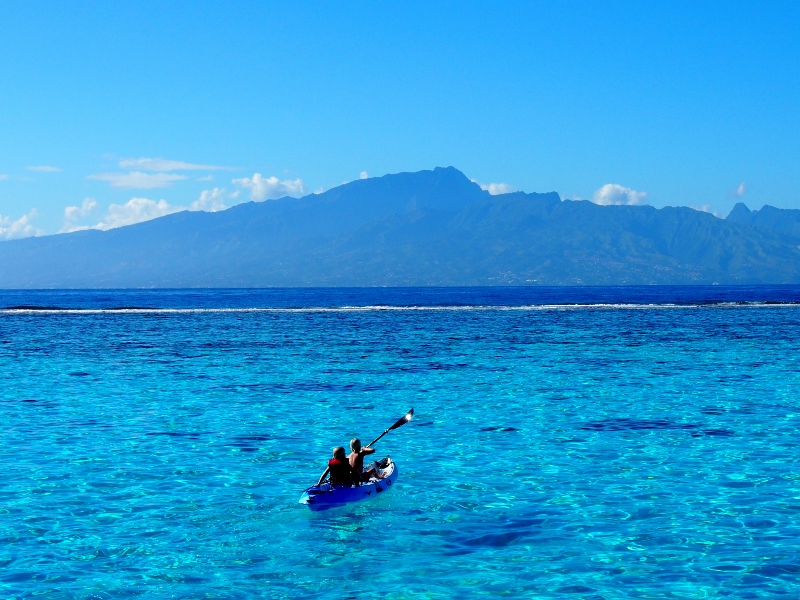
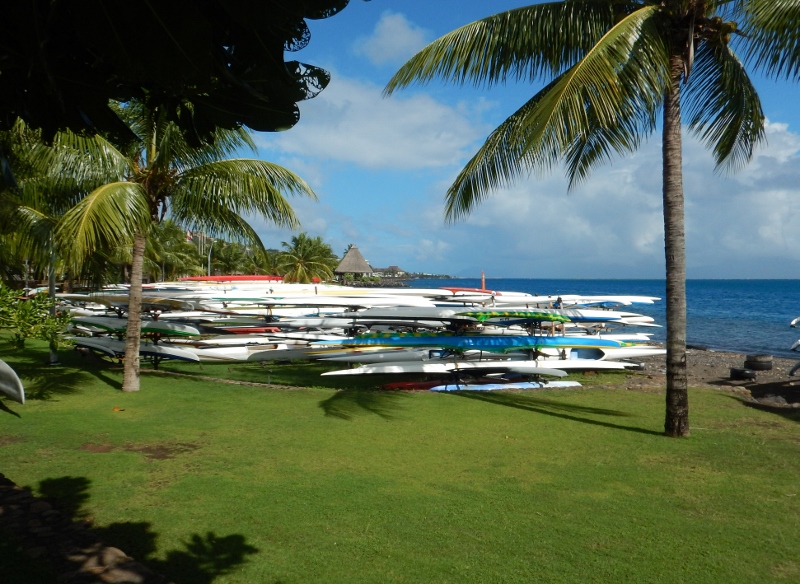
Modern warriors paddling towards Tahiti

Settled by the Polynesians in the same wave as Tahiti around 200 BC, Mo’orea was first sighted by Europeans in 1767. When they arrived the island was heavily populated, but within a hundred years the Polynesian population was decimated by the usual mix of weapons, disease and alcohol that the Europeans brought with them. Dozens of marae are still scattered in the valleys of the island, the remains of the dense populations that used to live here. It is these temples that we have stopped in Opunohu Bay to see, but as it is nearing lunch time Matias’s enthusiasm for the ancient ruins is diminishing proportionally to his rising hunger.

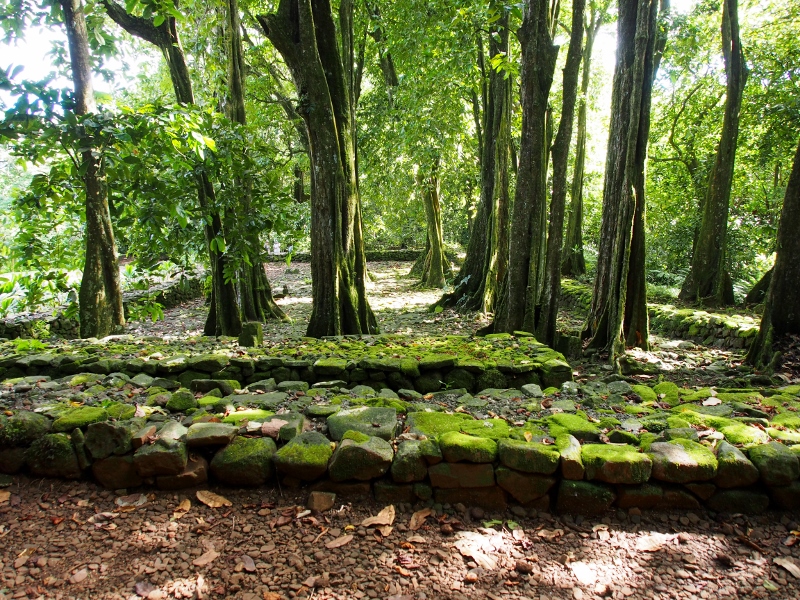
The marae
The marae

We finally reach the marae, square stone platforms built into the hillsides on which temples used to stand, ancient altars still visible in amongst the trees overgrowing the site. I get out the snacks and the complaining stops for a minute or two while we view the information panel that details the ancient archery competitions that used to take place here, the kids transfixed by the illustrations of the warriors that once dominated the island.

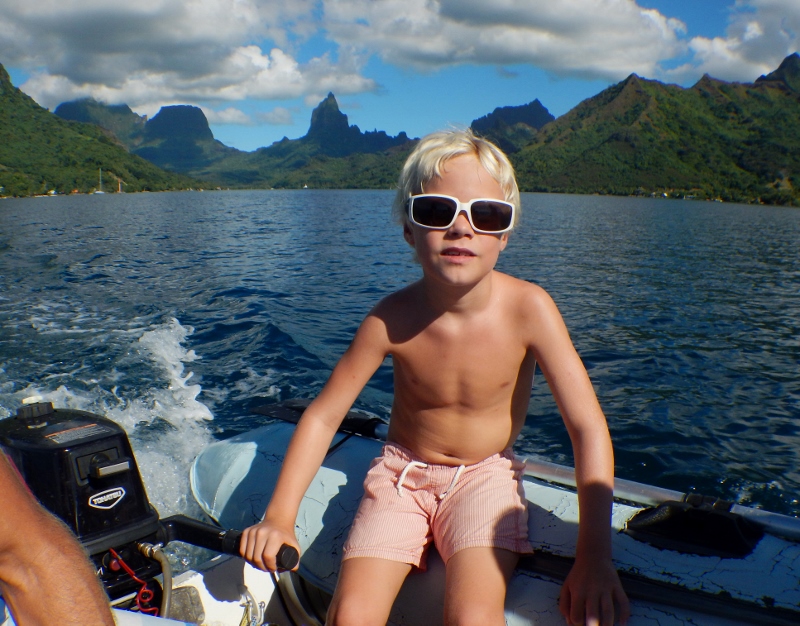
Prefers driving to walking...
Prefers driving to walking…

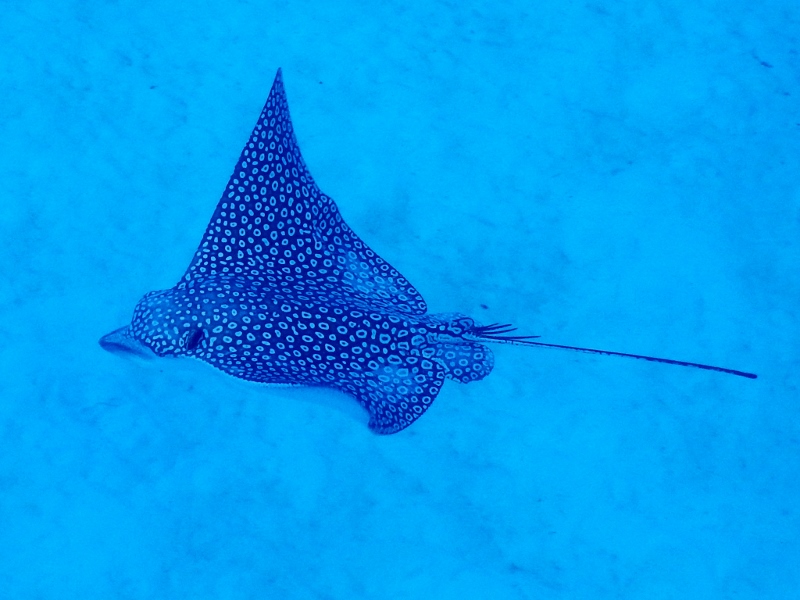
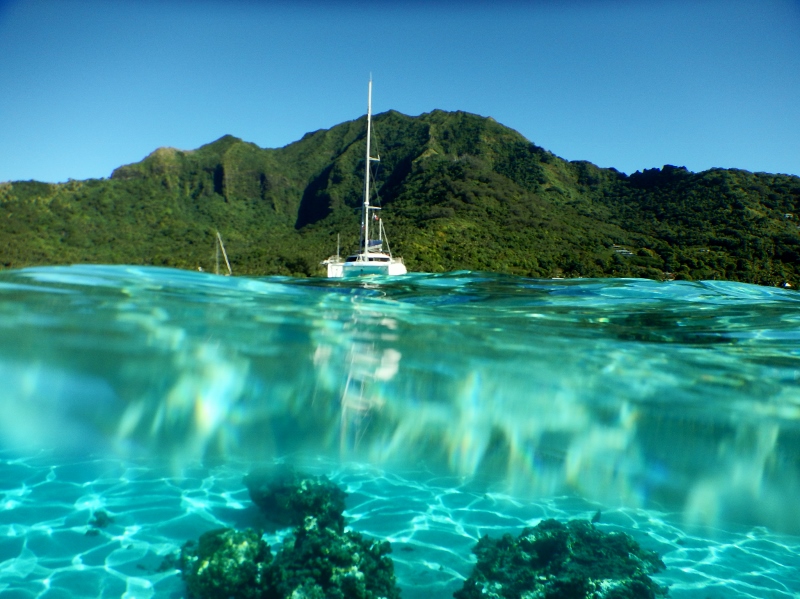
For the last couple of days we’ve been exploring the aquatic side of Mo’orea. It is a stunning island – steep and lushly vegetated, surrounded by a turquoise lagoon sporting clear waters and healthy coral. When we first arrived, we anchored on the eastern side, at Teavaro Bay which is a lovely stretch of lagoon with the view of Mo’orea’s steep bushclad hillsides on one side and sweeping views of Tahiti enveloped in clouds on the other side. Strong currents were flowing near the reef, and the boys had to hang onto ropes tied off to the end of the boat in order not to get swept away. The visibility on the eastern side of the lagoon was amazing – gin viz as my old diving buddies would say – and rays were everywhere. Light and dark eagle rays with their delicate ringed spots and peculiar beaked head, as well as black stingrays, gliding through the water just above the bottom, coming up only to check us out briefly.

Eagle ray
Eagle ray

The southern end of the eastern bay is famous for its snorkel trail which takes visitors from a small motu to the edge of the reef. On our visit we soon found out why there is a trail – the waves crashing over the reef created a sweeping current which we have to cling onto the ropes joining up the buoys of the trail to pull ourselves forward against. The area is a reserve and home to several black tip reef sharks and stingrays which turned up in great numbers as we were nearing the shore at the end of the trail, circling us hungrily. And sure enough, when we climbed out of the water we discovered that a tourist operation is conducting a snorkel tour complete with shark and ray feeding next door.

Eagle ray
Eagle ray

I’m not sure about the wisdom of staged shark feeding – it disrupts natural behaviours and teaches sharks to associate humans with food. Apparently there have been some recent accidents at a shark feeding operation near Opunohu Bay on the north side of the island where a child was killed and an adult injured by over-excited lemon sharks during a feeding session.

Stingray
Stingray
DSCN4088 (800x600)
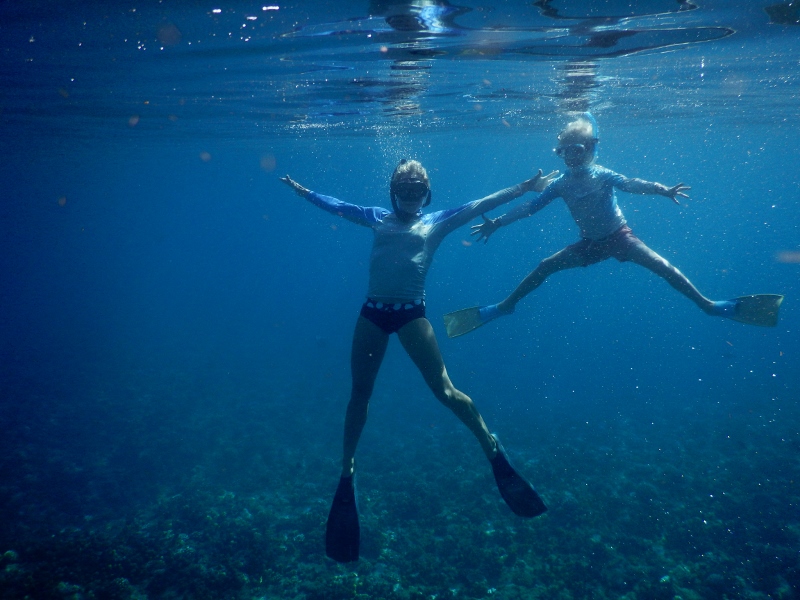
Matias and I embracing the sea

In the afternoon of our second day we picked up Pete from the ferry dock. It is great to see him, and here, surrounded by rugged mountains and turquoise sea, he and David are soon back in the old groove, deep in work discussions with a bit of philosophy thrown in. There is time for leisure too, and Pete goes for a quick surf on a local break on the way to Opunohu Bay while the kids and I chase a ray out the back of the boat.

Pete's jump off the boat
Pete’s jump off the boat

The archaeological site in the valley behind the bay is the last stop before we head off to the island of Ra’iatea where we’ll spend a couple of days before sailing on to Bora Bora to meet Ed.

Green hills and turqouise seas

And the site is worth a visit, despite the mozzies and the whinging children. After a pack of crackers and some carrot sticks even Matias is ready to head on, and after the marae we make it all the way to the lookout where we rest for a while, refreshed by the glorious view of mountains and inlets, steep hillsides and bare rock backed by flat deep blue water. It is easy to understand why this valley was densely settled in ancient times, stone temples scattered amongst more temporary dwellings. It is a magical place and worth a long walk, even for two tired little boys.

The view from the Belvedere


Tahiti – back to civilisation

DSCN3766 (600x800)

Our arrival in Tahiti heralds a much needed return to civilisation after months in the wilderness – time for boat repairs, showers, laundry, baguettes, yoghurt and cheese.
When we arrive in Tahiti it is windy and wet, and every day while we’re there the skies seem to discharge a huge downpour or two. Which makes quite a nice change from the dry Tuamotu islands that we come from, but is not conducive to drying all the laundry that we have saved up for this fabled place of washing machines. That’s what cruising in remote locations is like – we are over the moon to arrive in Tahiti, not because of its impressive volcanoes or lovely sandy beaches, nor for its nice snorkelling or cultural importance as the heart of French Polynesia. But because it has washing machines. Which sounds silly, but is rather incredible when you’ve been living on a hot boat in the tropics without access to much water or any laundry facilities for two and a half months.
It is not only laundry we have to do here, although we do have endless sheets, undersheets, pillows and towels that need a good hot wash to sterilise them after months of sweaty sleep and infected coral cuts. We have to install the new batteries that are waiting for us in Taina Marina just out of town. We also need to get a cooking gas refill, and to provision for the next four months of cruising in less-than-wonderful retail locations such as Tonga and Fiji. And then there are all the small jobs – reinstalling the water filter which fell out halfway across from Galapagos to the Marquesas. Fixing a broken handle on a hatch to prevent further leakage. Repairing the port engine clutch which has just started slipping. Downloading kindle books for Matias who is reading faster than our limited internet access can provide (doesn’t say much – currently we have access to download a book about twice a month). Answering emails after a month without internet. Buying new clothes for the rapidly growing children. Showering.

Waka on the Pape'ete waterfront
Waka on the Pape’ete waterfront

We start by going to a half-finished marina right in the centre of town, a lovely location just in front of the huge cruise ships with names like ‘King of the Sea’ that park up to disgorge passengers into Pape’ete where their shopping experience awaits. It is a great place for a marina, right in front of the main drag, within walking distance from the market, the shops and the mobile food stalls – the roulottes – that serve delicious French and Chinese food to hundreds of people every night. We go out eating two nights in a row and revel in the fresh, crunchy vegetables of the chow mein, the roquefort sauce and pommes frites, the bread that we didn’t have to bake ourselves.

View of the cruise ship from the marina in Pape'ete centre
View of the cruise ship from the marina in Pape’ete centre

Because the marina is not fully operational we only pay half price, which is fair given we only receive half the services of a normal marina. The toilets are a good kilometre from our berth, which is not great for the childrens’ perpetually urgent toilet calls, and the washing machines are not operational. But they have internet, showers and shore power, all of which are amazing. I finally upload the blogs from the Tuamotus and manage to answer some of my emails, David looks up clutch repair options and second-hand kayaks online, and Seb and Val do their best to avoid looking at their work emails. We spend half hours just standing under hot water flowing down, soaping ourselves down, washing and combing hair, marvelling at how nice it is to feel clean. Not that it lasts long – it is incredibly hot and humid here and as soon as we step out of the shower we’re covered in sweat, but still. It is also fantastic to have a fully operational fridge after months of battery problems, and it came at just the right time – we caught a big skipjack tuna the day before coming into Pape’ete and continued refrigeration means we can actually eat it rather than throw half of it away.

Lady selling vegetables in the Pape'ete market
Lady selling vegetables in the Pape’ete market

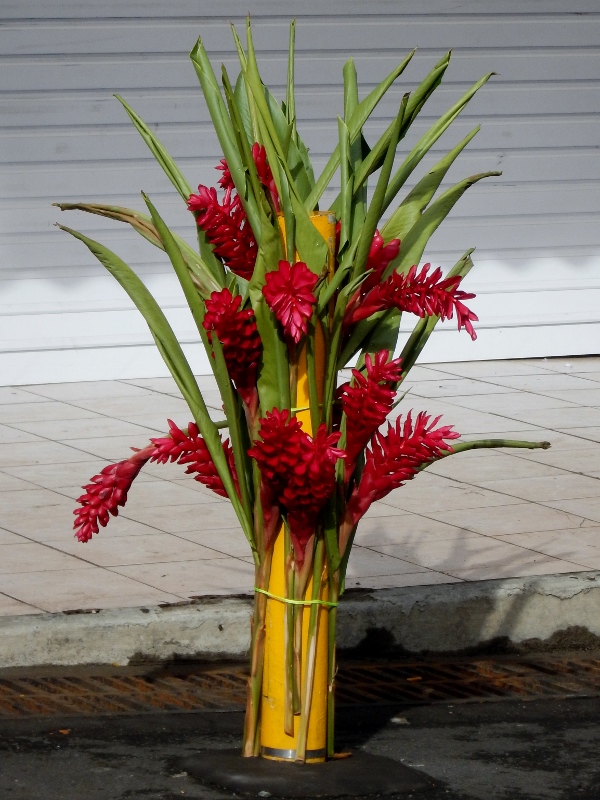
Downtown Pape’ete seems a nice place with its brightly lit waterfront featuring parks and paths planted with beautiful trees and flowery bushes. Flowers are indeed everywhere here – fragrant bouquets for sale in the market, individual flowers decorating the hair of most women, necklaces of tightly bound flowers and leaves adorning tourists and locals alike, big colourful flowers woven into artful arrangements tied to lamp posts and fences.

DSCN3748 (600x800)
After two days spent exploring the centre of Pape’ete we say a sad goodbye to Seb and Val who are flying back to New Zealand. The children are sobbing on our way back from the market where we said our goodbyes and as soon as we get to the boat Matias starts writing them letters, including a message in a bottle which we will post with firm directions to head south west when we get to open water. Hopefully it’ll reach them in New Zealand.

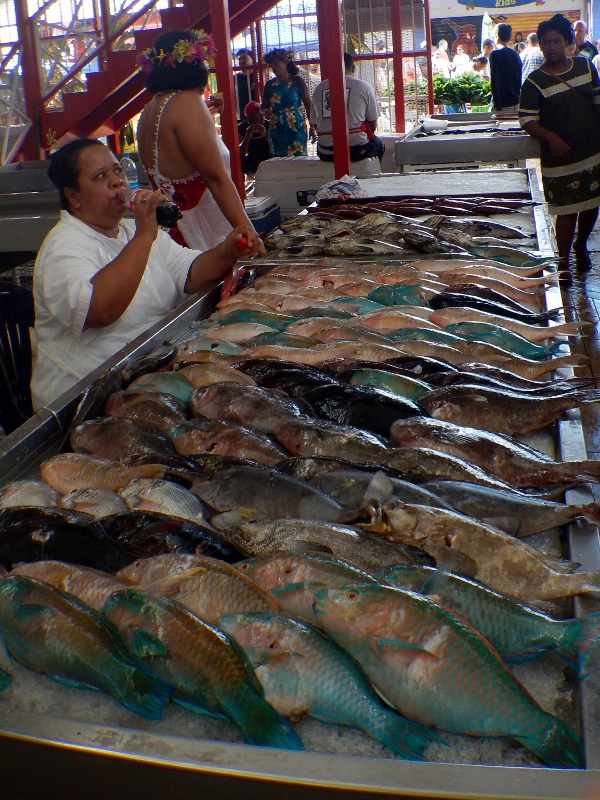
Parrotfish, anyone?
Parrotfish, anyone?

After their departure it is time to get back to business, and we move the boat to Taina Marina where access to supermarkets is easier and where we have boat batteries arriving. Taina is a bit further from town but sports a massive Carrefour nearby where I spend most of my time over the next two days rapidly spending any money we might have saved whilst in the isles of no shops further east. Several times a day I risk my life and sanity pushing a dangerously loaded and spectacularly uncooperative shopping trolley up the steep hills to the narrow bridge over the bumpy footpaths from the Carrefour to the marina. The trolley tries its best to kill me, slaloming rapidly down the hills attempting to shake me off, refusing to go over curbs leaving me stranded in the middle of traffic, and veering dangerously close to the water’s edge on the rough boardwalk of the marina. Despite this, the kids and I triumphantly continue to bring back supplies until we are fully stocked and ready for the imagined food horrors of non-French Polynesia.
The rest of the time in Taina is spent doing unbelievable amounts of laundry, paying astronomical prices for the privilege. The lady in the office is incredulous when I come to get change for the laundry again and again but I don’t care how much money we spend – I just want clean sheets and towels. And a clean boat – after months of visitors it is time for a thorough clean-up and cockroach eradication effort, both utterly futile but nevertheless necessary. Kind of like all housework I guess – a fleeting sense of achievement and then back to square one to do it all again…

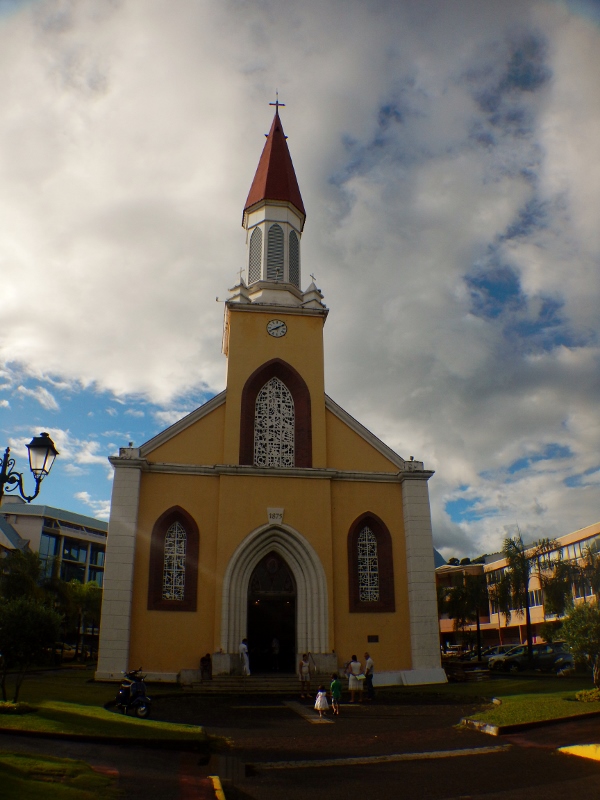
Pape'ete church
Pape’ete church

David is busy with the batteries, the hatch handle, the clutch and the water filter but finally after two days of solid work we emerge victorious, boat fixed, clean and fully loaded with French delicacies, crew scrubbed clean in endless showers, sheets and towels dry and fragrantly sterile. The only thing we haven’t been able to do is to get more cooking gas. There is a strike on at Tahiti Gas, and no cooking gas is available here or in the Society Islands. So far, the strike has been going for three weeks with no sign of an agreement emerging, and thousands of Tahitians are out of gas and likely to remain so for the foreseeable future. Not getting a gas refill is a bit of a problem for us, as we are doubtful we have enough to get us and Ed comfortably to Tonga, our next likely refill option. But there is little we can do – there is no gas – and so we resign ourselves to rationing the gas strictly from now on whilst looking out for refill opportunities wherever we go.
And then, after five hectic days is Tahiti, and without having seen much of the island at all, we are ready to go. Tahiti hasn’t got a very good reputation as a cruising destination and we are keen to head to Mo’orea where the waters are clear and the pace relaxed. We’ll meet Pete in Mo’orea, and then make our way towards Bora Bora where we are meeting Ed who will sail with us to Tonga.

Mo'orea as seen from Pape'ete, Tahiti
Mo’orea as seen from Pape’ete, Tahiti

Tuamotu sharks

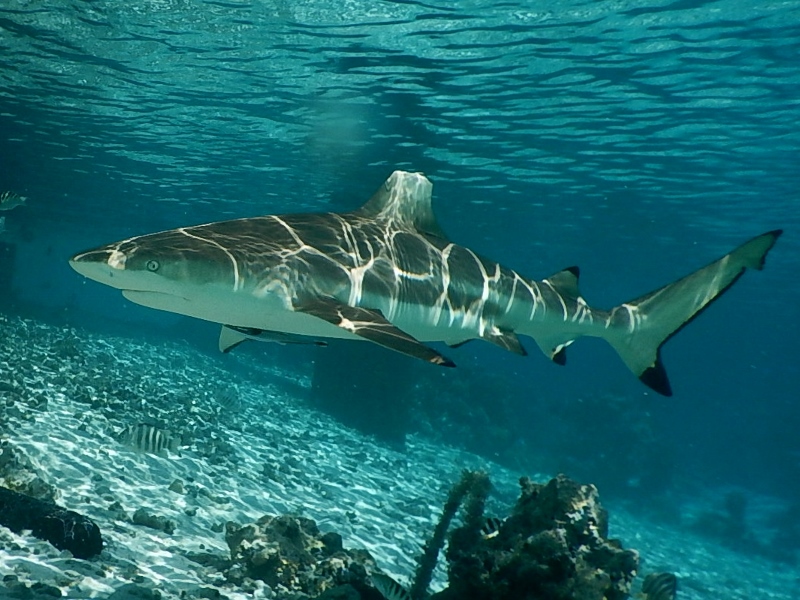
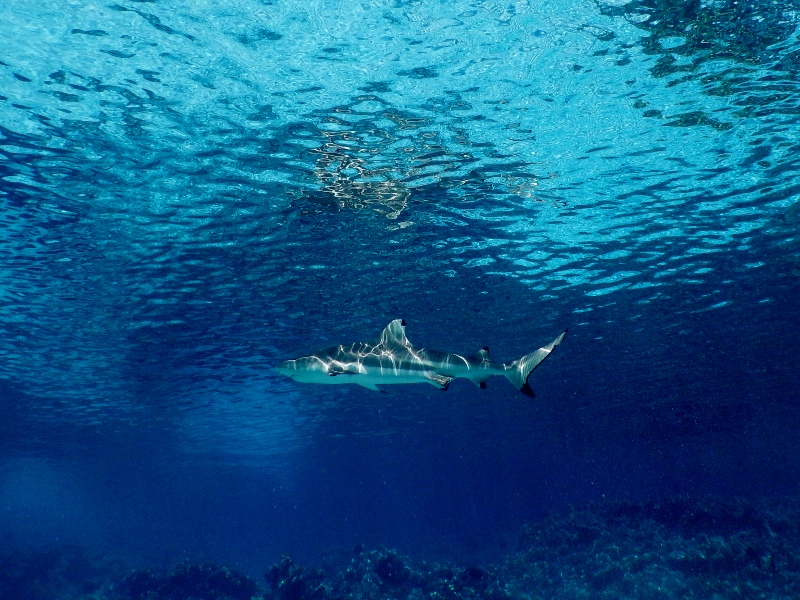
Curious blacktip reef shark
Curious blacktip (missing) reef shark

The Tuamotu atolls offer the most amazing snorkelling and diving we’ve ever had, and we are so happy to be here to see it all. 20+ years ago when I was diving in the Caribbean they used to have amazing fishlife and corals but this time around we didn’t see the same diversity and abundance of life there. The lesser populated Tuamotu islands is by far the most pristine place we’ve ever been, and we hope that their relative inaccessibility will act to preserve the untouched character of the atolls, and the incredible abundance of fish life.

DSCN3070 (800x600)

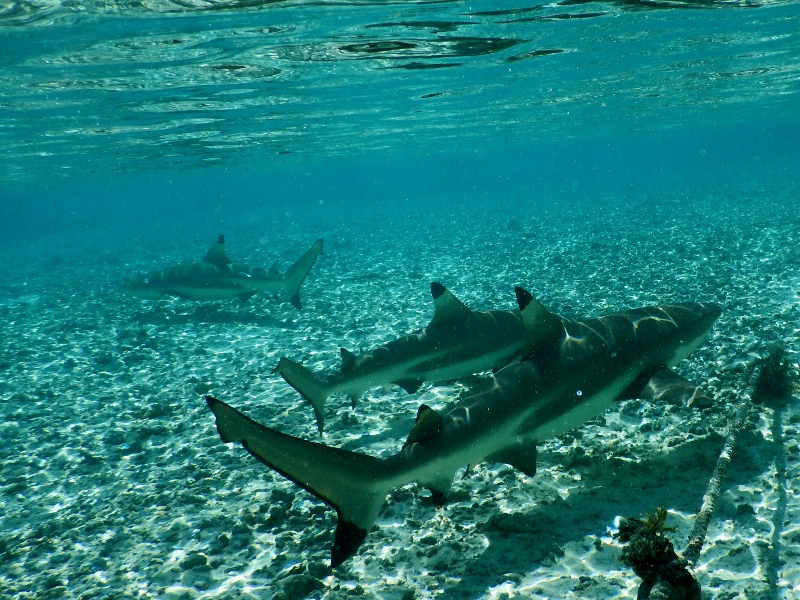
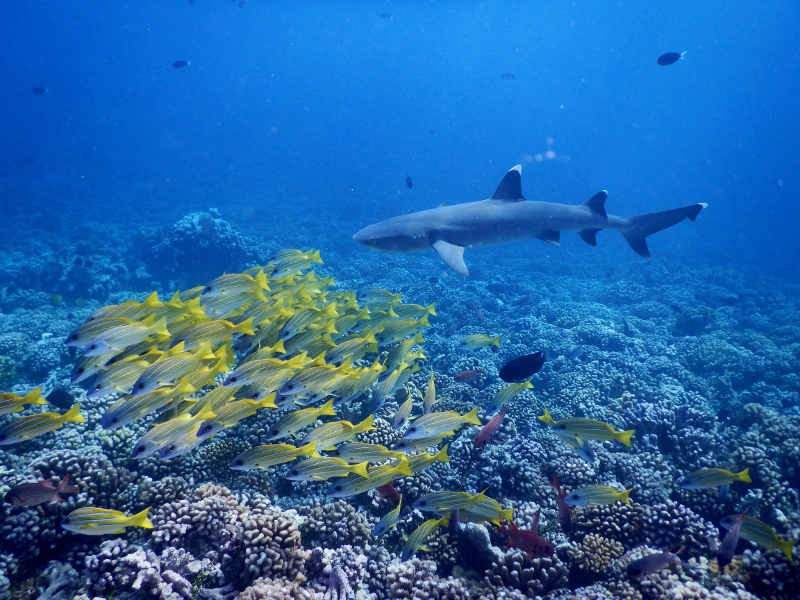
By far the most exciting novelty of the Tuamotus to us is the number of sharks here. Blacktip reef sharks, whitetip sharks, grey reef sharks, tawny nurse sharks – they are all here, everywhere.

Matias trying to get closer


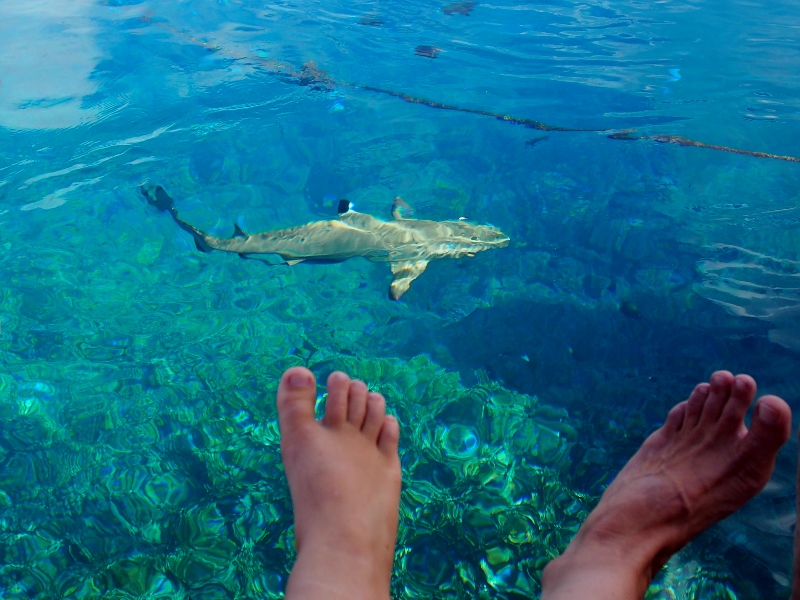
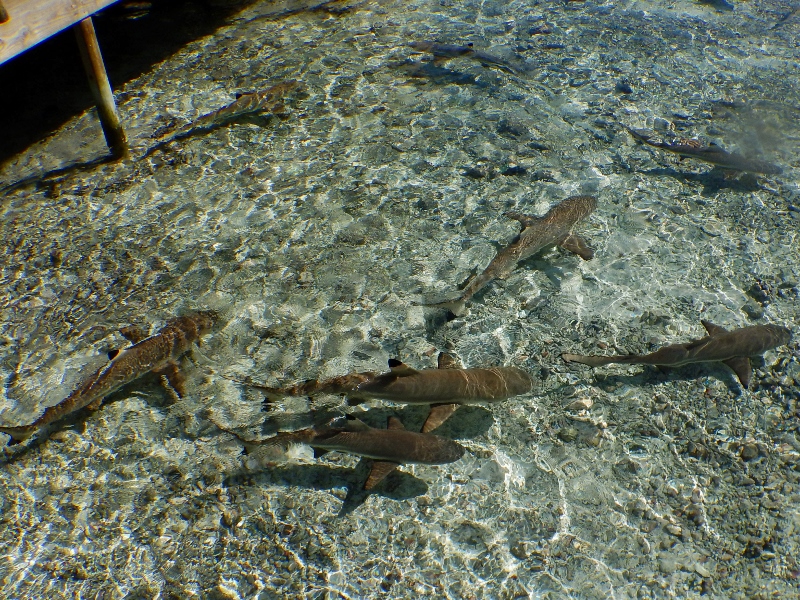
The grey reef sharks tend to hover down deep, the white tips a bit higher, and the black tip reef sharks and tawny nurse sharks come to the shallows and very close to snorkellers.

Waiting for food
Waiting for food

When swimming past they ignore us, acting completely unafraid. In Fakarava South they feed the black tips to make them come in, and some of them have damaged dorsal fins, probably from too close contact with a boat propeller.

White tip cruising by

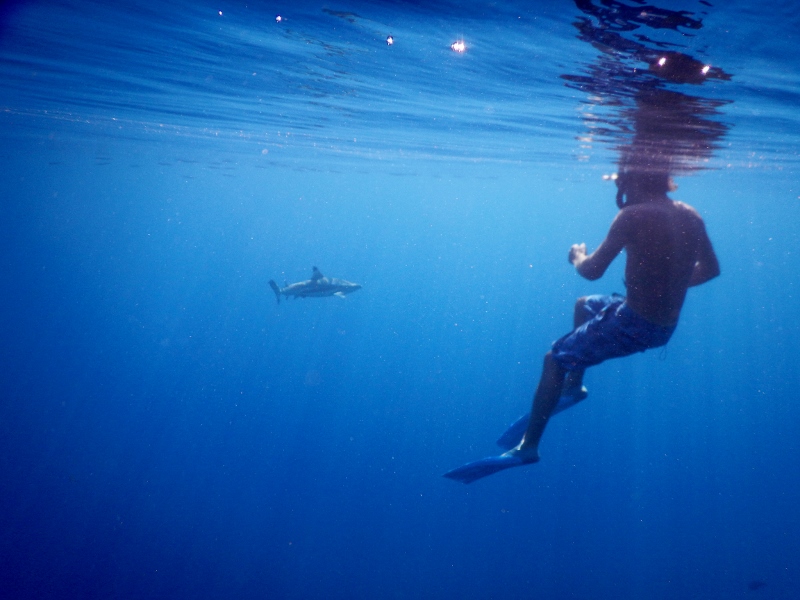
It is incredible to be able to just jump in the water and swim with sharks – this is the first place where we’ve ever been able to do so. Initially we were nervous, but the sheer numbers of divers and snorkellers enjoying close contact with sharks in Rangiroa convinced us that it was safe.

David checking out a black tip reef shark in shallow water
David, armed with a piece of PVC pipe, checking out a black tip reef shark in shallow water

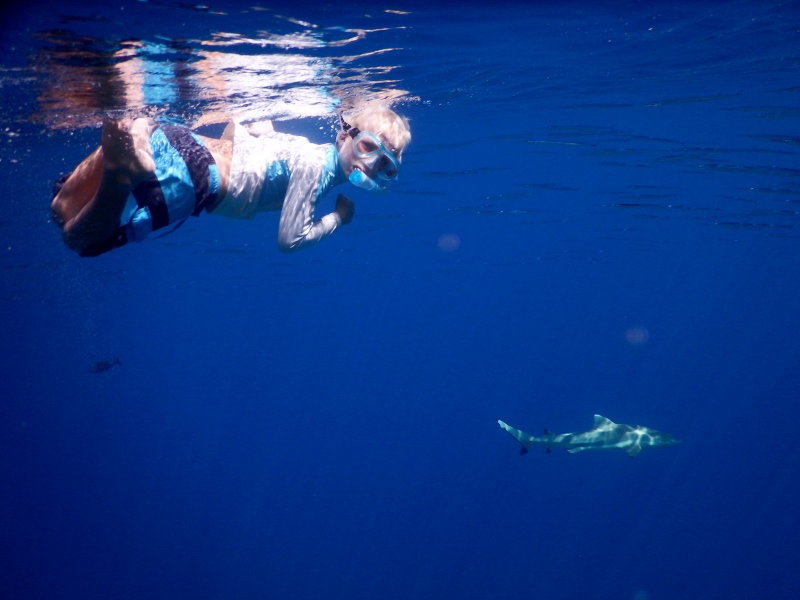
Taking their cue from the adults, the kids don’t seem scared at all; rather they are fascinated by the sharks initially and then quickly lose interest – they have no idea how special it is to be able to swim in the middle of a swarm of sharks.

Matias checking out a shark
Matias checking out a couple of shark
Lukie enjoying a black tip

DSCN3385 (800x600)

DSCN3201 (800x600)
Shark in the foreground, me in the background


Us grown ups don’t lose interest – the sharks are always exciting. Although we soon stop pointing them out to each other when snorkelling: there are just too many, and at the end of our time in the Tuamotus we have become completely casual about them – oh, it’s just another blacktip.

DSCN3264 (800x600)

Lukie and I on the jetty with sharks cruising by underneath

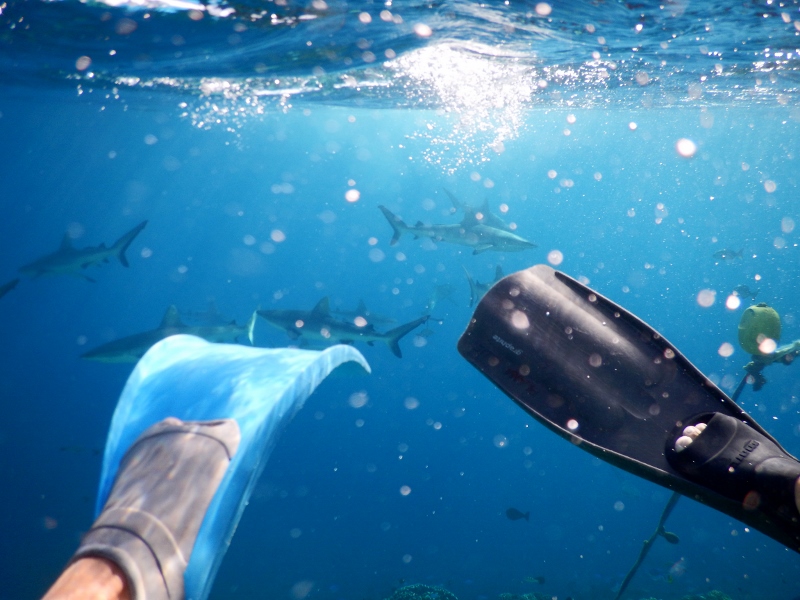
The amazing visibility helps too. In the Fakarava South pass we can see the large groups of grey reef sharks gathering at 20 m from the surface. When skindiving, we can get as close as 5 m. On scuba you can get a bit closer and spend a while longer looking at them, but those of us that stick to snorkelling don’t feel like we’re missing out.

DSCN3376 (800x600)

DSCN3104 (800x600)

Lurking in the shallows


Lukie running away from shark in the shallow waters


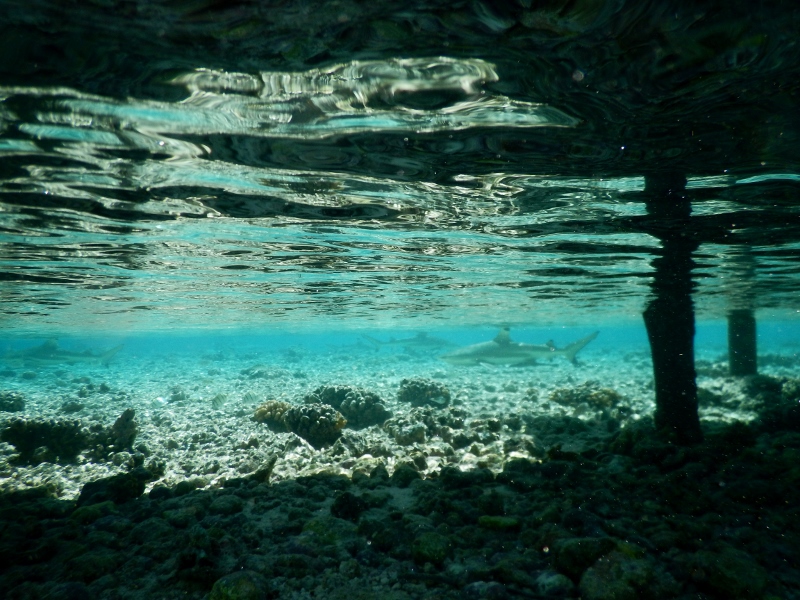
They are feeding them at the south pass in Fakarava, so they gather in huge numbers in the shallow water pool they call the swimming pool where the kids swim, as well as around the small restaurant on stilts.

Sharks lurking in the shallows by the restaurant where we have lunch
Gathering in the shallows below the restaurant

Of the sharks we saw, only the grey reef sharks have any reputation for danger. In Fakarava south pass there were walls of grey reef sharks down deep, at least three groups of 25-30 sharks just sitting there, nose into the current, waiting for something to happen.

David and I beating a hasty retreat when a group of grey reef sharks start showing interest

At one point they come up shallow and act a bit aggressively towards David and myself in the shallows, and we rush back to dry land. The behaviour of the sharks around the boat on anchorage change around the same time, and we figure that the film crew that are here filming a documentary about the pass are probably baiting them to get some exciting footage.

Grey reef shark
Grey reef shark

In Tahanea we use their methods when Seb spears a fish to use for bait for our cray pot. When we fail to attract crays, we decide to reuse the fish as shark bait, and Val gamely sets up her GoPro on the swim ladder and hangs the carcass over the back step.

Baiting the waters - despite appearances Lukie is not trying to push Val in...
Baiting the waters – despite appearances Lukie is not trying to push Val in…

The blacktips approach immediately, and after circling the bait for a good five minutes they start striking it.

OLYMPUS DIGITAL CAMERA sharkgopro2

We leave the Tuamotus a bit too soon – there are so many atolls, and it would have been amazing to spend longer here, see more, meet more sharks. It is truly remote and a destination that only cruisers and a few wealthy tourists ever get to see. We feel privileged that we got to see it, and to show our children what pristine coral reefs look like. We hope with all our hearts that the atolls survive the next century with all the changes that global warming and associated sea level rise and ocean acidification will bring.

Long may they survive