
Our last stop in the Tuamotus is Tahanea, an uninhabited atoll south of Fakarava which is a designated protected area because of the rare sandpipers that nest here.

Like all Tuamotuan atolls, Tahanea is a harsh environment, with small motu consisting mainly of coral rubble, coconut palms and hardy bushes clinging onto the thin layer of sand covering the central parts of the thin islets. Apart from the plants, the only obvious sign of life are the numerous large hermit crabs which scurry away as we approach with the odd coconut crab juvenile hidden amongst them.

In sharp contrast to the barren and harsh environment above the water is the lush reef below, teeming with life, thick with throngs of fish of every colour and shape. The pass offer the best visibility we’ve ever had, vertigo-inducing drop-offs over which we fly, towing the dinghy like a giant surface marker buoy as we zoom over the corals, scattering the fish.

Just below the surface hover schools of silvery needlefish, slimlining against the background of the streaks of sunlight that blur the edges between air and water. Their sharp beaks are poised into the current as they sit, ready to pounce at passing plankton. Larger white fish hang just below the surface too, disguising themselves by blending in with the light streaming down from above.

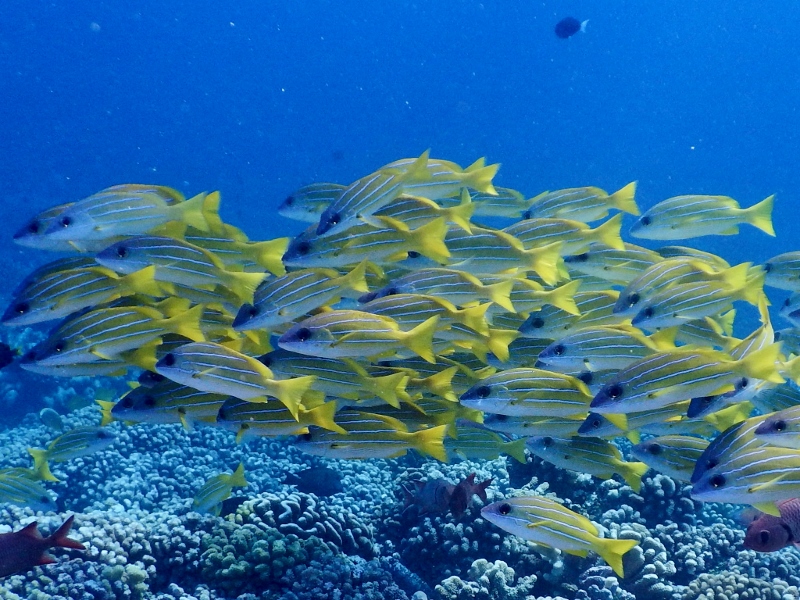
A bit further down in the water column are loose groups of the crazy unicorn fish which often hover below the dinghy. Here in Tahanea the bignose unicornfish flock to our side as soon as we stop the boat, hovering in our shadow like a group of teenagers in a mall after closing hours, waiting for something to happen. They are amazing fish which can change colour rapidly, from a dark browny black to a light blue complete with lemony white edges, their tail spines streaming beautifully behind them. The beautiful humpback snapper also gather densely below any structure they can find.

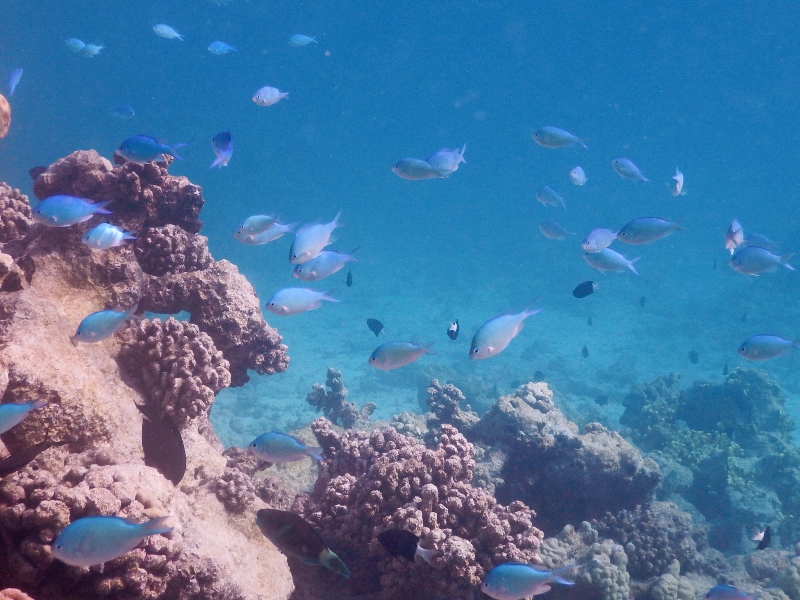
Just above the beautifully varied coral clusters are the delightfully shy damsels, dazzling in their display of colour, perched as they are above coral patches which they disappear into when they detect our presence. For shy fish they are incredibly conspicuous with their bright colours and heavy patterns: iridescent green, neon blue, black and white stripes, fiery orange, pale lemon yellow or dark with a sharply defined perfectly white tail.

Amongst the damsels are more surgeonfish energetically darting back and forth, showing off their brilliant colours and odd shapes. Especially stylish is the Achilles tang with its bright orange tail markings – it look like a fashionable cushion print. Another beauty is the orangespine unicornfish with delicate orange spikes across its tail base. Spines like these are the reason for the common name ‘surgeonfish’ for this family – they are razor sharp and are put to use in territorial defence in the wars of coral fish.

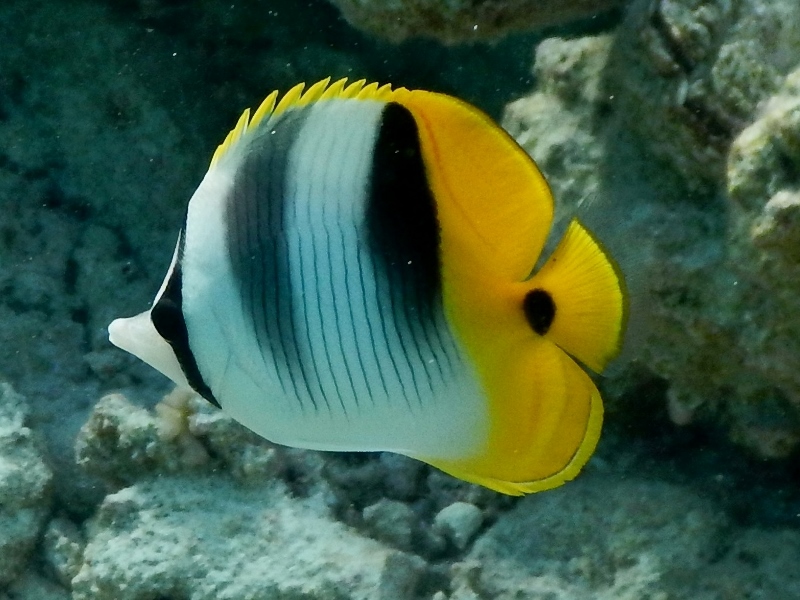
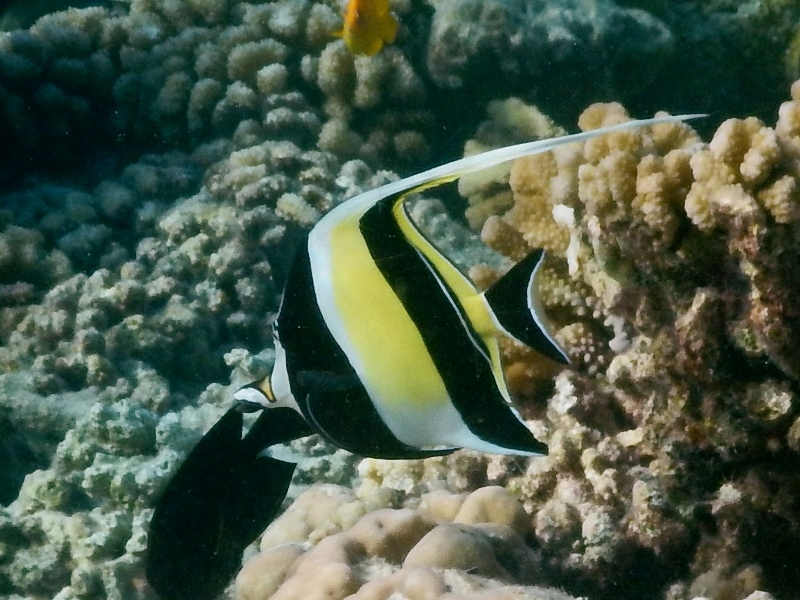
Hanging out with the surgeons are the delicate Moorish Idols, a plane shaped fish with a long dorsal fin filament trailing through the water behind them as their brightly striped yellow and black triangular shapes disappear after their short, pointy noses. They are similar in shape to the quick butterfly fishes that dart in and out of coral crevices, showing off their shimmering yellowy stripes and finely spiked dorsal fins. They are incredibly flat, only displaying a thin stripe with two bulging eyes when viewed front on, magically changing into rounded yellow-white discs as they turn side on.
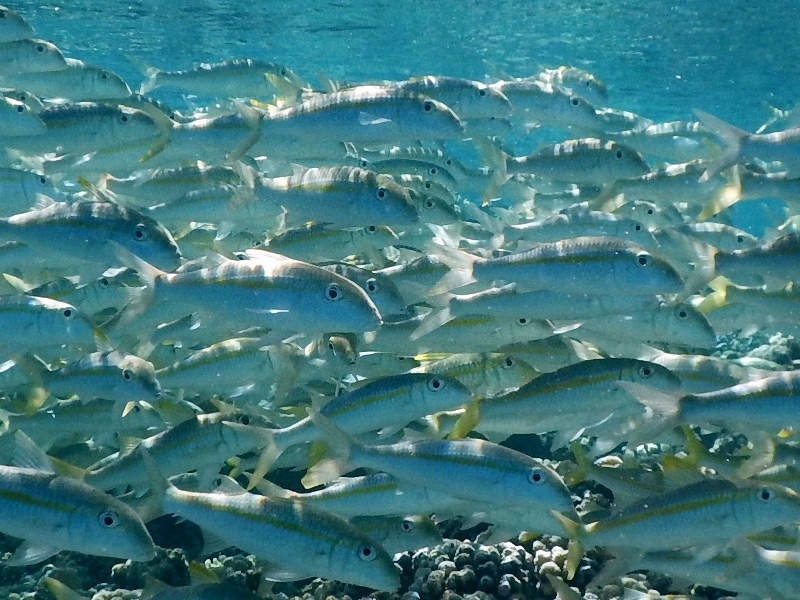
On the sand are huge numbers of pale yellowstripe goatfish, sitting completely still trying to blend in against the white sand, only darting away when we literally swim into them. Big roaming schools of large parrotfish swim by, systematically chewing away at the coral rubble, discharging huge amounts of sandy poop. Apparently much of the sand in the tropics is the result of the digestive processes of parrotfish, a fact easy to believe when you see the clouds of poop discharged by these large fish. The parrotfish have amazing beaks, sharp and pointy and incredibly efficient at cutting coral, and we are happy they are herbivorous. With their bright colours (ranging from brownish red and orange to the common blue green, fading over bright pink to a dusty grey white) and fast beating pectoral (side) fins they do look very much like parrots of a grazing, cow like in their herd attack on the coral meadow.

Dark fat-lipped groupers poke their heads out of coral caves, the large camouflage groupers swimming aggressively up as we approach, trying to chase us off their patch. Dark peacock groupers gamely change colour as they swim from dark coral to light sand, alternating between brown with blue fin tips on reef to lightly dotted beige over sand. Huge eyes stare out at us from other caves, where dark guineafowl pufferfish are hiding.
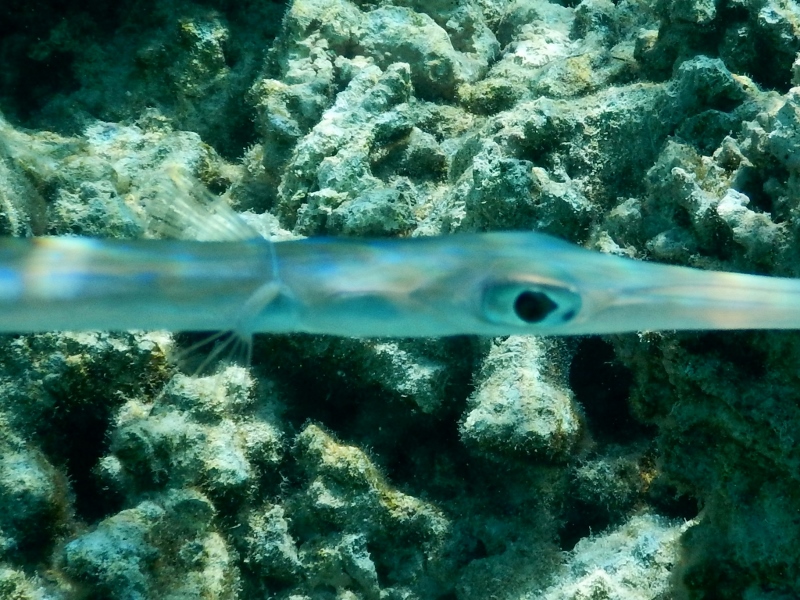
The oddest shaped fish are perhaps the long thin cornetfish which hang motionless just above the bottom. When they detect us they change colour, aggressively alternating between a dull white and a conspicuous stripy pattern, perhaps trying to deter us by looking like a poisonous seasnake. Similar to them are the large trumpet fish, strange long creatures with stripes near the tail and long vacuum like mouths. Their huge eyes peer at us nervously as they try to figure out whether we’ve noticed them, ready to escape by rapid beats of their delicate translucent fins on the side of their long slender bodies. Some varieties are bright yellow and tend to hover near other yellow stuff as if hoping that they will blend in despite their striking shape.

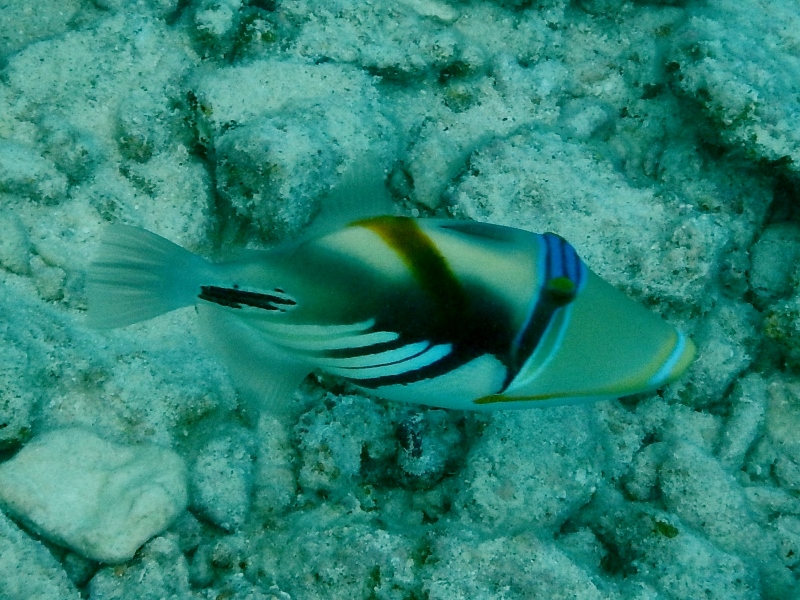
On the incoming tide large bluefin trevallies come sweeping over the reef in a large group, scattering as soon as they see our dark shapes, or those of a black tip reef shark cruising menacingly by. Another large fish flying solo is the fat lipped Titan triggerfish with its bright yellow markings and sharp rectangular teeth, visible through its gaping mouth. They look very strange, almost as outlandish as the much smaller Picasso triggerfish with its surrealistic markings and furiously beating little fins.

After four days of furious snorkelling we reluctantly leave Tahanea to go to Papeete, Tahiti, where we are dropping off Seb and Val. It has been awesome to have them on board and we’ll miss them, but at least we’ll all have fond memories of our most excellent snorkelling adventures.

 SV Bob The Cat