
A stark contrast to the volcanic mountainous islands of the Marquesas, we are now in the land of low-lying coral atolls. And not only that – at 1500 km long and 600 km wide, with 77 atolls in total, the Tuamotus are the largest group of coral atolls in the world.

A reminder of the impermanence of our world, coral atolls are the last remains of tropical volcanic islands, ringed fringing reef encircling a sunken island. First proposed by Charles Darwin, the bearer of many news changing a immobile worldview, it is now universally accepted that rather than being fixed things, islands change over long timescales. First, a volcanic island forms from a hotspot spewing out lava until an island rises above the sea. If the island is located in the tropics, in an area of warm currents and clear water, coral reefs will form around the island. As it ages, the volcano sinks but the coral keeps growing, compensating for the subsidence of the volcanic layer below. Eventually the island is below sea level but the reef encircling it is still there. As it keeps growing, the rim of corals rise to the surface of the sea and parts of the reef broken down by waves and parrotfish start poking out of the water, becoming covered in white coral sand. Coconuts drift in and start settling, and other seeds arrive, giving rise to hardy, drought tolerant scrubs, whose roots trap further sand. Over long time scales the lagoon inside the islets (motu in Pamotu, the language of the Tuamotus) gets shallower as it gradually fills in with coral sand, until all that remains of the original volcanic island is a low lying sandy island surrounded by a reef.

As the name implies the Tuamotus are the atoll stage – low-lying (most are about 4-6 m above sea level) rings of islets, anything from a few to hundreds of metres wide, the ocean on one side and the calm lagoon on the other. Some of the lagoons are truly enormous, others small, some deep and others shallow. Some have one or more passes, channels through which treacherously fast tidal flows rush filling and emptying the lagoon twice a day allowing brave boaties to enter the lagoon, others have no access to the calmer waters inside deep enough to let through boats. Because of the fast-flowing currents and the infertile and dry sandy islands, early European explorers named the Tuamotus the Dangerous Archipelago, the Labyrinth, Islands of Dogs, Islands of Flies or, my favourite, which doesn’t sound so bad, Islands without End. Shipwrecks litter the coastline everywhere in the Tuamotus, inside and outside the lagoons.
It is thought that the Tuamotus were settled well after the Marquesas, possibly around 1000 AD by people from the Society or Marquesas islands in the big outbound wave of adventurers leaving at that time for Hawaii, Easter Island and the Cooks. Others believe that they were settled somewhat later by people who had lost territorial wars on the Marquesas. Either way, ferocious warfare was well developed and tearing the island communities apart when the Europeans turned up. Because of the bad press (anyone keen to immigrate to the Islands of Flies?) colonising powers with economic interests generally avoided the Tuamotus in favour of the more fertile Societies and Marquesas islands, and the atolls were left to Christian missionaries fighting for heathen souls, with a resulting wide diversity in faiths, including Catholic, Protestant, Adventist and Sanito churches.
Early post-colonial economic activities include copra plantations, pearl diving and mother-of-pearl production, which each saw a brief rise in population level before they collapsed. Unfortunately, the government found other uses for the islands when French nuclear testing in the Algerian Sahara was abandoned after the Algerian independence in 1962. Nuclear weapon testing started in the southern Tuamotu atolls of Moruroa and Fangatufa in 1966, and between then and 1996 193 nuclear bombs, or about 200 kilotons, were set off in these islands, including five megaton hydrogen bombs. Initially the testing was atmospheric, but in 1974 France bowed to international pressure to move the testing underground, a change all other nuclear testing nations had made 17 years previous. However, drilled shafts into porous coral atolls are not exactly what you’d call a safe nuclear testing environment (compared to, say, solid bedrock), and moving testing underground didn’t prevent a bad accident from occurring in 1979 when a nuclear device was stuck too shallow in a crevice where it had to be exploded, causing a huge tsunami which devastated Moruroa. After the wave receded a wide crack appeared on the surface of the atoll, and tests confirmed that the island was sinking rapidly, collapsing in on itself like a deflating swiss cheese. After this the French government moved the testing of larger bombs to Fangataufa atoll, and started underwater testing in the Moruroa lagoon.
The one benefit of the testing programme was an economic upswing for the islands and plentiful employment for locals for some years, with 130,000 islanders working on the two testing sites. The price to pay was high, though, with significant health effects in workers reported, and pressure groups have been fighting for decades with little success for compensation from the French government. For decades the government denied any ecological adverse effects, but in 1999 documents were released showing heavy contamination of groundwaters on the two testing atolls as well as the partial collapse of the atolls caused by drilling of shafts combined with pressure waves from explosions.
We arrive first on Takaroa atoll (taka: chin; roa: long), a peacefull atoll home to about 800 people well to the north of the dangerous nuclear testing grounds. It is a beautiful place, sandy motu of varying sizes encircling a large lagoon, islets covered in coconut palms separated by small gaps of shallow reef. The small town by the pass is recognisable some distance out by the tall red roofed church, and even offshore we can smell wood smoke and the tiare, a small white, beautifully fragrant gardenia, the symbol of French Polynesia.
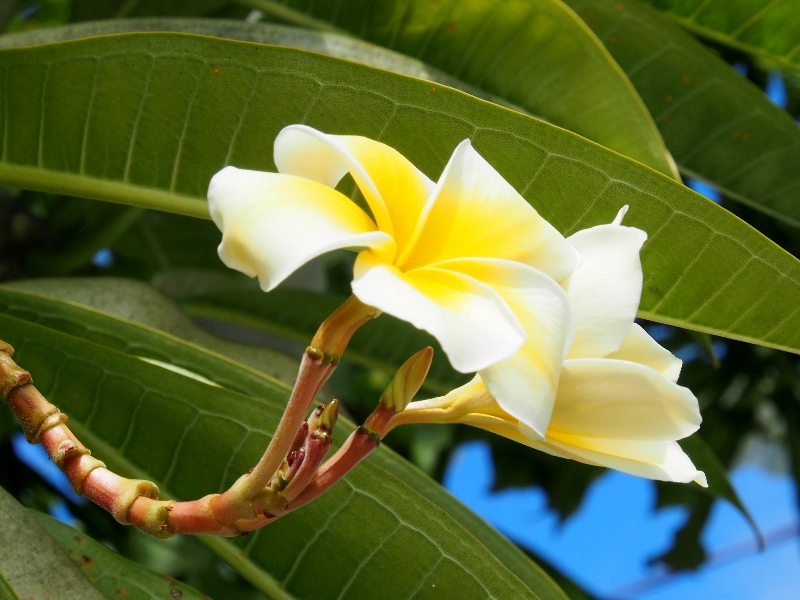
When we arrive the waters of the pass are still running too fast for us to enter to the lagoon, and we tie up to the town wharf to wait for slack water (we had two estimates that both seemed to be wrong and in the end we deem it best just to sit and wait until we can see the maelstroms quieting and the gushing currents slowing enough for us to dare go through). In the meantime, we have a wonder through the town.

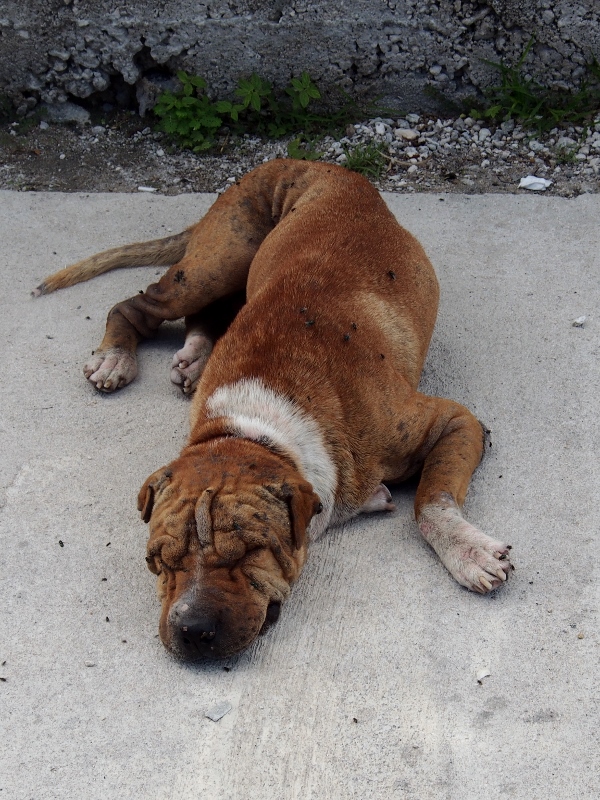
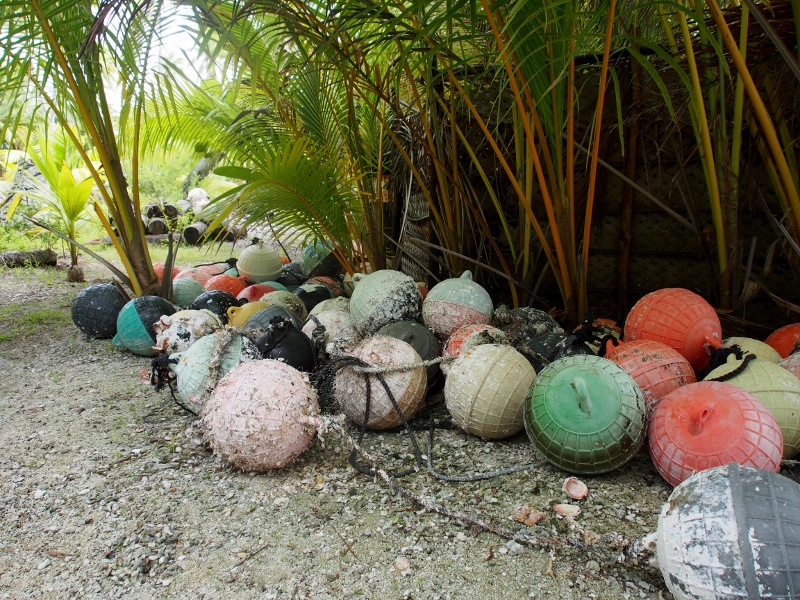
Like everywhere in French Polynesia the village is neat and clean, small wooden houses wrapped in flowery trees, from which French news and Polynesian pop music blare, mixed with the crying of children and the clucking of chickens. Chickens are everywhere as are dogs, the latter looking somewhat worse for wear, lying in the shade gasping and scratching their mangy coats, infested with flies. 95% of the population of Takaroa are Mormon, and we admire the well maintained little church, the centre of the town. The houses are shaded by tall coconut palms hanging heavy with nuts; from other trees hang colourful buoys used in pearl farms.
Pearl farming has been flourishing in the Toamotus since the 1980s, and although the price of pearls has gone down somewhat it still trumps tourism as a source of revenue on most islands. Takaroa is no exception and the lagoon is thick with buoys, traditionally causing cruisers to avoid entering the lagoon for fears of crashing into the farms or the buoys and ropes marking them. Apparently the pearl farming is slowing down enough for it to be safe to enter nowadays, so we decide to brave the pass, a long 30 m wide strip of deeper water (about 25 m) ending in a sharp dogleg bend just before a shallow 3 m sill situated right at the lagoon end. The currents are reported to reach 9 knots at the end and we can believe it – we have one unsuccessful go where we get all the way to the shallow sill, only to turn around when we see the large waves and insane current creating vortices of turbulence right at the end, after which we return to the wharf to tie up again and await lesser flows.
Eventually it calms down and we manage to get into the lagoon just before the flows turn and the breaking waves on the bar start up again, only going the other direction. In the lagoon is a maze of buoys, dotting the water with bright whites, reds and yellows. Submerged and partially obscured buoys are even in the marked navigation channel, so Steve and I stand at the bow shouting “Buoy!!” whenever we drive over one, only for David to slam the engine into neutral and nervously peer behind the boat, hoping that we’ve missed a major entanglement.
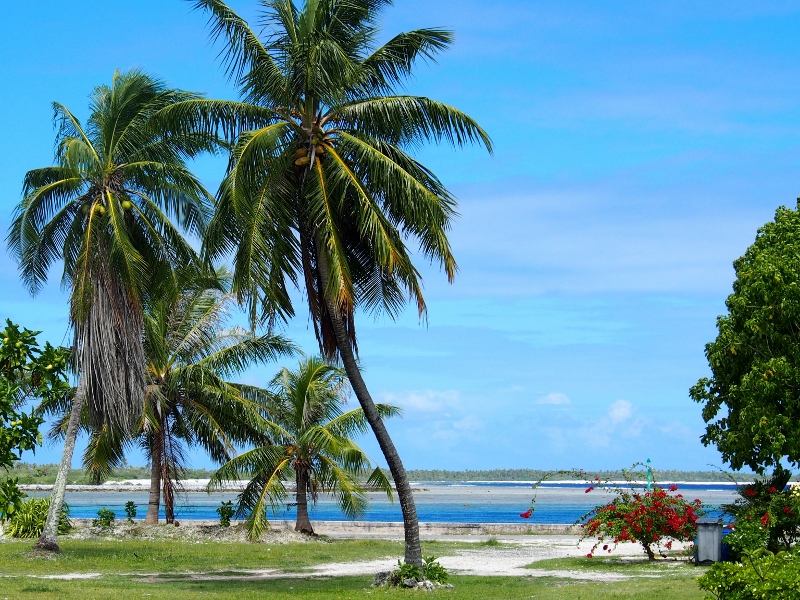
Eventually we reach our destination, a nice sheltered spot on the other side of the lagoon where we find depths shallow enough to anchor. We are greeted on the shore by the residents of the small bay, Robert and Maina Palmer, a lovely, inspiring and interesting couple who we manage to donate the last binbag of mahi mahi to. A retired couple who have returned to his place of birth, he is 82 and she 70. The son of an English trader and a Takaroan wife Robert has had an interesting life so far, living all over the world, doing all sorts of jobs. He lived in South Australia for a while diving for abalone (“Those were the good days – so much money to be made!”), in New Zealand for a while with his Maori wife, in Europe and in the US. Maina is a retired globetrotter as well – she used to work as an air hostess with Air Tahiti and was once the Pacific Golf Champion – she has travelled all over and lived in both Indonesia and Mexico with her former husband.

Their family is now living mainly from pearl farming, but Robert tells of bad harvests and limited growth for the last two years followed by a total collapse of the industry this year. All the buoys we have seen are apparently relics, left there in the hope of a miraculous recovery, with no viable farms left. As expected the collapse was an economic disaster for most of the population, and Robert recounts how the initial population of 400 people boomed to 2000 at the height of the pearl farming only to drop to the current 800, with several families now facing financial hardship, forced to take up the heavily state subsidised (but far less lucrative than pearl farming) copra production or simply sit and pray that the oysters will recover.

When asked what caused the collapse Robert cites pollution caused by the rise in population. “People don’t look after the waters”, he says. “They throw in batteries, oil drums, and now we are paying, our pearls disappeared”. Apparently some French scientists came out from Paris last year to figure out why the pearl farming had collapsed, and Robert says they blamed pollution. It has happened to other islands too, but Robert reckons some are still good, and his family has moved their pearl farming to another island where they also own land.
He and Maina show us around their beautiful property, delightful open houses sat directly on the coral pebbles, a kitchen half-house overlooking the lagoon backed by lush gardens watered from their ample rainwater tanks with huge solar panels at the back fuelling their electricity needs. It is peaceful , cats and dogs lying in the shade, pearl shells hanging in mobile formations from the frames of the open houses, coral encrusted buoys decorating the trees.


We ask them about the Tuamotu independence movement, and Robert calls them fools. “I’ve been to Vanuatu”, he says. “I’ve seen how poor they are, how much they struggle. Us, we get free education, free medical treatment – we get so much from France”. They tell of once-yearly free flights to Papa’ete for all French Polynesians; three day comprehensive medical check-ups in the hospital there and of the free treatment he received in Paris when he suffered an illness, where he and Maina were put up in hotels and provided with money for food and other living expenses in addition to receiving top quality medical at an esteemed Parisian hospital. They explain that copra production is subsidised by the government in an effort to stop emigration from the atolls to Papa’ete. There have been costs, though – they are much saddened by the almost complete loss of Pamotu, the language of the Tuamotus, and admire that the Marquesans managed to keep their language alive. Although taught in schools now, when Robert and Maina went to school they would get a beating if the teacher heard them talk in Tahitian or Pamotu; they were only allowed to speak French, and would learn nothing of their own history.
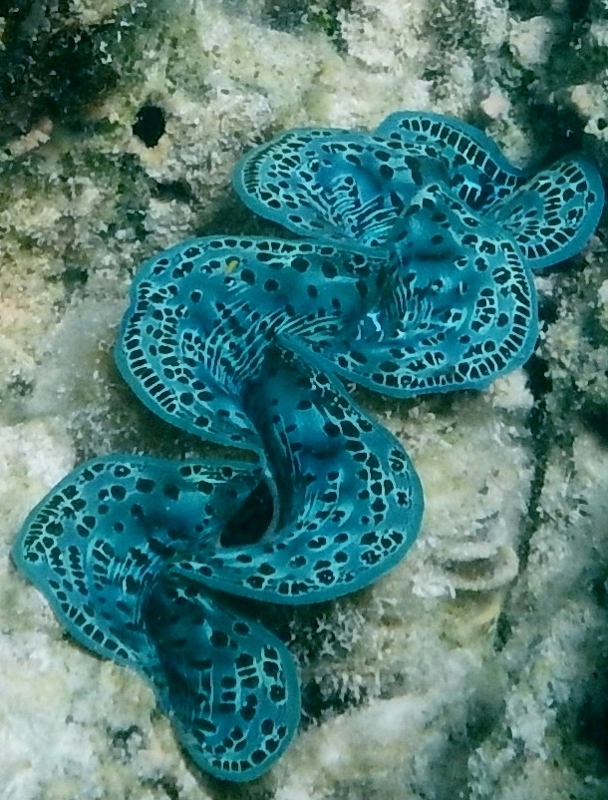
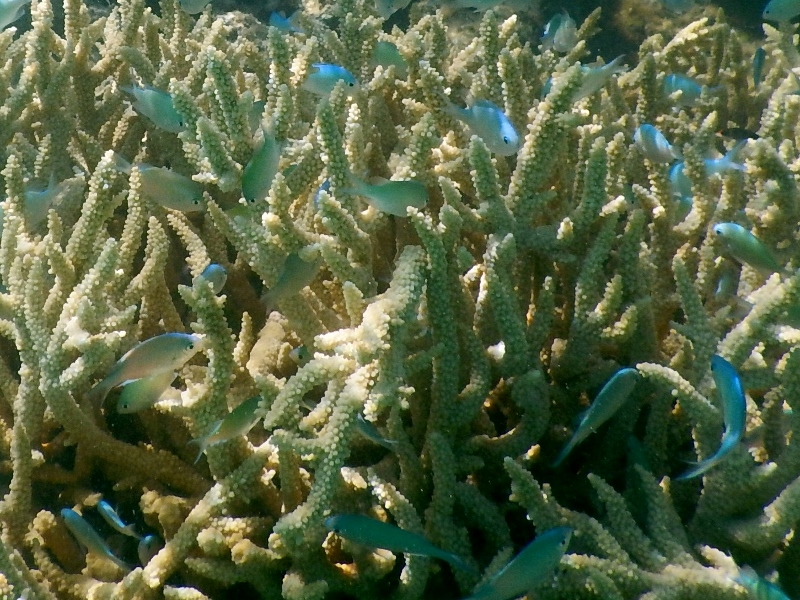
They are amazing people and it is a real joy to meet them and to hear more about their lives, the lives of their families, and the changes they have seen on the islands during their lifetime. We have read about the incredibly clear waters of the Tuamotus and the beauty of the corals, but so far we’ve found the lagoon coral to be quite damaged, the fish terrified (of us? sharks?) and the visibility rather poor. Wondering whether the decline in the condition of the coral reef is related to the collapse of the pearl farming industry we ask Robert how the lagoon used to be, and he tells stories of crystal clear waters, brightly coloured corals, giant clams everywhere and an abundance of fish and shellfish. The damage we’ve seen could be caused by bleaching (when coral reefs become stressed the coral polyps eject their symbiotic algae, causing bleaching), which could be a result of storms, tsunamis or rising temperatures. Whatever the reason, the good news is that Robert reckons that the reef is coming back, and the latest growth does seem healthy, with small giant clams re-establishing and fish life returning.

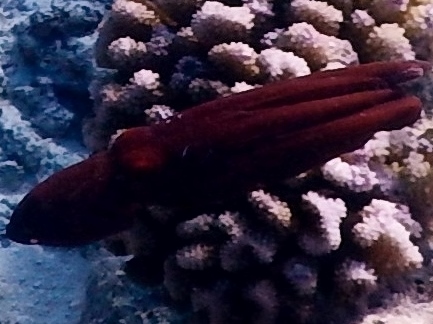
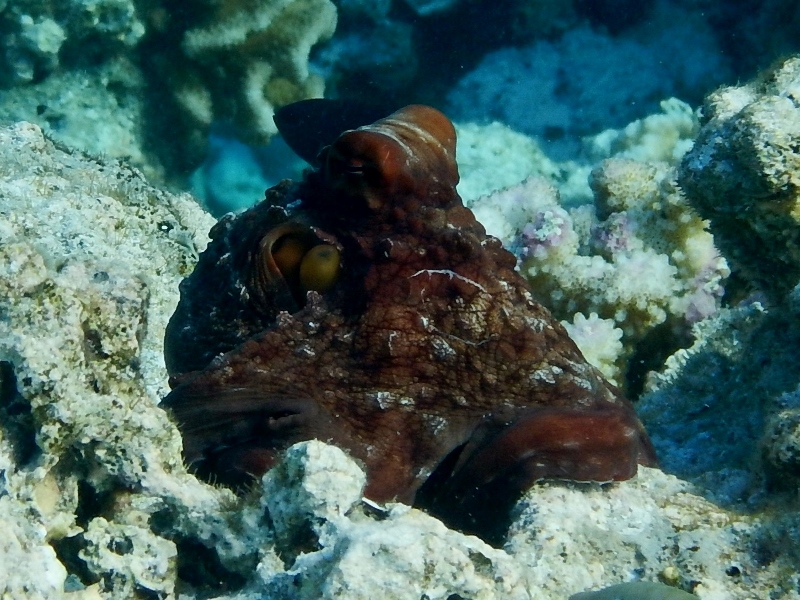
After a couple of nights in front of Robert’s house, we tire of our tame existence and leave for the pass entrance to take the kids for a shark snorkel. Armed with a Hawaiian sling for protection, we bravely jump in and immediately see lots of shark – sinister looking white tips, beautifully striped black tip reef sharks, elegantly billowing long tailed tawny nurse sharks and large dangerous grey reef sharks. Wearing a lifejacket for the drift snorkel through the pass, Lukie keeps lifting his head out and calling to Sarah and Steve on the boat: “A blacktip shark!! And another, HUGE, grey shark!!!” Never before have I seen so many sharks; we have to keep telling Matias to stick with us, as he is swimming further and further away on the reef top with sizeable sharks lurking behind him. On the steep sided reefs lining the pass are healthy corals, giant moray eels and hundreds of different colourful fish. In amongst the rocks are cunning looking octopuses pretending to be rocks, recognisable only from their rounded eyes sticking up from the grey reef. If we linger they give up their disguise and turn an aggressive maroon, lifting a few arms, trying to look fierce, poisonous or both, before legging it a few metres, settling down and rapidly turning into a rock again.
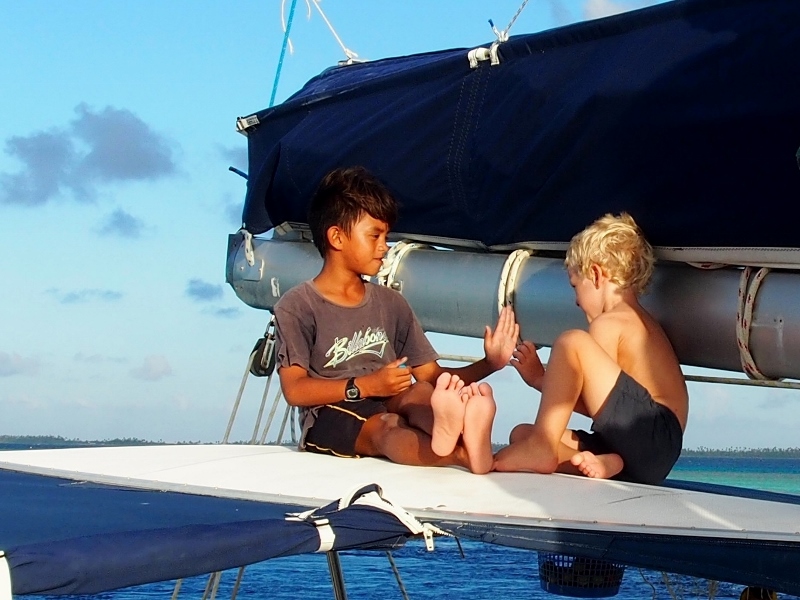
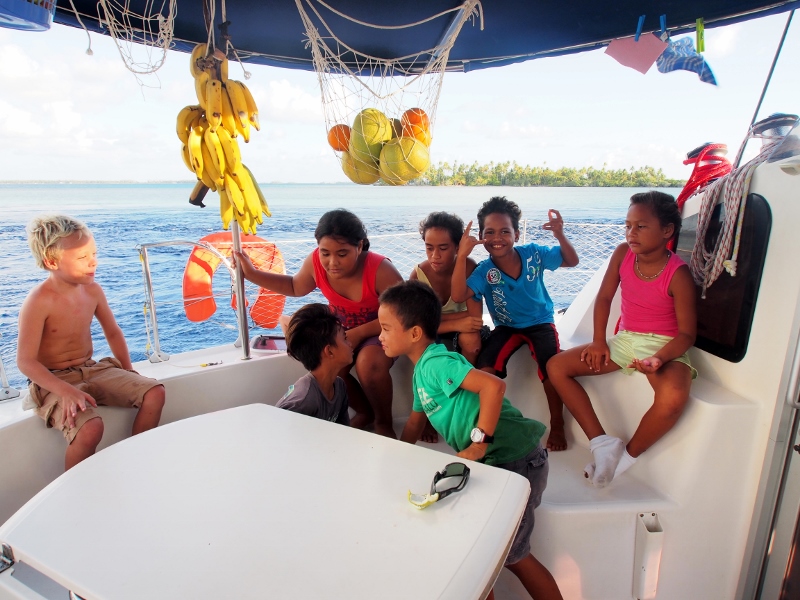
When we get back to the wharf a large group of children have gathered to watch us and we invite them on board and ply them with bananas and bubble gum as they ask questions about where we’ve been, where we’re heading, and try out their best school English. It is fun to meet them and they reluctantly jump off the boat when darkness falls, heading back to their homes and leaving us to our dinner in the sunset.
 SV Bob The Cat