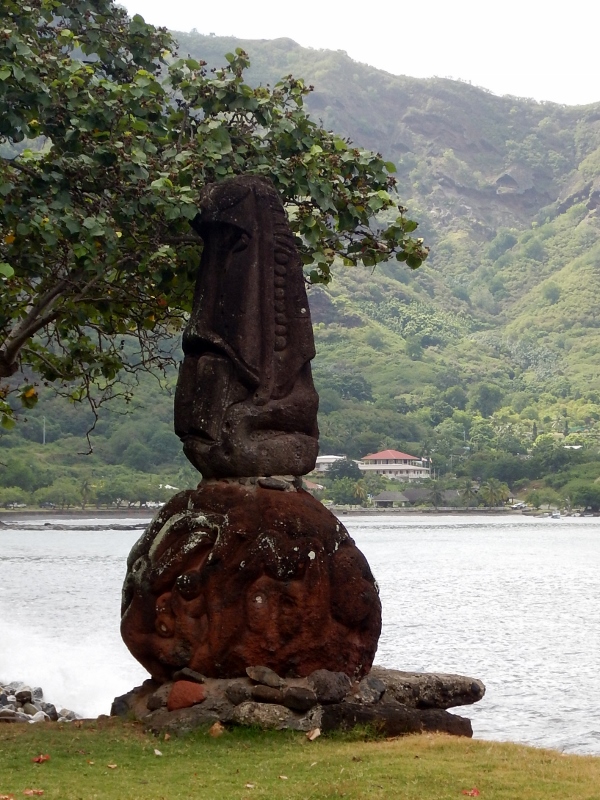
Nuku Hiva is the last island we visit in the Marquesas before setting off for the Tuamotu archipelago where we have to drop off Sarah and Steve, and pick up Seb and Val, on 9 May.
Nuku Hiva is the largest island in the Marquesas, with the largest population of humans and possibly sharks. Compared to Hiva Oa the places we visit are easy access, that is, if you don’t mind a shark or two on the way in.
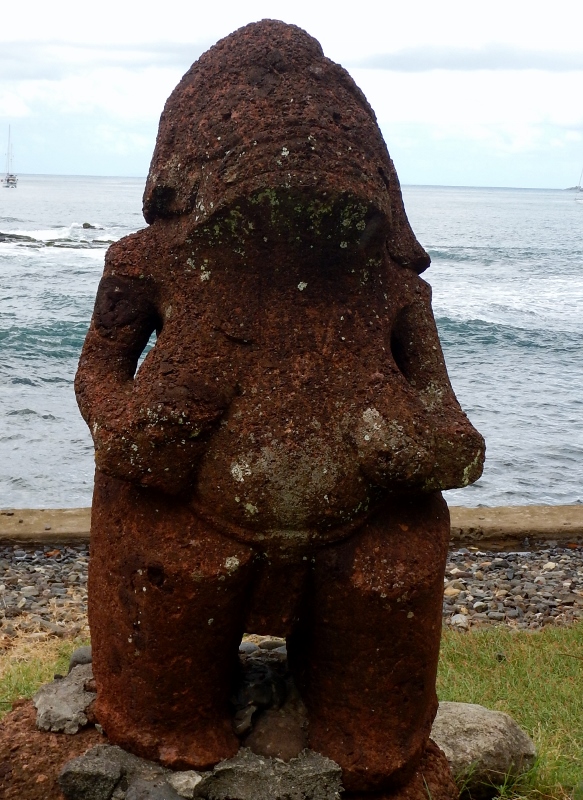
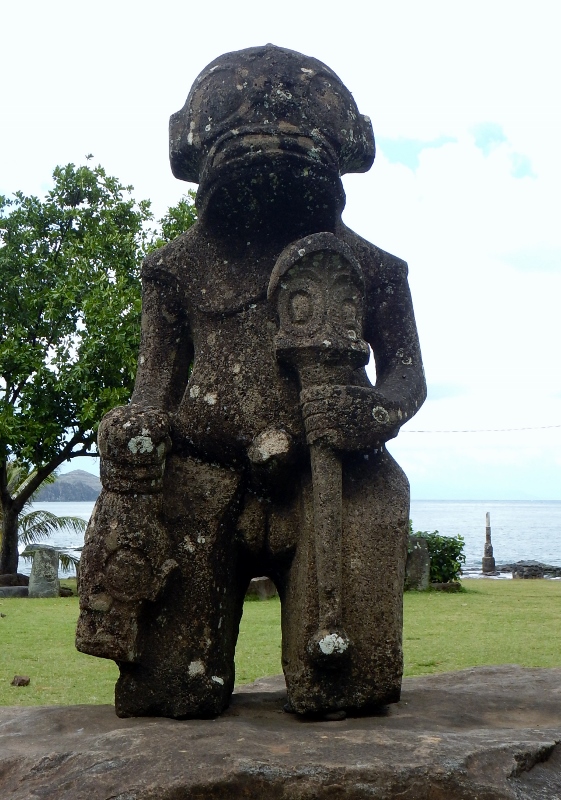
The main town, Taiohae is beautifully set in a large sheltered bay lined with steep, dark green hills plummeting down onto the narrow coastal strip that is the town. As usual old has been built on new, with large tiki lining the beach at intervals behind the smart rock revetment that keeps erosion at bay, a beautifully flower-filled graveyard poking out above the ancient monuments. The town church is situated on a paepae, an old rock foundation on which the me’ae (temples) used to be – it was commonplace for the missionaries to appropriate old sites of reverence and turn them into churches, a single effort to achieve the double goal of stamping out heathen worship and save on new foundations. Just behind the church is a huge banyan tree, in a pit under which live prisoners used to be kept until required back in the days of rampant cannibalism.

Nowadays the only human eaters are sharks – and they are everywhere. On the anchorage large fins circle the boats, and on the wharf the early morning fishermen cause a feeding frenzy by throwing the remains of fish cleaning in the water. We watch fascinated as large black-tip and grey sharks fight over the fish carcasses, fins thrashing, jaws snapping, blood spreading.
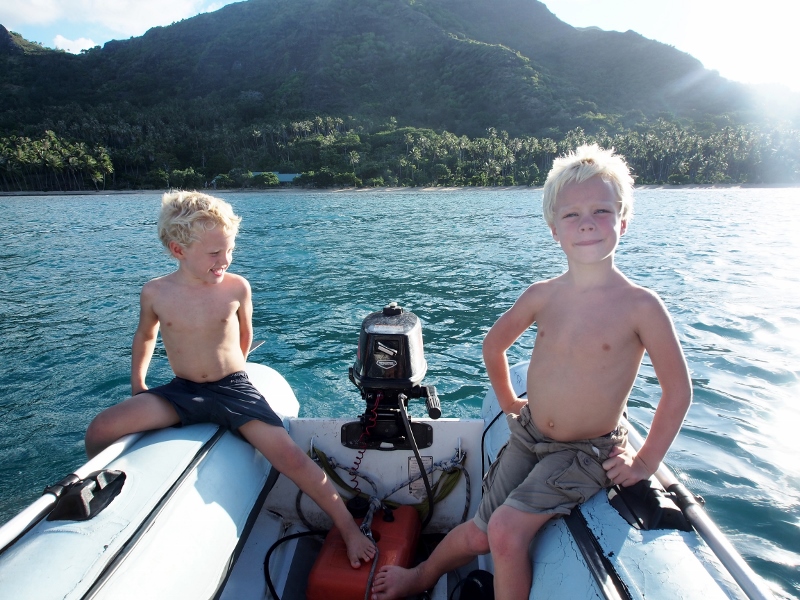
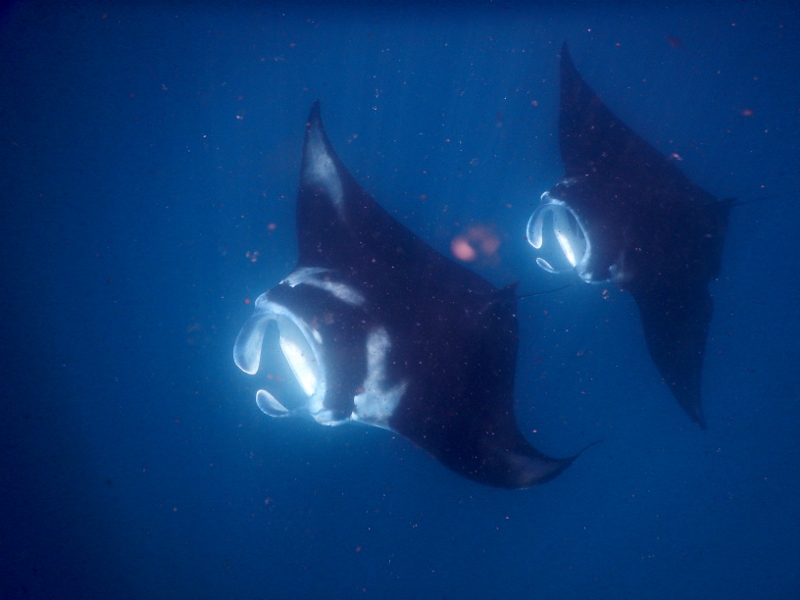
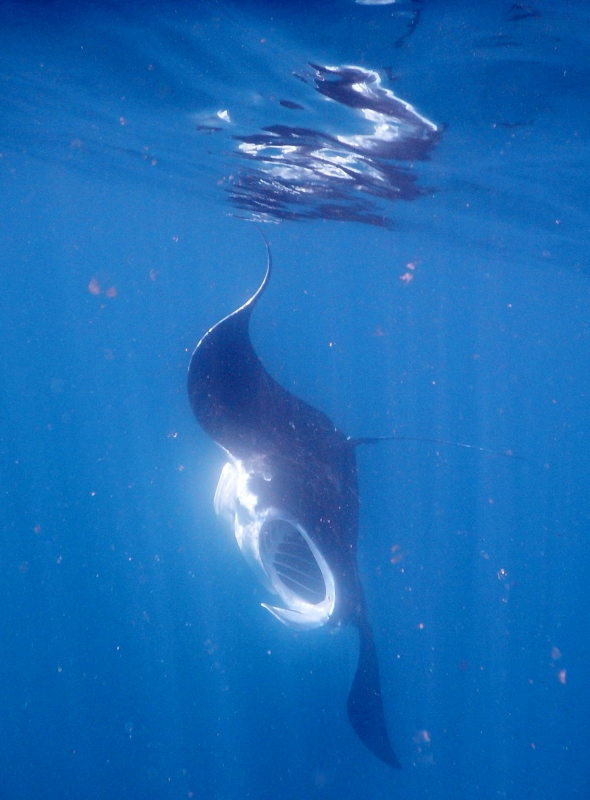
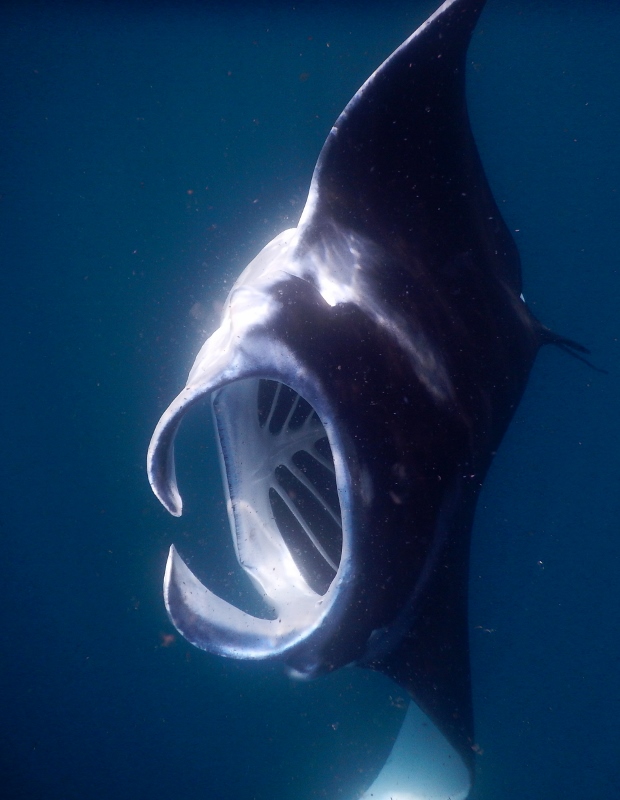
As we leave the southern coast to go to the north coast to a beautiful anchorage in Anaho Bay we meet a school of manta rays and I jump in the water to scope them out, resolutely shoving any thoughts about the morning’s shark feeding frenzy 300 m away at the wharf to the back of my mind. At first there are just two mantas, but soon I’m surrounded by six, elegantly cruising up and down, unperturbed by my presence. Having a whole flock to hang with calms my nerves – surely there are safety in numbers, even if the others are a different species – and I call in the others. The kids are whooping with delight as the huge rays glide up towards them exposing their gaping mouths flanked either side by large cephalic lobes which gently push the water through to a seemingly thoroughly hollow interior (where is its gut?!?), only swerving at the last moment as they turn upside down, beat their wingtips and sway back down into the depths. They are graceful and majestic, beautiful contrasts of black and white, and it is incredible to be swimming with a whole group of huge animals. In the end we reluctantly exit the water and get on our way, only to see a large hammerhead shark cruising by when we round the corner.
Further up the coastline we are treated to dolphins riding the bow wave, clicking and squeaking as they go. We stop the boat and I jump in to swim with them only to have them dive away, out of sight. When I get back to the boat the others tell of a huge grey shadow that was following me, and I wonder what it was – a whale? A giant manta ray? A huge hammerhead shark? – and whether it was that or my presence that caused the dolphins to dive.
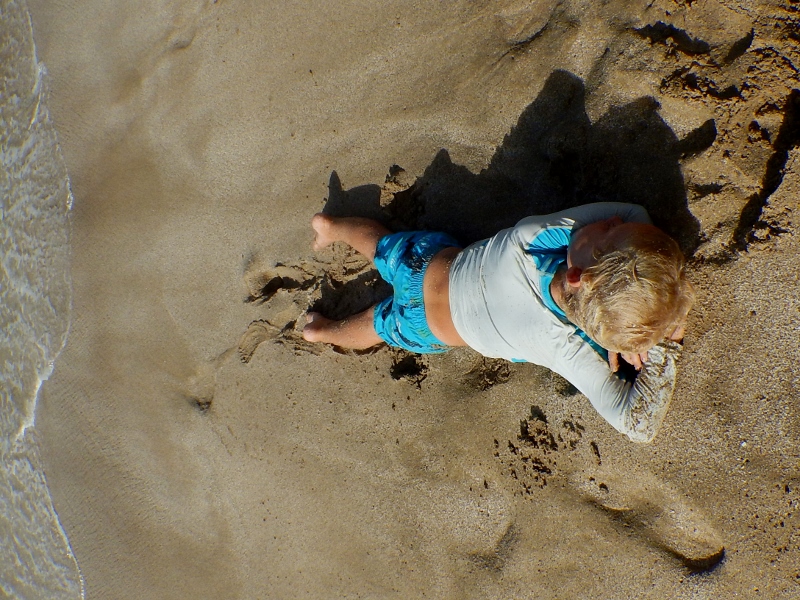
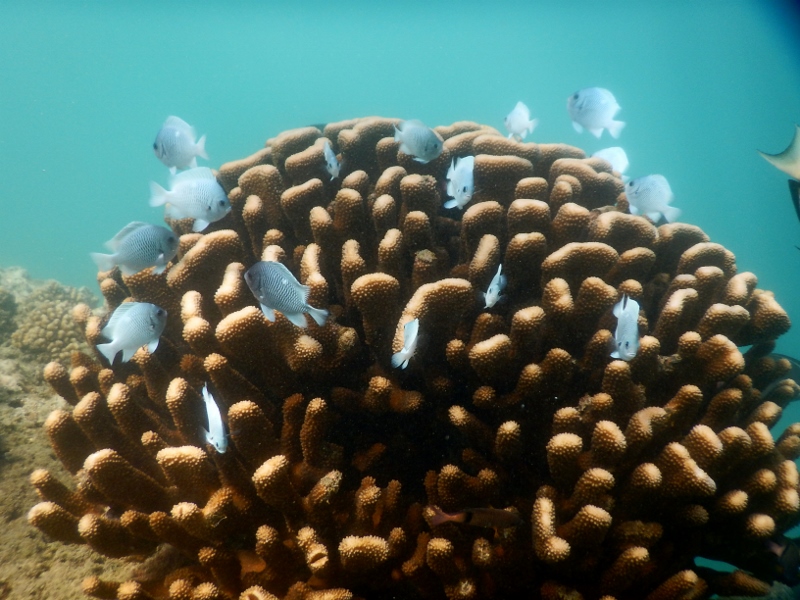
After all these imagined near brushes with death it is almost a relief to anchor in Anaho Bay, where we’re surrounded by astounding landscape above the water and a peaceful shallow coral reef lining the bay under the water. With the plunging depths and wave exposed shores there are not many coral reefs in the Marquesas, and those that survive in sheltered bay are only shallow because of the highly productive and murky waters. Anaho Bay is one of the few, and beautiful it is – lots of orange sculptured coral heads with pretty coloured fish darting in and out of crevices and caves, gentl gliding turtles, delicate nudibranches and spiky shells, a feast for the eyes. Probably still sharky, but at least it is shallow and we can see the bottom. The Family Circus are here too and the kids play on the golden beach in the dumpy waves, finding stray kittens, sticks for swords and coconuts in the well-kept coconut grove behind.

But alas, we have to leave this paradise to get moving towards the Tuamotus, Seb, Val and a plane for Sarah and Steve and early on Friday morning we try to pull anchor only to find that we’re snagged on a rock, so at 6 am we’re in the water trying to figure out how to release the anchor chain – a nice refreshing way to start the day. We manage to get free and reluctantly head for Taiohae for a last provisioning, leaving behind the Circus whom we dearly hope to meet again in the Tuamotus.

The day brightens when we meet a pod of melon-headed whales – about 30 or so, who excitedly jump in our bow wave, turning their heads from side to side displaying big toothy grins as we sit on the trampoline, transfixed and soaking wet from the frequent waves crashing over the bow.

Further down the coastline we catch a skipjack tuna, and when we hang the cleaned carcass from the back of the boat a hammerhead shark promptly shows up to gulp it down. What an end to our visit here!


Ahead lies a 3-4 day passage to Takaroa island in the north-eastern Tuamotus, followed by another 1-2 day trip to Rangiroa where we’ll meet Seb and Val. The Marquesas have been incredible, truly exciting, different from anything we’ve ever seen before, and we are sad to have to leave so soon – but new adventures beckon, and a bit of coral reef atoll makes an exciting change.
 SV Bob The Cat