Our last stop in the Galapagos is Isla Santa Cruz. Santa Cruz is the most developed island with the highest population, but it still offers plenty of scenery and wildlife. In terms of Galapagos time, the island is middle-aged which means no active volcanoes but a lava strewn coastline and plenty of evidence of past eruptions.

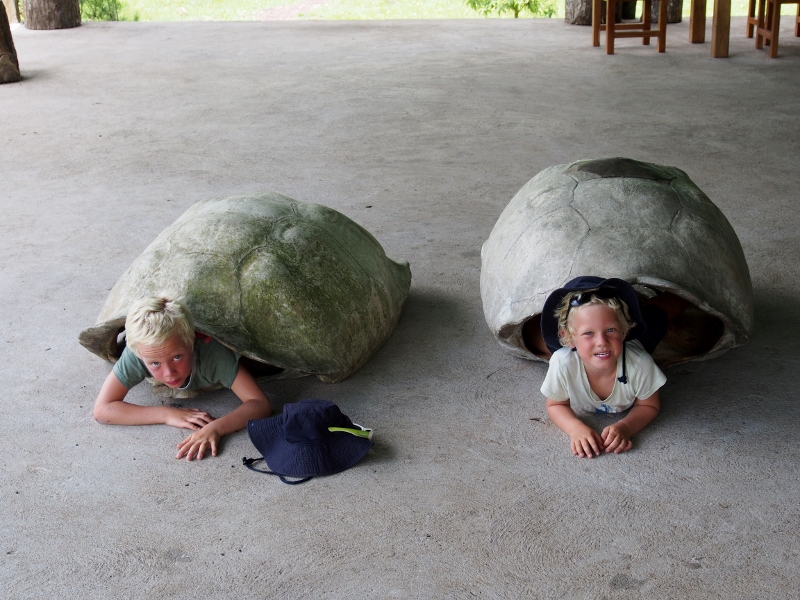
As usual in the Galapagos there is lots to see here. We visit the highlands and see gorgeous giant tortoises, dark, round and shiny, roaming around unhindered on private farmland. There are lots of remnants of the island’s violent volcanic past, and we climb down steep stairs leading into dark, dripping lava tunnels running a hundred metres underground. The tunnels were formed when the outside skin of molten lava running down a hill solidified, leaving behind a tunnel. Strange cactus trees dot the landscape, but up in the highlands the land is green and fertile, with lush grasses and huge trees. The most remarkable are the overgrown dandelions – the Scalesia (a relative of the dandelion) forests grow in altitudes of 400-500 m on Santa Cruz, where they play an important ecological role through the trapping of rainwater and the provisioning of habitats for birds and other plants. In the lush tropical climate they take a rather different form than the dandelion we know from our lawns at home…

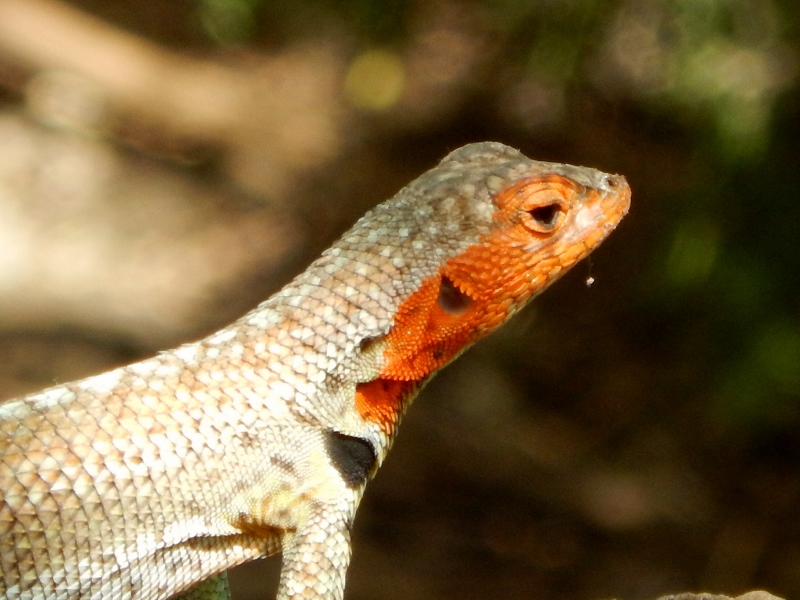
Behind Puerto Ayora, the main town, is the Charles Darwin Research Centre which used to house Lonesome George, the last surviving tortoise of the species from Isla Pinta, who sadly died last year without reproducing, meaning that his species is now extinct. The tortoise populations of many Galapagos islands were decimated by pirates, whalers and other seafarers, who would pick up the hardy giants to store live onboard ship until fresh meat was required. Human habitation and introduced species such as goats and pigs are now the main threat, the latter munching up vegetation and destroying habitats of the tortoises. The Charles Darwin Research Centre still houses plenty of other species of giant tortoise, but unfortunately there are no signs explaining where the different species are from, so we come away none the wiser. They have a breeding programme for terrestrial iguanas too, which are bright orange and lovely to see, munching away as they are on thick leaves whilst trying their best to climb out of their enclosure.

The main marine life of note is sharks – lot of them. They are all around the boat, some of them rather big, and we hesitate in letting the kids jump off. We visit Tortuga Bay, a surf beach, where the kids play with their boogie boards until they notice they are surrounded by about twenty baby black tip reef sharks basking in the shallow water. When a big one comes along and we can’t see whether it is a harmless white tip or a fierce Galapagos, we yell for them to come out of the water quick smart.
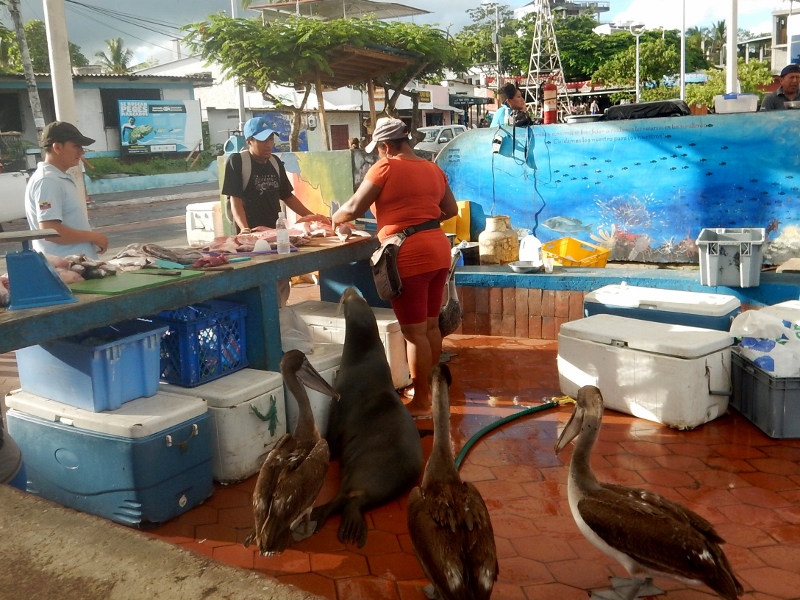
Marine iguanas are everywhere too – all over the black rocks, swimming next to the boat on the anchorage, even begging for scraps (!?! – we thought they were carnivorous) at the fish market. More frequent beggars at the fish market are the sealions and pelicans who are fighting for attention from the ladies who expertly fillet the fish, brushing off the sealion snouts which are popping up everywhere, way too close to the sharp knife.
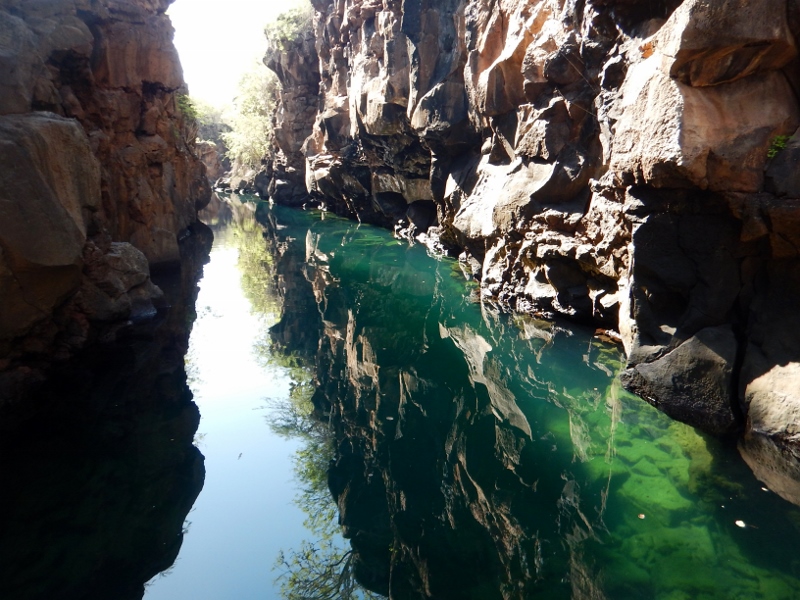
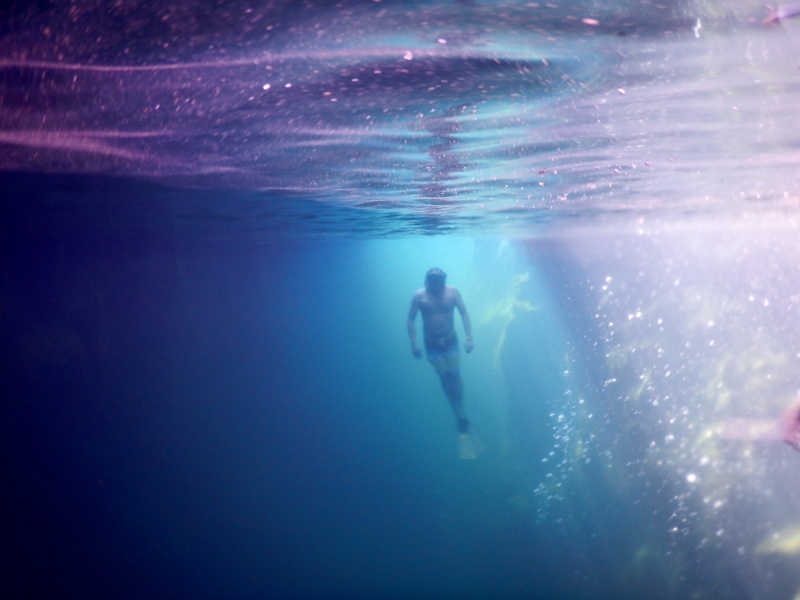
Close to the town is a snorkelling site called Las Greitas, vertical walls of volcanic fissures isolated from the sea apart from by some underwater caves which has led them to be filled with brackish water where hundreds of fish are trapped. The water is crystal clear and the rocks plunging down offer some dramatic underwater vistas down to the deep dark caves below.
We’ve met lots of cruising families in the Galapagos, and here in Santa Cruz we meet Jen and Matt and their two boys Conrad (8) and Mark (7). The boys are loving having someone to play and talk Lego with while the grownups discuss passage coping strategies, dinghy outboards, sail drives and home schooling.

It is great to meet other families to hear about their experiences and plans, how life away from land has felt for them, which places they have enjoyed and why. Most of the families we have met have already been away for two or three years, and many of the kids know no other life than that on a boat, the whole family loving life at sea. Some of them are thinking they will settle down and sell the boat soon, becoming landlubbers for a while. The main reason for wanting to go terrestrial seems to be to earn more money to enable a return to cruising. Others want the kids to go to school for a while, although all the children seem to be doing fine academically. They all seem quite wealthy; we were expecting more hippy families, but haven’t met any so far, most of these are professionals who saved up and sold their house back home and who manage to live cheaply thus prolonging the time until they have to return home.

All the families have lots of gear, and we feel pretty bareboat in comparison. Bikes, toys from home, washing machines, running freezers and lots of solar and wind power to pay for it all. I guess if you’ve got children growing up on a boat you kit out your boat like you would a house, and I suffer a brief but severe bout of washing machine envy, lamenting about all the hours we spend searching for laundries when we could be snorkelling or exploring mountains.
All the cruisers we meet are headed almost the exact same route as us which means that we’ll catch up frequently along the way. And they are almost all heading to New Zealand, hoping to spend the summer there to sit out the cyclones, and then head onwards to wherever they are going. It is great that we’ll keep meeting the same people for the next 7 months, and wonderful that we are likely to catch up in New Zealand as well.

As usual, it is not just about sightseeing and socialising. David has successfully managed to repair the clutch which will be handy for the near reef navigation we’ll be doing in the Tuamotus, and we have to fill gas bottles, do laundry, and stock up with fresh stuff for the long, long trip to the Marquesas which is coming up. The forecast for this next leg is looking particularly awful, with no wind at all, and it is likely we’ll have to go rather far south to meet some trades so that we can get a bit of wind in the sails, turning what should be a 21 day sail into a possible 28-30 day adventure.
From now on we won’t have Facebook access, but will update the blog via satellite – so if you want to check our progress and read how we pass our time, just go directly to the blog website :).
 SV Bob The Cat