And we’re off

We spend half of Saturday morning at immigration trying to get our exit documentation, and the rest provisioning: fresh fruit and veg from the marvellous market, where silent women sit cross-legged displayng their produce in neatly packed one-dollar bags, and last minute cheese and tortillas from roadside tiendas. On the way back to the boat David pops into an internet cafe to check the latest weather models, only to emerge hours later declaring that we might be best off leaving straight away. Apparently the windless forecast is worsening and a pattern of convection travelling south west is emerging which is travelling about the same speed as a boat. If we leave right away we might be able to get ahead of the rainy, windless conditions associated with it.
So we quickly check everything: water tanks, diesel, spare water, emergency grab bag, and finding all in good order apart from the spare water tanks which have leaked a little, we pull anchor at 5:15 and set off to sail the 3048 nautical miles to the Marquesas. We’ve only got enough diesel to motor about 700 miles, so we seriously hope the wind will kick in, despite the forecast. We’re reckoning that it will take somewhere between 21 and 28 days, and it feels strange to leave land knowing we might not get off the boat for another month.

This e-mail was delivered via satellite phone. Please do not add large attachments in replies.

Crew needed

We are looking for crew to sail from Tahiti to Tonga, about 1100 nautical miles.

If anyone fancies a sea break in the tropics, we are in need of crew to help us on a passage from Tahiti to Tonga, approximately two weeks with stops at the Cook islands and possibly elsewhere on the way. Tentative dates are 15 June to 30 June. We’ll provide food and comfortable cabins on our 46 foot catamaran, you just bring books and fish recipes… You have to be prepared to do night watches, sailing experience would be useful…

We can’t use facebook easily from now on as we’re about to embark on a large trip (limited data), so please email david.johnson@myiridium.net if you or anyone you know are keen (couples welcome). NB: must like kids, Matias (7) and Lukas (4) are part of the deal

Isla Santa Cruz

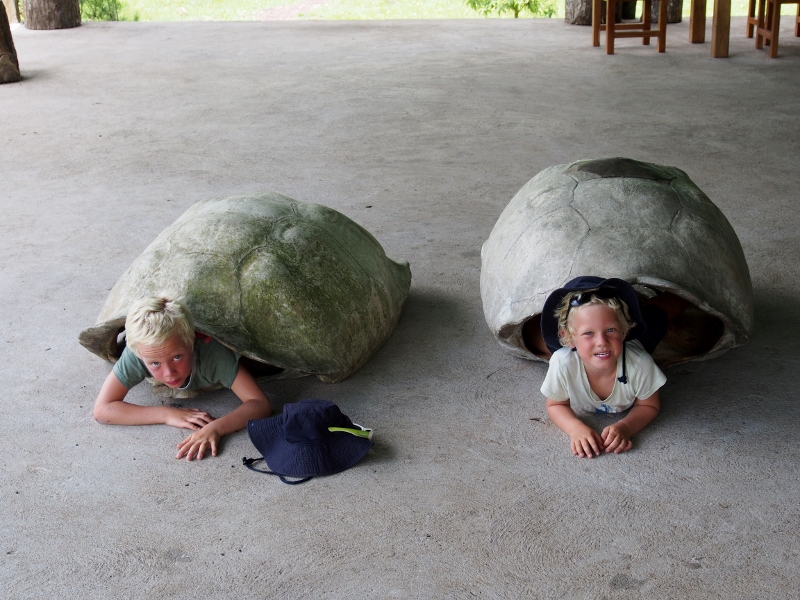
Giant tortoises
Giant tortoises

Our last stop in the Galapagos is Isla Santa Cruz. Santa Cruz is the most developed island with the highest population, but it still offers plenty of scenery and wildlife. In terms of Galapagos time, the island is middle-aged which means no active volcanoes but a lava strewn coastline and plenty of evidence of past eruptions.

Lukie feeding a tortoise a  guava from the forest floor
Lukie feeding a tortoise a guava from the forest floor

As usual in the Galapagos there is lots to see here. We visit the highlands and see gorgeous giant tortoises, dark, round and shiny, roaming around unhindered on private farmland. There are lots of remnants of the island’s violent volcanic past, and we climb down steep stairs leading into dark, dripping lava tunnels running a hundred metres underground. The tunnels were formed when the outside skin of molten lava running down a hill solidified, leaving behind a tunnel. Strange cactus trees dot the landscape, but up in the highlands the land is green and fertile, with lush grasses and huge trees. The most remarkable are the overgrown dandelions – the Scalesia (a relative of the dandelion) forests grow in altitudes of 400-500 m on Santa Cruz, where they play an important ecological role through the trapping of rainwater and the provisioning of habitats for birds and other plants. In the lush tropical climate they take a rather different form than the dandelion we know from our lawns at home…

Scalesia forest dripping with moss

Behind Puerto Ayora, the main town, is the Charles Darwin Research Centre which used to house Lonesome George, the last surviving tortoise of the species from Isla Pinta, who sadly died last year without reproducing, meaning that his species is now extinct. The tortoise populations of many Galapagos islands were decimated by pirates, whalers and other seafarers, who would pick up the hardy giants to store live onboard ship until fresh meat was required. Human habitation and introduced species such as goats and pigs are now the main threat, the latter munching up vegetation and destroying habitats of the tortoises. The Charles Darwin Research Centre still houses plenty of other species of giant tortoise, but unfortunately there are no signs explaining where the different species are from, so we come away none the wiser. They have a breeding programme for terrestrial iguanas too, which are bright orange and lovely to see, munching away as they are on thick leaves whilst trying their best to climb out of their enclosure.

Land iguana
Land iguana

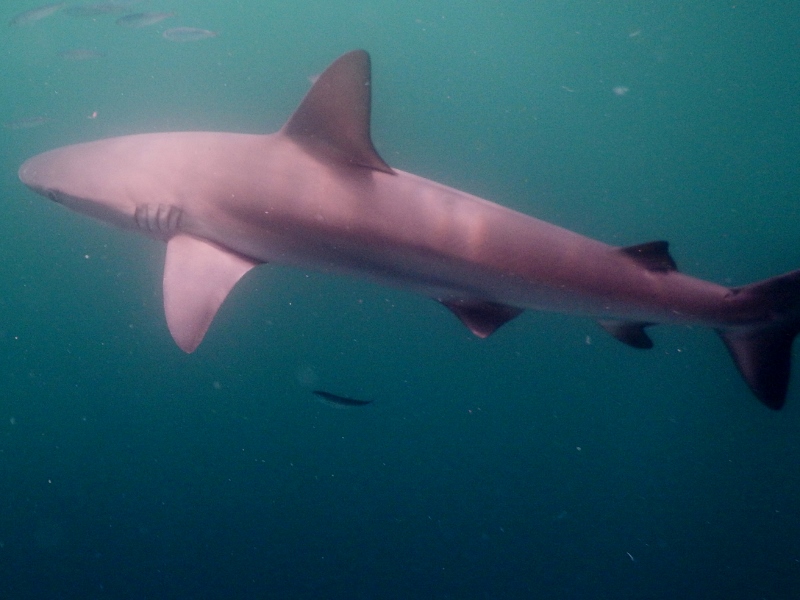
The main marine life of note is sharks – lot of them. They are all around the boat, some of them rather big, and we hesitate in letting the kids jump off. We visit Tortuga Bay, a surf beach, where the kids play with their boogie boards until they notice they are surrounded by about twenty baby black tip reef sharks basking in the shallow water. When a big one comes along and we can’t see whether it is a harmless white tip or a fierce Galapagos, we yell for them to come out of the water quick smart.

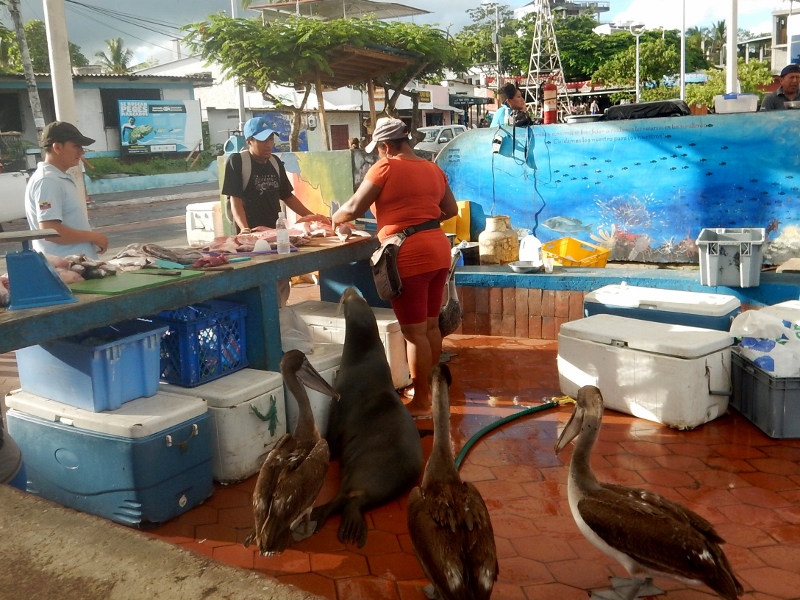
Local fauna competing for scraps at the fish market

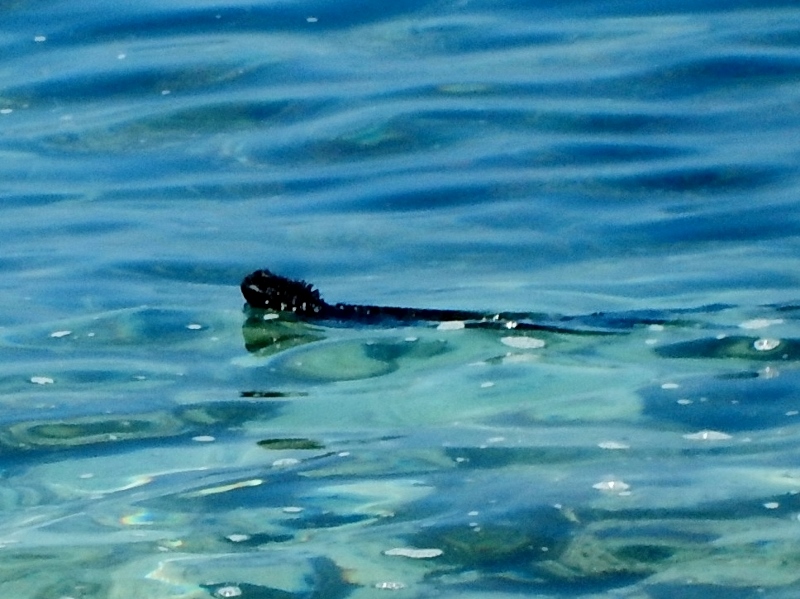
Marine iguanas are everywhere too – all over the black rocks, swimming next to the boat on the anchorage, even begging for scraps (!?! – we thought they were carnivorous) at the fish market. More frequent beggars at the fish market are the sealions and pelicans who are fighting for attention from the ladies who expertly fillet the fish, brushing off the sealion snouts which are popping up everywhere, way too close to the sharp knife.

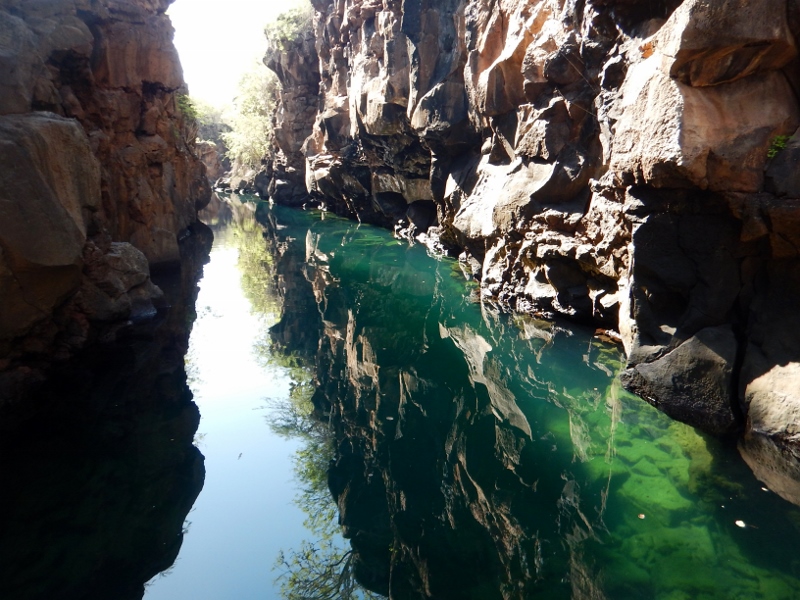
Las Greitas
Las Greitas

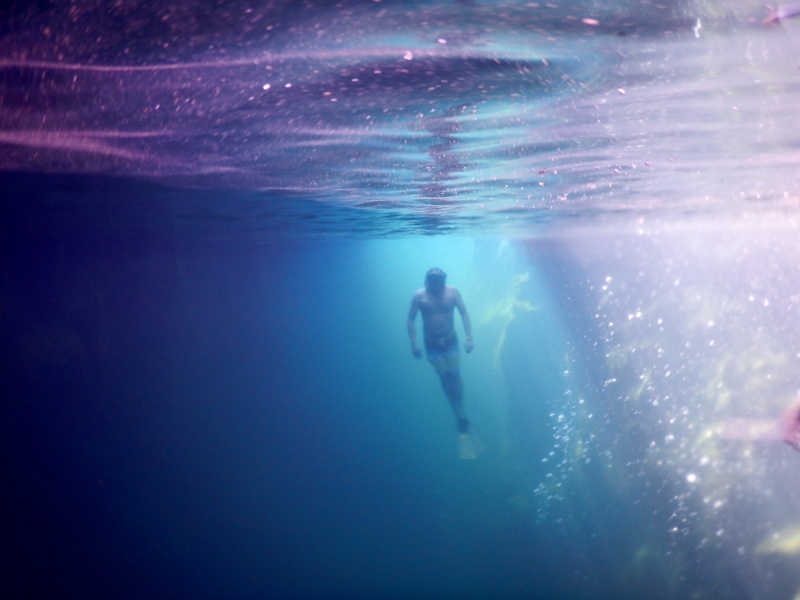
Close to the town is a snorkelling site called Las Greitas, vertical walls of volcanic fissures isolated from the sea apart from by some underwater caves which has led them to be filled with brackish water where hundreds of fish are trapped. The water is crystal clear and the rocks plunging down offer some dramatic underwater vistas down to the deep dark caves below.

Steve surfacing at Las Greitas
Steve coming up for air at Las Greitas

We’ve met lots of cruising families in the Galapagos, and here in Santa Cruz we meet Jen and Matt and their two boys Conrad (8) and Mark (7). The boys are loving having someone to play and talk Lego with while the grownups discuss passage coping strategies, dinghy outboards, sail drives and home schooling.

The vegetation is dominated by cactus trees at sealevel
The vegetation is dominated by tall cactus trees at sealevel

It is great to meet other families to hear about their experiences and plans, how life away from land has felt for them, which places they have enjoyed and why. Most of the families we have met have already been away for two or three years, and many of the kids know no other life than that on a boat, the whole family loving life at sea. Some of them are thinking they will settle down and sell the boat soon, becoming landlubbers for a while. The main reason for wanting to go terrestrial seems to be to earn more money to enable a return to cruising. Others want the kids to go to school for a while, although all the children seem to be doing fine academically. They all seem quite wealthy; we were expecting more hippy families, but haven’t met any so far, most of these are professionals who saved up and sold their house back home and who manage to live cheaply thus prolonging the time until they have to return home.

Boat kids playing in the surf

All the families have lots of gear, and we feel pretty bareboat in comparison. Bikes, toys from home, washing machines, running freezers and lots of solar and wind power to pay for it all. I guess if you’ve got children growing up on a boat you kit out your boat like you would a house, and I suffer a brief but severe bout of washing machine envy, lamenting about all the hours we spend searching for laundries when we could be snorkelling or exploring mountains.

All the cruisers we meet are headed almost the exact same route as us which means that we’ll catch up frequently along the way. And they are almost all heading to New Zealand, hoping to spend the summer there to sit out the cyclones, and then head onwards to wherever they are going. It is great that we’ll keep meeting the same people for the next 7 months, and wonderful that we are likely to catch up in New Zealand as well.

No sealions on the boat here, just pelicans...
No sealions on the boat here, just pelicans…

As usual, it is not just about sightseeing and socialising. David has successfully managed to repair the clutch which will be handy for the near reef navigation we’ll be doing in the Tuamotus, and we have to fill gas bottles, do laundry, and stock up with fresh stuff for the long, long trip to the Marquesas which is coming up. The forecast for this next leg is looking particularly awful, with no wind at all, and it is likely we’ll have to go rather far south to meet some trades so that we can get a bit of wind in the sails, turning what should be a 21 day sail into a possible 28-30 day adventure.

From now on we won’t have Facebook access, but will update the blog via satellite – so if you want to check our progress and read how we pass our time, just go directly to the blog website :).

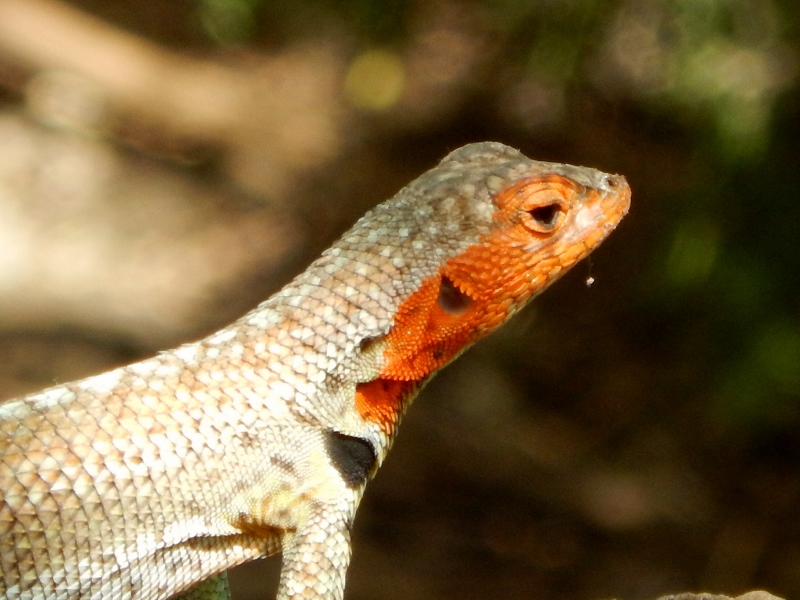
Colourful lava lizard

Isla Isabela

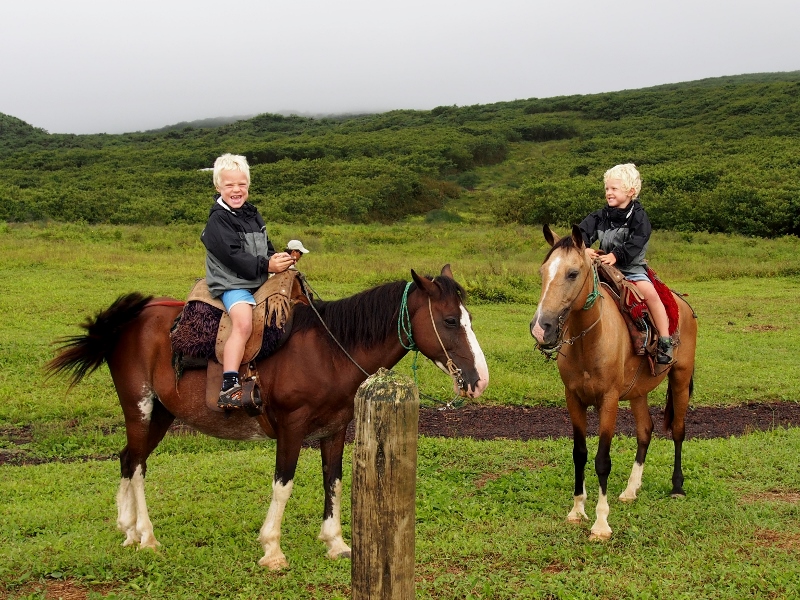
Proud knights
Proud knights

Isabela is completely different from San Christobal. The largest island in the Galapagos group, Isabela is much larger than San Christobal, and gets a lot more rainfall. All the Galapagos islands are basically volcanoes that erupted out from a number of hotspots below the seabed. The tectonic plate that the islands arose from is moving quite rapidly, about 3 cm eastward a year, and as a result the oldest islands tend to be on the eastern end and the youngest at the western end. The typical life cycle of an island is that it starts out young and hot and inhospitable, then it cools down and its volcano(es) quieten down and the island is colonised by plants and animals. The higher the elevation of its volcano, the more rain the island receives, and the more lush its vegetation and abundant its animal life. As it ages, the island starts sinking under its own weight, so older islands are flatter and receive less rainfall. At the end of its lifecycle, only the tip of the volcano will stick out of the water, the rest of the island lost beneath the waves.

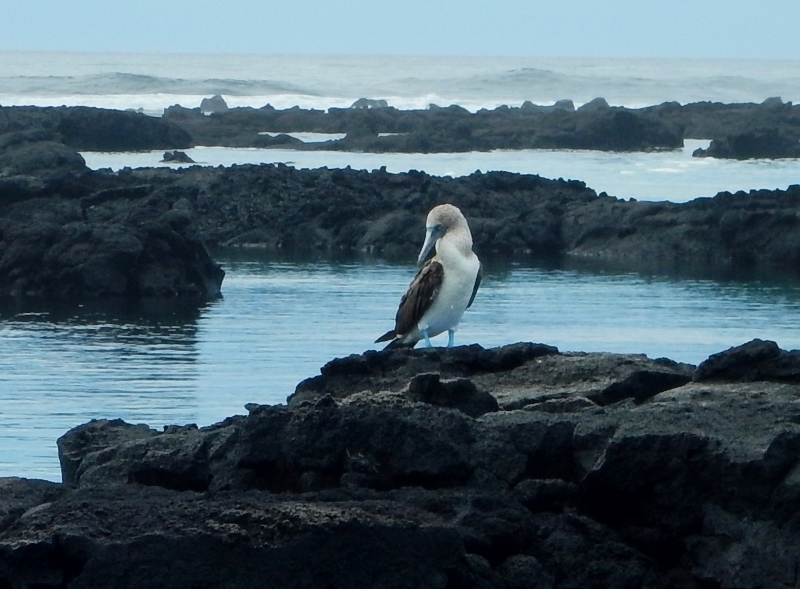
Blue footed booby
Blue footed booby

There are birds everywhere here: pelicans, frigate birds and boobies diving for prey or roosting on the black rocks, Lava Herons stalking crabs and small fish in rock pools, flamingos in the saltwater ponds behind the township, and the Galapagos penguins bobbing on the water surface or zooming through the water. The blue footed boobies fish in flocks of hundreds, synchronising their dive bombing so that each bird hits the water at the same time, creating an enormous splash that has us jumping the first time it happens next to the boat. It is an impressive sight and we wonder whether they ever mistake a snorkeller for a flock of fish – imagine hundreds of sharp beaks suddenly piercing the water above you as you come up for air.

Synchronised diving
Synchronised diving

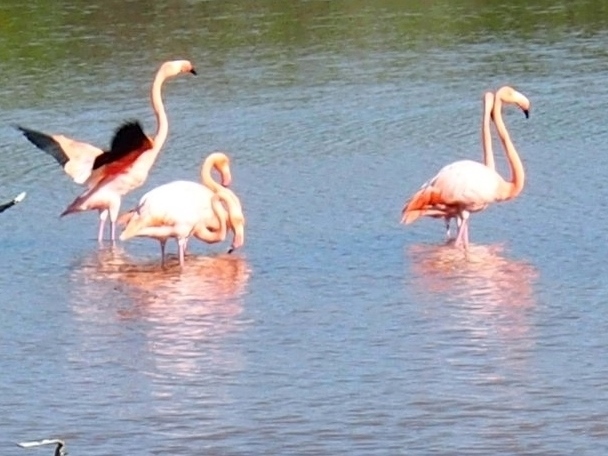
Just behind the town of Puerte Villamil are saline ponds with a lovely boardwalk through. Iguanas swim in the red water, and delicate pink flamingos stand seemingly immobile for what seems like hours, only occasionally stretching their wings a bit. They are beautiful birds and fascinating to watch; when they swim they look almost like swans with the long pink necks curved above the waterline.

OLYMPUS DIGITAL CAMERA

The boardwalk ends at the giant tortoise breeding centre where the two subspecies of the island can be seen – there are still wild populations deep in inaccessible national park territory, but we only manage to see one wild one, at the top of Volcano Sierra Negra. Their shells are different from those of Isla Christobal so we can clearly see evolution in action – it is thought that all the giant tortoises arrived here as one species from South America, likely floating on a raft of vegetation created from a flash flood, and that the diversification into different species for each of the islands occurred over thousands of years.

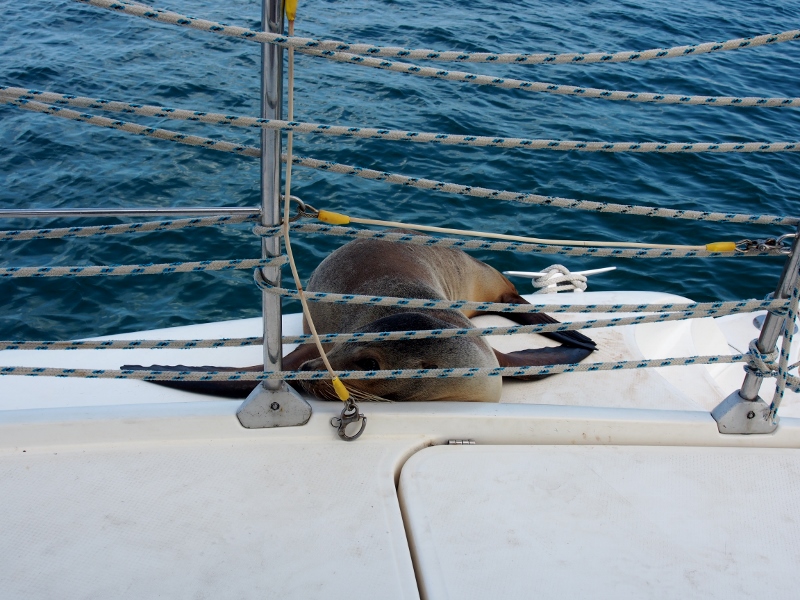
Sleeping fur seals
Sleeping fur seals

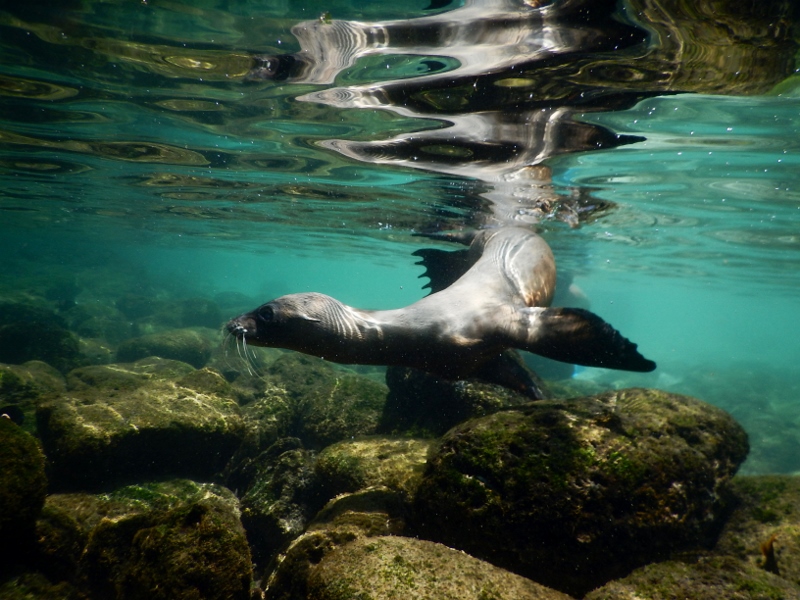
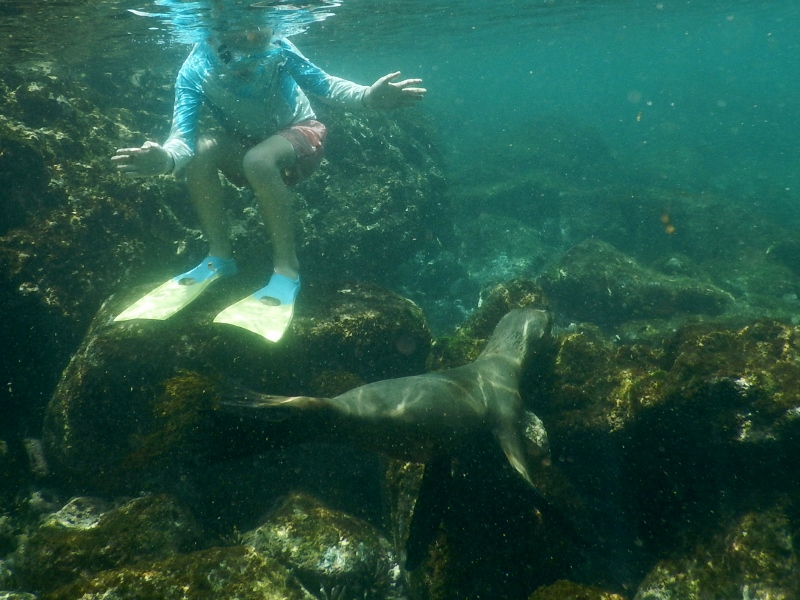
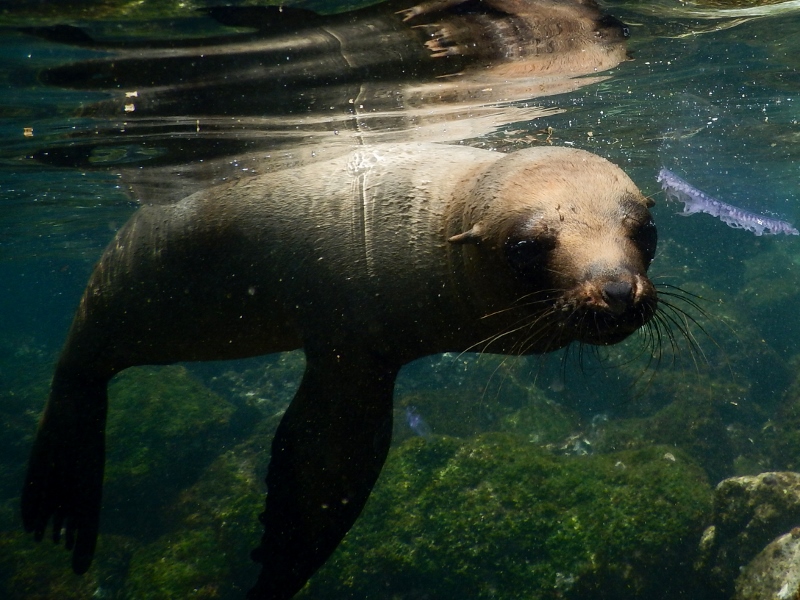
East of the town and next to the pier where we land our dinghy is another boardwalk, this one through mangroves. Marine iguanas are everywhere, sunning themselves on the warm wooden walkway. They are not shy at all and just stare at us impassively as we tiptoe around them and gingerly step over their steaming bodies. At the end of the walkway is a snorkel site where a sealion comes to play, performing underwater acrobatics, whirling and zooming and spinning all around us. We try to mimic him, clumsily diving down and spinning upside down, and he appears to appreciate that, outdoing our every manoeuvre until we exit the water.

Sarah and the sealion


Numerous tiny Galapagos Penguins swim in the anchorage or sun themselves on the hot black rocks around the jetty. They are here, at the equator, because the Humboldt current from Antarctica cools the water enough for them to colonise the islands, and have adapted to the heat by reducing their body size, so they are truly small, about the size of a slim adult duck. They are amazing under water, zooming in and out of the rocks and mangroves, in hot pursuit of the tiny fish that hang out in big schools just below the surface. It is incredible to see mangroves, hard corals and penguins in the same swim, or to see a penguin sitting on a rock just next to a cactus.

Galapagos penguin
Galapagos penguin
Attempting to sneak on board

There are not as many sealions here as where we were staying in San Christobal, and we manage to ward off colonisation attempts with some success. A small female still decides that the boat is for her, and one afternoon after a day out we came back to find a nice pile of poop just in front of the cabin door – she must have hauled herself all the way into the cockpit, spotted the nice toilet shaped depression in the floor, and decided that that was the place. After we spray a bit of water on her to chase her off, and tie up the fenders in a new configuration, and it works: she stays away.

Apparently there are Galapagos Sharks in the bay, and Matias spots tiny baby black tipped reef sharks around the boat, only about 30 cm long but still unmistakably sharky.


Iguana in pink saltpond

The atmosphere here is very different to the smooth efficient tourist machine of San Christobal. The town of Puerto Villamil is tiny and sleepy, and you get the impression that everybody is very relaxed. Relaxed almost to the point of inertia: tour boats don’t turn up when promised, trips are cancelled for no good reason, laundry is not ready when promised. Sarah comments that they seem ‘rather complacent about tourism’ and it is indeed a shame that they don’t make more of an effort – when you pay the equivalent of NZD 140 to go on a snorkel trip, you expect the boat to turn up, and we certainly wouldn’t recommend the guys we went with to anyone after spending half a morning waiting and the other half showing receipts to demonstrate that we’ve paid when they claim we haven’t. In the end we feel bound to pay another US $150 although we are quite certain that we did pay the first time around and have receipts to prove it, because otherwise the girl who lost the money will have to pay them out of her own pockets. We book a horse ride to the volcano Sierra Negro and are told to meet the truck that will take us to the start of the trek at 7:15 am, only to sit waiting for an hour until he turns up with the ingredients for a fruit stall which he has to set up before we can get going.

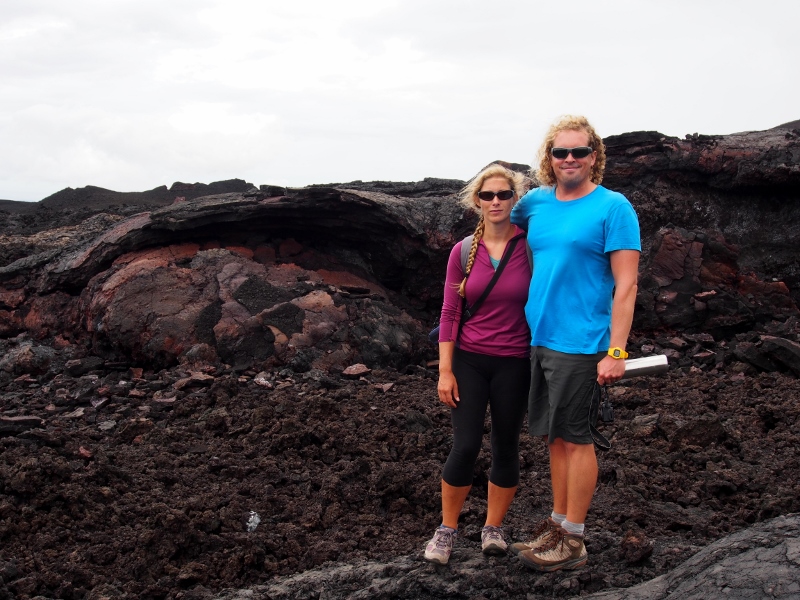
Sarah and Steve at the top of Volcan Sierra Negra

Mind you, the volcano is amazing – it last erupted in 2005, and previous eruptions took place in the 1970s and 1960s. After a truly terrifying truck drive with our lunatic taxi driver doing 120 km/h along wet roads as we scream to him to slow down up the lower parts of the mountain we arrive to get on our horses, and trot up the trail at a stately pace. Lukie and Matias are stoked to be on a horse like real knights and Matias keeps leaning forwards to pat his horse and whisper into his ears. The horses are hilarious, refusing to do anything we ask them to, not heeding any known commands. The guide keeps asking us to hurry up, but the horses seem to just go one speed on the way up. We ride for half an hour next to the huge crater at the top, looking down into the eerie black flat lava landscape that stretches for 3 km. Once at the top we dismount and climb down to view Volcano Chico, a parasite volcano that went off in 1963 and again in 1979. Here lava tunnels are running down the hills and vents are everywhere, showing as big cracks in the surface out of which hot air flows. We can see the succession of plant colonisation, with the latest lava only colonised by lichen and earlier eruptions slowly covered in cacti, mosses and eventually ferns.

OLYMPUS DIGITAL CAMERA

On our way down the horses keep slipping on the muddy path, and the guide’s horse falls over, throwing him off. The kids’ horses keep breaking into runs, eager to get back down the mountain, and Lukas’ horse stages some vicious attacks on the other horses in its quest to get ahead.

DSCN1384 (800x600)


Sea of plenty

DSCN1078 (800x600)
Steve and a turtle


We leave San Christobal to sail to Isabela, another island in the Galapagos group, on Friday afternoon. It is an 80 mile trip and there is no wind, so we decide on an overnight passage to give us enough time to arrive in daylight.

DSCN1095 (800x600)


It is hard to leave Isla San Christobal, not least because one of Kevin’s female friends has moved in. On our last day in on the island we go for a goodbye snorkel at La Loberia where we swim with sealions, eagle rays and turtles in crystal clear water. When we come back to the boat we find her fast asleep next to the lifejackets in the cockpit. We try the usual clapping but she just bares her teeth and snaps at us, advancing in a vicious attack to ward us off. This works well for her until we gang up together and clap in unison, when we manage to get her out of the cockpit, her bottom only just fitting through the railing as she slips out to the steps – for a crazy moment we fear that she is stuck. She refuses to jump into the water, and no matter what we do (clapping, shouting, saltwater hose, buckets of water) she remains on the steps –indeed she appears to relish the cooling effect of the water that douse her with. In the end we give in and start the engine, hoping that she will jump off once she senses we’re moving. She doesn’t, of course, and about a mile out of San Christobal we get worried about translocating a native species and turn the water hose onto her, spraying her face until she gets the message and leaps off. She continues to pursue the boat for a while, hoping no doubt to jump on again for the night, but we manage to keep her at bay.

DSCN1206 (800x600)
Stuck?


Half an hour later a larger specimen (Kevin?) comes up and hangs in the water around the boat for the evening. There is no wind, and we drift along in the current at about 3 knots, looking at birds hopping along the glassy water surface and weird configurations of jellyfish drifting past just under the surface. There are devil rays everywhere, pairs of wingtips breaking the surface rhythmically as they move along just under the surface. Something big may be chasing them, because occasionally they jump right out of the water, landing with a huge splash. Minke whales appear about 100 m off the boat, breathing loudly in the still afternoon and breaching again and again. Kevin darts forwards and backwards, swimming on his side and his back, breathing in tune with the whale and occasionally emitting loud honks just to remind us of what we will be missing when we leave him behind. Just before dark we see dark brown fins sticking out of the water, seemingly waving at us, and gather to have a closer look – is it more of Kevin’s lot, waving goodbye, or perhaps a couple of sharks? It turns out being three huge sunfish swimming merrily towards San Christobal, their fins breaking the surface as their disc like bodies glide along seemingly unhampered by their lack of tail.

OLYMPUS DIGITAL CAMERA
Sunfish, fin breaking the surface


Once dark, we hear loud splashing but we with no moon it is impossible to investigate whether it is dolphins or fish. In the morning about ten large bottlenose dolphins approach to frolic around the bow, and we slow down the boat and jump in the water to have a look. The dolphins swim right up to us and dart in and out between the hulls of the boat as we hang onto the swim ladder and watch. Almost immediately a couple of Galapagos sharks appear, edging closer and closer. The dolphins seem unconcerned, but when the sharks increase in number and some big ones come along we decide to get back onto the boat.

OLYMPUS DIGITAL CAMERA

As we approach Isabela we see another large whale, possibly a Bryders, and numerous turtles and seabirds greet us.

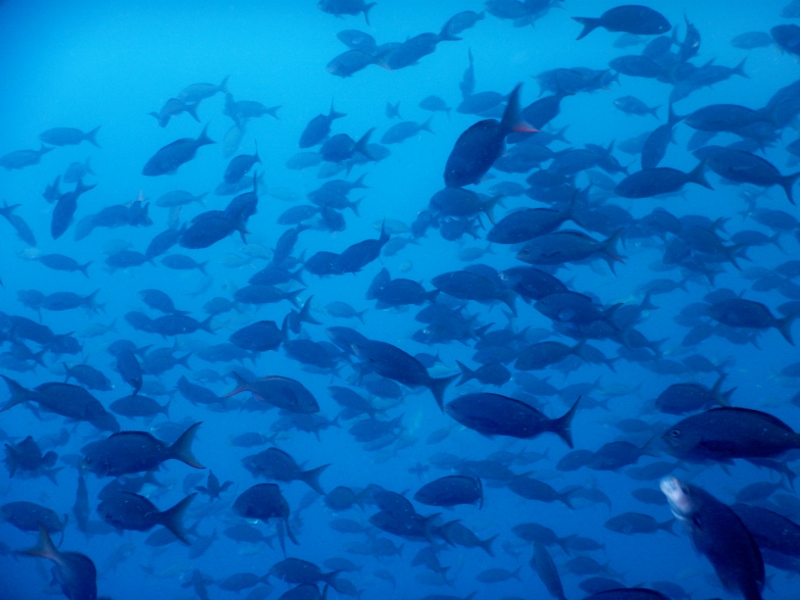
There is a real sense of abundance in the ocean here – a feeling that there is enormous biomass below and all around us, and that if we cared to jump in we would see the water thick with life. We can only wonder what it would have been like before whaling, fishing and shark finning. The Galapagos used to be home to many whaling stations, and the whale populations here (as elsewhere) were decimated. Compared to the relatively impoverished oceans we are used to, the life here is pretty incredible. Imagine what it would have been like back then, a veritable overabundance of ocean life around these arid and inhospitable volcanic islands.

DSCN1062 (800x600)


Exploring San Christobal

OLYMPUS DIGITAL CAMERA

There are 13 major and six smaller islands in the Galapagos, as well as numerous tiny ones. Isla San Christobal is one of the five inhabited islands, the others being Isla Santa Cruz, Isla Isabela, Isla Baltra and Isla Santa Maria. San Christobal is the only island with fresh water; it is the fifth largest island in the Galapagos but has the second largest population.

Lava gull
Lava gull

As part of our Autografa (visiting permit) we are allowed to visit Isla San Christobal, Isla Isabela and Isla Santa Cruz only.

DSCN0981 (800x600)

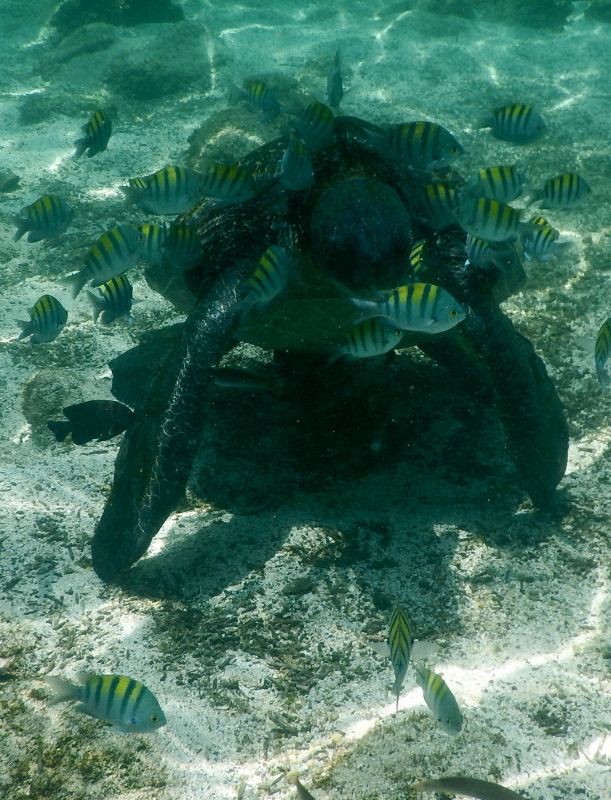
We are anchored off the main town on San Christobal, Puerto Baquerizo Moreno. It is a charming town – clean, full of wildlife and displays about the amazing life found on the islands. People are very friendly, offering valuable advice, and there are little shops offering dive and snorkelling trips everywhere, as well as general tour operators who arrange trips to view the terrestrial attractions. Friendly taxi drivers take us all over the island. The first day we explore La Loberia, a rocky shore site with a small beach where we see the famous marine iguanas and snorkel with turtles and baby sealions. The sealions are amazing underwater – clumsy on shore but once in the water they zoom all around us. The babies are friendly and nip at our feet, and we have to keep a close eye on the kids to ensure that they don’t accidentally touch them – once a pup smell of humans, it is often rejected by its mother, and you are not allowed to touch any animals on the islands. There are giant turtles everywhere, sitting placidly on the bottom, some being cleaned by fish and others just chilling.

DSCN0912 (611x800)

Galapagos shark
Galapagos shark


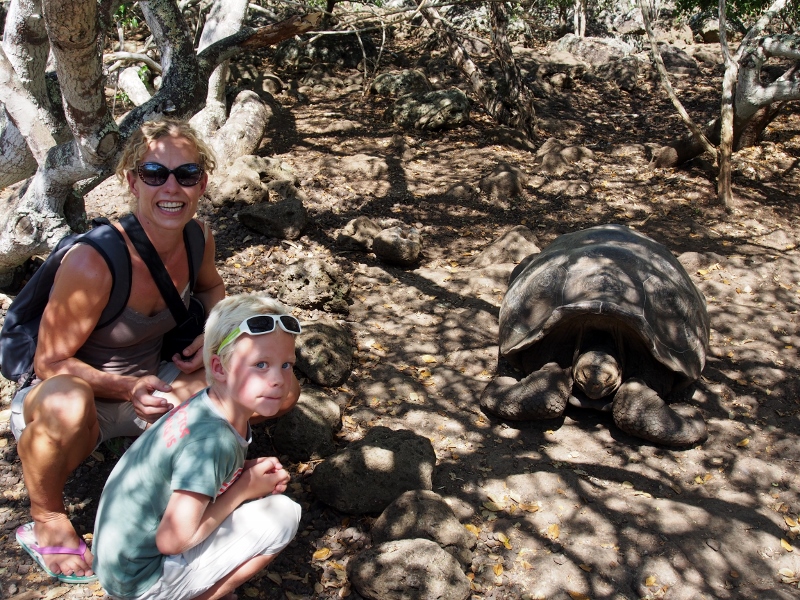
The next day we go to La Galapaguera and see the giant land tortoises and the island’s breeding center for them. It is estimated that there used to be about 100,000 tortoises on San Christobal but a survey in 2005 counted only 2800 living on the island by then. They are majestic, huge and slow, wrinkled and beady-eyed, with big clumpy feet at the base of their quite skinny legs. The shells are enormous and must be very heavy. We see the babies that are bred at the site: tiny, shiny black little things. It is hard to imagine that they grow into such giants – they are kept in a small enclosure from they hatch till they are 5 years old, after which they are released into the wider reserve. The wardens collect eggs from nests made by the females, bring them to the breeding centre and incubate them, achieving 60% survival, which is much higher than in the wild where the eggs and young easily fall prey to birds, snakes and rats.

OLYMPUS DIGITAL CAMERA

OLYMPUS DIGITAL CAMERA


On the Wednesday, we take a snorkel trip out to Leon Dormido, a huge rock sticking out of the ocean about an hour’s boat ride away. The site is famous for sharks, and we see several Galapagos sharks as well as black tipped reef sharks, rays, turtles and wonderful sponges, anemones and corals lining the sheer cliff face dropping vertically below us. On top of the rock are frigate birds blowing out their red sacs and pelicans, as well as sleepy sealions and marine iguanas basking in the sun.

DSCN0975 (800x600)

On the trip we also visit Cerro Brujo, a beautiful white sand beach amidst lava rocks, where marine iguanas, sealions and numerous seabirds frolic. Here we see a Lava Gull, a species endemic to the Galapagos, of which there are only 400 breeding pairs left. The children play with Laura, a girl from Chile who is visiting on a holiday with her mother.

DSCN0963 (800x600)

DSCN0992 (800x600)

Everywhere we go there are animals, rare, wonderful, loud and colourful in-your-face animals, going about their lives. It is amazing to be in a place where the creatures that were here originally are afforded such a high status, and where everybody genuinely try to do their best to look after them and their habitats. There are several conservation success stories – the Sally Lightfoot crabs used to be threatened by are now rebounding nicely, thanks to a huge effort. The Lava Gull is still considered At Risk, but numbers are coming back. Lonesome George died, and with him his species disappeared off the earth forever, but the other species of giant tortoises now have healthy populations.

DSCN1003 (800x599)

Long may it last.

DSCN1017 (800x600)

Sealion fun

OLYMPUS DIGITAL CAMERA

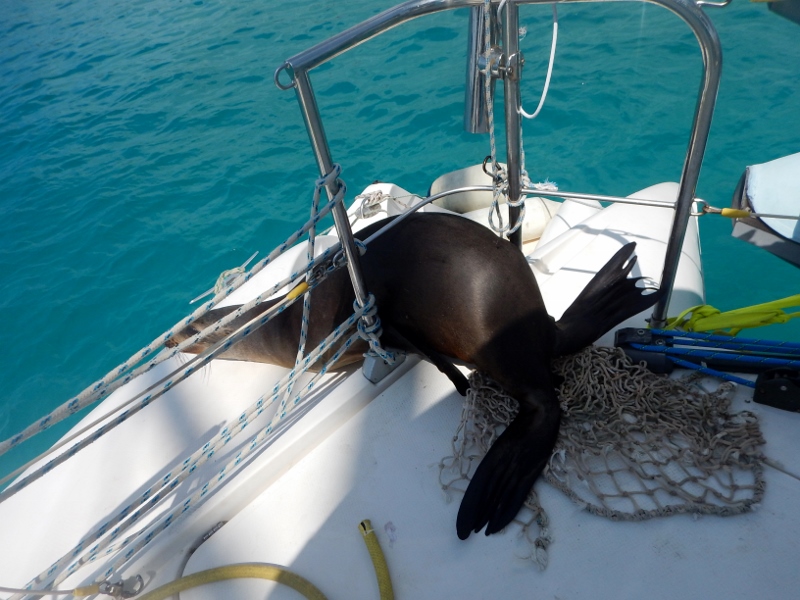
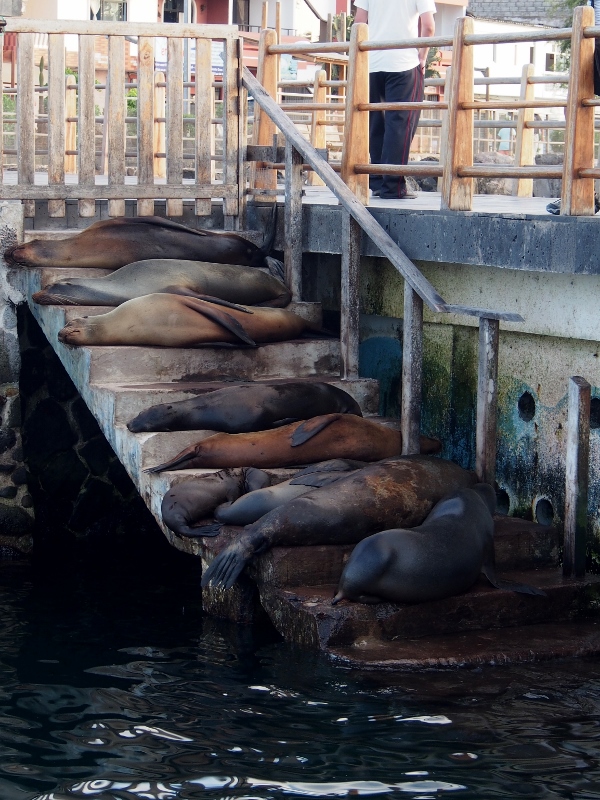
We rapidly lose patience with our resident herd of animals. The sea lions colonising the boat are cute the first day, mildly annoying the second and unbearable the third. They snap at our ankles as we try to board the boat, fight each other, bray loudly during the night, shit everywhere and roll around in their own faeces, distributing it in a thin smear over the back steps on both sides. They are noisy buggers, sighing and heaving, coughing and spluttering, the boat shaking every time they reposition themselves. The most persistent one, a large male whom we name ‘Kevin’, lies burping on the bottom step, with two females in the bunk beds above him, and three others on the other side, one on each step. Kevin is particularly vicious when we try to board the boating, giving us lots of hostile honks. The final straw is Monday night when the herd decide to take over the boat entirely – they manage to climb the fence we’ve erected at the top of the steps and a large female starts hauling herself into the cockpit. She nearly falls down Sarah and Steve’s hatch, and we have to shout and clap loudly to get her to leave.

Locked out
Locked out

When we wake up Tuesday morning after a sleepless night of defending our territory and find the whole back of the boat covered in poo, we get serious about excluding them and erect a net on the starboard side and a layer of fenders on the port side to prevent them from getting onto the steps. It works for half a day, but Kevin is back before nightfall, lying across the net. We evict him again and stuff the netting with fenders, hoping that that will work and that we can finally leave the boat without fearing coming back to a sealion stuck halfway through a hatch (try explaining that to the Park Official, should he finally come to inspect).

DSCN1045 (800x600)

It doesn’t really work – they come back the following night, choosing to lie on the second step up to avoid the fenders and netting. At 5:30 in the morning I am awakened by Kevin trying to break through to the cockpit, and I get out to shout and clap him off. Ten minutes later I hear the braying of a little pup and see a small pup in the cockpit, at the table, ready for breakfast. Sarah and Matias get up to shoo her off, and we up our defences by stuffing some more fenders on the steps.

OLYMPUS DIGITAL CAMERA

The night after we have four – Kevin on one side, rolling around in his own excrement one step above our elaborate defense line of fenders and netting, and three females on the other side. David gets up at one point in the night to fight them off, but they quickly come back, and in the morning Matias and I repeat the exercise. It seems pointless to clean up after them, but we do it anyway, stepping onto the still warm steps to wash about a million short straight hairs into the sea along with copious amounts of urine and poo. A thin greasy brown film is left, which we don’t seem to be able to get rid off – perhaps once we exit the park we will attack it with some heavy duty cleaners…

DSCN1057 (800x600)

Saying that, sealions are lovely when on their own turf. They lie around everywhere in town, and on all the adjoining beaches. They seem permanently exhausted, fast asleep on piers, jetties, benches, pavement, beaches and rocks – any place is a good place to snooze. We almost step on top of them on the beach – they look just like a dark shiny rock, and the kids jump high when they bark and snarl to warn us off.

DSCN1031 (800x600)

Their fatigue disappears under water, which they glide through elegantly, a stream of bubbles trailing after them. On our last day in San Christobal we go snorkelling at a rocky beach just around the corner, and a small sealion comes over to say hello, nibbling at David’s fins, zooming up to Matias and Lukas, investigating us whilst tearing apart a jellyfish with its sharp teeth. They are absolutely wonderful to swim with, so interactive that as they come up to us, we have to pull back our hands and feet to comply with park rules and avoid touching them.

DSCN1054 (800x600)

DSCN1030 (600x800)

Sealions are bad house guests

If anyone is wondering, sealions are really bad house guests. Particularly big party got out of hand last night, and the cleanup this morning took quite a while. Kevin invited some of his ladies round and they are not boat trained (Kevin himself actually not too bad) and they breached our ‘understanding’ by trying to get into the main cockpit. Gelcoat may never be the same… Sealions no longer welcome on Bob.

This is also some test text to figure out why our email updates do not format correctly. We are trying to update the blog using the Iridium satellite email but for some reason, it keeps messing up the formatting.

Narcoleptic newcomers

By the time our agent’s representatives come to the boat soon after we anchor we have been inundated by a large sealion. First she tries to fit on the bottom starboard step, but she is slightly too big and can’t seem to find a comfortable spot for her head to rest on. When the water taxi arrives with the agent, she reluctantly slides into the water when they clap their hands, only to grumpily heave herself onto the port stern where she decides to go for the second step up to avoid the swimladder. A good plan; it fits her perfectly.

OLYMPUS DIGITAL CAMERA

The agent’s representatives explain what is to happen. In exchange for bundles of cash they arrange for Customs, Immigration and the Quarantine team to visit, a contingency of nine people who arrive by water taxi around 2 pm. While David is questioned by the local coast guard about the number of lifejackets and flares on board and about where we’ve been and for how long, the rest of us scribble furiously to fill in multiple copies of immigration forms. Meanwhile, a diver inspects the bottom of the boat, another official takes air samples and a third person checks our cupboards and cabins for introduced plants and pests. When they are all satisfied that we are clean and in possession of proper documentation for where we’ve been, they ruffle the childrens’ hair, mumble something about blondies, and depart. Only the Marine Park official now remains to visit – he had something else to do when the rest came and will come to check us later, although after he misses two appointments we are told that he won’t in fact turn up. He is the person who was supposed to ascertain that we won’t harm the marine life through our visit, and check our black water system and the rubbish set up. David is terribly disappointed – he was looking forward to the poo tank inspection; after all the trouble he went through to put it in, he craves an admiring glance and a low whistle from an impressed official.

OLYMPUS DIGITAL CAMERA

Soon after they leave, we are colonised by another two sealions. They clamber onboard, lifting themselves heavily out of the water and flop down, seemingly exhausted. They literally can’t keep their eyes open, some of them seem to fall asleep whilst trying to look at us, they just keel over mid-eye contact and start snoring. They pee copiously whilst asleep and soon the back steps are covered in brown urine. They are a bunch of moody teenagers: when we step onto the back steps they lift their heads and snarl at us, honking and braying much like the Wookie Chewbacca. A large male comes over, ousts a smaller female and promptly falls asleep. When new sealions approach, our grumpy male snaps at any males, but allows females to come onboard as long as they keep to the other steps. At one point we have three on one side and one on the other, a nice arrangement of bunk beds to put up young males and their burgeoning harems while the larger males roam the shorelines.

OLYMPUS DIGITAL CAMERA

Finally, tired of waiting in vain for the Park official, we hail a water taxi around 5:30 pm to go ashore for dinner, and step gingerly over our hostile looking colony. Ashore they are everywhere: lining the beaches, asleep on the steps by the jetty, zonked out on the park bench. We spend some time watching a tiny baby roaming the beach colony braying confusedly for her mother – it manages to traverse the entire beach, emitting heart piercing cries, but no mother comes forth.

OLYMPUS DIGITAL CAMERA

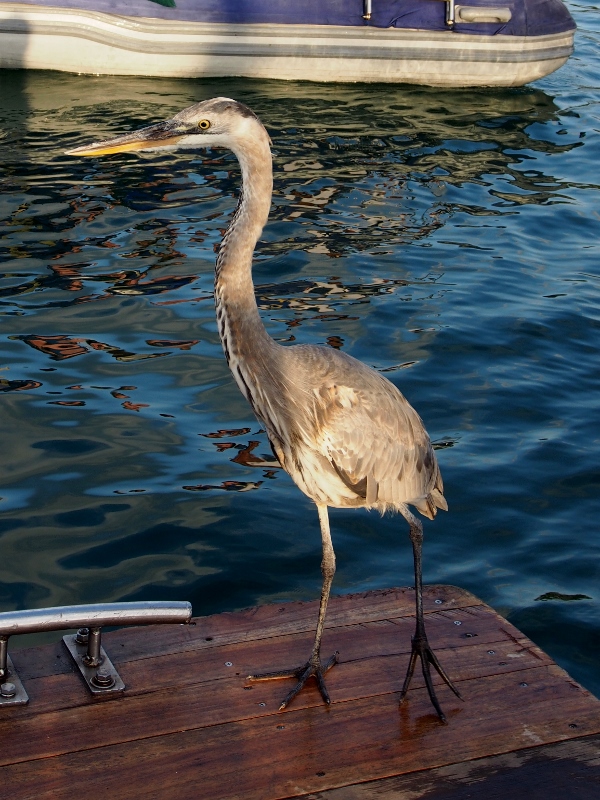
On the jetty a large heron stalks newcomers, and on the rocks lining the beach are black iguanas and Sally Lightfoot crabs catching the last rays before sunset.

OLYMPUS DIGITAL CAMERA

It is amazing to be in a place where the animals are, if not in charge then at least given space to be, and it seems impossible that we can’t have that elsewhere – imagine how incredible New Zealand would be if there was space for native birds to roam the streets of towns.

OLYMPUS DIGITAL CAMERA

Passage to Galapagos

Our first day on passage to the Galapagos is windy and full of wonderful sea life.

Just offshore of Las Perlas we meet a pod of Bryde’s or Minke whales – we can see the sickle shaped dorsal fin and long, dark bodies, as well as lots of tallish blows all around the boat, the closest perhaps 50 m away, and reckon that they’re probably Bryde’s, but could the slightly smaller Minke. The whales huff and puff along with us for a while before disappearing out of sight.

Later on Sarah and Steve spot a huge brown turtle from the trampoline, swimming straight under the center of the boat and coming up in the wake behind. It is hard to know what species, but we reckon maybe it is a large hawksbill.
We catch a mahi-mahi for dinner, and dolphins follow the boat for a while perhaps hoping for some leftovers, before they duck off for a while. Later on they return to join David for most of his evening watch and appear again the following morning.

During the night the wind comes up, and we put a second reef in the main around 4:30 am. Half an hour later the wind is gusting up to over 30 knots and as the autopilot goes crazy David takes over the helm until we have enough light to do a third reef. He manages to coax a whopping 15.4 knots out of the boat before we decide to take the mainsail down altogether, and just run downwind on handkerchief sized genoa, which still sees us reach 10 knots of boat speed.

DSCN0845 (300x208)

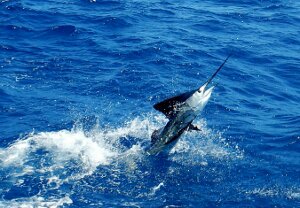
After breakfast, Steve spots a huge dark brown shark just off the stern, and later on when we get a strike on the fishing line and see a big dark shape we reckon that a shark is following our catch. But it turns out that the dark shape IS our catch – a huge white marlin! We are reluctant to struggle with a fish this size only to throw half the meat away when it goes bad, so we decide to let it go, only we’re not quite sure how to get the hook out of its mouth. Steve tries to tire it out and David positions himself on the back steps, hoping to catch a hold of its bill and yank out the hook. But it looks too big for us to try to manhandle it, and in the end we cut the line, hoping that the hook won’t impair this beautiful giant for long.

The water has turned from the muddy brown green Panama sludge to clear blue and we´re back in the the land of wonderful visibility again.

After all the initial wind, we hit the doldrums on day two  when there is absolutely no wind at all. We switch on the motor as otherwise we’ll come to a standstill, swept along only by the current.

The sea is oily and slick and the swell rolls along in nice evenly spaced hills of elevated sea, keeping us in constant motion, up and down, side to side.

We take the opportunity to clean the hull of the boat again, and discover 15 new or previously unfound barnacles, which are swiftly disposed off. If we want to guarantee a troublefree entry into the Galapagos, we’ll obviously have to do it again just before entry, they seem to attach so fast. But I guess that won’t be a problem in these windless conditions.

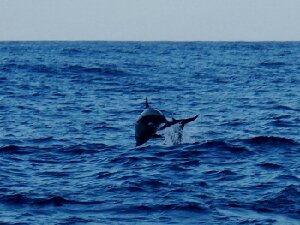
The upside is great calm conditions for viewing sealife. Which in this particular location is dolphins, following the boat just before sunrise, doing acrobatic shows jumping high into the air just before sunset. There must be at least a hundred in the pod, striped dolphins doing a ballet for us.
P3050351 (350x263)

We´ve been becalmed for two full days when the wind finally comes back. It is great to be sailing again, to be going fast, wind in our faces, spray in our hair.

Not that it’s been bad to stand still, it’s just very very hot when there’s no wind, but we’ve made good use of the time, cleaning the hull again and insect spraying like people possessed.

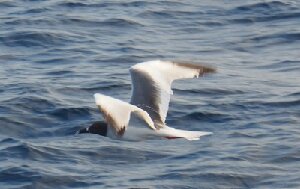
But now we’re flying again, estimated arrival in Galapagos Sunday morning. We’re not the only ones flying, birds are coming out to greet us, including blue footed boobies and swallow tailed gulls, species only found in the Galapagos. There are only about 2000 – 3000 pairs of the nocturnal swallow tailed gull in the world, and we feel privileged to be greeted by them in bird.
P3070002 (400x253)

On the last night before arriving, we cross the equator around midnight. The kids were very excited at the prospect and wanted to be woken up, but end up unable to leave their warm beds. The rest of us open a bottle of bubbly and celebrate how far we´ve come.

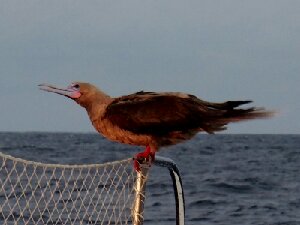
We finally arrive in San Christobal midday Sunday. Like ancient seafarers, we’ve had many signs that land is near with lots of endemic Galapagos bird species coming to visit. The longest staying visitor was a red-footed booby, which landed on the port bow around 9 pm, and decided to spend the night, perched on the railing, only leaving well after sunrise.
P3080025 (400x300)

We spend much of the last day cleaning the boat – the hull during a lull in the wind, the deck a while later, and the inside on the morning of our arrival. We are fretting a bit because we have heard of authorities turning away boats recently, and we take great care to ensure we’ve followed all our agent’s instructions.

You pay quite a bit for an agent, but can’t deal with the port authorities without one, and they do make your life easier. We’ve received specific instructions: put up a sign saying ‘Don’t throw garbage in the sea’, sort your rubbish into recyclables, organics and landfill and put up clear signs about what goes in where, make sure the engine room and the hull are both spotless. Have five photocopies of every boat document and passport ready to hand over.

We’ve done it all, and feel nervous if ready as we slowly sail up the coastline.

It’s not only the birds that are friendly:we spot several turtles and playful sealions folow the wake of the boat as we approach. Indeed, the sealions seem very friendly: when we reach the anchorage we spot them perched on the stern of the yacht anchored in front of us, and as we sit there watching we see it clamber into the cockpit…
Can’t wait to come back to one of those after a day out…