We have a lovely but quite slow voyage from Aruba to Panama. Quiet seas, little wind, but on the upside no seasickness. Nice and relaxing, if a tad slow – but a thousand times better than the horror stories that we have read about that stretch of sea, so we consider ourselves lucky.

Christophe continues to bestow upon us incredible fishing luck. Each morning he gets up, stretches languidly and announces which fish he would like for dinner. And then, during the day sometime, we catch the species he was after. First we land a decent sized yellow fin tuna, and then a massive wahoo, at 1.3 m measuring about the same as Matias. (It possibly isn’t Christophe, could be the new lure, but whatever it is we are not complaining.) Out shopping mission in Aruba found the supermarket closed, so we didn’t stock up on any fresh protein. With Christophe on board we have worked our way through the edible species, with a tunny, a spearfish, and rainbow runner, a tuna and a wahoo. Occasionally it goes wrong, like when he asks for a dolphin fish (mahi-mahi) and we see dolphins, but you can’t expect complete obedience from the ocean…
We see incredible fish boil ups coming off Aruba in the sunset, flocks of birds hovering above water in turmoil, large fish literally jumping out of the water, the prey of something huge or the predators of something small, we are not sure which.

We have the fishing down pat now. As soon as we hear the reel go, someone shouts ‘fish!’, and the action starts. I slow the boat down, turning it into the wind and taking in the genoa, Christophe helping. David reels the line in. The kids get the fish knife, the net, the gaffe, the white rum to kill the fish (pouring it down the gills leads to what we hope is a gentle death). Christophe dons the lifejacket, the leash and the gloves, and climbs down to the lowest step, hooks himself on, and gets ready to gaffe or net the catch on board. After butchering our first couple of catches in the cockpit and cleaning up blood and fish guts from the lockers for a good hour afterwards, we’ve moved the cleaning to the back step, which seems to work well in these small seas anyway.
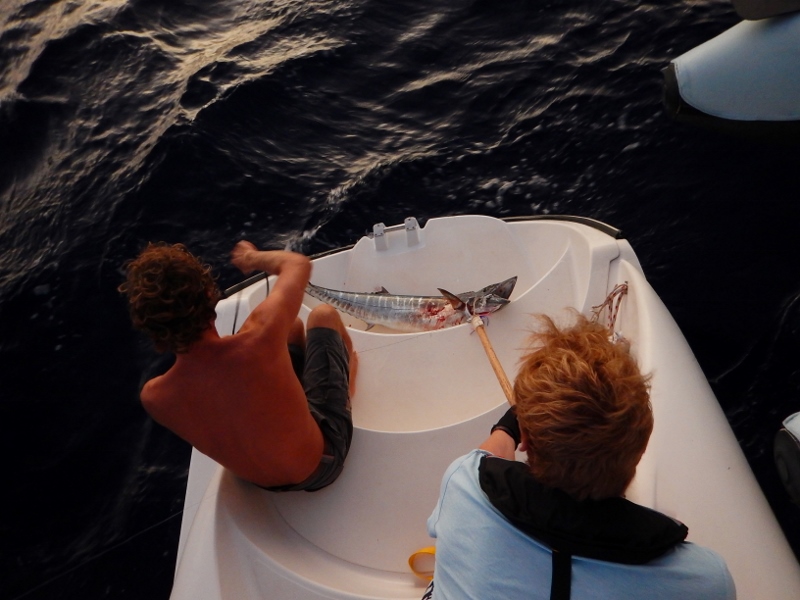
Wahoo!
The problem with fish is that we need to keep them very cold. The wahoo is so big that we bag it in binbags, each fillet weighing about 7 to 8 kg. It is hard to keep 15 kg of fish just above freezing temperature, and we have to run the engine a fair amount to keep ice on the elements.
The kids are well settled into the routine of passages. They do their homeschooling early in the morning with me while I do the dawn watch, and the rest of the time they draw, play, and participate in boat life. Their play centres heavily around fishing, they draw endless cut out fish figures and lures, re-enacting all the excitement of our recent catches. Once they’ve finished catching the fish we hang them up on Matias’ Wall of Fish, a catalogue of fish which adorns the corridor wall near his bed.
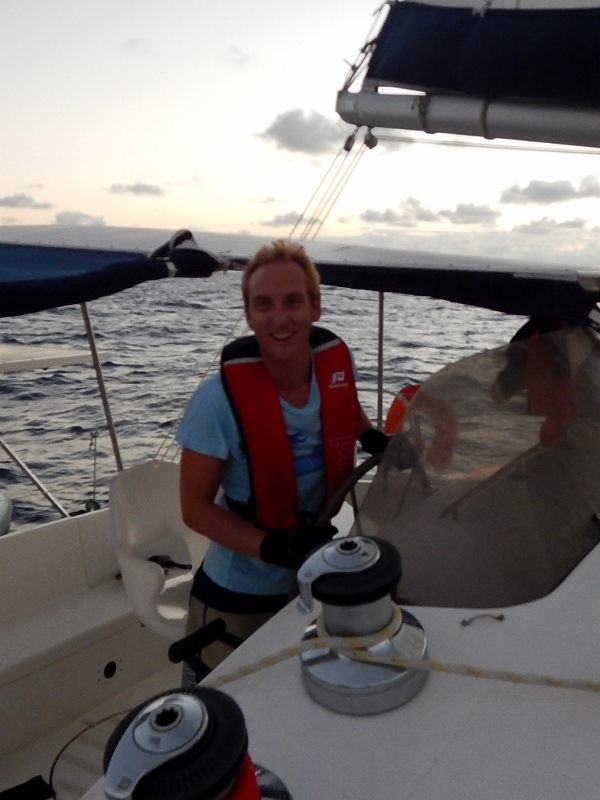
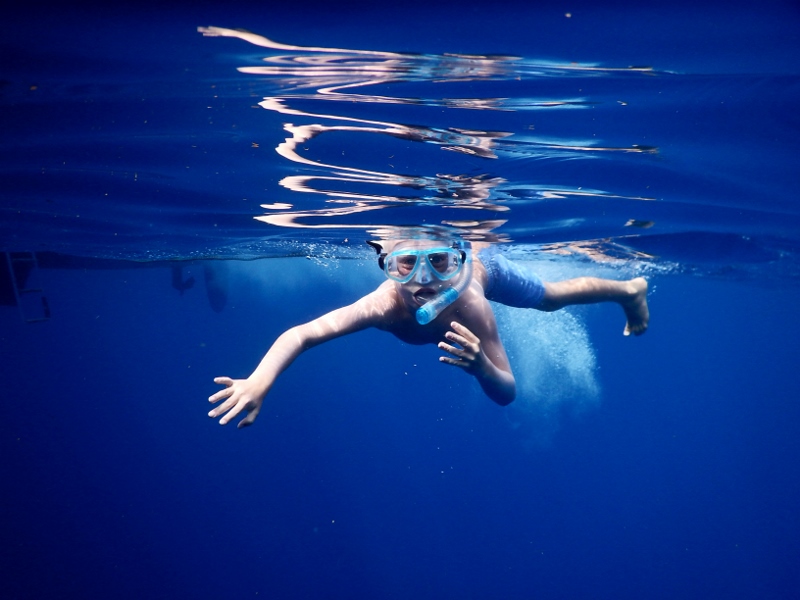
The wind is very light, and in the beginning we fear that we won’t be able to get Christophe there in time for his flight. The third day is completely windless and we turn on the engines and motor through the oily slick water. After lunch we stop for a swim, peering into the eerie blue of the thousand metres of water below us. On the water surface small triangular shapes are blown towards the swimmers, tiny Portugese Man of War jellyfish sailing across the ocean. They can sting nastily, so everybody jumps out of the water quicksmart.
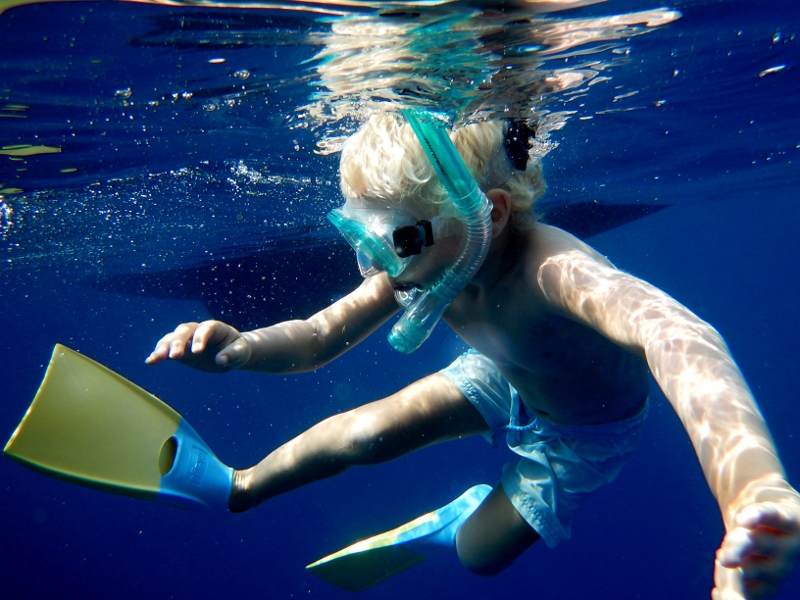
Lukie in the deep end
While motoring along later, David hoses down the kids while they are jumping on the trampoline using the salt water pump, keeping them entertained and cool.

It is a long time to go without land, but we don’t feel boat fever, spotting the landmass of Columbia from time to time as we sail along. For most of the passage however, we are surrounded only by the sea, clouds, and the beautiful rising and setting of the sun and the moon.

All that peace is rudely interrupted on the approach to Panama. It is around 2 am when the radar screen starts displaying a lightning show of vessels, some stationary, some moving. We are too early in our approach and decide to heave to out by the offshore anchorage, to wait for sunrise before we attempt the approach through the breakwater. Huge ships lie anchored here, presumably awaiting permission to transit the canal. At first light we head in and find Shelter Bay Marina along the northern end of the breakwater. They don’t respond on the radio so we find a berth and tie up, exhausted to the core from the sleep deprivation of passages.
Now all we have to do is to find out how to transit the canal and get the necessary permissions.
 SV Bob The Cat