
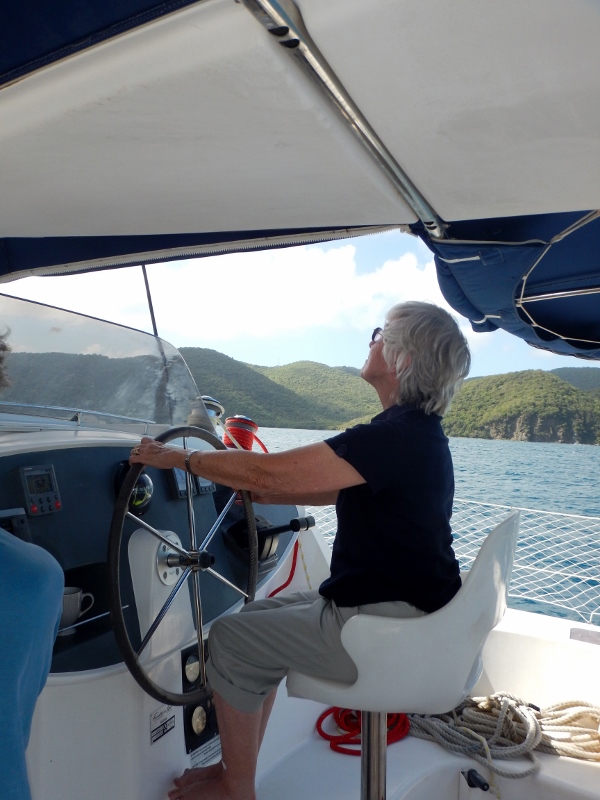
David’s parents, Gordon and Ann (known as Grandpa and Gu – Welsh for grandmother – to the children) join us in the British Virgin Islands, where we pick them up by dinghy from the small airport in Trellis Bay, Beef Island just off Tortola.
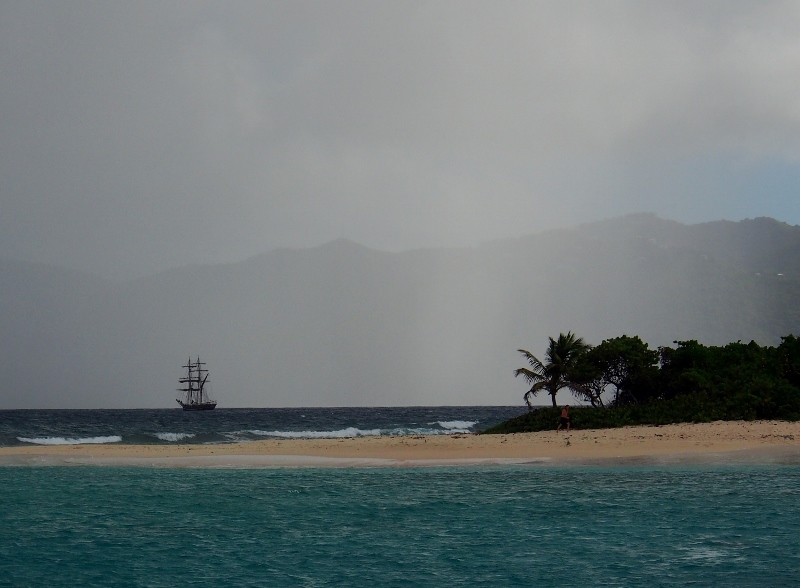
The theme of the week is pirates, and as many birds as we can find, Gordon and Ann being keen bird watchers. The Virgin Islands were named ‘The Eleven Thousand Virgins’ by Columbus, who wrote favourably about the islands to the Spanish monarchs, but unfortunately for the Spanish they didn’t keep a presence in the area and it was quickly taken over by the British, Dutch and Danish. The small cluster of islands became a favourite hangout for pirates, who hid amongst the numerous islands, waiting for Spanish treasure ships carrying precious cargo of gold plundered from the New World, ambushed them, and then went back to the maze of islands to hide their loot.
The pirate presence is still strong, with colourful names such as ‘Dead Man Cove’, ‘Gun Creek’, ‘Treasure Point’, ‘Dead Chest Island’ and ‘Privateer Bay’ making any landfall exciting for the kids.
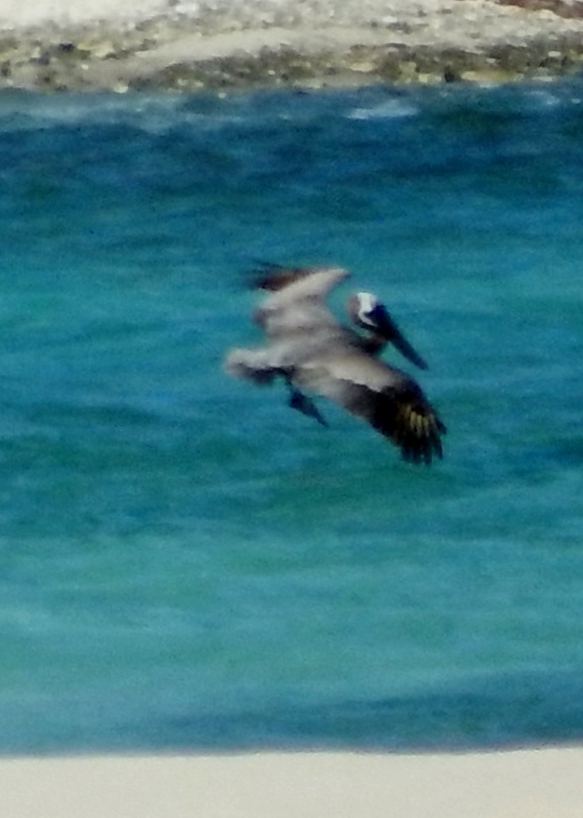
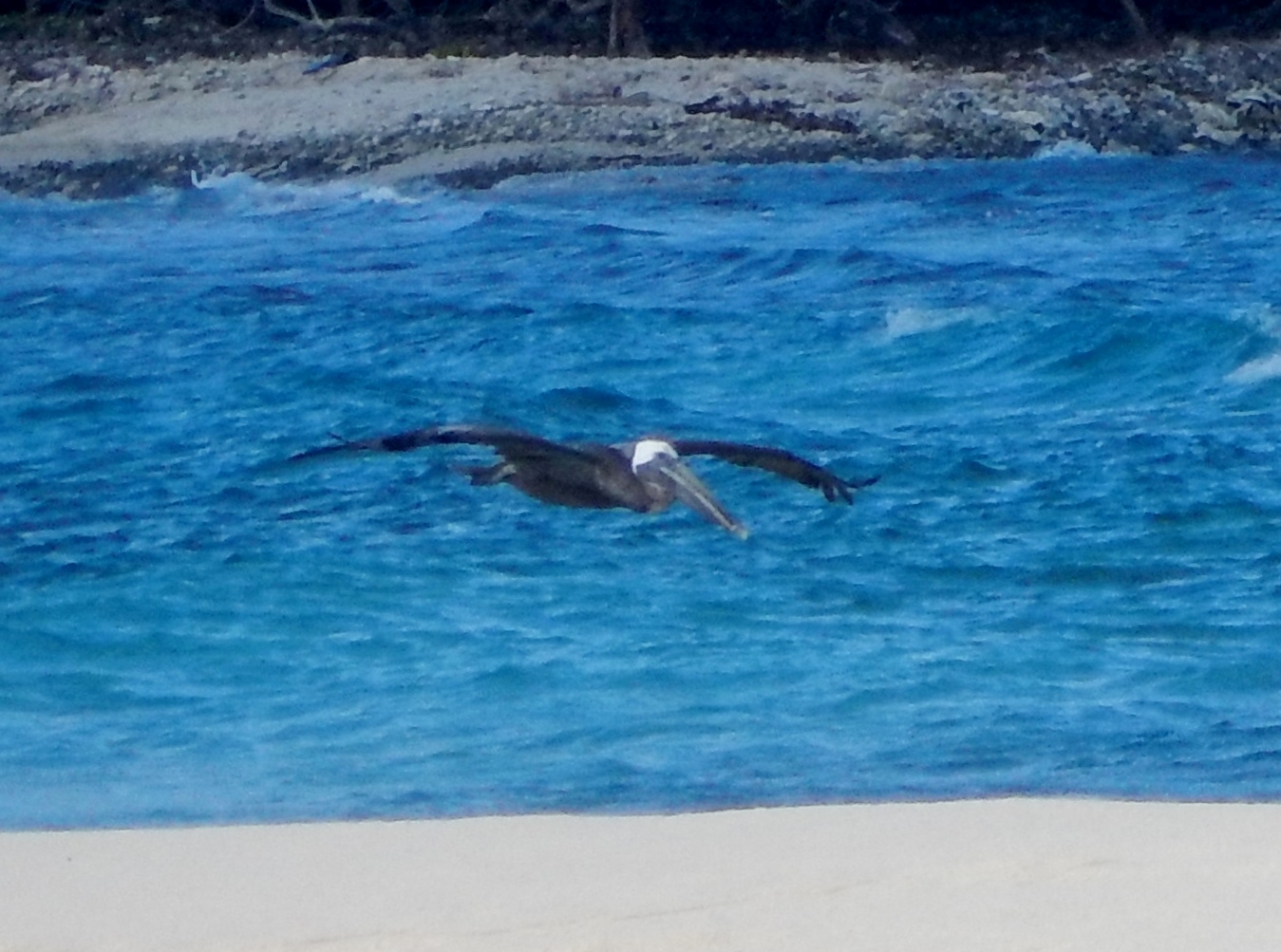
First stop on our whirlwind tour is Jost Van Dyke Island, named after a famous Dutch pirate. Paying homage to Jost, we decide to hoist the Jolly Roger Matias designed so that it can keep the official BVI courtesy flag (sporting an angelic looking virgin) company. Pelicans are everywhere, awkwardly ugly, slightly angry looking birds, beautiful in an ungainly sort of way. They hover some height above the water, looking down indignantly, spot a fish, perform a quick swoop and plunge into the water in an outraged manner, greedily gulping down their catch upon surfacing, after which they go back to bobbing on the water, looking tired and pissed off. In sharp contrast, the elegant Frigate Birds glide above, their sharp outlines against the light blue sky looking infinitely more refined.
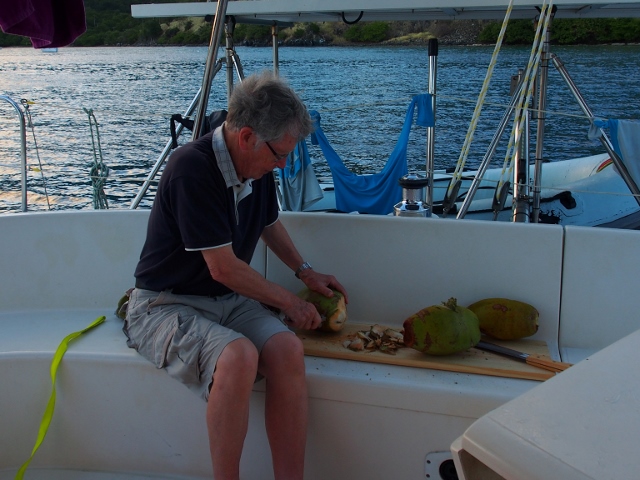
David and Lukie snorkel from one small island to the next, where David climbs a coconut palm and to Lukie’s delight drops down five good sized coconuts. They swim back laboriously, clinging onto their harvest, Lukie proudly coming onto the shore with two large coconuts. Opening the coconuts befall to Grandpa, who labours tirelessly to open a nut, so we can all taste the sweet flesh.
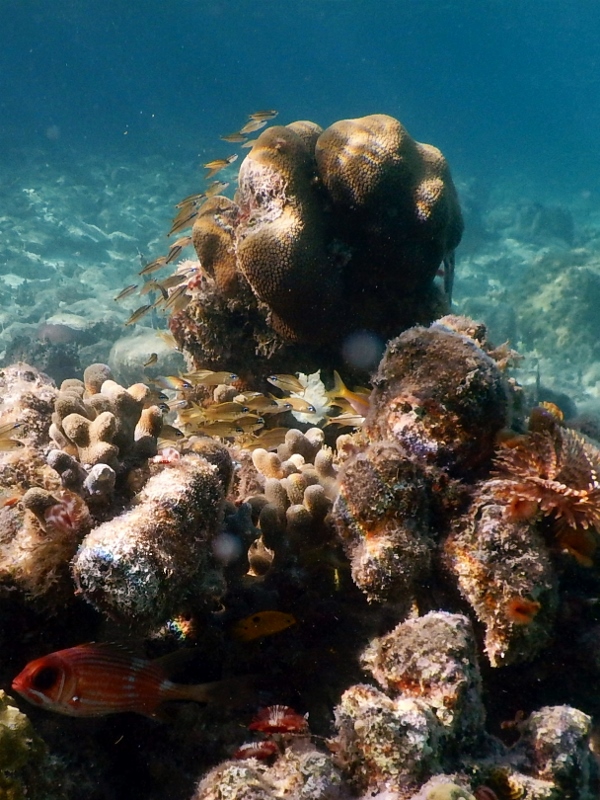
Later on in the week we visit Norman Island, allegedly the inspiration for the book Treasure Island by Robert Louis Stevenson. Local folklore has it that a family found a Spanish treasure in one of the underwater caves, and we eagerly snorkel to the caves, hoping to find loot. When we get there yellow, orange and red sponges adorn the cave walls, glittering brightly, but to the great disappointment of the children we find no gold bars.

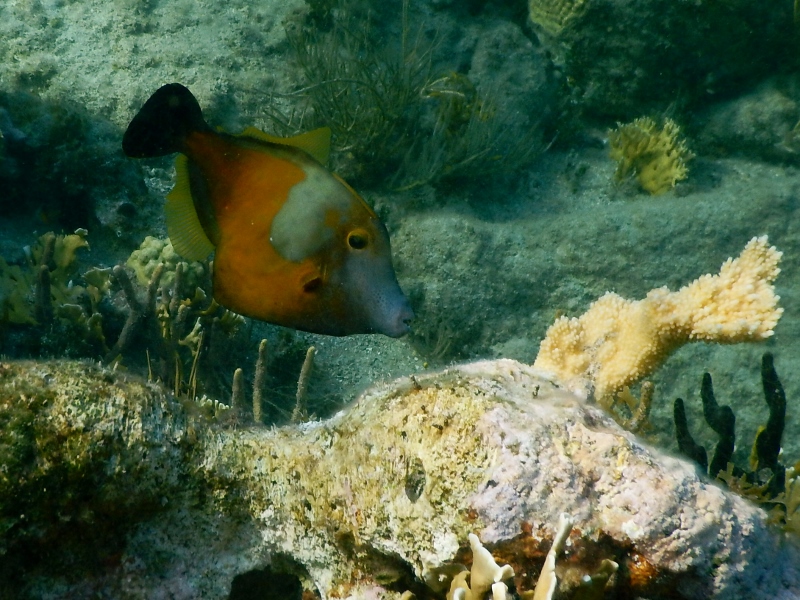
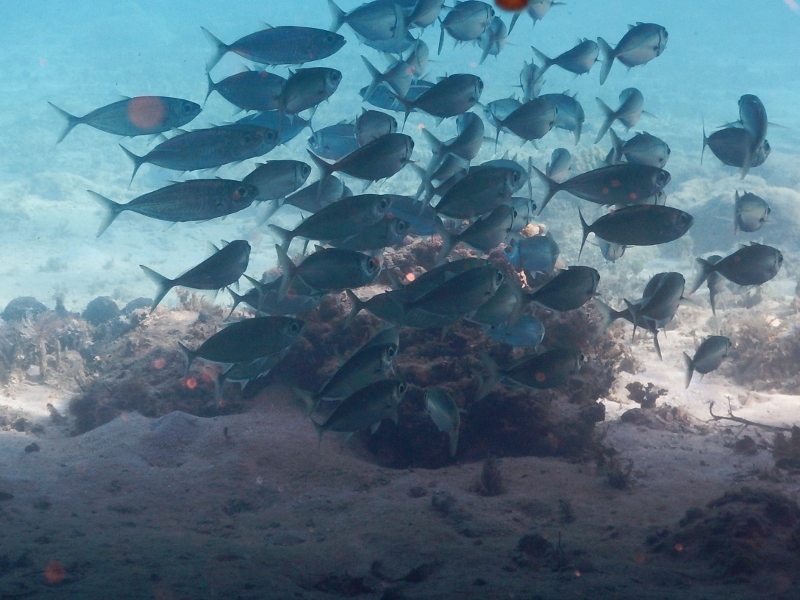
Visiting Peter Island, we anchor in Dead Man Bay, home to lots of live fish and turtles. Two large remoras are hanging under the hull of the boat, causing the children to shout ‘shark, Mummy, shark’ as they enthusiastically dive in. After a while the remoras leave us, and when we later snorkel towards the beach we see one attached to a turtle.

The following morning we head to Salt Island, where we stop to snorkel the RMS Rhone, a British mail steamer that sank in 1867. It is a beautiful wreck, encrusted in corals, full of fish of all colours. Salt Island is named for the salt ponds which were in production for hundreds of years.

When we stop off in Road Town, the capital of Tortola, to find a laundry and a supermarket, we manage to somehow snag our anchor on two (!) chains, probably anchor chains from nearby boats, although lying at an odd angle. After much heaving, winching, grinding, tying of knots, peering over the side and plotting our escape, we manage to get them off, by tying lines onto the chain and winching them off, one by one. We never managed to find a laundry, and the pile of washing is growing as we head off for another week of cruising. The quote of the week is from David: ‘Desperate times call for desperate undies’ as he dons the multi-coloured handmade undies that I bought him from a small shop in Raglan many months ago.
 SV Bob The Cat