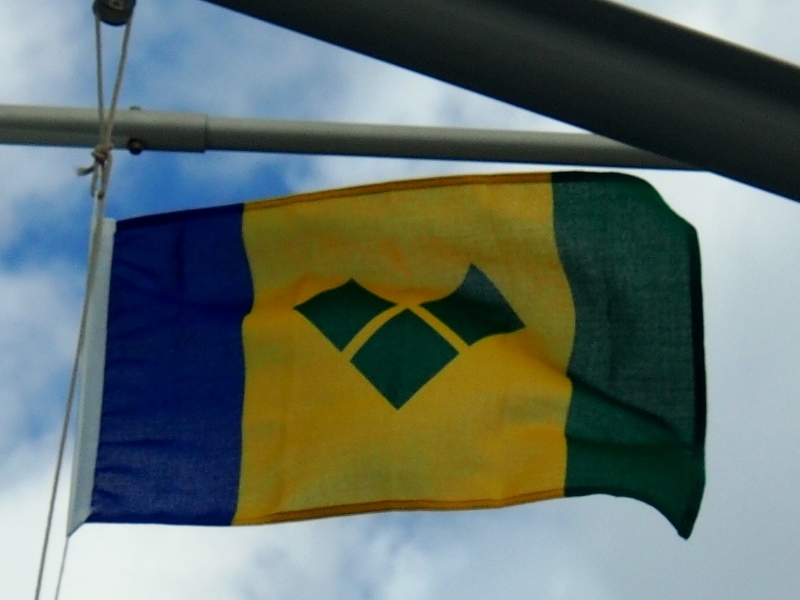
In our trip to the Grenadines, we decide to bypass St Vincent (which has a reputation for being somewhat unsafe) and aim for the island of Bequia for our first stop. The largest of the St Vincent dependencies, Bequia is a small island just south of St Vincent home to about 6000 people; the descendants of African slaves, Scottish and French settlers, and New England whalers. Whale hunting from small local skiffs still takes place off the island whenever the opportunity arises.
We arrive in Port Elizabeth which is moderately busy, with boats anchored close to one another on both the southern and northern edges of the bay. The island is known for its friendly locals, beautiful scenery, quaint towns and great marine life.
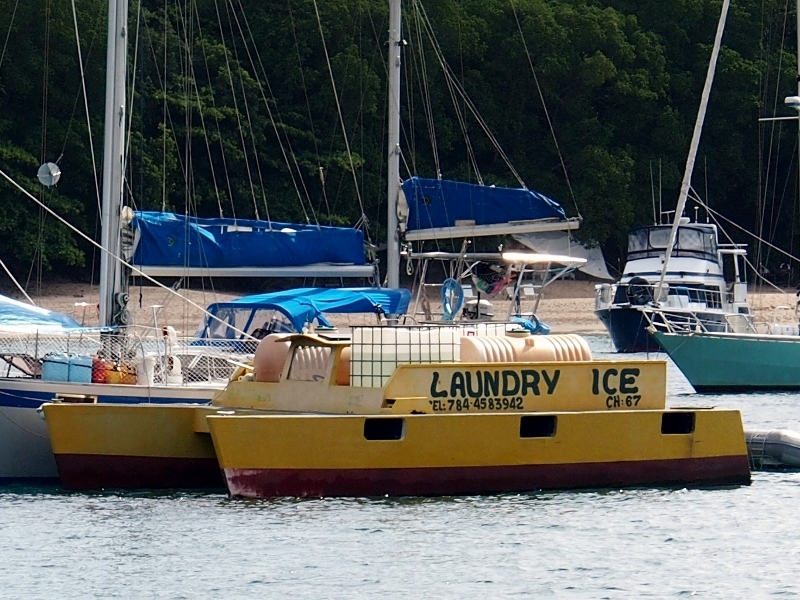
Port Elizabeth certainly has amazing services for yachts. Name whatever you desire, and there’ll be a boat providing it to you. We spot the all in one laundry, ice, water and diesel service boat, and call them on channel 67 and request a laundry pick up. Next day they deliver clean, neatly folded fragrantly smelling clothes. There is also a baguette and croissant boat, which takes bakery orders and delivers the goods fresh for breakfast. A rasta dude offers to clean the boat until it ‘shines like a newborn baby’. He has lived in Sweden for many years and has a special cleaning product which he bought from a guy from Frankfurt. He paddles out on a standup to offer his services to yachts, and as the wind picks up we give him a tow back from a hard day’s work. The locals are friendly and act with quiet dignity, and we get a sense that the place is not as poor as St Lucia. Here good services are offered at a premium price and the many tourists are happy to pay. The result is a thriving place full of happy tourists. We meet many people from hotels, who all came here on the recommendation of someone.

There is great snorkelling just by the boat – seagrass bed, with pipefish, strange eels, and an octopus changing colour as it tries to outswim us – white over the sand, green stripes over the seagrass bed, a thick cloud of ink coupled with a darker shade in a last ditch attempt to deter us. A long nosed pipefish does the same, and we follow it for a great distance, watching it change its hue to blend in with the bottom. A graceful stingray glides by, and we spot a lumpy searobin, curiously ugly, walking along the bottom on its little legs. When we dive down it cowers and fans out a beautiful set of wing like fins, edged with iridescent blue, to try to frighten us off.
On the reef next to the little beach that we’re anchored next to, we see a delicate beige eel with daint white spots, sliding over the rocky reef, looking for coverage as our shadows darken its path.
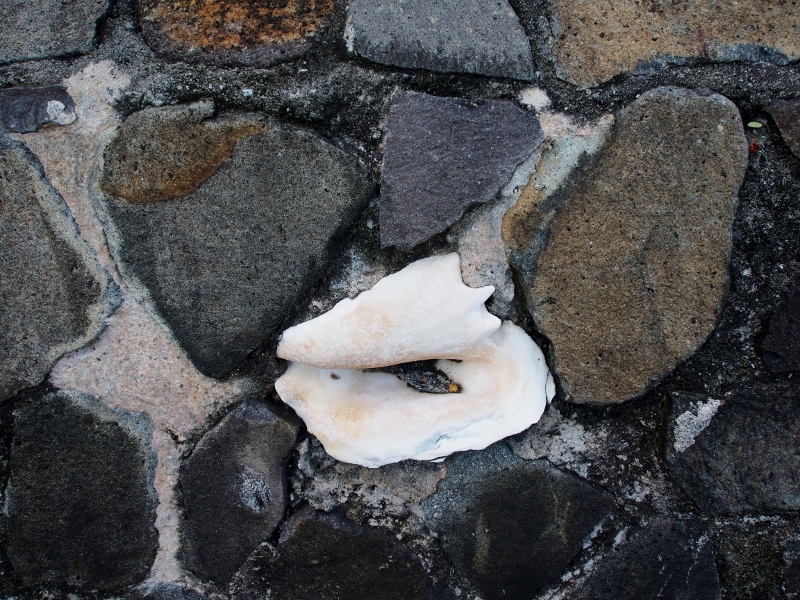
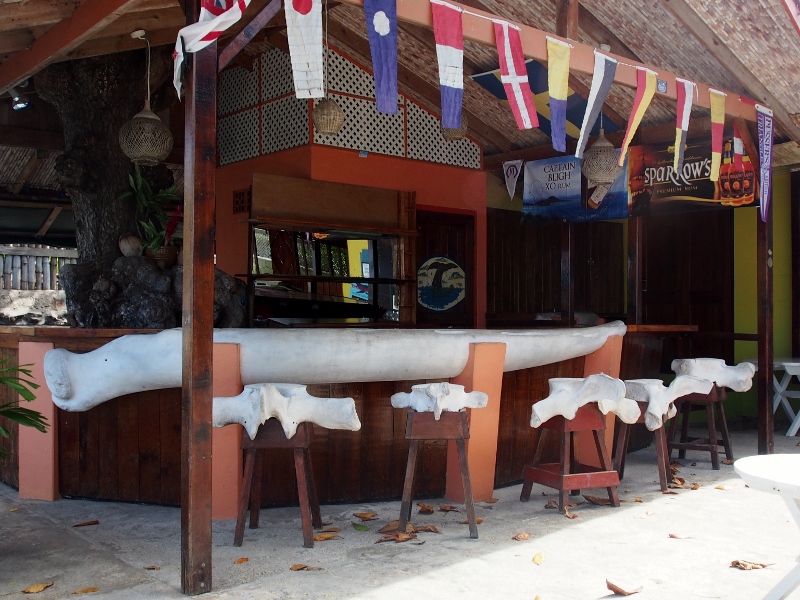
The town is pretty and full of character. Set on a steep hill, the main road lines the waterfront, with colourful houses dotted on the hillside behind. A narrow strip backed by colourful flowering trees and cosy looking restaurants lines the southern end of the harbour where we’re anchored. Conch shells are everywhere, and one day for lunch we try a conch roti. A bit chewy, but Lukie loves it… A restaurant on the waterfront has furniture made from whalebone, so you can sit and sip your cold beer, your backside planted on the vertebrae of a whale.
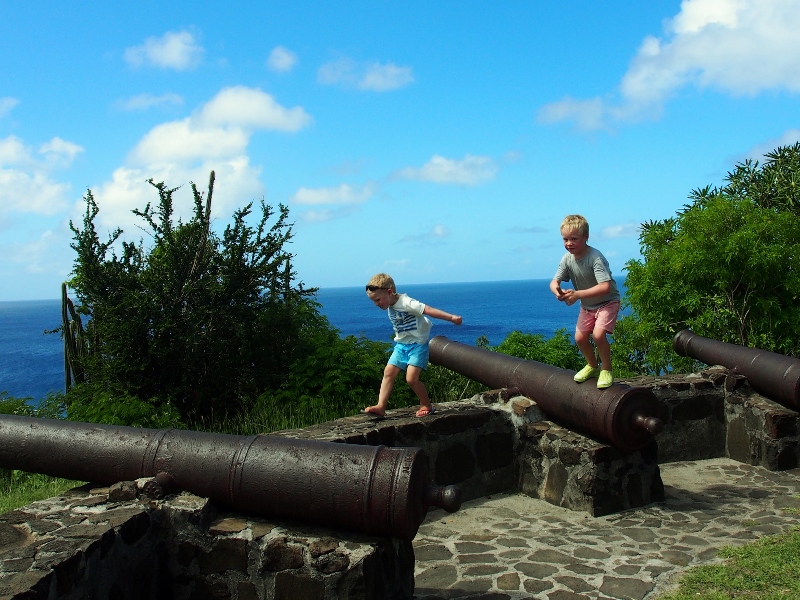
On the northern hill overlooking the bay and the sea beyond sits a small fortress, complete with black canons pointing out the sea. Apparently of the five canons two were French and three English – the two nations fought each other fiercely and would take turns shooting down each other’s warships, but stuck to their separate canons.
The next day we visit a turtle sanctuary, a facility on the other side of the island where they collect baby Hawksbill turtle and rear them to 5 years of age in captivity. The Hawksbill turtle is threatened with extinction and a local Bequian named Orton ‘Brother’ King decided to help the population by increasing the chances of survival of a few of the thousands of juveniles that they get on the island each year. In the wild, the survival of Hawksbill turtle is less than 0.1%, but at the sanctuary they get rates of about 30%.
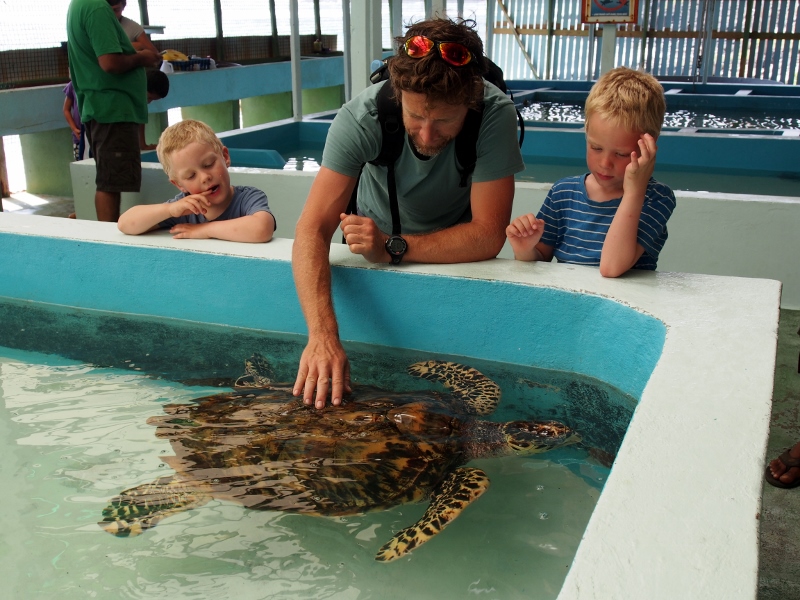
Each year, they protect the eggs laid by local turtles until they hatch, and then they capture about 250 juveniles as they crawl out to the sea. They rear them to about 5 years of age where their survival rates in the wild are good and then set them free. The facility is located on the Atlantic side of the island, so there is a plentiful supply of fresh clean water which they pump in daily to change the water in the tanks. The juveniles are tiny, and surprisingly clumsy, promptly bobbing up every time they try to dive down. Apparently, in the wild they don’t really dive until they are at least a year old, where they become less positively buoyant. It is a valiant effort, but apparently Orton is retiring next year, and the future of the sanctuary is uncertain. Bycatch in local fisheries is the major cause of death of the Hawksbill turtle in the wild, and global organisations such as the WWF have initiatives underway to encourage fishermen to change hooks to some less dangerous to the turtles. They are beautiful animals, the descendants of a group of reptiles that have swum in the Earth’s seas for 100 million years. We hope the initiatives to save the turtles are effective; it is a shame if they were to go extinct on our watch.

Teenage hawksbill turtle
 SV Bob The Cat