
Our impressions of St Lucia are brief as we only spent two and a half days there, hopping down the leeward coastline on our way to the Grenadines. It is a spectacular island – steep volcanic terrain, even more pronounced than on Martinique, covered in the same dense lush jungle. Hillsides plunging directly into the sea, with few bays, depth increasingly rapidly offshore.
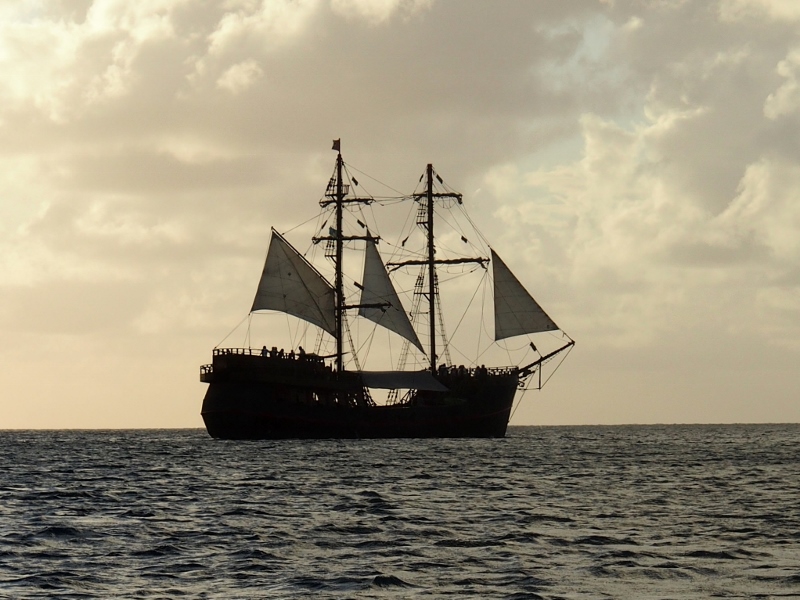
We arrive late afternoon in Rodney Bay at the north end of the island where we clear customs and stay for a night. The boys shout in excitement when they see what looks like a real pirate ship cruising by, music blasting from it. Lukie is envious of the pirates because they are having such a fun party, and we promise him that we will dance and party on his birthday.
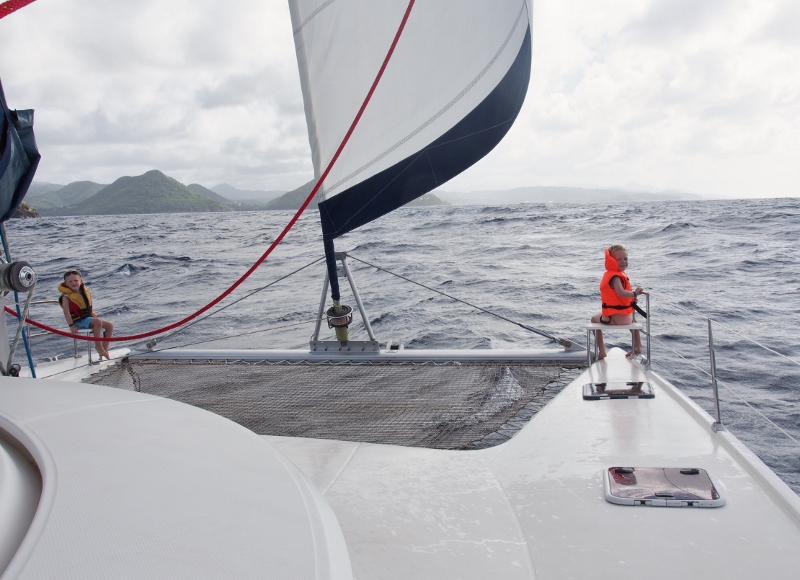
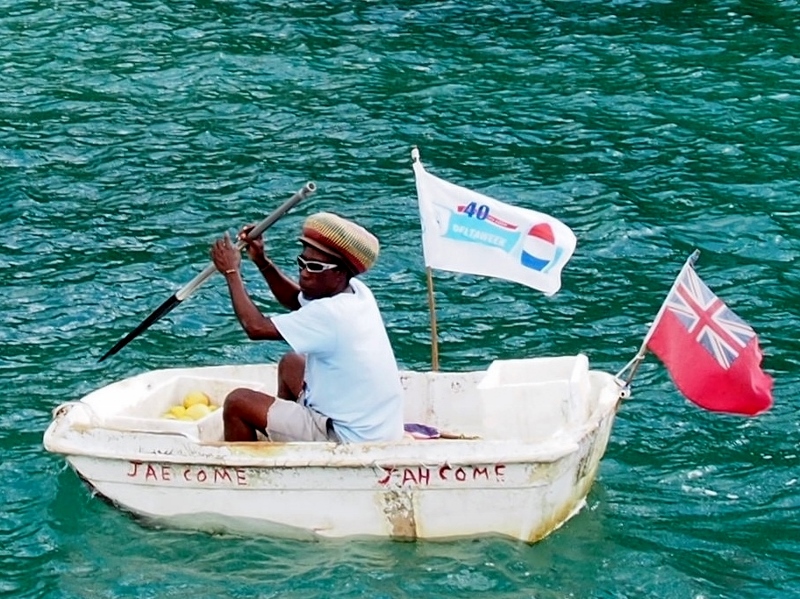
The following day we sail south to Marigot Bay, a sheltered bay famous for its beauty. As we enter the bay we meet our first boat boy –young men zooming around in dinghies, hanging around on the lookout for incoming yachties, offering mooring bouys, sightseeing trips, t-shirts, tourist trinkets, fruits and vegetables, and anything else that you may desire. Their boats range from kayaks and tiny rowing boats to fancy dinghies, the latter apparently often stolen from past visitors. Some are chilled dudes paddling around peddling a bunch of bananas, hoping to make a buck, whereas others zip about with massive outboards, carrying iphones in waterproof pouches around their necks, in constant communication orchestrating the movement of boats and services across the bay. Outboards are clad in colourful t-shirts to shield them from the sun, which gives each boat its own cheerful personality.
St Lucia is significantly poorer than Martinique, and has a bloodier past. The local Caribs were particularly fearsome, and fought off colonisation from Europeans for a good 200 years after their first ‘discovery’ by Columbus. Like Martinique, the island was fought over by the English and French, and St Lucia managed to change hands no less than 14 times before it finally became English in 1814. As a result, the local Patois language is very French in origin. Slaves were imported for sugarcane plantations, and the population is now predominantly of African origin. St Lucia became independent in 1979, and the economy is now based mainly around agriculture (bananas, coconuts, cocoa, citrus), as well as a developing tourism industry.
Because of the poverty, crime is more common here than in Martinique. We try to stick with one boat boy at a time, establishing a relationship and paying fairly for their services in the hope that that will protect us from break-ins. After all, they live of yachties, and have a strong interest in the island having a safe reputation. Peter, the boat boy we meet in Soufriere, tells us about his life, pointing out his house on the shoreline. He is young, not more than 25, and already has a flash dinghy with a large outboard, and an iphone around his neck. He tells us that he sits in his boat on the lookout for yachts most of the time each day, and we imagine his life, getting by on whatever he can make out of the passing boats.
After our anchor dragging sagas (perhaps more imaginary than real, but I’d never admit that) we want a mooring, and negotiate the price with the ‘Boss Man of the Balls’. Having paid a steep EC$80, we get our ball, and a good night’s sleep.
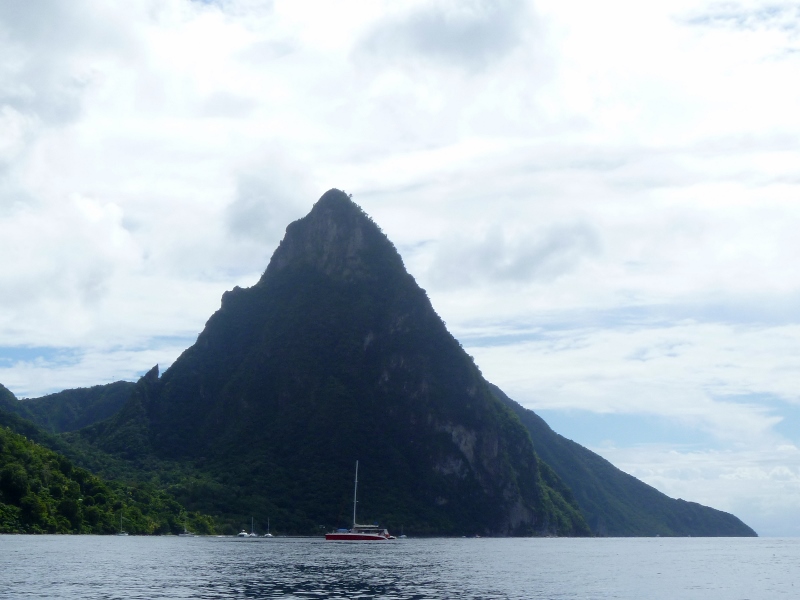
The next day it rains relentlessly, although we manage to glimpse a few rainbows when the sun pokes out briefly. After buying a bit of fruit and veg from a passing boat boy, we head south to Soufriere, with the plan of tanking up with water before heading for the Grenadines where water is scarce. At Soufriere the local boat boys seem hopeful that we can get water on the town dock, but an official bearing a radio clearly doesn’t rate our chances. A serene rastafari sits in lotus position on the dock, but we don’t feel similarly patient and give up in favour of going to visit the famous local bat cave, paying Peter the boat boy handsomely for showing us. The cave rises from the sea, a narrow fissure in the rock, its almost vertical walls covered in bats. You can smell them some distance away from the entrance, and fish flock underneath, eating the droppings. Strong tidal rips rush past the cave around the point, and we don’t fancy our chances snorkelling here.
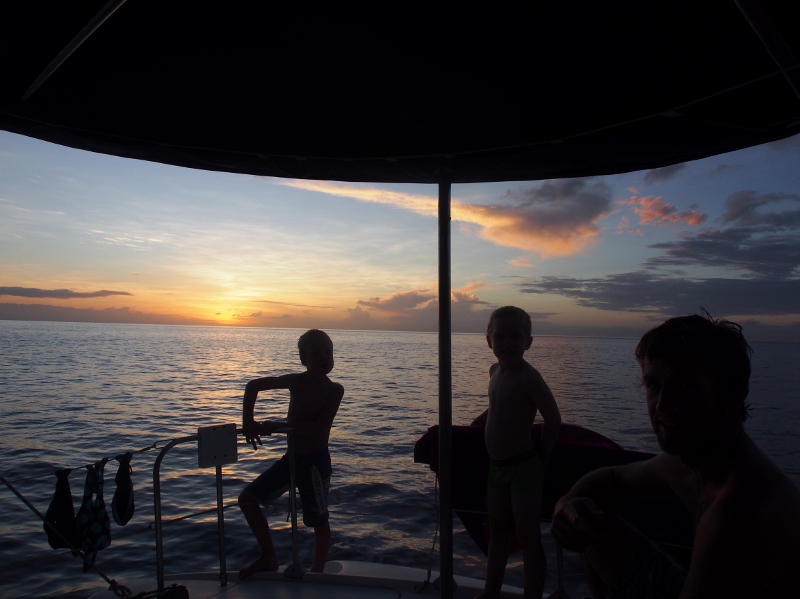
So we move around the corner to the bay just north of Soufriere and spend the afternoon playing in the water of a marine reserve. The boys each buy a bamboo catamaran off a passing boat boy. All seems peaceful until shortly after dusk, when we are inundated with millions of tiny flying ants. They are attracted by the light so we shut all hatches and huddle in the dark, and decide to go to bed early. The following day we set out for the island of Bequia in the Grenadines early – we are off the mooring at 5 am, ready for our 10 hour long trip. En route we spend hours cleaning the tiny ants, now mostly dead, off the deck. There is little wind, so not much else to do, and once we’re finished, David makes bagels for lunch.
 SV Bob The Cat